

Jamie Doe vocals
Fred Thomas bass
Matt Robinson piano
Dave Hamblett drums
Tobin Fincker tenor saxophone, clarinet
Matthieu Michel flugelhorn
Kieran McLeod trombone
Recorded August 1-4, 2023 at La Buissonne Studios by Gérard de Haro, assisted by Matteo Fontaine
Mixed October 25-27, 2023 by Gérard de Haro, Fred Thomas, and Jamie Doe, assisted by Matteo Fontaine
Mastering at La Buissonne Mastering Studio by Nicolas Baillard and Jamie Doe
Steinway grand piano prepared and tuned by Sylvain Charles
Coproduced by Hectic Ecletic Records and La Buissonne Label
Release date: October 25, 2024
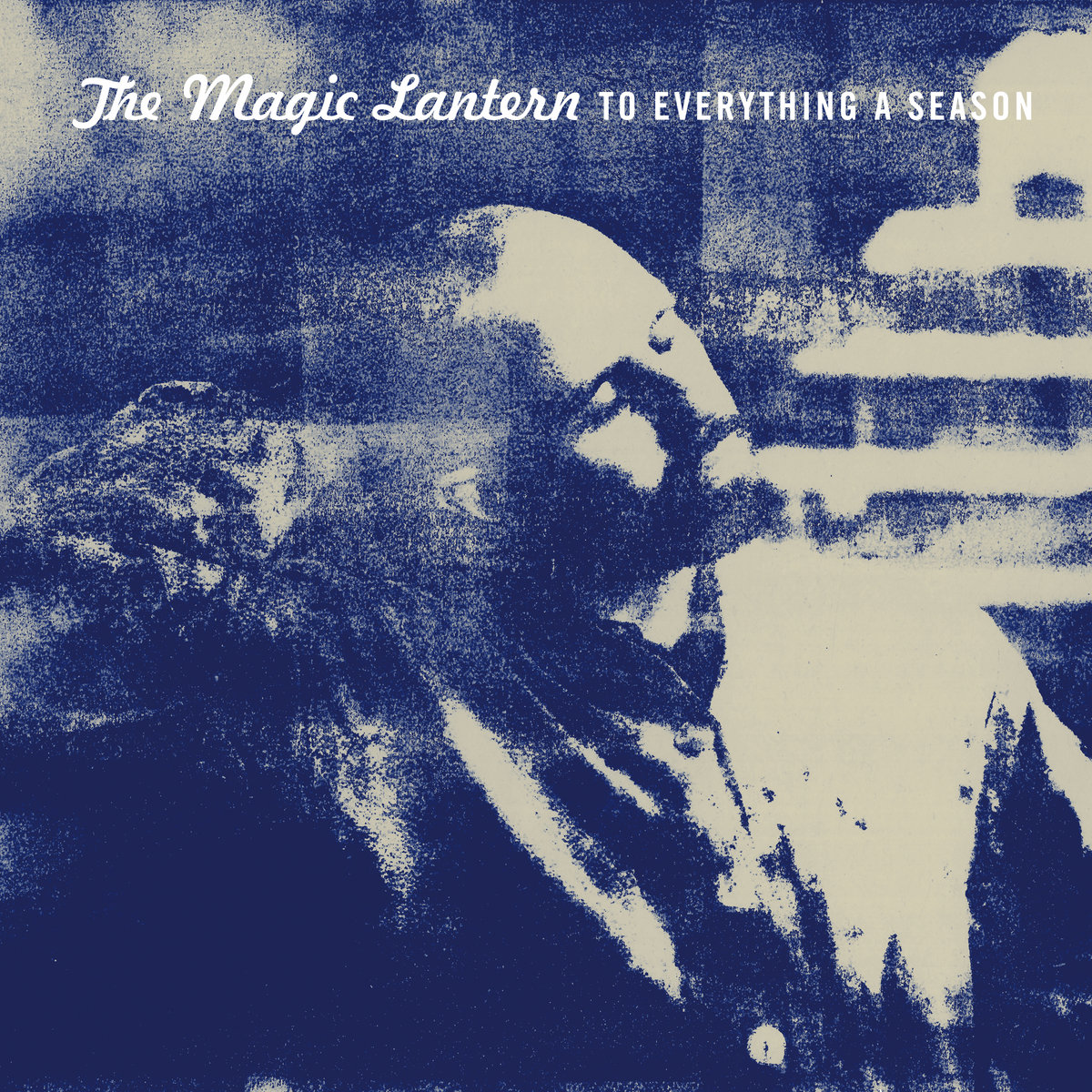
Some albums announce themselves with grand gestures. Others unfold more quietly, revealing their character with patience. The Magic Lantern’s To Everything a Season belongs firmly in the latter category. Led by Australian-born and UK-based songwriter Jamie Doe, the project has long occupied a space where folk songwriting intersects with the exploratory instincts of jazz and chamber music. On this latest release, those elements feel especially well balanced. The result is a record that moves gently but deliberately, trusting the strength of its poetry and the sensitivity of the musicians bringing it to life.
Recorded over four focused days at La Buissonne Studios in the south of France, the album captures the kind of immediacy that can only emerge when musicians share a room and respond to one another in real time. Engineer Gérard de Haro, recognizing the quiet intensity of the sessions, helped shape an environment where the performances could breathe without unnecessary interference. Rather than striving for polish, the recording preserves the subtle dynamics of collaboration. What emerges is not the sheen of perfection but the presence of discovery, the sound of ideas forming collectively in the moment.
The ensemble itself draws largely from London’s vibrant jazz community. Bassist Fred Thomas, who also co-arranges the material, anchors the music with lines that are patient and grounded. Matt Robinson’s piano moves between structure and openness, providing harmonic spaces for the others to inhabit. Dave Hamblett’s drumming rarely asserts itself forcefully, instead shaping rhythm with a light, responsive touch. Keiran McLeod’s trombone adds warmth and depth to the arrangements, its tone bending gently around the vocal lines. Two additional voices arrive from continental Europe: Robin Fincker’s searching tenor saxophone and Matthieu Michel’s flugelhorn, whose soft lyricism brings a reflective glow to several of the album’s most delicate moments. Together the septet demonstrates a remarkable commitment to restraint, treating silence and space as carefully as melody.
At the center of this balanced environment stands Doe’s voice. Unadorned and intimate, it carries a quiet clarity that allows emotional weight to step naturally onto the scale. The arrangements orbit it with patience, rarely crowding the lyrics and often allowing instrumental phrases to linger in the air before resolving. Nothing here feels hurried. Each track unfolds at its own pace, inviting the listener into a reflective atmosphere that rewards careful attention.
Lyrically, To Everything a Season represents an important step forward in Doe’s songwriting. The session moves through grief, tenderness, confusion, and small flashes of joy with equal lucidity, rarely resorting to grand declarations. Instead, Doe focuses on the textures of everyday experience, recognizing that the ordinary details of life often carry the deepest resonance. Music has always drawn strength from this transformation of the quotidian into something shared. A passing memory, a moment of doubt, a fleeting instance of grace. In Doe’s hands, these fragments become songs that quietly illuminate the inner life.
From the opening track, “Trembling,” the listener encounters an artist who is attentive to life’s expressive fulcrums. The song acknowledges how closely vulnerability and resilience can coexist, setting the tone for an excursion that treats feeling not as spectacle but as terrain to be navigated thoughtfully. “Two in One” reflects on coincidence and the unexpected alignments that shape our lives, suggesting that certain encounters carry a meaning that extends beyond their immediate circumstances. Rather than dramatizing these moments, Doe observes them with gentle curiosity, finding significance in experiences many might overlook.
Several songs engage directly with themes that resonate across generations. “Loops” confronts the painful realities of dementia, reflecting on the fragile relationship between memory and identity. “Data Points” turns its gaze toward the alienation of the digital age, where the complexity of human experience can feel flattened by metrics and algorithms. In contrast, “Sweetheart” meditates on love grounded firmly in the present moment, focusing on the humility and devotion that sustain lasting connection.
Elsewhere, Doe explores the interplay between uncertainty and conviction. “Hear Me” imagines songwriting as part of a long lineage, suggesting a form of inheritance passed through time. Creation becomes less an act of solitary invention than participation in an ongoing human conversation. Even the album’s lighter passages carry this reflective spirit. “Home” approaches belonging with warmth and subtle humor, while “Joy is a Choice” affirms that happiness often requires deliberate attention and upkeep.
The album concludes with the instrumental “Epilogue,” a brief but poignant farewell that allows the ensemble to speak without words. After the lyrical reflections that precede it, it feels like a quiet exhale. The musicians move together with understated sensitivity, offering a final reminder of how central their collective presence has been to the album’s passionate depth. Throughout To Everything a Season, these players function not as background accompaniment but as attentive collaborators. Each listens closely, shaping the air through small responses and subtle shifts in texture.
What ultimately distinguishes the record is its faith in the communicative power of everyday life. Doe does not attempt to summarize the human condition or offer definitive answers. Instead, he opens a series of small windows onto the involvements that quietly shape us. When gathered into song, they reveal unexpected connections. In listening closely to them, we may find that what seemed private or fleeting is in fact part of a much larger conversation.
 Between Sound and Space: ECM Records and Beyond