My latest review for All About Jazz is of a private concert recently given by Mathias Eick at the residence of the Norwegian Consul General’s New York City residence in advance of this year’s jazzahead! festival in Bremen. Click the photo to read more:
Little Big is an album you’ll want to spin like a globe, placing your finger anywhere and opening your eyes to take joy in where it lands. From first to last, Aaron Parks amps up his artistry in a ripe configuration with guitarist Greg Tuohey, bassist David Ginyard and drummer Tommy Crane. Gliding through a set of 14 originals, the itinerant keyboard player renders a sound perhaps best characterized as photorealistic.
Little Big runs on a spirit of genuine appreciation, be it for childhood (“Kid”), love (“Good Morning”) or worlds within our own (“Aquarium”). Every surface reflects some form of nostalgia, made possible only by the quality of its summoners. Parks and Tuohey are as inseparable yet distinct as gesso and pigment, each defining the other in mutual appreciation, while Ginyard and Crane uphold their canvas with algorithmic integrity. As a whole, these musicians render tessellations of melody and rhythm that would give M.C. Escher a run for his money.
Parks’ writing speaks power into being, unrolling the full breadth of this quartet’s capabilities across the brain. From the intimate piano solos “Lilac” and “Hearth” to the representative “Rising Mind” and “Doors Open,” a purpose-driven energy prevails. Among the music’s many strengths is its evocative clarity, exemplified to the fullest in “Small Planet.” The steampunk ambiance of “Professor Strangeweather” offers another highlight in treating each instrument like a cog for a balanced machine. “Digital Society,” by its own measure, grounds us in the here and now through its bitmapping of the modern soul. If the band’s name tells us anything more, it’s that once any contradiction becomes a reality, you wonder why you ever thought of it as a contradiction to begin with.
(This review originally appeared in the February 2019 issue of The New York City Jazz Record, a full PDF of which is available here.)
With Flatbed Buggy, drummer Rudy Royston has come into his own as a composer. Joined by reedplayer John Ellis (chiefly on bass clarinet), accordion player Gary Versace, cellist Hank Roberts and bassist Joe Martin he channels influences as diverse as Bill Frisell and Ron Miles, tied together by memories of his partial Texas upbringing in a melodically rich chamber suite.
Tempting as it is to be enchanted by this unique combination, it feels as organic as the music itself. To be sure, each instrument has inherent qualities. Bass clarinet and cello form an especially flexible spine, accordion a robust pair of lungs, bass legs on which to stand and drums a brain to prompt every member into action. But it’s the way in which they combine in the guise of one body that makes them stand out. Between opener “Soul Train” and brief outro “I Guess It’s Time To Go,” listeners are led from sunrise to sunset with the vividness of a favorite childhood memory. The past is therefore a running theme of Flatbed Buggy, the very title evoking country life in a time buried under the detritus of recent history and which reaches fullest evocation in “Twirler” and “Hourglass.”
While there are obvious examples of virtuosity, such as the whimsical round of solos in “Bobblehead” and thoughtful contributions of Versace and Ellis in the title track, a collective spirit overrides concerns of individual expression. Likewise in the swinging contours of “The Roadside Flowers” and two starkly narrative tracks “boy…MAN,” which shuttles bass through a loom of block chords, and the more ponderous “girl…WOMAN.” Whether in these protracted examples or the three jauntier interludes sprinkled throughout, this music is sincere, vividly articulated and not afraid of a little dirt under the fingernails.
(This review originally appeared in the February 2019 issue of The New York City Jazz Record, a full PDF of which is available here.)
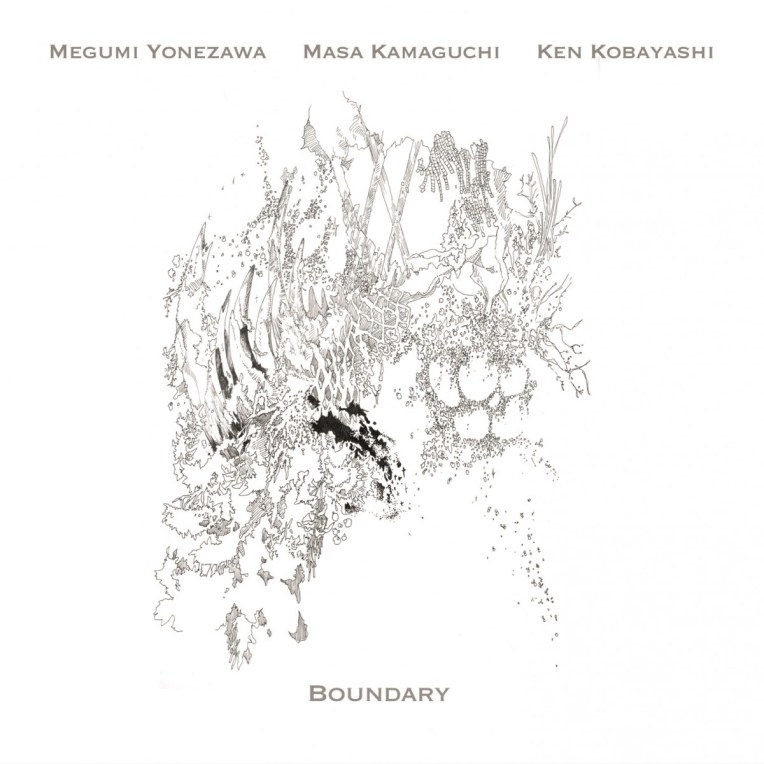
After scrimshawing a name for herself in the ivory of jazz as sidewoman for saxophonist Greg Osby and following her 2016 leader debut A Result of the Colors (see my review for All About Jazzhere), pianist Megumi Yonezawa releases her deepest personal statement to date. Boundary triangulates her tactful artistry with bassist Masa Kamaguchi and drummer Ken Kobayashi in a set of nine freely improvised tunes, plus a lone standard for good measure. If said standard—Sammy Fain/Irving Kahal’s “I’ll Be Seeing You”—feels like a message that has traveled light-years to get here and shows the trio at its most resonant, then the spontaneous wonders cushioning it feel like messages yet to be revealed and show the trio at its most inward. As in the droplets of piano that open the title track, each turn of phrase makes known a realm that only the ears can grasp.
While other titles offer descriptors of what one encounters here, their truth is limited. “Alchemy,” for example, does indeed come across as a sonic conversion of base elements, even as one is constantly reminded of something far more precious than gold: namely, the coherence of flesh, bone and dedication that only musicians who listen to each other this closely can achieve. “Tremor,” too, despite an underlying quiver of spontaneity, names the album’s steadiest departure. Then there’s “Wavelength,” a duet between Kamaguchi and Kobayashi implying something greater than synergy: dialogue.
Even without such trail markers, one can hear the cartographic sincerity of “Reef” and tactile intensity of “Nostalgio” as if they were one and the same. The most absorbing promises are fulfilled in “Veil” and “Onement.” Where the former is as beautiful as it is intrepid, the latter swirls with life-giving immediacy. Mirroring the patient unfolding of “Meryon,” they seek catharsis on the path to getting there, so that by the end a new beginning has already opened its eyes for want of another day.
(This review originally appeared in the February 2019 issue of The New York City Jazz Record, a full PDF of which is available here.)
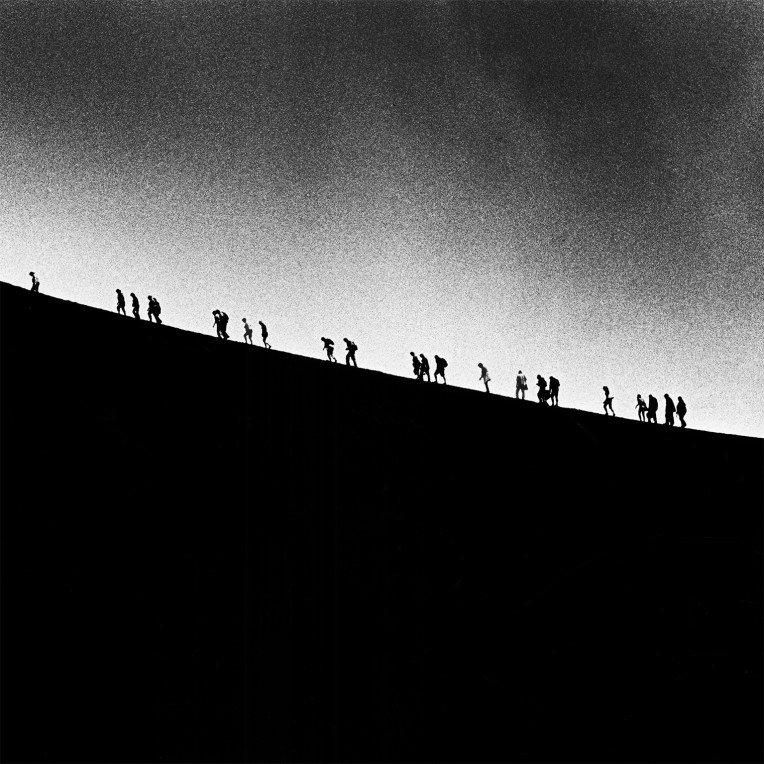
Orbit titles the intersection of bassist/composer Scott Worthington and Italian photographer Renato D’Agostin. Worthington’s minimal approach to sound, like D’Agostin’s to image, reveals the hidden complexities of interaction between bodies and the contexts of their transit. With an atmosphere that recalls the self-refractions of Stephan Micus, “A Time That Is Also A Place” fleshes out the flute of Rachel Beetz like vanes to a feather’s shaft, funneling into a quill hungry for a universal inkwell. Long tones beget longer drones to form a space in which the body retreats into itself. As multi-phonic light cradles shadows with aged hands, drawing static from its slumber into the foreground, the monochromatic heart of reality beats in the slowest of motions, as if to mark the passage of time beyond grasp of all measure. The effect is such that when the ambient “Interlude” opens its eyes against the sunlight of a thousand sun, we understand intimately the imperfection of the soul against a cosmos dripping with unity.
If we began with a circle, then “A Flame That Could Go Out” is another linking to it, resonating in a moan for all matter. In this bass-heavy flame, one encounters not a single flicker, but a steady flow of suicidal oxygen quietly accepting its fate. Each respiration is a word without speech, a simulacrum of mortality restored like an ancient instrument cleared of its corrosion. This leaves only the tracery of experience to communicate who we once were in the music of who we can never be again.
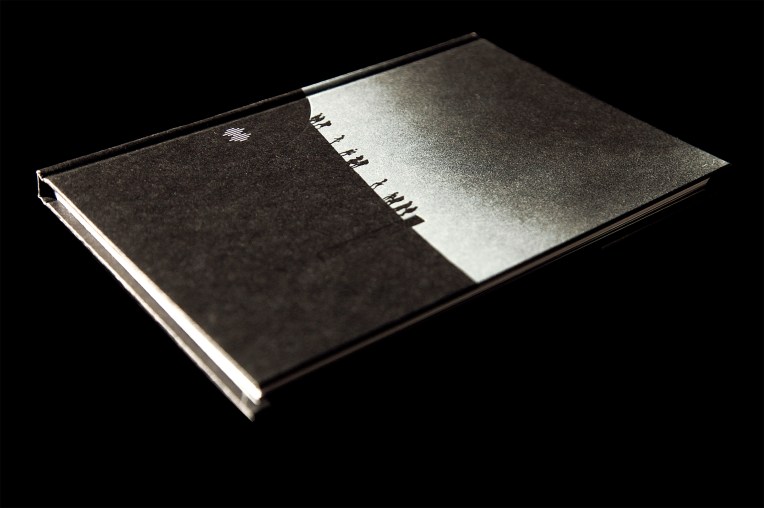
That all of this feels so downright terrestrial is due in part to the captivation of D’Agostin’s images, which grace the album’s accompanying book with nomadic coherence. Their high contrast reveals a mutual contradiction of flesh and spirit, even as it fortifies the connective tissue of art between them. In this sense, the dialogue here is not between individuals but within them, steering the self into waters of deeper self until only horizon remains.
(For ordering information, check out the IIKKI imprint here.)
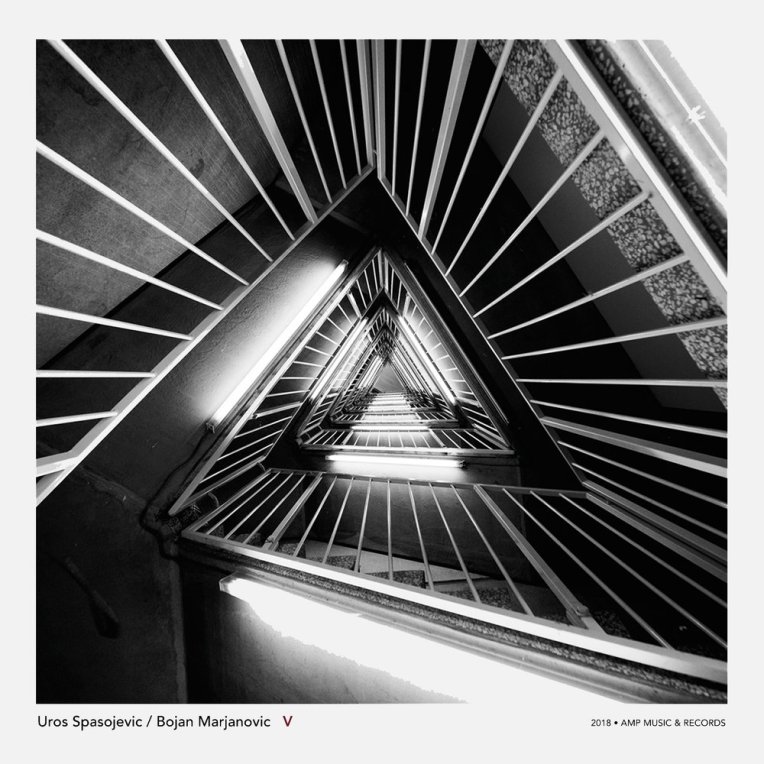
Psychologist Mihaly Csikszentmihalyi defines “flow” as a oneness of performer and process, and on V electric bassist Uros Spasojevic and pianist Bojan Marjanovic achieve precisely that. That said, the Serbian duo doesn’t so much combine forces as close the gap between them, like two hands from different religious traditions coming together in a single prayer.
Spasojevic is unique for drawing out the bass’ corporeal qualities. In his solo “North,” he opens the curtain in a gesture so holistic that it seems to inhale and exhale simultaneously. With a tone that’s rounded yet which pierces the heart, he drops higher notes into a blurry pond, every ripple like a newborn song in search of words. The piano’s entrance in “Senok” reveals, with quiet assurance, an underlying Ketil Bjørnstad influence. Yet while the Norwegian pianist-composer’s cinematic lyricism is paralleled, it’s filtered through a color scheme all its own. Such an association suggests an ECM connection, and by no coincidence, as Spasojevic—who writes all the music here—cites the label as a staple of his listening diet. Such respect is further enhanced by the fact that the album was mixed and mastered under the attentive hand of Jan Erik Kongshaug at Oslo’s famed Rainbow Studio, and by the familiar thematic fragment of “Water,” which seems to have been lifted sanctimoniously from Kenny Wheeler’s “Nicolette.”
The sonic footprint of Vis as non-invasive as it is expansive. In “Guide” and “Change,” it reaches deepest layers of emotional transference, rendering hidden dreams with the pigment of open realities. “Hope” is a prelude to the title track, of which a pianistic lattice offers its plot to Spasojevic’s melodic fruit. As Marjanovic heightens his freedom of expression in spiraling architectures, he uncovers more than the album’s mission statement, but a land without borders. “End of the hill” thus surveys the album’s most abstract territories, making use of electronic augmentations and spontaneous impulses, while “Sea” closes the circle with another lone journey, of which every step brings us farther from a destination, letting us float instead across a misty sea, thankful for the beauty of unknowing.
For those interested, I have consolidated all six ECM radio shows I did last year for WKCR. The first five provide offerings from ECM’s catalog on a decade-by-decade basis, from the 1970s to the present, while the sixth is a special compilation of world- and folk-leaning favorites:





 Between Sound and Space: ECM Records and Beyond