

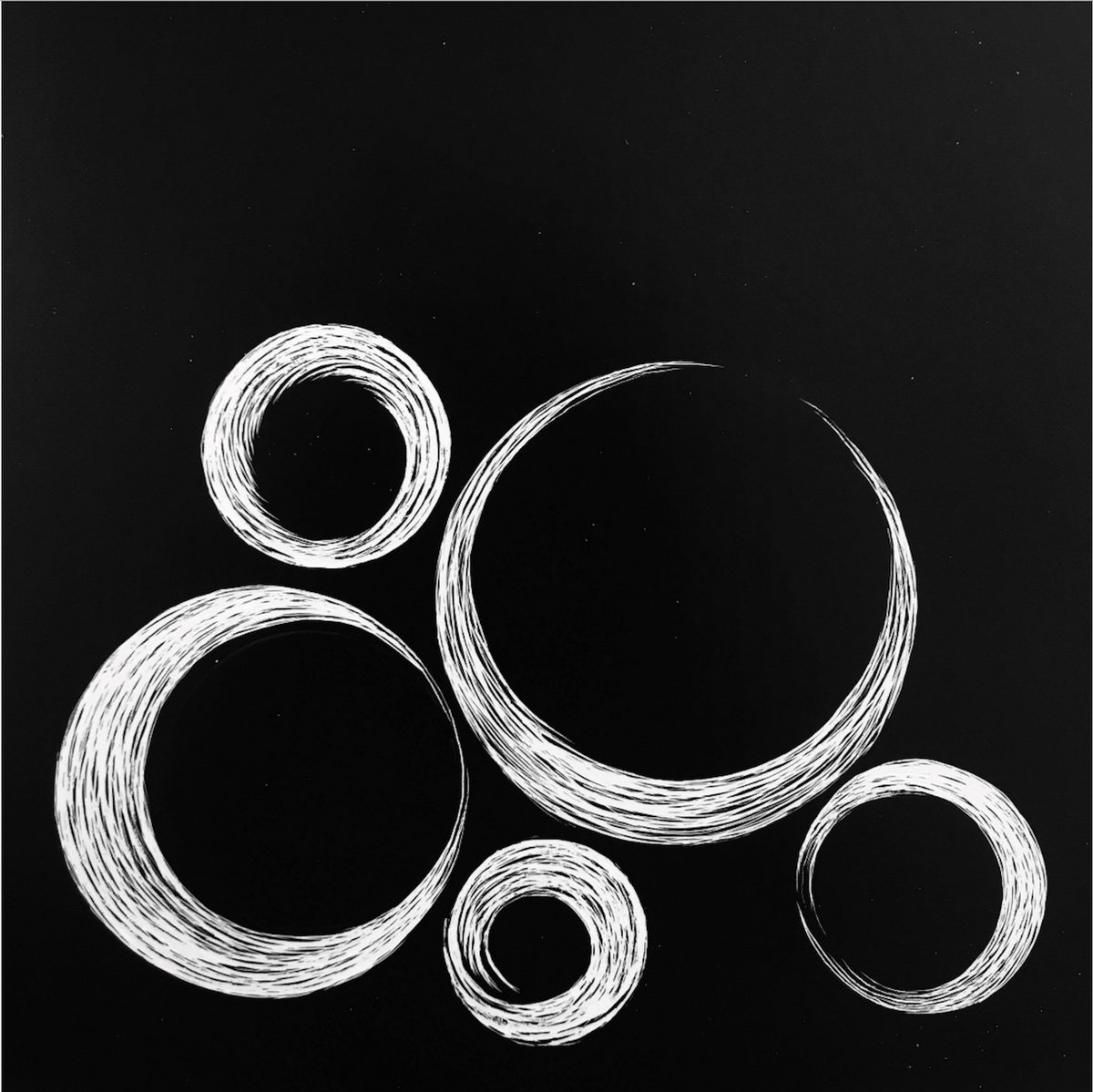
Although Quint is the second album from Boston-based Shibui, it is also the first in what one hopes will be a longstanding relationship with Ronin Rhythm Records, the label of Nik Bärtsch, whose influence on bandleader Tim Doherty is as obvious as the stars at night (and just as beautiful to regard through the telescope of the ear). The core trio of Doherty on bass and percussion, Curtis Hartshorn on drums, and Céline Ferro on clarinets opens through the inclusion of Bradley Goff on keys, Derek Hayden on marimba (a key timekeeper throughout), and violinist Chris Baum. The latter makes his only appearance on “2.1,” which opens the first of five submarine doors. Through gradual appearances of percussion and bass clarinet, it travels from pianistic sediment to a glittering epipelagic zone. The final five minutes offer a glorious conspectus of the band’s relativity, offering plenty of opportunities for intake.
“2.2” is a chunkier groove, made all the more worthy of our mastication by the savory bass snaking its way throughout, while “2.3” offers a more pleasurable spectrum of delights, especially in the transfigurations of clarinet and piano between solids, liquids, and gases. The resulting states lean more in the direction of ineffability than concretism. Smoother textures await in “2.4,” where arid sands and moist breaths intertwine as equals. The bass is especially present, each note a trunk from which pianistic branches are given room to sprout. The marimba’s echoes tread like creatures too light to sink on water yet too heavy to be carried away by a breeze. Lastly, fluidity is the modus operandi of “2.5.” Here, the impulse to sing is never more than a step out of reach. Gritty electric keys give us a sense of inward focus and emanations of heat, weaving delicate cymbalism through shafts of shadow.
While fans of Bärtsch and other masterless musical samurai will surely rejoice over the rudimentarily numbered set list and modular approach, the uniqueness of vision rendered on Quint urges relistening. Doherty’s compositions are proof that instrumental discourse operates differently from speech. Whereas saying the same word over and over strips that word of meaning, Shibui’s aesthetic enhances clarity with every cycle. It also proves there is no such thing as truly identical reiteration in a world of constantly moving molecules and energies between them.
In an enchanting bit of coincidence, the album’s cover artist, Sevcan Yuksel Henshall, came up with the five circular gestures before even knowing its title. Such confluences are part and parcel of music that lifts the spirit with the same weight so that both appear to float in unison, forever suspended between firmament and fundament.
Quint is available from Bandcamp here.
 Between Sound and Space: ECM Records and Beyond