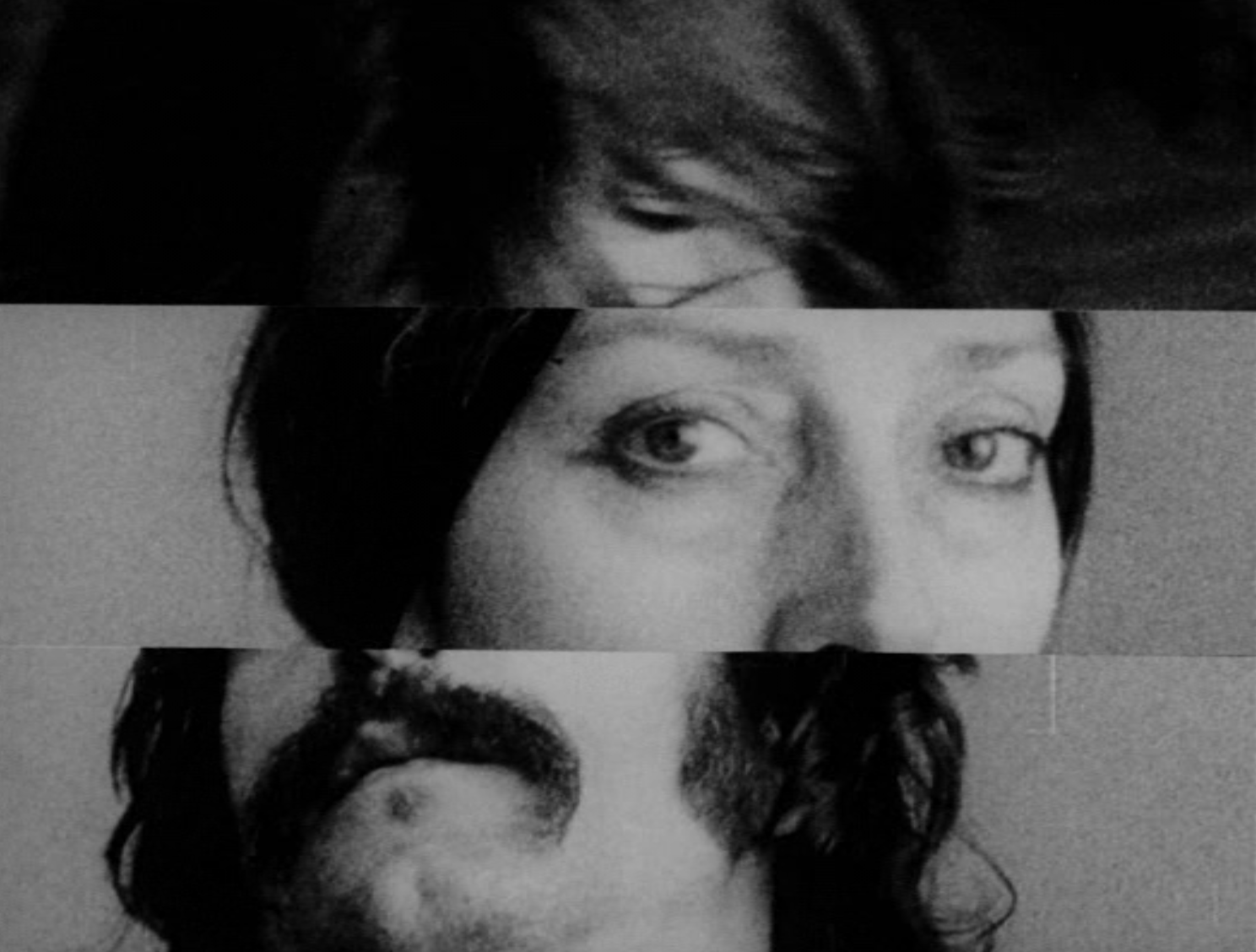
Wolfgang Muthspiel guitars Scott Colley double bass Brian Blade drums Recorded October 2024 at Studio Dede, Tokyo Engineer: Akihito Yoshikawa Assistant engineers: Ryuto Suzuki and Yo Inoue Mixing: Michael Hinreiner (engineer), Manfred Eicher, and Wolfgang Muthspiel Bavaria Musikstudios, Munich Cover photo: Juan Hitters Album produced by Manfred Eicher Release date: September 26, 2025
For its third studio outing, the trio of guitarist Wolfgang Muthspiel, bassist Scott Colley, and drummer Brian Blade lays down its most complex and adventurous session yet, fittingly recorded amid the electric calm of its titular city. The band achieves simpatico liftoff from the start in its swinging take on Keith Jarrett’s “Lisbon Stomp.” With a forthright delicacy that is hard to come by these days, they make the music come alive with fluid precision, every note free yet placed right where it needs to be. The plane lands on a more unsettled note with Paul Motian’s “Abacus,” for which Muthspiel slips into echoing distortions for a crunchier sound. Blade taps directly into Motian’s painterly attention to detail, his wider palette eliciting a tactile commentary, while Colley’s solo unpacks every shadow he casts.
Between these two telephone poles, the filaments of Muthspiel’s originals stretch, each charged with varying intensities of voltage. The moods are as distinct as the writing is strong. From the lyrical balladry of “Pradela” to the tongue-in-cheek angularity of “Weill You Wait,” he evokes a spectrum’s worth of times, places, and moods. The latter piece, with its oddly captivating contours, shows just how deeply the guitarist is willing to dive to find his voice.
His wingspan feels broadest when the melody becomes a form of searching, reaching toward something far beyond what the eye can see. This is most evident in “Flight,” which turns the proverbial landscape below into a resonating instrument. Its aerodynamic theme rides one thermal to the next without so much as a wing flap. The blend of acoustic and electric signatures gives the track a rare three-dimensionality.
At just two and a half minutes, “Roll” is the album’s briefest cut but also among its liveliest. With a nod to Weather Report, it radiates that same exuberant sense of living in (and for) the moment. Like the album as a whole, it foregrounds Muthspiel’s talents without stepping on the toes of his bandmates. Colley and Blade are not accompanists but equal protagonists in a story that emerges chapter by chapter into a shared narrative.
“Christa’s Dream” lingers as the most haunting turn, full of transcendence and half-existence, visible yet intangible, like a ghost in the light of day. It gives way to “Diminished and Augmented,” wherein oblique acoustic stylings blossom with playful grace. There’s a hint of Ralph Towner in its balance of leaping precision and sliding ease.
“Traversia” ventures farthest into unconventional harmonies, taking cues from Messiaen’s bold colors while achieving near-Renaissance purity of tone through the use of a capo. Originally written on a children’s guitar, it retains an innocence even as it matures in real time, the arco bass weaving a thread of quiet majesty through it all.
The folk-inspired “Strumming” pays deference to Bob Dylan and Leonard Cohen, refracted through a seamless idiom. Muthspiel’s ember-infused guitar rides atop Blade’s locomotive brushes, creating a boundless sense of space where synthetic and human energies meet. It’s a song of rudimentary joy and quiet surrender, a reminder that sometimes the simplest gestures have the deepest resonance.
In the end, Tokyo feels less like a document and more like a meditation in motion of three travelers translating memories into sound. What Muthspiel, Colley, and Blade achieve here is an equilibrium between structure and spirit. It is jazz as weather: unpredictable, fleeting yet timeless.
The highway of the upright is to depart from evil: he that keepeth his way preserveth his soul. –Proverbs 16:17
Most novels proceed as a river does—flowing from source to mouth, obedient to the order of time, accumulating its inevitable dams, docks, and diversions along the way. The Idiot, however, is no such river. Dostoevsky drops his protagonist into the current not to drift but to disturb, thus revealing the eddies and whirlpools that form around innocence when it trespasses into the murky waters of high society. That first drop lands Prince Lev Nikolaevich Myshkin—and by extension, the reader—on a train bound for Petersburg. He is fresh from a Swiss sanatorium, where for four years he has been treated for epilepsy. His fellow travelers—Parfyon Semyonovich Rogozhin, newly enriched and drunk on inheritance, and the gossiping Lukyan Timofeevich Lebedev—are the first to be caught in his wake. Rogozhin, with the tactless curiosity of a man ruled by appetite, asks whether the prince is a “fancier of the female sex.” When Myshkin denies it, Rogozhin replies, “[Y]ou come out as a holy fool, Prince, and God loves your kind!” Thus is the first stone cast into the still pond of Myshkin’s effect, its ripples reaching outward in mockery and awe alike.
Soon, the prince finds himself in the home of Ivan Fyodorovich Epanchin, though it is toward Epanchin’s wife, Elizaveta Prokofyevna, that his lineage tenuously connects him. Within moments, he becomes an object of curiosity, as if his very simplicity were some divine riddle. The Epanchins and their daughters draw near him not from affection but fascination; his every word seems to hang in the air long after it has been spoken. So begins the novel’s great fractal of human encounters, each scene branching into another with the stubborn logic of fate.
Translator Richard Pevear observes that, though The Idiot is unanchored to place, it is never abstract. Every room, every parlor and garden, serves as a shell into which the living organism of the narrative crawls. The spaces are cramped, yet within them Dostoevsky builds an architecture of the soul. Each wall is a moral boundary, each window a glimpse into depravity.
The most cavernous of these shells is Lizaveta Prokofyevna herself—“a hotheaded and passionate lady,” who, “without thinking long, would sometimes raise all anchors and set out for the open sea without checking the weather.” In her temperament, we glimpse the embryonic forms of her three daughters: the sensible Alexandra, the artistic Adelaida, and the beautiful, capricious Aglaya. Orbiting them are other satellites of this anxious universe: Rogozhin, the merchant whose newfound wealth becomes license for cruelty; Lebedev, the self-proclaimed “professor of the Antichrist,” who reads the signs of apocalypse in the iron veins of Europe’s railroads; and, most haunting of all, Nastasya Filippovna Barashkov, the fallen specter, whose trauma becomes the crucible of the entire tale. She is distance made flesh: adored by men, despised by women, yet pitied by both.
At the trembling center of this constellation burns Myshkin himself—a sun both fragile and inexhaustible. His presence exposes others as a mirror does, revealing the distortions they cannot bear to face. “I really came only so as to get to know people,” he says to the Epanchins, a confession so plain it becomes profound. In that aim to understand the human heart lies the novel’s central pulse.
From his first conversation, Myshkin unveils the spiritual burden of consciousness. He speaks of men awaiting execution, drawing on Dostoevsky’s own brush with the firing squad: “Take a soldier, put him right in front of a cannon during a battle, and shoot at him, and he’ll still keep hoping; but read that same soldier a sentence for certain, and he’ll lose his mind or start weeping.” The words tremble with prophetic weight, foreshadowing the undoing of characters condemned not by law but by their own desires.
Lizaveta and her daughters listen as if to a visitation. Myshkin, recalling his lonely youth, declares, “Nothing should be concealed from children on the pretext that they’re little and it’s too early for them to know. What a sad and unfortunate idea!” Yet the world he enters treats him precisely as such a child: harmless, ignorant, to be humored and dismissed. “The risen sun,” the narrator tells us, “softened and brightened everything for a moment,” and so it is with Myshkin: his light briefly transforms, though it cannot redeem.
When he first beholds Nastasya’s portrait, he perceives in her a soul both contemptuous and simple-hearted, “filled with suffering.” Her name, from anastasis (resurrection), bespeaks her torment: the lamb whose innocence was traded for the amusement of nonbelievers. Like him, she is called “crazy,” though her madness is but the logical end of a world that mistakes cruelty for sophistication.
Even Myshkin’s name bears contradiction: from mysh, meaning “mouse,” and Lev, or lion. In Dostoevsky’s notebooks, beside sketches of the novel, appear two words umbilically connected: “Prince-Christ.” And yet, Myshkin does not forgive sin; he merely reveals it by existing. To Nastasya, he says, “I am nothing, but you have suffered and have emerged pure from such a hell, and that is a lot.” Thus, he grants her what theology cannot: recognition.
His influence spreads like contagion. “I believe God brought you to Petersburg from Switzerland precisely for me,” exclaims Lizaveta, and though she speaks in self-interest, she unknowingly sheds veracity. Myshkin is brought not for one but for all. When he visits Rogozhin’s home, he beholds a copy of Hans Holbein the Younger’s Christ in the Tomb, that merciless painting of the dead Savior, devoid of light or transcendence. “A man could even lose his faith from that painting!” says the prince. Rogozhin, missing the irony, takes him at his word. Myshkin explains: “[H]owever many books I’ve read on the subject, it has always seemed to me that they were talking or writing books that were not at all about that.” He concludes that “the essence of religious feeling doesn’t fit in with any reasoning… there’s something else here… that atheisms will eternally glance off.” Dostoevsky thus holds up the Russian heart, trembling with contradictions, as both the disease and the cure: a heart that forgets the Father even as it cries out for Him.
If The Idiot has often been called satire, it is only because its realism is too acute to endure. It captures the narcissism of the upper classes with the precision of a surgeon and the patience of a saint. Myshkin’s self-awareness is his shield: “What sort of idiot am I now, when I myself understand that I’m considered an idiot?” he asks, deflating mockery by acknowledging it. Like Eminem’s self-flagellation in 8 Mile—if one may indulge a modern echo—he disarms his accusers through confession, transforming insult into revelation. What they cannot abide is not his foolishness but his love.
This love, however, is tested to absurdity. When an impostor by the name of Antip Burdovsky demands a share of the prince’s inheritance under false pretenses, Myshkin offers it anyway. Though exposed as a fraud, Burdovsky still receives the prince’s charity, for in Myshkin’s eyes, deceit and misfortune are twins. Such naivety is his virtue, his madness, and his crown of thorns.
In a later gathering, one Evgeny Pavlych recounts a murder trial in which the lawyer excuses the killer’s actions as “natural” under poverty. This comment provokes nods and murmurs of agreement among those assembled, to which Lizaveta responds by accusing them of being vainglorious madmen who have turned their back on God and Christ. She lambastes them for harping on the “woman question,” which haunts the novel with its articulation of women’s desires vis-à-vis the men in their lives: “You acknowledge that society is savage and inhuman because it disgraces a seduced girl… But if she’s been hurt, why, then, do you yourselves bring her out in front of that same society and demand that it not hurt her!” It is a sermon worthy of record, and yet it vanishes in the noise of polite indifference.
Among the assembled is Ippolit Terentyev, a dying youth whose intellect burns as his body fails. His “Necessary Explanation,” a swan song in letter form that he insists on reading aloud, is both confession and defiance. “People are created to torment each other,” he proclaims. Confronting the same Holbein painting, he asks, “[H]ow could they believe, looking at such a corpse, that this sufferer would resurrect?” and later, “Can something that has no image come as an image?” For Ippolit, faith is cruelty postponed. “Let consciousness be lit up by the will of a higher power,” he muses, “and let that power suddenly decree its annihilation… let it be so.” His despair is a dark parody of Myshkin’s compassion: both see too clearly to live comfortably among men.
Myshkin, whose “head worked quite distinctly, though his soul was sick,” stands apart. Love is denied him not by fate but by incompatibility with a world that feeds on contradiction. His tenderness for Aglaya withers into disillusion; his pity for Nastasya curdles into dread. Like a puzzle piece that almost fits, he must be left aside until the picture itself changes.
And what of the others? They collapse one by one under the weight of their vanity, leaving the prince almost alone, a gold-foiled icon among ruins.
In one of the novel’s most terrifying moments, Dostoevsky describes Myshkin’s seizure: “A dreadful, unimaginable scream, unlike anything, bursts from the breast… it may even seem as if someone else were screaming from inside the man.” The cry is metaphysical; it is the scream of all creation recognizing itself. To read The Idiot is to experience that seizure, to awaken, trembling, in the aftermath of one’s own delusions. Its absurdity, like its truth, is more real than reality itself. Dostoevsky does not offer resolution; he offers revelation. And when we close the book, the echo of that scream remains: terrible, holy, and alive.
A discovery set is more than a way to gain an understanding of a fragrance line’s depth and breadth. It’s also a path to learning more about oneself, scouring the recesses of firsthand experience to draw connections where none might have had the chance to form. Nowhere has this been truer in my olfactory journey than in the work of designer and perfumer Filippo Sorcinelli, whose unique blend of reverence and daring has yielded this atmospheric examination of the sacristy.
Sacristies, by definition, are repositories for sacred things. But not all are physical. Some are sensory and invisible, drawing lines between our hearts and memories long forgotten. With his Memento collection, Sorcinelli has distilled the essence of these priestly preparation rooms. Through them, I find myself flashing back to the hours I’ve spent in the monasteries and cathedrals of central Europe. These are wishes of the flesh to be fulfilled in the spirit, captured at the peak of serendipity and surrender.
To wear these elixirs is to take stock of one’s soul. Each is a mirror of a different shape, opacity, and tarnish, taking inspiration from the drawers and chambers of specific churches.
BASILICA DI ASSISI
Evoking the Basilica of San Francesco, this first of eight is a symphony of stalks and stones. The scent of grass and freshly cut greenery intermingles with smoke, wood, and frescoed walls. We open our eyes, ears, and noses to tonka bean, benzoin, styrax, and amber. Within this combination lies a more cumulative statement in the details of burnished wood. A step deeper brings us into contact with rose alba, dried fruit, patchouli, and labdanum, which reveal their own signatures in the space, inviting a sense of devotion that we must attune our worldly minds to. Upon further settling, lemon, bergamot, petitgrain, and incense join in the chorus. In them are glints of stained glass, as if the sunlight were being extracted so that we might understand its colors as messages with purpose. This interdimensional fragrance shelters ever-deepening repentance, a connection through space and time between origins and satellites, sweetness and austerity. And here we are in the middle of it all, wondering where to begin.
Reminds me of: L’Air du Desert Marocain by Tauer Perfumes
CHIESA D’ORO
For this stage of the pilgrimage, we head to the Basilica of San Marco in Venice. A note from the brand highlights the city’s history as a hub of the spice trade and its influence not only on cuisine but also on the rites of the church and all the solemnity they signify.
A deep hit of damask rose, jasmine, and carnation reveals itself by way of introduction. As the bouquet settles to reveal a shmear of vanilla, tonka bean, and musks, we begin to notice even more details of our surroundings. Vetiver and amber speak to the extroverted and introverted expressions of their respective natural essences. A kiss of bergamot adds a final touch to this lovely chypre. With so much of the outdoors in play, we are reminded that everything we create and fashion would be impossible without the Creator whose handiwork is in every molecule of the resources we exploit. Let us not forget this in our rituals and prayers, holding fast to what has been given so that we do not profane it with our depravity.
Reminds me of: Gold Man by Amouage
DÒMM
Our new reference point is the Milan cathedral, the core of which began construction in 1386 and which still serves today as a place of dressing before the Lord’s table is set.
Here, the tail is foregrounded. Bergamot, Virginia cedarwood, and black pepper initially court the nostrils before forests, gardens, and even seascapes beyond make themselves apparent, followed by jasmine and chocolate. At the same time, patchouli, styrax, and musks lower their diadem. As the most pungent scent of this octet, it announces itself with authority. To wear it, then, is nothing short of a privilege. Like grace, it is given to those who don’t deserve it, a most precious offering to the lost. To regard it as such allows it to blossom to its fullest extent on the skin, taking us to places only dreamed of.
Reminds me of: Terre d’Hermès by Hermès
NOTRE DAME NOTTE DI NATALE
From Milan to Paris, we find ourselves immersed in a liturgical concerto. This is the brightest of the collection. It opens with a surge of Virginia cedar and orange blossom. A smoother melange of chocolate, Alaska cedarwood, and cinnamon soon follows. Before long, we are lost in tonka bean, resinoid incense, and amber, which only make themselves heard on the back end. That said, there’s nothing hidden in this fragrance. The cumulative effect is one of strong honey with a woody undercurrent—a representation, perhaps, of spiritual pollination, resulting in a nectar of wisdom for all to dab on their pulse points. Like the believer’s relationship with God, it begins strong and overbearing, then settles into quiet discernment and understanding.
Reminds me of: Bee by Zoologist Perfumes
PONT. MAX.
St. Peter’s Basilica is the epicenter here. As the most “institutional” scent of the congregation, its name (Pontifex Maximus) means “builder of bridges” and refers to the highest priestly office of ancient Rome.
As a piece of scripture in scent, it speaks concisely and potently through its central quartet of myrrh, benzoin, resin incense, and amber. The interrelationships of each are magnified in glorious humility, inviting the worshipper to bow the knee at the altar of confession. With the addition of marine notes and jasmine, the experience broadens beyond the walls of the church, allowing us to feel something primal and elemental, as if the shore were a dividing line between a life drowning in sin and one basking in the sunset of salvation. Tendrils of Virginia cedar become synonymous with the pews, polished by the passage of time, of clothing tattered and pressed alike, of wrinkled hands and rosaries given warmth by their own friction, and of the repetitions of moving lips. The result of all this is leathery in texture, like a calfskin-bound Bible lying open on the pulpit. And yet, there is no sermon, no prayer, no uplifting of voices in song. Rather, there is the oppressive force of abandonment as people leave their faith behind in search of more earthly idols, now misplaced in the multitudes. Over time, they are replaced by tourists and other temporary travelers whose coins and candles are but hay and stubble in the grand scheme of things, each a self-reflexive gesture meant for no other purpose than to say, “I have been here.” But this fragrance lingers in the body, for it has also been here, laden with the weight of history on its shoulders, all but crushed beneath.
Reminds me of: Copal Azur by Aedes de Venustas
ROSA FIORITA
Rita of Cascia was an Italian widow and Augustinian nun. Tradition has it that, at the end of her life, she was visited by a cousin who asked if she wanted anything from home. Rita’s request was for a rose, and, despite it being January, her cousin indeed found a single rose blooming from the snow in the garden. As a greeting carved on the central beam of the basilica of Santa Rita da Cascia recounts: Hello Rita, vessel of love, painful bride of Christ, you are born from the thorns of the Savior, beautiful as a rose.
One of the purest florals I’ve ever laid my nose on, Rosa Fiorita opens with damask rose absolute and honey in the foreground, offering a dark sweetness. There is also something sharp and bright at play, with essences of may rose, lily of the valley, and iris giving it an edge. Meanwhile, geranium lends it a heart of shadows. The overall effect is Gothic and thickly spined. In wearing it, one feels connected to a long, unbroken chain of memory in which the tide of truth comes roaring into the present. And with that communion, Heaven is made possible on Earth. This is hagiography in a bottle.
Reminds me of: Sa majeste la rose by Serge Lutens
SANTA CASA
Speaking of sanctity, we now encounter the Loreto basilica, where candles and smoke predominate. The location has divine associations, as this revered sanctuary is believed to be the work of angels who translated the walls of the cave in which the Virgin Mary was born from Nazareth to Loreto.
The fragrance itself may be the closest to expressing the atmosphere of the sacristy. The upfront combination of vanilla, sandalwood, ambrette, benzoin, amber, and musks pours a photorealistic candle. The dank, craggy spaces of the church are deeply felt. Beyond that are the heart of the sea, tobacco, and rosa gallica, all of which embolden that waxiness to the deepest possible level. Orange and bergamot evoke the wick, while incense lingers in the air as a thin veil. All of this gives way to smoky leather. If Pont. Max. is the binding, then here are the pages and ink printed across their terrains. It is the scent of the word, convicting and austere.
Reminds me of Russian Leather by Memo
SACRISTIE DES ARBRES
At last, we reach the pinnacle of the Memento line. It is an invitation to meditate and reflect, an organic balance of the natural and the manufactured.
It is also what I was most hoping for all along: a seamless combination of interior and exterior that allows each tier to speak for itself. On the front end, vanilla and vetiver create a sharp, almost citrusy vibe with a softer, sweeter undertone. Along with them are benzoin resinoid incense, ambrette, and amber for an even smoother transition into damask rose and guaiac wood. At the end of this balsamic concoction are notes of pine essence, Virginia cedar, incense, and mint. All of this works beautifully to tell a tale of great sacrifice. It emphasizes the itineracy of faith, illuminating just enough of the path ahead to know that our feet will fall on solid ground. As it dries down, we get more of those woods and less of the incense, so that we are left alone with our own thoughts, surrounded by the trees. These all dissipate, along with our worries and cares, leaving only the spirit behind.
Reminds me of: XJ 1861 Zefiro by Xerjoff
And so, having found a renewed sense of life, I carry on, nothing more than a pilgrim passing through. And maybe you will find me just by following the sillage I’ve left behind, matching every footprint with your own, until we reach the promised land.
On October 1, I had the distinct pleasure of seeing violist Mat Maneri and pianist Lucian Ban perform selections from their latest ECM album, Transylvanian Dance, and more. Click the picture below to read my full review for All About Jazz.
Maxim Rysanov viola Dasol Kim piano Roman Mints violin, hurdy-gurdy Kristina Blaumane violoncello BBC Concert Orchestra Dobrinka Tabakova conductor Fantasy Homage to Schubert, Organum Light, Sun Triptych Recorded July 2021 at Watford Colosseum Engineer: Neil Varley Assistant engineer: Joe Yon Whispered Lullaby, Suite in Jazz Style, Spinning a Yarn Recorded August 2020 at Meistersaal, Berlin Engineer: Rainer Maillard Mixed January 2025 by Manfred Eicher, Dobrinka Tabakova, and Michael Hinreiner (engineer) at Bavaria Musikstudios München Cover: Fidel Sclavo Album produced by Manfred Eicher Release date: September 26, 2025
British-Bulgarian composer Dobrinka Tabakova returns to ECM with her second full program, following String Paths. That 2013 debut left an indelible mark, establishing her voice among many new listeners as one of immense humility intertwined with fortitude. Selections from the album were even included in the films Adieu au langage (Goodbye to Language)and Le livred’image (The Image Book), both directed by longtime ECM affiliate Jean-Luc Godard. But beyond these connections, it was clear that Tabakova was creating a world unto itself, a parallel dimension of sorts where chance operations and heartfelt intentions danced with graceful strength. All of which leaves someone in my position with the not-so-graceful task of trying to capture the breadth of her sound in the confines of the screen you are reading now. Not coincidentally, she begins her liner note for the present recording as follows: “Writing music and writing about music are distant cousins at best.” And yet, her melodies have a way of bridging the gulf between them with purposeful unfolding.
Violist Maxim Rysanov and pianist Dasol Kim open with two distinct chamber pieces. From the indrawn breath of Whispered Lullaby (2005), the viola opens its octave as a pathway into the piano’s flowering spirit. What starts as a whisper, however, develops into a robust expression of lucidity. Having been originally written for a children’s opera titled Midsummer Magic, it takes on that feeling of an incantation—a clue, perhaps, into its evocative intensity. Suite in Jazz Style (2009) represents the third suite written for Rysanov, following Pirin and Suite in Old Style, the latter of which appeared on String Paths. It’s also a natural homecoming, if you will, for a composer who started her journey as a child improvising on the piano. Its tripartite structure begins with “Talk,” a prime showcase for Rysanov’s mastery that proves him to be one of Tabakova’s most fervent interpreters, having known her since their shared time as students of the Guildhall School. There is a delightful freedom to the interpretation, which, despite its precision (if not because of it), makes the proceedings feel spontaneous. In the interplay between him and Kim, listening and speaking become one in the same.
After this upbeat introduction, “Nocturnal” spreads the charcoal dust of its balladry in thicker strokes. There is, nevertheless, a continuation of that same playfulness, a wry smile in the viola that is self-aware, if now a touch mournful. As the bow travels between sul ponticello and sul tasto gradations, it opens itself to fresh meanings in the piano’s embrace. Kim is the ever-attentive partner, rendering context as faithfully as a saxophonist wandering the streets of a rainy city after a gig. And in “Dance,” which eases into eartshot with percussive tapping, the impulse to move takes on a desire of its own to love and be loved. There is a vibrant microtonal approach here that feels sinewy and thoroughly connected, stepping into folkish territory one moment as easily as it leaps into modernism the next. Rysanov navigates these gymnastics with a rooted sense of architecture, swaying with every tectonic movement to protect the structural integrity at hand.
The Fantasy Homage to Schubert (2005) for strings presents a recontextualization of Schubert’s Fantasy in C major for violin and piano, transfigured and otherworldly. The metaphor is not arbitrarily chosen, either. One could easily imagine it as a lost soundtrack selection from 2001: A Space Odyssey, each shift of light and celestial body revealing both the alien and the familiar. Tempting as it is, I hesitate to call this “haunting,” as this would imply there was someone around to be haunted. Rather, it feels disembodied, having nowhere to go but outward, forever echoing into the depths of the universe. And yet, somehow, we are privy to its secrets. The appearance of violin and cello (soloists Nathaiel Anderson-Frank and Benjamin Hughes, respectively) is a slow-motion transmission from an extinct Earth finding its way to us in hypersleep.
Organum Light (2000), also for strings, places Tabakova at the helm of the BBC Concert Orchestra. Originally for five singers, it takes its inspiration from the viol consort pieces of Gibbons and Purcell. Despite a deep, rich pulse, sliding harmonics in the strings open our hearts to its truths.
Spinning a Yarn (2011) for solo violin and hurdy-gurdy features its dedicatee, Roman Mints, on both instruments. A ligament between past and future, it leaves us to walk the present on the resulting tightrope. The playful unpredictability of the hurdy-gurdy provides a tactile foundation for the violin’s storytelling. All of it feels incidental to some scene from centuries ago brought to life in moving pictures. One can almost see the fields being planted, the animals being kept, the children being raised. It also has a rocking motion that makes its consonances sing all the more sweetly.
Last is the album’s title piece for violin, violoncello and string orchestra. Composed in 2007, it first took life as “Dawn,” which Tabakova wrote for the 10th anniversary of Kremerata Baltica and in celebration of Gidon Kremer’s 60th birthday, later adding two further movements. Mints is retained here alongside cellist Kristina Blaumane, fronting the BBC Concert Orchestra under the composer’s hand. The sheer depth of sonority is wondrous, at once frightening and comforting. “Day” is an arpeggiated crystal of which each facet reveals a slightly different perspective. A Philip Glass-like architecture opens itself to adventurous harmonies, ending in a hush that slides without pause into “Dusk.” Here, the mood is more meditative, stretched to reveal the spaces in between the notes. Even in slumber, it knows the sun will return to give life once again, even if there is no one around to enjoy it.
At the end of her liner note, Tabakova writes: “I’d like to think that in the silence that follows music, there may be a fleeting sense that the internal world has spoken – not in certainty, but in presence, however fragile or incomplete.” And if there is anything to be found in the silence that follows this album, it is surely the need to fill it once again with what we have just heard, lest the linearity of time remind us that, one day, we will all stop singing.
John Taylor piano Marc Johnson double bass Joey Baron drums Concert recording, January 2002 CBSO Centre, Birmingham Engineer: Curtis Schwartz Cover photo: Jean-Guy Lathuilière An ECM Production Release date: September 19, 2025
As a dedicated ECM listener, few things excite me as deeply as seeing a neglected catalog number filled (in this case, 2544) and the unvaulting of an archival recording from a musician no longer with us. To have both in one release is a cause for rejoicing.
Pianist John Taylor (1942-2015) has a storied history on ECM, having made his label debut on 1977’s Azimuth with Norma Winstone and Kenny Wheeler, and since appearing on projects with John Surman, Peter Erskine, and Jan Garbarek, among others. The present recording, captured live in January of 2002 at the CBSO Centre in Birmingham during a Contemporary Music Network Tour, predates the classic Rosslyn with the same trio by only a few months. In fact, “Between Moons” is shared between the two. The bandleader’s ballad walks amiably from shadow to streetlight, letting its thoughts wander as they will to places and people yearned for. With a tenderness only visible behind closed eyes, it slides into delicate propulsions without a hint of force.
Yet it’s in “Pure and Simple,” another Taylor original, where the concert begins by throwing us into the deep end. The title is an ironic one, as there’s nothing pure and simple about it. This chameleonic tune changes colors and faces at the drop of a hat, dancing its way through a gallery of scenes, influences, and moods. The interplay is cosmically telepathic, treating every shift as a stage of development in an organism that still feels like it’s growing all these years later. Johnson manages to both stay within the lines and leap beyond them with great joy, while Baron anticipates every move with fluid precision.
Steve Swallow’s “Up Too Late” is the set’s juicy center. An epic romp through boppish territory, it finds Taylor exuberantly balancing play and rigor. Despite the robustness of its dramaturgy, there’s a masterful restraint that holds its own in the first act before the keyboard unleashes a deluge of liberation. This inspires Baron to unpack his snare like a bag of rattlesnake eggs as Taylor defenestrates his allegiance to form and Johnson sings through his arco vibrato.
The title track by Ralph Towner, first heard with its composer and Gary Peacock on 1994’s Oracle, brings us back to center with Johnson plucking by his lonesome before Taylor emotes his way into frame. The resulting carpet is unfurled one careful turn at a time, a plush and forgiving surface on which to travel toward the 15-minute juggernaut that is Taylor’s “Ambleside.” Opening with finger-dampened strings and percussive tapping, it courts us with understated allure before the theme introduces itself forthrightly. The resulting groove inspires playful turns from all concerned. Baron is on point with his hand drumming, leading the trio into a most delicate and ethereal finish.
Fans of Taylor shouldn’t even hesitate to make this album a part of their collection.
Vox Clamantis Jaan-Eik Tulve conductor Recorded 2021/22 at Haapsalu Cathedral, Estonia Engineer: Margo Kõlar Cover: Fidel Sclavo Produced by Manfred Eicher Release date: September 5, 2025
For we [are] strangers before thee, and sojourners, as [were] all our fathers: our days on the earth [are] as a shadow, and [there is] none abiding. –1 Chronicles 29:15
Building on more than 25 years of working alongside Arvo Pärt (whose relationship with producer Manfred Eicher spans nearly twice that length), Vox Clamantis and conductor Jaan-Eik Tulve present a new recording of choral works drawn from sacred texts. Their last recording, The Deer’s Cry, was a watershed moment in the Estonian composer’s discography, as it simultaneously narrowed the frame and opened up wider possibilities of interpretation.
Although the program is varied in direction, it is wholly centered around a theme of humility, and nowhere more so than in the opening Nunc dimittis (2001). Its setting of Luke 2:29-32 tells the story of Simeon, who holds the baby Jesus in his arms, knowing that God’s promise to see Christ revealed before his death has been fulfilled. What begins as an intimate supplication, however, turns into a vast theological chordscape of meditations on the openness of God’s grace freely given to all. What is so striking about the voices is not only the shapes through which Pärt guides them in the score but also the depth of power in their fragility. When alone, they waver ever so slightly; when aligned with others, they fix their gazes heavenward.
O Holy Father Nicholas (2021), taken from the Orthodox Prayer Book, was written for the opening of St. Nicholas Greek Orthodox Church and National Shrine at Ground Zero in New York City. Like the Bible itself, its covers grow worn with time; words wear off from handling yet remain unchanged, living and without contradiction. In seeking intercession, the choir allows the light of forgiveness to shine upon human depravity. The singing walks two distinct paths, each passing through like a pilgrim to destinations promised yet unseen. Such tensions reveal the shape of our sin, beautiful from a distance but gnarled and festering at close inspection. This contrast is a sobering one that places life at the center of an infinitely complex structure, of which belief lays the cornerstones.
Each of the Sieben Magnificat-Antiphonen (1988), recently heard arranged for strings on Tractus, speaks to a different manifestation of Christ. From the tender “O Weisheit” (O Wisdom) to the highs of “O Schlüssel Davids” (O Key of David), a full range of vocal and incarnational possibilities is examined through the lens of sound. Buried among them is “O König aller Volker” (O King of All the People), in which rhythmic circles reveal caesurae for glory to slip through like a quiet legion of angels. The stepwise movements that characterized the Nunc dimittis are to be found here in denser but no less translucent configurations.
Für Jan van Eyck (2019) is a rendering of the liturgical Agnus Dei (Lamb of God) based on the same section of the Berliner Messe and written for the restoration of the altarpiece of the van Eyck brothers’ Adoration of the Mystic Lamb, which was reopened in the Ghent Cathedral. Accompanied by Ene Salumäe on organ, it allows us a spell of awe before the magnitude of Christ’s sacrifice. So begins a sequence of shorter yet no less rich works that continues with Kleine Litanei (2015), which pays respect to Irish Benedictine monk, theologian, and philosopher St. Virgil (c. 700-784). Its fragments of traditional prayers shift between harmony and dissonance, evoking the tension of seeking spiritual comfort in a secular world. Last is the album’s title composition, And I heard a voice… (2017). It is, so far, the only Scripture that Pärt has set in his mother tongue. Based on Revelation 14:13, it concludes appropriately on an eschatological note, where the promise of eternal rest—a life without pain and suffering—is offered amid the wrath of the end times, leaving us with a most undefiled sense of hope.
Faith is not determined by the strength of one’s convictions but rather by the truth and integrity of what it worships. We can assert all the faith in the world in thin ice, but it will inevitably crumble beneath our feet. By the same token, we can have little faith in thick ice, and it will hold as we make our way safely across. Much of that truth comes alive in this music. As Christ says in Luke 17:6, “If ye had faith as a grain of mustard seed, ye might say unto this sycamine tree, Be thou plucked up by the root, and be thou planted in the sea; and it should obey you.” Let these choral works each be a mustard seed waiting to be watered by the listener’s tender regard.
Rolf Lislevand archlute, chitarrone Recorded 2022-23 at Moosestudios, Evje, Norway by Rolf Lislevand Mixed October 2024 by Manfred Eicher, Rolf Lislevand, and Michael Hinreiner (engineer) at Bavaria Musikstudios Cover photo: Fidel Sclavo Produced by Manfred Eicher and Rolf Lislevand Release date: August 29, 2025
Nearly a decade after his last appearance on ECM, early music specialist Rolf Lislevand returns to the New Series with another solo program, shifting focus now from the court of Louis XIV to 17th-century Italy. The album’s title is a nod to Il libro primo, a musician or writer’s first volume of works that, as Lislevand notes in the album’s booklet, “can often hold the most inspired and radical creations of an artist.” Like the more formalized Opus primum, it carries a certain creative charge, affording listeners a glimpse into the artist’s most foundational thoughts in a realm of lively experimentation and recalibration of existing rules.
It’s also an exciting realm to explore for proving that the lutenist’s repertoire is far more vast and varied than the fairweather listener may mistake it to be. Take, for example, the program’s two opening works by Johann Hieronymus Kapsberger (c. 1580-1651) and Giovanni Paolo Foscarini (c. 1600-1647). Whereas the former’s Toccata terza greets the dawn like eyelashes fluttering into wakefulness, the latter’s Tasteggiata is its nocturnal other, revealing a strikingly modern atmosphere that Lislevand likens to the French impressionists and even to Carla Bley. Neither characterization is misplaced, given the improvisational elements incorporated into the present renderings, which allow for something ethereally raw to spring forth.
And what of the fantastical arpeggios that open Kapsberger’s Toccata sesta, added by Lislevand and seemingly drawn from the same well? In them is the promise of life and love, all unraveled with a meticulous sort of freedom. The mid-tempo feel of Kapsberger’s Toccata quinta strikes that same balance of flourishing and nourishing, never letting go of the Baroque’s architectural sensibilities.
A highlight is the Corrente con le sue spezzate of Bernardo Gianoncelli (d. c. 1650). Despite being the latest work on the program in terms of publication, dating to the end of his life, it is a veritable flower of a tune. With a clear bass line as pistil and sparkling ornamentations as petals, it sways to the wind of Lislevand’s organic touch. It also epitomizes the nuove musiche approach of the times, which went against the polyphonic grain of the Renaissance by favoring deeper rhythmic interplays through which staid motifs were recontextualized. One might liken such a movement to Hollywood’s propensity to remake its own cultural products, an impulse that (profit motives aside) points to the seemingly universal need to repackage the past in the aesthetics of the new so that audiences can connect to the same emotional content on more immediately relatable terms.
Thoughtful inclusions are to be found in two Recercadas by Diego Ortiz (c. 1510-1576). Despite their spatial and temporal differences, Lislevand places Ortiz and Kapsberger on the same shelf for their syncopations and expressive colorations. Each spins increasingly complex relationships from deceptively simple beginnings, growing fractally with every reiteration.
Yet the pinnacle for me is Lislevand’s original Passacaglia al modo mio, which is at once a distillation and loving expansion of the passacaglia form. It combines many of the elements found in its surroundings, including a robust “left hand” in the bass and a lithe “right hand” in the overlying melody. It also changes faces multiple times from start to finish, its improvisational layers paying homage to Barbara Strozzi, Bach, Beethoven, and Keith Jarrett. All the while, it maintains a haunting sense of familiarity, especially in the concluding progression, which invites us into its circularity like a child comforted by a mother’s embrace.
Special mention must be made of the recording, captured in a barn in northern Norway by Lislevand himself, engineered by Michael Hinreiner, and mixed by both Lislevand and Hinreiner alongside producer Manfred Eicher in Munich. Although the archlute is primary, some of the pieces originated on the Baroque guitar and chitarrone (or theorbo), which is also played here and distinguished by its darker, more rounded tone. Instead of enveloping these instruments in a wash of artificial sound, the reverb draws out their inner essence with tasteful details of wood and strings.
But thou, when thou prayest, enter into thy closet, and when thou hast shut thy door, pray to thy Father which is in secret, and thy Father which seeth in secret shall reward thee openly. –Matthew 6:6
Rodion Romanovich Raskalnikov is a murderer. To say as much is to betray everything and nothing about Crime and Punishment, the plot of which he is the central protagonist. But what has he—and will he—become? Such is the bigger question Fyodor Dostoevsky examines throughout his 1866 masterpiece.
In its opening act, we see enough of Raskalnikov’s contemplations to know that he is an unsettled individual, one who lives in the shadows because there is so little light to be had. Stepping out from his rented closet one hot July evening, “as if indecisively,” he is already waist-deep in melancholia. His modest lodgings do not constitute a place of rest or meditation. If anything, he has turned the Bible verse quoted above on its head. Rather than pray to the Father, he throws the doors of his heart wide open to the Devil, whose ever-encroaching impulses are given the freedom to sow themselves in his soil and absorb the tainted nutrients of his self-aggrandizement.
It is no surprise that the first words he utters are not to a friend, a person on the street, or to us. Rather, they are to himself. Internal dialogue is his magnetic north, and in following it, he leads us by proxy into a web of characters so electric and alive (even, if not especially, those hurtling toward death) that his fate can only be an object of our curiosity. Before we get to know him, he is already wondering: “Am I really capable of that?” thus alluding, of course, to the murder he has already contemplated and played out in his head and which, almost in the same breath, he dismisses as fantasy. And yet, fantasy is more than the realization of a desire. It is the very force by which he learns to desire. So strong is this drive that he begins to question whether it comes from within or from without. “If not reason, then the devil!” he spits forth, pitting the impulse to kill in a false dichotomy. So, too, does the Devil cloak himself in reason.
Or, more accurately, if not pure reason, then its tainted cousin of casuistry, the process by which the baseless effort to justify immorality becomes a self-fulfilling Ouroboros. This is why we so often find Raskalnikov talking to himself and why passersby take him to be a careless drunk. In his mind, the answers to all moral questions have been primed and ready but must be taken by force to ring true. Ironically, this may just be the most genuine thing about him.
Of the catalytic murder, the victim of which, Alyona Ivanovna, is universally hated for her shady pawnbrokering and abusive nature, we are given a relatively brief and merciless account, so that by the time the deed is done, we are invited to regard it with visceral dismissal. In the subsequent adrenaline rush, he becomes enchanted by its unfolding, as well as by the fact that an unsuspecting second victim had to be involved after walking in on the scene in progress. The translator’s introduction rightly puts it this way: “Crime and Punishment is a highly unusual mystery novel: the most mystified character in it is the murderer himself.”
That said, one would be mistaken in thinking that Raskalnikov’s torment is a result of his heinous crime. He has been in its clutches long before we first encounter him. It did not come pouring in from a tear in the fabric of time the moment he wielded that fatal axe. It is the result of the exhausting back and forth between his heart and soul that has besought him since childhood. Hence, the dream he has early on in the novel, in which he takes the form of a boy regarding a crowd of drunken rabble-rousers in the rural town where he grew up. Fearful of their coarseness, he clings to his father, a figure now absent in his life and perhaps already a model of indifference then. One of the men launches into a verbal tirade that culminates in him beating a horse to death in full view of the assembled onlookers. Young Raskalnikov cannot bear the sight, and neither can his adult self. After the dream, “the mere thought of it made me vomit in realityand plunged me into horror,” even while knowing that the manner in which the horse was dispatched reflects his desire to carry out the same. Furthermore, on the night of the murder, we are told, “never for a single moment during the whole time could he believe in the feasibility of his designs,” as if this were an excuse for their imminent manifestation.
It is significant, too, that the killer in his dream should be named Mikolka, a diminutive of Nikolas that means “victory of the people.” It conveys, in no uncertain terms, that if the destitute are to find a way out of their predicament, it must be done through violence. All of which points to a sociopolitical subtext that becomes more familiar as the narrative progresses. It is the very idealism that has buried its talons in Raskalnikov’s mind to the point of needing to overthrow the established mechanisms of power under which he knows order and, to risk belaboring the word, reason. He wants so much to rank among the “geniuses” who inhabit his waking thoughts, when he is still nothing more than the dreamed-of boy seeking refuge in his father in the face of senseless killing.
Various names, it turns out, are equally emblematic of inner tensions. Raskolnikov, for one, comes from the word raskolnik, meaning “schismatic,” referring to religious separatism while also implying a splitting of self. And then there is the friend from his university days, Dmitri Prokofich Razumikhin, whose surname means “to bring to reason.” Indeed, it is Razumikhin who cuts to the quick of our antihero with almost indulgent aplomb as he strives to “make a human being out of you, after all.” It is also he who helps us throw the parameters of his decrepit reunitee’s worldview into relief. According to said worldview, he observes, “crime is a protest against the abnormality of the social order—that alone and nothing more.” So it is that Raskalnikov’s justificational acrobatics trace a roadmap of interpretation for our benefit. As his enthusiastic acquaintance goes on to say, “Nature isn’t taken into account, nature is driven out, nature is not supposed to be.” Which is entirely accurate because Socialism, in its quest to vanquish hierarchy and oppression, fails to recognize that we are always at war with ourselves. In rejecting the notion of a living soul, it reduces the human condition to unalloyed materialism.
Others are quick to interject their own opinions on these nascent ideals. Among them is Porfiry Petrovich, lead investigator of Alyona’s murder, who is duly fascinated by an article that his main suspect once published titled “On Crime.” Porfiry summarizes its thesis as follows:
“The ordinary must live in obedience and have no right to transgress the law, because they are, after all, ordinary. While the extraordinary have the right to commit all sorts of crimes and in various ways to transgress the law, because in point of fact they are extraordinary.”
To which its author replies:
“I merely suggested that an ‘extraordinary’ man has the right…that is, not an official right, but his own right, to allow his conscience to…step over certain obstacles, and then only in the event that the fulfillment of his idea—sometimes perhaps salutary for the whole of mankind—calls for it.”
Here, we are given insight into his intellectual straw grasping. For even as Raskalnikov expresses this sentiment, he must already know that the philosophy of fulfillment is, at best, a phonetically borrowed loan word in the translation of his life. Still, he is insistent on one thing:
“I only believe in my main idea. It consists precisely in people being divided generally, according to the law of nature, into two categories: a lower one, ordinary people, who are, so to speak, material serving solely for the reproduction of their own kind; and people proper—that is, those who have the gift or talent of speaking a new word in their environment.”
Phrased differently, instead of simply reproducing through what is natural, the extraordinary creates something out of nothing through what is supernatural. Raskalnikov fancies himself, or at least would like to be, one of those “extraordinary” people who reject God yet wish to hold His power.
And so, his search for redemption ends up being a recapitulation of what makes him so flawed in the first place: namely, his humanity. Unable to take Nihilism to its most logical conclusion yet incapable of playing the role of the young radical, either, he is forced to choose between himself and…himself. With nowhere left to run but inward, he cracks his conscience open like an egg, scrambles the contents, and throws them into the gaping mouths of his listeners. Among those caught in his defenestrations is Sonya Semyonova Marmeladov, the daughter of a former official-turned-alcoholic.
During a climactic meeting with Sonya, Raskalnikov asks her to read to him the account of Jesus raising Lazarus from the dead, as recorded in chapter 11 of the Gospel of John. In listening to it, he is met by his greatest adversary: God himself. He may not believe in the Bible, but the weight of it is too much for his feeble shoulders. Even in a mind pierced by existential ennui, he has to admit that some things are best left untouched. Either way, the “second chance” offered in Lazarus’s resurrection is undeniably alluring to the bedraggled idealist, who leverages this intimate connection with Sonya as an opportunity to impatiently unlock too many doors in the advent calendar of his heart far ahead of Christmas, so to speak. When he tells her that “it wasn’t a human being I killed, it was a principle!” he is at once revealing his weakness and the fact that his remorse has nothing to do with the crime itself but with its aftermath. But no such act can occur in a vacuum, and this realization pains him to no end. In his attempts to blame the demonic for choices that were ultimately his own, he is no different than the “ordinary” people of his disdain.
At the same time, he is assaulted by an all-consuming apathy, which is, beyond the carnival laughter that is the novel’s leitmotif, the key signature of his life. As our narrator would have it: “Evil is the final ambiguity. Reason cannot accept it; rationalizing ideologies denies its existence.” In light of this, we can see that indifference is the greatest horror, as typified by the following narratorial observation: “His heart was empty and blank. He did not want to reflect. Even his anguish had gone; and not a trace remained of his former energy, when he had left the house determined to ‘end it all!’ Total apathy had taken its place.”
In reading this, I was reminded of what English preacher Charles Spurgeon, who was sermonizing at the same time Dostoevsky was penning his novel, and for whom indifference or lethargy was one of the most wicked influences on the convicted soul and something to be struggled against:
“I would far rather have a man an earnest, intense opposer of the gospel than have him careless and indifferent. You cannot do much with a man if he will not speak about religion, or will not come to hear what you have to say concerning the things of God. You might as well have him a downright infidel, like a very leviathan covered with scales of blasphemy, as have him a mere earth-worm wriggling away out of reach.”
We might easily lay this polemical transparency over Raskalnikov’s life, which marks time by the rhythms of a dank and battered city, itself a force of influence on almost every page.Appropriately enough, it takes the utterly deplorable Arkady Ivanovich Svidrigailov, former employer of Raskalnikov’s sister and an unrepentant sensualist, to give us an accurate characterization of the same when he soliloquizes: “One seldom finds a place where there are so many gloomy, sharp, and strange influences on the soul of man as in Petersburg.”
Not one to be proselytized to, Raskalnikov is quick to call out Svidrigailov for enigmatizing an environment that feeds so readily into his lecherous lifestyle. To this, Svidrigailov replies:
“In this debauchery there’s at least something permanent, even based on nature, and not subject to fantasy, something that abides in the blood like a perpetually burning coal, eternally inflaming, which for a long time, even with age, one may not be able to extinguish so easily. Wouldn’t you agree that it’s an occupation of sorts?”
From the perspective of one who has no real occupation (when asked at one point what he does for work, he responds, “I think”), Raskalnikov knows there is nothing to be had in this dialogue. Svidrigailov’s solution to their intellectual quagmire is to proclaim that “what every man of us needs is air, air, air, sir.” However, this is a false proposition, for where can one find air in a place that suffocates by default?
As the most obvious foil for Raskalnikov, Svidrigailov exaggerates some of his traits while subverting others in aggregate. He makes no excuses for himself and, if anything, seems to rather enjoy his position of authority insofar as he, too, is able to deprive others of breath without apparent consequence. At one point in their exchange, he also offers the clearest characterization of Raskalnikov himself:
“You walk out of the house with your head still high. After twenty steps you lower it and put your hands behind your back. You look but apparently no longer see anything either in front of you or to the sides. Finally you begin moving your lips and talking to yourself, sometimes freeing one hand and declaiming, and finally you stop in the middle of the street for a long time.”
In addition to painting him in stark likeness, and because he renders what was once a private detail into a barbed fact, he exposes the hypocrisy of Nihilism, which is supposed to be a net positive by treating everything (and everyone) as expendable, liberating the self from the shackles of accountability. And yet, Raskalnikov is constantly seeking judgment, inviting it from near and far, all the while shocked at his own insolence for letting certain incriminating details slip. The effect is such that he constantly attributes meetings to chance and miracle (“it was as if someone had come to his service”) when it’s clear he had a conscious hand in their denouement. Even when he tries to rationalize his violence through some sort of Robin Hood complex (“For one life, thousands of lives saved from decay and corruption”), he goes against the grain of his faith by upholding a moral good.
What distinguishes Nihilism from the Postmodernism of today is that, where the former avows that everything is equally meaningless, the latter claims that everything is equally meaningful. Common to both extremes, however, is the broken promise that either can be a viable escape from the suffering of living in a world bound by sin. What he fears the most is being thought of as innocent, which is why he is so perplexed by how he attracts sympathy and affection without even trying. “But why do they love me so, when I’m unworthy of it!” he cries toward the novel’s conclusion. “Oh, how I hate them all!” If anything, however, his hatred is not of people but of the mercy they carry like a cross, for it is the middle ground he cannot bear to inhabit. By the same token, mercy is the only possibility for redemption and shows that he was never cut out to be a dutiful anarchist. As Dostoevsky so eloquently phrases it: “He would have given anything in the world to be left alone, yet he felt himself that he could not have remained alone for a minute.”
As Raskalnikov gets closer to the possibility of a turnaround, he cannot entertain his lack of resolve as anything other than a failure of principle. Unlike the men of influence he admires from afar, whose exploits were never punished and who “endured their steps” with profound and domineering indifference, he grants himself no right to take that step, and this he regards as his greatest crime: not that he took a human life but that he failed to endure his own steps, deferring instead to confession.
If the only chance at escape is to hit rock bottom, if appreciating life is built on denying its inherent value, then he must be willing to undergo the ideological detox that primes him for love’s fresh coat of paint. Because no matter how much he may deny it, we were never designed to live alone.
*The images in this review were created using artificial intelligence (specifically, ChatGPT). The words they accompany were created using actual intelligence (specifically, my own).