PJEV/Kit Downes/Hayden Chisholm: Medna Roso

When using the word “inspire” today, we tend to think of it from an emotional perspective. If you look it up in a dictionary, however, you will find that it also means to inhale (think of it as a combination of “in” and “respire”). In that sense, the music documented on Medna Roso, the third and latest release on producer Sun Chung’s Red Hook Records, is inspired in the most physical way one could imagine. Recorded live at Cologne’s Agneskirche in the summer of 2021, and meshing the voices of Kit Downes (organ), Hayden Chisholm (alto saxophone, shruti box, analogue synthesizer, and throat singing), and Zagreb-based female vocal quintet PJEV, the program resituates songs from the Balkans, cultivating endangered traditions in the foreground of our attention in search of new growth.

Downes’s organ is firmament in which the album’s breaths flow from the pursed lips of invisible ancestors. The pipes, resonant and harmonic by virtue of their location, feel omnipresent—never close enough to touch yet never far enough to deny. What begins as a statement of heavenly creation reveals an earthly heart as PJEV churns the soil of “Listaj goro ne žali be’ara” (Bloom you mountain, don’t regret the blooming flowers). In combination with the subsequent “Ova brda i puste doline” (These hills and desolate valleys), it captures the carelessness of youth and the darker realities of adulthood. The titular landscapes and their features are the measures of a contemplation that pales in scope, always struggling to evoke the majesty of a universe so vast that, ultimately, death is required to comprehend it.

The ensuing journey takes us two steps inward for each outward. Through the solo strains of “Što si setna, nevesela” (Why are you sad and cheerless?) floating over a gong-like substrate, the haunting call and response of “Odkad seke nismo zapjevale” (Since when sisters, we haven’t sung), and the a capella “Službu služi viden dobar junak” (Been in service, a good hero), in which the singers hinge themselves in a massive temporal pivot, we can feel the immensity of things.

Connecting these songs are six instrumental interludes where the divisions of reed, metal, and breath melt in the crucible of singularity. The resulting alloy looks like silver, tastes like copper, sounds like gold. As with the throat singing that sometimes escapes Chisholm’s lips, it trembles in the presence of something formless. Settling beneath the weight of our transgressions, it takes shape in the listening while the terror and fury of nature, but also its quiet invitation, attune us for the time being—because time is only being.

Qasim Naqvi/Wadada Leo Smith/Andrew Cyrille: Two Centuries

Two Centuries is the second album from former ECM producer Sun Chung’s Red Hook label and may one day be regarded as its most defining release. As electronic musician Qasim Naqvi, trumpeter Wadada Leo Smith and drummer Andrew Cyrille put 11 of Naqvi’s tunes under their triangular microscope, the cells of our listening are magnified.

“For D.F.” opens with a political charge. Written for Darnella Frazier, who captured George Floyd’s murder, it uses distortions to evoke the white noise of our collective trauma. As subtle as this music is, with its near-comforting swells and honest lyricism, it offers not a moment of reflection but the reflection of a moment, a vivid gaze at a life lost on the brink of a society in turmoil. This is, perhaps, the deepest nuance of the titular centuries, the dividing line of which is drawn not numerically but on the shifting sands of justice.

What follows is a veritable tilling of melodies made possible as much through listening as playing. The foundation is often forged between Cyrille’s tools and Naqvi’s febrile choices of color. In fortifying each for harvest, they dip into disparate references. Hear, for example, the influence of Bryn Jones in “Sadden Upbeat,” while “Tympanic” recalls Sofia Gubaidulina’s String Quartet No. 4.

Contrasts in mood abound, ranging from sunlit (“Palaver”) to brooding (“Wraith”). “Bypass Decay” is of special note, chugging like a train against (and ultimately losing to) an encroaching night. Throughout, Smith speaks (e.g., “Spiritual is 150”) and sings (e.g., “Organum”) in equal measure, but always with a message to convey in the role of griot, reminding us of something spiritual, though severed from any particular tradition. As is evident in “Orion Ave,” where the free-floating hymn reigns supreme, faith walks these empty streets alone, trailing its shadow like a burden of care.

Sha: Under Cover of Night

On May 25, 2023, reed virtuoso and composer Sha graced the suburbs of Greater Boston with a private house concert, his last performance of a six-month residency in the States. As the focal point of an eclectic crowd bound by trust and camaraderie, he embodied a sense of belonging rarely felt in a musical setting since the pandemic siloed musicians from their listeners. I was deeply grateful to have witnessed this unfolding, working its regeneration through a series of themes connected by tissue grown moment by precious moment. In the company of such warmth, mutual admiration, and creative seeking, along with a sprightly pug named Zoe (more on her below), we had only affirmation to share in the resonant chamber Sha created for those gathered.

Best known for his work with Nik Bärtsch’s Ronin, the Swiss outfit in which he adds critical exhalations to wood and wire, Sha had never considered himself a “solo” artist until he was asked to play in that capacity for a music festival in Tehran. The suggestion of that experience led to his first unaccompanied album, Monbijou, a 35-minute suite of three pieces originally recorded in the hollows beneath the box girder bridge it was named for. Listening in such intimate quarters, however, it was clear that in his approach, the artist is never alone. Rather, we were invited by default into a sense of community teetering between mortality and charity.

The title composition began as if from afar, activating the bass clarinet like a fog horn calling out to the souls of the recently departed. Thus, it welcomed variations of color and monochrome with minimal embellishment. On the latter note, despite a modest yet potent array of foot pedals, Sha kept his technological interventions tasteful and sincere, using them not to mask the sounds but cultivate them. (Even his liberal use of circular breathing felt like a necessary apparatus.) Whether adding reverb to mimic the music’s cavernous origins or making use of loops to consummate the palette at hand, he never once let the artifice of his accoutrements hinder appreciation of what was otherwise being rendered before us in real time.

A magical hiccup occurred when, at one point, the above-mentioned Zoe barked in the background. Sha happened to catch her instinctive utterance in a loop, recycling it like a wordless mantra between rasps of intercession for some minutes. Through the insight of repetition, the canine voice became a haunting textural element, a sense of home lost amid the waves of a future calm.

Sha’s uniquely percussive approach to his instruments called forth a fresh aura of expression in primordial terms, reminding us that rhythm is necessarily collective. From this tunnel emerged a train loaded with melodic freight, placing us at the windows, where we could watch as if listening (and vice versa). The scenery flowed by on repeat until changes suggested a forward progression into territories yet to be rendered.

For the second piece, “MM,” Sha horizontalized the bass clarinet to make way for an alto saxophone, in the bell of which he sharpened an array of motivic pencils to mark the paper of our regard. With a requiem’s solemnity, he cast a shadow across the room, made all the more bittersweet for making me acutely aware of the cars going by outside the window. Knowing they would never hear or share these moments with us, I felt honored to be privy to them. As in the brief “Intro,” ironically closing the set by way of encore, its hints of dance turned every pause into a portal of understanding for the wider world, quieting into the rustle of clothing as we prepared to applaud what we had just been given.

Just as the sun’s corona cannot be seen without covering its source, Sha’s music reveals its spirit through obfuscation. This was especially apparent when the digital cloak fell, leaving lungs and bass clarinet to converse with the space’s signature frequency, fading like a technology whispering its final will and testament.

(All pre-concert photos by Tyran Grillo, except for Zoe, who appears courtesy of her gracious human family.)

Shibui: s/t

Shibui marks the full-length debut of the eponymous Bostonian sextet. Led by bassist and composer Tim Doherty, whose music filters out all but the most necessary light, the album nestles five numbered pieces in the simpatico auras of pianist Bradley Goff, clarinetist Céline Ferro, percussionists Derek Hayden (primarily on marimba) and Curtis Hartshorn, and drummer Kyle Harris. Welcoming a range of moods and shading in a smattering of guest percussionists and string players, it treads some obvious influences, from the precise flow-speak of Steve Reich to the modularity of Nik Bärtsch (on whose Ronin Rhythm Records the band’s follow-up release is slated to appear in June). More obvious is the hybridity of the fruit growing therefrom.

Within the introductory “1.3,” the spirit of the band’s name (a Japanese term encompassing nuances of austerity and understated quietude) reigns supreme, though multivalently enough to accommodate grace, nuance, and realism. Less like a needle to a record and more like a hand into a stream equalized by the measure of careful observation, it drops us carefully into a song already in motion. Amid the blissing out of piano and marimba, the bass clarinet adds earthier colors to the water. In a parallel universe, “1.1” and “1.4” are rendered in cooler dialects in which bass and drum lines pop, skip, and leap. Meanwhile, the marimba snakes across frozen ponds and other crystalline formations.

The set’s highlights happen to contain some of its darkest turns. Case in point is “1.5,” in which the starlit contributions of a glockenspiel only serve to emphasize the night that makes them visible, while a clarinet oozing lyrically above the trees coaxes tears from every branch as if they constituted an essential oil. The finality of “1.2,” given special urgency by bass and its reeded cousin, gives over to strings of such sublimity that the finish demands a restart.

While such music is too easily characterized as cinematic, there is also something undeniably photographic about it, breaking down moving images one precious still at a time. And if it may be called minimal, it is primarily because the sparse arranging allows listeners to weave between every instrument, picking up hints of fragrance along the way.

Shibui is available from Bandcamp here.

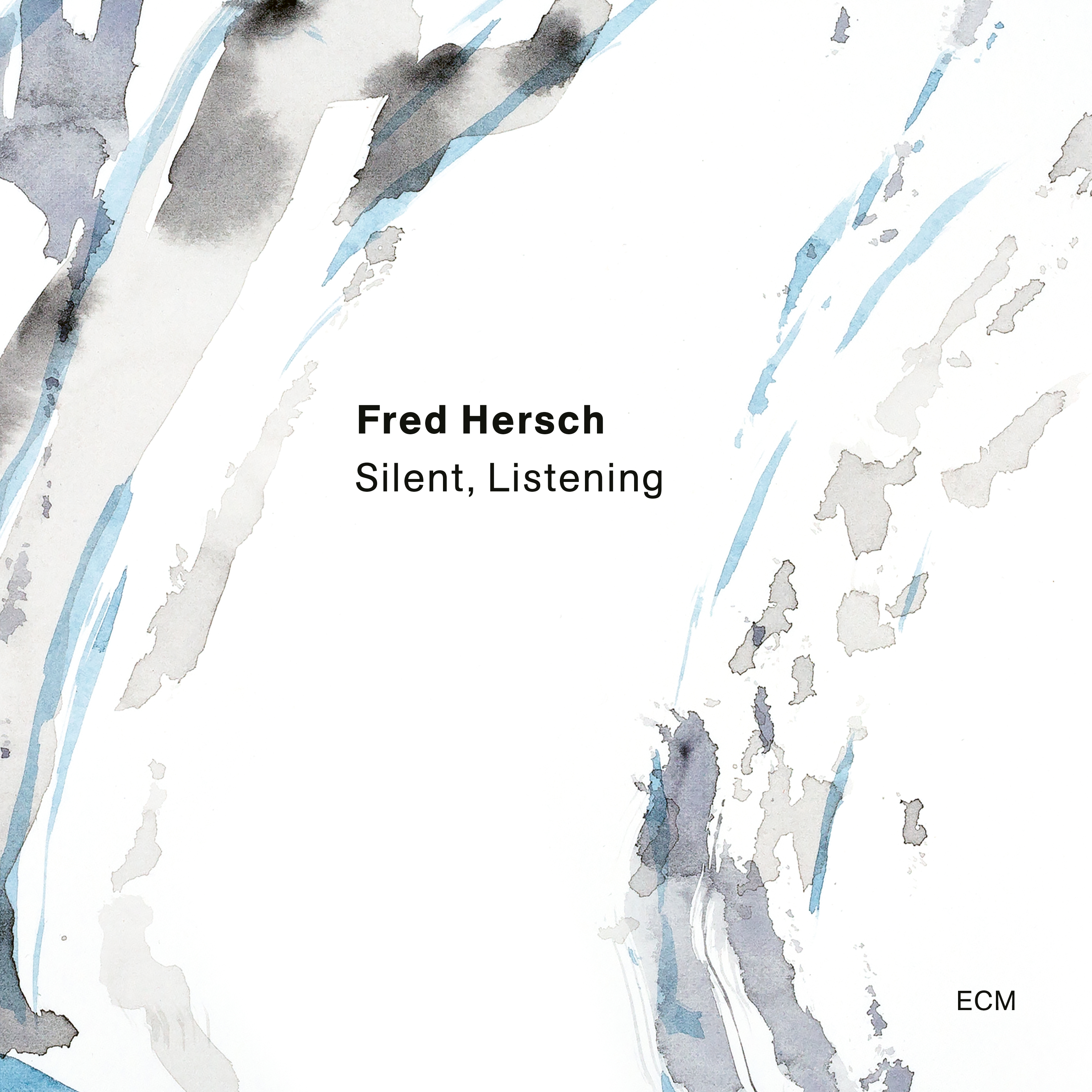
Enrico Rava/Fred Hersch: The Song Is You (ECM 2746)

Enrico Rava
Fred Hersch
The Song Is You

Enrico Rava flugelhorn
Fred Hersch piano
Recorded November 2021
Auditorio Stelio Molo RSI, Lugano
Engineer: Stefano Amerio
Cover: Fidel Sclavo
Produced by Manfred Eicher
Release date: September 9, 2022

Pianist Fred Hersch makes his ECM debut in intimately grand fashion with maestro Enrico Rava on flugelhorn. Their meeting at Lugano’s Auditorio Stelio Molo RSI yields some of the most effortless jazz you’ll likely hear this year. Hersch’s opening embrace eases us into Antônio Carlos Jobim’s “Retrato em Branco e Preto” as if the set could open no other way, fanning expository poetry in place of lantern flame. An old-town quality prevails, navigating cobblestone streets on tiptoe yet never losing its footing.

Contrary to immediate expectation, this is followed by a free improvisation, which tempers the familiar with new shades of meaning. George Bassman’s “I’m Getting Sentimental Over You” gets a delicate and rhythmically endearing treatment, while the title track by Jerome Kern is enigmatically transformed into a crystalline snowdrift of memory. Thelonious Monk’s “Misterioso” walks a fine line between dream and reality, giving way to artful abstractions that reveal two minds with lifetimes more to say, as do the originals that precede it. Whereas “Child’s Song” (Hersch) conveys innocence with a nostalgic, summery feel that harks to yesteryears, “The Trial” (Rava) renders an entanglement of spiral staircases and other modern architectural details. All of this leaves Hersch alone with “’Round Midnight,” floating into the promise of a new day, uncertain though it may be.

These musicians achieve the extraordinary by sounding like one unit without sacrificing their voices. They dance as few know how, unfolding a love letter one page at a time until only a wax seal seems appropriate to protect its contents from the sun’s bleaching touch.

Julia Hülsmann Quartet: The Next Door (ECM 2759)

Julia Hülsmann Quartet
The Next Door

Uli Kempendorff tenor saxophone
Julia Hülsmann piano
Marc Muellbauer double bass
Heinrich Köbberling drums
Recorded March 2022
Studio La Buissonne, Pernes-les-Fontaines
Engineer: Gérard de Haro
Mastering: Nicolas Baillard
Cover photo: Thomas Wunsch
Produced by Thomas Herr
Release date: August 26, 2022

Although Julia Hülsmann has crafted a hearty sequence of trio records for ECM, including 2017’s Sooner and Later, there has always been something even more intimate and honed about her quartet with tenor saxophonist Uli Kempendorff, bassist Marc Muellbauer, and drummer Heinrich Köbberling, as is refreshingly obvious throughout “Empty Hands,” in which Hülsmann throws notes like petals onto the waters of life to see where they might flow. As they did on this album’s predecessor, Not Far From Here, these effortlessly attuned musicians navigate her sound with familial affinity. After “Made Of Wood” deconstructs the introductory mood, a melodic breeze wafts over the keys, carrying over into “Jetzt Noch Nicht.” Taking two forms—initially as a duet with Kempendorff, later as a swinging outing for all four—it delicately offsets tracks like “Fluid,” an emblematic realization of their capabilities that rejoices in the ongoing moment.

Muellbauer contributes three originals with a more geometric approach to time and harmony. In his “Polychrome,” the piano is a wavering shadow, the saxophone a refraction of light stepping sideways past us, while in “Wasp At The Window,” a locomotive whimsy ensues. The landscape outside our window remains the same, but its description changes along the way. Hülsmann’s ability to carry so much cargo in so fine a mesh is marvelous. Kempendorff and Köbberling offer a tune apiece. The former’s “Open Up” balances emotiveness and restraint, and the latter’s “Post Post Post” is a standout for its liminal expressivity.

No Hülsmann set would be complete without an ode to the popular canon, and her reading of Prince’s “Sometimes It Snows In April” is no exception. With charming comfort, it promises hope at the end of a long and harmful tunnel that none of us saw coming.

Paul Giger: ars moriendi (ECM New Series 2756)

Paul Giger
ars moriendi

Paul Giger violin, violino d’amore
Marie-Louise Dähler harpsichord, chest organ
Pudi Lehmann gongs, percussion
Franz Vitzthum alto
Carmina Quartett
Matthias Enderle violin
Susanne Frank violin
Wendy Champney viola
Stephan Goerner violoncello
Recorded January 2015
Chiesa Bianca, Maloja
Engineer: Peter Laenger
Guggisberglied was recorded 2021 in Walenstadt
Cover photo: Jan Kricke
An ECM Production
Release date: August 26, 2022

The music of Paul Giger became a part of my blood when I first encountered 1989’s Chartres. Not since J. S. Bach’s Sonatas and Partitas had I understood just how architecturally robust the violin could be, to say little of 1993’s Schattenwelt, which introduced his violino d’amore, a custom instrument with five main and six sympathetic strings. If those early albums were temples of the spirit, then ars moriendi is a waystation of the flesh—if not vice versa. The ambiguity of such distinctions gives the album a timeless charge. Across the pages of its cavernous imaginings, Giger writes a real-time scripture of inspiration, building on echoes of lives before and since.

His mythologically tinged Guggisberglied, reinterpreting a popular Swiss folk song of unrequited love and the life one gives up in its name, follows a tracking shot of the human form, shifting in varying degrees of inevitability between innocence and decay. Cradled by the hush of flowing water, what we once saw as shadows are now the shadows of shadows. Such subtlety of framing and placement of subjects is possible only in one whose mind works as a camera. Giger looks within from without, the tones of other cultures beating his drum. The violin body is a percussive force, a multitracked orchestra of emotional instruments. Giger also plucks the lower strings in qanun fashion. Currents of molecular awareness caress the riverbank, praying for a peaceful transition into lifelessness.

The latter sentiment connects to the overarching title. “In the late Middle Ages,” explains Giger in a liner note, “a literary genre of devotional books illustrated with woodcuts flourished under the name ‘ars moriendi.’ They gave instructions on how to ‘die well.’ The purpose of this tradition was to attune the soul to the ‘art of dying’ in order to save it for eternity. Music is also an ars moriendi, an exercise in the ‘becoming’ of a note, of ‘being’ in sound and of ‘passing’ into silence—or into an inner reverberation.” These concepts refer to a triptych of Tyrolean painter Giovanni Segantini, subject of the eponymous documentary by Christian Labhart, for which Giger wrote the music. Selections from that soundtrack take up much of the present album, including three stages of Agony. In the company of percussionist Pudi Lehmann (gongs, singing bowls, frame drum, and conch shell), keyboardist Marie-Louise Dähler (harpsichord and chest organ), and the Carmina Quartett, he builds a tower of wonder one layer of stone at a time until time itself is suspended. As ice dissolves into water and further into steam, the violino d’amore opens light to reveal its individual colors, loosening the bonds of the material within the immaterial through the inherent art of refraction. Zäuerli mit Migrationshintergrund is rooted in the Swiss yodel, harking to 1991’s Alpstein, albeit in far subtler clothing.

Transcriptions of Bach carry over from the film, including two for violin and harpsichord (the choral prelude “Ich ruf’ zu dir, Herr Jesu Christ” and the Largo from the Sonata No. 4 in c minor), angling the mirror of our lives into a cell of collective memory where melodies play on repeat. There is also “Erbarme dich” from the St. Matthew Passion, as sung by alto Franz Vitzthum in a breathtaking arrangement for violin, chest organ, and strings. Vitzthum’s beauties culminate in Giger’s Altus solo II, stitching ground to sky with threads of silver. In the harpsichord’s tactile light, a mournful catharsis takes shape. Like M. C. Escher’s Rind, it suggests a face. Whether forming, unraveling, or holding its own against a patchwork of clouds, its eyes remain fixed on memory.

Patricia Wolf: I’ll Look For You In Others

“What is grief? Can only the sun name its layers?” So writes Edie Meidav in her lyric novel, Another Love Discourse. What the author soliloquizes through words on a page, Portland, Oregon-based electronic musician Patricia Wolf actualizes through synthesizers, algorithms, and the emotional transistor of her own throat and lungs. Written and recorded in 2020 following the loss of her mother-in-law and a close friend, I’ll Look For You In Others treats the interface of flesh and technology as a force to birth something meaningful in the wake of deaths that may feel meaningless.

These messages activate every molecule of “Distant Memory,” which in its first breaths betrays the oxymoron of its title: No matter how distant a memory may seem, it is always nearer to us than any external trigger. Memories are as much a part of us as the oxygen and neurons that complicate them, and I cannot walk through this music without feeling accompanied by the echo of a past self who knew no better than to live as if mortality were a tragic lie. Every swell, pulled from the corona of active denial, finds its way into acceptance. And yet, “The Culmination Of” reminds me of the darker times when solitude cultivates necessary mourning beyond the prying eyes of those who care a little too much. Here, as in the title track and “Severed,” the human voice sheds its communicative uniform in favor of raw expression.

It’s a stark reminder that even if we haven’t lost someone directly over the past three years, the pandemic has turned us all into targets of its burning arrows. In the eyes of a virus, there is no parsing of memories into categories to be filed until we are ready to reckon them. Rather, it destroys what it can, mutating when it can’t, and scars the skins of souls. Such is the tenor of “Funeral,” in which an organ bleeds across the floor of a chambered heart, even as the light of dawn cracks a smile through tear-stained windows. And though we are left to wander with only pieces to show for our future, “Recombination” is possible with that near-magical glue of cohesion: time.

In the same way that the absence of bodies magnifies the presence of spirits, “Lay to Rest” throws a handful of slow-motion dust onto the coffin in emphasis of the bereaved funneling its descent. And while “Letting Go” promises closure, it may just be another link in the chain that binds the living and the dead. If anything, loss is an opportunity, and an opportunity is a portal of transformation. We cannot go through Wolf’s journey without being changed, knowing that loss has sewn its threads through all of us.

To quote Meidav again: “On the wheel of feelings, is wonder the true antonym of grief?” If so, this album is a wonder of healing at a time when the world itself has been reduced to an ailing organism in more ways than one. Let it hold you close, never letting go until your cheeks are dry.

I’ll Look For You In Others is available on bandcamp here.