Steve Tibbetts: Hellbound Train (ECM 2656/57)

Steve Tibbetts
Hellbound Train

DISC I
Steve Tibbetts guitars, kalimba, percussion
Marc Anderson congas, percussion, gongs
Jim Anton bass (1, 2, 3, 4, 6, 9)
Eric Anderson bass (1, 8, 9)
Bob Hughes bass (10, 11)
Mike Olson synthesizer (7)
Marcus Wise tabla (8, 10)
Claudia Schmidt voice (1, 9)
Rhea Valentine voice (1)
DISC II
Steve Tibbetts guitars, dobro, piano, kalimba
Marc Anderson congas, percussion, steel drum, gongs, handpan
Michelle Kinney cello, drones (9, 10, 11, 16)
Bob Hughes bass (15)
Tim Weinhold vase, bongos (15)
Marcus Wise tabla (3)
Recorded 1981-2017
Mastered by Greg Reierson
at Rare Form Mastering, Minneapolis
Cover photo: Lucas Foglia
Album produced by Manfred Eicher
Release date: July 1, 2022

“The Best Steve Could Do” is how Steve Tibbetts describes Hellbound Train, a sweeping anthology of works drawn from his decades-long trek across internal and external terrains. The Minnesota-based guitarist and composer selected tracks for this double-disc effort in terms of how well their beginnings and endings suggested connections in an emerging (if malleable) whole. Holding it all together is the trust he shares with his musicians, including percussionists Marc Anderson and Tim Weinhold, tabla player Marcus Wise, bassists Jim Anton, Eric Anderson, and Bob Huges, and cellist Michelle Kinney, among others. In sampling his ECM traversal through Northern Song (1982), Safe Journey (1984), Exploded View (1986), Big Map Idea(1989), The Fall Of Us All (1994), A Man About A Horse (2002), Natural Causes (2010), and Life Of (2018), we are privy to an artist whose instruments are as fleshy as his flesh is instrumental.

Disc I begins with light, as such experiences often do: the glow of an ember, the first twinkle at dusk, the glint in a child’s eye. In search of roadside rest, the itinerant Tibbetts coaxes an all-out percussive mantra from the thickets flanking his path. This is the setting of “Full Moon Dogs,” one of four vital organs transplanted from The Fall Of Us All. An electric guitar courses over this landscape with the charge of a meteor shower. As in “Nyemma” (a lunar spotlight on the voice of Claudia Schmidt) and “Roam And Spy,” he makes his choice—and a fire—to settle in for the night. What follows is not a peaceful slumber, though tranquility is never far away, sharing one image after another until a story takes shape.

Five signposts from A Man About A Horse rise like telephone poles against the Milky Way, strung with trajectories of communication to take upon waking. Whether through the clopping rhythms of “Chandoha” or the sputtering lantern light of “Lochana,” a sense of unease builds to the dyad of “Black Temple” and “Burning Temple,” wherein smoke rules the day. In the aftermath of “Glass Everywhere,” hints of violence dissolve into a brief exchange of voices and laughter.

Despite its destructive qualities, fire is a constant companion, fueled at every turn by the gristle of truth. Tibbetts survives by flinging his 12-string bola at the agile game embodied by hands on drums. The sunlight grows stronger in the elastic nostalgia of “Your Cat” (our sole dip into Exploded View), intersecting the ecliptic of “Vision.” The latter encounter foreshadows the standout selections from Safe Journey on Disc II, including the sacred congregation of kalimba, steel drum, and reverberant picking that is “Climbing” and the masterful “Night Again” and “My Last Chance.” With so much scintillation to chew on, it’s a wonder we don’t turn into comets in the process of listening to them. Big Map Idea compels five entries in this sonic diary, including a nod to Jimmy Page (“Black Mountain Side”) and an excerpt from “Mile 234,” an excursion marking time more than distance.

Grander biomes await us in two tracks from Northern Song. Whereas “The Big Wind” is a winged groove, “Aerial View” feels somehow connected to the earth—so much so that their titles could be reversed and still feel accurate. Life Of sends out four of its offspring, reared in the shadows of Natural Causes, of which “Chandogra” is the epitome of renewal. As if first setting out, our feet no longer have callouses, our muscles are strong, and our packs are heavy. We look upon the open road not as a burden but as an invitation. The only answer to our call resounds in the final “Threnody,” a guitar without a need beyond the hymn it holds against the sun as a compass for all who might come after.

An ethereal souvenir from places we will never visit, Hellbound Train struggles against the current of any vocabulary. This is the best can do to tell its story. A must-have for Tibbetts fans and an ideal place to start for those fortunate to hear any of this music for the first time.
Carolin Widmann: L’Aurore (ECM New Series 2709)

Carolin Widmann
L’Aurore

Carolin Widmann violin
Recorded July 2021
Auditorio Stelio Molo RSI, Lugano
Engineer: Markus Heiland
Cover photo: Wilfried Hösl
Produced by Manfred Eicher
Release date: June 17, 2022

Although L’Aurore represents violinist Carolin Widmann’s seventh ECM appearance, this is her first solo program for the label, making it the culmination of the many potent strands she has woven to get here. Hearing her breathe through the Spiritus sanctus vivificans vita of Hildegard von Bingen (1098-1179), which opens the program with fundamental monophony, is equivalent to the feeling of recovering from a long illness, taking in mundane details with renewed appreciation. The angular vigor of the Fantaisie concertante by George Enescu (1881-1955) that follows reminds us further of the need to absorb as much of our surroundings as possible if we are to give back more to the world than it has given us. Widmann’s ability to bring verve to the most leaping gestures and quietest rasping of the bow ensconces the motivations of this rarely performed treasure she calls a “sweeping melisma” of improvisational qualities. Contrasts of pulchritude and decay leave us marveling over a gray area where no single impression overwhelms another. Any keen listeners drawing a line from here to the work of Eugène Ysaÿe (1858-1931) are rewarded by his Sonata No. 5 in G major, op. 27, the first movement of which yields this album’s title. Its multivalence drips from Widmann’s fingers like rain from leaves after a storm, her double stops leaving trails of light as she works her way toward the “Danse rustique.” Here, the mood is somehow airier, despite the denser textures and grounded form, though at no expense of emotional savor. Between these giants are the no-less-powerful Three Miniatures of George Benjamin (b. 1960). With an economy of expression that makes every note count, each tells its dedicatory story in lucid terms. In doing so, what otherwise might seem like fleeting shifts in more florid writing take on a stark significance. The central piece, in particular, stirs the soul with its elasticity.

After revisiting Hildegard’s antiphon, Widmann takes us on a journey through the Partita No. 2 in D minor of J. S. Bach (1685-1750), a piece she felt prepared at long last to present in the studio. And while it concludes the disc, it feels more like a renewal. The minutiae of her caring spirit are immediately apparent in the caressing Allemanda, from which a personal ethos of direct communication shines in welcome. Over the next three movements, she turns the mirror to capture flashes of light, fragments of dreams, and memories of better times. All’s well that ends well in the epic Ciaccona, which for Widmann is “an epitome of life” (as is Hildegard, she is quick to add). Without apparent force yet with total conviction, she renders its details with the control required to wield a feather quill. Every mark confirms the need for ink and paper, without which these leaves of the human spirit might fall from the trees of history, leaving its forest bereft of fruit.

Danish String Quartet: PRISM IV (ECM New Series 2564)

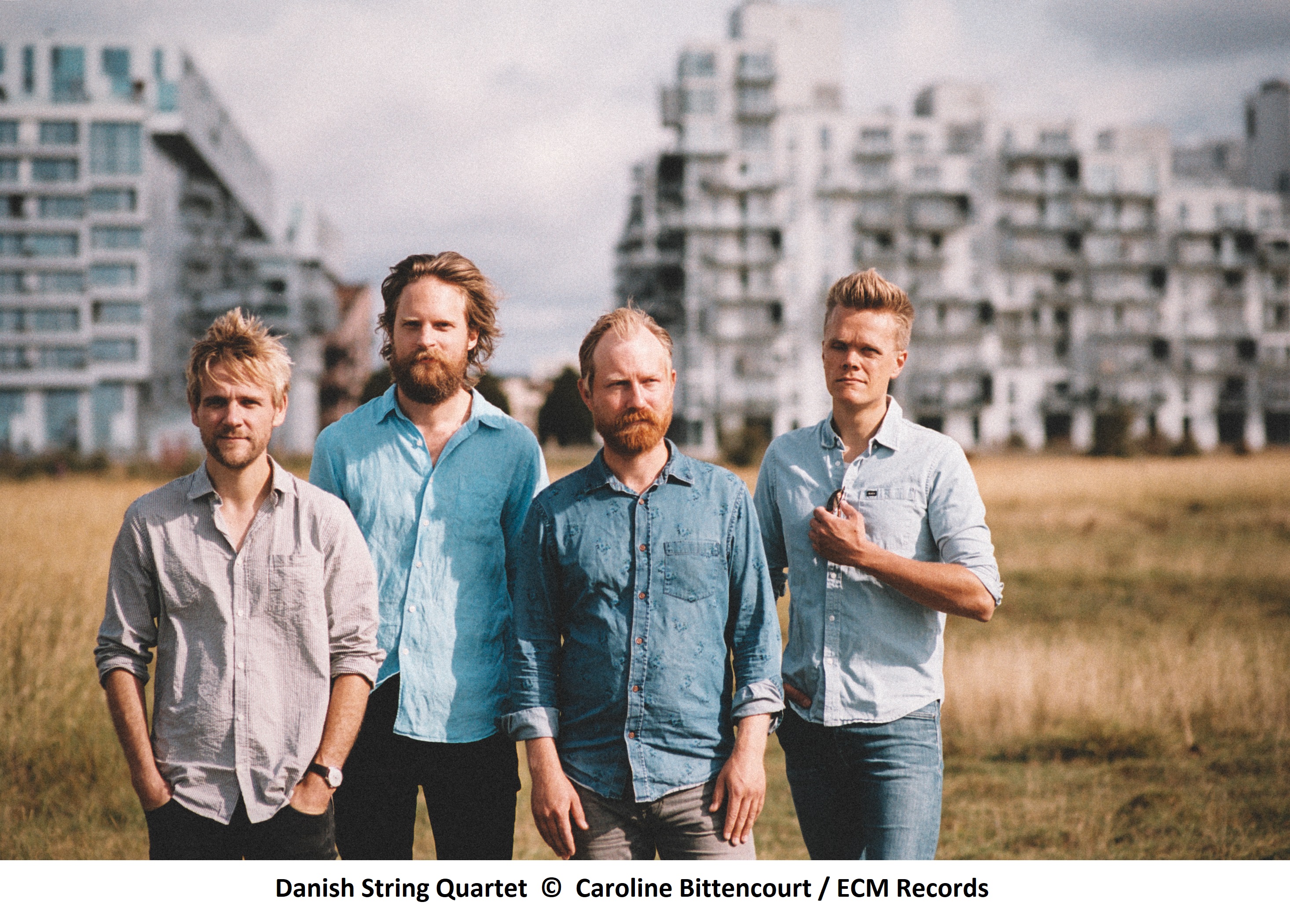
Danish String Quartet
PRISM IV

Danish String Quartet
Frederik Øland violin
Rune Tonsgaard Sørensen violin
Asbjørn Nørgaard viola
Fredrik Schøyen Sjölin violoncello
Recorded September 2018, Reitstadel Neumarkt
Engineer: Markus Heiland
Cover: Eberhard Ross
Produced by Manfred Eicher
Release date: June 3, 2022

For this fourth installment of the PRISM series, the Danish String Quartet strikes its boldest combination of light and shadow. By starting with the Fugue in G minor, BWV 861, from Book I of Johann Sebastian Bach’s The Well-Tempered Clavier (as arranged by Emanuel Aloys Förster), it wears on its sleeve the subtle élan that permeates all to follow. Its textures are those of a piece of clothing one has worn for years, every memory connected with it coming to life in déjà vu. Stepping outside of that outfit and into another embroidered with the name “Ludwig van Beethoven,” it’s impossible to think of the String Quartet No. 15 in A minor, op. 132, as anything less than an unpacking of the gift we have just received. The opening forgoes Bach’s expansiveness, tracing ropes all the same but this time in less of a macrame and more of a sailor’s knot. The second movement, marked Allegro ma non tanto (“Fast, but not too much”), gives ample room for the musicians to spread their leaves in a canopy porous enough to nourish the forest floor with sunlight. The balance of urgency and patience is exemplary. A shift halfway through into sustained harmonies pushes hues of glory between the trees. The 18-minute third movement is like a pond in that while its surface appears tranquil, we are aurally edified regarding the undercurrents and other invisible forces keeping its waterline steady. A methodical seesawing between straight tones and vibrato amplifies a voice of literary dimension, circling clockwise from prologue to epilogue. Only then do we get the retrospective excitement of the fourth movement (a brief march), followed by the shifting plates of the fifth. When pizzicato punctuations from the cello signal the final stretch, a feeling of sadness eclipses the ears. Thus, any happiness we might have found must be returned to sender, leaving us to wonder when we will ever meet again.

It’s poignant to consider that Beethoven was just months from leaving this world behind when Felix Mendelssohn, then a tender 18, composed his String Quartet No. 2 in A minor, op. 13. Mendelssohn’s exploratory ethos was ripe for transplanting the influences of Beethoven’s Opus 132, watering them into a piece that overlapped in technical similarities even as it deviated in extroversion. Such is the spirit of the first movement, in which vertical and horizontal motifs favor parallel paths over common ground, so to speak. The Adagio that follows develops with nondescript urgency. The viola is especially robust as the violins circle overhead, high but never out of sight. The third movement is a delectable exercise in playfulness that foreshadows the pastoralism of Antonín Dvořák. Its abrupt ending gives us pause before the drama of the finale opens the quartet’s thickest curtain to reveal a densely populated scene, likewise open-ended in its resolution.

If any of the above reads evocatively, it’s because these Danes make it impossible to experience this program any other way. Their approach to synergy is as carefully planned as it is spontaneous, and with only one more volume to go, we have much to look forward to as this journey reaches its destination. At that point, however, we are likely to realize how much further we have yet to go in our listening.

Radio Interview for Situation Fluxus

On September 30, 2021, I had the honor of being interviewed, along with Stef Gijssels and Paul Acquaro, founder and managing editor, respectively, of The Free Jazz Collective, for Situation Fluxus at WGXC to discuss the art and politics of reviewing music. Special thanks to host Cheryl K. Symister-Masterson for having us on! To access the interview, click the logo below, click “Audio” on the righthand side of the page, then click the show title in the dropdown. The interview starts at around the 8:14 mark.

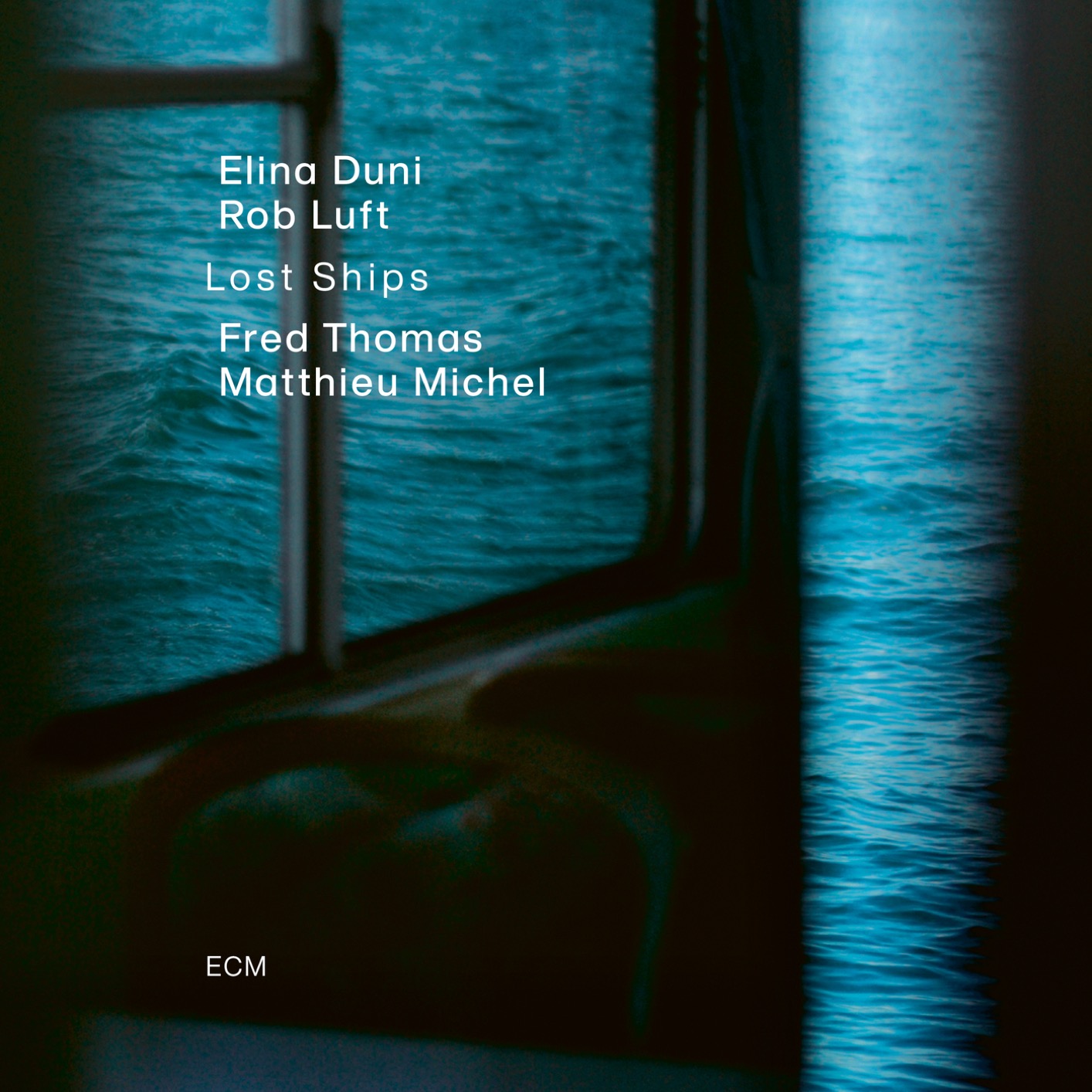
Elina Duni/Rob Luft: Lost Ships (ECM 2689)

Elina Duni
Rob Luft
Lost Ships

Elina Duni voice
Rob Luft guitar
Fred Thomas piano, drums
Matthieu Michel flugelhorn
Recorded February 2020
Studios La Buissonne, Pernes-les-Fontaines
Engineer: Gérard de Haro
Mastering: Nicolas Baillard
Cover photo: Jean-Paul Dumas-Grillet
Album produced by Manfred Eicher
Release date: November 13, 2020

You’ll have to flee,
But you’ll carry
This relentless sea,
Echoing in you, for always.

With this lyric, Elina Duni and Rob Luft share the secret of their collaborative masterpiece, Lost Ships. Between themes of migration and ecological failure, interspersed with memories of times and places, the Albanian-Swiss singer and British guitarist turn the spirit of contradiction inside out over and over until the differences blur beyond recognition. The track yielding this poetic observation, an ode to the wind entitled “Brighton,” is a veritable curtain of sound billowing in breath. Before that, however, the Italian lullaby “Bella Ci Dormi” (Beauty, You Sleep) elicits the album’s first declaration. Whereas we might normally think of such singing as marking the closing of a day, this feels more like the opening of one. The pianism of British multi-instrumentalist Fred Thomas and lilting guitar exude the same grammar. Other traditional gems, including the Albanian “Kur Më Del Në Derë” (When You Appear At Your Doorstep) and the American “The Wayfaring Stranger,” remind us that nothing has truly changed from when they were first unearthed.

“Flying Kites” is one of the many journeys herein penned by Duni and Luft and stands out for its instrumental unraveling, especially in the playing of Swiss flugelhornist Matthieu Michel, who completes the ensemble. Further originals include “Numb,” a timely plea for forgiveness, and the title song, a shapely construction that travels in curves even as it speaks straight to the heart. Another is “Empty Street,” a duet that turns ghosts into signposts for those living in the wake of their demise…

No matter what Duni touches, she turns into something far more precious than gold: time incarnate. A marvelous example is her rendition of Frank Sinatra’s “I’m A Fool To Want You.” As a lantern hanging from the outstretched hand of a dark past, it seeks redemption in an era that has forgotten its meaning. At Duni’s lips, the words remind us of just how sharp the edges of hope can be. And in making Charles Aznavour’s “Hier Encore” her own, to the sole accompaniment of an acoustic guitar, she helps us understand that nature stands in the way of love when our love of self stands in the way of nature.

Lost Ships carves a special line in ECM’s broad waters, and to its fleet I would add Amina Alaoui’s Arco Iris, Arianna Savall/Petter Udland Johansen’s Hirundo Maris, and Norma Winstone’s Somewhere Called Home for worthy company. As such comparisons should imply, it is more than a recording; it is a voyage, contrary to its title, of being found.

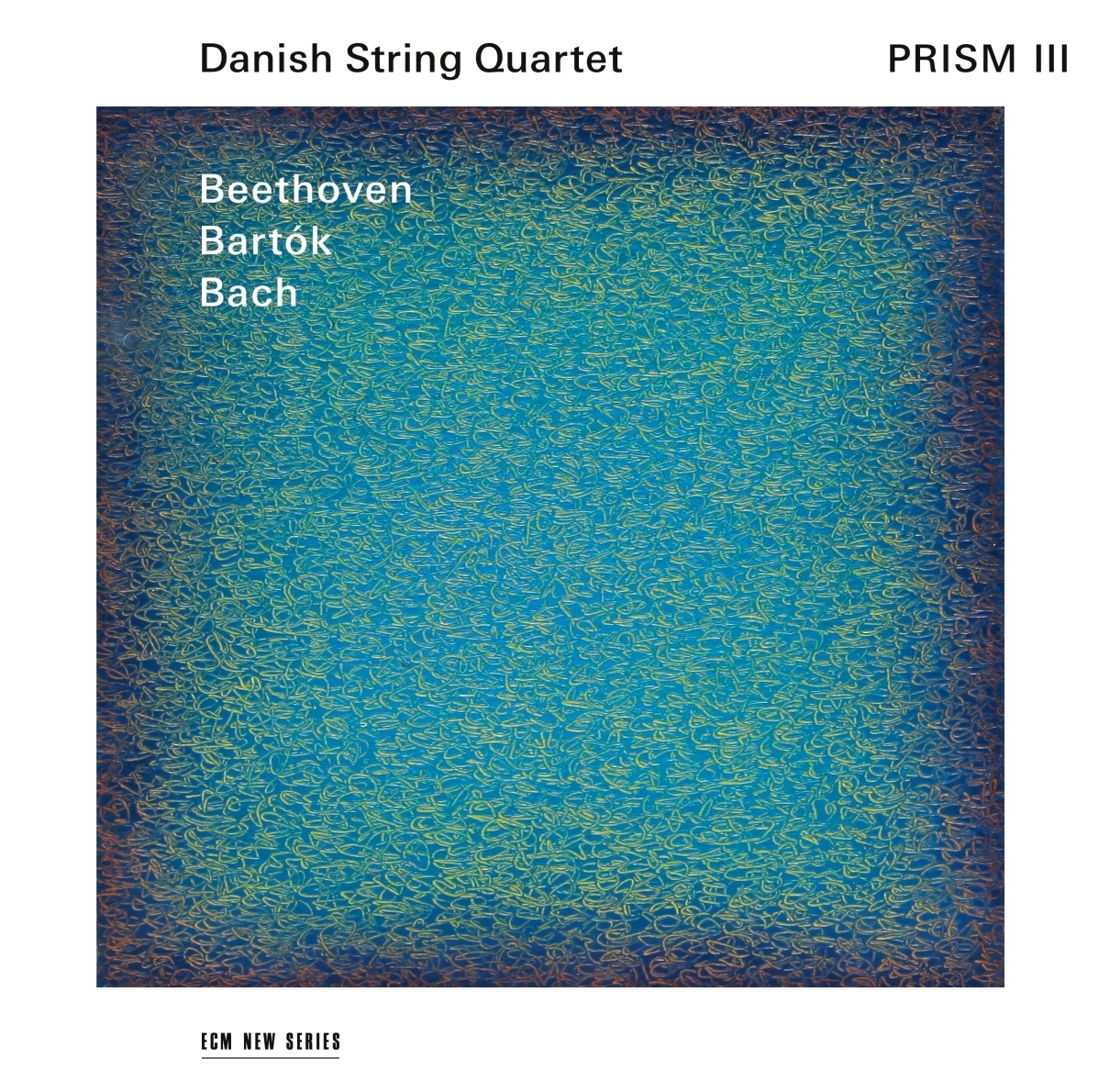
Danish String Quartet: PRISM III (ECM New Series 2563)

Danish String Quartet
PRISM III

Danish String Quartet
Frederik Øland violin
Rune Tonsgaard Sørensen violin
Asbjørn Nørgaard viola
Fredrik Schøyen Sjölin violoncello
Recorded November 2017, Reitstadel Neumarkt
Engineer: Markus Heiland
Cover: Eberhard Ross
Produced by Manfred Eicher
Release date: March 12, 2021

Ludwig van Beethoven’s five late quartets must be reckoned with. In the words of the Danish String Quartet, presenting the String Quartet No. 14 in C-sharp minor of 1826, they “changed the game.” In saying as much, we might very well ask ourselves: What was the game to begin with? How far back does it go? With whom did it start? Augmenting the famous profession that “all roads lead back to Bach,” this recording charts as many paths forward as it does retrospectively. As for the game itself, we can say that it involves not only musical idioms but also hints of visual art, literature, religion, war, migration, and, dare I say, hope.

To know Beethoven’s Op. 131 is to take a full view of humanity, with all its triumphs and tragedies. The opening Adagio, the first of seven movements, spins fibers of tenderness into a muscle that flexes in tune with emotional suspensions, thus emphasizing the DSQ’s fitness as much as the composer’s. The Allegro that follows surprises with dance-like energies but may just as easily be interpreted as a coping mechanism against the grief that preceded it. Its extroversions are deeply entwined with introversion. Other movements, like the lively Presto, share their secrets more openly, taking on a litheness of clarity rarely heard in other renditions. The closing Allegro wears its heart on its sleeve just as securely, emboldening (not flaunting) its awareness as a modus operandi of exposition. But it’s in the gargantuan fourth movement, a nearly 15-minute Andante, where most of this vessel’s cargo is tallied in its keep. What begins as a spider’s thread of narrative sweetness morphs, as if in answer to the subtle insistence of the cello’s pizzicato, into a fog of impressions that resolves itself into a dew of urgent memories. All the more fitting that this quartet was never performed in the composer’s lifetime. For while its mixed receptions have morphed into high regard, the music reminds us of the necessarily contrasting organs in its body. As these meticulous musicians remind us, none will function on its own but only when connected to the larger whole.

For his String Quartet No. 1, op. 7, Sz. 40 (1909), Béla Bartók took inspiration from Beethoven’s opus 131. Both open in lament. That said, Bartók evokes a distinct shade of darkness made modern not only by its tonality but also in the interpretation so lovingly given here. The DSQ enhances the piece’s metallic sheen without neglecting the patina it already had when first composed. When the viola announces itself in the opening Lento, it does so not out of desperation but infirmity. At this point, the heart is already so weakened that beating its drum feels like an uphill climb. Somehow, Bartók affords us a view of the valley to show that achievement means nothing without hardship. Even the Allegretto that follows emerges hesitantly, an animal out of hibernation before proclaiming its heritage. The digging cello of the Introduzione that follows sets up the storytelling of an Allegro for the ages. The atmosphere is chiseled in something more durable than stone: an alloy of reinforcement made possible only by the laying of human hands on natural materials. Forgoing any illusion of permanence (everything decays), Bartók recognizes that imperfection is always a reliable receptacle for creative ideas. As the strings move—sometimes in unison, mostly apart—they prove that cohesion isn’t always obvious or visible. Rather, it is born through the message of interpretation. Every gesture of insistence in the violins gives way to glorious resolution, jumping from the edge of a collective inhalation. Is this triumph or just a return to baseline? You decide.

Because Beethoven was deeply inspired by Johann Sebastian Bach’s The Well-Tempered Clavier, it only makes sense to include a fugue (this one in C-sharp minor, the very key signature used in Beethoven’s 14th quartet), as arranged by Emanuel Aloys Förster. Its tessellated configuration is a breath of higher origin, smoothing over the postmodern cracks with a reminder of what makes beauty earn its name: the scars of our destitution.

Tord Gustavsen Trio: Opening (ECM 2742)

Tord Gustavsen Trio
Opening

Tord Gustavsen piano, electronics
Steinar Raknes double bass, electronics
Jarle Vespestad drums
Recorded October 2021
Auditorio Stelio Molo RSI, Lugano
Engineer: Stefano Amerio
Cover photo: Thomas Wunsch
Produced by Manfred Eicher
Release date: April 4, 2022

A new Tord Gustavsen Trio album is cause for quiet celebration. In that regard, ECM’s characteristic five seconds of opening silence feel most appropriate, at once an obstacle to and a cushion for our expectations. With the introduction of new bassist Steinar Raknes, the feeling of revival is palpable.

Melodies are treated as structural suggestions rather than prescriptions, allowing them to travel as a cartographer would, knowing the general layout of the land but never the details until they fall under foot. Being invited along for the journey is an honor I do not take for granted. Neither do these introspective artisans take the creative act for granted, as “The Circle” proves with open arms. It is the embrace of a friend we haven’t seen since the world became socially distanced yet whose presence never left, our ears receiving the kiss of something wondrous. Despite the slight reshuffling of personnel, the communication between Gustavsen and his bandmates is as organic as ever, each signature floating in and out of focus with an overall coherence.

The pianist’s writing is once again the center of this solar system, its light shining brightest on “The Longing.” In only two and a half minutes, this anthemic interlude charts an album’s worth of space and is the epitome of what this trio can accomplish. Other peaks in the proverbial valley include “Shepherd Song” and “Stream,” where soloing is always connected by a wind of regard. Just when it seems Gustavsen might fly off on his own, he reunites with his earthly shadow, never losing sight of home. In the latter tune, I cannot help but feel mourning for the late Harald Johnsen, who once stood where Raknes stands now. Like the Forest Spirit in Princess Mononoke, Raknes leaves slow explosions of floral life, fading as quickly as they blossom. What’s astonishing is how he, Gustavsen, and Vesepstad do all of this in real time, patiently crafting (if not letting themselves be crafted by) a gentle tug of war between echoing and foreshadowing. Such is the progression of life. Raknes must also be commended for bringing electronic enhancements to “Helensburgh Tango” and “Ritual,” in which his bow evokes the guitar of Terje Rypdal à la The Sea (in that same vein, Vespestad’s rolling snare and cymbals nod deeply to Jon Christensen). What sounds more aggressive on the surface, however, bleeds internally with humility.

A few improvised pieces keep us centered while revealing older inspirations and traditions. From the initial examinations of “Findings,” for instance, emerges the Swedish folk song “Visa från Rättvik,” while the album’s title track cloaks itself in a Gurdjieff-esque meditation. Both tracks have their counterparts, offering plenty of carpet on which to step, and not a hardwood floor in sight.

The final two tracks are the only ones not written by Gustavsen. Geirr Tveitt’s “Fløytelåt” (The Flute) takes us into a folkish vastness, widening the path for the metaphysical denouement of “Vær sterk, min sjel,” a Norwegian hymn by Egil Hovland. A conservative yet wholly appropriate statement on which to end, it moves in unison of steps. Here, the widest door is opened, even if the musicians feel no obligation to tell us what’s on the other side. That’s for them to know and us to find out.

Andrew Cyrille Quartet: The News (ECM 2681)

Andrew Cyrille Quartet
The News

Andrew Cyrille drums
Bill Frisell guitar
David Virelles piano, synthesizer
Ben Street double bass
Recorded August 2019 at Sound on Sound, New Jersey
Engineer: Rick Kwan
Assistant engineer: Christopher Gold
Mastering: Christoph Stickel
Cover photo: Caterina Di Perri
Produced by Sun Chung
Release date: August 27, 2021

The News convenes drummer Andrew Cyrille, guitarist Bill Frisell, pianist David Virelles, and bassist Ben Street. One would never guess the ad hoc nature of the quartet (Virelles was a last-minute substitute for Richard Teitelbaum, who bowed out over illness) in light of the cohesions that abound from note one of “Mountain.” Its compassionate declarations describe a peak of sub-equatorial verdancy. Awaiting us at the top is not snow but a clear and sunlit promontory from which to gaze upon the path we are about to follow in subsequent tracks. This is also the first of three tunes by Frisell, whose “Go Happy Lucky” is rendered as an object of dark fascination in Virelles’s pianism, leaving “Baby” to shine for its continuity. As the epitome of this band’s approach to time and space, it glistens with the purity of a virgin spring.

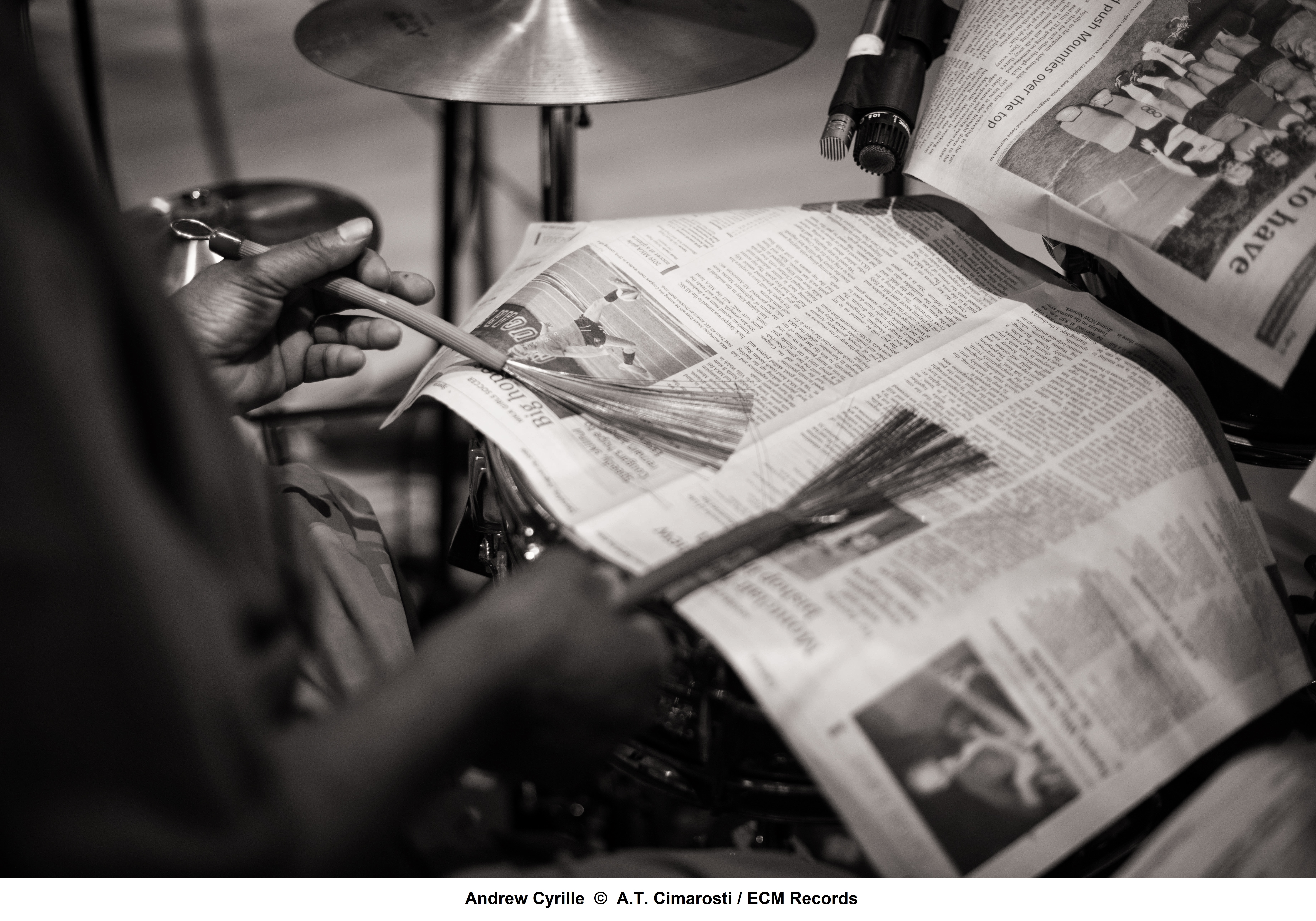
The title track by Cyrille dates back to the late 1970s and involves a newspaper-covered snare drum with rhizomatic touches from his bandmates. This brilliant turn hints at melody but sidesteps the commonality of expectation for the rewards of each unraveling moment. The bandleader further offers his balladic “With You in Mind,” which opens in spoken word. This sets up a late-night feeling from piano and bass, then shifts into Frisell’s meticulous speech-songs as warm organ undercurrents embody a respiration of the soul. Cyrille and Virelles detach in the improvised “Dance of the Nuances,” a delicate web of communication.

Where the pianist thinks outside the box in his playing, he shows restraint in the original “Incienso.” Along with “Leaving East of Java” (by AACM advocate Adegoke Steve Colson), it paints with flowers. In the latter, Cyrille’s cymbals work itinerant wonders as Street’s bass holds a steady watch in the background.

This production from Sun Chung (who has since left ECM to start Red Hook Records) is a masterclass in how jazz should sound when left to define a space. The recording is shaped by the languages we hear, translated out of—and back into—a universal tongue and the great equalizer of all things: nothing less than music itself.

Jon Balke/Siwan: Hafla (ECM 2726)

Jon Balke
Siwan
Hafla

Mona Boutchebak vocals, kwitra
Derya Turkan kemençe
Bjarte Eike Baroque violin, leader
Helge Norbakken percussion
Pedram Khavar Zamini tombak
Per Buhre vocals, viola
Jon Balke keyboards, electronics, tombak
Barokksolistene
Recorded May/June 2021
The Village Recording, Copenhagen
Engineer: Thomas Vang
Recording producer: Jon Balke
Mastering: Christoph Stickel
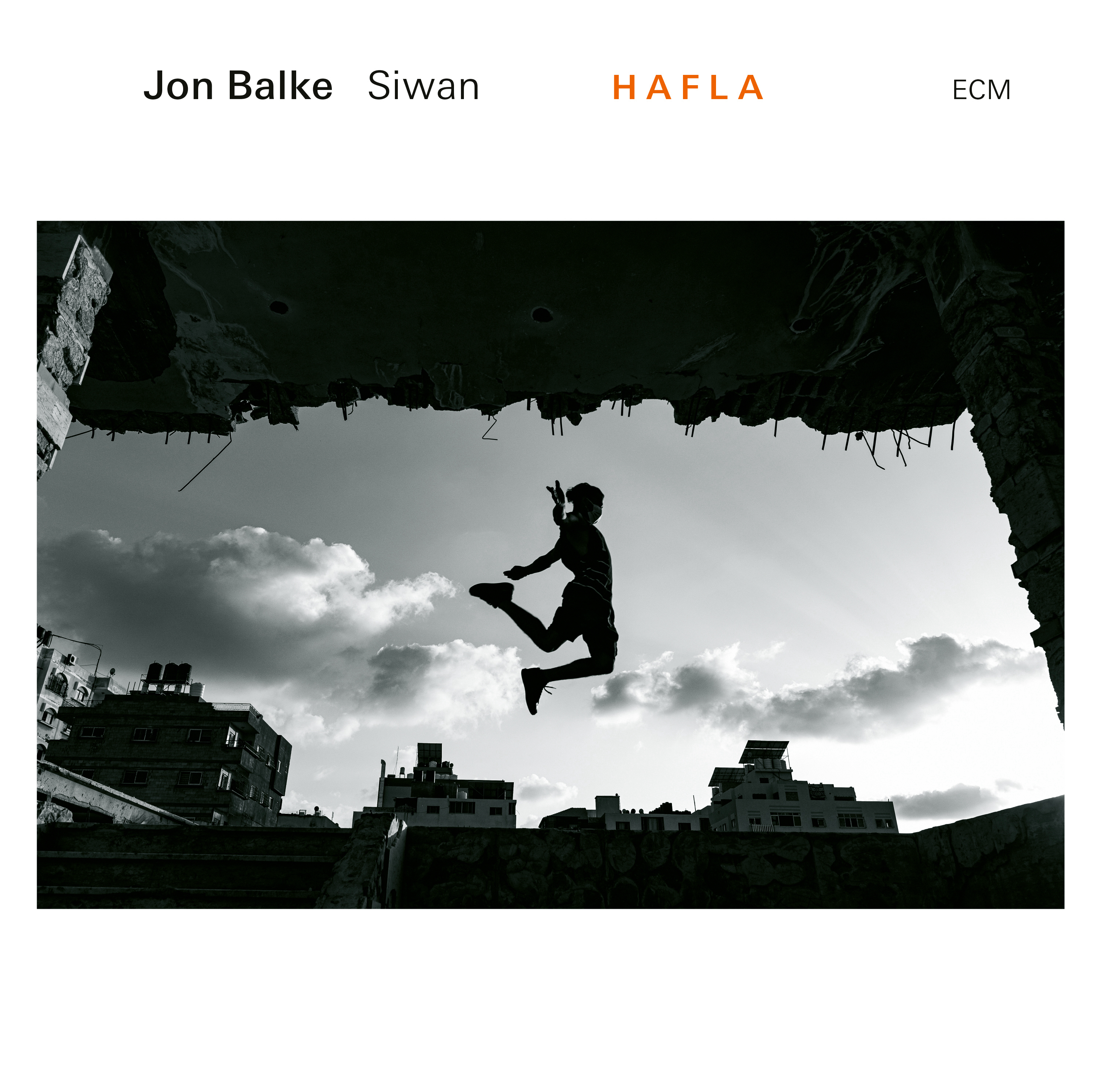
Cover photo: Sarah Murtaja
Executive producer: Manfred Eicher
Release date: April 22, 2022

Hafla is the third go-around for keyboardist-composer Jan Balke and his group, Siwan. Taking inspiration from the cultural melting pot that was al-Andalus yet retying those threads into a friendship bracelet of striking originality, Balke and company retain the character of each idiom while achieving an overall design. Through the talents of Algerian singer Mona Boutchebak, Turkish kamancheh virtuoso Derya Turkan, Iranian tombak master Pedram Khavar Zamini, Norwegian percussionist Helge Norbakken, and violinist Bjarte Eike and his Barokksolistine, Balke summons the utmost familiarity from places and times that far outweigh our experiences as citizens of the 21st century. And while coronavirus restrictions prevented the ensemble from recording in the studio all at once, one would never guess the cutting and pasting required to bring the album to its present form in light of its hermetic coherence.

Balke’s compositions constitute the entire program, save for Boutchebak’s “Mirada Furtiva,” recalling a love so strong that it can never overstep the boundaries of modesty that keep it from consuming itself. Setting the poetry of Ibn Zaydun (1003-1071), the singer accompanies herself on the kwitra (Algerian lute), joined by low stirrings of wires and bows. Zaydun’s lover and the Ummayad princess of Córdoba, Wallada bint al-Mustakfi (1010-1091), is the verbal force behind the program’s opener, “Tarraquab” (Visit). Its lilting character immediately transports us into a cinematic world of strings and percussion. Boutchebak evokes flowing transpositions of bodies into spirits and back again, scenting the evening air with yearnings for touch.

Other poets who find themselves redrawn beneath the Siwan overlay include Ibn Sara As-Santarini (Santarém, 1043-1123), Ibn Sa’id al-Maghribi (Alcalá la Real, 1213-1286), Abu Bakr al-Turtushi (Tortosa, 1059-1126 or 1127), and Ibn Hazm (Córdoba, 994-1064), all of whom express an intimate relationship with that most sensuous interim before the dawn. Whether in the bright harmonies of “La Estrella Fugaz” (The Shooting Star) or the gentle strength of “Diálogo en la Noche” (Dialogue in the Night), we encounter selves divided by pining and expectation. And in “Enamorado de Júpiter” (In Love with Jupiter), the gloom of unrequited affections unfurls a canvas for the brush of a pained lyric:

Knowing well that I am the full moon in the clear sky,
You fell in love with Jupiter, the darkest planet.

Braiding the invisible forces of “Arrihu Aqwadu Ma Yakunu Li-Annaha” and the seeking qualities of “Uquállibu” (Absence), Boutchebak attaches threads of continuity between burning hearts that have only the moon as their messenger. Even the two instrumental interludes, “Línea Oscura” and “Saeta,” seem to communicate in verse, so that when images as powerful as those expressed throughout “Wadadtu” (Is There No Way), in which the desire to become one with another achieves fiery tension, rise to the surface, it is all we can do to hold on to the rhythms for assurance of reaching the shore. As violist Per Buhre sings this song in English against a wash of strings and kamancheh to bid us farewell, the linguistic change of clothing starches the ears, making us realize just how far our tongues have yet to travel.