Anna Gourari: Visions fugitives (ECM New Series 2384)

Visions fugitives

Anna Gourari
Visions fugitives

Anna Gourari piano
Recorded October 2013, Historischer Reitstadel, Neumarkt
Engineer: Stephan Schellmann
Produced by Manfred Eicher

I do not know wisdom—leave that to others—
I only turn fugitive visions into verse.
In each fugitive vision I see worlds,
Full of the changing play of rainbows.
Don’t curse me, you wise ones. What are you to me?
The fact is I’m only a cloudlet, full of fire.
The fact is I’m only a cloudlet. Look: I’m floating.
–Konstantin Balmont, 1903

In 2012, pianist Anna Gourari made her ECM debut with Canto Oscuro, a diurnal recital of such imagination that it begged a sequel. Only Visions fugitives is, despite its modern vintage, more of a prequel, for it opens more of her heart than ever to the listener’s privilege. The title composition by Sergei Prokofiev (1891-1953) is his opus 22 and marks a sensitive turning point in the prolific Russian composer’s oeuvre. Written between 1915 and 1917, the clarity of its 20 miniatures is in full evidence. But as David Nice observes in his biography of Prokofiev, the Visions fugitives also reveals “a new and more disturbing vein of the dynamic malice found in the early piano pieces as well as a more elusive sadness,” and these Gourari elicits with her detailed touch.

Prokofiev seems never to have intended the Visions as a set (the composer himself played no more than a handful in one sitting), but in listening to them as such, one cannot help but notice what Paul Griffiths in his liner text rightly calls their “family resemblances.” And while the title connotes fleeting things, there is something unusually indelible about their impressions. Closer to linked verse than haiku, the suite coheres by virtue of its consistent intimacy. It is, of sorts, an anti-sonata endowed with illustrative prowess, each movement so perfectly flavored that it needs no side dishes: a veritable tapas tasting of thematic subjects, of which only two exceed the two-minute mark. The opening dichotomy sets a tone of blissful regret that, like a pile of shorn wool, is pulled and spun into workable thread. Internal variations work in such a way that each piece, marked only by its tempo, seems a reflection of the one that precedes and a predictor of the one that follows. You may find yourself drawing connections to other composers (No. 8, for example, marked “Comodo,” feels a bit like Satie), but the phenomenological presence of Prokofiev’s score is such that one need hardly reach far to find purchase in between the lines. Some, like Nos. 7 (Pittoresco) and 18 (Con una dolce lentezza), may be incredibly pretty, but resist the plunge into full-on impressionism. Others, like No. 4, 5, 9, 15, and 19 are virtuosic standouts, but speak in tongues of escape over flourish. And in the twentieth Gourari finds a contemplative doorway waiting for her.
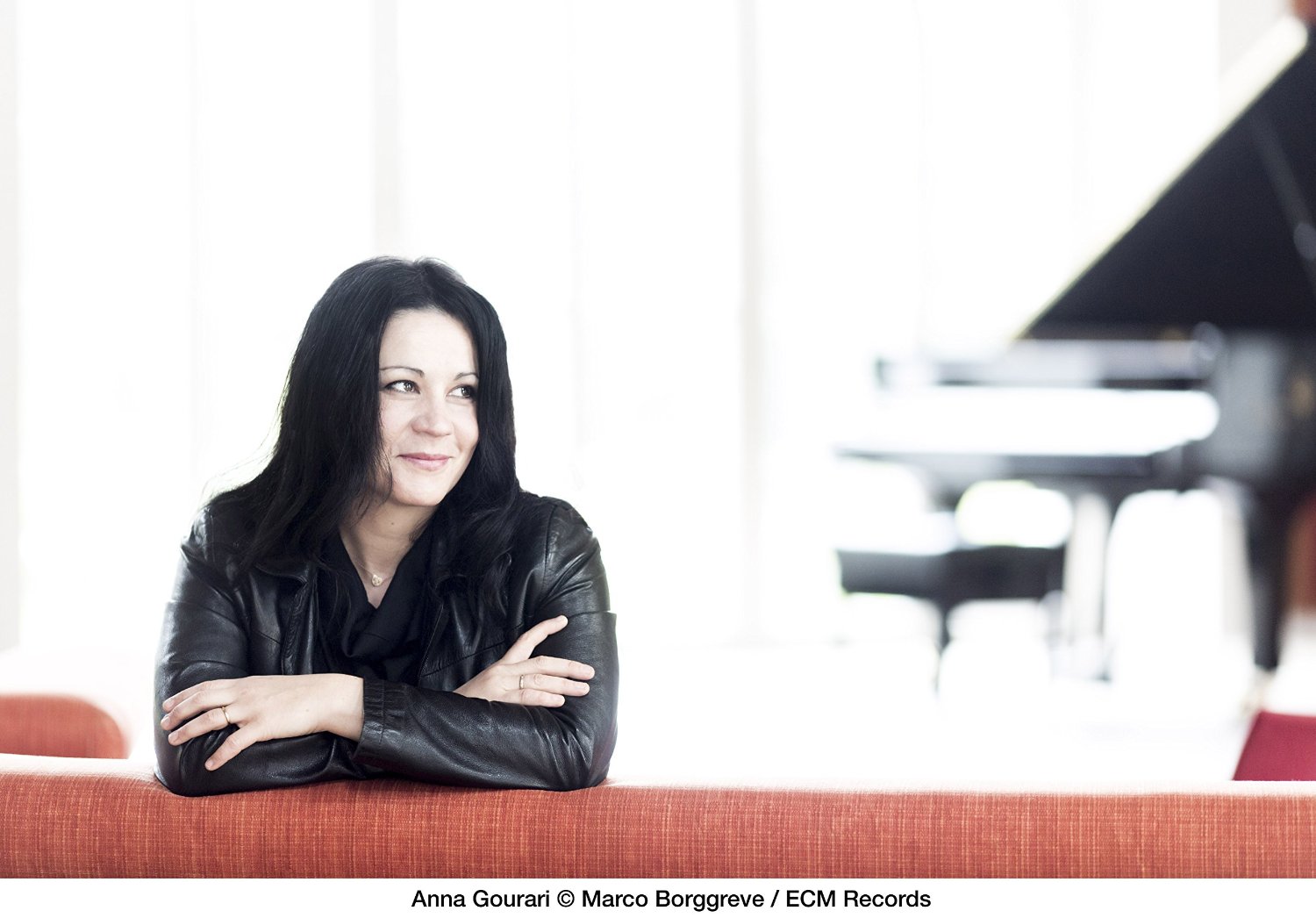
AG

At two minutes and forty-six seconds, the Fairy Tale in f minor by Nikolai Medtner (1880-1951) may look like filler material in theory, but in practice it acts as a vibrant ligament at the program’s center. Composed in 1912 as part of Medtner’s opus 26, it is a prime example of his skazki, or “tales,” a genre of his own making. One may project any number of scenes onto its imaginary folk setting, but these ears detect a forest of seasons: the wind combing through trees in spring, the fragrant foliage of summer, the decay of autumn, and the whisper of snowfall in winter. With these transformations in mind, we turn lastly to Frédéric Chopin (1810-1849) and his opus 58 Sonata No. 3 in b minor of 1844. In the opening Allegro and subsequent Scherzo, Gourari is an artful dodger, the adept inhabitant of an otherwise empty castle. She walks through walls and transcends chambers as simply closing the eyes. She pushes through memories of pomp and circumstance, emerging from them trailing a single thread of transcendence, by which she stitches virtuosity to its shadow. The formidable Largo is a more brooding affair with a funereal quality but sheltering a hope realized in the triumphant Finale before burrowing into the reset of hibernation. Declamation, not proclamation.

Returning to Griffiths, who notes, “In integrating, however, Chopin also disintegrates,” we might lay the same claim about Gourari’s selections. This recital is a step inward, a dissolution of self into pure music that, once unleashed, takes on a life…and death…of its own.

(To hear samples of Visions fugitives, click here.)
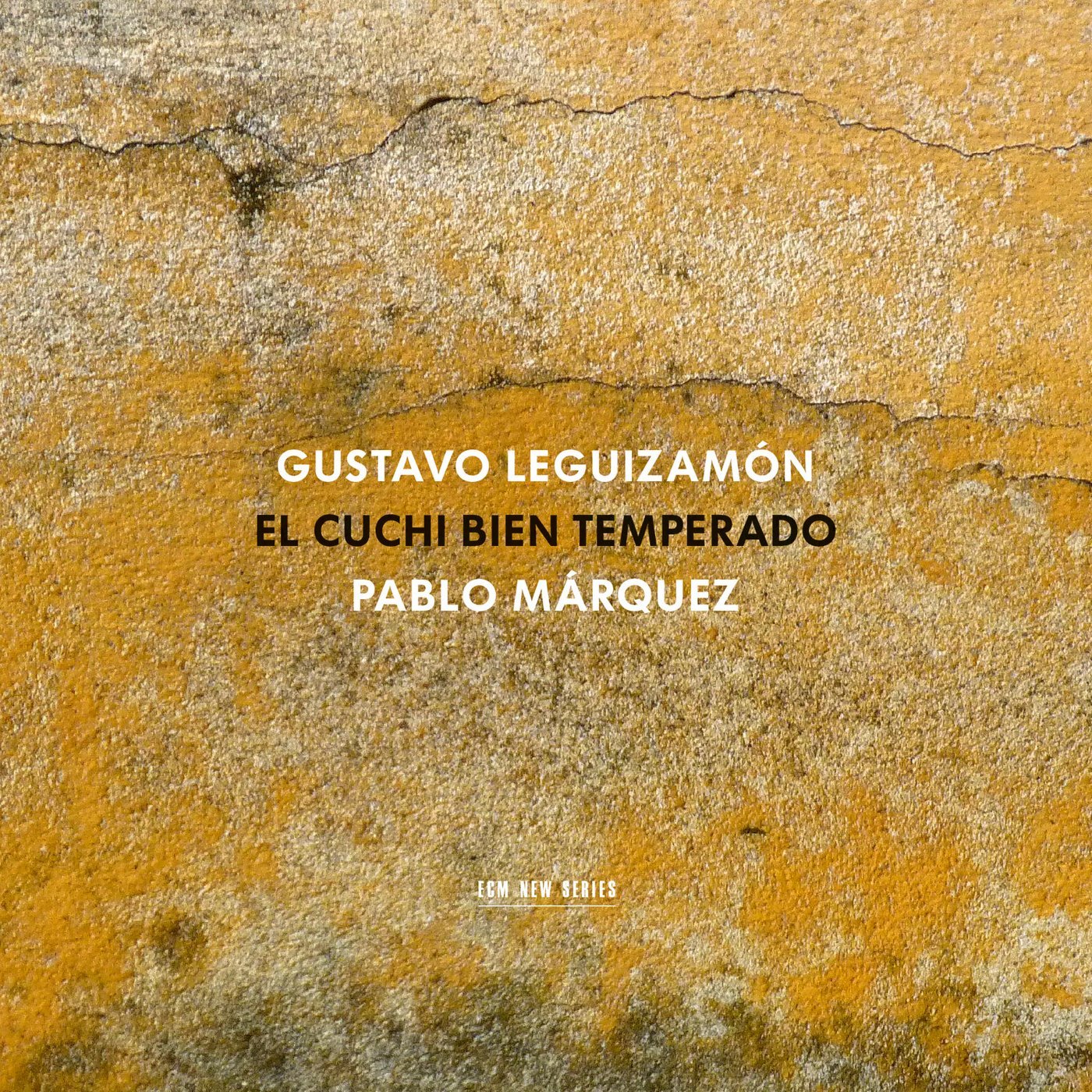
Pablo Márquez: El Cuchi Bien Temperado (ECM New Series 2380)

El Cuchi Bien Temperado

Pablo Márquez
El Cuchi Bien Temperado

Pablo Márquez guitar
Recorded May 2012, Auditorio Radiotelevisione svizzera, Lugano
Engineer: Markus Heiland
Produced by Manfred Eicher

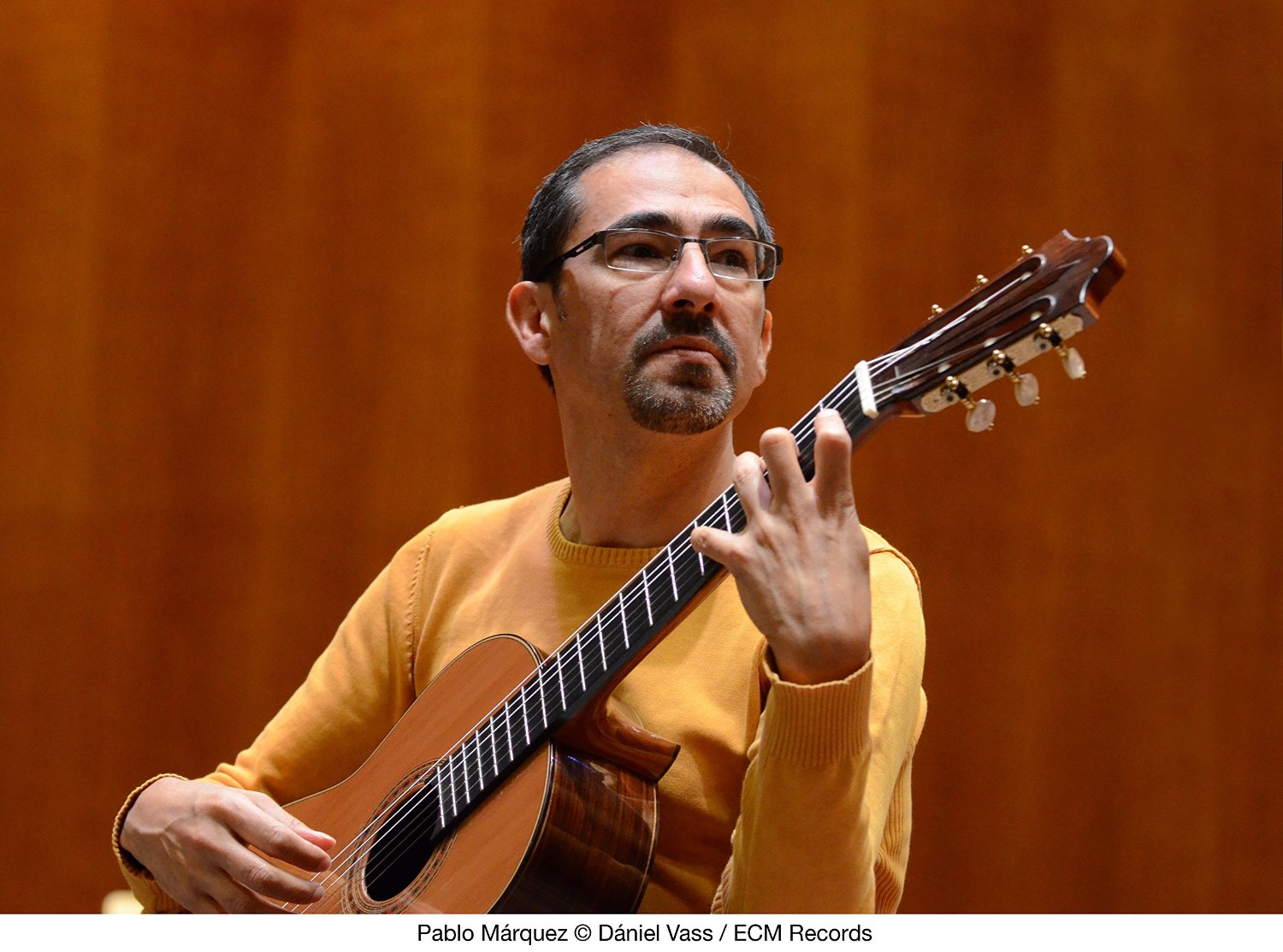
Even if The Well-Tempered Pig sounds far more appetizing in Spanish than it does in English, Pablo Márquez’s second album for ECM is an extraordinary achievement. The titular “Cuchi” (an ancient Quechua word meaning “pig”) was the sobriquet of one Gustavo Leguizamón (1917-2000), a composer, musician, lawyer, and pedagogue from the northwestern Argentine city of Salta. Salta is renowned for its musical heritage and is named for the same province that gave us Dino Saluzzi, who followed in Cuchi’s footsteps. Márquez describes Cuchi’s zambas (folk dances) as quintessential markers of Salta’s culture. Having grown up singing so many of them (they are, he explains, always accompanied by poems), Márquez was ideally suited to arrange them in a spectrum of 24 keys akin to, and inspired by, Bach’s monumental Well-Tempered Clavier. Although this album’s press makes further allusion to Debussy, Ravel, Stravinsky, and Schoenberg, the listener would do well to absorb this music without intervention of a comparative filter.

PM

Although Cuchi’s zambas take up the lion’s share of the program, the songlike vidalas, few as they are, reveal his truest heart. Opener “Coplas des Tata Dios” is a shimmering vidala-baguala, tinged with folkish hues and broken by the occasional tambora (rhythmic tapping at the base of the guitar strings). It seems to emerge from the fog of obscurity into the lucid here and now, and like so many of the pieces assembled here is intensely evocative. A single strum can reveal a shy glance through an open window, and the ghosts of a love that has yet to pass beyond it. Other instances of this form include “Chaya de la albahaca,” which plays with dissonant clusters and scraping of fingernails, and “Canción del que no hace nada,” which ends the album. But before we reach that bittersweet farewell, we are treated to an audible banquet like no other. Less represented dance forms such as the courting bailecito and exuberant carnavalito yield cavorting motifs and elastic strumming, while the three more compactly syncopated chacareras sprinkle the path with technically brilliant puzzles.

All of these aspects and more permeate the masterful zambas, which at Márquez’s touch serve as benchmarks of their form. In cinematic terms, they range from interior shot (“Zamba del carnival”) and soft-focus dream sequence (“Zamba de Lozano”) to flashback (“La cantor de Yala”) and close-up (“Zamba para la Viuda”). Also like an effective film, the music’s character development strengthens over a soundly engineered narrative arc and saves the best for later in “Zamba soltera” (this would be the love scene), “Zamba del pañuelo” (its enervating afterglow), the starkly realized “Maturana,” and “Chilena del solterón.” The latter is indicative of the entire set, pausing for breath and gathering new inspiration before rejoining the waves.

If Márquez were a painter, he would of course have his way with a brush, but would be especially skilled with a palette knife. With rigid elements he is able to render softness and structure in equal measure. As he recalls for an interview printed in this album’s booklet, Cuchi was fond of saying that “the ultimate accolade for an artist is that people think his work is anonymous.” But we can be thankful that, thanks to the efforts of guitarist, engineer, and producer, such anonymity may be harder to come by and will only enhance the wonders therein.

(To hear samples of Ei Cuchi Bien Temperado, click here.)

Anja Lechner/François Couturier: Moderato cantabile (ECM New Series 2367)

Moderato cantabile

Moderato cantabile

Anja Lechner cello
François Couturier piano
Recorded November 2013, Auditorio Radiotelevisione svizzera, Lugano
Engineer: Stefano Amerio
Produced by Manfred Eicher

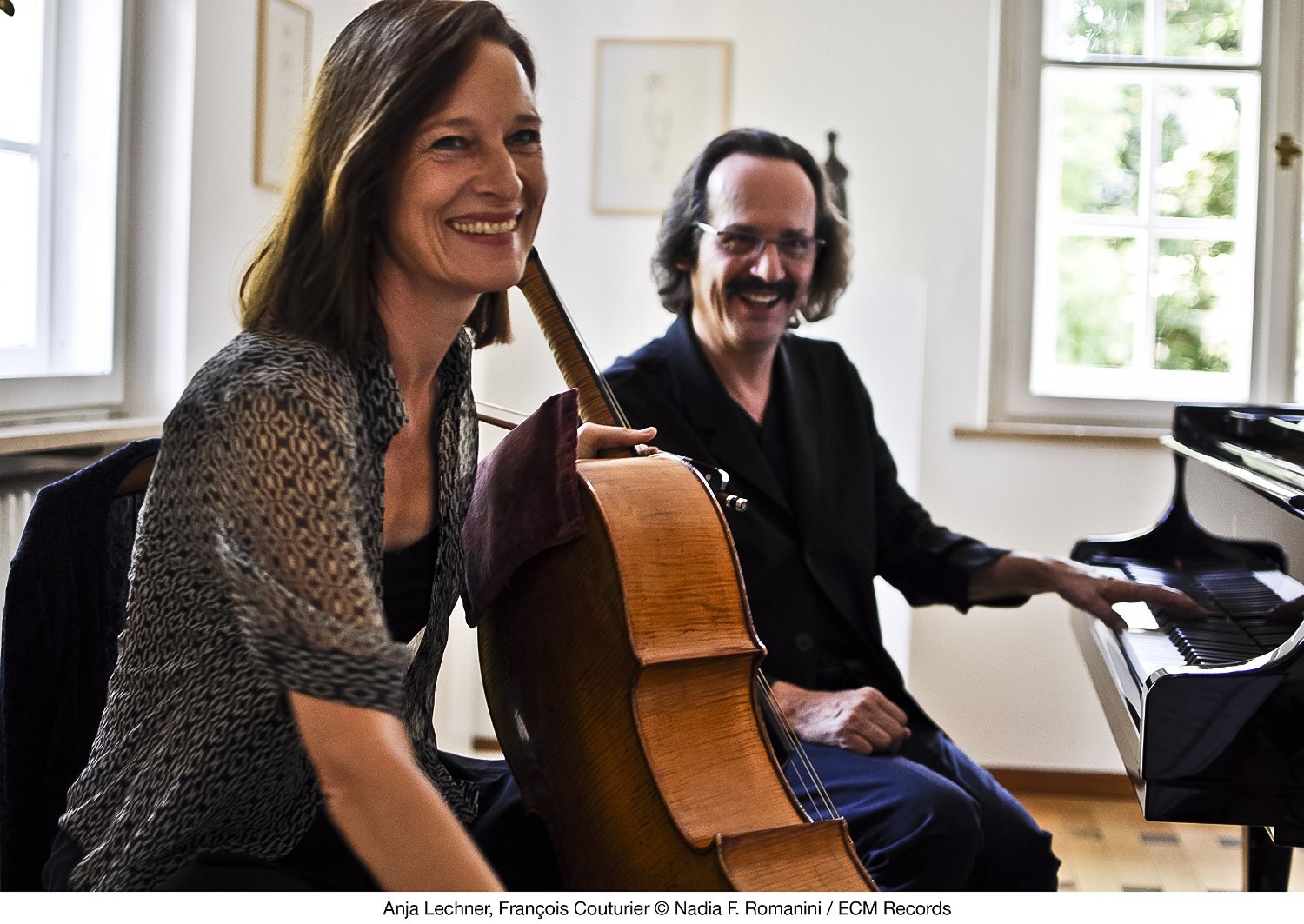
After honing their simpatico relationship at the core of the Tarkovsky Quartet and as part of Maria Pia De Vito’s Pergolesi Project, cellist Anja Lechner and pianist François Couturier step naturally as a duo into a temple of wonders on Moderato cantabile. Over the years, ECM has carved an unparalleled subgenre of cello-piano recordings, notably the collaborations of Ketil Bjørnstad/David Darling and Vassilis Tsabropoulos/Lechner, and it’s impossible to imagine this album having ever come about without those predecessors. Fans of especially the latter project, which shares Lechner’s mellifluous bow, will encounter fascinations galore in Couturier’s deeper impulses. This album takes the very best of those projects and spins it into a world all its own, one in which we are seated as honored guests at the head of the table. Distinguishing the current duo’s music from the rest are the organicity of its approach and blossoming sense of development. The result is no less meditative, but adds to its contemplations the temperance of flame.

Lechner Couturier

Although not arranged in the following way, one may treat the program concentrically, moving from outward from Komitas, one of three composers named on the album’s cover, which neglects to mention Couturier’s own contributions (in keeping, one imagines, with the classical billing as a New Series release). The Armenian priest’s Chinar es has about it a dervish quality, calligraphing hypnotism in the twirl of receptive bodies. Its combination of piano arpeggios and seamless cello threading indicates an aesthetic mind-meld between the two musicians, who are responsible for all of the arrangements heard here.

While the cello is so often thought to be the most vocal of the symphonic strings, making it sing in the way Lechner does is no small task. She is resolute in her approach to the melodies of Greek-Armenian philosopher G. I. Gurdjieff, famously transcribed by way of oral transmission to begin with. Cellist and pianist use their complementary masteries to pair hymns and dances in a tessellation of leaves and sky. Gurdjieff awakens like the sun lifting its eyelid over the horizon and extends his spirit-seeking ways through a magnifying glass. There is, too, the Night procession, in which the cello seems to emerge from the piano itself, whispering of charcoal before there is fire. Gurdjieff’s No. 11 dovetails into Catalan composer Federico Mompou’s Fêtes lointaines no. 3, thus creating a chromatic masterpiece in a realm of shadow so deep that it can only speak in light.

Subsequent Mompou selections feel as much like poetry as song, each with a sense of joy and belonging. Tracing parabolic arcs into dance, the strength of Lechner’s technique brings out the songlike heart of this music as well beneath Couturier’s low-flying melodizing. Whether gracing the streets of the Música Callada or scenes of Mompou’s first published work, the Impresiones intimas, theirs is an ocean of churning memory in which the buoys of experience are many and reliable.

Couturier’s own pieces are as beautiful as they are surprising. Soleil rouge surveys a pointillist field of ideas, switching masks over rhythmic double stops from cello, while the duo scales its highest evocative cliff in Papillons, for which they consolidate their artistic toolkit in service of the image. Voyage finds the composer spinning a helix of chords beneath Lechner’s floating crosshatch before they detour through individual veins of rumination. Lechner’s pizzicati blot out stars one by one, until only the moon is left to dance.

The connections of these musicians are special not only with each other, but also with ECM. The love and appreciation that went into this album’s production is discernible at any given moment, and those fortunate enough to bask in its rewards will not be disappointed.

(To hear samples of Moderato cantabile, you may watch the EPK above or click here.)

Tre Voci: Takemitsu/Debussy/Gubaidulina (ECM New Series 2345)

Tre Voci

Tre Voci

Marina Piccinini flute
Kim Kashkashian viola
Sivan Magen harp
Recorded April 2013, Auditorio Radiotelevisione svizzera, Lugano
Engineer: Markus Heiland
Produced by Manfred Eicher

When is it really over? What is the true end? All borders are as if with a stick of wood or with the heel of a shoe driven into the earth. Until then…here is the border. All that is artificial. Tomorrow we’ll play another game.
–Francisco Tanzer, trans. J. Bradford Robinson

Tre Voci are violist Kim Kashkashian, flutist Marina Piccinini, and harpist Sivan Magen. Following a 2010 debut at the Marlboro Music Festival, the trio solidified its identity as such and came to ECM with this program of three works. Although disparate in geographical origin, each connects to the others by instrumentation and, above all, integrity of spirit. More than the unique combination, however, it is the supreme, interlocking level of ability in each musician that makes this disc such a pleasure to behold.

TV

The program opens with the reflection of a reflection: And then I knew ’twas Wind by Tōru Takemitsu (1930-1996). The Japanese composer’s illustrative genius is in full effect in this garden of painterly delights, from its opening sprinkle of raindrops to its closing fractals of coincidence. Although the instruments are inseparable partners in the worlding of this piece, and must be equally attuned to what Jürg Stenzl in his liner notes calls the “almost calligraphic precision” of Takemitsu’s score, the harpist must be especially aware of the palette at hand. Magen articulates a veritable ecosystem of harmonics, glissandi (produced by sliding a fingernail along a string), and timbral variations. One can almost feel the quiver of leaves shedding the weight of raindrops in the afterglow of a storm. From this scene, flute and viola emerge not like the fauna of stereotypical impressionism, but rather like the flora drinking in all the nourishment. The viola becomes, then, a natural navigational instrument, a magnetized sliver in a forested compass. Despite sounding sometimes like a single player, for the most part Kashkashian and Piccinini walk their solitary paths. Like some bucolic dream gone dark, however, not all is sunshine and roses, as emphasized by the distinctive pathos of their interpretation. Here is the leaf magnified, revealing infinite others within.

Given Takemitsu’s admiration for Claude Debussy (1862-1918), the latter’s Sonata for flute, viola and harp makes for a most suitable companion. As Debussy’s penultimate composition (succeeded only by the Sonata for violin and piano) before he succumbed to cancer, it shows both maturity and vulnerability. Over the course of three distinct yet interconnected parts, it develops with such tactile beauty that one is hard-pressed to find a hook of any size from which to hang an ornament of criticism. Part I opens in a river’s flow such as only Debussy can devise. With their unpretentious, relaxed treatment thereof, Tre Voci quickly overturn the notion that impressionism equals lack of clarity. The flute blends into the viola, and together they empty into a vivid ocean. Part II is recognizable by its cyclical motifs. If the first was an awakening, this is nature in the raw. Part III rests on a fulcrum of harp, teetering atop some of the trio’s subtlest descriptions, and the tipping point of its sportive, declamatory ending would be echoed 11 years later (1926) in Manuel de Falla’s Concerto for harpsichord, flute, oboe, clarinet, violin and cello. If anything, this sonata is about physics, as is the piece that follows.

Sofia Gubaidulina’s Garten von Freuden und Traurigkeiten (Garden of Joys and Sorrows) is this album’s crowning achievement. The progression of its introductions quivers with sobering anxiety until the trio’s dynamic range is nearly exhausted. The viola tends toward harmonic whispers, while harp and flute take more direct routes toward their melodic destinations. This is not to say that the piece is a goal-oriented one. Rather, it thrives on the value of distortion. Much like Gubaidulina’s quartets it favors skeleton over muscle, and through the creaking of its joints seeks harmony in ashen reveries and broken things. It ends with a recitation, in German, of a poem by Francisco Tanzer: not the universe in a raindrop, but a raindrop in the universe.

(To hear samples of Tre Voci, click here.)

Ketil Bjørnstad: Sunrise (ECM 2336)

Sunrise

Ketil Bjørnstad
Sunrise

Kari Bremnes vocal
Aage Kvalbein cello
Matias Bjørnstad alto saxophone
Bjørn Kjellemyr double bass
Hans-Kristian Kjos Sørensen percussion
Ketil Bjørnstad piano
Oslo Chamber Choir
Egil Fossum conductor
Recorded April 2012 at Rainbow Studio, Oslo
Engineer: Jan Erik Kongshaug
An ECM Production

A bird of prey is trapped
deep inside me. Its talons
have ripped into my
heart, its beak has
driven itself into my chest,
and the beating of its wings
has darkened my sanity.

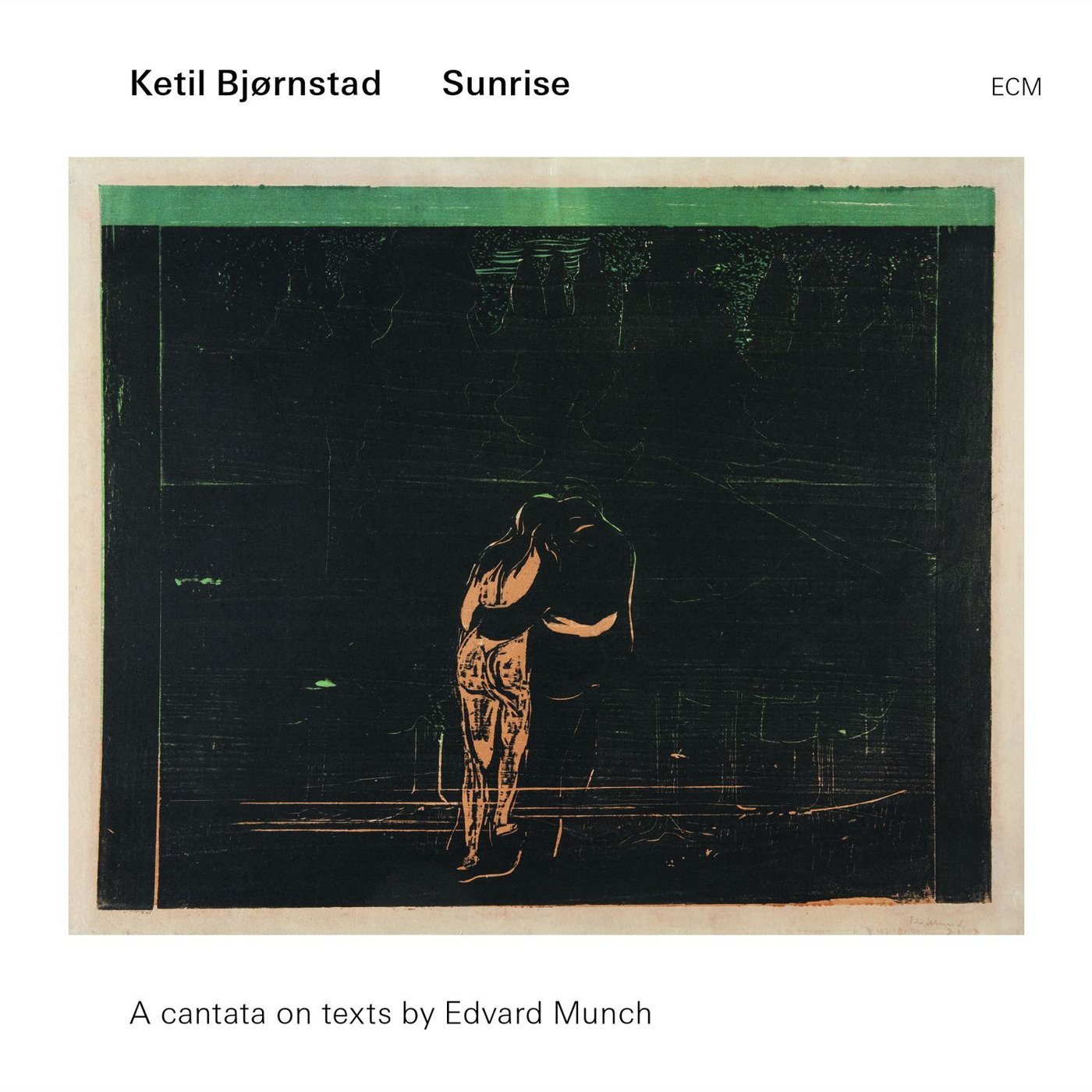
Norwegian pianist-composer Ketil Bjørnstad seems to be in one of the most creative phases of his career. Increasingly, he has turned to the human voice as an expressive outlet for his ever-songlike writing, and it was only a matter of time that those forces should reach the level of a choir, a medium for which he was asked to write music in commemoration of the Nordstrand Musikkselskap Choir’s 70th anniversary in 2011. Having already engaged with the life of Edvard Munch in his 1993 literary biography Historien om Edvard Munch and set the painter’s neglected words to music on the album Løsrivelse, he naturally returned to those same texts for Sunrise. Yet Bjørnstad’s self-styled cantata is more than the portrait of an artist. It is an affirmation of light.

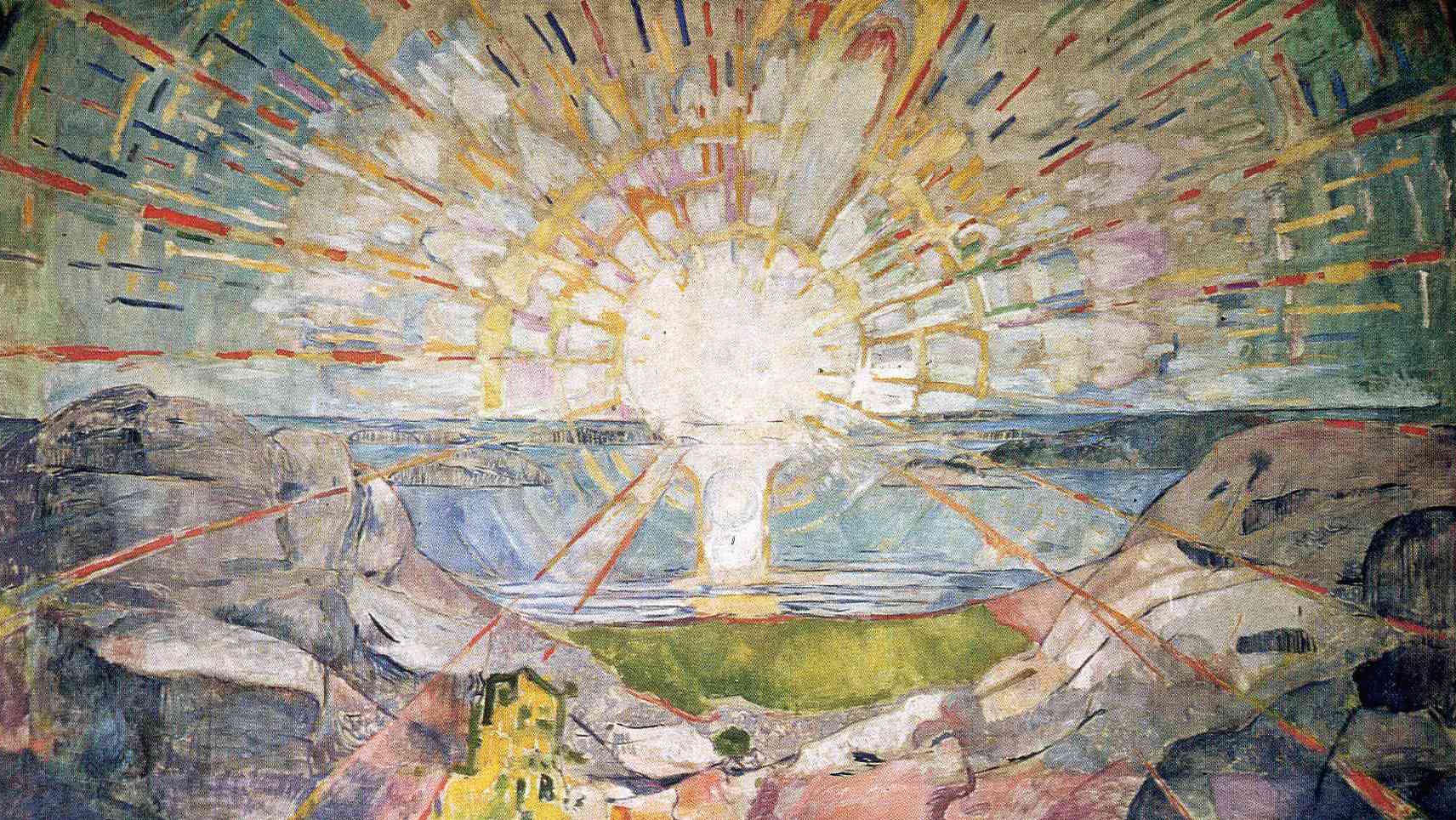
Munch wrote flashes of prose in preparation for many of his paintings. Bjørnstad characterizes the texts chosen for this monumental work as dealing unanimously with existentialist dilemmas. In addition to Munch’s paratextual writings, Bjørnstad was intimately acquainted with his 1909 mural The Sun, under which the young pianist saw many greats play at Oslo’s University auditorium, the Aula, where it hung. In that painting, notes the composer, “one can clearly discern the degree to which Munch struggled with and against the forces of life, and how deeply and endlessly he yearned for enlightenment and reconciliation.” The same holds true for the music he has written into its aura.

The Sun

Most attractive about Sunrise is its breadth of idiomatic conviction, which is most vividly clarified in the four songs written for singer Kari Bremnes, with whom Bjørnstad worked on the aforementioned Munch cycle. She is joined by Bjørnstad at the keyboard, alto saxophonist Matias Bjørnstad (no relation, it seems), and bassist Bjørn Kjellemyr on “Moren” (The Mother), which depicts the haunting scene of a young boy who holds his mother’s hand in anticipation of going outside but is blinded by the light of spring once they open the door. Bremnes’s oaken alto lends heart to every word it envelops. In the montuno-flavored “Stupet” (The Cliff), for instance, she evokes a jagged cliff and the dangerous ocean churning below like a death wish. The naturalness of her shading lends intuitive dimensionality to the near-pop groove of “De fineste nerver er rammet” (The Most Delicate Nerves are Affected) and a lover’s wicked thoughts in “Åpent vindu” (Open Window), for which cellist Aage Kvalbein provides the lamplight and Bjørnstad a certain temptation beneath the floorboards.

Turning to the sections for choir gets us into some potentially divisive territory. Bjørnstad is clearly not a choral writer, as attested by the fact that the vocal arrangements were done by Egil Fossum, who also conducts the present recording. Certain sections are more memorable than others, such as “En rovfugl har satt seg fast i mitt indre” (A Bird of Prey is Clinging to My Inner Being), which opens the entire cantata with the unlikely ante of a steel drum, courtesy of percussionist Hans-Kristian Kjos Sørensen. Like a warped church carillon as heard through the screen of memory, it breeds a prayerful cello to greet the dawn. The choir opens its lips to greet the titular bird, which traps itself in the chest but which by the grace of song is placated by God’s azure stare. Subsequent moods and images range from the apocalyptic [“Alfa og Omega” (Alpha and Omega)] to the frivolous [“Livets dans” (The Dance of Life)]. Other elements feel more derivative, such as the hints of Samuel Barber’s famous Adagio in “Adskillelsen” (The Separation).

More interesting to consider are Munch’s sentiments, revealing as they do a conflicted mind desirous of peace, splashing color across the human psyche as if it were the truest canvas. In “Intet er lite” (Nothing is Small) is nestled his meta-statement: Nothing is small, nothing is large. / We carry worlds inside us. Words to live by for both the painter and his thoughtful composer. Wordless singing beneath the cello’s commentary accentuates an underlying yearning. Even the jazzier inflections of “Joden elskede luften” (The Earth Loved the Air) enhance the starkness of Munch’s inner world, a place where trees uproot themselves and turn into human beings: Everything is alive and in motion. / Even at the center of the Earth / there are sparks of life. This leaves us to bask in the promised “Soloppgang” (Sunrise), which unites musicians and singers in an optimistic flourish that is hard to come by in Bjørnstad’s work.

Overall, there is a rustic, hymnal quality to the choruses, which suits the material well enough. More exciting, however, are the three “Recitatives” and “Intermezzos” signposting the program. The former elicit some of Bjørnstad’s most unchained playing on record in bursts of cathartic free improvisation, while the latter weave the piano into melodic shadows of cello or saxophone, each a thread gathered from an open wound and spun into new flesh. Like the protagonists of “Som i en kirke” (As if They Were in a Church), they reveal a gravid awareness of mortality, seeing creation as a church unto itself, and nature as God’s tabernacle.

(To hear samples of Sunrise, click here.)

Galina Ustvolskaya (ECM New Series 2329)

2329 X

Galina Ustvolskaya

Patricia Kopatchinskaja violin
Markus Hinterhäuser piano
Reto Bieri clarinet
Recorded March 2013, Auditorio Radiotelevisione svizzera, Lugano
Engineer: Peter Laenger
Produced by Manfred Eicher

Galina Ustvolskaya (1919-2006) may not be a household name, but the Russian composer’s work speaks with a truth that is rare in modern music. As the favorite student of her famous teacher, Dmitri Shostakovich, she was destined for greatness. However, personal politics seem to have gotten in the way of her ascent to prominence. Shostakovich was quite taken with Ustvolskaya, twice proposing marriage. Her lack of reciprocation seems to have embittered him, and as a result her work was scarcely published or performed. According to her book, Shostakovich in Dialogue, however, author Judith Kuhn cautions against buying into Ustvolskaya’s personal mythology, as her claims of creative independence (“There is no link whatsoever between my music and that of any other composer, livind or dead”) might have been just as reactionary, and allusions to Shostakovich inevitably creep up in her work.

But life and art do not imitate one another in her music, which like the cover photograph of this ECM New Series album dedicated to it speaks to the broken pieces as much as those intact, for they also have songs to sing. Because it was she who said, “All who truly love my music should refrain from theoretical analysis of it” (though even this might have been a defensive statement), we do better to approach it not as an excuse for analytical thinking, but as a spiritual experience that demands undivided regard in return for its outpouring.

The beating heart of all three works featured here is Moldovan-Austrian violinist Patricia Kopatchinskaja, whose rendering of the Sonata for violin and piano (1952) alongside Markus Hinterhäuser is alone worth the acquaintance. The violin begins on a teetering, pianistic bridge in which just enough slats remain to grant full passage. On the other side, Kopatchinskaja must hold the music’s fabric together, frayed as it is. This requires an unusually pristine tone, and this she possesses, along with a variety of extended configurations. She can darken or brighten, be rough or smooth, and moves through the body of this music like creation itself. Notes devoid of vibrato stand out for their clarity and help temper the piano’s inclinations to dance. What emerges from all of this is an internal clock, marking not time but space. Its pulse is not mechanical, but shifts with every blush of mood. Kopatchinskaja takes up that pulse at the end as she raps the body of her instrument with a knuckle.

PK

The 1949 Trio adds clarinetist Reto Bieri to the duo for a tripartite work of artful design. Bieri’s own purity of tone enhances Kopatchinskaja’s, and vice versa, while Hinterhäuser stretches every filament into even consistency. The violin writing is more insistent and razor-like this time around, cutting the obvious relationships within the trio in favor of the implied. The second movement is a lullaby in shadow, walking a tightrope into a warped deconstruction of a Bach-like motif in the third. Here the jagged and the linear become a third, metaphysical category: a blueprint of a blueprint, in which the piano barely hangs on to life.

In his cultural history of St. Petersburg, Solomon Volkov writes, “Ustvolskaya’s chamber works are as monumental as a symphony, and her symphonies are as translucent as chamber music,” though I find it hard to believe that many would hold such an opinion had the composer not put it forth herself. We may see this dynamic operative in the 1952 Sonata, but the Duet for violin and piano, written in 1964, is an intimate cartography of resistance. The distinction between Sonata and Duet more rightly speaks to the composer’s defiance of the chamber music category. The violin’s unassuming introduction turns to flint as flashes ring out. Dissonant, romping scales in the piano, combined with the violin’s half-step faints and distant alarm calls, prime us for the expectorations to come. Yet within each crashing wave curls an invisible grammar, to which pizzicato periods dot arco exclamations. And in a ghostly finish, the violin scrims the line between Heaven and Hell, blending until there is no difference between the two.

And so, rather than simply compare these chamber works to symphonies, it would be more accurate to emphasize their repurposing of scale. It’s not that Ustvolskaya’s sound-world is so big as to engulf us, but that we shrink to such a size that what was once microscopic now seems cosmic. Biographical apocrypha aside, her work is vital for its staunchness of both vision and blindness to the listener. This is not to say we are ignored, but neither are we patronized. We must reckon the music as it is.

(To hear samples of Galina Ulstvolskaya, click here.)

Helena Tulve: Arboles lloran por lluvia (ECM New Series 2243)

Arboles lloran por lluvia

Helena Tulve
Arboles lloran por lluvia

Arianna Savall soprano, triple harp
Taniel Kirikal countertenor
Charles Barbier countertenor
Riivo Kallasmaa oboe
Marco Ambrosini nyckelharpa
NYYD Quartet
Helena Tulve glasses, wind chimes
Vox Clamantis
Ensemble Hortus Musicus
Jaan-Eik Tulve conductor
Estonian National Symphony Orchestra
Olari Elts conductor
Reyah hadas ‘ala recorded October 2009 at St. Nicholas Church, Tallinn
Extinction des choses vues recorded May 2010 at Estonia Concert Hall, Tallinn
Engineer: Maido Maadik
Editing: Maido Maadik and Margo Kõlar
Produced by Estonian Public Broadcasting
silences/larmes, L’Équinoxe de l’âme and Arboles lloran por lluvia recorded August and September 2010 at Church of the Transfiguration of Our Lord, Tallinn
Engineer: Igor Kirkwood
Editing: Igor Kirkwood and Margo Kõlar
Recording supervision: Helena Tulve
Album produced by Manfred Eicher

You are with us and all the while not with us.
You are the soul and that is why you do not make yourself visible.

Arboles lloran por lluvia (Trees Cry for Rain) is ECM’s second album dedicated to the music of Estonian composer Helena Tulve, whose Lijnen sailed the label’s waters in 2008. This European-only release proves that sometimes the greatest treasures are worth seeking. If you care at all about contemporary music, you’ll want to obtain this one at all costs. Not only because Tulve’s compositional voice is more assured than ever, but also because that voice contains so many others, whose constitutions now step forward like memories by lure of hypnosis.

Tulve
(Photo credit: Tarvo Hanno Varres)

Each of the five compositions featured on this program takes root in a text or theme that predates us even as it feels instantaneously born. Reyah hadas ’ala (The Perfume of the Myrtle Rises), for instance, may be scored for voices and early music consort, but its churning intimacy is fresh as fallen snow. The poem from which the piece gets its name is by Shalom Shabazi, a mystical Yemenite of the 17th century, who describes being awoken at midnight by an angelic vision. The performances of countertenors Charles Barbier and Taniel Kirikal, along with Vox Clamantis and Ensemble Hortus Musicus, make this scene—which would seem to demand much of its interpreters—feel as organic as breathing. Just as the poem allows us to imagine a light obscured by branches in the frayed edges of half-sleep, so too does Tulve’s setting thereof reveal by obfuscation. The text is its enzyme, but finishes as an alchemical transformation—or transfiguration, if you will—from word into flesh. The voices and strings intensify, becoming denser, but keep returning to an underlying pause. Cells of plainchant move in arcs so that we might better understand the straighter lines they frame. The oboe-like bombard is powerful to hear in this context, crying like a single beam of language that can only be understood through meditation. Images fade as quickly as they appear, as if inhaling light.

silences/larmes (silences/tears) nestles a handful of shorter poems by Mother Immaculata Astre, Abbess of Le Pesquié (a Benedictine nunnery in the south of France). Soprano Arianna Savall, oboist Riivo Kallasmaa, and Tulve herself (playing glasses and wind chimes) make for a crystalline skeleton to animate these verses, each a burst of pollen. There is a cautious, faunal quality to the emergence of voice and oboe, although the atmosphere is far from bucolic. After the performers recede into whispers (at which point they describe the brush of a night moth’s wings), the resurgent song becomes almost unsettling, for it emphasizes the messy biology that enables even the most basic sound to be produced.

L’Équinoxe de l’âme (The Equinox of the Soul) features Savall on voice and triple harp, joined by the NYYD String Quartet. Here the text is by 12th-century Sufi mystic Shabab al-Din Suhrawardi, and sung in a French translation from the Persian by Henry Corbin. It is dappled with parables from the Safir-i-Simurgh (The Calling of the Simurgh), and from them protrude spidery legs of awakening. As harp notes fall among seeds from laden branches, Savall navigates the text as if it were a gesture of divine scope. Suhrawardi’s messages are urgently cryptic, their answers revealed in the omnipresence of things. If, in each of these compositions, performers seem to be bonded by deeply microbial connections, in this context they are of the same body.

The album’s title composition is performed by Vox Clamantis, backing Savall and Kirikal as vocal soloists and Marco Ambrosini on the nyckelharpa. This time, Tulve turns her attention to a traditional Ladino (Sephardic) poem, for which the nyckelharpa’s muted pizzicati are an evocative treasure. Amid these raindrops, voices sing broken syllabus before more visions, now earthly, take focus. The Kirikal-Savall helix betrays the nervousness of wings, of leaves trembling beneath the weight of water, of the anticipation of physical union. Tonal changes add restorative brushstrokes to a decaying landscape, leaving Ambrosini in the hush of a sigh.

Although the final piece of the program, Extinction des choses vues (The Extinction of the Things Seen), features no vocalists, it is still rooted in a text: Jesuit thinker Michel de Certeau’s Extase blanche (White Ecstasy). Like Tulve’s later output, it traces a threshold between worlds. One can hear the influence of her illustrious teacher, Erkki-Sven Tüür. clearest in its fractal respiration and percussive skin, and in the distinctly threnody-like quality of this piece. Its mouth is a spiral, and the tongue that rests within is a nebula.

Arboles lloran por lluvia confirms in Tulve a voice and temperament comparable to Kaija Saariaho in that it looks beyond the label of “spectral” into a face, as of certain paintings, that is always staring back at you no matter where in the room you stand. If this music were a window, it would mourn the loss of light, drunk to the last drop by the leaves beyond its brow. It is perhaps in this spirit that the album bears dedication to Montserrat Figueras. The mother of Savall, her spirit is palpable in the recording, nodding and smiling throughout. Tulve thus attends to the ghosts between words and weaves them into a husk of dreams. Within them, she composes a world of movement without form.

Just as the trees cry for rain, so does the rain cry for trees.

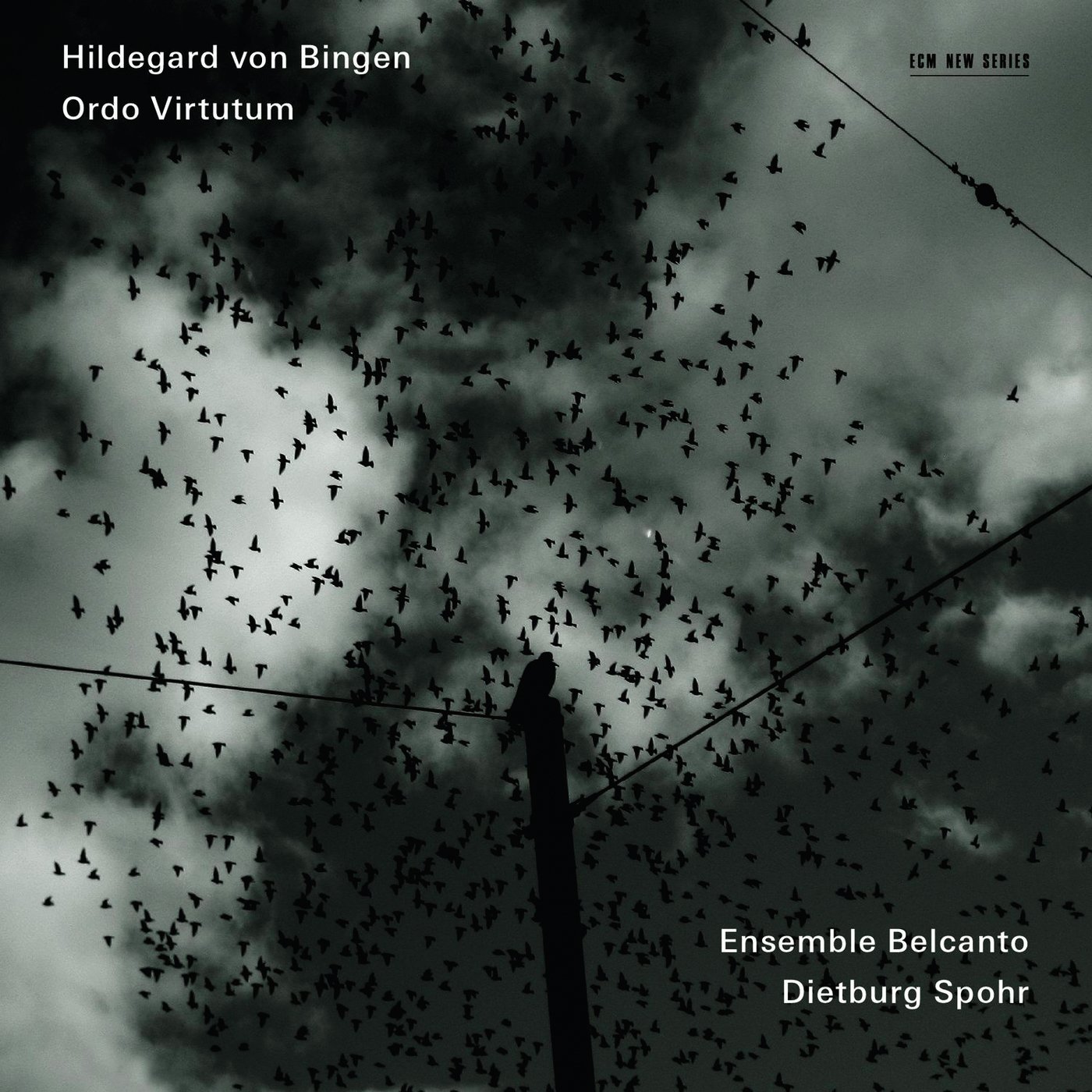
Hildegard von Bingen: Ordo Virtutum (ECM New Series 2219)

Ordo Virtutum

Hildegard von Bingen
Ordo Virtutum

Ensemble Belcanto
Andrea Baader soprano
Edith Murasov mezzo-soprano
Rica Rauch alto
Martina Scharstein soprano
Dietburg Spohr mezzo-soprano

Benjamin Cromme speaker
Lilith Reid speaker
Selina Drews girl soprano
Recorded October 2010, Festeburgkirche, Frankfurt am Main
Engineer: Markus Heiland
An ECM Production

Hildegard von Bingen (1098-1179) is without parallel. She has been called by biographer Fiona Maddocks “The Woman of Her Age” and, elsewhere, “a Renaissance woman several centuries before the Renaissance.” We know very little about von Bingen, except that she certainly recognized the theological import of music, if not also the musical import of theology. As a composer, von Bingen came to popular prominence in the mid-1990s, when interpretations of her works by such landmark ensembles as Sequentia rode a wave of Gregorian chant and other recordings of medieval music to great success. Her Ordo Virtutum of circa 1150 is a quasi-liturgical mystery play that walks a textual path (modeled after the Song of Songs, Isaiah, and the Revelation of St. John) into what Gerhard R. Koch in his refreshing liner notes calls a “psychodrama” between the virtuous and the satanic. Koch rightly cautions those of us who think we appreciate von Bingen’s music, when really we adore the beautification of it. (Sequentia’s recording of the Ordo, in fact, set a precedent by adding instruments where none exist in the essentially monophonic score.) Indeed, how many of us have actually read her works, sat with her mystical visions and followed their many threads of light? The phenomenally talented singers of Ensemble Belcanto, led by mezzo-soprano Dietburg Spohr, have on this recording responded with a reading of their own—one in which divine impulses speak in earthly languages, and far from the adornments so much in vogue in early-music practice. “The presumption of uniformly executed solemnity,” Koch reminds, “induces at least ideological suspicion of a narcotic, lulling ideal of the Middle Ages.” Taking this suspicion to heart, Belcanto pays deepest respect to von Bingen’s vision by kneading shadows into its glow.

“Who are these, who seem like clouds?” So ask the patriarchs and prophets of the play’s opening scene. Such words speak to an overarching (and subterranean) theme of dual relationships: between internal and external, emotional and physical, present and historical moments. Already the recording is such that we feel a part of the singing circle, forgoing the reverberant cathedral space for an intimate experience: this is not the reflection of vaulted stone but the absorption of ancient wood. There is a solemnity, to be sure, but it comes from a feeling of sharing in a fearlessness of interpretation rather than from some unverifiable, hermetic fantasy. Here the voices interlock, shape one another in real time, and forge their own pathos like a barrier against the flames of Hell itself.

Belcanto’s immediately recognizable sound lends a familiarity to this narrative of struggle. The arrangement of “Querela Animarum in came positarum” (Lament of embodied Souls) is especially moving in its nervous tutti singing, and in the way its lowest voices extend to a self-aware ripple. Dissonances add willing integrity, while gasping, birdlike calls and responses and whistling motifs indicate the half-physicality of the titular Virtues and their eternal questioning. They are, in fact, given the most varied palette, much in contrast to the children’s voices speaking the Devil’s words out of sync. And while there are beauties (such as Charity’s introduction) to be found, the brevity of each section allows us to move on, and folk elements to spring Pagan-like from the grasslands. Spohr’s arrangements thus speak to the unspeakable: singing on inhales as Faith, breathing gravel as Discipline, and keening as fragile Mercy. What sparse instrumentation there is—a beaten drum for Victory, bells for Chastity—ignores the trappings of note value and goes straight for the viscera.

The final procession feels closest to plainchant, its core opening to the light of salvation. “So now, all you people,” it is sung, “bend your knees to the Father, that he may reach you his hand.” It is one possible realization of von Bingen’s ideal: that any and all voices should magnify the same faith. And despite the array of “modern” techniques employed to get there, we can be sure that Belcanto is not making the music new but rather fortifying its antiquity. The end result is among the more fascinating albums in the entire New Series catalogue, and as such asks only the same devotion of attention that went into its creation. Because the booklet provides no translation, you will want to have one in front of you while listening (one is available here). Only then will you appreciate the sheer level of embodiment taking place in every word.

Ketil Bjørnstad: Vinding’s Music – Songs From The Alder Thicket (ECM 2170/71)

Vinding's Music

Ketil Bjørnstad
Vinding’s Music – Songs From The Alder Thicket

Ketil Bjørnstad piano
Gunilla Süssman piano
Jie Zhang piano
Norwegian Radio Orchestra
Christian Eggen conductor, piano
CD 1
Recorded December 2009, Pettersens Kolonial Lydstudio, Hønefoss, Norway
Engineer: Espen Amundsen
CD 2
Recorded March 2009, Store Studio, NRK, Oslo, Norway
Engineers: Morten Hermansen and Jan-Erik Tørmoen
Recording producer: Geoff Miles
An ECM production, in collaboration with Aschehoug and Suhrkamp

While we look not at the things which are seen, but at the things which are not seen: for the things which are seen are temporal; but the things which are not seen are eternal.
2 Corinthians 4:18

Pianist and composer Ketil Bjørnstad will be familiar to ECM listeners for his contributions to the label in many contexts, though perhaps most notably in his “Sea” duology (ECMs 1545 and 1633) with cellist David Darling, guitarist Terje Rypdal, and drummer Jon Christensen. With Vinding’s Music, he moves to the realm of the trilogy—specifically, his three-volume collection of novels that begins with To Music, continues with The River, and concludes with The Lady In The Valley. Despite being highly praised as an author in his native Norway, as of this review only To Music has been translated into English. Nevertheless, there has always been something of the written word in his craft, each phrase sculpted like a polished sentence in search of something otherwise inexpressible. The dimmer corners of the human psyche seem always to have been a primary interest of Bjørnstad, who mines his fictional genealogy for this double album of associations and impressions.

Bjørnstad’s trilogy follows the life of a young piano student, Aksel Vinding, whose experiences mirror Bjørnstad’s own as a budding musician and composer in the Oslo of the late 1960s and early 1970s. Vinding suffers the premature death of his mother, whose absence haunts him as he faces corruptions of the living, all while trying to enhance his musicianship with nourishing growth. To achieve this, he climbs through his mounting grief and regret, marking the way with music that is important to him. In March of 2009, Bjørnstad assembled those same pieces into a concert, thereby yielding this album’s second disc.

Although it is music we have heard before, it is duly inflected by the knowledge of Bjørnstad’s concept. As Christian Eggen conducts the Norwegian Radio Orchestra and plays the Adagio from Mozart’s Piano Concerto No. 23 to start, we might very well imagine Vinding himself feeding his shadow into the composer’s scintillating machine in the hopes that something between the two might result from the friction. The piano, then, ceases to be a solo instrument, for it exists only by the grace of others, known and unknown.

Gunilla Süssmann takes on the guise of Bjørnstad’s thinly veiled protagonist in an account of Debussy’s Clair de lune that is anything but. It is, rather, naked with lucidity. Süssmann also offers her take on the Adagio from Rachmaninov’s Piano Concerto No. 2 and the final movement of Beethoven’s Sonata No. 30. The former’s oceanic patterning is clearer than ever, while the latter’s epic tumult lends voice to Vinding’s own. Jie Zhang offers her renditions of Chopin’s waltzing, glorious Ballade No. 1 in g minor, 23 and the Adagio from Ravel’s Piano Concerto, which drips from her fingertips with melancholy. Fadeout comes with the prayerful solitude of Barber’s Adagio for strings.

With the aftereffects of the Oslo performance still in his mind, Bjørnstad was invited in December of that same year to try out a new recording studio and its Bechstein grand piano, where and on which he worked through latent expressions of suffering. Hence the first disc, which documents Bjørnstad’s wintry improvisations. Not only is it refreshing to hear Bjørnstad at last on his own after so many years of collaboration on ECM; it is also proof positive of the novels’ thematic connection between suffering and art. In the spontaneous gesture he captures feelings of his characters, to be sure, but more importantly of himself. This is a diary, the travelogue of a soul.

Titles are at once retrospective and inherent. Each references a line, image, or idea from the trilogy and inspires pieces as long as nearly 11 minutes (“So Far, So Hidden”) and as short as three (“Evening Voices”). There is a yearning quality to their arc, which follows Bjørnstad’s dear protagonist toward creative refuge. At the beginning of the program, grief is still a bad dream, lit beyond recognition like constellations by sunrise. As the progression becomes clearer, we find that Vinding’s memory is a storehouse of remorse and missed opportunities. He broods over major harmonies, which sound like minor blips of land on an otherwise level waterline. Conversations from the past return in that half-dream state in which the dead may live again, speaking as they once did. But these are ephemeral comforts. Indeed, the more dance-like the motif (“Promise” is one example), the more withdrawn Vinding becomes. For the most part, melodies steep themselves in those forever-unknowns of which no grieving soul can be dispossessed, leaving only the churning ocean of “Remembrance” to show for their having ever existed.

Elsewhere, as in “Outside Skoog,” Bjørnstad’s fingers move as if they were legs toward some silent rapture, whereby the body grows weaker with every step, in proportion to the heart’s resolve. Revolving arpeggios in the left hand leave the right to unhinge every window in a childhood home and let the air of adulthood flow through the empty rooms. “The Stones, The River” is likely to sound the most familiar to Bjørnstad admirers for the regularity of its breath (the recording is clear enough to capture him respiring through the keys) and its stark, hymnal quality. If optimism is anywhere, it is in the final “New Morning,” which despite its moving on touches lips to scars and inhales their moral lessons. Like stepping onto freshly harvested land, it must acknowledge the decay that feeds new growth.

This is music that sings because it must.