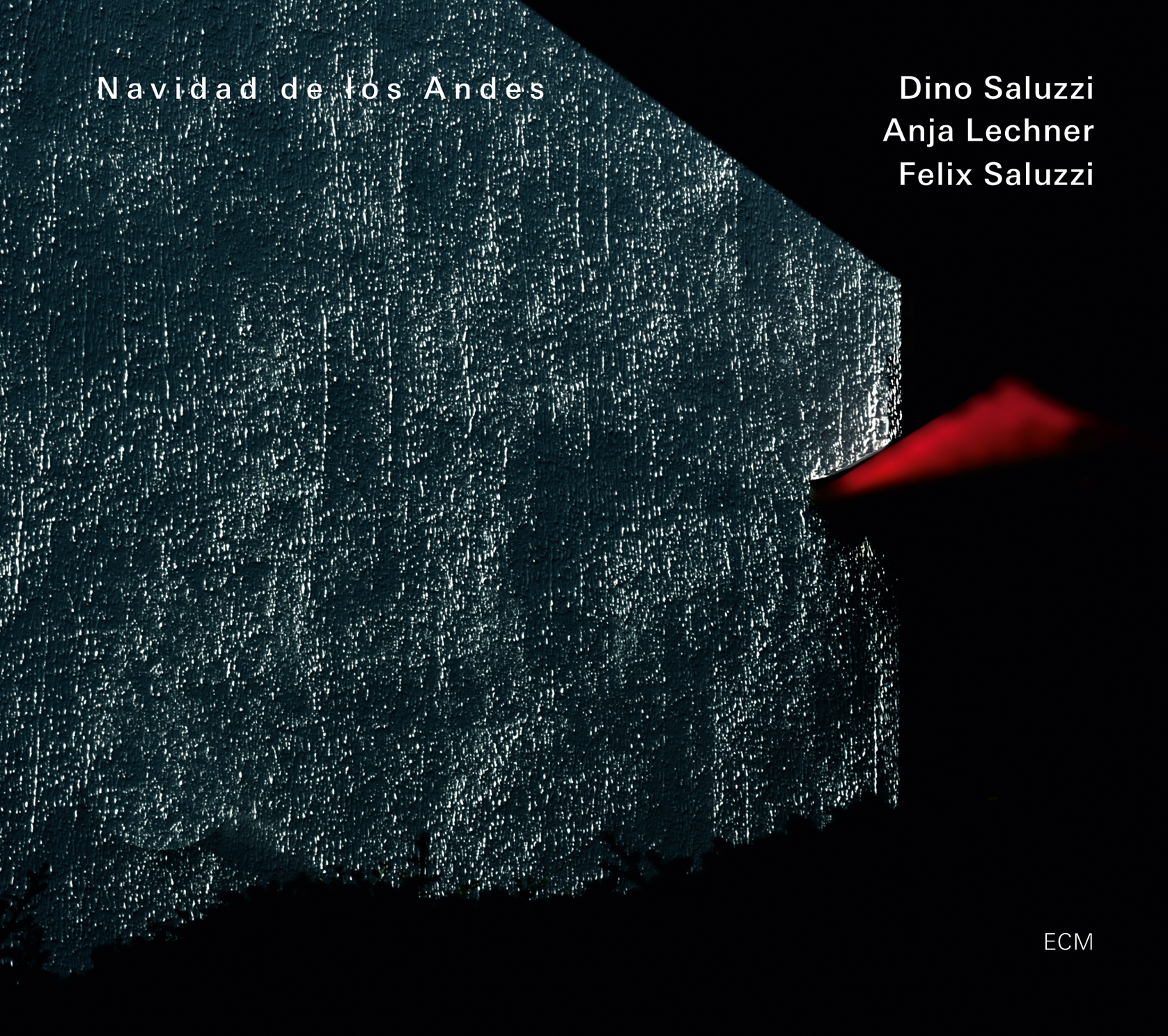
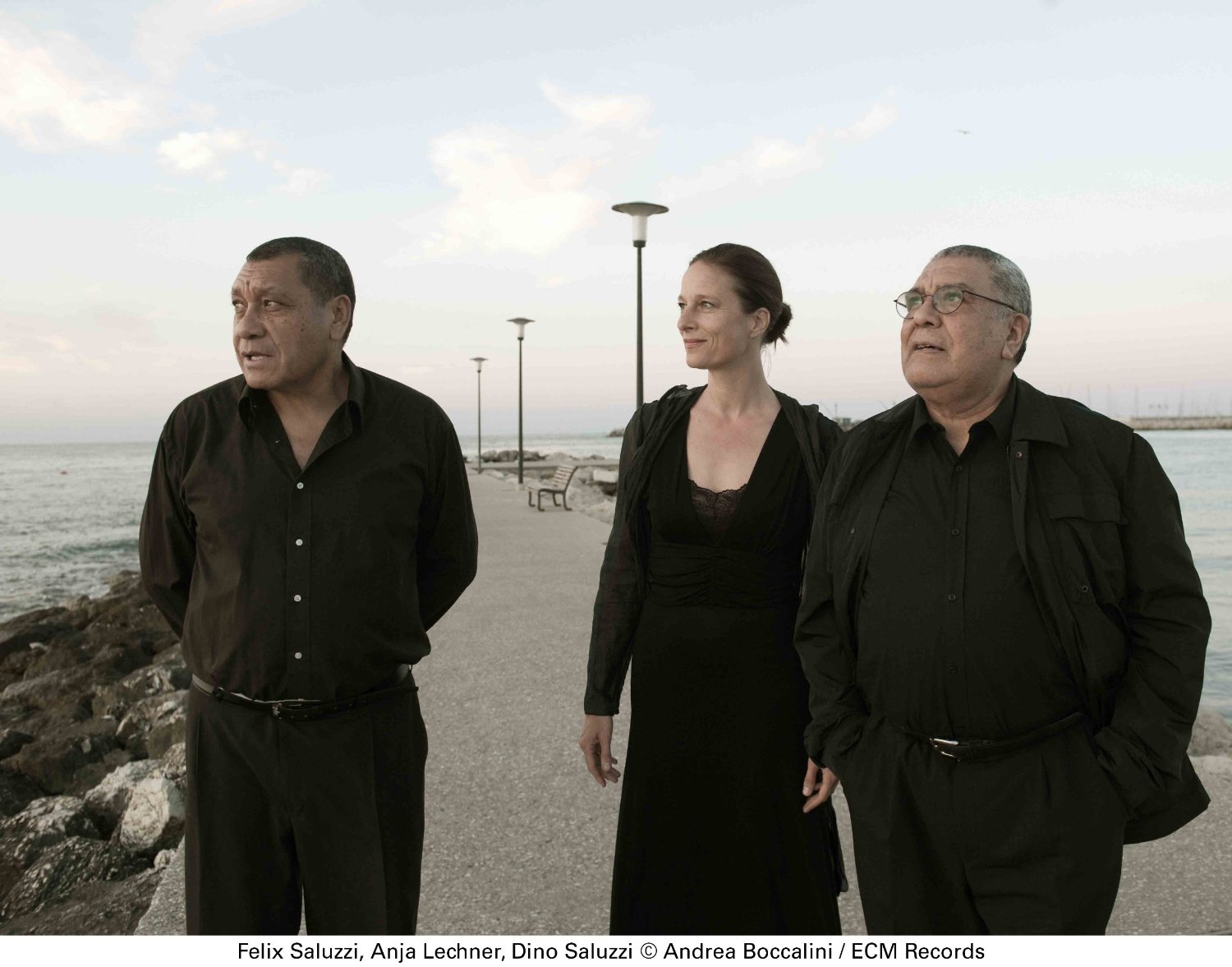
Dino Saluzzi bandoneon Anja Lechner violoncello Felix Saluzzi tenor saxophone, clarinet
Recorded July 2010, Auditorio Radiotelevisione svizzera, Lugano
Engineer: Stefano Amerio
Produced by Manfred Eicher
Building on the fruitfulness of their previous collaborations, Dino Saluzzi and Anja Lechner have never sounded so beautiful together as they do on Navidad de los Andes. Their unity reaches profoundest depths, more attentive than ever to the value of spaces between them. This achievement proves to be the album’s blessing and its curse.
In light of their groundbreaking Ojos Negros, the Argentine bandoneón master and German cellist welcome the former’s brother Felix, a reedman of exquisite talent who has graced such classic records as Mojotoro, Juan Condori, and more recently El Valle de la Infancia. Where in those larger contexts the Saluzzi “family band,” as it has come to be known, worked wonders in selective navigations of original and traditional sources, in this more compact setting Felix’s contributions on tenor saxophone feel somewhat excessive. Thankfully, they appear only on three tracks, working progressively better from the incongruous “Requerdos de Bohemia” to the jazzier “Candor/Soledad” and lastly to “Ronda de niños en la montaña,” where it fits best for being more like a voice singing a lullaby.
Felix’s clarinet, on the other hand, is a revelation. Whether nominally fronted in fragments from the “Trio for clarinet and two bandoneóns” or exploring the tango in “Variaciones sobre una melodia popular de José L. Padula,” his heavenly tone deepens the atmosphere of everything he touches. On that point, the trio functions most effectively when duties are shared in equal measure, as in “Son qo’ñati,” a lively dance that finds each musician handing off motives to the next in a continuous chain of technique and ingenuity. Breathtaking.
But it is, again, the bandoneón-and-cello center that mines the purest ore. Each collaboration in this vein develops its own film of a faraway ecosystem. The whistles and birdcalls of “Flor de tuna” give way to the cloudless sky of “Sucesos” and finish the album with the egalitarian “Otoño.” Along the way, the duo gives “Gabriel Kondor,” last heard on Saluzzi’s ECM debut, Kultrum, a nostalgic makeover.
Despite the tenor’s minor setback, the album stays true to its title, which translates as “Andean Nativity.” A spiritual sense of family and community across eras has always been at the heart of Saluzzi’s music, through which those dynamics thrive. Indeed, life would be nothing without them.
(To hear samples of Navidad de los Andes, click here.)
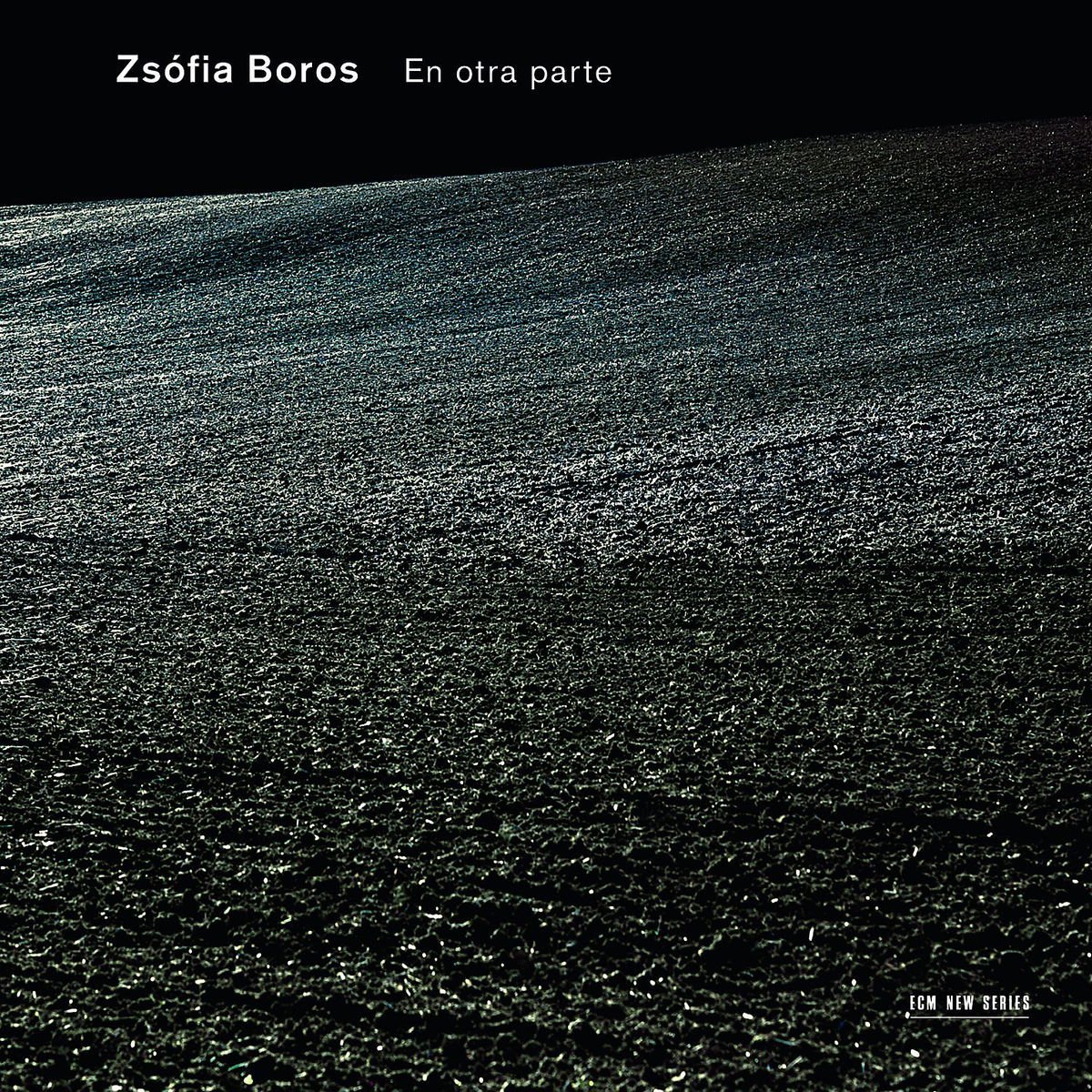
Zsófia Boros classical guitar
Recorded August 2012, Auditorio Radiotelevisione svizzera, Lugano
Engineer: Stefano Amerio
Produced by Manfred Eicher
Hungarian guitarist Zsófia Boros is a revelation. Having found in ECM an ideal venue for her playing, she is able to unfold her wings in quiet strength. Perhaps taking cue from Cuban composer Leo Brouwer, who saw the guitar as a boundless orchestra and whose music is prominently featured in her debut program for the label, Boros plays her instrument as if it were a piano. Each finger is independent of the others, but connected by a network vaster than the sum of its parts.
The shorter pieces of the program are also its deepest, and include the gorgeous faceting of Brouwer’s “An Idea,” the very simplicity of which allows Boros’s expressive gifts to shine. The same holds true for “Ecrovid” by Vienna-born composer Martin Reiter. It’s a jewel of a piece, steeped in an innocence that fades into a chain of unresolved statements. And in “Eclipse” (by Dominic Miller, an English guitarist born in Argentina), Boros bonds every color change to an overarching spectrum of song-like paths.
Furthest afield, geographically speaking, is the tender slice of contrast that is Ralph Towner’s “Green and Golden,” which despite the title is more about texture than color. Its lines curl ever inward, each a strand of physical synaesthesia. Towner’s braids make fine company for the muted spirals of “Te vas milonga” by Argentine composer Abel Fleury and the Brazilian standard “Se ela perguntar” by Dilermando Reis. Freshened in the acoustics of the Lugano studio, each forms, along with the engineering brilliance of Stefano Amerio and Boros’s obvious humility, an artisanal triangulation of effort to liberate an unadulterated spirit.
One can hardly forget in the longer pieces the distinctly shaded lyricism of Spanish composer Francisco Calleja’s “Canción triste.” The beauty thereof lies not only in the tune but also its feeling of history. It’s as if the composer had been waiting with his guitar beneath a storm cloud so that he might catch the music in the sound hole and grow it like a plant. Although the combination of production and performance is fine throughout, here especially one notices an immediate genius as Boros and the Amerio/Eicher team emphasize the warmth of the guitar’s lower end and the clarity of its upper registers in mutual separation. A meditative rubato glow gives this piece a generative character that pours from the fingers. Also pouring from the fingers are the cascades of “Callejón de la luna.” Written by Spanish composer Vicente Amigo, this piece sails the vessel of its flamenco inspirations toward wider waters: a story of lovers circling the earth until they meet again. Flamenco touches echo also in “Cielo abierto” by Argentine composer Quique Sinesi, but in even more refracted form. For while the percussive acuity and variation of technical flourish makes this a standout for its substantive atmospheres and melodic robustness, its brilliance is to be found more so in its balance of sinking and floating.
The album’s heart beats through Brouwer’s “Un dia de novembre,” which clarifies an uncommon gift for narrative. Brouwer is a master storyteller, and at these fingertips his characters come to life in tangible ways. At one point, Boros leads a rhetorical shift into more rolling motifs with the insistence of a single note. That she does this with such lack of force speaks to the sanctity of her relationship with the guitar. A variation of the same track ends album in somber skies, but beyond them an assurance brought only by dreams that the dawn will bring with it a feeling of return.
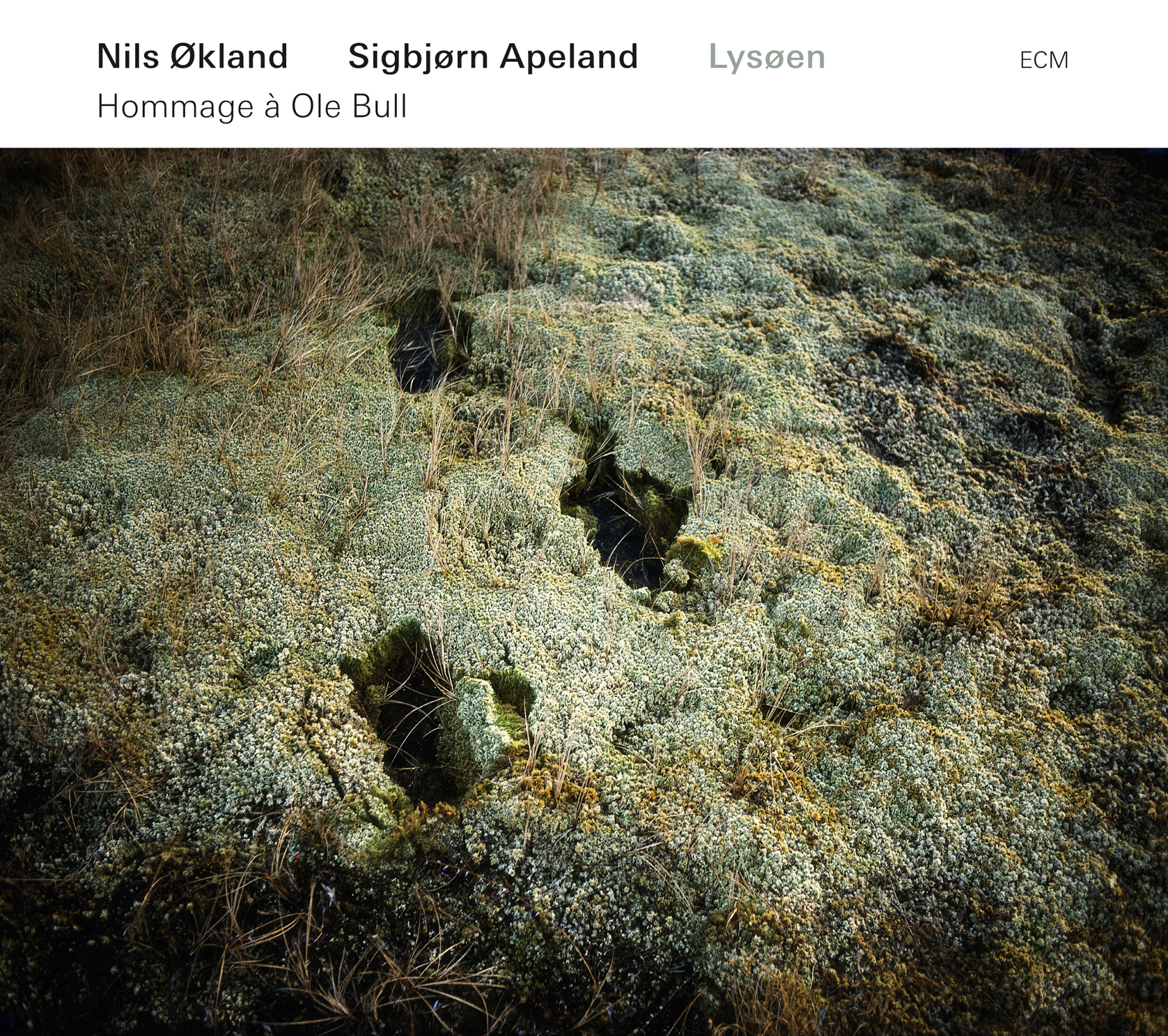
Nils Økland violin, Hardanger fiddle Sigbjørn Apeland piano, harmonium
Recorded September 2009 and January 2010 at Villa Lysøen, Hordaland, Norway
Recording engineer and editing: Audun Strype
Album produced by Manfred Eicher
Fiddler Nils Økland and pianist Sigbjørn Apeland offer a studied take on the legacy of Ole Bull (1810-1880), a violinist of classical renown who brightened the folk music of his native Norway like no other musician after him. The present album is named for the little island off Norway’s western coast where Bull built a summer home for his wife and daughter, a place he’d longed for since childhood and where he would die only a few weeks upon realizing his dream to live there. Økland and Apeland were privileged to have access to instruments once owned and played by the Bull family for this recording, the first ever to be made at the Lysøen villa. Taking inspiration from the man Edvard Grieg once called a musical savior, the duo paints an idiosyncratic portrait using traditional and original pigments between daubs of Bull’s own, and all with a flair for adlibbing that is true to form. On that note, the musicians cite ECM greats Arild Andersen, Jan Garbarek, and, more recently, Frode Haltli as inspirations for likewise tapping folk veins in their improvisatory mining.
Traditionals take up most of the canvas, with the appropriately titled “Stusle Sundagskvelden” (Dismal Sunday Evening) opening in somber gesso. Its relay between fiddle and piano crafts a mood so potent, one almost feels it as a mist. Along with “I Rosenlund under Sagas Hall” (In the Rose Grove Under the Hall of Saga), it is the only folk track to employ this instrumental combination. The latter is a dirge-like piece that transitions into the famous “La Folia” without missing a beat. The rest, with two exceptions, pair fiddle with Bull’s own harmonium. This joining of forces—one earthly, one heavenly—is well suited to the material, which ranges from the rustic strains of “Sylkje-Per” (and its solo piano variation) and “Jeg har så lun en hytte” to the ethereal “Eg ser deg utfor gluggjen” (I See You Outside the Window).
The Bull songbook, such as it is, gives only barest insight into the kind of musician he must have been, but in the hands of these players I gather we come closer than by any other available means. Of the four tunes featured, “La Mélancolie” is another shaded, inward tracing. It’s also utterly beautiful and, in this arrangement, is possessed of a cinematic glow. The harmonium adds unusual propulsion to such pieces, and to others, like “Sæterjentens Søndag” (The Herdgirl’s Sunday), a similarity of extremes, from the subterranean to the extraterrestrial.
Økland and Apeland offer two duo originals. “Belg og slag” features tapping of the bow, which draws a line of inquiry to every answer. “Grålysning” (Daybreak) is a prettier circling of airs and sunlight. Økland’s solo “Solstraum” is reminiscent of Paul Giger’s Alpstein, its energies bright against Apeland’s “Tjødn,” a piano solo of eventide. The program rounds out with a fiddled rendition of Grieg’s famous “Solveigs sang.” At Økland’s bow, the strings sing this melody as if for the first time, even though, as with the rest, we feel that we have heard it before. Like Bull himself, it is a musical wanderer whose shadow leaves behind a trail to follow.
Yeahwon Shin voice Aaron Parks piano Rob Curto accordion
Recorded May 2012 at Mechanics Hall, Worcester, MA
Engineer: Rick Kwan
Mixed at Rainbow Studio, Oslo by Jan Erik Kongshaug, Manfred Eicher, and Sun Chung
Produced by Sun Chung
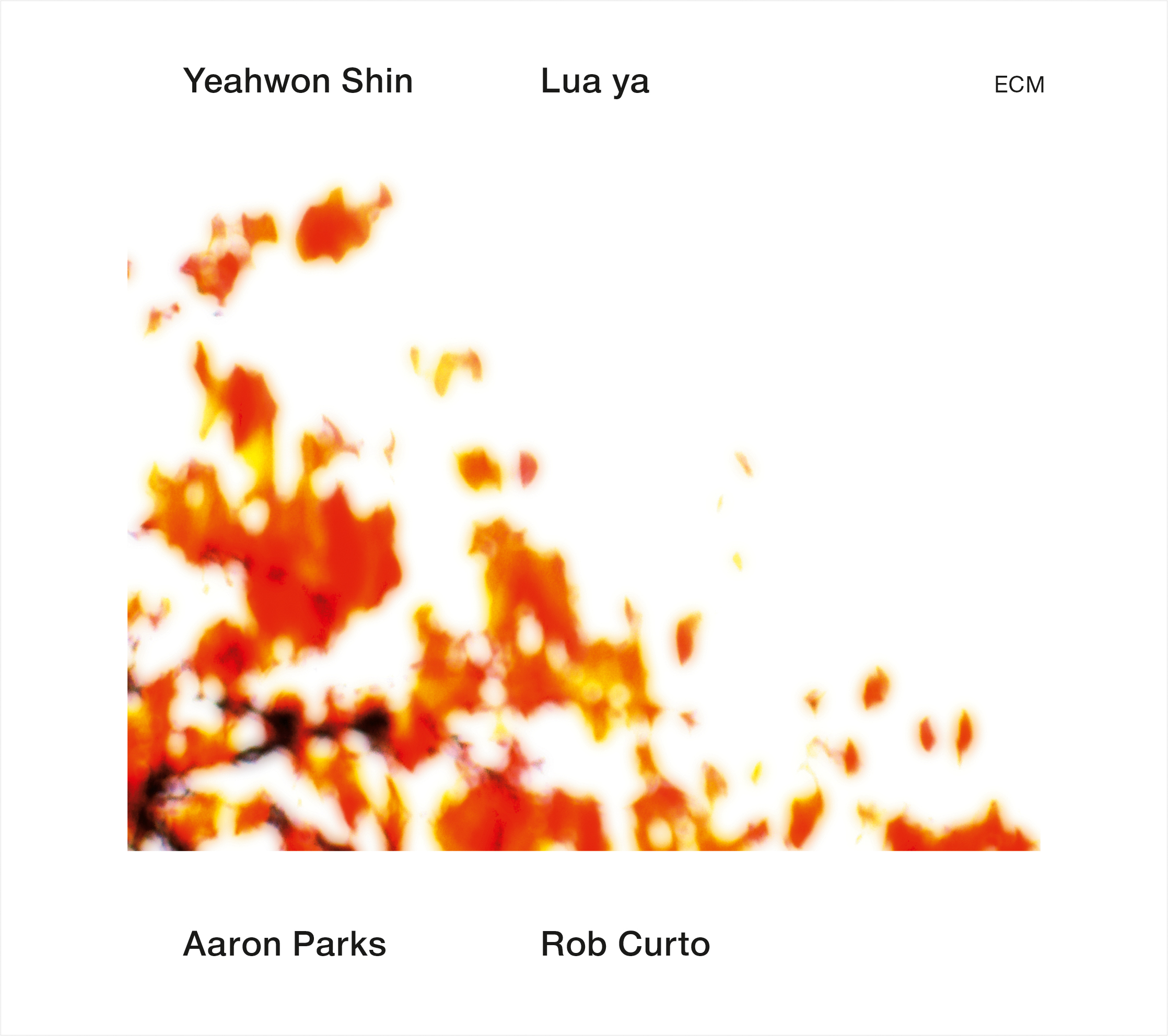
If we can believe poet Federico García Lorca, who in a 1928 lecture entitled “On Lullabies” claimed that “Spain uses its saddest melodies and most melancholy texts to darken the first sleep of her children,” then we can also believe in a culture where lullabies nourish the growing soul. Of the latter persuasion are those offered by Yeahwon Shin on Lua ya. Shin’s selections give voice to transitions of darkness to light, spirit to flesh, dependence to independence, and all with a grace of expression that pretends nothing. Although best known as a Brazilian music specialist (her 2010 self-titled debut was nominated for a Latin Grammy), the singer rejoins accordionist Rob Curto and, for the first time, pianist Aaron Parks, in an enchanting survey of Korean children’s songs.
“The album’s theme is the remembrance of childhood,” Shin tells me in an e-mail interview. “I would like the listeners to have the freedom to imagine the story themselves.” In light of this invitation, we may still feel the need to tread lightly, for each song is of such fragile constitution that it would seem to crumble at the slightest mishandling. Then again, the music blossoms with such strength—a strength born of unconditional love—that it also feels impervious to misunderstanding. As in the opening improvisation, called simply “Lullaby,” it crafts a world of tracings and starlight. Parks’s pianism introduces the landscape across which Shin’s voice emerges as a maternal whisper, carrying with it the histories of countless mothers before, and the countless more to follow, in life’s eternal cycle.
(Photo credit: John Soares)
Shin grew up enchanted by the music of Egberto Gismonti, who along with the iconic Tom Jobim spun the tapestry of her appreciation for Brazilian music. She looks back even further to Chopin and Bach, composers who informed her first love—the piano—as fundamental inspirations in her development as an artist. “I like Korean traditional music, as well,” she says. “I am strongly bonded to Korea’s rhythmic patterns. I still want to discover more about this music.” Lua ya is a new step in precisely this direction. It is also a return to origins. For Shin, what seems most important in life is that which imparts it: “My parents are very important figures in my life. I respect my father’s wisdom, my mother’s unlimited love and spirit of self-sacrifice. They are not musicians, but the way they express themselves by singing shows a pure love for music. I have always wanted to feel that way in music.”
To be sure, Shin’s filial respect echoes in the songs passed down from her own mother, whose voice is forever preserved in memories of a family that was always singing. Of those songs directly passed down, “Island Child” is among the album’s most emblematic. Syllables roll off the tongue from both singer and instrumentalists until language ceases to matter. Indeed, Shin is at her most powerful when singing wordlessly (as she does here, and in “Moving Clouds”), as one needs not struggle against the elastic of linguistic barriers. “The Orchard Road” is another descendent of personal experience and shows the trio at its densest. Shin’s breathy storytelling develops over a rustic backdrop, as affecting as it is brief.
If Lua ya feels less like a cycle and more like one continuous song, it’s because it was, at the behest of producer (and Shin’s husband) Sun Chung, conceived and realized as a concert, played from start to finish with no edits. Chung acted as both audience and director when the performance was being recorded in Mechanics Hall in Worcester, Massachusetts. His presence is palpable in the album’s dynamic flow. Also present are Shin’s attentive accompanists, both of whom take her voice as a compass takes magnetism.
(Click here to see this article as it originally appeared in RootsWorld magazine, where you can also hear samples.)
Sinikka Langeland voice, kantele Lars Anders Tomter viola Kåre Nordstoga organ
Recorded February 2008, Nidaros Cathedral, Trondheim
Engineer: Ove Berg
Editing: Ove Berg, Jean Lewis (Suite, Chaconne)
An ECM Production
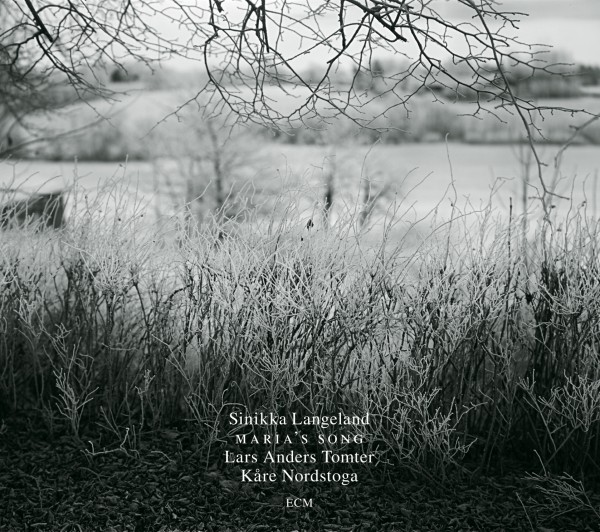
ECM may be nominally dedicated to contemporary music, but Johann Sebastian Bach has been a vital touchstone in its classical recordings. Whether acting as a foil to modern works in Thomas Demenga’s multi-album traversal of the Cello Suites or as the exclusive subject of fresh interpretations by Keith Jarrett and András Schiff at the keyboard, Bach has either existed as a point of reference or as a master being reckoned with anew toward the asymptote of definitive interpretation. Only Christoph Poppen has gone a step further, weaving Bach into the work of Anton Webern (as Webern himself had done) and exploring hidden chorales of the solo violin literature. That was, until Maria’s Song, which is by far, and may always be, ECM’s profoundest reckoning with Bach.
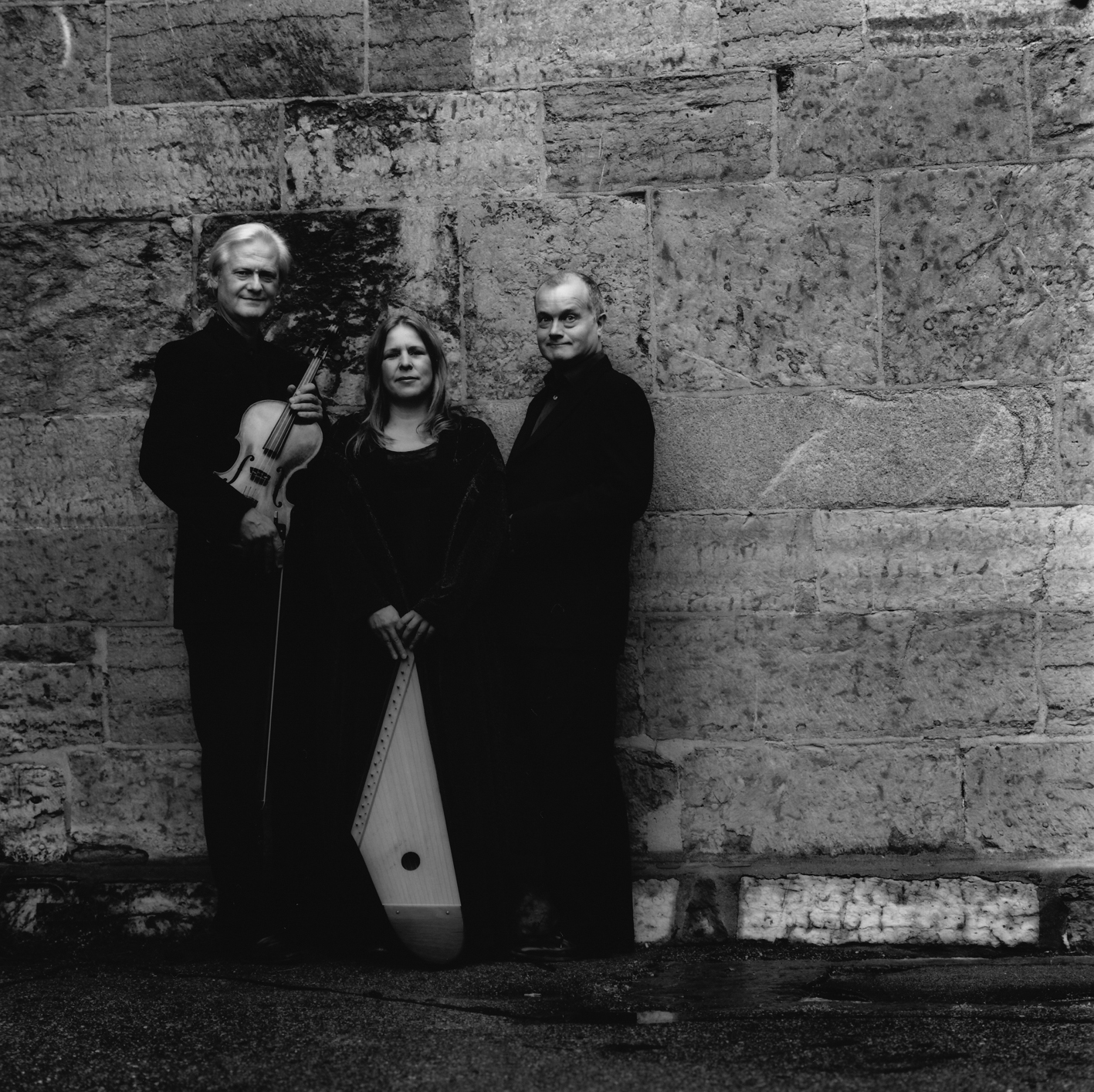
Previously for the label, Norwegian folk singer and kantele (15-string Finnish table harp) virtuoso Sinikka Langeland had recorded Starflowers and The Land That Is Not, both of which sought to explore the shared heart of folk and jazz around the heliocenter of Langeland’s full-throated voice. This time she is joined by Lars Anders Tomter, previously of Ketil Bjørnstad’s The Light, who plays a Gasparo da Salò viola made in 1590, apparently one of the world’s finest examples of the instrument. With them is Kåre Nordstoga, playing the 30-register Baroque organ of Trondheim’s Nidaros Cathedral. Nordstoga is the principal organist at Oslo Cathedral and a Bach specialist, having performed two complete traversals of the composer’s organ music over 30 Saturday recitals in 1992 and 2000.
(Photo credit: Morten Krovgold)
The program is a mixture of Marian texts from Luke set to folk melodies and medieval ballads, then threaded through the loom of Bach’s hymns (and the Concerto in d minor, BWV 596) at the organ. In addition, Tomter plays viola arrangements of the Solo Cello Suite No. 1 in G major, BWV 1007 (played an octave higher) and the Chaconne from the Solo Violin Partita No. 2 in d minor, BWV 1004 (transposed to g minor). A few things make this a remarkable project. First is Langeland’s immensity of knowledge, on which she draws to assemble a program of such originality that it feels as seamless as its pairings of word and melody. Second is her voice. Possessed of a luminescent, youthful energy, her intonation makes scripture feel like a sheaf of grain distilled into something digestible by the soul. Last is the utter respect with which the musicians perform, respect that emits a sacred light of its own. And no wonder, considering that the spirit of these texts was at one time forbidden in Norway, where the Reformation of 1537 disbanded monasteries and consigned church relics and artifacts, including depictions of Mary, to state storehouses. Worship of the Virgin thus became the stuff of hidden messages and codes, and in these songs Langeland has enacted their recovery.
“Lova lova Lina” is the first encoding of Mary and, like many of Langeland’s segues throughout the disc, is sung with only the cathedral’s resonant air as accompaniment. Along with the “Ave Maria,” it reappears transformed. At times, Langeland’s fingers find their way to the kantele, both as support for the voice and as a voice unto itself. A reprise of “Lova lova Lina” is especially potent for marrying the two. Narratively inflected singing throughout makes of the shuffled program something of a passion play, in which dialogues between Heaven and Earth come to define the natural order of things. One might expect the viola to brighten Bach’s solo cello writing, when in fact it casts a deeper, more spectral shadow. The feeling is distinctly cyclical, as emphasized by the vocal surroundings, and reaches open-gated confluence in the mighty Chaconne, over which the “Ave Maria” is dutifully papered. The organ, too, sings as it speaks, lifting Langeland in “Vom Himmel kam der Engel Schar,” BWV 607 and, on its own, ascending the spiral staircase of the “Fuga sopra il Magnificat,” BWV 733 at hub of it all. Even the Concerto transcription unleashes the Holy Spirit at an intersection of past and future. As Langeland recalls in her liner notes, “While we played our way through time, the Nidaros Cathedral reflected the spiritual currents of a thousand years. The large Russian icon stared at us as we began to record. The dawn light poured through the huge rose window as we finished the night’s recording.” To be sure, we can feel all of these things…and more.
Marc Sinan music, guitars, idea, concept and production Traditional musicians from Turkey
Mustafa Boztüy darbuka, framedrum Güç Başar Gülle oud Ömer Can Satır kaval Onur Şentürk kemençe Erdem Şimşek bağlama Traditional musicians from Armenia Araik Bartikian duduk, zurna Vazgen Makaryan duduk, zurna Andrea Molino arrangement, conductor (DVD only) Jonathan Stockhammer conductor Markus Rindt idea, concept and production
CD recorded live July 2011 at Schleswig Holstein Musikfestival by Volker Greve and Holger Schwark
“Prolog” recorded December 2012 at MIAM Istanbul by Can Karadogan
Mastering: Volker Greve
DVD recorded Ocobter 2010 at Festspielhaus Hellerau
An ECM Production
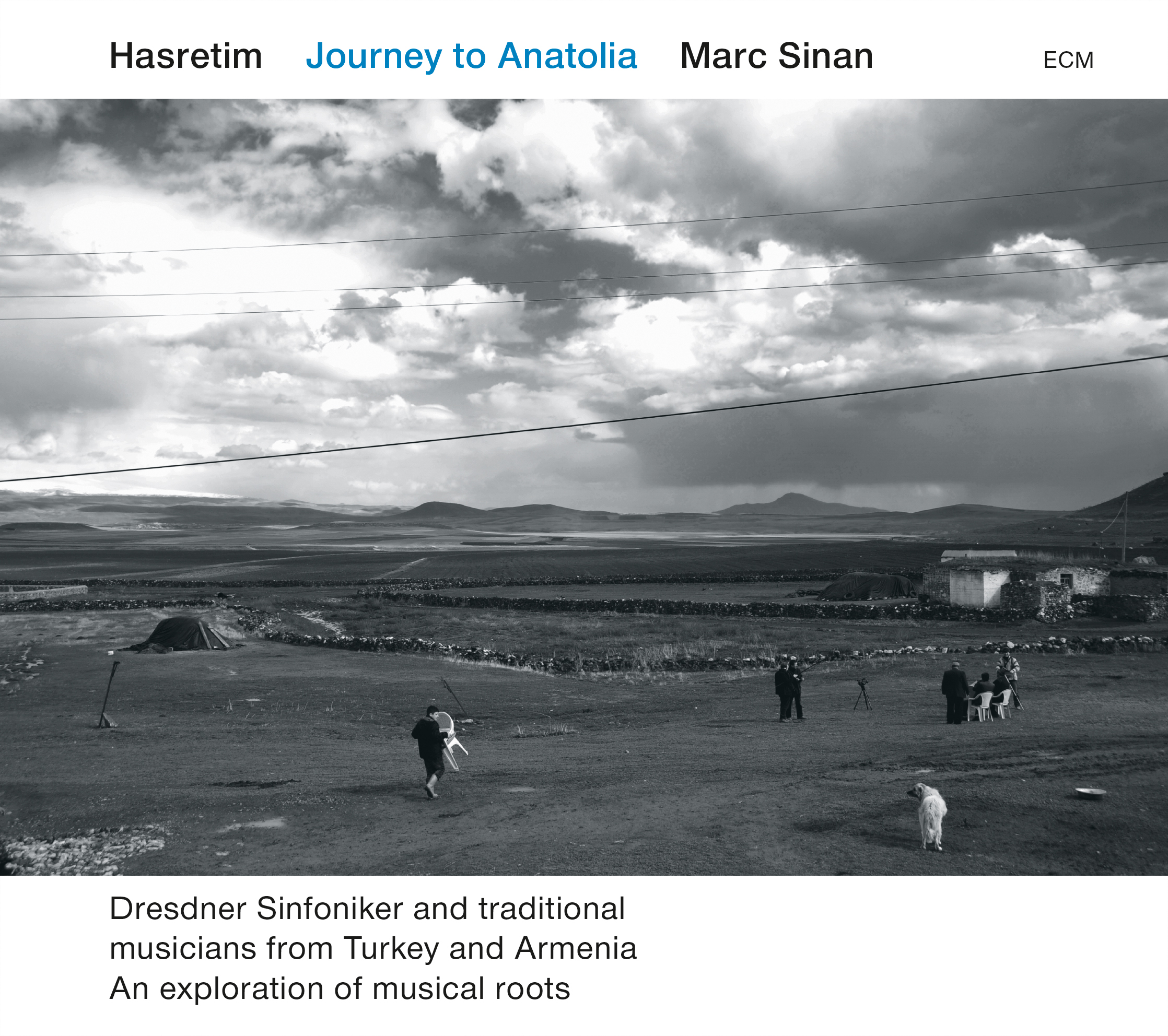
Classical guitarist Marc Sinan, born in 1976 to a Turkish-Armenian mother and a German father, has over the past two decades attracted increasing demand as a soloist and collaborator, and dedicates his output to softening divides between genres, eras, and cultures. Hasretim represents the most significant evolutionary leap in his career as a composer. The result of a commission by Hellerau – European Center for the Arts Dresden and the Dresdner Sinfoniker, this video-musical journey traces Sinan’s heritage along the Black Sea coast to the Armenian border. More than that, it’s an invaluable archive of life and song on the Anatolian plateau, which he explored together with Dresdner Sinfoniker artistic director Markus Rindt in 2010. During the trip, Sinan was saddened to find that the preservation of folk music so prevalent elsewhere (viz: the Baltic states, Hungary, and Greece) was lacking in Turkey. Consequently, he took Hellerau’s commission as an opportunity to address the discrepancy, pooling a storehouse of traditional musicians and incorporating their art into a large-scale, contemporary piece of his own design. “I was quite nervous,” writes Sinan of the recording process. “Unlike musical field research, our project demanded much more than simply documenting the current state of the Turkish musical tradition regardless of its artistic merit. We were on a treasure hunt and would only rest once we stumbled upon something truly special.” As connections grew, so too did the availability of choice musical talent and the opportunity to capture it for posterity. Once satisfied with his bank of original recordings, to them Sinan introduced what he calls “decisive, subjective elaborations” in the form of both through-composed and improvised material.
Hasretim was originally conceived as an installation piece, with videos of these unrecognized Turkish troubadours (many of whom must balance their musical lives with working ones) projected onto five towering vertical screens at stage rear. Before them plays an assembly of European classical musicians augmented by traditional specialists from Turkey and Armenia. The latter bring their expertise to a veritable portrait of Asia Minor in sound as the oud, kaval, kemençe, bağlama, duduk, zurna, and frame drum hold their own alongside strings and winds. It is to ECM’s credit that its release should encompass both the audio on CD and the visual on an accompanying DVD. For while the music stands alone as a welcoming experience, to see the musicians (live and recorded) in their element, along with segues of candid scenes from Istanbul and beyond, brings out the project’s reach in most immediate terms. Both versions feature essentially the same personnel, with the notable exception of conductors: Jonathan Stockhammer directs the CD version, recorded live at the Schleswig Holstein Musikfestival, while Andrea Molino, also the project’s musical arranger, handles the DVD performance, recorded at Festspielhaus Hellerau.
As indicated by the title, which means “I’m yearning” or “My desire,” Hasretim is a search for roots. Yet it’s also a spray of new foliage in the towering branches, nourished by Sinan’s unique ear for montage. The album is bookended by a “Prolog” and “Epilog.” One is a menagerie of harmonics, blips, and whispers that tightens like a spring, while the other pieces together footage of nearly all the recorded musicians in a chain of reprisals, ending as it began: with an attunement that spans multiple geographies.
Within this frame are five distinct “Tableaux,” each named after a Turkish city or, in the case of “Tableau II – Yayla,” for the mountain pastures where an old man (Haci Ömer Elibol) plays the end-blown kaval while his sheep animate the background. His call, for that is what it becomes in Sinan’s contextualization, inspires some upbeat interweaving. In contrast to the dark fiddling of “Tableau I – Ordu,” which details the face of singer Asiye Göl across all five screens, it more fully includes itself in the musical goings on.
Indeed, voices resound clearest throughout the program, even if certain instrumentalists do stand out for their charisma. There is Hüsseyin Altay on the tulum (Turkish bagpipe), joined by droning brass; the unforgettable Ismail Küçük, who sings and bows his kemençe in “Tableau III – Trabzon” from the back seat of a car, thus underscoring the film’s road movie feel; the duet of Ömer Parlak on kaval and Mesut Kurt (along with Göl, the youngest of those featured) on kemençe; and in “Tableau IV – Erzurum” the rhythmically savvy Aşik Eminoglu accompanying himself on the bağlama to invigorating effect. This same Tableau also cradles “In Memory of Vahide,” a 10-minute duduk duet that interpolates shadows into light. All of this buoys “Tableau V – Kars” as the most compositionally unified vision of live elements (especially in the percussion) and descriptive archival work.
In absence of any background information, one might never know that Sinan witnessed firsthand a loss of connection among contemporary Turkish musicians to their rich heritage, or that their art needed recovery in this regard. Neither was the counterpoint lost on him between the boisterous people and their peaceful, sometimes dreary, settings. Such contrast of medium and message informs every frame and staff of this multimedia treasure trove. Although awarded a special prize by the German Commission for UNESCO for its “inspiring and experimental confrontation between different cultures,” Hasretim is less about experiment than experience and anything but a confrontation. Rather, it is a book to which each new witness adds a page.
(See the article as it originally appeared in RootsWorld online magazine, where you may also hear samples.)
Dino Saluzzi bandoneón José Maria Saluzzi guitar, requinto guitar Nicolás “Colacho” Brizuela guitar Felix “Cuchara” Saluzzi tenor saxophone, clarinet Matias Saluzzi electric bass, double bass Quintino Cinalli drums, percussion
Recorded March-May 2013 at Saluzzi Music Studio, Buenos Aires
Production coordination: José M. Saluzzi
Recording engineer: Néstor Díaz
Mix and mastering: Stefano Amerio
Album produced by Manfred Eicher
Over the past three decades of his association with Munich-based ECM Records, Argentine bandoneón virtuoso Dino Saluzzi has built a new home, but through his output on the label has traced so far back down his old roots that with El Valle de la Infancia (The Valley of Childhood) he might at last have reached the center of the earth. Playing once again with his “in-house” band, last heard with slightly different personnel on 2006’s Juan Condori, he emotes seamlessly with brother Felix on reeds, son José on guitars, and nephew Matías on electric and upright bass. Guitarist Nicolás Brizuela and percussionist Quintino Cinalli round out the extended family portrait. As ever, Dino’s humble beginnings (his father worked on a sugar plantation and played the bandoneón in his spare time before becoming a noted composer himself) manifest themselves in every note, and he credits them with freeing his creative approach. Dino’s mastery is thus so organic that to name it as such barely renders a sketch of his capabilities, as evidenced by this latest excursion. As it turns out, the valley of his childhood is a bountiful place to be.
The program of Infancia juxtaposes standalone pieces alongside compact suites, all of which blend into a meta-narrative dotted by contemplative pauses. At its core, the music (mostly by Dino himself) thrives on warm, impressionistic feelings, so that whenever the band does cohere, the effect is dazzling. “Sombras” welcomes new listeners to one of the most recognizable sounds in all of modern South American music, and old listeners to a familiar, paternal squeeze of the shoulder. The title means “shades” and connotes a mission statement Dino has been crafting since he first laid hands on bellows. His bandoneón exhales magic so potent and with such familiarity, one would swear to have been born in the presence of its melodies. After an intimate introductory sweep, José’s guitar (occupying the mid-left channel) opens its currents and inspires Father Saluzzi to low-flying surveys. Cinalli’s brushed drums (there’s nary a stick to be discerned on the album) lighten the weight of their memory.
Biological linkages strengthen in “La Polvadera” and “A mi Padre y a mi Hijo” (For My Father and Son), each a coming together of such thematic clarity as to whisk the heart away on a cloud. Brizuela’s picking (mid-right channel) contrasts verdantly with José’s nuanced flutter and sway. The two guitarists combine beautifully over butterfly-kissed snare and cymbals in “Churqui.” Cinalli’s rhythmic details make the scenography all the more believable. His patter may be that of rain one moment, the next of a magician who excels in misdirection.
The album’s mini-suites usher in colors from adjacent plains, where crops give way to the tilling of a new generation. Ranging from two to five parts each, the suites cover a range of emotional stirrings and interpret tunes by a handful of late Argentine folk singer-songwriters among Dino’s own. Moods vary accordingly. From the dissonant rainforest activity and droning resolution of “Urkupiña” to the guitar-driven medley that is “La Fiesta Popular,” motifs find their way through thickest forest and driest riverbed alike. Even “Tiempos Primeros,” which nods deepest toward folk traditions, balances images of sleeping and waking in the final curlicue of wind.
The tripartite “Pueblo” captures the band at its purest shade yet. Its introductory guitar solo (“Labrador”), written and played to angelic perfection by José, preludes a nocturnally realized “Salavina,” the most famous zamba (not to be confused with samba) of Mario Arnedo Gallo (1915-2001). The subtle unity forged therein carries over into Part III, the quietly majestic “La Tristecita” by Ariel Ramírez (1921-2010). As throughout the album, each instrument holds its own in equal measure, serving the depth of restraint over the allure of drama. That said, Felix’s tenor casts an inescapable spell: jazzy, gritty, and tasting of soil. All of which labors to remind us that even the most ethereal prisms of art extract their light from the embers of that which came before.
(See this article as it originally appeared in RootsWorld online magazine, where you may also hear samples.)
Savina Yannatou voice Kostas Vomvolos qanun, accordion Yannis Alexandris oud, guitar Kyriakos Gouventas violin, viola Harris Lambrakis nay Michalis Siganidis double-bass Kostas Theodorou percussion, double-bass Recorded October 2007 at Sierra Studios, Athens Engineer: Yannis Baxevanis
Edited and mixed by Manfred Eicher, Yannis Baxevanis, Kostas Vomvolos, and Savina Yannatou
Produced by Manfred Eicher
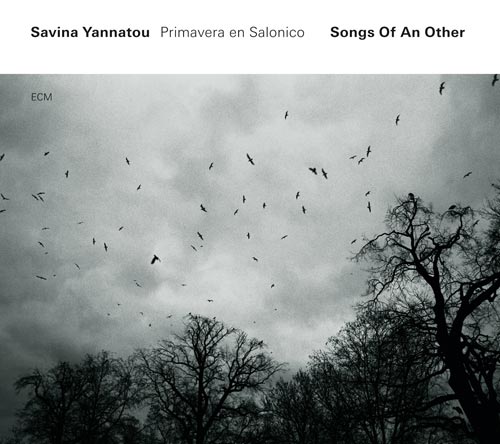
Songs Of An Other marks the third point of contact between Greek singer Savina Yannatou, along with Primavera en Salonico, and ECM. The program is more geographically varied than ever and emphasizes the interpretive prowess of its musicians. Much of that prowess breathes through Primavera’s superb control, for while the album boasts moments of sportive extroversion, it upholds the music first and foremost as a model for emancipation.
Indeed, Songs Of An Other shows this collective at both its most animated and its most delicate, oftentimes within the same song. Both the slack-stringed “Za lioubih maimo tri momi,” which comes by way of Bulgarian Macedonia, and “Radile” (from Greece) run the line of straight-up folk and all-out jam. In the latter vein, two new tunes based on Greek sources add another line to the project’s résumé. “O Yannis kai O Drakos” is a dragon-slaying song replete with fanciful colorations, paroxysmal gasps, and subtly frenetic bassing. “Perperouna,” a call for rain, explores the gravelly pits of Yannatou’s voice, embraced by the windy brine of nay and kalimba, all moving in a Celtic knot of rhythm toward an adlibbed comet’s tail. Even the “Albanian lullabye” becomes a ritual of ululations and incantations, honing a mysterious and strangely accessible edge.
For much of the album, however, the musicians tread a delicate path, adapting to every dip in Yannatou’s tightrope along the way. From the dulcet “Smilj Smiljana” (Serbia) to the Italian olive-harvester’s song “Addio amore,” they emote lucidly. Combinations of flute, violin, and accordion cloud like ink in water in “Sassuni oror” (Armenia); dances take the night by the hand in “Dunie-au” (Kazakhstan); and the 16h-century Yiddish traditional “Omar hashem leyakoyv” is practically translucent in sentiment.
The greatest accomplishment of Songs is the fullness with which it romanticizes, as is clear in “Sareri hovin mermen” (Armenia). Given the “Eastern” feel, one might easily read into it an alluring sway. Likewise, “Ah, Marouli,” a Greek song about sponge-divers on the island of Kalymnos, sashays with seeming invitation. And yet, these arrangements are so emotionally (and physically) complete that they hardly need even these words to convey to the uninitiated listener the magic of their self-assurance. And that’s the thing: every step and element of this audible alchemy is as lucid as the light that illuminates the talents of these fine instrumentalists, Yannatou tracing them all the while as a wave might shape an Aegean breeze.
Nils Økland Hardanger fiddle, violin, viola d’amore Recorded July 2007, Olavskirken, Avaldsnes (Norway) Engineer: Audun Strype Executive producer: Manfred Eicher
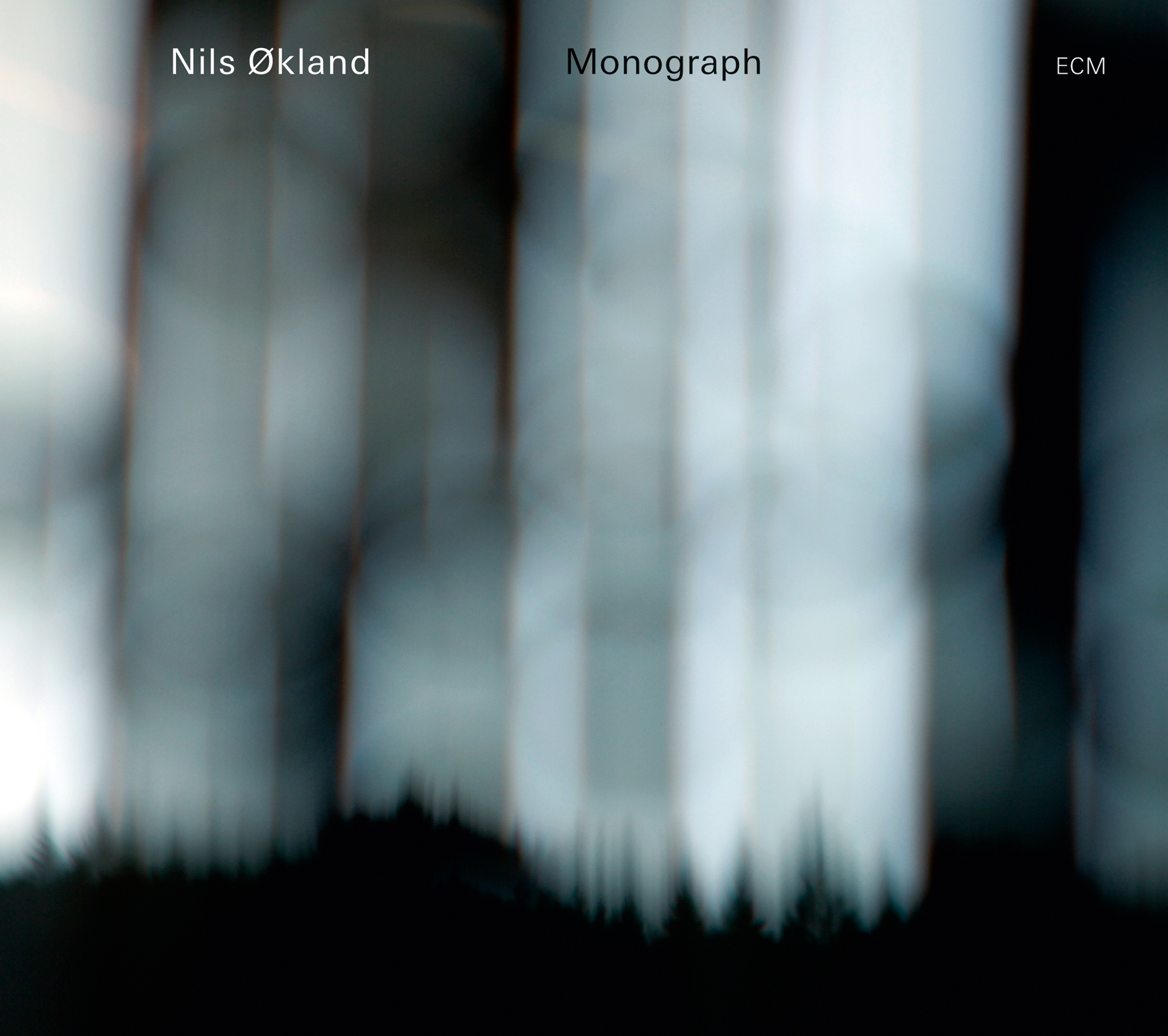
From the caverns of Christian Wallumrød’s Sofienberg Variations and A Year From Easter, Norwegian violinist Nils Økland emerges with his first ECM leader date, a solo album of fully original design and character. The composing may be his own, but like the playing it has roots in many times and places. And yet, the album’s sense of the here and now trumps the need for reference and allows even those unfamiliar with Nordic fiddling traditions and their modern developments alike to appreciate the spirit of Økland’s craft in the raw. Sometimes bucolic, at others streamlined, it is always moving.
(Photo credit: Lars O. Flydal)
Monograph wears its title well. Over a 13-track traversal, its comprehensive program expounds on multiple combinations of string and bow. The Hardanger fiddle, a national instrument of Norway of which Økland plays three on the album, lends a sandy, hurdy-gurdy-like texture to five tunes. Between the urgent cycles of “Kvelartak” and the shifting harmonies of “Skimte,” the instrument sprouts a forest’s worth of leaves. Versatility reigns in between the dancing shadows of “Mono,” and the pliant highs of “Snor.” In each of these is the mineral taste of soil, chased by the cleanliness of air.
For the album’s three violin tracks, Økland plays a centuries-old instrument. “Rite” circumscribes the space in spirited dance, “Seg” sings in charcoal pigments, and the wing beats of “Nattsvermer” (the album’s closer) would seem to reference Paul Giger’s emotive solo work on ECM. Sounding almost improvised, it rests on a blade of poetry.
Rounding out are some pieces played on the resonant viola d’amore. Hints of Irish pasture braid Nordic currents in “Mønster,” vividly opening the disc. Similar geographical conversations abound in the syllogistic “Dialog,” while “Pas de deux” and “Ø” bring tender, even forlorn, images into frame, touching and separating like a dragonfly and its reflection.
All of which is to say that Monograph is ultimately more than a solo album. Økland’s sound is so rich, it sings in the voices of many with a talent surpassed by few.






 Between Sound and Space: ECM Records and Beyond