José Luis Montón: Solo Guitarra (ECM 2246)

José Luis Montón
Solo Guitarra

José Luis Montón guitar
Recorded April 2011, Auditorio Radiotelevisione svizzera, Lugano
Engineer: Stefano Amerio
Produced by Manfred Eicher

“In this music I have tried to translate all the sincerity and love of art that I appreciate so much when I encounter it.”

After hearing José Luis Montón play so dazzlingly in Amina Alaoui’s Arco Iris, one of ECM’s finest records of this or any year, producer Manfred Eicher invited the Barcelona-born guitarist back twelve moons later for a solo session. The result: Solo Guitarra. Paying homage to the flamenco music that continues to challenge and inspire him, Montón took this opportunity, as he did with Alaoui, not to build on or recreate some monolithic tradition but rather to use his instrument as the starting point for independent compositions through which a mythic past flows unimpeded.
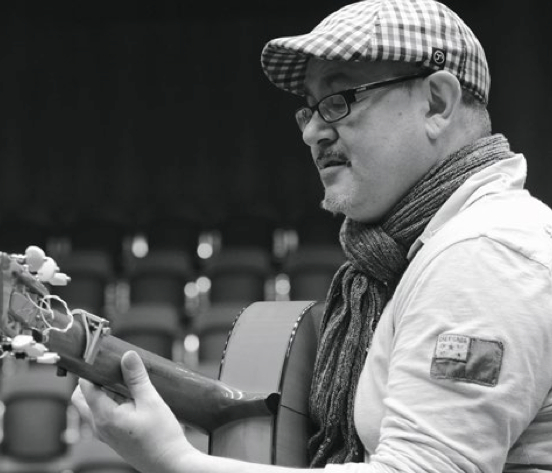

(Photo by Dániel Vass)

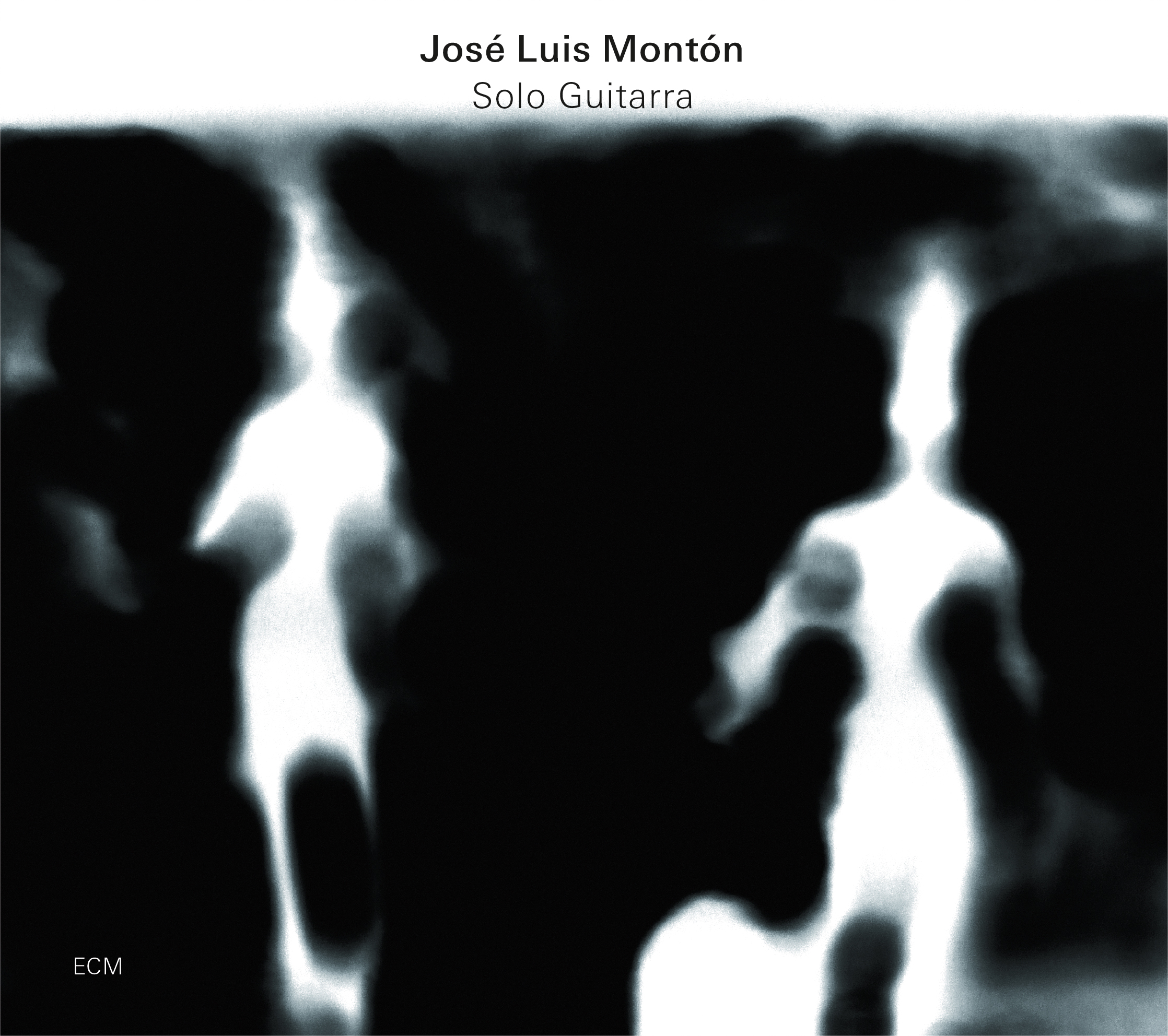
As with the implied figures of the Max Franosch cover photo, there is nothing “solo” about this guitarra, for the architecture of its player’s technical and idiomatic acuity has many chambers. The farruca, a (possibly) Galician strand similar to Portuguese fado, is referenced in the two opening pieces. This light and airy style is most evident in the understated virtuosity of “Rota,” but also shows a darker side in “Española.” Already we have witnessed the depths of Montón’s abilities, turning six strings into a choir just yearning to proclaim and meditate in turn. The acrobatics of the bulería come out through “Son & Kete,” a spiraling and almost tense flurry of activity. “Altolaguirre” and “Hontanar” give us the chameleonic tango. On the surface fragile as rose petals yet thorny as the supporting stem, it lives as it sings: without the need for words, and in service of that one moment when all is cast away. Next is an enraptured tarantella. “Con permiso” turns said folk dance into a diary of consummated love. There is the unsure touch, the cheek quivering at first caress, the pile of shed inhibitions cushioning every pinpoint of oneness. The relatively unornamented shapes of the Andalusian cantiñas and soleá roll like children down a hill through “Al oído” and “Conclusión,” respectively. Theatrical use of slaps and rasgueado (those distinct hummingbird strums) speaks to Montón’s experience as a composer of incidental music. The seguirilla, one of flamenco’s most expressive and formidable variations, shows him at his spirited best in “Detallitos.” The inventiveness of his mid-range melodies is second only to his intuitiveness of rhythmic control. “Tarareando” is without citation. As a result, its wide steps bolster the innocent joy of “Piel suave,” a rustic Cuban guajira that turns like a Rubik’s Cube, the solution of which glows flush in an endearing rendition of “Te he de querer mientras viva.” Nestled in the heart of all this is the Bach-inspired “Air,” which gives respect to the famous movement of the Orchestral Suite No. 3. It is an enlightening reminder of the many paths we travel to find the sound that best expresses us, only to discover that those paths all lead to a shared origin.

(To hear samples of Solo Guitarra, click here.)
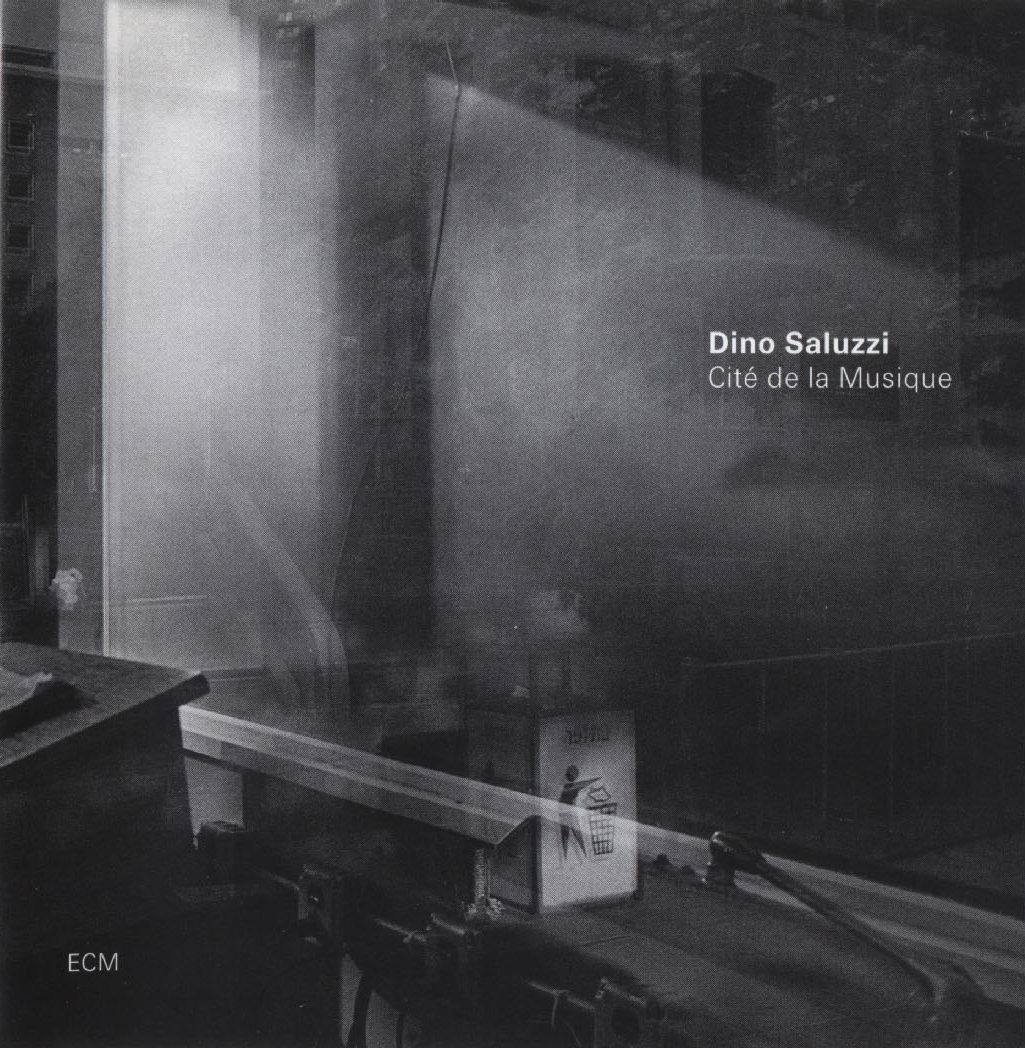
Dino Saluzzi: Cité de la Musique (ECM 1616)

Dino Saluzzi
Cité de la Musique

Dino Saluzzi bandoneón
Marc Johnson double-bass
José Maria Saluzzi acoustic guitar
Recorded June 1996 at Rainbow Studio, Oslo
Engineer: Jan Erik Kongshaug
Produced by Manfred Eicher

While my rummaging through ECM’s back catalogue has produced a substantial body of personal discoveries, it has also deepened my admiration for artists with whom I was already familiar. One of these is Dino Saluzzi, the Argentinian bandoneón player who enhances his instrument with a mastery that is undeniably sincere. For this trio date he joins his son, guitarist José Maria, and bassist Marc Johnson, ever the idiomatic chameleon, for a set of nine pieces. All bear the compositional stamp of Saluzzi, save for a heartfelt rendition of Earl Zindars’s “How My Heart Sings.” The album also contains two dedicatory pieces. First is the lilting “Gorrión,” for Jean-Luc Godard, which melts our hearts like an Anna Karina close-up and transplants us gently into the soil of “Coral para mi Pequeño y Lejano Pueblo.” Written for an unnamed childhood friend, it ends the album in an eddy of fond memories that practically jump from his keys. On the way to these Saluzzi leads us down a path dusted by careful footprints. Johnson takes an early lead in the title track, while José adds flowering touches to “Introduccíon y Milonga del Ausente,” each pluck liberating a petal from its soft hub. Saluzzi’s playing here recalls Milhaud’s Prélude No. 1 and proves the reach of his art. “El Rio y el Abuelo” introduces whispers of rhythm before Johnson’s swirling airflow lifts the bandoneón ever higher. “Romance” is an endearing duet between father and son, and gives voice to their admirable restraint. Even at his most plaintive, Saluzzi is always warm, which makes “Winter” all the rarer for its icy depths. The guitar’s rounded tone grinds every shadow’s blade into soft light, revealing the hopeful core within.

With nary a single note for mere effect, Cité de la Musique sings to us as a wolf might howl to the night, which is to say: instinctively, without judgment, and without fail.

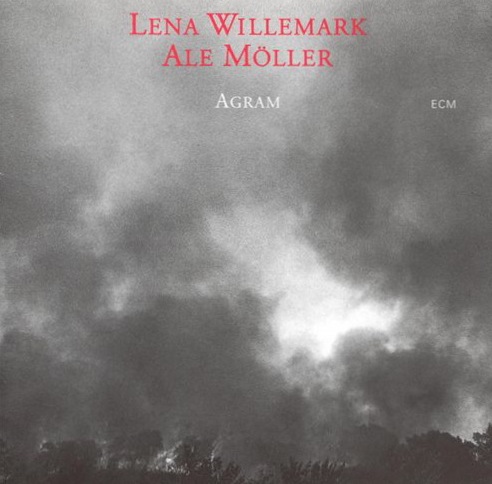
Lena Willemark and Ale Möller: Agram (ECM 1610)

Lena Willemark
Ale Möller
Agram

Ale Möller mandola, lute, natural flutes, folk-harp, shawm, wooden trumpet, hammered dulcimer
Palle Danielsson double bass
Mats Edén drone fiddle
Tina Johansson percussion
Jonas Knutsson soprano and baritone saxophones, percussion
Lena Willemark vocal, fiddle, viola
Recorded March 30–April 3, 1996 at Rainbow Studio, Oslo
Engineer: Jan Erik Kongshaug
Produced by Manfred Eicher

Although Lena Willemark and Ale Möller surely made a lasting first impression with Nordan, Agram was for a long time my only exposure to the Swedish duo. This sequel of sorts finds them carrying the project to new heights (and depths) among a more intimate group. The pared-down roster makes for an open sound and leaves room also for Willemark’s fantastic compositions. In the latter vein is the title piece, which rests her vocal powers on a bed of dulcimer and bowed sentiments. It is the hallmark of an album wrought in soil and breath, and realized in a landscape distant but ever familiar. The soprano saxophone of Jonas Knutsson is a distinct voice throughout, drawing water for the fiddle’s inky swirls in “Syster Glas” and hanging a wreath of tradition on the door of “Sasom Fagelen.” As in the likeminded Dowland Project, the high reed’s presence is welcome one, dovetailing to bagpipe-like effect in “Fastän” and bringing ancestral energy to “Blamairi,” another Willemark original. Arousing percussion from Tina Johansson provides traction for that liberating voice, which, as it rings out across the plains “Samsingen” and “Josef fran Arimatea” (two standouts among ECM’s folkways), tells a story as much with words as through the music that is its shelter. Meanwhile, bassist Palle Danielsson works his own divinations along trails of cast bones. These share the same destination: “Lager och Jon,” an exhilarating chorus of activity that buffs the clouds to invisibility before rushing headlong through a stream of bows and alley-oops. Möller unfolds his shawm’s biting wonders in “Slängpolskor,” leading us into the epic “Elvedansen.” The images here feed on sound, each a chariot of belonging rescued by the hands of “Simonpolskan,” a flowing script of a piece that throws us into comforting waters and closes our eyes, adrift and safe.

In addition to the unfailing music, Agram is yet another benchmark for production and sound quality for the label. It delineates a space where voices and instruments are shadows of one another. Willemark need hardly sing, because even when she stops, her voice lingers.

Lena Willemark & Ale Möller: Nordan (ECM 1536)

Lena Willemark
Ale Möller
Nordan

Ale Möller mandola, natural flutes, folk-harp, shawm, cows-horn, hammered dulcimer, accordion
Lena Willemark vocal, fiddle
Palle Danielsson double-bass
Mats Edén drone-fiddle, kantele
Per Gudmundson fiddle, Swedish bagpipes
Tina Johansson percussion
Jonas Knutsson saxophone, percussion
Björn Tollin percussion
Recorded December 1993 at Rainbow Studio, Oslo
Engineer: Jan Erik Kongshaug
Produced by Manfred Eicher

Medieval Swedish folklore and balladry rise again in Nordan, the first ECM collaboration between songstress Lena Willemark and multitalented instrumentalist Ale Möller. While the latter brings out gorgeous sounds from mandola (i.e., alto mandolin), kantele (plucked zither), hammered dulcimer, and folk-harp, among others, the former lends the session’s most powerful instrument—her earthly voice—to an ensemble of bass (courtesy of regular sessioner Palle Danielsson), drone-fiddle, Swedish bagpipes, saxophones, and percussion. That voice is the central figure of nearly every painting in this gallery, tending to crisp plains in search of traditions and lives buried. It spurs the calls of “Trilo,” an incantation unto the wispy barbs of sentiment that abound therefrom, and calls from more distant pastures in “Gullharpan” and through the watery harp strains of “Mannelig”—these but a few of the many songs one might single out here for their remarkable sense of space and atmosphere. Willemark also proves her prowess on the fiddle for two Polskas, the rustic metalwork of “Hornlåt,” and the jig-like “Jemsken.” Möller has the last word with “Drömspår,” an epilogue for accordion that leads us into less turbulent waters than those depicted on the album’s cover.

The music may sound exotic on paper, but when we hear it we already seem to know Willemark’s stories in intimate detail. We have felt these places before, even if the dirt has long since washed from our feet and been replaced by an alternate future. Like anything in nature, the art of these musicians is never still, a string that vibrates and never dies. In the absence of detailed translations, we can still taste the minerals of which every song is composed and come to know their shapes by heart. This is also made possible by the album’s acoustics and engineering, both stunning. An ECM benchmark and easily within the label’s Top 5 on the folk side of things. This is music measured in hand spans, not footprints.

<< Giya Kancheli: Exil (ECM 1535 NS)
>> Bley/Parker/Phillips: Time Will Tell (ECM 1537)

Trevor Watts/Moiré Music Drum Orchestra: A Wider Embrace (ECM 1449)

Trevor Watts
Moiré Music Drum Orchestra
A Wider Embrace

Trevor Watts alto and soprano saxophones
Nana Tsiboe african drums, congas, gonje, djembe, lead twanga, wea flute, vocals
Nee-Daku Patato congas, african drums, berimbau, bells, cabasa, vocals
Jojo Yates mbira, twanga, cowbells, african drums, bells, cabasa, wea flute, vocals
Nana Appiah african drums, lead wea flute, shakers, cabasa, cowbells, vocals
Paapa J. Mensah kit drums, shakers, wea flute, vocals
Colin McKenzie bass guitar
Recorded April 1993 at Angel Studios, London
Engineer: Gary Thomas
Produced by Steve Lake

Blending Ghanaian folk music with groove and jazz elements, saxophonist Trevor Watts and bassist Colin McKenzie join a group of multitalented drummers for one of ECM’s smoothest crossovers. My ignorance of all the musicians involved allowed me to take its sounds as they came during my first listen. The energy that surges from the first drum hit of “Egugu” frees a chorus of voices calling to the sky as every drum leaves a footprint upon the plains. Watts treats these visions not as mere backdrop but as an environment into which he must totally integrate himself. The medley that follows is an album in and of itself, starting with the spirited “Ahoom Mbram” and ending with the drums-only “Tetegramatan.” Watts adds a nice rasp to his soprano in “Opening Gambit” (and don’t miss the shawm-like circular strains of “Brekete Takai”), while “Otublohu” brings on the fun(k) and then some with some heady alto work over a firm grounding of bass and get-out-of-your-seat-and-dance rhythms. After the pleasant excursions of “Bomsu” and the a cappella “Hunters’ Song: Ibrumankuman,” the tinkling percussion of “The Rocky Road To Dublin” dives into a swanky trio with an ecstatic finish. The jazziest moods await in “Southern Memories.” Throwing his smoky alto into the night, Watts engages a funky bass line and powerful vocals, only to recede for the congregation of flutes and spirits in “We Are,” which carries us out on invisible wings.

A fantastic coming together, superbly recorded. This is the art of song personified.

<< Cherry/Åberg/Stenson: Dona Nostra (ECM 1448)
>> Keith Jarrett: Bridge Of Light (ECM 1450 NS)

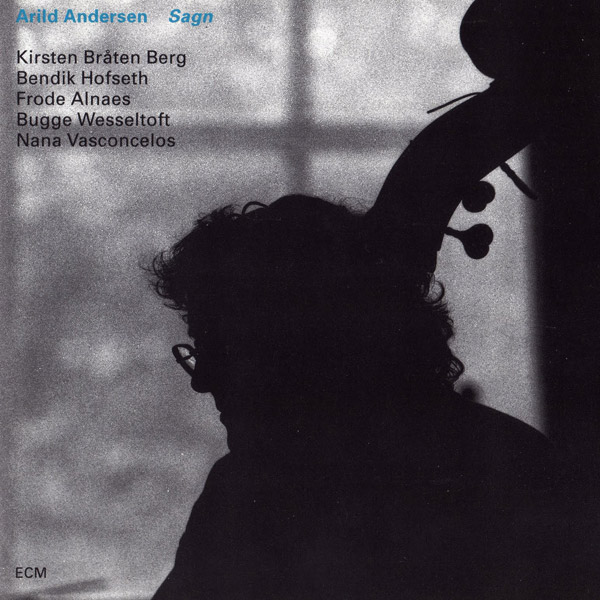
Arild Andersen: Sagn (ECM 1435)

Arild Andersen
Sagn

Arild Andersen bass
Kirsten Bråten Berg vocals
Bendik Hofseth tenor and soprano saxophones
Frode Alnæs guitar
Bugge Wesseltoft keyboards
Nana Vasconcelos percussion, vocals
Recorded August 1990 at Rainbow Studio, Oslo
Engineer: Jan Erik Kongshaug
Produced by Arild Andersen

Sagn was the result of a commission for the 1990 Vossajazz festival that sealed the collaborative spirits of singer Kirsten Bråten Berg and bassist Arild Andersen. Blending folk songs from their native Norway, along with jazz and rock elements, the two shared the stage with percussionist Nana Vasconcelos, saxophonist Bendik Hofseth, pianist Bugge Wesseltoft, and guitarist Frode Alnæs. While we don’t have (so far as I’m aware) a live recording of what was surely an historic occasion, we do have this ECM studio rendition, buffed and polished to a mirror’s shine.

The album’s multilayered concept is perhaps best demonstrated in the title track, which opens with an ambient drone (something akin to the lull of train tracks) before awakening to the rhythm of Vasconcelos’s touches and Berg’s unmistakably equally earthy elements. Her voice binds this album together, even as it scatters its pages to the wind. Hofseth, bearing a proud stamp of influence from Jan Garbarek while being no mere epigon, traces lines in the sand with his tenor. These Andersen is happy to overstep in that gentle way he has.

From here we travel the length of an entire seasonal cycle, each point on the compass like a year divided. “Gardsjenta” continues this wintry mix, whitewashing us into the young dawn of “Eisemo,” in which Andersen’s lyrical swings first come into prominence amid Vasconcelos’s scrapings. The latter offers a deeper, worldly feel throughout “Toll,” for which Andersen offers a head nod to Eberhard Weber. ECM artist influences continue in “Draum,” in which Alnæs lends a Terje Rypdal brand of melancholy to the album’s first intimations of spring before opening into some powerful screaming from Hofseth (a cathartic moment). Wesseltoft cradles the past in the vocal territories of “Laurdagskveld,” while “Tjovane” (heard more recently on Trio Mediaeval’s Folk Songs) sends us forward into the band’s ecstatic synergies. “Sorgmild” is by far the album’s most breathtaking. Hofseth’s tenor sings like the wind and primes us for a tender solo from Andersen. After the diffusion of “Svarm” and “Gamlestev,” the syncopations of “Reven” bring us into a lively summer. It is also a mysterious summer, whose dreams are played out in a smattering of rounded tracks until the winds of “Belare” whip up a storm of leaves, bringing us full circle into the icy depths and ending this masterful album on a trailing brushstroke.

Sagn is a massive effort, one of ECM’s fullest on a single disc, and stands as Andersen’s most personal statement to date.

<< Bach: Das Wohltemperierte Klavier, Buch II – Jarrett (ECM 1433/34 NS)
>> Doran/Studer/Burri/Magnenat: Musik für… (ECM 1436)

Trio Mediaeval: Folk Songs (ECM New Series 2003)


Trio Mediaeval
Folk Songs

Anna Maria Friman
Linn Andrea Fuglseth
Torunn Østrem Ossum
Birger Mistereggen percussion and jew’s harp
Recorded February 2007 at Propstei St. Gerold
Engineer: Peter Laenger
Produced by Manfred Eicher

Since 1997, Trio Mediaeval has been unrolling a most distinct musical carpet. Yet nowhere has it made so consistent a statement as through the Norwegian folk songs that make up this, the group’s fourth album for ECM. With help from percussionist Birger Mistereggen, the Trio pulls the listener by the hand through a world of mythic scope. Mistereggen’s contributions are intuitive, drawing us into the spirit of things with a touch of the land for every ethereal weave loomed above him. His propulsive beat in “Villemann og Magnhild” (Villemann and Magnhild), for one, enhances the fablistic structure prevalent throughout so much of the program, and even in its absence renders such “Nu solen går ned” (The sun is setting) all the more dream-like for the precision of its harmonies. Styles range further from call and response [“Tjovane” (The thieves)] to lullaby [“So ro, godt barn” (Rest now, sweet child)], battle cry [“Rolandskvadet” (The song of Roland)] to supplication [“Folkefrelsar, til oss kom” (Saviour of the nations, come)], achieving emotive peaks in such forlorn sonic geodes as “I mine kåte ungdomsdagar” (In my reckless, youthful days) and in the solo “Nu vilar hela jorden” (All the earth now rests in peace).

Folk Songs cuts to the heart of its inspirations while also renewing those inspirations with clothing of the Trio’s design. The album also continues Manfred Eicher’s vision, which plunges its hands into the very earth and emerges with music that is uncannily familiar. The astute ECM fan will, for example, notice the wonderful “Bruremarsj frå Gudbrandsdalen” (Wedding march from Gudbrandsdalen) as a source on Jan Garbarek’s seminal Triptykon. These continuities are not without intuition, and speak to a deeper thread that links tradition to all eras with an unbroken line of affection.

Agnes Buen Garnås/Jan Garbarek: Rosensfole – Medieval Songs from Norway (ECM 1402)

Agnes Buen Garnås
Jan Garbarek
Rosensfole: Medieval Songs from Norway

Agnes Buen Garnås vocal
Jan Garbarek synthesizers, percussion instruments, soprano and tenor saxophones
Recorded Autumn 1988 at Bel Studio, Oslo
Engineers: Ingar Helgesen and Ulf Holland
Produced by Jan Garbarek and Manfred Eicher

One can hardly overstate the innovativeness of saxophonist Jan Garbarek. Having started as a strong arm of free jazz impressionism, Garbarek quickly turned to the future by mining the past, regaling the world of recorded music with an historical dimension. The crowning achievement of these efforts remains Rosensfole, for which we put the spotlight on folk singer Agnes Buen Garnås in lush settings of synthesizer, percussion, and tenor and soprano saxophones. These two complementary forces touch their cool torches to a tincture of medieval songs from their native Norway, making for an album that could exist nowhere but on ECM, a label ever at the forefront of vivacious interpretations of antiquities with the languages of the here and now.

Such explorations had by then already manifested themselves in Garbarek’s work, but with Garnås his vision was deepened in an entirely new direction. It is also because of her that we have the current program, which reads like a catalog of her work in the field. The scope of her commitment is clearest in “Innferd,” which comes from none other than the singer’s mother. Her bright calls to power blend the word into image and both into air, filling the listener with countless narrative possibilities. (On that note, one needs hardly a translated word within reach in order to appreciate the evocativeness thereof.) The title song carries forth an especially potent vibe, which is heightened by Garbarek’s attentive percussion and synth dulcimer strains. Like many of the tracks thereafter, its spell breaks all too quickly, leaving us still and in dire need of the nourishment that comes in the 16-minute “Margjit Og Targjei Risvollo.” Here the music heaves with the weight of legend, bringing the freshness of its wounds to bear upon the unsuspecting listener with unwavering drama.

In the wake of this epic statement, “Maalfri Mi Fruve” peaks above the mounting waves in an intimate call and response. This stunner sits at the edge of a towering abyss of life (and a love of the same), segueing us into sonic flowers like “Venelite” and “Signe Lita” that morph into drum-heavy expositions of the plains. The latter, along with the droning “Grisilla,” unlocks its secrets one string at a time, floating freely and with the tinge of a lullaby—its sweetness veneered by a hint of mortality—before riding into the sunset on a steed of light and poetry. “Stolt Øli” gives us an even bolder taste of the salty air, furthering that ride through a cloud-shadowed landscape of crumbling stone castles and widening vistas, while “Lillebroer Og Storebroer” diffuses its gallop with electronic voices surrounding a blacksmith’s beat.

Garnås ends this timeless date with “Utferd,” which yodels across the skies with the surety of a shepherd folding into pasture and melts into Garbarek’s plaintive whale song. The latter’s reeds are similarly understated throughout, providing nary a leading line but thickly drawn chords and ephemeral appendages.

Although Rosensfole may not have caught on so noticeably stateside, it proved to be an eye-opener in Norway, where generations of up-and-coming jazz musicians took it as a window into the neglected corners of their craft. One can still hear its influence in the work of Steve Tibbetts and in crossover acts like Vas. A fitting companion to Trio Mediaeval’s Folk Songs, Rosensfole shows a side of Garbarek’s evocative abilities heard only on his solo albums and, more importantly, has in Garnås introduced many to a voice for the ages.

<< Keith Jarrett: Paris Concert (ECM 1401)
>> Shankar: M.R.C.S. (ECM 1403)