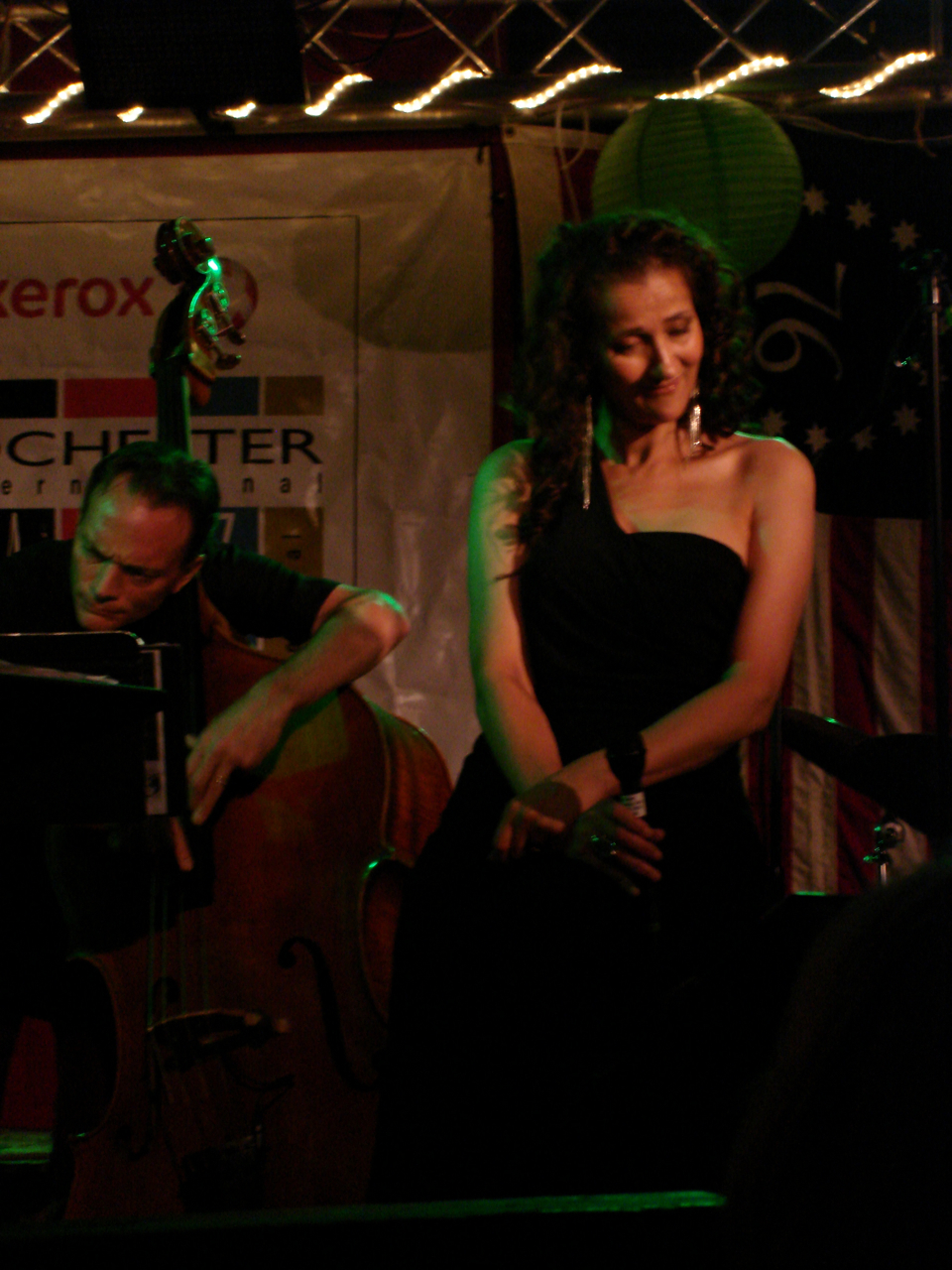
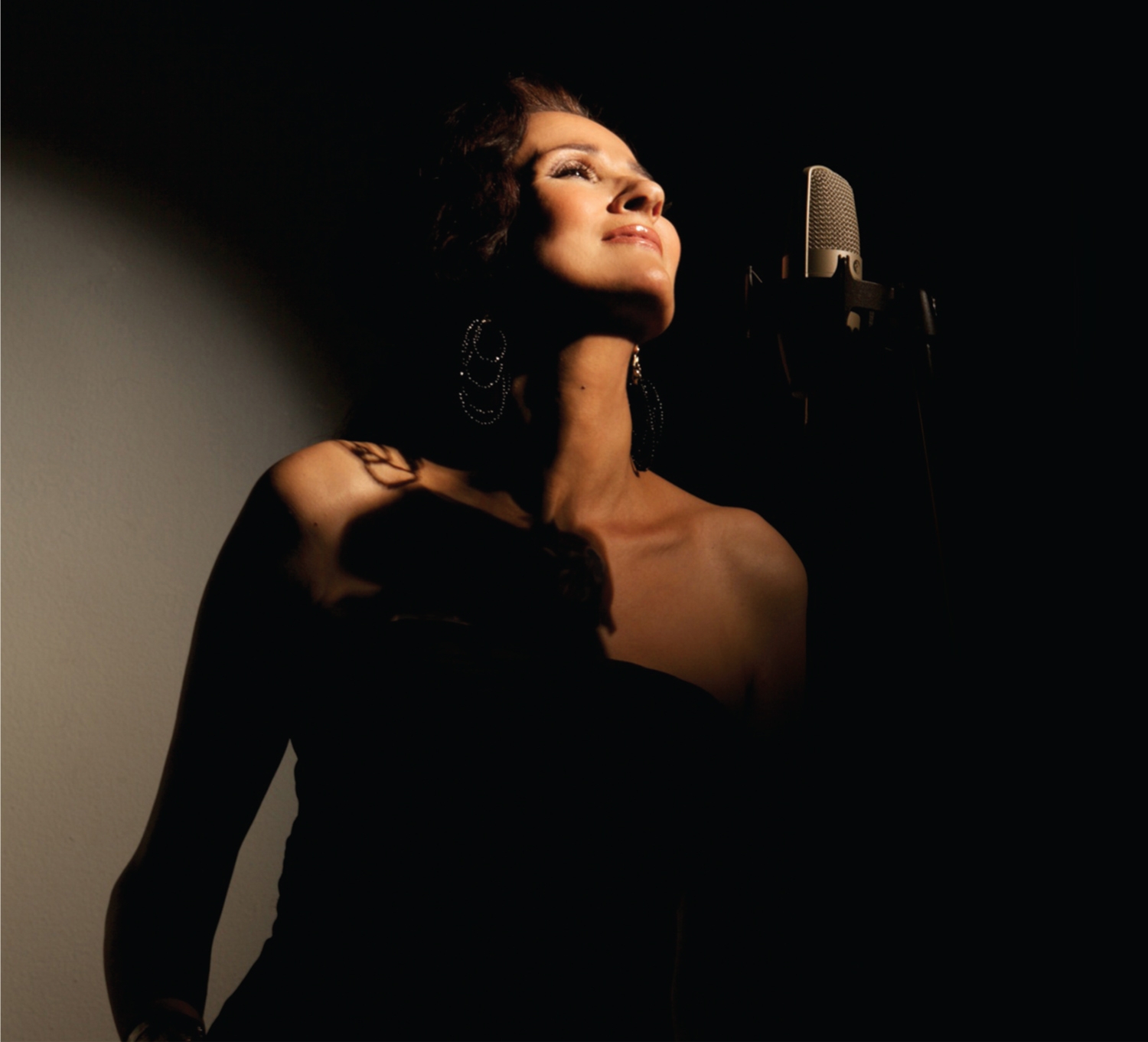
when wings become electric: burning the midnight oil with powerdove

Do You Burn

powerdove
Do You Burn?

Annie Lewandowski vocals, prepared piano, keyboard, guitar
John Dieterich guitars, bass
Thomas Bonvalet harmonica reeds, six-string banjo, amps, microphones, feet tapping, hand clapping, tuning forks, concertina, guitar, dry poppy pods, whistlings
Released March 2013
Circle Into Square

As the high-pitched distortions of a concertina pierce the ether in “Fellow,” the opening track of powerdove’s latest, Do You Burn?, it’s clear they belong to a music comprised of supernal layers. Like emotional specimens under a microscope, each instrumental slice has its own cover slide. At the risk of belaboring the analogy, we might say that Annie Lewandowski’s voice is the clarifying stain. The Minnesota-born pianist, songwriter, and improviser began powerdove as a solo highway before assembling her current car pool with John Dieterich of Deerhoof and Thomas Bonvalet of L’ocelle Mare. Their barbed tangle of feedback and acoustic guitar almost obscures the patter of raindrops that follows in Lewandowski’s wake, each a step toward fractured closure. The classical enunciation of the words adds glint to the rough lyrical edges in a love song that is both invitation and self-cocooning:

Fellow
you’re inside
mellow
to my aching body

Thus initiated, thus torn in two, the listener leaves one self behind while the other drips into the soil, where the only accompaniment can be found in the stirrings of worms, chiggers, and other stewards of long-rotted crops. In this fecund quilt lies the one perfect square, its fragrance more powerful than a tornado.

There is a feeling here of three itinerant creators, wandering from one abandoned farmstead to another and playing on whatever battered equipment they can find, thus leaving songs as sigils of their fleeting inhabitation. This doesn’t mean that the proceedings are in any way sparse, for as in “Under Awnings,” despite the minimal appliqué of handclaps and muted piano, there is a mortal weightiness that one can only find in the dreaming body.

One last chance for a kiss
run away to another
under awnings of sheet and steel
I lay me down

So, too, the portal of “California.” It is fiercely emblematic of the album’s deceptive simplicity, for what appears to be nothing more than a drinking song is in fact a veiled paean to knowledge-seeking and the ways in which it is inevitably cracked by, and elided from, the creative process in favor of something new. Such abandonment is also readily apparent in “Flapping Wings,” a scenic morsel to feed the gaping mouth of a landlubber’s heart (indeed, there is something of an oceanic brogue about it).

All the leaves blow off
breeze to take the spring seeds on

The title track pulls harder at the album’s frays of memory as the sun watches keenly, nakedly, holding no judgment but our own.

The quavering bellows provide mechanical respiration in the background, the trembling of a newborn locomotive opening its eyes to the tracks. Unlike the latter, however, powerdove does not submit to the promise of coming together that the horizon throws at us. Rather, it maintains its parallels through a voice’s secrecy that we find in “Alder Tree I,” as well as in “Out On the Water,” which enacts another playful approach to perspective and relays between solo accompaniment and homespun groove and treats size as an ever-changing idea to which ears subscribe at random.

listen hear the refrain
listen now the refrain

“Love Walked In” enacts that part of every journey during which the destination, though still a ways away, nevertheless glistens in the mind as if it were a jewel in the hand. Sprightly guitar layers and an optimistic bass dance their way down endless stretch of road. Rhythms recur with the crunch of granola at molar touch.

We run and laugh and
run under darkened skies

“Red Can of Paint” evokes the microscopic attention of William Carlos Williams. Overturned, it acts as a sounding drum for all activity that shares slivers of its perimeter in this pizzicato postcard.

Light from the hall
wash you over

“All Along the Eaves” is by far the album’s truest to form—not only for the subtlety of its traction but also for its admixture of voice, melody, and text. Through songs like this, powerdove asks us, Why separate the chaff when it is still singing? And in this sense they provide an ethical service, documenting swan songs before they are discarded via the guts of machinery and industry.

On my knees I’m weak
three breaths from my coffin

“Out of the Rain” is a beautiful afternoon-laden choir with a thump following close behind: a peg-legged, Björkian nightscape.

Whisper me my name
your hand resting on my face

Lewandowski has beautiful way of repeating words: drinking, sinking, sung, turning them into compact mantras of poetic evocation.

In “Wandering Jew,” which reads like a travelogue of the voice, that repetition finds in the sensitive instrumental accompaniments a wavering sense of corporeal reality, which seeks shade under the beautiful plucked piano of “Alder Tree II,” a windblown leaf that hangs even though its branch is gone.

I hang my head

Although the album barely surpasses half an hour in duration, it cradles countless more of unraveling in its bosom. There is a sheen to its contours that speaks of the dawn as experience’s signature: not an admission of love but a love of admission.
powerdove
(Photo by Ben Piekut)

An e-mail interview with Annie Lewandowski

> 1. Can you briefly walk me through the evolution of the album from concept(s) to realization?

In June 2010 I moved to Southampton, England to join my husband, Ben, who had work teaching there. I’d left the Bay Area and also left powerdove, which at that time had consisted of me singing and playing guitar, Jason Hoopes on upright bass, and Alex Vittum on percussion. We’d toured some on the west coast and recorded “Be Mine” (released on Circle Into Square Records) earlier that year. In England I had a lot of time (perhaps too much time…) to myself. No work, no friends. I was inspired by the rain, the grey, the solitude, and very much the landscape. 11 of the 13 songs on “Do You Burn?” were written there, walking along the River Itchen, as sparse arrangements for voice and guitar. Ben and I talked at length about how this next recording might sound. Ben suggested I ask Thomas (Bonvalet) and John (Dieterich) to collaborate. Thomas has a fantastic solo project called L’ocelle Mare that I’d been introduced to in 2006 or 2007 when he toured through Oakland (Thomas is from France). He plays a vast array of instruments—foot percussion, handclaps, reeds, banjo, poppy pods…. He has an incredible sense of rhythm and a fantastic sense of atmosphere. John has been a friend for a long time. He’s an amazing guitarist and imagining his dense guitar sound on this record was thrilling. I invited Thomas to come to a concert I played in Paris in April 2011 to see what he thought about collaborating, and John’s known powerdove’s music since the beginning. Both were on board and we met in Albuquerque to record the album in January 2012.

> 2. How did you come to share the road with John and Thomas? What newness (or antiquity, for that matter) do they bring to the powerdove sound?

Think I answered this in my lengthy response to question one…

> 3. Your lyrics seem personal, at times intensely so. Are they a diary? Are they a travelogue? Are they fantasy?

Yes, the lyrics are intensely personal. Sometimes I’ve worried that they are a bit too personal, but then what else would I write? I don’t think I could do it any differently. I’ve worried about the transparency of the lyrics before, but had a really comical experience a few years back that lead me to believe they maybe weren’t so transparent. I had performed the song “Easter Story” in London and someone came up to me afterwards and asked me if I was a Christian. Another person asked me if the song was about Catholic church child sexual abuse. Needless to say, neither got at what the song means to me.

I’d say that, more than anything, these songs are a diary…things I’ve thought, felt, experienced, that have found their best articulation in music.

> 4. Your music strikes a fine balance between polished and rough ore. Is this balance conscious and, if so, does it arise organically?

I love that you have that experience listening to Do You Burn? This balance is very conscious, and it happens very much organically. At a concert we played in Poitiers in March, someone came up to me after the concert and said they felt like I was the lighthouse in the midst of a storm. I love for the simple clarity of the melody and lyrics to root itself in the bed of sonic wildness that Thomas and John create. It’s exhilarating to sing in the middle of it! I’ve been trying to close my eyes less when I sing but have found it to be impossible. I have to concentrate so completely while I’m singing so as not to get thrown off balance.

> 5. For the most part, the songs feel like they were recorded live in the studio with very little multi-tracking. Was this a practical or an aesthetic decision?

It was an aesthetic decision. We wanted the intimacy and feel of live takes so recorded the album as such. There was a relatively small amount of overdubbing done for this record. We recorded live at John’s house—I was singing in a closet, Thomas was playing his banjo (and other instruments) in the bathroom, and John was in the main room playing guitar.

> 6. Speaking of aesthetics, how would you describe powerdove’s in one word?

jagged

> 7. The song “Wandering Jew” is rivetingly poignant. What does it mean to you?

I wrote “Wandering Jew” after Ben and I had packed up everything in our semi-detached house in Southampton. The movers had taken everything and there was literally nothing left in the house. I’d kept my guitar and wrote it in the days just before moving back to the US. There is a lot about the English landscape in that one, there is a lot about the pain and the exhilaration of having left the religion I was brought up with. It’s my favorite song from “Do You Burn?” I can feel my heart bursting with this complex range of emotions every time I sing it. I owe a lot to John and Thomas for magnifying that feeling in their instrumental parts, which are absolutely exquisite.

> 8. Much of the press surrounding your work talks about geography. How important is landscape to you as a songwriter?

I’ve noticed how much geography figures in my songs, but only in hindsight. So much about water…. I grew up in a small town in Northern Minnesota near the headwaters of the Mississippi. Much of my childhood was spent swimming in the lakes and river in the summer and ice-skating and running around on the frozen lakes in the winter. Maybe after all of those years in and on bodies of water it’s what first comes to mind. Or maybe it’s because I get the lyrics for many of my songs when I’m outside walking and that’s often near bodies of water. We just recorded songs for the next powerdove album and geography still has a presence, but less so than in Do You Burn?

> 9. If asked to cite any musical influences on powerdove, who might they be?

For singing, Nico’s at the front. Instrumentally, all of the wonderful improvisers I’ve had the pleasure of hearing and playing with the last 15 years. And I grew up in and received a lot of my music education in the Lutheran church. When my songs are at their most basic, just me singing and playing guitar, I find they have a lot in common with the hymns of my youth—stark and simple.

> 10. Poetry or prose?

Poetry.
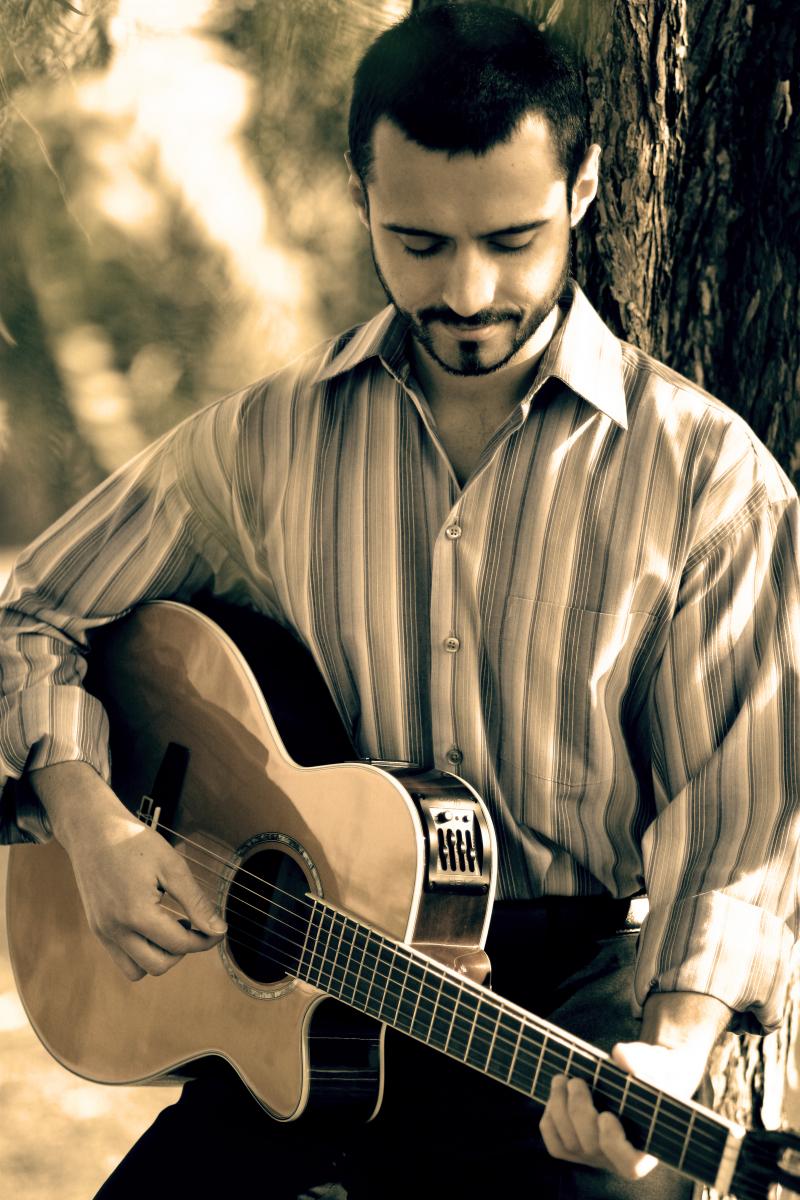
Hristo Vitchev: A Nomad and His Guitar

Hristo 1

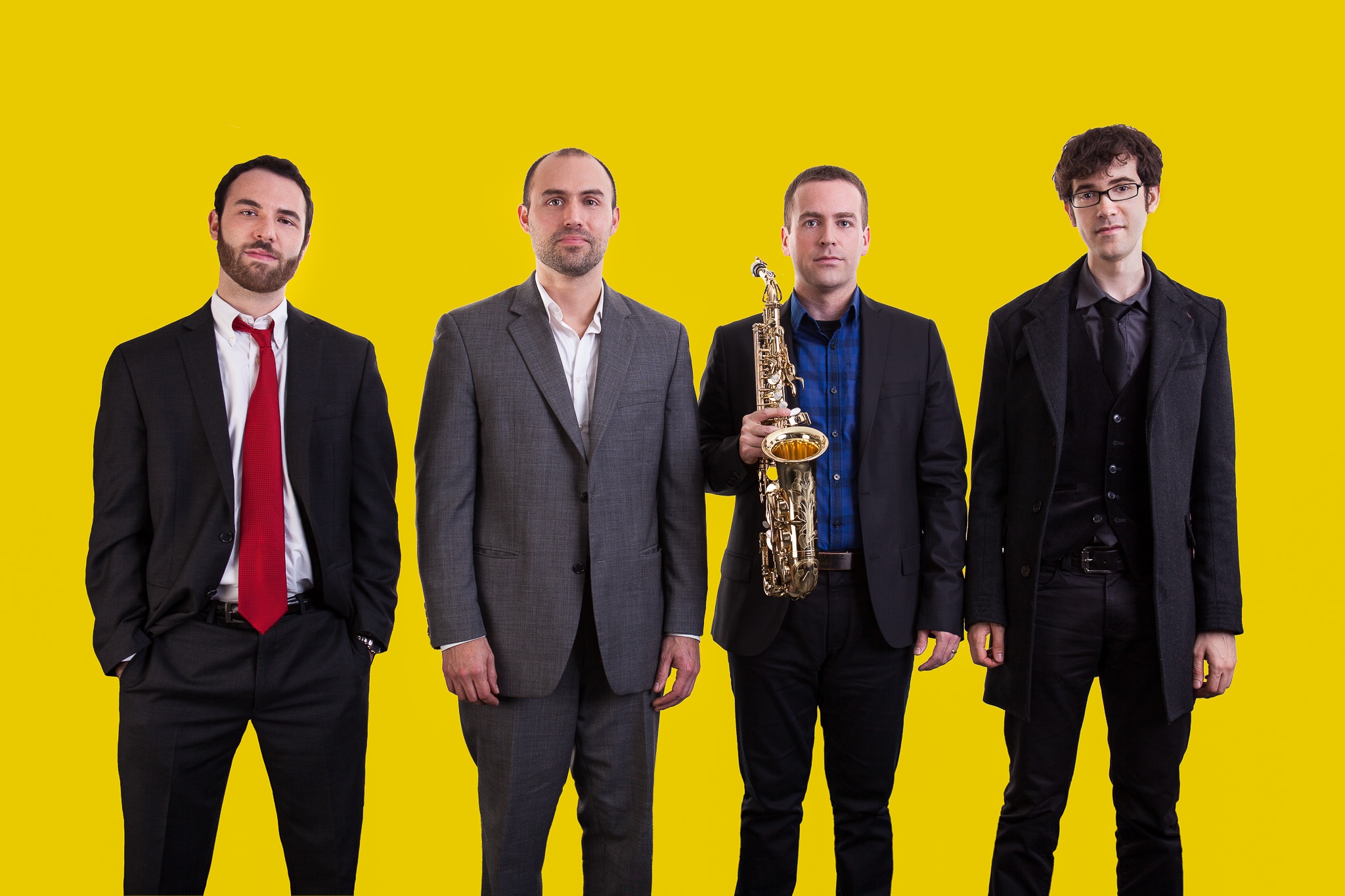
Hristo Vitchev is a gem among jewels. Born in Sofia, Bulgaria and now based in San Francisco, the jazz guitarist-composer has nearly 300 original compositions, various articles on improvisation, and even a book on jazz chord theory to his credit. His 2009 quartet debut, Song for Messambria (2009), was released to wide critical acclaim and firmly established Vitchev as an artist to keep an ear on. For indeed, keeping an ear on things is what his music is all about. Thus attuned to the pulse of his path, his is a spiritually focused craft that welcomes all without judgment. Like many independent artists working today, he has achieved this state of mind through no small measure of sweat and determination, but you might never know it from the effortless fluidity of his playing and the accommodating vitality that animates it.

Of that playing, comparisons to Pat Metheny seem inevitable. Vitchev’s penchant for smooth geometries and quick key changes certainly falls in line with the former’s graceful sound. And so, it only made sense to pose this question during a recent interview. Vitchev’s response:

He is definitely one of my heroes. I was first exposed to Metheny’s music around 1999, and the first record I heard was Imaginary Day. I still remember how mesmerized I was by the tonal colors and textures of that album. At the time, however, I was still into rock music and had yet to discover jazz. In a way, the mystery and curiosity that Pat’s music planted in me was one of the forces behind deciding to study and understand this great American art form. Of course, one cannot escape the conscious and subconscious influences of his/her idols, but if I had to compare my style with his, I would say I’m more of an impressionist, blending harmonic and tonal planes to a more finite degree and playing with the smallest nuances. Pianists are among my biggest influences: Tord Gustavsen, Esbjörn Svensson, Brad Mehldau, not to mention Ravel, Debussy, and all the great composer impressionists.

The impressionist angle is an important one to unpack, for it distinguishes Vitchev from others on the scene, who may forego such interest in what he terms “harmonic tapestries” in favor of a less mitigated approach. Yet the patterns with which he concerns himself are truly integral to the sound he has worked to establish. It is a freedom of expression born of unquantifiable practice, performance and, above all, sharing:

There seems to be a lot of travel implied in your songs. The track titles of Song for Messambria in particular contain references to clouds, sky, etc. Is there any conscious geographical or spatial relationship in your music and how do the recording and improvising processes construct or react to that space?

Over the years, I have traveled to many different places and spent a considerable amount of time living on three different continents. Traveling to me is the ultimate way to learn, internalize, and comprehend all the uniqueness of different cultures, traditions, and human diversity. I can affirm that I’m very inspired by geographical places, and by the actual act of traveling. Song for Messambria was inspired by the enchanting city of Messambria (now Nesebar), located on the Black Sea coast of Bulgaria and also one of the oldest cities in Europe. My quintet record The Perperikon Suite was also inspired by a geographical location—the city of Perperikon, also known as the capital of the great Thracian civilization dating back to 5000 B.C. My latest record, Familiar Fields, is inspired by the many emotions I felt returning to Bulgaria many years later (as an adult) to see the homeland of my childhood. Translating this into my music and my sound seems to be a very natural process. When the band gets together and plays the first note of a chart, it is really the beginning of a sonic journey that is responsive and reactive to what each member notices on the way. It is very hard to explain, but in reality playing and improvising music is the same as taking a road trip with your friends and constantly relating to each other’s feelings about the environment around us.

What attracts you to jazz and how has it enriched your life?

My attraction to jazz came rather late in life, but when it arrived it was more intense than any other interest I have ever known. There is something so freeing about its spontaneity. This music is contagious for all its vivid aliveness and constant evolution. Of course, my take on jazz differs quite substantially from the classic definition of the word. For me it is more of a procedure than a style. It is that special and magical element that everyone can embrace and make it his/her own. This music really helped me define who I am as a person, as a musician, as an element of this world and as a spiritual molecule. It is immense.

Overall, is your music consciously autobiographical in any way?

I guess the constant goal of any musician, especially those in the improvisatory arts, is to grow into attaining the ultimate level of emotional expression, one that loses nothing in translation. Straight from the heart and soul. This is also my goal. I work very hard day after day, and hopefully that comes across to the listener. There is nothing more beautiful to me than sincerity and honesty expressed through art.

What kind of music did you listen to growing up?

When I was growing up I first started listening to 80s rock bands. I then transitioned into heavy metal, then progressive rock, fusion, and finally landed in the jazz world in 2000. Of course, being Bulgarian I always had traditional Bulgarian folk music around me as well.

Song for Messambria

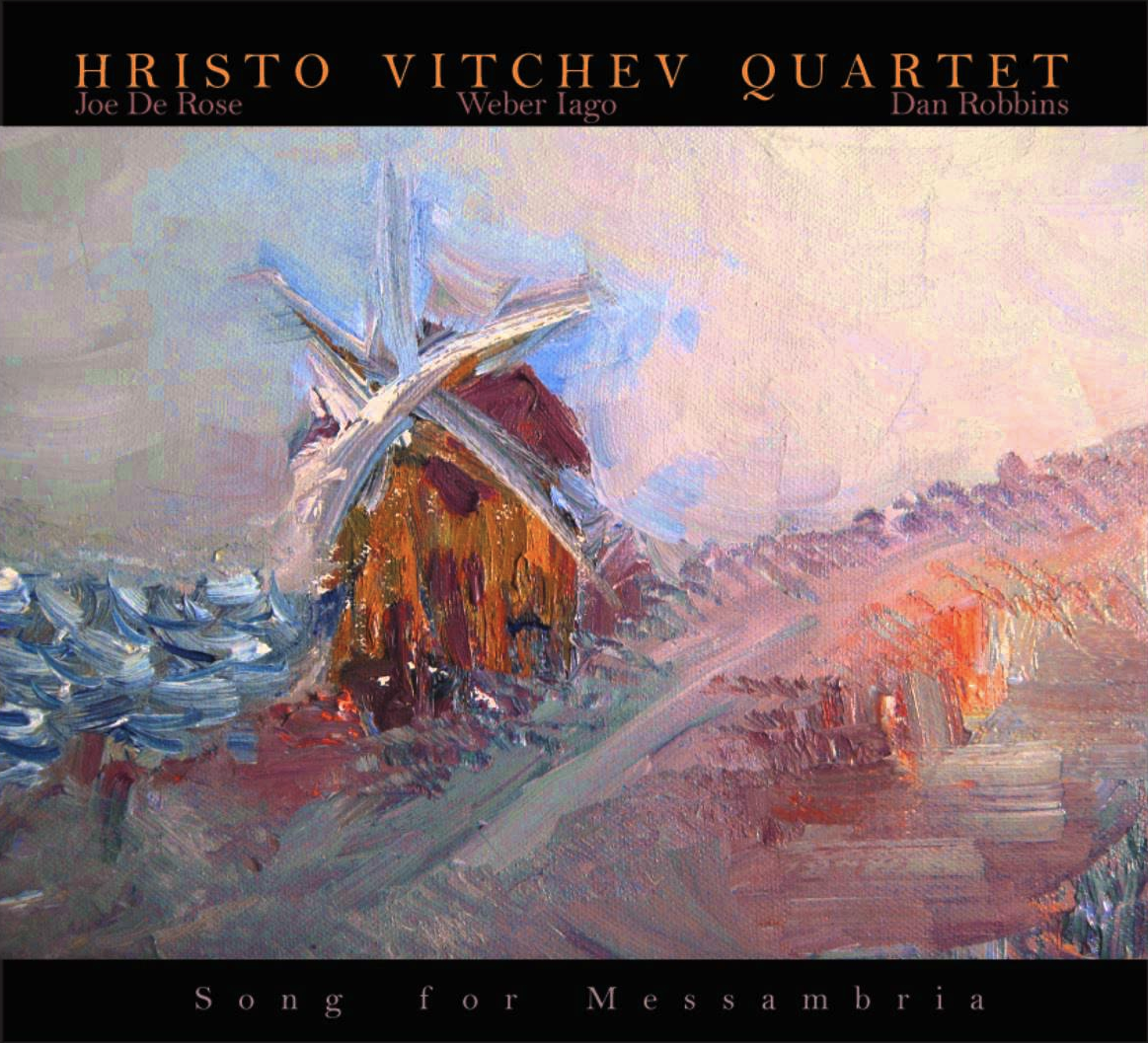
To be sure, Vitchev’s autobiographical impulses are clearly felt on Song for Messambria, which for a debut feels like a step into an already boldly flowing stream. From the first licks of “Waltz for Iago,” the album maps a decidedly itinerant mind, jumping straight into the melodic heart of things. Messambria gets brownie points for featuring acoustic guitar throughout, as well as for its palpable group telepathy. Tracks like “Sad Cloud” and “The Road to Naklabeht” show a quartet in peak form, speaking also to Vitchev’s ability to surround himself with likeminded talent. Bassist Dan Robbins rocks the boat in the whimsically titled “Dali in Bali,” while drummer Joe DeRose keeps us locked into every development with ease. Vitchev clicks most beautifully in the closer, “It Follows.” An emblematic track, it pairs guitar and piano in seeming anticipation of The Secrets of an Angel, his first full duet album with longtime collaborator Weber Iago.

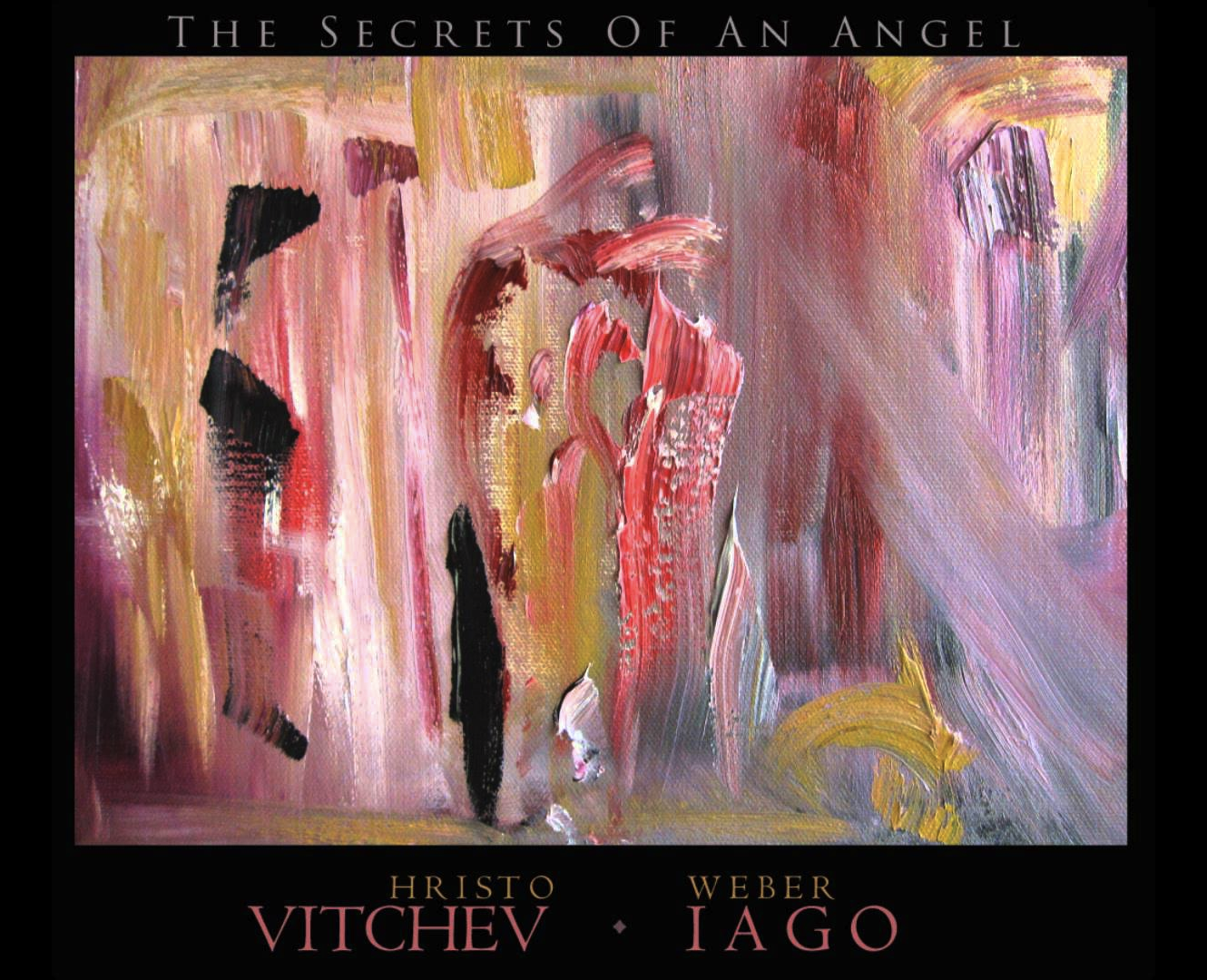
The Secrets of an Angel

Of that second album, the opening “Waltz by Chance Alone” starts us down a highway to supreme insight. From the intimate and sublime (“Zima’s Poem”) and the delightfully programmatic (“When It Rains” and “Haiuri’s Dance”) to the storytelling vibe of the two-part “The Last Pirate,” there is a continuity of purpose and consistency of color. The final “Leka Nosht (Good Night)” ends like the previous album, closing its eyes on a dream, as if what has just transpired were but a waking memory, a fantasy too beautiful to exist for more than a breath’s duration in this world.

“Waltz by Chance Alone” speaks to unpredictability, to the beauties that can come out of unforeseen encounters. Is your music ultimately your way of reflecting upon the wonder of life’s mysteries?

As an artist, I always thrive to represent my life experiences in sounds without any filters or colorations. As they say: straight from the heart. I’m in love with life and admire and value every single breath, every single day on this planet, and every single emotion felt. I also find the mystery and unpredictability of our human condition to be the most important driving force and reason to move forward and wake up each day. Capturing such emotions in my work is the ultimate goal since there is nothing more beautiful that the sincerity and innocence of living. If the listeners can hear such sensations and qualities in my work and music, then my mission is accomplished.

What made you decide on going acoustic for the first quartet and duet albums? What sparked the shift to electric in the later?

For my first two albums I really wanted to capture the textures and colors of whispering, relating a story in the most delicate and relaxed way possible. In contrast, the material I needed to express on the next three records was a bit more edgy and multidimensional and required the ability to cover a wider dynamic range with my instrument. I’m a true believer that as a composer one has to let the music dictate what it requires to come alive.

How do you approach the duet differently from the larger ensembles?

From the composing to the recording to the playing, the duet records with Weber Iago are so much fun in all aspects of conception. There is something very special about a duo setting. There is this elasticity and immense space for expression for both instruments that is almost impossible to capture in any other format. It also allows for a much deeper and more intense improvisatory experience. I actually love the duet format so much that as we speak I’m finalizing the mixing of my next record: another duo session with Bulgarian master clarinetist Liubomir Krastev. The record’s name is Rhodopa and it covers very old Bulgarian traditional songs which I have arranged in a modern jazz fashion as well as a few original pieces I wrote for the album.

The Perperikon Suite

Vitchev’s next major project, The Perperikon Suite, fleshes his sound out to a quintet with the multitalented Christian Tamburr on vibes. The album feels orchestral, almost cinematic in scope, and establishes with “The Stone Passage” a sprawling, living scenery that brings us to “The Palace” by the light of flickering torch. The thematic shapes here are vivid, the music as descriptive as the titles. Tamburr adds reverence to the proceedings, as in tracks like “The Shrine of Dionysus.” All of this comes to a head in the virtuosic ride that is “The Acropolis” before easing us back into the mountains via the backstreets of “The Northern City” and “The Southern City,” through which we float on a bed of string and brush into the sunset.

Conceptually speaking, The Perperikon Suite is your most complex project. But in this day and age of radio airplay, what do you hope the listener will get out of it when s/he encounters it without knowledge of that concept?

That particular record is really a concept album. In a way it is one composition divided into seven different movements that capture the complex sensations and emotions that I felt as I explored the ruins of the ancient city of Perperikon, located in the Eastern Rhodopa mountains. It is definitely hard to grasp and experience the concept, meaning, and intention of the music if one is to hear only one isolated movement from the album, but what can you do. We live in an age and time where instant gratification and short attention spans are the norm.

What is the importance of mythology in your music?

I love history and mythology very much and it is a great source of inspiration to me. Coming from a land where mythology and history interweave, a land of such rich cultural heritage, I almost feel it is my duty to express as much of it through my music as I can.

Heartmony

For his second duo album with Iago, Heartmony, Vitchev builds a mythology of his own. The album is also a stunning showcase for Iago’s lush pianism, offset as it is by both acoustic and electric guitars, often in overdub. This combination is most effective in “Musica Humana,” which aside from being a gorgeous piece of music is also a good descriptor of his craft on the whole. The deeper sound of Heartmony looks outward, as if from a great height, as one can hear in “The Last Leaves Which Fell in the Fall.” Between the poetry of “Crepuscular Rays” and the surprisingly uplifting “The Melancholic Heart,” there is much to soak in and savor.

Heartmony seems to be more extroverted than your first duo album with Iago. Would you agree with this?

Yes, I completely agree with that statement. Out of all my records, Heartmony has the most different style of composing. Usually I use a good combination of ear, theory, and arrangements when I pick the up the pen to write a new composition. For Heartmony I decided to only use my heart in the true essence of the word. I sat down at the piano and just played with no conception for form, harmonic progressions or melody. When I finally reached the point where I felt the story had been completely told, I looked back and there were 11 very interesting compositions already finalized. The rest of the magic was simply playing together with my great friend and musical brother Weber.

You clearly have a deep musical relationship with Weber. How did you meet and what did it feel like to play with him for the first time?

I met Weber in 2007 when we both played in the pop-opera band of a great Italian tenor. From the very first time I heard Weber warm up before a gig and listened to his take on harmony and melody I knew that if I ever could be a pianist I would want to sound just like him. We connected instantly and ever since that date we have worked on every musical endeavor together. His voice on the instrument is truly unique and as a composer he is second to none.

Your albums tend to end on a somber, reflective note, but despite its title, “The Melancholic Heart” ends Heartmony with optimism. Were you trying to show the positivity that can come from sadness?

Yes, a lot of people are surprised when we play that song live. They expect something sad and reflective and in a way it is a very bouncy and uplifting song. I can definitely say that I’m a melancholic person, but when I reflect on the past I often do so in the most uplifting and grateful way. I’m also a true believer that there is something very romantic and beautiful in sadness. It reflects the fragility and innocence of the human condition.

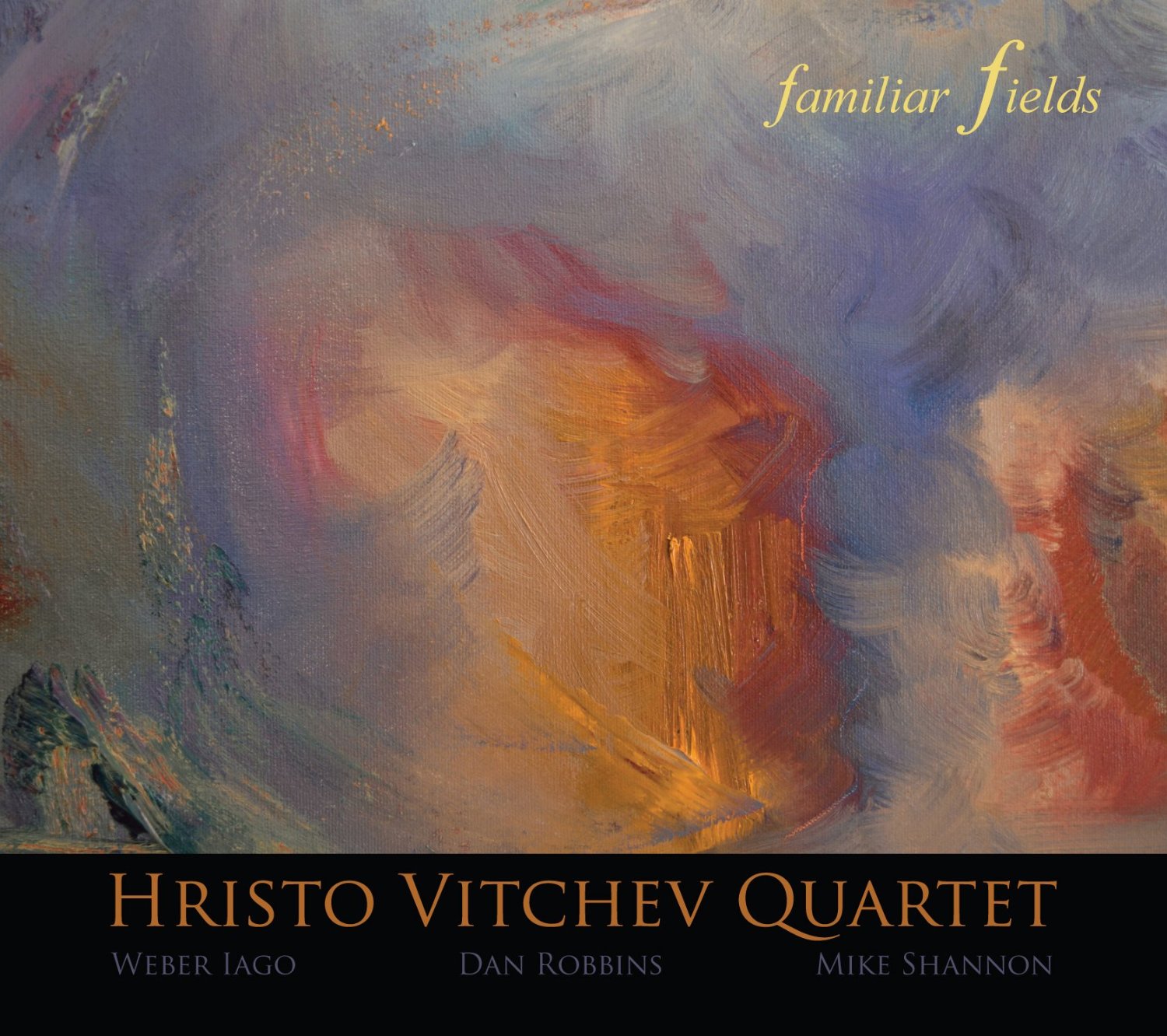
Familiar Fields

All of these tender sentiments and more seem to have gone into Familiar Fields, Vitchev’s latest effort that lands him again in the trusted company of his quartet, with Mike Shannon replacing DeRose on drums. If any Metheny comparisons are warranted, then let them point to “Ballad for the Fallen.” This groovy, flowing snapshot travels similarly well-worn avenues through a lovely pattern of tension and release. The quartet moves forward with a confidence that is as breezy as it is robust. In spite of his democratic approach, however, Vitchev lures plenty of spotlight his way in “Wounded by a Poisoned Arrow” and “The Prophet’s Daughter,” each a dialogue with the self. Fields feels most familiar when the band lies back, building autumnal susurrations to sparkling summer in “They Are No More” and mortaring galactic staircases in the two-part title tune. Recalls of previous albums also make an appearance. “The Mask of Agamemnon,” for example, harks back to Perperikon, while “The Fifth Season” seems to pick up where Heartmony left off, holding the rhythm section’s wings into the open vistas of “Willing to Live,” whereby this sandy carpet of illusion closes on a philosophical note.

The quartet you have assembled on Familiar Fields is a special one. What does it mean to you to play with these intuitive musicians?

All my musical brothers in the group bring so much to the table. They are simply incredible musicians and improvisers, but most importantly they are my best friends. It is the love and friendship we have for each other and for the music that makes this band so special to me. From the very first note we play, there is only camaraderie and respect in the air. No egos, no barriers. Just the unifying love for exploration and sincere expression. Some people wait an entire lifetime to find a team like that.

What is the concept behind Familiar Fields?

The concept of Familiar Fields actually started a few years ago when I traveled back home to Bulgaria for the first time in 14 years. As the years went by, I kept wondering just how much of my memories was real and how much was imagined. When I finally went back, everything was so different, but in the most fascinating way my memories were more alive than ever. It was the strangest thing. Here I was in a place that I knew close to nothing about, yet everything seemed as if it had been a part of me all these years. It was like I was walking through the most familiar fields yet also discovering new frontiers among them. This was the beginning of the writing process for the record. The music evolved in a very similar way. I had to wait a few years before I knew the music was ready to be put on tape.

Thankfully, you need only wait for the blink of a cosmic eye before the music is your hands…

Hristo 2

Camping Out with the Daniel Bennett Group

Daniel Bennett Group - Clockhead Goes to Camp - ALBUM COVER

“I was imagining a world of animals, similar to something you might see in a Richard Scarry children’s book,” says Daniel Bennett of Clockhead Goes to Camp, his sixth album as leader. The Manhattan-based saxophonist and composer is joined by guitarist Mark Cocheo, bassist Peter Brendler, and drummer Tyson Stubelek for a quirky and meticulous ride that just might be the first genuine musical equivalent of a Wes Anderson film. In this follow-up to A Nation of Bears (2004), The Legend of Bear Thompson (2008), and Peace and Stability Among Bears (2011), Bennett and his crew move away from the ursine and into a world of sticks, stones, unbroken bones, and a few words for good measure.

This self-styled folk jazz project features mixed meters, a mélange of styles (from surf to American minimalism), and evocative arrangements. Representing over a decade of fine-tuning, the album is meant to recreate the feeling of a live show, and with titles like “Dr. Duck’s Beautiful New Kitchen” and “Last Summer at Camp Creepy,” much is left to the listener’s imagination to flesh the scenes, making for a thoroughly enjoyable listen.

Bennett tends to stick to the higher end of his horn, a decision born as much from his staunch pragmatism as from his brimming optimism: “I feel like the higher register of the alto saxophone sits really well on top of the guitar and bass. The song melodies pop out more to the listener when played in a higher register. Maybe this was also an unconscious departure from the traditional ‘husky’ low saxophone sound that permeates modern jazz.” This preference for brighter, lively melody-making is immediately manifest in “The Old Muskrat Welcomes Us,” which opens the set with smooth, uplifting energy. The turquoise tone of Bennett’s horn and the sparkling accompaniment—replete with Hong Kong handclaps—are all tied in a beautifully syncopated package. As the handclaps carry over into “An Elephant Buys a New Car,” one already notes a tendency in the arranging. Like a party spun by Steve Reich, it mixes a cocktail of structure and paratextual flow.

To be sure, Reich is but one in a long list of influences, which also includes the Smiths, the Cure, Joy Electric, Philip Glass, Ornette Coleman, and illustrators Timothy Banks, Eric Carle (the group performs every year for the Eric Carle Museum of Picture Book Art award show in New York City), and sister Erin Bennett Banks. Musically speaking, Coleman (if through the prism of John Zorn’s Electric Masada) is paramount at various key moments. Of these, “Nine Piglets” is a standout. It features Bennett’s legato flute stylings in a highly engaging wave. If Clockhead were a pop album, this would be its first single. Flute features prominently in a number of tracks, including the nostalgia-laden “Paint the Fence” and “Whatever It Might Be.” The latter surprises us again with a poetry reading by Rimas Uzgiris over a net of flanged support. The recitation is strangely auto-tuned, further indication of the group’s playful spirit. Bennett: “I told MP Kuo, our producer at Lofish Studios, that I needed a robot in this story. Rimas was the only spoken word vocalist on the album, so he became our test subject. We auto-tuned him and he became Robot Rimas!”

The title track deepens the sense of songcraft. Mixing straight-up jazz riffs with offshore touches, its sparkling 12-string dots sun glints onto water. Cocheo cites a list of idols, some of whom will be familiar to ECM listeners: Jim Hall, Wes Montgomery, Pat Metheny, Bill Frisell, John Scofield, Wayne Krantz, Ben Monder, and Scott Henderson. “I am also equally influenced by rock, pop, and classical music,” he goes on. “I believe that by having these other influences, it can bring a whole new world into the music. Although I listen to and practice jazz all the time, I have too many diverse influences to be just a straight-ahead jazz guitarist.” Certainly, in tracks like the waltzing “John Lizard and Mr. Pug,” which also features Bennett on clarinet, and the Buckethead-esque flower that is “Ten Piglets” we feel a soundtrack quality that embraces these influences and more. Cocheo walks a fine line between them, and in the process affords himself the freedom to color with broad intuition.

Brendler meanwhile takes a subtler role in shaping the band’s footprint. Unlike the two leads, he has only a couple of solos on the album. Nevertheless, his playing contributes body, depth, and melodic integrity: “Although different musical settings permit different amounts of bass features, to me, the supportive role of the bass always comes first. Like almost all other bassists, I love players like Scott Lafaro and Jaco Pastorious. My go-to sources for sage bass inspiration, however, are players like Ron Carter and Israel Crosby on upright and James Jamerson and Pino Paladino on electric. These are players much more noted for their ability to support than to solo. That being said, their support is anything but staid and uninspired; quite the contrary, they’re able to deftly walk the tightrope of rock-solid support and boundary-pushing innovation. My state of mind in Daniel’s settings is to be as solid and supportive as possible, providing a firm foundation so the other members of the group can be as exploratory and daring as possible.”

Stubelek, too, brings comparable variety of color to the palette. “One of the things I really enjoy about this band,” he notes, “is how free I am to invent my own approach. I feel music as waves of tension and release. The tune as a whole has a shape, and I always keep an eye on that, but there are also many individual moments throughout in which there is an improvisational dialogue. In these moments we use harmonic colors, rhythmic textures, and various other musical elements to convey artistic intent. My role is to get a feeling of direction from the composed material as a starting point and then participate in that improvisational conversation.” Regarding his choices therein, he goes on, “The ideal is to leave all unrelated baggage behind in the moments before a piece of music begins, and from there respond to it openly and earnestly.”

Bennett’s penchant to have at least one unaccompanied song per album manifests itself this time around as “Sandpaper is Necessary.” The surrounding context of this brief alto solo lends rhythmic insight and allows us to read into it as if the band were still present. It reminds us that at the core of these tunes lies a cellular attention to detail. Each is articulated with deceptive simplicity, which in fact harbors a deep and lasting moral message, a realistic ending, and affirming outlook on life. Like the (seemingly) 80s horror flick-inspired menagerie of “Cabin 12 Escapes into the Night,” it laughs in the face of fear and finds in every shadow a smile waiting to shed its light.

Clockhead Goes to Camp is set to be released on July 10, 2013 by Manhattan Daylight Media Group. More information and samples are available at the group’s website here.

Daniel Bennett Group - Posed in a Line
(Photo by James Bartolozzi)

Serving the Music: Going Astral with Charles Lloyd

Charles Lloyd New Quartet and Friends
with Special Guest Maria Farantouri
March 15, 2013
7:00 pm
Met Museum, NYC

Charles Lloyd tenor saxophone, flute, tárogató
Maria Farantouri voice
Alicia Hall Moran voice
Jason Moran piano
Reuben Rogers bass
Eric Harland drums
Socratis Sinopoulos lyra

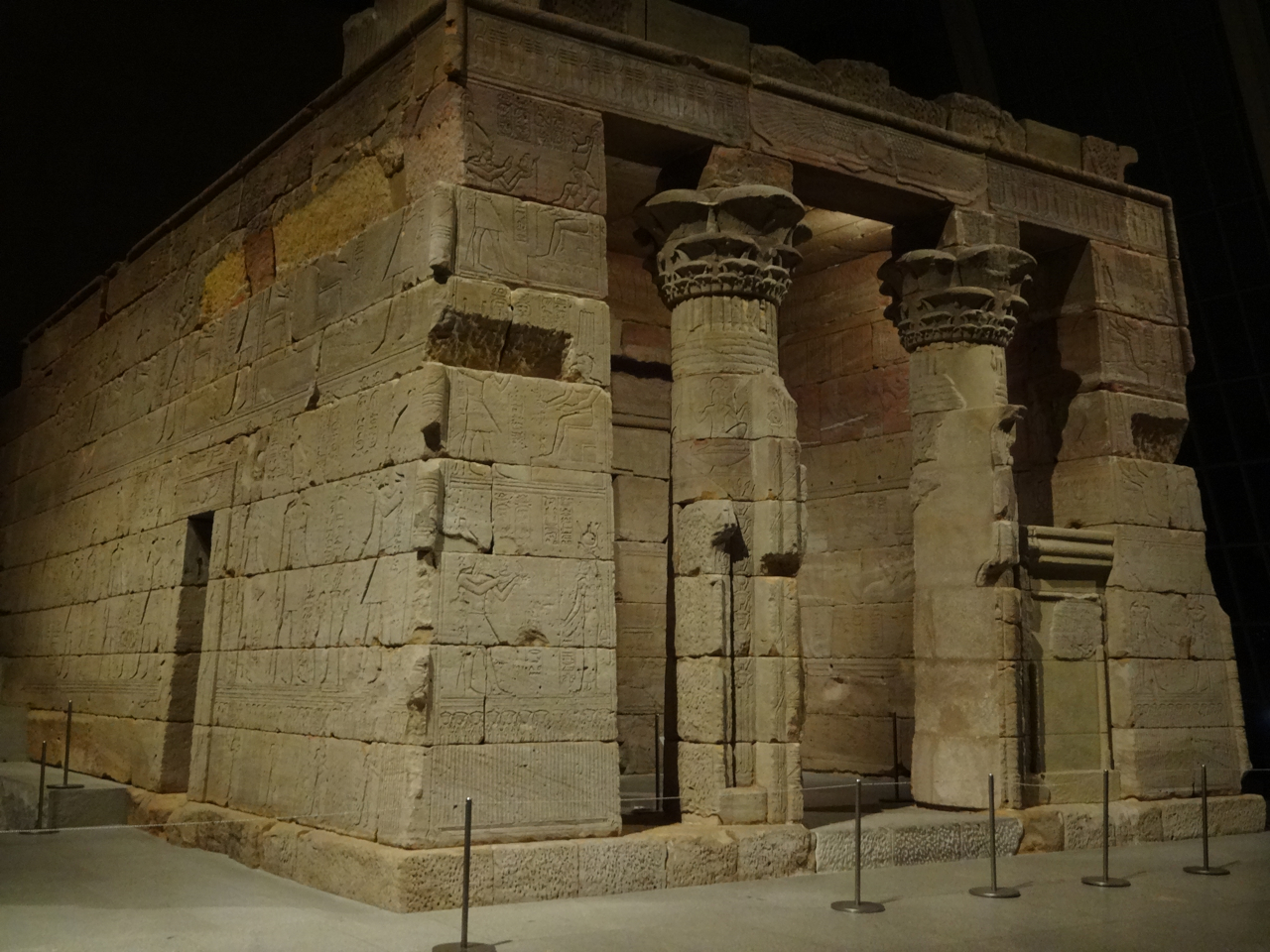
Temple of Dendur

Blessed. That was how Charles Lloyd expressed what it felt like to stand before the Temple of Dendur at New York’s Metropolitan Museum, nodding to the fortune of making a life in music, that torch of never-ending flame. The celebration was nominally in honor of Lloyd’s 75th birthday. Spiritually, however, it was in celebration of all creation, offering as it did the greatest gift of all: beauty. Like the Egyptian temple itself, each tune was transported and rebuilt, stone by stone, until its architecture stood by whim of its own gravity, channeling an energy that flows through rivers wide and narrow. Lloyd’s fingers thirsted for that water, gathering its holistic power in the vessel of his horn until the particles sang.

Strayhorn and Ellington loomed intimate in his opening gambit with Jason Moran at the keys. That unmistakable tenor filled a reverberant space with soul, soul, and more soul. Every run was a flutter of the heart, every split high note a distant supernova. Moran’s quiet flow brought the sound homeward, chiming the ashen bells of recollection until their surfaces glistened afresh. He brought with him a jagged array, sewing ragtime shadows to his Peter Pan feet and running through patchwork fields.

The duo’s brief exhale of “Abide With Me” welcomed the rhythm section to the stage. With a drum roll and a splash the band jumped into raging waters. So began the New Quartet portion of the evening, wherein fire and ice embraced their differences and found peace in aquatic compromise. A solo from bassist Reuben Rogers drew a sidewinder’s path in the dunes, turning heat into nourishment. Lloyd and his band not only rode the train, but also laid the tracks, stoked the fire, and wound through glowing thematic tunnels. Drummer Eric Harland left an ephemeral trail of steam, soloing with the strength of a thousand signal flares. Rogers further pinholed the darkness with constellations to the tune of Moran’s twenty-fingered chording.

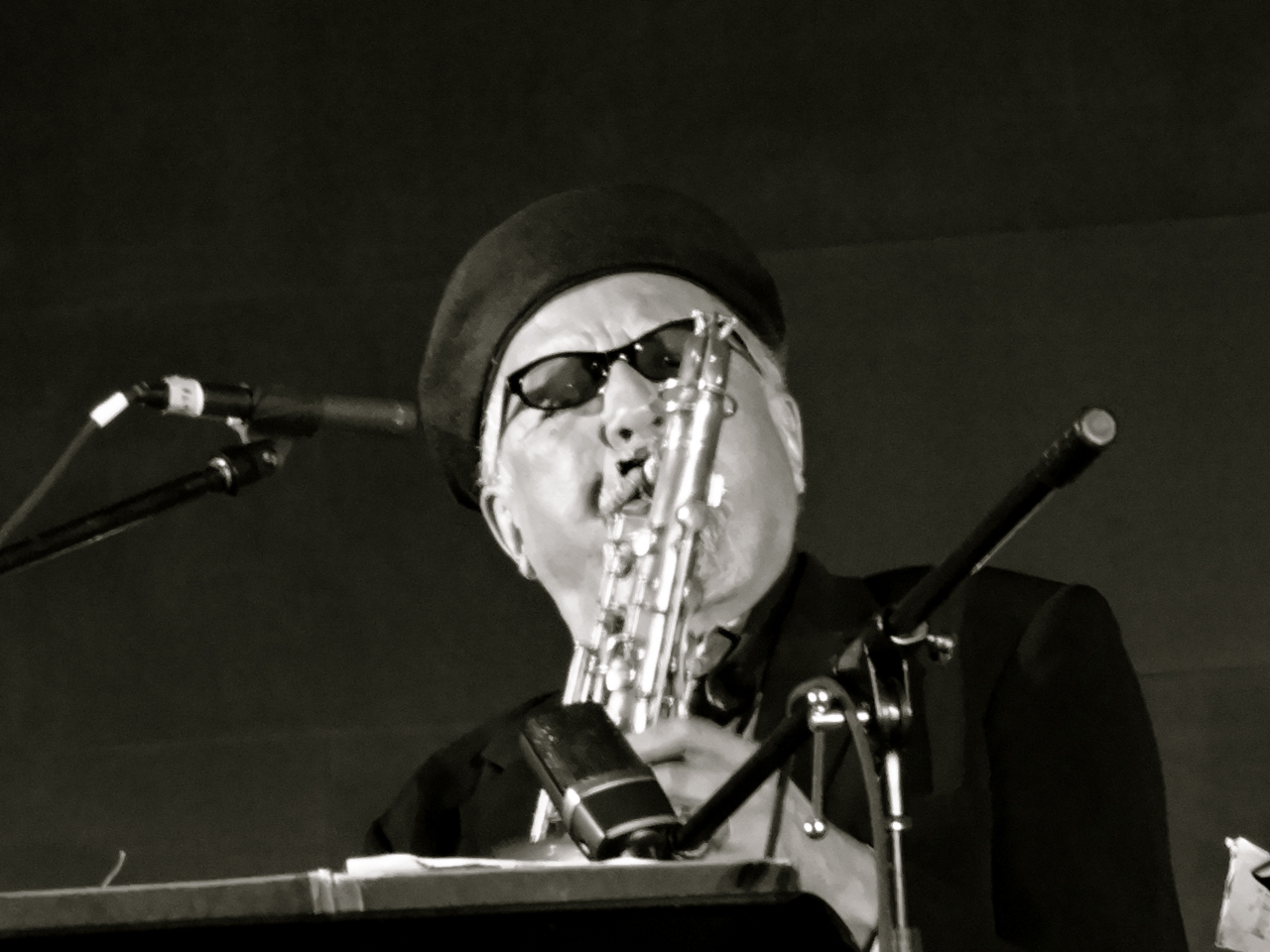
From behind his sleek shades, Lloyd turned day into night with every lick, keeping the sandman at bay and digging low only occasionally for effect. It was in this context that his gentle dream-weaving over a Saharan beat provided as yielding a surface as was needed to welcome Alicia Hall Moran into the mix for a spirited “Go Down Moses.” With its serpentine refrain of “Let my people go,” her operatic contralto painted the sheltering sky with prophecy. A gentle cascade from Moran trickled into Lloyd’s “New Anthem,” moving through rhapsodic changes reminiscent of Barber’s Knoxville: Summer of 1915. Fly, songbird, fly.

Yet it was Greek singer Maria Farantouri who spread the richest wings of the concert. Joined by lyra master Socratis Sinopoulos, she assumed a vast presence in her rendition of the Greek Suite from the Athens Concert album. A lone improvisation from Sinopoulos served to emphasize the holiness of the space. Farantouri was the twilight itself, an Adriatic dream realized before the ears. Lloyd and Farantouri always seem to bring out the best in each other, and on this stage the vibe was no different. Traveling down the River Styx and back again, Moran appending thoughtful diacritics along the way, the group inscribed its journey with nary a backward glance. Harland wound a fantastical roll to whisper strength, the lyra tracing a perfect horizon line.

After this two-hour tour de force, Farantouri lightened the mood by singing “Happy Birthday” to Lloyd before encoring with the joyous “Yanni Mou,” thus signing off on a living résumé of the saxophonist’s legacy and influence.

Lloyd live

The morning following the concert found me well rested and in Lloyd’s hotel room, where the star of the hour was anything but. “After I play,” he explained, “I’m exhausted but exhilarated, so I can’t go to sleep. Two, three, four, five in the morning I go to sleep, and now I’ve got to recuperate.” Being the inquisitive soul that he is, he first took more interest in me, my wife, and our new son, asking about our family histories, how we met, the values that drew us together. By the time I got around to my brief questions, I forewent those I’d written down and went with the flow. I asked first about Hagar’s Song, for I’d noticed after listening to the album a few times, and having just heard him and Jason start the concert with some of its material, that a feeling of history far beyond music was coming through. “I can’t get over someone taking this 10-year-old child and wrenching her from her parents and then impregnating the daughter at 14,” Lloyd responded, referring to the great-great-grandmother to whom the album is dedicated, and whose history of enslavement only recently became clear to him. “It’s sick. But here’s the thing about that recording. It’s all part of that fabric. I don’t know why people are trying to separate them. ‘Why did you insert this into these beautiful ballads?’ Some people have asked me that.”

Well, the real question is: How do you take it out?

Right. That came to me, that information, and it was like a wall for me.

What impressed me—and I think this bears testament to the power of music, and the human spirit more broadly—is that an undeniable core of joy comes out in the music. And I’m wondering if that’s something you saw in her spirit as having been passed down through the story. She survived, she gave that feeling…

She’s obviously a beautiful soul. All I can do is reinvent the world. My thing is about beauty. There’s all that ugliness out there. I’m trying to wipe it out with beauty. I’ve always been trying to do that. I can’t change my stripes now. I’m an idealist and dreamer. My dreams are still bigger than my memories. Maybe that’s why I don’t succumb to age or polarities, lines of demarcation…. I’m not the one for that stuff. Obviously, to me she’s very beautiful and I wanted to enfold that. I started out with Strayhorn’s “Pretty Girl” because there was this flower and I don’t know how to not do what I do. Things just happen along the way. These things, they’re all my world.

Did you feel anything different this time around recording a duo album with Jason as opposed to the quartet, or is it all part of the same fabric?

Yeah, you’re naked. We made that sound. It’s a homemade pancake.

Can you talk more about that sound and how your relationship with ECM has built it?

I like the idea of being in one place for a long time and developing something. When I recorded Fish Out Of Water, I just went in and played. Some of the big companies have come to me, but I have a home here. I always knew that ECM made great sound, hermetically sealed, but I need what I need, because I’m a sound seeker.

Maybe sound seeks you as well.

What you’re looking for is looking for you.

On that premature note, it was time for us to go. Before leaving the hotel room, subject to whatever might be looking for us, my wife and I said our goodbyes, but not before Lloyd laid a hand on my son and said a prayer for him. The silent wonder in the boy’s eyes as life began to take shape in them was as inspirational as anything we’d heard the night before. Blessed indeed.

(To watch the concert in full, click here.)

Breaking down the set

We Jazz interview

Please check out “Lauantaijatsit” (Saturday Jazz), a radio show hosted by DJ Matti Nives on FM station Bassoradio out of Helsinki, Finland. The latest edition, which you can stream here, features interviews with Manfred Eicher and yours truly, as well as a fine assortment of ECM gems, including a preview of the new Stanko record, Wisława. Matti’s occasional talking segments are in Finnish, but the interviews are all in English.

Matti Nives
(Photo by Hanna-Kaisa Hämäläinen)

Rockets in their Pockets: Blasting Off with the Hammer Klavier Trio


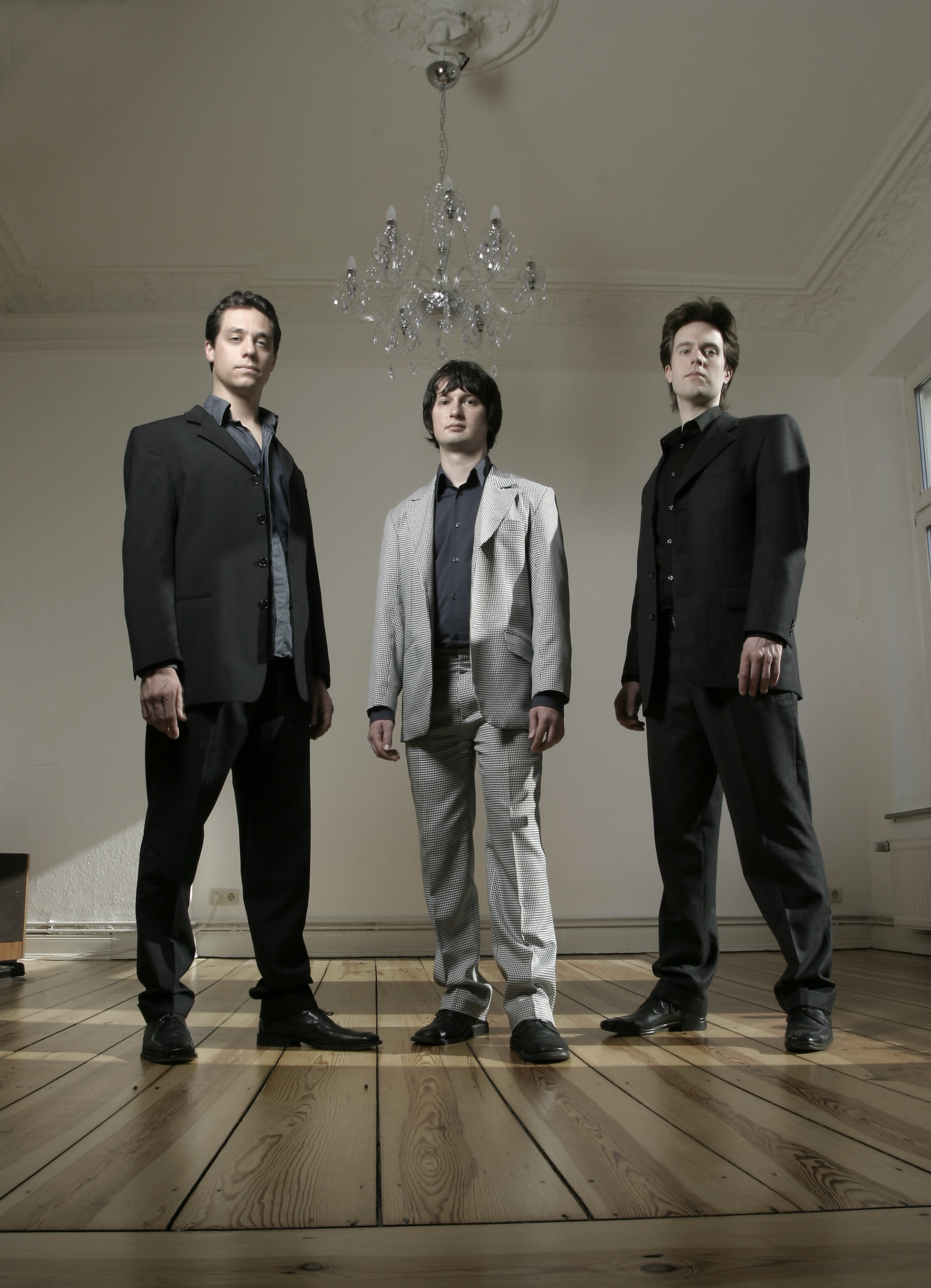
(Photo by Steven Haberland)

Formed in 2002 by pianist Boris Netsvetaev, bassist Phil Steen, and drummer Kai Bussenius, the Hammer Klavier Trio knows where it’s at. Little known outside their home base of Hamburg, one hopes that will change with the release of their sophomore album, Rocket In The Pocket. Netsvetaev is a keyboardist of many stripes, as comfortable plugged as he is un-. After studying piano in his native St. Petersburg, he worked with Joe Lovano, Dave Holland, Kenny Werner, and others to hone his craft. Steen was born in Hamburg, where he also earned his formative musical education, and remains an advocate for the local jazz scenes. He has studied with ECM great Kenny Wheeler, among others, and is a member of numerous touring groups. Bremen-born Bussenius is a drummer of fresh talent and insight, his future already secured through onstage tenures with John Abercrombie, Dave Liebman, Kenny Wheeler, and many more. He cites Jack DeJohnette and Paul Motian as major and lasting influences. Having already worked together before, backing the Wolfgang Schlüter Quartet, their experience with the legendary German vibraphonist has clearly left its mark, absorbing his penchant for compact turns of phrase and equally concise flights of improvisation.

Since making their recording debut with 2008’s Now I Know Who Shot J.F.K., these young friends have sharpened their sound on Rocket, blasting off into the stratosphere with a set that is as hip as it is enjoyable. The attractive syncopations of “Hysterioso” usher us into the kind of mechanical precision and postmodern angst that one might come to expect from The Bad Plus. HKT brings its own swing to the table, what with the buoyant ground line and delicate array of electronic buggery, before ending like a record sped up until the cartridge goes flying off in search of other skies. These we get in “A Sketch In Dark Colours.” Against tight rhythm support, Netsvetaev provides enough to fill this puff pastry to bursting. His touch is beautiful, impressionistic, and decidedly futuristic, evoking streets awash with robots and automated traffic. “Suicide Train” is another rollicking exposé of urban ennui, only this time bartered into the hands of a frenetic ghost who seeks in said transportation a method to the madness. The keyboard dons an electric guitar’s clothing, while the bass is given its due frolic. The jam band aesthetic is smooth as scotch, yet distorted by a picture gallery of enticing modal variety. “Tekla” is a heaping slice of retro pie that looks to a more innocent time when we were content in following our minds rather than our hearts. Threaded by a watery bass, it sings to us with gentle remonstration. “Plan B” is a rubato mash-up of bold yet complementary flavors that swings its way into focus. “Play Me A Fugue” drifts in and out of a Baroque radio station with the swish of a whale’s tale. The drumming is bold, upright, and crisp. The title track walks a funky walk and talks a funky talk, rolling into the sweeping cinematics of “The Incredible Atmo” with unwavering aplomb. Steen switches gears to ARCO as Netsvetaev trails stardust into the night sky. The Steve Kuhn influence is palpable. “Take Fifteen” is a delightful slide into more boppish territory. Subtle and true to form, the trio excels here in its rudiments. Then, with a sweltering electric piano, “Desert Sun” kicks us back to seventies, with a mellifluous and oh-so-comforting sound. A fuzzy blanket in November. “Kaleidoscope” is a track of luscious textures and shapes, Netsvetaev exploring icicles in the highs. The set ends with “Harold Mabern.” Named for the great pianist and teacher, it is a jaunty ride through past and present on the way toward an as-yet-unknown vocation, of which music is but the first and necessary step.

If the music on Rocket is uplifting, then so too is the recording, which flies from the speakers with a life of its own. At once edgy and accessible, it should be the fun-seeker’s next destination. But this seeker wanted to know more, and to that end was fortunate enough secure an e-mail interview with Boris. Without further ado:

The press has located your work somewhere between Monk and The Bad Plus. Where would you yourselves locate it? What influences do you consciously bring into the music, and what influences have you discovered after the fact?

We get our influences from every type of music we come across. Of course, our main influence is jazz, but the influence of classical music (especially Russian music and music of the 20th century in general) is very strong. We use elements of rock, funk, hip-hop, and R&B, which are also strong. I can’t say there is a particular band or musician that has influenced our music. We’ve always worked on our own sound. We never wanted to be placed stylistically as “something influenced by…” We are the Hammer Klavier Trio. We’ve got our own sound.

How have you evolved as a band since J.F.K.?

Of course, we’ve grown much closer together as a band. Now that we’re using electric instruments (keytar, Rhodes, electric bass), our music has become funkier, harder, louder, but also much more variable. We’ve extended our sound palette, moving from straight-ahead jazz to modern beats and rhythms, so younger audiences can get into it more easily. We’ve also gone international, playing concerts in Rome, Saint Petersburg, and New York.

Tell me about the journey of Rocket In The Pocket from concept to recording to finished product. How do you feel it represents HKT and the future of jazz?

The recording session took place at Home Studios in Hamburg. It’s a legendary studio, famous for its rock and pop productions. The recording took place at night, which created a special atmosphere of mystery and inspiration. We had a special three-night deal with the studio: enough time to work out things in the way we wanted them to be. We even took an additional session to re-record some tunes we weren’t quite satisfied with. After the studio work was done and we had all the material, it took us some time to find a guy to mix it. Finally, our choice was Klaus Scheuermann from Berlin, and I must say, he did a really great job. Phil and I went to Berlin to oversee the three-day mixing process. We had a lot of fun working on it with Klaus, or, to be more precise, observing Klaus working on it. Once we had the master in our hands, we decided to wait until summer for the photo shoot (we wanted to have some outdoor pictures on the cover). Howard Mandel, a famous New York jazz writer, delivered some great liner notes for the CD, so we are very happy with the final product.

How do you approach playing in the studio versus playing live on stage?

It’s a different type of work. Live is more natural to everybody. There’s an audience you play for. You can build contact with it, interact with it. The presence of other people listening to you is inspiring and pushes you ahead. And if the people react to your music positively, it brings a feeling of a great satisfaction. The studio is different. You are closed in a hermetic box and you have to play for yourself. It’s really strange. It’s very difficult to develop the same energy as in a live concert. In fact, the nighttime recording session helped us a little to recreate the feeling of playing a club show. I really don’t care about it anymore. If you’re a professional musician, a good one, you have to be on 200% anytime you’re performing. Whether in the studio or at a jazz festival, it doesn’t matter.

When did you know you wanted to play jazz? Was there a defining event, listening experience, loved one, or instinct that drove you to this music?

By the time I grew up (it was in the 80s in Russia), jazz was not easily obtainable. My father had some LPs of Count Basie and Benny Goodman, but that was it. All through my childhood I studied classical piano and I didn’t really come across jazz music until I turned 14. It was 1992 when I entered the Rimski-Korsakov Music College in St. Petersburg to study piano and composition. At this school I met a new friend who was heavily interested in fusion music. He gave me some tapes with Miles Davis and Weather Report. Some months later I started taking interest in it more seriously and began improvisation lessons. At this time the political situation in Russia had changed. Jazz still wasn’t popular, but it became much easier to get recordings. Some of the new TV channels started broadcasting jazz programs from abroad. It was around May 1993 when I saw a video of the “Tribute to John Coltrane” with Wayne Shorter, Dave Liebman, Richie Beirach, Eddie Gomez, and Jack DeJohnette. This concert was a killer—the power of this music hit me seriously. And just about a week later I saw the John Coltrane Quartet on TV. This event changed my life completely. From this point I knew: this was the music I’d always wanted to play.

What is the most memorable comment a fan has shared with you after a gig?

“You’re sexy.”

What do you say when someone asks, “What do you do?”

It depends on the situation. Usually, I say, “I’m a musician.”

Much attention has been paid to your youth. How do you think age affects, if at all, the way you think about music and perform it? What is your generation adding to jazz? What is it taking away?

I don’t think that age is all that important. Of course, time adds some maturity to your musical personality, but for me it’s important to stay young at heart. I think being young or old is a mental thing. Some people stay young for the rest of their lives, others turn old before 30. It’s difficult to say what kind of an impact our generation has on jazz, because there are so many different groups out there playing completely different kinds of music, but the main tendency is that there are more pop or hip-hop rhythms and sounds in jazz than there were even 15 years ago. Swing is slowly disappearing. Despite the fact that we all love straightforward swing, we have to go along with the times.

Please tell me about working with such a moving force as Wolfgang Schlüter. What have your experiences with him taught you about performing, music, and life?

Playing with Wolfgang has always been fun. He is a musician of exceptional recording and performing experience, and he is a great guy, too. Offstage, he is always good for a glass of wine, a good story, or both. He loves playing music, especially in front of an audience. Of course, his technique and feeling for the music and his instrument are exceptional. His sense of rhythm and timing is also phenomenal. If you see him perform, you know immediately: jazz is all about rhythms and groove. But there is something else. The past years have been unkind to him. First, he suffered a stroke that left him almost totally blind. Just a couple of years later, his wife died in a terrible car accident (he was riding in the same car). But none of this has stopped his will to play music. This is probably the most important thing I learned from him: if you really love music, it makes you so strong that you can overcome your destiny.

To learn more about the Hammer Klavier Trio, please check out the German promotional video below, or click on over to the official site here.


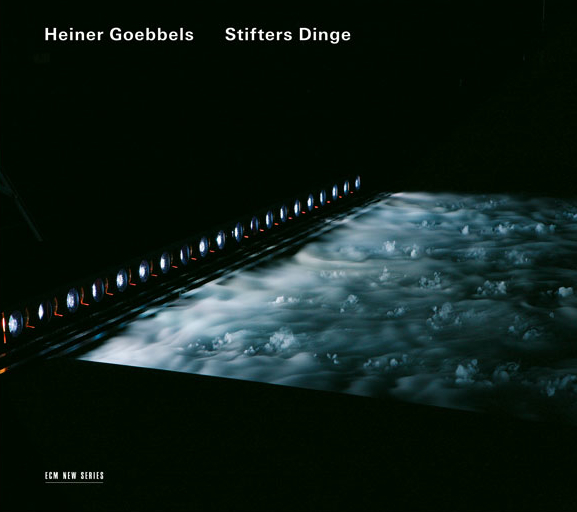
Paintings Unseen: Sifting through Stifter with Heiner Goebbels

Heiner Goebbels
Stifters Dinge
Heiner Goebbels conception, direction
Recorded October 20/21, 2007 by Willi Bopp, Grand Théâtre de la Ville de Luxembourg
Edited and mixed July 2010 by Max Federhofer (SWR) and Heiner Goebbels
Executive producer: Manfred Eicher

“Language cannot represent thought, instantly, in its totality; it is bound to arrange it, part by part, in a linear order.”
–Michel Foucault

How can the pen be mightier than the sword when the page is the most hurtful weapon? It is not that the flesh receives the pen, but that the eyes swallow words into the soul, their blades wreaking havoc in a place where dying utterances thrash, unnoticed, for want of lips and tongue. There is something to be felt here, pondered like sun and moon in the same sky, only to slip from grasp, tether to a dream. In that state of half-sleep we are hyper-aware of sounds that make us. We turn them inside out and hold them to our ears, each a vacated conch shell. Were we able to peer into the shadows of those porcelain folds, we might encounter composer Heiner Goebbels tinkering in the deepest crevice, his fingernails clicking like camera shutters at the dawn of time.

Such is the veil that stands between us and Stifters Dinge (Stifter’s Things), the 2007 installation piece that would be enigma were it not for the clarity of its presence. It is many things. It is everything. It is the power of speech turned on its head and spun until it is a single color. The voice of Claude Lévi-Strauss excavates the work’s ethos, at once underscoring and disavowing our need for discovery, the rarity of adventure in a global network mapped and catalogued to every conceivable end. It is also a regression into a past where the truest blanks in our physiological scripts remain. These blanks play host to other notable figures. William S. Burroughs levels his critique of inner fire into social ice. Malcolm X speaks of division, fragmentation of power, splitting of the master’s tools. Goebbels weaves in field recordings from Papua New Guinea, Greece, and Colombia, archives of travel and lost communities, shades of Bach and monoliths. Bobbing along these waves is the constant ghost of one Adalbert Stifter, the eponymous 19th-century Austrian writer who, like Henry David Thoreau, heard nature as the musical amalgam of machine and biome that it is.

The piece is, above all, an experience—Goebbels calls it a “performative installation”—that abets the evolutionary processes it unravels and reties into permeable sculpture. The gentle logic of it all is indeed linguistic. We feel ourselves caught up in its locks and thorns. But the human is hidden, falling into ruin among the crust and residue of progress. It is an irrigation system that draws forth the atmospheres of solids. Drones of screen and sand, of distortion and touch: these are its faces.

The piano looms large, both literally onstage and figuratively as the consummation of the gallantry it burns to ash. As a mouthpiece of elitist spirit, its heft trembles under contact. As a technological pest, it is so impervious that only practice, mastery, and ultimately submission are its effects. It is an artificial ecosystem that somehow becomes parthenogenetic. As the soundtrack to smoke, it enfolds us, settles in with our bacteria. Stifters Dinge, then, is an astonishing concept that fully alerts us to the astonishment of concept.

“Language refuses but one thing,
to make as little noise as silence.”
–Francis Ponge

“Is there such a thing as three-dimensional music?” asks Wolfgang Sandner. In ECM’s audio version of Stifters we have one answer.

The fog (1) flaunts a wave of mystery, given traction by the distant bass beat of a techno house, pulsing like our zeitgeist through avenues of youthful expression, bodily movement, and philosophical naïveté. The salt (2) chips away at our ear canals and offsets the arterial spice trade with the attention of rot hidden in every city’s foundation. The water (3) speaks in drips, opening us to the metronome’s deception. In every deposit we startle a different facet of the same visage. The wind (4) carries sailors’ incantations: sinewy, mineral. A recurring clutch, an audio checkmark spinning us on our axes of interpretation. A prayer for the nameless, for the bodiless, for the motionless. The trees (5) whisper through punctured tires and forest tales. Piano chords rest on the fulcrums of frozen pasture. Anxieties fade, crystalline, into the aching heart of the beast. The thing (6) abrades its hide with strings, in each a keystone of intent that opens its mouth and sings nothing. The rain (7) does not pour but weeps, finding its way through crags, abandoned houses, and blackened farms. It soaks the earth, churning, sneezing diagrams into every root. It is the thunder (8) that falls, unleashing torrents of political rhetoric. The sound (9) emotes from a muffled source, its life written in a phonograph’s needle and spoken through a black-and-white broadcast. The piano kicks like a sleeping dog. And while the storm (10) hails morose arpeggios, it also closes itself to the possibility of air and cracks instead along fault lines that far outdate the means of their articulation. A foot drags through leaves and curls around the coast (11). A blink extends, every lash a piece of driftwood pillared between heaven and earth. A pressure gauge, valve and open throat, thump of a Tell-Tale Heart and tick of an Ingmar Bergman clock. In the exhibition of objects (12), we find that many such curios have fallen through the cracks and gathered at the bottom of this tub, washed down a drain of silence.

“So we have destiny to thank for permitting us to be what we will become to each other.”
–The Brothers Quay, The Piano Tuner of Earthquakes

In light of these evocative possibilities, of which I have sketched hardly the crescent of a thumbnail, I search for concrete language with which to describe that which is coated like so many dusty attics. For this, I go to the source. Mr. Goebbels answers the following questions I posed via e-mail:

1. There is a sense of “opening” in your music that, like a painting, offers a window into its own world. In your mind, where does this opening lead?

To the listener’s imagination.

2. Often in your work, and especially in Stifters Dinge, I feel a sense of unsettling, of things coming apart. And yet, there is still unity. The music, the theatre—it all holds together. How do you balance these two seemingly contradictory aspects? Or are they part of the same sound, image, and word?

I think it’s a sometimes-unconscious contrapuntal (counterpoint) strategy, in the best possible 18th-century sense.

3. How did you approach the CD version versus the museum version? What special characteristics of the CD as a visual and sonic package influence the physical experience of Stifters Dinge?

The CD recording offers a very direct and detailed “view” of the machines and instruments; you can hear things which you will not be able to perceive in the live performance because of visual distraction or spatial distance.

4. Was there anything about Stifters Dinge that surprised you when you experienced the final result?

Yes, everything. I didn’t start this project with a vision. Just with a question: Are the performative installation and music possible without any performer? The answer is the result.

5. On that note, is there a “final” result, or does it always shift and evolve? Does it still surprise you?

What still surprises me is the range of experiences from audiences. These are the actual “center” of the piece.

6. Which elements from your previous work are present in Stifters Dinge? Which elements are new?

There is a strong continuity in all my work regarding the use of acousmatic voices, the use of documentary recordings. What’s new is the heavy, overall machine-like construction.

7. I am so grateful not only to you for creating such visceral and reactive art, but also to Manfred Eicher for believing in it so strongly. Because of him, I have discovered it. Can you briefly discuss how you first met Mr. Eicher and how he has influenced your activities and way of thinking?

I met him for the first time in the late seventies/early eighties in concerts. Since The Man In The Elevator (1987) we’ve had a sort of exclusive partnership based on friendship, with inspiring talks on all art forms, literature, music, film, etc. And during these exchanges he was the one who drew my attention to Francis Ponge’s “The Pine Wood Notebook” (in Ou bien le débarquement désastreux) or to Samuel Beckett’s “Worstward Ho” (in I went to the house but did not enter).

For further answers, I turn to filmmaker Marc Perroud, whose documentary The experience of things, Heiner Goebbels charts the development and realization of Stifters from the turnstiles of the brain to the stages of reality. As Goebbels informs the camera, he sought to eschew the use of actors, to build a “free area” of intensity for the public. For him, composition and stagecraft go hand in hand. “I’m not a visionary or someone who has a clear idea of what he wants to do,” he goes on to say. “I always react strongly to what I see.” The lack of prepared material allowed for merging between technical and artistic processes. The situation created the music.

As one interested in the infinity of theatre, Goebbels sees the art form not as a means of “narrowing vision” but as an “open channel” for fresh experiences. Placing action behind details is his fascination. Communication thrives here in song, in text, in stasis, cracked to reveal the sound that is its blood: “We understand things better when they are placed at a distance and are more aware of their structure when we focus on abstraction.” Stifters ritualizes nature. Land and water become one. Things are not only objects, but are the unfamiliar, a space of curiosity to which Goebbels holds a magnifying glass. The machines speak, he listens.

For a more user-friendly synopsis of Stifters Dinge, visit ECM’s background page.
To watch a trailer of Marc Perroud’s documentary and find ordering information, click here.

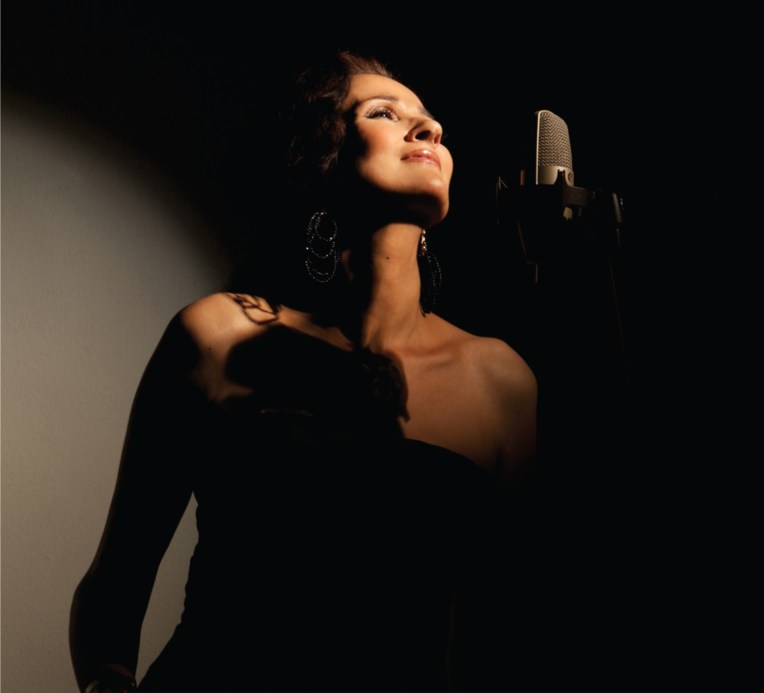
Pavanes from a Princess: Going Beyond the Blue with Tessa Souter


(This and Beyond The Blue cover photo by Joseph Boggess)

When Tessa sings
She dusts off her rings
Her baubles, bangles and beads
She takes to the stage
Irrespective of age
And emotes as if something she needs

All too often we throw jazz and classical music into opposite ends of a proverbial ring. In most circles the latter wins out, if only by the brute strength of its history. While time cannot be the sole criterion when evaluating the worth and self-sufficiency of any genre, it would seem to be primary in our hypothetical referee’s mind. Where does this referee come from? Do the black and white jail bars of his uniform manifest an equally divided worldview? Can anything in the audible universe really be so simple? We can thank the stars above that artists like Tessa Souter, whose voice blushes with an acceptance of life for what it may ever bring, are showing us just how limiting our quarantining of genres can be. For when those first strains of “The Lamp Is Low”—off her latest, Beyond The Blue—catch our cochlea unawares, we recognize the permeability between them, as if the most natural cross-fertilization in all of music. Set to Ravel’s Pavane For A Dead Princess, the song sashays into the night, flitting like the shadow of a hopeful sigh from behind a veil of melancholy. Only in that loneliness can we know the timeless truth of the singer as an artist in reverse, one who hands us the paints with which to render our appreciation visible.

Bridging this chasm of reflection from one end to the other is a personality that never falters in Beyond’s 12-song session, nine of which place Souter’s original lyrics alongside the tried and true. Each track takes a classical melody as its wings and cocoons at their center a body of stellar musicians: Steve Kuhn on piano, David Finck on bass, Billy Drummond on drums, Joe Locke on vibraphone, Gary Versace on accordion, and Joel Frahm on saxophones. With such a finely attuned thorax in the pilot’s chair, Souter’s luxuriance can catch those winds from long ago and flap them afresh like spring. Between the early light of “Prelude To The Sun” (a luscious reimagining of the second movement from Beethoven’s 7th) and the glistening bossa inflections of “Brand New Day” (based on Fauré’s op. 24 Elegy) Souter charts a journey of great emotional distances, all the while drawing a circle private enough to conceal in a teardrop.

What with Kuhn’s enchantment and Frahm’s mellifluous commentary, there’s plenty to love when that unmistakable voice (but never its spell) recedes. Potentially hackneyed motives can be nothing less than clay in such capable hands. “Chiaroscuro,” for one, pours Albinoni’s diluted Adagio into a mold of midnight and cracks open from it something bright and fair. Neither is the group afraid to call upon Debussy (“My Reverie”), Brahms (“Sunrise”), Schubert (“Noa’s Dream”), and even Rodrigo (“En Aranjuez Con Tu Amor,” throughout which Locke wavers like moonlit waters). And then there’s “Dance With Me,” which through the lens of Borodin’s Polovetsian Dances tells the story of a reluctant partner whose movements of the heart, while enough for the limbo of passion that scuffs the floors of a shared life, find themselves faltering endearingly in reality. That sense of closeness and twirl finds clearest life in Versace’s solo, a highlight among a string of fine contenders. Souter makes sure to include the delightful “Baubles, Bangles And Beads” (based on the second movement of Borodin’s String Quartet in D) in deference to past classical-jazz crossovers. Drummond and Finck make for an exquisite rhythm section here. The title track emerges from the dark, cold, and starless sky of Chopin’s e-minor Prelude (op. 28, no. 4) holding galactic light to its bosom and wishing upon itself as it streaks into a sleeping child’s heart. Souter adopts a sparse approach to these songs, bookending shelves of thoughtful improvisation with her gliding ways. Her sources imbue the results with something aged, so that even when we think we’ve never heard them before, their contours are undeniably familiar, the sentiments to which they conform and respond even more so.

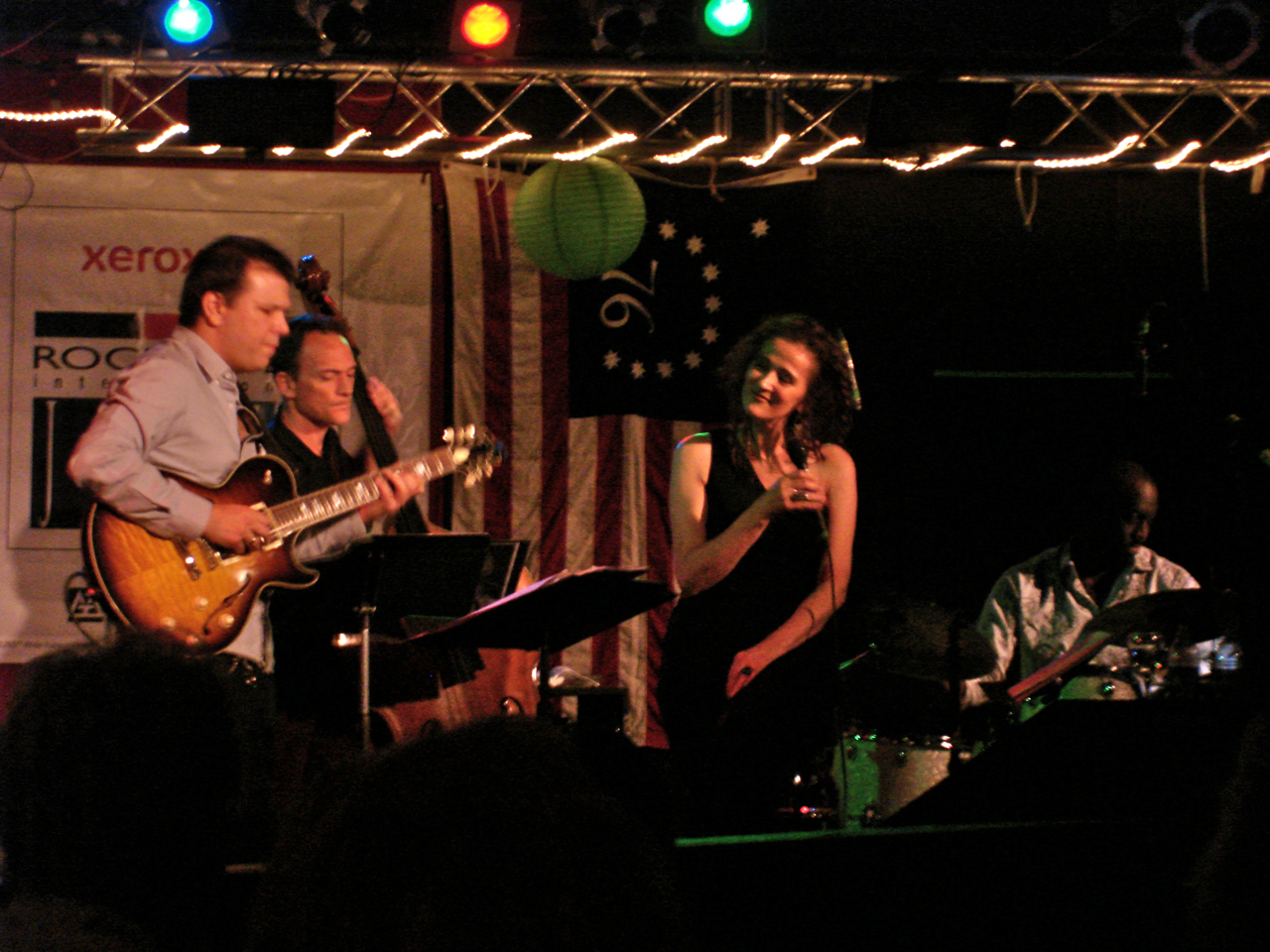
“Safe as milk” is how Souter, in a nod to Captain Beefheart, characterizes performing with her new bandmates for two live sets at this year’s Rochester Jazz Fest. Joined by guitarist Tom Guarna, bassist Sean Smith, and drummer Willard Dyson, Souter and company astonished those lucky enough to squeeze into the small venue from a line that trailed for blocks out the doors. They won us over from note one with the classic “Make This City Ours Tonight” (off Souter’s third album, Obsession), jumping right into the deep end as if the music couldn’t wait to sustain her.

Both sets featured a hefty selection of new tunes, “The Lamp Is Low” being a reigning favorite. In addition to the attractive rhythm support, it cinched the talents of Guarna, a musician’s musician whose skills had everyone in awe whenever he took a solo. In combination with Souter’s own brand of liquid mercury, the group’s full sound shaped the air, circulating like breath itself. This feeling of respiration pervaded the surf guitar vibe of “Prelude To The Sun” and further the smooth lines of “I’m Glad There Is You,” during which Souter pointed appreciatively to her bandmates as she sang the words “extraordinary people.” Guarna alone joined Souter in celebrating Burt Bacharach with a sweet rendition of “The Look Of Love,” the first of the evening’s dedications, which also included “Brand New Day,” written for Japan’s tsunami victims and featuring Guarna’s most stellar turn of the show.

Not to be overshadowed, Smith grabbed some spotlight in his heartfelt contributions to “Baubles, Bangles And Beads” and “Chiaroscuro,” while the ever-patient Dyson brought much to “Beyond The Blue,” “En Aranjuez Con Tu Amor,” and “You Don’t Have To Believe” with a caravan of sandy textures and shakers. Dyson also unleashed a memorable statement in “Alone Together.” Candy for the ears.

During an informal sit-down the morning after the Rochester sets, which came hot on the heels of a Blue Note Jazz Club album launch party and sold-out Russian tour, I asked Souter whether or not she has noticed a difference in audience reception across places and cultures. “The Russian people seemed to be very emotional,” she told me,

so afterwards you got a lot of people coming backstage in tears, because their emotions were so close you could practically see them through their skin. Perhaps it’s because they’ve had such a traumatic history that’s quite recent. I’d say for me—and I haven’t been to a huge amount of places—everywhere’s the same and different. Music seems to be very universal and audiences are very universal.

With this in mind, I couldn’t help but comment on the confidence she exudes on stage, seemingly internalized to the point of becoming second nature:

For me it’s all about being in the moment. When I walked into the room [in Rochester] I nearly burst into tears, because I could feel the expectant vibe. I was right on the edge. It’s overwhelming. I get subsumed, I don’t even exist. Confidence is important. It gets you past being self-conscious. For example, the first time I saw Billy Elliot I thought it was a nice movie. But then I watched it after I’d become a performer and it was an entirely new experience. There’s a moment when the boy is being interviewed for the ballet school. One of those posh guys says, “Why do you want to be a dancer?” and he says, “Because when I’m dancing I disappear,” and I thought, yes, that’s exactly what happens. So what you’re seeing is not just me, it’s us.

Does this affect how you sing the “sad” songs?

There’s always an element of sadness in a love song, even a happy love song, because one day it’s going to end, if only when death do us part. Somehow, you have that realization. I was thinking: Why do people always love the sad songs? Are they unhappy? But I realized because it’s sort of real, that even when you are happy there is a poignancy to how lucky we are.

Maybe it’s just part and parcel of the form, but it seems that in jazz people are constantly reconfiguring themselves in relation to others. One year you may be playing with a completely different band from the last.

One thing about jazz is that it’s just so free. Because each person brings a unique personality to the bandstand, it means that every time you play the same music with someone different, it’s a completely new experience. Like the band last night. It’s new for me. Tom had to remind me it was only our third gig together, but I’m blown away by what they all do.

Judging by audience reactions, she wasn’t the only one. This assured quartet set Rochester’s happening east end abuzz with adoration for a voice that needs no spoonful of sugar to make its medicine go down. As my wife and I left the venue I couldn’t help but smile, because, knowing that we’d be in attendance, Souter had been gracious enough to dedicate “Little Sunflower” to us and to the baby boy due to change our lives come the first week of September. And in the end, the creation of life is what her singing is all about.

Love doesn’t only live in dreams. It’s here.

Creating and Un-creating: A Conversation with Cayenna Ponchione

A rumble. Subterranean where there can be no ground. A calling from within where there can be no within. Is it a voice? A sleeping giant? The rolling pulse of marimbas. Something familiar, daunting all the same. Metal, touched to the skin of darkness, rolls like an ice cube down our backs. Suddenly, marimbas pronounce themselves ephemeral, morphing into glockenspiel and drums. A primordial froth, foaming at the mouth of something soon to be sacred. Finding itself as it goes along. Notes and staves invisible, but there. Like Braille across out space, they stand. A specific method of becoming, ever enveloped by a breath of destruction. Wrought, perhaps, in a filigree of swirling gasses and dark matter, in which there is only the emptiness of an embrace. Shape, size, and color—the peeling skin of sound. There is only inception, for nothing has ever ceased. The watery depths of a vibraphone give us our first taste of brine, finding in its habits an incalculable emotion. Each of these gestures is a cluster of numbers, elements, and intent, not so much divine as introductory. These deep build-ups reveal massive clouds of energy, imploding as much as exploding, as if searching for a primary spatiotemporal juncture in which to beat to the rhythm of all that animates it. A ghost in stardust. A child of orbit. Ring of fire. Singing tension. Birth.

This is what Cayenna Ponchione’s music feels like. As distinct as her name, it breathes. Born and raised in Fairbanks, Alaska, Ponchione pursues a life of conducting and composition imbued with fervent dedication to the orchestra as a site of creation. Having directed a number of ensembles in the Finger Lakes region of upstate New York, she has also amassed a growing body of sonic territories. Among them is, appropriately enough, The Creation, a work for percussion that won the 2003 Percussive Arts Society Composition Contest and garnered international recognition for her compositional accomplishments. As a marimbist herself, Ponchione is invested in the world of reverberation, and in shaping its amorphous possibilities into music one can admire and develop into life experience. For more, check out her site.

To hear The Creation, check out samples and buy the CD at Capstone Records.

Ponchione is currently at Oxford, where she hopes to complete a Ph.D. that will enable her to expand a personal mission of community music-making. Before she hopped across the pond, she was kind enough to take time out of her schedule and sit down for a conversation on her work and beyond.

Just hearing the title, The Creation, I cannot help but think biblically. I also think Haydn. Yet when I listen to the piece, the narrative possibilities of something out of nothing slip away in favor of a more immediate, visceral effect. Were there any images, texts, or pieces of music that you had in mind while bringing this piece to fruition, or did it emerge, as well it probably should, from a blank slate?

There was a piece of music that I heard—the Bloch Schelomo for cello and orchestra—by the Utah Symphony at Abravanel Hall. That would have been 1996. And when I heard that piece, I saw the creation of the earth unfold in dance. That visual stayed with me for a long time. When I went to write this piece, it wasn’t as musically inspired as it was—I don’t even want to say philosophically, because it’s kind of fantastical—just musing on the concept of matter, and the concept of matter as being quite transient, that without vibration, without motion, matter doesn’t exist. And so, I toyed with that, played with the notion of being able to hear that vibration just like you hear the vibrations of sound, and imagine what the creation of the world would have sounded like.

Building on the first question, clearly the title is a multivalent one, and for me seems to vocalize, if you will, the process of its own becoming. The compositional process is, of course, nothing if not creative. How do you see the medium and the message intertwining in The Creation?

For me, if I understand your question correctly, this was a very important aspect of the work. I wrote it based on a tone row, and I manipulated that tone row not simply abstractly but in ways that were personally connected to the subject matter—spiritually, intuitively choosing facets of the tone row, choosing different inversions and blocks for each of the four parts, which converge into the creation of the sphere, the explosion, water, and then from water the fire and the ice. In thinking about those through my personal experience, I used them in ways that reflected that.

One might say it takes boldness to compose such a piece, that to set oneself to the task of evoking the immensity of earthly existence into a formative, if not formal, piece of music. Yet after listening to it, it becomes clear to me that it’s not really about boldness at all, but rather about humility. Would you agree with this and how do you see yourself in relation to this music?

I think I wrote it at a time when there wasn’t much differentiation between myself and my surroundings, where I end and the rest of the world begins. It’s rather vague, so in that sense I didn’t feel that it was “bold,” though I probably should have. And in terms of humility I felt like it was more an extension of my own experience as opposed to a capturing or statement of an external topic. In hindsight, I never expected that people would pay enough attention to the title, despite being exactly what I wrote about. The whole title is a creation, a sonic manifestation. Had I known that a lot of people would be playing it all over the world and thinking about it in different ways…. The title is so culturally loaded and means some very specific things.

Can you talk about the structure of the piece and what part improvisational elements, if any, play in its performance?

Actually, there is a very small amount of improvisation involved. It’s set up in four parts, and each is linked and borrows from the others in one way or another. The only point at which there is improvisation is when the sound implodes on itself. The beginning is, if you can imagine, little particles of sound colliding with each other and building. When that all starts to swirl around and gives us a big implosion, the fallout is completely improvised and is meant to shatter and decay, and from that we get the earth.

In what respects did your choice of percussion over, say, winds or strings influence the genesis of the piece?
Unfortunately, it’s a very boring answer which is: as a percussionist, and at that time in my life, that is what I was capable of writing for, and those were the forces that were at my disposal. So it never actually occurred to me in any other form than percussion. In the end, the piece couldn’t have been written for any other instruments. There’s just nothing about it that’s transferrable. It has everything to do with the timbre and using the instruments in their idiomatic fashion.

If we wanted to be nitpicky, we might say that, with no one around to hear it, the creation of the universe would have been silent. Where does one even begin to imagine it sonically?

That’s fun! To be honest, where I imagined it sonically—and there is a very clear picture of this—was to hopefully do it one day with dance. To me, the universe before the Big Bang in the “storyboard” of this particular piece, was a silent space; a vaporous, undulating mass without any direction that, by happenstance, started to collide with itself. Why I ever mused on such things is beyond me (laughs), but at the time they were very important for me.

To me, the piece’s final, drum-laden passages don’t come off so much as upheaval as organization, for somewhere in the resounding chaos of any creative process there is a dedication to order and familiarity, which in turn nourishes the beauties of an indeterminate world. How do you see, hear, and/or feel their sudden cessation?

It’s actually interesting you ask that, because I hadn’t realized until you mentioned it that it’s very organized at the end. The section is called “Fire and Ice” and my intention was for it to be much more disruptive. I think part of the issue there is that the way I had written it requires a precision of execution which then leads it to sound pretty tight and, on the other hand, I think that inadvertently I wrote it that way because I do find that I am most comfortable in order and structure and that for me, intuitively, that encapsulated my need to finish the piece. But I’m not sure that I understood the last part of that question.

Well, for me, the drums at the end stop quite suddenly. They leave the listener in a state of suspension, and I wonder how you feel about the ending.

Oh, wow, I didn’t know it was sudden! I know it’s coming (laughs). It’s interesting. I think about this from time to time, listening to one’s own music. I don’t know that I hear my own music, because it’s already there, the image is there, and it’s hard to hear it objectively. There’s a marimba solo piece I wrote before this and play more frequently than any of my other pieces, and I recorded it about a year or so ago, and I went back to listen to the recording and thought, it’s just too fast. Why is it so fast? I’d slow it down and we’d record it, but it was still too fast. And I think part of it is because I already know it. It’s hard to hear it as I play it and then experience it basically for the first time. I just can’t do it. And I don’t think I’m alone in that. I remember hearing Copland play his own reduction of Appalachian Spring on the piano, and everything was much too fast. Not to compare myself to Copland, I don’t mean to, but I just mean the notion of the author—there’s just no element of surprise, and you’re just getting through it even though there’s a different experience that might be happening on either side.

Have you had much feedback in terms of how this piece has been received, whether right after a performance or in more prolonged discussions?

I never expected that anybody else would hear this, and I’ve gotten really great feedback. People find it to be, frankly, rather profound: it’s just a beautiful piece, they love this image, even technically just well balanced and enjoyable musically. One of the most touching things that happened is that when recording this piece at the University of South Florida, there was a young man who was in that percussion department who did not play in that piece, but who was there the entire time we recorded it. I think he was a freshman that year and so the upperclassmen played. But he absolutely fell in love with it. And he e-mailed me maybe nine months ago and said, “I’m putting together my graduate recital at the University of Boston in marimba performance and I want to program your piece because it has affected me so much as a musician and conceptually. He’s actually really interested in Carl Sagan and extraterrestrial concepts, so this was particularly interesting to him and very close to him as he developed as a musician, and there’s really no greater honor than to have someone say that. So it was quite special for me. I went out last March to Boston for his recital and it was very well done and clearly a very special moment for him. Probably one of the highlights in my life as a composer. It was really quite cool.

I also really love the piece. There is one moment close to the end that I find particularly effective, during which the drums rise up and stop and there’s a gap, only to re-congregate for a final passage. There is something resonating in that gap. I don’t know if it’s a tubular bell or—

It should be a chime, yes.

I adore that moment, and I’m wondering if you could talk about it a little bit and whatever intentionality lies behind it.

I have to say I don’t recall my specific thought for that, and I apologize because I’m sure there was something. I would guess more than anything that it had to do more with balance. Actually, when I write, being a percussionist, I don’t think melodically or harmonically in the same sense. I really think of flow and balance and structure, and if there’s a pitch contrast, again that has to do with where you’ve come from and where you’re going and what’s needed, so certainly if there wasn’t an extra-musical aspect to it, it’s just that there was a need for a breath before we went on with so much sound.

It occurs to me that Xenakis often used percussion to evoke cosmic forces, and I’m wondering if you feel there is anything particular to percussion in this regard.

Yeah, well it’s certainly less earthy than a wind instrument, which is connected to the breath, and even the contact that one has with a string instrument or a piano, and just the notion of a vibrating string in and of itself, whereas with percussion, the sound of clanging metal together, it’s almost industrial. The concept of percussion music came with the Industrial Revolution. Not to say that there weren’t percussion instruments earlier, and certainly in other cultures percussion has played a large role, but the concept of percussion the way we hear it now in Western art music is definitely all post-industrial, and so I think there is perhaps a connection there and a fascination with what’s beyond.

Can you talk more about the instruments involved?

It’s two five-octave marimbas, two sets of log drums, vibraphone, at least two or more break drums, lots of tam-tams, gongs, cymbals, a couple of bass drums, glockenspiel, crotales maybe, triangles, lots of toms. So during the section in the middle, the two solo marimbists go to play the two solo tom parts. It’s basically them with the two log drums and the backup at that point. The vibraphone plays a large role in Water, as do the cymbals in the gongs. Pretty straightforward. And in the beginning I’m using more of those metallic, spacey sounds with different sizes of triangles and glockenspiel. I’d love to be able to hear it with a different pair of ears, because I know how things tie together at the end from the different players, and it’s very intentional, and I don’t know if it sounds more continuous than it was meant to be. It is meant to be one gesture, but it’s supposed to be a gesture with a whole lot of different aspects from different players and different instruments.

You and I have talked in the past about your position as a conductor and how that may or may not change the ways in which music is perceived by the audience behind you. Could you describe the effect of your gender, as you see it being perceived, on audiences and how, if at all, these perceptions influence your work as a composer?

I think it doesn’t influence my work as a composer, only because even though I’ve thought of myself, as I’ve mentioned to you, only recently as a “female” conductor and that it hadn’t occurred to me. Being behind the screen of a composition, I don’t feel gendered and I don’t have a sense at all of how my gender might be perceived through the music that I write, and perhaps I should. You know, I was just looking through old pictures today. This moving process for me is insane. I was just in Alaska in August for a week, and I shipped the last five boxes of my childhood possessions to Ithaca, and they’ve been sitting in the living room, and before I can even pack I have to clear out the living room, so I just had to unpack these boxes I had packed thirteen years ago. It’s striking, but one of these photo albums I pulled out was from when I was in junior high and there’s a picture of me wrestling because I was on the wrestling team. And I was just thinking, yeah, I actually did that. And at the time, although some said to me, “You shouldn’t being doing that, you’re a girl,” I just thought they were old-fashioned and that I would be whatever I wanted, so of course I could do this. And it took me a long time to understand that people might see me differently. The more I’m aware, and I think the more I become a woman instead of a girl, I think that certainly changes, and dealing with a wider range of generations as an adult. So now when I engage with people in their 50s, 60s, 80s, they’re engaging with me as a woman, as an adult, as opposed to when I was a teenager or even in my early 20s, when they were engaging with me as a kid and I was engaging with them, again as this separate thing. And so I think in that way we conceptualized each other differently. But as for composition, I don’t feel any gender. And as for percussion, I also don’t feel any gender. I spent most of my life doing things that guys did. I mean, the percussion sections were all boys. They were all dumb boys and I was always section leader because somebody had to keep them in order (laughs)! And on the wrestling team I was already around guys. I had two older brothers and I wanted to do everything that they did. I had girls that were my friends, it wasn’t that. So, maybe I should think about this. I actually have another piece that I have to write for Tennessee Martin’s new music building, and I was thinking about this today as I was reflecting on this piece a little bit and trying to conceptualize what I want this to sound like, and now I have to think about what I have to sound like coming from a girl (laughs). What are they going to think at Tennessee Martin? I hope this answered your question.

Yes, well I think it was an ineffable one to begin with. On the one hand, it’s so arbitrary as to not even be worth asking. On the other, I often think about this issue in relation to myself as a countertenor and one who likes to “sing high.” When I create my choral music and people hear it, they invariably ask, “Is that you singing the high parts?” as if it’s not conceptually feasible that someone of my appearance or attitude would embark down that vocal path.

I made an embarrassing boo-boo the other day. I was speaking with a vocalist who was a woman, and I had asked if she would be willing to sing some Dichterliebe. And she says, “But I don’t sing Dichterliebe.” And I said, “Oh, is it the wrong voice?” And she says, “No, it’s a men’s role.” I knew that (laughs), but it never occurred to me there would be a reason why she wouldn’t sing the song, and I was actually really embarrassed. But when I reflect on it I realize it was just because you sing songs that are suitable for your gender. I sing Beatles songs all day long, you know? (Sings: “She loves you, yeah, yeah, yeah…”)