Of Beautiful Boys and Elegant Girls: A Review and Interview with Tessa Souter

She looked at me with intensity. “It is the gift of the great,” she went on, and the sound of her low voice seemed to have the accompaniment of all the other sounds, full of mystery, desolation, and sorrow, I had ever heard—the ripple of the river, the soughing of the trees swayed by the wind, the murmurs of the crowds, the faint ring of incomprehensible words cried from afar, the whisper of a voice speaking from beyond the threshold of an eternal darkness.”
–Joseph Conrad

(photo by Richard Conde)

Anglo-Trinidadian songstress Tessa Souter has been called a “vocal butterfly.” The comparison stands, but deserves elucidation. It is not simply that words seem to flutter from her lips with all the shimmering delicacy of a Blue Morpho, but also that she spreads sentiments like pollen across a veritable field of musical touch points. Her diction lilts with natural care, as might a windblown leaf or feather, yet her sense of melody reveals such profound commitment to clarity that our meager analogies begin to break down once we let ourselves get carried away. And yet who can help it, when she splits the compass in so many directions that we wish we could chase after them all?

Souter’s career began in writing, through which she established a voice. On paper her words were already singing. She officially dropped that voice in the roiling pond of the New York City music scene in 1999, where she has been beguiling audiences ever since. As a newcomer to said scene and the varicolored jazz it nurses, I came to Souter’s magic in a roundabout way when, after reviewing a performance at which she was also present, she e-mailed me with her compliments. Thus it was through our shared appreciation of the art of live music-making that I first discovered her string of studio pearls. With a kindness and openness that all would do well to follow, she welcomed me into a sound-world where countless others have traveled. These are not journeys from which one returns unchanged, but through which one grows through her singular narrative power.

As you read on to my reviews of her first three albums, I encourage you to click open her website and let its samples wash over you.

Listen Love
Tessa Souter vocals
Mark Berman piano
Freddie Bryant guitar
Miles Okazaki guitar
Essiet Essiet bass
Chembo Cormiel percussion

Souter begins this, her self-produced debut, with a nod to Norma Winstone (one of jazz’s few comparable voices), whose lyrics to Jimmy Rowles’s “The Peacock” only enhance the lushness of a lone voice, swept along by graceful pianism. Like its namesake’s tail fan, aesthetic pleasures provide the practical function of gathering and directing sound, that we might better match its rhythms. Traversing love’s more painful avenues, Souter guides us to Pat Martino’s “Willow,” using her own lyrics to unravel the protection of its shade. Nature and passion tighten, yearning for someone with whom to share its undiscovered vistas. “Caravan” glistens with Sephardic curves as it works its spell somewhere between sleeping and waking, laying its constellation bare, one star at a time. After these darker considerations the title song from Jon Lucien urges us into happier oases, where Souter’s gorgeous ad-libbing lights up the night with dance. Here, as throughout, the sparse arrangements allow her all the sky she needs to unfurl. The album’s tenderest surprise comes with “Fragile.” The Sting tune reconnects with its ancient heart, winding in a slow descent into life’s deepest limitations. Souter then offers her intimate original, “You Don’t Have To Believe.” Its almost conversational language again casts Nature as a force that both brings lovers together and keeps them apart. On a planet where storms comingle with peace, we must remember such things about ourselves. After the voice-and-drum duet of “Daydream,” we are stirred into the cocktail of Antonio Carlos Jobim’s “Insensatez.” Threaded by the chatter of woodblock and improvisations, it is the memory we hold dear as we step through the waters of “Left Alone” and onto neo-soul shores of Pharoah Sanders’s “The Creator Has A Master Plan.” A positive note, to be sure, on which to end an album of tense ups and downs, tying threads into a unified line, sustained like her final perfect high into that cloud where rainbows hide in the shadows of adoration.

Nights of Key Largo
Tessa Souter vocals
Joel Frahm tenor and soprano sax
Kenny Werner piano
Romero Lubambo guitar
Jay Leonhart bass
Billy Drummond on drums

Nights of Key Largo is a love letter to love letters—in this case, thirteen standards, whose contours tremble with renewal in her breath. From the Braziliana of “The Island” to Souter’s drop-dead gorgeous rendition of John Lennon’s “Imagine” (just listen and feel it), this Japan-only release builds upon the instrumental telepathy of its predecessor with even more pronounced solos and interaction between musicians. Bassist Jay Leonhart is especially notable, lending as he does a pure alchemical touch to such cuts as “Moon Dance” and “Close Enough for Love,” the latter a smooth and sultry dip into nocturnal waters, where sleep is as far from those who want to dream as touch is from those wish to love, and yet in which the promise of passion lingers. A breathy rendition of “The Look of Love” finds Souter, accompanied only by Kenny Werner at the keys, mending this fragile melody into something unbreakable. Werner excels further in “All or Nothing at All” and in the title number, which sounds like something that might soundtrack a cruise dining room while also plunging us overboard into a complex ocean of resolute affections. Yet his prettiest vibes emote from “Night of the Carnival,” which contends with “Moon and Sand” as the album’s crowning jewel, made all the more sparkling by Joel Frahm’s soprano. Frahm also solos beautifully on (and with) “Slow Hot Wind,” while guitarist Romero Lubambo adds his patent touches to “You Only Live Twice” and “So Many Stars,” drawing threads in both to every lonely soul looking for escape in a universe that is two parts darkness to every flash in the proverbial pan of love. Not to be forgotten, Billy Drummond is the album’s heartbeat. With a palette as colorful as Souter’s, he brushes his fingers through the hair of songs like “I’m Glad There is You” with a tenderness to match. Like the album as a whole, he paints in swaths of dazzling minutiae.

Obsession
Tessa Souter vocals
Jason Ennis guitar
Gary Wang bass
Conor Meehan drums
Victor Prieto accordion
Todd Reynolds violin
Ansel Matthews backing vocals

As soon as those first licks of “Eleanor Rigby” caress our ears, we know that on Obsession we are in for the most eloquent and mature Souter experience yet. Color me shocked if anyone has turned a Beatles cover into something more enchanting. Once we hit Nick Drake territory on “River Man,” if not already, we begin to see the themes Souter loves so dearly. Its conflation of the organic and the emotional is a meta-statement, a cascade of words as fluid as her fantastic session band. And as the title track twists and turns, carried to awesome fruition by a sure vocal line and the ever-descriptive solos of Jason Ennis (a standout), we realize that sometimes our most life-changing moments are those most bittersweet. Sheila Jordan would be proud. Urged by a propulsive rhythm section, Cream’s “White Room” gets a soaring treatment. A groove for our age, it once again proves Souter’s ability to revitalize the cover. Her honeyed meringue tops Gary Wang’s flowery bass lines in “Afro Blue Footprints” and “Make This City Ours Tonight” as if they were made for one another. Obsession works in contrasts, as between the brooding introspection of “Crystal Rain (Sun Shower) and the heavenward glance of “Empty Faces (Vera Cruz),” but Souter’s originals are reason enough to become familiar with this album.  “Now and Then” floats on Victor Prieto’s watery accordion, laying down a path where the sunlit past and the moonlit present stroll hand in hand toward reconciliation. And let me be the last to undermine “Usha’s Wedding” with my paltry expressions, for however we may choose to characterize that which must be heard to be understood, in the end that naked voice is the angel who promises a vessel waiting to carry every last one of us into loving arms.
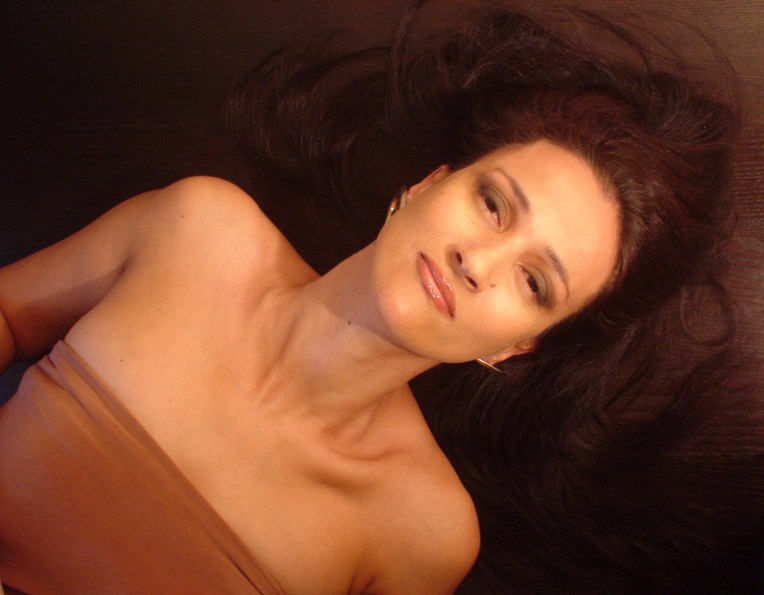
(photo by Janis Wilkins)

As of this writing I have yet to experience Souter live, and so for the moment I can only listen from afar. In attempt to bridge that listening gap, she kindly took time out of her busy schedule (having just returned from a successful Russian tour) to answer my questions via e-mail:

Your voice is clearly at the center of every song. How do you combine it so selflessly with other instruments and their players? Is this a relationship of tension? of harmony? of conversation? of painting?

Hmm, well, I really love listening to the other instruments being played by wonderful musicians. And I played the guitar and sang during my formative years, so maybe I like to create a space for the other instruments, too, just naturally.

I remember my art teacher talking about “tension” and how every work of art had to have it. So I guess there is that element, too: the question of, is it going to work out, or will we fall off the tightrope. Holding your breath.

And sometimes it is a conversation. I love to make loose arrangements that give the instrumentalists the space to create within them. I don’t like to say, “It has to go exactly like this.” I want to know what YOU have to say, what YOU feel about it. I want to hear them play what that story—of love lost, of a newborn, of new love, whatever—makes them FEEL. And that will make me hear it differently.

And sometimes it is—as you put it—like painting, but with two of you working on the same canvas, without having to tell each other in words where to put the brushstrokes. I was knocked out when I first started singing jazz at how musicians who have never even laid eyes on each before can get together and make music that sounds like they’ve been a band for years, even sometimes making the same hits in the same places. Like dancing with a stranger perfectly. It means everyone has to be really listening to each other, not playing by rote, but listening and responding.

Not a few of your songs begin with voice alone. I often think I could listen to them unaccompanied, as the expressive power of your voice carries the emotional contents therein with ease. For example, in the track “Daydream,” the single conga drum that accompanies you seems to saunter forth from within the shadows of your voice rather than adding something that was never there. The single guitar in “Left Alone” is the same. In relation to my first question, how do you see your voice as an entity? Is it a fully formed life, or one that is always learning from its surroundings?

Gosh. What a hard question. Well, the unaccompanied thing…I sang a lot unaccompanied when I was a teenager. In my early teen marriage I spent a lot of time alone and singing was my solace. I would spend all day in the house, singing entire songs that I would mean every word of, mostly long folk songs with stories that had beginnings, middles, and endings, about sailors going off to sea never to be seen again, or bereft maidens, or married women falling in love with local young men and it all ending in tears (usually death-by-husband).

As for fully formed or learning from its surroundings, the voice is always learning and absorbing. Every experience you have eventually comes out in your voice. I think I noticed that first about 25 years ago after a friend died, and the very next time I sang, it was a slightly different voice, it seemed to me.

When listening to your music, I hear a range of possible influences. One who comes to mind is Susheela Raman. Has she in any way played a part in your musical path?

Someone else said that to me about eight years ago on a gig in London. I’d never heard of her so I researched online and bought her CD Love Trap. I like it but it was/is not an influence—obviously, because I heard her long after I was singing like that.

But following on a bit from the previous answer, we might be similar people. Sort of foreign (my father was black, and my mother white) in England, where we were vaguely “other.” So perhaps we are drawn to similar expressive styles. But I think she is Tamil and consciously strove to identify musically with that part of herself and had a Tamil singing teacher who taught her that style, whereas my music just seemed to come out of me like that.

That isn’t to say I don’t have influences. I always described my style as kind of jazz with a twist of Middle Eastern and Indian, and then a few years ago I bought some of the music I was listening to in my youth—Pentangle and Fairport Convention—and I REALLY heard the influence of that music. I guess you could call it Celtic folk-rock. I realized that Celtic music has that Middle Eastern influence, using those same Phrygian scales.

I also identified very strongly with Spain for various reasons as a teenager and young adult, so that’s in there, too. And England, where I grew up, is very multicultural, so you hear all these different kinds of music all around you and I guess you absorb it.

I don’t know why I love that Phrygian thing, I just do. Maybe because it is somehow simple, easy to move around in, and yet emotionally complex. But when I hear it in its pure form, it is also a bit one-dimensional for me. It’s not enough somehow to stick to one very distinct style of music. But jazz is so open you can take a myriad of influences, put them all in a big pot with some Captain Beefheart, Frank Zappa, Soft Machine, and a dash of Carmen Jones, and out comes…you.

When I first started singing in public and learning jazz songs ten years ago, a very good friend of mine, who is a wonderful singer (Mansur Scott), would always say to me, “Tell your story. Don’t worry about it being jazz or not.” That was very good advice. I don’t think you should try to be anything except yourself. People are always telling me at gigs that they feel like they know me, and they actually DO, because that’s what I’m giving them. You can’t copy another singer, because you can never BE that person with that person’s experiences. It will always be fake.

Your songs are intensely evocative. Each is the feeling, the joys and sadness, of a place. When singing, do you feel that you are in those places? Do you wish to put the listener there from a distance, or do you want to share in that experience right there alongside the listener?

I don’t think, “Oh, this song is about this or that.” Not in a conscious way. Not once I know it. It might have been inspired by an experience initially, but once I know it (whether I wrote it or someone else did) I just literally feel it without thoughts. It’s wordless. Evocative more than literal. So even though songs might have words, their job is to, along with the melody, create the mood.

I used to be crazy about the writer Joseph Conrad and I was always amazed by how he could use really beautifully descriptive LANGUAGE to express something WORDLESSLY. The real thing he was saying was there in between the lines. I think that’s what music does. I also like that you can write a lyric or a song about something very specific, and if you don’t tell an audience what it means it will mean something completely different to them.

But yes, I do want listeners to experience the emotion with me, even if it is a different story for them. Definitely not at a distance. When I first started singing I liked that, unlike my former job, writing (which required a certain distance, not to mention having to be alone in a room to do it), music was like injecting yourself into people and getting an instant response.

Growing up always feeling “other” gives you a yearning to connect. And that is one of the things I love about music. It makes you feel connected, both as a listener and a performer.

I feel like I’m hearing about myself when you describe solitary songs as a coping mechanism through trying times, for I have often found that, even at life’s lowest points, the voice can never be contained. What is it, do you feel, about singing that has such restorative power?

I think it is so visceral. Your whole body is engaged, it’s very sensual (as in engages all your senses) and somehow the voice expresses, even without words, feelings that sometimes I don’t know I’ve even been feeling. Feelings that don’t even have names. It gets them out into the open somehow. A great exercise sometimes is to let a feeling be expressed with sounds that you haven’t planned in advance, unlike what happens with a song you already know. In fact, I think that’s how I compose.

The more people come in contact with your music, the more you have been given opportunities to tour in new and unexpected places. What lessons does the act of travel bring to bear upon your musical experiences?

When I had my first concert in Russia—at the Moscow International Performing Arts Center in 2007—I was terrified that no one would understand me and that they would want me to sing all standards. A friend who’d already played in Russia said, “No, they’ll love you as you are! Do your regular stuff.” So I chanced it, and it was actually perfect. In fact, I was shocked that at Cream’s “White Room” people started applauding and shouting “Brava!” pretty much as soon as I had sung the first line. So I suppose the ultimate lesson I’ve learned is that the best thing you can give to an audience, wherever it is, is yourself.

Some might say you are bold in the cover songs you choose, that no one needs yet another version of the tried and true. Yet I find your versions of classics like “Eleanor Rigby” and “White Room” to be spectacular. These are, of course, great songs in their own right, but you turn them into personal statements. What is it about them, first of all, that captures your attention, and how do you decide to pluck these particular jewels from among countless others?

I personally love music that is familiar but different. I think for audiences it can be a doorway to other music. “Eleanor Rigby” came about when I was singing in Japan on a hotel gig for two months. I was walking home from the shops one day in the rain and that ostinato pattern came to me and I ran into my apartment and played it on my toy piano. It was so simple I performed it that night and the Brazilian percussionist I was playing with sang long tones underneath it and it just worked. I cut out some of the lyrics and changed the form to make it tell the story of two people who are in love but never tell each other. I call it my song version of the movie Remains of the Day. For “White Room” I did an arrangement with guitarist John Hart originally. It was kind of Brazilian and I scatted over a simple intro of descending chords and John came up with that fabulous ending that unexpectedly stops dead on the 5. Then just before we recorded Obsession Jason re-did the arrangement so that it had more of an African feeling in the playing, but without changing the chords and keeping John’s ending. I love that song because it reminds me of my brother when we were totally into Cream as teenagers. All my song choices have a reason.

Can you talk about the differences in production between these three albums? There seems to be a progression between them, from the intimacy of Listen Love to the full-blown flower of Obsession. How did the sound of each album emerge?

Listen Love is two demos put together. I made a quick demo in 2000. I had no money so I went in and said, look this is all I have, what can I do with it, and we did four songs, including mixing, in a few hours. It was very organic. I think the reason it sounds intimate is that it was just the two of us in someone’s home studio. Then the other songs were recorded in 2002. Honestly, finances more than anything kept that album sparse. But that is actually one of the things I liked about it. I was the producer so it was very hard work, listening over and over. But all the artistic decisions were entirely mine, which I also like—even though it’s harder physically, in a way.

Nights of Key Largo was recorded in two days with barely any rehearsal, and no band rehearsal. Those songs were mostly chosen because the record label wanted a certain tempo and style. So, working with that, I thought about songs I could mean, learned some new ones, spent about two hours with Kenny Werner upstate to go over some of them and had a separate two-hour rehearsal with Jay Leonhart and Romero Lubambo at my house, and then we all went in and recorded.

Obsession was a bit different because I had been singing the songs for years and just wanted to get it down before I moved on to new material. It was a lot more thought-out than any of my other CDs. We rehearsed, even! And we’d been playing together for a year, so it was more of a band and everyone contributed ideas to the final album.

The most recent CD, Beyond the Blue, which is coming out this May, is different again. Classical songs with my lyrics to nine of them, made into jazz with an incredible band of jazz titans that got together over two days with no rehearsal and made magic happen with repertoire most of which they had never laid eyes on until that day. I think because of that it feels completely fresh to me. And everyone really had to listen to everyone else and maybe that inspired them all the more. Normally I can’t listen to my own CDs but I listen to this one just to marvel at their playing. This is my favorite CD so far.

Before this one, I think I’d always had a special soft spot for Listen Love. Okay, I still have a soft spot for it, partly due to the repertoire. I have to STOP myself singing “The Creator Has A Master Plan” and I still sing “You Don’t Have To Believe” on almost all my gigs.

Love is a very spiritual thing. In what ways do your religious views flow in and out of your songs?

I think everything I am flows in and out of my songs. I just did a tour with a friend and we talked about the fact that who you are is how you play—for good or ill. I don’t think I have any religious views, as such. I am one of those “spiritual but not religious” types. But I am totally inspired by Love, yes.

What was it like working with Mark Murphy? In what ways did that experience leave its mark (no pun intended)? What were his greatest words of wisdom?

He had so many! It was wonderful working with him. He would make me do things I didn’t want to do like scat, to get me off needing to be “Mrs Perfect.” He’d question your motivation for things—like holding a note: was that in the service of the song, or was that just to show off how long you could hold a note? And he was so supportive. He’d come to my gigs with huge bunches of flowers and say I was his “star” and just be like the sun shining on me, really. I love Mark very much and feel absolutely blessed to have been mentored by him. And of course his singing is itself a lesson. You can hear his influence in practically every male singer under 50. He is so in the moment. So connected. His timing is perfect, even on ballads, maybe especially on ballads. And he always gave great advice. Like when I went through this terrible phase of having unbelievable stage fright, which lasted about six months. I finally asked him what to do about it and he said, “Just remember it’s not about you. Your job is to make these people who have come to see you feel good. They just want to have a good time. That’s it!” It cured me instantly.

Has anyone ever told you that s/he started singing because of you?

Some have. Mostly people who have read my book Anything I Can Do You Can Do Better. I still get letters from people who have read it. I’ve no idea how they hear about it. But I love those letters. Then I feel the book did its job.

What has been your most gratifying experience with a fan?

I think what is most gratifying is that so many people who started out as “fans” have become real friends. If I had to pick one thing, it’s that the then four-year-old daughter of a friend was so insistent on Listen Love being played whenever they drove anywhere that the car with the CD player in it was called “the Tessa car.” And a friend in San Francisco just wrote to tell me that her four-year-old has to play Obsession before she goes to sleep every night and the other day just sighed, “I love Tessa!” But I don’t think I could single out one experience. Of course it’s always great when someone comes up in tears and tells you how touched they were. Or, as happened the other day, when a teenage boy in Belarus tells you that they want to play with you one day and that you are “magic” and they “don’t have words to describe.” Or when strangers come back and pay again to hear you the second night, too. Or when people have said that the tone of my voice makes them feel calm. Or that it is healing. I’ve actually had a few people tell me that Listen Love got them through a depression and one woman who loved music until she got hit with depression said it was the only CD she could bear to listen to for six months, until she got better. It’s like Mark Murphy said, that’s your job.

The blossoming of your art is a real testament to the power of music to triumph over adversity. What advice do you have for those facing solitude, who feel there is no one who cares for them?

I have to say I have never felt that there is no one who cares for me. I have a lot of wonderful friends. But I’ve been depressed, of course, and, when I felt in the absolute depths I used to force myself to go to open mics. It always cured me. So sing! Or draw, or write. Anyway, EXPRESS! Or get lost in something else—a movie, a novel, listening to music, supporting a friend, going to a concert. That can be super helpful. I went to hear a friend sing once when I was in a terrible space, and it totally flipped me—lastingly. I don’t sing the blues myself, but listening to Marlena Shaw sing the line about how she put her head on the train track, “and then I thought, hang on, I haven’t paid for the hat!” or BB King sing, “I gave you seven children and now you want to give them back!” never fails to cheer me up. The great thing about the blues is that it’s always got a sense of humor.

Lastly: What is your favorite color and what does it remind you of?

Gold-sequin gold. It’s so warm and sparkly. It’s summer.
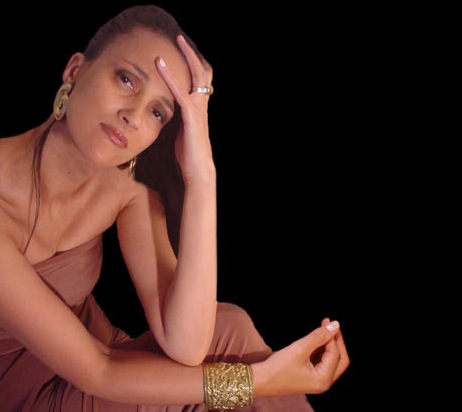
(photo by Janis Wilkins)

Listening to the Wind: Moran/Holland Duo Live Report

Jason Moran / Dave Holland Duo
Barnes Hall, Cornell University
January 28, 2012
8:00 pm

Sometimes a performance can change your life. Equally rare is the performance that brings life to change. To those fortunate enough to be in the intimate confines of Barnes Hall last night, the latter is in tall order. The performers need no introduction (for the curious, my pre-concert report is here), and perhaps they prefer it that way, for when they take to the stage they deflect attention from themselves by first paying deference to one another. Yet even before our rapt attention and respectfully placed woops fill the room, the stage itself has told us all we need to know. Between towers of speakers and amplifying equipment, two instruments: a freshly tuned Steinway and a prone bass. Moran’s chair, which he brings wherever he can, sports clean, modern lines, while Holland’s trim yet deep instrument seems to hold countless histories in its burnished surface. Already there is a conversation happening, as if to confess the music before the artists actualize it.

And actualize it they most certainly do. Rather than kick off the concert with bang, however, they start with a touching homage to the great Sam Rivers, with whom both Moran and Holland had the opportunity to work and whose recent passing was felt deeply by all who knew him. To feel his spirit living on like this is a joy to witness. With the gentle cascade of a frozen waterfall in spring thaw—appropriate for this unseasonably warm winter—the gentle strains of “Beatrice” go straight to the heart, from the heart. Between Moran’s crisp pointillism and Holland’s smooth hibernations, one finds hard-won balance. Each note leaves an aftertaste of affection.

Holland and Moran follow up with an offering apiece. Holland’s paints some of the broadest sonic vistas of the set, twisting his virtuosity into a solved Rubik’s cube. Alongside this powerful chunk of expressiveness, Moran’s “Gummy Moon” reads like a bedtime story (and by no coincidence, for the title reflects his children’s mispronunciation of the classic Goodnight Moon). Beneath Holland’s monotone, the piano man unpacks terse chording into a majestic tale of starlit travel. A breath and a pause, and we’re off to a whole new gig as Duke Ellington’s neglected “Wig Wise” ushers us into the center portion of the show. The duo share a smile and a nod, welcoming us into something as timeless as the thematic material at their fingertips. Moran is a whirlwind of ideas, though both musicians’ flair for ecstatic performance is in full evidence here.

After a ballad so smooth one would swear the house lights dimmed out of sympathy, the unmistakable zigzag of Holland’s classic “Four Winds” further strengthens the Rivers connection. Moran explores some of the more turgid recesses of this well-aged tune, even as Holland stomps his way through a storm of brilliance. As with all the music they play, they take this number not only to new heights, but also to new depths.

Next, Holland provides one of the concert’s highlights in his “Hooveling.” Meant to evoke one’s navigation through a New York City crowd, it twists and turns with a deftness so hip it almost hurts. Moran listens right there with us, enjoying the talents of one who commands at the solo bass like no other, before turning an eye to something bygone, a tender farewell that only presages the second tribute of the night in Paul Motian’s “Once Around the Park.” As Holland lovingly explains before they play, Motian frequented the jogging path around the reservoir at Central Park. It was during one such running session that the tune came to him. And indeed, we can feel the chill city winds passing from the piano through the bass’s arboreal footwork. A fitting tribute to a human being of profound melodic insight.

Before the duo close with improvisations on a familiar Thelonious Monk theme, they lay the nostalgia on thick with “Twelve,” a tune once taught to Moran by his teacher Jaki Byard. The result is a veritable train ride through a landscape of nodding heads.

With these two, jazz isn’t just an art form. It’s a warm hearth in the cold. Moran is a hopeful player, always looking ahead to whatever light may be on the horizon. His right hand is a water strider of expression that widens its purview at every turn. Now a chromatic jester, now a paternal force, it engages the left with insistence and verve. Holland, too, strikes a happy medium between wildness and diction. In spite of his ever-wandering fingers, he is nothing if not selective. He chooses his lows carefully, as does Moran his highs, and each of his harmonics feels like a drop of innocence in a conflicted world. He can bring that wincing twang to bear with the best of them, but more often wants to talk with us rather than at us. Both Moran and Holland make every repetition novel and exciting. Like souls lost in the beauty of a memory that threatens to fade in a harsher present, they seek to record everything they see—not for posterity, but for the invaluable ardor of the moment.

If you were unable to get a ticket, or simply found out about this special performance too late, fear not, for you needn’t have been there to feel its effects. Those energies are still out there, running rampant like a Rivers soprano line, if not slinking stealthily like a Motian brushstroke, into the most hidden recesses of our consciousness. Just listen, and you might hear them in the wind.

Cold Suns and Warm Moons: The Music of Yelena Eckemoff

“Scenic” is the word that comes foremost to my mind when basking in the music of Yelena Eckemoff. Not only in the sense of being rural and picturesque, but also in the filmic sense, as if each album were a scene from an evolving motion picture. Snapshots of memory, flickers of time, and points of reflection: these are the nourishments on which Eckemoff’s sonic activities thrive. The Moscow-born, U.S.-based musician, composer, artist, and teacher brings her experiences of (re)location to bear upon each new project, and draws upon a deep spiritual awareness to give weight to the painterly melodies therein. Simultaneously, her music has an uncanny ability to manifest itself through feelings in lieu of images, conjuring instead a state of listening rather than a type of listening. With this in mind, I have set out to evoke four recent albums—of which Eckemoff has composed and produced every moment—and braid these reflections with an interview in which she was gracious enough to participate via e-mail. In the interest of starting our discussion, I begin with a rudimentary question…

Tyran Grillo: What role does music play in your life?

Yelena Eckemoff: Music has been a vital part of my whole existence since the first day of my life, as I was a daughter of a wonderful pianist—my dear mother Olga. My head has always been filled with music, and I started to play by ear and make up little tunes at the age of four, and then years of extensive professional training with some of the best teachers in the world, followed by decades of personal growth and never-ending evolution as a musician. I’ve been living and breathing music…this is pretty much all I care about, not counting of course my family.


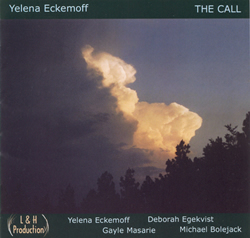
The Call
(2006)

The genesis of this album came with the unexpected passing of Eckemoff’s dog, Daisy, in October of 2004. The titular call was first a heartfelt reaction to this loss, sprung naturally from the realization that Daisy would never again answer it. Yet through the improvisations that emerged in the coming year, lovingly transcribed and rendered in the company of a few committed musicians, Eckemoff found another calling, knowing that the absence left behind by a loved one can always be filled with creation. This recording followed an exclusive period of solo work, and the addition of Gayle Masarie on cello, Deborah Egekvist on flutes, and Michael Bolejack on drums represents an embrace of togetherness that the mourning process had perhaps previously obscured.

TG: Now that five years separates you from The Call, can you reflect further on its title and on the period of loss that nurtured its coming into being?

YE: The Call was my first CD that I recorded with live musicians. Before that I was doing solo piano recitals and working with the synthesizer and sequencer, while raising my children and trying to make it with my husband in our new country. But in the end of 2005 I felt “the call” to go back to interacting with live musicians and found several local ones with whom I started my own band. I was so excited and encouraged with the new perspectives that my creativity peaked, and I composed a lot of new music for my new ensemble.

After the piano’s light opening touch, the grand thematic statement that soon takes shape is its own call, one that speaks to each listener in different ways. To these ears, it is a prompt to act upon one’s desires for fulfillment, an urging toward spiritual purpose, a shift beyond the blindness of temptation. The piece ends in a sprinkle of raindrops, resting at the edge of darkness.

TG: The combination of instruments is delightful, the flute adding an obvious touch of breath to the sonic palette. One hears this especially in “Daisy,” which so beautifully conveys your beloved pet. What made you decide to introduce a flute into the mix? 

YE: In the past I’ve written a lot of music for various instruments, and I have always been motivated by the prospect of my music being performed, so I gladly wrote for any instrumentalists who I had available at the moment. When I work with a certain musician, I try to adjust my music to his or her performing style to achieve the best musical outcome.

Whimsy abounds in The Call. In everything from the titles to the arrangements, there is revelry to be experienced in both the playing and listening; that in the simple gift of music-making, one can gift not only melody, but also memories. Much of this comes through in shorter pieces like “Strolling Towards Sunset,” “Sushi Dinner” (a tongue-in-cheek ode to the atmospherics of ingestion), and “Questions.” These tracks are a light jazz blend, contrasting vividly with the somber “Ripples on Water,” and are a testament to Yelena’s eclectic fluency.

Others like “Sunny Day in the Woods” (in which the flute glistens against the circular motions of the piano),  “Suspicions” (which includes a lovely cello solo against a Satie-like lattice), and “Garden in May” (one of the album’s finest) leave us in little doubt as to their associations. In this sense they are quite photographic.

TG: Do you approach your music and images in a particularly scenic way, or do you perhaps approach the images through the music?

YE: Any strong impressions and especially feelings result in music being born inside me. I never try to come up with melodies—they just flow out of me constantly…often even at night. In the morning I write them down and sort them later…or forget about them.

Like the symphony of windy hands that rake the “Ocean of Pine,” the album moves in circuitous progressions. From the cinematic (“Temptation”) to the wistful (“Windy Day in the Countryside”), we are treated to a feast of time and possibilities. And as the title of “My Cozy Bed” implies, Eckemoff is interested in the simpler pleasures in life, uncluttered by unnecessary intellectual trappings and bound instead to a direct moral compass. This track also gets up to some jazzier business, anchored by heavy double stops in the cello. Masarie stands out again in “Full Moon,” a revolving door of pizzicato and sustained notes. Eckemoff and company save the best for last with “Imaginary Lake,” capping off an 18-track album that is sure to please many with its variety.

TG: In the liner notes for The Call, drummer Michael Bolejack lists his favorite musicians: Peter Erskine, Jack DeJohnette, Paul Motian, Bobo Stenson, John Taylor, and Keith Jarrett. These peak my interest, of course, for having recorded extensively for ECM. How, if at all, has the music of ECM influenced your own work? Does it comprise any portion of your listening life?

YE: I am ashamed to admit that I did not even know about the very existence of ECM until Michael Bolejack introduced me to the label and its production in the course of 2006. I was happy to realize that there are other musicians out there whose approach to modern music is somewhat similar to mine, and it gave me this feeling of unity with other musicians, which I was happy about.


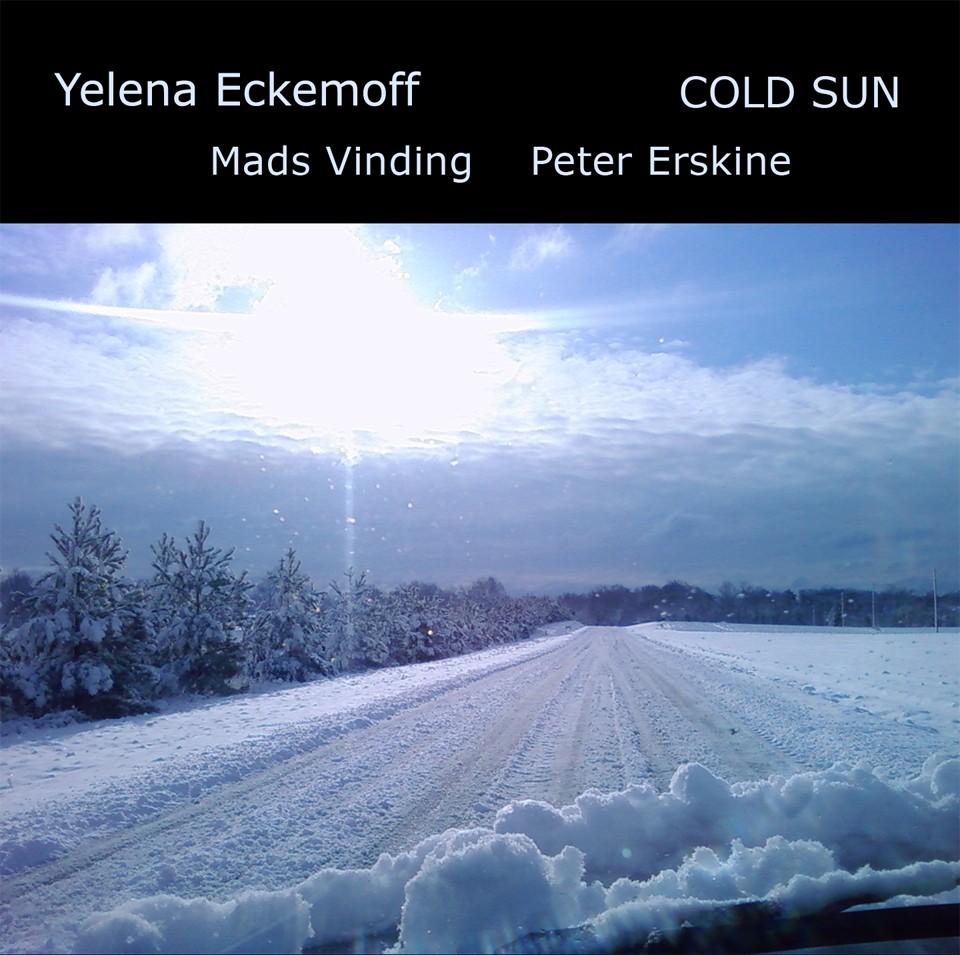
Cold Sun
(2009)

This album represents the most fruitful shift in Eckemoff’s career by joining her with bassist Mads Vinding and drummer Peter Erskine. Her relationship with the latter is particularly striking and achieves a clearly discernible balance of distance and intimacy throughout. Erskine’s profoundly subtle craft—sharing peerage with Jon Christensen especially in the use of cymbals—ever so delicately paints in those gaps that the piano leaves untouched in its abyss. His gestures swirl like snowdrifts, each the afterthought of something internally more dramatic. These wintry nuances crystallize in sonic postcards such as “Scents of Christmas,” “Romance by the Fireplace,” and “Freezing Point.”

TG: Cold Sun comes across to me as a distinctly airy album. Its feet touch the ground only occasionally, as in the gnarled groove of “Stubborn,” making for a, dare I say, mysterious experience. Did this album develop any differently than the rest?

YE: There was The Call as a starter. Then my group gained a double-bassist and an oboe/saxophone player, and we rehearsed actively as a band, played gigs, and performed many new compositions that actually did not get incorporated into any of the CDs yet. Then there was Advocate of Love (2008)—a mostly trio album, reflecting a somewhat jazzier feel. The Cold Sun material was formed out of my 4-year experience working actively with my ensemble. The material of this winter album required a more improvisatory approach. And I reached out to the musicians who I thought would work best for that project.

Other tracks are more abstract and prompt us into deeper listening. “Silence,” for example, is not a literal description but more an evocation of state and mind. Like fingers running through hair, Eckemoff’s notes comb the ether. “White Magic” is a subdued evocation, which blends effectively into the touching dissonances of “Snow Bliss.” Yet it is in the throes of “Winter” that we at last encounter the synthesis of the album’s many threads. Brimming with glorious leaps and bounds, as well as more subterranean reflections, it brings us delicate closure to a moody and free-flowing album that is sure to please fans of Tord Gustavsen and Marcin Wasilewski.

TG: The piano trio is clearly a comfortable format for you. What is it about the combination that appeals to you and how does it enliven your expressivity?

YE: I suspect the piano trio will always be my favorite format, because I am a skilled pianist and the piano has always been a dominating expressive source for me. However, I do like the variety of the sounds, and I get many ideas that call for different sets of instruments (that I hope to see through in the future). But the intimacy and perfect balance of timbres in the trio is the most comfortable setup that surely has my first love.


Grass Catching the Wind
(2010)

As the unnamed sequel to Cold Sun, Grass Catching the Wind picks up where the former left off with “Anticipation of Spring.” Its shaded bass solo, courtesy of Vinding, sets the tone for the album’s crepuscular seepage. Nocturnal gestures unfurl in “Night of the Fireflies & Crickets” and the masterful “Neverland,” while “Summer Heat,” “Harvest,” and “Sonnet for the Flowers” flap like laundry hanging in an afternoon breeze, intermittently revealing the vast countryside behind.

TG: You seem to be overflowing with musical ideas. What is your creative wellspring? What inspires you?

YE: Musical ideas and melodies constantly bubble up and accumulate inside me. Making music for me is the way to live and to cope with my life’s ups and downs. If I can’t express myself in music, I virtually suffocate. I hear music everywhere, especially in nature, but my feelings and emotions are still the greatest source of my inspiration and stimulant for my creativity.

We also find ourselves in the more upbeat stylings of drummer Morten Lund in “Somebody Likes Jogging,” “Rain Streams,” and “Emerald World,” the latter being the grooviest leg on this tour and the album’s crowning highlight. The distinctive bass line in the title track also pulls us forward in fluid motion, fanned along by card-deck riffles from snare. And where “Overcast” engages shadowy figures in a puppet show of opaque emotions, “Beautiful Destruction” actually bonds them with light. This is music unveiled to reveal a softly beating heart, where memory is the only present.

TG: I hear so many memories in your pieces, as if each were an autobiography in miniature, the reflection of a time and place long past but ever alive in your heart. How much of you resides in this music?

YE: My music is me, no question about it. If you listen to my music, you get to know me better than you would through talking or anything else. My soul is completely bare in what you hear! I never try to show off or please the listener. My only aspiration is to express my thoughts and feelings as accurately as only I can. I can’t resist this overwhelming desire—to pour out my soul in sounds and reach out to the people who would like to feel the same vibes.


Flying Steps
(2010)

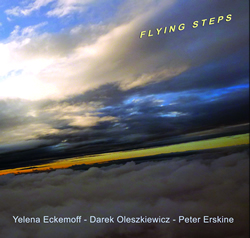
Eckemoff’s latest trio album marks the return of Erskine into the fold, and with it the inaugural “Promise,” a languid journey through innocence into resignation and back again, with an isolated rest stop or two along the way. Darek Oleszkiewicz takes the helm at bass this time around, completing a trio of superb insight. His dexterity brings a gentle urge to the foreground and gilds Erskine’s already filigreed approach.

Here is an album that works particularly vividly in images. “A Smile” seems to paint itself one tooth at a time, opening the pathways of its own emotional distance, while “Good Morning” scintillates like sunlight on a kitchen table, glinting off coffee cups, illuminating a newspaper, shimmering outside the window—and all of it threaded by Erskine’s delicate rolls.

TG: You clearly share a deep musical connection with Erskine. You even dedicate the inviting title track of Flying Steps to him. How did that partnership come about and how do you feel it has changed the way you play, listen, and perform?

YE: As I mentioned before, I was searching for like-minded musicians who I thought would feel at ease with my music. Peter was on my mind for a long time, because as far as I could tell listening to his playing, I felt that we would likely have many things in common. This proved to be completely true when we met and played together—a complete mutual understanding! Of course, Peter is a genius, and surely all musicians would feel great having him on board. And I was flattered at how respectfully Peter treated my music, and it made me so happy that he really liked it and that he enjoyed working with me. Working with him was a fabulous and joyful experience. Everything comes easy and naturally to Peter, and making a record with him was a truly exciting journey.

“For Harry” is a dance of piano and cymbals, all threaded by Oleszkiewicz’s invisible stitching. A memorable color shift occurs when Erskine lays down rims over Eckemoff’s light-as-a-feather touch. “Isolated” seems to represent the album’s theme. There is something expository in its activity, finding profundity in the everyday.

TG: Following up on the question of memory, there is an unmistakable note of nostalgia in all of your music that is only intensified with each new listen. In what ways does the past influence the immediacy of your musical creation?

YE: Nostalgia…everybody feels it toward childhood, their younger years, lost friends and family members, beloved pets and places… In my case it got even more complicated by my immigration and living so far from my homeland… A lot of pain is hidden inside the souls of many people. And it only grows stronger when you age and experience new losses… But not only losses. I am also feeling nostalgic toward many happy memories and events. It is said that passionate love of all kinds is painful: how true!

“Isolated” also clues us in on the enigma of the album’s cover. Though isolated insofar as it is elevated above all social and civil signs, as such it is also connected to the vastness of the great beyond. In this liminal space one finds the aptitude of solitude.

“Where is Maxim?” forms a trilogy of sorts with “Tears Will Come” and “Insomnia,” for each evokes weighted emotions with equal lightness. For me, more overtly personal tracks like these reach deepest. Take, for example, “Mama,” which is a brilliant and sublime confluence of time, space, and technique that seems to constitute the very heart of what Eckemoff is capable of at her best. Oleszkiewicz shines again in “Steps,” especially in his captivating solo. We end with “Tomorrow,” a soft exercise in humility and the unpredictability of circumstance.

TG: Where do you see your music, and your life, going next?

YE: While new music keeps piling up, I have quite a few projects on hold, including a vast work with Old King James Biblical Psalms. At the moment I am getting ready to release a new CD, Forget-Me-Not, which I have just recorded with Marilyn Mazur and Mats Eilertsen this August in Copenhagen. And now I am truly looking forward to a couple of very exciting projects (in planning) for the next year: I cannot disclose the details yet, but it is shaping out to be the next important step in my musical journey.

To learn more about Yelena Eckemoff and purchase CDs, please visit her website.

From Two Hands to Ten: A Review/Interview with Leon Fleisher

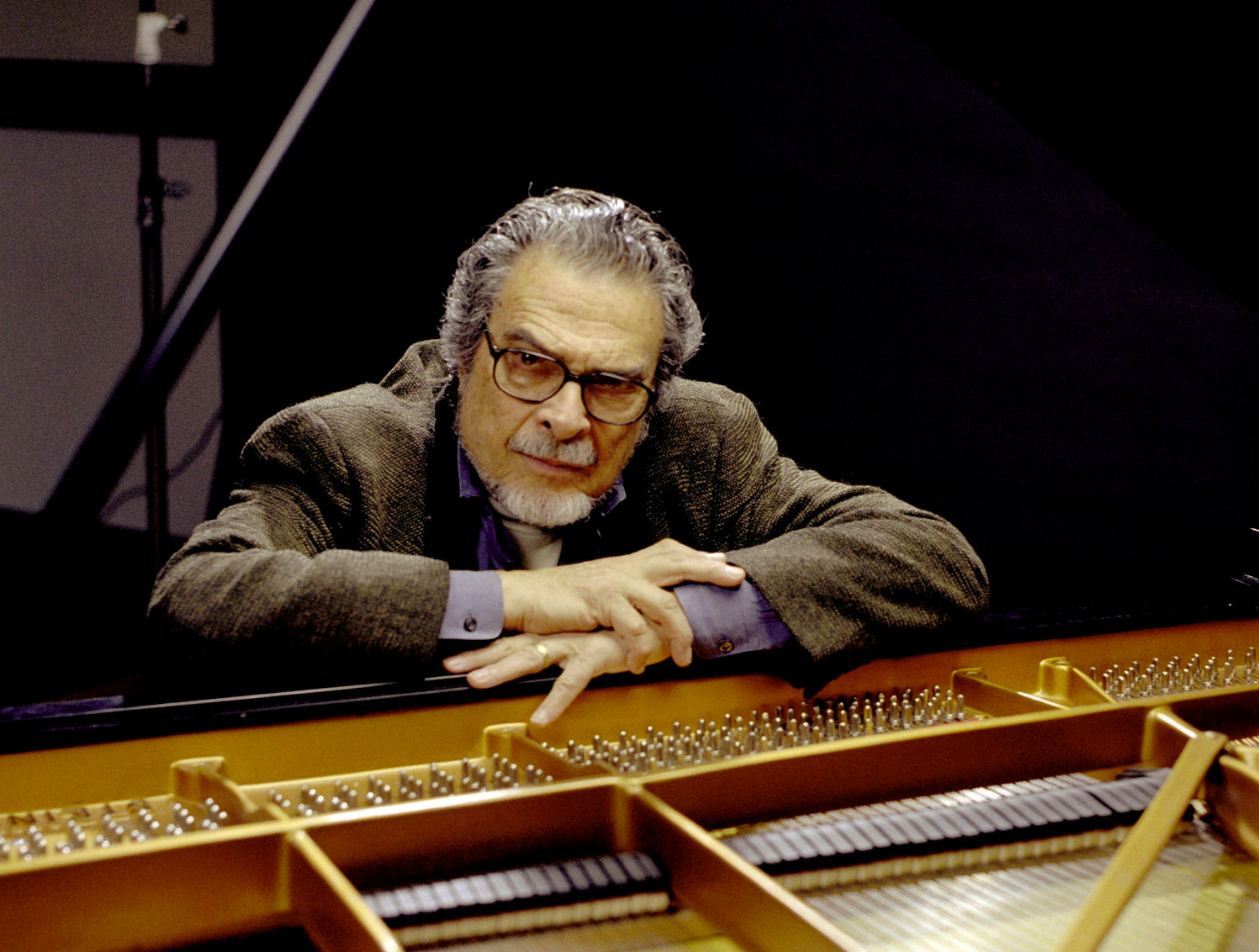
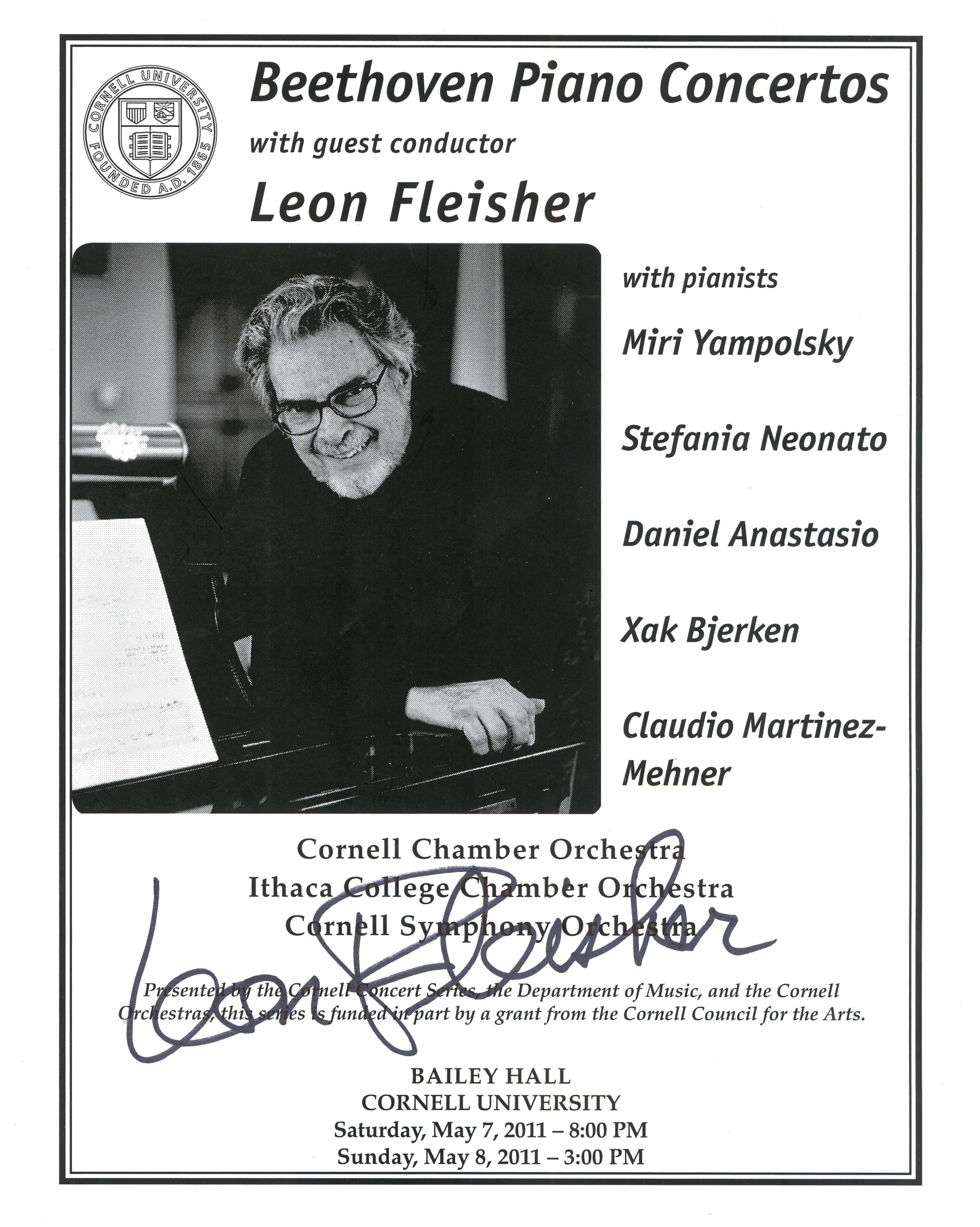
Below is my review of two recent concerts led by Leon Fleisher under the title of the “Beethoven Concerto Project” at Cornell University’s Bailey Hall, May 7/8, 2011. The full interview excerpted therein follows.

Leon Fleisher comes from a line of piano students extending directly back to Ludwig van Beethoven (1770-1827). Who better, then, than he to bring all five of the legendary composer’s piano concertos to the stage for a two-concert series? Fleisher is a legend in his own right, though one might never have suspected as much from the gracious humility with which he welcomed me to interview him last Thursday. In his speech I sensed a journey contoured with valleys and peaks in equal measure. At the highest of the latter, an illustrious career was suddenly halted when he was diagnosed with a neurological condition known as focal dystonia. This manifested itself in his right hand, two fingers of which curled under of their own accord. This might have undone him, were it not for an indomitable spirit and his prevailing love for the music that uplifted it.

Amid the storm of post-WWII pianists, many of whom were predisposed to strident showpieces, Fleisher had been quietly scrimshawing a more delicate niche into the yielding bones of the Austro-German canon. Very much a product of his teachers and their interests, as he will be the first to admit, Fleisher had settled into this repertoire without question, only to see it fade from his fingertips. One consolation: an altogether engaging body of work for the left hand paved the way for his reprisal on the classical stage. It was then that he began teaching, as well as conducting some of the world’s most prestigious orchestras. One unforeseen result of his activities at the podium was carpal tunnel syndrome, the corrective operation for which miraculously relieved his dystonic symptoms enough so that, with a measured combination of botox and Rolfing therapy, he has been able to play with two hands for the last fifteen years. Although he will never regain 100% functionality, his virtuosity and sensitivity have grown into something else entirely.

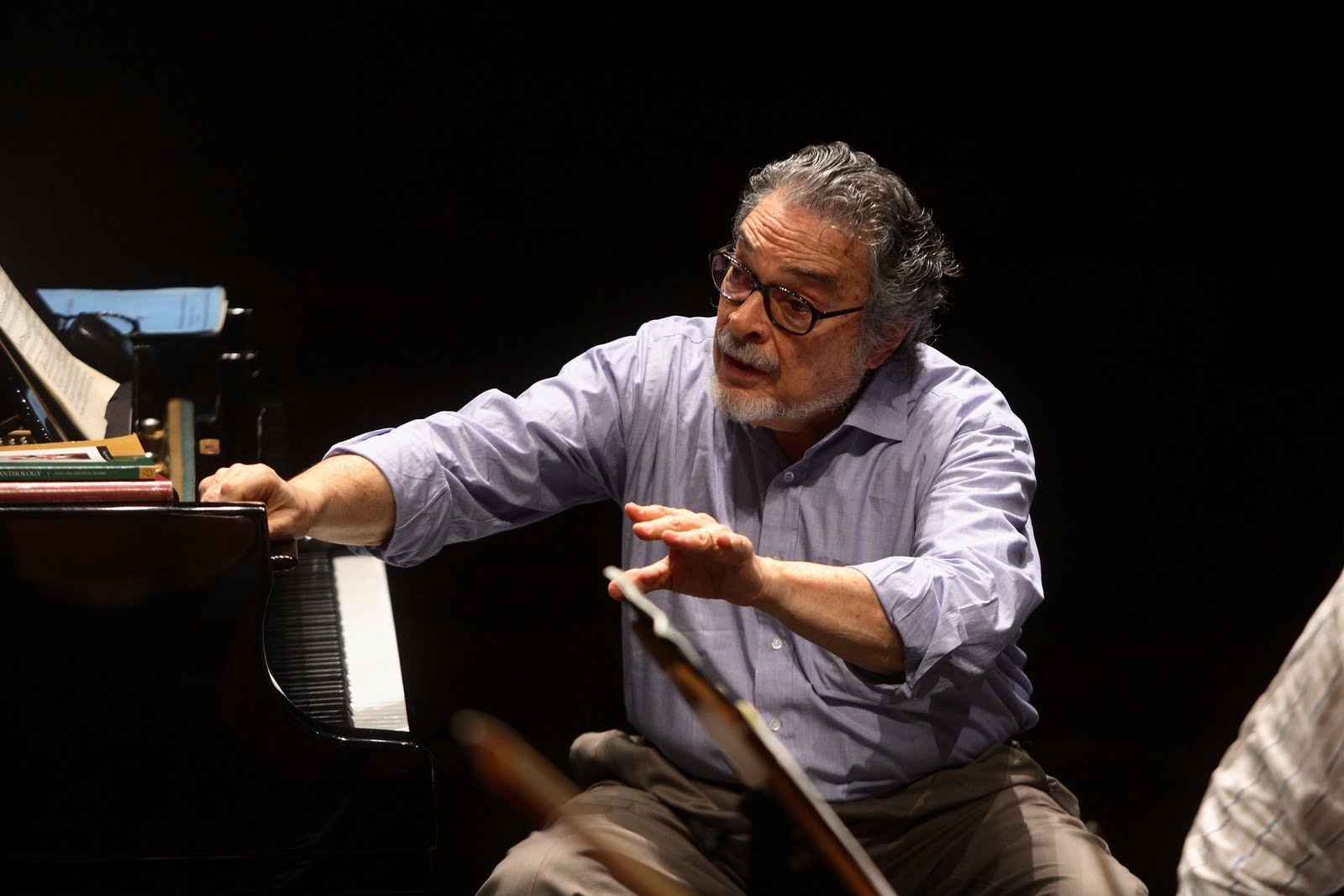
At a tender 82 years, Fleisher exudes a healthy balance of experience and resigned honesty. Refreshingly uninterested in the frills that so often creep into contemporary performance practice, he is more concerned with uncovering the music as it might have been, as it is now, as it may ever be. Not to be confused with an idealist, he is one who enjoys the proverbial moment, which remains the ultimate validation of all the practice and discipline that go into any performance. There is a peacefulness in Fleisher that one feels in his very presence, in his careful steps onto the stage, in the way he sits rather than stands, placing himself at a more familiar level with the orchestra before him, before us. His tempi are respectful, comforting, and never jarring, and his pianistic understanding of the music shines through with every swing of his hands.

(Photo by Susana Neves)

During our conversation, I asked Fleisher to share his thoughts about Beethoven, a composer with unfathomable staying power. “The remarkable thing,” he told me, “about Beethoven, I think, is the rate at which he overcomes the detritus, the residue of…bad performances. His success rate is extremely high. In other words, you can really play Beethoven quite badly, and still something very powerful will come through.” With this in mind, it only made sense that each concerto be presented to us by a different soloist. Not only did this allow the audience to hear more clearly the distinctions between the concertos, but also those between the performers, each of whom brought an idiosyncratic flair to bear upon the material at hand.

Miri Yampolsky, Fleisher’s former student, offered the most well-rounded balance of stylistic grace and sense of musical grammar in her rendition of the Piano Concerto No. 1 in C major, her buoyancy in the right hand foiled tastefully by a weighty anchorage in the left. Xak Bjerken—another former student and Yampolsky’s husband—brought his own unique grace to the keyboard, which lent itself beautifully to the Piano Concerto No. 4 in G major. By far the most enigmatic of the set, this concerto, as Fleisher informed me, was once known among musicians as the “ladies’ concerto,” a tidbit of archival derision that has thankfully lost its currency. Fleisher himself prefers to see the Fourth as a middle-period dip for Beethoven into cosmological waters, a sonic foretaste of the metaphysicality that so pervades his final symphonies. Of all the players, Bjerken was most attentive to the baton, and one could feel his respect for the one holding it in every note he played. Italian-born Stefania Neonato had a fluid sense of timing of her own for the Piano Concerto No. 2 in B-flat major, heard most clearly in her trills and constantly running fingers. Not to be outdone was Spanish virtuoso Claudio Martinez-Mehner, yet another former student of Fleisher’s who filled the hall with palpable revelry in his rendition of the Piano Concerto No. 5 in E-flat. Also known as the “Emperor Concerto,” it more than lived up to this apocryphal nickname through the gallant expressivity that pervaded its realization at every turn. Yet by far the highlight to everyone’s ears, if the full-house standing ovation were any indication, was rising star Daniel Anastasio, a Cornell senior and student of Bjerken’s, who brought his finesse and prodigious talent to the stage for the Piano Concerto No. 3 in C minor. So propulsive was his enthusiasm that it spurred him on prematurely, so that his chordal punctuations in the first movement did not always sync with those of the orchestra. Rather than see this as a detriment, I felt it as a sign of his exuberance. Both he and Bjerken continued the Fleisher lineage with due poignancy.

Readers of my past reviews will be all too familiar with my love/hate relationship with the house Steinway at Bailey Hall, but I am glad to report that the modest settings proved to be a fine sonic fit this time around. Martinez-Mehner in particular elicited more volume than I have ever heard from the selfsame instrument, a kinesis we saw reflected in his unbridled body language. Sometimes the relationship between soloist and orchestra is likened to a conversation. Yet in these concertos, at least, the piano was a conversation in and of itself, and the surroundings overwhelmed not a single word. As far as the three (!) orchestras were concerned, the results were variable. The Cornell players, in both their Chamber- and Symphony-sized incarnations, as Fleisher wittily related in our interview, were under the stress of finals: “They were sitting there playing, looking as dour and depressed as I’ve seen in any group in my life. I was so struck by it that I stopped and I mentioned it to them. I mean, here are young people in their late teens and early twenties, looking like they were all ready for the couch! And then one bass player said one word that explained it all: Finals. Poor kids…that’s not really what I think even the most refined education is all about. There has to be some joy in life. They smiled a bit after that.” As students who must balance primary academic commitments alongside their musical double lives, our Cornellians performed admirably well. And let us not forget the lovely Canzonas by Giovanni Gabrieli (c. 1553/1556-1612), courtesy of the CSO Brass Choir, that bookended Sunday’s concert just outside the hall steps. That being said, the Ithaca College Chamber Orchestra was in a league all its own. Comprised of handpicked music students, it breathed like a single organism through superb tonal colors and communication. Regrettably, they lent their bows and breaths only to Anastasio’s performance, making it all the more electrifying.

“Like an EKG graph” was how my wife described the concerts. With her usual brilliance and fresh ears, she was able to cut through my verbose meanderings with a concise destination. For her, Beethoven is not about climax and resolution, but about the careful placement of clusters along an otherwise constant lifeline. I can only agree: Beethoven’s music doesn’t so much peak as plateau, navigating the nooks and crannies of a landscape that is bigger than all of us. This architecture was also reflected in the showings that preceded both concerts of Nathaniel Khan’s touching 2006 Oscar-nominated short film, Two Hands: The Leon Fleisher Story. In Fleisher’s testimony, we find something of a Beethovenian soul, one unwilling to let infirmity control the potency of its artistic license. As Fleisher so carefreely told me, when I asked about his being here, “It’s just a great adventure to go through with several of my former students. It’s a great delight to be able to come and explore the nature of this material with next generations. Plus, it’s fun, it’s what I do.” In the end, I could only bow to his candor, and by extension to the efforts of everyone who made this weekend possible.

(Photo by Joanne Savio)

Full interview with Mr. Fleisher, conducted by Tyran Grillo on May 5, 2011:

Having only just recently seen the documentary Two Hands for the first time, I am still struck by a comment you made regarding your connection to music itself—that it was perhaps the most important connection of all, something that had sustained you through hardships and ecstasies alike. And so, it is this connection that I would primarily like to discuss with you today. Before we get into that, however, I wish to ask one question in relation to your instrument: Have you come to hear the piano differently between the bench, the podium, and the classroom?

What an interesting question. I think I have to answer that “yes” and “no,” simply because, on the one hand—which would represent the “no,” I think—I hear in my head what I think is, for me, the ideal. In fact, that’s usually…well, I can explain the mechanism as I see it. On the other hand, as I actually listen to what’s being played, I think there is probably a difference between, let’s say, piano, orchestra, and students. I guess the main difference is whatever the medium is, whether it’s chamber music, solo piano, or orchestra. The idea of hearing—or listening, I should say—is an interesting one. The performer is, in fact, three people at the same time: Person A, Person B, and Person C. Person A, before he or she plays, must hear in the inner ear what it is that they’re going for, what their ideal is, so that they have a goal to strive for. If you put a key down without an intention behind it, it’s an accident, which means that the key that follows it is based upon an accident; everything that follows is based upon accident.

That reminds me of an art teacher who used to try to correct me from smudging as a method of shading. He used to say that a smudge is nothing more than a smudge the moment you run your finger across it. It just becomes an incidental mark without intention.

Oh, really? I can’t understand that. The smudge itself might be an intention…. So, that’s Person A. Person B is the one who actually does the playing, and has to be totally aware of how that playing is being manifested, so that if what Person C—who sits somewhat apart, who listens and judges—hears is not what Person A intended, Person C tells Person B, the doer, what to adjust to get closer to that ideal of Person A. And this is a process that goes on simultaneously and continually, all the time.

And, more broadly, do you feel that you changed over time as a listener?

Yeah, oh sure.

And do you think there is one change more than any other that has been deepest for you in your listening habits?

Well, I spent a good third of my life at the piano, which was essentially my instrument of choice, as it were, and most of the second third of my life, or a good part of it, dealing with orchestra, which is a beast of a totally different color. It’s really quite fascinating dealing with an orchestra. The response time on a piano is virtually instantaneous. In an orchestra, you have varying response times. I guess percussion is the most instantaneous, then strings. And you get varying responses out of winds and horns. Brass instruments respond later. And that’s just in terms of timing. Then you have timbre, instrumental differences. The one great advantage of the piano is that you can make it sound like an orchestra, and you can make it sound like the instruments of an orchestra. You can make it sound like a French horn or an oboe, cello…stuff like that. Yeah, it’s fascinating. Being a soloist is a very solitary affair, and therefore is full of what you might call the luxury of time. When you’re in your studio, however long you have to practice before you have to go about the rest of your life, that depends, but usually professional orchestras today rehearse for two and a half hours with a fifteen-minute break. That costs money, and you cannot go one second over time, because they’re paid in fifteen-minute segments. You go five seconds over and you have to pay them for fifteen minutes. So, dealing with an orchestra is, in a sense, more stressful, much more compact. It becomes very much a question, as with a doctor, of diagnosis and prescription. In other words, you have to be able to tell pretty much instantly what it is that’s not working, why this doesn’t sound the way you want it to sound. You have to diagnose the problem, and not with a certain infrequency do you find a conductor who from time to time misdiagnoses, who thinks the problem came from this or that player when in fact it comes from someplace else, and that’s usually when he loses the respect of the orchestra, because he can’t diagnose. And once you’ve made your diagnosis, you have to come up with the answer, with a prescription, to make it work. So, it’s a different kind of process. When you’re a soloist you have that luxury of time, you can try it this way and that way, you can ponder it, you have time.

(Photo by Joanne Savio)

Moving on now to Beethoven, I would like to field your thoughts on the series you are presenting here at Cornell, which is, of course, the Beethoven Concerto Project. Could you share your thoughts on the appeal of the concerto form and how the piano fits into its long history?

Oh, I think it’s very basic, if not primitive. It’s that age-old story of one against the many, and who’s going to trial. The poor, singular soloist…which is often emphasized if the soloist is of the feminine persuasion, making it even more appealing as a dramatic story. And then, happily, in the end everybody triumphs.

Some would say—and here I am thinking specifically of András Schiff—that the music of Beethoven is prone to getting lost under the residue of time and interpretation, and that one must try to “refresh” it, so to speak, with each new performance.

And how? Does he say how? [laughs] Does he pick up a hose and hose it down?

He tries, I think, to look at the score as much on its own terms as possible.

Yeah, I think that’s valid for whatever composer you’re playing. The remarkable thing, though, about Beethoven, I think, is the rate at which he overcomes the detritus, the residue of those bad performances. His success rate is extremely high. In other words, you can really play Beethoven quite badly, and still something very powerful will come through. Most other composers, if you play them badly, just become flat. But Beethoven, for some reason, manages to supersede, to…what’s the word I’m looking for…

Transcend?

…transcend even bad performances. I certainly agree with András, though I think it can be done with every piece of music. A piece of music, in a way, is an interesting kind of process. Because, like most art, in relation to the norm most great art consists to one degree or another of, and I use a very powerful word here, distortion, especially when compared to the norm. In the dimension of time in music, the norm would be, say, a metronome, which is a machine. It has nothing to do with the music. It merely measures the rate of speed. Many people think they have to play with that same regularity. So, in relation to the metronome, often what one does is a distortion. I mean, look at Michelangelo. People don’t have arms like that, you know? Or Giacometti, El Greco. People are not that thin, but certain types look that thin. So, distortion becomes quite important. However, once we’ve made the small distortion, it’s quite probable that after a few weeks we’ve gotten so used to that distortion that the meaningfulness of it has disappeared. So, well, let’s distort just a little bit more. Well, that’s satisfying again. And that lasts for a few weeks until we get very used to that. And so on, and so on. But every now and then, like the fisherman, you have to bring the piece out again and wash it down of all its barnacles, and all its distortions, and start again from scratch.

Going back to the idea of regularity…I’ve often heard people characterize the music of Mozart, for example, as being very regular, and that, in contrast, Beethoven’s shies away from repetition in favor of more free-flowing thematic cells and unexpected returns. Yet clearly, these are far from mere abstractions. What gives traction for you in the concertos specifically? What is their heartbeat, and how might we listen for it?

I always hesitate to give anyone signposts in a piece of music, because invariably it winds up that they just wait for those signposts and miss everything else, and it turns out to be quite a loss, if not a total loss. I don’t particularly subscribe to that thesis of Beethoven and Mozart…

It is, unfortunately, a common one.

Unfortunate, yes, and shares the meaninglessness of most things common.

It seems almost obligatory to characterize Beethoven as a deeply “troubled” and “dramatic” figure. By extension, his music has taken on a mythology of its own. We have, for example, this enduring association between the Andante of the Piano Concerto No. 4 and Orpheus taming the Furies before Hades…

Well, everybody brings to the music what they want to bring to it. I see No. 4 less as Orpheus and its attendant connotations and more as the Prophet talking to the multitude in the desert.

So when you have these personal images attached to the music, do you ever keep them in mind while playing or conducting, or are they just afterthoughts?

They’re usually afterthoughts. They give color. I think people really have to use whatever best serves them and best serves the music as seen through their eyes and as heard through their ears. In other words, it’s really quite pragmatic: whatever works. You don’t necessarily have to talk about it. You know, everybody has their way of, I think the phrase today is, “getting in the zone.”

Do you find any humor in these concertos?

Oh, they’re filled with it!

And how does it make you feel to engage with that humor, and do you try to bring it out?

I must say, I’ve been now at two rehearsals with various groups here, two groups so far, and I am going to meet today yet a third group. I was so struck last night at my second rehearsal, and I realized it was the same thing that struck me at the first rehearsal. It seemed to me that these young people were totally devoid of any humor. They were sitting there playing, looking as dour and depressed as I’ve seen in any group in my life. I was so struck by it that I stopped and I mentioned it to them. I mean, here are young people in their late teens and early twenties, looking like they were all ready for the couch! And then one bass player said one word that explained it all: “Finals.” Poor kids…that’s not really what I think even the most refined education is all about. There has to be some joy in life. They smiled a bit after that. And I think maybe by Saturday finals are over, so I look forward to some lighter spirit. No, this stuff is full of humor, and Beethoven’s humor is sometimes more on the rude side than most composers, though Mozart certainly has his share. You know, he has those famous scatological canons. The things we prudes of today scoff at were, back in Mozart’s time, just part of the regular scene.

I wanted to talk to you a little more about how music is received and how the fame of a composer might come into play in audience response. Take, for example, the Adagio of No. 5, which has been divorced as one of the finest passages in the set, if not in all of classical music. How do you approach these heartrending turns, so often plucked as sonic emblems? Do you treat them any differently, or do you prefer to see them as part of a larger whole and simply deal with them as they come?

The only extracurricular meaning that the second movement of the Fifth Concerto holds for me is that it was chosen by Lenny [Bernstein], for, uh…

“Somewhere”?

Yeah. [sings] “There’s a place for us…” He thought it was such a good tune that he used it for West Side Story. Stravinsky said: good composers borrow, and great composers steal. One might remark upon it in passing, but it certainly has no contributory virtues.

Now, these concertos are, of course, riddled with difficulties: the cadenza in the No. 3 Allegro, the pedaling in the Largo of No. 3…

That pedaling shows up everywhere, in virtually all the concertos. And the important part of it is the extent to which Beethoven’s indication is misunderstood, because he writes for the piano using the same term that is used for stringed instruments. It’s a totally different mechanism as manifested on the piano, and the effect is quite different. He writes senza sordino and con sordino, which on a string instrument is the extra little bridge you put on top of a normal bridge, the sordine, which mutes it to a certain extent. But the sordine on the piano is the damper, that bit of the mechanism made of felt that rests on the string that prevents it from reverberating. So when he writes senza sordino for the piano, it means lift those dampers so that the string can vibrate, can resonate as a result of being hit by a hammer, and the only way you can raise those dampers is to put the right pedal down. People cannot conceive that in Beethoven’s time he would want the resultant mix of harmony, which really belongs to impressionist music, which comes much, much later. But they don’t realize that on these pianos today you get much more reverberation from using the right pedal than you did in Beethoven’s time, so if you want to approximate the sound that he seems to be asking for when he writes senza sordino, you can get it by just using a fraction of the pedal, not putting it down all the way but just barely depressing it so that the dampers lift just the wee bit off the string, and you get this kind of hazy recollection, remembrance of things past, in this sound that he was obviously going for.

Beyond the written score, do you feel there are any particular challenges that await the would-be Beethoven performer?

The concertos certainly do not span Beethoven’s life’s output the way that, say, the sonatas do. They stop at opus 73, and his works go up to something like 135. So the first two are really youthful. Actually, what we call the Second Concerto, the B-flat, is really the first. He wrote it before he wrote the C major. It was just published after the C major was published. The other three are middle period pieces of quite different characters. Yes, in a sense the Fourth, which was for a long time called the “ladies’ concerto” because it wasn’t as outgoing, as…what’s the opposite of introspective?

Extroverted?

Extroverted, thank you. The Fourth being more introspective, in a sense dealing with the transcendental, dealing with the sublime. Those are challenges that you find in all of Beethoven, that he likes to delve into the cosmos, which evokes the wrong picture. He likes to explore the universe. His music really becomes quite metaphysical. He is interested in those great questions of how we relate to the world around us, how are we like a brook, how are we like the leaf on a tree. French music is more concerned with the sensory, with the senses—with sense of smell, touch, taste, sight as seen through squinted eyes. Russian music is a much more subjective kind of breast-beating: look how I suffer…

More embodied, perhaps?

Yeah. But German music, as demonstrated by Beethoven, really is metaphysical. It raises those existential questions.

So, you mentioned that the Fourth was once known as the “ladies’ concerto,” which reminds me of the research I am conducting now on the differences in audience expectations toward female and male classical pianists, and I wonder what gender stereotypes you see still lingering on the stage in that regard.

I think we’re getting, thank God, over those to a great extent. I should even stop talking about the fact there was a period of history when the G major was known as the “ladies’ concerto.” It injects something that has no role, no place. Some of our female performers are just…someone like Martha Argerich is just a force of nature. It just blows everyone and everything away when she makes music.

And I’m sure that anyone just listening to her play on a recording would never think to question her gender. It’s not important.

Oh no, of course not, of course not.

Surely, I am not alone when I express my adoration for your Brahms concertos as reigning favorites in your repertoire. I feel your passion and connection to that music quite viscerally when I listen to or watch it, and I wonder if your relationship with Brahms is particularly different from that with other composers.

I had the incredibly great fortune of working with one of the great masters of the twentieth century, Artur Schnabel, and my love and appreciation for the music that most interested him, which was essentially German music…yeah, I come by that quite legitimately. My bloodlines are Russian, and one of my great early influences was French. I feel I’ve had the best of all worlds, musically.

Is there one mantra, word of wisdom, philosophy, or lesson from your teachers that you still carry with you?

No. I am, to an extraordinary extent, the result of my teachers, and they were filled with nuggets.

What does it mean for you personally to be here at this place, at this time, with these friends and colleagues, presenting this music?

It’s just a great adventure to go through with several of my former students. It’s a great delight to be able to come and explore the nature of this material with next generations. Plus, it’s fun, it’s what I do.

I think I speak for all of us when I express a deeply felt and genuine gratitude for your presence here this week and for bringing what I am sure will be wonderful performances.

Well, I don’t know about that [laughs]. We will have had, in a sense, only minimal rehearsal. It is a bad time of year for the students, being finals time, so I’m not sure if they’ll have their best concentration. But again I think Beethoven, as always. will somehow muddle through.

He will prevail?

[laughs] Yes, he does, he does prevail.