Thomas Strønen/Time Is A Blind Guide: Off Stillness (ECM 2842)

Thomas Strønen/Time Is A Blind Guide
Off Stillness

Thomas Strønen drums
Ayumi Tanaka piano
Håkon Aase violin
Leo Svensson Sander violoncello
Ole Morten Vågen double bass
Recorded December 2021 at Rainbow Studio, Oslo
Engineer: Peer Espen Ursfjord
Mixed July 2024 by Manfred Eicher, Thomas Strønen, and Michael Hinreiner (engineer) at Bavaria Musikstudios, München
Cover: Fidel Sclavo
Album produced by Manfred Eicher
Release date: December 5, 2025

Off Stillness begins not with sound but with a memory, one that Thomas Strønen carries like a stone kept in the pocket of his youth, made rounder and smoother with time. His recollection of slipping unnoticed through a café kitchen in Tønsberg to witness his first jazz concert at age 15 is more than nostalgia; it’s an origin story. There, engulfed in the sounds of Jon Balke’s Oslo 13, was a revelation. Rhythm, he discovered, was not a grid but a worldview, a way for the body to converse with the unseen.

From this quiet prelude, the latest iteration of his band Time Is A Blind Guide opens with “Memories of Paul,” a piece that feels like stepping into the half-light of Rainbow Studio, a space that does not merely record music but seems to cultivate it. Despite the title, this is not a tribute to Motian or Bley so much as a meditation on the tension between lineage and selfhood. Ayumi Tanaka’s piano breathes first, the faint stirring of a creature waking in its natural habitat. Håkon Aase’s violin is a drifting breeze, Leo Svensson Sander’s cello a subterranean hum, and Ole Morten Vågan’s bass a slow-moving tide beneath the surface. Strønen’s drumming is the pulse of the room itself, a presence woven so delicately into the others that extracting any single thread seems almost sacrilegious.

As the album moves inward, the climate changes with “Season.” Here, the strings take on an arid beauty, as if we’ve been transported into a landscape shaped by centuries of shifting winds. The piece proceeds like an archaeological dig through sand and sovereignty, yet from this dryness small harmonies bloom, each a tiny flower of possibility pushing through historical sediment. The music astonishes by how much it conveys with so little, conjuring a vastness that feels earned rather than imposed.

The ensemble’s paradoxical strength, its ability to move loosely while bound by deep listening, emerges even more fully in “Fall.” The piece sways like a great creature with an internal compass that needs no magnetic north. Its journey nourishes itself, leaving behind traces—melodic footprints, rhythmic indentations—for the listener to follow. Time is not measured but wandered through.

The mood softens with “Tuesday,” a piece stripped to its essentials, left bare so its poetic speech can resonate. Whether the musicians play in unison or diverge into their own small eddies, they inhale and exhale as a single lung. It is tenderness as a means of clarity.

A shift occurs in “Cubism,” where architecture abounds. The piece balances on a precarious structure of boards and cylinders, a slow-motion circus act in which each rotation differs subtly from the last. Strønen provides the chemical uplift, one reaction setting off the next. Tanaka’s piano becomes an alkaline counterpoint to the more acidic strings, and together they settle into an equilibrium that feels strangely, beautifully neutral. The music is precise without being rigid, playful without losing its center.

Abstract shapes drift into form with “Dismissed,” which begins like an experiment suspended in midair. Its irregular surfaces soon accumulate heat, expanding into outbursts of collective energy. Metallic tensions shimmer and collapse, highs and lows collide, and the piece finally dissolves into a sonic steam rising from a cooling forge.

Then comes “In Awe of Stillness,” which glistens with a self-generated glow, moving as if guided by impulses as old as they are unnameable. Just when it feels ready to drift away, it recoils slightly, a moment of satoric self-recognition. This pause resets the ensemble for the next step in its nomadic journey. Even as the piece thickens into louder phrases and hints of groove, it never sacrifices atmosphere. Nothing is ornamental; everything breathes.

By the end, one realizes that Off Stillness is as much a pilgrimage as an artistic statement. Its stories do not unfold in straight lines but in spirals, circling back to that teenage boy in Tønsberg who planted a seed that has now grown into a tree in its own right. The music invites repeated listening not to decipher it but to inhabit it, each return revealing new details, like light shifting across the same landscape at different hours.

For all these reasons, it may well be—both in craft and in spirit—the ECM album of the year. There is truly nothing else like it.

John Scofield/Dave Holland: Memories of Home (ECM 2860)

John Scofield
Dave Holland
Memories of Home

John Scofield guitar
Dave Holland double bass
Recorded August 2024 at NRS Recording Studio, Catskill NY
Engineer: Scott Petito
Cover photo: Juan Hitters
Produced by Dave Holland and John Scofield
Release date: November 21, 2025

Guitarist John Scofield and bassist Dave Holland, two musicians with such distinct sonic identities, join forces for a duo album that is as mighty as it is intimate. Despite having crossed paths countless times over the decades, whether onstage with giants like Herbie Hancock and Joe Henderson or in high-octane settings like ScoLoHoFo, Memories of Home marks their first album as a duo.

The idea had lingered for years, even surviving a pandemic-scrapped tour in 2020. When they finally hit the road in late 2021, the chemistry was immediate. By the time they toured again in 2024, making a record felt inevitable. The result mirrors their live sets with its blend of new and revisited originals shaped by decades of shared musical language. Their overlap in taste and technique makes the pairing feel natural, while their differences keep the music alive, alert, and constantly evolving.

A major point of connection, of course, is Miles Davis. Scofield’s mid-80s stint and Holland’s late-60s tenure offer a rare shared lineage, and you hear echoes of that history right away in the opener, “Icons at the Fair.” Built from the chord movement of Herbie Hancock’s version of “Scarborough Fair” (a session both musicians played on), the tune’s wistful intro quickly settles into a buoyant groove. Scofield’s rounded tone is an elegant vehicle for his improvisational flights, and the two musicians trade roles like seasoned copilots, each taking the lead before easing back into support. Holland’s solo radiates that trademark close-eyed smile, matching Scofield’s buoyancy beat for beat.

Scofield revisits several of his own classics here, each transformed by the duo format. “Meant to Be” adopts a darker hue than its earlier incarnations, its fluid changes and easy-living feel revealing two players fully at ease with themselves and each other. Holland pulls his solo seamlessly from the texture, almost as if it had been hiding there the whole time. Later, “Mine Are Blues” brings their full energies to the forefront. The drive is infectious, with the pair finishing each other’s phrases in a display of rhythmic and melodic telepathy. Scofield’s crunchy, tactile tone is on point. “Memorette,” swankier and more rhythmically playful, finds a lovely twang in the guitar and Holland sounding lush and resonant beneath it all.

Holland contributes several reimagined pieces from earlier in his career. “Mr. B,” his tribute to Ray Brown, brings out a delicate, cerebral side of Scofield, who responds to Holland’s writing with gorgeous restraint and curiosity. “Not for Nothin’,” first heard on Holland’s 2001 quintet album of the same name, reveals new secrets when reduced to its essentials. Here, the tune becomes lightning in a bottle—lean, open, and unexpectedly adventurous. Scofield seems newly inspired by the stripped-down setting, exploring bolder shapes and touches of abstraction.

The guitarist’s ballad “Easy for You” emerges as a quiet triumph that carries a gentle energy and a deep love for life. At over eight minutes, it gives both players space to breathe, to stretch, and to enjoy the subtleties of their wholesome interplay.

The album closes with two Holland compositions. “You I Love” is a vivacious romp, brimming with delight, while the contemplative, pastoral mood of the title track draws out the earthy, country-tinged side of Scofield’s playing. Like ending credits to a Western, it rides off slowly, tracing the silhouette of a hero dissolving into sunset. It’s both a musical farewell and a gentle summation of everything the duo shares.

Mal Waldron: Free At Last (Vinyl Reissue)

“I feel if you look back too much,
you trip when you take a step forward.”
–Mal Waldron

Although Mal Waldron began his career in jazz as an alto saxophonist, playing in the long, tapering shadow of Charlie Parker, fate would soon guide him back to the keyboard. The piano was, for him, not just an instrument but a resonant vessel sailing in the tempests and calms of his cross-hatched personality. His classical training gave him a compass; his improvisational instincts supplied the wind. A prolific writer of tunes—angular yet melodic, pensive yet full of forward motion—he became an indispensable sideman to the luminaries of his era, including John Coltrane, Art Farmer, Jackie McLean, and, above all, Billie Holiday, with whom he shared a natural rapport. Their collaborations seemed to hover between worlds—her voice the smoke, his chords the fire.

But every light casts its own darkness. Waldron’s journey was interrupted by a nervous breakdown that landed him in the hospital. And then, at his seeming lowest point, when he was invited to Paris to score a film. It was more than a job; it was a turning point, a new way of listening. Each city he touched thereafter—from Bologna to Cologne and, ultimately, Munich—became another note in the unfolding score of his reinvention. By 1967, he had settled in Munich. Along the way, he crossed paths with Swiss bassist Isla Eckinger and drummer Clarence Becton, another American expatriate whose trajectory brought him across the pond into a music scene unlike any other.

Free At Last, a title that feels both biographical and prophetic, ended up being one of three studio recordings Waldron made with ECM’s founder, Manfred Eicher, the others being The Call (JAPO) and the elusive Spanish Bitch (Victor Japan). In Waldron’s rhythmic restraint, in his careful placement of silence and tone, surely Eicher glimpsed a growing philosophy of sound, one defined not by density but by depth, not by volume but by presence. Waldron’s subsequent decades would see him traversing genres, yet always with the same chiseling intent: to refine expression until it gleamed with truth.

Now, in this two-LP reissue, gloriously packaged in a gatefold sleeve with all the original artwork, plus new liner notes by Steve Lake (from which I’ve distilled much of the information above), we are granted with both the familiar and the newly unearthed. The 1969 session unfolds again like a memory recalled in sharper resolution, joined by alternate studio takes on sides III and IV. The all-Waldron set list remains startlingly modern. From the very first shimmer of Becton’s cymbals on “Rats Now” to the closing sparkle of “Boo,” Eicher’s curation of space and clarity is already very much alive. Listening to it in 2025 feels less like revisiting an old field and more like standing again in its soil, still fragrant, still fertile, still yielding. To reap this harvest after more than half a century is to marvel at how sound, once released, can resist decay.

As noted in my first-impressions review, the trio’s momentum is undeniable in “1-3-234” and “Rock My Soul.” Both skip across a sunlit surface like stones whipped by practiced hands. Yet it is in the quieter pieces that Waldron reveals his most robust intentions. Whether mixing shadow and sparkle in “Balladina” or masterfully blending poetry and prose in “Willow Weep For Me,” he makes us acutely aware that emotions are points of departure, not destinations. Eckinger’s bass hums with empathy, Becton’s drumming reacts in real time like reflected light, and together they guide the listener on a journey worth savoring.

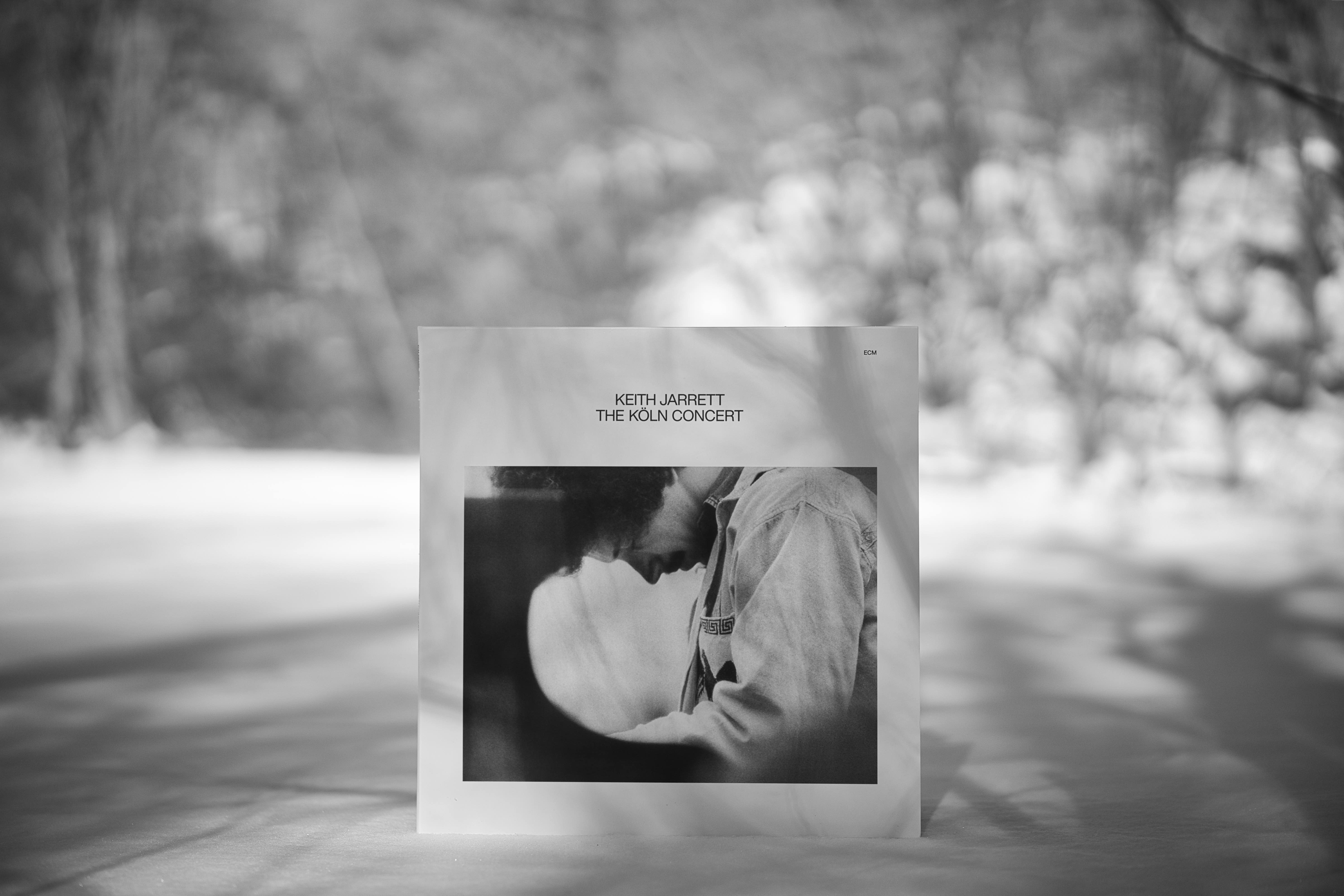
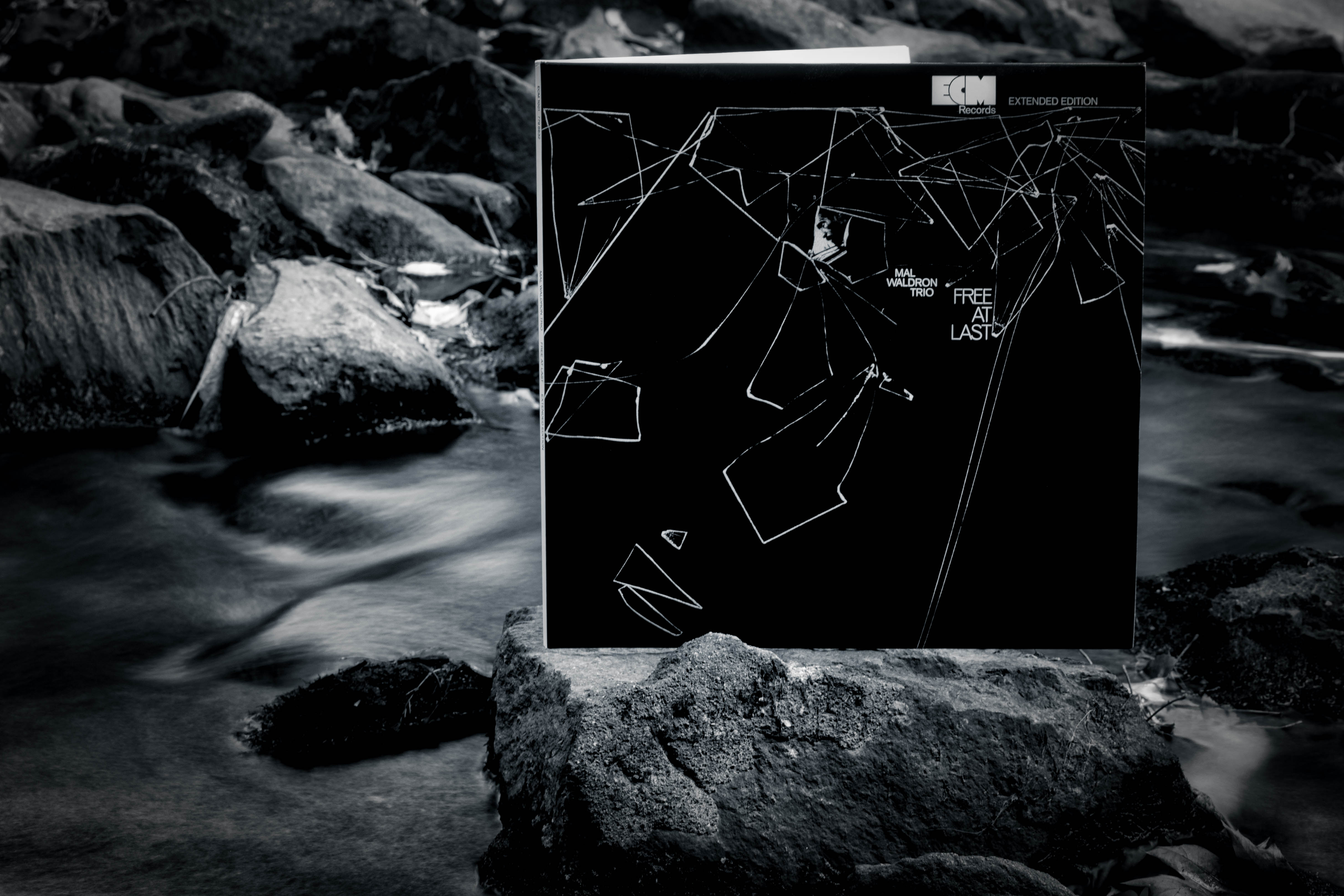
Among the newly released takes, the extended “Willow” is especially revealing. Each gesture seems to weigh more, to linger longer. One senses them circling not around a song but around a feeling, its perimeter undefined, its center perpetually receding. As in the photograph of the LP I took above, their coming together stands as a testament to the power of a vision that, even as the tide of history swirls and churns around it, remains true to itself to this day.

Steve Tibbetts: Close (ECM 2858)

Steve Tibbetts
Close

Steve Tibbetts guitar, percussion, piano
Marc Anderson percussion, gongs, handpan, loops
JT Bates drums
Recorded 2021-2024 in St. Paul by Steve Tibbetts
Drums recorded at 8vb Studio, Minneapolis by JT Bates
Mastered by Greg Reierson at Rare Form Mastering
Cover photo: Joel and Norris Tibbetts
An ECM Production
Release date: October 24, 2025

“Music is a twilight language.
The job is to translate some shadow into sound.”
–Steve Tibbetts

On his 11th album for ECM, guitarist Steve Tibbetts returns with his ever-present ally, percussionist Marc Anderson, joined by drummer JT Bates for a session of immense intimacy. If long-standing classics like Exploded View and Big Map Idea have attuned your ears in a certain direction, you can safely put those expectations aside. This time around, Tibbetts offers us imploded views and small map ideas. And while these are meticulously yet organically crafted as per usual, to appreciate their full potential requires meditation, repeat listenings, and an openness to disconnecting oneself from the FOMO of our digital lives in service of something far more subliminal and enduring.

All the more appropriate, then, that the album should take its first steps with “We Begin,” wherein a deep and sinuous sound stretches from horizon to horizon. Like many of the pieces here, it unfolds in multiple numbered parts, each embodying an interlocking experience that builds on the last. In Part 2, for example, the introduction of hand drumming gives traction and earthiness to the proceedings, even as Tibbetts morphs from one register to the next, swapping terrains with the ease of a fox changing the color of its fur without even thinking. The seasons are his compass, trudging through the underbrush as winter approaches. The delicate patter of canine footsteps is audible now and then, marking the forest floor with rhythms older than all of us put together.

In “Away,” another tripartite wonder, hints of distant thunder begin to encroach on our audible view. Without an umbrella, Tibbetts constructs one out of the materials at hand: his strings provide the metal spines, the percussion the webbing between them, and the melodies themselves the rod and handle where they meet. And even though the rain never comes, that’s okay. The beauty was in the anticipation of the downpour.

Not all is ferns and fronds, as “Remember” offers some grittier textures, recalling the solo work of Andy Hawkins. What’s fascinating here is how the title can be read as a metaphor for listening: both require a certain sensitivity to sounds and movements beyond one’s control. There is a sense of flow that exists just outside of time, especially in the piano Tibbetts adds to Part 2, lending an even more nostalgic tinge to the whole.

“Somewhere,” “Anywhere,” and “Everywhere” are something of a triptych in their own right. Consisting mostly of short intakes of breath, they cradle within them the slowest of burns in Part 3 of “Somewhere.” (It’s also a literal burn, as the tubes in Tibbetts’s amp catch fire at the 4’06” mark—listen for their satisfying decay!) Beyond that, one encounters hints of whale song, death knells, and other dark turns, all finding their final rest in “We End.” It’s a flower without a vase, gifted instead to the water’s surface.

Throughout this mellifluous journey, we are guided by two distinct voices. One is the 12-string, which Tibbetts strings in double courses rather than the standard octaves; the other, his acoustic and electric six-strings, on which he drops the low A and E down to G and C, respectively. “There’s always a bass drone available,” he notes of the effect. “That tends to keep all the tunes in the same key. I’m comfortable with that, having spent some time around gamelan ensembles, Tibetan longhorns, court music from Java, Hardangar fiddle from Norway. Most of the world’s music stays in one key or another.” True, and all the more reason to appreciate the yearning, keening quality of his touch. Like the sitar, so much happens after contact has been made.

This is by far the most delicate of Tibbetts’s albums, but for that reason, it speaks more directly to the heart. There is something uniquely tensile here such as only he can articulate. He is a master of suspensions: even in silence, one feels the slack in his gut. The cumulative effect borders on an autonomous sensory meridian response, where the creaking of strings and frets makes the very spine of the universe tingle. A shooting star in slow motion, it possesses time-lapse qualities. And just when you think Tibbetts will lift off and leave you behind, he touches down back on the soil and ensures your safe travels.

Sokratis Sinopoulos/Yann Keerim: Topos (ECM 2847)

Sokratis Sinopoulos
Yann Keerim
Topos

Sokratis Sinopoulos lyra
Yann Keerim piano
Recorded February 2024
Sierra Studios, Athens
Engineer: Giorgos Kariotis
Cover photo: Jean-Marc Dellac
Produced by Manfred Eicher
Release date: October 17, 2025

There is nothing quite like the sound of the lyra when Sokratis Sinopoulos takes it in hand. The instrument exhales an ancient soul into the modern air, and few musicians draw from its strings such a fusion of myth and immediacy. From his quartet recordings, Eight Winds and Metamodal, this more intimate duo with pianist Yann Keerim distills their chemistry into an even deeper alchemy of tone and silence. Their collaboration of nearly twenty years has ripened into an art of pure intuition, where melody and freedom speak the same language.

At the album’s heart lies Béla Bartók, whose Romanian Folk Dances serve as both axis and atmosphere. Yet it is in “Vlachia,” one of four original pieces inspired by the Hungarian composer, where their vision truly unfolds, as melancholy and art relate like light through water. The piano’s chords rock gently, a cradle of memory, while the lyra hovers between waking and dreaming, resisting the lull of its own tenderness. “Valley,” by contrast, opens like a watercolor, the soul of the landscape awakening at dawn, when even the smallest stones remember their own luminosity. Between the modally inflected interlude “Mountain Path,” with its blues-tinted horizons, and the quietly breathing “Forest Glade,” the musicians walk among elderly oak, beech, and elm, each exhaling the voices of forgotten peoples, their songs hanging in the air.

The Romanian Folk Dances themselves are reimagined here as meditations on time’s elasticity. “In One Spot,” normally brief and fleeting, becomes a slow unfurling, each phrase examined as though through a magnifying glass instead of a telescope. What was once a dance is now an act of remembrance, a transmission through hands, hearts, and breath. Keerim’s improvisations shimmer with restraint, unveiling the dance as a living organism rather than a set of steps. “Sash Dance” begins like a gift being unwrapped, its introduction a flowering reverie, before the familiar theme emerges, tender as an heirloom passed from parent to child. Sinopoulos’s harmonic touch is radiant, his bow tracing lines that dissolve as soon as they are drawn, while Keerim decorates with the grace of rain gathering on the edge of a leaf.

A solo lyra ushers us into “Dance from Bucsum,” its lament carrying the weight of centuries. Gradually, it finds vitality again, as if memory itself were relearning its steps. The piano’s entrance is light breaking through foliage. “Romanian Polka” delights in this interplay, its bowings and pluckings coaxing the piano into a rhythmic embrace. The music feels rooted in the soil, yet perpetually on the verge of flight. “Fast Dance” is not so much quickened as transfigured. What was once earthy now becomes spectral, its pulse sifted through the mesh between moments.

“Stick Dance” closes the circle, beginning in abstraction before broadening into a spacious terrain of inspiration. There is such reverence here that one hesitates to call it an ending at all. In returning to the first of Bartók’s dances, the album folds time in upon itself, reviving what it has just allowed to rest. It becomes not a conclusion, but a threshold, suggesting that each listening might return us to the beginning with altered ears.

As Sinopoulos and Keerim write in the album’s booklet:

“Our Topos is where tradition meets the present, the Balkan Mountains meet urban space, the music of the countryside meets contemporary creation. Our Topos is where we meet and interact, shaping our individual and common identities.”

Indeed, Topos is less a location than a living field, a place where listening itself becomes part of the composition. Between the lines of melody and silence, we, too, are invited to breathe, to dwell, to remember. And as the final tone recedes, one wonders whether the music has ended at all or merely crossed into another realm, where echoes continue to shape the clouds, unseen but never lost.

Muthspiel/Colley/Blade: Tokyo (ECM 2857)

Wolfgang Muthspiel
Scott Colley
Brian Blade
Tokyo

Wolfgang Muthspiel guitars
Scott Colley double bass
Brian Blade drums
Recorded October 2024 at Studio Dede, Tokyo
Engineer: Akihito Yoshikawa
Assistant engineers: Ryuto Suzuki and Yo Inoue
Mixing: Michael Hinreiner (engineer), Manfred Eicher, and Wolfgang Muthspiel
Bavaria Musikstudios, Munich
Cover photo: Juan Hitters
Album produced by Manfred Eicher
Release date: September 26, 2025

For its third studio outing, the trio of guitarist Wolfgang Muthspiel, bassist Scott Colley, and drummer Brian Blade lays down its most complex and adventurous session yet, fittingly recorded amid the electric calm of its titular city. The band achieves simpatico liftoff from the start in its swinging take on Keith Jarrett’s “Lisbon Stomp.” With a forthright delicacy that is hard to come by these days, they make the music come alive with fluid precision, every note free yet placed right where it needs to be. The plane lands on a more unsettled note with Paul Motian’s “Abacus,” for which Muthspiel slips into echoing distortions for a crunchier sound. Blade taps directly into Motian’s painterly attention to detail, his wider palette eliciting a tactile commentary, while Colley’s solo unpacks every shadow he casts.

Between these two telephone poles, the filaments of Muthspiel’s originals stretch, each charged with varying intensities of voltage. The moods are as distinct as the writing is strong. From the lyrical balladry of “Pradela” to the tongue-in-cheek angularity of “Weill You Wait,” he evokes a spectrum’s worth of times, places, and moods. The latter piece, with its oddly captivating contours, shows just how deeply the guitarist is willing to dive to find his voice.

His wingspan feels broadest when the melody becomes a form of searching, reaching toward something far beyond what the eye can see. This is most evident in “Flight,” which turns the proverbial landscape below into a resonating instrument. Its aerodynamic theme rides one thermal to the next without so much as a wing flap. The blend of acoustic and electric signatures gives the track a rare three-dimensionality.

At just two and a half minutes, “Roll” is the album’s briefest cut but also among its liveliest. With a nod to Weather Report, it radiates that same exuberant sense of living in (and for) the moment. Like the album as a whole, it foregrounds Muthspiel’s talents without stepping on the toes of his bandmates. Colley and Blade are not accompanists but equal protagonists in a story that emerges chapter by chapter into a shared narrative.

“Christa’s Dream” lingers as the most haunting turn, full of transcendence and half-existence, visible yet intangible, like a ghost in the light of day. It gives way to “Diminished and Augmented,” wherein oblique acoustic stylings blossom with playful grace. There’s a hint of Ralph Towner in its balance of leaping precision and sliding ease.

“Traversia” ventures farthest into unconventional harmonies, taking cues from Messiaen’s bold colors while achieving near-Renaissance purity of tone through the use of a capo. Originally written on a children’s guitar, it retains an innocence even as it matures in real time, the arco bass weaving a thread of quiet majesty through it all.

The folk-inspired “Strumming” pays deference to Bob Dylan and Leonard Cohen, refracted through a seamless idiom. Muthspiel’s ember-infused guitar rides atop Blade’s locomotive brushes, creating a boundless sense of space where synthetic and human energies meet. It’s a song of rudimentary joy and quiet surrender, a reminder that sometimes the simplest gestures have the deepest resonance.

In the end, Tokyo feels less like a document and more like a meditation in motion of three travelers translating memories into sound. What Muthspiel, Colley, and Blade achieve here is an equilibrium between structure and spirit. It is jazz as weather: unpredictable, fleeting yet timeless.

John Taylor: Tramonto (ECM 2544)

John Taylor
Tramonto

John Taylor piano
Marc Johnson double bass
Joey Baron drums
Concert recording, January 2002
CBSO Centre, Birmingham
Engineer: Curtis Schwartz
Cover photo: Jean-Guy Lathuilière
An ECM Production
Release date: September 19, 2025

As a dedicated ECM listener, few things excite me as deeply as seeing a neglected catalog number filled (in this case, 2544) and the unvaulting of an archival recording from a musician no longer with us. To have both in one release is a cause for rejoicing. 

Pianist John Taylor (1942-2015) has a storied history on ECM, having made his label debut on 1977’s Azimuth with Norma Winstone and Kenny Wheeler, and since appearing on projects with John Surman, Peter Erskine, and Jan Garbarek, among others. The present recording, captured live in January of 2002 at the CBSO Centre in Birmingham during a Contemporary Music Network Tour, predates the classic Rosslyn with the same trio by only a few months. In fact, “Between Moons” is shared between the two. The bandleader’s ballad walks amiably from shadow to streetlight, letting its thoughts wander as they will to places and people yearned for. With a tenderness only visible behind closed eyes, it slides into delicate propulsions without a hint of force.

Yet it’s in “Pure and Simple,” another Taylor original, where the concert begins by throwing us into the deep end. The title is an ironic one, as there’s nothing pure and simple about it. This chameleonic tune changes colors and faces at the drop of a hat, dancing its way through a gallery of scenes, influences, and moods. The interplay is cosmically telepathic, treating every shift as a stage of development in an organism that still feels like it’s growing all these years later. Johnson manages to both stay within the lines and leap beyond them with great joy, while Baron anticipates every move with fluid precision.

Steve Swallow’s “Up Too Late” is the set’s juicy center. An epic romp through boppish territory, it finds Taylor exuberantly balancing play and rigor. Despite the robustness of its dramaturgy, there’s a masterful restraint that holds its own in the first act before the keyboard unleashes a deluge of liberation. This inspires Baron to unpack his snare like a bag of rattlesnake eggs as Taylor defenestrates his allegiance to form and Johnson sings through his arco vibrato.

The title track by Ralph Towner, first heard with its composer and Gary Peacock on 1994’s Oracle, brings us back to center with Johnson plucking by his lonesome before Taylor emotes his way into frame. The resulting carpet is unfurled one careful turn at a time, a plush and forgiving surface on which to travel toward the 15-minute juggernaut that is Taylor’s “Ambleside.” Opening with finger-dampened strings and percussive tapping, it courts us with understated allure before the theme introduces itself forthrightly. The resulting groove inspires playful turns from all concerned. Baron is on point with his hand drumming, leading the trio into a most delicate and ethereal finish.

Fans of Taylor shouldn’t even hesitate to make this album a part of their collection.

Anouar Brahem: After The Last Sky (ECM 2838)

Anouar Brahem
After The Last Sky

Anouar Brahem oud
Anja Lechner violoncello
Django Bates piano
Dave Holland double bass
Recorded May 2024
Auditorio Stelio Molo RSI, Lugano
Engineer: Stefano Amerio
Cover: Emmanuel Barcilon
Produced by Manfred Eicher
Release date: March 28, 2025

Where should we go after the last frontiers?
Where should the birds fly after the last sky?

–Mahmoud Darwish

After The Last Sky marks the return of oud virtuoso and composer Anouar Brahem to ECM, eight years after Blue Maqams. That groundbreaking album also featured pianist Django Bates and bassist Dave Holland, both of whom are retained here, along with a new addition in cellist Anja Lechner. The result is a culmination of culminations, blending Brahem’s evolving integrations of jazz, European classical music, and, of course, the modal Arabic maqams at their core. Gaza was firmly on his mind leading up to and during the recording, and the titles reflect this awareness in a contemplative way. Despite the music’s delicacy (if not because of it), it offers prescient meditations on the horrors of violence that, sadly, seem to be the most inescapable leitmotif in the symphony of our species. That said, Brahem is not interested in proselytizing. “What may evoke sadness for one person may arouse nostalgia for another,” he says. “I invite listeners to project their own emotions, memories or imaginations, without trying to ‘direct’ them.” By the same token, notes Adam Shatz in his liner essay, “as with ‘Alabama,’ John Coltrane’s harrowing elegy for the four girls killed in the 1963 bombing of a Black Church by white supremacists, or ‘Quartet for the End of Time,’ composed by Olivier Messiaen in a German prisoner of war camp, your experience of Brahem’s album can only be enhanced by an awareness of the events that brought it into being.” Either way, After The Last Sky invites us into a conversation between ourselves and the political realities we would rather avoid.

And so, when wrapped in the tattered garment of “Remembering Hind” to start, we must remind ourselves that music, like life, is only what we can experience of it. If something never enters our sphere of awareness, it might as well not exist, which is precisely why we so often choose to ignore rather than engage. Here, we are given a space in which to reconcile those two attitudes, in full recognition that the sacred is forged from the ashes of the profane and that beauty is a fragile compromise for destruction. In some ways, this contradiction is inherent to Brahem’s instrument and its vulnerabilities, which he animates from within.

The more we encounter, the less we can deny our complicity in suffering. Whether in the post-colonial shades of “Edward Said’s Reverie” or the painful imagery of “Endless Wandering” and “Never Forget,” the weight of exile weighs on our shoulders. Meanwhile, the instruments take on distinct personas. Bates is the bringer of prayer, Holland is the bringer of faith, and Lechner is the bringer of community. Through it all, Brahem is the one who brings trust. Through his establishments, he reminds us that intangible actions have very physical consequences. By the thick threads he pulls through “In the Shade of Your Eyes,” we draw close for comfort in the afterglow of bombs.

Despite the sadness casting its pall over this journey, there are way stations where gravity has less of a hold on us and where, I daresay, hope becomes possible again. This is nowhere truer than in “The Eternal Olive Tree,” an improvisation between Brahem and Holland. As bittersweet as it is brief, it finds the oudist feeding on the bassist’s groove as if it were a ration to be savored, not knowing where sustenance might come from next. Other sparks of resignation are carefully breathed upon in “Dancing Under the Meteorites,” “The Sweet Oranges of Jaffa,” and “Awake.” In all of these, Lechner’s playing transports us to another level, inspiring Brahem to dramatic improvisational catharsis (yet always restrained enough to maintain his sanity). The album ends with “Vague.” Among his most timeless pieces, it is lovingly interpreted. Bates renders the underlying arpeggios with artful grace, while Holland and Lechner open the scene like a hymnal for all with ears to hear.

I close with another quote from Shatz, who writes: “Brahem’s album is not simply a chronicle of Gaza’s destruction; but its very existence, it offers an indictment of the ‘rules-based order’ that has allowed this barbarism to happen.” Thus, what we are left with is an indictment of indifference, as profound as it is melodic. What Brahem and his band have done here, then, is not to simply make an album of beautiful music (which it is) but rather to offer themselves as a living sacrifice to the altar of reckoning to which we all must bow if we are to make a difference that matters. When we are stripped of all we have, music is what remains.

Julia Hülsmann Quartet: Under The Surface (ECM 2837)

Julia Hülsmann Quartet
Under The Surface

Julia Hülsmann piano
Uli Kempendorff tenor saxophone
Marc Muellbauer double bass
Heinrich Köbberling drums
with
Hildegunn Øiseth trumpet, goat horn
Recorded June 2024 at Rainbow Studio, Oslo
Engineer: Martin Abrahamsen
Cover photo: Thomas Wunsch
Produced by Thomas Herr
Release date: January 31, 2025

To the well-oiled machine that is the Julia Hülsmann Quartet is added a seamless recruit in the form of Norwegian trumpeter Hildegunn Øiseth, who joins pianist Hülsmann, saxophonist Uli Kempendorff, bassist Marc Muellbauer, and drummer Heinrich Köbberling for half of a fresh in-house setlist. After the trumpeter played with the quartet live in Berlin in 2023, the idea for an album was sparked, and so, Under The Surface was born.

But it’s the quartet under the banner of Hülsmann’s pen in “They Stumble, They Walk” that the album shows us just how much she and her bandmates can swing with their eyes closed. Her almost nonchalant colorations from the keyboard elicit atmospheric veracity from the start, setting the stage against a light-footed rhythm section for Kempendorff’s equally effortless freestyling. The result is a sound that is as hip as it is informed by the rudiments, paying homage to both melody and groove, and never letting go of either.

Most of the core band material is also composed by the pianist, including “Anti Fragile,” a geometrically inflected romp that recalls the work of Vijay Iyer, and “Trick,” an especially propulsive experience in which the composer turns up the heat without ever losing control. The same applies to Kempendorff, whose more fragile lines are no less fortified. His tenoring traces a robust mood throughout his “Milkweed Monarch,” yielding a solo highlight from Muellbauer before tapering off into an almost subliminal ending. The bassist’s own “Second Thoughts” is a master class in self-examination built on subtle drum work.

Muellbauer also contributes to the program portions with Øiseth, whose soloing in “Nevergreen” brings the wind to the proverbial earth and fire. Whether in “May Song” and “Bubbles” (both by Köbberling), one a tone poem and the other featuring a turn on goat horn for a dollop of farm-to-table lyricism, or in “The Earth Below,” a duet with Hülsmann, she understands how to abide by a melody while still being free and true to herself. Like a candle that must remain lit, she cups her hands around the flame to keep it lit. And in the concluding title track, she soars overhead newly invigorated, ready for the next adventure.

Of all the Hülsmann albums to grace the ECM catalog thus far, I’d say this one has the most variety. There is also a sense of camaraderie that only deepens with each new release, and in this instance, it practically leaps from the speakers and envelops you in a warm embrace.