Keith Jarrett @ 75

In celebration of Keith Jarrett’s 75th birthday, ECM has gifted listeners with two very special albums. The first is a teaser encore from the upcoming Live from Budapest album, slated for a Fall 2020 release. In anticipation of what is sure to be a worthy live document, we encounter the beautiful suspensions of “Answer Me,” in which Jarrett molds the piano in loving clay.

front-answer-me-keith-jarrett

Despite being recorded not too long ago (July 3, 2016 to be precise), it sings to us from a distance, held up to the ear like a conch shell in which the past of another has been sheltered from the ravages of time. And yet, the more we listen back on these memories, the more they become folded into our own, as if they had been living inside us all along. This is what Jarrett at his best can achieve: whether spontaneously improvising or digging deep into the tried and true, he makes it all feel so inevitable. The music has always been there, waiting to be drawn out by the right pair of hands. And whose hands could be more effective than his to articulate a melody in the language of sunlight through breeze-shaken leaves.

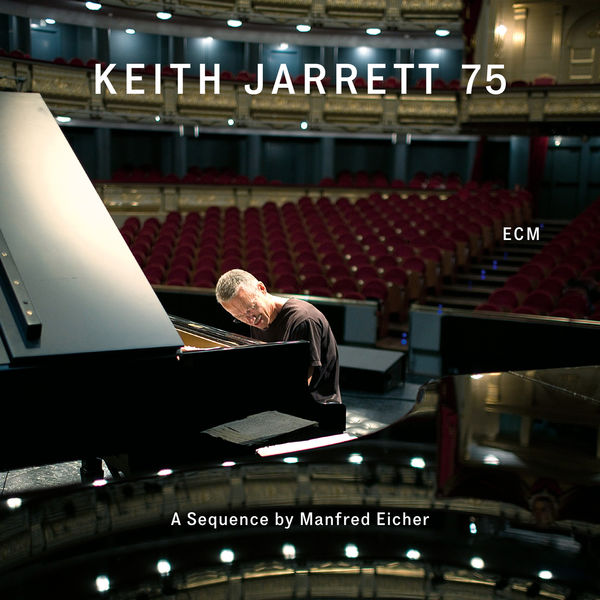
The second, and more substantial, present is Keith Jarrett 75, a sequence of five tracks curated by producer Manfred Eicher himself. Opening with the churned butter of “Never Let Me Go” (Standards, Vol. 2), it flows in stride with the passage of time. Perennial partners Gary Peacock and Jack DeJohnette are more than a rhythm section, but organs of the same body returning home after a long sojourn. In Jarrett’s vocalizations we hear the ache of it all, pooling like rain in cupped flowers, flung into the air by Peacock’s organic solo. And speaking of solo, we transition into that very territory with Part VII of Creation. In this rolling wave of spirit, sentient waters and thoughtless continents meet to share their silences.

ME Sequence

Another jump in time and mood warps us to Jarrett’s European quartet with saxophonist Jan Garbarek, bassist Palle Danielsson, and drummer Jon Christensen. Together, they unpack the largest cargo from the oceanic vessel that is “Personal Mountains.” A prototypical example of forward motion in music, it sustains inspiration from start to finish, Garbarek gilding the edges of Jarrett’s eyes, themselves closed in surrender. A shuffle of the deck brings us to the landmark duo record Jasmine with bassist Charlie Haden for a gently swinging take on “No Moon At All.” As sweet as it is sincere, it touches the soul with inspiration. Last but not least is “Flying Pt. 1” from Changes. A glorious soar through skies where wingtips catch clouds and leave melodic trails in their wake, it opens Jarrett’s inimitable trio like a book of truisms and waits for us to catch up with the confirmation of experience. The more exciting the music gets, the more we understand the power of harmony at altitudes beyond the audible.

Bley/Sheppard/Swallow: Life Goes On (ECM 2669)

2669 X

Carla Bley piano
Andy Sheppard tenor and soprano saxophones
Steve Swallow bass
Recorded May 2019, Auditorio Stelio Molo RSI, Lugano
Engineer: Stefano Amerio
Produced by Manfred Eicher
Release date: February 14, 2020

For its third ECM outing, pianist Carla Bley’s trio with saxophonist Andy Sheppard and bassist Steve Swallow mixes up an antidote for these times of uncertainty and quarantine. The title suite is the first of three comprising the program. Given that “Life Goes On” came out of a recent brush with illness, it’s fitting that Bley should begin in the dark whimsy of the blues. Her left hand plows fertile soil before leaving Sheppard and Swallow to sow their thematic crop. Years of experience and collaboration funnel into Swallow’s intimate rapport with Bley and into Sheppard’s unforced, spiritual playing. The latter, whether breathing through tenor or soprano, takes two steps forward for every retreat.

A sardonic humor assumes center stage in the three-part “Beautiful Telephones.” The title, quoting a certain leader of the free world, speaks of dire political circumstances, which, like the dial tone of a nation on hold, keeps us hopeful for something that may never come. The central movement reveals some of the deepest conversations and finds Sheppard in an especially soulful mood. The jagged finish is about as astute a commentary as one could pen on the current state of things without words.

The trio saves its most lyrical for last in “Copycat”, which holds a candle to some neglected parts of the human condition. There’s so much beauty in the opening “After You” that only the vessel of the playful title section is big enough to contain it. Setting a tongue in every cheek, it coaxes us with a promise of better times.

Holding it all together is an almost photorealistic approach to life. Like the score pages above Bley’s face on the cover, time feels suspended at just the right moment to reveal a smile of hope beneath it all.

(This review originally appeared in the May 2020 issue of The New York City Jazz Record, a full PDF of which is available here.)

Ketil Bjørnstad: A passion for John Donne (ECM 2394)

2394-front

Ketil Bjørnstad
A passion for John Donne

Håkon Kornstad tenor saxophone, flute, voice
Ketil Bjørnstad piano
Birger Mistereggen percussion
Oslo Chamber Choir
Håkon Daniel Nystedt
conductor
Recorded live March 2012, Sofienberg Kirke, Oslo
at the Oslo International Church Music Festival
Engineer: Jan Erik Kongshaug
An ECM Production
Release date: October 24, 2014

Batter my heart, three-personed God; for, you
As yet but knock, breathe, shine, and seek to men;
That I may rise, and stand, o’erthrow me, and bend
Your force to break, blow, burn, and make me new.

Pianist and composer Ketil Bjørnstad has sailed some of ECM’s purest waters. Yet while many of those journeys have been instrumental, he has with increasing frequency turned to the human voice as a candle from which to exude a melodic glow. True to metaphor, much of 2008’s The Light represented a major engagement with English poet John Donne (1572-1631), whose verses are the backbone of the present recording. Written for the Oslo International Church Festival and given its premiere in March of 2012 (the very performance heard here), Bjørnstad’s A passion for John Donne features Håkon Kornstad (tenor saxophone, flute, voice) in his ECM debut alongside percussionist Birger Mistereggen, the Oslo Chamber Choir under the direction of Håkon Daniel Nystedt, and the composer himself at the keyboard.

An Introitus gradates this hymnal piece into existence with a gong before piano and choir pull back the curtain of night to reveal a dawn-lit choral arrangement of “Thou hast made me.” As Kornstad’s tenor weaves through the undergrowth of these self-reflective intonations, unfolding one wordless implications after another, a silent heart of reverence is illuminated. Kornstad also sings, lending sanctity to “A fever” and “Farewell to love” as Bjørnstad shelters him like a church would a believer.

The writing for choir is sweeping yet intimate, most notably in “Death, be not proud” and “A nocturnal upon St. Lucy’s Day, being the shortest day,” the latter an atmospherically rich tapestry of waning moons and withdrawn souls. “A valediction, forbidden mourning” is another memorable passage, its use of marimba laying a supple path for Kornstad’s reed and voice to wander.

Each poem enacts a laser-focused concentration of mortality, distilling years of life into single words and phrases. This scriptural quality lends itself well to the piece’s concept as a “passion,” which by virtue of its promises of everlasting life through the doorways of death and love gives rise to a grander meaning in the texts. Like the benediction for incorruptible blood with which it ends, its prayerful mold feels more ripe than ever to be filled with our submissive will.

Jøkleba: Outland (ECM 2413)

Outland

Jøkleba
Outland

Per Jørgensen trumpet, vocals, kalimba, flute
Jon Balke electronics, piano
Audun Kleive electronics, drums, percussion
Recorded May 2014 at Madstun, Fall and Rainbow Studio, Oslo
Engineers: Audun Kleive and Jan Erik Kongshaug
Mixed by Audun Kleive
Mastered by Bob Katz
Produced by Jøkleba
Release date: October 24, 2014

Is it the sea you hear in me,
Its dissatisfactions?
Or the voice of nothing, that was your madness?
–Sylvia Plath, “Elm”

Although Per Jørgensen (trumpet, vocals, kalimba, flute), Jon Balke (electronics, piano), and Audun Kleive (electronics, drums, percussion) had already made four albums as Jøkleba before debuting on ECM under that same name, each musician had been involved in numerous other productions for the label. That said, this set of literarily themed improvisations leaves its own set of fingerprints, the whorls of which are spectral in range. By the second track, “Bell Jar,” itself a saline flush of digital impulses and organic trumpeting, the listener will know whether leaving or staying feels like the right thing to do.

To be sure, there’s much to admire here. From the visceral mountain calls in “Blind Owl” and “Horla” to the moonlit twinges of “The Nightwood” and “Below The Vulcano,” this trio knows how to craft a mood from scratch with cinematic lucidity. And while each musician contributes a personal energy throughout, for me it’s Jørgensen as vocalist who links the most creative chains. He plays the trumpet as if it were his own voice and sings as if his throat were honed in brass. The album’s most intriguing passages are his to carry. “Brighton,” for example, unfolds with the cadence of a Butoh dance, rich with meaning in the subtlest of movements.

Amid these abstractions, the appearance of piano and drums in “Rodion” feels like an oasis in the desert. “One Flew Over” gives further traction to the keyboard, and by that deference hints at something more pre than post. By the end, we’re left with a slipstream narrative that neither fulfills a promise nor answers a question. And perhaps that’s the way they prefer it.

Avishai Cohen: Big Vicious (ECM 2680)

2680 X

Avishai Cohen
Big Vicious

Avishai Cohen trumpet, effects, synthesizer
Uzi Ramirez guitar
Jonathan Albalak guitar, bass
Aviv Cohen drums
Ziv Ravitz drums, live sampling
Recorded August 2019, Studios La Buissonne, Pernes-les-Fontaines
Engineers: Gérard de Haro and Romain Castéra
Mastering: Nicolas Baillard
Produced by Manfred Eicher
Release date: March 27, 2020

Big Vicious marks the studio debut of trumpeter Avishai Cohen’s eponymous band. Already six years old, this assembly with Uzi Ramirez (guitar), Jonathan Albalak (guitar, bass), Aviv Cohen (drums), and Ziv Ravitz (drums, live sampling) embodies the canyon-wide leap of evolution Cohen has taken across ECM’s terrain since Into The Silence in 2016. This album is distinguished by its digital sheen, which through a web of guitars and live sampling shines the light of a distant future on the darker here and now. It’s a sensation amplified by the project’s silent partner, Tel Aviv musician-producer Yuvi Havkin (a.k.a. Rejoicer), who served as Cohen’s cowriter (another new direction for the frontman) on such tracks as “Honey Fountain” and “Teno Neno.” Where the former lifts the spirit by chains of echoing sentiment, even as it redraws boundaries of the flesh from which it stretches a hand toward hope, the latter tune speaks of moonlight in the language of a star.

From start to finish, Cohen fulfills the role of a storyteller gathering characters, dialogue, and settings, and in his combinations of those elements forges history. Throughout “Hidden Chamber,” his trumpet is a warrior of light, a reminder that politics forces us into places where tongues of strife lose their sense of taste. Cohen’s composing paves us a viable detour. From the propulsive bassing of “King Kutner” to the regressive groove of “This Time It’s Different,” every melody oils our skin through the thorny bramble of adversity.

The brightest heavenly bodies are the band’s arrangements. Beethoven’s “Moonlight Sonata,” for one, is reborn. Shedding every possible shade of cliché, it lives in a space only ECM can provide. Massive Attack’s “Teardrop” gets an equally postlapsarian treatment and harks to the earliest days of Big Vicious, when Cohen and friends mainly played 90s covers. The original lyrics of this song are appropriate in describing the present sound:

Water is my eye
Most faithful mirror
Fearless on my breath
Teardrop on the fire
Of a confession

Likewise, messages ooze from the ground as if during a spring thaw. Each is artfully crafted, traveling upward in a vortex of self-regard.

Of especial note is the album’s cover, a painting by David Polonsky, perhaps best known for Waltz with Bashir. Like the image itself, this is music that eschews photorealism in favor of something touched by hands, materials, and movement. It is also the visual equivalent of the album’s closer, “Intent,” which is so smooth that you might just find yourself blending in with your surroundings, wherever you happen to be.

Wolfgang Muthspiel: Angular Blues (ECM 2655)

2655 X

Wolfgang Muthspiel
Angular Blues

Wolfgang Muthspiel guitar
Scott Colley double bass
Brian Blade drums
Recorded August 2018 at Studio Dede, Tokyo
Engineer: Shinya Matsushita
Assistants: Yuki Ito and Akihito Yoshikawa
Mixed at Studios La Buissonne by Manfred Eicher, Wolfgang Muthspiel, and Gérard de Haro (engineer)
Mastering: Nicolas Baillard
Album produced by Manfred Eicher
Release date: March 20, 2020

On Angular Blues, Wolfgang Muthspiel revives the format of his 2016 ECM leader debut. Rejoined by drummer Brian Blade yet inviting bassist Scott Colley in place of Larry Grenadier, the Austrian guitarist serves a full course of originals with a couple of surprises added to taste. The members of this trio share what Muthspiel calls a “love of song” and perhaps no more succinct a term could so accurately describe their rapport. Longtime listeners won’t be surprised that Muthspiel has brought together players who understand the value of space: how to shape it, to be sure, but more importantly how to let oneself be shaped by it in kind.

The narrative impulses of the opener, “Wondering,” harness the flexibility of Muthspiel’s acoustic playing, which in this context meshes with bass while kissed cymbals draw the z-axis of a three-dimensional sound. Moods cycle between gentility and insistence and shades between. The title track is aptly named for revealing a delicately virtuosic side to the energies at hand. “Hüttengriffe” follows with a soft-hewn anthem.

The remaining tunes find Muthspiel plugged-in, jumping into the amorphous body of his electric guitar. In “Camino” he is equally at home, his fingers free to engage in metaphysical play. As a thinly veiled tribute to the late John Abercrombie—not only in style but also in the way Muthspiel drafts his solo—it’s a highlight that deserves close listening. Others include “Kanon in 6/8,” which shows the trio at its deepest level of synergy (it’s also offset by the digitally enhanced “Solo Kanon in 5/4”), and bebop-influenced “Ride.” Two standards fill in the gaps. Where Cole Porter’s “Everything I Love” moves vertically, “I’ll Remember April” ends this worthy set on a horizontal plane.

(This review originally appeared in the April 2020 issue of The New York City Jazz Record, a full PDF of which is available here.)

Julia Hülsmann Quartet: Not Far From Here (ECM 2664)

Not Far From Here.jpg

Julia Hülsmann Quartet
Not Far From Here

Uli Kempendorff tenor saxophone
Julia Hülsmann piano
Marc Muellbauer double bass
Heinrich Köbberling drums
Recorded March 2019, Studios La Buissonne, Pernes-les-Fontaines
Engineer: Gérard de Haro
Mastering: Nicolas Baillard
Produced by Thomas Herr
Release date: November 1, 2019

Fans of pianist Julia Hülsmann’s work will find familiar flavors enhanced by the unique spice of tenor saxophonist Uli Kempendorff being added to her long-running ensemble. He’s most vividly showcased on “Le Mistral,” one of two tunes contributed by bassist Marc Muellbauer. What begins with a quiet stirring develops into a freely interlocking sound—one honed by years of experience and held together by the band’s open-ended circuitry.

The poetry of Kempendorff’s playing is forthcoming, and the same holds true of his writing, even as “Einschub” is harmonized enigmatically. Most of the composing credits, though, go to Hülsmann. From the opening caress of “The Art Of Failing” to the masterful “No Game,” she treats every instrument as a vital ligament of the same appendage, pointing and flexing to the rhythms of emotional desire. With the tenderness of morning light gaining slow but steady purchase on the corner of a bedroom window, she follows a natural order of things.

Drummer Heinrich Köbberling throws a couple of his own coins into the proverbial fountain, including “Colibri 65,” which furthers the bandleader’s apparent mission of summoning placid, distinct airs.

The set is upheld by two versions of “This Is Not America,” a song written by David Bowie in collaboration with Pat Metheny and Lyle Mays. With broken nostalgia, it winds a melodic tangle from which escape is an easy but deeply unattractive option.

(This review originally appeared in the February 2020 issue of DownBeat magazine.)

Maciej Obara Quartet: Three Crowns (ECM 2662)

Three Crowns.jpg

Maciej Obara Quartet
Three Crowns

Maciej Obara alto saxophone
Dominik Wania piano
Ole Morten Vågan double bass
Gard Nilssen drums
Recorded March 2019, Studios La Buissonne, Pernes-les-Fontaines
Engineer: Gérard de Haro
Mastering: Nicolas Baillard
Produced by Steve Lake
Release date: October 25, 2019

After their 2017 ECM debut, Unloved, Polish saxophonist Maciej Obara and his quartet make their return with Three Crowns. In addition to six new tunes from the bandleader, the album features improvisational renderings of music by one of the most significant composers of the 20th century: Henryk Mikołaj Górecki (1933–2010). Though Górecki’s work has been subjected to improvisational treatments before, these renditions bear special distinction for being sanctioned by his family, whom Obara came to know while living in Katowice, where the composer once was based. The first Górecki interpretation, “Three Pieces In Old Style,” is so beautifully reimagined that it sounds as if it’s emanating from another world. Pianist Dominik Wania opens in a deeply respectful mood, allowing Obara’s incisive tone to keen overhead, while bassist Ole Morten Vågan and drummer Gard Nilssen roam a rain-kissed landscape below.

“Blue Skies For Andy” is among the stronger Obara originals—not only for its melodic strength but also its patience. It has a classic sound that feels warm to the ears, as precise as it is free. Other highlights range from the savvy urbanism of “Smoggy People,” notable for Wania’s postmodern swing, to the more geometric “Glow,” which recalls the tightly knotted compositions of fellow altoist Tim Berne. Obara’s bandmates grow in real time, though nowhere so maturely as on “Mr. S,” an homage to trumpeter Tomasz Stańko that rolls in on a wave of melancholy and sunshine in equal measure. Like the title track, it’s flexible and always attached to something pure and knowable. There is no mystery here. Only life.

(This article originally appeared in the January 2020 issue of DownBeat magazine.)

Keith Jarrett: Munich 2016 (ECM 2667/68)

2667|68 X

Keith Jarrett
Munich 2016

Keith Jarrett piano
Recorded live July 16, 2016
at Philharmonic Hall, Munich
Producer: Keith Jarrett
Engineer: Martin Pearson
Mastering: Christoph Stickel
Executive producer: Manfred Eicher
Release date: November 1, 2019

The more I listen to Keith Jarrett’s improvised concerts, the more I shy away from the adjective “solo” to describe them. Not because I live under a delusion that it isn’t just him translating energies that 99.99 percent of us could only hope to detect, but because each iteration of this asymptotic journey at the piano reminds me of the ghost of yet another former self who goes on playing in an alternate reality even after he lifts his hands and takes a bow amid the applause of this one.

Throughout this two-disc recording, which documents a July 16th performance in the city and year of its title, Jarrett unveils 12 numbered sculptures of possibility, each more freestanding than the last. Not that the path between them is linear. What begins in Part I—the set’s longest, just shy of 14 minutes—as a many-tentacled deep sea creature has by Part III already morphed into a landbound shepherd. The latter’s hymnal qualities light a gospel fire in the underground railroad lantern of Part IV before dissolving into the child’s dream that is Part V.

Part VI marks another change of face, uniting questions of mountains above with answers of valleys below. The contortions of Parts VII, IX, and XII are ages between, giving way to meditations in which un-pressed keys speak as truthfully as their contacted neighbors. Few are so profound in this regard as Part XI, of which a certain air of finality is only as permanent as the wind on which it’s written. It whispers as an antidote to the shouting match that has become our lives.

In light of all this, we get a trinity of shades in Jarrett’s choice of encores. In “Answer Me, My Love,” he embraces the past as if it were a dying future. In “It’s A Lonesome Old Town,” he embraces the present as if it were the only hope of peace. And in “Somewhere Over The Rainbow,” he lets go of all three states of mind, knowing that honesty of expression is the only wave we can catch to keep him visible as he follows one horizon in search of the next.