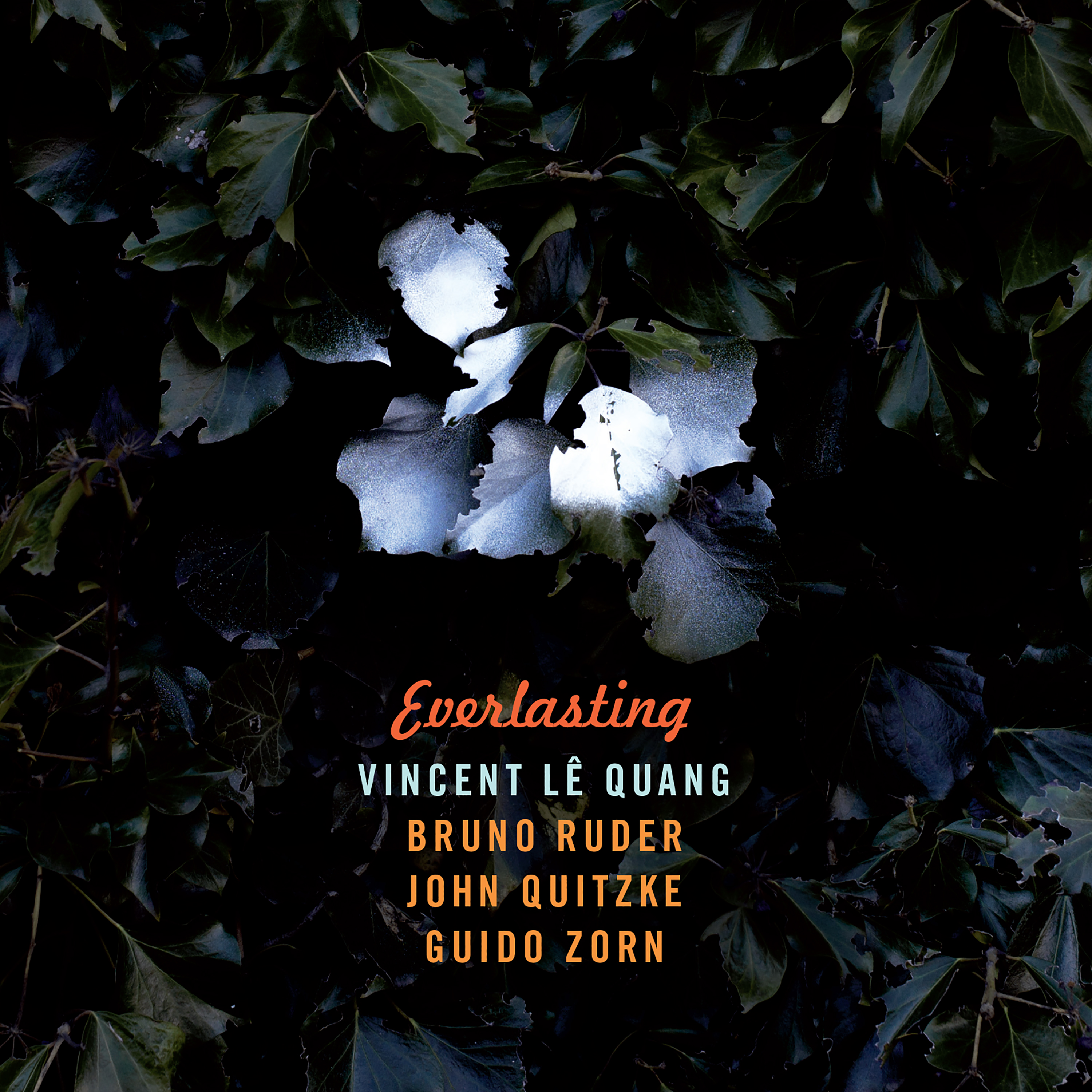
Vincent Lê Quang: Everlasting (RJAL 397038)

Vincent Lê Quang saxophones
Bruno Ruder piano
John Quitzke drums
Guido Zorn double bass
Recording, mixing, and mastering, Studios La Buissonne, Pernes-les-Fontaines, France
Recorded December 2019 and Mixed February 2020 by Gérard de Haro
Mastered by Nicolas Baillard at La Buissonne Mastering Studio
Steinway grand piano tuned and prepared by Sylvain Charles
Produced by Gérard de Haro and RJAL for La Buissonne label
Release date: May 21, 2021

Everlasting announces the leader debut of Vincent Lê Quang with a quiet assurance that feels anything but declarative. There is no display of ego here, no virtuosic flourish meant to dazzle. Instead, the album reveals a rarer mastery that effaces itself in service of listening. Lê Quang’s soprano and tenor do not dominate the space so much as inhabit it, breathing alongside pianist Bruno Ruder, drummer John Quitzke, and bassist Guido Zorn in a shared atmosphere where composition and improvisation dissolve into one another. What emerges is a music that seems already ancient, yet continually being born in the present.

This clarity of purpose stems from 12 years of collective life, the quartet bound by a mutual attentiveness that allows each piece to function as a portal to a clearer understanding of the self. Lê Quang speaks of his compositions as keys to a common state, and that metaphor becomes audible across the record. Each track opens a different interior landscape, yet all are connected by a shared commitment to the risk of being fully together in sound. Gérard de Haro’s production deepens this sense of communion, letting the music breathe within the luminous acoustics of Studios La Buissonne, where every resonance carries memory and every silence feels charged with possibility.

The album begins with an environment. In “L’odeur du buis,” piano and drums murmur from beneath the surface while the soprano rises gently into the night air, suspended above an arco bass that glows with lunar patience. Rather than announcing a theme, the piece slowly gathers a climate, a scent of darkness, foliage, and open sky. From this opening terrain, “La fugueuse” moves forward with subtle propulsion, water passing over unseen stones, the band drifting deeper into a current that neither rushes nor rests. These two tracks form a single act of arrival, a descent into the world the album will inhabit.

From there, the music shifts toward flowering and fracture. “Fleur” reveals some of the band’s most delicate interplay, cymbals shimmering with glasslike detail while Zorn’s bass traces a folk-tinged modal path. The group moves as one organism, loose at the edges yet inseparable at the core. This sense of collective breath reaches its most expansive form in “Everlasting,” a ballad built on tremor. Quitzke’s drumming hints at subterranean movement while piano, bass, and reed hold to a semblance of order, a belief that time can be counted. Gradually, that belief unravels. Flow becomes the governing principle of a rising density that never tips into excess, only into gravity.

A quieter inward turn follows. “Novembre” unfolds with the slowness of a season retracting into itself. This introspection deepens in “Une danse pour Wayne,” which refuses dance in favor of drift. Piano and drums speak in a near-telepathic dialogue, light touching darkness and returning transformed. Lê Quang’s soprano hovers above them, trembling with life yet strangely disembodied. Where these pieces search inward, “À rebours” stretches alone, a piano tendon extending between bone and air, longing without consolation.

The album then tilts toward the uncanny. “Dans la boîte à clous tous les clous sont tordus” begins with a solitary soprano that slowly gathers companions, the music assembling itself piece by piece. Tension accumulates, an electric expectancy that never resolves into release, and the listener is left suspended between dread and wonder. That unsettled feeling grows in “Le rêve d’une île,” a land that appears solid only to shift beneath the feet, and in “Rayon violet,” where breath rides atop shimmering harmonics, drawing a luminous arc through darkness.

With “Unaccounted-for pasts,” Lê Quang moves to tenor and opens a deeper register of uncertainty. The sound becomes cavernous, filled with echoes of memory that cannot be named. The album touches collective anxiety without ever becoming rhetorical, transforming fear into a shared vibration that binds the quartet more tightly together.

“Everlast” arrives not as a conclusion but as a threshold. The music hovers at the edge of sleep, brushing the listener with a tenderness that feels neither like a farewell nor a promise, simply a moment of contact. Consciousness thins, time loosens, and the sounds hover between presence and disappearance.

What this music ultimately gives is a space held in common, a quiet breathing room where listening becomes a form of companionship. Everlasting suggests a practice of attention that carries us beyond our habitual divisions of past and present, self and other, motion and stillness. In that quiet recognition lies its lasting power, an invitation to inhabit the space between knowing and listening, where meaning reveals itself on its own time.

Jeremy Lirola: Mock the Borders (RJAL 397036)

Jeremy Lirola double bass
Denis Guivarc’h alto saxophone
Maxime Sanchez piano, keyboards
Nicolas Larmignat drums
Recording, mixing, and mastering, Studios La Buissonne, Pernes-les-Fontaines, France
Recorded and mixed in June 2021 by Gérard de Haro
Mastered by Nicolas Baillard at La Buissonne Mastering Studio
Steinway grand piano tuned and prepared by Alain Massonneau
Produced by La Poulie Production & Gérard de Haro and RJAL for La Buissonne Label
Release date: October 8, 2021

On the heels of 2016’s Uptown Desire, Jeremy Lirola steps beyond the grid of New York City and into a wider, less mapped territory, exchanging subway tunnels for constellations. The shift feels less like a change of scenery than a recalibration of conscience. Lirola is listening deeper, sketching a music that resists the gravitational pull of imitation. Building on the spirit of Ornette Coleman’s Harmolodics, he cultivates individuality with the patience of someone tending rare seeds in a storm-blown garden. Creativity here becomes a quiet counterforce to a world that profits from sameness, speed, and surveillance, a reminder that difference can be a form of justice. Joined by alto saxophonist Denis Guivarc’h, pianist Maxime Sanchez, and drummer Nicolas Larmignat, Lirola assembles not just a band but a small republic of attentiveness, each member accountable to the others and to the air they share. Together they construct music that feels open as a plaza yet grounded like a hearth, spacious enough to wander and steady enough to return to.

The album opens with “Mock the Lines,” a room freshly burnished for arrival, its shine inviting reflection without vanity. The track feels both ceremonial and intimate, as though the listener is being asked to shed shoes and preconceptions. From this polished threshold, the group glides into “Living Symbols,” where groove sits in a warm pocket that is physical, spiritual, and conspiratorial all at once. Sanchez’s keyboards spread color like slow daylight across a floor, while Guivarc’h’s alto illuminates hidden corners. The quartet flows naturally into “Danced Border,” a piece that toys with the very idea of boundaries. Sanchez’s pianism ripples with curiosity over a rhythm that knows how to sway without surrendering its footing. The melodic convergence at the end is a sly reminder that lines are made to be questioned, crossed, and occasionally turned into song.

At this point, the record begins to behave like a set of ethical parables told in sound, sometimes laconic, sometimes luxuriant, always purposeful. “Sensitive Border” leads seamlessly into the expansive “Ghost Dance,” where Lirola’s bass takes on the role of a traveling griot with stories tucked into every string. The latter track hovers between what is seen and what is whispered. Keyboards shimmer like memory about to become myth, while alto moves like a shadow figure, keeping careful watch on every phrase. Rather than a detour, this stretch feels like the album’s moral heart, a meditation on how history lingers, how wounds speak, and how music might listen back.

Midway through, the record blooms into a four-part chain of color impressions. “Red” arrives as glittering dawn, full of resolve without aggression. “Black” follows like an echoing supernova, vast, humming, and strangely tender in its immensity. “White” drifts in as a partial eclipse, bright but uncertain, clarity touched by doubt, while “Yellow” closes the sequence in a twinkling dream that refuses to wake too quickly. Taken together, these pieces suggest that resistance to darkness is never one shade but many, a spectrum of feeling that glows differently at every hour.

The album then gathers itself for its final movement. “Essai éternel” arrives like a love letter that slowly turns into a ritual, affection melting into collective motion, devotion disguised as dance. It is both intimate and communal, a groove that feels like care made audible. From there, “Mock the End Lines” eases the listener toward silence with graceful tact, buttering the bread of finality just enough so that the meal feels complete without overfeeding the moment.

What we are left with is not a protest but a gentle reimagining of how the world might sound if kindness were taken seriously. Lirola offers no sermons, only evidence that beauty can nudge brutality aside, that listening can be a form of courage, and that music can rehearse the habits of a more humane future.

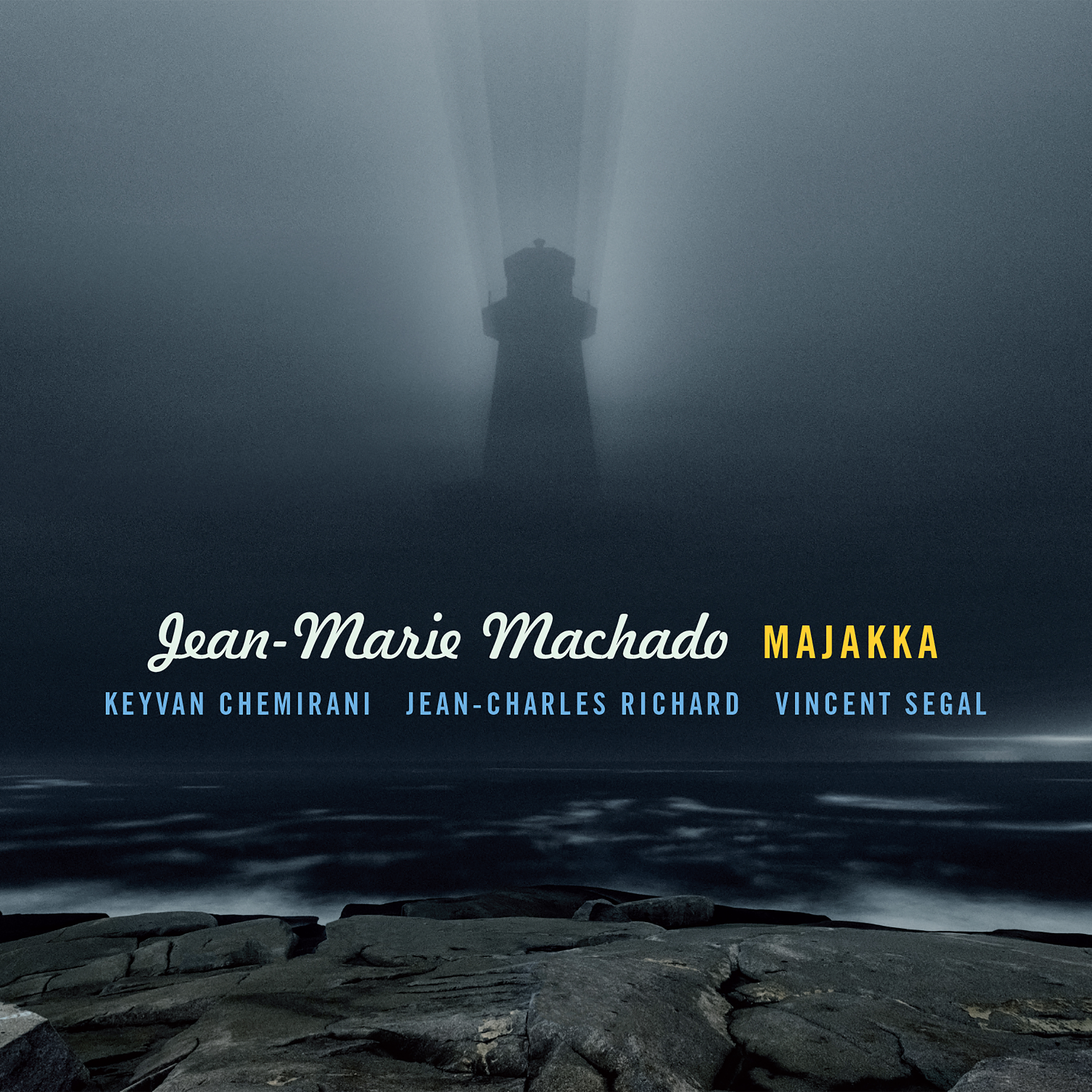
Jean-Marie Machado: Majakka (RJAL 397039)

Jean-Marie Machado piano
Keyvan Chemirani zarb, percussion
Jean-Charles Richard saxophones, flutes
Vincent Segal cello
Recording, mixing, mastering Studios La Buissonne, Pernes-les-Fontaines, France
Recorded September 23-25, 2020, and mixed by Gérard de Haro, assisted by Matteo Fontaine
Mastered by Nicolas Baillard at La Buissonne Mastering Studios
Piano preparation and tuning by Sylvain Charles
Produced by Cantabile, Gérard de Haro with RJAL for La Buissonne
Release date: February 5, 2021

On Majakka, a word that in Finnish means lighthouse yet also suggests an inner watchtower, pianist and composer Jean-Marie Machado establishes a roaming state of mind. The album feels like a journey that refuses checkpoints, a music that travels because it knows nothing else. It charts the migration of memory, the drift of identity, and the strange geography of listening itself.

Throughout, Machado speaks of looking back at his own past recordings and discovering a color that had been waiting for him all along, a private illumination that insisted on being seen. That realization becomes the emotional compass of the album. Majakka is less a retrospective than a return that keeps going forward, a circular voyage where the act of remembering becomes another form of departure.

Surrounded by a remarkable ensemble, he shapes this odyssey with great subtlety. Keyvan Chemirani’s zarb (or tombak), a heartbeat of wood and skin, brings a tactile, breathing pulse. Jean-Charles Richard’s saxophones and flutes cut lines through the air like invisible routes, while Vincent Segal’s cello adds gravity, warmth, and a kind of traveling shadow beneath the light. Together they constitute a terrain that is constantly shifting, constantly unfolding.

Born into Italian, Spanish, and Portuguese lineages and raised in Morocco, Machado carries a passport made of histories rather than nations. His affinity for Brazilian music and for the impressionistic expanses of Manuel de Falla and others is his natural climate.

“Bolinha” opens with a sound that feels newly discovered even as it seems traditional. The zarb skims the surface of the music, giving gentle traction to the piano, bass, and saxophone as though the rhythm were lightly tugging the travelers onward. Beneath the beauty lies a quiet insistence, a pulse that suggests inward as much as outward motion. One senses that this journey begins by turning inside before it ever reaches the horizon.

In “Um vento leve,” the wind grows brighter, but longing deepens. Piano and soprano sax converse with tenderness while the rhythm section moves with guarded wisdom, keeping secrets until the landscape demands them. The music carries an ache for destinations that may not exist except in the act of seeking.

Both pieces belong to La main des saisons, a project inspired by Fernando Pessoa, whose poetry itself is a labyrinth of wandering selves. Later, “Emoção de alegria” returns to this spirit, dancing sideways rather than straight ahead. It refuses linear passage, opting instead for meandering revelation. The joy here is full of shadows.

“La lune dans la lumière” pauses the expedition. Cello and low flute circle the piano in a nocturnal embrace, creating a sound at once intimate and distant. The moonlight seems to hover rather than shine, illuminating sorrow without dissolving it. For a moment, travel becomes stillness, and stillness becomes its own destination.

“Gallop impulse,” first heard on Machado’s 2018 Gallop Songs, arrives like a sudden clearing after nightfall. Born from his connection with Chemirani, and colored by Machado’s earlier collaboration with Naná Vasconcelos, the piece blooms into immediate life. Percussion slips in and out of view, shaping the space around it.

The trio of pieces written for the quartet in the studio, “Les pierres noires,” “Outra Terra,” and “La mer des pluies,” carries the tremor of a pandemic-afflicted world. They feel carved from isolation, shaped by a time when itineracy felt forbidden. Yet within that restriction, Machado finds expansive imagination. The latter piece, a solo piano ballad, stands apart like a private confession. Its beauty is spare, unadorned, and devastating. It tells a wordless story of hunger for air, light, and meaning beyond the body’s limits.

“Les yeux de Tangati,” originally conceived for a duet with Dave Liebman, brings the journey back to earth and breath. Wooden flute (perhaps a nay?) and soprano saxophone weave across an imagined desert, while piano and pizzicato cello plant delicate footprints in the sand. A conversation with landscape itself, as though the dunes were speaking back. Finally, “Slow bird” lifts the listener into quiet enchantment, moving with restrained grace before opening into a surging release.

By the end, travel no longer feels like crossing from here to there. It becomes a way of being. Machado’s lighthouse does not guide ships to land but teaches them how to drift with purpose. The album suggests that borders are simply habits of hearing, lines we draw because we are afraid of the open.

And so, Majakka proposes a gentler philosophy. To journey is not to arrive, to belong is not to stay, and to remember is not to return but to keep moving with deeper awareness. The true horizon is not a place but a practice, the quiet art of listening while in motion, forever and without frontiers.

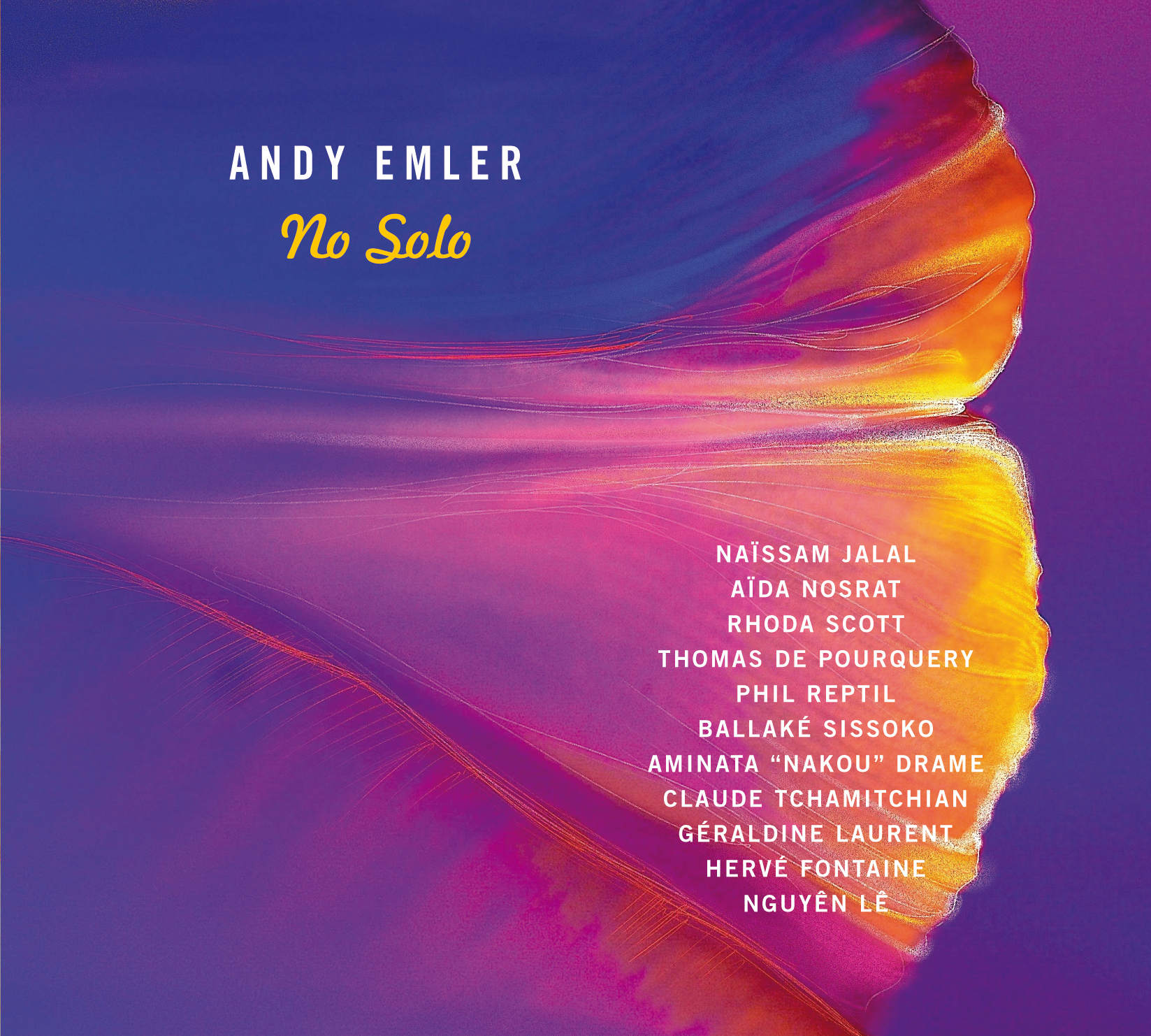
Andy Emler: No Solo (RJAL 397035)

Naïssam Jalal flute, voice
Aïda Nosrat voice
Rhoda Scott voice
Thomas de Pourquery voice
Phil Reptil
sound design
Ballaké Sissoko kora
Aminata “Nakou” Drame 
voice
Claude Tchamitchian
 double bass
Géraldine Laurent alto saxophone
Hervé Fontaine beat box 
Ngûyen Lê electric guitar 
Andy Emler piano 
Recorded live and mixed at Studio La Buissonne on February 7/8, 2019, by Gérard de Haro
Steinway D piano preparation and tuning by Alain Massonneau
All guests were recorded at Studios Sextan – La Fonderie Malakoff by Vincent Mahey and Arthur Gouret
except Nguyên Lê, Thomas de Pourquery, and Phil Reptil, who overdubbed from home
Mixed by Gérard de Haro and Andy Emler
Mastered by Nicolas Baillard at La Buissonne Mastering Studio
Produced by Gérard de Haro and RJAL for La Buissonne Label and Andy Emler
Release date: August 28, 2020

After a sequence of musical journeys ranging from the boldly orchestral to the hushed and introspective, Andy Emler arrives at a revealing new vantage point with No Solo. The title gestures toward a meditation on relation in which individuality becomes clearer precisely by being placed in conversation with others. Surrounded by collaborators who span generations, geographies, and aesthetic traditions, Emler constructs an expansive portrait of an artist continually navigating the blur between solitude and collectivity. From the very first notes, the music suggests that borders are never fixed lines but shifting membranes through which feeling, history, and sound continually pass.

Such tensions are announced with gentle irony in the opening moments. “Jingle tails” and “The warm up” begin as solo piano excursions, yet their isolation never feels enclosed. The playing seems already attuned to voices yet to arrive in anticipation of dialogue. The pieces balance a soft, melancholic edge with a dense sense of nostalgia, revealing Emler’s gift for emotional acuity and storytelling without artifice. As they unfold, the textures grow more panoramic and suggestive, evoking the quiet brilliance of winter light alongside the promise hidden within its stillness. Instead of lingering in recollection, the pianist moves through memory with the velocity of rewound time, allowing fragments to flicker past while granting each moment enough space to resonate. From this inward world, the music gradually opens outward, preparing the listener for a widening field of encounter.

That expansion becomes tangible in “For nobody,” where Naïssam Jalal appears first as breath rather than melody. Her flute and voice hover in sibilant, almost vaporous gestures before coalescing into drifting lines that feel both fragile and insistent. What begins as liminality slowly gathers gravity, and her presence reads less as accompaniment than as an elemental force shaping the atmosphere itself. Her timbres stand vividly in the foreground, sculpting a climate of unresolved yearning, a feeling that carries directly into “Gold timer,” where vocalists Aïda Nosrat and Rhoda Scott usher the listener into more populous territory. Spoken reflections on togetherness surface amid the harmonies, imagining a world beyond division while quietly questioning whether such separation was ever absolute. Here, Emler’s writing probes the idea that music might precede political or cultural borders, operating as a language that connects before it categorizes.

That inquiry deepens further in “Light please,” which inhabits a distinctly mystical register. Phil Reptil’s ethereal sound design and Thomas de Pourquery’s falsetto suspend time in a luminous haze, allowing the music to drift through slow currents of call and response. Voices feel scattered across invisible distances, suggesting that connection is less an achievement than a condition already written into the air. This sense of movement finds a different, more earthly expression in “12 Oysters in the lake,” an enchanting meeting of Ballaké Sissoko’s kora and Aminata “Nakou” Drame’s voice. The narrative takes shape organically, intertwining images of shared labor, mutual care, and the rhythms of the land. The kora glimmers with radiant delicacy while Drame sings with an urgency that feels both grounded and transcendent, as if addressing not only listeners but the very environment that sustains them in an act of sonic reciprocity.

“Près de son nom” shifts the perspective toward darker, more resonant depths. Claude Tchamitchian’s arco bass sketches a sequence of sonorous shapes that accumulate weight and gravity, as though the ground beneath the music were slowly giving way to ocean. The sound swells, thickens, and finally seems absorbed by an imagined vastness, suggesting how personal expression can dissolve into something larger without losing its essence. From this submerged state emerges “The rise of the sad groove,” a piece that feels as if dawn were breaking after a long night. Géraldine Laurent’s alto saxophone breathes with quiet optimism, offering tender phrases that transmit feeling without explanation. Just as the mood appears ready to drift, beat boxer Hervé Fontaine introduces a grounded rhythmic pulse, his deep bass anchoring the flight and demonstrating that momentum and vulnerability can coexist.

In closing, “You’re so special” arrives as a generous ballad illuminated by Ngûyen Lê’s singing electric guitar. Its lyricism soars yet remains warm, drawing together the strands of connection that have threaded through the entire work. Taken as a whole, No Solo reveals how distinctions can coexist within a shared space, allowing identities to overlap without dissolving into sameness. The music does not simply end but recedes toward a quiet horizon, where breaths, strings, and distant echoes continue to shimmer just beyond hearing, as if the lines between here and elsewhere were slowly loosening in a gentle, unbounded glow.

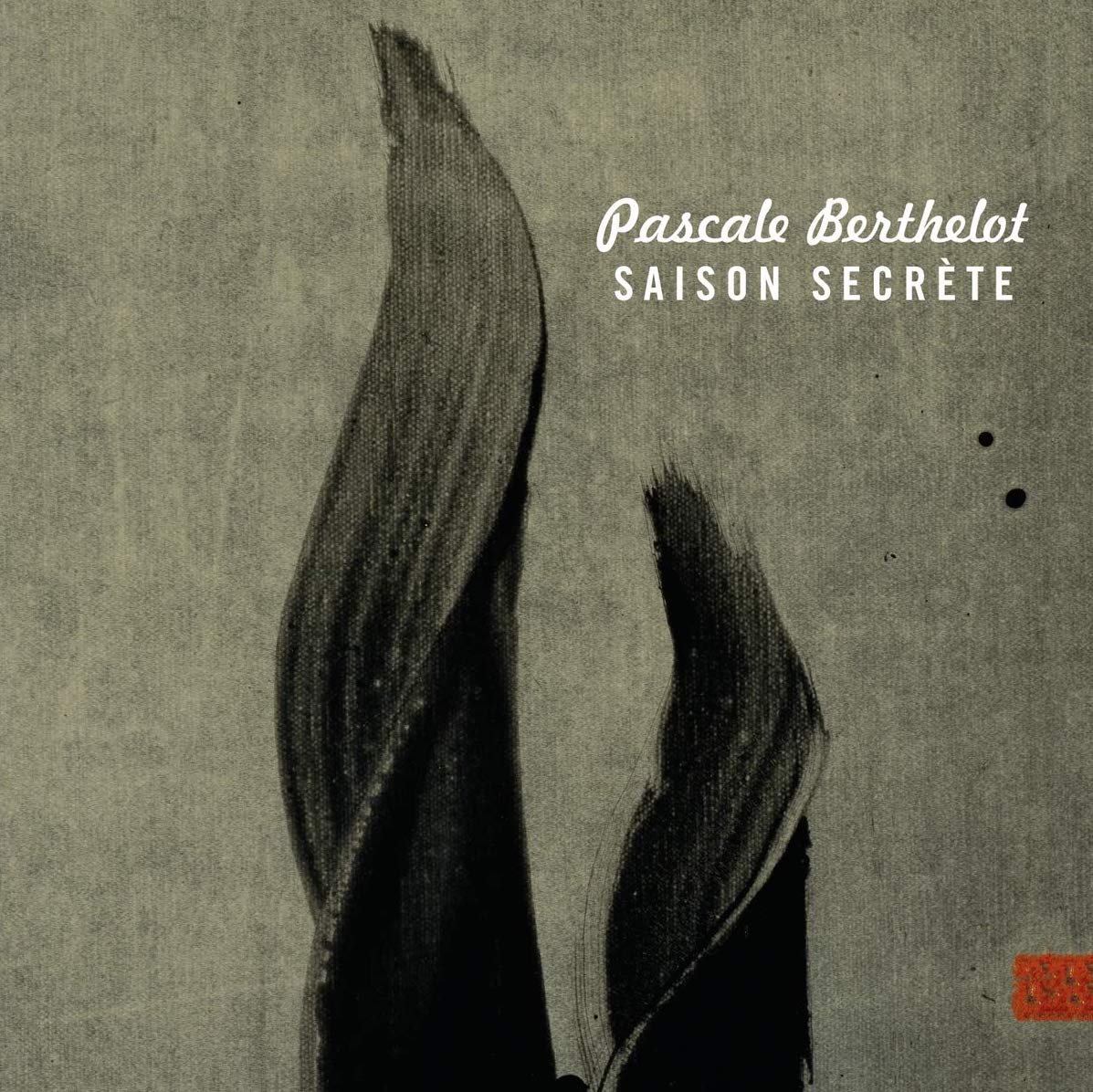
Pascale Berthelot: Saison Sècrete (RJAL 397037)

Pascale Berthelot
Saison Secrète

Pascale Berthelot piano
Recorded November 29, 2018
Studios La Buissonne, Pernes-les-Fontaines
Engineer: Gérard de Haro
Mastered by Nicolas Baillard at La Buissonne Mastering Studio
Steinway grand piano prepared and tuned by Alain Massonneau
Release date: October 26, 2020

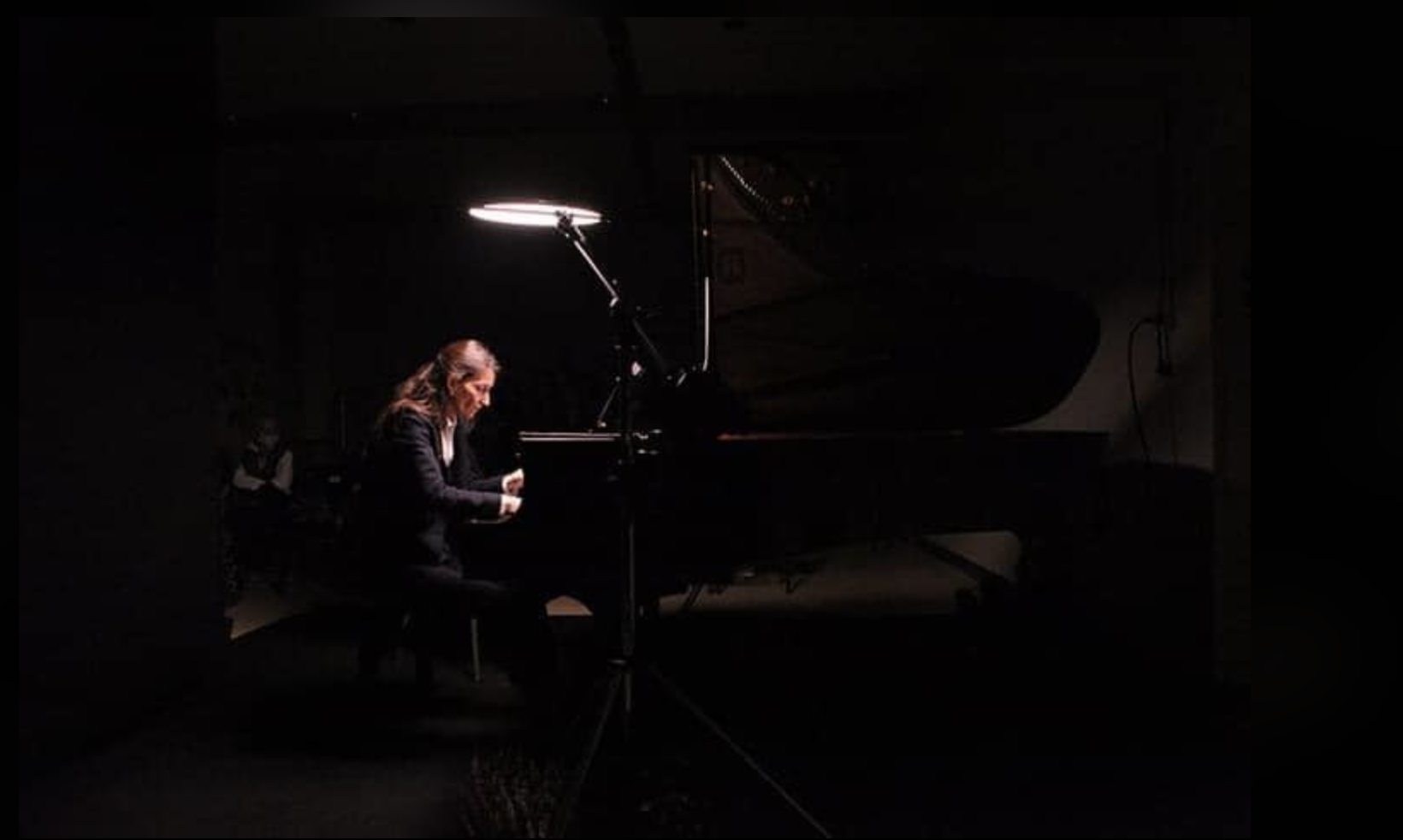
Pianist Pascale Berthelot, a remarkable interpreter of (and favorite among) living composers, becomes one herself—in a sense—throughout this program of five extended improvisations. Liberated at the behest of Gérard de Haro, engineer and head of Studios La Buissonne in France, these unabashedly visual evocations of in-the-moment imaginings constitute one of the most multidimensional piano recordings I’ve heard in years. While its impressionism lays its head as much on the shoulder of Poulenc as Jarrett, it shapes itself one body part at a time without the ultimate need for such comparative garments. Regardless of the lines of reckoning we might connect from Earth to its distant galaxy, it validates the listener’s imagination, and in that spirit I offer mine in return.

“Balance des étoiles” opens the curtains as if in expectation of morning but instead finds the moon masquerading as the sun, rising in mimicry of dawn. The toes become restless for the feel of soil between them, the heart for a lamp to light the way. What began as a reverie ends as a descent into ocean, where prose and poetry comingle until the difference is impossible to make out. In “Ciel s’illune,” the sky and earth are flipped, so that another distinction—that between inhalation and exhalation—is rendered mythological. When we at last get to the center of this genetic spiral, “Nuits, chères” abandons the lie of tranquility for the truth of its unsettling, thus evoking the bliss and deeper love that a relationship conflict can yield. Even in “Chambre sans langage,” in which the intonations of dampened piano strings resound like a knock at the door, spiritual tendencies move beyond prayer into communion. And so, when the dream of “Clair éclat de l’M” lights a ponderous candle with its tongue, it adds one last link to the chain we’ve been extending all along, dragging behind us a memory box whose contents we have already forgotten.

And yet, we mustn’t fool ourselves into thinking that the world Berthelot describes existed before these utterances. Rather, we experience it as she does, unfolding in real time at the touch of flesh and key until something inevitable arises. Thus, the recording itself is a song made up by a child lost in the woods, holding on to lullabies as the only answers to her questions of fear and emerging all the stronger for it.

La Buissonne Label – Hors-Série (RJAL HS002)

LBL

Though La Buissonne may be familiar to ECM listeners as a relatively recent hub of recording excellence, the French studio has also been putting out releases under its own name since 1994. Originally distributed by Harmonia Mundi, since 2019 they have been handled by ECM itself. This double compilation album, a promotional freebie earned by buying more than two CDs from La Buissonne’s official Bandcamp store, gives us a broad cross-section of their commitment to variety, atmospheric integrity, and personal expression.

At the heart of it all is the piano. That most perennial of modern instruments is represented in a slew of distinct yet integrated solo recordings by Andy Emler, Stéphan Oliva, Jean-Sébastien Simonoviez, and Bruno Ruder. Each is an evocative postcard mailed from soul to soul. The most indelible are those by Oliva, whose “La traverse” reflects the passage of time without compromise, and Emler, whose “There is only one piano left in this world” opens the collection in multitracked brilliance, banging and plucking its way through an array of modes. Emler is, in fact, a defining voice of the label and finds himself well-represented here. Highlights of his oeuvre include two selections from the so-called MegaOctet project (including the tuba- and tabla-rich “Doctor Solo”) and his magical ETE Trio with bassist Claude Tchamitchian and drummer Eric Echampard. An excerpt from the latter’s “Elegances” follows every emotion to its logical end. A trio of a slightly different feather, led by Oliva with the same bassist and Jean-Pierre Jullian on drums, yields one of my favorite tracks from La Buissonne’s entire output: the title cut off 2009’s Stéréoscope. Another I would encourage you not to gloss over is that of Jean-Marc Foltz (clarinet, bass clarinet, percussion), Oliva (piano, percussion) and Bruno Chevillon (bass, percussion). Their 2007 album Soffio di Scelsi is an understated tour through rain-kissed foliage and haunting dreams. Neither can we ignore the Trio Zéphyr: three string players whose voices walk like compasses across maps of their own making. Of the two pieces represented, “Sauve tes ailes” evokes distant travel with minimal brushstrokes and titles one of La Buissonne’s finest hours.

Solo artists beyond the keyboard bring equally delectable flavor profiles to the proverbial table. Among them are those of guitarist Carlos Maza (his “Altas y bajas” is a mechanical wonder), late bassist Jean-François Jenny-Clark, and cellist Vincent Courtois, whose “Skins” and “So much water so close to home” are poems written on the backs of slow-moving mountains. Courtois, like Emler, is a touchstone presence in this ever-expanding catalog and has made deepest impressions in his trio with tenor saxophonists Robin Fincker and Daniel Erdmann. Their “Rita and the Mediums” is a segue into wider territories.

Upgrading to quartets brings us to the nocturnal cinematography of Jeremy Lirola’s “Art the last belief” (featuring the remarkable subtlety of drummer Nicolas Larmignat), the “Junction point” of Jean-Christophe Cholet (a sonic train that turns 90-degree corners with ease), the skronk-leaning vibe of Gilles Coronado’s “Wasted & Whirling,” Bruno Angelini’s rendition of the Paul Motian classic “Folk song for Rosie,” and the phenomenal techno-sphere of Caravaggio’s “Dennis Hopper Platz” (its tangle of streets crumbling beneath the weight of progress). Other moments to watch out for are “Breath,” which represents the collaboration between pianist Jean-Marie Machado and saxophonist Dave Liebman (a failproof combination, to be sure); “Leonor Theme,” which places Simonoviez alongside bassist Riccardo Del Fra; and “Three coins in the fountain,” a Kurt Weil-ish song performed by Bill Carrothers at the piano. An unreleased outtake of “Que sera sera” from that same session further illuminates his gift for harmony.

In addition to the broad variety of music, this collection is a tribute to La Buissonne’s unique sonic fingerprints, which forensically matches those of engineer Gérard de Haro. His vision is their vision, and our fortune by extension to be privy to its growth over the past quarter of a century.

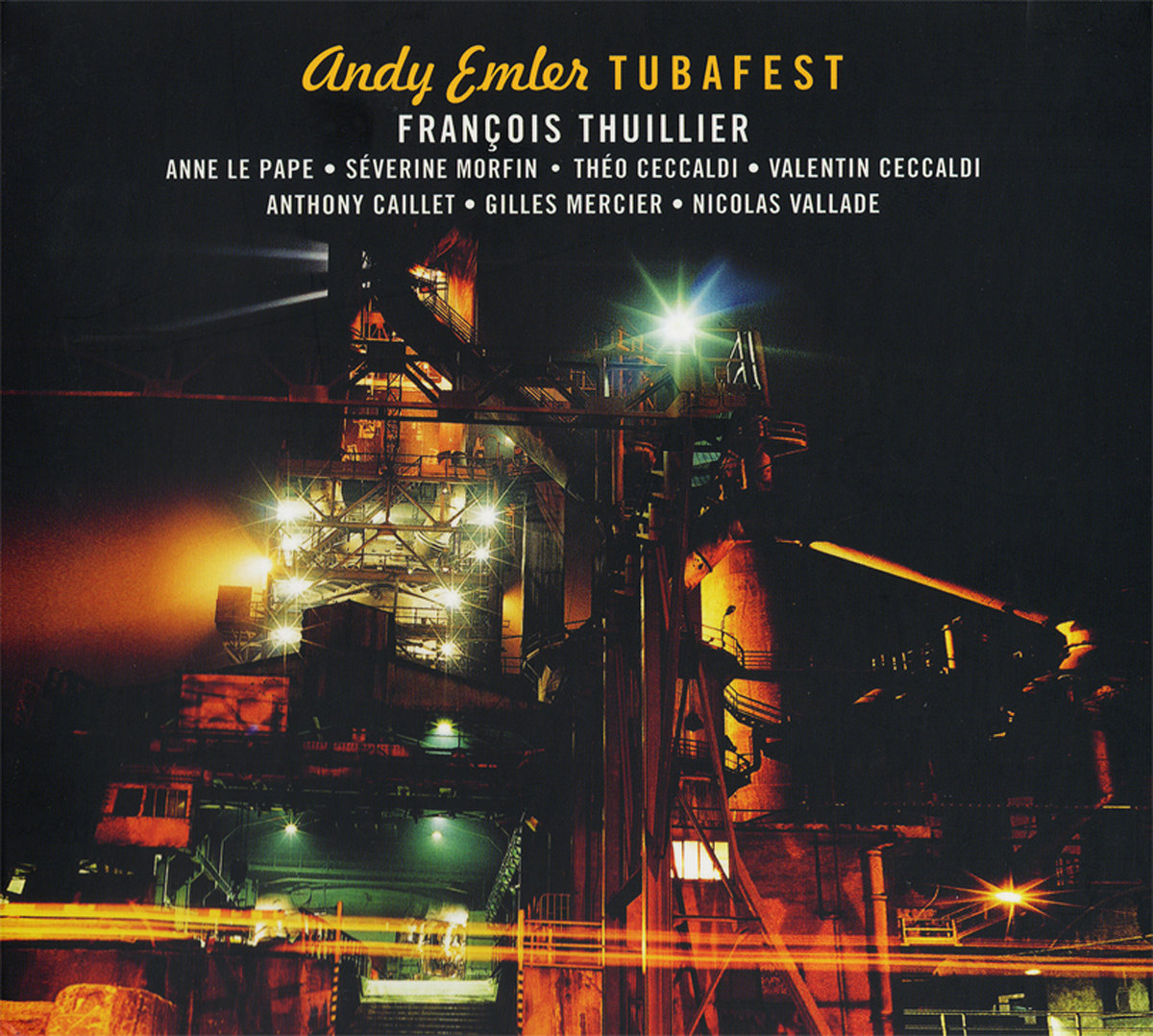
Andy Emler/François Thuillier: Tubafest (RJAL HS001)

Cover

Andy Emler
François Thuillier
Tubafest

Andy Emler compositions
The “Cactus” Quartet
Théo Ceccaldi
 violin
Anne le Pape violin
Séverine Morfin viola
Valentin Ceccaldi violoncello
Duo Fact
Anthony Caillet
 euphonium
François Thuillier tuba
Evolutiv Brass
Anthony Caillet
 euphonium
Gilles Mercier trumpet
Nicolas Vallade trombone
François Thuillier tuba
Recorded live at Le Triton, Les Lilas on October 24/25, 2014 by Gérard de Haro et Jacques Vivante
Mixed and mastered at Studios La Buissonne by Gérard de Haro at Studios La Buissonne, Pernes-les-Fontaines
Mastering: Nicolas Baillard at Studios La Buissonne
Produced by Andy Emler and François Thuillier
Release date: March 1, 2015

Unlike strings, which tend to feel darker and more brooding the deeper they become, there’s something lively and invigorating about brass at its lowest registers. This is certainly true of tuba virtuoso François Thuillier, whose prodigious talents have graced some of La Buissonne’s finest recordings under its own label. After playing the role of bassist in Amly Emler’s outfits for years, Emler decided to put together some new pieces and performances in late October of 2014 as a way of throwing the spotlight on Thuillier and his métier. Thus, “Tubafest” was born, of which three of the five compositions on the program are presented for our enjoyment.

“Tubastone 12023” is the result of an offhanded remark by Thuillier, who once expressed a desire to play with a string quartet. Emler happily obliged by producing this piece for that very combination of instruments. After the strings prime a verdant canvas, the tuba plants its feet firmly to unravel a patient song. With whistles of appreciation (and even a “Yeah, baby” for encouragement), the quintet handles exuberant changes of scenery without skipping a beat. Over the course nearly 22 minutes, they tell the story of something at once urban and rural, an emotional transference of proportions that speak not only to the heart but also the mind.

Emler’s frameworks always leave plenty of room for improvisation, but especially in “Art et Fact 1.” This duet between Thuillier on tuba and Anthony Caillet on euphonium grooves with the energy of a band four times their number, and finds both playing their hearts out throughout this joyful segue into “Un Printemps dans l’assiette.” Here Thuillier and Caillet are joined by trumpeter Gilles Mercier and trombonist Nicolas Vallade. The mood is altogether whimsical yet rigorous, showcasing the musicians’ freedom of expression and the rock-solid foundations of their craft, as well as the fullness of Thuillier’s narrative power. It ends with kisses, as if bidding us farewell.

Each world Emler creates can be counted on for being vivaciously resolute, but in this case he has written for a soloist who understands that inner drive in a most focused way. A dose of joy when we need it most.

Vincent Courtois: Love of Life (RJAL 397034)

Cover

Vincent Courtois
Love of Life

Vincent Courtois cello
Robin Fincker clarinet, tenor saxophone
Daniel Erdmann tenor saxophone
Recorded June 26/27, 2019 in Oakland, 25th Street Recording Studio by Gérard de Haro, assisted by Gabriel Shepard
Mixed by Gérard de Haro at Studios La Buissonne, Pernes-les-Fontaines
Mastered by Nicolas Baillard at La Buissonne Mastering Studios
Produced by La Compagnie de l’imprévu and Gérard de Haro & RJAL for La Buissonne
Release date: January 31, 2020

The appropriately titled Love of Life is cellist-composer Vincent Courtois’s wordless tribute to writer Jack London. London is a fairly recent discovery for Courtois, who cites the semiautobiographical Martin Eden as a constant companion while on tour with reed players Robin Fincker and Daniel Erdmann. The trio began their travels on the East Coast and ended them in California, where they met with London’s great-granddaughter, improvised under the towering trees near his gravesite (as pictured on the album’s cover), and recorded this session on the author’s Oakland, California homestead. The result is music that brims with agency and verve and explores London’s empathy for the underrepresented, the spat upon, and the voiceless.

Each track title pays respect to a short story or novel from London’s oeuvre. His empathy for divided selves is reflected in two diptychs: one for Martin Eden and the other for “To Build a Fire.” Ranging from the former’s jaunty charisma (indicative of a fumbling naivety) to the latter’s crackling flames, Courtois leverages an emotionally naked tone in the contexts at hand. Before these deeply psychological forays, the title track sets the pace with its gentle procession of horns, as if to remind us that everything will be okay in spite of the struggles faced by all. This in contrast the fact that hope seems so far away in the period song “Am I Blue” (Grant Clarke/Harry Akst), which captures the angst of being a working-class subject in a bourgeois world. That same disgruntlement carries over into “The Dream of Debs” and “South of the Slot,” wherein wars are waged internally.

“The Road” is a marvelous highlight. Here the tenors provide a harmonious framework, almost like another cello playing double stops, while Courtois cries out with guttural fortitude by means of his own. Fincker and Erdmann throw their own shining coins into the compositional fountain with “The Sea-Wolf” and “Goliah,” respectively. Where one is stormy and dire, the other is delightfully sardonic. Courtois caps off with a solo “Epilogue” to restore credence to remembrance as the only viable coping mechanism in a world hijacked by self-interested materialists.

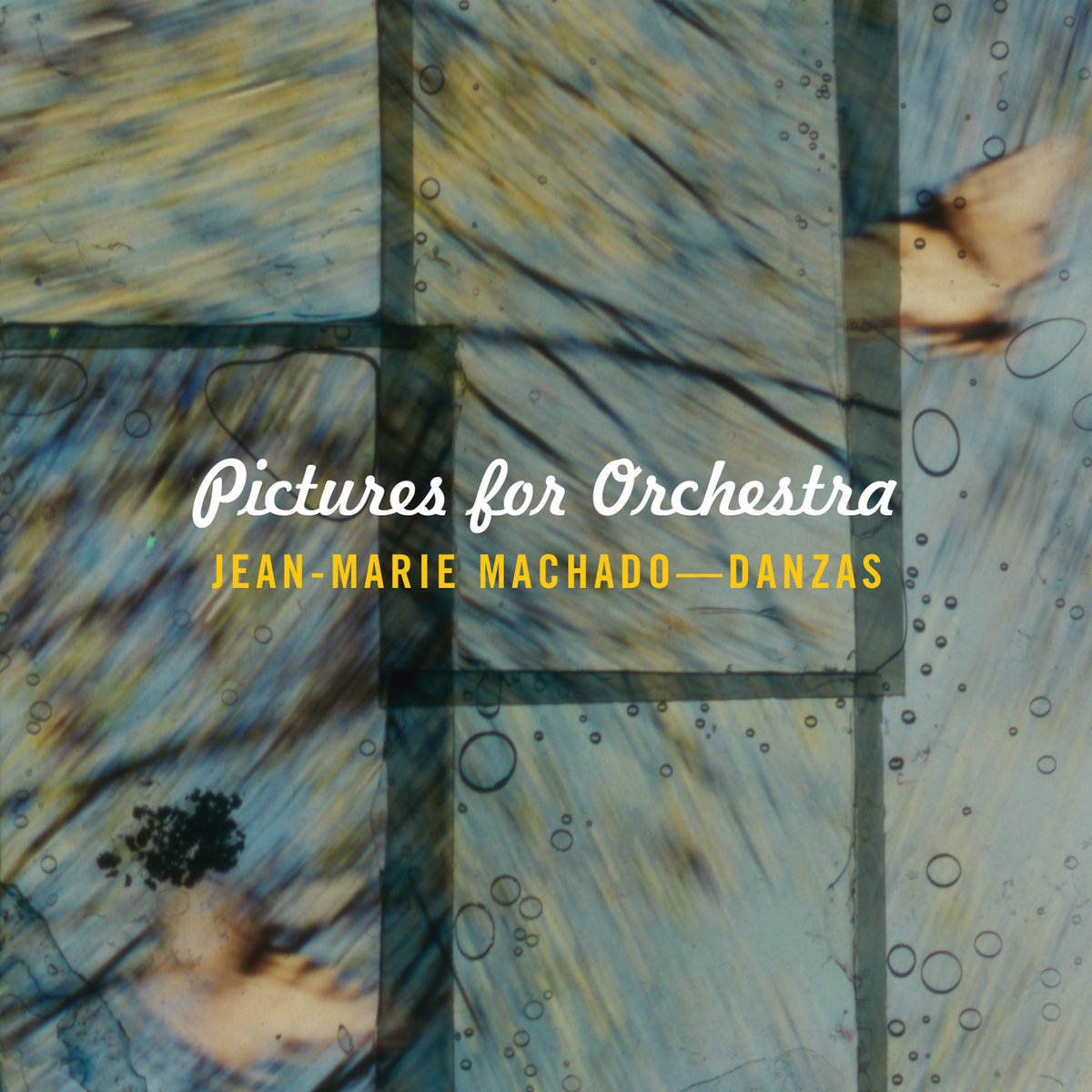
Jean-Marie Machado/Orchestre Danzas: Pictures for Orchestra (RJAL 397033)

Cover

Jean-Marie Machado
Orchestre Danzas
Pictures for Orchestra

Jean-Marie Machado piano
Didier Ithursarry accordion
François Thuillier tuba
Stéphane Guillaume flutes
Jean-Charles Richard saxophones
Cecile Grenier viola
Severine Morfin viola
Guillaume Martigne cello
Elodie Pasquier clarinets
Artistic direction by Jean-Marie Machado and Gérard de Haro
Recording, mixing, mastering, Studios La Buissonne, Pernes-les-Fontaines, France
Recorded October 2-5 and mixed November 12/13, 2018 by Gérard de Haro
Mastered by Nicolas Baillard at La Buissonne Mastering Studios
Piano preparation and tuning by Alain Massonneau
Release date: March 8, 2019

After making his La Buissonne label debut with saxophonist Dave Liebman, pianist and composer Jean-Marie Machado returns with his most personal project to date. Though leading a nine-member ensemble of two violas, cello, winds, accordion, and tuba, he leaves off the roster an important tenth member: improvisation itself.

The set is held intimately aloft by three piano solos, each sweeping and painterly in its own way. The opening “Minhas três almas” is the most nostalgic among them. Like a child taking its first steps, it sparkles with unadulterated delight even as it foreshadows the hardships life is sure to put in one’s path. While some of what comes after is in an exuberant mode—including the Egberto Gismonti-esque greenery of “A água do céu,” the tuba-centric dance of “Trompeta Grande,” and the invigorating encore, “Oriental jig”—the heartbeat of this musical body runs on the electrical impulses of something far more introverted. The space within, it turns out, is grander than any without, for only the mind and soul are equipped to imagine infinity.

Dust and ashes float in the air of “Nebbia,” throughout which a viola sings in its highest registers as a mercy of chronological salvation. Kindred voices extend their loving arms across other terrains. Like the cello drawing moonlight between the quivering branches of “As ondas da vida” or the soprano saxophone grazing cloud in “Circles around,” every gesture has an echo, and every echo is the start of another.

The cumulative effect is an emotionally resilient biography of a life known by no other name than our collective own. Even (if not especially) when Machado arranges the work of Astor Piazzolla (“Vuelvo al sur”) and Robert Schumann (“FW.1855”), we hear our own experiences reflected in every dialogue. All of which accounts for another gem in the La Buissonne catalog.