Here is a wonderful write-up by one of my favorite bloggers, Diana J. Hale, about the 2012 London Jazz Festival, which included a strong Nordic representation of ECM artists. While you’re there, be sure to peruse her ongoing series of beautiful watercolors.
Live
Of Tears, Of Privilege: Adam’s Lament at Lincoln Center
Adam’s Lament
Latvian Radio Choir
Sinfonietta Rīga
Tõnu Kaljuste conductor
Alice Tully Hall, Starr Theater
Lincoln Center for the Performing Arts
November 17, 2012
7:30pm
Of Tears…
It would be easy to paint the maturation of Arvo Pärt in the shape of a funnel. The Estonian composer was trained in the language of modernism but came to consolidate his musical foci into so-called “holy minimalism”—a catchall term that, while descriptive enough, ultimately defeats itself. In Pärt’s vision, minimalism seems better represented as pinpoints of light, stars that would be nothing without their limpid sky. Such mutual dependency is what makes the music sacred. We do better, then, to twin the funnel into an hourglass, endlessly turned by the hands and mouths of whoever bestows its truths to those fortunate enough to hear them. So we are when the Latvian Radio Choir and Sinfonietta Rīga, under the masterful guidance of Tõnu Kaljuste, present an all-Pärt program as part of Lincoln Center’s annual White Light Festival. Anticipation is high and met when the first strains of the Berliner Messe (1990-91, rev. 2002) touch our cortices. Composed on commission after Pärt’s emigration to Berlin, this setting of the Ordinary possesses a remarkable permeability. Around the standard texts and interjected Allelujas, strings sketch the thunder of conversion. Their pulse is elemental, hidden. Suspension awaits in Pärt’s setting of the Te Deum (1984-85, rev. 1992), the work that introduced me to its composer and which has since lived inside me. It develops motives like a book: knowledge that came before feeds into that which follows. A digitally sampled wind harp unfurls a constant and godly breath, piano dipping into the font of reason and stirring double basses to higher registers. Every crescendo equals stillness. We feel it in the soles of our feet, in the palms of our hands, in the stigmata of our collective memory.
Intermission brings about the surreal din of interpretation, snatches of recreated melody and soloists praised for the sake of proving knowledge.
Trisagion (1992, rev. 1994) begins the second half. Written in celebration of the 500th anniversary of a small Finnish parish, its title comes from the Greek for “Thrice Holy” and makes reference to Orthodox prayer and to the piece’s three core pitches. It is an overturned cup, spilling unspoken words. It is the beat of mortality. It is crystal, tarnished and restored. Also restored are the writings of ascetic Silouan of Athos (1866-1938), something of a touchstone of Pärt’s work and the red thread of Adam’s Lament (2009), the landscape of which resonates with suffering. Tears feed its soil as sunlight feeds the flora that grow from it. The mountains shiver, fauna likewise in their dreamless slumber. All the more appropriate that the musicians encore with Estonian Lullaby (2002, rev. 2006), bringing with it needed repose in an age so restless that only a child’s mind can contain its temper.
Of Privilege…
Nestled in the orchestra section of Alice Tully Hall, and in the most prayerful music I have experienced firsthand in years, I become uncomfortably aware of the allowances that brought us together. In the suffering of Silouan’s Adam lies the root of strife. How can Pärt not have this in mind when he has suffused his reading with the pain of the mortal body, its skeleton at once fractured and bonded by immeasurable sorrow? On this note, I must respectfully disagree with Zachary Woolfe, who in his November 19 New York Times review characterizes Pärt as having “defined a seductive vision of modern spiritual music, one that seeks to escape our world…rather than to embrace it.” I wonder if we are listening to the same music, for it is anything but escapist. Rather, it reminds me that I am experiencing an $80-per-ticket luxury even as innocents continue to die for nothing at the hands of self-interested regimes. Its surplus of beauty only serves to emphasize the rarity thereof. In spite of venue and context, the intimacy of the musicianship heightens my awareness of these realities. That their charge transcends the commercial trappings of the festival speaks to precisely the love that went into its creation, even if it does nothing to obscure the tightrope I walk in balancing appreciation with the hypocrisy of my inaction. I feel this acutely as, in the wake of a standing ovation, concertgoers debate the technical ups and downs of what they have just heard. With such effect still whirring inside us, what difference do a few glitches in the first half make?
In the toy chest of temptation, there is a kaleidoscope of shadow. Through it, one sees that the world has become sick with perlocution. Turning it in the hands only darkens its glory. It blinds us to those in need. Awareness, this music tells us, is not enough. One must also know the vitality of experience. Grace is not something to be won back through good deeds or mere contemplation, but felt when one no longer seeks it. When I seek Mr. Kaljuste instead and inform him that I will be writing this review, he humbly wishes me good luck. Yet I read a deeper truth into the statement. Without luck, I would not have been here. May I never forget that.
Let me know Thy touch,
that I may know of life.
Let me know Thy touchlessness,
that I may know the path.
Brightly Does It: Serkin and Shanghai Dazzle
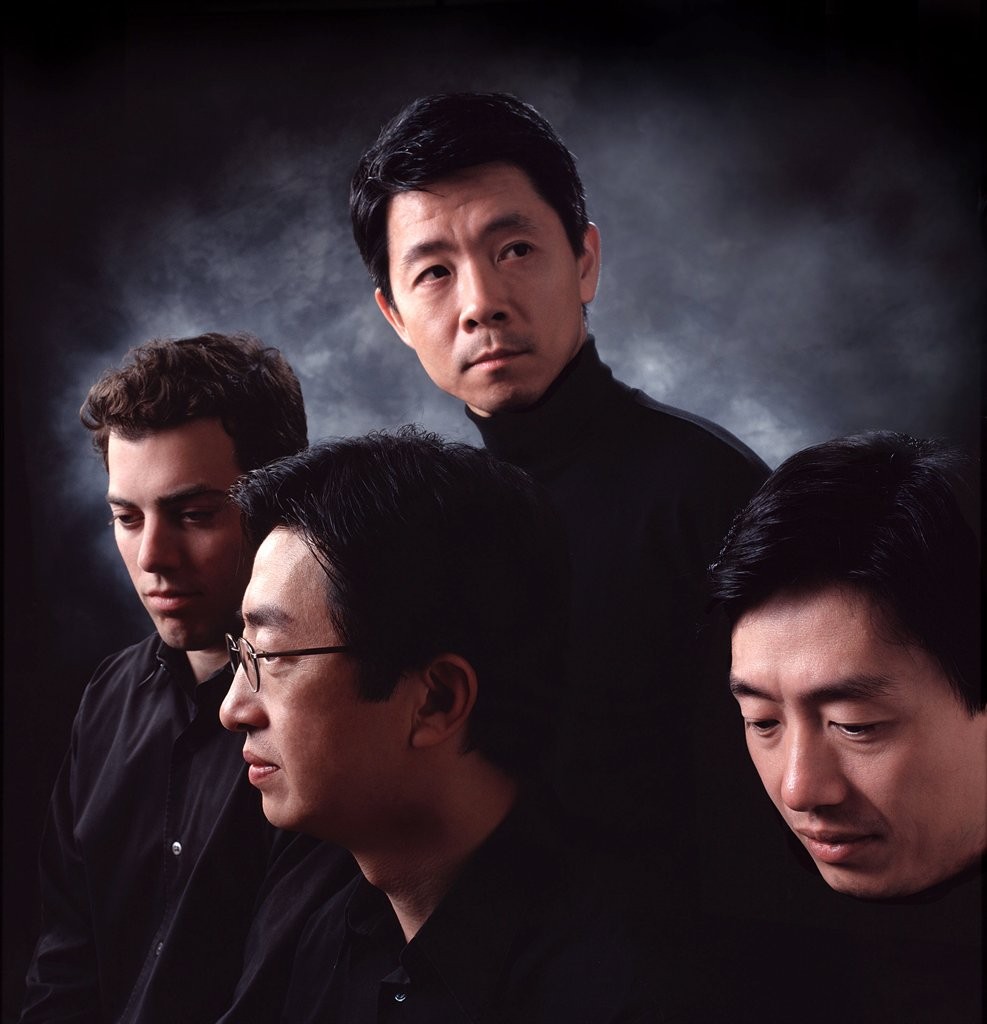
The Shanghai Quartet
Weigang Li violin
Yi-Wen Jiang violin
Honggang Li viola
Nicholas Tzavaras cello
with
Peter Serkin piano
Bailey Hall, Cornell University
Friday, November 9, 2012
8:00 pm
Reputations of internationally renowned ensembles are bound to influence our expectations; the immediacy of a live performance allows us to put aside the accolades and bask in the music. Such was the dynamic at Bailey Hall last Friday, when pianist Peter Serkin joined the Shanghai Quartet for nearly two hours of enrichment. The centerpiece was Chinese-American composer Bright Sheng’s Dance Capriccio, making its New York state premier. Born in the quartet’s namesake, Sheng spent seven years studying folk culture of the Tibetan borderlands during the Cultural Revolution before entering the Shanghai Conservatory and uprooting to the US, where he now teaches composition at the University of Michigan. The spirit of that research continues to inform his work, and the Dance Capriccio’s deft shuttling of western Nepalese Sherpa idioms through a loom of classical counterparts is no exception. Yet rather than oversimplify his craft as a fusion of “East” and “West,” as much press on Sheng is wont to do, we did better to take this newly commissioned piece on its own terms, as dictated by the very ones for whom it was written. The spectral qualities of its awakening were clear from note one, its eddies of ink and time as brooding as they were animated. This brief glimpse into the lives of an ethnic group rarely known for anything beyond mountaineering was a treat for jaded ears. The layering of rhythmic signatures, combined with challenging octave splits from Serkin, made for rich tonal brocade and many translucent, if not also transcendent, passages. Like a stormy sky enjoying its thunder, memorable flashes of brilliance marked its canvas.
Making a sandwich of the evening were two no-less-colorful examples of standard repertoire. Of these, the A-Major Piano Quintet of Antonín Dvořák made the deepest impression and paired naturally with Sheng’s montage. At its heart is the Dumka, a Slavic form of which Dvořák was particularly fond. As the jewel of the performance, it showcased the musicians’ superb dynamic control—even the single pizzicato strokes from second violinist Yi-Wen Jiang rang true. The Dumka’s characteristic balance between sadness and gaiety was embodied to the gills by Serkin and cellist Nicholas Tzavaras. The composer’s affection for the cello, outside of his concerto for the same, is elsewhere hardly so apparent, and its mind-meld with the keys formed the golden thread that began the piece and flowed through a landscape, pastoral yet pensive, toward an effervescent Scherzo in the Bohemian style. All of this seemed mere preamble to the gnarled Finale, in which Dvořák’s cellular approach and astonishing instinct for forested textures was clear as day.
The concert opened with Mozart’s String Quartet No. 17 in B-flat Major. Nicknamed “The Hunt” and so called for the first movement’s triadic evocation of hunting horns, it offered a conservative start to a concert otherwise roiling with emotion. These delicate considerations drowned in the swoon of the second movement, with its beautiful gilding from first violinist Weigang Li and permeable support from violist Honggang Li. The Adagio was the night’s first highlight and proved that these four bows are at their virtuosic best when given time to ponder. With so much elasticity to savor, we were won over by the enchanting syncopations of the final movement. Its winding circles of light, full of intent yet never cajoling, played a game of chase in lieu of capture. The quartet rendered Mozart just right: evocatively without ever being too theatrical.
Serkin, a player I’ve long admired on disc (not least for his duo recording with András Schiff on ECM), was splendid on stage. He plays like a violinist, wiggling his fingers for a cerebral vibrato effect, sculpting notes in their post-attack resonance. He also possesses some of the most elegant legato phrasing in the business. In combination with this world-class act, the effect was dazzling.
(See this article in its original form at the Cornell Daily Sun.)
Tout Court: Les Violons du Roy Brings Late Baroque to Bailey
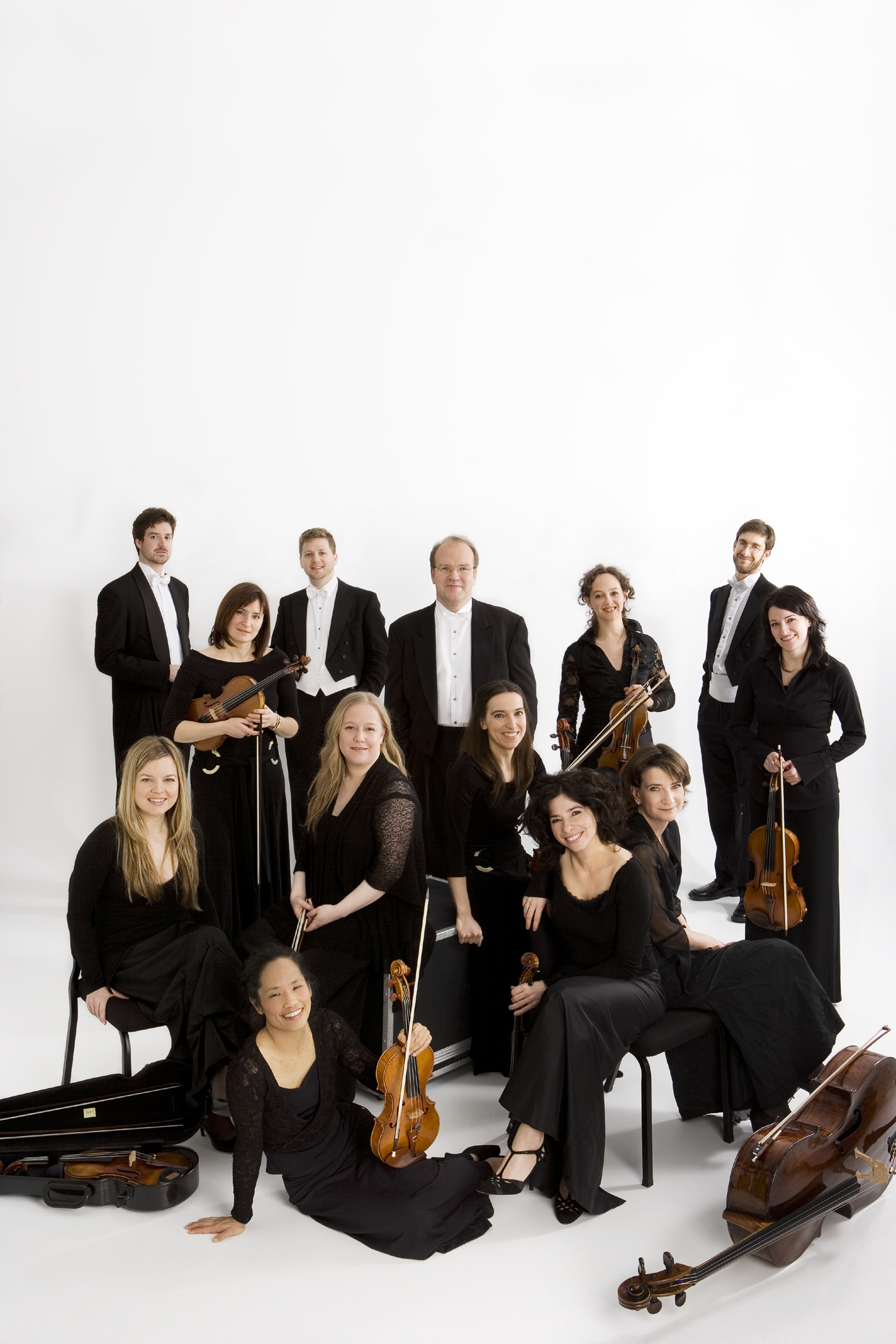
Les Violons du Roy
Bernard Labadie music director
Emmanuel Pahud flute
Cornell University, Bailey Hall
October 19, 2012
8:00 pm
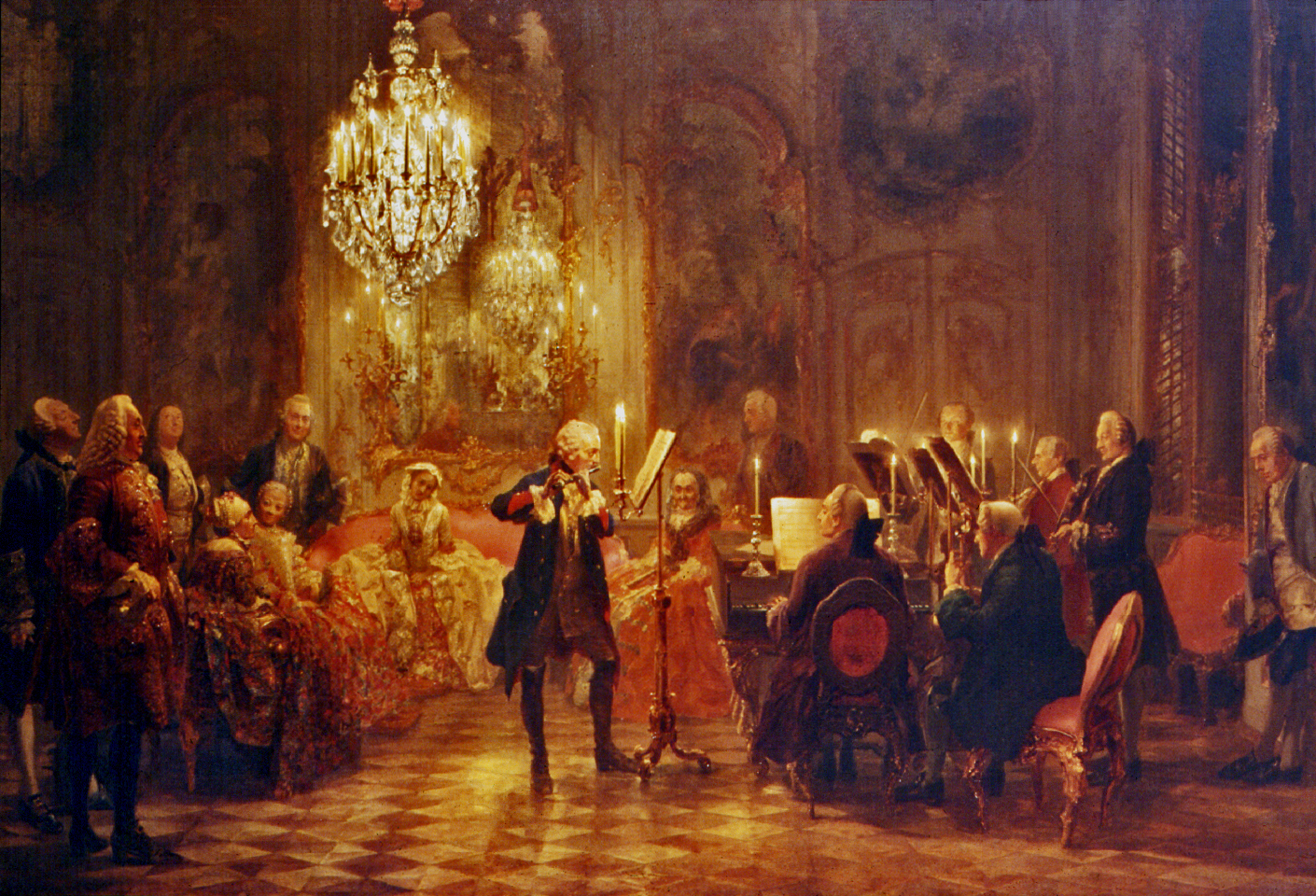
More than anyone, we have Frederick the Great (1712-1786) to thank for last Friday night’s program at Bailey Hall. Though progeny to the post-Enlightenment despotism of the times, the Prussian king was first and foremost a student of the arts. Enchanted as a lad of 16 by the virtuosity of Johann Joachim Quantz, he immediately began studying with the German flutist and, much to his warmongering father’s chagrin, added Czech violinist Franz Benda and Johann Sebastian Bach’s son Carl Philipp Emanuel to his roster at court. In due time his sonic coterie would grow to 50, the burgeoning hub from which our artists for the evening, Les Violins du Roy, drew their effervescent bows. The chamber orchestra hails from Québec City, where musical director Bernard Labadie has since 1984 nurtured its reputation for scintillating musicianship and spirited playing of the 17th- and 18th-century material in which it excels. Flutist Emmanuel Pahud, fresh from his tenure at EMI Classics with harpsichordist/conductor Trevor Pinnock, brought his expertise to bear with memorable panache.
Like many creatively inclined patriarchs before him, Frederick fancied himself a composer and penned the Flute Concerto No. 3 in C Major that proved Pahud’s delicacy with his entrance. Its stately dance evoked vine-drenched courtyards and butterfly wings, each a memory passing slowly like the reflections of clouds across water. An intimate interlude cast the final movement like a ray of light: swift, sure, and heaven-sent. Before this was the concert’s opener by Benda. The lilting cadences of his Sinfonia No. 1 in C Major spawned buoyant and programmatic side paths. Particularly evocative were the cautious footsteps in the Andante, like a lover for whom the forest was both prison and escape. Every sweep of violins painted a branch heavy with the foliage of parting.
While competent enough, these two pieces were thin on the ground in light of Quantz’s masterful G-Major Flute Concerto. From the luscious open chords of the Allegro, one thing was clear: here was the living echo unheard in the preceding architecture. Bach and Vivaldi peeked through that distinct veneer like recessive genes in search of expression. A heart-tugging slow movement, brimming with imagery for the hungry ear, found its dearest traction in the intermittent pizzicato shared by double bass and cellos. Incidentally, my newborn son, for whom this was his first live concert, at last settled into sleep during this passage, and on through the blossom of the final Presto. Transcendent.
J.S. Bach made his requisite appearance through the Ricercare from his Musical Offering. This seminal six-voice fugue is an epic in and of itself, and made for grave and inescapable listening. Cinematic before there ever was such a concept, its genius was all the clearer for Les Violons du Roy’s weighted playing—impressive after the concert’s gallant first half. The music of C.P.E. then brought its expressive foil through two works. His Symphony in B Minor was a treat to hear in close quarters. With sparkling invention and drama, it showed us a unique voice indeed, managing to step away from his father’s legacy while trailing just enough of it like a Peter Pan shadow. So too with the Flute Concerto in A Major. Despite being a younger work, it harbors some of his most mature lyricism in the Largo. From its inward sigh and downright Beethovenian tension in the lower strings, we felt a heart broken and restored. This made the final Allegro all the more cathartic for its implosive double stops. Pahud excelled here most of all, navigating a geography that was jagged but never sharp. The latter was a guiding philosophy for an orchestra that knows how to spike its punch, for even at their most intense, under Labadie’s direction the strings were never grating. Likewise, Pahud’s tone struck rare balance between the shrill and rounded capabilities of his instrument.
It would have been a travesty to have had a world-renowned flutist and Baroque chamber orchestra and not be treated to Father Bach’s famous Badinerie from the B-minor Orchestral Suite No. 2. In this respect they delivered with embellishments galore that had us leaving in the same laughter and lightness of spirit that this delightful encore provided.
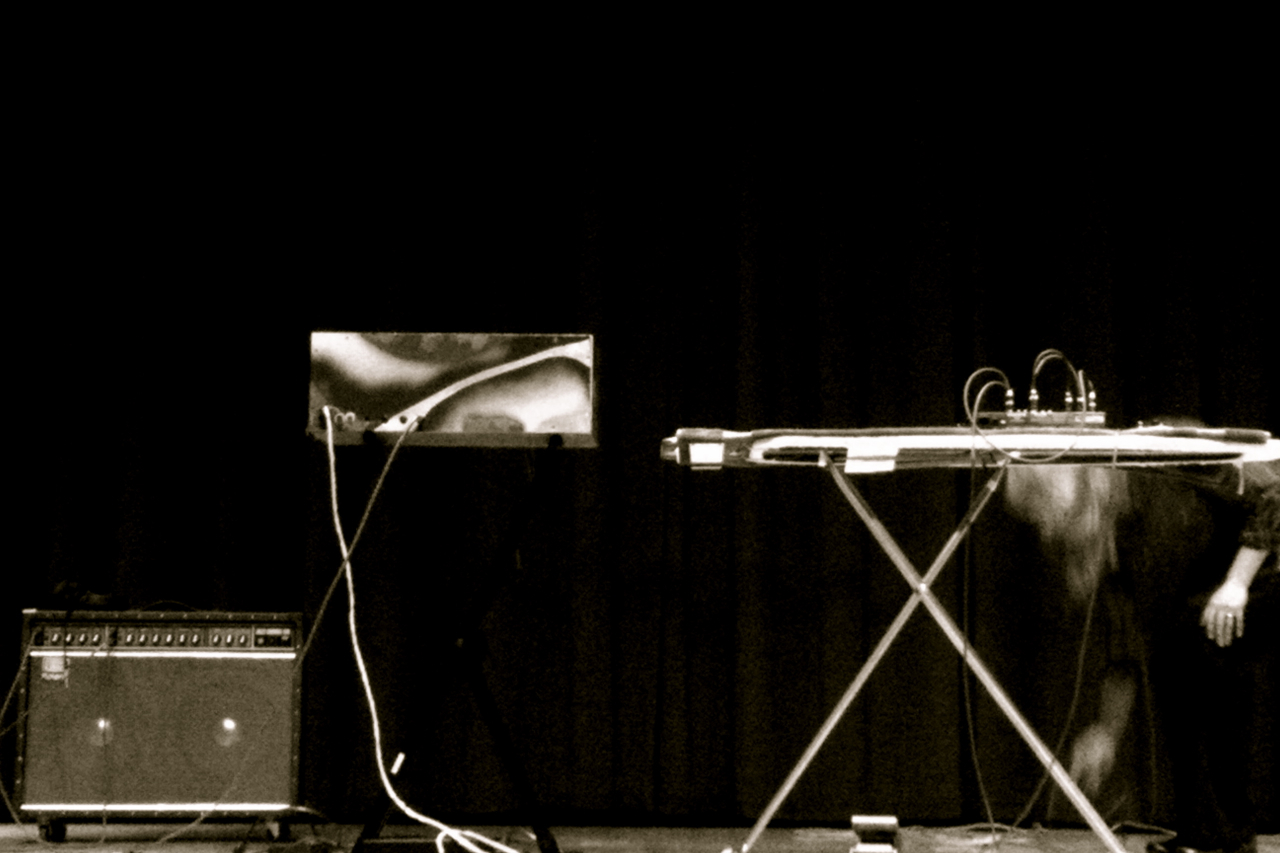
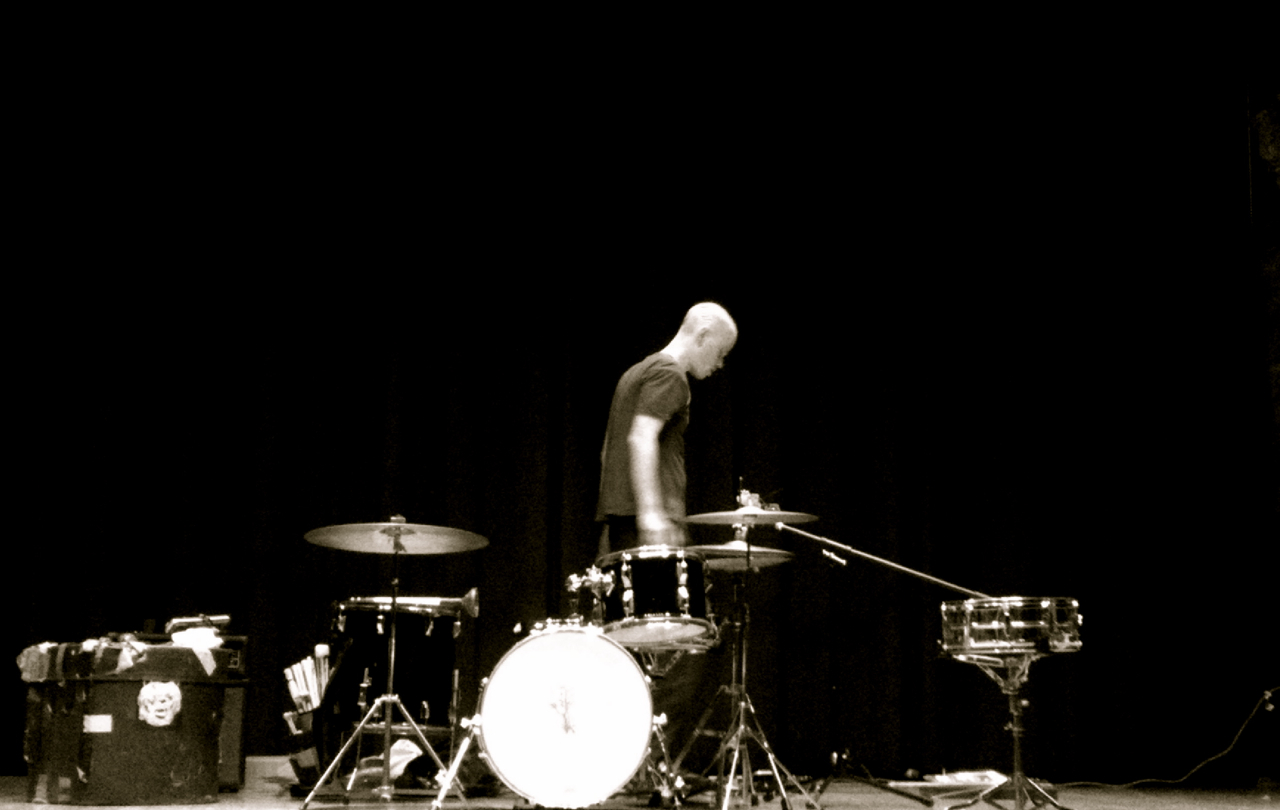
Maximum Impedance & Chris Corsano: Improvisations
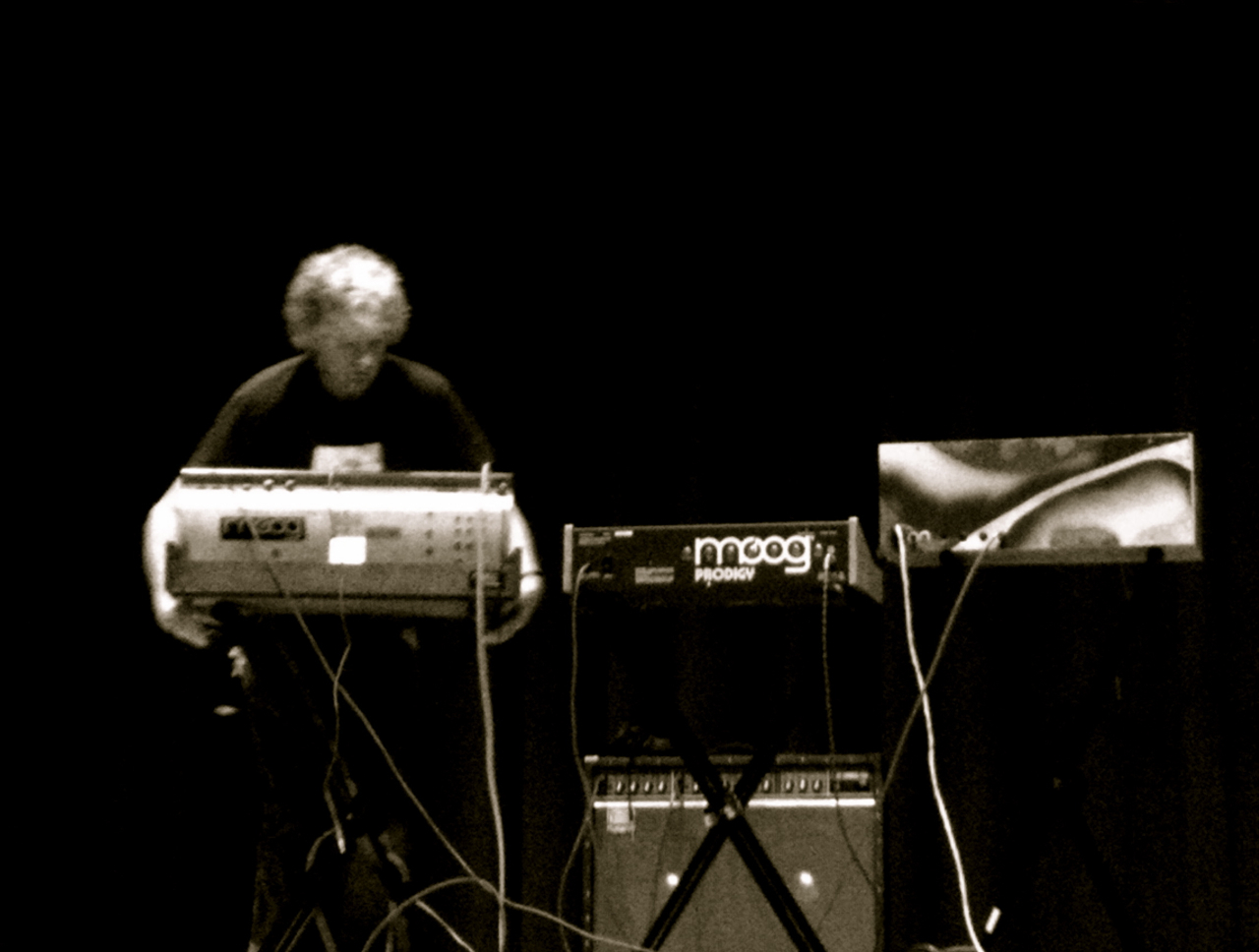
Maximum Impedance (Trevor Pinch and Annie Lewandowski, electronics)
Chris Corsano (percussion)
Barnes Hall, Cornell University
September 25, 2012
8:00 pm
I. Behind the test is a promise, a fissure to be licked clean by the stage. We are seated, chambered, only steps below yet an underworld apart. Tricks and trundling trees fall flat on their faces, hoping the alliterations might leave them be. But the winds are here, arms outspoken and trembling, and with them the interactive sun blazing in its faraway cage. For space there is only the milk of a lonesome thistle whose dreams have all but popped from every faltering intimacy. We do not hear the sounds of such demise, only see them floating above our heads, a rafter’s song turned idle by philosophies of the knob and dial. In this analog bath, we are the soap. The posture of a Zeitgeist: hunched over an internal soundboard, tangled in something like hair. If lava lamps have hearts, they may not sing, but at least in the photographic realities of this performance we know they can dream. The earthworm squirms—at once siren, telegram—and jacks its communications into a root’s live wire.
II. Scooped as if by Ursa Major’s saddle and poured into the mouth of a river is the moon, who shines like death watching its own reflection. The posture recedes, even as a cottage takes its place. Vine-gnarled and knowing, it spews fairytales from its open door, weeps costumes from its windows, excretes happy endings into the basement. Choirs melt behind a scrim of frosted glass, where only light can know the words beyond.
III. Craned necks and circumstance: double agents of the gamelan mind. A wing’s brea(d)th away from certainty, the mallets are antennae. The choice to brush or strike is one and the same, he seems to say, breathing into the snare’s foghorn blood-flow. Refrain of bees without honey. Clicking the triangle breeds flies instead, each the life of a talking head drowned many times over. The cymbal wears a hat. Its name is “eggshell.”
IV. A shake within a shimmy, a rock within a wince. Traffic moves at the rate of pedestrian thought, sliced and served on copper plates. Looking only where they are, his hands do the work of ten eyes. The mouth, an elephant’s trunk twinned, is alive with lyrical auroras. Preparation equals immediate action.
V. Four-dimensional train, arriving as it departs. Lines to feed the brain with stop-light red.
VI. The hit snaps veins like wings. The feet of resistance now fallen on their arches, keystones electrified beyond recognition (only Achilles can tell). A mammoth’s tusk hollowed and blown. A flick of the wrist, and the cricket sings.
The seizure is now.
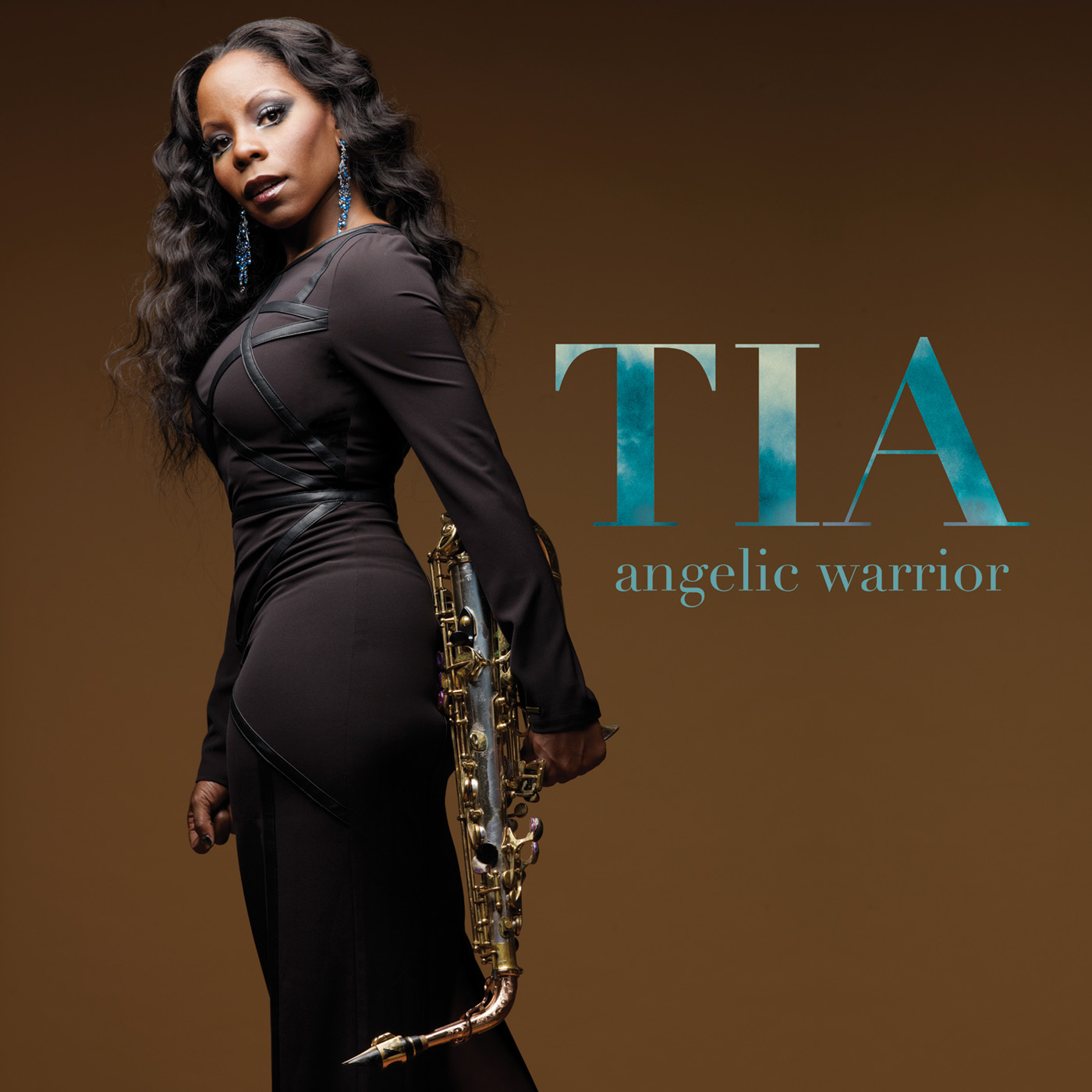
Bringing Down the House: Tia Fuller and Her Angelic Warriors
Tia Fuller Quartet
Bailey Hall, Cornell University
September 14, 2012
8:00 pm
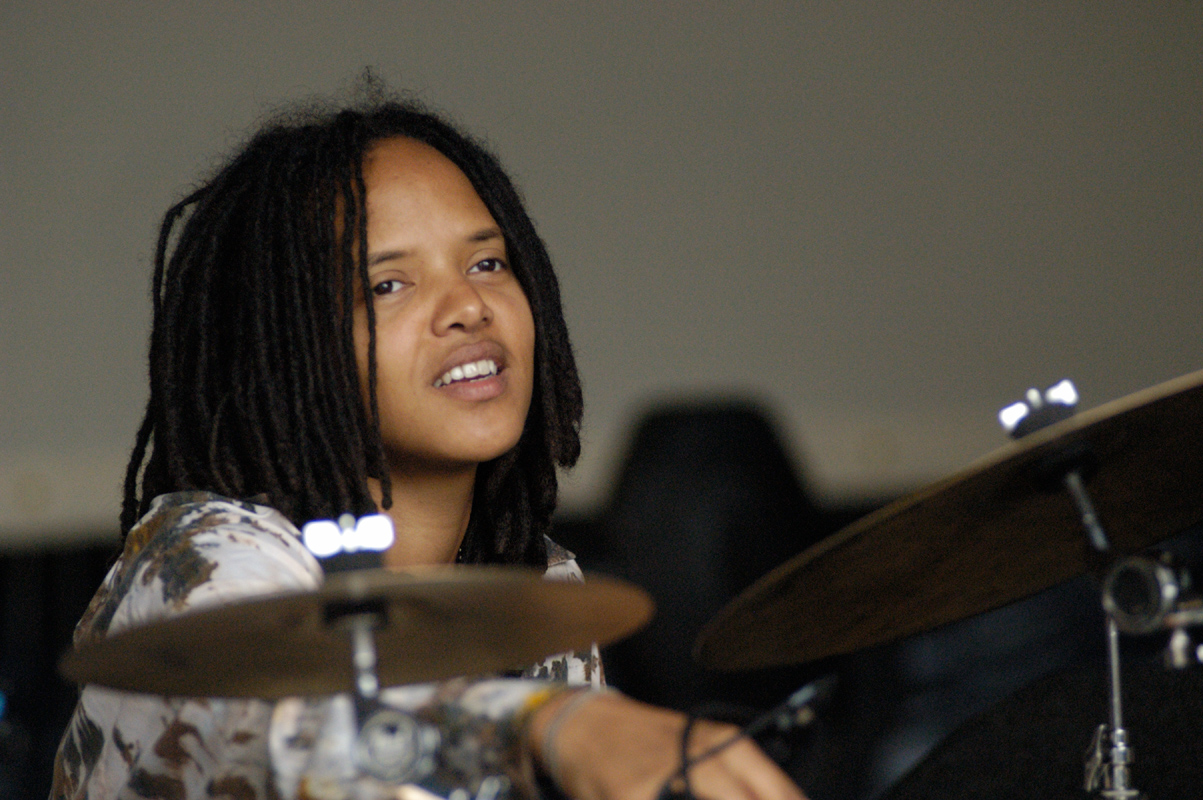
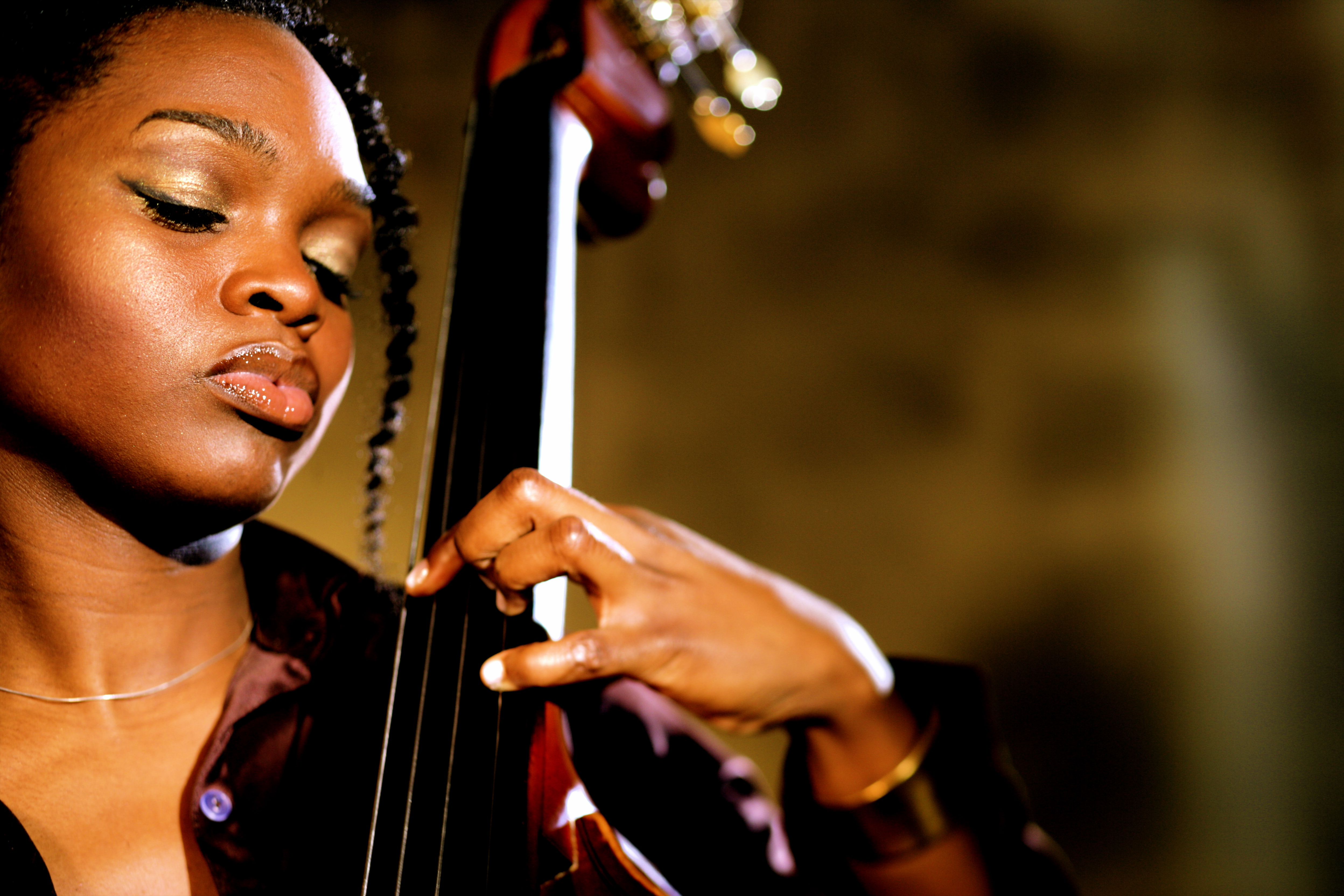
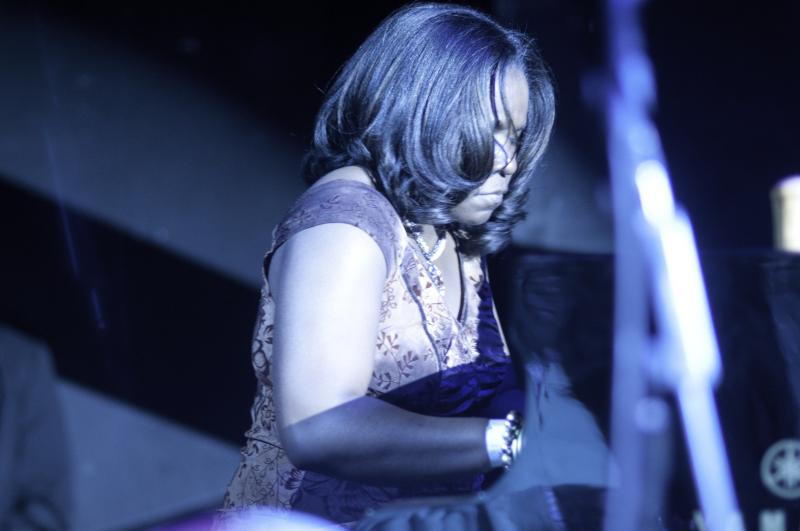
Tia Fuller brings it all to the table. As a composer, bandleader, teacher, and touring member of Beyoncé’s all-female band, the Colorado-born saxophonist wears many hats. Drawing on her experiences growing up in a musical household, Fuller shared the stage for the first time in a revamped quartet with sister/pianist Shamie Royston, bassist Mimi Jones, and drummer Terri Lyne Carrington. Feel free to take a walk down the gender road if you like, but you’ll have to do it alone. I’d rather step off that beaten way and just listen, for in the swelter of the moment their bodies were catalysts for a spontaneity blind to such things. Music is to biology as apples are to oranges, and for this kickoff to the Cornell Concert Series 2012-13 season Fuller and company wore it like a smile: that is to say, beamingly.
Our leader took to the stage with soprano slung forward, following its inertia into the deep end of “Angelic Warrior,” the title cut off her new joint (due out September 25 on Mack Avenue). Sporting a pair of high heels with enough sparkle to make Dorothy jealous, she and her robust tone cut through the grime of a tiring week with the power of Dawn. This prime groove found Royston flying, while Jones rocked the house like a cradle on fire over comparably blazing timekeeping from Carrington. The latter proved to be a shining star of the set. A protégé of Jack DeJohnette and legend in her own right, her style was palpable, organic, and rich with color. She was her own 5-hour ENERGY, finding all the room she needed to bring her solos to bear across every tune (a rarity in some jazz settings, which only swing the spotlight a drummer’s way for the finale).
The same went for all in what amounted to a truly democratic sound. Ever the acrobat, Fuller switched over to her mainstay alto for “Descend To Barbados.” Here Royston’s pianism cascaded like the waters of its namesake, leaving Jones to wring out an ocean’s worth of intimacy, heavy as the sky at midnight.
Waters of a different kind reflected Fuller’s selflessness in “Katrina’s Prayer,” drawing us into a prayerful mood before “Ebb and Flow” brought on a catharsis in funk. If Jones’s syncopations were life in all its obstacles, then Royston (here tripping the keys electric) and Fuller showed us perseverance in spite of. Combining the polish of a studio session with the raw immediacy of the most in-your-face venues, the band rolled on through a smattering of mid-tempo tunes to “Royston Rumble,” a clear winner that culminated in some enthralling crosstalk between reed and sticks.
Instrumentalists, we may concede, are storytellers whose challenge is to draw connections between themselves and listeners in the absence of words. Yet these four formidable fashionistas had plenty of words to share in their celebration of honor, of life, and of the divine in all of us. It was also a celebration of family, a point brought home as Tia welcomed father Fred Fuller to the stage. The bassist brought a fluid sound to bear on his “Watergate Blues,” putting a timely cap on an evening brimming with rhythm and soul. There was not one pretentious star to be found in its galaxy, but only endearing music making, straight from their hearts to ours. The old with the new, the light with the shadow, the meek with the strong: these the angelic warrior embodies to the fullest, recognizing that creation is never one-sided. It was a message to carry forth as we wandered back into the world, leaving not just on a high note, but also on high.
(See this article in its original form at the Cornell Daily Sun.)
“Before Your Very Eyes”: The Masters Quartet Live Report
August 4, 2012
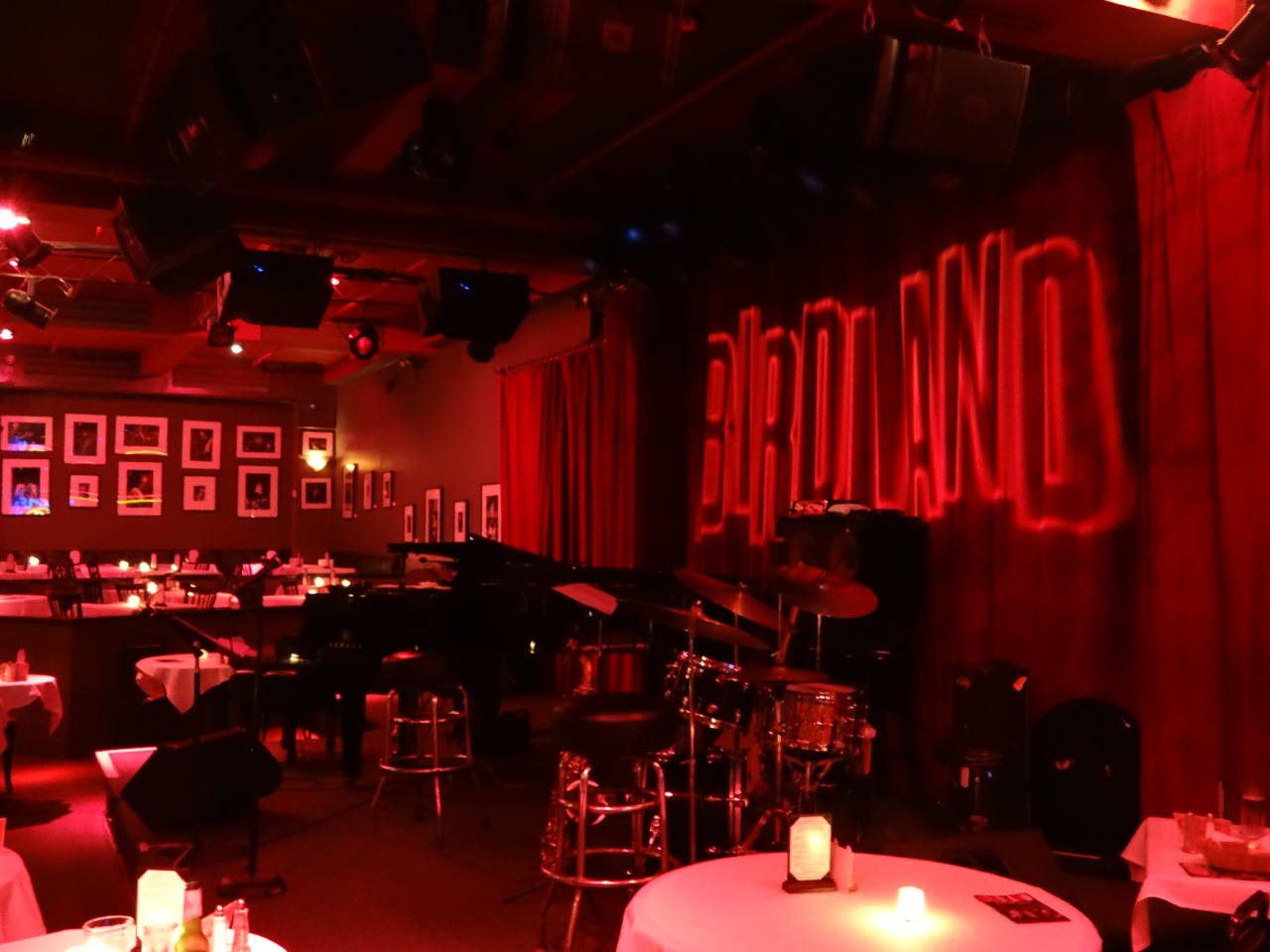
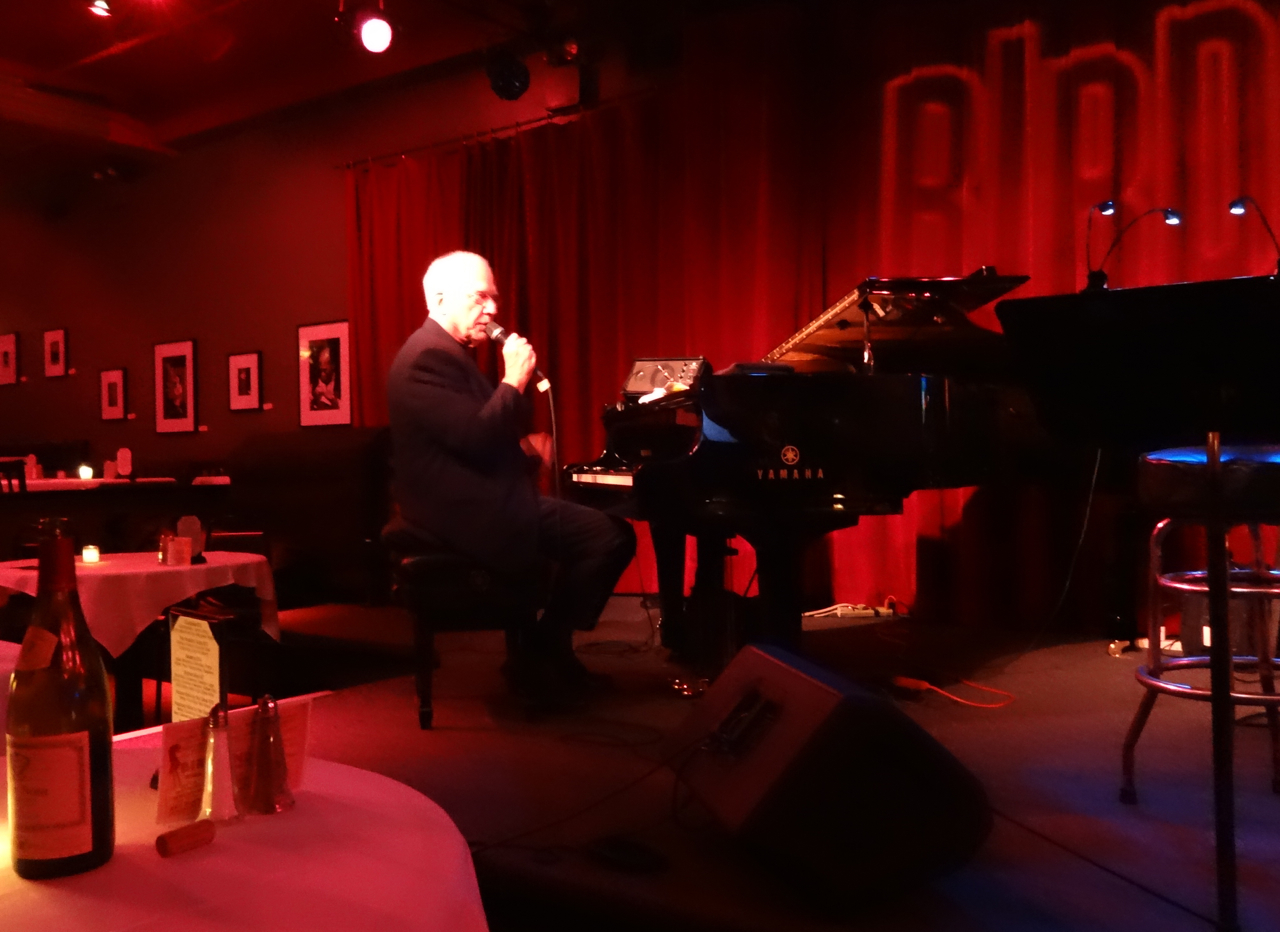
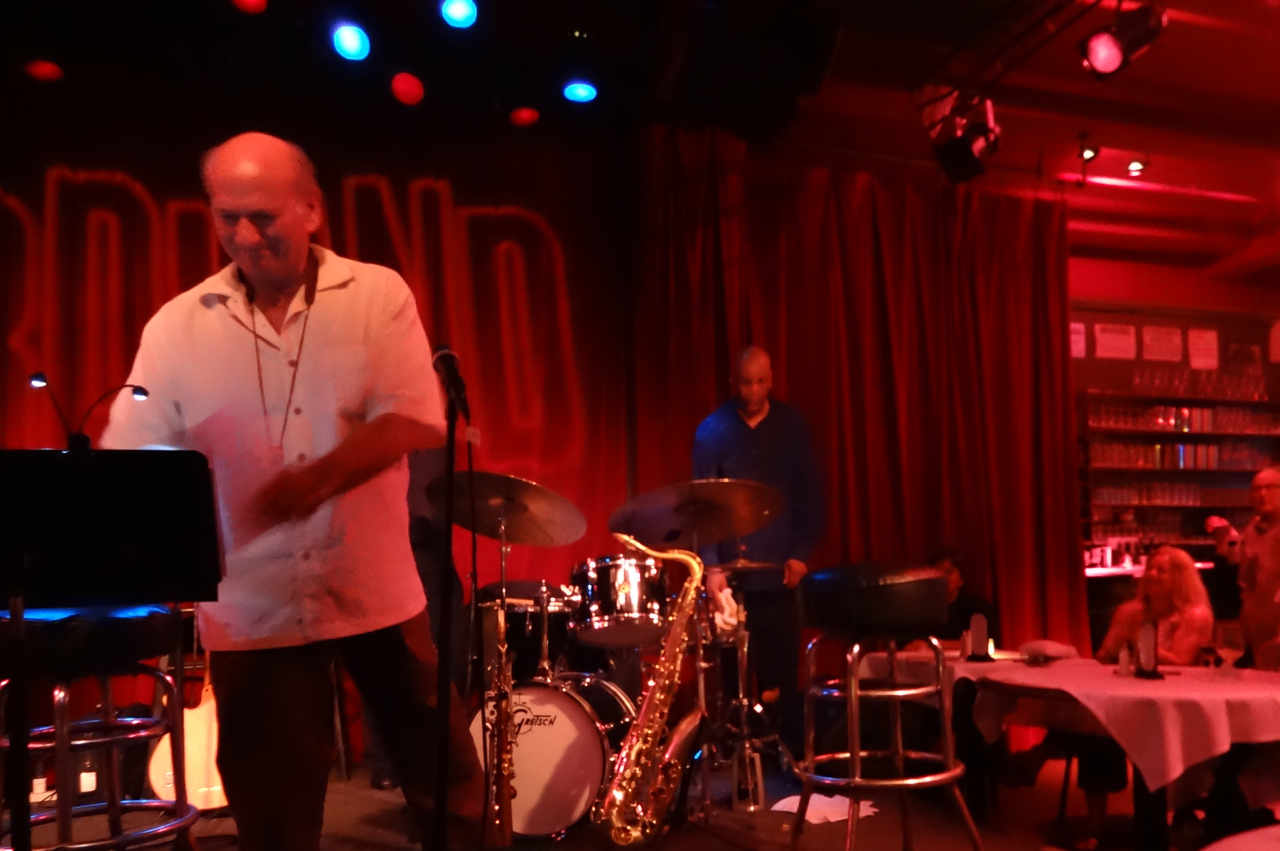
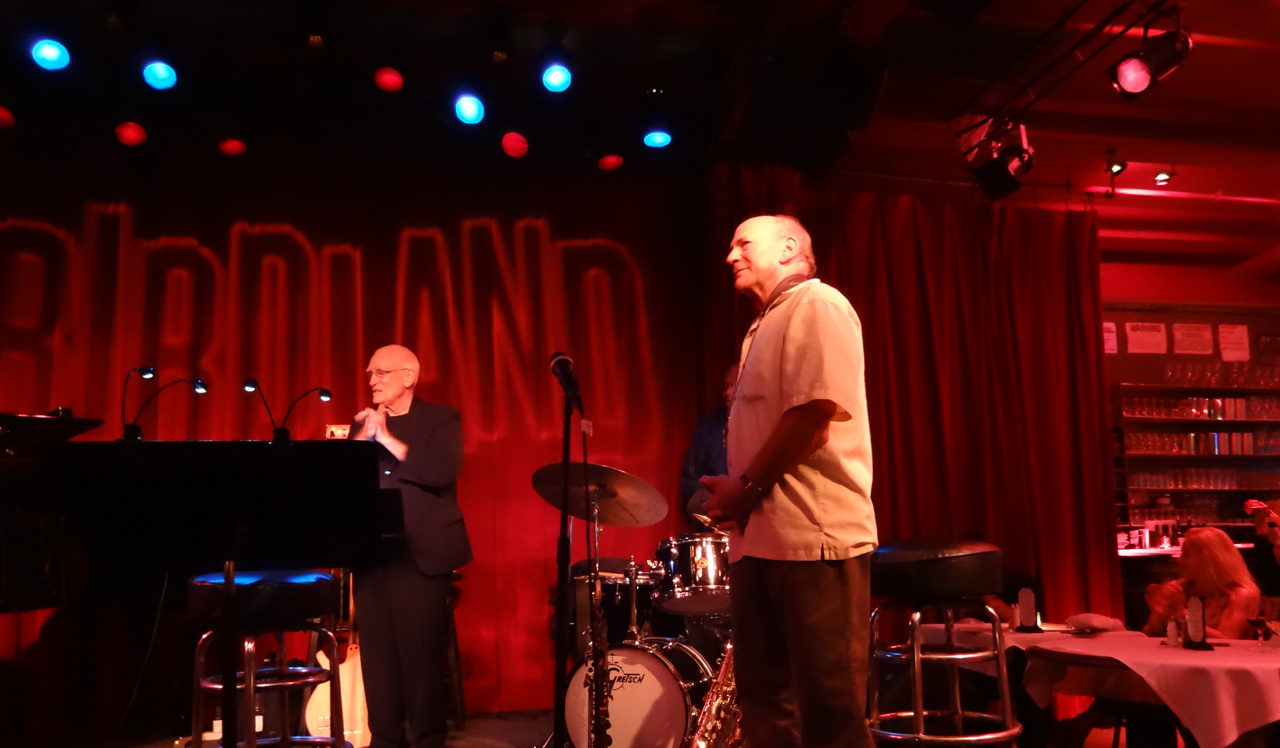
Birdland
8:30 & 11:00 pm
Steve Kuhn piano
Dave Liebman saxes
Steve Swallow bass
Billy Drummond drums
My first pilgrimage to New York’s hallowed Birdland brought me before the Masters Quartet. One year later I find myself coming full circle, once more in the presence of these phenomenal four.
Opening a pair of trio tunes (sans Liebman), Kuhn lulls a sold-out house with his intro to “There is No Greater Love,” from which arises a synergy between bass and drums that will come to rule the night. Those full and sparkling keys bring us to a gorgeous turn from Swallow, who casts a distinctly rounded shadow with a new custom instrument. His “Dark Glasses” marks the first of two nods to Wisteria, his new ECM joint with Kuhn and Joey Baron. Its slick ground line is the sunshine to Drummond’s butterfly wingbeats. The second Wisteria tune, “A Likely Story” (Kuhn) ends the set, for which Drummond wows with a proper solo, projecting sparks of life.
Along the way, Liebman lays down some tenor for an original, G.I.G. (i.e., George Ira Gershwin). With characteristic robustness he runs up and down the thematic ladder, pulling out a squeal or two along the way and pausing for effect against the tide. Kuhn throws in playful clusters Drummond’s way, joining Liebman in whipping the band to a cerebral, Masada-infused froth.
Swallow spins arid webs from the opening of Trane’s “Village Blues.” A solo from Kuhn, hip and loose, referees a heavy exchange between sticks and reed. Swallow follows up with “Remember,” for which soprano makes its first appearance of the night, complementing the bass’s winding legato. Liebman softens the mood with “Mommy’s Eyes,” projecting a childhood’s worth of memories and developing like a color photograph turned sepia from an oceanic voyage. Kuhn lifts these recollections beyond language, ensuring that only in music will we fold the void of loss into something shining and familiar.
The second set kicks off with “Eiderdown” (Swallow). This classic morsel is smoothness incarnate and provides ample segue into “Stella by Starlight.” Swallow’s lyricism here is a joy, feathered by a bone-vibrating quality, while Drummond skips stones across the watery surface of his Gretsch kit at the most tasteful moments. But the lantern is just getting lit, for Liebman has taken to the stage with plenty of midnight oil to spare. That soprano, silky yet striated with coal-bright sentiments, drips liquid gold in his “All the Things That…” Nothing, however, surpasses the nightcap: four unforgettable tunes of—say it with me—masterful proportion. A profoundly considered take on Wayne Shorter’s “Black Eyes” reveals catharsis from Liebman, who traces thicker shadows in the meditative rubato of “Master of the Obvious.”
A misplaced score yields the night’s greatest treasure when he reverts to tenor for an off-the-cuff “Blue Bossa.” He and the band do wonders with this, following up with the appropriately titled “Four” (Miles Davis), which runs a course of snakes and ladders through the jazz lover’s soul into Drummond’s fabulous closer.
Having just completed a European tour together, Swallow and Drummond make an intuitive team, while the ever-attentive Kuhn doesn’t so much make as allow the piano to sing. Yet it is Liebman whose storytelling goes deepest. His slipstream brilliance smoothes out every sonorous wrinkle to hotel sheet crispness, such that by the end it’s the vamp that feels avant-garde.
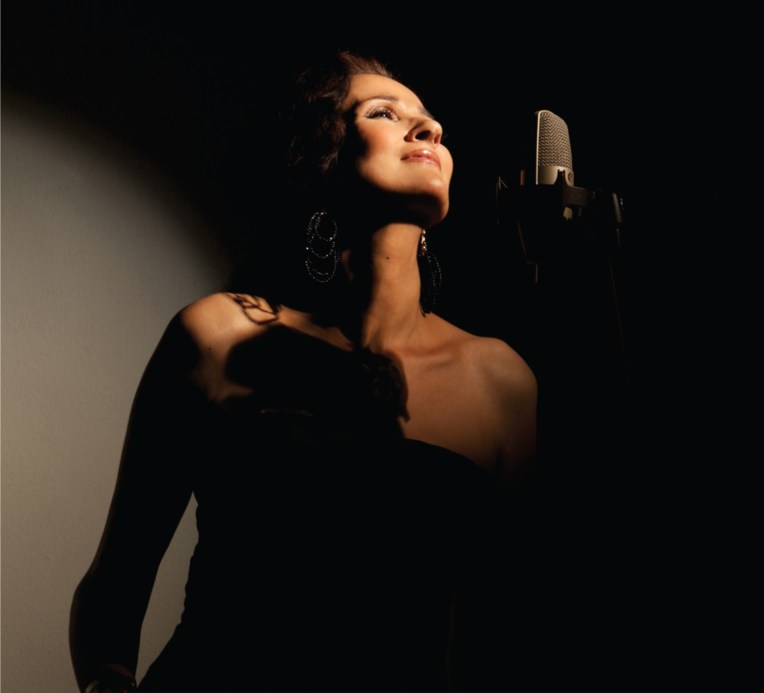
Pavanes from a Princess: Going Beyond the Blue with Tessa Souter

(This and Beyond The Blue cover photo by Joseph Boggess)
When Tessa sings
She dusts off her rings
Her baubles, bangles and beads
She takes to the stage
Irrespective of age
And emotes as if something she needs
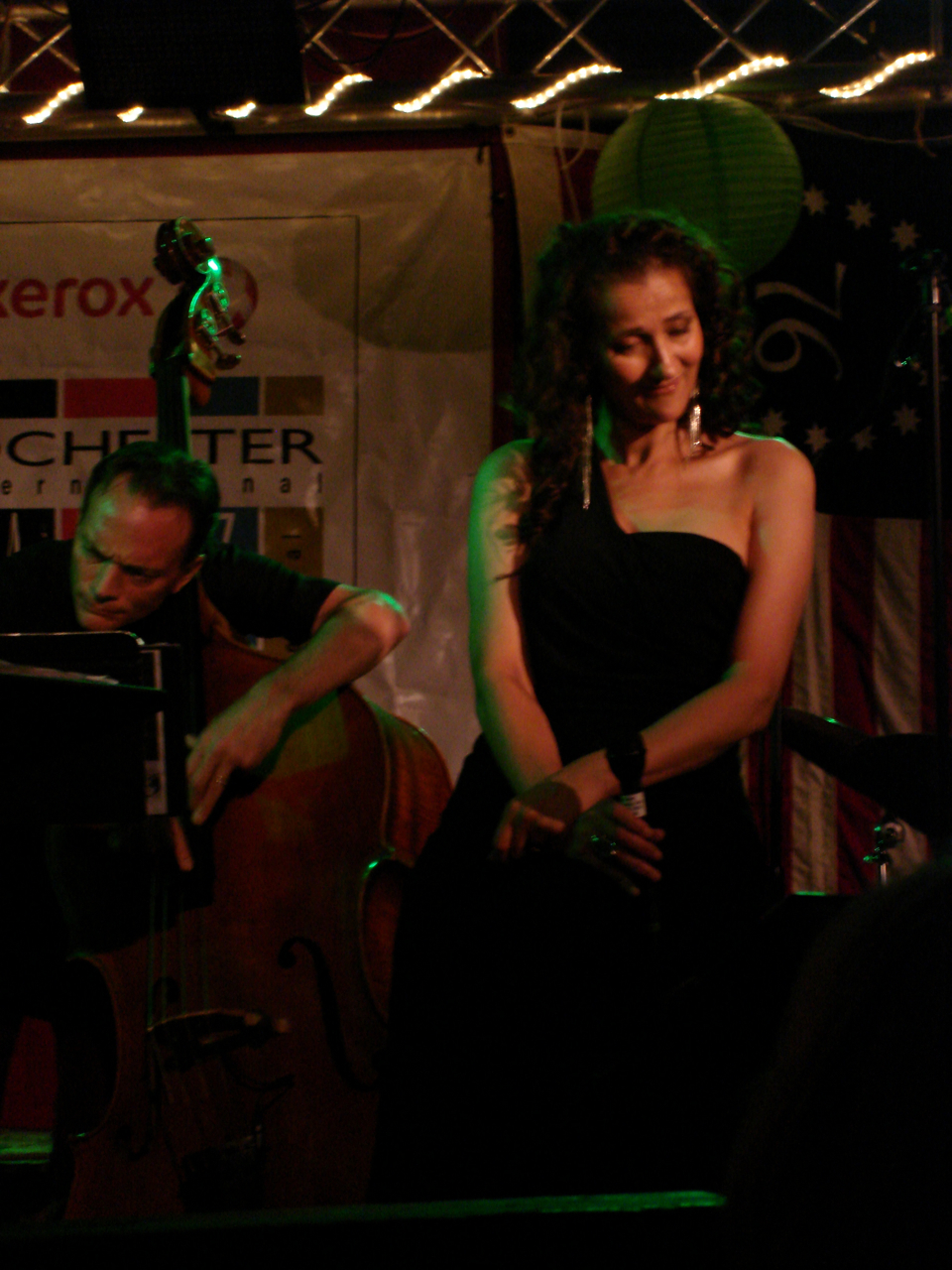
All too often we throw jazz and classical music into opposite ends of a proverbial ring. In most circles the latter wins out, if only by the brute strength of its history. While time cannot be the sole criterion when evaluating the worth and self-sufficiency of any genre, it would seem to be primary in our hypothetical referee’s mind. Where does this referee come from? Do the black and white jail bars of his uniform manifest an equally divided worldview? Can anything in the audible universe really be so simple? We can thank the stars above that artists like Tessa Souter, whose voice blushes with an acceptance of life for what it may ever bring, are showing us just how limiting our quarantining of genres can be. For when those first strains of “The Lamp Is Low”—off her latest, Beyond The Blue—catch our cochlea unawares, we recognize the permeability between them, as if the most natural cross-fertilization in all of music. Set to Ravel’s Pavane For A Dead Princess, the song sashays into the night, flitting like the shadow of a hopeful sigh from behind a veil of melancholy. Only in that loneliness can we know the timeless truth of the singer as an artist in reverse, one who hands us the paints with which to render our appreciation visible.
Bridging this chasm of reflection from one end to the other is a personality that never falters in Beyond’s 12-song session, nine of which place Souter’s original lyrics alongside the tried and true. Each track takes a classical melody as its wings and cocoons at their center a body of stellar musicians: Steve Kuhn on piano, David Finck on bass, Billy Drummond on drums, Joe Locke on vibraphone, Gary Versace on accordion, and Joel Frahm on saxophones. With such a finely attuned thorax in the pilot’s chair, Souter’s luxuriance can catch those winds from long ago and flap them afresh like spring. Between the early light of “Prelude To The Sun” (a luscious reimagining of the second movement from Beethoven’s 7th) and the glistening bossa inflections of “Brand New Day” (based on Fauré’s op. 24 Elegy) Souter charts a journey of great emotional distances, all the while drawing a circle private enough to conceal in a teardrop.
What with Kuhn’s enchantment and Frahm’s mellifluous commentary, there’s plenty to love when that unmistakable voice (but never its spell) recedes. Potentially hackneyed motives can be nothing less than clay in such capable hands. “Chiaroscuro,” for one, pours Albinoni’s diluted Adagio into a mold of midnight and cracks open from it something bright and fair. Neither is the group afraid to call upon Debussy (“My Reverie”), Brahms (“Sunrise”), Schubert (“Noa’s Dream”), and even Rodrigo (“En Aranjuez Con Tu Amor,” throughout which Locke wavers like moonlit waters). And then there’s “Dance With Me,” which through the lens of Borodin’s Polovetsian Dances tells the story of a reluctant partner whose movements of the heart, while enough for the limbo of passion that scuffs the floors of a shared life, find themselves faltering endearingly in reality. That sense of closeness and twirl finds clearest life in Versace’s solo, a highlight among a string of fine contenders. Souter makes sure to include the delightful “Baubles, Bangles And Beads” (based on the second movement of Borodin’s String Quartet in D) in deference to past classical-jazz crossovers. Drummond and Finck make for an exquisite rhythm section here. The title track emerges from the dark, cold, and starless sky of Chopin’s e-minor Prelude (op. 28, no. 4) holding galactic light to its bosom and wishing upon itself as it streaks into a sleeping child’s heart. Souter adopts a sparse approach to these songs, bookending shelves of thoughtful improvisation with her gliding ways. Her sources imbue the results with something aged, so that even when we think we’ve never heard them before, their contours are undeniably familiar, the sentiments to which they conform and respond even more so.
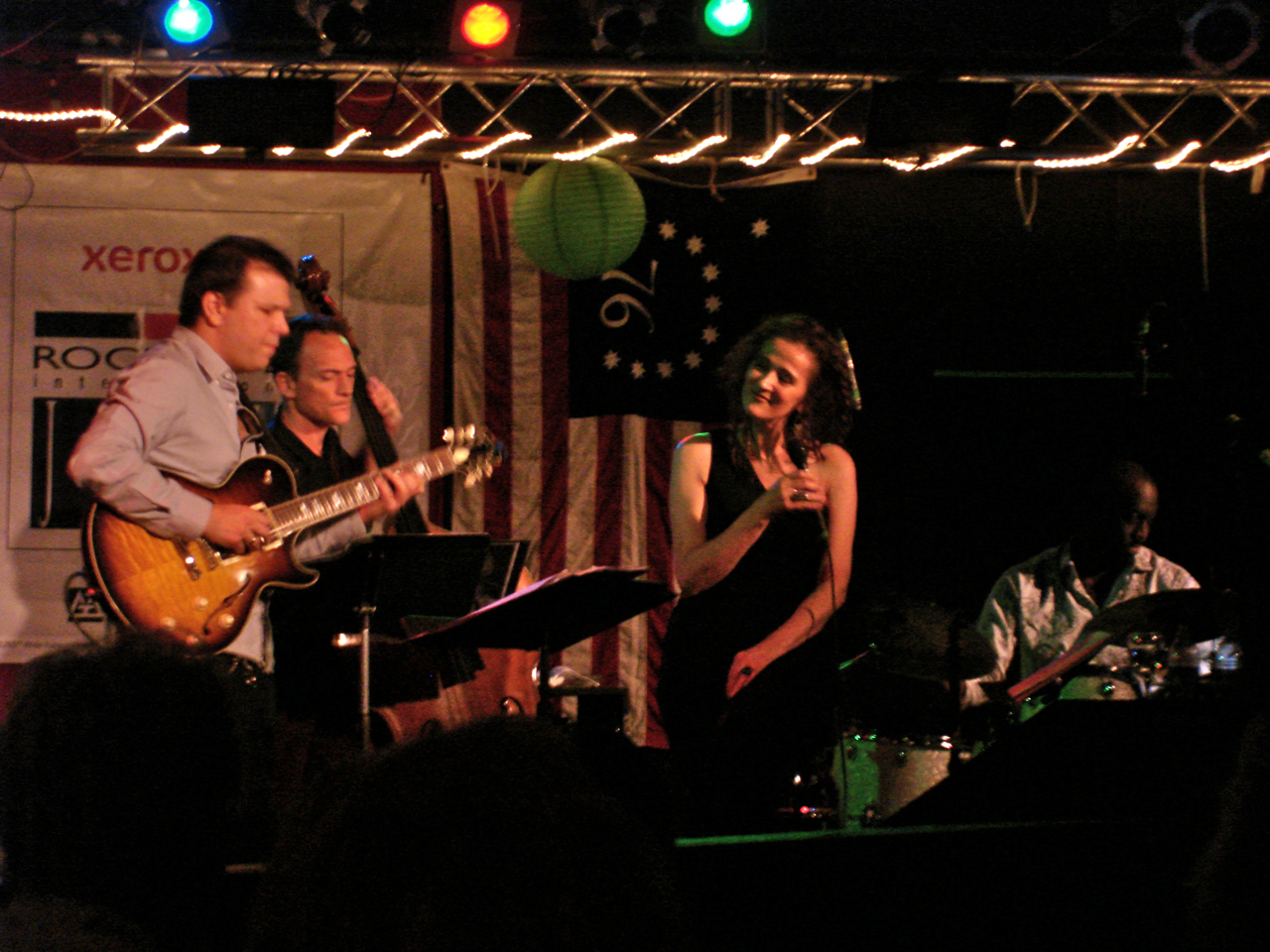
“Safe as milk” is how Souter, in a nod to Captain Beefheart, characterizes performing with her new bandmates for two live sets at this year’s Rochester Jazz Fest. Joined by guitarist Tom Guarna, bassist Sean Smith, and drummer Willard Dyson, Souter and company astonished those lucky enough to squeeze into the small venue from a line that trailed for blocks out the doors. They won us over from note one with the classic “Make This City Ours Tonight” (off Souter’s third album, Obsession), jumping right into the deep end as if the music couldn’t wait to sustain her.
Both sets featured a hefty selection of new tunes, “The Lamp Is Low” being a reigning favorite. In addition to the attractive rhythm support, it cinched the talents of Guarna, a musician’s musician whose skills had everyone in awe whenever he took a solo. In combination with Souter’s own brand of liquid mercury, the group’s full sound shaped the air, circulating like breath itself. This feeling of respiration pervaded the surf guitar vibe of “Prelude To The Sun” and further the smooth lines of “I’m Glad There Is You,” during which Souter pointed appreciatively to her bandmates as she sang the words “extraordinary people.” Guarna alone joined Souter in celebrating Burt Bacharach with a sweet rendition of “The Look Of Love,” the first of the evening’s dedications, which also included “Brand New Day,” written for Japan’s tsunami victims and featuring Guarna’s most stellar turn of the show.
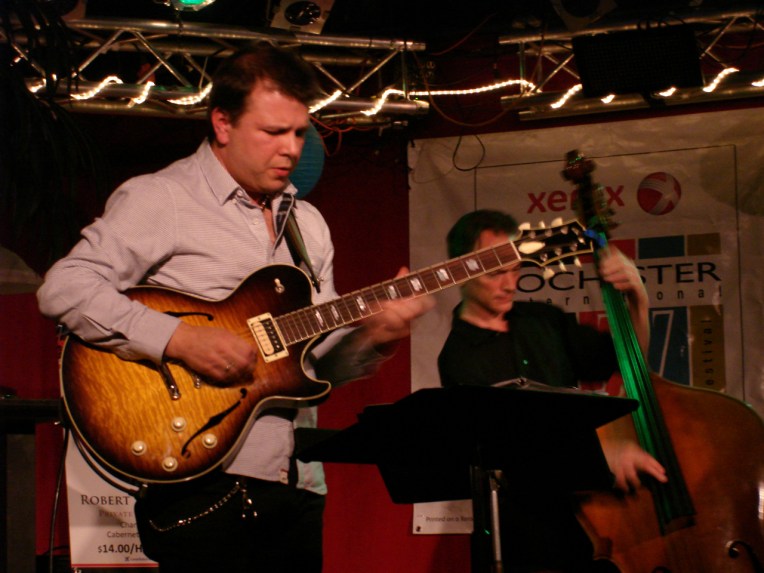
Not to be overshadowed, Smith grabbed some spotlight in his heartfelt contributions to “Baubles, Bangles And Beads” and “Chiaroscuro,” while the ever-patient Dyson brought much to “Beyond The Blue,” “En Aranjuez Con Tu Amor,” and “You Don’t Have To Believe” with a caravan of sandy textures and shakers. Dyson also unleashed a memorable statement in “Alone Together.” Candy for the ears.
During an informal sit-down the morning after the Rochester sets, which came hot on the heels of a Blue Note Jazz Club album launch party and sold-out Russian tour, I asked Souter whether or not she has noticed a difference in audience reception across places and cultures. “The Russian people seemed to be very emotional,” she told me,
so afterwards you got a lot of people coming backstage in tears, because their emotions were so close you could practically see them through their skin. Perhaps it’s because they’ve had such a traumatic history that’s quite recent. I’d say for me—and I haven’t been to a huge amount of places—everywhere’s the same and different. Music seems to be very universal and audiences are very universal.
With this in mind, I couldn’t help but comment on the confidence she exudes on stage, seemingly internalized to the point of becoming second nature:
For me it’s all about being in the moment. When I walked into the room [in Rochester] I nearly burst into tears, because I could feel the expectant vibe. I was right on the edge. It’s overwhelming. I get subsumed, I don’t even exist. Confidence is important. It gets you past being self-conscious. For example, the first time I saw Billy Elliot I thought it was a nice movie. But then I watched it after I’d become a performer and it was an entirely new experience. There’s a moment when the boy is being interviewed for the ballet school. One of those posh guys says, “Why do you want to be a dancer?” and he says, “Because when I’m dancing I disappear,” and I thought, yes, that’s exactly what happens. So what you’re seeing is not just me, it’s us.
Does this affect how you sing the “sad” songs?
There’s always an element of sadness in a love song, even a happy love song, because one day it’s going to end, if only when death do us part. Somehow, you have that realization. I was thinking: Why do people always love the sad songs? Are they unhappy? But I realized because it’s sort of real, that even when you are happy there is a poignancy to how lucky we are.
Maybe it’s just part and parcel of the form, but it seems that in jazz people are constantly reconfiguring themselves in relation to others. One year you may be playing with a completely different band from the last.
One thing about jazz is that it’s just so free. Because each person brings a unique personality to the bandstand, it means that every time you play the same music with someone different, it’s a completely new experience. Like the band last night. It’s new for me. Tom had to remind me it was only our third gig together, but I’m blown away by what they all do.
Judging by audience reactions, she wasn’t the only one. This assured quartet set Rochester’s happening east end abuzz with adoration for a voice that needs no spoonful of sugar to make its medicine go down. As my wife and I left the venue I couldn’t help but smile, because, knowing that we’d be in attendance, Souter had been gracious enough to dedicate “Little Sunflower” to us and to the baby boy due to change our lives come the first week of September. And in the end, the creation of life is what her singing is all about.
Love doesn’t only live in dreams. It’s here.
Reflections from MCTS 2012
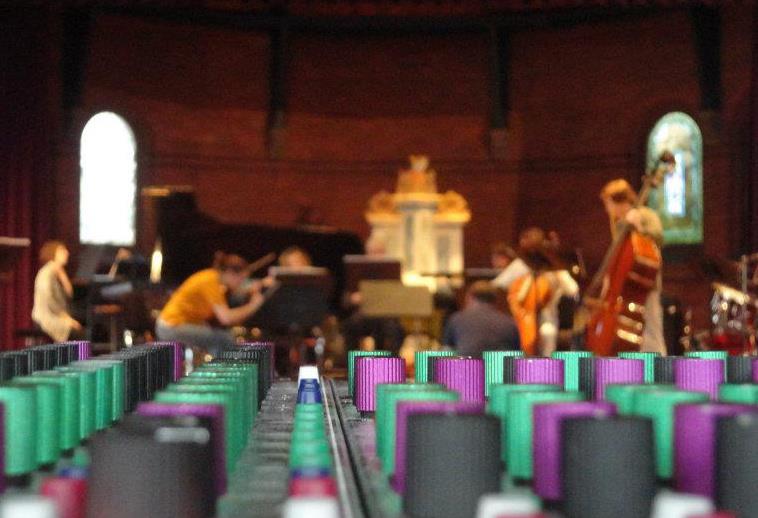
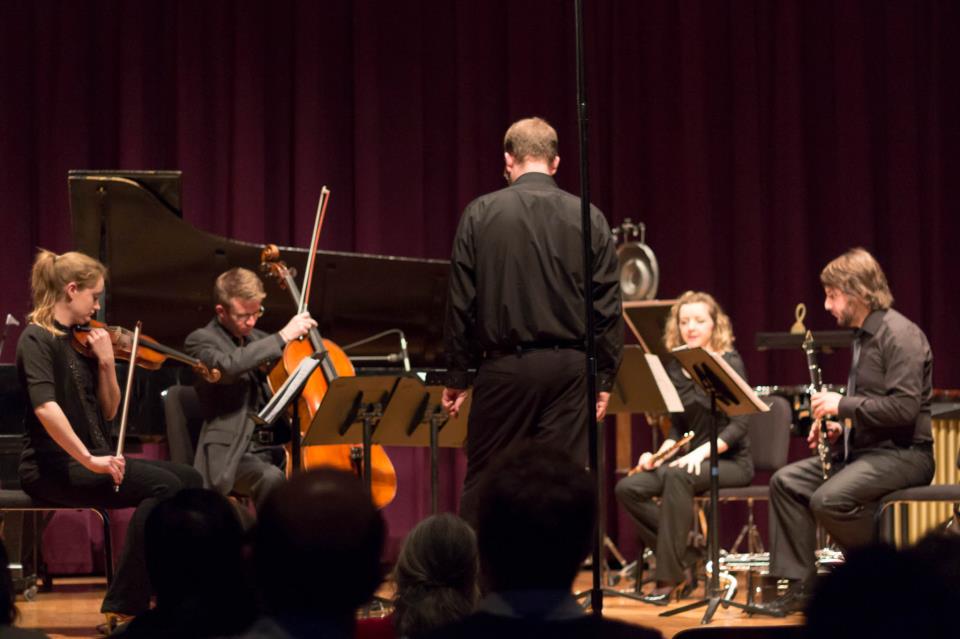
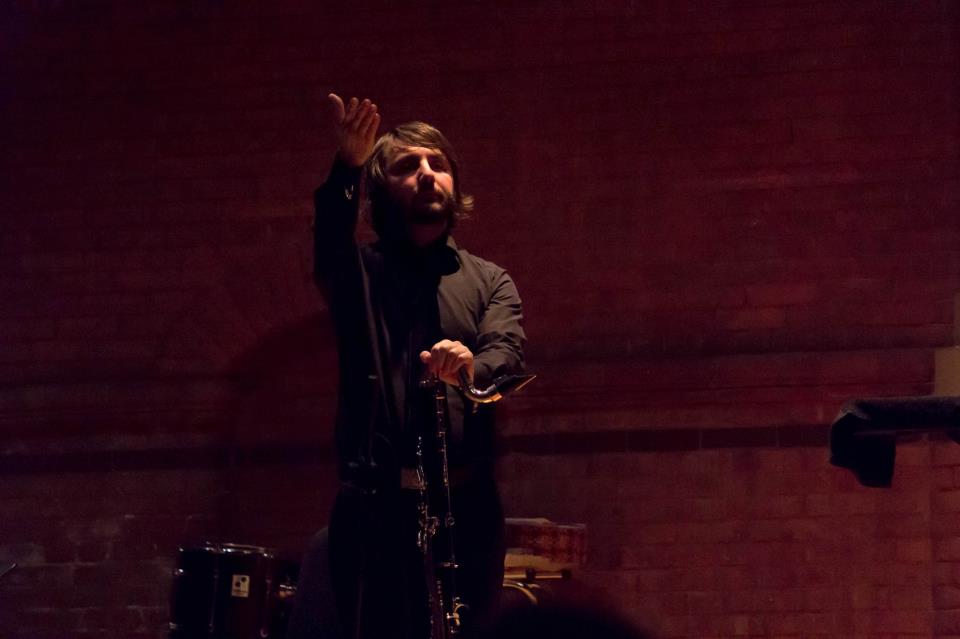
From May 11th through the 13th, I was fortunate enough to participate in what I hope will become the first of a regular academic gig at Cornell University. Music: Cognition, Technology, Society (see my full conference report here) brought together a host of composers, musicians, musicologists, and cutting-edge theorists for three days of intense dialogue, demonstration, and performance. Of the latter, I have written up a diary of impressions regarding two exciting programs of music from, with the exception of Tod Machover, the latest generation of composition students from around the world.
In my ongoing attempts to stay true to the moment, I present the following to you unedited.
Argento Ensemble
May 11, 2012
Barnes Hall, Cornell University
8:30 pm
Clara Lyon violin
Andrew Borkowski cello
Laura Barger piano
Fiona Kelly flute
Vasko Dukovski clarinet
Matt Gold percussion
with
Wendy Richman viola
Nicholas Walker double bass
John Lathwell oboe
Andrew Zhou electronic keyboard
Sean Friar: Scale 9
Flutter and pause. Fragmented, crystalline flower wilting and reforming itself in a hundred lifetimes. Bristling with the energy of myriad hopes. The clarinet a voice thrown into the cello’s bodily pool, violin droplets kissing the edges of a shimmering veil. Mostly urban, with shades of nocturnal countryside, feet navigating their own obligations amid a playful tangle of traffic and crossed emotional wires, all heading toward a gusty close.
Bryan Christian: Walk
A murky inkswirl of whispers and broken songs, clatter of misted gates. Ring of insect on leaf, the stamping of moonlit intentions carving paths in the deforested wasteland of interaction where wanders the hope of yesterday in the clothing of tomorrow. Memories shriek with banshee-like presence, just long enough to curl their fingernails around the edges of our ears and plant in them seeds plucked from the stamen of infirmity. Visceral percussiveness from bass clarinet keys, breathy augmentations to woodblocks and bells.
Juraj Kojs: Re-route
Bass clarinet’s thrumming burnt ochre—a didgeridoo in the pincers of an oscillating beetle—of bass haunts a scrubbing of electronic flickers. Tearing sheets from a ream imprinted by graphite handsteps.
Eric Lindsay: Town’s Gonna Talk
Throw some Stephen Hartke and Thomas Larcher in a pot, add a dash of backyard gab, and you get this delightful foray into sandy fields and heavily tracked neighborhoods throughout which the baby rattle of progress bleats its weary song amid pointillist loveliness between violin and cello. Peaks in a glorious hoedown of epic proportions. Change rattling in cup, whistling.
Amit Gilutz: Miscellaneous Romance No. 1
Scraping and computer voices (reading missed connections in Ithaca) lead toward an audible map of localized desperation. Perhaps laughter can be recreated, but only shame comes from flesh.
Christopher Chandler: the resonance after…
Gorgeous veils of sound drawn from metallically infused hits. A Gavin Bryars dream stretched to brightest distance. Electronics seamless. Highlight of the concert.
Tod Machover: Another Life
Tangled, diffusion of instrumental favoritism, banded by an alternative electronic flow. Wind writing enhanced by pre-echoed afterlife. A pixilated pastoral for the 21st century.
Electroacoustic Music Concert
May 12, 20120
Barnes Hall, Cornell University
8:00 pm
with
Andrew Zhou piano
Peter Van Zandt Lane bassoon
Eliot Bates oud, electronics
Taylan Cihan electronics, speaker elements
Nicholas Cline: Homage to La Monte Young
This bowed metallic dronescape is populated by Giacometti figures wandering in slow motion in search of dawn, finding instead only semblances of moonlight. These they hang around their necks from strings of marrowed intentions, where the body speaks—not in skeletal language but rather with the syntax of time. This feels like stepping into a room filled with Bertoia rods and finding in their whispers a script for human evolution.
Nathan Davis: Ecology No. 8
Wave field, field of waves—hand, ocean, emotion. Correspondence found in the scalar plane: a fish exploded, decoded, and processed into trailing lights, shards of perfect(ed) fluted glasses, each a trail of hyperspace in foreshortened tears. A hundred hypodermics poised at black hole’s edge, waiting to drop their spores into the cytosphere. A lighthouse sweeping its own demise.
Nicola Monopoli: The Rite of Judgment
A police light’s heart, sounded from within every luminescent rectangle. Speaks in tongues wet with static, salivating at the corners with an air of self-disinterest. A butterfly kiss gone gorgeously awry, vault of glottal windows vying for attention where only a blank screen wins.
Christopher Stark: Two-Handed Storytelling
(Birds sing outside the window, curling feathered tongues around the pianistic fist.) Twisted shadow hidden in its fleshy cage. Breath funnels back into itself, embracing the echo like a mouth around food and swallows a wash of crystalline highs. A conversation not for two hands, but for two heartbeats. Stop. Curtain. Draw. Spotlight. Exhale.
Peter Van Zandt Lane: Hydromancer
A flick, a thunk, and a puff of briny stew, trudged in the reverberant spaces of untold dreams. A gate opened at dawn, amphibious yet yearning for human contact. Metronome of water falls down the tarnished stairs of our collective home. The cats in the yard plying us with curiosity, their legs and tails dew-kissed with curiosity. Ping-ponged signal shuffles itself into an intrinsic deck just bursting with the teeth-clenching desire to say hello.
Stelios Manousakis: Megas Diakosmos
Tearing into a bag of microchips, these sonic teeth feed with an overwhelming gesture of disclosure. This beats us with the fallacy of silence, even as it caresses us with a signal’s dying wish. It traces a tonal center where there can be no footprints. A vortex spread flat and rolled into children’s telescopes, bringing us no closer to the reality it refuses to map. The atmosphere weeps sulfur, speaks fire, and draws its fantasies in acid rain. Subterranean bungalows shake themselves free of the inhibitions once slumbering in their cradles. Finish your ash, says the mountain, and you can have some magma to wash it down. It whispers with a force so proximate that it lifts inside us the blindness of a hush. Oh, how nostalgia can taste like noise!
Eliot Bates/Taylan Cihan: Zey-glitch
Testing. Wait and see what lives in the branches of the fig tree. Skipping. Wait and see what dies in the arms of the unborn angel. There are no wings, only nails. Cartilage, calcium deposits, and bone. Double string and single lyre, bleeding faith and healing fire. Hold the gristle of unremembered days and know the feeling of reduction on the palate. I hear the thief, for the thief hears everything I do not.
(All photos by Evan Cortens)