

My latest article for All About Jazz is a live review of a visceral quintet headed by violist Mat Maneri and pianist Lucian Ban. Click here to read.
Live
Live review of the Chris Potter Quartet for All About Jazz
My latest review for All About Jazz is of the newly minted Chris Potter Quartet’s recent performance at New York’s Village Vanguard. Click here to read.
Live Report: Freiburg Baroque Orchestra w/Christian Gerhaher at Cornell
Freiburg Baroque Orchestra
with Christian Gerhaher, baritone
Bailey Hall, Cornell University
February 26, 2016
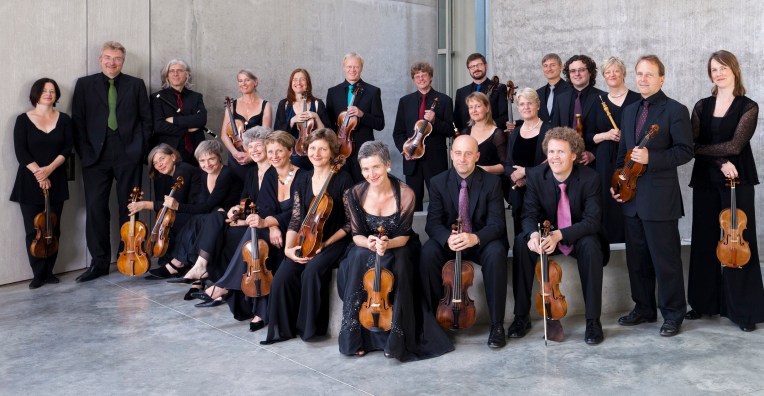
(Photo credit: Marco Borggreve)
On Friday, the Freiburg Baroque Orchestra brought its crisp, pristine sound to Cornell’s Bailey Hall. They were in the company of world-renowned baritone Christian Gerhaher and clarinetist Lorenzo Coppola for an all-Mozart program. It was just the hearth by which we needed to warm ourselves on a blustery night.
The first half of the program was backboned by Mozart’s Symphony No. 36. Known as the “Linz Symphony” — so nicknamed for the Austrian town where the composer dashed off the piece in just four days — its merits are about as appealing as room-temperature soda. A conservative choice, to be sure. But FBO conductor Gottfried von der Goltz did something brilliant by shuffling a handful of Mozart’s operatic arias between its individual movements. The arias, culled from Don Giovanni and Le nozze di Figaro, were comfortable territory for Gerhaher, who recently released his first Mozart album with the same musicians.
Gerhaher proved his reputation as perhaps the world’s greatest living baritone as he navigated every Mozartian maze with dynamic vibrancy and method acting. The otherwise tepid symphony provided an imaginary context for the songs. The opening movement was now an overture, its slightly ominous blush and fluid transitions showing off the orchestra’s winds and pristine intonations. The Freiburgers made it fresh with inflections borrowed from Vivaldi (reflective of their Baroque roots) and Beethoven.
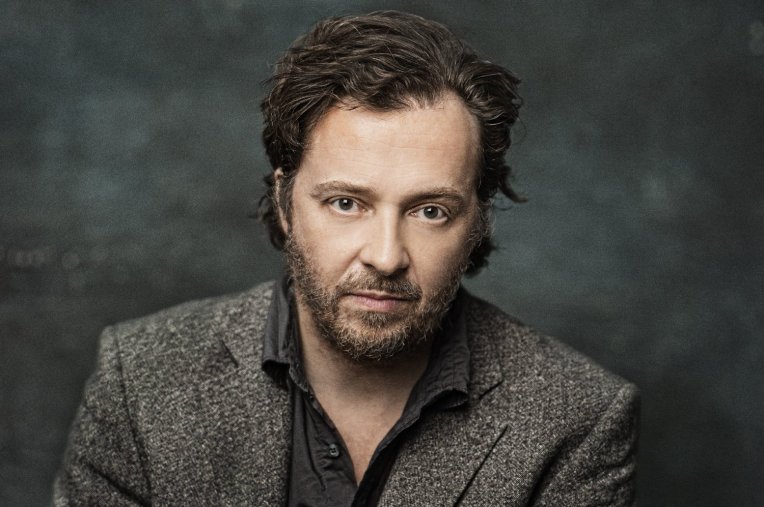
After hearing Gerhaher plunge into the piquant “Metà di voi qua vadano,” from Don Giovanni, during the symphonic Andante it was all one could do not to expect his voice to come ringing out at any moment. The interminable teaser endings so common to Mozart stretched patience a bit when watching one of the world’s finest singers sit it out on a chair between blast-offs, but paid dividends when he handled verbal workouts such as “Ah, pietà, signori miei!” and “Tutto è disposto… Aprite un po’ quegli occhi”—from Figaro and Giovanni, respectively—with absolute fluency.
Though Gerhaher continued to command following intermission, it was the A-major Clarinet Concerto that provided one of the most memorable performances to grace the Bailey stage in recent years. Not only because the piece, with its universally recognized Adagio, provoked gasps of recognition throughout the audience, but also because soloist Coppola simply gave the finest rendering of the piece I’ve ever heard in a live setting. This was as much a matter of technique as of instrument, playing as he did the rare clarinet d’amour, a predecessor to the modern counterpart, that would have been played at the time of the concerto’s premiere. Coppola delighted us with a preamble about this “theatrical” instrument and invited us to see the concerto as a “little opera in three acts.” His seamless, animated performance made it so.
Two encores validated the enthusiastic applause, including crowd favorite “Deh, vieni alla finestra,” for which Gerhaher was accompanied by mandolin in Giovanni’s famous serenade. And in the end, this was the concert’s greatest appeal. When big name acts come to the Cornell Concert Series, it’s sometimes clear that we are a minor stopover during a larger tour. But von der Goltz and his synergistic band gave us their all, and we couldn’t have asked for more.
(See this article as it originally appeared in The Cornell Daily Sun here.)
Live Report: Sara Davis Buechner at Cornell
Sara Davis Buechner
Barnes Hall, Cornell University
February 10, 2016
8:00pm
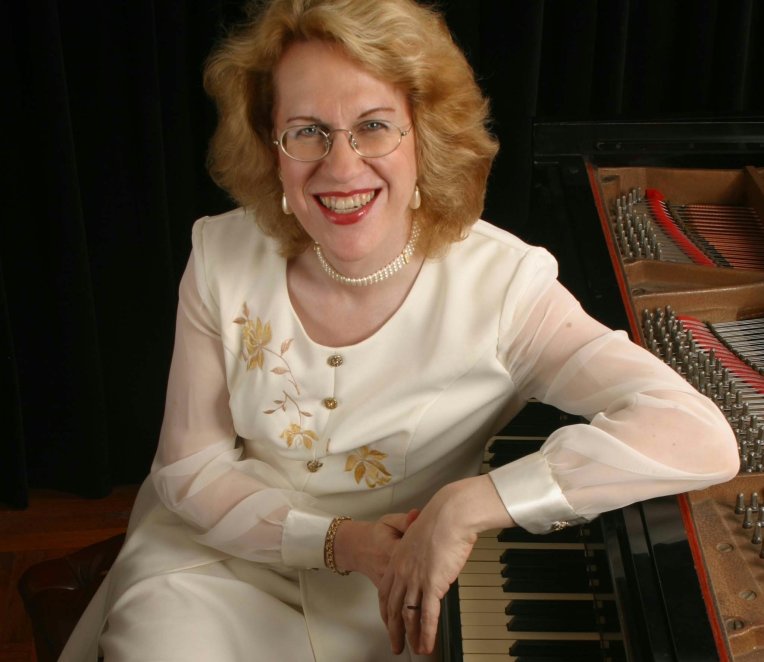
Solo piano concerts have come to hold a dual, contradictory status. They are ubiquitous in classical circles, where they serve didactic and diagnostic purposes through competitions and senior recitals. They’re also something of an anachronism in the contemporary sonic landscape, where digital listening threatens its live counterpart. On 10 February 2016, pianist Sara Davis Buechner brought something essential back to the Barnes Hall stage that too often eludes the musically inclined among us: humility.
It was evident in her curatorial preambles, in which she waxed to the audience anecdotally, passionately and honestly about the history of each piece before playing it. These thumbnail sketches provided a basis for absorption, an insider’s perspective on secrets that typically remain the performer’s sole purview. All the more appropriate, then, that the connective tissue of her program should be Ferruccio Busoni (1866-1924), an influential editor too often neglected as a composer, and whose breakout Elegies she rendered with experienced love. While foreknowledge can sometimes hinder appreciation, in this case knowing to expect an unconventional setting of a Bach chorale prelude or a quotation of “Greensleeves” allowed Buechner to transcend these bon mots with invention. From the set’s opening C-major triad, she spun wondrous and dynamic darkness, tumbling through Italian folk motifs and tempestuous dialogues with ease and leaving a trail of color bursts in her wake. Despite a formidable dynamic range, Buechner was careful to control grandeur within reason, pushing as much back into the keys as she was pulling from them, so as to honor the occasional contemplation. Busoni’s non-tonal language was thus properly illuminated, a dissonant body casting a harmonious shadow.
As is her gracious habit, Buechner paid homage to local culture by following with the 2010 Soliloquy, written for her by Takuma Itoh D.M.A. ‘12. Deeply impressionistic, it offered welcome shelter from Busoni’s storm. Cupped in the hands of a winter’s night, it was difficult not to read it as a full and rising moon. It embodied the dusting of snow outside the venue as much as the footprints left behind by those who had traveled through it to get there.
The Six Etudes for Piano, Op. 70 of Alfredo Casella (1883-1947) refastened attention to Busoni, who championed the young Italian among other fledgling composers of his time. Each of Casella’s knuckle-busting etudes was distinct, not least for all for bearing dedication to a different pianist. Collectively, they were something of a musical turnstile, allowing controlled access to changing textures. And while it was, between its aerobic trills and racing tempi, a technical tour de force, Buechner’s attention to choreography made it shine.
Capping off these lesser knowns were the Six Grand Etudes after Paganini of 19th-century juggernaut Franz Liszt, whose flamboyant personality was evident in every stroke. Buechner opted, as any sane pianist would, for the Busoni edition of these often-revised pieces, and with that connection brought her theme full circle. Whether playing a formidable passage for left hand only or executing runs with apparent ease, Buechner kept the mood as fresh as a farmer’s market and carried an underlying energy to its logical endpoint.
She then encored with a foxtrot called “Do-Do-Do,” a delightful confection she learned by ear from a rare recording of George Gershwin piano rolls. Witnessing her consummate balancing act of both the tune’s mechanical and expressive tendencies, it would come as no surprise to learn that she is one of the world’s few active silent film piano score interpreters. Every chord painted a kind of smile that one just doesn’t see any more on the silver screen.
(See this article as it originally appeared in The Cornell Daily Sun here.)
Live Report: Keith Jarrett at Carnegie Hall
On Tuesday, 9 February 2016, Keith Jarrett returned to Carnegie Hall for a solo performance of spontaneously improvised music. My review of the concert is now available at All About Jazz here.
ECM @ Winter Jazzfest: Full Live Report
My full report of the unprecedented two-night ECM concert event as part of New York City’s 2016 Winter Jazzfest is now available over at All About Jazz. Click on the photo below to read all about it.

(Photo credit: Ed Berger)
ECM @ Winter Jazzfest
For those of you in or near the New York City area, don’t miss an unprecedented two nights of American ECM artists at the New School’s Tishman Auditorium (63 5th Avenue, between 14th and 13th Streets) this Friday and Saturday, January 15 and 16. I’ll be there to review the entire event for All About Jazz. Below is the full schedule, along with a video statement from Manfred Eicher about ECM’s historical connections to the American milieu.
Friday January 15:
6:00 – David Torn (solo)
7:00 – Mark Turner Quartet (w/Avishai Cohen, Joe Martin & Marcus Gilmore)
8:00 – Craig Taborn (solo)
9:00 – Avishai Cohen Quartet (w/Jason Lindner, Tal Mashiach & Nasheet Waits)
10:00 – Ches Smith / Craig Taborn / Mat Maneri
11:20 – Vijay Iyer Trio (w/Stephan Crump & Marcus Gilmore)
12:40 – David Virelles’ Mbókò (w/Román Díaz, Eric McPherson & Matt Brewer)
Saturday January 16:
6:00 – Michael Formanek’s Ensemble Kolossus
7:20 – Theo Bleckmann’s Elegy (w/Shai Maestro, Ben Monder, Chris Tordini & John Hollenbeck)
8:40 – Chris Potter Quartet (w/David Virelles, Joe Martin & Marcus Gilmore)
10:00 – Tim Berne’s Sideshow (w/Ralph Alessi, Matt Mitchell, John Hébert & Dan Weiss)
11:20 – Ralph Alessi Quartet (w/David Virelles, Drew Gress & Nasheet Waits)
12:40 – Ethan Iverson-Mark Turner Duo
Keith Jarrett Trio: Live In Japan 93/96 (ECM 5504/05)

Keith Jarrett Trio
Live In Japan 93/96
Keith Jarrett piano
Gary Peacock bass
Jack DeJohnette drums
DVD 1
Recorded live in Tokyo, July 25, 1993 at Open Theater East
Director: Kaname Kawachi
Recorded by Toshio Yamanaka
Produced by Yasuhiko Sato
Executive producers: Hisao Ebine and Toshinari Koinuma
DVD 2
Recorded live in Tokyo, March 30, 1996 at Hitomi Memorial Hall
Director: Kaname Kawachi
Recorded by Toshio Yamanaka
Produced by Yasuhiko Sato
Executive producers: Hisao Ebine and Toshinari Koinuma
Concerts produced by Koinuma Music
It’s one thing to hear, but quite another to see, the Keith Jarrett Trio in action. For those unable to do so in a live setting, this two-DVD release is the next best thing. Like the Standards I/II set that precedes it, this one was recorded in Tokyo, but puts about a decade between those first Japan performances.
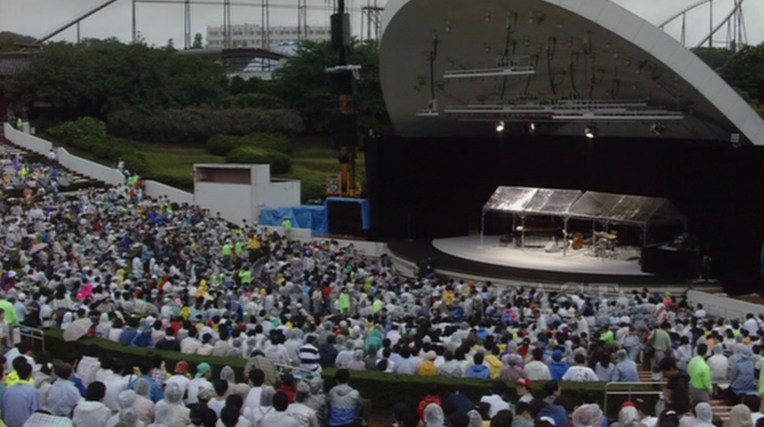
A 1993 gig at Open Theater East takes place in the heart of a sweltering summer. The air shines both with the music and with the rain that forces a large and dedicated audience to listen from beneath ponchos, and the musicians to play from beneath a clear canopy. The video quality is much finer this time around, and despite a rocky start born of technical issues and the weather, captures one of the trio’s finest sets available on any medium.

What separates this concert from the others available on DVD is the openness of the band’s aura. Jarrett more than ever plays for his appreciative listeners because he understands the bond into which nature has pushed them. Perhaps it’s no coincidence that Jarrett’s The Köln Concert also famously began in the least ideal of conditions. Clearly, the pressure set him on an unprecedented creative path. And so, even as the trio struggles to feel out the climate in Dave Brubeck’s “In Your Own Sweet Way” (throughout which Jarrett must often wipe down the keyboard with a towel), all while latecomers snake to their seats, we can feel the groove emerging one muscle at a time. After the worldly touches of “Butch And Butch” and “Basin Street Blues,” we know that things have been set right.
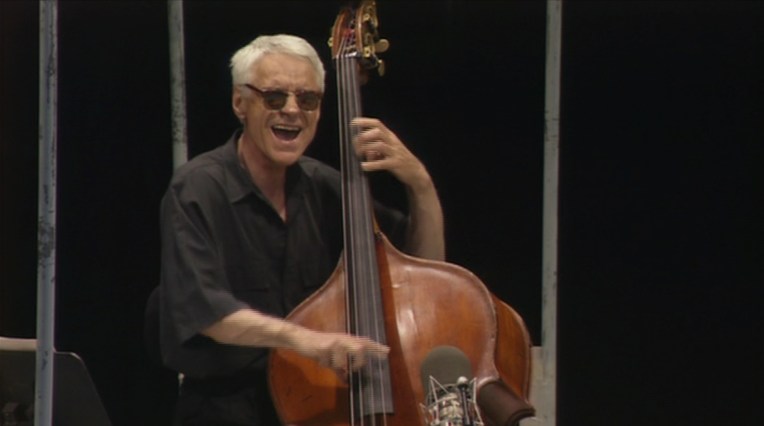
Whereas in the previous Japan documents Peacock proved himself the man of the hour (although, to be sure, the breadth of his architectures in “If I Were A Bell” and “I Fall In Love Too Easily” are as masterful as they come), it’s DeJohnette who produces the deepest hues of this rainbow. His sticks make evergreens like Sonny Rollins’s “Oleo” that much greener, and turn a 26-minute rendition of Miles Davis’s “Solar,” combined with Jarrett’s “Extension,” into a downright sacred space.

As with the 1986 concert on Standards I/II, the trio ends on three encores: “Bye Bye Blackbird,” Jarrett’s “The Cure,” and “I Thought About You.” In all of this one can sense a quiet storm of commitment to the music that flows from within. Melodies breathe, reborn, requiring open hearts to know their graces.
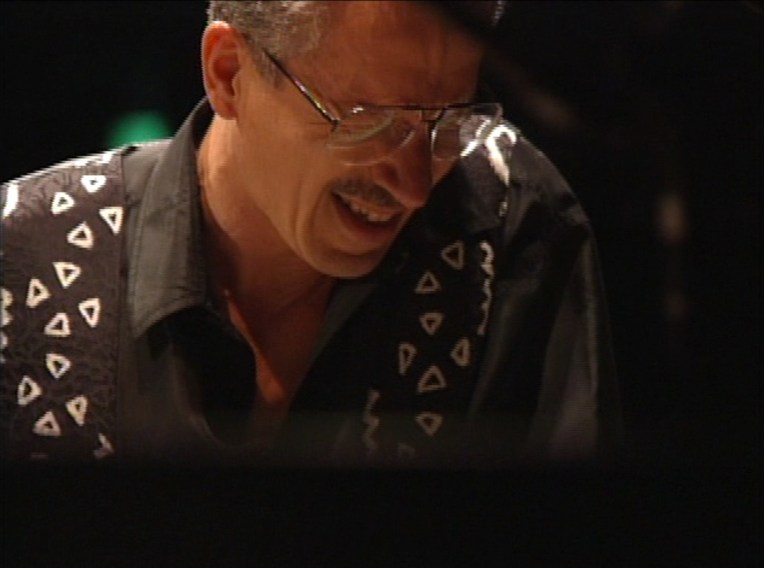
The year 1996 brings us to Hitomi Memorial Hall, where Jarrett and friends jump fully refreshed into “It Could Happen To You.” As always, Jarrett’s lyrical intro reveals little about the mosaics soon to follow. He takes the theme and its surrounding chords as a starting point down densely textured corridors. Which is, of course, what improvisation is all about: dungeon crawling without a map yet knowing that a destination will wrap its arms around you eventually. Jarrett seems to unravel every possible path into its fullest and on through the ballad “Never Let Me Go,” in which the pianist transcends the status of storyteller to that of myth keeper.

“Billie’s Bounce” is a staple not only for its composer, Charlie Parker, but also for Jarrett. As one of his prime expressive spaces, it layers all the bread and butter that make his art so nourishing. But we mustn’t forget that each member of this unit is equally important. In “Summer Night,” Peacock’s gentility is Jarrett’s flame, shining like the moon with a song to sing, and DeJohnette’s opening to “I’ll Remember April” shows a drummer with just as much to say from the bedrock, even as Jarrett evolves in real time through every change in the rapids above.
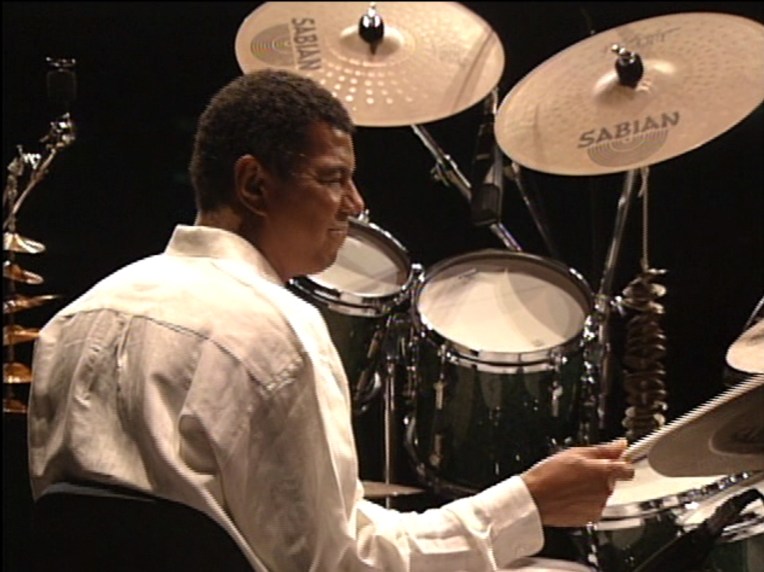
Other standbys such as “Mona Lisa” and crowd favorite “Autumn Leaves” open as many new avenues as they retread. With a crispness of feeling, Jarrett grabs the spotlight, while lively soloing from Peacock and fancy brushwork from DeJohnette make the picture whole. Even the familiar strains of “Last Night When We Were Young” become something new when they melt into Jarrett’s groovier “Carribean Sky.” It’s what one can always count on with this trio: playing as if for the first time.

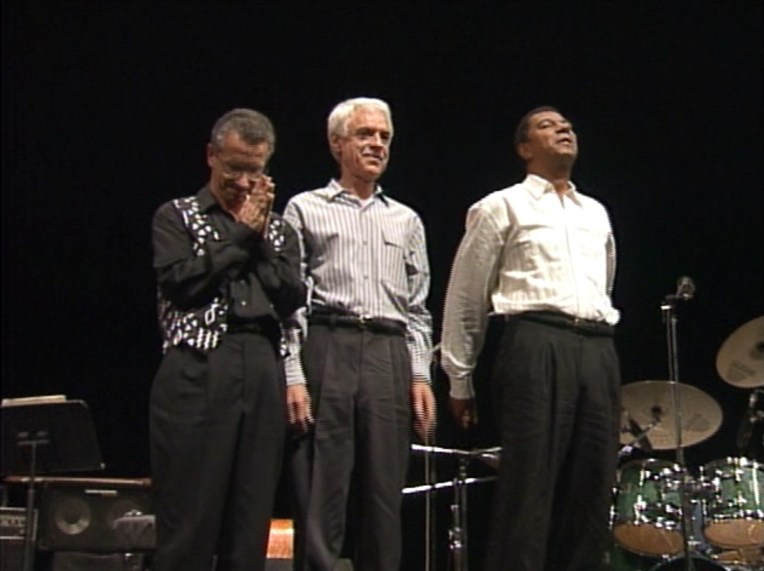
The Bud Powell tune “John’s Abbey” commands from the sidelines as Peacock and DeJohnette go from canter to gallop and sets off a rapid-fire succession of closing tunes. A touching rendition of “My Funny Valentine” falls like a tear of quiet joy into Jarrett’s “Song,” in which the musicians open a book you always meant, and at last have the chance, to read again. “All The Things You Are” and Ray Bryant’s lesser-heard “Tonk” end the set with a satiating balance of delights. Nothing added, nothing taken away.
Live Report: András Schiff at Carnegie Hall
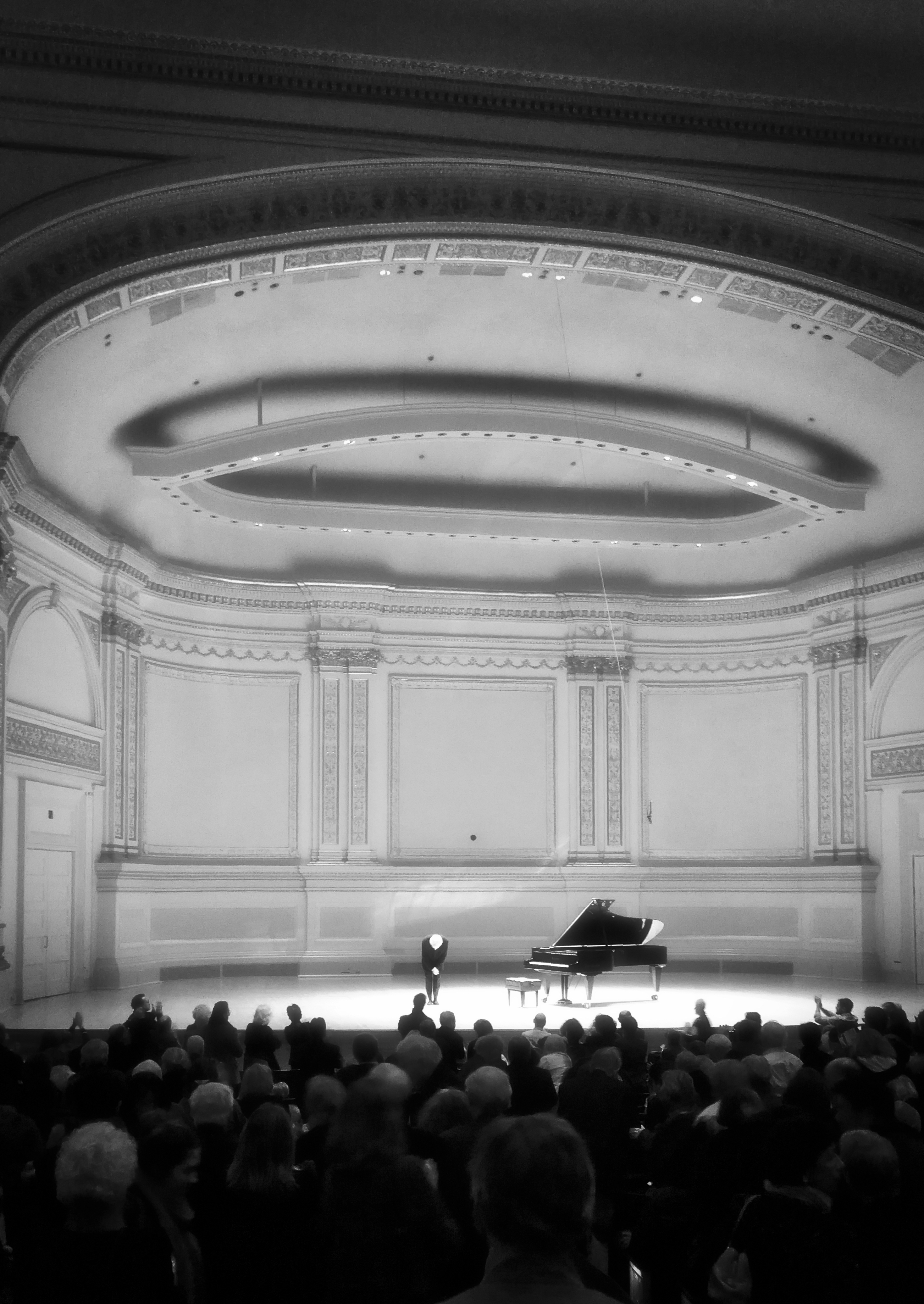
Pianist András Schiff is a genius. By that I don’t mean to describe an artist of exceptional talent, which nevertheless Schiff proved himself to be with his appearance at Carnegie Hall on 30 October 2015. I intend the original Latin meaning of “generative power” or “inborn nature,” by which his playing was duly possessed. This embodied approach to performance has become clearest since his tenure with ECM started in 1997. Schiff’s latest for the label is an all-Schubert recital spanning two discs and culminating, as did the Carnegie performance, in the Piano Sonata in B-flat Major of 1828. Whereas the album documents his reckoning with a Viennese fortepiano built that same decade, an instrument of concave power that shores up the Schubertian temple against any resistance of preconceptions, for this appearance only the convexity of a Bösendorfer would do. For him these qualities have never been opposite but complementary, as was clear when he sounded Schubert’s ominous trill. But let us, like Schiff, save the best for last.
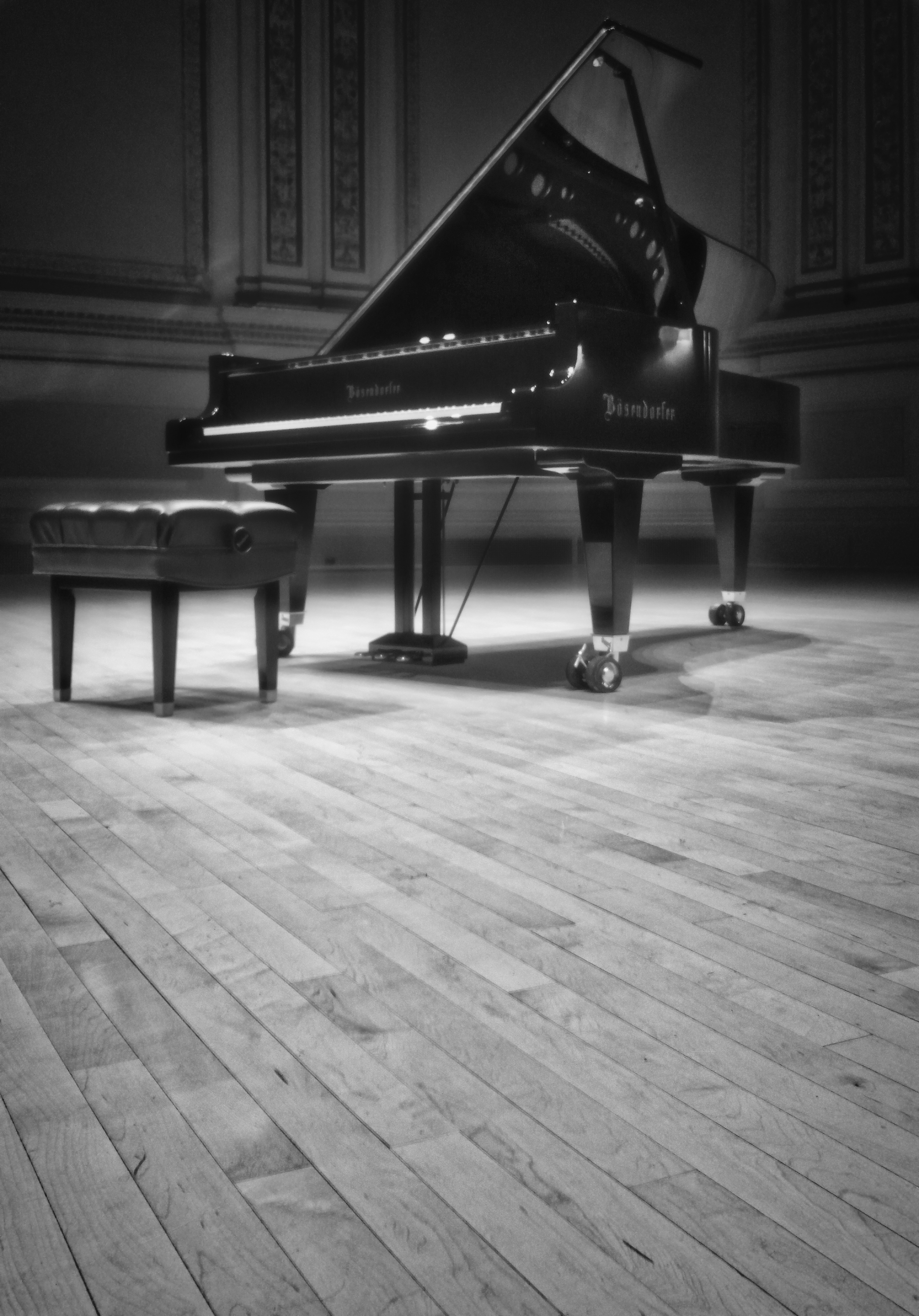
In addition to its sublime musicianship, Friday’s concert sported a masterful program, sequencing the final piano sonatas of Haydn, Beethoven, Mozart and dear, ill-fated Schubert, in that order. Schiff finessed his way through Haydn’s picture-perfect Sonata in E-flat Major (1794) like a skilled orator: No gesture or utterance was wasted. His Adagio was all the more barren for being surrounded by two leafier branches, neither of which shed a single trident in the gusts of Beethoven’s Sonata No. 32 in C Minor (1821/22). The latter came only after Schiff had hunched over the keys, as if in prayer, to gather himself. Equal parts brush and chisel, its curious, two-movement structure revealed the independence of Schiff’s fingers, and the composer’s in turn for treating repeats as opportunities for self-discovery and, in the dolorous latter half, holistic expression. The coda nevertheless resounded with affirmation of life.
Had it not been sandwiched between two heavyweights, Mozart’s Sonata in D Major (1789) might have seemed like poor casting. But its placement after intermission was refreshing. Although a subpar sonata, one that inlaid its frame at the expense of a clear scene within it, its technical flourishes emitted from Schiff’s fingers with seaward force. Thus cleansed by lack of challenge, we could navigate Schubert’s winding paths, tenderized to receive their shadows. Schiff opened the sonata like a thumb-worn book and read it aloud to the audience with burrowing grandeur. Despite its length, the first movement was eclipsed by Schiff’s restrained handling of it, which assured that the impact of the final Allegro rung true. Between them were a passionate Andante, in which he barely touched the keys as his left hand arced back and forth over the right, and a sunnier Scherzo. Throughout, Schiff was always moving ahead with the future in mind and all the necessary construction materials at his fingertips.
Just as the Goldberg Variations belong to Glenn Gould, so too does Schubert to Schiff. All the more appropriate that he should end the concert with the second of two encores, playing the Aria from Bach’s masterwork. In his handling it became an open lattice, if not also the vine creeping up it, dreaming of its own birth from seed and soil. Before that we were treated to Schumann’s rarely performed Geistervariationen (Ghost Variations) in E-flat Major, featured on Schiff’s 2011 ECM recording of the same name. Although written on the brink of madness, it was as lucid as all else, and showed Schiff as, more than anything, one of the great listeners to ever grace the Carnegie stage. That he played it all from memory would have seemed amazing had it not felt so inevitable.
(See the article as it originally appeared in The Cornell Daily Sun.)
 Between Sound and Space: ECM Records and Beyond