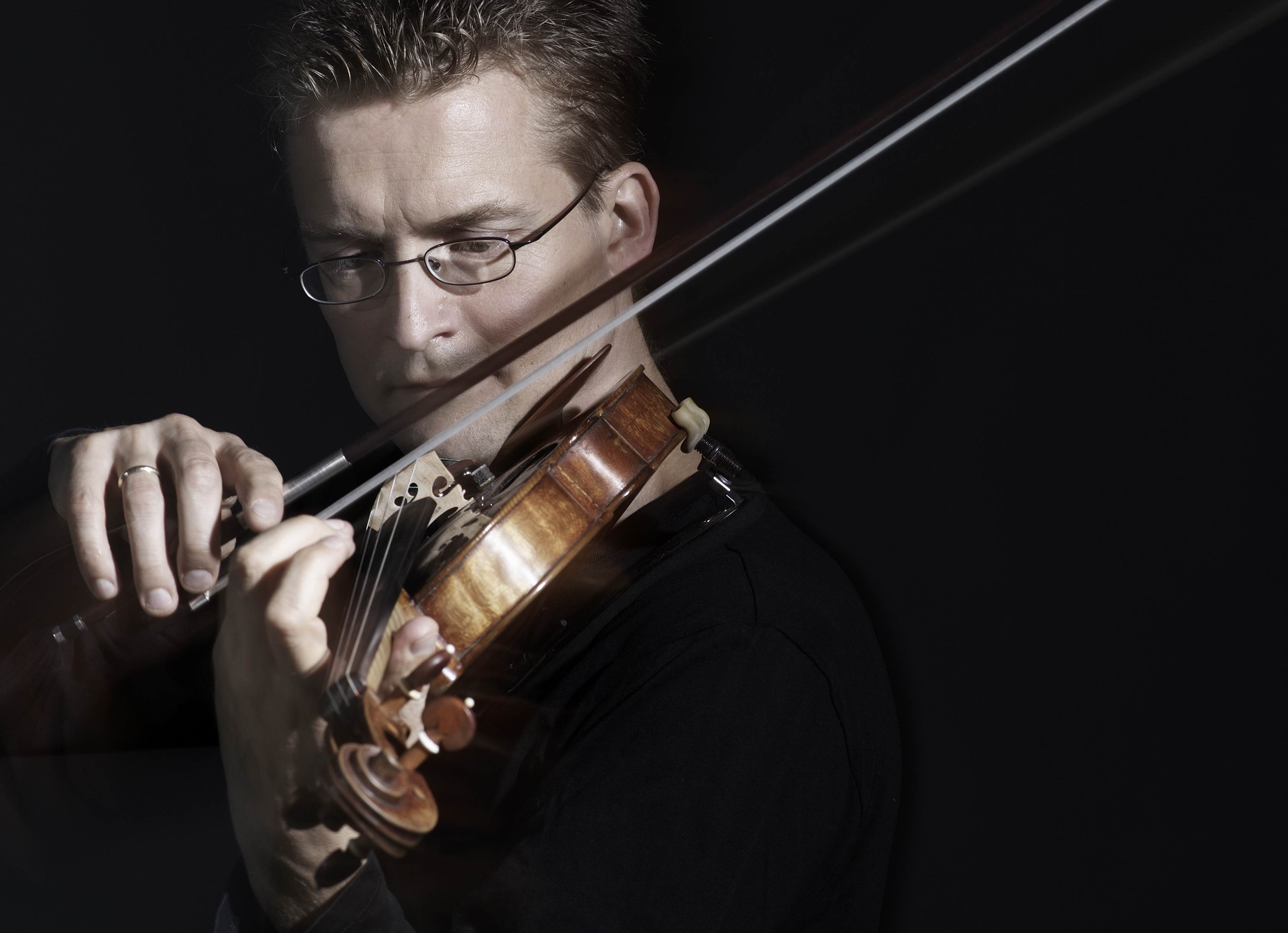
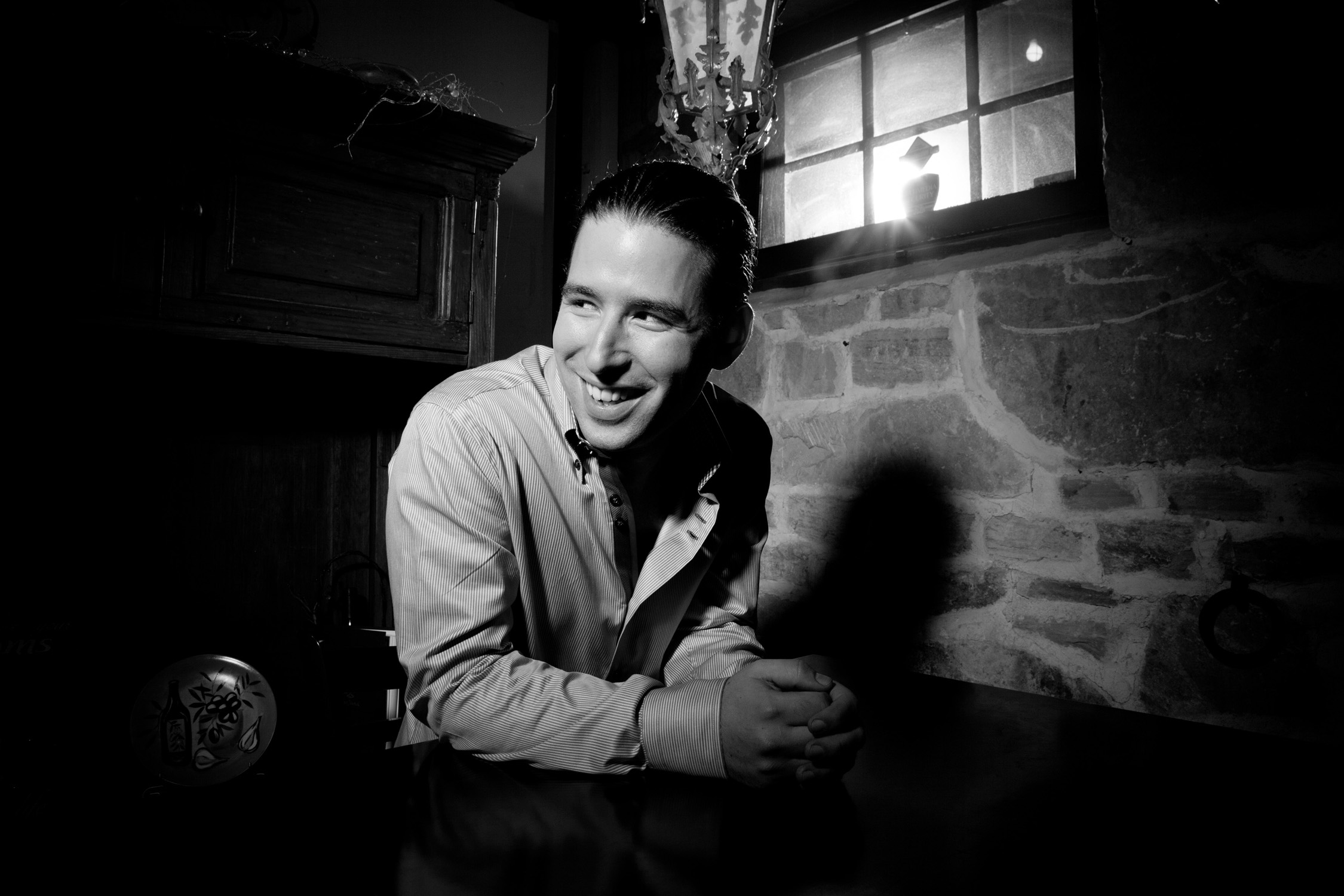
Dawn Upshaw: A Beautiful Child of Song

Dawn Upshaw and Gilbert Kalish
Barnes Hall, Cornell University
September 27, 2014
8:00pm

Listening to Dawn Upshaw sing is like reading the work of a great novelist: She stands behind every word she produces. Along with pianist Gilbert Kalish, the legendary soprano graced Cornell’s Barnes Hall stage on Saturday as if it were the page of a book, across which she inscribed a characteristically eclectic program centered on songs by Franz Schubert, Béla Bartók, and Maurice Ravel. Bookending these were selections by Charles Ives and William Bolcom—the former one of modern American music’s original mavericks, the latter a Pulitzer Prize- and Grammy-winning composer whose popular “Cabaret Songs” yielded three of the concert’s most memorable tunes. Memorable not only for their melodic and lyric panache, but also for the apparent ease with which Ms. Upshaw delivered them. Although just as comfortable singing German, French, or Hungarian, she was in her element when immersed in these tongue-in-cheek hat-tips to Americana. Whether in the silky, sauntering contours of “Song of Black Max” or the delectable diction of “George,” she did it all with charm and wit.
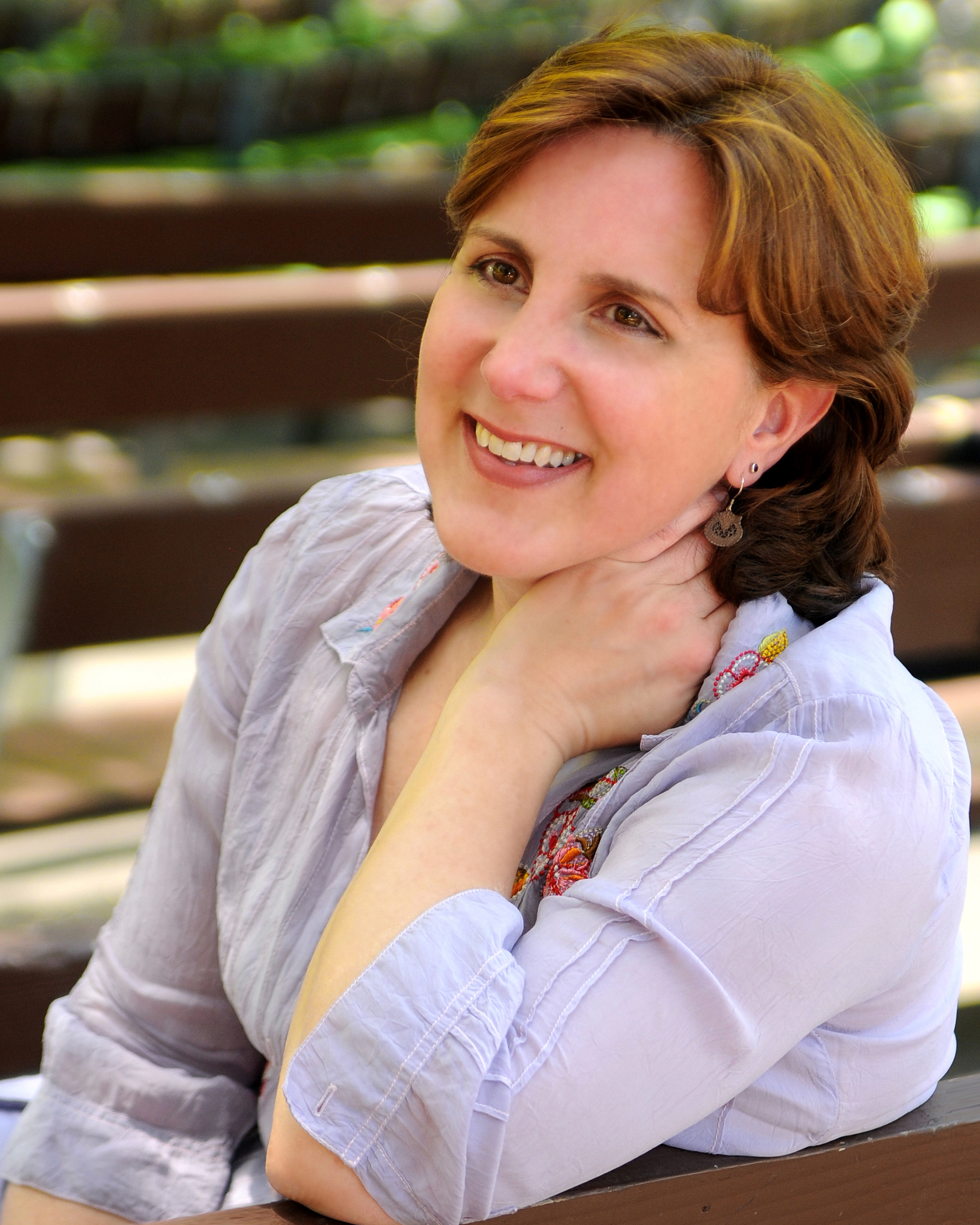
Upshaw

(Photo credit: Brooke Irish)

Upshaw opened the concert with Ives’s “Songs My Mother Taught Me,” injecting its chromatic lifts with her soulful best. The songs that followed ranged from fleeting social commentary (“The Cage”) to haunting impression (“The Housatonic at Stockbridge”). At their heart was a diptych entitled “Memories”—one marked “Very Pleasant,” the other “Rather Sad.” These juxtaposed a delightful recollection of waiting for the curtain to rise at an opera house—and here Upshaw drew a laugh from the audience when she confessed, “I can’t whistle,” during the few bars of the score that require it—with one of a lost relative, albeit a fictitious one, whose memory weighs heavy on a young man’s mind. In addition to being a narrative master, his melodies resting somewhere between aria and recitative, Ives was also a great allusionist, as evidenced in the song “Tom Sails Away,” in which the words “over there” repeat themselves, echoing the war song popularized that same year (1917).

Schubert’s reckonings of texts by Johann Wolfgang von Goethe pulled us from the streets of small-town New England into love’s darkest shadows. In these songs the atmosphere was murkier, with only occasional rays of light spearing through. Each song was a wholly romantic indulgence, rendered all the more so by the duo’s exemplary musicianship. None was so magical, however, as “Gretchen at the Spinning-wheel” and “Song of Mignon,” both of flawless intonation and dynamic control, leaving only “Restless Love” running like a horse through the night toward some unattainable comfort. Even without the lyrics at hand in the program notes, the effect was downright cinematic.

Kalish

(Photo credit: Lilian Finckel)

Lest our dear accompanist be forgotten, Mr. Kalish bisected the Schubert songs with the Austrian composer’s solo piano Impromptu No. 4 in A-flat Major. Penned in 1827, its waterfall arpeggios and stormy center made for a gorgeous interlude. Kalish brought likeminded fire to Bartók’s Hungarian folksong settings, weaving a fibrous net through “Black Earth” and evoking dissonant footsteps in “‘Six-Forints’ Song” with tactile spirit.

Yet neither musician was so focused as in the songs of Ravel, whose Natural Histories, based on texts by Jules Renard, comprised the evening’s centerpiece. These carried through much of the same thematic material—loves, lamentations, and liveries—but with an especially adaptive ear for the music of language. Per Renard’s clever brand of satire, animals acted as stand-ins for humans, their actions more readily displayed and critiqued in a series of clever metaphorical punctuations. Shocking at the time of its composition in 1906, it was an affront, as much for its musical arrhythmia as for its textual sting, to the proper salons in which such music was often performed. As such, it was hailed by French critic Émile Vuillermoz as representing a “true prosodic reform.” From the cruel ritual of “The Peacock” to a rare encounter with “The Kingfisher,” Ravel’s settings spanned a delightful bestiary of moods. Through it all, Kalish matched Upshaw’s descriptive prowess note for note, letting the currents take them where they may.

Upshaw encored with her rendition of Stephen Foster’s 1860 “Beautiful Child of Song,” which against the piano’s ballerina steps brought the program to a full conclusion. From mother to child, it closed the circle by opening another and proved the commitment of a singer who clearly loves what she is doing as much as we do.

(See this article as it originally appeared in The Cornell Daily Sun.)

Lake Street Dive Brings Down the House at Ithaca’s State Theatre

LSD

The initials of Lake Street Dive may spell LSD, but the music of this Brooklyn-based quartet is no hallucination. It’s as real as it gets. Especially real was the energy on Sunday night as, one by one, the band took to the State Theatre stage. Drummer Mike Calabrese established a beat, standup bassist Bridget Kearney locked in a groove and guitarist Mike Olson laid down a few chords before singer Rachael Price ignited the room like a barbeque grill as she launched into “Rabid Animal.” This tune, one of a handful off the new album Bad Self Portraits, raised the bar high for any other indie acts set to grace these parts in the near future. With their engaging cocktail of soul, rock, and Beatles-esque backbone, LSD brought professionalism to every twist and turn of an 18-song rollercoaster.

As was obvious to anyone there, Price is a natural born performer and by the seventh song (the addictive “Use Me Up”) had the audience on its feet and in the palm of her hand. Combining the follow-through of Amy Winehouse and the rasp of Betty Carter, her voice was sensual, hip and confident to the last drop. No small feat, considering that much of the Portraits material deals with themes of regret, surrender and, perhaps most of all, self-abdication. Whether in the title cut or the bittersweet “Seventeen,” the band’s suave rhythmic sensibilities — anchored by Kearney’s rooted bass lines — and lucid harmonies maintained a spirit of underlying propulsion even in the slowest numbers. Ballads as such were few and far between, and included the soulful spotlight that was “Just Ask.”

BSP

In spite of their all-around proficiency, LSD expressed little interest in instrumental soloing. Rather, they focused on maintaining a consistent sound that made even the less successful tunes shine with spirit. Of the latter, “Neighbor Song” was the only real expendable. This depressing tale of a lonely girl who laments her bachelorette-hood while listening to her neighbors make love upstairs quickly wore thin and, with each repetition of the chorus, felt just a bit uncomfortable. Then again, so did its protagonist. In any case, by the last song we were fully refreshed and enlivened by LSD’s stellar vibes. They have hit upon a special combination.

As rich it was, the concert might have felt incomplete without its opening act: Signature Sounds label mate Heather Maloney. Armed only with a guitar and a voice from on high, the New Jersey native — now based in Northampton, Massachusetts — was a study in contrasts. Her unique, sometimes-quirky songwriting concerned itself one moment with simple pleasures (“Nightstand Drawer”), morphing the next into an ode to pathos (“Dirt and Stardust,” a fan favorite). With delicate restraint at her fingertips, she told stories of old friendships (“Hey, Serena”) and, in the evocative “1855,” of an immeasurable love captured in a single photograph. In this song her playing was most alive, like ocean waves lapping over one another before a storm.

HM

Despite tempting comparisons to coffee house queens Aimee Mann or Ani DiFranco, Maloney’s closest analogue is perhaps Joni Mitchell, a point confirmed by her heavenly version of the chanteuse’s classic “Woodstock.” Even more remarkable was her closer, “No Shortcuts.” Hearing this Motown-inflected anthem emanating powerfully from her petite frame to the sole accompaniment of the audience’s stomping and clapping left us fully primed for the sunbursts that followed. Like a good novelist, she followed her voice and thoughts to their logical endpoints, leaving us nonetheless wanting more.

(See this article as it originally appeared in The Cornell Daily Sun.)

To the Third Power: Keiji Haino and Friends take on the Night in Philadelphia

James Plotkin/Oren Ambarchi/Keiji Haino
Johnny Brenda’s, Philadelphia
May 18, 2014

In his epic Dark Tower series, Stephen King tells of Roland, hero of a world that has, in the author’s parlance, “moved on.” In his quest for the eponymous tower, Roland enlists the help of others from our own world. His doing so is foretold by the drawing of three Tarot cards, each manifesting as a door that allows him to slip into the minds and bodies of those fated to aid him. We fortunate few who were upstairs at Johnny Brenda’s bar in Philadelphia on a cool May night surely knew something of what it feels like to be overtaken by Roland. Overtaken, yes, but cognizant enough to realize we’d become lungs for some unfathomable force breathing through us. Fate, indeed, was in effect, challenged to the core.

Presented as part of Ars Nova Workshop’s ongoing concert series, the performance in question brought together American producer-guitarist James Plotkin, Australian multi-instrumentalist Oren Ambarchi, and Japanese underground legend Keiji Haino. Although Haino’s name loomed largest, as it would on any roster, it soothed this admirer’s soul to witness the intuitive progression of each set interlocking into the next, in the order in which it was received. Soothing, too, to see that the ubiquitous electric guitar was the nexus of nearly all the activity that blossomed on stage.

As Plotkin slipped through the first door and into the depths of our attentions, it was clear that something cosmic was waiting in the wings, in the form of wings. An insistent loop—part firmament, part earth—awoke an automaton whose limbs had stopped working long ago, repairing circulatory systems abandoned by aortal vagabonds. There was much to hear in Plotkin’s six strings and the modest array of machinery used to suck out their innermost dreams: a pulse, a video game turned on its axis until it screamed, gestures buffed into oblivion, hints of sampled drums. Even so, traction was at best an ant burning in the full, gravity-biting sun. With quiet turnings came disquieting streams. Static, beep, out.

At first intermission, the cards got a thorough shuffle, unleashing bits of wisdom from between the pasteboards. First: Screaming and whispering are the same—only a knob turned either way stands between them. Second: Manipulation is not an act of omniscience but of incorporation. Third: The torch may flicker out and die, but its ashes are immortal.

Through the second door stepped Ambarchi, an ear’s depth away. From this breach issued a low drone. There was something fleshy about it—in a way, vocal—that attracted us like fingerprints to a touchscreen. Into his wires Ambarchi threaded an unusual current of hope, a feeling of shocking bliss that awakened signals in the spine left dormant since birth. As if along the skins of fish, watery molecules glided smoothly around us, and through their collective conflict bore silver unto the ocean. Indeed, the door had opened. In its frame, a multitude of stars, each shouting above the rest in effort to be heard over a tangle of astronomical calibrations. The result was profoundly beautiful. Algorithms flickered and died, but their light stayed behind to teach us how to mourn. There was a rhythm, one beyond the capability of any drum to shelter. It found us, no matter where (or when) we were. To end: a peeling away of Saturn’s rings until only a gaseous orb remained.

At second intermission, the cards were reshuffled. From them came further wisdom. First: The drone is a bone with marrow made of shadow, which feeds off the terrible fear of silence to which we must all one day pay respects. Second: Harmony is a force that takes a million light years to reach, but only a blink to extinguish. Third: Solar flares are secrets just waiting to be reborn as givens.

Haino passed through the third door without needing to open it. And so it began, this magic called “now.” As the master haunted the stage, it was as if leaves turned into flame under his step, somehow affirming in their clarion force. Through a tableful of accoutrements, Haino evoked nerve endings of uncharted muscle. Each change was a spectral reaping, a mantra given freedom to dance where borders fell into themselves. Be it a contact microphone on a leg, the onslaught of his guitar, or a bowed strip of magnetic tape, each cell formed a stained glass mosaic of mounting proportion. Even an amplified slinky became fair—and compelling—game for expression. In the end, however, it was less about the medium than the message, even if that message was in his visceral scream and in his body, both of which held kinesis so tightly that two became one. This was where ice storms courted volcanoes, where rhythms were not heartbeats but failed programs, recognizable gnarls in the fallacy of experience. As if to assert their intuition, single notes shone through like rays of light from cloud. The almighty chord screamed until it was glued to us. “Someone is always lurking within the heart,” Haino sang. “It is fate!” And later: “Something is praying, something is waiting…” The magic of lore turned cosmic and free. Galactic nightmares turned benedictions. Dark matter turned spirit. Drop and exeunt.

Although offstage Haino is undoubtedly a part of this reality (he is, in fact, of the nicest and most playful personalities you’re likely to encounter in the game of life), onstage he inhabits another plane of existence entirely. His contributing wisdom was simple: Those who search for a pulse will find nothing but mirrors of their seeking. And for good reason. With only a ghost of feedback to show for all that had just transpired, it’s a wonder any of us could hear our thoughts, for all the din of vortices opened within. In the wake of such visceral experience (here was the transfiguration), “catharsis” had become a dirty word.

Like the ringing in my ears that lingers even as I write this, the search for meaning in this trilogy of happenings has left its traces, pieces of sonic shrapnel too microscopic to tweeze out and which will outlast me when I expire.

Sometimes, planets align. Other times, they explode. The supernova is king, queen, and jester all in one.

Roby Lakatos Ensemble: La Passion – Live Review

RLE

Roby Lakatos Ensemble presents “La Passion”
Roby Lakatos violin
Lászlo Bóni second violin
Jenő Lisztes cimbalom
Lászlo Balogh guitar
Lászlo “Csorosz” Lisztes double bass
Kálmán Cséki Jr., piano

Bailey Hall, Cornell University
April 24, 2014
8:00pm

Thursday night’s performance at Bailey, the last of this year’s Cornell Concert Series, was proof that technology is far less predictable than those who use it. Predictable was the sheer excitement brought to the concert hall by “devil’s fiddler” Roby Lakatos and his all-Hungarian ensemble. How could one not be moved by the balance of incendiary virtuosity and cool programming? Unpredictable, however, was the muddy sound mix, which was prone to distortion and invariably favored certain instruments at the expense of others. Central to, and unique among, those instruments was the cimbalom, a concert hammered dulcimer rarely heard stateside in a live setting and played to captivating effect by one of its greatest living masters, Jenő Lisztes.

It was Lisztes, in fact, who scored the biggest hit of the night with his rendition of Rimsky-Korsakov’s evergreen “Flight of the Bumblebee,” improvising around it with such artful dexterity that it was like hearing it for the first time. With exception of the occasional solo, however, the cimbalom was lost under the weight of pianist Kálmán Cséki Jr. and bassist Lászlo “Csorosz” Lisztes, each miked so loudly that the dulcimer’s gentle edges were frayed beyond recognition. Over-amplification all around also magnified incidental sounds from Lakatos’s bow, often breaking the spell otherwise spun: Sobering reminders that what we were hearing was being processed, filtered and force-fed the sonic equivalent of a 5-Hour Energy drink. Neither music nor musicians needed any such enhancement, and the decision to rely on it seemed as much motivated by virtue of playing in such a large venue—instead of, for example, the restaurant in Brussels where, from 1986 to 1996, Lakatos’ talents drew collaborators and admirers (Sir Yehudi Menuhin among them) from far and wide—as by a need to balance sound levels to the musicians’ liking. Indeed, in light of their most recent live CD of the same music, which fares hardly better, it’s clear they were hearing things very differently on stage, surrounded as they were by monitor speakers fanned away from the audience.

Despite complications in presentation, the content was nonetheless compelling. Completing the picture for this, the ensemble’s inaugural U.S. performance, were two more Lászlos: Mr. Balogh on guitar and Mr. Bóni, who has worked with Lakatos for well over two decades, on second violin. The violinists, understandably, displayed effortless synergy. Both soloed with finesse and ease, even if their styles diverged—Lakatos the jack-in-the-box ready to spring and Bóni the smooth motion of the crank turning in anticipation of its surprising reveal. Together, the band presented its current touring program, “La Passion”—an appropriate and multivalent title, to be sure, for emotive music performed with commitment.
As leader, Lakatos was often in the spotlight. There was so much traction in his often-aggressive bowing that at moments it was as if his hands were working of their own volition. Whether showing off his blurring pizzicato technique in the traditional “Duex Guitares” or pulsing through the chromatic drama of “Valse Triste” by Hungarian composer Ferenc Vecsey, Lakatos kept a level head. Lakatos also presented two original pieces. Both “New Alliance,” which began the concert, and “SK Paraphrase” followed the same formula, starting out with crosstalk from the violins before blending into Django Reinhardt antics that found Balogh in particularly high spirits. That the guitarist had started out on cimbalom before switching to guitar at age 12 was plain to see: His fingers danced with that same staccato approach. Other highlights included two Soviet-era pieces, one a waltz by film composer Isaak Osipovich Dunayevsky and the other a marching song (“Polyushka Polye”), and two tangos by Astor Piazzolla. Of those, the lush and vibrant “Oblivion” showed these musicians at their dynamic, lyrical best.
Conceptually speaking, Lakatos and friends are by no means singular in what they do. Similar projects, such as violinist Nigel Kennedy’s sadly one-off “East Meets East” with the Polish Kroke Band, have forayed into adventurous crossovers of classical, folk and jazz. What separates the Lakatos ensemble is the sterling fire they bring to even the most lambent moments. But in the end, no electricity is needed where already there is so much heat.

(See this article as it originally appeared in the Cornell Daily Sun.)

Songs of Fire and Ice: OCO and Tetzlaff Dance with the Gypsies

OCO

Orpheus Chamber Orchestra
with Christian Tetzlaff, violin
March 26, 2014
Bailey Hall, Cornell University
8:00pm

When the first stirrings of the Hungarian Rondo resounded from the bows of the Orpheus Chamber Orchestra, time and space collapsed. Zoltán Kodály’s transcription and embellishment of Magyar (old Hungarian) soldier’s songs began an intimate night of music making at Cornell University’s Bailey Hall, where light struck prism in a program of gypsy refractions. Impressive though this rarely heard music was, so too was the musicianship fronting it. The OCO worked by turns smoothly and jaggedly, bringing warmth and coolth where needed. Through it all, a pastoral clarinet crept in and out of frame, troubling the waters here and breaking surface there. However far the scales tipped, a central theme brought assurance with its periodic balance.

Such dynamic brazenness carried over into Béla Bartók’s 1939 Divertimento for string orchestra. Among the composer’s most beloved works, it was given a robust interpretation. Between the insistence of its underlying pulse and the violins spiraling above and beyond it, artful contrasts ensued. As throughout the Kodály, a core of soloists emerged and receded, morphing between concert hall elegance and fireside rusticity. Remarkable about the performance was its clarity of voices, each cutting a strong thematic figure. As the orchestra moved from pen & ink to the charcoal of the second movement, one could feel a cinematic charge arising from the dust, so that by the gilded final Allegro the light was that much clearer for having passed through darkness.

Christian Tetzlaff

Following intermission, violinist Christian Tetzlaff took to the stage to unravel the Violin Concerto No. 2 in D minor of Joseph Joachim. Composed between 1854 and 1860, it remains one of the most notorious pieces in the repertoire. Tetzlaff was more than prepared to overcome its maze of double stops and chromatic fingerwork, the latter of which enacted a dance in and of itself not unlike the folk tunes that had inspired it. Aside from being a technical tempest, the composing drew on a range of influences, from the Beethovenian drama of its introduction to the Paganini-like finish. Yet the closest analogue was undoubtedly Dvořák, whose own violin concerto was duly inspired by Joachim’s ways with bow and pen. The OCO accordingly showed a retroactive side, one more subdued, that it might allow Tetzlaff to express himself without obstruction. The violinist’s interpretive prowess soared, especially in a cadenza that was, as the kids say, off the chain. The bird-like slow movement at concerto center presaged more of Dvořák’s later work, although the spirit of the dance was never far away, as if we were catching snatches of some revelry just beyond the pastures. And revelry we got in the joyful finale, which put Tetzlaff in the unenviable position of tying a plethora of loose ends—a feat he accomplished with tact.

Following suit of the orchestra half-circled around him, Tetzlaff emoted effortlessly and with controlled passion, so that even the encore (Hungarian Dance No. 19 by Brahms) went down like a delicate confection at the end of a five-star meal.

Tempesta di Mare: A Live Review

Tempesta

Tempesta di Mare
Barnes Hall, Cornell University
March 6, 2014
8:00 pm

In the 1991 French film Tout les Matins du Monde, Gérard Depardieu plays an aged Marin Marais—in-house composer at the court of Versailles around the turn of the 18th century. Gussied up in all the accoutrements of his station, a corpulent Depardieu stares off camera, filled with envy at the ambitious young man he once was. The real Marais studied under Jean-Baptiste Lully, who by the patronage of King Louis XIV singlehandedly defined the French baroque style. Listeners at Barnes were treated to his “March of the Turks” Thursday as part of a lively program by Tempesta di Mare. Much in contrast to the self-scorn of Depardieu’s Marais, who indifferently conducts the same march early on in the film, Tempesta brought flair and steady passion to its evening performance. Under the title “Apollo at Play,” Philadelphia’s premier baroque chamber orchestra culled a thoughtful program of incidental music by Lully, British emulator Matthew Locke and 20th century iconoclast Igor Stravinsky before coming full circle to Lully protégé Johann Sigismund Kusser, whose Apollon Enjoüé, composed in 1700, ended the concert.

Because the entire program consisted of music written for the stage, individual movements were as rich as they were compact. With its stately undercurrents and detailed orchestration, Lully’s descriptively astute Le Bourgeois gentilhomme (1670) set the bar high. Even without the titles provided for our edification, we could feel the sway of tailored cloth in the “Dance Teacher” scene and imagine the revelry of “The Uninvited Guests,” of which the Spaniards led the way with castanets and vihuelas blazing. On that note, Lully’s colorful palette represented a fascinating transition period in the evolution of Western European classical music, when the aristocratic impulses of court-appointed composers shared staves with motifs borrowed from earlier Sephardic traditions, as evidenced by the bevy of percussion at Tempesta’s employ.

Consequently, Lully’s sound world was equal parts pomp and folk. Enhancing its spread were recorders, bassoon, harpsichord and theorbo, a sort of lute on steroids sporting an elongated neck fitted with sympathetic bass strings. The latter provided a visual element that was the subject of much pre- and post-concert conversation. Yet the theorbo, played by the ensemble’s co-director Richard Stone, was a subtle anchor for the dramatic goings on. So too, in Locke’s instrumentals for The Tempest (1674) was the canvas replete with vivid splashes of baroque charm. Shuffling weighty pauses into upbeat turns of phrase, lovelorn abandon into systematic denouements, Locke’s writing emerged swift and sweet.

The next portion of the concert, however, brought to the fore what proved to be the evening’s only flaw: Tempesta’s battle with tuning. Although tuning issues first arose in the wind section of the Lully, the off-key slips of which were quickly smoothed over, in the all-string intimacy of Stravinsky’s 1928 Apollon musagète two mismatched cellos grated on the ears. Such inconsistencies, however, come with the territory, especially when performing on period instruments (although it seemed most were modern copies—the harpsichord, for example, having been built in 2012), and the fine musicians of Tempesta handled these hiccups with grace and fortitude. There were also the uneven temperatures of the venue itself, which required musicians to flit between a cold backstage room and a warmer auditorium: further proof, perhaps, that this year’s winter has overstayed its welcome. Nevertheless, they muscled through with a perseverance that certainly did not go unnoticed.

All said, Tempesta gave us a treat with Stravinsky’s gorgeous paean to the French style. By turns mournful and frolicking, each movement was like a shard of glass in a slowly turning kaleidoscope. But the best came last with Kusser’s fabulous orchestral suite, from which the program borrows its name. Not only did the ensemble smooth out its tuning snags; it also presented us with the loveliest and most adventurous music of the night. Full of surprising twists and virtuosic performances all around, it left us all with something to smile about. In that respect, the joys won over the nitpicks. Challenges make us human, and finishing strong in spite of them is no small feat. In this respect, Tempesta di Mare reminded us of why we go to hear live music in the first place: to remind us that we are all human.

(See this article as it originally appeared in the Cornell Daily Sun.)

Philip Glass and Tim Fain: A Live Review

Philip Glass & Tim Fain Promotional Images at Emory University.

Philip Glass: An Evening of Chamber Music
with Tim Fain
State Theatre, Ithaca, New York
March 1, 2014
7:00pm

If you have ever said a word over and over until it sheds all meaning and becomes its own sound, raw and devoid of attachment, then you know what the sound world of Philip Glass feels like. His melodies evolve in just such a way, nurturing new aspects with every iteration until they blossom of their own accord. His music has been called many things, from hypnotic to interminably monotonous. Its repetitive arpeggios and insistent themes have polarized listeners for decades. His admirers—myself among them—take comfort in his recognizability. His many critics, on the other hand, are often guilty of the very monotony of which the iconoclastic composer stands unfairly accused. Either way, resistance to his minimalist (im)pulses is futile: There’s nothing minimal about them.

But this is only half the story. Many will have heard Glass the composer, whose soundtracks for such films as Koyaanisqatsi and The Illusionist have long tickled the ears of even those unfamiliar with his name. Saturday night’s intimate chamber concert at the State Theatre was a choice opportunity to experience Glass the musician. Poised mountainously at a rococo baby grand piano yet with the touch of a willow’s tendril on water, he took concertgoers on a journey through his varied career by way of its most essential colors. To that end, he opened with a spirited performance of “Mad Rush.” The song was written—he explained to the audience—in response to a commission for a piece of “indefinite length.” This comment brought a collective chuckle and showed Glass as one at ease with his critics. It was obvious that the piece was originally written for organ as its waves crashed over one another in a gorgeous tumble. He also performed three selections from his Metamorphosis series. Like a jump between dream levels in the film Inception, each movement proceeded from a deeper place. The crosshatching of their dynamic pianism recalled the “stagger” technique of Baroque harpsichordists, and served to make an already resonant instrument brim with overtones.

Although Glass has ever been his own best interpreter, he has found in Tim Fain a viable partner in time. The American violinist, also no stranger to cinematic crossovers (he can be heard in Black Swan and, most recently, 12 Years a Slave), has emerged as one of the most exciting and innovative violinists of our generation. It was in the spirit of affinity that he joined Glass on stage for a smattering of scenes from The Screens. This incidental music, written for a stage production of the play by Jean Genet, was by turns sprightly and mournful. So, too, the concluding Pendulum, condensed here from a trio to a duo.

Yet it was Fain alone who secured the performance’s most stirring memories in the form of a two-part “Chaconne.” Excerpted from the seven-movement Partita for Solo Violin, it ranks among the solo violin works of Eugène Ysaÿe as a true inheritor of Bach’s hallowed craft. The purity and surety of Fain’s tone was alive with purpose as he leapt through a near constant chain of double stops. Concertedly, his strings sang the most recent music on the program, bringing everything back to Glass the composer and reminding us of just how he has evolved. Here was his art, soaring, full-throated, and open to whatever may come.

(See this article as it originally appeared in the Cornell Daily Sun.)

Saying No to the Flow: Alfredo Rodríguez

AR

Alfredo Rodríguez
February 7, 2014
Barnes Hall, Cornell University
8:00 pm

After hearing pianist-composer Alfredo Rodríguez in the close quarters of Barnes Hall last Friday night, one could only feign surprise to know that he began his musical education as a percussionist before switching to piano at age 10. Whether through clipped breathing, clicks of the tongue or stamping of the feet, his awareness of the beat was front and center. This was surely one of many aspects of his craft that caught the ear of producer Quincy Jones, with whom he collaborated on his recent sophomore album, The Invasion Parade. We might further reflect on his Cuban heritage, which is to his playing as the moon is to night. Yet, if these biographical details meant anything, they were only as valid as the intrigue of his performance, which was, in a word, dynamic.

Rodríguez left no doubts about his roots, starting the program as he did with an idiosyncratic take on “Venga la Esperanza” by Cuba’s left-wing darling, Silvio Rodríguez. As he wove from somber beginnings a tapestry of increasing complexity, it was clear that Keith Jarrett has had a huge impact on Rodríguez, who cites the pianist’s legendary The Köln Concert as a life-changing influence. The more he played, the deeper his contrasts and densities became. The effect was such that when the occasional snippet of recognizable melody broke surface, we were reminded that at the root of it all was something worldly. Rodríguez followed up with an original composition, “El Güije.” Balancing dark undercurrents in the left hand with the sparkle of his right, the piece’s borderline-aggressive textures gave way to windswept dreamscapes at the turn of a weather vane.

The staggered raindrops of “Quizás, Quizás, Quizás” introduced a triptych of classic tunes rounded out by “Veinte años” and Ernesto Lecuona’s rousing “Gitanerías.” In them, elements of Messiaen, Bartók, and folk songs showed the full range of Rodríguez’s palette. His highs, always translucent, shone with special care. That said, he never stayed pretty for too long, if only to better appreciate the occasional moment of beauty we were allotted.

As is often the case with younger jazz musicians, Rodríguez emoted with blatant passion and tended toward passages of controlled chaos before finding purchase in his themes. Departures felt more like interjections, if not outright explosions, than variations. His tongue-in-cheek take on “Guantanamera,” for example, was a tour de force in technique, invention, and surprise. He approached this deathless tune from within—literally—by hitting the strings inside the piano before migrating to the keyboard proper. The result was a mélange of interpretations, more sketchbook than painting—which is precisely where he deviated from Jarrett.

Although Jarrett’s adlibs come pouring out of him sounding like fully formed compositions, Rodríguez allowed himself the indulgence of thinking out loud with relatively little interest in transition, stacking cell upon cell of distortion. Something of a curse for many improvisers that smoothes itself out over decades into seamless art, one senses in Rodríguez a “say-no-to-the-flow” attitude that suits him just fine. The result is neither more nor less conducive to the concertgoer’s listening pleasure, but is a methodological difference that requires sharp attention from both sides of the front row. He is an honest player, through and through.

None of this is to imply that that the concert was devoid of lyricism. As if to prove this, Rodríguez encored with an aching rendition of Ernesto Duarte’s “Cómo Fué.” As tender as tender can be, its somber farewell closed the circle, opening another of fond memory in its place.

(See this article as it originally appeared in The Cornell Daily Sun.)