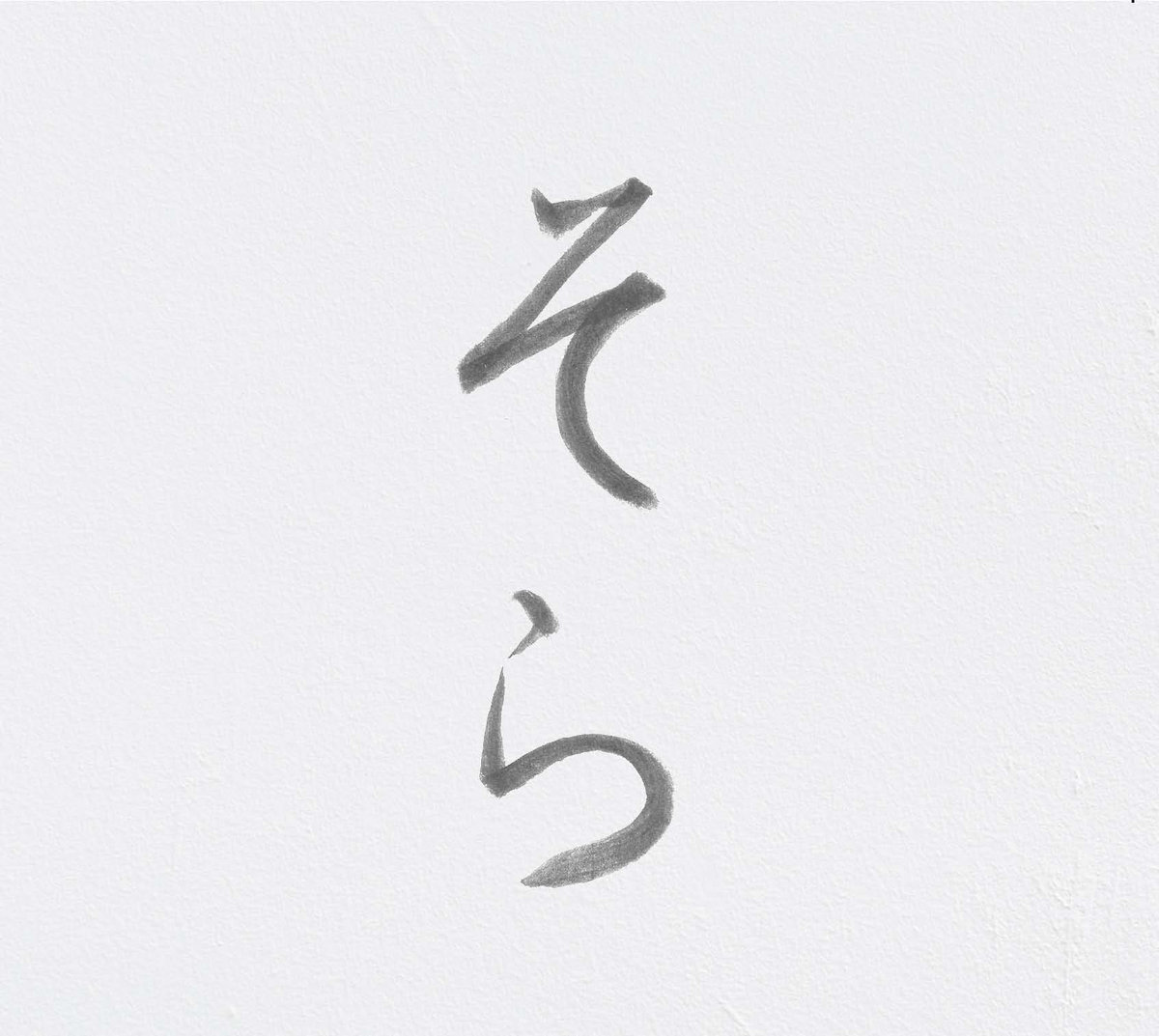
Sky, the sleeve insists. A promise of lift, blue, vapor, and horizon. Yet the sound arrives caked in soil, fingernails packed with loam, lungs full of iron filings. Sora speaks upward only to burrow downward. The heavens here feel subterranean, a firmament made of shale and pressure.
Seven pieces, titled with the Japanese equivalent of “A, B, C, D, E, F, G,” as if language has been stripped to scaffolding and left in a field to rust. Tamio Shiraishi treats the saxophone less as an instrument than excavation device. He does not play notes. He drills, siphons, and fractures. Two dialects coil around each other through the record, twin serpents sharing a single ribcage.
The opening shriek is a filament of sound stretched past mercy. It reads as violence at first contact, yet something in its extremity resembles benediction. A tear across the canvas of listening. One learns more about oneself in the flinch than in the pitch itself. Inside the cavern of ISSUE Project Room, Shiraishi lowers the bell into the dark and hoists up tones so narrow they resemble slivers of light under a locked door. Microintervals shimmer like insects trapped in amber. The saxophone forgets its lineage and becomes a wind tunnel lined with nerves.
These pieces graze the border of audibility. They do not ask to be heard in the usual sense. They haunt the periphery, collecting the chaff of abandoned frequencies, gleaning scraps from farms long since swallowed by dust. Listening turns agricultural. One reaps what the wind has misplaced.
Five subsequent tracks emerge from Thousand Caves in Queens, the studio name alone a premonition of the sonic ores being mined therein. Electronics enter as a brutal accomplice. Reverb collapses into something closer to bone. The altissimo still cuts deep, though now it presses against the ear with intimate insistence, breath fogging the glass between body and speaker. Interventions of wire, distortion, and circuitry feel extra-corporeal, as if the saxophone has grown a second spine made of copper.
There are moments that detonate in miniature, pocket-sized cataclysms recalling the scorched density of Merzbow yet compacted into pellets. They surge without regard for comfort. A geyser with no interest in its spectators. In response, Shiraishi dips into sub-tone murmurs, wind turned inward, a heat that grazes the skin from beneath. Air becomes flame, cheeks raw from its lick.
Even the brief shortest piece carries a gravitational pull, dense as a star imploding in private. It circles itself, a bird trapped inside its own dream of flight, wingbeats echoing until the sky folds and the ground rushes up like an answer.
The final track returns to reverberant space, though not as repetition. More like a figure tracing its outline in ash. A search for origin without nostalgia. The sound follows its own shadow, lengthening, thinning, until walking ceases to be possible. Where it falls dead is where it belongs.
Sora is available from Relative Pitch Records here.
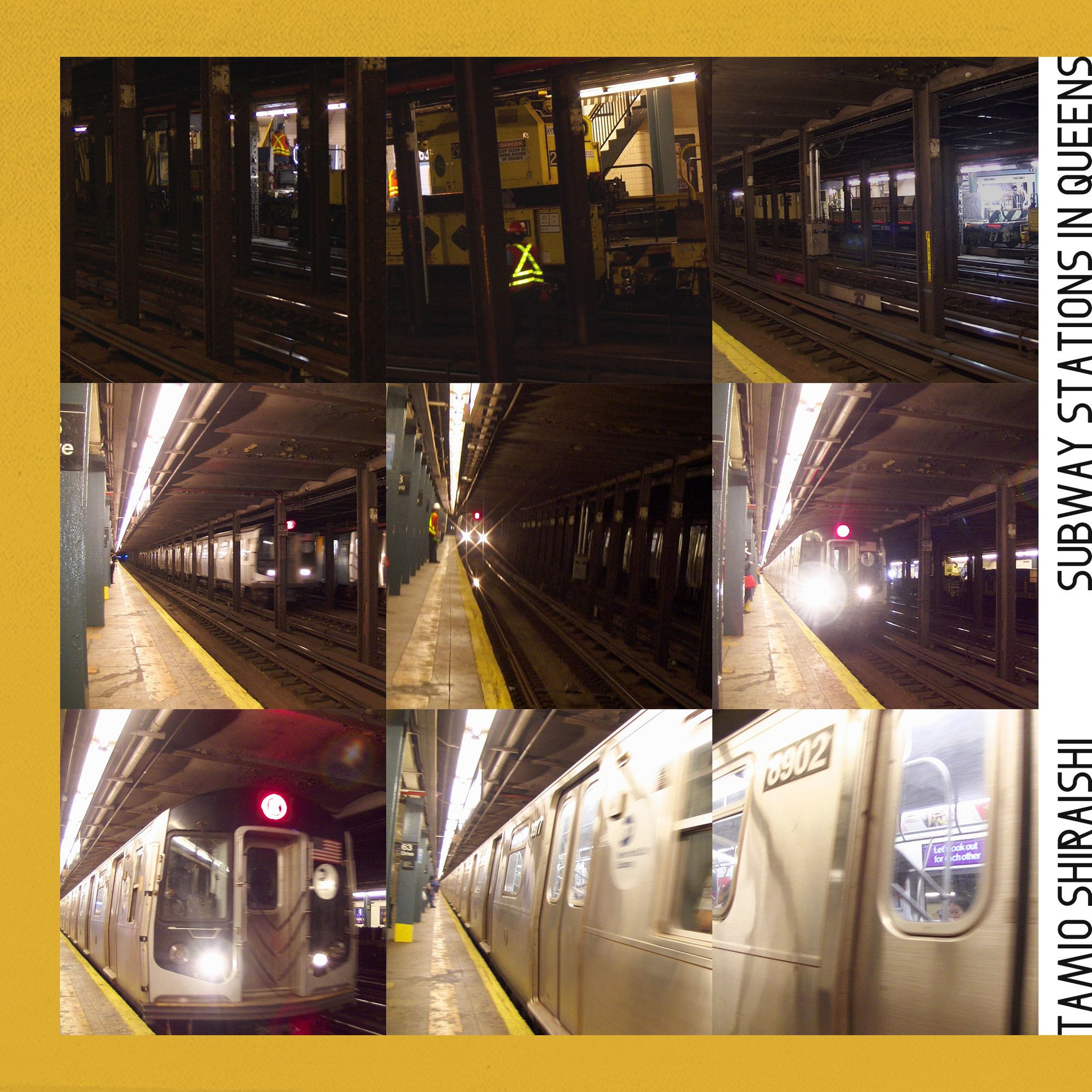
Japanese saxophonist and underground luminary Tamio Shiraishi has carved out an inimitable niche for himself in the literal underground of New York City, the subway system of which has served as his performance space of choice for three decades. On this release, recorded at 67th Avenue and 63rd Drive in Queens, he burrows into the ear. The stations breathe around him. Trains arrive with the force of verdicts, depart with the hush of unfinished sentences. His altissimo pierces the air, which answers back in drafts and rattles. Steel sings. Concrete keeps count. The MetroCard becomes a tarot card, each swipe a prophecy of descent.
Eight tracks, eight apertures cut into the city’s ribcage. He coaxes something feral from the lockboxes of the psyche, something that refuses to remain archived. What at first feels abrasive becomes a form of acupuncture, needles of tone pricking the skin of habit until sensation floods back into limbs gone numb from routine commute. The ear flinches, then kneels.
His high register does not merely squeal. It drafts a constitution for frequencies that have never been granted citizenship. The tiled corridors convert into echo chambers of civic unrest. Flesh recedes. Circuits awaken. The saxophone becomes a filament glowing against the damp. Sound migrates through the tunnels like current searching for a body.
There are moments when the instrument bucks against the machinery, a caged voltage refusing containment. He wrestles the rails for jurisdiction over the present tense. Each cry is a summons. Each tremor a subpoena. The heart hears what the ear resists. This is not noise as nuisance. It is noise as notice. A reminder that beneath every timetable lies a graveyard of cancelled futures.
Justice flickers in these passages, cracked like ballast underfoot. Announcements collapse into phonemes, then into static, then into a slurry of intention and erasure. Language gets mugged by reverb. Meaning falls between platform and train. Shiraishi lifts it out with breath that feels rationed, precious, almost political in its insistence on continuing.
When he pauses, the silence does not soothe. It gapes. The station inhales with him. In those held breaths, the true ache surfaces. The city reveals its pulse as arrhythmic, tired, still stubborn. The screeching that once felt punitive now reads as prayer. A subterranean psalm pitched past comfort, past compliance.
Direct contact with a passing train ignites him. He answers its thunder with serrated ribbons of tone, midwifing a birth that happens between arrivals and departures. Whether the acoustics bloom or bruise, there remains a cavernous quality to the unfolding. Every note ricochets off tile and bone alike. The more one listens, the more a covert melody materializes, a fugitive tune hiding in plain hearing. What once felt like rupture begins to resemble release.
Toward the end, the textures grow denser, more derailed. Headspace cracks open like a skylight smashed from below. The final track stages a duet between time and space that refuses settlement. Neither wins. Both testify. The saxophone presses its case until the walls sweat condensation.
Then, as another train barrels through, the horn thins, frays, threads itself into the dark seam of the tunnel. The city reclaims its own acoustics. The platform returns to routine. A last filament of tone flickers, rides the rails into blackness, and keeps going, farther down the line, past the map, past the final stop, dwindling into a vanishing point that hums, and is gone.
Subway Stations in Queens is available from Café OTO here.
HÜM moves with the quiet conviction that composition and improvisation are not opposing forces but twin currents in the same river. Pianist Bojan Marjanović, bassist Bjørnar Kaldefoss Tveite, and drummer Magnus Sefaniassen Eide approach each piece as both blueprint and excavation. Themes arrive as seeds, small melodic cells set carefully in the soil. What grows from them is shaped in real time, yet nothing feels accidental. Even at its most vaporous, the trio’s language carries the imprint of design.
“Dream Beliefs” opens the album as a threshold rather than a statement. Its textures shimmer with a submerged luminosity, gentle yet insistent. There is a sense of memory suspended beneath the surface, glacial fragments drifting through warmer currents. The music feels aware of time’s double exposure. Youthful wonder lingers, yet it has been tempered by experience, by the quiet knowledge that revelation is rarely loud.
On “Kringsjå blå,” a delicate tension governs the exchange. The bass enters with a humility that conceals its strength, shaping space rather than claiming it. Tveite’s solo unfolds in restrained lyricism, each note placed with a sculptor’s patience. Marjanović responds with a piano voice that seems to tunnel into memory itself, carving chambers where nostalgia gathers and resonates. Eide’s cymbals flicker at the periphery, catching light and scattering it across shifting meters. The trio etches emotional calligraphy into the shoreline of the piece, knowing that erosion is part of the art.
The title track deepens this meditation. Its groove settles into intimacy, sincere and unguarded. It feels almost ceremonial, as if casting impressions into wet sand, preserving them for a moment before the tide returns. Marjanović’s pianism here possesses an extraordinary fluency. His lines arc and return, tracing parabolic shapes that suggest both ascent and reflection.
“After Hours” narrows the focus. The rim taps of the drums glow in the foreground, tactile and close. The kick drum recedes, the bass anchors softly, and the piano threads its way through hushed terrain. The intimacy borders on confessional. Each gesture feels whispered directly into the ear. The trio resists drama, choosing instead to cultivate atmosphere.
In “Sedmaya,” the music opens a sealed chamber of recollection. The groove interlocks with playful intricacy, the bass and piano circling one another in spirals of suggestion. Eide’s drumming introduces subtle turns that redirect the current without breaking it. The recording itself seems to glow from within, resonant and nocturnal. There is an undercurrent of longing here, a recognition that memory is both fragile and generative. The musicians do not attempt to recreate the past. They allow it to shimmer and dissolve, then build anew from its residue.
“Day Dreamer” begins with a crystalline piano introduction, each note suspended in patient clarity. The surface is calm, inviting the imagination to wander. As the piece unfolds, its apparent simplicity reveals deeper intricacies. The bass rises into a solo that sings just at the edge of awareness, hovering between articulation and suggestion. Every phrase feels necessary.
“Peculiar Being” shifts the energy. The bass sets a rocking foundation that propels forward with understated momentum. There is a locomotive spirit here, yet it is guided by tenderness rather than force. Marjanović’s solo surges with oceanic breadth, exploring registers with fearless curiosity. Eide’s cymbals and snare weave a rhythmic tapestry that both supports and provokes. The music twists back upon itself in stepwise motions, generating tension that resolves through trust.
“Arctic Ice” introduces arco bass, with a tone that is austere yet luminous. The expanse feels vast, almost ascetic, until warmth begins to seep through the cracks. The trio navigates this terrain with patience, allowing cold and heat to coexist. From this clarity emerges “Cvekje cafnalo,” a hearth after distance. The piece gathers strength without aggression, building toward a crescendo that retains softness at its core. The blade is dulled by compassion.
For listeners attuned to ECM streams, this album will resonate deeply. It shares a lineage with the introspective yet expansive elegance of Bobo Stenson and the lyrical restraint of Tord Gustavsen, yet HÜM’s voice remains distinctly its own. Their sensibility is a climate to be inhabited, one in which light and shadow converse without hierarchy. The blurred boundary between the predetermined and the spontaneous becomes a philosophy of living.
Don’t Take It So Personally ultimately proposes that music can be an act of gentle revision. Each piece reshapes experience, sanding down harsh edges while preserving essential contours, proof that identity itself may be composed in this way, through attentive listening to the spaces between what we expect and what arrives.
For his 27th transmission under the moniker Caustic Reverie, Bryn Schurman opens a pressure hatch beneath the psyche and invites us to descend without a tether. The result is a series of gravitational events, each bending perception until the mind forgets which way is inward.
“Transit of Iapetus” arrives like an eclipse that has forgotten its sun. The opening tones hover in a suspended hush, as if sound itself has chosen to kneel before crossing a forbidden threshold. Its frequencies seem older than the idea of time as a straight line. They move with the patience of tectonic thought, burrowing into the private chambers of awareness where instinct hovers, dormant and luminous.
Listening becomes an act of exposure. We realize how fragile the architecture of the self truly is. We exist beneath the illusion of coherence, believing ourselves to be stable forms in a navigable cosmos, yet Schurman reveals the dreamlike viscosity of our movements. Each gesture lingers longer than its intention. Each emotional tremor sends ripples beyond the horizon of consequence. We are stretched thin across existence, a filament of atoms trembling between dimensions, radiant and precarious.
“PSR B1913+16” widens the aperture. It pulses with distant radiance, the kind that travels for millennia before grazing the skin of perception. A single ray of light becomes a biography of exile. By the time it touches us, it has been severed from its birthplace, orphaned by distance and duration. We cradle that light without knowing its original name. In this way, we are less observers than vessels of matter waiting to be kissed by something that has wandered across impossible expanses.
Schurman’s digital hush carries a deceptive serenity. On the surface, the textures shimmer with tranquil restraint. Beneath that calm lies a compressed ferocity, a spirit capable of eruption yet choosing to remain coiled in discipline. It is the silence before a supernova that never announces itself, intensity distilled to a whisper that vibrates the bones more profoundly than any roar.
The album suggests that perception itself is a narrow corridor carved through an immeasurable field. We are granted only slivers of pattern, fragments of constellations, hints of geometry in the sky. “Quantum Interference Lensing” pushes further into distortion, where refraction becomes revelation. What appears solid in illustration evaporates in lived experience. The unseen becomes essential, the safety net of oxygen, gravity, and coherence, all taken for granted until absence tightens around the throat. Schurman seems to argue that catastrophe is rarely loud. It is incremental, almost tender. A slow forgetting of the forces that sustain us. A quiet suffocation within our own assumptions.
When “Collapse of Rigel” surges into the foreground, hope does not vanish in spectacle. It erodes. The track drifts like debris expelled from an airlock, spinning in a silence too vast for prayer. This is not drama. It is inevitability. The requiem is not sung for a single body but for the idea of permanence itself. Reflection multiplies reflection until identity becomes a hall of mirrors stripped of silver. We stare into ourselves and find watercolor remnants, pigment drained from the page, form barely clinging to contour.
Yet within this apparent desolation lies a fierce philosophical clarity. If we are only momentary configurations of dust and algorithm, then our fragility is our miracle. We are the brief interval in which the universe becomes aware of its own turbulence.
Instead of delivering us back to ourselves, the album performs a subtler transmutation. It suggests that consciousness is a corridor of stellar residues in which the act of listening is synonymous with curiosity. In that realization, the terror of insignificance collapses into astonishment. We are not stranded in the dark. We are the dark learning to articulate itself in flashes of awareness.
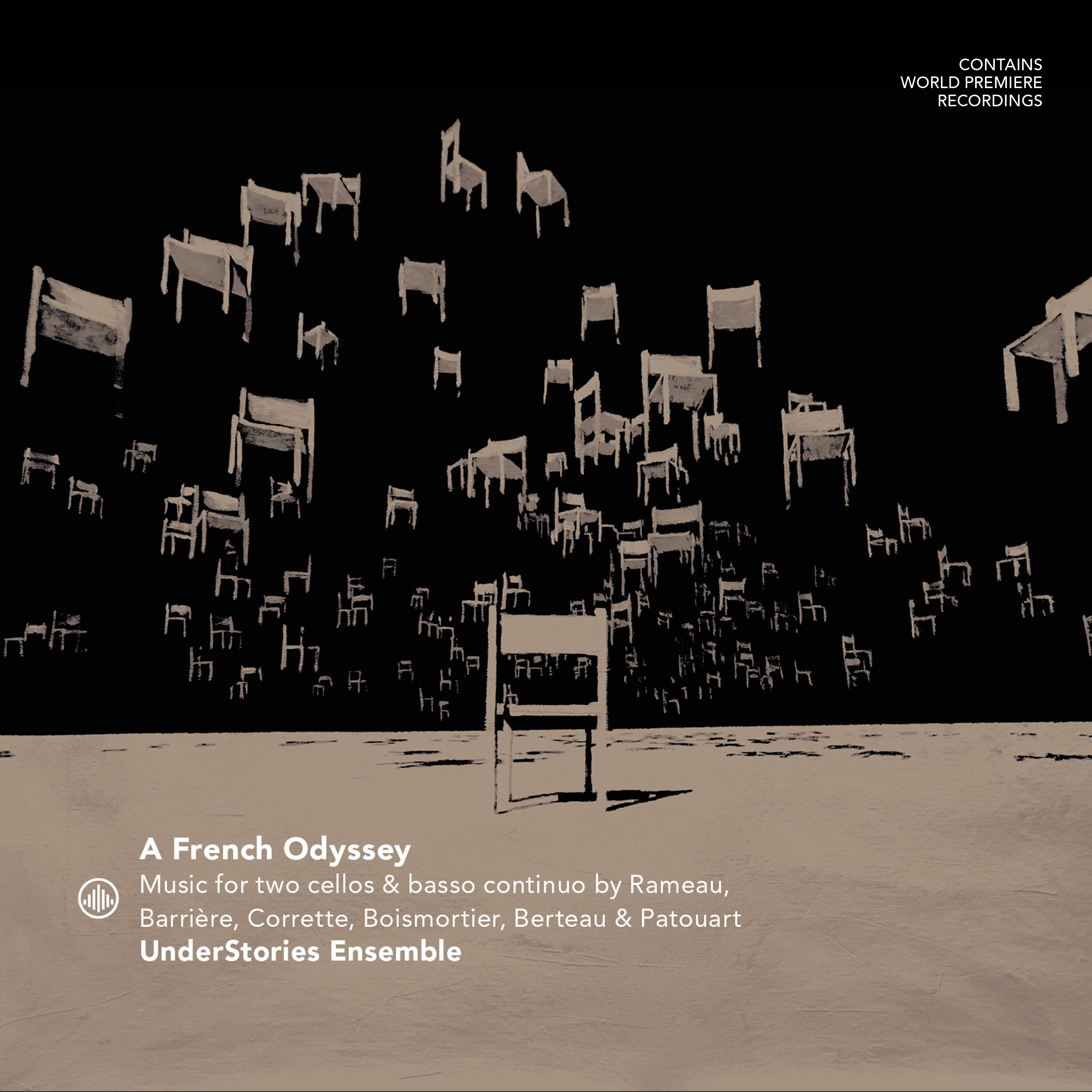
This recording unfolds as a meditation on movement: of peoples, of sounds, of power, and of bodies both musical and political. Forged in the turbulence of the Enlightenment and shadowed by the first tremors of revolution, the repertoire gathered here belongs to a France that was simultaneously consolidating itself at home and projecting itself outward through trade, conquest, and imagination. The 18th century witnessed an unprecedented circulation of goods, ideas, and bodies, and with it came an uneasy reckoning. Curiosity and domination advanced together, and music became one of the most refined sites where that contradiction could be staged, aestheticized, and occasionally questioned.
As Marco Crosetto observes in the album’s liner notes, ports, salons, and theaters absorbed the sonic residue of these encounters. Foreign rhythms, borrowed gestures, and invented “elsewheres” entered French musical language not as faithful transcriptions but as carefully framed reflections of desire and anxiety. The exotic was never neutral. It arrived filtered through fantasy, hierarchy, and control, transforming distant cultures into mirrors for Europe’s own doubts about virtuous progress. Rousseau’s warning that civilization estranges humanity from itself hovers over this repertoire, not as philosophy alone but as sound. What Europe called expansion often sounded like displacement, and what it called novelty frequently concealed erasure.
At the center of this program stands another transformation, quieter but no less symbolic: the ascent of the cello. By the mid-18th century, its depth and resonance began to eclipse the viola da gamba, an instrument long entwined with aristocratic inheritance and established authority. This was not a clean overthrow. Old techniques were adapted, absorbed, and revoiced within new forms. The cello did not abolish the past; it reincarnated it. In that sense, the instrument becomes a metaphor of its time, negotiating between continuity and rupture, inheritance and reinvention.
This philosophy animates the debut of UnderStories, a French-Italian Baroque ensemble that listens downward rather than upward. With Mario Filippini on viola da gamba, Loris Guastella on percussion, Marco Crosetto on harpsichord, Silvia De Rosso on violone, Margherita Burattini on harp, and Bartolomeo Dandolo Marchesi and Clara Pouvreau on violoncello, the group privileges the low register as a site of agency rather than accompaniment. Their approach embraces a Baroque freedom in which instrumentation remains fluid and arrangements remain provisional. The past here is not embalmed; it is negotiated.
Jean-Baptiste Barrière (1707–1747) offers one of the most eloquent articulations of this new cello identity in the Sonata a tre in D minor, No. 2, Book III (c. 1736). The opening Adagio unfolds with restrained longing, its melodic lines reaching outward as though aware of distance itself. The ensuing Allegro brightens the terrain without abandoning depth, allowing the ensemble’s tactile sonority to come fully into focus. Fingers, strings, and wood remain audible partners in the discourse, while the harpsichord gleams with controlled brilliance. The Aria sinks back into introspection, its melancholy exquisitely weighted, before the final Giga steps forward with buoyant resolve, dancing toward a horizon that remains deliberately unattainable.
Martin Berteau (1691–1771), trained on the viola da gamba and later a founding figure of the French cello school, embodies the transformation made audible. His Sonata a tre No. 6, Op. 1 (c. 1748) moves effortlessly between robustness and tenderness, never allowing one to eclipse the other. The harp’s presence lends an enchanted glow while also deepening the harmonic shadows beneath the surface. The central Siciliana stands as one of the album’s most persuasive moments, poised and inward, balancing restraint with warmth. Here, delicacy becomes discipline, and the ensemble articulates Berteau’s lines with refinement. This sonata emerges as a quiet manifesto for continuity through change.
Interwoven among these instrumental works are reflective pauses that clarify lineage. Marco Crosetto’s Prélude à l’imitation de Mr L. Couperin and Margherita Burattini’s Prélude à l’imitation de MM. Rameau et Naderman serve not as interruptions but as footnotes in sound. These solo interludes acknowledge ancestry while refusing nostalgia, reminding the listener that, in this century, imitation was a standard mode of dialogue.
Jean-Philippe Rameau (1683–1764) looms over the program not merely as a composer but as a cultural architect. His opera-ballet Les Indes Galantes appears throughout in carefully chosen arrangements that foreground both its brilliance and its complications. The Ritournelle pour “Le Turc généreux” and the Tambourins I–II, arranged respectively by Bartolomeo Dandolo Marchesi and the UnderStories Ensemble, pulse with rhythmic vitality and folk-tinged energy. Percussion and interwoven strings generate an intoxicating surface, yet beneath the dance lies a careful staging of difference. Rameau’s music constructs the foreign as spectacle, inviting admiration while maintaining control.
This tension becomes more explicit in the Air pour “Les Sauvages” and Air pour “Les Esclaves Africains”, both arranged by Clara Pouvreau, as well as the Air des Incas, arranged by Silvia De Rosso. These pieces dramatize otherness through bold rhythm, percussive force, and ceremonial pacing. They reveal how European music transformed colonized peoples into sonic symbols, vessels for projected fantasies of innocence, savagery, or nobility. The ensemble’s gravelly strings and emphatic rhythms refuse to smooth over this history. Instead, they allow the weight of representation to be felt, asking the listener not merely to enjoy the sound, but to interrogate its framing.
That interrogation deepens in Rameau’s “L’Égyptienne” from Nouvelles Suites de pièces de Clavecin RCT 5–6, arranged by Bartolomeo Dandolo Marchesi. The piece is a dramatic masterstroke, yet its allure destabilizes admiration itself. Exotic color here becomes a lens of appropriation, reminding us that fascination often coexists with domination. The music dazzles, then unsettles, forcing a reckoning with the cost of its own beauty.
Louis-François-Joseph Patouart (1719–1793) brings the program into remarkable focus with the Sonate en trio pour deux violoncelles et une contrebasse No. 6, Op. 2 (c. 1750), presented here in a world premiere recording. The opening Adagio unfolds with luxuriant depth, the instrumental blend feeling both inevitable and freshly imagined. Gavottes follow with confident verve, their brightness never shallow, while the Minuettos grow from gentle poise into declarative presence. The music seems to test its own balance between symmetry and surprise.
Joseph Bodin de Boismortier (1689–1755) contributes a different energy in the Sonate en trio No. 5, Op. 37 (1732). Its opening movement bursts forward with rhythmic assurance, pressing against borders rather than merely crossing them. The central Largo finds unexpected poignancy, pausing to reflect before the final movement reasserts momentum with dynamic wit. Boismortier’s voice here feels pragmatic yet searching, a composer aware of the pleasures of motion and its costs.
Michel Corrette (1707–1795) closes the journey with “Le Phénix,” concerto pour quatre violoncelles, violes ou bassons(c. 1735). The work’s lively opening ushers the listener into a richly variegated sound world, followed by a tender slow movement that invites collective listening rather than display. The final Allegro rises with confident vitality, its interplay among strings suggesting renewal without amnesia.
By the end of this album, motion itself emerges as the central theme. Instruments migrate, genres adapt, and cultures encounter one another in asymmetrical exchanges that leave lasting marks. UnderStories does not attempt to resolve the contradictions embedded in this repertoire. Instead, the ensemble listens into them, allowing beauty and unease to coexist. In doing so, the recording offers a philosophical proposition as much as a musical one: that history speaks most honestly when we allow its fractures to resonate, and that listening, when practiced with care, can become an ethical act. The past does not ask for absolution. It asks for attention.
To say that Piano Music 3 continues where Alessandro Sgobbio left off on Piano Music 2 would be misleading, since this record feels less a step forward than a careful turning back toward the source, a reversal that reveals new truths by retracing old paths. The electronics remain, but rather than projecting momentum they seem to seep inward, extracting hidden ligaments from the piano’s body and letting them fall gently into the past. In “De Dei Dono,” barely discernible voices hover at the threshold of language, murmuring reminders that intention and consequence are often separated by a breath, that meaning arrives only after action has already passed. This dissolves seamlessly into the fragile radiance of “Red Gold,” an acoustic meditation whose quiet grandeur carries the weight of countless unnamed lives, each one lifted briefly from the archive of history and consigned to its fire, not to be erased but transmuted. “Echoes” reopens the digital aperture, arranging time with almost devotional care, as if memory itself were being sorted and polished in a dream. When the world outside feels uninhabitable, the music invites retreat into an interior sanctuary where despair still sings and hope persists despite knowing better, each phrase reaching upward while slowly collapsing. Within this tension, “Dogs On 5th Avenue” arrives with startling clarity, a cinematic reverie steeped in nostalgia that gestures toward a vanished geography preserved only on fragile film. Each return to it wears away more detail, faces softening into abstraction, footsteps advancing with quiet resolve while already suspecting the promise of arrival. As “Dawns (صور)” unfurls, beauty and grief become inseparable, and the act of listening feels perilously close to mourning, an unguarded response to the daily violence done to faith and empathy by a world addicted to fear. In such a climate, music offers not escape but a rare form of repair. “Veils” draws the self inward with measured grace, its flowing arpeggios and subtle electronic pulses converging into something revelatory, shedding concealment rather than enforcing it, blooming into nocturnal tenderness and the possibility of love. “Forte Rocca,” Sgobbio’s reimagining of Martin Luther’s “A Mighty Fortress Is Our God,” speaks with austere urgency, reframing the piano as a structure of shelter and resistance. At last, “Alang” advances carefully into first light, bearing the quiet residue of what has been lost so that something else may endure, leaving the listener suspended between fragility and resolve, uncertain yet unwilling to surrender the hope that survival itself can still be an act of grace.
After the intimate unveiling of Piano Music, Alessandro Sgobbio returns to place his instrument’s confessional power in a wider field of air and signal. This new work feels like a continuation of the same diary, only now the pages have been left open by a window. Live electronics enter not as ornament or distraction but as a means of listening more deeply. They clarify rather than obscure, giving the emotional truths at hand a longer reach, a resonance that lingers beyond the touch of the keys. What emerges is music that invites the listener to sit with it, inhabit its spaces, and recognize healing as slow, attentive, and unfinished.
From the outset, the album announces itself as a journey. “Keys And Returns” drifts with a sense of cautious freedom, as if learning to trust its own motion again. The surrounding sounds resemble nocturnal life, insects and birds rendered as soft static, not imitations of nature but its memory. These textures frame longer shadows, suggesting movement without urgency. It is the first step outside after a long confinement, when the world is still strange and full of promise.
That sense of tentative grace deepens in “Modular Circles,” where time itself seems to loosen its grip. Here, the added layers feel inseparable from the instrument’s inner life, as if dreaming aloud. Reflections wobble gently, disturbed just enough to remind us that memory is never still. Through subtle live manipulations, Sgobbio traces the outlines of absence and presence, ghosts that do not haunt so much as accompany. There is urgency, but it is the urgency of care, of knowing that attention itself is an ethical act.
Healing takes the form of water in “The River,” which salves a wound trembling in the night air. The music flows inward before opening outward, carrying introspection toward release, bearing the promise of another morning. It is not triumph that is offered here, but continuity. The simple assurance that movement, however gentle, is still movement.
Moments of restraint are equally vital. “Fondamenta De La Tana,” stripped of digital decoration, arrives like a hymn. Its solitude feels intentional, a reminder that healing also requires silence and unadorned speech. “Tula” follows with similar tenderness, notes hovering in reverie while distant traces flutter at the edges, as if the world were listening back. These pieces do not interrupt the album’s arc but ground it, reinforcing that the electronics are a choice among many ways of speaking.
The twin invocations of “Asker” feel like messages transmitted across thresholds. In “Asker (Light),” distant signals glow with the promise of peace earned through endurance. It acknowledges hardship without sanctification, offering instead a fragile hope that gives direction to wandering. Later, in “Asker (Trees),” that dialogue becomes almost conversational. Echoes are transformed into melodies, and melodies into the possibility of renewal.
“Îlot Chalon” briefly unsettles the calm, pairing pulsing undercurrents with a lyrical surface. Distortion presses upward, threatening to fracture the flow, yet beauty prevails, not by force but by persistence. It is a reminder that conflict is not foreign to healing, but part of its texture. The album closes with “Einhausung,” a fleeting moment of intimacy that feels like a hand resting on the shoulder. Nothing is resolved, yet everything is held.
Throughout, Sgobbio’s care is evident in every note and every silence. These are not performances designed to impress; they are reflections offered with humility. The electronics never cloud the piano’s voice but instead sharpen its emotional lucidity, extending feeling into space where it can be shared. By the end, the listener is handed something more generous than closure: time.
LP2 surfaces as memory: already in motion, already altered by time. It emerges from conditions set long before its contours became audible, shaped by residue and intention held in suspension. Vocalist Theo Bleckmann and electronic musician and producer Joseph Branciforte return to a shared language first articulated on 2019’s LP1, though “return” feels imprecise. What unfolds resembles a sustained act of listening.
The album opens in a state of half-awareness. Sound drifts forward without a fixed point of origin, part breath, part circuitry, voice and machine dissolving into one another before any roles can be assigned. Nothing announces itself. Instead, the ear is gently reoriented, adjusting to a space where boundaries have softened and distinctions lose urgency. Understanding gathers slowly, arriving through familiarity, through the sensation of being inside something that has been waiting.
This threshold was never intended. The opening fragment began as a technical aside, a moment caught incidentally and set aside. Heard on its own, it revealed an unexpected gravity. What might have been dismissed instead became a doorway that refused to close. Folding it back into earlier work no longer felt possible. From that insistence, LP2 quietly took form, bound to its predecessor through consequence.
Years removed from its initial capture, the album reads as an extended aftereffect. Its modest length disguises the precision of its attention. The exchange between Bleckmann’s mercurial voice and Branciforte’s powered architectures has grown increasingly permeable, unconcerned with hierarchy or authorship. Sound operates as shared terrain, a meeting place for intention, accident, and recollection.
Where LP1 favored immediacy, time is now allowed to fold inward. Improvisation remains central, guided by images, instructions, and gestures that never fully declare themselves. Layers are revisited and subtly reconfigured. At moments, structure briefly surfaces, a harmony aligning, a texture clarifying, before dissolving back into motion. What persists is the sensation of listening under pressure, of sound shaped by forces it cannot articulate.
Several longer works act as gravitational centers. In the opening piece, “1.13,” the voice strains toward release but remains suspended within a luminous enclosure. Light translates itself into sound, illuminating an abyss shaped by collective longing. Movement is tentative, nearly imperceptible, as if forward motion itself has grown uncertain. Falsetto phrases assert presence with quiet insistence, only to be repeatedly subsumed. The calm suggested on the surface carries an undercurrent of warning, a reminder that serenity and menace often coexist.
“11.15” unfolds as a contemplative space. Its pulse and interwoven voices, punctuated by gong-like resonances, suggest ritual, encouraging attention over destination. “7.21” permits deeper aporias. Here, Bleckmann elicits more palpable gestures, a vulnerability that feels unguarded and exposed. That tactility continues into “9.23,” where hymn-like passages orbit their own unraveling. The voice moves between grit and elevation, traversing emotional thresholds in compressed succession. Glockenspiel tones glimmer at the margins, offering fleeting points of orientation, reminders of impermanence.
Threaded throughout these pillars are shorter interludes that function as glitchy nervous tissue. They interrupt continuity, splintering the listening experience into moments of raw recall. These fragments feel unearthed, surfacing abruptly and vanishing just as quickly. Each prevents comfort from settling too fully. Among them, “10.17.13” leaves the most haunting imprint. Its click-driven pulse and premature dissipation suggest erosion in real time, the sound of something slipping beyond reach.
For all its beauty and atmosphere, LP2 carries a persistent shadow. It does not attempt to diagnose. Space is left open for reflection, trusting the listener to bring their own histories into the exchange. The album offers no tools, no instructions. It sings quietly toward the places where repair might begin, leaving discovery in our hands. What is reclaimed in this way carries a different weight. Recognition arrives slowly, shaped by attention, and whatever healing emerges feels earned, never bestowed.
Piano Music does not announce itself; it waits patiently to be known. Alessandro Sgobbio comes back to the piano alone as one returns to a long-held silence, without urgency and without proof. These pieces are open letters, written and left unsealed. Some emerged in the fleeting intensity of live performance, others during the suspended hours of the pandemic, when time softened and listening became a discipline.
Recorded on a Fazioli F278 grand piano and shaped with restraint under the masterful ear of engineer Stefano Amerio at Artesuono Studios, the album unfolds patiently. Each dedication becomes a point of convergence between composer, listener, and the absent presence for whom the music was first shaped. With eyes closed and hands in motion, the instrument opens into an interior terrain where memory and invention share the same breath.
What follows is best approached as a fragrance that reveals itself gradually, in layers.
Top Notes
The opening carries a gentle luminosity, brief yet warming, like light passing through thin fabric. A floral softness appears first, pale and translucent, recalling the powdery hush of orris rising from the keys. In “Fireflies” (dedicated to Sgobbio’s parents), memory turns instinctively toward childhood. It recalls the earliest grammar of love, the quiet assurance of being held. Gratitude lingers in the air, unspoken yet unmistakable, giving the ordinary a sacred hue through attention alone.
From within this tenderness, darker tones begin to surface. “Zolla” introduces earth, black currant, soil, and the trace of wind crossing ground shaped by seasons. Time presses forward calmly, neither threat nor promise. Smoke gathers at the edges, yet a steady sweetness remains, offering reassurance without denial. A pulse forms beneath the surface, measured and human, suggesting that, even amid uncertainty, something continues to endure.
As the illumination shifts, green notes take hold. In “Atma Mater” (an ode to his mentor, pianist Misha Alperin), vetiver rises with clarity and motion. The colors begin to explore themselves, lyrical and curious, occasionally abstract, yet guided by intention. Surprise appears without rupture. Joy emerges through the satisfaction of movement that understands its own direction.
Heart Notes
As brightness settles, warmth comes forward. The center of the album glows with a softened oud, sandy, sunlit, and humane. In “Ghaza,” sound behaves like heat absorbed and slowly released, enveloping the listener with a calm shaped by time. Beneath this warmth lies a sober recognition. Peace, once forged through history, has thinned. What remains is the quieter labor of shaping it again, not collectively or symbolically, but one heart at a time. A requiem, perhaps, without end.
Incense follows, curling gently through imagined spaces of prayer. “Racemi” shelters like a room that remembers having been filled. The air carries traces of devotion, hands once folded, grief briefly set down. Beyond the threshold, chaos waits, but here a pause takes form, a fragile interval where the self steadies. The piano narrows to a fine thread, each note close to disappearance, yet it holds. Like a candle flame that refuses to leave its wick, its vibrations persist. As the harmony slowly widens, unexpected turns reveal depth upon depth.
Smoke returns, heavier now. In “Third Ward (Elegy),” written for George Floyd, it is not the fire itself but what remains after that fills the space. Loss hangs unresolved. A repeated insistence takes shape, low and unwavering, echoing the will to survive. It continues until it cannot. The music bears witness without ornament, allowing absence to speak louder than sound. What it offers is not rage alone, but the ache of interruption, of a life cut short, leaving resonance where continuity should have been.
Base Notes
The final descent turns cool and elemental. Marine air rises, salt and seaweed carried inland by memory. In “Acqua Granda,” the piano sharpens into clearer gestures, rhythm breaking and reassembling like waves meeting resistance. Energy tumbles forward, restless and alive, as if movement itself were being relearned after stillness.
Earth follows water. “Feuilles” settles with the quiet authority of oakmoss. From a distance, its form appears balanced, almost architectural. Closer in, it reveals wider variation, textured by decay. Longing enters gently, but for the way the sun once touched it. Enough of the dawn filters through to suggest what remains possible, even as it recedes.
At last, the fragrance thins to its final trace. In “Third Ward (Coda),” musk opens its embrace, intimate, warm, and human. A voice seeks continuation. The scent clings to the skin, marking the space where a life might have unfolded, had it been allowed to do so.
In the end, Piano Music binds itself to the body that carries it, altered by warmth and proximity. It mingles with memory, softens the boundary between presence and absence, and leaves behind not a melody to be recalled intact, but a sillage recognized later, unexpectedly, in the air. Some experiences ask only this, not to be remembered whole, but to return faintly, altered, and unmistakably human.






 Between Sound and Space: ECM Records and Beyond