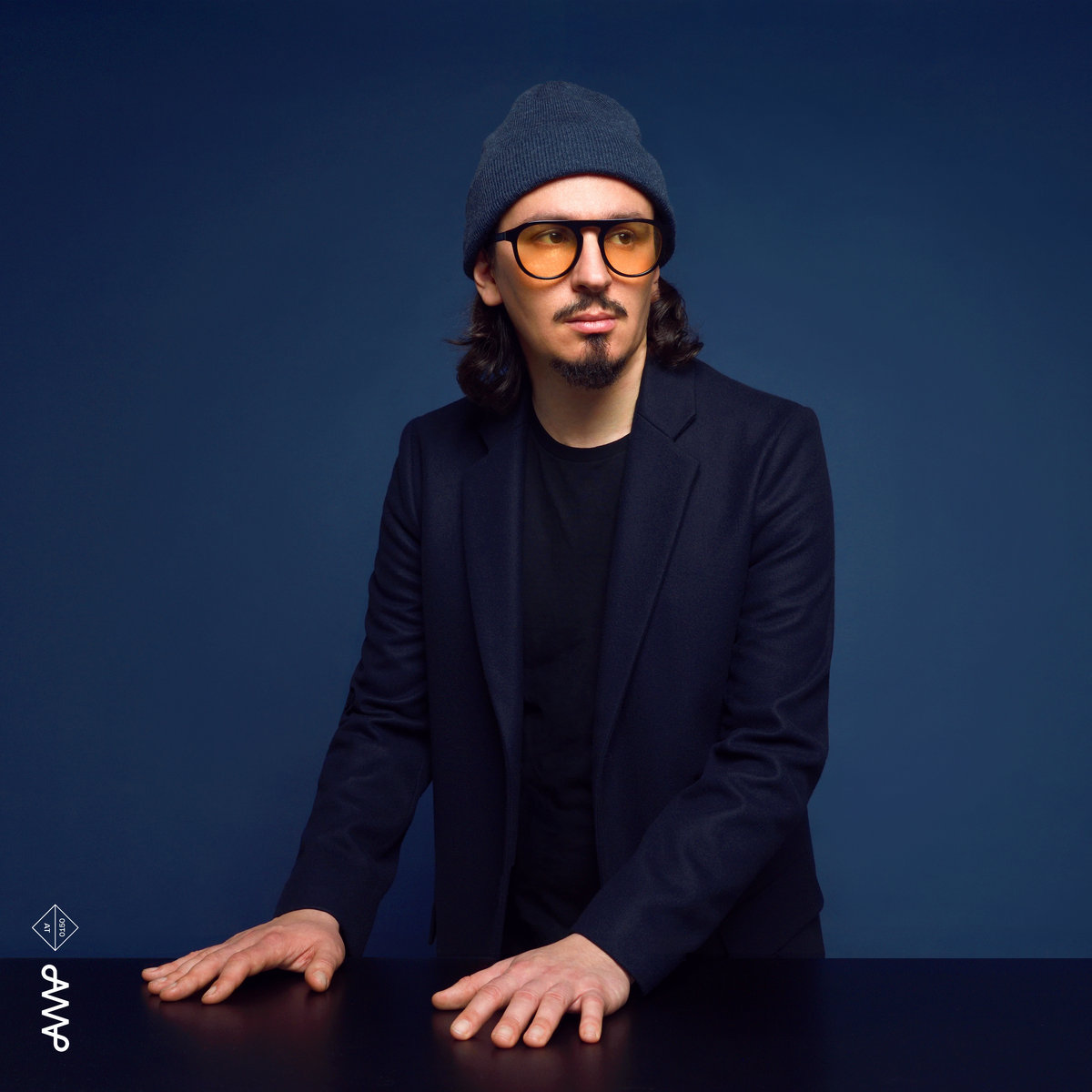
After the intimate unveiling of Piano Music, Alessandro Sgobbio returns to place his instrument’s confessional power in a wider field of air and signal. This new work feels like a continuation of the same diary, only now the pages have been left open by a window. Live electronics enter not as ornament or distraction but as a means of listening more deeply. They clarify rather than obscure, giving the emotional truths at hand a longer reach, a resonance that lingers beyond the touch of the keys. What emerges is music that invites the listener to sit with it, inhabit its spaces, and recognize healing as slow, attentive, and unfinished.
From the outset, the album announces itself as a journey. “Keys And Returns” drifts with a sense of cautious freedom, as if learning to trust its own motion again. The surrounding sounds resemble nocturnal life, insects and birds rendered as soft static, not imitations of nature but its memory. These textures frame longer shadows, suggesting movement without urgency. It is the first step outside after a long confinement, when the world is still strange and full of promise.
That sense of tentative grace deepens in “Modular Circles,” where time itself seems to loosen its grip. Here, the added layers feel inseparable from the instrument’s inner life, as if dreaming aloud. Reflections wobble gently, disturbed just enough to remind us that memory is never still. Through subtle live manipulations, Sgobbio traces the outlines of absence and presence, ghosts that do not haunt so much as accompany. There is urgency, but it is the urgency of care, of knowing that attention itself is an ethical act.
Healing takes the form of water in “The River,” which salves a wound trembling in the night air. The music flows inward before opening outward, carrying introspection toward release, bearing the promise of another morning. It is not triumph that is offered here, but continuity. The simple assurance that movement, however gentle, is still movement.
Moments of restraint are equally vital. “Fondamenta De La Tana,” stripped of digital decoration, arrives like a hymn. Its solitude feels intentional, a reminder that healing also requires silence and unadorned speech. “Tula” follows with similar tenderness, notes hovering in reverie while distant traces flutter at the edges, as if the world were listening back. These pieces do not interrupt the album’s arc but ground it, reinforcing that the electronics are a choice among many ways of speaking.
The twin invocations of “Asker” feel like messages transmitted across thresholds. In “Asker (Light),” distant signals glow with the promise of peace earned through endurance. It acknowledges hardship without sanctification, offering instead a fragile hope that gives direction to wandering. Later, in “Asker (Trees),” that dialogue becomes almost conversational. Echoes are transformed into melodies, and melodies into the possibility of renewal.
“Îlot Chalon” briefly unsettles the calm, pairing pulsing undercurrents with a lyrical surface. Distortion presses upward, threatening to fracture the flow, yet beauty prevails, not by force but by persistence. It is a reminder that conflict is not foreign to healing, but part of its texture. The album closes with “Einhausung,” a fleeting moment of intimacy that feels like a hand resting on the shoulder. Nothing is resolved, yet everything is held.
Throughout, Sgobbio’s care is evident in every note and every silence. These are not performances designed to impress; they are reflections offered with humility. The electronics never cloud the piano’s voice but instead sharpen its emotional lucidity, extending feeling into space where it can be shared. By the end, the listener is handed something more generous than closure: time.

LP2 surfaces as memory: already in motion, already altered by time. It emerges from conditions set long before its contours became audible, shaped by residue and intention held in suspension. Vocalist Theo Bleckmann and electronic musician and producer Joseph Branciforte return to a shared language first articulated on 2019’s LP1, though “return” feels imprecise. What unfolds resembles a sustained act of listening.
The album opens in a state of half-awareness. Sound drifts forward without a fixed point of origin, part breath, part circuitry, voice and machine dissolving into one another before any roles can be assigned. Nothing announces itself. Instead, the ear is gently reoriented, adjusting to a space where boundaries have softened and distinctions lose urgency. Understanding gathers slowly, arriving through familiarity, through the sensation of being inside something that has been waiting.
This threshold was never intended. The opening fragment began as a technical aside, a moment caught incidentally and set aside. Heard on its own, it revealed an unexpected gravity. What might have been dismissed instead became a doorway that refused to close. Folding it back into earlier work no longer felt possible. From that insistence, LP2 quietly took form, bound to its predecessor through consequence.
Years removed from its initial capture, the album reads as an extended aftereffect. Its modest length disguises the precision of its attention. The exchange between Bleckmann’s mercurial voice and Branciforte’s powered architectures has grown increasingly permeable, unconcerned with hierarchy or authorship. Sound operates as shared terrain, a meeting place for intention, accident, and recollection.
Where LP1 favored immediacy, time is now allowed to fold inward. Improvisation remains central, guided by images, instructions, and gestures that never fully declare themselves. Layers are revisited and subtly reconfigured. At moments, structure briefly surfaces, a harmony aligning, a texture clarifying, before dissolving back into motion. What persists is the sensation of listening under pressure, of sound shaped by forces it cannot articulate.
Several longer works act as gravitational centers. In the opening piece, “1.13,” the voice strains toward release but remains suspended within a luminous enclosure. Light translates itself into sound, illuminating an abyss shaped by collective longing. Movement is tentative, nearly imperceptible, as if forward motion itself has grown uncertain. Falsetto phrases assert presence with quiet insistence, only to be repeatedly subsumed. The calm suggested on the surface carries an undercurrent of warning, a reminder that serenity and menace often coexist.
“11.15” unfolds as a contemplative space. Its pulse and interwoven voices, punctuated by gong-like resonances, suggest ritual, encouraging attention over destination. “7.21” permits deeper aporias. Here, Bleckmann elicits more palpable gestures, a vulnerability that feels unguarded and exposed. That tactility continues into “9.23,” where hymn-like passages orbit their own unraveling. The voice moves between grit and elevation, traversing emotional thresholds in compressed succession. Glockenspiel tones glimmer at the margins, offering fleeting points of orientation, reminders of impermanence.
Threaded throughout these pillars are shorter interludes that function as glitchy nervous tissue. They interrupt continuity, splintering the listening experience into moments of raw recall. These fragments feel unearthed, surfacing abruptly and vanishing just as quickly. Each prevents comfort from settling too fully. Among them, “10.17.13” leaves the most haunting imprint. Its click-driven pulse and premature dissipation suggest erosion in real time, the sound of something slipping beyond reach.
For all its beauty and atmosphere, LP2 carries a persistent shadow. It does not attempt to diagnose. Space is left open for reflection, trusting the listener to bring their own histories into the exchange. The album offers no tools, no instructions. It sings quietly toward the places where repair might begin, leaving discovery in our hands. What is reclaimed in this way carries a different weight. Recognition arrives slowly, shaped by attention, and whatever healing emerges feels earned, never bestowed.
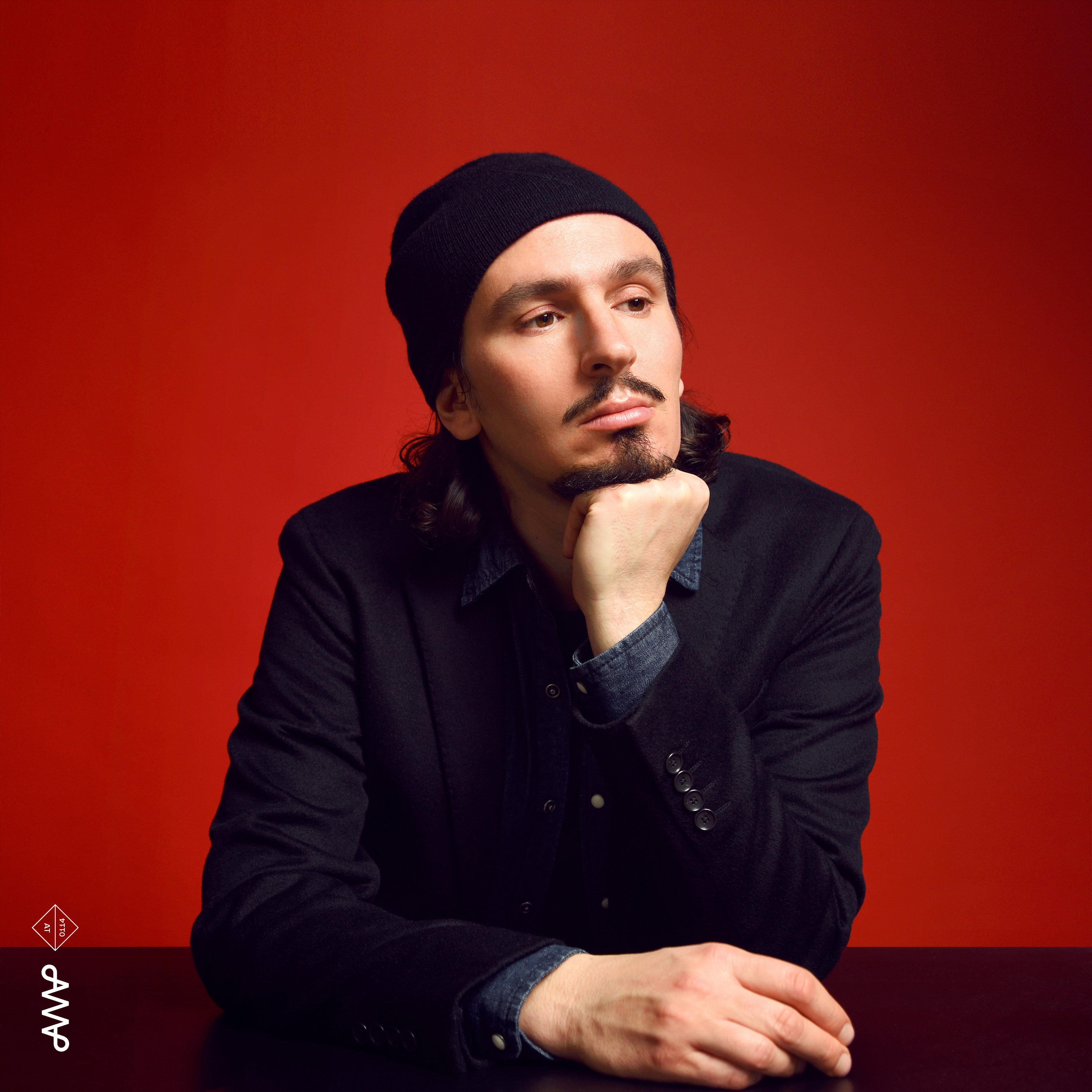
Piano Music does not announce itself; it waits patiently to be known. Alessandro Sgobbio comes back to the piano alone as one returns to a long-held silence, without urgency and without proof. These pieces are open letters, written and left unsealed. Some emerged in the fleeting intensity of live performance, others during the suspended hours of the pandemic, when time softened and listening became a discipline.
Recorded on a Fazioli F278 grand piano and shaped with restraint under the masterful ear of engineer Stefano Amerio at Artesuono Studios, the album unfolds patiently. Each dedication becomes a point of convergence between composer, listener, and the absent presence for whom the music was first shaped. With eyes closed and hands in motion, the instrument opens into an interior terrain where memory and invention share the same breath.
What follows is best approached as a fragrance that reveals itself gradually, in layers.
Top Notes
The opening carries a gentle luminosity, brief yet warming, like light passing through thin fabric. A floral softness appears first, pale and translucent, recalling the powdery hush of orris rising from the keys. In “Fireflies” (dedicated to Sgobbio’s parents), memory turns instinctively toward childhood. It recalls the earliest grammar of love, the quiet assurance of being held. Gratitude lingers in the air, unspoken yet unmistakable, giving the ordinary a sacred hue through attention alone.
From within this tenderness, darker tones begin to surface. “Zolla” introduces earth, black currant, soil, and the trace of wind crossing ground shaped by seasons. Time presses forward calmly, neither threat nor promise. Smoke gathers at the edges, yet a steady sweetness remains, offering reassurance without denial. A pulse forms beneath the surface, measured and human, suggesting that, even amid uncertainty, something continues to endure.
As the illumination shifts, green notes take hold. In “Atma Mater” (an ode to his mentor, pianist Misha Alperin), vetiver rises with clarity and motion. The colors begin to explore themselves, lyrical and curious, occasionally abstract, yet guided by intention. Surprise appears without rupture. Joy emerges through the satisfaction of movement that understands its own direction.
Heart Notes
As brightness settles, warmth comes forward. The center of the album glows with a softened oud, sandy, sunlit, and humane. In “Ghaza,” sound behaves like heat absorbed and slowly released, enveloping the listener with a calm shaped by time. Beneath this warmth lies a sober recognition. Peace, once forged through history, has thinned. What remains is the quieter labor of shaping it again, not collectively or symbolically, but one heart at a time. A requiem, perhaps, without end.
Incense follows, curling gently through imagined spaces of prayer. “Racemi” shelters like a room that remembers having been filled. The air carries traces of devotion, hands once folded, grief briefly set down. Beyond the threshold, chaos waits, but here a pause takes form, a fragile interval where the self steadies. The piano narrows to a fine thread, each note close to disappearance, yet it holds. Like a candle flame that refuses to leave its wick, its vibrations persist. As the harmony slowly widens, unexpected turns reveal depth upon depth.
Smoke returns, heavier now. In “Third Ward (Elegy),” written for George Floyd, it is not the fire itself but what remains after that fills the space. Loss hangs unresolved. A repeated insistence takes shape, low and unwavering, echoing the will to survive. It continues until it cannot. The music bears witness without ornament, allowing absence to speak louder than sound. What it offers is not rage alone, but the ache of interruption, of a life cut short, leaving resonance where continuity should have been.
Base Notes
The final descent turns cool and elemental. Marine air rises, salt and seaweed carried inland by memory. In “Acqua Granda,” the piano sharpens into clearer gestures, rhythm breaking and reassembling like waves meeting resistance. Energy tumbles forward, restless and alive, as if movement itself were being relearned after stillness.
Earth follows water. “Feuilles” settles with the quiet authority of oakmoss. From a distance, its form appears balanced, almost architectural. Closer in, it reveals wider variation, textured by decay. Longing enters gently, but for the way the sun once touched it. Enough of the dawn filters through to suggest what remains possible, even as it recedes.
At last, the fragrance thins to its final trace. In “Third Ward (Coda),” musk opens its embrace, intimate, warm, and human. A voice seeks continuation. The scent clings to the skin, marking the space where a life might have unfolded, had it been allowed to do so.
In the end, Piano Music binds itself to the body that carries it, altered by warmth and proximity. It mingles with memory, softens the boundary between presence and absence, and leaves behind not a melody to be recalled intact, but a sillage recognized later, unexpectedly, in the air. Some experiences ask only this, not to be remembered whole, but to return faintly, altered, and unmistakably human.
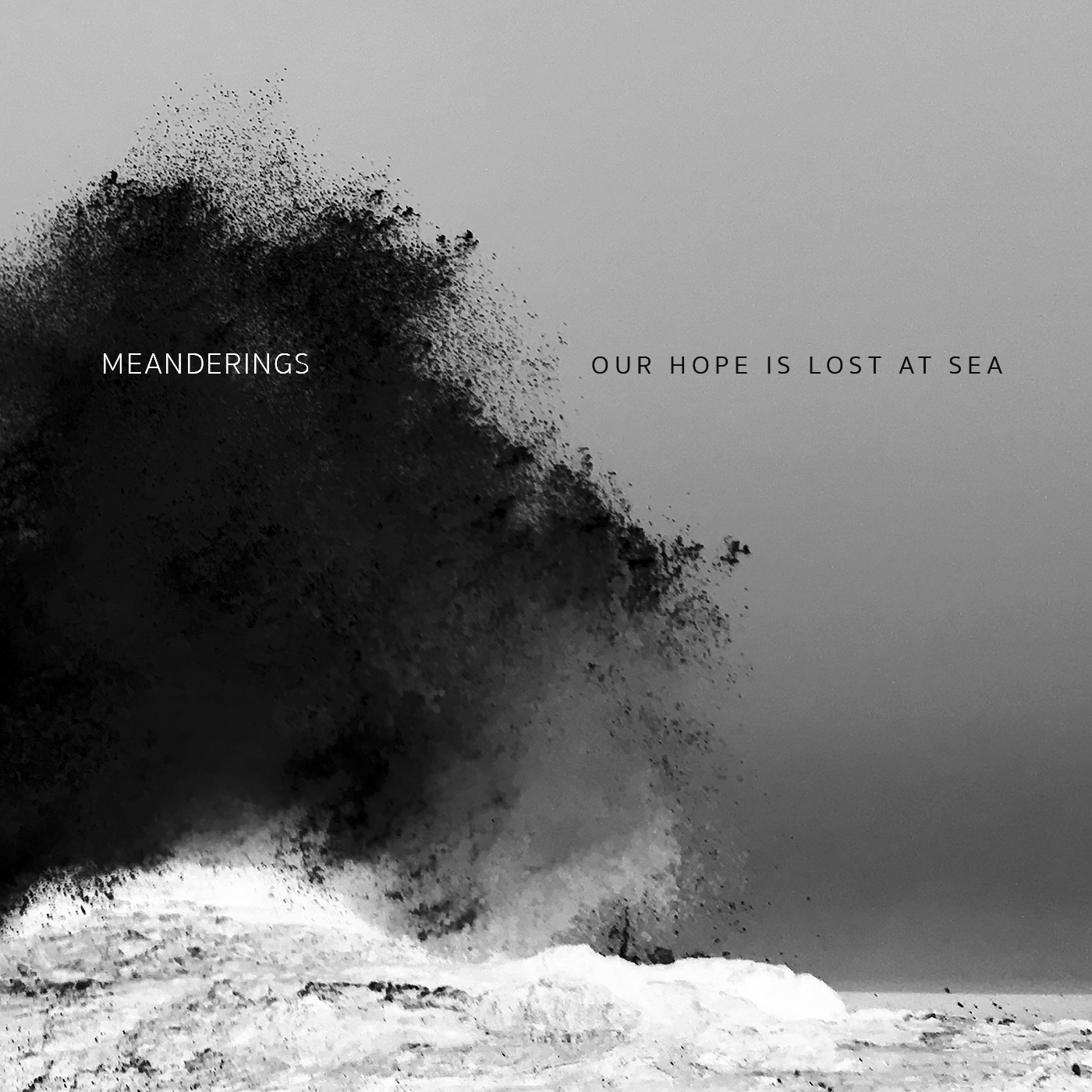
Hope drifts differently when it is set loose from the shore. Our Hope Is Lost At Sea arrives as a slow immersion rather than a statement, the eighth message in a bottle under Dann Michael Torres’ long-running Meanderings moniker and his first release for El Muelle Records. Across 11 pieces, it listens inwardly.
Torres works with sound the way a painter experiments with pigments. Guitars are multiplied, retuned, prepared, and worn thin by repetition, their voices folded into live electronics, tape fragments, and environmental residue. What emerges is not melody in the traditional sense, but colors shaped into mourning, solemn patterns and melancholic phrases, reverberations that feel less composed than uncovered.
“Empty Words” opens as a photograph undeveloping in real time. Your ears struggle to hold on to the image, but it fades of its own volition, seemingly caught in the net of amnesia in which all of us were ensnared when the album was recorded in 2020. It is a slow drift into places of the mind where you can experience good or evil. Here, you realize that the line between blissful dissociation and fearful isolation is too fine for the naked eye to register, yet unmistakable when felt. Its effects resemble a dying root system beneath an otherwise healthy-looking tree, remaining hidden until it is too late to save the specimen from certain death. The buzzing guitars and electronic washes recall Tim Hecker at his most subdued, as well as the early work of Jon DeRosa. In this case, however, the mind of genesis resides in the skull of an artist whose fires are lit only to watch them subside into embers. This is where grief begins.
What follows narrows the focus further, built from the fragment of a dying breath, left behind as a forensic trace and replicated until it yields a distinct emotional signature.
The cumulative effect of this restraint becomes apparent when an acoustic guitar finally enters the frame. Its appearance feels almost shocking, its clarity too real to accept, too contagious to approach, and too fragile to touch. Only as the piece unfolds do you realize you have been staring at your reflection the entire time. This makes the title of “Merely Shadows”feel less like poetic language and more like a diagnosis of the human condition. Even after the eclipse passes, fragments of that darkness cling to your skin, take shelter behind your eyelids, and graft themselves into your self-regard.
“Tethered Hand of a Savior” offers an all-too-brief gesture toward comfort amid quiet degeneration. Its rocking motion lulls you briefly into its embrace. Each chord reflects the last, drifting away as a plantlike photosynthesis bleeds into the foreground, leaving only a bass line behind as evidence that it was ever there. In its wake stands the title track, where shadows of heroes and heroines flit past with unrequited promises of healing.
Later passages introduce oceanic distortions and distant voices that brush the outer edges of the mind, summoning visions of a childhood that may or may not be your own. “Years Of Decline Yield No Wisdom” emerges as a mantra, repeated not in speech but through the laborious persistence of survival itself. Elsewhere, a tundra’s nightmare is turned inside out until it reveals a song. When the acoustic guitar reappears, its lucidity remains unsettling.
“You’ve Simply Had Enough of Drowning” closes with a thinning of presence. Thus, Our Hope Is Lost At Sea leaves you with the sense that something essential has been exposed and then gently withdrawn, as though the music has revealed a private interior space and asked you to sit alone with the knowledge of it. There is no catharsis here, no moment where grief lifts or resolves itself into sunlight.
In this way, Torres’ work feels less like a document of loss and more like an artifact shaped by endurance. The sounds linger because they refuse to be hurried past. Each piece carries the weight of its own patience. When the record finally releases you, it does so without reassurance. What you are left holding is not hope restored, but hope altered, stripped of illusion, reduced to something smaller and more durable. It is the kind of hope that no longer expects rescue, only the possibility of staying afloat. In that sense, Our Hope Is Lost At Sea does not mourn what has been lost so much as it honors what continues, fragile and uncelebrated, drifting onward in open water.
Our Hope Is Lost At Sea is available from Bandcamp here.
If you’ve been following my musical wanderings for some time, you may know that my all-time favorite band is Mediavolo from France. I recently had the honor of providing liner notes for their Blade Runner-inspired ode to 80s synthpop, Unvisible Science. Click the album cover to listen and read.
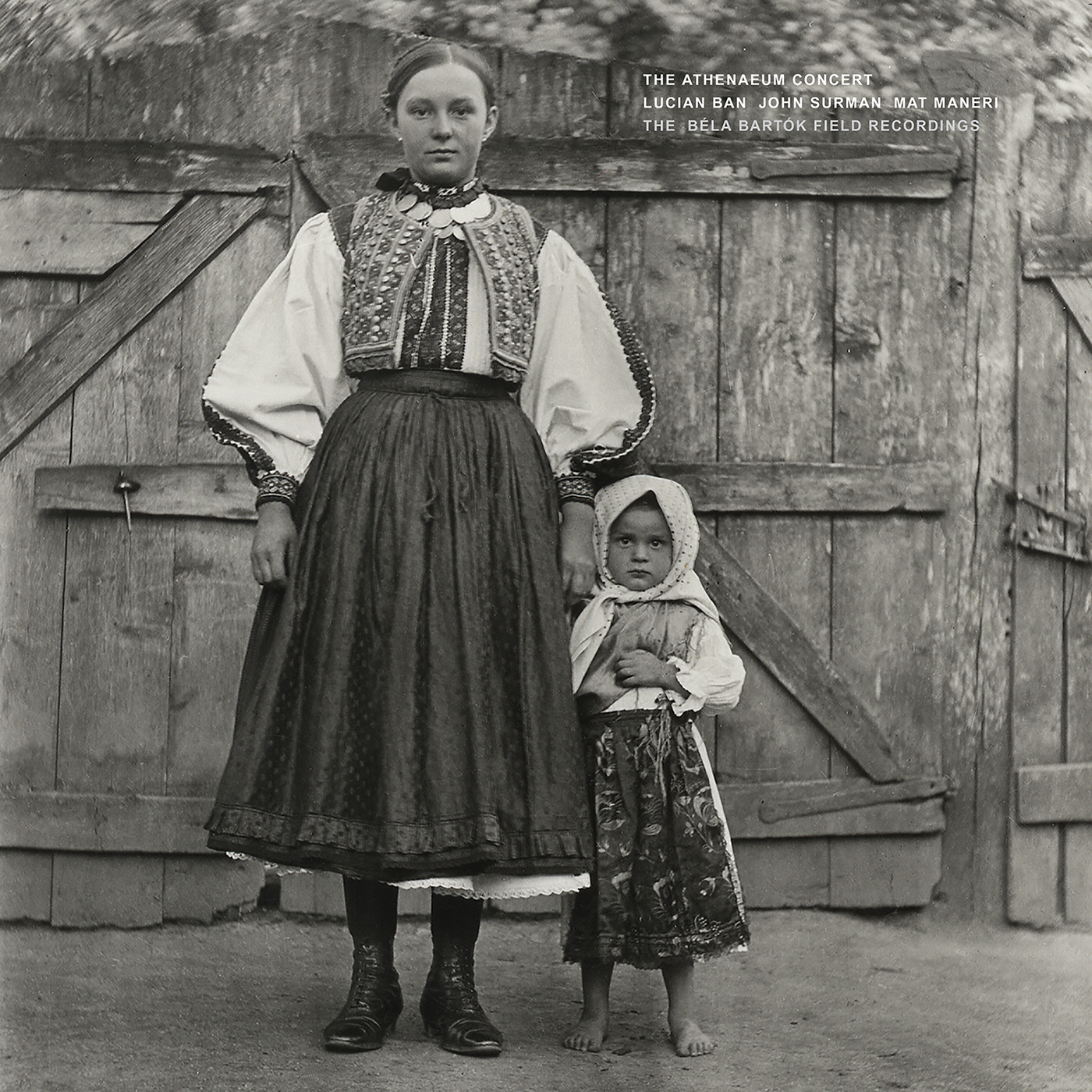
Artists often draw their deepest language from the places that first shaped their ears. For Lucian Ban, Mat Maneri, and John Surman, those places lie far apart geographically, culturally, and temperamentally. Yet, they converge in a shared devotion to improvisation and to the long memory carried by folk and classical traditions. Each musician arrives bearing an inheritance that feels less chosen than received. Ban carries the resonance of Transylvanian soil and song, absorbed long before jazz became his working language. Maneri brings an intuitive fluency, shaped by lineage and lived immersion rather than mere instruction. Surman arrives from open landscapes and weathered distances, his voice shaped by wind and horizon, ancient in contour and unsettled in spirit. Together they move as messengers through a forest of inherited material, carrying signals rather than declarations.
That shared path leads to Béla Bartók, whose early 20th-century field recordings in Transylvania revealed a music at once elemental and inexhaustible. Bartók sought preservation through rescue and documentation, gathering what might otherwise vanish. Ban, Maneri, and Surman approach these songs differently. For them, the material functions as a living threshold rather than a dying art, per se. Carols, laments, love songs, and dances do not arrive as artifacts to be handled, but as presences to be encountered, forms capable of friction and renewal.
Rather than fixing these melodies in place, the trio leaves them deliberately open-ended. Transcriptions act as waymarkers rather than maps. Fragments stretch and breathe until new centers of gravity appear. Silences are openings. Roles circulate, dissolve, re-form. What emerges absorbs history without sealing it off, allowing the past to remain porous to the present. Beneath everything runs a current older than borders or schools, a knowledge carried in breath and gesture. Thus, these tunes shelter a human grain, worn smooth by use, whether shaped by peasant hands or bent through jazz.
On Cantica Profana, recorded across three European concerts between November 2022 and November 2023, that grain is fully awakened. The album unfolds like a passage through shadowed terrain, where individual pieces as clearings briefly illuminated. The appearances of “Violin Song I” and “Violin Song II” establish a language of restless intimacy. Their skittering surfaces mask a deep inward focus, as muted piano strings and fragmentary viola lines open space for Surman’s soprano saxophone to move with playful acuity. His voice does not lead so much as observe, circling the material with curiosity. Novelty carries little weight here. These playgrounds are built from old principles and long-held feelings, animated by the freedom with which they are entered.
As the forest deepens, the melodies turn toward absence. “First Return” introduces a somber presence, Surman’s keening soprano a solitary call carried through the night air. That impulse surfaces again in “Last Return,” where wandering itself becomes a form of knowledge. Everything moves in widening circles around silence, the stillness that precedes life and waits beyond it, following not paths marked on maps but traces left by lived experience.
“Dowry Song I,” the first of two such communal clearings along the way, introduces the bass clarinet, its rough fibers weaving textures of interlaced light. Beneath it, Ban’s piano establishes a gentle cadence, enlivening Maneri’s viola until it takes on a copper patina. The trio finds a rocking motion that feels ritualistic, generous, drawing out the melody’s embedded joy before releasing it toward a distant horizon. “Dowry Song II” returns to this space with greater density and color, the voices braided into a resilient weave where each strand strengthens the others.
Other pieces arrive as messages carried from deeper within the trees. “Up There” repeatedly opens with extended bass clarinet meditations, Surman circling the melody until it settles into focus. Around this, Ban and Maneri widen the terrain, giving the line ground and horizon. What follows is often a dance of striking acuity, allowing Maneri room to roam while preserving collective balance. “A Messenger Was Born” distills this sensibility into a quiet prayer and inward dirge for those yet to be lost, for figures glimpsed briefly and never fully named.
“Dark Forest” stands as both setting and invocation. It unfolds as a lush, dreamlike traversal of nocturnal paths, where beauty emerges slowly. Improvisatory spirals coexist with melodic clarity in this, the trio’s deepest attunement. Meanwhile, the title track begins with struck resonance, muted piano notes falling like measured footsteps, before yielding to Maneri’s fluid inflections.
“Evening in the Village” captures darkness as a settling rather than a conclusion. Starlight defines the space as much as shadow. Thoughts, anxieties, romances, and plans continue their quiet circulation. By the time of “Transylvanian Dance,” the accumulated energy breaks open. An anticipatory rhythm gives way to exuberant confluence, Surman’s soprano emerging as a vividly human presence.
The standalone vinyl The Athenaeum Concert, recorded in June 2024 at the Romanian Athenaeum in Bucharest, extends this language with an even deeper patience. Where Cantica Profana often reads like a gathering of poems or stories, this companion album unfolds more like a life remembered in long form. “Evening in the Village (Bitter Love)” opens with a mournful viola that sounds like an extinct instrument briefly summoned back into breath. Wrinkled yet supple, it enters bearing generational weight. As dampened piano footsteps join and the bass clarinet emerges, the music takes on the temperament of weather itself, fog and time moving across the land, before slowly turning toward dance.
The present version of “Dowry Song” leaps immediately into motion, raining promises with the force of embodied love. The bass clarinet grounds itself, inviting participation, while the viola lifts free, buoyed by Ban’s steady, turning pianism. “Up There” again traces a river’s course, winding through brush under historical pressure, moving from insistence to reverie across its span. “Violin Song” builds gradually from quiet stirrings until Surman’s soprano takes flight, migrating toward warmth. Joy radiates through the exchange, though darkness lingers beneath, a reminder that wonder and struggle remain entwined.
Taken together, the two albums read as studies in ethical listening, in how sound is allowed to appear rather than be summoned by force. Their connection lies partly in shared source material, but more decisively in the trio’s instinct to remain inside unfolding time. Duration becomes a form of care. Attention turns toward relationship, toward the ways voices breathe around one another, and toward the responsibility carried by each choice. Folk material is treated as lived terrain, entered with awareness of what has already passed through it and what may yet arrive. From this stance emerges a vision of tradition shaped by patience and watchfulness, where meaning rises slowly from sustained uncertainty.
Maneri is often described as a microtonal improviser, yet the music pursued here feels macrotonal in spirit, resisting borders and divisions in favor of a broader resonance. Ban serves as both anchor and instigator, shaping time without enclosing it, anchoring the ensemble while inviting risk. Surman contributes a voice that feels elemental rather than ornamental, his reeds acting as carriers of weather and message, passing freely through the ensemble like breath through leaves. And so, the distance between Bartók’s Edison phonograph and now collapses into a single resonant gesture, fulfilling his quiet prophecy from 1921, that future musicians might uncover truths the original collectors could not yet hear.
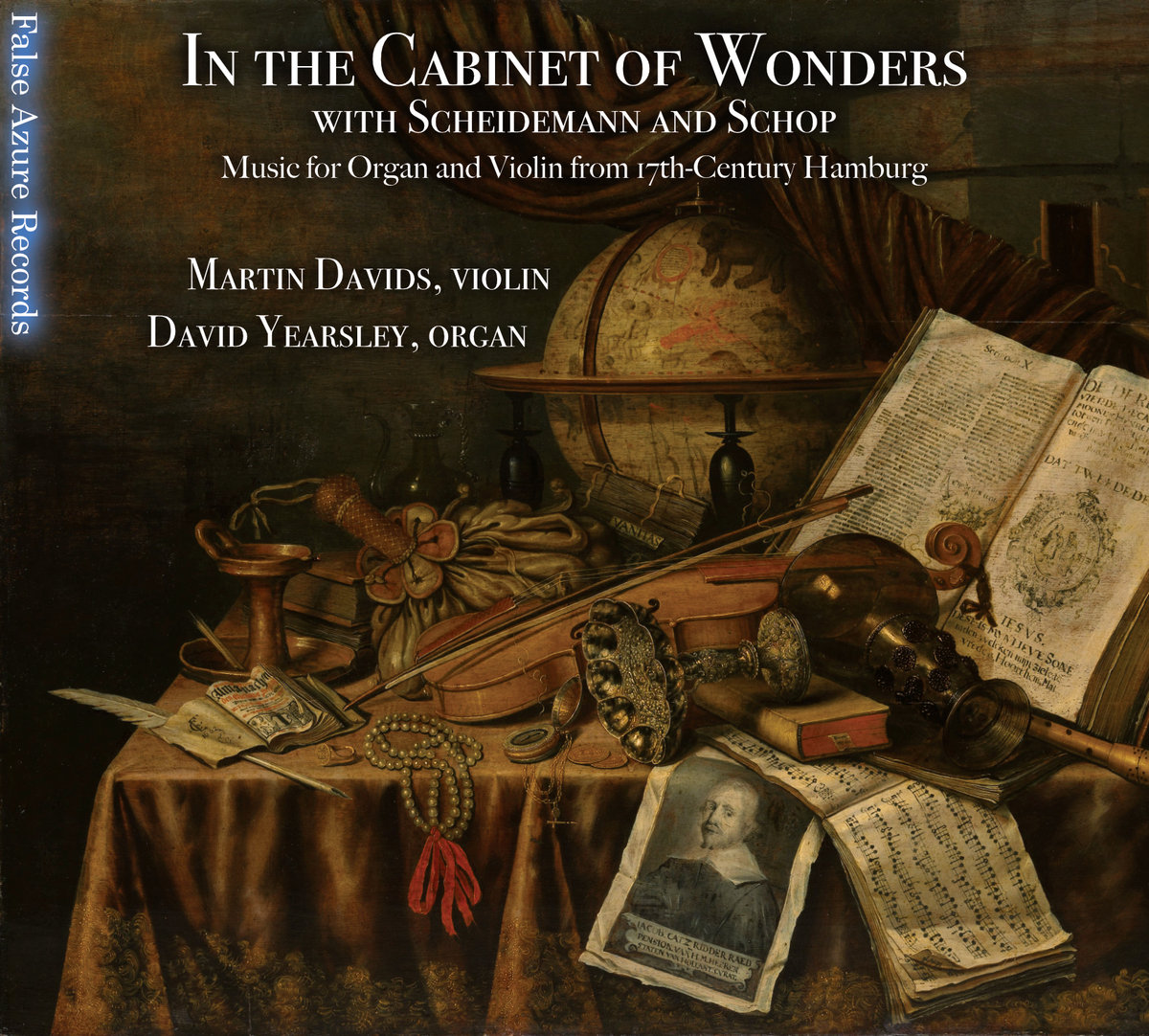
The organ is a colossus, the violin a slender voice. By sheer mass and volume, they seem destined never to agree. One threatens to drown the air in thunder, the other to disappear beneath it. And yet, in 17th-century Hamburg, they discovered a shared breath. High in the gallery of St. Catherine’s church, they spoke not as rivals but as companions, drawing crowds who came to hear scale converse with fragility. What could have been a contest was a study in equilibrium, like a skeleton learning, haltingly, how to stand upright.
It was in this bustling hub that Heinrich Scheidemann (c. 1595-1663) and Johann Schop (c. 1590–1667) met across air and string. Their sounds descended like thought itself, Scheidemann’s pipes carrying the gravity of heaven, Schop’s bow and strings tracing the precarious outline of the human voice. What emerged was more than music. It was a convergence of opposites: cleric and townsman, traveler and citizen, the enduring and the fleeting. In that reverberant space, the city heard itself briefly whole, briefly hushed, before motion returned and the pulse of everyday life resumed.
Under Scheidemann’s quick, laughing hands, sound sprang outward, ricocheting through stone and space with wit and momentum. The organ became less a monument than a body with many lungs, capable of sudden whispers as well as exuberant exhalations. Alongside this abundance, Schop’s violin did not retreat. It danced. Its lines flashed with surprise, then slipped without warning into shadow, like muscles tightening and releasing beneath the skin. Between them unfolded a living exchange, in which the church itself became a resonant demonstration that opposites, when truly listening, can cohere into a single organism.
This album invites the listener into a corporeal experience, one that breathes, sweats, remembers, and occasionally stumbles forward in exhilaration. The music of Schop and Scheidemann, as reimagined by 21st-century analogues Martin Davids and David Yearsley, circulates like blood through civic arteries, passing between church lofts, dance floors, and private chambers, rarely holding one posture for long. What binds the recording is neither style nor chronology, but a shared faith in music as something handled, inhabited, and exchanged socially. Sound is treated as anatomy rather than abstraction. What we hear are the bones of it all, flexing, testing their reach, discovering what they can bear.
Schop’s Intrada à 5 from Erster Theil newer Paduanen opens the album by wrapping the senses in gauze. The interwoven voices refuse hierarchy, relying instead on mutual dependence. Each line anticipates the others’ weight and direction, like ribs designed both to protect and expand. This is consort music already aware of its future disassembly and reconfiguration, carrying that latent plasticity within it. The partnership feels so complete that separation seems almost injurious. From the outset, beauty is not the goal but the consequence. Expression rests on marrow and sinew, and imagination requires a listener willing to inhabit the charged space between intention and realization.
Much of the album’s gravitational pull lies within the orbit of ’t Uitnemend Kabinet of 1646, where Schop’s violin resurrects itself as heir and provocateur. His reworking of Alessandro Striggio’s Nasce la pena mia unfolds like a slow-motion game of double dutch, the ropes of austerity and playfulness turning with deliberate care, demanding full coordination to avoid collapse.
The Lachrime Pavaen after John Dowland presses further inward. The soul twists into a Möbius strip of emotional transference, sorrow folding endlessly back upon itself without settling. Chromatic figures reach deep into the gut to retrieve a half-digested grief and hold it up for inspection. Yet nothing here feels morbid; instead, it suggests that emotion without physicality would simply cave in, that even pain needs a skull in which to resonate.
Scheidemann answers this inwardness with motion and propulsion. His Galliarda ex D sets fire beneath the feet, insisting on the intelligence of movement. Rarely do both touch the ground at once. The sound remains perpetually mid-step, angled toward what follows. Dance here is a matter of orientation, a way of thinking forward with the entire frame. That energy carries seamlessly into the Canzon in G, whose relaxed atmosphere allows light and shadow to exchange places with quiet charm, the organ responsive rather than domineering.
At several moments, the album reveals its improvisatory foundations. The performers’ Intonatiofunctions as connective tissue, recalling a time when much of this repertoire lived between the notes, sustained by trust, familiarity, and shared risk. This ethos extends into Scheidemann’s setting of Christ lag in Todesbanden. Told in two verses, the first establishes the firm outline of a torso, while the second pencils in the extremities.
The relationship between instruments grows aerodynamic in Scheidemann’s intabulation of Giovanni Bassani’s Dic nobis Maria. The cadence is measured yet generous, giving the violin space to breathe while the organ subtly lifts and supports. Imagined as wind and wing, the pairing becomes a lesson in controlled flight, with ornamentation serving as lift. This play of disguise reaches its height in the Englische Mascarada, where the organ steps forward alone. It imitates viols, recorders, and cornetts, its movements almost tactile. The backdrop assumes the foreground, and scale itself learns to play, shedding weight without surrendering substance.
Schop’s sine titulo from ’t Uitnemend Kabinet may be the album’s quietest act of defiance. Tone, transition, and spirit nourish one another organically, as if the piece were activating its own nervous system mid-flight. The violin’s occasional double stops flare like shooting stars across an otherwise stable sky, fleeting, unnecessary, and wholly persuasive.
As the program draws toward its close, its communal heart comes fully into view. Schop’s Præludium, the first work ever published for solo violin, clears the air with intent, a measured breath before speaking plainly. What follows, an improvisatory fantasy on his chorale tune Werde munter, mein Gemüte, unfolds as a conversation restored. The organ answers phrase by phrase, until the violin can no longer remain apart and joins the coda. Harmonies shimmer. What emerges is gratitude, rooted in shared labor. The album concludes with the Pavaen de Spanje, whose stark colors and abrupt shifts return us to orbit.
By its end, the recording has quietly redrawn the boundaries of historical performance. This is no reconstruction, but a living metabolism, a system dependent on circulation, exchange, and constant adjustment. The music does not ask to be preserved so much as inhabited. It leaves the listener with the sense of having moved through a body rather than examined an object, of having felt joints flex, lungs fill, and organs hum in sympathetic response. The final sounds do not conclude so much as release, sending us back into the world more aware of our own inner architecture, and perhaps more willing to trust it when it makes overtures to leap.
In the Cabinet of Wonders is available from False Azure Records here.
Every good meal begins with a premise, and this one opens in the kitchen rather than the chapel. The cover caricature sets the tone before a single note is heard: George Frideric Handel rendered as a hog, snout forward, hunched over the organ in mid-18th-century satire. It is a reminder that iconography and appetite have always shared a table. Organist and scholar David Yearsley accepts the joke with a grin and sharpens it into art, giving Handel not only hands but feet with which to prepare. Since Handel himself rarely bothered with pedals in his scores, save for the Organ Concerto in B-flat Major, opus 7, no. 1 (HWV 306), Yearsley’s approach feels less like historical correction than culinary invention, an act of inspired seasoning rather than academic garnish.
This recording is not about dutifully reheating the classics. It is about tasting them anew, discovering how familiar flavors bloom when exposed to different heat, different hands, different feet. Yearsley plays Handel as one might approach a well-loved recipe, respecting the ingredients while daring to improvise at the stove, if not—at the risk of a poor analogy—allowing a rat to pull some hair under the toque.
We start with a clever pairing: Sinfony from Messiah (HWV 56) combined with the Fugue from Suite in E Minor (HWV 429). The unmistakable opening arrives like a dish you have known since childhood, instantly recognizable, deeply comforting. Yet Yearsley plates it with unexpected accompaniments, adding decorations of improvisational whimsy and alert, in-the-moment thinking. The transition into the fugue is seamless and generous, the musical equivalent of warm bread passed across the table. There is solace here, and a sense of being gently welcomed back for seconds.
As with rosy steps, the morn (from Theodora, HWV 68) follows, a radiant oratorio aria that unfolds theatrically on a stage of its own making. Its inner pulse is sensual and full of promise. The music breathes with unanswered questions and lush excitement, each phrase suggesting that the best bite may still be ahead.
At the center of the table sits the Passacaille in G (HWV 399), the giblet bag of the Trio Sonata in G Major. On the organ (no pun intended?), it acquires a lively delicacy, sumptuous yet never heavy. The lines spiral and turn, dancing themselves toward oblivion with an umami that belies their craft. Time seems to loosen its grip here, as though the dish refuses to cool.
Lord, to Thee, each night and day (another Theodora morsel) returns us to the world of aria, moving with grace through fluid key changes that feel both inevitable and surprising. The progression is palpable in its mouthfeel, each modulation a subtle shift in seasoning. When the turn toward the end arrives, it does so quietly, gloriously, a kind of musical retribution that needs no raised voice to make its point.
The communal platter arrives with O praise the Lord with one consent (opening chorus of Chandos Anthem no. 9, HWV 254). Verdant colors and resplendent textures ply the ear, expanding William Croft’s 1708 St. Anne hymn tune into something plush and enveloping. The result is sonic velour, draping the dining surface in lavishness, even if the organist’s feet are working overtime to keep its stitches from fraying.
With Lascia ch’io pianga (from Rinaldo, HWV 7), Handel’s most famous lament from his first London opera of 1711, the organ sings without words. Its vocal qualities survive the transfer intact, barely eroded. Vegetal stops add depth, enhancing the meaty base without overpowering the line. It is a reminder that sorrow, like flavor, often deepens with slow attention.
The heartier courses follow. The Trio Sonata in F, op. 5, no. 6 (HWV 401) sheds its ensemble skin to become a solo affair, compressed into a single instrument yet expanded by the breadth of Yearsley’s imagination. The central Allegro dazzles with its tessellated structure, each piece fitting snugly against the next, while the subsequent Adagio melts everything down into a rich, savory gravy that coats every note. Close behind comes the Concerto in G minor/G major, op. 4, no. 1 (HWV 289), another full-course meal in a full-course meal of full-course meals. Highlights abound, from the delightful second-movement Allegro to the concluding Andante, a light-footed wonder that dances around the table, refusing to sit still.
For dessert, Yearsley offers his adaptation of the “Amen” from Messiah, recast as a Fuga in D. It culminates in a pedal cadenza that is itself a four-part fugue played only with the feet. The effect is brilliantly virtuosic and deeply satisfying, as organic as farmers market ingredients transformed by a confident cook who trusts the produce and his palate.
A bonus track serves as the final flourish: A Hallelujah Concerto, an improvisation on Handel’s most beloved chorus. Composer and performer seem to spur one another on, whipping the soufflé together until the peaks stand just right. It is exuberant, inventive, and impossible to resist. A finish to end all finishes, at least until the next course.
When the last resonance fades, the table is cleared, and the listener is left pleasantly full. Satisfaction lingers, along with the faint sense that something mischievous and marvelous has just occurred. You may want to keep your napkin as a souvenir. It bears the marks of a meal well enjoyed and proof that Handel, in the right hands and feet, still knows how to cook.
The album is the third release from False Azure Records, an exciting new label where old and new make merry. My ear continues to follow them with keen interest.
“You that in far-off countries of the sky can dwell secure, look back upon me here; for I am weary of this frail world’s decay.” – Murasaki Shikibu, The Tale of Genji
What does it mean to commemorate a tragedy? Is remembrance an ethical imperative, a refusal to let past violence dissolve into abstraction, or an act of humility that acknowledges life as provisional, evaporating even as we reach for it and leaving only residue as memorial? These questions are not philosophical curiosities but preconditions, pressing upon us as inhabitants of a world in which catastrophe is no longer exceptional but recurrent. Whether we are welcomed into the social fabric or violently excised from it, erased until no thread remains to testify to our presence, we are left with unfinished desires and unlived lives. The future becomes an amputated limb, felt as absence, aching nonetheless.
Confronted with atrocity, the psyche’s first response is erasure. Memory folds inward, constructing architectures of absence meant to spare us endless replay. On an individual level, this forgetting can be merciful; on a collective scale, it is untenable. Trauma migrates and returns through architecture, sirens, televised repetition, and the language of fear that reshapes daily life. This is what renders trauma unspeakable: not silent, but overdetermined, burdened by language that buckles under its weight. To remember and retell is therefore not only historical fidelity but an attempt at psychic repair, a reaching toward coherence that acknowledges rupture as fundamental.
Trauma unfolds within a tension between denial and compulsion, between dissociation’s numbing fog and the violent clarity of reliving. Dissociation functions as a protective splitting, allowing the mind to survive what it cannot integrate. This explains why trauma narratives are fragmented, contradictory, and radically subjective and why they are so often pathologized, reduced to symptoms rather than recognized as meaning-making labor. Not only victims but witnesses are caught in this oscillation, raising the deeper question of how recurrence might be transformed into care, how involuntary return could become an act of tending rather than re-injury.
William Basinski never set out to address these concerns. Yet The Disintegration Loops does so with an intimacy and rigor that feels almost inevitable in retrospect.
In July of 2001, Basinski was transferring analog tape loops recorded in 1982 into digital format, hoping to preserve them. Instead, he discovered that the magnetic coating was deteriorating, each playback stripping away more and more material. The music began to die as it was being saved. Rather than intervene, Basinski listened, recording the collapse in real time. Two months later, on September 11, he played the first completed piece while watching the towers fall from his Brooklyn apartment. What began as an accident revealed itself to be an elegy, not by intention but by alignment.
This strictly limited box set, released by Temporary Residence Ltd in 2012, gathers the complete Disintegration Loops across four CDs, accompanied by a fifth disc of live orchestrations and a DVD documenting the smoke-filled aftermath as seen from Basinski’s window. Together, they form a durational encounter with loss understood as a process rather than an event.
The opening movement, Dlp 1.1, unfolds like a funereal hymn performed by a military band trapped within its own cycle of grief. Each iteration inches toward healing without ever arriving. Time behaves asymptotically, with consolation endlessly approached and never attained. The elegiac quality feels not ornamental but necessary, as though these sounds constitute the only response left to a collective brought to its knees. The loop does not simply repeat itself but erodes, its subtle alterations inviting the listener to shift attention and settle into new details even as the core remains recognizable. This mirrors aging itself. The self persists while the body thins, surfaces fray, and entropy asserts its claim. What gives the experience its gravity is its insistence that we remain alert to impermanence. Nothing here pretends to endure. At a certain point, a shadow passes through the sound, and meaning seems to gather beneath the rubble. In moments of shock, reality becomes elastic. Time slows, distance collapses, and language recoils. This music does not translate that condition. It inhabits it.
As the work moves into Dlp 2.1, an uneasy American pastoralism emerges. Layers hover and pulse, carrying a sensation felt more than heard, as if coursing beneath the skin. Reverie is encouraged, along with visions of a time when technology seemed less predatory, though perhaps it never truly was. The music floats without detaching, tethered to gravity even in its most gently transcendent moments. When the reverie fades, what remains is the recognition that transience is not an interruption of life but its substance. Kingdoms rise upon fantasies of permanence, and this loop dissolves them quietly, without spectacle. That dissolution deepens with Dlp 2.2, which scrapes against the wheel of time itself, one made of stone and lubricated by centuries of blood and tears. Ancestral bones grind into powder, feeding a morose mill powered by a river that is both divine and suffocating. Breath turns liquid. Motion continues without destination. Meaning churns rather than resolves. Handmade accents surface, distant horns and fragile drums, as if created for the purpose of breaking (and they do break). Smoke thickens. The air becomes uninhabitable for language. Without charity, we fragment into isolated links in a chain that once encircled the world and now corrodes in our hands. This is not a movement toward closure but an opening, a door already flung wide, revealing that love draws its intensity from fear and that vulnerability is the condition of connection.
With Dlp 3, the work enters the dark sublime at its deepest register. Creation becomes audible, revolving endlessly around itself. Childhood memories surface without invitation. Alternate selves walk beside us. The ground feels unstable, and to listen is to hang suspended by a thread woven from the detritus of one’s own body, shed hairs, discarded cells, forgotten versions of the self. A recursive recognition takes hold. I see myself watching myself. I know I have been here before. I turn away and glimpse you, mistaking myself for someone else, steadied only by the belief that the stars remain, waiting to guide us home. But what happens when home has been irrevocably altered, when the skyline smiles back with missing teeth, when the dream reveals itself as soot in the lungs and bodies rendered particulate? Hope does not vanish here. It circles, drawn by gravity, holding coherence together through sheer persistence. If you die before I do, I will live for both of us.
Dlp 4 sweeps the listener away. Flesh yields to sensation, and the mind consecrates surrender. Orientation dissolves as winds rake the plains, teasing demons from the soil. Dust ascends. Fear reveals how easily it can masquerade as intimacy when crisis arrives. Beauty persists, compressed into a single breath before being stolen away. Nothing can be restored, yet everything can be remembered. The music dies audibly. With Dlp 5, light breaks through with quiet authority, not blinding but decisive. Yesterday returns. Sun on skin. Promise in the air. The towers stand again, angelic in their familiarity, until realization arrives. This was always temporary.
Dlp 6 allows hope to return, tempered by grief. Understanding arrives too late to prevent harm, yet early enough to matter. Scars become inevitable. Memory and forgetting oscillate, exhausting but generative, and through this movement, defenses form not against the world, but against paralysis. The returns of Dlp 1.2 and Dlp 1.3 function less as reprises than as reckonings. One unfolds as an epilogue of the soul, where love remains possible though never redemptive, where no ecstasy compensates for loss and no reconciliation guarantees comprehension. The final return is granular and worn, a restoration undertaken with full knowledge of the cost and the conviction that the attempt itself was necessary.
Trauma does not reside solely in the event but in our tendency to become trapped within our responses to it. Healing requires transformation. This music functions as an unspoken reminder that something remains hidden yet shared, an existential tremor binding us together. The Disintegration Loops offers a reorientation, teaching us how to remain with what cannot be repaired. It refuses the fantasy of transcendence that would lift us cleanly out of history, asking instead that we stay within duration, accepting that meaning accumulates through attention rather than arriving through revelation.
What emerges from this sustained listening is a form of solidarity that does not announce itself. It does not rally or instruct. It gathers. Each listener becomes a vessel for the same slow erosion and fragile persistence. In this way, the work performs a quiet ethics, reminding us that survival is not an individual achievement but a shared condition, and that grief is most bearable when held in common, even across vast distances of time and experience. The loops bind us not by synchrony but by vulnerability, by the recognition that what breaks in one place reverberates elsewhere.
There is generosity in allowing decay to speak. By refusing to interrupt the tapes’ dissolution, Basinski grants the material world a kind of dignity, permitting it to complete its own sentence. This gesture extends toward us as well. We are permitted to falter, to lose coherence, to shed pieces of ourselves without forfeiting our worth. If there is hope here, it is not of renewal or return but of continuity without illusion, of carrying forward what remains even when it is fragile and incomplete. The loops end, but listening persists, in memory, in shared silence, in the altered way we attend to the world after the sound has faded. Something survives because it is carried.




 Between Sound and Space: ECM Records and Beyond