Rockets in their Pockets: Blasting Off with the Hammer Klavier Trio


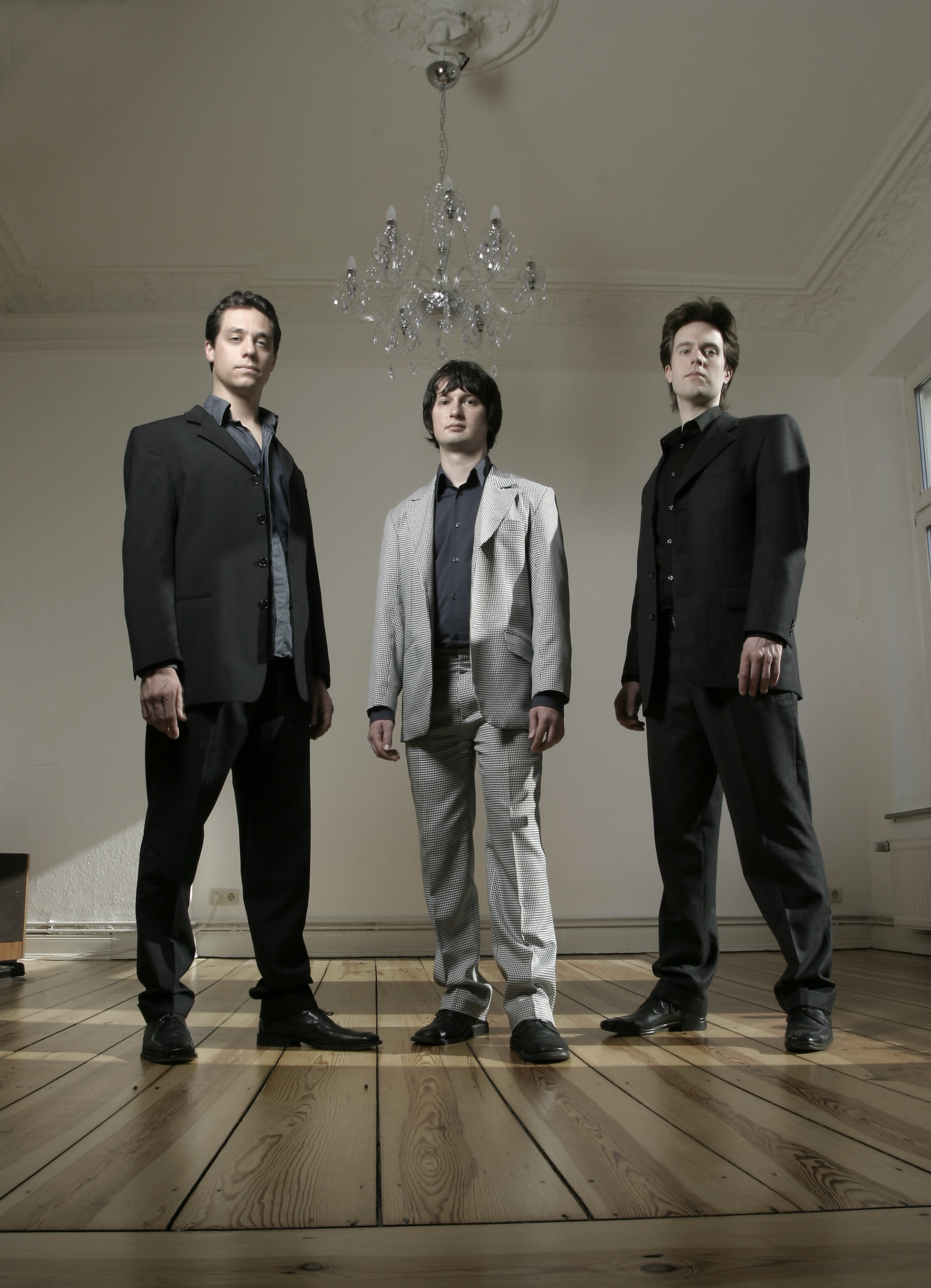
(Photo by Steven Haberland)

Formed in 2002 by pianist Boris Netsvetaev, bassist Phil Steen, and drummer Kai Bussenius, the Hammer Klavier Trio knows where it’s at. Little known outside their home base of Hamburg, one hopes that will change with the release of their sophomore album, Rocket In The Pocket. Netsvetaev is a keyboardist of many stripes, as comfortable plugged as he is un-. After studying piano in his native St. Petersburg, he worked with Joe Lovano, Dave Holland, Kenny Werner, and others to hone his craft. Steen was born in Hamburg, where he also earned his formative musical education, and remains an advocate for the local jazz scenes. He has studied with ECM great Kenny Wheeler, among others, and is a member of numerous touring groups. Bremen-born Bussenius is a drummer of fresh talent and insight, his future already secured through onstage tenures with John Abercrombie, Dave Liebman, Kenny Wheeler, and many more. He cites Jack DeJohnette and Paul Motian as major and lasting influences. Having already worked together before, backing the Wolfgang Schlüter Quartet, their experience with the legendary German vibraphonist has clearly left its mark, absorbing his penchant for compact turns of phrase and equally concise flights of improvisation.

Since making their recording debut with 2008’s Now I Know Who Shot J.F.K., these young friends have sharpened their sound on Rocket, blasting off into the stratosphere with a set that is as hip as it is enjoyable. The attractive syncopations of “Hysterioso” usher us into the kind of mechanical precision and postmodern angst that one might come to expect from The Bad Plus. HKT brings its own swing to the table, what with the buoyant ground line and delicate array of electronic buggery, before ending like a record sped up until the cartridge goes flying off in search of other skies. These we get in “A Sketch In Dark Colours.” Against tight rhythm support, Netsvetaev provides enough to fill this puff pastry to bursting. His touch is beautiful, impressionistic, and decidedly futuristic, evoking streets awash with robots and automated traffic. “Suicide Train” is another rollicking exposé of urban ennui, only this time bartered into the hands of a frenetic ghost who seeks in said transportation a method to the madness. The keyboard dons an electric guitar’s clothing, while the bass is given its due frolic. The jam band aesthetic is smooth as scotch, yet distorted by a picture gallery of enticing modal variety. “Tekla” is a heaping slice of retro pie that looks to a more innocent time when we were content in following our minds rather than our hearts. Threaded by a watery bass, it sings to us with gentle remonstration. “Plan B” is a rubato mash-up of bold yet complementary flavors that swings its way into focus. “Play Me A Fugue” drifts in and out of a Baroque radio station with the swish of a whale’s tale. The drumming is bold, upright, and crisp. The title track walks a funky walk and talks a funky talk, rolling into the sweeping cinematics of “The Incredible Atmo” with unwavering aplomb. Steen switches gears to ARCO as Netsvetaev trails stardust into the night sky. The Steve Kuhn influence is palpable. “Take Fifteen” is a delightful slide into more boppish territory. Subtle and true to form, the trio excels here in its rudiments. Then, with a sweltering electric piano, “Desert Sun” kicks us back to seventies, with a mellifluous and oh-so-comforting sound. A fuzzy blanket in November. “Kaleidoscope” is a track of luscious textures and shapes, Netsvetaev exploring icicles in the highs. The set ends with “Harold Mabern.” Named for the great pianist and teacher, it is a jaunty ride through past and present on the way toward an as-yet-unknown vocation, of which music is but the first and necessary step.

If the music on Rocket is uplifting, then so too is the recording, which flies from the speakers with a life of its own. At once edgy and accessible, it should be the fun-seeker’s next destination. But this seeker wanted to know more, and to that end was fortunate enough secure an e-mail interview with Boris. Without further ado:

The press has located your work somewhere between Monk and The Bad Plus. Where would you yourselves locate it? What influences do you consciously bring into the music, and what influences have you discovered after the fact?

We get our influences from every type of music we come across. Of course, our main influence is jazz, but the influence of classical music (especially Russian music and music of the 20th century in general) is very strong. We use elements of rock, funk, hip-hop, and R&B, which are also strong. I can’t say there is a particular band or musician that has influenced our music. We’ve always worked on our own sound. We never wanted to be placed stylistically as “something influenced by…” We are the Hammer Klavier Trio. We’ve got our own sound.

How have you evolved as a band since J.F.K.?

Of course, we’ve grown much closer together as a band. Now that we’re using electric instruments (keytar, Rhodes, electric bass), our music has become funkier, harder, louder, but also much more variable. We’ve extended our sound palette, moving from straight-ahead jazz to modern beats and rhythms, so younger audiences can get into it more easily. We’ve also gone international, playing concerts in Rome, Saint Petersburg, and New York.

Tell me about the journey of Rocket In The Pocket from concept to recording to finished product. How do you feel it represents HKT and the future of jazz?

The recording session took place at Home Studios in Hamburg. It’s a legendary studio, famous for its rock and pop productions. The recording took place at night, which created a special atmosphere of mystery and inspiration. We had a special three-night deal with the studio: enough time to work out things in the way we wanted them to be. We even took an additional session to re-record some tunes we weren’t quite satisfied with. After the studio work was done and we had all the material, it took us some time to find a guy to mix it. Finally, our choice was Klaus Scheuermann from Berlin, and I must say, he did a really great job. Phil and I went to Berlin to oversee the three-day mixing process. We had a lot of fun working on it with Klaus, or, to be more precise, observing Klaus working on it. Once we had the master in our hands, we decided to wait until summer for the photo shoot (we wanted to have some outdoor pictures on the cover). Howard Mandel, a famous New York jazz writer, delivered some great liner notes for the CD, so we are very happy with the final product.

How do you approach playing in the studio versus playing live on stage?

It’s a different type of work. Live is more natural to everybody. There’s an audience you play for. You can build contact with it, interact with it. The presence of other people listening to you is inspiring and pushes you ahead. And if the people react to your music positively, it brings a feeling of a great satisfaction. The studio is different. You are closed in a hermetic box and you have to play for yourself. It’s really strange. It’s very difficult to develop the same energy as in a live concert. In fact, the nighttime recording session helped us a little to recreate the feeling of playing a club show. I really don’t care about it anymore. If you’re a professional musician, a good one, you have to be on 200% anytime you’re performing. Whether in the studio or at a jazz festival, it doesn’t matter.

When did you know you wanted to play jazz? Was there a defining event, listening experience, loved one, or instinct that drove you to this music?

By the time I grew up (it was in the 80s in Russia), jazz was not easily obtainable. My father had some LPs of Count Basie and Benny Goodman, but that was it. All through my childhood I studied classical piano and I didn’t really come across jazz music until I turned 14. It was 1992 when I entered the Rimski-Korsakov Music College in St. Petersburg to study piano and composition. At this school I met a new friend who was heavily interested in fusion music. He gave me some tapes with Miles Davis and Weather Report. Some months later I started taking interest in it more seriously and began improvisation lessons. At this time the political situation in Russia had changed. Jazz still wasn’t popular, but it became much easier to get recordings. Some of the new TV channels started broadcasting jazz programs from abroad. It was around May 1993 when I saw a video of the “Tribute to John Coltrane” with Wayne Shorter, Dave Liebman, Richie Beirach, Eddie Gomez, and Jack DeJohnette. This concert was a killer—the power of this music hit me seriously. And just about a week later I saw the John Coltrane Quartet on TV. This event changed my life completely. From this point I knew: this was the music I’d always wanted to play.

What is the most memorable comment a fan has shared with you after a gig?

“You’re sexy.”

What do you say when someone asks, “What do you do?”

It depends on the situation. Usually, I say, “I’m a musician.”

Much attention has been paid to your youth. How do you think age affects, if at all, the way you think about music and perform it? What is your generation adding to jazz? What is it taking away?

I don’t think that age is all that important. Of course, time adds some maturity to your musical personality, but for me it’s important to stay young at heart. I think being young or old is a mental thing. Some people stay young for the rest of their lives, others turn old before 30. It’s difficult to say what kind of an impact our generation has on jazz, because there are so many different groups out there playing completely different kinds of music, but the main tendency is that there are more pop or hip-hop rhythms and sounds in jazz than there were even 15 years ago. Swing is slowly disappearing. Despite the fact that we all love straightforward swing, we have to go along with the times.

Please tell me about working with such a moving force as Wolfgang Schlüter. What have your experiences with him taught you about performing, music, and life?

Playing with Wolfgang has always been fun. He is a musician of exceptional recording and performing experience, and he is a great guy, too. Offstage, he is always good for a glass of wine, a good story, or both. He loves playing music, especially in front of an audience. Of course, his technique and feeling for the music and his instrument are exceptional. His sense of rhythm and timing is also phenomenal. If you see him perform, you know immediately: jazz is all about rhythms and groove. But there is something else. The past years have been unkind to him. First, he suffered a stroke that left him almost totally blind. Just a couple of years later, his wife died in a terrible car accident (he was riding in the same car). But none of this has stopped his will to play music. This is probably the most important thing I learned from him: if you really love music, it makes you so strong that you can overcome your destiny.

To learn more about the Hammer Klavier Trio, please check out the German promotional video below, or click on over to the official site here.


Pavanes from a Princess: Going Beyond the Blue with Tessa Souter


(This and Beyond The Blue cover photo by Joseph Boggess)

When Tessa sings
She dusts off her rings
Her baubles, bangles and beads
She takes to the stage
Irrespective of age
And emotes as if something she needs

All too often we throw jazz and classical music into opposite ends of a proverbial ring. In most circles the latter wins out, if only by the brute strength of its history. While time cannot be the sole criterion when evaluating the worth and self-sufficiency of any genre, it would seem to be primary in our hypothetical referee’s mind. Where does this referee come from? Do the black and white jail bars of his uniform manifest an equally divided worldview? Can anything in the audible universe really be so simple? We can thank the stars above that artists like Tessa Souter, whose voice blushes with an acceptance of life for what it may ever bring, are showing us just how limiting our quarantining of genres can be. For when those first strains of “The Lamp Is Low”—off her latest, Beyond The Blue—catch our cochlea unawares, we recognize the permeability between them, as if the most natural cross-fertilization in all of music. Set to Ravel’s Pavane For A Dead Princess, the song sashays into the night, flitting like the shadow of a hopeful sigh from behind a veil of melancholy. Only in that loneliness can we know the timeless truth of the singer as an artist in reverse, one who hands us the paints with which to render our appreciation visible.

Bridging this chasm of reflection from one end to the other is a personality that never falters in Beyond’s 12-song session, nine of which place Souter’s original lyrics alongside the tried and true. Each track takes a classical melody as its wings and cocoons at their center a body of stellar musicians: Steve Kuhn on piano, David Finck on bass, Billy Drummond on drums, Joe Locke on vibraphone, Gary Versace on accordion, and Joel Frahm on saxophones. With such a finely attuned thorax in the pilot’s chair, Souter’s luxuriance can catch those winds from long ago and flap them afresh like spring. Between the early light of “Prelude To The Sun” (a luscious reimagining of the second movement from Beethoven’s 7th) and the glistening bossa inflections of “Brand New Day” (based on Fauré’s op. 24 Elegy) Souter charts a journey of great emotional distances, all the while drawing a circle private enough to conceal in a teardrop.

What with Kuhn’s enchantment and Frahm’s mellifluous commentary, there’s plenty to love when that unmistakable voice (but never its spell) recedes. Potentially hackneyed motives can be nothing less than clay in such capable hands. “Chiaroscuro,” for one, pours Albinoni’s diluted Adagio into a mold of midnight and cracks open from it something bright and fair. Neither is the group afraid to call upon Debussy (“My Reverie”), Brahms (“Sunrise”), Schubert (“Noa’s Dream”), and even Rodrigo (“En Aranjuez Con Tu Amor,” throughout which Locke wavers like moonlit waters). And then there’s “Dance With Me,” which through the lens of Borodin’s Polovetsian Dances tells the story of a reluctant partner whose movements of the heart, while enough for the limbo of passion that scuffs the floors of a shared life, find themselves faltering endearingly in reality. That sense of closeness and twirl finds clearest life in Versace’s solo, a highlight among a string of fine contenders. Souter makes sure to include the delightful “Baubles, Bangles And Beads” (based on the second movement of Borodin’s String Quartet in D) in deference to past classical-jazz crossovers. Drummond and Finck make for an exquisite rhythm section here. The title track emerges from the dark, cold, and starless sky of Chopin’s e-minor Prelude (op. 28, no. 4) holding galactic light to its bosom and wishing upon itself as it streaks into a sleeping child’s heart. Souter adopts a sparse approach to these songs, bookending shelves of thoughtful improvisation with her gliding ways. Her sources imbue the results with something aged, so that even when we think we’ve never heard them before, their contours are undeniably familiar, the sentiments to which they conform and respond even more so.

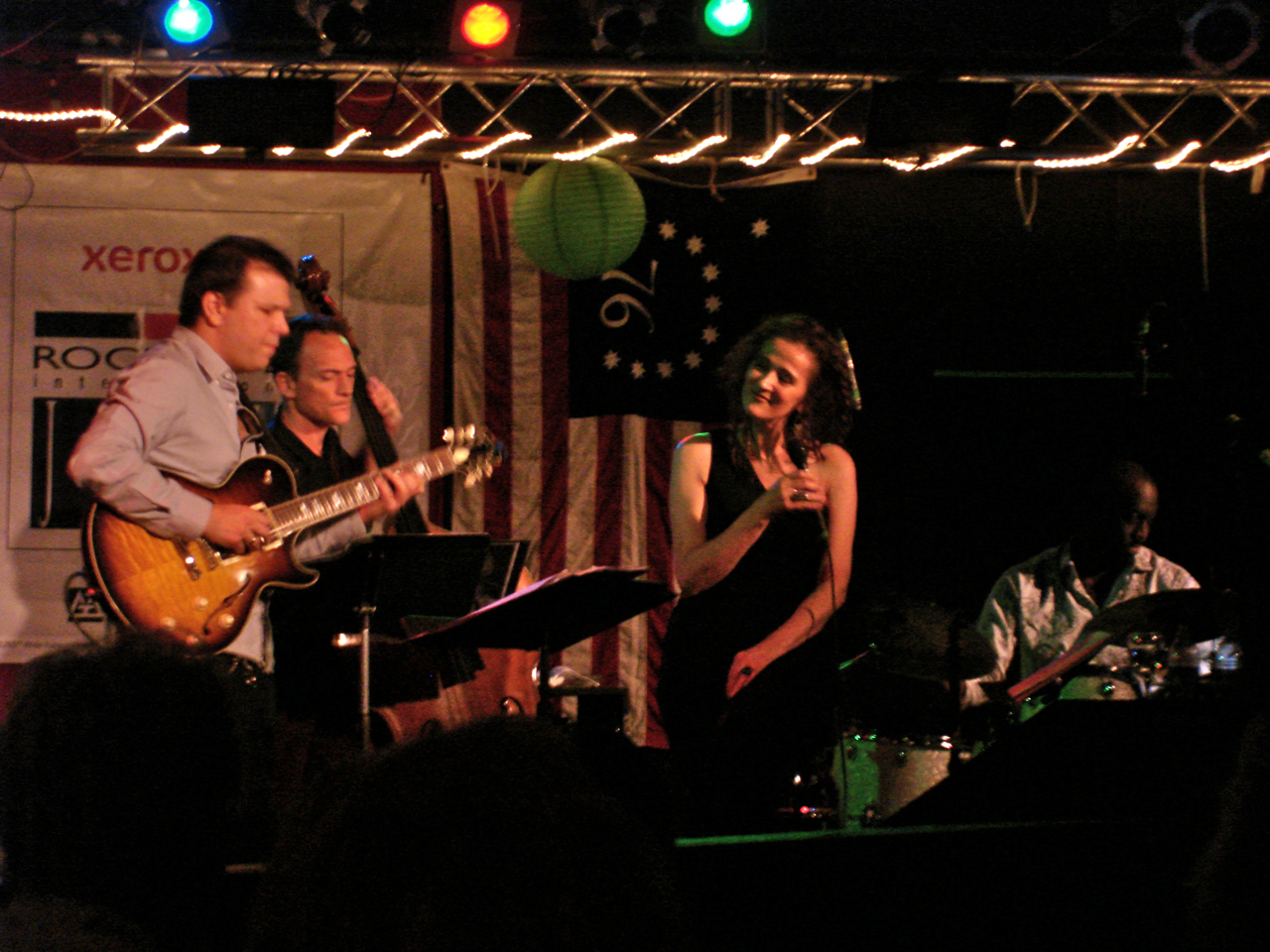
“Safe as milk” is how Souter, in a nod to Captain Beefheart, characterizes performing with her new bandmates for two live sets at this year’s Rochester Jazz Fest. Joined by guitarist Tom Guarna, bassist Sean Smith, and drummer Willard Dyson, Souter and company astonished those lucky enough to squeeze into the small venue from a line that trailed for blocks out the doors. They won us over from note one with the classic “Make This City Ours Tonight” (off Souter’s third album, Obsession), jumping right into the deep end as if the music couldn’t wait to sustain her.

Both sets featured a hefty selection of new tunes, “The Lamp Is Low” being a reigning favorite. In addition to the attractive rhythm support, it cinched the talents of Guarna, a musician’s musician whose skills had everyone in awe whenever he took a solo. In combination with Souter’s own brand of liquid mercury, the group’s full sound shaped the air, circulating like breath itself. This feeling of respiration pervaded the surf guitar vibe of “Prelude To The Sun” and further the smooth lines of “I’m Glad There Is You,” during which Souter pointed appreciatively to her bandmates as she sang the words “extraordinary people.” Guarna alone joined Souter in celebrating Burt Bacharach with a sweet rendition of “The Look Of Love,” the first of the evening’s dedications, which also included “Brand New Day,” written for Japan’s tsunami victims and featuring Guarna’s most stellar turn of the show.

Not to be overshadowed, Smith grabbed some spotlight in his heartfelt contributions to “Baubles, Bangles And Beads” and “Chiaroscuro,” while the ever-patient Dyson brought much to “Beyond The Blue,” “En Aranjuez Con Tu Amor,” and “You Don’t Have To Believe” with a caravan of sandy textures and shakers. Dyson also unleashed a memorable statement in “Alone Together.” Candy for the ears.

During an informal sit-down the morning after the Rochester sets, which came hot on the heels of a Blue Note Jazz Club album launch party and sold-out Russian tour, I asked Souter whether or not she has noticed a difference in audience reception across places and cultures. “The Russian people seemed to be very emotional,” she told me,

so afterwards you got a lot of people coming backstage in tears, because their emotions were so close you could practically see them through their skin. Perhaps it’s because they’ve had such a traumatic history that’s quite recent. I’d say for me—and I haven’t been to a huge amount of places—everywhere’s the same and different. Music seems to be very universal and audiences are very universal.

With this in mind, I couldn’t help but comment on the confidence she exudes on stage, seemingly internalized to the point of becoming second nature:

For me it’s all about being in the moment. When I walked into the room [in Rochester] I nearly burst into tears, because I could feel the expectant vibe. I was right on the edge. It’s overwhelming. I get subsumed, I don’t even exist. Confidence is important. It gets you past being self-conscious. For example, the first time I saw Billy Elliot I thought it was a nice movie. But then I watched it after I’d become a performer and it was an entirely new experience. There’s a moment when the boy is being interviewed for the ballet school. One of those posh guys says, “Why do you want to be a dancer?” and he says, “Because when I’m dancing I disappear,” and I thought, yes, that’s exactly what happens. So what you’re seeing is not just me, it’s us.

Does this affect how you sing the “sad” songs?

There’s always an element of sadness in a love song, even a happy love song, because one day it’s going to end, if only when death do us part. Somehow, you have that realization. I was thinking: Why do people always love the sad songs? Are they unhappy? But I realized because it’s sort of real, that even when you are happy there is a poignancy to how lucky we are.

Maybe it’s just part and parcel of the form, but it seems that in jazz people are constantly reconfiguring themselves in relation to others. One year you may be playing with a completely different band from the last.

One thing about jazz is that it’s just so free. Because each person brings a unique personality to the bandstand, it means that every time you play the same music with someone different, it’s a completely new experience. Like the band last night. It’s new for me. Tom had to remind me it was only our third gig together, but I’m blown away by what they all do.

Judging by audience reactions, she wasn’t the only one. This assured quartet set Rochester’s happening east end abuzz with adoration for a voice that needs no spoonful of sugar to make its medicine go down. As my wife and I left the venue I couldn’t help but smile, because, knowing that we’d be in attendance, Souter had been gracious enough to dedicate “Little Sunflower” to us and to the baby boy due to change our lives come the first week of September. And in the end, the creation of life is what her singing is all about.

Love doesn’t only live in dreams. It’s here.

Creating and Un-creating: A Conversation with Cayenna Ponchione

A rumble. Subterranean where there can be no ground. A calling from within where there can be no within. Is it a voice? A sleeping giant? The rolling pulse of marimbas. Something familiar, daunting all the same. Metal, touched to the skin of darkness, rolls like an ice cube down our backs. Suddenly, marimbas pronounce themselves ephemeral, morphing into glockenspiel and drums. A primordial froth, foaming at the mouth of something soon to be sacred. Finding itself as it goes along. Notes and staves invisible, but there. Like Braille across out space, they stand. A specific method of becoming, ever enveloped by a breath of destruction. Wrought, perhaps, in a filigree of swirling gasses and dark matter, in which there is only the emptiness of an embrace. Shape, size, and color—the peeling skin of sound. There is only inception, for nothing has ever ceased. The watery depths of a vibraphone give us our first taste of brine, finding in its habits an incalculable emotion. Each of these gestures is a cluster of numbers, elements, and intent, not so much divine as introductory. These deep build-ups reveal massive clouds of energy, imploding as much as exploding, as if searching for a primary spatiotemporal juncture in which to beat to the rhythm of all that animates it. A ghost in stardust. A child of orbit. Ring of fire. Singing tension. Birth.

This is what Cayenna Ponchione’s music feels like. As distinct as her name, it breathes. Born and raised in Fairbanks, Alaska, Ponchione pursues a life of conducting and composition imbued with fervent dedication to the orchestra as a site of creation. Having directed a number of ensembles in the Finger Lakes region of upstate New York, she has also amassed a growing body of sonic territories. Among them is, appropriately enough, The Creation, a work for percussion that won the 2003 Percussive Arts Society Composition Contest and garnered international recognition for her compositional accomplishments. As a marimbist herself, Ponchione is invested in the world of reverberation, and in shaping its amorphous possibilities into music one can admire and develop into life experience. For more, check out her site.

To hear The Creation, check out samples and buy the CD at Capstone Records.

Ponchione is currently at Oxford, where she hopes to complete a Ph.D. that will enable her to expand a personal mission of community music-making. Before she hopped across the pond, she was kind enough to take time out of her schedule and sit down for a conversation on her work and beyond.

Just hearing the title, The Creation, I cannot help but think biblically. I also think Haydn. Yet when I listen to the piece, the narrative possibilities of something out of nothing slip away in favor of a more immediate, visceral effect. Were there any images, texts, or pieces of music that you had in mind while bringing this piece to fruition, or did it emerge, as well it probably should, from a blank slate?

There was a piece of music that I heard—the Bloch Schelomo for cello and orchestra—by the Utah Symphony at Abravanel Hall. That would have been 1996. And when I heard that piece, I saw the creation of the earth unfold in dance. That visual stayed with me for a long time. When I went to write this piece, it wasn’t as musically inspired as it was—I don’t even want to say philosophically, because it’s kind of fantastical—just musing on the concept of matter, and the concept of matter as being quite transient, that without vibration, without motion, matter doesn’t exist. And so, I toyed with that, played with the notion of being able to hear that vibration just like you hear the vibrations of sound, and imagine what the creation of the world would have sounded like.

Building on the first question, clearly the title is a multivalent one, and for me seems to vocalize, if you will, the process of its own becoming. The compositional process is, of course, nothing if not creative. How do you see the medium and the message intertwining in The Creation?

For me, if I understand your question correctly, this was a very important aspect of the work. I wrote it based on a tone row, and I manipulated that tone row not simply abstractly but in ways that were personally connected to the subject matter—spiritually, intuitively choosing facets of the tone row, choosing different inversions and blocks for each of the four parts, which converge into the creation of the sphere, the explosion, water, and then from water the fire and the ice. In thinking about those through my personal experience, I used them in ways that reflected that.

One might say it takes boldness to compose such a piece, that to set oneself to the task of evoking the immensity of earthly existence into a formative, if not formal, piece of music. Yet after listening to it, it becomes clear to me that it’s not really about boldness at all, but rather about humility. Would you agree with this and how do you see yourself in relation to this music?

I think I wrote it at a time when there wasn’t much differentiation between myself and my surroundings, where I end and the rest of the world begins. It’s rather vague, so in that sense I didn’t feel that it was “bold,” though I probably should have. And in terms of humility I felt like it was more an extension of my own experience as opposed to a capturing or statement of an external topic. In hindsight, I never expected that people would pay enough attention to the title, despite being exactly what I wrote about. The whole title is a creation, a sonic manifestation. Had I known that a lot of people would be playing it all over the world and thinking about it in different ways…. The title is so culturally loaded and means some very specific things.

Can you talk about the structure of the piece and what part improvisational elements, if any, play in its performance?

Actually, there is a very small amount of improvisation involved. It’s set up in four parts, and each is linked and borrows from the others in one way or another. The only point at which there is improvisation is when the sound implodes on itself. The beginning is, if you can imagine, little particles of sound colliding with each other and building. When that all starts to swirl around and gives us a big implosion, the fallout is completely improvised and is meant to shatter and decay, and from that we get the earth.

In what respects did your choice of percussion over, say, winds or strings influence the genesis of the piece?
Unfortunately, it’s a very boring answer which is: as a percussionist, and at that time in my life, that is what I was capable of writing for, and those were the forces that were at my disposal. So it never actually occurred to me in any other form than percussion. In the end, the piece couldn’t have been written for any other instruments. There’s just nothing about it that’s transferrable. It has everything to do with the timbre and using the instruments in their idiomatic fashion.

If we wanted to be nitpicky, we might say that, with no one around to hear it, the creation of the universe would have been silent. Where does one even begin to imagine it sonically?

That’s fun! To be honest, where I imagined it sonically—and there is a very clear picture of this—was to hopefully do it one day with dance. To me, the universe before the Big Bang in the “storyboard” of this particular piece, was a silent space; a vaporous, undulating mass without any direction that, by happenstance, started to collide with itself. Why I ever mused on such things is beyond me (laughs), but at the time they were very important for me.

To me, the piece’s final, drum-laden passages don’t come off so much as upheaval as organization, for somewhere in the resounding chaos of any creative process there is a dedication to order and familiarity, which in turn nourishes the beauties of an indeterminate world. How do you see, hear, and/or feel their sudden cessation?

It’s actually interesting you ask that, because I hadn’t realized until you mentioned it that it’s very organized at the end. The section is called “Fire and Ice” and my intention was for it to be much more disruptive. I think part of the issue there is that the way I had written it requires a precision of execution which then leads it to sound pretty tight and, on the other hand, I think that inadvertently I wrote it that way because I do find that I am most comfortable in order and structure and that for me, intuitively, that encapsulated my need to finish the piece. But I’m not sure that I understood the last part of that question.

Well, for me, the drums at the end stop quite suddenly. They leave the listener in a state of suspension, and I wonder how you feel about the ending.

Oh, wow, I didn’t know it was sudden! I know it’s coming (laughs). It’s interesting. I think about this from time to time, listening to one’s own music. I don’t know that I hear my own music, because it’s already there, the image is there, and it’s hard to hear it objectively. There’s a marimba solo piece I wrote before this and play more frequently than any of my other pieces, and I recorded it about a year or so ago, and I went back to listen to the recording and thought, it’s just too fast. Why is it so fast? I’d slow it down and we’d record it, but it was still too fast. And I think part of it is because I already know it. It’s hard to hear it as I play it and then experience it basically for the first time. I just can’t do it. And I don’t think I’m alone in that. I remember hearing Copland play his own reduction of Appalachian Spring on the piano, and everything was much too fast. Not to compare myself to Copland, I don’t mean to, but I just mean the notion of the author—there’s just no element of surprise, and you’re just getting through it even though there’s a different experience that might be happening on either side.

Have you had much feedback in terms of how this piece has been received, whether right after a performance or in more prolonged discussions?

I never expected that anybody else would hear this, and I’ve gotten really great feedback. People find it to be, frankly, rather profound: it’s just a beautiful piece, they love this image, even technically just well balanced and enjoyable musically. One of the most touching things that happened is that when recording this piece at the University of South Florida, there was a young man who was in that percussion department who did not play in that piece, but who was there the entire time we recorded it. I think he was a freshman that year and so the upperclassmen played. But he absolutely fell in love with it. And he e-mailed me maybe nine months ago and said, “I’m putting together my graduate recital at the University of Boston in marimba performance and I want to program your piece because it has affected me so much as a musician and conceptually. He’s actually really interested in Carl Sagan and extraterrestrial concepts, so this was particularly interesting to him and very close to him as he developed as a musician, and there’s really no greater honor than to have someone say that. So it was quite special for me. I went out last March to Boston for his recital and it was very well done and clearly a very special moment for him. Probably one of the highlights in my life as a composer. It was really quite cool.

I also really love the piece. There is one moment close to the end that I find particularly effective, during which the drums rise up and stop and there’s a gap, only to re-congregate for a final passage. There is something resonating in that gap. I don’t know if it’s a tubular bell or—

It should be a chime, yes.

I adore that moment, and I’m wondering if you could talk about it a little bit and whatever intentionality lies behind it.

I have to say I don’t recall my specific thought for that, and I apologize because I’m sure there was something. I would guess more than anything that it had to do more with balance. Actually, when I write, being a percussionist, I don’t think melodically or harmonically in the same sense. I really think of flow and balance and structure, and if there’s a pitch contrast, again that has to do with where you’ve come from and where you’re going and what’s needed, so certainly if there wasn’t an extra-musical aspect to it, it’s just that there was a need for a breath before we went on with so much sound.

It occurs to me that Xenakis often used percussion to evoke cosmic forces, and I’m wondering if you feel there is anything particular to percussion in this regard.

Yeah, well it’s certainly less earthy than a wind instrument, which is connected to the breath, and even the contact that one has with a string instrument or a piano, and just the notion of a vibrating string in and of itself, whereas with percussion, the sound of clanging metal together, it’s almost industrial. The concept of percussion music came with the Industrial Revolution. Not to say that there weren’t percussion instruments earlier, and certainly in other cultures percussion has played a large role, but the concept of percussion the way we hear it now in Western art music is definitely all post-industrial, and so I think there is perhaps a connection there and a fascination with what’s beyond.

Can you talk more about the instruments involved?

It’s two five-octave marimbas, two sets of log drums, vibraphone, at least two or more break drums, lots of tam-tams, gongs, cymbals, a couple of bass drums, glockenspiel, crotales maybe, triangles, lots of toms. So during the section in the middle, the two solo marimbists go to play the two solo tom parts. It’s basically them with the two log drums and the backup at that point. The vibraphone plays a large role in Water, as do the cymbals in the gongs. Pretty straightforward. And in the beginning I’m using more of those metallic, spacey sounds with different sizes of triangles and glockenspiel. I’d love to be able to hear it with a different pair of ears, because I know how things tie together at the end from the different players, and it’s very intentional, and I don’t know if it sounds more continuous than it was meant to be. It is meant to be one gesture, but it’s supposed to be a gesture with a whole lot of different aspects from different players and different instruments.

You and I have talked in the past about your position as a conductor and how that may or may not change the ways in which music is perceived by the audience behind you. Could you describe the effect of your gender, as you see it being perceived, on audiences and how, if at all, these perceptions influence your work as a composer?

I think it doesn’t influence my work as a composer, only because even though I’ve thought of myself, as I’ve mentioned to you, only recently as a “female” conductor and that it hadn’t occurred to me. Being behind the screen of a composition, I don’t feel gendered and I don’t have a sense at all of how my gender might be perceived through the music that I write, and perhaps I should. You know, I was just looking through old pictures today. This moving process for me is insane. I was just in Alaska in August for a week, and I shipped the last five boxes of my childhood possessions to Ithaca, and they’ve been sitting in the living room, and before I can even pack I have to clear out the living room, so I just had to unpack these boxes I had packed thirteen years ago. It’s striking, but one of these photo albums I pulled out was from when I was in junior high and there’s a picture of me wrestling because I was on the wrestling team. And I was just thinking, yeah, I actually did that. And at the time, although some said to me, “You shouldn’t being doing that, you’re a girl,” I just thought they were old-fashioned and that I would be whatever I wanted, so of course I could do this. And it took me a long time to understand that people might see me differently. The more I’m aware, and I think the more I become a woman instead of a girl, I think that certainly changes, and dealing with a wider range of generations as an adult. So now when I engage with people in their 50s, 60s, 80s, they’re engaging with me as a woman, as an adult, as opposed to when I was a teenager or even in my early 20s, when they were engaging with me as a kid and I was engaging with them, again as this separate thing. And so I think in that way we conceptualized each other differently. But as for composition, I don’t feel any gender. And as for percussion, I also don’t feel any gender. I spent most of my life doing things that guys did. I mean, the percussion sections were all boys. They were all dumb boys and I was always section leader because somebody had to keep them in order (laughs)! And on the wrestling team I was already around guys. I had two older brothers and I wanted to do everything that they did. I had girls that were my friends, it wasn’t that. So, maybe I should think about this. I actually have another piece that I have to write for Tennessee Martin’s new music building, and I was thinking about this today as I was reflecting on this piece a little bit and trying to conceptualize what I want this to sound like, and now I have to think about what I have to sound like coming from a girl (laughs). What are they going to think at Tennessee Martin? I hope this answered your question.

Yes, well I think it was an ineffable one to begin with. On the one hand, it’s so arbitrary as to not even be worth asking. On the other, I often think about this issue in relation to myself as a countertenor and one who likes to “sing high.” When I create my choral music and people hear it, they invariably ask, “Is that you singing the high parts?” as if it’s not conceptually feasible that someone of my appearance or attitude would embark down that vocal path.

I made an embarrassing boo-boo the other day. I was speaking with a vocalist who was a woman, and I had asked if she would be willing to sing some Dichterliebe. And she says, “But I don’t sing Dichterliebe.” And I said, “Oh, is it the wrong voice?” And she says, “No, it’s a men’s role.” I knew that (laughs), but it never occurred to me there would be a reason why she wouldn’t sing the song, and I was actually really embarrassed. But when I reflect on it I realize it was just because you sing songs that are suitable for your gender. I sing Beatles songs all day long, you know? (Sings: “She loves you, yeah, yeah, yeah…”)

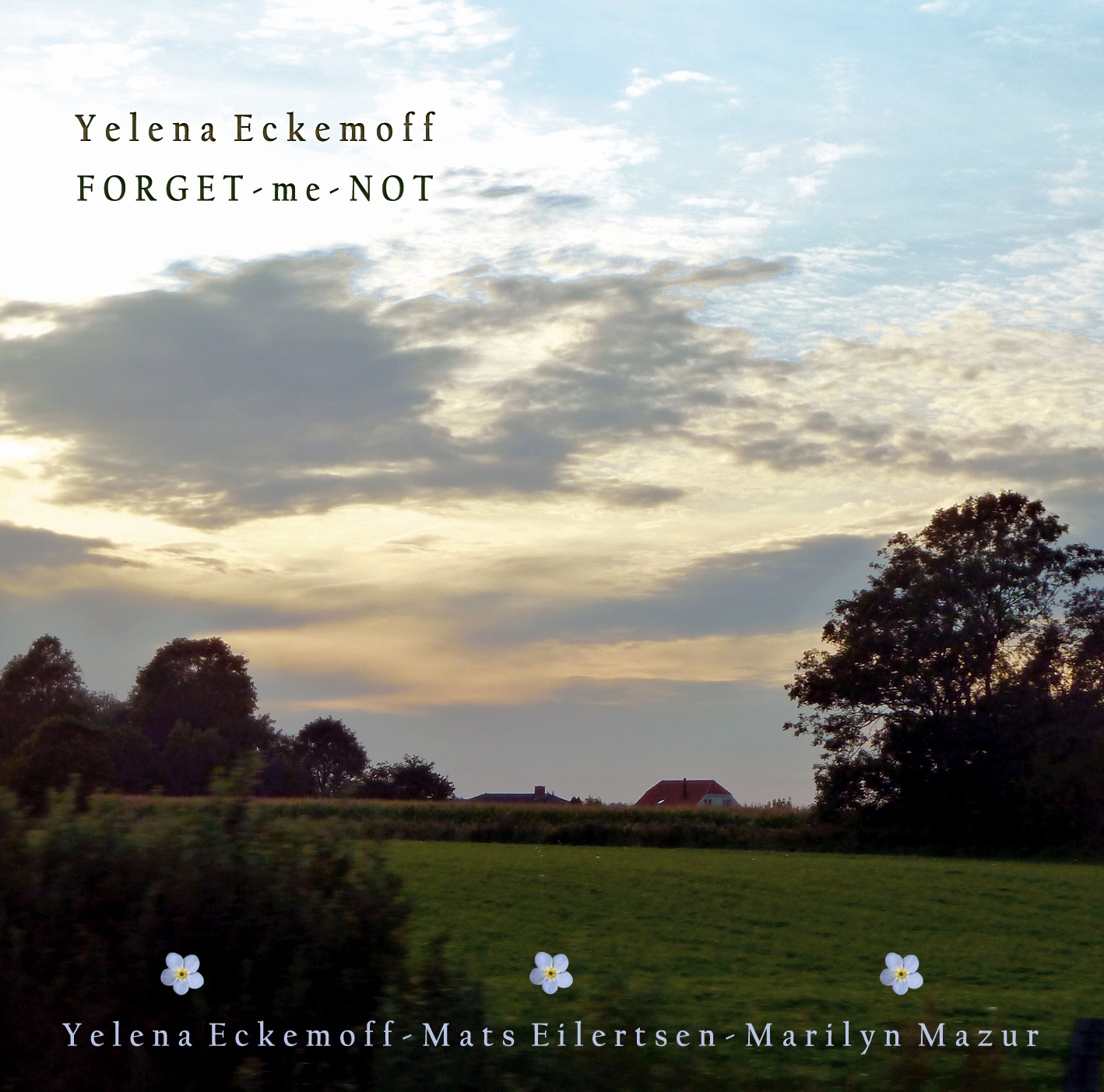
Yelena Eckemoff: FORGET-me-NOT

Yelena Eckemoff
FORGET-me-NOT

Yelena Eckemoff piano
Mats Eilertsen double-bass
Marilyn Mazur drums and percussion
Recorded August 17 & 18, 2011
STC Recording Studios, Copenhagen, Denmark
Engineer: Andreas Hviid
Mixed by Rich Breen, Burbank, CA
Produced by Yelena Eckemoff

Readers of between sound and space will, I hope, be familiar with Yelena Eckemoff, who has been skirting the ECM fringe for some time now in her working relationships with such artists as Peter Erskine and, most recently, Marilyn Mazur. The latter provides a crisp and delectable palette to the Russian-born pianist’s latest effort, FORGET-me-NOT, which also features Tord Gustavsen recruit Mats Eilertsen on bass. From the breathy clusters of “Resurrection of a Dream” it is clear that Eckemoff has written yet another distinct chapter in the storybook moods of her compositional development. Against a backdrop of twittering percussion and arco haunts she carries us through this slick opener with equal parts style and fortitude, riffing on the ether with her most unbound pianism yet. Mazur is splendid on cymbals amid a bevy of colorful kin, Eilertsen firm yet sensitive, soloing as if in memory of the lullaby that brought us here. Thus set, the album’s tone moves in shades through the child-like wonders of the title track to its densest dramas in “Welcome a New Day.” Along the way Eckemoff treats us to not a few surprises, of which the crumbling edifice of “Maybe” paints perhaps the most intriguing. The punctilious “Sand-Glass” further hones the set’s serrations and leaves us prepared to dissect the delightful little groove that is “Five” (in both title and number). Eckemoff’s classical roots come to the fore in “Schubert’s Code.” Making its timid entrance onto a stage draped with patterns of the nineteenth century, it nevertheless sparkles with clear and present reflections and showcases a real feel for detail. “Quasi Sonata,” on the other hand, rolls out the retro on a smaller scale and feels most like fleeting reminiscence. The pleasant dissonances sprinkled throughout “Seven” (in title but not in number) also bring us into the unexpected, a place where cascades and stepwise chains share a drink and a smile, while the more erratic “Trapped in Time” brings us into a swing to remember, replete with Mazur’s solid rim hits and spiraling energies.


(photo by Nicola Fasano)

FORGET-me-NOT is an album without borders, a gallery of animate snapshots that float on the wind. Its fluid transitions hang like a necklace from the neck of a mother who stares through the window of her past and finds a thousand songs to sing. Let’s hope this is a sign of things to come for an artist who continues to add feathers to her wings with each new release.

Of Beautiful Boys and Elegant Girls: A Review and Interview with Tessa Souter

She looked at me with intensity. “It is the gift of the great,” she went on, and the sound of her low voice seemed to have the accompaniment of all the other sounds, full of mystery, desolation, and sorrow, I had ever heard—the ripple of the river, the soughing of the trees swayed by the wind, the murmurs of the crowds, the faint ring of incomprehensible words cried from afar, the whisper of a voice speaking from beyond the threshold of an eternal darkness.”
–Joseph Conrad

(photo by Richard Conde)

Anglo-Trinidadian songstress Tessa Souter has been called a “vocal butterfly.” The comparison stands, but deserves elucidation. It is not simply that words seem to flutter from her lips with all the shimmering delicacy of a Blue Morpho, but also that she spreads sentiments like pollen across a veritable field of musical touch points. Her diction lilts with natural care, as might a windblown leaf or feather, yet her sense of melody reveals such profound commitment to clarity that our meager analogies begin to break down once we let ourselves get carried away. And yet who can help it, when she splits the compass in so many directions that we wish we could chase after them all?

Souter’s career began in writing, through which she established a voice. On paper her words were already singing. She officially dropped that voice in the roiling pond of the New York City music scene in 1999, where she has been beguiling audiences ever since. As a newcomer to said scene and the varicolored jazz it nurses, I came to Souter’s magic in a roundabout way when, after reviewing a performance at which she was also present, she e-mailed me with her compliments. Thus it was through our shared appreciation of the art of live music-making that I first discovered her string of studio pearls. With a kindness and openness that all would do well to follow, she welcomed me into a sound-world where countless others have traveled. These are not journeys from which one returns unchanged, but through which one grows through her singular narrative power.

As you read on to my reviews of her first three albums, I encourage you to click open her website and let its samples wash over you.

Listen Love
Tessa Souter vocals
Mark Berman piano
Freddie Bryant guitar
Miles Okazaki guitar
Essiet Essiet bass
Chembo Cormiel percussion

Souter begins this, her self-produced debut, with a nod to Norma Winstone (one of jazz’s few comparable voices), whose lyrics to Jimmy Rowles’s “The Peacock” only enhance the lushness of a lone voice, swept along by graceful pianism. Like its namesake’s tail fan, aesthetic pleasures provide the practical function of gathering and directing sound, that we might better match its rhythms. Traversing love’s more painful avenues, Souter guides us to Pat Martino’s “Willow,” using her own lyrics to unravel the protection of its shade. Nature and passion tighten, yearning for someone with whom to share its undiscovered vistas. “Caravan” glistens with Sephardic curves as it works its spell somewhere between sleeping and waking, laying its constellation bare, one star at a time. After these darker considerations the title song from Jon Lucien urges us into happier oases, where Souter’s gorgeous ad-libbing lights up the night with dance. Here, as throughout, the sparse arrangements allow her all the sky she needs to unfurl. The album’s tenderest surprise comes with “Fragile.” The Sting tune reconnects with its ancient heart, winding in a slow descent into life’s deepest limitations. Souter then offers her intimate original, “You Don’t Have To Believe.” Its almost conversational language again casts Nature as a force that both brings lovers together and keeps them apart. On a planet where storms comingle with peace, we must remember such things about ourselves. After the voice-and-drum duet of “Daydream,” we are stirred into the cocktail of Antonio Carlos Jobim’s “Insensatez.” Threaded by the chatter of woodblock and improvisations, it is the memory we hold dear as we step through the waters of “Left Alone” and onto neo-soul shores of Pharoah Sanders’s “The Creator Has A Master Plan.” A positive note, to be sure, on which to end an album of tense ups and downs, tying threads into a unified line, sustained like her final perfect high into that cloud where rainbows hide in the shadows of adoration.

Nights of Key Largo
Tessa Souter vocals
Joel Frahm tenor and soprano sax
Kenny Werner piano
Romero Lubambo guitar
Jay Leonhart bass
Billy Drummond on drums

Nights of Key Largo is a love letter to love letters—in this case, thirteen standards, whose contours tremble with renewal in her breath. From the Braziliana of “The Island” to Souter’s drop-dead gorgeous rendition of John Lennon’s “Imagine” (just listen and feel it), this Japan-only release builds upon the instrumental telepathy of its predecessor with even more pronounced solos and interaction between musicians. Bassist Jay Leonhart is especially notable, lending as he does a pure alchemical touch to such cuts as “Moon Dance” and “Close Enough for Love,” the latter a smooth and sultry dip into nocturnal waters, where sleep is as far from those who want to dream as touch is from those wish to love, and yet in which the promise of passion lingers. A breathy rendition of “The Look of Love” finds Souter, accompanied only by Kenny Werner at the keys, mending this fragile melody into something unbreakable. Werner excels further in “All or Nothing at All” and in the title number, which sounds like something that might soundtrack a cruise dining room while also plunging us overboard into a complex ocean of resolute affections. Yet his prettiest vibes emote from “Night of the Carnival,” which contends with “Moon and Sand” as the album’s crowning jewel, made all the more sparkling by Joel Frahm’s soprano. Frahm also solos beautifully on (and with) “Slow Hot Wind,” while guitarist Romero Lubambo adds his patent touches to “You Only Live Twice” and “So Many Stars,” drawing threads in both to every lonely soul looking for escape in a universe that is two parts darkness to every flash in the proverbial pan of love. Not to be forgotten, Billy Drummond is the album’s heartbeat. With a palette as colorful as Souter’s, he brushes his fingers through the hair of songs like “I’m Glad There is You” with a tenderness to match. Like the album as a whole, he paints in swaths of dazzling minutiae.

Obsession
Tessa Souter vocals
Jason Ennis guitar
Gary Wang bass
Conor Meehan drums
Victor Prieto accordion
Todd Reynolds violin
Ansel Matthews backing vocals

As soon as those first licks of “Eleanor Rigby” caress our ears, we know that on Obsession we are in for the most eloquent and mature Souter experience yet. Color me shocked if anyone has turned a Beatles cover into something more enchanting. Once we hit Nick Drake territory on “River Man,” if not already, we begin to see the themes Souter loves so dearly. Its conflation of the organic and the emotional is a meta-statement, a cascade of words as fluid as her fantastic session band. And as the title track twists and turns, carried to awesome fruition by a sure vocal line and the ever-descriptive solos of Jason Ennis (a standout), we realize that sometimes our most life-changing moments are those most bittersweet. Sheila Jordan would be proud. Urged by a propulsive rhythm section, Cream’s “White Room” gets a soaring treatment. A groove for our age, it once again proves Souter’s ability to revitalize the cover. Her honeyed meringue tops Gary Wang’s flowery bass lines in “Afro Blue Footprints” and “Make This City Ours Tonight” as if they were made for one another. Obsession works in contrasts, as between the brooding introspection of “Crystal Rain (Sun Shower) and the heavenward glance of “Empty Faces (Vera Cruz),” but Souter’s originals are reason enough to become familiar with this album.  “Now and Then” floats on Victor Prieto’s watery accordion, laying down a path where the sunlit past and the moonlit present stroll hand in hand toward reconciliation. And let me be the last to undermine “Usha’s Wedding” with my paltry expressions, for however we may choose to characterize that which must be heard to be understood, in the end that naked voice is the angel who promises a vessel waiting to carry every last one of us into loving arms.
(photo by Janis Wilkins)

As of this writing I have yet to experience Souter live, and so for the moment I can only listen from afar. In attempt to bridge that listening gap, she kindly took time out of her busy schedule (having just returned from a successful Russian tour) to answer my questions via e-mail:

Your voice is clearly at the center of every song. How do you combine it so selflessly with other instruments and their players? Is this a relationship of tension? of harmony? of conversation? of painting?

Hmm, well, I really love listening to the other instruments being played by wonderful musicians. And I played the guitar and sang during my formative years, so maybe I like to create a space for the other instruments, too, just naturally.

I remember my art teacher talking about “tension” and how every work of art had to have it. So I guess there is that element, too: the question of, is it going to work out, or will we fall off the tightrope. Holding your breath.

And sometimes it is a conversation. I love to make loose arrangements that give the instrumentalists the space to create within them. I don’t like to say, “It has to go exactly like this.” I want to know what YOU have to say, what YOU feel about it. I want to hear them play what that story—of love lost, of a newborn, of new love, whatever—makes them FEEL. And that will make me hear it differently.

And sometimes it is—as you put it—like painting, but with two of you working on the same canvas, without having to tell each other in words where to put the brushstrokes. I was knocked out when I first started singing jazz at how musicians who have never even laid eyes on each before can get together and make music that sounds like they’ve been a band for years, even sometimes making the same hits in the same places. Like dancing with a stranger perfectly. It means everyone has to be really listening to each other, not playing by rote, but listening and responding.

Not a few of your songs begin with voice alone. I often think I could listen to them unaccompanied, as the expressive power of your voice carries the emotional contents therein with ease. For example, in the track “Daydream,” the single conga drum that accompanies you seems to saunter forth from within the shadows of your voice rather than adding something that was never there. The single guitar in “Left Alone” is the same. In relation to my first question, how do you see your voice as an entity? Is it a fully formed life, or one that is always learning from its surroundings?

Gosh. What a hard question. Well, the unaccompanied thing…I sang a lot unaccompanied when I was a teenager. In my early teen marriage I spent a lot of time alone and singing was my solace. I would spend all day in the house, singing entire songs that I would mean every word of, mostly long folk songs with stories that had beginnings, middles, and endings, about sailors going off to sea never to be seen again, or bereft maidens, or married women falling in love with local young men and it all ending in tears (usually death-by-husband).

As for fully formed or learning from its surroundings, the voice is always learning and absorbing. Every experience you have eventually comes out in your voice. I think I noticed that first about 25 years ago after a friend died, and the very next time I sang, it was a slightly different voice, it seemed to me.

When listening to your music, I hear a range of possible influences. One who comes to mind is Susheela Raman. Has she in any way played a part in your musical path?

Someone else said that to me about eight years ago on a gig in London. I’d never heard of her so I researched online and bought her CD Love Trap. I like it but it was/is not an influence—obviously, because I heard her long after I was singing like that.

But following on a bit from the previous answer, we might be similar people. Sort of foreign (my father was black, and my mother white) in England, where we were vaguely “other.” So perhaps we are drawn to similar expressive styles. But I think she is Tamil and consciously strove to identify musically with that part of herself and had a Tamil singing teacher who taught her that style, whereas my music just seemed to come out of me like that.

That isn’t to say I don’t have influences. I always described my style as kind of jazz with a twist of Middle Eastern and Indian, and then a few years ago I bought some of the music I was listening to in my youth—Pentangle and Fairport Convention—and I REALLY heard the influence of that music. I guess you could call it Celtic folk-rock. I realized that Celtic music has that Middle Eastern influence, using those same Phrygian scales.

I also identified very strongly with Spain for various reasons as a teenager and young adult, so that’s in there, too. And England, where I grew up, is very multicultural, so you hear all these different kinds of music all around you and I guess you absorb it.

I don’t know why I love that Phrygian thing, I just do. Maybe because it is somehow simple, easy to move around in, and yet emotionally complex. But when I hear it in its pure form, it is also a bit one-dimensional for me. It’s not enough somehow to stick to one very distinct style of music. But jazz is so open you can take a myriad of influences, put them all in a big pot with some Captain Beefheart, Frank Zappa, Soft Machine, and a dash of Carmen Jones, and out comes…you.

When I first started singing in public and learning jazz songs ten years ago, a very good friend of mine, who is a wonderful singer (Mansur Scott), would always say to me, “Tell your story. Don’t worry about it being jazz or not.” That was very good advice. I don’t think you should try to be anything except yourself. People are always telling me at gigs that they feel like they know me, and they actually DO, because that’s what I’m giving them. You can’t copy another singer, because you can never BE that person with that person’s experiences. It will always be fake.

Your songs are intensely evocative. Each is the feeling, the joys and sadness, of a place. When singing, do you feel that you are in those places? Do you wish to put the listener there from a distance, or do you want to share in that experience right there alongside the listener?

I don’t think, “Oh, this song is about this or that.” Not in a conscious way. Not once I know it. It might have been inspired by an experience initially, but once I know it (whether I wrote it or someone else did) I just literally feel it without thoughts. It’s wordless. Evocative more than literal. So even though songs might have words, their job is to, along with the melody, create the mood.

I used to be crazy about the writer Joseph Conrad and I was always amazed by how he could use really beautifully descriptive LANGUAGE to express something WORDLESSLY. The real thing he was saying was there in between the lines. I think that’s what music does. I also like that you can write a lyric or a song about something very specific, and if you don’t tell an audience what it means it will mean something completely different to them.

But yes, I do want listeners to experience the emotion with me, even if it is a different story for them. Definitely not at a distance. When I first started singing I liked that, unlike my former job, writing (which required a certain distance, not to mention having to be alone in a room to do it), music was like injecting yourself into people and getting an instant response.

Growing up always feeling “other” gives you a yearning to connect. And that is one of the things I love about music. It makes you feel connected, both as a listener and a performer.

I feel like I’m hearing about myself when you describe solitary songs as a coping mechanism through trying times, for I have often found that, even at life’s lowest points, the voice can never be contained. What is it, do you feel, about singing that has such restorative power?

I think it is so visceral. Your whole body is engaged, it’s very sensual (as in engages all your senses) and somehow the voice expresses, even without words, feelings that sometimes I don’t know I’ve even been feeling. Feelings that don’t even have names. It gets them out into the open somehow. A great exercise sometimes is to let a feeling be expressed with sounds that you haven’t planned in advance, unlike what happens with a song you already know. In fact, I think that’s how I compose.

The more people come in contact with your music, the more you have been given opportunities to tour in new and unexpected places. What lessons does the act of travel bring to bear upon your musical experiences?

When I had my first concert in Russia—at the Moscow International Performing Arts Center in 2007—I was terrified that no one would understand me and that they would want me to sing all standards. A friend who’d already played in Russia said, “No, they’ll love you as you are! Do your regular stuff.” So I chanced it, and it was actually perfect. In fact, I was shocked that at Cream’s “White Room” people started applauding and shouting “Brava!” pretty much as soon as I had sung the first line. So I suppose the ultimate lesson I’ve learned is that the best thing you can give to an audience, wherever it is, is yourself.

Some might say you are bold in the cover songs you choose, that no one needs yet another version of the tried and true. Yet I find your versions of classics like “Eleanor Rigby” and “White Room” to be spectacular. These are, of course, great songs in their own right, but you turn them into personal statements. What is it about them, first of all, that captures your attention, and how do you decide to pluck these particular jewels from among countless others?

I personally love music that is familiar but different. I think for audiences it can be a doorway to other music. “Eleanor Rigby” came about when I was singing in Japan on a hotel gig for two months. I was walking home from the shops one day in the rain and that ostinato pattern came to me and I ran into my apartment and played it on my toy piano. It was so simple I performed it that night and the Brazilian percussionist I was playing with sang long tones underneath it and it just worked. I cut out some of the lyrics and changed the form to make it tell the story of two people who are in love but never tell each other. I call it my song version of the movie Remains of the Day. For “White Room” I did an arrangement with guitarist John Hart originally. It was kind of Brazilian and I scatted over a simple intro of descending chords and John came up with that fabulous ending that unexpectedly stops dead on the 5. Then just before we recorded Obsession Jason re-did the arrangement so that it had more of an African feeling in the playing, but without changing the chords and keeping John’s ending. I love that song because it reminds me of my brother when we were totally into Cream as teenagers. All my song choices have a reason.

Can you talk about the differences in production between these three albums? There seems to be a progression between them, from the intimacy of Listen Love to the full-blown flower of Obsession. How did the sound of each album emerge?

Listen Love is two demos put together. I made a quick demo in 2000. I had no money so I went in and said, look this is all I have, what can I do with it, and we did four songs, including mixing, in a few hours. It was very organic. I think the reason it sounds intimate is that it was just the two of us in someone’s home studio. Then the other songs were recorded in 2002. Honestly, finances more than anything kept that album sparse. But that is actually one of the things I liked about it. I was the producer so it was very hard work, listening over and over. But all the artistic decisions were entirely mine, which I also like—even though it’s harder physically, in a way.

Nights of Key Largo was recorded in two days with barely any rehearsal, and no band rehearsal. Those songs were mostly chosen because the record label wanted a certain tempo and style. So, working with that, I thought about songs I could mean, learned some new ones, spent about two hours with Kenny Werner upstate to go over some of them and had a separate two-hour rehearsal with Jay Leonhart and Romero Lubambo at my house, and then we all went in and recorded.

Obsession was a bit different because I had been singing the songs for years and just wanted to get it down before I moved on to new material. It was a lot more thought-out than any of my other CDs. We rehearsed, even! And we’d been playing together for a year, so it was more of a band and everyone contributed ideas to the final album.

The most recent CD, Beyond the Blue, which is coming out this May, is different again. Classical songs with my lyrics to nine of them, made into jazz with an incredible band of jazz titans that got together over two days with no rehearsal and made magic happen with repertoire most of which they had never laid eyes on until that day. I think because of that it feels completely fresh to me. And everyone really had to listen to everyone else and maybe that inspired them all the more. Normally I can’t listen to my own CDs but I listen to this one just to marvel at their playing. This is my favorite CD so far.

Before this one, I think I’d always had a special soft spot for Listen Love. Okay, I still have a soft spot for it, partly due to the repertoire. I have to STOP myself singing “The Creator Has A Master Plan” and I still sing “You Don’t Have To Believe” on almost all my gigs.

Love is a very spiritual thing. In what ways do your religious views flow in and out of your songs?

I think everything I am flows in and out of my songs. I just did a tour with a friend and we talked about the fact that who you are is how you play—for good or ill. I don’t think I have any religious views, as such. I am one of those “spiritual but not religious” types. But I am totally inspired by Love, yes.

What was it like working with Mark Murphy? In what ways did that experience leave its mark (no pun intended)? What were his greatest words of wisdom?

He had so many! It was wonderful working with him. He would make me do things I didn’t want to do like scat, to get me off needing to be “Mrs Perfect.” He’d question your motivation for things—like holding a note: was that in the service of the song, or was that just to show off how long you could hold a note? And he was so supportive. He’d come to my gigs with huge bunches of flowers and say I was his “star” and just be like the sun shining on me, really. I love Mark very much and feel absolutely blessed to have been mentored by him. And of course his singing is itself a lesson. You can hear his influence in practically every male singer under 50. He is so in the moment. So connected. His timing is perfect, even on ballads, maybe especially on ballads. And he always gave great advice. Like when I went through this terrible phase of having unbelievable stage fright, which lasted about six months. I finally asked him what to do about it and he said, “Just remember it’s not about you. Your job is to make these people who have come to see you feel good. They just want to have a good time. That’s it!” It cured me instantly.

Has anyone ever told you that s/he started singing because of you?

Some have. Mostly people who have read my book Anything I Can Do You Can Do Better. I still get letters from people who have read it. I’ve no idea how they hear about it. But I love those letters. Then I feel the book did its job.

What has been your most gratifying experience with a fan?

I think what is most gratifying is that so many people who started out as “fans” have become real friends. If I had to pick one thing, it’s that the then four-year-old daughter of a friend was so insistent on Listen Love being played whenever they drove anywhere that the car with the CD player in it was called “the Tessa car.” And a friend in San Francisco just wrote to tell me that her four-year-old has to play Obsession before she goes to sleep every night and the other day just sighed, “I love Tessa!” But I don’t think I could single out one experience. Of course it’s always great when someone comes up in tears and tells you how touched they were. Or, as happened the other day, when a teenage boy in Belarus tells you that they want to play with you one day and that you are “magic” and they “don’t have words to describe.” Or when strangers come back and pay again to hear you the second night, too. Or when people have said that the tone of my voice makes them feel calm. Or that it is healing. I’ve actually had a few people tell me that Listen Love got them through a depression and one woman who loved music until she got hit with depression said it was the only CD she could bear to listen to for six months, until she got better. It’s like Mark Murphy said, that’s your job.

The blossoming of your art is a real testament to the power of music to triumph over adversity. What advice do you have for those facing solitude, who feel there is no one who cares for them?

I have to say I have never felt that there is no one who cares for me. I have a lot of wonderful friends. But I’ve been depressed, of course, and, when I felt in the absolute depths I used to force myself to go to open mics. It always cured me. So sing! Or draw, or write. Anyway, EXPRESS! Or get lost in something else—a movie, a novel, listening to music, supporting a friend, going to a concert. That can be super helpful. I went to hear a friend sing once when I was in a terrible space, and it totally flipped me—lastingly. I don’t sing the blues myself, but listening to Marlena Shaw sing the line about how she put her head on the train track, “and then I thought, hang on, I haven’t paid for the hat!” or BB King sing, “I gave you seven children and now you want to give them back!” never fails to cheer me up. The great thing about the blues is that it’s always got a sense of humor.

Lastly: What is your favorite color and what does it remind you of?

Gold-sequin gold. It’s so warm and sparkly. It’s summer.
(photo by Janis Wilkins)

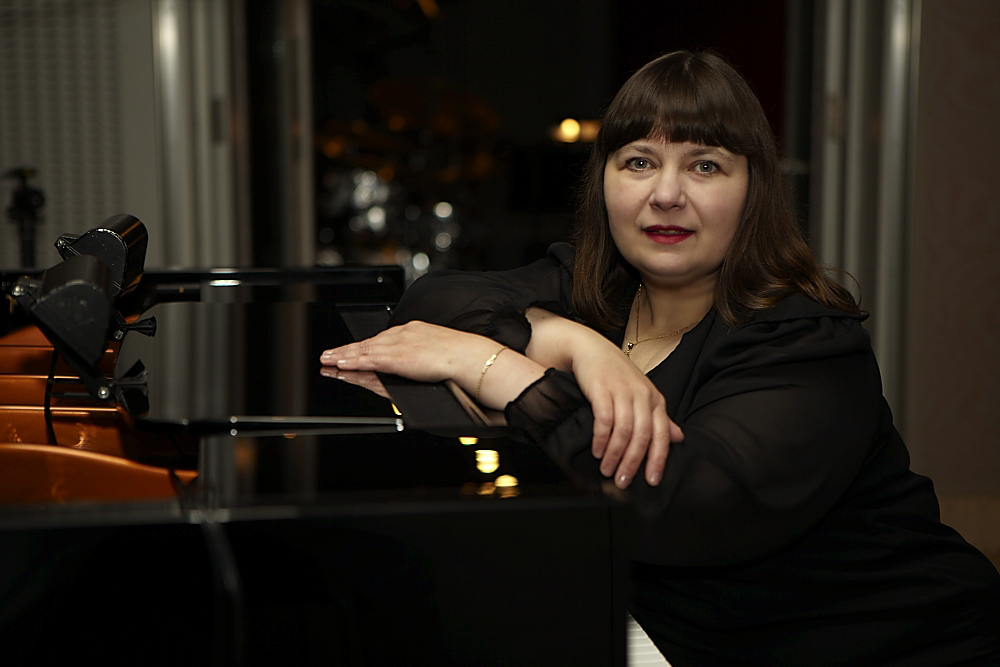
Cold Suns and Warm Moons: The Music of Yelena Eckemoff

“Scenic” is the word that comes foremost to my mind when basking in the music of Yelena Eckemoff. Not only in the sense of being rural and picturesque, but also in the filmic sense, as if each album were a scene from an evolving motion picture. Snapshots of memory, flickers of time, and points of reflection: these are the nourishments on which Eckemoff’s sonic activities thrive. The Moscow-born, U.S.-based musician, composer, artist, and teacher brings her experiences of (re)location to bear upon each new project, and draws upon a deep spiritual awareness to give weight to the painterly melodies therein. Simultaneously, her music has an uncanny ability to manifest itself through feelings in lieu of images, conjuring instead a state of listening rather than a type of listening. With this in mind, I have set out to evoke four recent albums—of which Eckemoff has composed and produced every moment—and braid these reflections with an interview in which she was gracious enough to participate via e-mail. In the interest of starting our discussion, I begin with a rudimentary question…

Tyran Grillo: What role does music play in your life?

Yelena Eckemoff: Music has been a vital part of my whole existence since the first day of my life, as I was a daughter of a wonderful pianist—my dear mother Olga. My head has always been filled with music, and I started to play by ear and make up little tunes at the age of four, and then years of extensive professional training with some of the best teachers in the world, followed by decades of personal growth and never-ending evolution as a musician. I’ve been living and breathing music…this is pretty much all I care about, not counting of course my family.


The Call
(2006)

The genesis of this album came with the unexpected passing of Eckemoff’s dog, Daisy, in October of 2004. The titular call was first a heartfelt reaction to this loss, sprung naturally from the realization that Daisy would never again answer it. Yet through the improvisations that emerged in the coming year, lovingly transcribed and rendered in the company of a few committed musicians, Eckemoff found another calling, knowing that the absence left behind by a loved one can always be filled with creation. This recording followed an exclusive period of solo work, and the addition of Gayle Masarie on cello, Deborah Egekvist on flutes, and Michael Bolejack on drums represents an embrace of togetherness that the mourning process had perhaps previously obscured.

TG: Now that five years separates you from The Call, can you reflect further on its title and on the period of loss that nurtured its coming into being?

YE: The Call was my first CD that I recorded with live musicians. Before that I was doing solo piano recitals and working with the synthesizer and sequencer, while raising my children and trying to make it with my husband in our new country. But in the end of 2005 I felt “the call” to go back to interacting with live musicians and found several local ones with whom I started my own band. I was so excited and encouraged with the new perspectives that my creativity peaked, and I composed a lot of new music for my new ensemble.

After the piano’s light opening touch, the grand thematic statement that soon takes shape is its own call, one that speaks to each listener in different ways. To these ears, it is a prompt to act upon one’s desires for fulfillment, an urging toward spiritual purpose, a shift beyond the blindness of temptation. The piece ends in a sprinkle of raindrops, resting at the edge of darkness.

TG: The combination of instruments is delightful, the flute adding an obvious touch of breath to the sonic palette. One hears this especially in “Daisy,” which so beautifully conveys your beloved pet. What made you decide to introduce a flute into the mix? 

YE: In the past I’ve written a lot of music for various instruments, and I have always been motivated by the prospect of my music being performed, so I gladly wrote for any instrumentalists who I had available at the moment. When I work with a certain musician, I try to adjust my music to his or her performing style to achieve the best musical outcome.

Whimsy abounds in The Call. In everything from the titles to the arrangements, there is revelry to be experienced in both the playing and listening; that in the simple gift of music-making, one can gift not only melody, but also memories. Much of this comes through in shorter pieces like “Strolling Towards Sunset,” “Sushi Dinner” (a tongue-in-cheek ode to the atmospherics of ingestion), and “Questions.” These tracks are a light jazz blend, contrasting vividly with the somber “Ripples on Water,” and are a testament to Yelena’s eclectic fluency.

Others like “Sunny Day in the Woods” (in which the flute glistens against the circular motions of the piano),  “Suspicions” (which includes a lovely cello solo against a Satie-like lattice), and “Garden in May” (one of the album’s finest) leave us in little doubt as to their associations. In this sense they are quite photographic.

TG: Do you approach your music and images in a particularly scenic way, or do you perhaps approach the images through the music?

YE: Any strong impressions and especially feelings result in music being born inside me. I never try to come up with melodies—they just flow out of me constantly…often even at night. In the morning I write them down and sort them later…or forget about them.

Like the symphony of windy hands that rake the “Ocean of Pine,” the album moves in circuitous progressions. From the cinematic (“Temptation”) to the wistful (“Windy Day in the Countryside”), we are treated to a feast of time and possibilities. And as the title of “My Cozy Bed” implies, Eckemoff is interested in the simpler pleasures in life, uncluttered by unnecessary intellectual trappings and bound instead to a direct moral compass. This track also gets up to some jazzier business, anchored by heavy double stops in the cello. Masarie stands out again in “Full Moon,” a revolving door of pizzicato and sustained notes. Eckemoff and company save the best for last with “Imaginary Lake,” capping off an 18-track album that is sure to please many with its variety.

TG: In the liner notes for The Call, drummer Michael Bolejack lists his favorite musicians: Peter Erskine, Jack DeJohnette, Paul Motian, Bobo Stenson, John Taylor, and Keith Jarrett. These peak my interest, of course, for having recorded extensively for ECM. How, if at all, has the music of ECM influenced your own work? Does it comprise any portion of your listening life?

YE: I am ashamed to admit that I did not even know about the very existence of ECM until Michael Bolejack introduced me to the label and its production in the course of 2006. I was happy to realize that there are other musicians out there whose approach to modern music is somewhat similar to mine, and it gave me this feeling of unity with other musicians, which I was happy about.


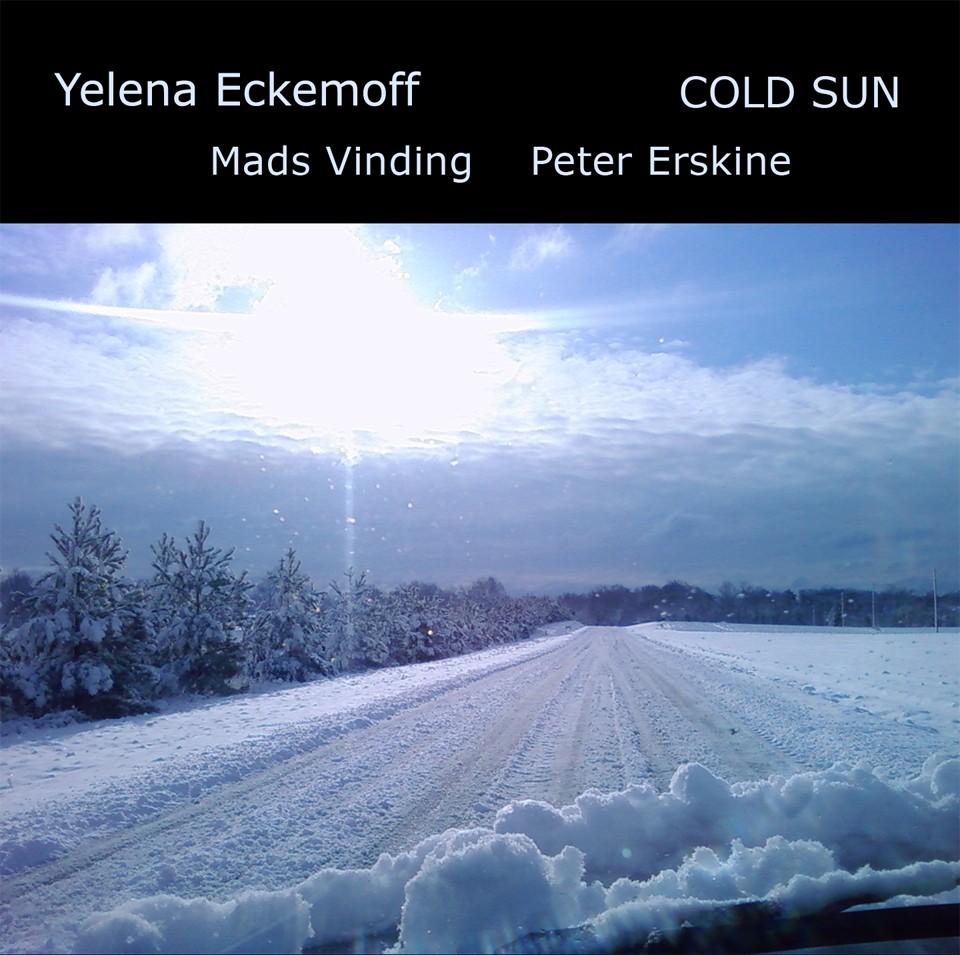
Cold Sun
(2009)

This album represents the most fruitful shift in Eckemoff’s career by joining her with bassist Mads Vinding and drummer Peter Erskine. Her relationship with the latter is particularly striking and achieves a clearly discernible balance of distance and intimacy throughout. Erskine’s profoundly subtle craft—sharing peerage with Jon Christensen especially in the use of cymbals—ever so delicately paints in those gaps that the piano leaves untouched in its abyss. His gestures swirl like snowdrifts, each the afterthought of something internally more dramatic. These wintry nuances crystallize in sonic postcards such as “Scents of Christmas,” “Romance by the Fireplace,” and “Freezing Point.”

TG: Cold Sun comes across to me as a distinctly airy album. Its feet touch the ground only occasionally, as in the gnarled groove of “Stubborn,” making for a, dare I say, mysterious experience. Did this album develop any differently than the rest?

YE: There was The Call as a starter. Then my group gained a double-bassist and an oboe/saxophone player, and we rehearsed actively as a band, played gigs, and performed many new compositions that actually did not get incorporated into any of the CDs yet. Then there was Advocate of Love (2008)—a mostly trio album, reflecting a somewhat jazzier feel. The Cold Sun material was formed out of my 4-year experience working actively with my ensemble. The material of this winter album required a more improvisatory approach. And I reached out to the musicians who I thought would work best for that project.

Other tracks are more abstract and prompt us into deeper listening. “Silence,” for example, is not a literal description but more an evocation of state and mind. Like fingers running through hair, Eckemoff’s notes comb the ether. “White Magic” is a subdued evocation, which blends effectively into the touching dissonances of “Snow Bliss.” Yet it is in the throes of “Winter” that we at last encounter the synthesis of the album’s many threads. Brimming with glorious leaps and bounds, as well as more subterranean reflections, it brings us delicate closure to a moody and free-flowing album that is sure to please fans of Tord Gustavsen and Marcin Wasilewski.

TG: The piano trio is clearly a comfortable format for you. What is it about the combination that appeals to you and how does it enliven your expressivity?

YE: I suspect the piano trio will always be my favorite format, because I am a skilled pianist and the piano has always been a dominating expressive source for me. However, I do like the variety of the sounds, and I get many ideas that call for different sets of instruments (that I hope to see through in the future). But the intimacy and perfect balance of timbres in the trio is the most comfortable setup that surely has my first love.


Grass Catching the Wind
(2010)

As the unnamed sequel to Cold Sun, Grass Catching the Wind picks up where the former left off with “Anticipation of Spring.” Its shaded bass solo, courtesy of Vinding, sets the tone for the album’s crepuscular seepage. Nocturnal gestures unfurl in “Night of the Fireflies & Crickets” and the masterful “Neverland,” while “Summer Heat,” “Harvest,” and “Sonnet for the Flowers” flap like laundry hanging in an afternoon breeze, intermittently revealing the vast countryside behind.

TG: You seem to be overflowing with musical ideas. What is your creative wellspring? What inspires you?

YE: Musical ideas and melodies constantly bubble up and accumulate inside me. Making music for me is the way to live and to cope with my life’s ups and downs. If I can’t express myself in music, I virtually suffocate. I hear music everywhere, especially in nature, but my feelings and emotions are still the greatest source of my inspiration and stimulant for my creativity.

We also find ourselves in the more upbeat stylings of drummer Morten Lund in “Somebody Likes Jogging,” “Rain Streams,” and “Emerald World,” the latter being the grooviest leg on this tour and the album’s crowning highlight. The distinctive bass line in the title track also pulls us forward in fluid motion, fanned along by card-deck riffles from snare. And where “Overcast” engages shadowy figures in a puppet show of opaque emotions, “Beautiful Destruction” actually bonds them with light. This is music unveiled to reveal a softly beating heart, where memory is the only present.

TG: I hear so many memories in your pieces, as if each were an autobiography in miniature, the reflection of a time and place long past but ever alive in your heart. How much of you resides in this music?

YE: My music is me, no question about it. If you listen to my music, you get to know me better than you would through talking or anything else. My soul is completely bare in what you hear! I never try to show off or please the listener. My only aspiration is to express my thoughts and feelings as accurately as only I can. I can’t resist this overwhelming desire—to pour out my soul in sounds and reach out to the people who would like to feel the same vibes.


Flying Steps
(2010)

Eckemoff’s latest trio album marks the return of Erskine into the fold, and with it the inaugural “Promise,” a languid journey through innocence into resignation and back again, with an isolated rest stop or two along the way. Darek Oleszkiewicz takes the helm at bass this time around, completing a trio of superb insight. His dexterity brings a gentle urge to the foreground and gilds Erskine’s already filigreed approach.

Here is an album that works particularly vividly in images. “A Smile” seems to paint itself one tooth at a time, opening the pathways of its own emotional distance, while “Good Morning” scintillates like sunlight on a kitchen table, glinting off coffee cups, illuminating a newspaper, shimmering outside the window—and all of it threaded by Erskine’s delicate rolls.

TG: You clearly share a deep musical connection with Erskine. You even dedicate the inviting title track of Flying Steps to him. How did that partnership come about and how do you feel it has changed the way you play, listen, and perform?

YE: As I mentioned before, I was searching for like-minded musicians who I thought would feel at ease with my music. Peter was on my mind for a long time, because as far as I could tell listening to his playing, I felt that we would likely have many things in common. This proved to be completely true when we met and played together—a complete mutual understanding! Of course, Peter is a genius, and surely all musicians would feel great having him on board. And I was flattered at how respectfully Peter treated my music, and it made me so happy that he really liked it and that he enjoyed working with me. Working with him was a fabulous and joyful experience. Everything comes easy and naturally to Peter, and making a record with him was a truly exciting journey.

“For Harry” is a dance of piano and cymbals, all threaded by Oleszkiewicz’s invisible stitching. A memorable color shift occurs when Erskine lays down rims over Eckemoff’s light-as-a-feather touch. “Isolated” seems to represent the album’s theme. There is something expository in its activity, finding profundity in the everyday.

TG: Following up on the question of memory, there is an unmistakable note of nostalgia in all of your music that is only intensified with each new listen. In what ways does the past influence the immediacy of your musical creation?

YE: Nostalgia…everybody feels it toward childhood, their younger years, lost friends and family members, beloved pets and places… In my case it got even more complicated by my immigration and living so far from my homeland… A lot of pain is hidden inside the souls of many people. And it only grows stronger when you age and experience new losses… But not only losses. I am also feeling nostalgic toward many happy memories and events. It is said that passionate love of all kinds is painful: how true!

“Isolated” also clues us in on the enigma of the album’s cover. Though isolated insofar as it is elevated above all social and civil signs, as such it is also connected to the vastness of the great beyond. In this liminal space one finds the aptitude of solitude.

“Where is Maxim?” forms a trilogy of sorts with “Tears Will Come” and “Insomnia,” for each evokes weighted emotions with equal lightness. For me, more overtly personal tracks like these reach deepest. Take, for example, “Mama,” which is a brilliant and sublime confluence of time, space, and technique that seems to constitute the very heart of what Eckemoff is capable of at her best. Oleszkiewicz shines again in “Steps,” especially in his captivating solo. We end with “Tomorrow,” a soft exercise in humility and the unpredictability of circumstance.

TG: Where do you see your music, and your life, going next?

YE: While new music keeps piling up, I have quite a few projects on hold, including a vast work with Old King James Biblical Psalms. At the moment I am getting ready to release a new CD, Forget-Me-Not, which I have just recorded with Marilyn Mazur and Mats Eilertsen this August in Copenhagen. And now I am truly looking forward to a couple of very exciting projects (in planning) for the next year: I cannot disclose the details yet, but it is shaping out to be the next important step in my musical journey.

To learn more about Yelena Eckemoff and purchase CDs, please visit her website.