Any fans of Lena Willemark and Ale Möller will want to check out my latest twofer at RootsWorld, where I review albums by Danish New Roots outfit Himmerland and the Ale Möller Band. A fresh wakeup call for your drowsy summer.
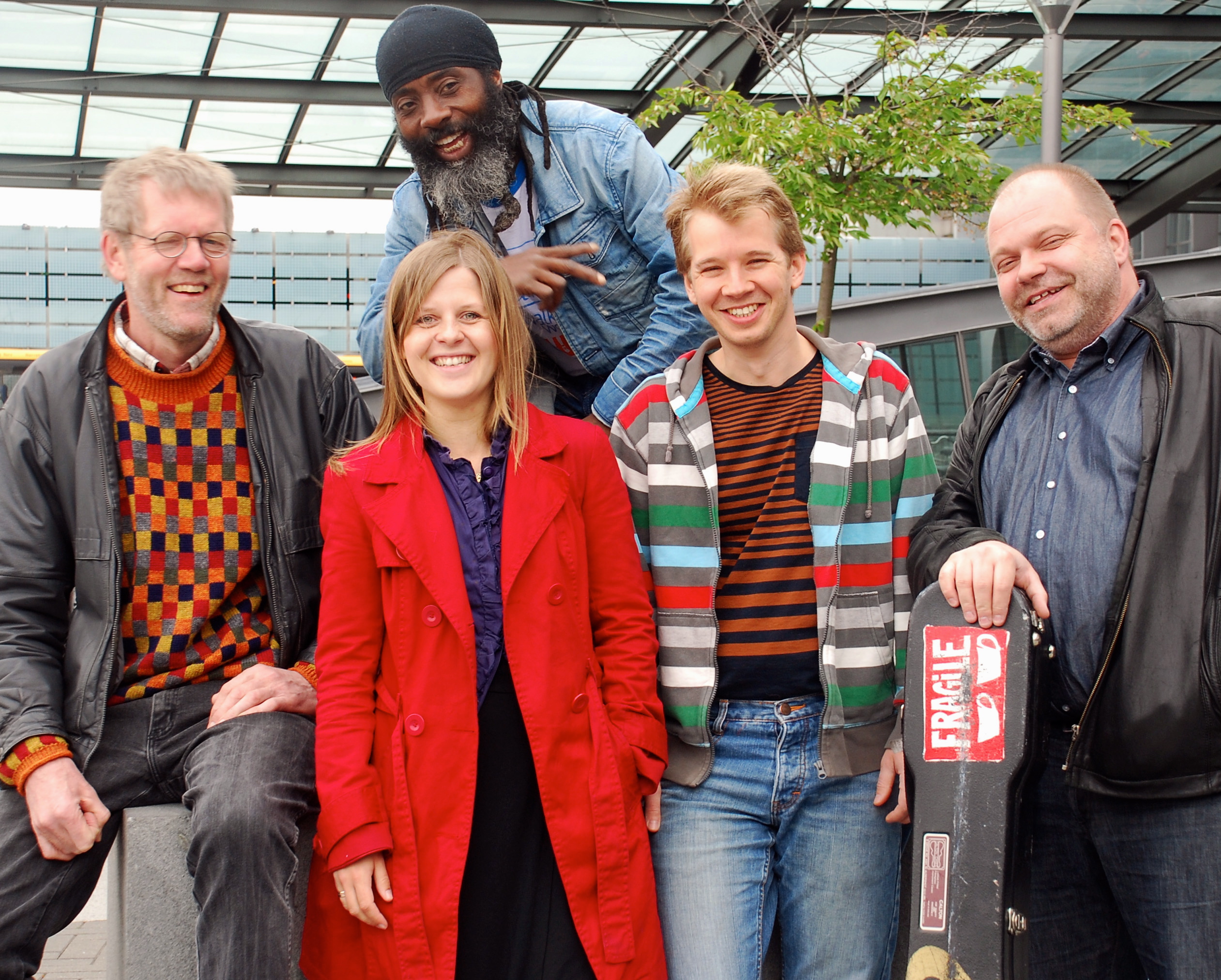
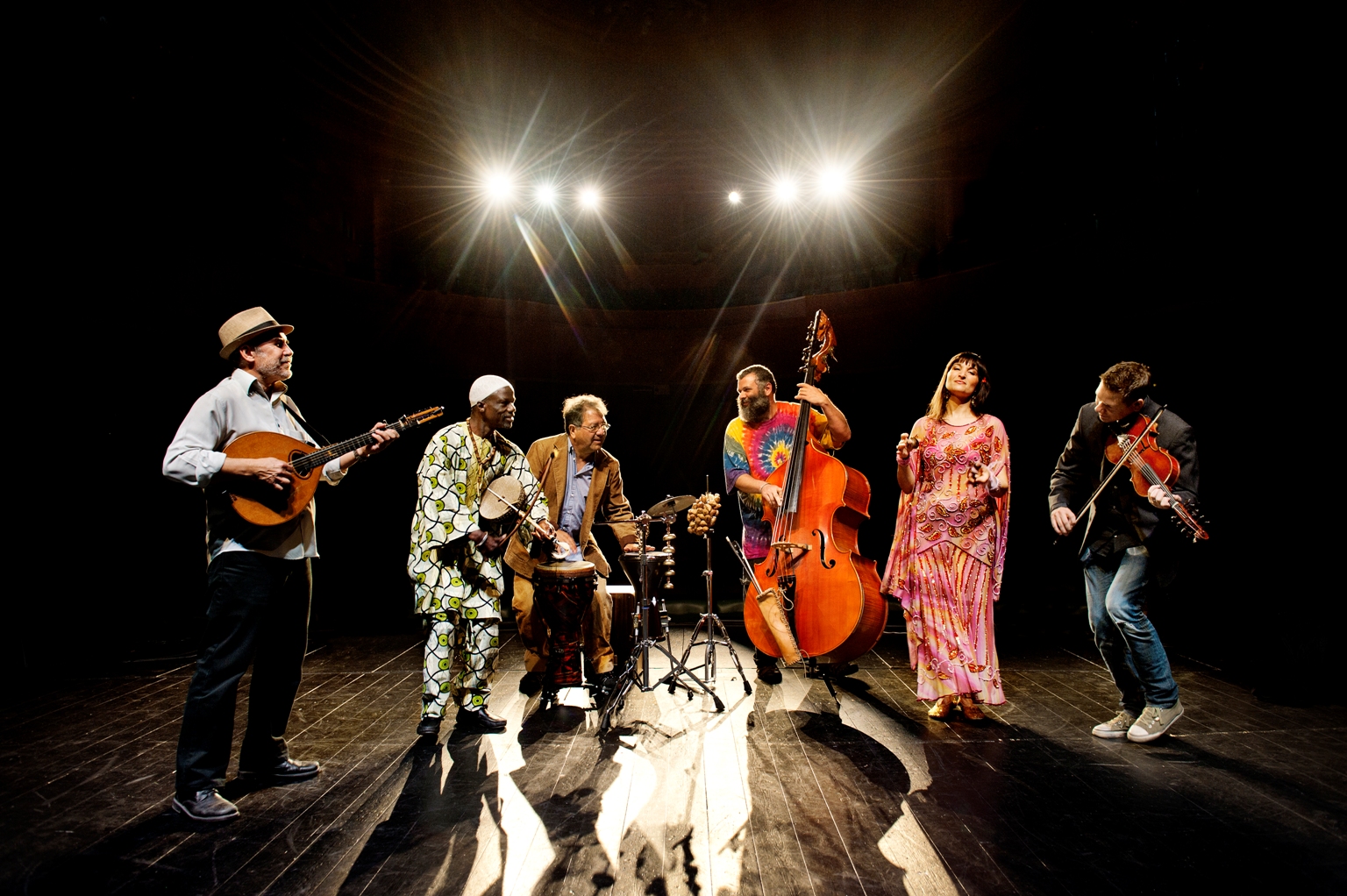


Any fans of Lena Willemark and Ale Möller will want to check out my latest twofer at RootsWorld, where I review albums by Danish New Roots outfit Himmerland and the Ale Möller Band. A fresh wakeup call for your drowsy summer.
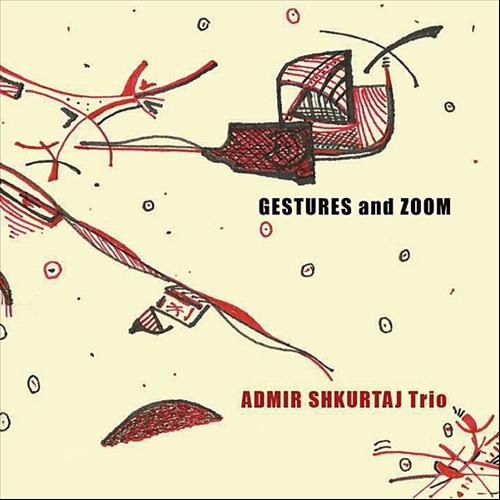
Admir Shkurtaj Trio
Gestures and Zoom
Admir Shkurtaj accordion, piano
Giorgio Distante trumpet
Redi Hasa cello
Released 2012 by SLAM Productions
One of the benefits of my sideline as a music writer is that I receive review copies of albums by artists I might not otherwise have discovered. Through my ongoing contributions to RootsWorld online magazine especially, I have encountered a wealth of fascinating music from all walks of life. One of the most intriguing of these so far is Admir Shkurtaj, an Albanian multi-instrumentalist and composer who first came to my attention when I was asked to review his solo piano effort, Mesimér, for the selfsame magazine. Where that album might be seen as a distillation of his diverse interests, ranging from folk to the avant-garde, this from the same year attests further to his ability to interact, listen, and guide. The dynamic of Gestures and Zoom—for which Shkurtaj is joined by trumpeter Giorgio Distante and cellist Redi Hasa—is markedly different, not only for the flexibility of its means but also for its distinct methodology.
Shkurtaj elaborates on the title concept: “Gestures and Zoom is constructed from a plurality of musical gestures proposed by each of the instruments, in chaotic order. A musical ‘gesture’ means a cell or musical object. In theatrical terms, we would say that a musical gesture is a character within the scene. Each one has/is its own character, fleeting as it is. After several exposures, the ‘zoom’ factor fixes the target of a single gesture to view it more clearly, or, in more musical terms, to develop it in order to enhance its characteristics.” From this dance of physicality and visualization, Shkurtaj and his trio spin a wild photometry indeed.
Despite the delicate madness that follows it, the album’s introductory piece is duly exploratory. Shkurtaj’s tinkering pianism seems to deconstruct as much as it builds. The insightful processes therein foil the slalom course of “Disegni” and “Olmi,” which respectively showcase the tremendously expressive abilities of Distante and Hasa. “Improntrio” is another spiraling ride—the DNA helix as roller coaster—and reaches some dizzying heights of pitch, a ghostly conversation in fast-forward. Moments of deep familiarity do, however, come to the fore, most notably via Albania’s popular traditions as they materialize in “Danza” and “Victoria.” These nodes of locality stand out for their precision. Shkurtaj and Hasa, both of Albanian extraction, carry out the most delicate surgery, while Distante, who hails from Italy’s Apulia region, introduces their stark themes and from them spits out a full speech.
Gestures and Zoom balances improvisation and composition with great skill. Shkurtaj makes it obvious where one begins and the other ends, and so on until the resulting blend finds solidity in an emerging narrative. “The themes of the compositions,” he clarifies, “are structurally similar to jazz standards but have a chamber music character (I am writing for chamber ensembles in a contemporary classical environment). Improvisation is free and based on complex rhythmical frames, such as derivatives of the rhythmical cell 3 + 2/8 (Olmi – Victoria), and sometimes on particular musical gestures decided right from the start (Gestures and Zoom – Disegni).” Whether or not the listener has such vocabulary to make sense of the designs, the blend of their spinning remains clear.
What is challenging yet also enjoyable about this record is the detail of its fire. Nowhere is this clearer than in the title track. In bubbling voices and instrumental scrimshaw, an explicit liberation begins to take shape, making such programmatic gems as “Shi” all the more effective for their simplicity. Shkurtaj: “‘Shi’ in Albanian means rain. I have always listened in silence to the sound of rain. When it falls on metal surfaces it becomes even more interesting. I tried to imitate this through rhythmic counterpoint on the prepared piano.”
Shkurtaj’s is biological music that treats its motives as Petri dishes in which to culture a balance of attunement and free wandering. Between the intriguing little “Duetto” and the culminating “Conduction” the listener may feel a switch flipped at the mitochondrial level. Of this microscopic aesthetic, Shkurtaj says, “For the most part, with the possible exception here of ‘Improntrio,’ the music I write is mono-gestural. The songs are built on a single element or musical idea. This lends itself to feelings of narrow space.”
That said, there’s plenty of room to run around.

powerdove
Do You Burn?
Annie Lewandowski vocals, prepared piano, keyboard, guitar
John Dieterich guitars, bass
Thomas Bonvalet harmonica reeds, six-string banjo, amps, microphones, feet tapping, hand clapping, tuning forks, concertina, guitar, dry poppy pods, whistlings
Released March 2013
Circle Into Square
As the high-pitched distortions of a concertina pierce the ether in “Fellow,” the opening track of powerdove’s latest, Do You Burn?, it’s clear they belong to a music comprised of supernal layers. Like emotional specimens under a microscope, each instrumental slice has its own cover slide. At the risk of belaboring the analogy, we might say that Annie Lewandowski’s voice is the clarifying stain. The Minnesota-born pianist, songwriter, and improviser began powerdove as a solo highway before assembling her current car pool with John Dieterich of Deerhoof and Thomas Bonvalet of L’ocelle Mare. Their barbed tangle of feedback and acoustic guitar almost obscures the patter of raindrops that follows in Lewandowski’s wake, each a step toward fractured closure. The classical enunciation of the words adds glint to the rough lyrical edges in a love song that is both invitation and self-cocooning:
Fellow
you’re inside
mellow
to my aching body
Thus initiated, thus torn in two, the listener leaves one self behind while the other drips into the soil, where the only accompaniment can be found in the stirrings of worms, chiggers, and other stewards of long-rotted crops. In this fecund quilt lies the one perfect square, its fragrance more powerful than a tornado.
There is a feeling here of three itinerant creators, wandering from one abandoned farmstead to another and playing on whatever battered equipment they can find, thus leaving songs as sigils of their fleeting inhabitation. This doesn’t mean that the proceedings are in any way sparse, for as in “Under Awnings,” despite the minimal appliqué of handclaps and muted piano, there is a mortal weightiness that one can only find in the dreaming body.
One last chance for a kiss
run away to another
under awnings of sheet and steel
I lay me down
So, too, the portal of “California.” It is fiercely emblematic of the album’s deceptive simplicity, for what appears to be nothing more than a drinking song is in fact a veiled paean to knowledge-seeking and the ways in which it is inevitably cracked by, and elided from, the creative process in favor of something new. Such abandonment is also readily apparent in “Flapping Wings,” a scenic morsel to feed the gaping mouth of a landlubber’s heart (indeed, there is something of an oceanic brogue about it).
All the leaves blow off
breeze to take the spring seeds on
The title track pulls harder at the album’s frays of memory as the sun watches keenly, nakedly, holding no judgment but our own.
The quavering bellows provide mechanical respiration in the background, the trembling of a newborn locomotive opening its eyes to the tracks. Unlike the latter, however, powerdove does not submit to the promise of coming together that the horizon throws at us. Rather, it maintains its parallels through a voice’s secrecy that we find in “Alder Tree I,” as well as in “Out On the Water,” which enacts another playful approach to perspective and relays between solo accompaniment and homespun groove and treats size as an ever-changing idea to which ears subscribe at random.
listen hear the refrain
listen now the refrain
“Love Walked In” enacts that part of every journey during which the destination, though still a ways away, nevertheless glistens in the mind as if it were a jewel in the hand. Sprightly guitar layers and an optimistic bass dance their way down endless stretch of road. Rhythms recur with the crunch of granola at molar touch.
We run and laugh and
run under darkened skies
“Red Can of Paint” evokes the microscopic attention of William Carlos Williams. Overturned, it acts as a sounding drum for all activity that shares slivers of its perimeter in this pizzicato postcard.
Light from the hall
wash you over
“All Along the Eaves” is by far the album’s truest to form—not only for the subtlety of its traction but also for its admixture of voice, melody, and text. Through songs like this, powerdove asks us, Why separate the chaff when it is still singing? And in this sense they provide an ethical service, documenting swan songs before they are discarded via the guts of machinery and industry.
On my knees I’m weak
three breaths from my coffin
“Out of the Rain” is a beautiful afternoon-laden choir with a thump following close behind: a peg-legged, Björkian nightscape.
Whisper me my name
your hand resting on my face
Lewandowski has beautiful way of repeating words: drinking, sinking, sung, turning them into compact mantras of poetic evocation.
In “Wandering Jew,” which reads like a travelogue of the voice, that repetition finds in the sensitive instrumental accompaniments a wavering sense of corporeal reality, which seeks shade under the beautiful plucked piano of “Alder Tree II,” a windblown leaf that hangs even though its branch is gone.
I hang my head
Although the album barely surpasses half an hour in duration, it cradles countless more of unraveling in its bosom. There is a sheen to its contours that speaks of the dawn as experience’s signature: not an admission of love but a love of admission.
(Photo by Ben Piekut)
An e-mail interview with Annie Lewandowski
> 1. Can you briefly walk me through the evolution of the album from concept(s) to realization?
In June 2010 I moved to Southampton, England to join my husband, Ben, who had work teaching there. I’d left the Bay Area and also left powerdove, which at that time had consisted of me singing and playing guitar, Jason Hoopes on upright bass, and Alex Vittum on percussion. We’d toured some on the west coast and recorded “Be Mine” (released on Circle Into Square Records) earlier that year. In England I had a lot of time (perhaps too much time…) to myself. No work, no friends. I was inspired by the rain, the grey, the solitude, and very much the landscape. 11 of the 13 songs on “Do You Burn?” were written there, walking along the River Itchen, as sparse arrangements for voice and guitar. Ben and I talked at length about how this next recording might sound. Ben suggested I ask Thomas (Bonvalet) and John (Dieterich) to collaborate. Thomas has a fantastic solo project called L’ocelle Mare that I’d been introduced to in 2006 or 2007 when he toured through Oakland (Thomas is from France). He plays a vast array of instruments—foot percussion, handclaps, reeds, banjo, poppy pods…. He has an incredible sense of rhythm and a fantastic sense of atmosphere. John has been a friend for a long time. He’s an amazing guitarist and imagining his dense guitar sound on this record was thrilling. I invited Thomas to come to a concert I played in Paris in April 2011 to see what he thought about collaborating, and John’s known powerdove’s music since the beginning. Both were on board and we met in Albuquerque to record the album in January 2012.
> 2. How did you come to share the road with John and Thomas? What newness (or antiquity, for that matter) do they bring to the powerdove sound?
Think I answered this in my lengthy response to question one…
> 3. Your lyrics seem personal, at times intensely so. Are they a diary? Are they a travelogue? Are they fantasy?
Yes, the lyrics are intensely personal. Sometimes I’ve worried that they are a bit too personal, but then what else would I write? I don’t think I could do it any differently. I’ve worried about the transparency of the lyrics before, but had a really comical experience a few years back that lead me to believe they maybe weren’t so transparent. I had performed the song “Easter Story” in London and someone came up to me afterwards and asked me if I was a Christian. Another person asked me if the song was about Catholic church child sexual abuse. Needless to say, neither got at what the song means to me.
I’d say that, more than anything, these songs are a diary…things I’ve thought, felt, experienced, that have found their best articulation in music.
> 4. Your music strikes a fine balance between polished and rough ore. Is this balance conscious and, if so, does it arise organically?
I love that you have that experience listening to Do You Burn? This balance is very conscious, and it happens very much organically. At a concert we played in Poitiers in March, someone came up to me after the concert and said they felt like I was the lighthouse in the midst of a storm. I love for the simple clarity of the melody and lyrics to root itself in the bed of sonic wildness that Thomas and John create. It’s exhilarating to sing in the middle of it! I’ve been trying to close my eyes less when I sing but have found it to be impossible. I have to concentrate so completely while I’m singing so as not to get thrown off balance.
> 5. For the most part, the songs feel like they were recorded live in the studio with very little multi-tracking. Was this a practical or an aesthetic decision?
It was an aesthetic decision. We wanted the intimacy and feel of live takes so recorded the album as such. There was a relatively small amount of overdubbing done for this record. We recorded live at John’s house—I was singing in a closet, Thomas was playing his banjo (and other instruments) in the bathroom, and John was in the main room playing guitar.
> 6. Speaking of aesthetics, how would you describe powerdove’s in one word?
jagged
> 7. The song “Wandering Jew” is rivetingly poignant. What does it mean to you?
I wrote “Wandering Jew” after Ben and I had packed up everything in our semi-detached house in Southampton. The movers had taken everything and there was literally nothing left in the house. I’d kept my guitar and wrote it in the days just before moving back to the US. There is a lot about the English landscape in that one, there is a lot about the pain and the exhilaration of having left the religion I was brought up with. It’s my favorite song from “Do You Burn?” I can feel my heart bursting with this complex range of emotions every time I sing it. I owe a lot to John and Thomas for magnifying that feeling in their instrumental parts, which are absolutely exquisite.
> 8. Much of the press surrounding your work talks about geography. How important is landscape to you as a songwriter?
I’ve noticed how much geography figures in my songs, but only in hindsight. So much about water…. I grew up in a small town in Northern Minnesota near the headwaters of the Mississippi. Much of my childhood was spent swimming in the lakes and river in the summer and ice-skating and running around on the frozen lakes in the winter. Maybe after all of those years in and on bodies of water it’s what first comes to mind. Or maybe it’s because I get the lyrics for many of my songs when I’m outside walking and that’s often near bodies of water. We just recorded songs for the next powerdove album and geography still has a presence, but less so than in Do You Burn?
> 9. If asked to cite any musical influences on powerdove, who might they be?
For singing, Nico’s at the front. Instrumentally, all of the wonderful improvisers I’ve had the pleasure of hearing and playing with the last 15 years. And I grew up in and received a lot of my music education in the Lutheran church. When my songs are at their most basic, just me singing and playing guitar, I find they have a lot in common with the hymns of my youth—stark and simple.
> 10. Poetry or prose?
Poetry.
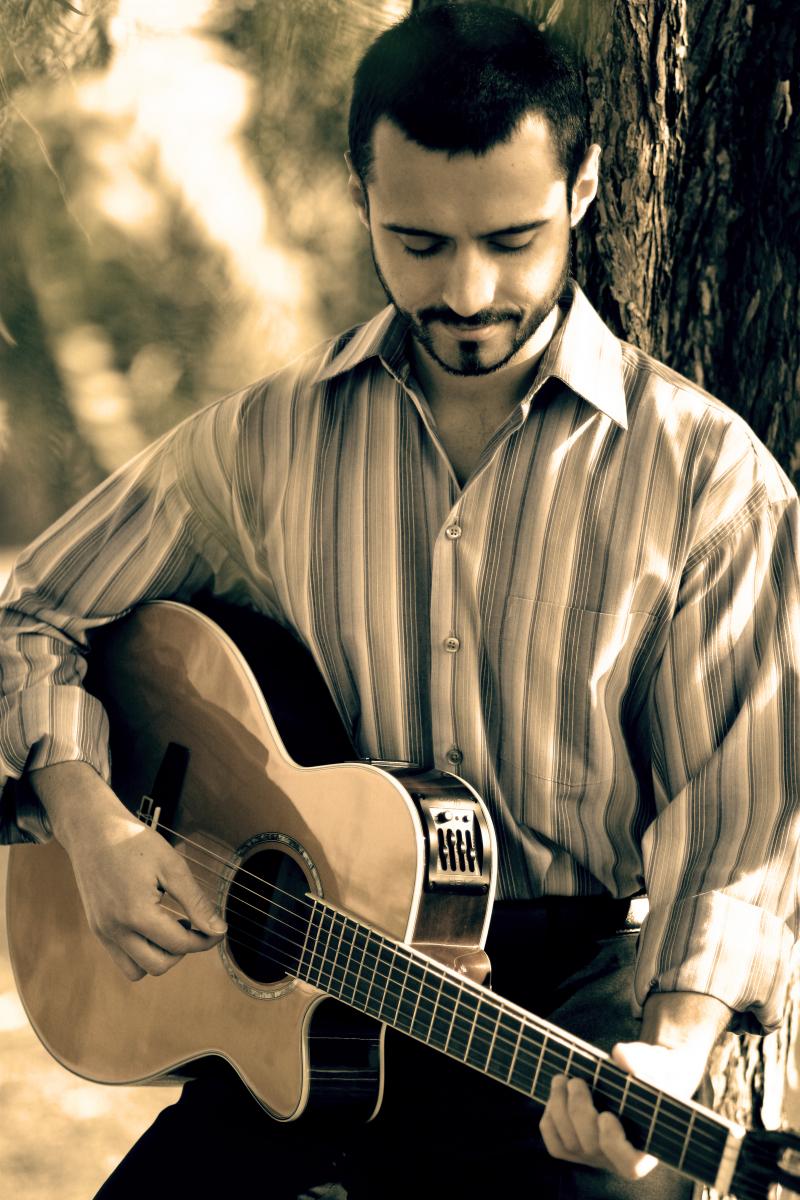
Hristo Vitchev is a gem among jewels. Born in Sofia, Bulgaria and now based in San Francisco, the jazz guitarist-composer has nearly 300 original compositions, various articles on improvisation, and even a book on jazz chord theory to his credit. His 2009 quartet debut, Song for Messambria (2009), was released to wide critical acclaim and firmly established Vitchev as an artist to keep an ear on. For indeed, keeping an ear on things is what his music is all about. Thus attuned to the pulse of his path, his is a spiritually focused craft that welcomes all without judgment. Like many independent artists working today, he has achieved this state of mind through no small measure of sweat and determination, but you might never know it from the effortless fluidity of his playing and the accommodating vitality that animates it.
Of that playing, comparisons to Pat Metheny seem inevitable. Vitchev’s penchant for smooth geometries and quick key changes certainly falls in line with the former’s graceful sound. And so, it only made sense to pose this question during a recent interview. Vitchev’s response:
He is definitely one of my heroes. I was first exposed to Metheny’s music around 1999, and the first record I heard was Imaginary Day. I still remember how mesmerized I was by the tonal colors and textures of that album. At the time, however, I was still into rock music and had yet to discover jazz. In a way, the mystery and curiosity that Pat’s music planted in me was one of the forces behind deciding to study and understand this great American art form. Of course, one cannot escape the conscious and subconscious influences of his/her idols, but if I had to compare my style with his, I would say I’m more of an impressionist, blending harmonic and tonal planes to a more finite degree and playing with the smallest nuances. Pianists are among my biggest influences: Tord Gustavsen, Esbjörn Svensson, Brad Mehldau, not to mention Ravel, Debussy, and all the great composer impressionists.
The impressionist angle is an important one to unpack, for it distinguishes Vitchev from others on the scene, who may forego such interest in what he terms “harmonic tapestries” in favor of a less mitigated approach. Yet the patterns with which he concerns himself are truly integral to the sound he has worked to establish. It is a freedom of expression born of unquantifiable practice, performance and, above all, sharing:
There seems to be a lot of travel implied in your songs. The track titles of Song for Messambria in particular contain references to clouds, sky, etc. Is there any conscious geographical or spatial relationship in your music and how do the recording and improvising processes construct or react to that space?
Over the years, I have traveled to many different places and spent a considerable amount of time living on three different continents. Traveling to me is the ultimate way to learn, internalize, and comprehend all the uniqueness of different cultures, traditions, and human diversity. I can affirm that I’m very inspired by geographical places, and by the actual act of traveling. Song for Messambria was inspired by the enchanting city of Messambria (now Nesebar), located on the Black Sea coast of Bulgaria and also one of the oldest cities in Europe. My quintet record The Perperikon Suite was also inspired by a geographical location—the city of Perperikon, also known as the capital of the great Thracian civilization dating back to 5000 B.C. My latest record, Familiar Fields, is inspired by the many emotions I felt returning to Bulgaria many years later (as an adult) to see the homeland of my childhood. Translating this into my music and my sound seems to be a very natural process. When the band gets together and plays the first note of a chart, it is really the beginning of a sonic journey that is responsive and reactive to what each member notices on the way. It is very hard to explain, but in reality playing and improvising music is the same as taking a road trip with your friends and constantly relating to each other’s feelings about the environment around us.
What attracts you to jazz and how has it enriched your life?
My attraction to jazz came rather late in life, but when it arrived it was more intense than any other interest I have ever known. There is something so freeing about its spontaneity. This music is contagious for all its vivid aliveness and constant evolution. Of course, my take on jazz differs quite substantially from the classic definition of the word. For me it is more of a procedure than a style. It is that special and magical element that everyone can embrace and make it his/her own. This music really helped me define who I am as a person, as a musician, as an element of this world and as a spiritual molecule. It is immense.
Overall, is your music consciously autobiographical in any way?
I guess the constant goal of any musician, especially those in the improvisatory arts, is to grow into attaining the ultimate level of emotional expression, one that loses nothing in translation. Straight from the heart and soul. This is also my goal. I work very hard day after day, and hopefully that comes across to the listener. There is nothing more beautiful to me than sincerity and honesty expressed through art.
What kind of music did you listen to growing up?
When I was growing up I first started listening to 80s rock bands. I then transitioned into heavy metal, then progressive rock, fusion, and finally landed in the jazz world in 2000. Of course, being Bulgarian I always had traditional Bulgarian folk music around me as well.
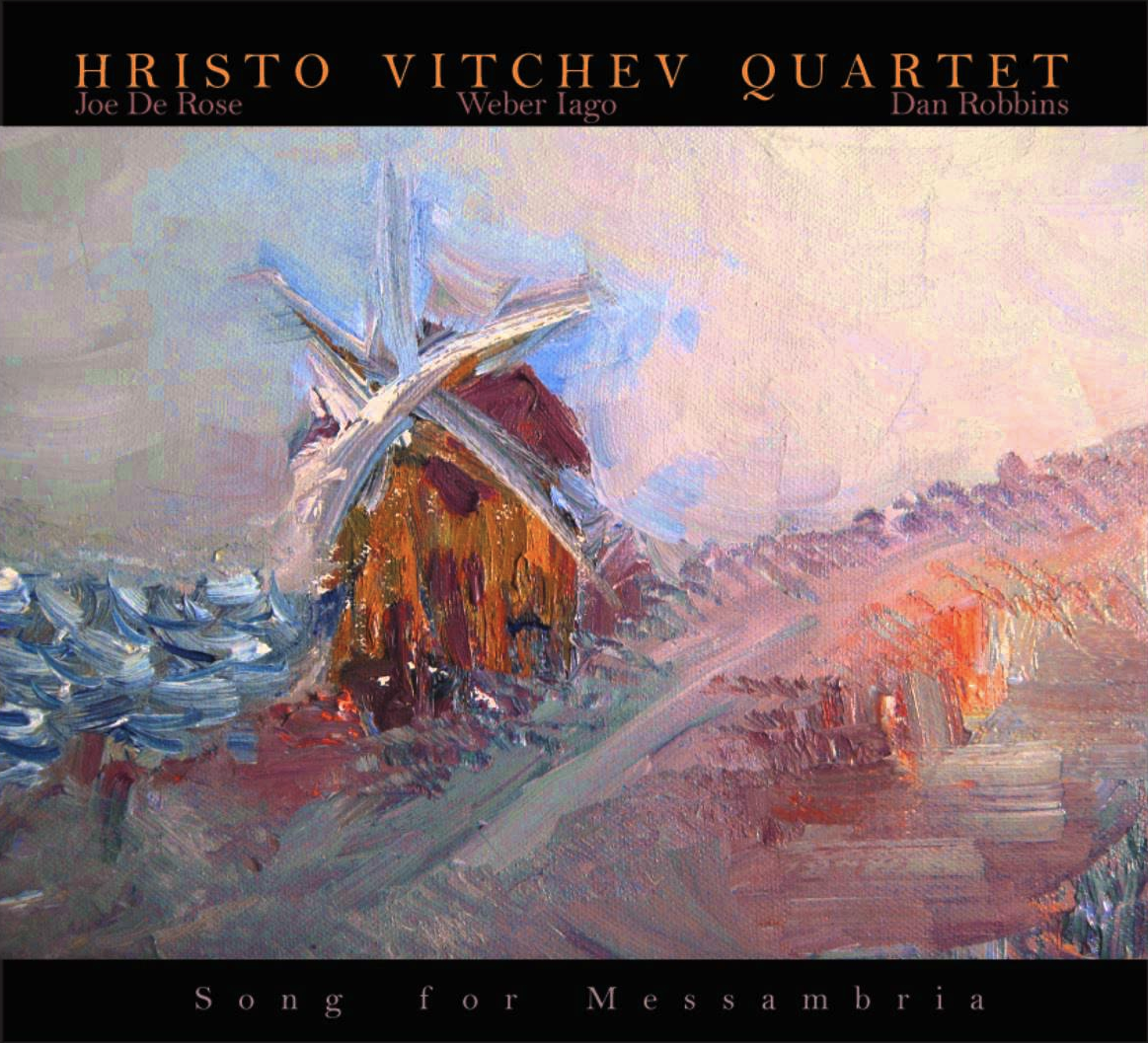
To be sure, Vitchev’s autobiographical impulses are clearly felt on Song for Messambria, which for a debut feels like a step into an already boldly flowing stream. From the first licks of “Waltz for Iago,” the album maps a decidedly itinerant mind, jumping straight into the melodic heart of things. Messambria gets brownie points for featuring acoustic guitar throughout, as well as for its palpable group telepathy. Tracks like “Sad Cloud” and “The Road to Naklabeht” show a quartet in peak form, speaking also to Vitchev’s ability to surround himself with likeminded talent. Bassist Dan Robbins rocks the boat in the whimsically titled “Dali in Bali,” while drummer Joe DeRose keeps us locked into every development with ease. Vitchev clicks most beautifully in the closer, “It Follows.” An emblematic track, it pairs guitar and piano in seeming anticipation of The Secrets of an Angel, his first full duet album with longtime collaborator Weber Iago.
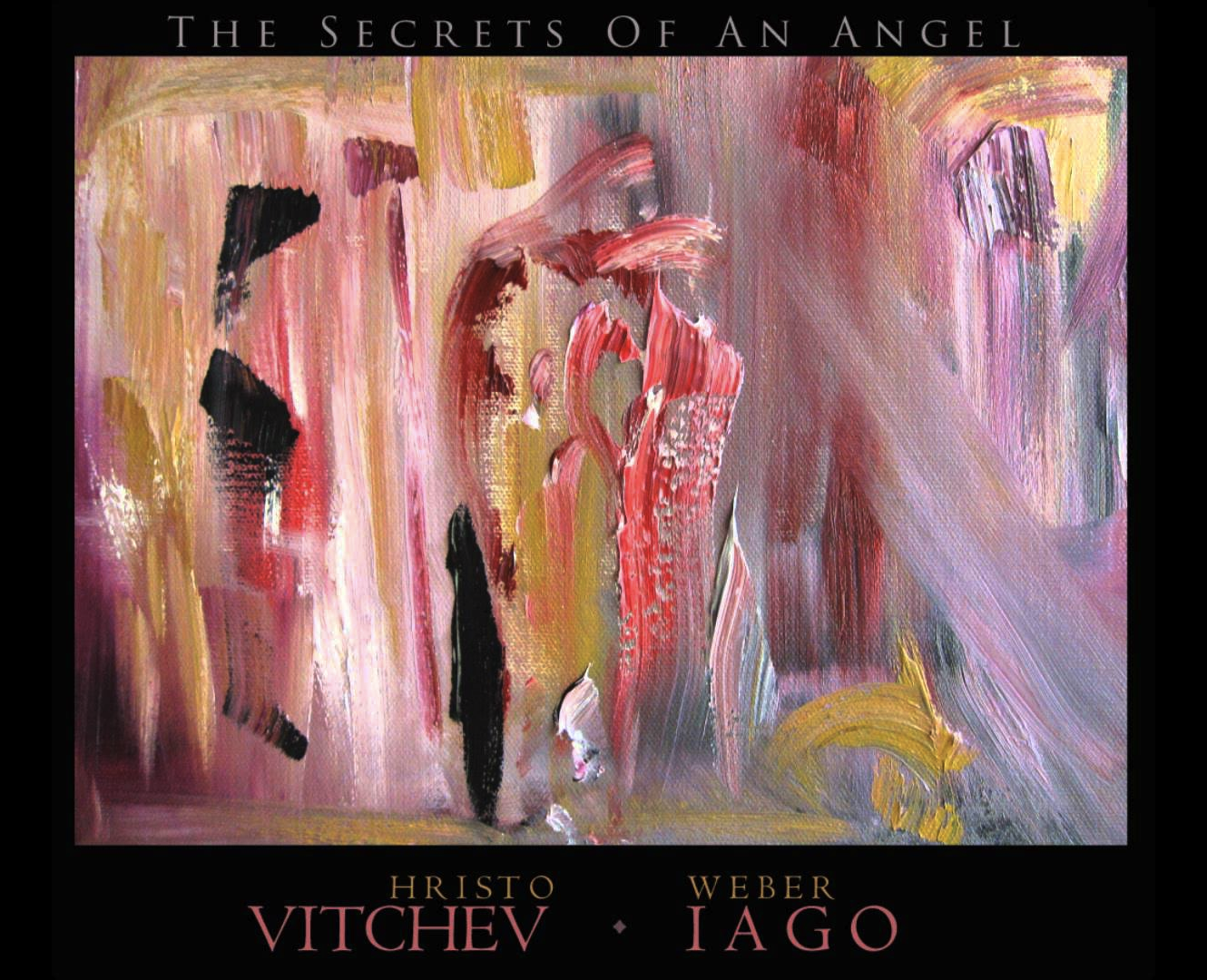
Of that second album, the opening “Waltz by Chance Alone” starts us down a highway to supreme insight. From the intimate and sublime (“Zima’s Poem”) and the delightfully programmatic (“When It Rains” and “Haiuri’s Dance”) to the storytelling vibe of the two-part “The Last Pirate,” there is a continuity of purpose and consistency of color. The final “Leka Nosht (Good Night)” ends like the previous album, closing its eyes on a dream, as if what has just transpired were but a waking memory, a fantasy too beautiful to exist for more than a breath’s duration in this world.
“Waltz by Chance Alone” speaks to unpredictability, to the beauties that can come out of unforeseen encounters. Is your music ultimately your way of reflecting upon the wonder of life’s mysteries?
As an artist, I always thrive to represent my life experiences in sounds without any filters or colorations. As they say: straight from the heart. I’m in love with life and admire and value every single breath, every single day on this planet, and every single emotion felt. I also find the mystery and unpredictability of our human condition to be the most important driving force and reason to move forward and wake up each day. Capturing such emotions in my work is the ultimate goal since there is nothing more beautiful that the sincerity and innocence of living. If the listeners can hear such sensations and qualities in my work and music, then my mission is accomplished.
What made you decide on going acoustic for the first quartet and duet albums? What sparked the shift to electric in the later?
For my first two albums I really wanted to capture the textures and colors of whispering, relating a story in the most delicate and relaxed way possible. In contrast, the material I needed to express on the next three records was a bit more edgy and multidimensional and required the ability to cover a wider dynamic range with my instrument. I’m a true believer that as a composer one has to let the music dictate what it requires to come alive.
How do you approach the duet differently from the larger ensembles?
From the composing to the recording to the playing, the duet records with Weber Iago are so much fun in all aspects of conception. There is something very special about a duo setting. There is this elasticity and immense space for expression for both instruments that is almost impossible to capture in any other format. It also allows for a much deeper and more intense improvisatory experience. I actually love the duet format so much that as we speak I’m finalizing the mixing of my next record: another duo session with Bulgarian master clarinetist Liubomir Krastev. The record’s name is Rhodopa and it covers very old Bulgarian traditional songs which I have arranged in a modern jazz fashion as well as a few original pieces I wrote for the album.

Vitchev’s next major project, The Perperikon Suite, fleshes his sound out to a quintet with the multitalented Christian Tamburr on vibes. The album feels orchestral, almost cinematic in scope, and establishes with “The Stone Passage” a sprawling, living scenery that brings us to “The Palace” by the light of flickering torch. The thematic shapes here are vivid, the music as descriptive as the titles. Tamburr adds reverence to the proceedings, as in tracks like “The Shrine of Dionysus.” All of this comes to a head in the virtuosic ride that is “The Acropolis” before easing us back into the mountains via the backstreets of “The Northern City” and “The Southern City,” through which we float on a bed of string and brush into the sunset.
Conceptually speaking, The Perperikon Suite is your most complex project. But in this day and age of radio airplay, what do you hope the listener will get out of it when s/he encounters it without knowledge of that concept?
That particular record is really a concept album. In a way it is one composition divided into seven different movements that capture the complex sensations and emotions that I felt as I explored the ruins of the ancient city of Perperikon, located in the Eastern Rhodopa mountains. It is definitely hard to grasp and experience the concept, meaning, and intention of the music if one is to hear only one isolated movement from the album, but what can you do. We live in an age and time where instant gratification and short attention spans are the norm.
What is the importance of mythology in your music?
I love history and mythology very much and it is a great source of inspiration to me. Coming from a land where mythology and history interweave, a land of such rich cultural heritage, I almost feel it is my duty to express as much of it through my music as I can.

For his second duo album with Iago, Heartmony, Vitchev builds a mythology of his own. The album is also a stunning showcase for Iago’s lush pianism, offset as it is by both acoustic and electric guitars, often in overdub. This combination is most effective in “Musica Humana,” which aside from being a gorgeous piece of music is also a good descriptor of his craft on the whole. The deeper sound of Heartmony looks outward, as if from a great height, as one can hear in “The Last Leaves Which Fell in the Fall.” Between the poetry of “Crepuscular Rays” and the surprisingly uplifting “The Melancholic Heart,” there is much to soak in and savor.
Heartmony seems to be more extroverted than your first duo album with Iago. Would you agree with this?
Yes, I completely agree with that statement. Out of all my records, Heartmony has the most different style of composing. Usually I use a good combination of ear, theory, and arrangements when I pick the up the pen to write a new composition. For Heartmony I decided to only use my heart in the true essence of the word. I sat down at the piano and just played with no conception for form, harmonic progressions or melody. When I finally reached the point where I felt the story had been completely told, I looked back and there were 11 very interesting compositions already finalized. The rest of the magic was simply playing together with my great friend and musical brother Weber.
You clearly have a deep musical relationship with Weber. How did you meet and what did it feel like to play with him for the first time?
I met Weber in 2007 when we both played in the pop-opera band of a great Italian tenor. From the very first time I heard Weber warm up before a gig and listened to his take on harmony and melody I knew that if I ever could be a pianist I would want to sound just like him. We connected instantly and ever since that date we have worked on every musical endeavor together. His voice on the instrument is truly unique and as a composer he is second to none.
Your albums tend to end on a somber, reflective note, but despite its title, “The Melancholic Heart” ends Heartmony with optimism. Were you trying to show the positivity that can come from sadness?
Yes, a lot of people are surprised when we play that song live. They expect something sad and reflective and in a way it is a very bouncy and uplifting song. I can definitely say that I’m a melancholic person, but when I reflect on the past I often do so in the most uplifting and grateful way. I’m also a true believer that there is something very romantic and beautiful in sadness. It reflects the fragility and innocence of the human condition.
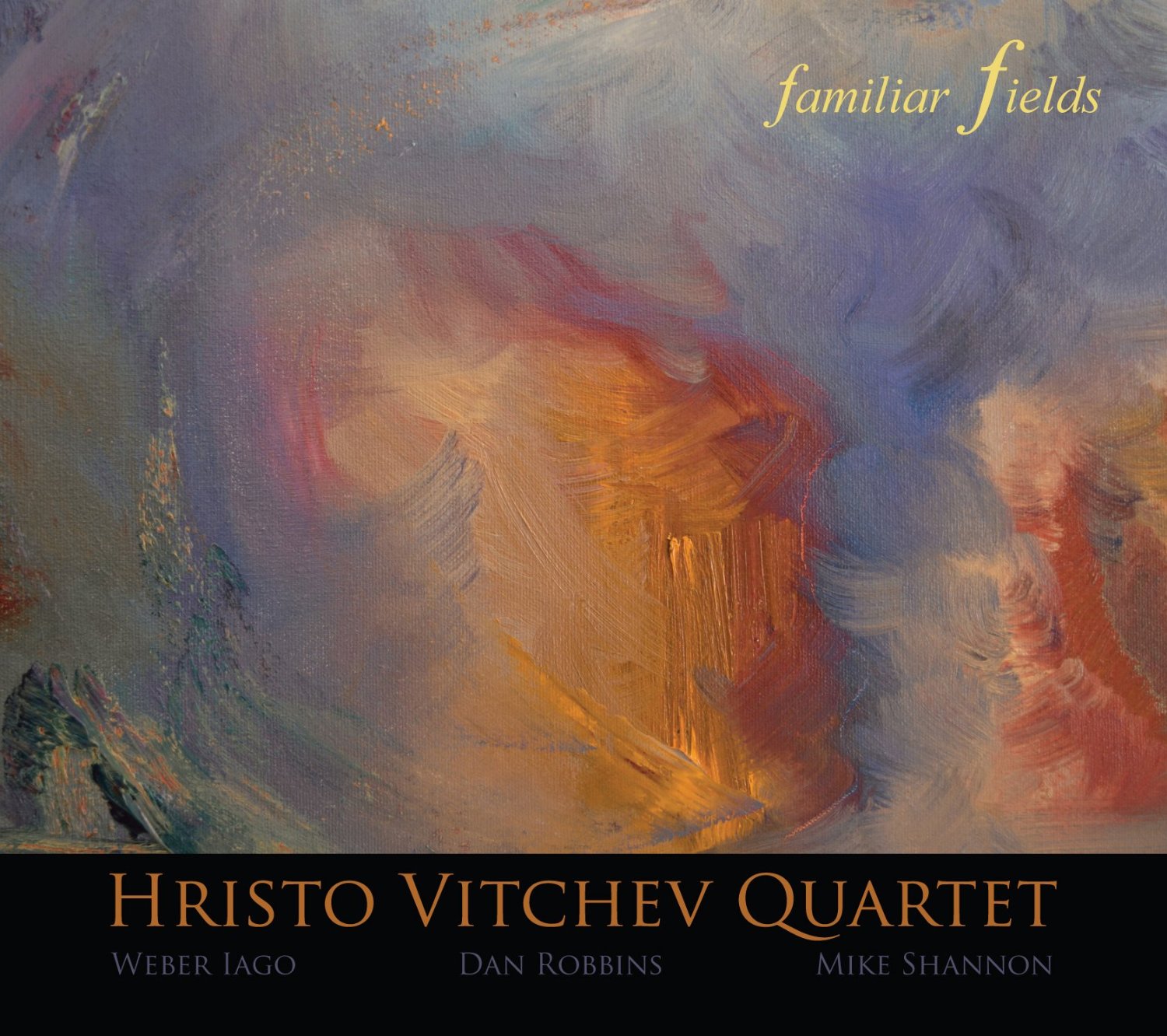
All of these tender sentiments and more seem to have gone into Familiar Fields, Vitchev’s latest effort that lands him again in the trusted company of his quartet, with Mike Shannon replacing DeRose on drums. If any Metheny comparisons are warranted, then let them point to “Ballad for the Fallen.” This groovy, flowing snapshot travels similarly well-worn avenues through a lovely pattern of tension and release. The quartet moves forward with a confidence that is as breezy as it is robust. In spite of his democratic approach, however, Vitchev lures plenty of spotlight his way in “Wounded by a Poisoned Arrow” and “The Prophet’s Daughter,” each a dialogue with the self. Fields feels most familiar when the band lies back, building autumnal susurrations to sparkling summer in “They Are No More” and mortaring galactic staircases in the two-part title tune. Recalls of previous albums also make an appearance. “The Mask of Agamemnon,” for example, harks back to Perperikon, while “The Fifth Season” seems to pick up where Heartmony left off, holding the rhythm section’s wings into the open vistas of “Willing to Live,” whereby this sandy carpet of illusion closes on a philosophical note.
The quartet you have assembled on Familiar Fields is a special one. What does it mean to you to play with these intuitive musicians?
All my musical brothers in the group bring so much to the table. They are simply incredible musicians and improvisers, but most importantly they are my best friends. It is the love and friendship we have for each other and for the music that makes this band so special to me. From the very first note we play, there is only camaraderie and respect in the air. No egos, no barriers. Just the unifying love for exploration and sincere expression. Some people wait an entire lifetime to find a team like that.
What is the concept behind Familiar Fields?
The concept of Familiar Fields actually started a few years ago when I traveled back home to Bulgaria for the first time in 14 years. As the years went by, I kept wondering just how much of my memories was real and how much was imagined. When I finally went back, everything was so different, but in the most fascinating way my memories were more alive than ever. It was the strangest thing. Here I was in a place that I knew close to nothing about, yet everything seemed as if it had been a part of me all these years. It was like I was walking through the most familiar fields yet also discovering new frontiers among them. This was the beginning of the writing process for the record. The music evolved in a very similar way. I had to wait a few years before I knew the music was ready to be put on tape.
Thankfully, you need only wait for the blink of a cosmic eye before the music is your hands…


“I was imagining a world of animals, similar to something you might see in a Richard Scarry children’s book,” says Daniel Bennett of Clockhead Goes to Camp, his sixth album as leader. The Manhattan-based saxophonist and composer is joined by guitarist Mark Cocheo, bassist Peter Brendler, and drummer Tyson Stubelek for a quirky and meticulous ride that just might be the first genuine musical equivalent of a Wes Anderson film. In this follow-up to A Nation of Bears (2004), The Legend of Bear Thompson (2008), and Peace and Stability Among Bears (2011), Bennett and his crew move away from the ursine and into a world of sticks, stones, unbroken bones, and a few words for good measure.
This self-styled folk jazz project features mixed meters, a mélange of styles (from surf to American minimalism), and evocative arrangements. Representing over a decade of fine-tuning, the album is meant to recreate the feeling of a live show, and with titles like “Dr. Duck’s Beautiful New Kitchen” and “Last Summer at Camp Creepy,” much is left to the listener’s imagination to flesh the scenes, making for a thoroughly enjoyable listen.
Bennett tends to stick to the higher end of his horn, a decision born as much from his staunch pragmatism as from his brimming optimism: “I feel like the higher register of the alto saxophone sits really well on top of the guitar and bass. The song melodies pop out more to the listener when played in a higher register. Maybe this was also an unconscious departure from the traditional ‘husky’ low saxophone sound that permeates modern jazz.” This preference for brighter, lively melody-making is immediately manifest in “The Old Muskrat Welcomes Us,” which opens the set with smooth, uplifting energy. The turquoise tone of Bennett’s horn and the sparkling accompaniment—replete with Hong Kong handclaps—are all tied in a beautifully syncopated package. As the handclaps carry over into “An Elephant Buys a New Car,” one already notes a tendency in the arranging. Like a party spun by Steve Reich, it mixes a cocktail of structure and paratextual flow.
To be sure, Reich is but one in a long list of influences, which also includes the Smiths, the Cure, Joy Electric, Philip Glass, Ornette Coleman, and illustrators Timothy Banks, Eric Carle (the group performs every year for the Eric Carle Museum of Picture Book Art award show in New York City), and sister Erin Bennett Banks. Musically speaking, Coleman (if through the prism of John Zorn’s Electric Masada) is paramount at various key moments. Of these, “Nine Piglets” is a standout. It features Bennett’s legato flute stylings in a highly engaging wave. If Clockhead were a pop album, this would be its first single. Flute features prominently in a number of tracks, including the nostalgia-laden “Paint the Fence” and “Whatever It Might Be.” The latter surprises us again with a poetry reading by Rimas Uzgiris over a net of flanged support. The recitation is strangely auto-tuned, further indication of the group’s playful spirit. Bennett: “I told MP Kuo, our producer at Lofish Studios, that I needed a robot in this story. Rimas was the only spoken word vocalist on the album, so he became our test subject. We auto-tuned him and he became Robot Rimas!”
The title track deepens the sense of songcraft. Mixing straight-up jazz riffs with offshore touches, its sparkling 12-string dots sun glints onto water. Cocheo cites a list of idols, some of whom will be familiar to ECM listeners: Jim Hall, Wes Montgomery, Pat Metheny, Bill Frisell, John Scofield, Wayne Krantz, Ben Monder, and Scott Henderson. “I am also equally influenced by rock, pop, and classical music,” he goes on. “I believe that by having these other influences, it can bring a whole new world into the music. Although I listen to and practice jazz all the time, I have too many diverse influences to be just a straight-ahead jazz guitarist.” Certainly, in tracks like the waltzing “John Lizard and Mr. Pug,” which also features Bennett on clarinet, and the Buckethead-esque flower that is “Ten Piglets” we feel a soundtrack quality that embraces these influences and more. Cocheo walks a fine line between them, and in the process affords himself the freedom to color with broad intuition.
Brendler meanwhile takes a subtler role in shaping the band’s footprint. Unlike the two leads, he has only a couple of solos on the album. Nevertheless, his playing contributes body, depth, and melodic integrity: “Although different musical settings permit different amounts of bass features, to me, the supportive role of the bass always comes first. Like almost all other bassists, I love players like Scott Lafaro and Jaco Pastorious. My go-to sources for sage bass inspiration, however, are players like Ron Carter and Israel Crosby on upright and James Jamerson and Pino Paladino on electric. These are players much more noted for their ability to support than to solo. That being said, their support is anything but staid and uninspired; quite the contrary, they’re able to deftly walk the tightrope of rock-solid support and boundary-pushing innovation. My state of mind in Daniel’s settings is to be as solid and supportive as possible, providing a firm foundation so the other members of the group can be as exploratory and daring as possible.”
Stubelek, too, brings comparable variety of color to the palette. “One of the things I really enjoy about this band,” he notes, “is how free I am to invent my own approach. I feel music as waves of tension and release. The tune as a whole has a shape, and I always keep an eye on that, but there are also many individual moments throughout in which there is an improvisational dialogue. In these moments we use harmonic colors, rhythmic textures, and various other musical elements to convey artistic intent. My role is to get a feeling of direction from the composed material as a starting point and then participate in that improvisational conversation.” Regarding his choices therein, he goes on, “The ideal is to leave all unrelated baggage behind in the moments before a piece of music begins, and from there respond to it openly and earnestly.”
Bennett’s penchant to have at least one unaccompanied song per album manifests itself this time around as “Sandpaper is Necessary.” The surrounding context of this brief alto solo lends rhythmic insight and allows us to read into it as if the band were still present. It reminds us that at the core of these tunes lies a cellular attention to detail. Each is articulated with deceptive simplicity, which in fact harbors a deep and lasting moral message, a realistic ending, and affirming outlook on life. Like the (seemingly) 80s horror flick-inspired menagerie of “Cabin 12 Escapes into the Night,” it laughs in the face of fear and finds in every shadow a smile waiting to shed its light.
Clockhead Goes to Camp is set to be released on July 10, 2013 by Manhattan Daylight Media Group. More information and samples are available at the group’s website here.
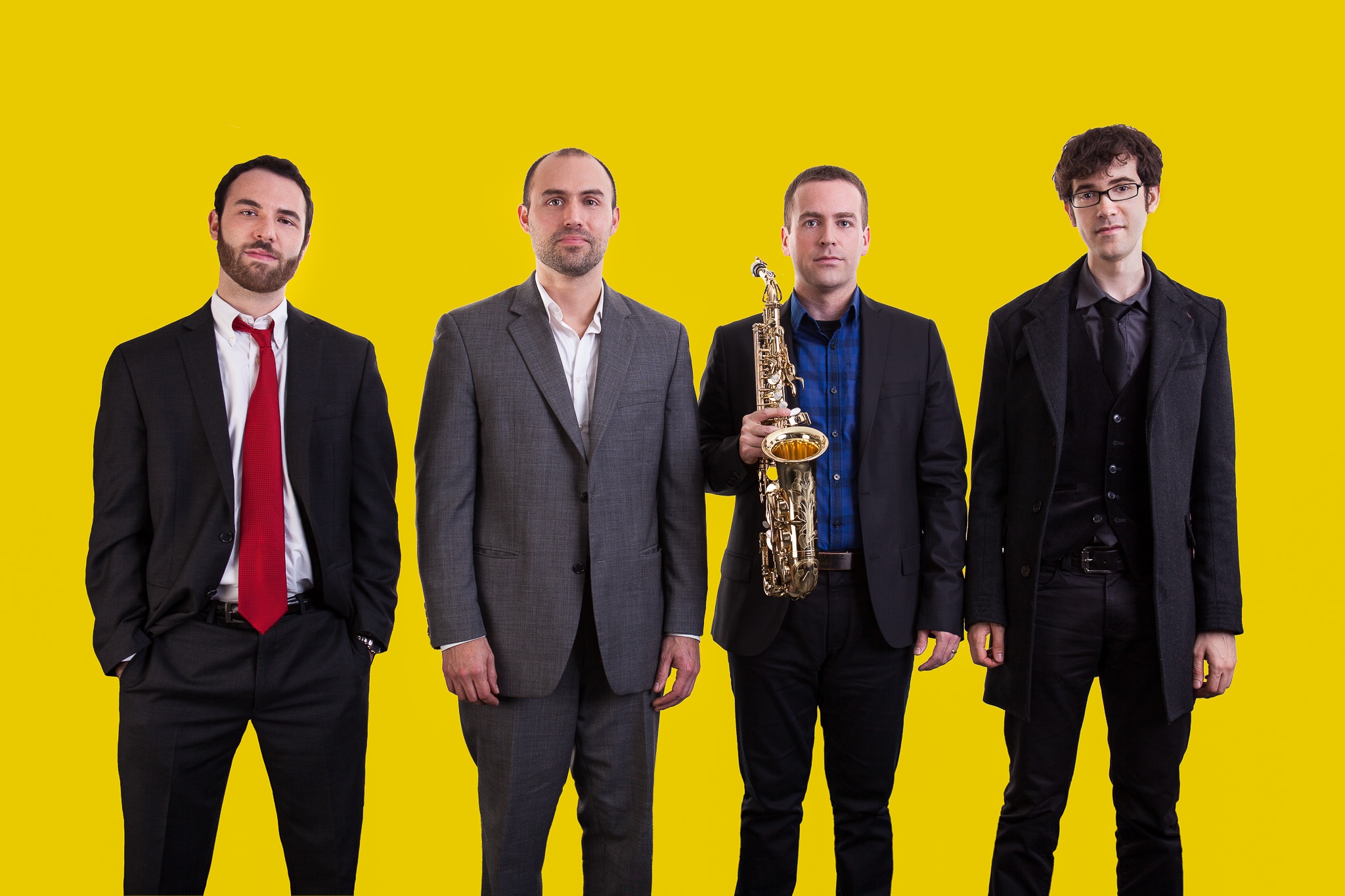
(Photo by James Bartolozzi)
Click on over to RootsWorld magazine to read my review of a new album by Lena Willemark on the Swedish label, Country & Eastern. Readers will be familiar with her handful of ECM projects, including the popular Agram. Here she is joined by saxophonist Jonas Knutsson (also featured on Agram) and keyboardist Mats Öberg in a gorgeous folk-inspired program. I further encourage ECM fans to check out Country & Eastern. It is the brainchild of Bengt Berger, whose Bitter Funeral Beer album is among the best of ECM’s outliers.

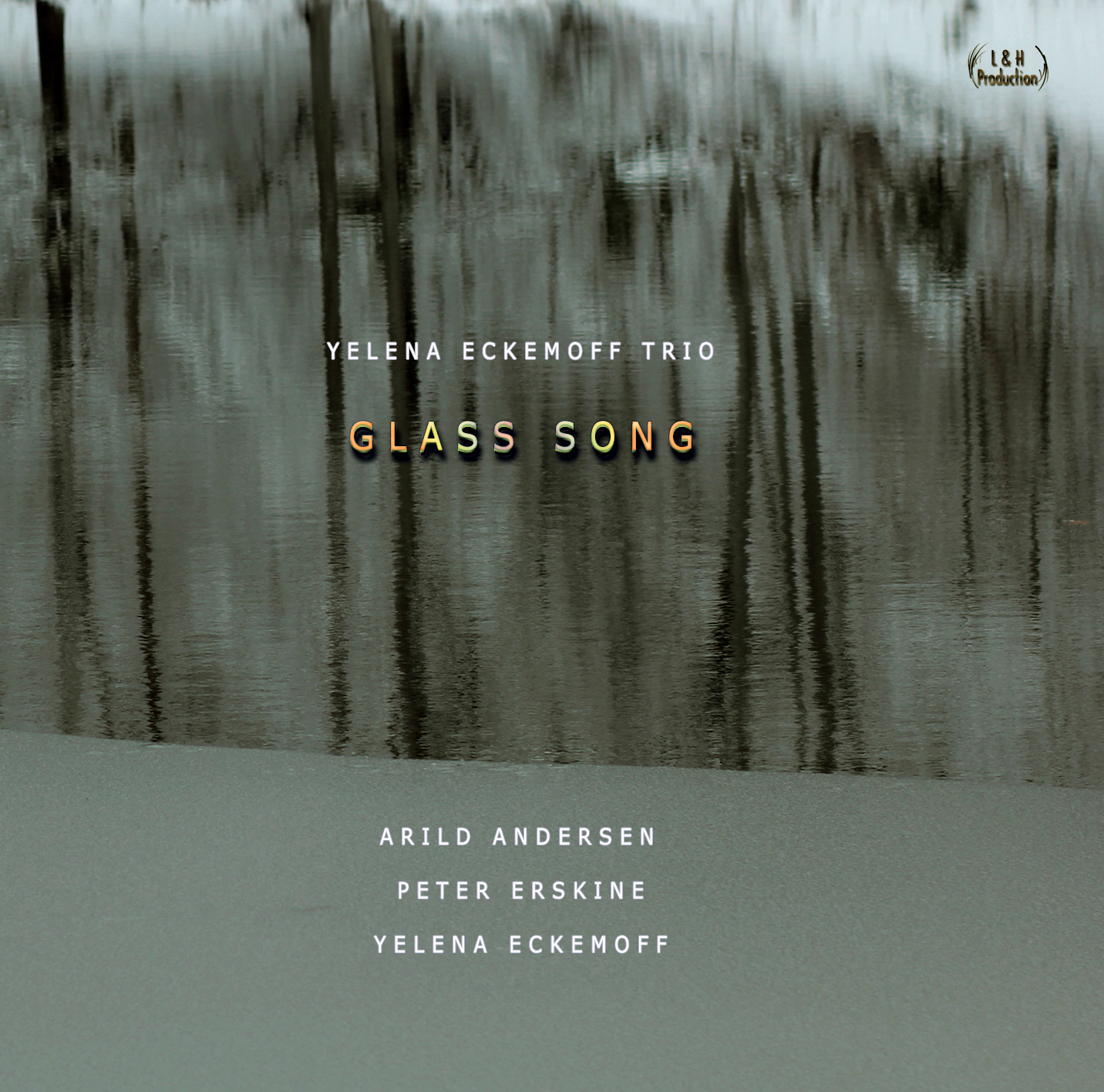
My first review for All About Jazz is now up, and should be of interest to ECM fans. The album in question is the Yelena Eckemoff Trio’s Glass Song, for which the Russian-born pianist brings bassist Arild Andersen and drummer Peter Erskine together for the first time in a sparkling session. Check out the review here, and be sure to watch the promo video below.
Please check out my latest review for RootsWorld online magazine regarding a phenomenal album entitled The Arch, which features Nils Petter Molvær, Bill Frisell, Ryuichi Sakamoto, Laurie Anderson, and tens of others in an unprecedented crossover project built around a core sound spun by the Eva Quartet (of the famous Le Mystere Des Voix Bulgares) and late French composer, producer, and world music dot connector Hector Zazou. You won’t want to miss this one.


Alexander Berne & The Abandoned Orchestra
Self Referentials Vols. 1 & 2
Innova Recordings
Released November 13, 2012
Upon first encountering Alexander Berne, you may feel tempted to know of the journey that led such a musician to the cavernous way station that is Self Referentials. I can tell you that Berne is a child of New York, where his fingers nourished themselves on woodwind keys, his lips on embouchure and reed. I can tell you that his work with jazz visionaries Billy Hart, Victor Lewis, and Cecil Taylor spun the backbone of his exploratory spirit, a spirit that led him to Belgium and a period of intense devotion to solo saxophone performance. This search flung him back to the Big Apple, forgoing the obligatory bite in favor of tracing the city’s hardened, pockmarked skin. In tow came a host of extended techniques, instrument design and development, and compositional fervency. All of this he continues to tie together with abiding interests in filmmaking and visual art, the latter of which informs every hand-painted cover of the present album’s 800 limited copies.
I can tell you that, in light of the music it designates, the title is intriguing for pointing not to the individual as worldly, but to the worldly as individual. To evoke this precept, Berne employs a variety of conventional and custom instruments throughout this multi-part opus (his third in as many years), refracting himself in the studio as the eponymous Abandoned Orchestra.
I can tell you that Volume I wavers with the breath that moves his art. Despite the physical augmentations thereof, the results are decidedly vocal in their unfolding. From the insectile coterie of “Far Afield Recording” and warped distortions of “Pulsationism (The Long Tick)” to the three-part “Sonum Onscurum: Headphonic Apparitions,” we find ourselves in a landscape at once industrial and verdant. Shawm-like undulations trade places with plucked strings and siren calls in a flowing admixture of whispering rhythms and inward, organ(ic) washes. Like a window covered by Venetian blinds, all that falls between stripes the ears with light and shadow. Lurking in Berne’s favored winds is a narrative piano, which threads the acoustic snippets of “Ruse (Fantastique)” with delicate pulse and runs through the fleeting recollections of “Hidden Memories: Plangent Wail” with the patter of feet on hardwood floors and dusty attics. “Transsublimination” seeks to unpack at least one of said recollections, visualizing it, if you will, in sound. It is a lonesome and skittering thing, morphing the keyboard’s monolithic insistence into throbbing bass.
I can tell you that the album’s first clear-cut allusion comes in the form “A Choir of Threnodic Winds,” this to Krzysztof Penderecki, if not also to Q. R. Ghazala. A glorious chorus of bellows, it is a prayer unrolled in a long tire track through the mud of experience. “Amphibiana,” for another, takes a page from the book of Bryn Jones (a.k.a. Muslimgauze), enacting a similar brand of semi-orientalisms with due process. “Of Fugal Melancholia” is among the more heartfelt tracks on the album, if only for being unaccompanied. Its Ryuichi Sakamoto-like cells of piano splice sunlight in repeated patterns of flash and shade. Of that shade we get reams in Volume II, the more ambient half of this matrix. Subtitled “An Unnamed Diary of Places I Went Alone,” it is a primordial flight response stretched to goopy pathos. Of its 17 parts, each designated by Roman numeral only, the poetic narration of late singer Jaik Miller (1970-2012) lends notable sanctity to Part IV. In this industrial fever dream, hazed by thinnest cloud in moonlight, we feel the sinews that have so far eluded us flex to the point of ambulation. Part VIII, with its mantra “I am,” is the ultimate self-referential of the collection and also its lushest. The drone is alive and well, it affirms.
I can tell you that while Self Referentials is certainly original, it is not fiercely so. This is not a detriment, for it pays loving homage, witting or not, to a roster of ethno-ambient greats, inspiring the warmth of nostalgia within those of us cued in to those streams and the breath of newness from the uninitiated to explore further. The creation of such a richly textured sound-world without the use of synthesizers or samples will be familiar to any Voice of Eye fans. One might draw lines of contact also to Scott Solter, Robin Storey (a.k.a. Rapoon), Alio Die, Vidna Obmana, Jérôme Mauduit (a.k.a. Désaccord Majeur), and especially Mandible Chatter. Taken on its own terms, this is a mesmerizing and unforgettable cabinet of sonic curios, a search that needs nothing to be sought. The only journey it harbors begins when you take the first step.
In telling you all of this, however, I bring you no closer to the rewards of Self Referentials. The missing hyphen from its title is its key: when bonds between words are erased, pure expression remains.
(See this review as it originally appeared in RootsWorld Magazine, where you can also hear samples of Self Referentials.)

