Mediavolo: Away Within

Mediavolo is a band like no other. Based in Brest, France, they offer insight into the human condition with honest and patient attention. Back in 2014, I interviewed core members Géraldine Le Cocq and Jacques Henry, adding my own throughts on their discography as it then stood. Away Within is their first full-length release since that time, and I was recently honored to write the liner notes for it. The album is available on Bandcamp here. Once you dive in, you’ll never go back…

Shibui: Quint

Although Quint is the second album from Boston-based Shibui, it is also the first in what one hopes will be a longstanding relationship with Ronin Rhythm Records, the label of Nik Bärtsch, whose influence on bandleader Tim Doherty is as obvious as the stars at night (and just as beautiful to regard through the telescope of the ear). The core trio of Doherty on bass and percussion, Curtis Hartshorn on drums, and Céline Ferro on clarinets opens through the inclusion of Bradley Goff on keys, Derek Hayden on marimba (a key timekeeper throughout), and violinist Chris Baum. The latter makes his only appearance on “2.1,” which opens the first of five submarine doors. Through gradual appearances of percussion and bass clarinet, it travels from pianistic sediment to a glittering epipelagic zone. The final five minutes offer a glorious conspectus of the band’s relativity, offering plenty of opportunities for intake.

“2.2” is a chunkier groove, made all the more worthy of our mastication by the savory bass snaking its way throughout, while “2.3” offers a more pleasurable spectrum of delights, especially in the transfigurations of clarinet and piano between solids, liquids, and gases. The resulting states lean more in the direction of ineffability than concretism. Smoother textures await in “2.4,” where arid sands and moist breaths intertwine as equals. The bass is especially present, each note a trunk from which pianistic branches are given room to sprout. The marimba’s echoes tread like creatures too light to sink on water yet too heavy to be carried away by a breeze. Lastly, fluidity is the modus operandi of “2.5.” Here, the impulse to sing is never more than a step out of reach. Gritty electric keys give us a sense of inward focus and emanations of heat, weaving delicate cymbalism through shafts of shadow.

While fans of Bärtsch and other masterless musical samurai will surely rejoice over the rudimentarily numbered set list and modular approach, the uniqueness of vision rendered on Quint urges relistening. Doherty’s compositions are proof that instrumental discourse operates differently from speech. Whereas saying the same word over and over strips that word of meaning, Shibui’s aesthetic enhances clarity with every cycle. It also proves there is no such thing as truly identical reiteration in a world of constantly moving molecules and energies between them.

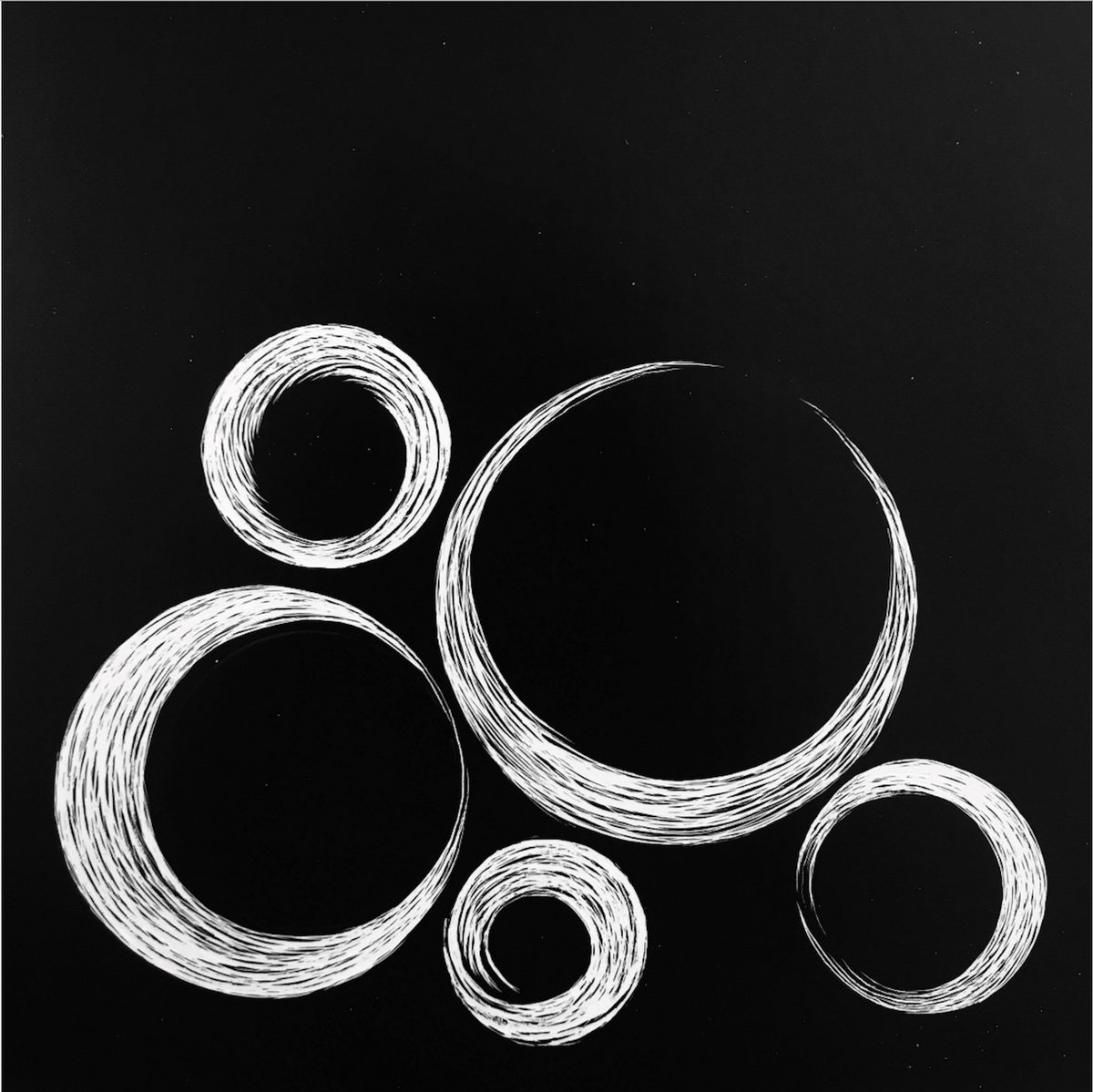
In an enchanting bit of coincidence, the album’s cover artist, Sevcan Yuksel Henshall, came up with the five circular gestures before even knowing its title. Such confluences are part and parcel of music that lifts the spirit with the same weight so that both appear to float in unison, forever suspended between firmament and fundament.

Quint is available from Bandcamp here.

Muriel Louveau: Vocalscapes

French vocalist Muriel Louveau understands the human voice is never a solo instrument. It is comprised of flesh and bone, but also of vibration and forces beyond what the body can immediately contain and make sense of. It is simultaneously worldly and divine yet exists without contradiction (save for the words it may force against the grain of truth). Louveau’s voice is, of course, very much her own, but it is also ours the moment she shapes it to fit the contours of poetry. In this case, the words are a soul unto themselves, housed by artist Elizabeth Hayes Christopher, whose imagistic renderings give credence to the side paths we ignore in linear everyday wanderings. Once offered as a sound installation at Five Myles gallery in Brooklyn, these multitracked pieces now live on as five standalone experiences, presented both individually and as an unbroken mix.

In “Rose Light,” a brief speech song that opens the sky like a folding fan, Louveau draws a vocal line through clouds described with tearful honesty. We meet each element of daybreak as if it were a person in need of an embrace. Whether or not we open our arms is ever the challenge of language and sound, in the middle of which we must choose who to serve: the heart or the dust of which it is formed.

Through careful alterations, Louveau reveals hidden layers in her singing, as in the spiritual blues of “Soulhandlips” and the prayerful contours of “Blue Refraction.” In each, she expresses the materiality of things we cannot touch and the ephemerality of things we can. In partnership with Christopher’s insightful realism, she lends folklike qualities to “I meditate wings.” Splashed against a throaty backdrop and tickling the nape of our consciousness, memories of nights that will never be recaptured rush like blood to a head spun in unexpected directions—only here, that feeling is evoked in slow motion. As in “Salamander,” Louveau and Christopher’s hybridization births a third voice of internal flow. Thus, the self expands until every trauma glimmers as a crack in the eggshell of our contentment with the way things are.

Vocalscapes is available on bandcamp here.

Unfamiliar Listening: A Brief Introduction to Experimental Field Recordings

For many, the term “field recording” evokes the greatest hits of natural sounds: ocean waves, rain, and birdsong. Indeed, one of the earliest field recordings dates to 1889, when an eight-year-old Ludwig Koch wax-cylindered the song of a white-rumped shama. In more recent history, anyone of reading age in the heyday of National Geographic may remember Roger Payne’s Songs of the Humpback Whale, inserted as a flexi disc in a collectible 1979 issue. Ten million copies of it were printed—more than any album ever produced in a single run. Payne’s classic and others like it endure for their scientific value, serving as springboards for studies of language and the potential for interspecies communication. They also spawned a robust environmental movement at a time when modernity was threatening to divorce humanity from nature. By the same token, microphones can get too close to their subjects, as in Hans Lichtenecker’s “archive of endangered races,” which documented descendants of the very peoples his comrades slaughtered in German Southwest Africa (what is now Namibia). Even the most benign anthropological motivations have fallen under retrospective scrutiny.

I will not be reviewing such projects here. Instead, I wish to examine—and, I hope, bring fresh ears to—a visceral stream of experimental field recordings. While tracing the origins of such an amorphous category can be difficult, an indisputable pioneer is Jeph Jerman, whose seminal work tops the list below. Kindred visionaries in this sphere of influence include Francisco López, Alan Lamb, and John Tulchin. I highlight their endeavors, subjective as my favorites among them are, in the interest of expanding their embrace of sameness through difference.

These recordings constitute a form of sonic travel to worlds at once internal and distant. Some are spliced and collaged within compositional frameworks in tandem with electronic and acoustic instruments, others manipulated beyond recognition, and still others presented as they are—but always with an aesthetic in mind, even if that aesthetic is simply to let sounds “happen.” Their significance cannot be overstated—not because they represent an overarching artistic ethos but precisely because they shun that motivation in favor of genuinely borderless spaces. It’s not often we can listen to a corpus of sounds without transfusing the blood of our politics and ideologies into it. Here, we can. Such comfort means more than ever in a world on its knees, wondering whether the healing will begin.

Jeph Jerman: Early Recordings ’81-’85

Also known by the moniker Hands To, Jeph Jerman first set out with his cheap cassette deck in the 1980s to document the act of listening while questioning its practices and apparatuses. What continues to fascinate about his recordings is how raw and curated they feel. And while some of his most unadulterated work (e.g., Beach Tree and Birds, 2001, A Pyrrhic Victory) is woefully difficult to track down, this compilation of early recordings is a grounded place to start. Lo-fi swaths of mostly industrial settings (e.g., “Metal Fabricating Shop, Colorado Springs”) reveal an unimaginable depth in the mundane.

Alan Lamb: Archival Recordings: Primal Image/Beauty

In 1976, Australian biomedical research scientist Alan Lamb first discovered the abandoned stretch of telephone wires that would define his artistic endeavors to come. Dubbed the Faraway Wind Organ, this massive vibrating skeleton loosed eerie songs at the touch of an air current, echoing since his childhood into a mature desire to record them. That he did, often for hours at a time, assembling choice passages into this otherworldly diptych. Whether whispering the mantras of uninhabited terrain or choiring like a Glenn Branca symphony, these requiems step out of time and ooze their way into the bloodstream.

Maggi Payne: Ping/Pong: Beyond The Pail

Maggi Payne is a venerated composer and multimedia artist whose output has largely focused on electro-acoustic constructions. Her field recordings of “dry ice, space transmissions, BART trains, and poor plumbing” congregated to astounding effect on 2010’s Arctic Winds, but 2003’s Ping/Pong: Beyond The Pail preserved another level of intimacy. Its two 30-minute tracks, recorded in a galvanized steel pail, offer complementary experiences of rainfall through the intermediary of the album’s eponymous vessel. The first catches the rain openly, while the second inverts the pail for a drum-like effect, sealing us in a metallic chamber without excuse for distraction.

John Tulchin: Location Recordings

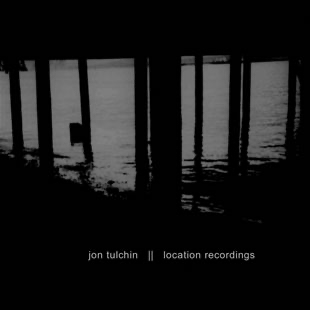
This collection’s first track, “Fire Alarm From A Distance (Winter Park, FL.),” is indicative of John Tulchin’s questing spirit. It’s also one of the most haunting field recordings in readily available form and an entry into an album unlike any other. The pragmatic titles—“Metal Structure In The Desert (Dead Horse Ranch, AZ.),” “Log Partially Submerged In Water (Seattle, WA.),” etc.— only deepen the possibilities of interpreting them. Somehow, knowing what we are hearing makes it clear how much we miss. Thankfully, we have Tulchin to fill in those gaps with heartfelt portraits of time incarnate.

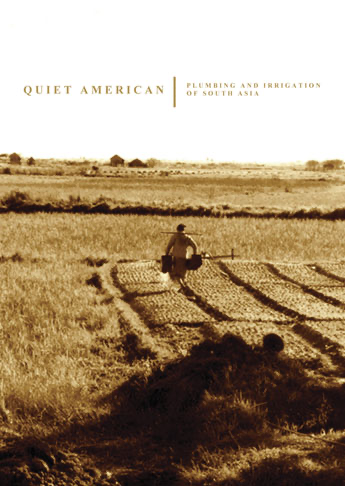
Quiet American: Plumbing And Irrigation Of South Asia

Quiet American, an homage to the novel by Graham Greene, is the sound manipulation project of San Francisco Bay Area artist Aaron Ximm. Plumbing And Irrigation Of South Asia is at once exactly what it sounds like and something else entirely. Nominally, it is a vast collection of field recordings of various community fixtures, such as a drainage pipe in Madikeri (India), a water pump in Khulna (Bangladesh), and a toilet in Kathmandu (Nepal). Other locations include Vietnam, Burma, Laos, and China. Beyond that, it is an unassuming travelogue filtered through the mesh of a respectful phonographic memory.

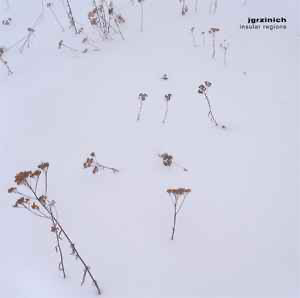
Jgrzinich: Insular Regions

John Grzinich is a sculptor combining found sounds and instruments of his own design. For this 2005 release, he gathered personal impressions of Mooste, a rural Estonian village. Insular Regions is among the more tactile albums in this guide’s category of interest. Its resonant intersections of wood, wind, and wire feel like a portal into another dimension. And yet, we are constantly reminded of their fleshly purview, which Grzinich sees no reason to hide. What we hear is what we get, even when we know it has been transformed through technology, because every electrical circuit runs on our conductivity.

Loren Chasse: Synthesis of Neglected Places

Loren Chasse is a humble public school teacher in San Francisco who seems never to have lost that childlike wonder for the world around him. Synthesis of Neglected Places was originally produced as a cassette in 1998 by the Unique Ancient Tavern label. Over the course of eight parts, it lives out every moment in the full knowledge that the act of recording will change its genetic makeup. As Chasse’s most crepuscular album, it speaks in tongues of light and shadow in equal measure, drawing out tasteful keyboard touches as if from within.

Loren Chasse: The Air In The Sand

Loren Chasse leaves behind precious recollections of experiences you never knew you had. That such dreamlike qualities are elicited from unabashed reality sets his work apart. The Air In The Sand shares the spirit of 2002’s Hedge of Nerves, which meshed the crackle of vinyl with sounds of the elements, expanding that aesthetic to welcome wider-reaching absorptions. By revealing the natural in the artificial and vice versa, he pays deference to the molecules common to all matter, guiding them in chorus even as they lead him in kind to voices hibernating until they can be amplified.

Click on the sub-cover titles below to see my reviews of other vital albums in this loosely allied genre.

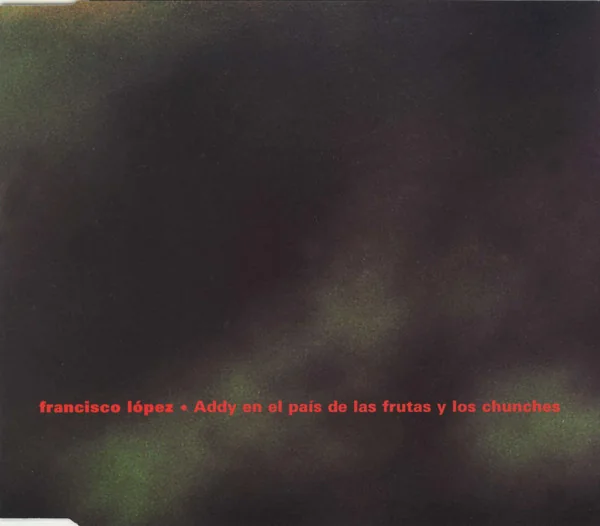
Francisco López: Addy En El País De Las Frutas Y Los Chunches

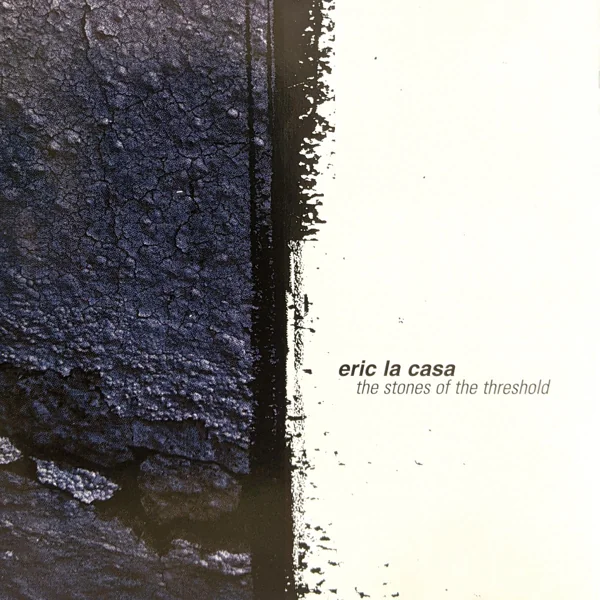
Eric La Casa: The Stones Of The Threshold

Collin Olan: Rec01

David Dunn: The Sound of Light in the Trees

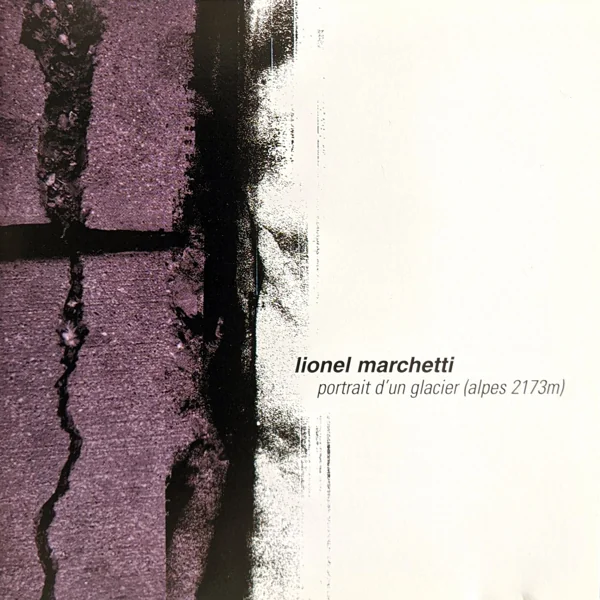
Lionel Marchetti: Portrait d’un glacier

John Hudak: Pond

Koura: Shisō

MNortham: Molt And Anecdote

Seth Nehil: Uva

Murmer: Eyes Like A Fish

Jonathan Coleclough/Murmer: Husk

Jgrzinich/Seth Nehil: Confluence

Patricia Wolf: I’ll Look For You In Others

“What is grief? Can only the sun name its layers?” So writes Edie Meidav in her lyric novel, Another Love Discourse. What the author soliloquizes through words on a page, Portland, Oregon-based electronic musician Patricia Wolf actualizes through synthesizers, algorithms, and the emotional transistor of her own throat and lungs. Written and recorded in 2020 following the loss of her mother-in-law and a close friend, I’ll Look For You In Others treats the interface of flesh and technology as a force to birth something meaningful in the wake of deaths that may feel meaningless.

These messages activate every molecule of “Distant Memory,” which in its first breaths betrays the oxymoron of its title: No matter how distant a memory may seem, it is always nearer to us than any external trigger. Memories are as much a part of us as the oxygen and neurons that complicate them, and I cannot walk through this music without feeling accompanied by the echo of a past self who knew no better than to live as if mortality were a tragic lie. Every swell, pulled from the corona of active denial, finds its way into acceptance. And yet, “The Culmination Of” reminds me of the darker times when solitude cultivates necessary mourning beyond the prying eyes of those who care a little too much. Here, as in the title track and “Severed,” the human voice sheds its communicative uniform in favor of raw expression.

It’s a stark reminder that even if we haven’t lost someone directly over the past three years, the pandemic has turned us all into targets of its burning arrows. In the eyes of a virus, there is no parsing of memories into categories to be filed until we are ready to reckon them. Rather, it destroys what it can, mutating when it can’t, and scars the skins of souls. Such is the tenor of “Funeral,” in which an organ bleeds across the floor of a chambered heart, even as the light of dawn cracks a smile through tear-stained windows. And though we are left to wander with only pieces to show for our future, “Recombination” is possible with that near-magical glue of cohesion: time.

In the same way that the absence of bodies magnifies the presence of spirits, “Lay to Rest” throws a handful of slow-motion dust onto the coffin in emphasis of the bereaved funneling its descent. And while “Letting Go” promises closure, it may just be another link in the chain that binds the living and the dead. If anything, loss is an opportunity, and an opportunity is a portal of transformation. We cannot go through Wolf’s journey without being changed, knowing that loss has sewn its threads through all of us.

To quote Meidav again: “On the wheel of feelings, is wonder the true antonym of grief?” If so, this album is a wonder of healing at a time when the world itself has been reduced to an ailing organism in more ways than one. Let it hold you close, never letting go until your cheeks are dry.

I’ll Look For You In Others is available on bandcamp here.

Maacha Deubner: Bessonnitsa

Soprano Maacha Deubner, whose voice has graced such masterpieces as Giya Kancheli’s Exil, folds her operatic pleats into the tapestry of the KAPmodern-Ensemble in a program of latter-day chamber music. Bessonnitsa is Russian for “insomnia” and points both to an overarching theme and to Valentin Silvestrov’s eponymous piece for soprano and piano. Reminiscent of Francis Poulenc’s songs, it is the album’s crown jewel. Its flowing sense of time and evocation is like a storm turning into ocean and touching the shore with its final breath. One can also trace a line of continuity between this and Edison Denisov’s At the Turning Point for soprano and piano (1979), a set of temporally brief yet spiritually far-reaching evocations of flesh and word in a self-shadowing mode. Deubner navigates them as one might tell the story of their life.

Sofia Gubaidulina’s Brief an die Dichterin Rimma Dalos for soprano and violoncello (1985) begins with the solo voice, floating yet carrying the weight of a monument carved in time. “My soul is a Sphinx,” she sings as if to give that monument a name, setting the immaterial self upon an altar of ruins and unfinished verses. The words come from writer Rimma Dalos, whose texts have also been lovingly set by Hungarian composer György Kurtág. Gubaidulina’s approach, however, is never so compact, as proven by the solo cello commentary that follows.

Most of the pieces here belong to the mind and heart of Elena Firsova, for whom the poetry of Ossip Mandelstam (1891-1938) is a touchstone. Sorrows (Tristia II), op. 145 (2013) carries over the same scoring from Gubaudulina’s contribution and bears a dedication to Deubner. The music is at once a reflection of and counterpoint to the poetry, which looks deep into the night to uncover its many layers of shadow:

Who knows, when the word ‘departure’ is spoken
what kind of separation is at hand.

Such words point not to dialogue but to prayers walking parallel paths. They can see but not hear each other, ever caught in cycles of pain and healing.

In Towards the Starlight for soprano and string quartet (2017), receiving its world premiere recording, we have a different side of Mandelstam. Whereas in Sorrows he praised the uninterrupted life, now we get:

I hate the starlight’s
monotonous spectrum.

Such is the duality of consciousness. In the second movement, “How slow the horses go,” we encounter a more sorrowful glow. The poet sees things he cannot see, speaks of things that have no voice. Cello and soprano engage in subliminal communication as delicate pizzicato and high strains give way to flowers of darkness. In the final movement, lyrical self-deprecation:

To read only children’s books,
To cherish only children’s thoughts.

Yet another facet of Mandelstam catches the light of From the Voronezh Notebooks, op. 121 (2009). This cantata, also for soprano and string quartet, moves into organic textures following a nervous prelude. From the raindrops dripping from leaves in “Greens” and the pouncing delicacy of “A Cat” to the frantic trajectories of “In the Sky” and the final “Madness,” fear is never far behind. Deubner expresses these states of mind with lucid projection.

Peppered among Firsova’s more substantial assemblies are three monologues, of which Starry Flute, op. 56 (1992) is the most intimate. Dedicated to the late Aurèle Nicolet, it captures the brilliant flutist’s penchant for extended techniques, each of which naturally extends the breath. Sustained notes float as if made of vapor (and indeed, that is what our life can only be), so that by the end, we are left in stasis with memories of those enchantments now wilting in the hot sun of reality.

Taking account of these works in the aggregate, I am inclined to treat them as a face seen from different angles of light. It smiles and frowns, sleeps and awakes, screams and whispers, showing us that the continuity between states of mind is where our existence is defined.

Johannes Luley: Follow Your Heart

Guitarist-producer Johannes Luley was born and grew up in Germany before relocating to California, where he honed his craft as an in-demand touring musician and began recording other artists in his Los Angeles studio. When said studio had to close at the start of the pandemic, Luley found himself facing a professional and personal crisis that kept him from the guitar for months. In August of 2020, he resolved himself to break free from that spell and move his creative muscles again. The result is Follow Your Heart.

As the title suggests, Luley examined what moved him from within, and this led him to dip into the ECM songbook, arranging tunes by some of the label’s key figures. His band includes reed player Max Kaplan, bassist David Hughes, drummer Dicki Fliszar, and percussionist Simon Carroll. Trumpeter and flugelhornist Jonas Lindeborg plays from afar, having laid down his parts in Stockholm, though one would hardly know it by the integration of his artistry.

Luley has a fluid ability to shift between styles and influences without missing a beat, adapting instruments and treatments to suit each track. The set opens with “Yellow Fields,” from Eberhard Weber’s 1976 album of the same name. Hughes evokes the German bassist via fretless before he and Fliszar put feet to ground with gentle traction. Kaplan’s soprano lends further credence to the revival, while Lindeborg’s flugelhorn adds reflective light. Next, Luley’s 12-string pivots into Ralph Towner territory on “Brujo.” Despite hailing from 1973’s Trios/Solos with Glen Moore, the expansiveness of this version points more toward Solstice from two years later. The Bill Evans/Miles Davis classic “Blue in Green” (which has appeared on two of Towner’s albums) glows in Luley’s fireside recreation. His restraint exudes warmth at every turn. This and Kenny Wheeler’s “Heyoke” (see 1976’s Gnu High) are standouts for their free and easy spirit, drawing magic from Lindeborg and propelling Luley to skim the proverbial waters with purpose. The latter tune’s seeking qualities match the composer’s perfectly, as do the far-reaching tones of “Ostinato” from Manfred Schoof’s Scales (a 1976 rarity from ECM’s onetime sister label, JAPO). Swells from electric guitar provide the foundation for a roving gallery of impressions, ranging from Kaplan’s bass clarinet to Lindeborg’s emotional flights.

The title track cites John McLaughlin’s My Goals Beyond (released in 1982 on the Elektra label) and features a crunchier sound from Luley and artful sopranism from Kaplan, while “One Melody” references Belo Horizonte (1981, Warner Bros. Records) to stratospheric effect. John Abercrombie also gets two musical mentions. “Telegram” time-travels from 1978’s Charactersand elicits the most cohesive dynamics from Luley’s group. Its nostalgic energy is only heightened by the rhythm section’s articulate drive. “Greenstreet” points to 2013’s 39 Steps and sits flush with its brethren in gentle resolve, ending the record with an embrace.

Follow Your Heart makes a welcome addition to any ECM lover’s shelf and should inspire listeners to explore Luley’s back catalog in kind. The album is available from his website here.

The Tone Poetry of Charles Lloyd

(Photo credit: Dorothy Darr)

To regard a line of improvisation in the key of Charles Lloyd is to walk a spiral from the peaceful depths of one’s soul to the chaotic terrains beyond it. The tenor saxophone with which he is most commonly associated is a scepter that sounds, in his words, “a clarion call to truth and love.” A tender warrior committed to restoration, he sees no lines of demarcation in his music:

“That wouldn’t be right for the tradition I serve. You must have your elixir, and the elixir is in sound and tone. When you’re at the feet of the Universe, she will always bless and take care of us. It’s not politicians we need but sages. Many have their hand out for something, but I try to let my heart be filled so I want for nothing. I live in awe, drunk with the music.”

Hence the moniker of his latest collective The Marvels—featuring Bill Frisell on guitar, Greg Leisz on pedal steel guitar, Reuben Rogers on bass, and Eric Harland on drums—of whom Lloyd is at once leader and faithful servant, a vessel for languages without script. Lloyd debuted The Marvels on the 2016 album I Long To See You with special guests Norah Jones and Willie Nelson, and reconvened the band for 2018’s Vanished Gardens which featured Lucinda Williams on half the album. For his latest Blue Note release Tone Poem, Lloyd presents The Marvels without guest vocalists for the first time on a nourishing nine-course meal of spiritual food. Lloyd recalls the genesis of the group:

“I used to play at this club in Memphis, where a country band was always finishing up as we came in. Their pedal steel guitar player, Al Vescovo, fell in love with my playing, and I with his. He and I became friends, which wasn’t easy on account of the color lines. But the warmth of our friendship was pure. I eventually left for California, and we never saw each other again. Years later, I started performing with Bill Frisell—a seeker whose music, like mine, dances on many shores. On the road, between concerts, I was always reminiscing with him about this young musician from my teens. One night, he invited a pedal steel guitar player to sit in on a concert we played at UCLA’s Royce Hall. That turned out to be Greg Leisz. Hearing him brought full circle a childhood feeling of that instrument and its sonority. Thus, The Marvels were born, because what had happened was a marvel.”

Indeed, the fluid way in which Frisell and Leisz finish each other’s sentences speaks of a mastery that eschews boundaries in deference to flow. The same holds true of Lloyd’s rhythm section, which finds coherence in the absence of rules. If Harland is the heartbeat, Rogers fortifies the blood in its arteries. But how is that sound achieved?

“Don Was and the folks at Blue Note believe in me. The songs we create are my children. They come back home with me. There’s an old saying: What you’re looking for is looking for you. As the character of sound flows, the world drops away, allowing you to make a contribution. This is my offering, my inspiration and consolation. Music has always brought me that. It heals me; I hope I can heal others. Even in the wide cast of artists I’ve played with over this long life, I still have beginner’s mind. Only now, I have the benefit of experience to go along with it.”

If one were to see this album as a ship, then the album closer “Prayer” might be its dotted path across a map of time. Although the parchment on which it is marked is frayed at the edges, it has enough empty space left on it for voyages of reconciliation yet to come. The arco bass and pedal steel guitar herein constitute a longitude and latitude, while drums played by hand glow like a compass in the night. Lloyd and his crew sail forth on a raft culled from bits of nature, each ragged and sun-scorched on its own yet, in unity with others, stronger than the waves. In the midst of the vast waters of this quest stands a chain of islands that includes the album’s original title track, “Tone Poem,” which from rhythmless materials builds a gently grooving structure. Next, it swings from sonic rafters of Thelonious Monk (“Monk’s Mood”)—last heard in duo with Frisell on Vanished Gardens—and on to the shimmering beaches of Bola de Nieve (“Ay Amor”) and Gabor Szabo (“Lady Gabor”). The latter tune offers a taste of Eastern airs and harks to Lloyd’s legendary performance at Montreux in 1967. Out of the primordial soup of that past, it hits the ground running as a fully formed creature—scintillating and agile. Such is the wonder of Lloyd’s playing: he is a traveler weary of the world yet unwilling to let it pass without a song in which to wrap it. He understands the vision of life as having fallen like a teardrop from a cosmic eye in need of being wiped away. And with his horn, he does just that. This music is so comfortable that it feels like a second skin.

“When I think back on my life and how long I’ve been here. Most of my heroes left long before the age I’ve attained. I am always paying homage in a dream state of bringing a better world, a universe that heals and touches. The model of the world as it exists is very primitive to me. Man’s inhumanity to man continues to cause great pain and destruction.  And yet, the fierceness of exploration stays fresh with me. I’m not here for roses. I’m still blessed and interested. The world continues to make history about generals…but my generals—Lester Young, Billie Holiday, Bird, and Trane—are lovers of the heart.”

This is especially apparent in two Ornette Coleman tunes (“Peace” and “Ramblin’”), neither of which were a part of Lloyd’s repertoire, yet which felt organically suited to the band. In both, the listener will find spirit-making sounds, all powered by the solar panel of Lloyd’s saxophone and released in melodic energy. The sense of forward motion here is phenomenally astute and something that, in these times of social distancing, crackles with a level of intimacy the pandemic has all but snuffed out.

“Some of the notes and cries you hear now on my instrument, I didn’t have as a young man. They articulate something. Then, I have these ensembles serving a higher goal. Sensitives are abundant on the planet; they just aren’t given credit for it. To be drunk while also being non-toxic and non-harmful to the world is a contribution worth making, a song worth singing.”

It’s also why poetry lingers even in the absence of words. In Leonard Cohen’s “Anthem,” it sings wordlessly and with a deep simplicity that needed to be explored in this context. And in the temperance of Lloyd’s own “Dismal Swamp,” it turns an individual truth into a universal one.

“I’m an archeologist and astronomer, trying to make a breakthrough. I have this dream that I’m going to melt into the music and I’ll become what it is. It’s such a beautiful gift that I’ve been given of being able to continue to explore. I pick up the instrument and I play and I can’t put it down. It takes me. I go out in nature and come home with these quantum mechanics in my heart.”

Music, because it is connecting to and opening up a spiritual purpose, brings about eternal effects, whereas everything we do in the flesh has a finite existence. But we’re so busy screaming at each other that we’ve forgotten how to sing. This is why Lloyd’s music has so much vitality: it is a gift in song form. It is a refuge.

“We speak the same heart. The heart of all hearts, we’re aligned with that. And the soul of all souls will bring us home. To be at Oneness. There are many windows into this house. You must be sincere and you must have a desire for truth, and somewhere you must have inspirations along the way, someone to guide you who knows the path. It’s incumbent upon all of us to sing that song of the infinite.”

A “dreamer of worlds” is how Lloyd describes himself. In that capacity, he offers inspiration and consolation to the named and unnamed alike. And now, with this sacred book, bound and stitched as an incantation of light, we can dream those worlds together as our own.

Tone Poem is available directly from Blue Note Records by clicking on the album cover below.