Distilling the Sacred: Filippo Sorcinelli’s Memento Collection

A discovery set is more than a way to gain an understanding of a fragrance line’s depth and breadth. It’s also a path to learning more about oneself, scouring the recesses of firsthand experience to draw connections where none might have had the chance to form. Nowhere has this been truer in my olfactory journey than in the work of designer and perfumer Filippo Sorcinelli, whose unique blend of reverence and daring has yielded this atmospheric examination of the sacristy.

Sacristies, by definition, are repositories for sacred things. But not all are physical. Some are sensory and invisible, drawing lines between our hearts and memories long forgotten. With his Memento collection, Sorcinelli has distilled the essence of these priestly preparation rooms. Through them, I find myself flashing back to the hours I’ve spent in the monasteries and cathedrals of central Europe. These are wishes of the flesh to be fulfilled in the spirit, captured at the peak of serendipity and surrender.
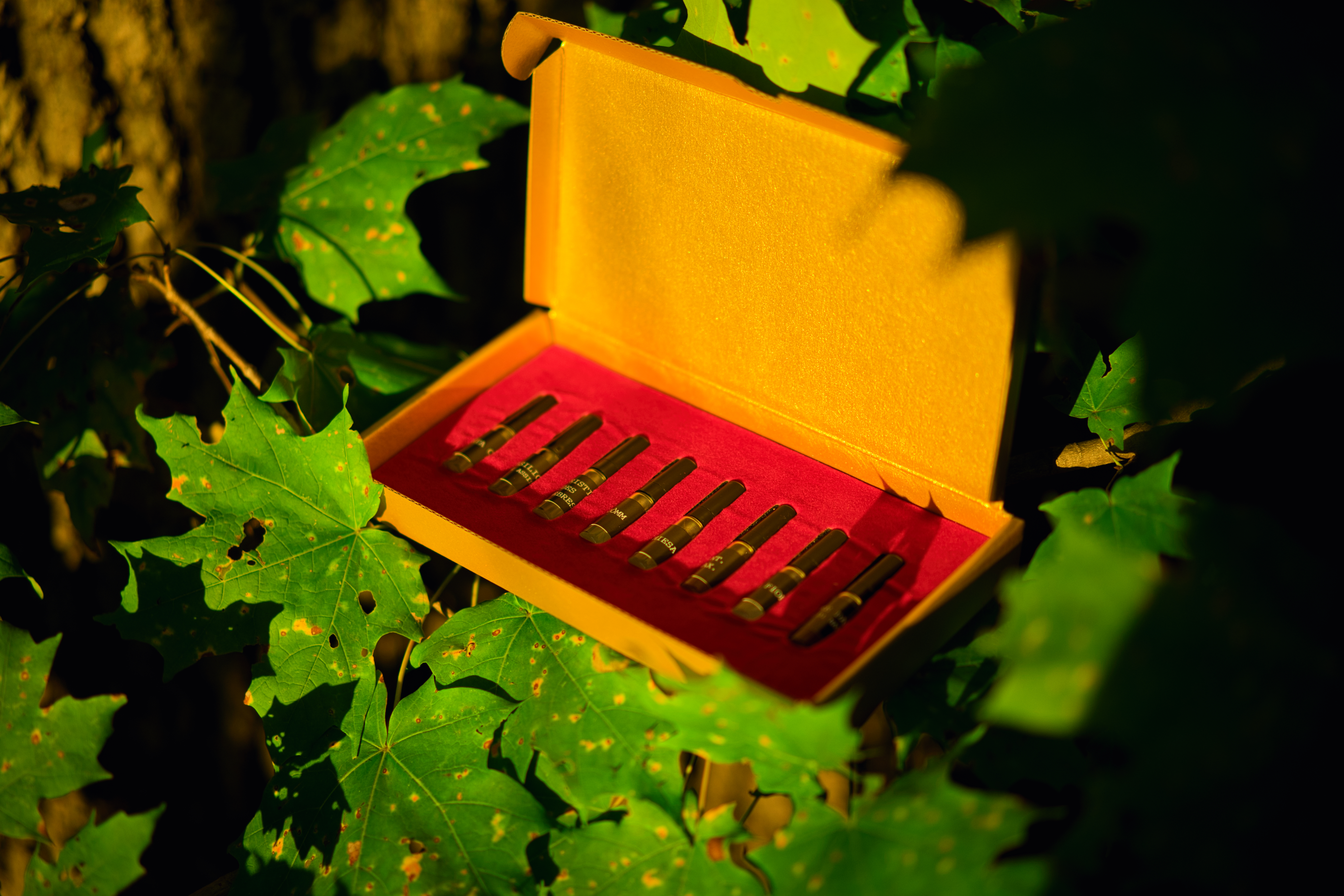
To wear these elixirs is to take stock of one’s soul. Each is a mirror of a different shape, opacity, and tarnish, taking inspiration from the drawers and chambers of specific churches.

BASILICA DI ASSISI

Evoking the Basilica of San Francesco, this first of eight is a symphony of stalks and stones. The scent of grass and freshly cut greenery intermingles with smoke, wood, and frescoed walls. We open our eyes, ears, and noses to tonka bean, benzoin, styrax, and amber. Within this combination lies a more cumulative statement in the details of burnished wood. A step deeper brings us into contact with rose alba, dried fruit, patchouli, and labdanum, which reveal their own signatures in the space, inviting a sense of devotion that we must attune our worldly minds to. Upon further settling, lemon, bergamot, petitgrain, and incense join in the chorus. In them are glints of stained glass, as if the sunlight were being extracted so that we might understand its colors as messages with purpose. This interdimensional fragrance shelters ever-deepening repentance, a connection through space and time between origins and satellites, sweetness and austerity. And here we are in the middle of it all, wondering where to begin.

Reminds me of: L’Air du Desert Marocain by Tauer Perfumes

CHIESA D’ORO

For this stage of the pilgrimage, we head to the Basilica of San Marco in Venice. A note from the brand highlights the city’s history as a hub of the spice trade and its influence not only on cuisine but also on the rites of the church and all the solemnity they signify.

A deep hit of damask rose, jasmine, and carnation reveals itself by way of introduction. As the bouquet settles to reveal a shmear of vanilla, tonka bean, and musks, we begin to notice even more details of our surroundings. Vetiver and amber speak to the extroverted and introverted expressions of their respective natural essences. A kiss of bergamot adds a final touch to this lovely chypre. With so much of the outdoors in play, we are reminded that everything we create and fashion would be impossible without the Creator whose handiwork is in every molecule of the resources we exploit. Let us not forget this in our rituals and prayers, holding fast to what has been given so that we do not profane it with our depravity.

Reminds me of: Gold Man by Amouage

DÒMM

Our new reference point is the Milan cathedral, the core of which began construction in 1386 and which still serves today as a place of dressing before the Lord’s table is set.

Here, the tail is foregrounded. Bergamot, Virginia cedarwood, and black pepper initially court the nostrils before forests, gardens, and even seascapes beyond make themselves apparent, followed by jasmine and chocolate. At the same time, patchouli, styrax, and musks lower their diadem. As the most pungent scent of this octet, it announces itself with authority. To wear it, then, is nothing short of a privilege. Like grace, it is given to those who don’t deserve it, a most precious offering to the lost. To regard it as such allows it to blossom to its fullest extent on the skin, taking us to places only dreamed of.

Reminds me of: Terre d’Hermès by Hermès

NOTRE DAME NOTTE DI NATALE

From Milan to Paris, we find ourselves immersed in a liturgical concerto. This is the brightest of the collection. It opens with a surge of Virginia cedar and orange blossom. A smoother melange of chocolate, Alaska cedarwood, and cinnamon soon follows. Before long, we are lost in tonka bean, resinoid incense, and amber, which only make themselves heard on the back end. That said, there’s nothing hidden in this fragrance. The cumulative effect is one of strong honey with a woody undercurrent—a representation, perhaps, of spiritual pollination, resulting in a nectar of wisdom for all to dab on their pulse points. Like the believer’s relationship with God, it begins strong and overbearing, then settles into quiet discernment and understanding.

Reminds me of: Bee by Zoologist Perfumes

PONT. MAX.

St. Peter’s Basilica is the epicenter here. As the most “institutional” scent of the congregation, its name (Pontifex Maximus) means “builder of bridges” and refers to the highest priestly office of ancient Rome.

As a piece of scripture in scent, it speaks concisely and potently through its central quartet of myrrh, benzoin, resin incense, and amber. The interrelationships of each are magnified in glorious humility, inviting the worshipper to bow the knee at the altar of confession. With the addition of marine notes and jasmine, the experience broadens beyond the walls of the church, allowing us to feel something primal and elemental, as if the shore were a dividing line between a life drowning in sin and one basking in the sunset of salvation. Tendrils of Virginia cedar become synonymous with the pews, polished by the passage of time, of clothing tattered and pressed alike, of wrinkled hands and rosaries given warmth by their own friction, and of the repetitions of moving lips. The result of all this is leathery in texture, like a calfskin-bound Bible lying open on the pulpit. And yet, there is no sermon, no prayer, no uplifting of voices in song. Rather, there is the oppressive force of abandonment as people leave their faith behind in search of more earthly idols, now misplaced in the multitudes. Over time, they are replaced by tourists and other temporary travelers whose coins and candles are but hay and stubble in the grand scheme of things, each a self-reflexive gesture meant for no other purpose than to say, “I have been here.” But this fragrance lingers in the body, for it has also been here, laden with the weight of history on its shoulders, all but crushed beneath.

Reminds me of: Copal Azur by Aedes de Venustas

ROSA FIORITA

Rita of Cascia was an Italian widow and Augustinian nun. Tradition has it that, at the end of her life, she was visited by a cousin who asked if she wanted anything from home. Rita’s request was for a rose, and, despite it being January, her cousin indeed found a single rose blooming from the snow in the garden. As a greeting carved on the central beam of the basilica of Santa Rita da Cascia recounts: Hello Rita, vessel of love, painful bride of Christ, you are born from the thorns of the Savior, beautiful as a rose.

One of the purest florals I’ve ever laid my nose on, Rosa Fiorita opens with damask rose absolute and honey in the foreground, offering a dark sweetness. There is also something sharp and bright at play, with essences of may rose, lily of the valley, and iris giving it an edge. Meanwhile, geranium lends it a heart of shadows. The overall effect is Gothic and thickly spined. In wearing it, one feels connected to a long, unbroken chain of memory in which the tide of truth comes roaring into the present. And with that communion, Heaven is made possible on Earth. This is hagiography in a bottle.

Reminds me of: Sa majeste la rose by Serge Lutens

SANTA CASA

Speaking of sanctity, we now encounter the Loreto basilica, where candles and smoke predominate. The location has divine associations, as this revered sanctuary is believed to be the work of angels who translated the walls of the cave in which the Virgin Mary was born from Nazareth to Loreto.

The fragrance itself may be the closest to expressing the atmosphere of the sacristy. The upfront combination of vanilla, sandalwood, ambrette, benzoin, amber, and musks pours a photorealistic candle. The dank, craggy spaces of the church are deeply felt. Beyond that are the heart of the sea, tobacco, and rosa gallica, all of which embolden that waxiness to the deepest possible level. Orange and bergamot evoke the wick, while incense lingers in the air as a thin veil. All of this gives way to smoky leather. If Pont. Max. is the binding, then here are the pages and ink printed across their terrains. It is the scent of the word, convicting and austere.

Reminds me of Russian Leather by Memo
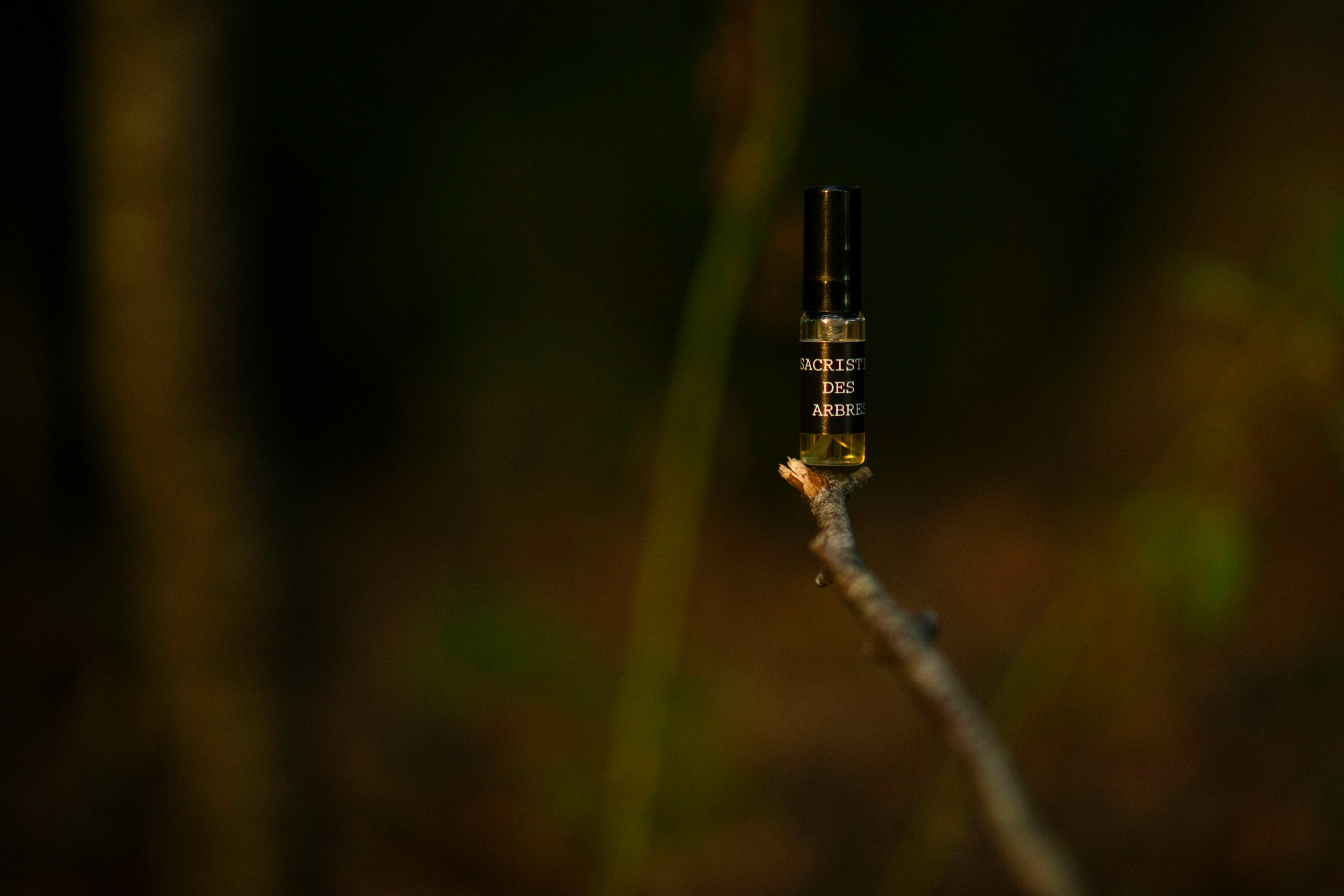
SACRISTIE DES ARBRES

At last, we reach the pinnacle of the Memento line. It is an invitation to meditate and reflect, an organic balance of the natural and the manufactured.

It is also what I was most hoping for all along: a seamless combination of interior and exterior that allows each tier to speak for itself. On the front end, vanilla and vetiver create a sharp, almost citrusy vibe with a softer, sweeter undertone. Along with them are benzoin resinoid incense, ambrette, and amber for an even smoother transition into damask rose and guaiac wood. At the end of this balsamic concoction are notes of pine essence, Virginia cedar, incense, and mint. All of this works beautifully to tell a tale of great sacrifice. It emphasizes the itineracy of faith, illuminating just enough of the path ahead to know that our feet will fall on solid ground. As it dries down, we get more of those woods and less of the incense, so that we are left alone with our own thoughts, surrounded by the trees. These all dissipate, along with our worries and cares, leaving only the spirit behind.

Reminds me of: XJ 1861 Zefiro by Xerjoff

And so, having found a renewed sense of life, I carry on, nothing more than a pilgrim passing through. And maybe you will find me just by following the sillage I’ve left behind, matching every footprint with your own, until we reach the promised land.
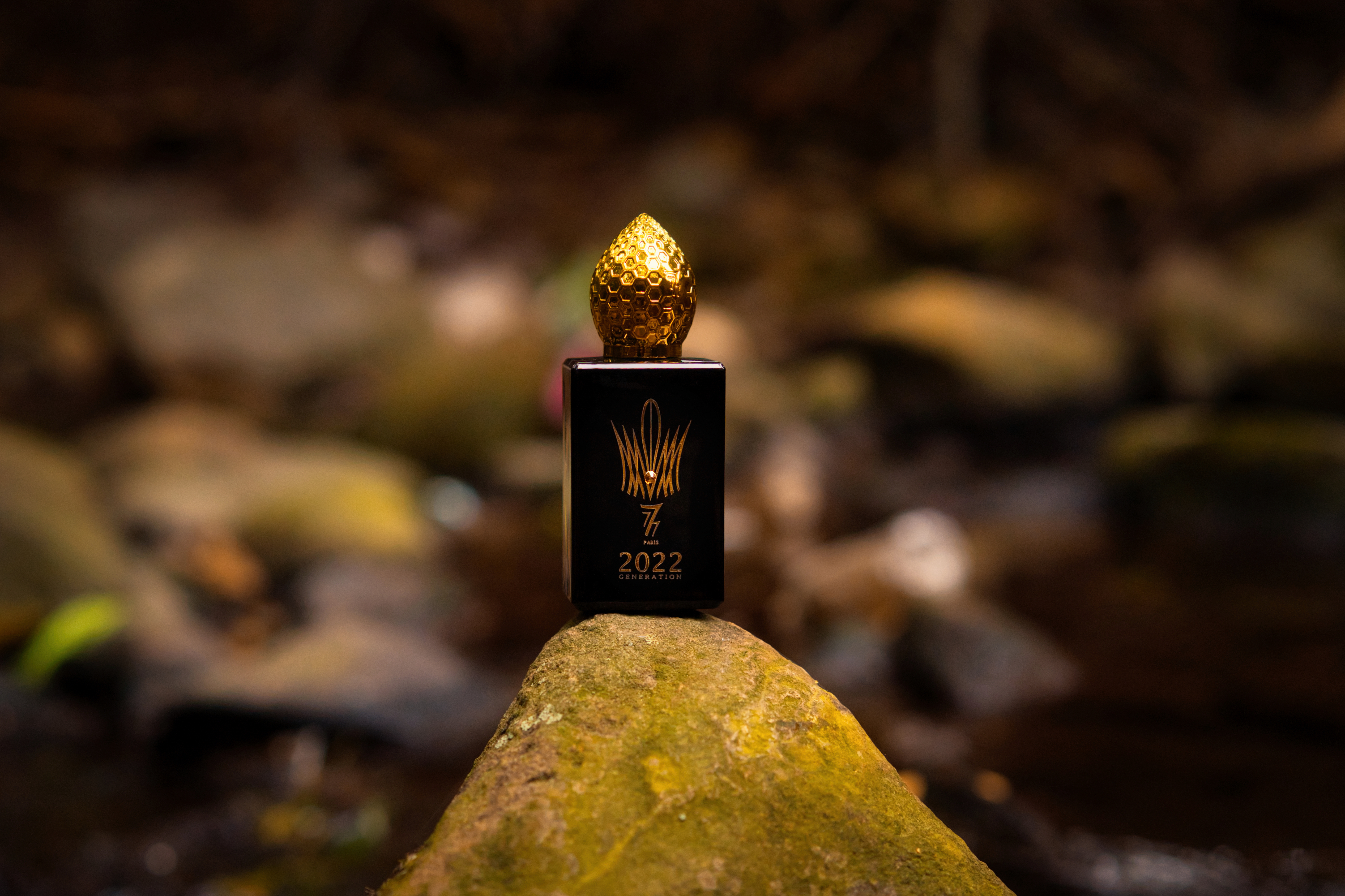
2022 Generation Black: The Future Is Past

Drawing inspiration from a trip to Qatar in 2012, perfumer Stephane Humbert Lucas imagined a symphony of tinctures representing the city’s bridging of ancestral traditions and modern deconstructions one decade later. The result is 2022 Generation Black, a fragrance that lives boldly between these realms of cultural expression: on the one hand, safe and familiar, while on the other, daring and forward-looking. Such is the energy he brings to one of the most stimulating scents I’ve ever put my nose on.

The fragrance is a spiral of self-reflection with distinctly extroverted qualities. At first, this might seem contradictory, but upon further wearing, it settles into the skin’s natural chemistry, taking on the unique signatures of warmth and coolness as it seesaws between the two. Despite never harmonizing completely (assuming they were ever meant to), they speak of the self’s contradictory nature, at once physical and metaphysical.

When describing this fragrance, the initial flash of yuzu zest, black currant, and mint means that brightness lives at the tip of the tongue. The combination is so rich with life that one can hardly articulate the breadth of its embrace. There is an almost metallic sheen to it as if one were digging into the heart of the soil and tasting the very ore within. This is the outward dimension, fresh and inviting in its spectrum of flavors. But beyond that, there is a feeling that this isn’t just fun and games. Rather, there is a serious, even contemplative underpinning to it all waiting to be known.

Thus, it transforms itself to reveal a heart of Cambodian oud, where some inexorable truth makes itself known in an ongoing exhalation of sensual touch. Just knowing it’s there is enough to take comfort in every inhalation we offer in balance. Going one layer deeper reveals a darker nest of precious oud (a blend of agarwood, rose, and other florals), spices, and balsamic notes. It is here where we find rest as this olfactory journey comes to an end. Although not the longest-lasting of its kind, there’s something special about the ephemerality of its intensity that begs repeat wearings—and fresh discoveries.

The Hope: A Shimmering Shadow

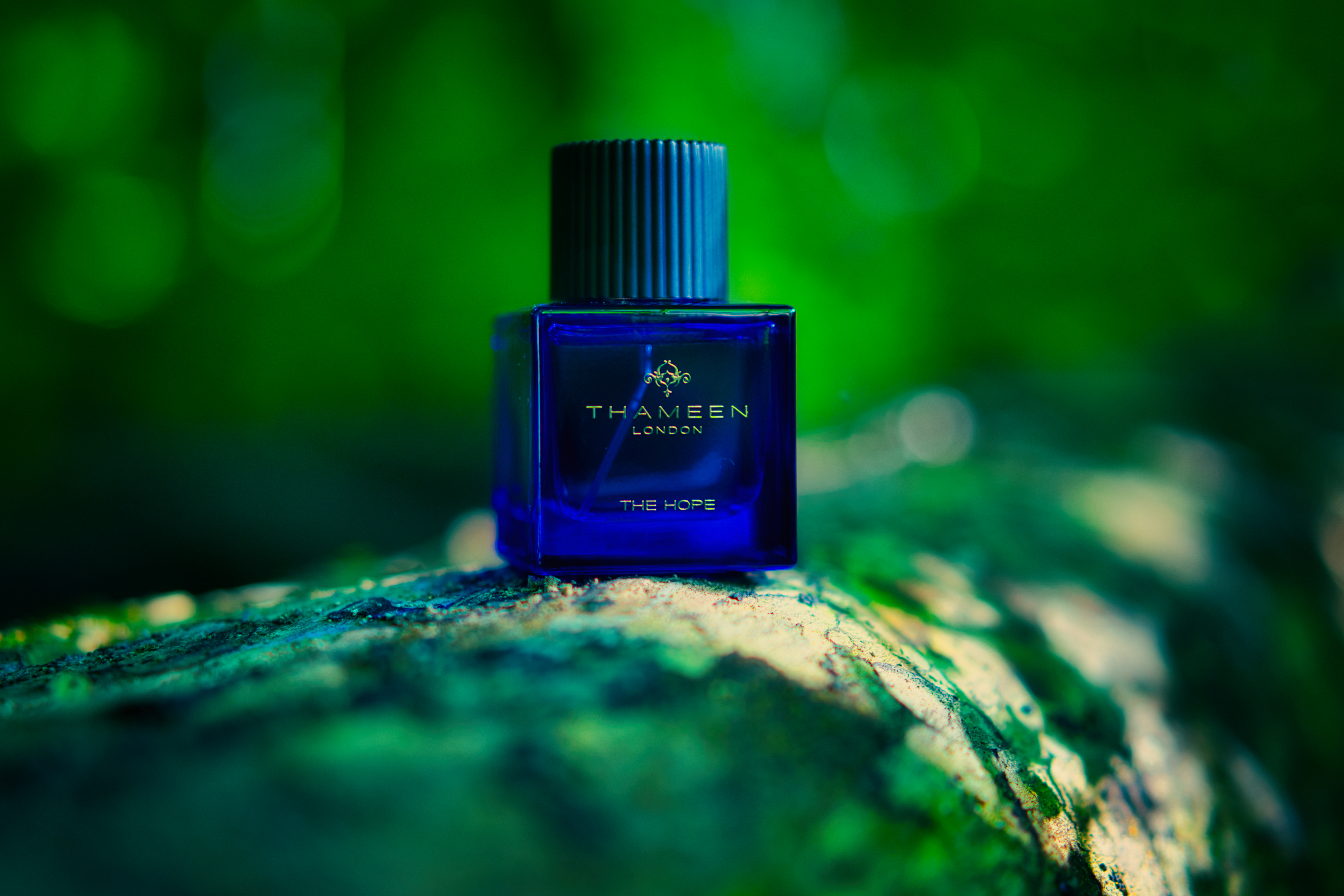
The word hope conjures images of things longed for, of that which has yet to be seen, felt, and known as a part of one’s lived experience. There is also a sense in which hope may be manifested as something physical. Thus, the Hope Diamond serves not only as the inspiration for this fragrance from the London-based house of Thameen; it imbues every tendril of its sillage with the promise of prestige. Abiding in a similarly blue bottle, itself a vessel in which the future may be tinctured, this is luxury for its own sake, devoid of social baggage and offered nakedly as if beauty were as necessary as breathing—and are not both integral to this masterful olfactory experience?

From the opening, we get a love nibble on one ear of pink pepper, cinnamon bark, and cloves while frankincense and cardamom whisper in the other. The combination is extraordinary. Calming and unforced, it throws a blanket over the caution of our lives as if to soothe it against the wiles of the world. With so much warmth to be savored, it is a most appropriate perfume for wintry nights on which the occasional caress of comfort is all that’s needed to remind ourselves that the best is yet to come.

If these initial stirrings constitute a sonata, then the middle notes of patchouli, white cedar wood, and Immortelle flower give us an earthier symphony of sun-kissed memories. Buried in this soft tangle is the leather of nagarmotha, which casts its shadow like a wandering trader who smells of everything he carries in his pack. That feeling of being lived in is what makes The Hope such a genuine journey from start to finish.

As if to reinforce this image, at the base, we have a swirling postlude of labdanum, musks, Haitian vetiver, and olibanum, all of which shoulder their own storied pasts. As intimate as they are far-reaching, they are a vocalise of the heart. Indeed, words fall short of describing this seamless blend. It would be far better, perhaps, to depend on the language of the body to evoke all it brings to mind (and, in that capacity, I would fail even more). And so, let its gestures embrace you as they will.

Hacivat: A Ray of Light in the Forest

Without knowing how or when I got here, I find myself walking through the trees at sunrise. Having no compass but the tingling sensations in my feet and a gentle tugging of the heart, I follow a call of the spirit to places unknown yet somehow familiar. Were I to cull enough energy from these surroundings to bottle the light peeking through the canopy, it might look (and smell) like Hacivat, a Chypre fragrance from the Turkish house of Nishane.

At first spritz, it slices thickly into top notes of bergamot, pineapple, and grapefruit. Although this embrace of citrus sweetness is juicy and sensual, it is far from hedonistic. Rather, it practices restraint to appreciate its surroundings without getting distracted by them—not blind romanticism but a blush of self-awareness and faith in boundaries. In this kiss, there is no hidden agenda. It is naked without being profane, vulnerable without being weak.

With a fuller spray and time to develop this newfound relationship, heart notes of jasmine, patchouli, and cedarwood emerge as woodland creatures from their dens. Here, the warmth comes through, poised as if on the brink of a newfound love. The colors shift in the manner of a shadow play, each figure expressing more than the sum of its parts in a parable of mischief. In the absence of water, it drinks in the promise of another day.

As the journey continues, base notes of clearwood, oakmoss, and dry timberwood remind me that no matter how far I may travel, home is never far away as long as I have my body. Even in the face of deterioration, it whispers of the future.

Nearly 12 hours later, despite finding those comforts where I’ve staked my life, traces linger in whiffs of timber, ancient and covert.

This is reality, condensed and extracted.

WAZAMBA: A Winter Treasure

Normally, when fire burns, its smoke rises to become one with the sky. The smoke of WAZAMBA settles inward to become one with the self. This deeply resinous masterpiece from Parfum d’Empire opens with a kiss of red apple before fingernails of Moroccan cypress and aldehydes scratch ever so lightly along the nape of our awareness. There’s no escaping its allure; no matter where you turn, its sillage follows with the gentle persistence of a shadow.

Kenyan myrrh, olibanum, labdanum, and plum create an echo chamber that feels prayerful in its intimacy. Thus, the experience of this perfume becomes more individual the more it develops. Like a song, it reveals its chorus after the opening verses—a comfort to return to as we move throughout the day, revealing new shades of meaning.

Base notes of Somali incense (a sagacious presence throughout), fir balsam absolute, Ethiopian opoponax, Indian sandalwood, and fern wrap the skin in the vibrations of time travel, stepping beyond the here and now to take in the scents of places long buried and yet to be built. Uncannily enough, it makes us feel as if we were the portal rather than the ones stepping through it, absorbing the world around us so as not to forget it.

Behind WAZAMBA is the nose of Marc-Antoine Corticchiato, whose approach to the sacred crosses as many borders as the ingredients that come together in its glorious ritual. By harmonizing such seemingly disparate elements and cultures, he creates a warmth that melts snow into rivers. It is lesson that anyone with a political agenda might learn from, exhaling the will to power and inhaling a desire to know oneself again as a child of God.

Al Andalus: For the Skin Within

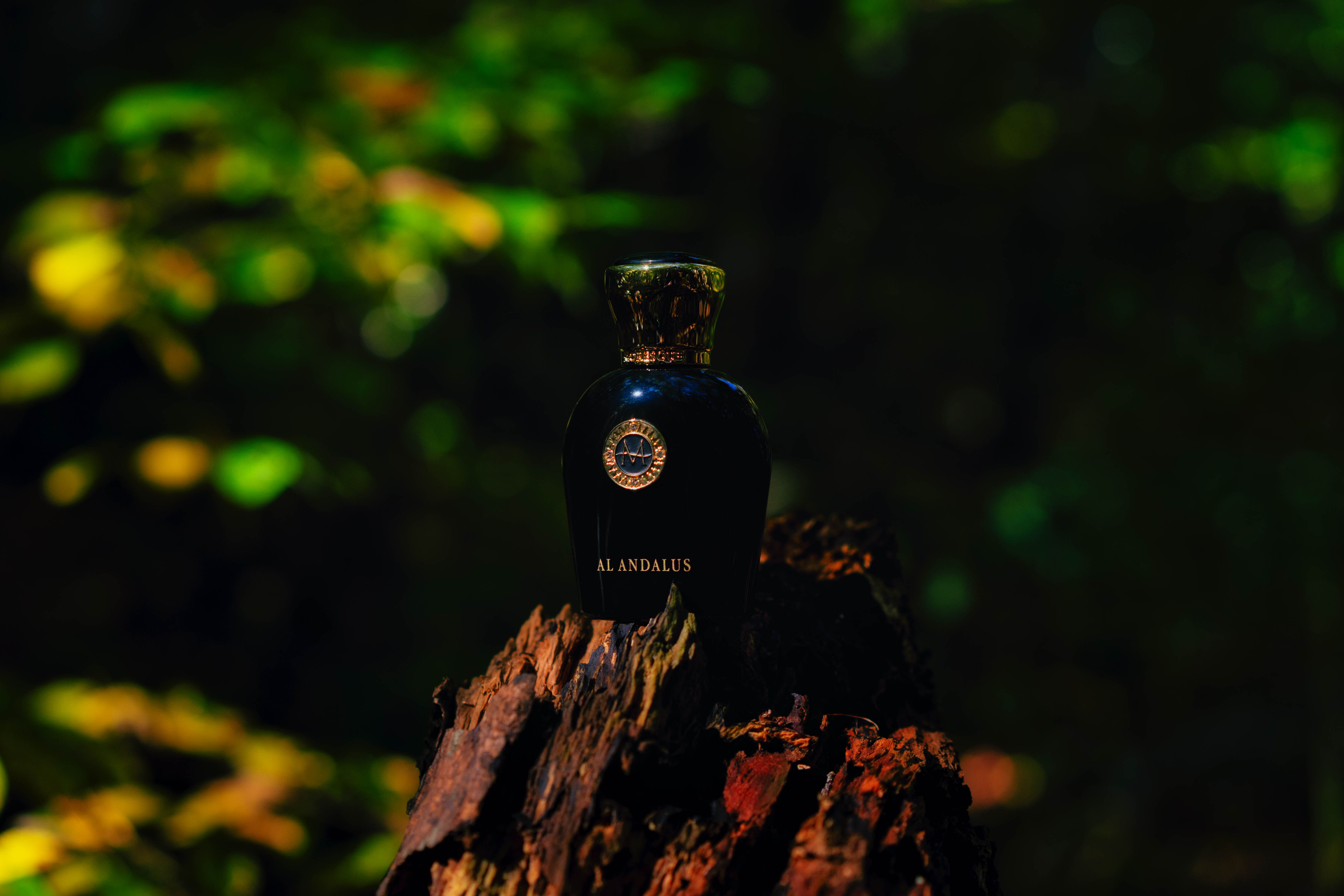
It is often said that fragrances transport us. Indeed, some of my favorites—including Parfum d’Empire’s Wazamba, Jazeel’s Heyam, and the Incense Series by Commes des Garçons—have more than a resinous quality in common. Each is also intimately connected to the spirit of a place, whether in the regional specificity of its note profile (such as Wazamba’s Afrocentric symphony of ingredients from Somalia, Kenya, Ethiopia, and Morocco) or by force of suggestion in the name. Al Andalus checks off those boxes and then some. What puts this masterpiece from the Italian house of Moresque and the nose of Andrea “Thero” Casotti on its own pedestal is the inwardness it affords the moment I apply it. Never have I beheld a scent that pulls such a vivid constellation of time and place into me rather than me into it.

As the opening release of ginger embraces my nostrils like an old friend, it bears saffron and black pepper as gifts from afar. Despite the connotations of distances traveled, “exotic” and other outdated descriptors must go straight into the kitsch bin, making way for the more accurate word pictures of “bitingly warm” and “darkly gold-flecked.” The brocade of light and shadow that plays about its introduction is extraordinary. It changes during every inhalation—so much so that I wish I didn’t have to exhale in between.

As the hands on the clock go obtuse, then acute, a quiet comfort takes over. A heart of oud from Kalimantan Island shines like a candle in a blackout—which is to say, with unadulterated vitality. The slightest breaths of wind remind me of where this reunion began, hinting at slumber. Memories and stories lure my attention from the present while enhancing bodily awareness.

Tendrils of Haitian vetiver, French labdanum, and birch braid themselves until two become one, leaving a bed of wonder that smells of the soul. Only then do I realize I’ve been speaking to myself the whole time, curling inside out.

How appropriate, then, that Al Andalus should last 12 hours. Its diurnal character shifts from golds to greens throughout the day, foreshadowing the night with its sunlit opening. What begins with the excitement of an open-air market gradually turns dusky, becoming a scent for the skin within. Such an experience is rare in perfumery, and yet, here it awaits, a sky without a cloud but for the wisp of smoke in whose name it settles.

Ana Reyes: The House in the Pines (Book Review)

It was as if they had opened a valve and all the pain, fear, and anger of those days had issued from their chests and rolled onto the street, rising into a terrible shout to the thick black clouds above.
–Isabel Allende, The House of the Spirits

Trauma wears a coat of iron. It trips into the body when one least expects it, wrapping itself on the way down in a protective layer so soundproof that it becomes unknowable even to the self. With time, however, its minor key drifts within earshot, begging for the major strains of a token anthem known as “Moving On.” Such prefab resolutions to the pain we carry inside feel intensely tailored to individual circumstances until we realize they bear the scars of ancestors whose breath still hangs heavy in the air. Although their voices are lost to the burial ground of history, we continue to exhume them in the hopes of putting their bones back together. But without the flesh to connect them, they fall into piles of dust the moment we let go.

When destruction befalls an entire race of people, even before the word “genocide” enters our collective vocabulary, its wickedness thrives in the shadow of our unwillingness to accept it. And yet, something lingers, a sundial’s shadow following the same slow arc across a stone marked by the positions of celestial bodies. Except now the stone is a page, its shadow the ink it has absorbed to convey stories of ourselves. This is the essence of literature. And so, let us begin to imagine that one page becomes ten, that ten becomes hundreds, and that a cover and a name whorl into shape. The leaves part, and the light angles itself just so, hinting at what is to transpire.

An Outward Look

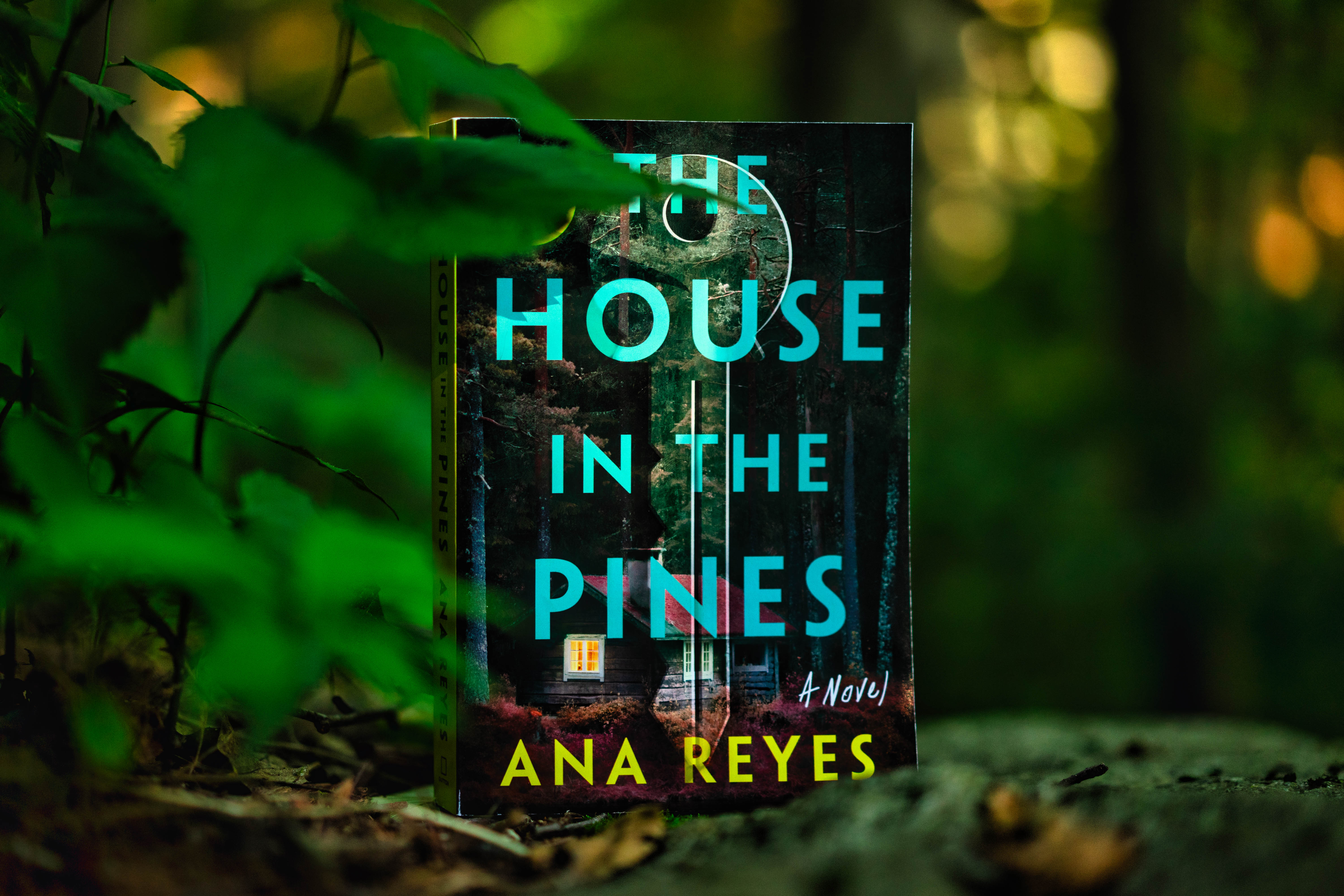
“Deep in the woods, there is a house that’s easy to miss.” So begins The House in the Pines, the debut novel from Ana Reyes. Like the titular house, itself a major character whose lungs inhale the emotions of her protagonists and antagonists and exhale the distillations of their overlapping traumas with the depth of a fireplace in its capacity for memory, she holds the key. Thus, Reyes points to a core construction not only of her conceit but also of fiction as a contract between author and reader. In building these things one element at a time, she clues us in on her piecing together of personalities and the world they inhabit.

Our guide, once removed from omniscience, is Maya, a 25-year-old graduate of BU who works at a gardening center while her partner, Dan, pushes his way through law school. As a couple, they are typical and atypical. The former in the sense that they want what most people in love want (to make a home together, find meaning in each other, and build a future to replace the past), the latter insofar as Dan’s unabashed honesty—a rarity in her lived experience—is a mirror she has yet to find elsewhere. Its reflection at once repels and attracts her, illuminating vices that may or may not be within her control. For the time being, things are relatively stable—that is, until she encounters a mysterious piece of security camera footage online in which a young woman drops dead inexplicably. Disturbing in and of itself, if not unusual in viral fare, what grabs Maya’s attention is the man in the video, Frank Bellamy, an ex whose face might have remained subconscious had not its unmistakable features courted her memories from the screen.

Even before this interruption, Maya has been papering over the cracks. Like an eggshell, the structural integrity of her life relies on equal pressure applied to opposite ends. Any maldistribution thereof means she is at risk of breaking. Wracked by sleepless nights, she “could easily draw from memory the shape of every water stain on the ceiling,” indicating a dichotomy of comfort and monotony stemming from the same source. Through flashbacks, we witness her friendship with Aubrey, who also happened to die in Frank’s presence seven years ago.

A further scan of the surface of things reveals other details amiss. Maya’s struggle with antidepressants is clarified early on, as is her insistence that Frank is somehow responsible for the death of Aubrey and the girl in the video. That no one believes her encourages a cycle of doubt that keeps one foot on the hamster wheel of justification. If we are going to trust Maya, we must first seek the evidence cobwebbed in the darkest recesses of her mind.

She returns to her hometown hoping to learn more about this second death and the enigmatic Frank, whose involvement, she maintains, is more than coincidental. She has set herself on a path toward a truth that even she might not be prepared to wield as her own. The rest is for you to discover.

An Inward Look

One sign of any honest work of literature is not how well you understand it but how well it understands you. In this respect, The House in the Pines succeeds with hard-won beauty through two disparate yet intertwined internal mechanisms.

The first is an unfinished novel by Maya’s father, a latter-day victim of Guatemala’s Silent Holocaust, whose typed manuscript is a leitmotif in her life. It also brings her and Frank together, as her intent reading of it pings his interest. After striking up a conversation, they embark on a relationship as intense as it is cut short by Aubrey’s untimely death. Beyond this nominal mystery, the violence of Maya’s family history looms as the central horror of this novel, the outer skin of which serves as a canvas for the tattoos of its denouement.

Here, storytelling is a catalyst and repository for struggle. Through regular references to children’s books, literary classics, and Greek mythology (over which Maya and Dan bond after her skip in the record of life with Frank), Reyes gives us at least two out of three combination lock numbers for the emotional baggage Maya carries at any given moment. Suffice it to say that death has always been her stage set, whether in the aunt she never knew or the grandmother whose funeral brings her to Guatemala and puts the father’s pages in her hands.

The other psychological trigger is the cabin itself, which Frank has lovingly crafted as a haven away from a troubled (and troubling) childhood, which becomes clearer as Maya’s current investigation unfolds. In this respect, the cabin is a storehouse of memory, if only because it is the missing link in the emotional evolutions of those its presence has affected.

The centrality of its forested location further confirms the thriller narrative as a coping strategy. As Reyes puts it, “Maya’s life was divided into a Before and After” the turning point of her best friend’s sudden expiration. Any subsequent grief opens a void to be filled by words other than hers. All the while, Maya struggles with the dilemma that many victims face: to protect her own words by holding them all inside or risk others’ perversions by turning them into a story.

Either way, writing fixes memories in time, reminding us that things happened. This is why, for me, The House in the Pines is ultimately about books as objects of intimacy and vulnerability. Read it that way, and it may just hand you a key far more liberating than the one its title cross-hatches. 

The Fragrance of Fiction

It’s not often a novel gets its own fragrance, but that’s precisely what Gold & Palms Atelier set out to change with Deep Woods. Directly inspired by The House in the Pines, it combines the innocence and foreboding of the forest in a robust pyramid that will surely immerse the multisensory reader.

In its top notes of smoke and fir needle, one feels the vestiges of human activity as if encountering a once-inhabited place long since abandoned. The whiff of ashes is a sign of life, while the greenery gives us a sense of nature’s quiet indifference. The middle notes of sandalwood and cardamom lend a sense of distant times and places, perhaps even of an unrequited love. One can easily read Maya and Frank into their dance, vacillating between harmony and separation. Finally, the base notes of oud, vanilla amber, and (most prominently) tree sap indicate a mystery among the trunks and their receding lines.

While pine is no stranger to the world of perfumery, among the bottles I’ve put a nose on, Deep Woods reminds me most of Mriga from the niche brand Prin (a pungent blend of conifer resins, sandalwood, and oud), minus the animalic edge of deer musk. The softer tones of Gold & Palms Atelier’s take on this constellation make for a more wearable experience, such that you can almost feel yourself blending into the wood, losing all sense of time…

Not only is this the fragrance of fiction; it is also the fiction of fragrance to transport us to places that exist only in our minds. The overlap here is profound enough to add layers to a novel intent on peeling them. Still, there is hope because we have an anchor to hold on to. Scents may fade, but the memories of which they are spun continue to flex until we drop from view.

Scenting ECM: A Fragrance Review

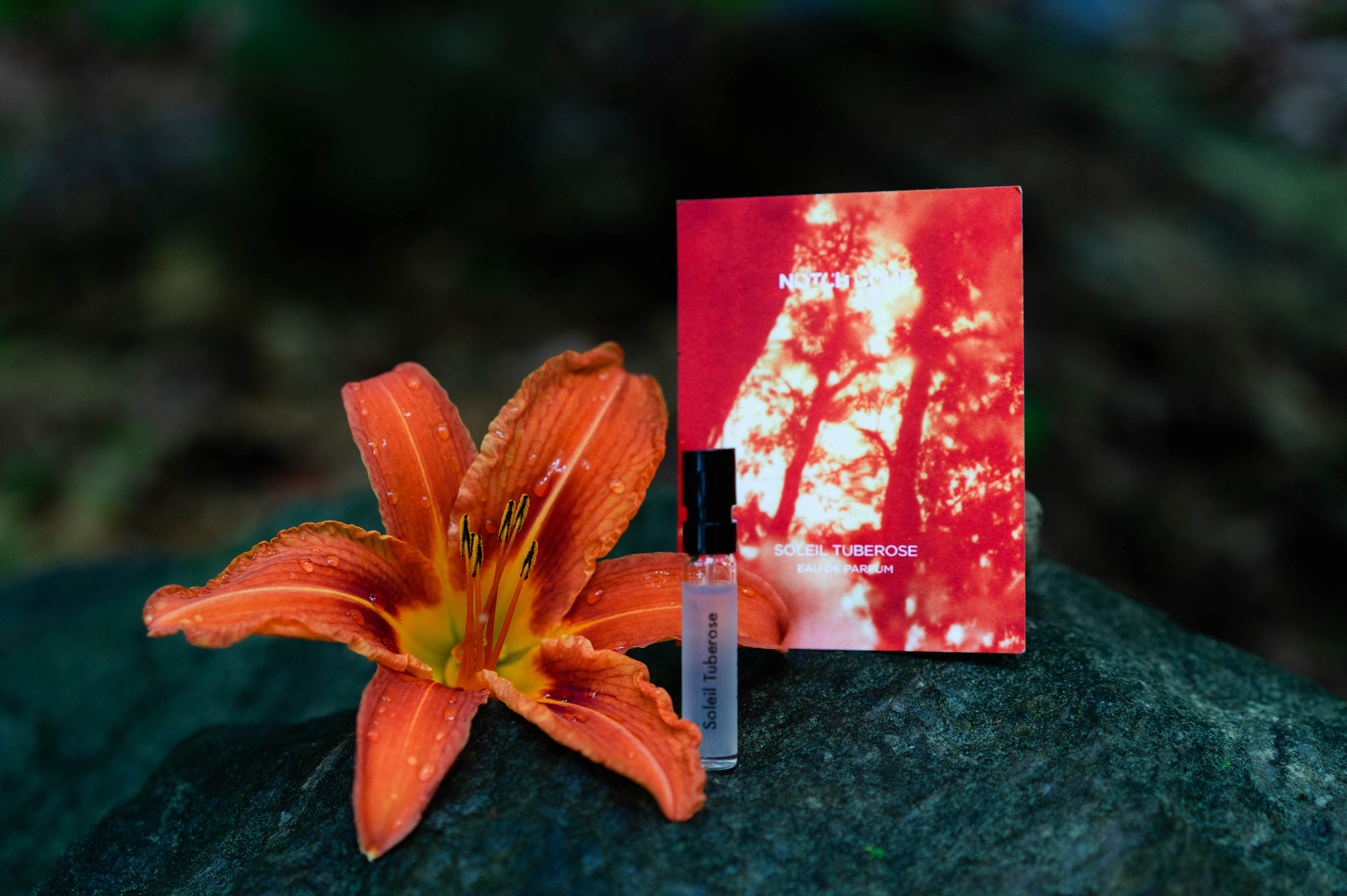
Likely anyone who has been listening to ECM for a significant amount of time knows the Gertrude Stein quote that follows the label’s ever-expanding catalog like a shadow: “Think of your ears as eyes.” But here is a rare instance that asks you to think of your nostrils as eyes. Introducing Notch Code, a niche perfume house from South Korea dedicated to creating scents based on artistic works: in this case, two images by photographer Woong-Chul An, which should be familiar to ECM fans as the covers for Anja Lechner and François Couturier’s Moderato cantabile and Jack DeJohnette’s In Movement. After reaching out to the company, I was grateful to receive a discovery set with matching blotter papers for this review.

Moderato cantabile is the inspiration for Soleil Tuberose. Featuring notes of cardamom, pink pepper, rose, black pepper, tuberose, musk, sandalwood, and cedarwood, this evocative fragrance almost lingers on the tongue. The elements are respectfully combined, with enough separation to seek them out individually. Each asserts clarity as part of a collective sound that blurs the lines between them. The pink pepper hits the nose first, followed by the rose and tuberose, before the woody base steps into the foreground during the dry-down period. Fans of tuberose who want a softer feel of this difficult-to-balance ingredient will find much to savor.

In Movement finds new olfactory life in Musk Eternity, a choral blend of musk, frankincense, orchid, and jasmine. The floral elements work synergistically to elevate the normally darker musk and frankincense into fruitier territory. This one immediately evokes the crystalline masterpieces of UK perfrumer Thameen (especially The Hope). Such low warmth and intimacy deserve to be called twilight in a bottle.

The sillage of both perfumes is gentle yet noticeable. Longevity is modest (around three to four hours on my skin), making it suitable for casual wear or for situations in which an understated entrance is required. Like the fine albums with which they are associated, each must be put on to be remembered.