Two Centuries is the second album from former ECM producer Sun Chung’s Red Hook label and may one day be regarded as its most defining release. As electronic musician Qasim Naqvi, trumpeter Wadada Leo Smith and drummer Andrew Cyrille put 11 of Naqvi’s tunes under their triangular microscope, the cells of our listening are magnified.
“For D.F.” opens with a political charge. Written for Darnella Frazier, who captured George Floyd’s murder, it uses distortions to evoke the white noise of our collective trauma. As subtle as this music is, with its near-comforting swells and honest lyricism, it offers not a moment of reflection but the reflection of a moment, a vivid gaze at a life lost on the brink of a society in turmoil. This is, perhaps, the deepest nuance of the titular centuries, the dividing line of which is drawn not numerically but on the shifting sands of justice.
What follows is a veritable tilling of melodies made possible as much through listening as playing. The foundation is often forged between Cyrille’s tools and Naqvi’s febrile choices of color. In fortifying each for harvest, they dip into disparate references. Hear, for example, the influence of Bryn Jones in “Sadden Upbeat,” while “Tympanic” recalls Sofia Gubaidulina’s String Quartet No. 4.
Contrasts in mood abound, ranging from sunlit (“Palaver”) to brooding (“Wraith”). “Bypass Decay” is of special note, chugging like a train against (and ultimately losing to) an encroaching night. Throughout, Smith speaks (e.g., “Spiritual is 150”) and sings (e.g., “Organum”) in equal measure, but always with a message to convey in the role of griot, reminding us of something spiritual, though severed from any particular tradition. As is evident in “Orion Ave,” where the free-floating hymn reigns supreme, faith walks these empty streets alone, trailing its shadow like a burden of care.
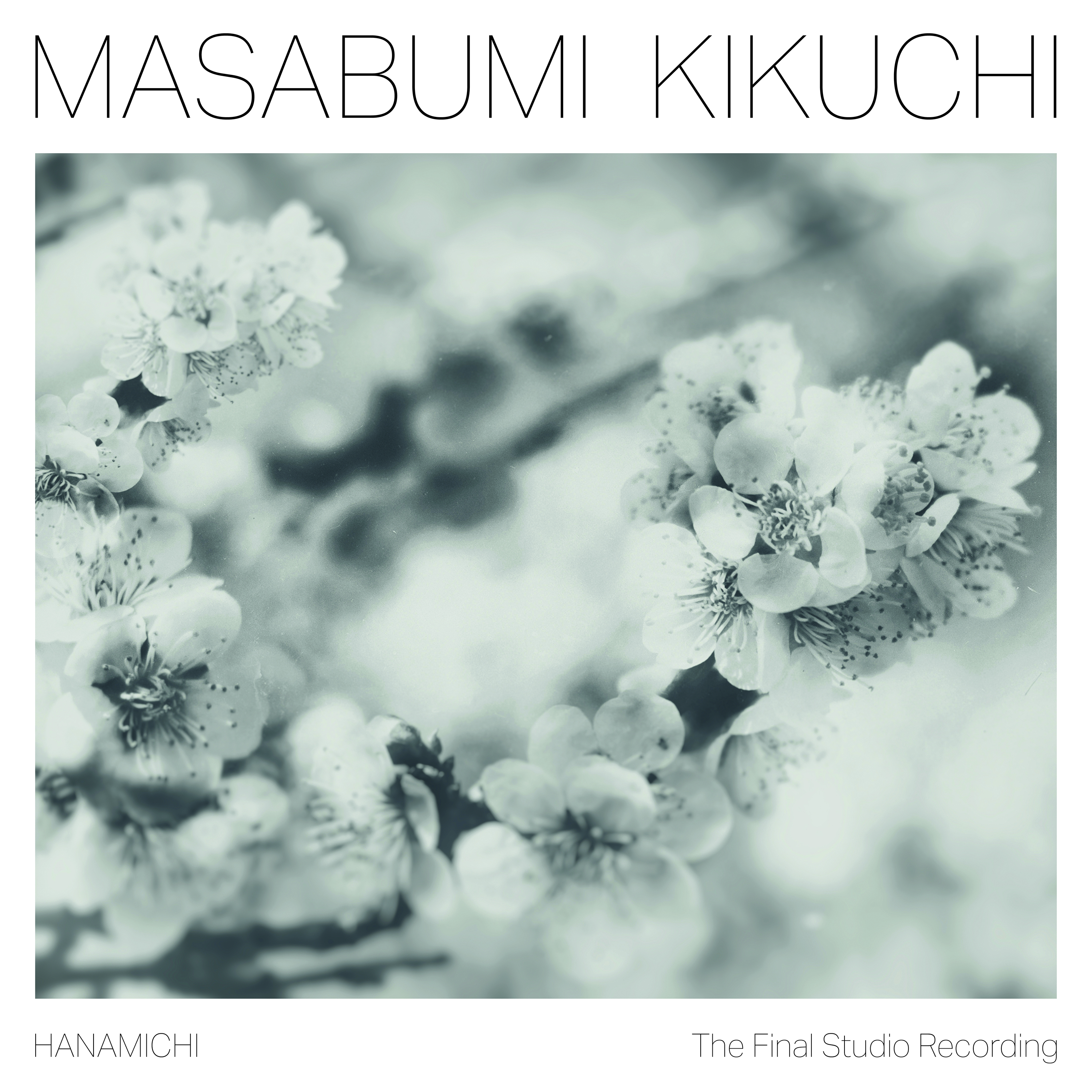
Hanamichi is the final recording of Masabumi Kikuchi (1939-2015), a pianist whose fingers left indelible prints on many a keyboard. Produced by Sun Chung, a former ECM producer and now head of Red Hook Records (of which this is the debut release), the album drops like a stone into the ponds of our hearts. The resulting ripples take form as six tracks, yet it is in the unquantifiable rings of space between them that Kikuchi plants his notes as seeds for a crop that has outlived him. What distinguishes Kikuchi’s agricultural process is his refusal to prune away a single sunburnt leaf or dying plant. He takes care to describe those apparent imperfections as beauties in their own right because they are real, honest, and unmanufactured.
The not-quite-standard “Ramona” and the more-than-standard “Summertime” brim with such regard. The introductions to both breathe with a lived sense of geometry. Kikuchi tends to every stem like an ikebana master who works with his eyes closed. Just as the visual impact ceases to matter for one so accustomed to flowers, the sonic impact recedes for Kikuchi, who turns every contact of flesh and ivory into an emotional prelude beyond the confines of melody. His willingness and ability to capitulate to these moments come out of an understanding that intimacy has little to do with isolation but is just another name for connectivity. In the spirit of Paul Motian, the drummer with whom he played for more than two decades, the technical abilities required to evoke so much with so little are obscured. It is their shadows we encounter, if not also a hint of the light that casts them. He is the bird who flies for no other reason than to glorify the wind.
Unlike jazz players who unpack a thematic statement to expose hidden messages in even the most familiar tunes, Kikuchi reverse engineers them to unfamiliar origins. Two cases in point are his starkly different versions of “My Favorite Things.” Where the first molds nostalgia into a knotted internal dialogue of ringing chords, the second is the dream to its waking, performed in fearless slow motion. From these contemplations comes an “Improvisation,” which Kikuchi smooths into an altar for relatively percussive offerings.
“Little Abi,” a ballad he wrote for his daughter that was a cornerstone of his repertoire, concludes with a tear-inducing farewell. The pacing here is so cinematic that the listener cannot slide so much as a piece of paper between one movement and the next. How he accomplishes this while still allowing for so much breadth is unfathomable. A contradiction in words, to be sure, but an organic comfort in his sound.
To the details of said sound, Chung’s ears are lovingly matched, and Rick Kwan’s engineering seems to elucidate two inner songs for every outward one rendered. As in Kikuchi’s use of the sustain pedal, the recording team allows notes to inhale deeply before they exhale their songs into the ether. Thus, the studio functions as an extracorporeal lung—and perhaps by no metaphorical coincidence, given that the pianist had survived cancer of that very organ.
The term hanamichi (花道), literally “flower path,” is a Japanese idiom of kabuki theatrical origins that signifies an honorable end to one’s career. Listening to the session it titles, however, one could be forgiven for thinking of this as a beginning, given that final recordings are often new listeners’ entry point into the intangible wonders of great artists. Hence, the vintage Steinway on which he plays. While the family name is synonymous with world-class instruments, its literal meaning of “stone path” reveals another secret. The way of stone is an immovable trajectory from birth to death, raw and astonishing in its lack of repetition. All of which reminds us that every recording is a ghost of its creator, of whose soul we are but temporary hosts.