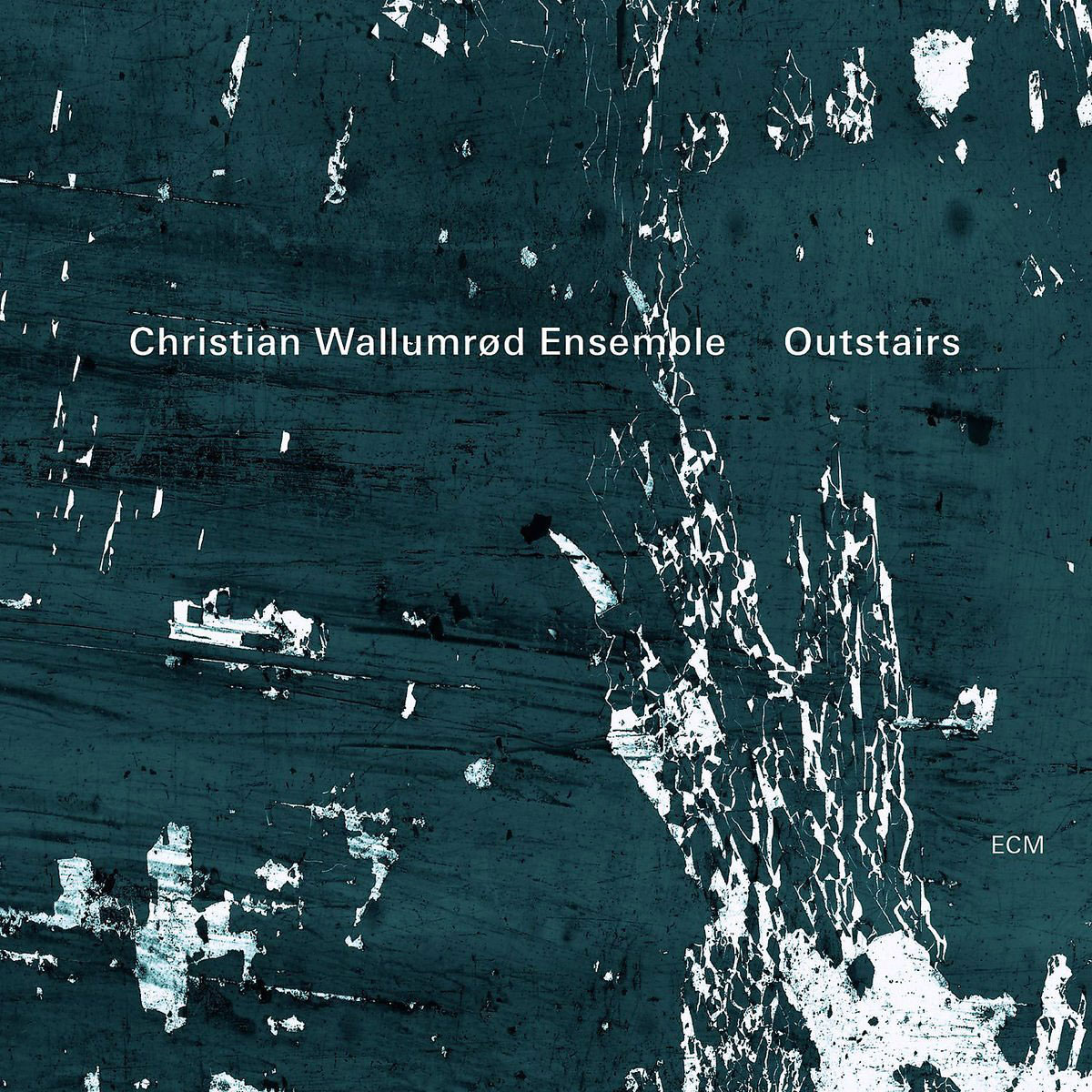
Christian Wallumrød Ensemble: Outstairs (ECM 2289)

Outstairs

Christian Wallumrød Ensemble
Outstairs

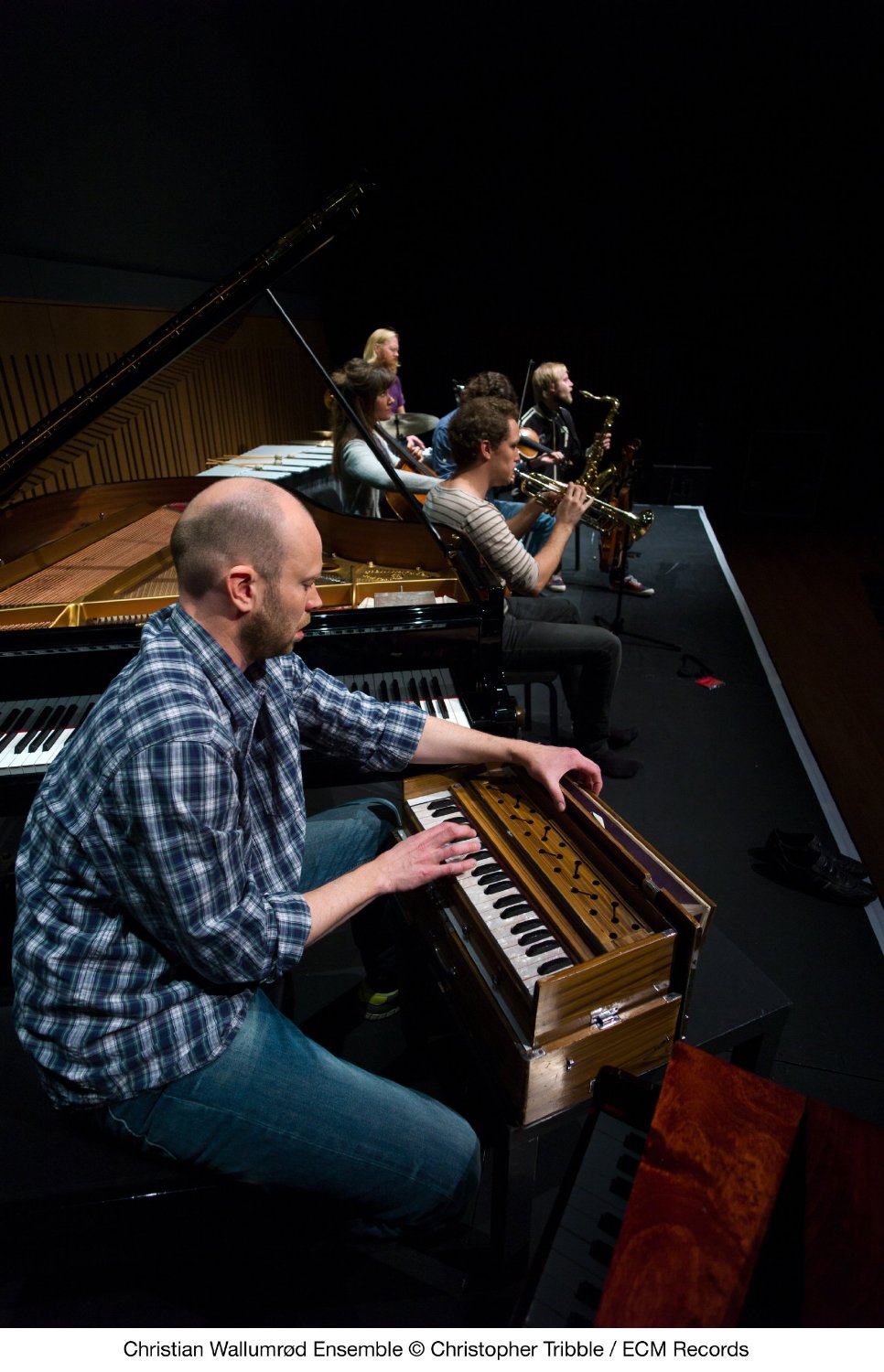
Christian Wallumrød piano, harmonium, toy piano
Eivind Lønning trumpet
Gjermund Larsen violin, Hardanger fiddle, viola
Espen Reinertsen tenor saxophone
Tove Törngren cello
Per Oddvar Johansen drums, vibraphone
Recorded May 2013, Auditorio Radiotelevisione svizzera, Lugano
Engineer: Markus Heiland
Produced by Manfred Eicher

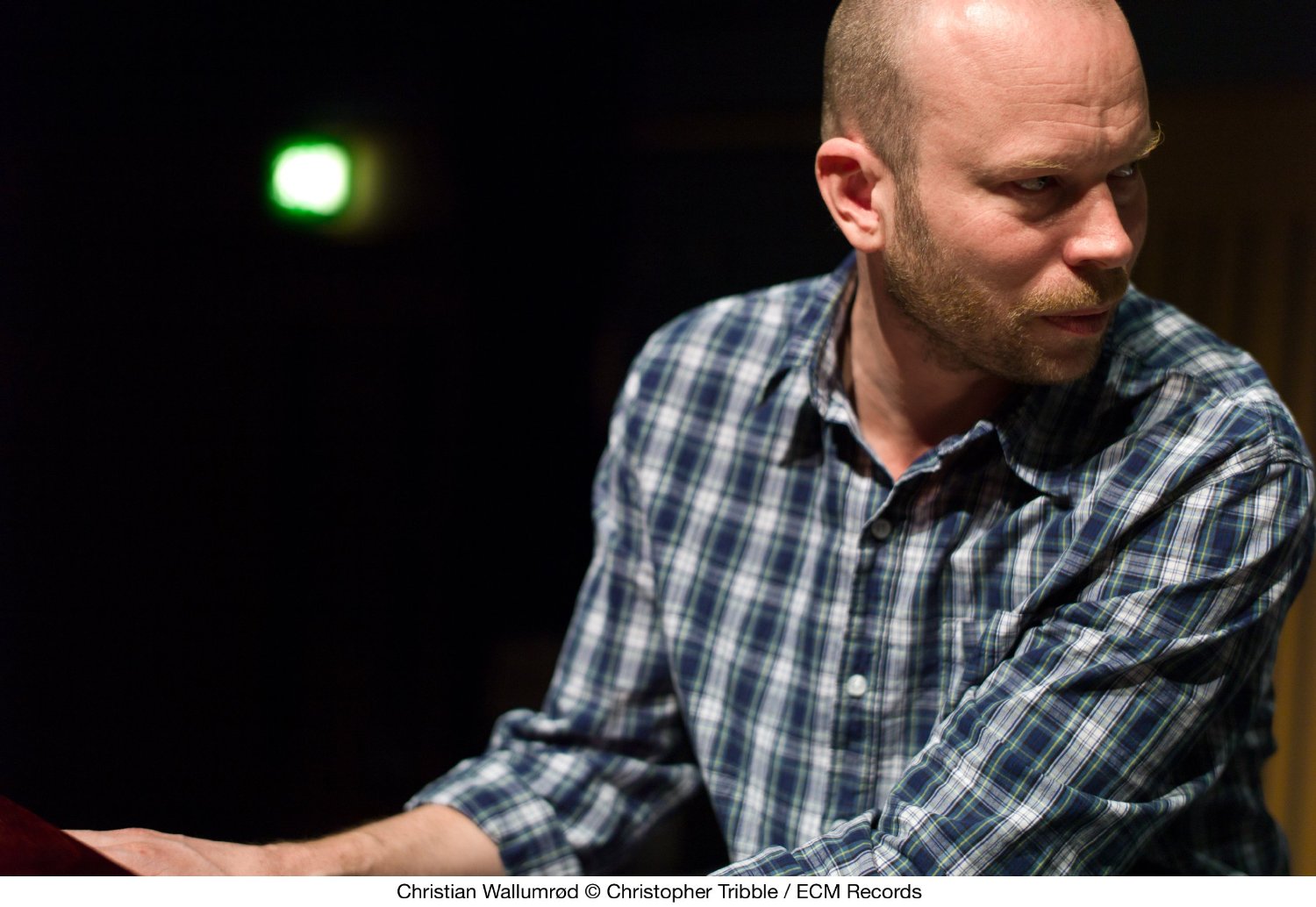
With Outstairs, pianist Christian Wallumrød has taken chamber jazz to new levels of intimacy, redefining its parameters and capabilities with atmospheric profundity. He achieves this through no small measure of humility, by which he imbues the music with the color of invitation. The risk is that, once you step through it, his door might never let you out again. Such is the irony of the album’s title, which promises escape yet embodies the reflective side of a two-way mirror.

Wallumrød

The title of the fifth track, “Startic,” is a suitable adjective to describe the cellular approach of Wallumrød and his ensemble. Each piece feels like the beginning of another, ad infinitum, until a sense of the whole begins to emerge, by which time your brain has already been soldered in. The dark pulse of “Stille Rock” begins at the piano before drummer Per Oddvar Johansen and fiddler Gjermund Larsen spin flesh around the ivory. With pathos not heard since Górecki’s Lerchenmusik, it nurtures a patchwork of unfinished sentences, which only the listener may complete.

Wallumrød Ensemble

Subsequent references abound. Whether intentional or not is immaterial, for no matter how much of their clothing has been worn before, Wallumrød’s alterations eat new fashion for breakfast. Some, like the Morton Feldman-esque “Very Slow” and the microtonal “Beatknit” (which resembles an abstracted compression of Nik Bärtsch’s Ronin), are more obvious. Others, like “Bunadsbangla” and “Tridili #2,” feel as if we should know them. Grounded by deep beats and lathered up with bubbling chords, they are the soundtracks to films not yet made. The soothing tenor of saxophonist Espen Reinersten and earthy strains of cellist Tove Törngren are silhouettes of trees in the latter excursions, while Wallumrød’s harmonium and Eivind Lønning’s trumpet percolate through the leaves in the form of sunlight. These absorbent textures cloak an outer resonance in the guise of a seventh band member.

The album’s remainder is for the most part percussively centered. Regardless of instrument or title—be it in the brushstrokes of “Folkskiss” or the toy piano of “Ornament,” the darker sustains of “Third Try” or biological crop circles of the title track—an underlying clockwork reveals itself in every rustling and reedy song. As title of the concluding “Exp” implies, this program represents a leveling up for the ensemble. And as its final climbs find themselves lured by whispers of a forgotten darkness now returned as a gift, we have no option but to succumb to the heat of understanding. The lava is our birthplace, and it is to the lava we must return.

This reality, unglued.

(To hear samples of Outstairs, click here.)

Morton Feldman: Violin and Orchestra (ECM New Series 2283)

Violin and Orchestra

Morton Feldman
Violin and Orchestra

Carolin Widmann violin
Frankfurt Radio Symphony Orchestra
Emilio Pomàrico conductor
Recorded October 2009 at Sendesaal des Hessischen Rundfunks, Frankfurt
Recording producer: Hans Berhnhard Bätzing
Recording engineer: Rüdiger Orth
Executive producer for Hessischer Rundfunk: Andrea Zietzschmann
An ECM/Hessischer Rundfunk Co-production

Alex Ross is one of many to characterize Morton Feldman’s music as being “glacially slow and snowily soft,” echoing the sentiments of Feldman specialists like Thomas DeLio and even Feldman himself, who employed “slow, soft” as a designation in his piano music, the so-called Last Pieces of 1959 being one example. All the while, such readings fail to out the culprit of human perception that defines their pathos to begin with. It’s not that Feldman’s “sound” (as if it were ever reducible to one) is inherently lethargic, but that we are simply ill-equipped to handle its cosmic speeds.

Feldman

We may project whatever we like onto the gossamer screen of Feldman’s hard-won life, but at the end of the day there is only the beginning of the music. That being said, there is great value in the analogic glacier to the new listener, one who comes to Feldman thinking he was a mere minimalist, only to discover that, like a glacier, he was symphony of stasis and movement in which no stratum was ever an exact replica of its neighbors. His Violin and Orchestra of 1979 is therefore not only a masterpiece in the biographical sense, but also in terms of its geological significance. Although Feldman modeled his writing off abstract impressionism, it traces fault lines so robustly scarred that no earthquake could impress them with abstraction.

Over its 1500+ bars, this multiple entity achieves sonority through rupture. Its beginnings beg not earthly but extraterrestrial comparisons, skimming black hole rims and flirting with a gravitational pull of such unfathomable power that its language can only be written by bow. Wielding said bow is violinist Carolin Widmann, while Emilio Pomàrico wields his own writing instrument in the form of a baton, suspended like a satellite antenna within the Frankfurt Radio Symphony Orchestra’s magnetic fields. Also among the forces gathered for this piece—massive in number but spectral in effect—is a piano’s droning paintbrush. Just as important as the violin, it is the below to the latter’s above and connects chakras in constellatory networks of nerve impulses. Neither is a soloist for the mere pleasure of orchestral accompaniment; they are indivisible as sunlight and water.

If any overarching thing can be said of Feldman, it is that he was a generous atmospherist. The beauty of Violin and Orchestra is that one will experience it as either a mystery or the most natural phenomenon imaginable—if not both. You might search for motifs, for concerto structure, but will come up only with handfuls of something far more organic. The variety of textures alone is proof of concept. Pulsing lower strings, light pizzicati, and tonal shifts comprise the circle, while the violin sews its holes into scars. There is an inner and outer skin to the music. Both belong to a beast that cowers below the earth’s surface, sucking its thumb and singing whatever lullabies it can dredge up from the pond of memory. It inhales, exhales. It takes continuous stock of its own emotional inventory and catalogs it finitely, like a machine. The violin’s higher-pitched notes are at some moments its veneer, at others the tone of an inner ear, at still others the sting of total recall. Even after the violin fades through a chain of percussion responses, it leaves behind a single open wound that can only be salved by our commitment to its passing.

Valentin Silvestrov: Sacred Songs (ECM New Series 2279)

2279 X

Valentin Silvestrov
Sacred Songs

Kiev Chamber Choir
Mykola Hobdych conductor
Recorded 2008 at St. Michael’s Cathedral, Kiev
Engineer: Andrij Mokrytskij
Project coordinator: Tayisa Yurieva
Recording by Kyiv Choir Productions
Co-production of Kyiv Choir Productions/ECM Records

Hear, O Lord, when I cry with my voice:
have mercy also upon me, and answer me.

The Book of Genesis tells us that in the beginning was the Word and that the Word was sound. But what if it was music? What if God, in contemplating the creation of Creation, sang being into being? If so, it might have sounded something like the Sacred Songs of Valentin Silvestrov. In this seventh ECM album devoted to the Ukrainian composer’s music, we thusly encounter a sense of space unique to the Russian liturgy: the more the voices unify in movement, the more they lift from one another like temporary tattoos, leaving behind mirror images that wash away with baptism into infinite oneness with the Holy Spirit. Sin as sun. Firmament as fundament.

Under the direction of Mykola Hodbych, the Kiev Chamber Choir likewise turns breath into physical substance, each particle activated by thrum of flesh and shaping of air. Although divided into separate collections, Silvestrov’s compositions are together a whole song—if not a song of wholeness. Their liturgical relationships, in other words, expound on mysteries of faith through an abiding faith in mysteries. The grandest statement in this regard is to be found in the Songs For Vespers (2006), which undoes two millennial knots to reveal the single thread within. “Come, Let Us Worship” invites listener and singer alike to set ancient jewels in a modern crown. Its shifting harmonies are sunrays incarnate, each taking ablution by shadow. Soloists blot the remaining songs with their supernova curls, each a messenger of immaculate peace. Among them, alto Tetiana Havrylenko glows without the need for a telescope, revealing the inner venation of sung text, as would a carpenter in wood when staining a table. Tides do not ebb and flow here on a horizontal plane, but revolve in many directions around the surfaces of natural grammars. It is only by brush of torch that their script becomes discernible to the human ear. As the music nurtures its exponents, it riddles temptation with intensities of understanding only found in scripture. Voices change their clothing in a vestry of the heart until their constitution is indistinguishable from the blood that fills its chambers. And in the slumber of a “Silent Night,” footprints leave their impressions in plush snow, extending from a childhood when the world’s shadows were merely the stuff of storybooks and dreams, now creeping into a lagoon of basses.

The Psalms And Prayers of 2007 overtake more distant mountains with their sunrise. On their watery surface floats the contradiction of a mortal life, which reaches upward even as it sinks into pleasure. In thinning the scrim of resistance to love, these melodies demonstrate one’s relationship to God as a process. Each glorifies a name that cannot contain its own holiness. With so much brightness to drink in, it is all one can do to keep from drowning. A trio of diptychs follows with further psalms and refrains. At once brooding and angelic, these cycle through pity and forgiveness and bend under the grind of faith and action. All roads then lead to the Three Spiritual Songs of 2006, by which mirrors and eyes change places, so that it is we who come to reflect ourselves.

Silvestrov’s output, much like his input, has always been concerned with memory. In this instance, it is a memory of birth that haunts the soul in search of knowledge before creation. In response to that original song, which gave us life and bodies with which to know it, only song can suffice. These are the lullabies that sustain us when the world cages us and turns out the lights. These are the hymns that remind us of the weary when we enjoy the comforts of congregation and rest.

(To hear samples of Sacred Songs, click here.)

Paul Motian (ECM 2260-65)

2260-65 X

As ECM producer Manfred Eicher tells Ethan Iverson in the booklet that accompanies this timely Old & New Masters edition, Paul Motian (1931-2011) was more than a drummer. He was also a poet. Motian had a sense about the pen which, like his impulses at the kit, never bothered to obsess over the whole picture. He was more concerned with the bare minimum pieces to indicate the theme of any puzzle on which he laid hands. That was enough for him. The six albums collected here are therefore to be taken not as a grand narrative or musical résumé, but as four border pieces and two middles. That should be enough for us.

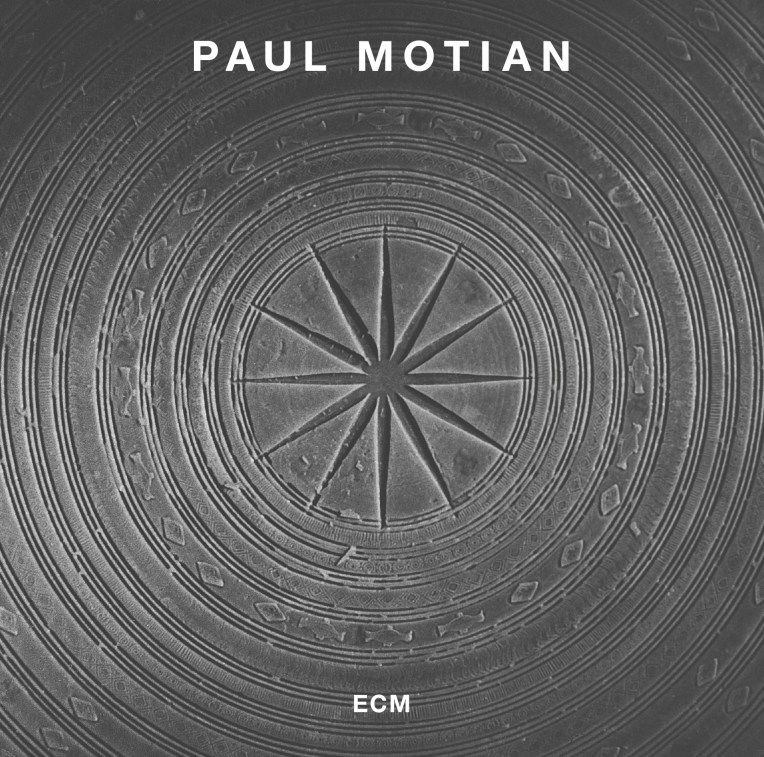
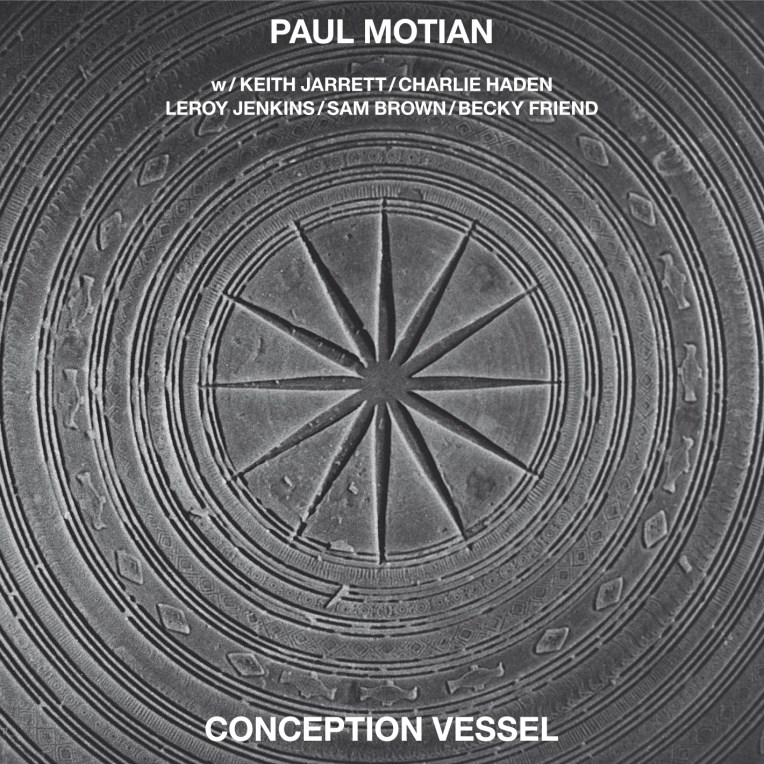
It is significant that the cover art for this set—part of ECM’s coveted Old & New Masters series—should break the trend of previous releases, all of which are clothed in minimal text against white backgrounds. The image originally jacketed Conception Vessel, an album conceived at the express behest of Eicher, who encouraged Motian to lead his debut album as composer and leader in 1972. So began a four-decade relationship, of which only a fraction is represented in the present collection. Its radial design may be read as a sigil for the man himself: a creative sun whose light abandons center for periphery.
ECM 1028

Conception Vessel (ECM 1028; also included as part of ECM’s Touchstones series)

Paul Motian percussion
Keith Jarrett piano, flute
Charlie Haden bass
Sam Brown guitar
Leroy Jenkins violin
Becky Friend flute
Recorded November 25/26, 1972 at Butterfly and Sound Ideas Studios, New York
Engineers: Kurt Rapp and George Klabin
Produced by Manfred Eicher

Considering that Paul Motian was 41 when he recorded Conception Vessel, it’s clear to see why his disposition was so amenable to the dawn. As a human being, his voice had already come into its own and needed only the blessing of the score to give it shape without words. Then again, there are the titles, which for all their naked evocativeness retain an enigmatic patina. “Georgian Bay” congeals with the steady plucking of guitarist Sam Brown, who cuts a striking, if subtle, figure across the album’s filmic canvas. Supported only by a smattering of cymbals and Charlie Haden’s crab-walking bass lines, the tune betrays little of Motian’s prowess, saving it instead for “Ch’i Energy,” a flurried solo through which his centrality blossoms in non-confrontational power. This makes the looser affair of “Rebica” all the more lyrical. Haden is in peak form in this guitar-bass-drums setting. One moment finds him providing ground support, while in the next he has already ventured off into more airborne ruminations. Brown returns after a pensive resistance, flirting with the music’s surface like a drowsy Derek Bailey. The title track raises the curtain for Keith Jarrett’s spotlight, which strangely does little to change the album’s surface texture. Despite a lack of (discernible) melody, the interplay between piano and drums yields talented ramifications. Though not the easiest piece of music to put one’s finger on, Jarrett’s fiery exuberance as he whoops his way along makes it one of the most intriguing cuts on the bill. The flute and percussion of “American Indian: Song Of Sitting Bull” draw up a suitable contract for the pianist’s wind-work in combination with Motian’s rattlesnake maracas. “Inspiration From a Vietnamese Lullaby” adds bass and the violin of Leroy Jenkins to the same in the interest of new improvisatory heights. These are exactly the kind of rituals that Jarrett lived for in the 70s (see his recently unearthed Hamburg ’72, also with Haden and Motian), and the oracle-like qualities of their architecture hold up well beneath the weight of time.

Despite being headed by a drummer, Conception Vessel eschews the trappings of mundane grooves as indication of Motian’s lifelong mapping of branches over roots. The jacket art again proves instructive, describing a sound oriented toward invisible directions yet which is also mothered by the soil. It is furthermore a worthy example of ECM’s early sound and openness to those at the head of the line who share the label’s ongoing passion for pushing, if not defining, boundaries.

<< Dave Holland Quartet: Conference Of The Birds (ECM 1027)
>> Garbarek/Andersen/Vesala: Triptykon (ECM 1029)

… . …

ECM 1048

Tribute (ECM 1048)

Carlos Ward alto saxophone
Sam Brown acoustic and electric guitars
Paul Metzke electric guitar
Charlie Haden bass
Paul Motian percussion
Recorded May 1974, Generation Sound Studios, New York
Engineers: Tony May and Martin Wieland
Produced by Manfred Eicher

Motian’s second ECM project finds the multitalented drummer-composer in comforting repose. Transcending the pianistic sound that mystified his earlier efforts, Motian pulls in the loose strands of guitarists Sam Brown and Paul Metzke to his ever-expanding loom. Bookending the set are two Brown/Haden/Motian trios. The flowering classical guitar and tenderly applied drumming of “Victoria” provide a magnetic backdrop for Carlos Ward’s smoldering alto, all the while developing into a snapshot of urban night. One imagines Brown sitting on a balcony ledge, drawing from the squalor below (where Ward plays on a streetlit corner) a most soulful evocation of the dark’s hidden messages. Clouds part, but reveal no stars. Haden’s “Song For Ché” is even more somber. Ward’s absence makes room for the composer’s gorgeous solo as maracas slither by with the grace of a rattlesnake in a rather distanced version of this major tune. Ornette Coleman’s “War Orphans” is the nucleus of the album. Soulfully rendered and lovingly arranged, it drifts in on a tide of history. Our frontman shines in “Tuesday Ends Saturday,” a more blatantly post-bop affair that slides briefly into brighter days. Amplified guitars converge like a doubled Marc Ribot before careening their separate ways, even as heavy cymbal crashes from Motian threaten to drown out the other instruments (clear separation in the recording, however, ensures this never happens). Which leaves us with “Sod House,” a crepuscular and blurrily moving image in which guitars ride a crest of bass and drums.

Astute extemporization and feel for melody make this one of ECM’s most evocative first-decade releases. Motian finds songs in every instrument. He gives us little indication as to who or what the album is a tribute to, but I suspect it need be nothing more than a tribute to the journey of making music, and to the indomitable spirit of an art form that is forever unpacking itself along the way.

<< John Abercrombie: Timeless (ECM 1047)
>> Keith Jarrett: Luminessence (ECM 1049)

… . …
ECM 1108

Dance (ECM 1108)

Paul Motian drums, percussion
David Izenzon bass
Charles Brackeen soprano and tenor saxophones
Recorded September 1977 at Tonstudio Bauer, Ludwigsburg
Engineer: Martin Wieland
Produced by Manfred Eicher

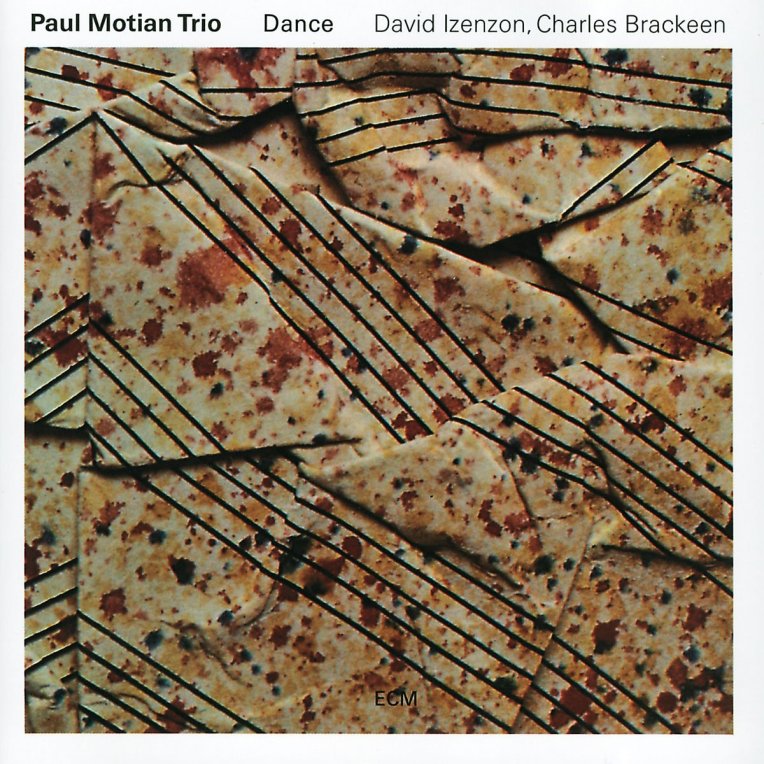
In 1977, Motian set a new precedent when, with this first trio album, he loosed his brand of chamber jazz into the world. The late David Izenzon on bass and fellow Coleman cohort Charles Brackeen on reeds completed the package, tied up nicely with six of Motian’s engaging compositions. The titles thereof seem only loosely linked to their denouement, assuming they were ever meant to be descriptive in the first place. Either way, the results are so visceral that headings need not apply.

Brackeen is primarily known as a tenor player, but on Dance he employs the soprano almost exclusively. The only exception is in the penultimate “Prelude,” where at last we get a blast of his guttural métier for a marked change in diction. It writhes with the power to deepen the trio’s abandoned sound from sweeping agitation to smoky elegy in a single change of embouchure. Contrast this with the Garbarek-like salutations of “Kalypso” or the relaxed sopranism of “Asia,” which walks a trail of meandering beauty that is the album’s calling card. As can be expected, there are intenser moments to be had, as in the tight squeals of the opening “Waltz Song” and the wilder forays of the title cut. The latter also offers some fine duo-ship with Izenzon as well as with Motian, who seems to drop his sticks in great number from varying heights. Through the glitter of “Lullaby” we hear the stars of our slumber turned into song. The bass hints at a long-dead groove in which we can only grasp a sliver of faded glory. We revel instead in its ruins, where the dance really takes place. There, it is the bass that lulls us, pulling its feet under the covers in a frigid evening, curled like a child hoping to awaken from a bad dream.

Dance is a wayfarer’s song. Yet the trio is passionately disinterested in the wandering itself and has eyes instead for the geographies it has yet to tread. Like a spring that winds itself tighter but never snaps, every melody is packed with lethal energy. The music relies on this tension, compressed like continental plates beneath unfathomable oceans. As land grows scarcer, the musical remainder becomes our vegetations, our lifeways, our civilizations, and we are left standing in the middle, watching as history takes its first steps.

<< Eberhard Weber Colours: Silent Feet (ECM 1107)
>> Dave Holland: Emerald Tears (ECM 1109)

… . …
ECM 1138

Le Voyage (ECM 1138)

Paul Motian drums, percussion
Jean-François Jenny-Clark double bass
Charles Brackeen tenor and soprano saxophones
Recorded March 1979 at Tonstudio Bauer, Ludwigsburg
Engineer: Martin Wieland
Produced by Manfred Eicher

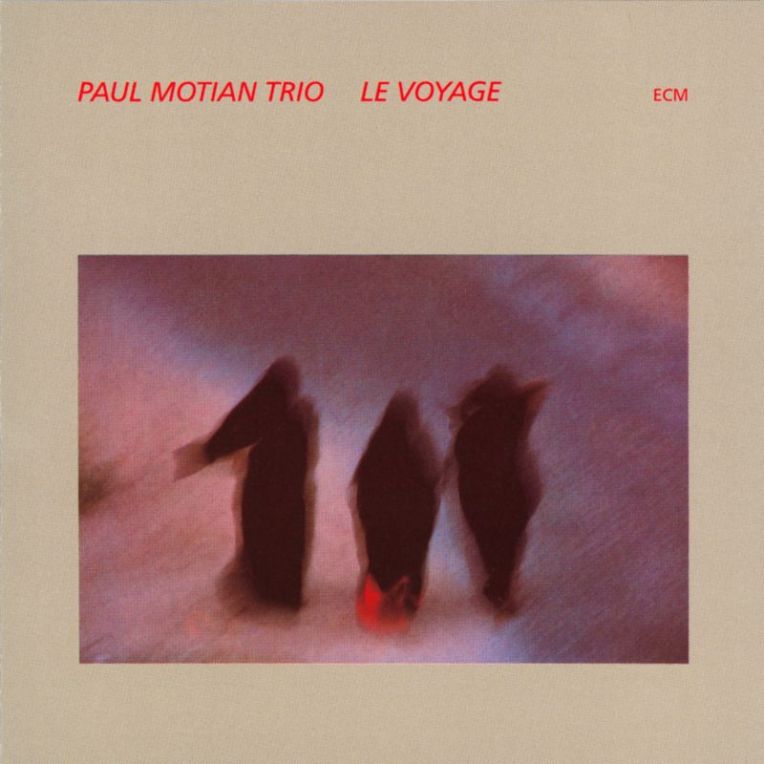
Le Voyage is dear to my heart for opening with one of ECM’s crowning achievements in production, musicianship, and song. As Brackeen’s bluesy soprano in “Folk Song For Rosie” sweeps across that sandy backdrop of bass—courtesy of the late Jean-François Jenny-Clark, replacing David Izenson in the trio’s previous lineup—and Motian’s brushed drums, one can be sure that more beautiful landscapes will be few and far between. The sax fades into the mystical silence from which it arose, making way for gelatinous bassing before a mournful return. A careful selection of gongs and drums awaits in “Abacus,” in which Brackeen dazzles with an enlivening tenor solo. After this detour, Motian breaks into his own erratic asides. The studio miking distances his voice, making it seem as if he were a barely visible conjurer stretching his arms across time and space to produce an impossible array of statements before our very eyes. The arco intro of “Cabala/Drum Music” glides into Motian’s fluttering hands, which bid bass and tenor to speak in themes. Brackeen and Jenny-Clark shine again in “The Sunflower,” pouring a vast oasis of energy into which the final, and title, track dips its feet with measured grace.

Though the title of Motian’s fourth ECM album is in the singular, its results are undeniably in the plural. The unspoken virtuosity required here humbly defers itself to three credos: Melody, Moment, and Mood. Its sounds come to life only behind the closed eyes of a relaxed mind and body. Each solo feels connected to the others, as if by tendon, lighting our inner landscapes with signifiers that over eons blur into one soft and silent flame. This album epitomizes the “ECM sound,” even as it transcends all such arbitrary categories in favor of a more immediate form of communication that looks beyond the physical self and into the translucent thread that connects it to all else.

Those looking for a groove may want to move on, but do so at their own peril, for they will be missing out on one of Motian’s finest.

<< Eberhard Weber: Fluid Rustle (ECM 1137)
>> Mick Goodrick: In Pas(s)ing (ECM 1139)

… . …

ECM 1222

Psalm (ECM 1222)

Paul Motian drums
Bill Frisell guitar
Ed Schuller bass
Joe Lovano tenor saxophone
Billy Drewes tenor and alto saxophones
Recorded December 1981 at Tonstudio Bauer, Ludwigsburg
Engineer: Martin Wieland
Produced by Manfred Eicher

The Paul Motian Band, short-lived in the incarnation captured here, enables a curious experience with Psalm. “Motian” may as well mean “mystical,” for such are the turns that await the curious listener. It’s not that he has access to some hidden pocket in the ether, from which he pulls a wallet of compositional currency. He simply trusts in his fellow musicians enough to follow wherever they might lead. And what a group to be led by. Between Joe Lovano’s singing tenor and the serpentine licks of guitarist Bill Frisell, not to mention an infusion of supremely warm engineering, even critical listeners are sure to find something of intrigue.

Some of the album’s landscapes, like those of the lush title track and “Fantasm,” cultivate a heat-distorted crop of pliant reeds and guitars. One is tempted to read dreams into them, when in fact nothing can be so fleeting as those enigmas that already make life even less graspable. Such would seem to be the meaning behind titles like “White Magic,” which, despite their serrated edges and deep thematic scouting missions, are nebulous constructions at heart. Other diversions, such as “Boomerang” and “Mandeville,” have Frisell written all over them, to say nothing of his solo “Etude,” a liquid font of melodic wisdom that stretches like an acrobat during warm-up. Motian does occasionally step into the foreground (“Second Hand”), but would rather bask in the viscosity of his own skeletal tunes, and in the tenderness of his band mates’ refractions of them—Ed Schuller’s rosy bass work in “Yahllah” being one example.

Though Psalm may be rightly considered a classic, it doesn’t aspire to be. It is instead an altogether metaphorical experience to enjoy uninterrupted and in total acceptance. These musicians have surely seen more lucid days, but may remember few so enchanting as this.

<< Adelhard Roidinger: Schattseite (ECM 1221)
>> Jan Garbarek: Paths, Prints (ECM 1223)

… . …

ECM 1283

it should’ve happened a long time ago (ECM 1283)

Paul Motian drums, percussion
Bill Frisell guitar, guitar synthesizer
Joe Lovano tenor saxophone
Recorded July 1984 at Tonstudio Bauer, Ludwigsburg
Engineer: Martin Wieland
Produced by Manfred Eicher

It was by sheer coincidence that I first heard it should’ve happened a long time ago on the very day I later learned of its leader’s death. The title, therefore, will always be a poignant one for me, as if to say: You should’ve seen him while you still had the chance. And while it saddens me to have to add Paul Motian to the ever-growing list of uncompromising artists I will never experience firsthand (Montserrat Figueras would die one day later), I also feel fortunate to have encountered this awe-inspiring album so late in the game. New music has tended to come into my life only at such times as I’ve been prepared for it, and this album is no exception, for had I heard it even a few years ago I might never have given it a second listen. Suffice it to say when I heard it on 22 November 2011, it left an indelible mark, rendered as an emotional tattoo by the sad news that followed it.

The cast of should’ve is rounded out by guitarist Bill Frisell and saxophonist Joe Lovano, both truly coming into their own at the time of this recording (1984). Lovano’s fluid tenor proves a superb complement to Frisell’s briny swells, positively singing with a dark amethyst tone in the opening title cut. “Fiasco,” on the other hand, foregrounds Frisell, who sounds like a synth in its death throes (all the while making it sing). Meanwhile, Lovano stills this discomfort with heavy inoculations of medical wisdom. This is followed by a gorgeous reprise of “Conception Vessel” that depicts the changes Motian had undergone since the selfsame masterwork had been laid down twelve years prior. One now finds a more internal evocation, brought to the consistency of bubbling lava by Frisell’s quiet heat and Lovano’s pockets of air.

Like the album as a whole, “Introduction” is another dip inward. This somber solo from Frisell primes us for the resplendent territories of “India.” Motian paints an awesome picture, which with each sparkling step brings us closer to its thematic core, traced in relief by Lovano’s lilting horn. “In The Year Of The Dragon” indeed slinks and curls like the long, scaled creature of myth, cutting rhythms across the sky with every whip of its tail. The licks of Lovano’s sax are like the glint of an eye trained curiously ahead, even as its energy radiates through the fields and villages below. Frisell’s picking is at once straight-edged and ess-curved. We end with “Two Women From Padua,” which lays Lovano over Frisell’s breaking circuits—this a mere preamble for gossamer unraveling. Lovano crawls like a spider along Frisell’s webs, strung between those raspy branches of Motian’s drums.

Despite the occasional burst of abstraction, this is a thoroughly relaxing album and one easy to get lost in. The musicians’ talents are affirmed in their restraint. While this may not be the frontman’s most brilliant album, the Motian experience was never about “brilliance,” but rather about openness to the darker corners of the ever-evolving psyche known as jazz. Now that he is gone, may that darkness welcome him into peaceful rest.

<< Chick Corea: Voyage (ECM 1282)
>> David Torn: Best Laid Plans (ECM 1284)

John Abercrombie Quartet: Within A Song (ECM 2254)

Within A Song

John Abercrombie Quartet
Within A Song

John Abercrombie guitar
Joe Lovano tenor saxophone
Drew Gress double-bass
Joey Baron drums
Recorded September 2011 at Avatar Studios, New York
Engineer: James A. Farber
Assistant: Bob Mallory
Produced by Manfred Eicher

Within A Song is more than a pretty title. It’s the credo of a musician whose path has taken him far from home in one of the most uncompromising journeys in modern jazz. And yet, guitarist John Abercrombie has never forgotten his roots. This album represents a return to them—a smooth, slow-motion plunge into a collection of songs that defined his search for a voice in the 1960s.

The product of this retrospection is a session that abandons surface-level concerns of virtuosity and velocity for reverence and reference. In the latter vein the set list is a goldmine of canonical repertoire, beginning with a nod to Sonny Rollins. As well as setting a relaxed tone that never dies, “Where Are You” turns the kaleidoscope of Abercrombie’s self-named quartet. Tenor saxophonist Joe Lovano, bassist Drew Gress, and drummer Joey Baron are no strangers to either the set list or to each other, and their simpatico vibe magnifies the humility of their leader’s expressiveness. With a non-oppressive sultriness honed over decades on the jazz club stage, these veterans play with their eyes closed and ears open. Abercrombie pays further homage to Rollins in the slightly ratcheted-up title track, for which Lovano, slick and confident, cracks open a vintage of chromatic champagne. Two Abercrombie originals, unusually few in proportion to the covers, reveal the cosmic side of his picking. Baron’s cymbalism keeps things delicately grounded in “Easy Reader,” in which Lovano opts for an earthier mapping, while the upbeat “Nick Of Time” illuminates prisms across the band.

But the album’s heart lies in the greats. Miles Davis’s “Flamenco Sketches” gets a unique facelift. More ebb than flow, its canopy shines with dots of tenor light. Indeed, as the music progresses, it’s clear that Lovano is the star here. Whether by his measurement of afterglow in a teetering rendition of Ornette Coleman’s “Blues Connotation” or the meditative springboard he builds for Abercrombie’s uplifting “Wise One” (John Coltrane), to say little of the “Interplay” (Bill Evans) that brings it all together, his ability to make song of space has rarely been so nude. Like the harmonies he shares with guitar in wizened take on Sergio Mihanovich’s “Sometime Ago,” he understands and demonstrates the value of listening before speaking.

All in all, Within A Song is a cogent enough affair. Foregoing the acrobatics of which the young may be so enamored, it’s assured enough in what it has to say to say it without ego. Rather than stand around politely in the waiting rooms of its legendary honorees, it slides tunes under the cracks of their doorways in hopes that somewhere they will be heard. Buy it for Abercrombie, but stay for his friends, and especially for Lovano’s charcoal beauties. And if you want something more nimble, you need only take 39 Steps to find it.

(To hear samples of Within A Song, click here.)

John Abercrombie Quartet: 39 Steps (ECM 2334)

39 Steps

John Abercrombie Quartet
39 Steps

John Abercrombie guitar
Marc Copland piano
Drew Gress double bass
Joey Baron drums
Recorded April 2013 at Avatar Studios, New York
Engineer: James A. Farber
Assistant: Bob Mallory
Produced by Manfred Eicher

If ever there was, as this album’s sole free improvisation would phrase it, a “Shadow Of A Doubt” of John Abercrombie’s prowess, then here is fiercely understated confirmation of his staying power. Despite sitting atop a career spanning decades, the guitarist sounds as youthful and buoyant as ever, yet with a reflective edge that comes only with experience. Such is the lyrical dichotomy of 39 Steps, and all of it served by world-class engineering that gives the instruments their respective spaces but joins them through shared breath.

With bassist Drew Gress, drummer Joey Baron, and pianist Marc Copland (making his ECM debut) along for the ride, Abercrombie takes the listener on a road trip as fresh as it is nostalgic. In the latter vein are the eye-squintingly melodic “Bacharach,” the slice of chromatic brilliance called “Another Ralph’s” (a follow-up to Abercrombie’s classic tune “Ralph’s Piano Waltz”), and “As It Stands,” which feels like a cigarette burning down to the filter, the two chordists taking turns exhaling the smoke. The leader’s pen yields three more tunes. “Vertigo” is the first of a handful of Alfred Hitchcock references and opens the session with a laid-back vibe that is, given its title, surprisingly congruous (a four-dimensional take on the standard “Melancholy Baby” at the tail end feels far more off kilter). Copland eases the rest of band into focus here with an elegant intro and further contributes the album’s first noteworthy solo. Two remaining Abercrombie originals showcase the composer at his evocative best. “Greenstreet” feels like ice-skating across a winter wonderland even as it thaws in the sparkle of Baron’s cymbals, while Gress’s bass ladders adroitly, every bit as limber as the rest. The slack-jawed title track, for its part, simplifies things by opening single note before expanding into a fragrant rose. Abercrombie takes great care to strip that rose of its thorns until it can be safely handled.

Copland’s two offerings map the quartet’s brightest courses, stretching highway through the joyous “LST” and setting up the tensile atmosphere of “Spellbound” with assurance. The first tune boasts simpatico timekeeping from the rhythm section, giving Abercrombie more than enough court to lob his soaring improvisations, and in second, though more relaxed, making way for some of his most forthright playing in years.

Then again, Abercrombie has always favored tone over muscle, and here the fine tweaking of his experience pays off in spades. This is his finest album in recent memory and may just earn its place among your old favorites with repeated listens.

(To hear samples of 39 Steps, click here.)

Harrison Birtwistle: Chamber Music (ECM New Series 2253)

Birtwistle Chamber Music

Harrison Birtwistle
Chamber Music

Lisa Batiashvili violin
Adrian Brendel cello
Till Fellner piano
Amy Freston soprano
Roderick Williams baritone
Recorded August 2011, Herkulessaal der Münchner Residenz
Engineer: Markus Heiland
Produced by Manfred Eicher

Harrison Birtwistle has garnered continental attention as Britain’s leading living composer, despite (if not also because of) the occasional controversy, including a much-criticized broadcast of Panic, a work for alto saxophone and orchestra written for the Last Night of the Proms in 1995. If that work caused a stir, it wasn’t so much due to the music itself. Even the infamous riot provoked by Stravinsky’s Rite of Spring had less to do with sound than staging. It was a question of context and expectation. In a space typically occupied by Elgar and the like, it was jarring to be thrown into the deep end of modernism without a life preserver. One can approach a recital album, however, on one’s terms, treating it as would a scientist who both knows what to expect and expects the unknown.

In his liner notes for ECM’s first ever reckoning with Birtwistle, English composer and music critic Bayan Northcott stresses the cyclical, as opposed to the goal-directed, vision of the music selected here. Like Elliott Carter, to whom it is sometimes compared, Birtwistle’s music rides the edge of incomprehensibility, all while maintaining the exuberance of one who enjoys his craft. His chamber works in particular are non-confrontational, welcoming the listener by virtue of their genre-defying grammar and rhythmic impetuses. This puts no small demand on would-be performers, who in this instance carve likenesses of the scores as if they’d hewn the originals.

Any knee-jerk instinct to call this disc “fantastic” will be quickly doused by the Objectivist poetry of Lorine Niedecker (1903-1970), whose biological realism and observational intelligence are upheld by Birtwistle’s analogic Three Settings. Scored for soprano and violoncello, these elicit flashes of avian anatomy, of the body as pendulum (and vice versa), of scavenging lives compressed into molecules of continuity. Amy Freston gives an airy yet tactile quality to the texts, tracing their flow in high-resolution detail, while cellist Adrian Brendel hops along a more fragmented path, the plural to Freston’s singular. This same combination closes the program in the Nine Settings of Lorine Niedecker, where again the intertextuality of the verses finds kindred spirit in the writing. Freston meets the unenviable task of constant jumps in register with utmost precision, and in so doing highlights the symbiosis of sound and signal. This is particularly evident in the ecologically minded “My Life,” wherein she (poet or singer) pulls sentiments right out of the ground, clods of earth still clinging to every other branch and waiting to be notated before letting go. “Sleep’s Dream” is another beauty, its cello seesawing while the voice tears a childhood photograph so gradually that by the time its parents have been burned, it is too late to reverse the smoke.

Between these works, one first discovers the Trio for violin, violoncello, and piano. Characterized by an adroit cogency of part to whole, its every space has purpose. Violinist Lisa Batiashvili and pianist Till Fellner make democratic use of volume and pitch, drawing a horizon line through a sky that is lit neither by sunrise nor sunset. Every color has its opposite, every action its reaction. Second, and more peaked than valleyed, is the enigmatically titled Bogenstrich—Meditations on a poem of Rilke for baritone, violoncello, and piano. The instrumentation is somewhat misleading, as Roderick Williams’s role serves to bookend the piece against skeletal pianism and ashen string. In the final “Liebes-Lied” especially, cello and voice become equal partners in their worlding. The connective tissue of cello-piano duets along the way grows into a self-sustaining ecosystem and shows Birtwistle at his colorful best.

This is chamber music in the truest sense: not simply because it is performed in one, but also because it builds another by virtue of an architecture made translucent by the opacity of the soul.

(To hear samples of this album, click here.)

Dénes Várjon: Precipitando (ECM New Series 2247)

Precipitando

Precipitando

Dénes Várjon piano
Recorded April 2011, Auditorio Radiotelevisione svizzera, Lugano
Engineer: Markus Heiland
Produced by Manfred Eicher

Following his traversals of programs by Robert Schumann (New Series 2047) and Heinz Holliger/Clara Schumann (New Series 2055), Dénes Várjon returns to ECM with his first solo recital. Recorded in the pristine acoustics of the Auditorio Radiotelevisione svizzera in Lugano, Switzerland, Precipitando documents a new level of interpretive power from the Hungarian pianist.

Varjón

If the album’s title, a music term meaning “rushing” or “headlong,” is realized anywhere, it is in the concluding b-minor Sonata of 1853 by Franz Liszt, with whom Várjon’s intimate familiarity is obvious from the start. Dark beginnings breed a full-blown thesis statement to almost overwhelming effect, yet Várjon handles a technically demanding interweaving of poetry and prosody with especial care. Because passages of quietude are relatively short-lived in this sonata, they tend to feel ominous whenever they do occur, fighting the invitation of descending motifs toward hope of light. Each such eclipse gives way to the diamond rings of Liszt’s dramatic reveals and, ultimately, to a shining, heavenly ladder.

At the beginning of the program we have Alban Berg’s Sonata op. 1 (1907/08, rev. 1920). Theodor Adorno called it his “apprentice piece,” as it was written under Arnold Schoenberg’s tutelage and bears the stamp of that teacher’s attention to detail. Although intended to be an example of traditional sonata form, after completing the single movement of which it is now composed, Berg (read: Schoenberg) found it to be complete. Like the Liszt, it is in b minor, but wanders into chromatic alcoves wherever it can. Also like the Liszt, it makes a torrent of a trickle and finds balance in the occasional reflection, sailing an ocean of tough-skinned lyricism toward delicate shores. A notably intense feeling of tactility cries out from Várjon’s reading.

Leoš Janáček’s V mlhách (In the mists) of 1912 makes its second appearance on ECM, following an interpretation by András Schiff (New Series 1736). Where Schiff’s mists are diffuse and autumnal, Várjon’s curl in the oncoming light of a spring dawn. In less uncertain terms, Schiff teases out the darkness in the light, while Várjon emphasizes the light in the darkness. It’s a bold and effective move, considering that these melancholy pieces tend to be associated with a composer thrown by conflict. Particularly memorable here are the arcing Andantino and final Presto, the resolve of which the pianist tenderizes with open eyes.

As a performer, Várjon is distinguished by his command of dynamics. At his fingertips, pianissimos are dreams and fortes are destructions. He is particularly adept at stalking the piano’s lower register, from which he elicits a rare fullness of clarity and in the soil of which he finds the harmonic roots of all three pieces here tangled in secret.

(To hear samples of Precipitando, click here.)

Jon Balke/Batagraf: Say And Play (ECM 2245)

Say And Play

Jon Balke
Batagraf
Say And Play

Jon Balke piano, keyboards, electronics, tungoné, darbouka, percussion
Helge Andreas Norbakken sabar, gorong, djembe, talking drum, shakers, percussion
Emilie Stoesen Christensen vocals
Erland Dahlen drums
Torgeir Rebolledo Pedersen poetry reading
Recorded in various locations 2009
Mixed by Olav Torget in Olav Torget’s studios Winter 2010/11
Recording producer: Jon Balke
Executive producer: Manfred Eicher
An ECM Production

Jon Balke’s Batagraf project may feel for some to be an indecipherable thing. Yet beneath its calligraphic rib cage beats a primal language. It is both the life force of rhythm and the rhythm of life force, a generative cycle wherefrom speech unloads its dreams into the transport of a welcoming ear. At the core of this incarnation are Balke himself, percussionist Helge Andreas Norbakken, and drummer Erland Dahlen. To these the session adds the voice of jazz singer Emilie Stoesen Christensen and the poetry of Torgeir Rebolledo Pedersen, read in its original Norwegian by the author.

JB

The latter augments some of the album’s most tetrahedral drumming, attaching roots and stems to the muted pianism of “Calmly” and shuffling its tongues in the garden of breathy synths that is “The Wind Calmer.” Further engagements include “Hundred-Handed” and analog textures of “Winds.” Balancing these are the vocals of Christensen, who in “Riddle #1” and “Riddle #2” fleshes out Batagraf’s philosophy most succinctly. These twisted songs of unanswered questions are gyroscopes forever wobbling but never falling. Unsettled rhythms and piano work their way into the subconscious, where knowledge is questioned, answers are deflated, and the clothes line from which every spoken word hangs trembles in anticipation of a new wash. As in the song “One Change,” Christensen embraces all of this as easily as she abandons recognizable words.

As for the drummers, we find them in manifold spirits in the tender “Baka #65,” and of an especially intimate mind in “Everyday Music” and “Vjup,” for the last of which Christensen embarks on a whimsical deconstruction of masculine pride. The level of psychological extraction realized here shows just how adept these musicians are with intellectual needles and sonic threads. Whether following the Jon Hassell-like current of “Tonk” or digging the IDM beat of “Azulito,” they all seem fully present in the moment. Norbakken’s concluding yet inconclusive “GMBH,” the only track not written by Balke, finds even more beauty in distortions—layers of an archaeological dig, each with its own color and interlocking history. By unbinding words from their referents, they learn to swim with the minnows.

(To hear samples of Say And Play, click here.)