Billy Hart: All Our Reasons (ECM 2248)

All Our Reasons

Billy Hart
All Our Reasons

Mark Turner tenor saxophone
Ben Street double bass
Ethan Iverson piano
Billy Hart drums
Recorded June 2011 at Avatar Studios, New York
Engineer: James A. Farber
Assistant: Fernando Lodeiro
Produced by Manfred Eicher

It’s no coincidence that Billy Hart’s surname is homophonous with “heart,” because this album is filled with it. From the simpatico yet open-ended musicianship to the flowing compositions, his quartet knows exactly where it’s at…and where it isn’t. In the latter vein, the bandleader-drummer emotes as much on the inhale as on the exhale, selectively deploying bursts of illustration. Pianist Ethan Iverson and bassist Ben Street make their first ECM appearances, while tenorist Mark Turner and Hart himself represent two very different intersections with the label: respectively, with the Fly Trio and the Charles Lloyd Quartet.

It’s Lloyd, in fact, whose influence is most apparent in “Ohnedaruth,” the first of three tracks penned by Iverson. Despite being based on John Coltrane’s “Giant Steps” (Ohnedaruth was Coltrane’s adopted spiritual name, a Sanskrit word meaning “compassion”), the balance of viewpoints between Hart and Turner is, both here and across the album’s full spectrum, so strong that I could easily imagine a duo flight in the vein of Lloyd and Billy Higgins’s Which Way Is East. Hart is staggered (and staggering), deciphering Iverson’s chromatic twists like a locksmith jiggling his way into Street’s fixed grooves. Turner’s studied approach spreads virtuosities as the icing of a delicately layered cake. Iverson is as bold as a composer as he is understated as a pianist. Even when given the spotlight, as in his Paul Bley-inspired “Nostalgia For The Impossible,” he opts for an inward quality that allows Hart’s brushes to sing. Iverson’s alchemy is naked and slow, and all the more impactful for it. His solo interlude, “Old Wood,” cuts the corner pieces of the larger puzzle.

Turner offers up two tunes of his own. “Nigeria” takes inspiration from Sonny Rollins’s “Airegin.” Its wing-beat opening fades from theme to solo, Hart taking a downright spiritual path of expression. As a drummer, Hart can be at once free and meticulous, but as a musician he combines molecule after molecule into the audible compound of this track’s flowering architecture, all while Turner and Iverson open every window to let in a flood of sunlight. Street, meanwhile, responds to gradations of the passing day. “Wasteland” opens with an acrobatic introduction from its composer and floats along its own ripples through the other instruments toward the opposite shore.

Hart shares his gifts on four originals. On the whole, they reap distinction from the incantational properties of his playing. One by one, they till the soil with a uniquely shaped implement every time. His most artisan spade breaks ground in “Song For Balkis,” which inspires his musicians in turn. Turner’s tone is bracing and wrought in spirit magic, working busily to transmit the messages his fingers receive into mortal recognition. Iverson tears up patches of earth and replaces them with sound. His pianism, restless and responsive, breaks every mold that clutches it. Hart, for his part, carves directly into the bedrock something beautiful. A rustic feel pervades the funkier blues that is “Tolli’s Dance,” which from modest foundations builds a tower to the sun—only this one isn’t made of brick, rivet, and lime, but of slick rhythm and rhyme. Hart’s “Duchess” and “Imke’s March” are by turns ecstatic and revelatory. The latter’s bee-wing delicacy wears such personal clothing that one can envision its colors with eyes closed and ears open.

All Our Reasons has plenty of reasons to discover, appreciate, and enjoy. But most important among them is the realization that mastery exists only when egos get left at the door. This is music for the soul, because only the soul knows how to detach itself from harmful desires that would get in the way of the experience.

(To hear samples of All Our Reasons, click here.)
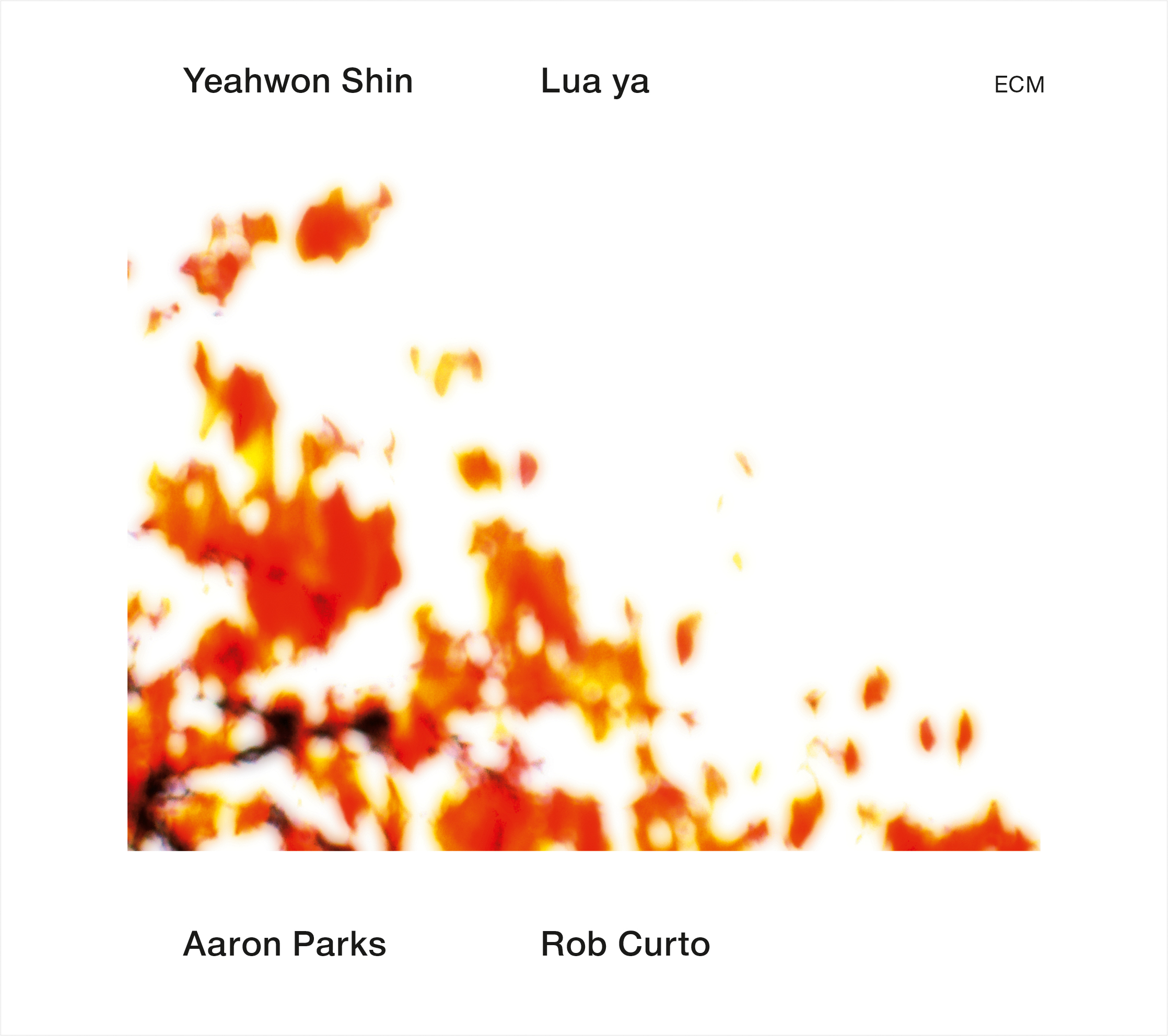
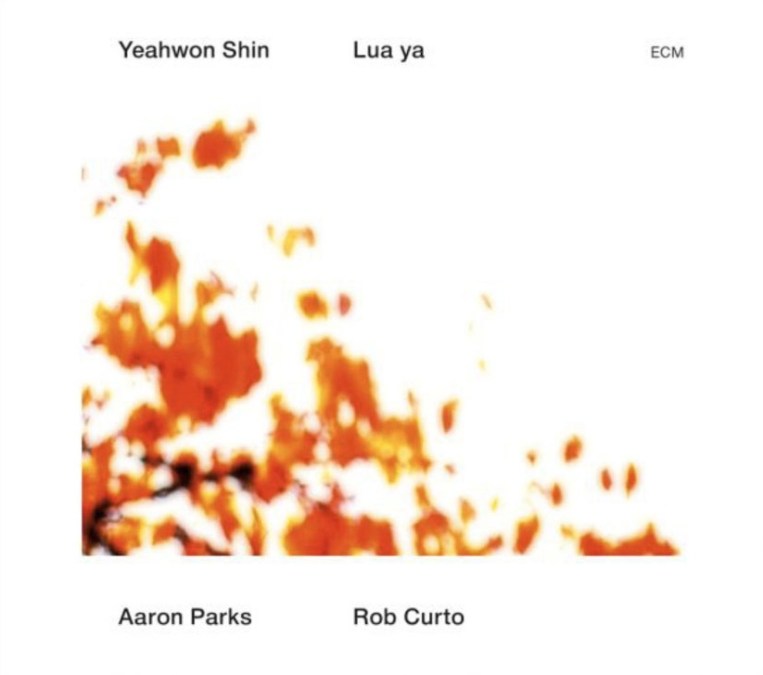
Yeahwon Shin: Lua ya (ECM 2337)

2337 X

Yeahwon Shin
Lua ya

Yeahwon Shin voice
Aaron Parks piano
Rob Curto accordion
Recorded May 2012 at Mechanics Hall, Worcester, MA
Engineer: Rick Kwan
Mixed at Rainbow Studio, Oslo by Jan Erik Kongshaug, Manfred Eicher, and Sun Chung
Produced by Sun Chung

If we can believe poet Federico García Lorca, who in a 1928 lecture entitled “On Lullabies” claimed that “Spain uses its saddest melodies and most melancholy texts to darken the first sleep of her children,” then we can also believe in a culture where lullabies nourish the growing soul. Of the latter persuasion are those offered by Yeahwon Shin on Lua ya. Shin’s selections give voice to transitions of darkness to light, spirit to flesh, dependence to independence, and all with a grace of expression that pretends nothing. Although best known as a Brazilian music specialist (her 2010 self-titled debut was nominated for a Latin Grammy), the singer rejoins accordionist Rob Curto and, for the first time, pianist Aaron Parks, in an enchanting survey of Korean children’s songs.

“The album’s theme is the remembrance of childhood,” Shin tells me in an e-mail interview. “I would like the listeners to have the freedom to imagine the story themselves.” In light of this invitation, we may still feel the need to tread lightly, for each song is of such fragile constitution that it would seem to crumble at the slightest mishandling. Then again, the music blossoms with such strength—a strength born of unconditional love—that it also feels impervious to misunderstanding. As in the opening improvisation, called simply “Lullaby,” it crafts a world of tracings and starlight. Parks’s pianism introduces the landscape across which Shin’s voice emerges as a maternal whisper, carrying with it the histories of countless mothers before, and the countless more to follow, in life’s eternal cycle.

Yeahwon Shin
(Photo credit: John Soares)

Shin grew up enchanted by the music of Egberto Gismonti, who along with the iconic Tom Jobim spun the tapestry of her appreciation for Brazilian music. She looks back even further to Chopin and Bach, composers who informed her first love—the piano—as fundamental inspirations in her development as an artist. “I like Korean traditional music, as well,” she says. “I am strongly bonded to Korea’s rhythmic patterns. I still want to discover more about this music.” Lua ya is a new step in precisely this direction. It is also a return to origins. For Shin, what seems most important in life is that which imparts it: “My parents are very important figures in my life. I respect my father’s wisdom, my mother’s unlimited love and spirit of self-sacrifice. They are not musicians, but the way they express themselves by singing shows a pure love for music. I have always wanted to feel that way in music.”

To be sure, Shin’s filial respect echoes in the songs passed down from her own mother, whose voice is forever preserved in memories of a family that was always singing. Of those songs directly passed down, “Island Child” is among the album’s most emblematic. Syllables roll off the tongue from both singer and instrumentalists until language ceases to matter. Indeed, Shin is at her most powerful when singing wordlessly (as she does here, and in “Moving Clouds”), as one needs not struggle against the elastic of linguistic barriers. “The Orchard Road” is another descendent of personal experience and shows the trio at its densest. Shin’s breathy storytelling develops over a rustic backdrop, as affecting as it is brief.

If Lua ya feels less like a cycle and more like one continuous song, it’s because it was, at the behest of producer (and Shin’s husband) Sun Chung, conceived and realized as a concert, played from start to finish with no edits. Chung acted as both audience and director when the performance was being recorded in Mechanics Hall in Worcester, Massachusetts. His presence is palpable in the album’s dynamic flow. Also present are Shin’s attentive accompanists, both of whom take her voice as a compass takes magnetism.

(Click here to see this article as it originally appeared in RootsWorld magazine, where you can also hear samples.)

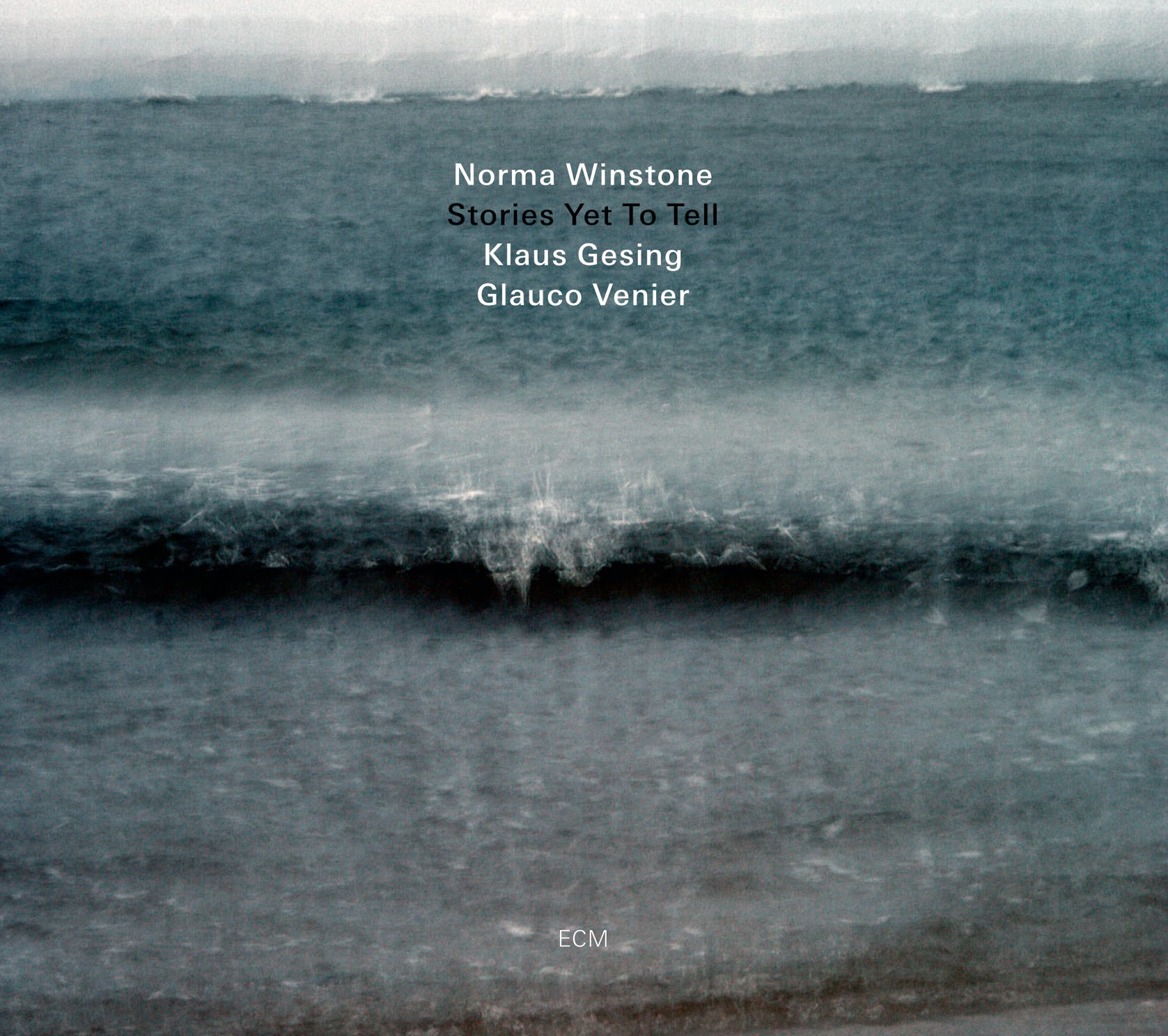
Norma Winstone: Stories Yet To Tell (ECM 2158)

Stories Yet To Tell

Norma Winstone
Stories Yet To Tell

Norma Winstone voice
Klaus Gesing bass clarinet, soprano saxophone
Glauco Venier piano
Recorded December 2009 at Arte Suono Studio, Udine
Engineer: Stefano Amerio
Produced by Manfred Eicher

While walking home on 8 October 2014, I was listening to Norma Winstone’s Stories Yet To Tell on my iPod. The opening song, “Just Sometimes,” had already enchanted me with its tender traversal of the heart’s shadowed chambers. Its bittersweet emotions lingered on in my mind as the second track, “Sisyphus,” held my ears captive. Named for the Corinthian king of Greek mythology forced to endlessly roll a giant boulder up a hill, the song evokes the curse of repetition in Glauco Venier’s pianism and the vain hope of breaking free in the tension of Klaus Gesing’s bass clarinet. While immersed in the atmosphere of this music, I felt a tap on my shoulder. I pressed PAUSE, removed my headphones, and turned to see my friend Andy, who had terrible news: our dear mutual friend Taylan had committed suicide that morning.

In the weeks following this tragedy, my iPod remained stuck halfway through “Sisyphus,” stymied like my desire for listening. By the time I returned to the song, I couldn’t help read the myth into Taylan’s untimely end. His life, it seemed, had thrown one boulder too many in his path, and he’d grown tired of rolling them upward in vain. While learning to cope with my grief, I was also comforted by the album’s title. It was a gentle reminder that, although he was gone, stories of Taylan’s legacy as a musician (he was an electronics genius for whom Evan Parker’s The Eleventh Hour was a life-changing record) had yet to be told. It was only a month later that I had the courage to continue where I’d left off in “Sisyphus,” which will forever be for me an elegy.

It’s not entirely morbid, however, to read a certain understanding of mortality into Winstone’s craft, singing as she so often does of moments that are fleeting, captured only through imagination. In the sadness of “Among The Clouds,” the retrograde of “Goddess,” and the wordless farewell of “En mort d’En Joan de Cucanh,” Winstone and her attuned trio understand that directions below are written in scripts above. Each song searches for meaning in a world that so often denies the divinity of simplicity. Furthermore, Winstone’s lyrics, especially in “Rush” and “The Titles,” linger on impermanence and, like the second, break down the theatrical stage of experience into its component parts.

In a few tracks, Winstone uses her voice as wordless instrument, employing melodic flight paths in the service of folk songs and lullabies. And even when she does inhabit the domicile of language, as in the tender “Like A Lover,” she does so with an insightful balance of coarse action and empty heroism, all the while keeping fear at bay with the shapes of her mouthing. She demonstrates that those of us still living must recognize that death is not an end but the first sentence in a story waiting for the spark of remembrance to reveal its narrative arc.

(To hear samples of Stories Yet To Tell, click here.)

Taylan
Taylan Cihan
(June 13, 1978 – October 8, 2014)

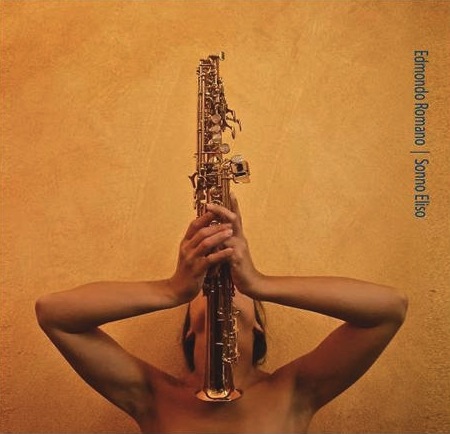
Edmondo Romano for RootsWorld

My latest review for RootsWorld online magazine is of the first two parts in a trilogy by Edmondo Romano. Rightly praised by Paolo Fresu for his de-territorializing approach to music, the Italian multi-instrumentalist and composer is a worthy departure for ECM enthusiasts. Click the cover to discover!

Sonno Eliso