Exploding the Sandbox: A Moment with TOTEM>

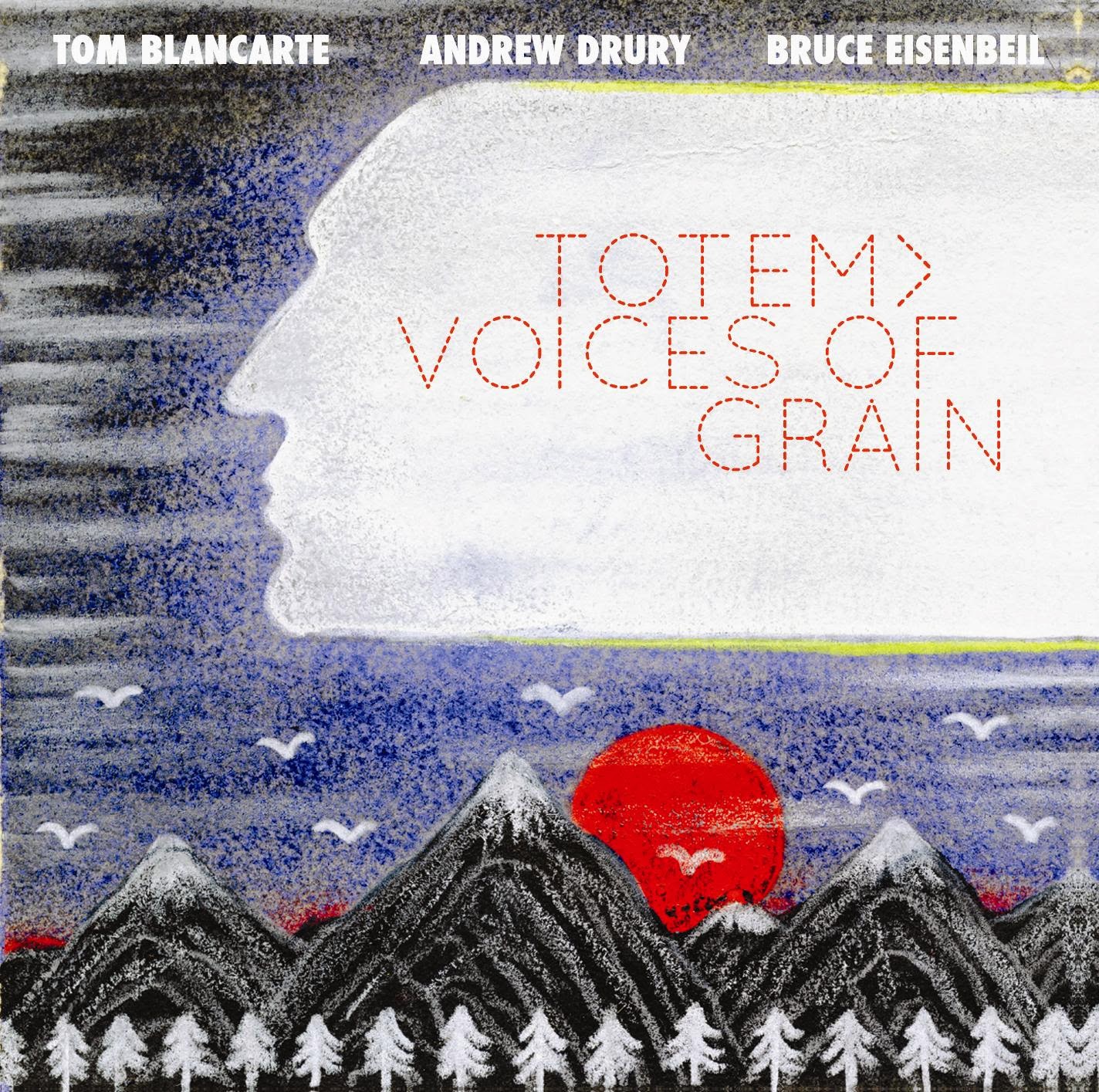
Voices of Grain In his seminal essay “The Grain of the Voice,” French philosopher Roland Barthes asserts the failure of language to interpret music for the precise reason that language and music are one in the same. Needing no self-projection to justify its existence, music is a signifier without identity that expresses its materiality by what he calls the “grain.” During a recent interview with between sound and space, guitarist Bruce Eisenbeil, who alongside bassist Tom Blancarte and drummer Andrew Drury is part of the free improvisation triangle known as TOTEM>, explains the importance of the grain in a mode of sonic production that may seem far afield of its roots but which in fact burrows past them: “The history of what I’ve been involved with, which is jazz-based, brought me to these sounds. When I look at the music of, for instance, of Cecil Taylor, John Coltrane, and Albert Ayler, and how each had his own musical influence—for Taylor it was classical; for Coltrane, world music; and for Ayler, folk—as a springboard for improvisation, I see those same influences in my own evolution. All of this and more, including contemporary classical music from the second half of the twentieth century (Xenakis, Reich, Lachenmann, etc.), has made me realize that playing guitar is in large part about imitating my own environment. It’s not unlike a child who acquires language just by being around family members and learning to communicate. For me, it’s as simple as that. I take everything I’ve ever heard or experienced and pass it through my filter, using my guitar as an instrument for the exploration of that sound by way of communication. So concepts of music, noise, or sound—really, all of these things are part of the same thing.” We may easily connect this way of thinking to Barthes, who avers that music, “by natural bent, is that which receives an adjective,” an assertion that renders moot any question of genre. Subjecting music to the violence of nominalization precludes the lived experience of its descriptive realities. In less uncertain terms: adjectives are active, while nouns are dead matter. The creation and absorption of sound functions as an act of translation, a way to experience the afterlife of sonic production through another form, be it in words or in reverberations.
TOTEM

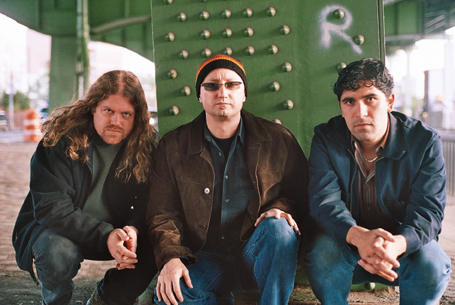
To be sure, the matter-makers of TOTEM> know a thing or two about adjectives. Voices of Grain, which comes five years after their 2008 debut Solar Forge, brims with them. Although thoroughly established on the lunatic fringe of New York’s jazz scene, their presence is mappable by no coordinates, save the curtain behind which an ancestral Oz beats his drum. The virtuosity of each member is formidable, but when standing in the center of their galactic fury we needn’t understand any means of execution. We are more likely to find strange comfort in the mystery behind every utterance. Despite the frenzy, there is hardly a trace of urgency to the sounds, which come to us through noose-outlined ovals of sky, each a window into another, ad infinitum. And where does all of this leave the hapless writer, who struggles with words as if severed from the music they entail? Eisenbeil has an answer for that, too: “A vast majority of sound is created in the world and how that sound is used in situations is predicated on people being engaged in one form or another. Writings by those who sit removed just expecting to be fed say more about the writer’s environment than about the music’s. Musicians will tell you that the more the audience is involved, the better the experience is. It turns into something larger than everyone and everything involved. It’s an ancient process.” As indeed the free qualities of “Genosong” take shape, and in my own attempts to participate in the conversation, I initially struggle for reference points. To wit, possibilities include the Laswell/Haino/Ali joint Decided … Already The Motionless Heart Of Tranquility, Tangling The Prayer Called “I” (1999, Tzadik) and the pioneering work of Derek Bailey. Yet the confluence of signatures that is TOTEM> discloses another genealogy entirely, one quoted above yet also expressed by spontaneous architectures. The result is a hulking vessel that becomes indistinguishable from the waters it plows. Between the breakers of Drury’s drumming, Blancarte’s thick knot-work, and the guitar’s ever-fractal song, the trio trades shine for brine in a pirated helix of comportment. One can almost feel the mitochondria warming up. There’s a sense here of tentacles grasping on to something, of suction and underbellies barnacled by nocturnal passage. What seems a maritime nightmare is in fact a jazz dream, each strand of braid taking a solo while the others lock into supporting grooves. Such moments are brief, although periodic enough to prove TOTEM>’s three-dimensional locution. From oceans eternal to motions internal, from ship to submarine, creaks and water pressures abound in the claustrophobic symphony of “Written in the Body.” What appears to be a dive inward marks its clip by friction of strings and osmosis of skins. Chronology, then, becomes not an ordering of events but an event of orderings, each strand one possible pathway through the mind’s eye, a constant breaking and reconnecting of bare life. Further tensions ravel in “Toward Jouissance,” which stretches and rubs a balloon to the brink of rupture, and in “Counter Memory,” which draws a whirlpool of collective becoming. The latter is more explicitly layered as guitar elicits a frantic cartography across insectile spectrums. “Message Without a Code” not only names the next track, but might as well be the band’s slogan: despite the seemingly cryptic methods (extended techniques, and so on) of execution, the sounds produced are stark naked. Acceptance of that nakedness, molecular it may be, are the listener’s only entrance fee to a full experience of these goings on. More than that, it’s an awareness of one’s physical universe and the planetary alignments of performance. No mere analogy, this image reaches back to Eisenbeil’s genealogy of forms, which taps into a decidedly Foucauldian sense of biopower, that elusive yet pervasive technology of physical management: “Noise is the grain of the voice, and with the grain expresses power,” the guitarist goes on to say. “The idea is that all of the leading exponents of jazz have always had this kind of noise in their sound. Whether it was Ornette Coleman or Charlie Parker, or Evan Parker, or William Parker…many of these musicians were criticized early on for this grain that comes through their sound, which people initially perceived as noise because their emotional filter didn’t allow it to penetrate their being. Yet now that noise is accepted. It must be heard.” Perhaps this is the message of “Post-Repeating,” the album’s most outward statement by far. It cuts a vast horizontal plane, a frozen ocean cracking in the sun with meditative cause, and paves our way toward the final “Silence On Its Road.” In the end, there is only the beginning, a gesture that resounds with every possibility at its fingertips. All explosions look like implosions with enough mirrors around. “Music,” says Eisenbeil, “is best when formed when people have an open heart.” It need be nothing more or less. Like the arrowhead that ends the band’s name, it points forward, no more knowing of the future than the rest of us. And so, while the album does proceed in an extremely physical manner, it orbits us at such a rate that the distinction between the body and its environment collapses in endless porosity. Eisenbeil agrees: “I love playing with Tom and Andrew. It’s a fantastic experience for being completely natural. Every single time we get together, whether in public performance or in the studio, it’s a transcendental experience that is much bigger than the three of us. The sound is an entity in and of itself, a universal life force that the three of us are part of.” To that life force will be added the curious who, with open ears and hearts, find themselves drowning in the sandbox of TOTEM>’s sound-world, swallowing every last grain until it screams.
David Torn: Prezens (ECM 1877)

Prezens

David Torn
Prezens

David Torn guitars, live-sampling and manipulation
Tim Berne alto saxophone
Craig Taborn Fender Rhodes, Hammond B3, mellotron, bent circuits
Tom Rainey drums
Matt Chamberlain drums
Recorded March 2005 at Clubhouse Studios, Rhinebeck, New York
Engineer: Hector Castillo
Produced by David Torn

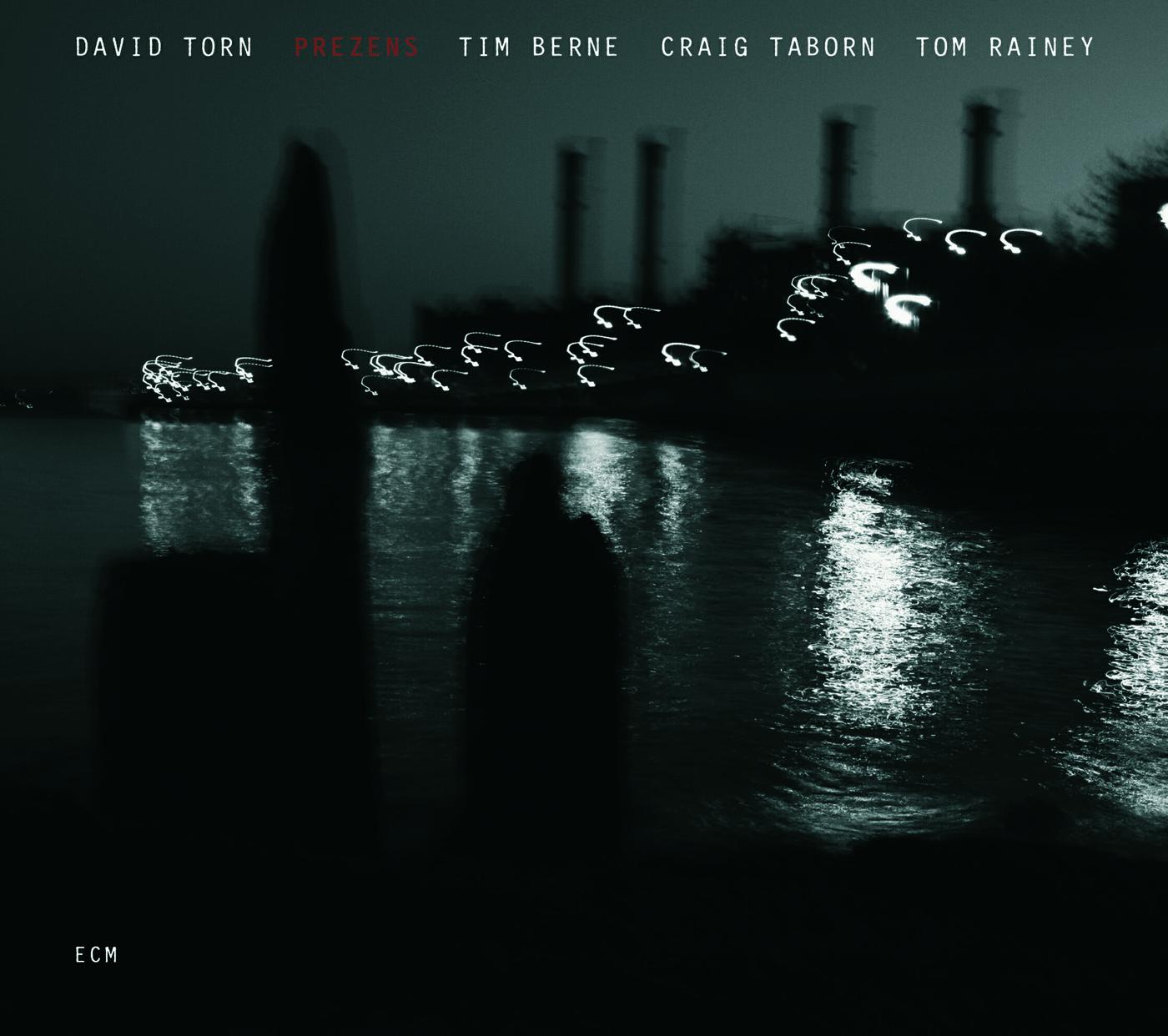
Prezens marks David Torn’s return to ECM after a long hiatus since cloud about mercury. Here the guitarist joins altoist Tim Berne, keyboardist Craig Taborn, and drummer Tom Rainey for a combustible tangle of music making. The band, goes the backstory, recorded a dozen hours of free improvisation, from which were culled and refashioned an album’s worth of material, surgeried by Torn post factum. Finding one’s way through the end product may be no small task, but reaps its rewards in proportion to the openness of the ears receiving them.

At sound center is Torn himself, who, if not picking his glyphs across six amplified strings, is deepening them at the mixing board. Indeed, his presence (the album’s title under another name?) echoes far beyond the chord that stretches its yawn across “ak” in a swirling electronic haze. If the appearance of drums, organ, and saxophone seems out of place in this opening track, it is because they belong there so needfully. Ambient constructions flit in and out of aural purview, foiling the physicality of the acoustic here and now. Trailing the footfalls of Berne’s ghostly doppelganger, they trip over grungy riffs from Torn, who invites satirically blissful finish. Ganglion to ganglion, each instrumental element touches the third eye of something cerebral yet instantly accessible. Accessible, yes, because of the music’s inability to clothe itself. This isn’t meant to make your head nod, but to implode.

Spoken words hide like poison in “rest & unrest,” an exploration of the illusory nature of reality, a musical testimony led astray by its own shadow. It reveals the album’s variety of diction and leads into the evolved patterning of “structural functions of prezens.” As Torn’s electric keens distantly yet with the bleed-through of a Venn diagram, cells of machine-gun drumming turn this forlorn jam session into an exercise in self-destruction. Berne’s alto weaves its legato path across a landscape that is equal parts Jon Hassell and Steve Tibbetts, as if smuggling genomes across the border between consciousness and unconsciousness. So begins a chain of possible references one might connect. The electrical charge of Elliott Sharp activates the filaments of “bulbs,” while Bill Frisell’s weeds tumble through the ghost town of “them buried standing,” the latter further notable for its angelic resolution.

The album’s latter half mines decidedly urban sites of sonic production. The mélange of beat and grunge that is “sink” pulses with the muffled wisdom of an underworld nightclub. Berne’s hard-hitting altoism here gives the sheen of dislocation that comes with dreams. Yet grooves are rare on Prezens, because this project is less about the hook than about the catch dangling and writhing on its barb. Despite the metallurgy of “ever more other” and “ring for endless travel,” two further rhythmic outliers, warped atmospheres prevail. By those atmospheres the music is always connected, whether in the jangly slide acoustic of “miss place, the mist…” or in the mock shredding of “transmit regardless,” so that by album’s end we find ourselves wrapped in a swan song to impetuous youth by way of looking into the maturity of an artist who with his cohorts has unearthed a timeworn stone to contemplate for decades more.

Prezens is an album of inbound escapism—that is, one which enjoys getting lost in itself. Its codes come to us broken, for they speak only of that which was never whole.

Belonoga review in RootsWorld

Fans of Le Mystere des Voix Bulgares won’t want to miss the latest album by one of its most distinguished members, Gergana Dimitrova.

Belonoga

Under the moniker Belonoga, she forges otherworlds by means of her studied voice, along with a group of dedicated musicians. The result is a potpourri of styles and traditions, with a fragrance just as intoxicating. Check out my review and listen to samples at RootsWorld here.

Through the Eyes of the Sun

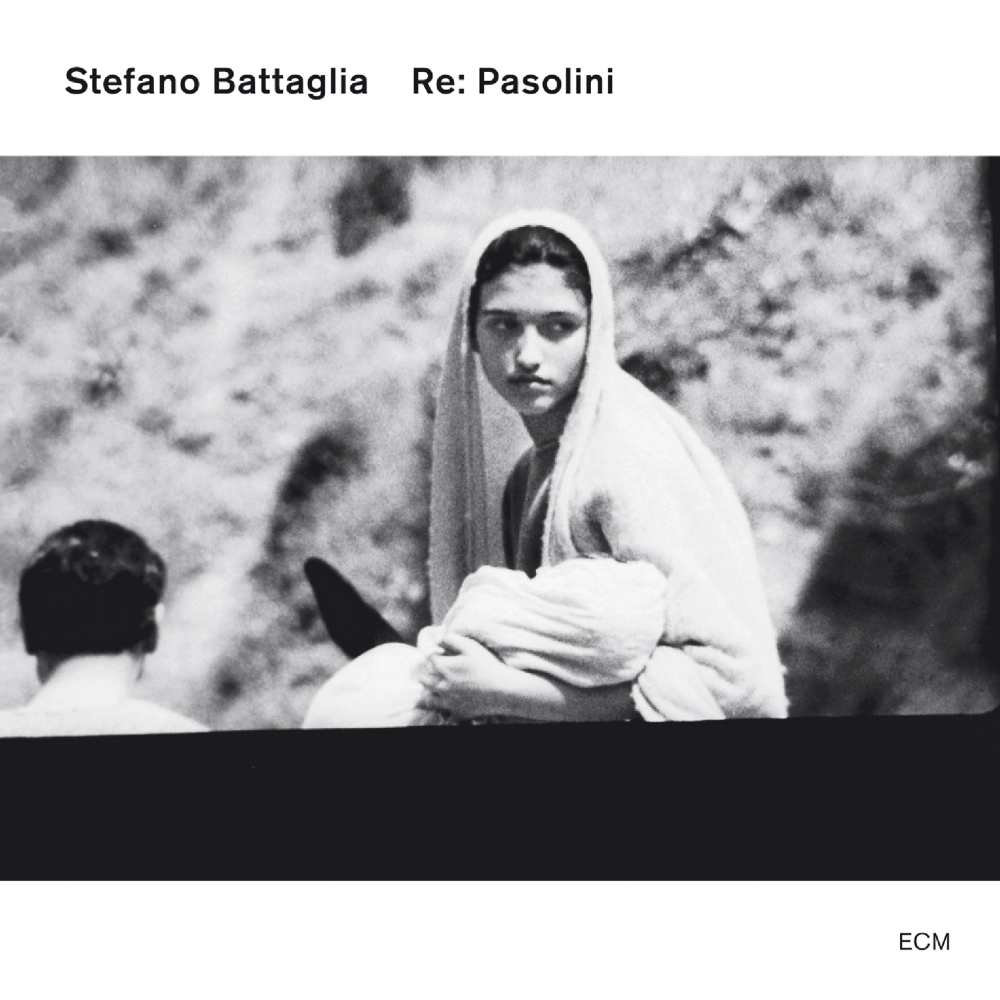
Stefano Battaglia: Re: Pasolini (ECM 1998/99)

Stefano Battaglia
Re: Pasolini

Stefano Battaglia piano, prepared piano
Michael Gassmann trumpet
Mirco Mariottini clarinets
Dominique Pifarély violin
Vincent Courtois cello
Aya Shimura cello
Salvatore Maiore double-bass
Bruno Chevillon double-bass
Roberto Dani drums
Michele Rabbia percussion
Recorded April and July 2005, Artesuono Studio, Udine
Engineer: Stefano Amerio
Produced by Manfred Eicher and Stefano Battaglia

Pier Paolo Pasolini (1922-1975) was one of the twentieth century’s great auteurs. A true interdisciplinarian, he activated discourses of post-colonialism (The Savage Father), politics (Salò, or the 120 Days of Sodom), and literature with comparable fervor. These honeycombs and more shaped the hive of his restless craft through an imagination of superimposition and mélange. In his book The Passion of Pier Paolo Pasolini, scholar Sam Rohdie likens prototypical works such 1967’s Oedipus Rex (incidentally, my first experience of Pasolini as director) to archaeological sites. We do well to analyze them as such, brushing away the dirt of history ever so carefully so as not to damage a single bone. For pianist-composer Stefano Battaglia, the challenge of fleshing out this double album was therefore not to make him musical (Pasolini was notoriously meticulous about every aspect of his mise-en-scène, including sound) but to make him walk again. And surely, within the wide angle that is Re: Pasolini, we can sense his footsteps.

For the first half of the program, Battaglia is joined by Michael Gassmann (trumpet), Mirco Mariottini (clarinets), Aya Shimura (cello), Salvatore Maiore (double-bass), and Roberto Dani (drums), with whom he spins a veritably orchestral web in “Canzone di Laura Betti.” Like the album as a whole, it is a love song (in this case, to the eponymous actress and filmmaker) that unfolds compact wisdom. At its heart is a jazz trio, around which trumpet and cello spin their filaments—interpreters between worlds. As the first of many nods to the silver screen, it sets in motion Battaglia’s greatest strength: namely, his instinct for development. Like a film itself, the program has a beginning, middle, and end, and opens on this facial close-up with all the possibility in the world at its feet.

One face becomes two in “Totò e Ninetto,” a sonic fable in which clarinet carries with it the fragrance of a cutting room. The intonation and togetherness of the musicians here are such that one feels them to have arisen from the ground fully ripe. Two faces become many in “Canto popolare,” a nod to the Italian folk traditions that Pasolini so adored and the recession of which he lamented. For these few minutes, at least, their spirit flourishes anew. All the more appropriate that this should be the trio, unmasked. Maiore’s bassing is particularly gorgeous, at once anchoring and decorating the pianism with undulating care.

Gassmann’s trumpet, sounding like Enrico Rava’s, piles on the nostalgia in “Cosa sono le nuvole,” a song co-written by Pasolini and Domenico Modugno (of “Volare” fame) that sets up the poetics of “Fevrar.” Maiore again astonishes, content as he is to blend into the background, building off Battaglia’s lines in shadowy emphasis, sometimes surfacing as he does here with quivering little cries that seem to say, “I am here and my melody is now.” Chromatic shifts in the surrounding terrain catch us just before we fall off the edge. Literary impulses continue with “Il sogno di una cosa” (named for Pasolini’s sub-proletarian novel) and flit once again in “Teorema,” a plodding and morose twist of emotional lemon.

Act I ends with “Callas” and “Pietra lata,” the former of which brings heartfelt undercurrents to glowing fruition. A tribute in both feeling and practicality, it comes to us revised from an earlier, 1984 piece (in Battaglia’s words: “a simple music box melody inspired by the ascending vocal exercises used daily by singers”). The final tune is a chorale for Rome, a cave where shadows do not move, frozen in time like the stalactites of Battaglia’s slow-forming crystal.

The second disc shuffles personnel, Battaglia now flanked by Dominique Pifarély (violin), Vincent Courtois (cello), Bruno Chevillon (double-bass), and Michele Rabbia (percussion). The bulk of this parallel chamber setting consists of eight “Lyra” pieces, all of which deepen Battaglia’s engagement with Pasolini the poet. In various combinations of violin, cello, and piano (plus the occasional percussive spotlight), they build a storehouse of freely improvised mementos. Like an attic, they grow darker as more memories are poured into it. The string players tend toward the outer edges of their instruments, while Battaglia treads the middle path, forging music that sees itself reflected but does not recognize its own face.

These pieces, scattered throughout, give context to the weighty impressionism of “Meditazione orale” and “Scritti corsari,” both attuned to an adamant politic. Another diptych of sorts (if not for “Lyra VI” between them), in the form of Battaglia’s solo pieces “Epigrammi” and “Setaccio,” tells the story of Pasolini’s formative years. The dialogic elements implied therein flourish tenfold in “Mimesis, divina mimesis,” melting down Apollo and Dionysus in a crucible of prepared piano and percussion. Yet another pairing rolls the end credits. “Ostia” names the town where Pasolini was murdered in 1975 and evokes his last moments before slippage. It expands the molecules of the “Lyra” pieces to planetary scale, drawing wobbling arcs in a surreal yet naked comprehensibility. All of which brings us to the beginning, as it were, with “Pasolini.” As the first piece Battaglia ever composed in this vein, it is the seed of all that precedes it. On its tomb: a bouquet of black roses, each petal forged of gut and flesh and fronded with lens flares of the soul.

It would be easy to say that Re: Pasolini defies description, when in fact it yearns for it, if only because its honoree built a life around speech, character, and action—vital aspects each to our shaping of words. Despite, if not because of, its elegiac finish, the album confirms of all that is good and beautiful in life. It is the comfort of humanity, of communication, of sounds and the inclinations behind them, an all-encompassing embrace of something invisible yet common to it all. No small feat, to be sure, in light of Pasolini’s psychological knots. Battaglia and his allies have crafted a genre unto itself, a paragon of audio cinema that was a classic before it was even recorded. It is a pair of lips that passes us in the night like a kiss that might have been, but which instead hobbles on crutches of wordless keep.

Tord Gustavsen Trio: Changing Places (ECM 1834)

Changing Places

Tord Gustavsen Trio
Changing Places

Tord Gustavsen piano
Harald Johnsen double-bass
Jarle Vespestad drums
Recorded December 2001 and June 2002 at Rainbow Studio, Oslo
Engineer: Jan Erik Kongshaug
Produced by Manfred Eicher

The debut of pianist Tord Gustavsen’s all-Norwegian trio was a much-lauded event. Famously trending on the Scandinavian pop charts, this album more importantly trended in many listeners’ hearts, building its tunes—each a monument to subtlety—entirely out of infrastructure. Speaking as they do on the inside, said tunes come to us fully realized. The gossamer curtains on the sleeve give us only half the story. As towers of gaseous flame, their folds belie the chemical properties therein. Yet there is also the scene beyond, waiting for those who dare to brush the curtains aside. Here is where the music’s ambient nature thrives, unlimited and thrumming with purpose.

“Deep as Love” is as defining an introductory statement as one could imagine. Everything about it describes the trio to a T: the smoothness of execution, a yielding strength of theme, and the breadth of the band’s collective signature. Bassist Harald Johnsen elicits the album’s first revelation as he connects the DNA ladder between Gustavsen’s bluesy accents and drummer Jarle Vespestad’s hourglass timekeeping. This track speaks most clearly to Gustavsen’s sensitivities as player and composer, as does the subsequent “Graceful Touch.” The latter’s chromatic twists linger long after their execution, each a comforting tickle at the back of the temporal lobe. Based on these alone, one could be forgiven in thinking that the band is nothing but shadow and flutter, but the swing implied by Gustavsen’s solo intro to “IGN” is picked up beautifully by the cymbalism of Vespestad, who navigates by sense of touch rather than by hearing. The end effect brims with hip, urban energy that by the sparkling finish leaves us suspended between realms. So, too, does “Turning Point,” which marks a shift in the album’s planetary alignment, and the smoother “Going Places.”

Still, with so much pathos to be savored, it’s no wonder that the band’s strongest tunes should also be its gentlest. From the expansive (“Melted Matter”) to the intimate (Gustavsen’s solo “Interlude”), melodies impose themselves with the force of windblown grass. Solos likewise emerge with such ease that one almost doesn’t notice their crocodilian eyes peeking above the surface. The democratic integrity of “Where Breathing Starts,” for instance, is such that no single instrument can be separated from the others. Johnsen’s depth-soundings proceed robustly here against Gustavsen’s splashes of anthemic color, Vespestad keeping the frame intact all the while.

The magic of Gustavsen’s trio thrives not only in its forward thinking, but also in its nods to bygone days. Hence, the classic sheen of “Your Eyes.” Also resonant in this regard is “Song of Yearning,” which expresses its titular emotion by way of Johnsen’s curlicues. Noteworthy is the simple yet profound drift into the major that sets up Gustavsen’s commentary, recapitulated in this tune’s solo version that steeps the album’s final minutes in the color of prayer.

In the case of Changing Places, one can just as easily hear how much ECM has informed its landscape as how it has informed ECM’s in return. Every motif finds a place to call home and, like the title of “At a Glance,” turns the fleeting into the robustly proportioned.

I hesitate to call an album perfect, but no other adjective will do.

John Surman: The Spaces In Between (ECM 1956)

The Spaces In Between

John Surman
The Spaces In Between

John Surman soprano and baritone saxophones, bass clarinet
Chris Laurence double-bass
Rita Manning violin
Patrick Kiernan violin
Bill Hawkes viola
Nick Cooper cello
Recorded February 2006, Propstei St. Gerold
Engineer: Markus Heiland
Produced by Manfred Eicher

When reedman John Surman first collaborated with bassist Chris Laurence and an ad hoc string quartet on 2000’s Coruscating, the end result was a cause for beginnings. Unlikely surprising to the veteran Surman listener yet fresh as sun-dried sheets, the music of that debut opened a chapter in his compositional thinking now fleshed out to the depth of a novel on The Spaces In Between. Indeed, despite the wealth of fine performances all around, it’s the writing that makes this album such a notable entry in Surman’s expansive discography. The folk-infused melodies, and the means by which they are elucidated, shine through translucent curtains of improvisation, at which the bow-wielders now more forthrightly try their hands.

Balances abound. At the larger level, the album works in two halves, spit at the fulcrum of the title track. This playful sojourn for solo violin, brought to evocative fruition by quartet leader Rita Manning, upgrades the album’s wingspan from butterfly to bird, flitting from limb to limb in search of emerging buds. Before this, the set list steeps itself in winter, interlacing embraces and lettings go. Surman etch-a-sketches his own branches in “Moonlighter,” his methodical figurations seeming to describe a return from hard labor. In them is a sense of tragedy, with bass acting as narrator and strings as chorus. More nuanced balances follow. There is the diurnal contrast of bass clarinet (which under his fingers sings incarnate) and soprano saxophone. The latter doesn’t so much add to as emerge from the strings, drawing out warmth of heart from “Wayfarers All” and the crisper “Winter Wish.” As for those strings, they speak in pastoral dialects, their home a hearth among the ice.

Spring abounds on the other side of the album’s titular spaces, with “Now See!” setting tone in bucolic tracings. Only this and “Where Fortune Smiles” rely on the soprano’s inherent buoyancy to speak its own accord, favoring instead the baritone’s relatively challenging bounce. “Mimosa” (originally written for, but never included on, Thimar) elicits the jazziest inflections in this regard, that low reed moving jaggedly yet surely across the plains. This leaves only “Leaving The Harrow,” a song of drifting, of chemical reactions, of moving on.

Although its mise-en-scène is minimal, the emotional complexities of The Spaces In Between reach far and wide. Like the skies above, they welcome every change in weather, rain or shine, as if it were the first.

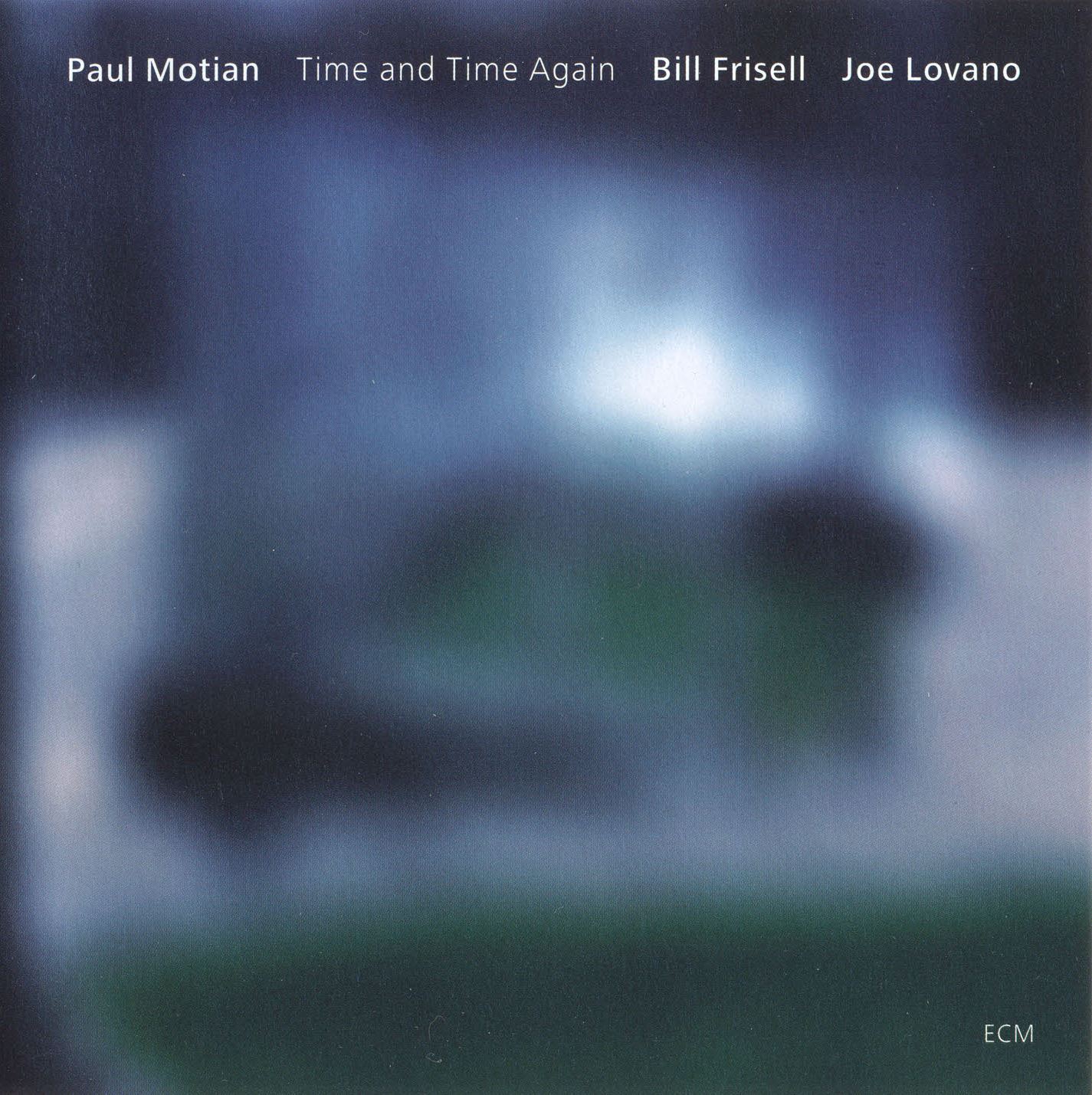
Paul Motian Trio: Time and Time Again (ECM 1992)

Time and Time Again

Paul Motian Trio
Time and Time Again

Joe Lovano tenor saxophone
Bill Frisell guitar
Paul Motian drums
Recorded May 2006 at Avatar Studios, New York
Engineer: James A. Farber
Produced by Manfred Eicher

Paul Motian: a drummer of such intuition that his kit might as well have been a part of his body. Joe Lovano: a saxophonist who lights the way with darkness. Bill Frisell: a guitarist who turns six strings into a symphony. A trio to die for. Then again, why deprive yourself of the luxury? A trio, then, to live for.

Since first meeting in the context of Motian’s Psalm quintet, this nimble nexus worked its tunes for decades from the inside out with freshness intact. As per usual, most of this session’s thematic material comes to us by way of Motian, whose “Cambodia” joins guitar and drums in methodological harmony. Frisell plays around the melody in much the same way that Motian plays around the beat, each descriptive in his approach (check, for example, the crystalline “Whirlpool”), so that when Lovano’s cautious lyricism slinks into the picture, we welcome him as an alley might welcome a stray cat with a song that defines the night. Such feline moods flow through a good portion of the set list, curling their tails around highlights “In Remembrance Of Things Past” and “K.T.” In the latter tune, Motian makes yin and yang of snare and cymbal.

Yet where he truly shines (if not also shades) is in those tracks penned by others, each a space in which he feels content to lurk in admiration of his bandmates’ sensitivities. From the Rodgers and Hammerstein show tune “This Nearly Was Mine” and the luminous spirals of Monk’s “Light Blue” to Lovano’s “Party Line,” the drummer’s capacities for melody, swing, and subtlety are on full display. He walks on beds of flowers, leaving pollen for many beds more.

For all the album’s listlessness, an undeniable clarity of expression abounds. We hear this especially in “Onetwo,” both for its thematic fortitude and presence of mind, and in the concluding title ballad. From strings of ordinary things, it weaves extraordinary pictures. The free spirit that moves this trio surfaces nakedly in these swan minutes, turning postcard into movie and recollection into reality.

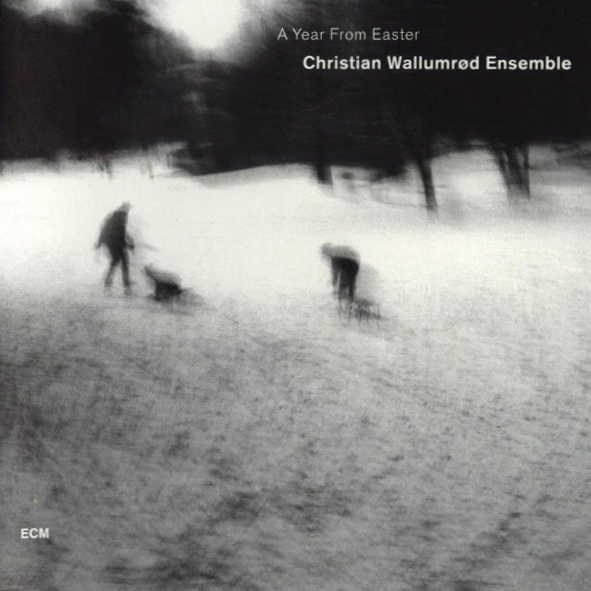
Christian Wallumrød Ensemble: A Year From Easter (ECM 1901)

A Year From Easter

Christian Wallumrød Ensemble
A Year From Easter

Christian Wallumrød piano, harmonium, toy piano
Nils Økland violin, Hardanger fiddle, viola d’amore
Arve Henriksen trumpet
Per Oddvar Johansen drums
Recorded September 2004 at Rainbow Studio, Oslo
Engineer: Jan Erik Kongshaug
Produced by Manfred Eicher

A Year From Easter is the third ECM leader date for pianist Christian Wallumrød. Nourished on the same label’s diet, his skills as an improviser (and as a composer) have sprouted fields of their own making and artfully striate the colors of fiddler extraordinaire Nils Økland, trumpeter Arve Henriksen, and drummer Per Oddvar Johansen into the present spectrum. Wallumrød has always folded his aesthetic along tactile creases, but the chambering of Easter finds him unusually palpable.

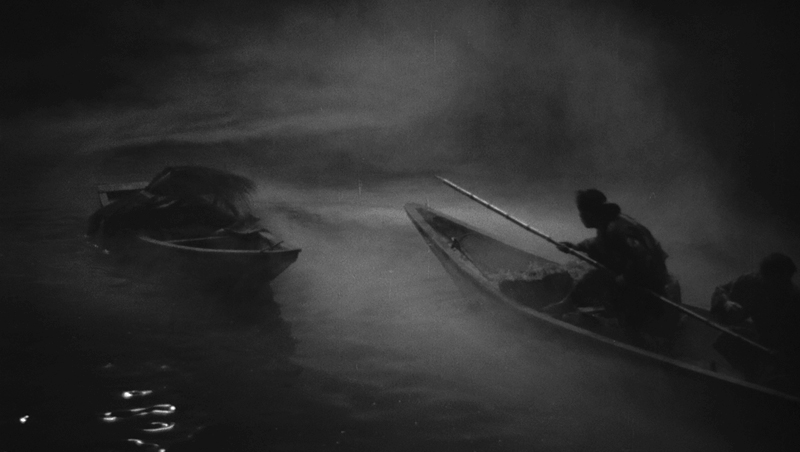
The triangular melody of “Arch Song” sets the stage accordingly, scanning its laser of pathos across the barcode of “Eliasong” (and its deeper sequel) with equal precision. From gray to shining gold, Henriksen’s elliptical reasoning morphs over harmonium, an instrument Wallumrød plays to further, glassy effect on “Lichtblick.” With the gentility of breeze through poplars, his keyboarding—regardless of instrument—puts lips to candle and blows just enough to make things flicker. Such is the bearing of “Stompin’ At Gagarin,” a delightfully programmatic piece that emits Wallumrød’s east-leaning aura. His understated feel for arrangement and storytelling is clearest in such tunes, as also in “Japanese Choral.” Here, over an icy surface, keys and horn unfold with chromatic purpose, misted like a Kenji Mizoguchi still.

Ugetsu

Indeed, cinematic feelings abound. Like a crafted visual story, the slow figurations of “Wedding Postponed” build into dynamically richer constructions as more characters are introduced. Similar impulses mark “Horseshoe Waltz,” of which the pianism beams an attic of clattering relics. Pizzicato strings scuttle along the hard wood, carving rays of light into the air by freshly liberated dust plumes.

Yet the album’s focus remains out of doors, the title track being a representative example. With its warming skies and leaf-lined pathways, it leads us to the sacred spaces of tunes like “Psalm” and “Neunacht,” both like hymns reverse engineered to their stained-glass origins. Such is Wallumrød’s approach: conjoining cells of color by the solder of his crafting. In the latter solo piano piece, block chords process like candle-bearers from rear to fore, making way for linear melodies and violin sketches. Rasping across the night, his motifs swing ably from tree to barren tree, leaving ashen poetry in their wake.