Although Quint is the second album from Boston-based Shibui, it is also the first in what one hopes will be a longstanding relationship with Ronin Rhythm Records, the label of Nik Bärtsch, whose influence on bandleader Tim Doherty is as obvious as the stars at night (and just as beautiful to regard through the telescope of the ear). The core trio of Doherty on bass and percussion, Curtis Hartshorn on drums, and Céline Ferro on clarinets opens through the inclusion of Bradley Goff on keys, Derek Hayden on marimba (a key timekeeper throughout), and violinist Chris Baum. The latter makes his only appearance on “2.1,” which opens the first of five submarine doors. Through gradual appearances of percussion and bass clarinet, it travels from pianistic sediment to a glittering epipelagic zone. The final five minutes offer a glorious conspectus of the band’s relativity, offering plenty of opportunities for intake.
“2.2” is a chunkier groove, made all the more worthy of our mastication by the savory bass snaking its way throughout, while “2.3” offers a more pleasurable spectrum of delights, especially in the transfigurations of clarinet and piano between solids, liquids, and gases. The resulting states lean more in the direction of ineffability than concretism. Smoother textures await in “2.4,” where arid sands and moist breaths intertwine as equals. The bass is especially present, each note a trunk from which pianistic branches are given room to sprout. The marimba’s echoes tread like creatures too light to sink on water yet too heavy to be carried away by a breeze. Lastly, fluidity is the modus operandi of “2.5.” Here, the impulse to sing is never more than a step out of reach. Gritty electric keys give us a sense of inward focus and emanations of heat, weaving delicate cymbalism through shafts of shadow.
While fans of Bärtsch and other masterless musical samurai will surely rejoice over the rudimentarily numbered set list and modular approach, the uniqueness of vision rendered on Quint urges relistening. Doherty’s compositions are proof that instrumental discourse operates differently from speech. Whereas saying the same word over and over strips that word of meaning, Shibui’s aesthetic enhances clarity with every cycle. It also proves there is no such thing as truly identical reiteration in a world of constantly moving molecules and energies between them.
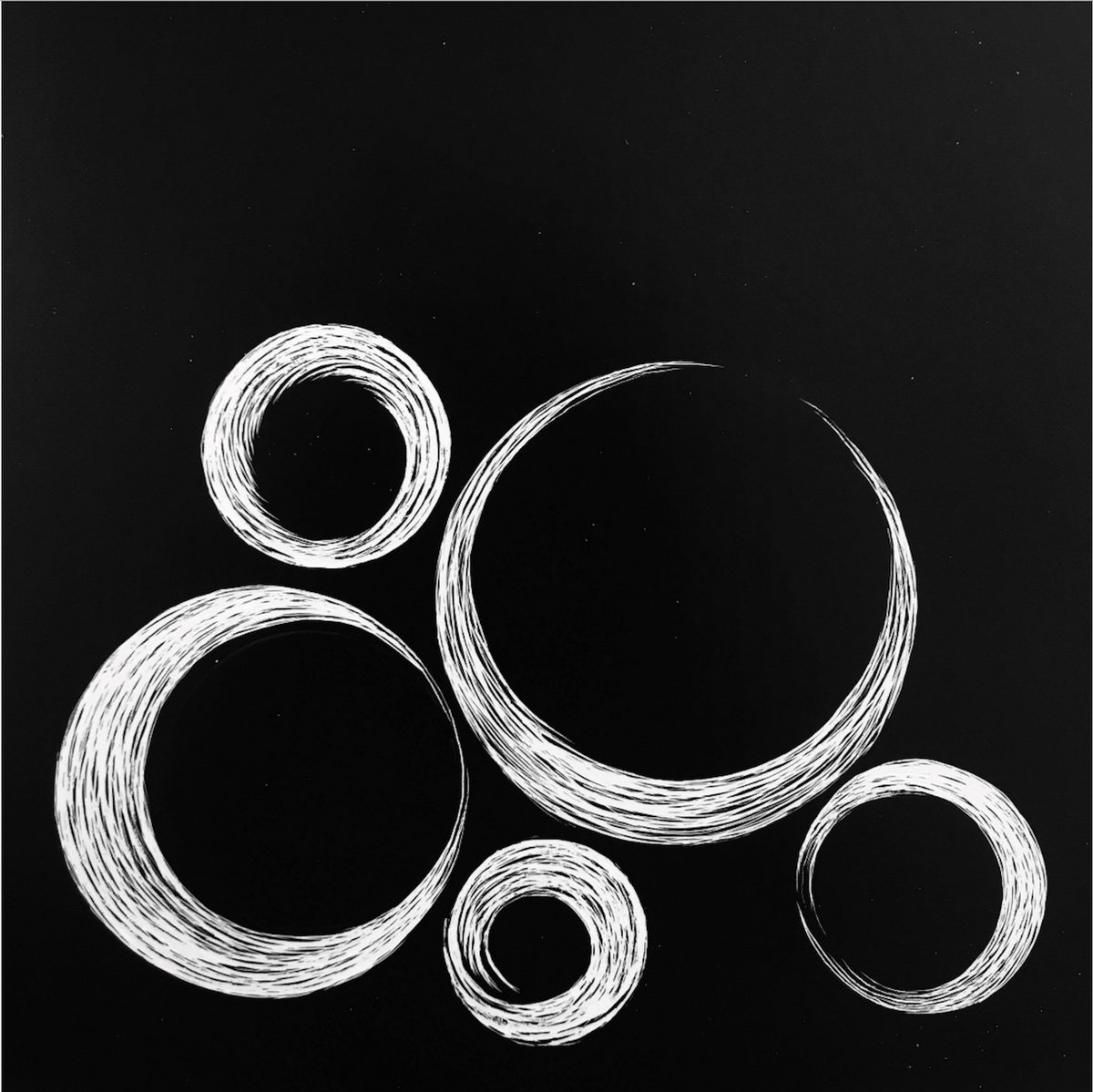
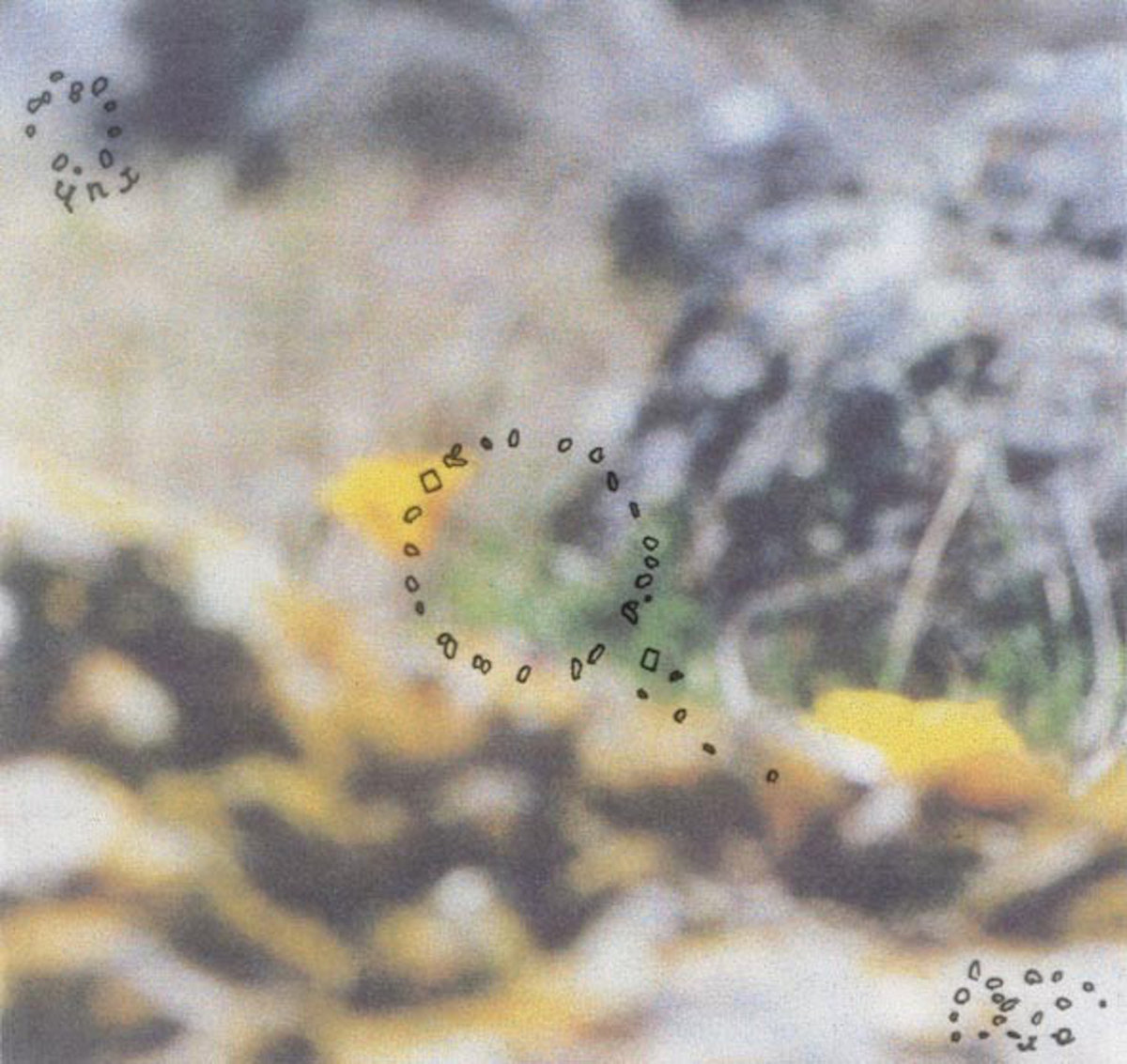
In an enchanting bit of coincidence, the album’s cover artist, Sevcan Yuksel Henshall, came up with the five circular gestures before even knowing its title. Such confluences are part and parcel of music that lifts the spirit with the same weight so that both appear to float in unison, forever suspended between firmament and fundament.
Joe Lovano tenor saxophone, tarogato, gongs Marilyn Crispell piano Carmen Castaldi drums, gong, temple bells Recorded May 2022, Auditorio Stelio Molo RSI, Lugano Engineer: Stefano Amerio Cover photo: Thomas Wunsch Produced by Manfred Eicher Release date: May 5, 2023
Joe Lovano’s Trio Tapestry is one of the profoundest projects to grace ECM records in recent years, and for this, the group’s third round, we are welcomed into a chamber within a chamber within a chamber. This set of eight Lovano originals, each written exclusively for the project, draws from the wells of pianist Marilyn Crispell and drummer Carmen Castaldi, whose gifts of abundance unwrap themselves to reveal one grace after another.
“All Twelve” takes a 12-tone approach to the proverbial welcome mat, greeting us with open arms and closed eyes. Lovano takes liminal account of Crispell’s architecture, rendering an experience that takes two steps inward for every step outward. The ghosts of albums past linger with a loose developmental feel. Every motif, as much a child of atmosphere as of melody, works a speech-like filigree into every wall, sconce, and pew. Like “The Power Of Three” and “Crystal Ball” that come later, its introspections have the presence of someone who has absorbed the world to squeeze out only its most inclusive drops.
Despite an overarching solace, there is variety to be found. Where “Rhythm Spirit” is a heartfelt duet for tenor and drums highlighting breathy lows and delicate highs, “Grace Notes” floats the tarogato on a seascape of dreamy complexion, Castaldi’s cymbals hinting at a groove that never catches, buried instead in the crashing brine. On “One For Charlie,” Lovano returns to tenor with a monologue dedicated to the late Charlie Haden.
At the heart of this session are two balladic verses. The snaking indeterminacy of “Le Petit Opportun” and the title track’s potent lyricism give us plenty to savor even as they savor us. This is chaos theory in slow motion and proof that if this album is a match between day and night, the latter has surely won.
(This article originally appeared in the August 2023 issue of The New York City Jazz Record, a full PDF of which is available here.)
It was as if they had opened a valve and all the pain, fear, and anger of those days had issued from their chests and rolled onto the street, rising into a terrible shout to the thick black clouds above. –Isabel Allende, The House of the Spirits
Trauma wears a coat of iron. It trips into the body when one least expects it, wrapping itself on the way down in a protective layer so soundproof that it becomes unknowable even to the self. With time, however, its minor key drifts within earshot, begging for the major strains of a token anthem known as “Moving On.” Such prefab resolutions to the pain we carry inside feel intensely tailored to individual circumstances until we realize they bear the scars of ancestors whose breath still hangs heavy in the air. Although their voices are lost to the burial ground of history, we continue to exhume them in the hopes of putting their bones back together. But without the flesh to connect them, they fall into piles of dust the moment we let go.
When destruction befalls an entire race of people, even before the word “genocide” enters our collective vocabulary, its wickedness thrives in the shadow of our unwillingness to accept it. And yet, something lingers, a sundial’s shadow following the same slow arc across a stone marked by the positions of celestial bodies. Except now the stone is a page, its shadow the ink it has absorbed to convey stories of ourselves. This is the essence of literature. And so, let us begin to imagine that one page becomes ten, that ten becomes hundreds, and that a cover and a name whorl into shape. The leaves part, and the light angles itself just so, hinting at what is to transpire.
An Outward Look
“Deep in the woods, there is a house that’s easy to miss.” So begins The House in the Pines, the debut novel from Ana Reyes. Like the titular house, itself a major character whose lungs inhale the emotions of her protagonists and antagonists and exhale the distillations of their overlapping traumas with the depth of a fireplace in its capacity for memory, she holds the key. Thus, Reyes points to a core construction not only of her conceit but also of fiction as a contract between author and reader. In building these things one element at a time, she clues us in on her piecing together of personalities and the world they inhabit.
Our guide, once removed from omniscience, is Maya, a 25-year-old graduate of BU who works at a gardening center while her partner, Dan, pushes his way through law school. As a couple, they are typical and atypical. The former in the sense that they want what most people in love want (to make a home together, find meaning in each other, and build a future to replace the past), the latter insofar as Dan’s unabashed honesty—a rarity in her lived experience—is a mirror she has yet to find elsewhere. Its reflection at once repels and attracts her, illuminating vices that may or may not be within her control. For the time being, things are relatively stable—that is, until she encounters a mysterious piece of security camera footage online in which a young woman drops dead inexplicably. Disturbing in and of itself, if not unusual in viral fare, what grabs Maya’s attention is the man in the video, Frank Bellamy, an ex whose face might have remained subconscious had not its unmistakable features courted her memories from the screen.
Even before this interruption, Maya has been papering over the cracks. Like an eggshell, the structural integrity of her life relies on equal pressure applied to opposite ends. Any maldistribution thereof means she is at risk of breaking. Wracked by sleepless nights, she “could easily draw from memory the shape of every water stain on the ceiling,” indicating a dichotomy of comfort and monotony stemming from the same source. Through flashbacks, we witness her friendship with Aubrey, who also happened to die in Frank’s presence seven years ago.
A further scan of the surface of things reveals other details amiss. Maya’s struggle with antidepressants is clarified early on, as is her insistence that Frank is somehow responsible for the death of Aubrey and the girl in the video. That no one believes her encourages a cycle of doubt that keeps one foot on the hamster wheel of justification. If we are going to trust Maya, we must first seek the evidence cobwebbed in the darkest recesses of her mind.
She returns to her hometown hoping to learn more about this second death and the enigmatic Frank, whose involvement, she maintains, is more than coincidental. She has set herself on a path toward a truth that even she might not be prepared to wield as her own. The rest is for you to discover.
An Inward Look
One sign of any honest work of literature is not how well you understand it but how well it understands you. In this respect, The House in the Pines succeeds with hard-won beauty through two disparate yet intertwined internal mechanisms.
The first is an unfinished novel by Maya’s father, a latter-day victim of Guatemala’s Silent Holocaust, whose typed manuscript is a leitmotif in her life. It also brings her and Frank together, as her intent reading of it pings his interest. After striking up a conversation, they embark on a relationship as intense as it is cut short by Aubrey’s untimely death. Beyond this nominal mystery, the violence of Maya’s family history looms as the central horror of this novel, the outer skin of which serves as a canvas for the tattoos of its denouement.
Here, storytelling is a catalyst and repository for struggle. Through regular references to children’s books, literary classics, and Greek mythology (over which Maya and Dan bond after her skip in the record of life with Frank), Reyes gives us at least two out of three combination lock numbers for the emotional baggage Maya carries at any given moment. Suffice it to say that death has always been her stage set, whether in the aunt she never knew or the grandmother whose funeral brings her to Guatemala and puts the father’s pages in her hands.
The other psychological trigger is the cabin itself, which Frank has lovingly crafted as a haven away from a troubled (and troubling) childhood, which becomes clearer as Maya’s current investigation unfolds. In this respect, the cabin is a storehouse of memory, if only because it is the missing link in the emotional evolutions of those its presence has affected.
The centrality of its forested location further confirms the thriller narrative as a coping strategy. As Reyes puts it, “Maya’s life was divided into a Before and After” the turning point of her best friend’s sudden expiration. Any subsequent grief opens a void to be filled by words other than hers. All the while, Maya struggles with the dilemma that many victims face: to protect her own words by holding them all inside or risk others’ perversions by turning them into a story.
Either way, writing fixes memories in time, reminding us that things happened. This is why, for me, The House in the Pines is ultimately about books as objects of intimacy and vulnerability. Read it that way, and it may just hand you a key far more liberating than the one its title cross-hatches.
The Fragrance of Fiction
It’s not often a novel gets its own fragrance, but that’s precisely what Gold & Palms Atelier set out to change with Deep Woods. Directly inspired by The House in the Pines, it combines the innocence and foreboding of the forest in a robust pyramid that will surely immerse the multisensory reader.
In its top notes of smoke and fir needle, one feels the vestiges of human activity as if encountering a once-inhabited place long since abandoned. The whiff of ashes is a sign of life, while the greenery gives us a sense of nature’s quiet indifference. The middle notes of sandalwood and cardamom lend a sense of distant times and places, perhaps even of an unrequited love. One can easily read Maya and Frank into their dance, vacillating between harmony and separation. Finally, the base notes of oud, vanilla amber, and (most prominently) tree sap indicate a mystery among the trunks and their receding lines.
While pine is no stranger to the world of perfumery, among the bottles I’ve put a nose on, Deep Woods reminds me most of Mriga from the niche brand Prin (a pungent blend of conifer resins, sandalwood, and oud), minus the animalic edge of deer musk. The softer tones of Gold & Palms Atelier’s take on this constellation make for a more wearable experience, such that you can almost feel yourself blending into the wood, losing all sense of time…
Not only is this the fragrance of fiction; it is also the fiction of fragrance to transport us to places that exist only in our minds. The overlap here is profound enough to add layers to a novel intent on peeling them. Still, there is hope because we have an anchor to hold on to. Scents may fade, but the memories of which they are spun continue to flex until we drop from view.
French vocalist Muriel Louveau understands the human voice is never a solo instrument. It is comprised of flesh and bone, but also of vibration and forces beyond what the body can immediately contain and make sense of. It is simultaneously worldly and divine yet exists without contradiction (save for the words it may force against the grain of truth). Louveau’s voice is, of course, very much her own, but it is also ours the moment she shapes it to fit the contours of poetry. In this case, the words are a soul unto themselves, housed by artist Elizabeth Hayes Christopher, whose imagistic renderings give credence to the side paths we ignore in linear everyday wanderings. Once offered as a sound installation at Five Myles gallery in Brooklyn, these multitracked pieces now live on as five standalone experiences, presented both individually and as an unbroken mix.
In “Rose Light,” a brief speech song that opens the sky like a folding fan, Louveau draws a vocal line through clouds described with tearful honesty. We meet each element of daybreak as if it were a person in need of an embrace. Whether or not we open our arms is ever the challenge of language and sound, in the middle of which we must choose who to serve: the heart or the dust of which it is formed.
Through careful alterations, Louveau reveals hidden layers in her singing, as in the spiritual blues of “Soulhandlips” and the prayerful contours of “Blue Refraction.” In each, she expresses the materiality of things we cannot touch and the ephemerality of things we can. In partnership with Christopher’s insightful realism, she lends folklike qualities to “I meditate wings.” Splashed against a throaty backdrop and tickling the nape of our consciousness, memories of nights that will never be recaptured rush like blood to a head spun in unexpected directions—only here, that feeling is evoked in slow motion. As in “Salamander,” Louveau and Christopher’s hybridization births a third voice of internal flow. Thus, the self expands until every trauma glimmers as a crack in the eggshell of our contentment with the way things are.
Jakob Bro Joe Lovano Once Around The Room: A Tribute To Paul Motian
Joe Lovano tenor saxophone, tarogato Jakob Bro guitar Larry Grenadier double bass Thomas Morgan double bass Anders Christensen bass guitar Joey Baron drums Jorge Rossy drums Recorded November 2021 at The Village Recording, Copenhagen Engineer: Thomas Vang Cover photo: Woong Chul An Produced by Manfred Eicher Release date: November 4, 2022
Guitarist Jakob Bro and saxophonist Joe Lovano head an ensemble that includes bassists Larry Grenadier and Thomas Morgan, bass guitarist Anders Christensen, and drummers Joey Baron and Jorge Rossy in a sprawling tribute to drummer and composer Paul Motian. That the set includes only one tune by Motian proper (“Drum Music”) is by no means an oversight but a testament to its dedicatee’s spirit, which continues to glow in musicians who cup its embers with reverant care. Rather than simply recreate or distill Motian’s personal and creative principles, the band expands on them with heartfelt accuracy.
“As It Should Be” is the first of two pieces by Lovano (the second being “For The Love Of Paul”). It also opens the curtain with a swell of patient beauty as only ECM could render. The atmosphere is rich, far-reaching, yet always firm in its immediacy. Bro’s guitar architects the pulsing kingdom over which Lovano’s tenor reigns supreme, a melodic giant of kindest temperament. The freely improvised “Sound Creation” follows with a near-ritual quality, made all the more clairvoyant by Lovano’s tarogato before the tenor dances in its dust clouds.
Bro offers two tunes of his own: “Song To An Old Friend” and “Pause.” Between delicate arpeggios and tender melodizing, he stands to the side of either foreground, content in avoiding the spotlight to be heard rather than seen. Nestled between them is the above-mentioned “Drum Music,” which yields scorching playing from the leads. After some thoughtful building, a squeal for the ages from Lovano’s tenor makes for an unforgettable catharsis.
That the recording was made on the 10th anniversary of Motian’s death only shows how much he lives on in the articulations of those who knew him best. Having played in the drummer’s trio with Bill Frisell for 30 years, Lovano should know that a strong metaphysical melody can be enough to make the departed feel near again.
Keith Jarrett piano Recorded live July 6, 2016 at Auditorium, Opéra National, Bordeaux Producer: Keith Jarrett Engineer: Martin Pearson Mastering: Christoph Stickel Cover photo: Max Franosch Executive producer: Manfred Eicher Release date: October 14, 2022
Every new release of a Keith Jarrett recording activates something old—ancient, if you will. By this, I mean to suggest that his immaterial approach to a resolutely material instrument invites us to appreciate the synergy of being and non-being. To experience his notecraft, whether in person or via ECM’s relentless charting of his footsteps, is to understand that a physical body is required to interpret even abstract realities. And in the 13-part odyssey we have here, we encounter one of the most spiritual gifts to take flight from Jarrett’s fingertips.
From the same tour that brought such wonders to light as Munich 2016 and Budapest Concert comes this July 6th performance at the Auditorium de l’Opéra National de Bordeaux. In this spontaneous mosaic of waves and dissolutions thereof, he articulates an ocean’s worth of expanse. If Part I can be said to burst forth as if in need of being heard after a long silence, Part XIII intones the whisper of low tide. Between them, he unleashes a rhapsodic account of muscle and morality.
Flexibility is central to these pieces in the making, nowhere more so than in Part III. This breath of fresh balladic air is road music for the heart. There’s something painfully final about it, a tearful evocation of mortal ends. It also passes on hope to those left behind. Occasional dissonances hint at bittersweetness, always returning to the foreground with bits of the past polished and placed carefully on an altar for the future.
So begins a grand sequence of somber inner visions. Without ever losing sight of a certain playfulness of childhood (as in the spiral staircase of Part V), he navigates hymnal block chords (Part VI) and savory vamps with grace. Crooning his way through the valley, he ensures that beauty never becomes an idol. For while the lyrical fulcrum of Part VII, for example, veers into sunlight, Jarrett is quick to don the shades of Part VIII, bringing temperance such as only the blues can claim.
But if the feeling of farewell peaks in Part XII, it’s only because the destination is nearer than our point of departure. In such moments, we step outside of time, wearing it like a coat. We can reach into any pocket and pull out an episode of our lives, slicing away at infinity like a doctor in search of a cure.
For many, the term “field recording” evokes the greatest hits of natural sounds: ocean waves, rain, and birdsong. Indeed, one of the earliest field recordings dates to 1889, when an eight-year-old Ludwig Koch wax-cylindered the song of a white-rumped shama. In more recent history, anyone of reading age in the heyday of National Geographic may remember Roger Payne’s Songs of the Humpback Whale, inserted as a flexi disc in a collectible 1979 issue. Ten million copies of it were printed—more than any album ever produced in a single run. Payne’s classic and others like it endure for their scientific value, serving as springboards for studies of language and the potential for interspecies communication. They also spawned a robust environmental movement at a time when modernity was threatening to divorce humanity from nature. By the same token, microphones can get too close to their subjects, as in Hans Lichtenecker’s “archive of endangered races,” which documented descendants of the very peoples his comrades slaughtered in German Southwest Africa (what is now Namibia). Even the most benign anthropological motivations have fallen under retrospective scrutiny.
I will not be reviewing such projects here. Instead, I wish to examine—and, I hope, bring fresh ears to—a visceral stream of experimental field recordings. While tracing the origins of such an amorphous category can be difficult, an indisputable pioneer is Jeph Jerman, whose seminal work tops the list below. Kindred visionaries in this sphere of influence include Francisco López, Alan Lamb, and John Tulchin. I highlight their endeavors, subjective as my favorites among them are, in the interest of expanding their embrace of sameness through difference.
These recordings constitute a form of sonic travel to worlds at once internal and distant. Some are spliced and collaged within compositional frameworks in tandem with electronic and acoustic instruments, others manipulated beyond recognition, and still others presented as they are—but always with an aesthetic in mind, even if that aesthetic is simply to let sounds “happen.” Their significance cannot be overstated—not because they represent an overarching artistic ethos but precisely because they shun that motivation in favor of genuinely borderless spaces. It’s not often we can listen to a corpus of sounds without transfusing the blood of our politics and ideologies into it. Here, we can. Such comfort means more than ever in a world on its knees, wondering whether the healing will begin.
Jeph Jerman: Early Recordings ’81-’85
Also known by the moniker Hands To, Jeph Jerman first set out with his cheap cassette deck in the 1980s to document the act of listening while questioning its practices and apparatuses. What continues to fascinate about his recordings is how raw and curated they feel. And while some of his most unadulterated work (e.g., Beach Tree and Birds, 2001, A Pyrrhic Victory) is woefully difficult to track down, this compilation of early recordings is a grounded place to start. Lo-fi swaths of mostly industrial settings (e.g., “Metal Fabricating Shop, Colorado Springs”) reveal an unimaginable depth in the mundane.
Alan Lamb: Archival Recordings: Primal Image/Beauty
In 1976, Australian biomedical research scientist Alan Lamb first discovered the abandoned stretch of telephone wires that would define his artistic endeavors to come. Dubbed the Faraway Wind Organ, this massive vibrating skeleton loosed eerie songs at the touch of an air current, echoing since his childhood into a mature desire to record them. That he did, often for hours at a time, assembling choice passages into this otherworldly diptych. Whether whispering the mantras of uninhabited terrain or choiring like a Glenn Branca symphony, these requiems step out of time and ooze their way into the bloodstream.
Maggi Payne: Ping/Pong: Beyond The Pail
Maggi Payne is a venerated composer and multimedia artist whose output has largely focused on electro-acoustic constructions. Her field recordings of “dry ice, space transmissions, BART trains, and poor plumbing” congregated to astounding effect on 2010’s Arctic Winds, but 2003’s Ping/Pong: Beyond The Pail preserved another level of intimacy. Its two 30-minute tracks, recorded in a galvanized steel pail, offer complementary experiences of rainfall through the intermediary of the album’s eponymous vessel. The first catches the rain openly, while the second inverts the pail for a drum-like effect, sealing us in a metallic chamber without excuse for distraction.
John Tulchin: Location Recordings
This collection’s first track, “Fire Alarm From A Distance (Winter Park, FL.),” is indicative of John Tulchin’s questing spirit. It’s also one of the most haunting field recordings in readily available form and an entry into an album unlike any other. The pragmatic titles—“Metal Structure In The Desert (Dead Horse Ranch, AZ.),” “Log Partially Submerged In Water (Seattle, WA.),” etc.— only deepen the possibilities of interpreting them. Somehow, knowing what we are hearing makes it clear how much we miss. Thankfully, we have Tulchin to fill in those gaps with heartfelt portraits of time incarnate.
Quiet American: Plumbing And Irrigation Of South Asia
Quiet American, an homage to the novel by Graham Greene, is the sound manipulation project of San Francisco Bay Area artist Aaron Ximm. Plumbing And Irrigation Of South Asia is at once exactly what it sounds like and something else entirely. Nominally, it is a vast collection of field recordings of various community fixtures, such as a drainage pipe in Madikeri (India), a water pump in Khulna (Bangladesh), and a toilet in Kathmandu (Nepal). Other locations include Vietnam, Burma, Laos, and China. Beyond that, it is an unassuming travelogue filtered through the mesh of a respectful phonographic memory.
Jgrzinich: Insular Regions
John Grzinich is a sculptor combining found sounds and instruments of his own design. For this 2005 release, he gathered personal impressions of Mooste, a rural Estonian village. Insular Regions is among the more tactile albums in this guide’s category of interest. Its resonant intersections of wood, wind, and wire feel like a portal into another dimension. And yet, we are constantly reminded of their fleshly purview, which Grzinich sees no reason to hide. What we hear is what we get, even when we know it has been transformed through technology, because every electrical circuit runs on our conductivity.
Loren Chasse: Synthesis of Neglected Places
Loren Chasse is a humble public school teacher in San Francisco who seems never to have lost that childlike wonder for the world around him. Synthesis of Neglected Places was originally produced as a cassette in 1998 by the Unique Ancient Tavern label. Over the course of eight parts, it lives out every moment in the full knowledge that the act of recording will change its genetic makeup. As Chasse’s most crepuscular album, it speaks in tongues of light and shadow in equal measure, drawing out tasteful keyboard touches as if from within.
Loren Chasse: The Air In The Sand
Loren Chasse leaves behind precious recollections of experiences you never knew you had. That such dreamlike qualities are elicited from unabashed reality sets his work apart. The Air In The Sand shares the spirit of 2002’s Hedge of Nerves, which meshed the crackle of vinyl with sounds of the elements, expanding that aesthetic to welcome wider-reaching absorptions. By revealing the natural in the artificial and vice versa, he pays deference to the molecules common to all matter, guiding them in chorus even as they lead him in kind to voices hibernating until they can be amplified.
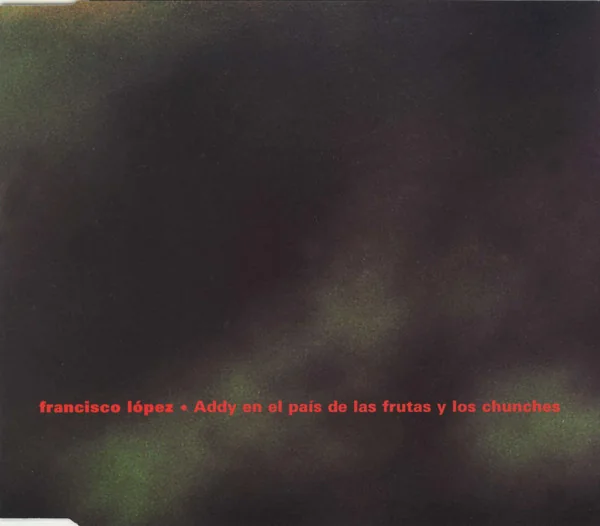
Francisco López: Addy En El País De Las Frutas Y Los Chunches
This first American release from Spain’s master recordist Francisco López is still his finest. With characteristic attention to otherwise-ignored wonders, he listens without a hint of imposition. From the patter of a Costa Rican rainforest to the pall of noises flatlined into a language unto itself, he exposes the moribund yet existentially beautiful underbelly of nature as a force of constant transition. Like his near-equal masterpiece, Belle Confusion 969, it reminds us that life is a field recording in process, ever adjusting its receptors to pick up on the machinations of our unstoppable progression into death.
Click on the sub-cover titles below to see my reviews of other vital albums in this loosely allied genre.
Ralph Alessi trumpet Florian Weber piano Bänz Oester double bass Gerry Hemingway drums Recorded June 2021, ArteSuono Studio, Udine Engineer: Stefano Amerio Mixed December 2022 at Radiostudio RSI, Lugano by Manfred Eicher and Stefano Amerio Cover: Fidel Sclavo Produced by Manfred Eicher Release date: March 17, 2023
Trumpeter Ralph Alessi returns to ECM with his fourth leader date for the label, this time with a newly minted European quartet that reflects his relocation to Switzerland in 2020. Alongside Florian Weber (piano), Bänz Oester (bass), and Gerry Hemingway (drums), he carves out a vivid baker’s dozen of original material.
“Hypnagogic” not only sets a tone but also establishes the album’s heart, the veins and arteries of which are traced with anatomical faithfulness by Alessi and Weber. It’s one of a handful of duo turns (including the subcutaneous title track) building on their nearly 20-year relationship as sonic allies. Abstract yet comforting, their dialogues feel like waking from a dream yet holding on to its fading tendrils. The effect is such that when the light of “Migratory Party” reveals a rhythm section trailing an even longer history, the band’s ability to balance independent voices and melismatic intermingling reigns supreme.
Both as musician and composer, Alessi creates constant washes of color. Whether in the groovier strains of “Residue” (a fantastic testimony of Oester’s talents) or in the nocturnal urbanism of “The Shadow Side” and “Diagonal Lady,” he navigates every moment as a director would a scene of actors improvising within a loose script. The latter two tunes have a three-dimensional feel that yields the album’s deepest magic.
When at its most forthright (“His Hopes, His Fears, His Tears” and “Everything Mirrors Everything”), the band swings forward and backward rather than side to side, while the dramatic resolution of “Hanging by a Thread” leads perfectly to the concluding “Tumbleweed,” bringing us back to where it all began.
(This review originally appeared in the April 2023 issue of The New York City Jazz Record, a full PDF of which is available here.)

















 Between Sound and Space: ECM Records and Beyond