Tõnu Kõrvits: Mirror (ECM New Series 2327)

Mirror

Tõnu Kõrvits
Mirror

Anja Lechner violoncello
Kadri Voorand voice
Tõnu Kõrvits kannel
Tallinn Chamber Orchestra
Estonian Philharmonic Chamber Choir
Tõnu Kaljuste conductor
Recorded February 2013, Methodist Church, Tallinn
Recording engineer: Tanel Klesment
Mixed December 2014 in Tallinn by Maido Maadik, Manfred Eicher, Tõnu Kõrvits, and Tõnu Kaljuste
Produced by Manfred Eicher
Release date: March 18, 2016

Meticulously, motionlessly, secretly, he wrought in time his lofty, invisible labyrinth…. He eliminated certain symbols as over-obvious, such as the repeated striking of the clock, the music. Nothing hurried him. He omitted, he condensed, he amplified.
–Jorge Luis Borges, “The Secret Miracle”

Mirror documents a specially curated performance of music by Estonian composer Tõnu Kõrvits given on February 6, 2013. From a composer of great variety, here we find a microscopic array built around Estonia’s choral heritage. With particular emphasis on the music of Veljo Tormis, whom Paul Griffiths in his liner notes affirms “was evidently a father figure for Kõrvits, and there is something in this recording of a tradition being received by one generation from another,” the program treats human voices as expressions of soil and soul. Griffiths goes on to describe Tormis’s instinct to fortify what makes Estonia’s choral music unlike any other—a politically subversive move in a country wrapped in Soviet chains for much of the elder composer’s life. Such independent spirit peeks through the veneer of history in Peegeldused Tasasest Maast (Reflections from a Plainland). Written in 2013 for cello and choir, it is a fantasy on a song by Veljo Tormis with words by political poet Paul-Eerik Rummo. With a transparency as only the Estonian Philharmonic Chamber Choir can evoke, the voices weave a tapestry of shimmering shadows while the cello of Anja Lechner keeps them tethered like a prayer to earth-hugging flesh. A touch of kannel, an Estonian zither played her by Kõrvits himself, at the end foreshadows the instrument’s foregrounded presence in Tasase Maa Laul (Song of the Plainland). Cushioned in the forested voice of Kadri Voorand, this 2008 composition’s cries for peace and stability, planted in distant plains, reflect upon the suite for strings between them. Dating from 2010, Labürindid (Labyrinths) is as intimate as it is wide-ranging in feel and color, and shares a possible affinity with Erki-Sven Tüür, if in a more delicate vein. Over the course of seven parts, the last of which is like the watering of the preceding six seeds, Kõrvits paints with every bow in compound strokes of emotional transference.

Seitsme Linnu Seitse Und (Seven Dreams of Seven Birds) for cello, choir and strings, sets words by Maarja Kangro and Tõnu Kõrvits. Dating from 2009 and revised in 2012, this textural wonder, rightly described by Griffiths as “at once a choral suite and cello concerto,” finds voices stretched like a sky-blue page for Lechner’s avian cursive. Also in seven parts, it opens with fully formed life. The third part, which features a cello cadenza amid the whistling choir, is a dawn chorus in reverse, while the seventh shows unity through variation. Lechner’s playing, as always, is thoroughly considered, free yet controlled. As a translator, she understands what Kõrvits has not written into the score and draws out that subtext with utmost respect.

The last choral work is the Tormis-inspired Viimane Laev (The Last Ship). From 2008, its scoring for male choir, bass drum and strings, with words by Juhan Smuul, elicits a somber drama. Like Tormis’s finest oceanic excursions, including 1979’s Songs Of The Ancient Sea and 1983’s Singing Aboard Ship, it describes through the process of being described. Our postlude comes in the form of Laul (Song). Originally composed in 2012 for cello and (mostly pizzicato) strings, then revised for this performance, it is a fully contoured channel from light into darkness.

As in the Borges quote above, Kõrvits is one who reduces rather than elaborates. His notecraft is smooth as bone, given tendons and nerves through the listening.

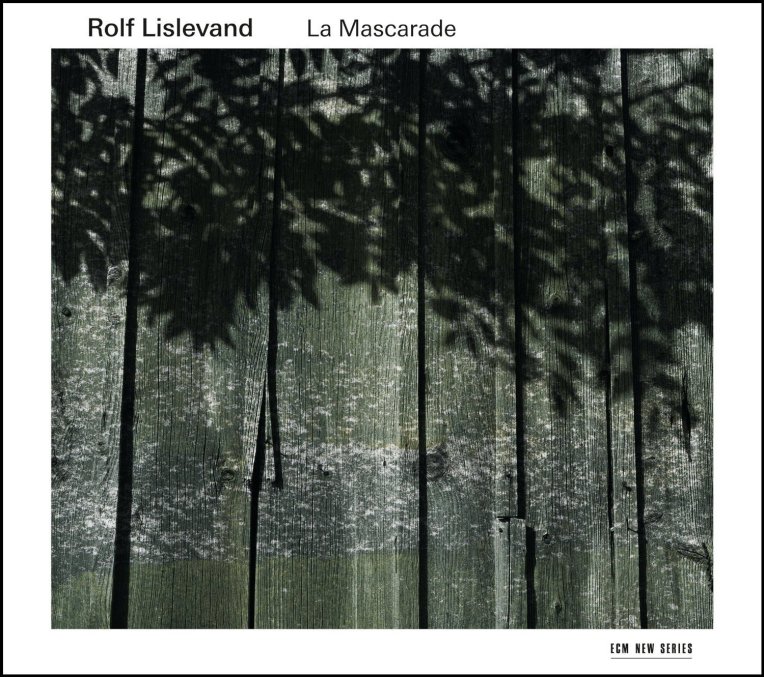
Rolf Lislevand: La Mascarade (ECM New Series 2288)

La Mascarade

Rolf Lislevand
La Mascarade

Rolf Lislevand Baroque guitar, theorbo
Recorded April 2012, Auditorio Stelio Molo, Lugano
Engineer: Stefano Amerio
Produced by Manfred Eicher
Release date: May 20, 2016

Featuring music by Robert de Visée (ca. 1655-1732/33) and Francesco Corbetta (ca. 1615-1681), guitarist-composers in the employ of Louis XIV, this under-the-radar gem from ECM’s New Series finds Rolf Lislevand charting the divergent territories of the theorbo and Baroque guitar in a cross-hatched program.

Lislevand 1

De Visée’s sense of tactility is evident not only in Lislevand’s interpretations, but also in the writing itself. In Les Sylvains de Mr. Couperin and, especially, the piece from which the album derives its name, the theorbo’s emotional reach is fully examined. Their sounds are intimately connected to speech. “The dominant linguistic elements of French,” the performer writes, “are all there: the length of the musical syllables, the accents, created artificially by the ornaments, and above all the short, gestural, interleaved phrases constructed in a very clear rhetorical logic.” In this tongue he speaks semi-conversationally—never debating in the interest of affirmation but rather walking hand-in-hand around a question that chooses not to define its existence by an answer. The Chaconne en sol majeur is a masterstroke in this precise regard, laying down sonic sentences across a bridge of charm.

Lislevand 2

Corbetta, who served as de Visée’s teacher, flits above his own reflection in relatively whimsical yet philosophically inflected journeys. In the brilliant Partie de Chaconne en ut majeur, one can hear shades of the Iberian Peninsula, flamenco-like drama, and heart palpitations in a single strum. The focus on chording over individual voicings lends a dream-like quality. Indeed, whereas de Visée seems concerned with waking fantasies, here the colors are drawn from a whimsical font such as only closed eyes could contain. In this sense, the Caprice de Chaconne manifests the album’s most corporeal interests. Rooted as much in past as in future, it smiles as if to confirm the present moment as a magic of its own making. Not unlike the briefer Folie, it shines most when pausing for effect.

Here and there, Lislevand adds his own tasteful pieces, such as the “Intros” to Corbetta’sPassacaille en sol mineur and de Visée’s Passacaille en si mineur. They exist to strengthen an underlying sense of architecture, as indicative of a meticulous attention to time and its relationship to space. In service of that assessment, engineer Stefano Amerio went to great pains to recreate the halls of Versailles, where every inner detail of these instruments would likewise have blossomed like the hearts of those hearing them. Let those reverberations till the soil of yours in kind.

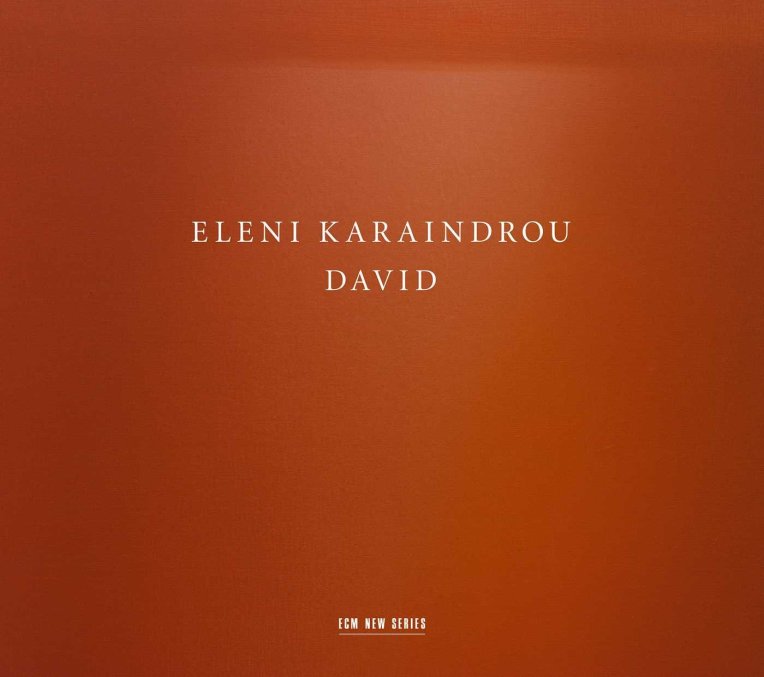
Eleni Karaindrou: David (ECM New Series 2221)

David

Eleni Karaindrou
David

Kim Kashkashian viola
Irini Karagianni mezzo-soprano
Tassis Christoyannopoulos baritone
Vangelis Christopoulos oboe
Stella Gadedi flute
Marie-Cécile Boulard clarinet
Sonia Pisk bassoon
Vangelis Skouras French horn
Sokratis Anthis trumpet
Maria Bildea harp
Katerina Ktona harpsichord
ERT Choir
Antonis Kontogeorgiou choirmaster
Camerata Orchestra
Alexandros Myrat conductor
Concert production: The Athens Concert Hall
Recorded live November 19, 2010 at Megaron (Hall of the Friends of Music), Athens
Recording engineer: Nikos Espialidis
Assistants: Bobby Blazoudakis, Alex Aretaios, and George Mathioudakis
Edited and mixed March 2016 by Manfred Eicher and Nikos Espialidis
Mastering engineer: Peter DePian
Produced by Manfred Eicher
Release date: November 18, 2016

The theatrical text of Davidcomes to us by way of an anonymous poet from Chios Island. After its rediscovery, it was published in 1979 in a critical edition by Thomas Papadopoulos of the Bibliotheca Vallicelliana, and premiered with music by Eleni Karaindrou the following year. Here it is documented in full from a performance in November 2010, given as part of a three-day celebration in honor of Karaindrou and her work.

Despite a Catholic sheen, Davidis sprinkled with comic touches, popular locutions, and lyricism, as many such stage dramas would have been in the 18th century when it was written. The “Overture” opens the door into a characteristically three-dimensional world. Between the pointillist harp (Maria Bildea) and legato viola (Kim Kashkashian), it describes enough space for the orchestra, flute, harpsichord, and oboe to leave their traces across the sky in a message—as yet wordless—that renders the world beneath it a tesseract for moral transfigurations. From this garden emerges the instrumental flowers of “Repentance” and “Compassion,” which together reveal a pasture dotted with the footsteps of our titular protagonist. The first blush of song comes in the form of “Devils.” In this indulgent tune, baritoneTassis Christoyannopolous frolics through an itinerary of exuberant accomplishments, thus shoring up a house of words against the winds of change about to blow. Through deft use of choir, which magnifies his self-inflation, Karaindrou mirrors the feel of an opera buffa, rifling through scenes as if in an emotional flipbook.

“David’s Entrance” softens the landing of mezzo-soprano Irini Karagianni, whose rounded tone offers solace by contrast in “The Good Things in Life,” a somber reflection on the fleeting nature of our existence. Of all the good that passes by, she sings, may hearts latch on the residue and other virtues let go so calm and slow. This is followed by the beauties of “When I See,” in which Karagianni’s voice reveals a deeper, more dramatic palette that eerily recalls the soundtracks of Zbigniew Preisner. Equally concerned with ephemeral things, its tenderness reverberates in “David’s Lament,” wherein Christoyannopolous and choir link a chain of calls and responses, dripping with regret: Hear my dirge, o woods, listen and sorrow. And at my funeral, trees, grieve and wilt.

In “Psaltes,” the climate darkens into a vesper. Sounding like a Gregorian chant, its concern with wonders balances the depressions that precede it: May these fires burn the spirits; may the arrogance of fear now cease. After a trumpeted “Procession,” we find ourselves swaddled in the beauty of “Angel,” wherein divinely personified virtue takes flight in harp and strings: May your sweet trills make mortals awaken and studiously your company take pains to follow. Even more processional, however, is the grand “Finale.” Here the Holy Trinity is invoked as the choir marches to Jerusalem in search of grace and calmer breezes.

Although one needn’t have the translations at their disposal to enjoy its pastiche, David is best appreciated with the CD booklet in hand, so that its finer nuances leap forthright into the very place where its sounds begin and end: the center of the heart.

John Potter: Secret History (ECM New Series 2119)

2119 X

John Potter
Secret History: Sacred Music by Joaquin and Victoria

John Potter voice
Anna Maria Friman voice
Ariel Abramovich alto, tenor and bass vihuelas
Jacob Heringman tenor and bass vihuelas
Lee Santana alto and tenor vihuelas
Hille Perl viola da gamba
Recorded February 2011 at Propstei St. Gerold, Austria
Engineer: Peter Laenger
Produced by Manfred Eicher
Release date: August 25, 2017

Not knowing a man, the virgin mother bore
without pain the savior of the world,
the king of angels himself
suckled only by the virgin,
her breasts filled from heaven

So begins Secret History, an album once buried in the ECM vault, recorded as it was in 2011, and brought to light six years after the fact. In this song, composed by Jean Mouton (1459-1522), we understand through the intertwining voices of John Potter and Anna Maria Friman the blessings of divine and fleshly life, wherein flowers a contradiction so mysterious that unity can be its only gift.

In his liner note, Potter outlines the project’s philosophical genesis: “Music history is traditionally written in terms of composers and the first appearance of their significant works,” he writes. “Performance history doesn’t work like that: it’s the story of what happens to music after it has been written down.” So saying, he has assembled for the fortunate listener a series of tunes that survive in the tablature of lutenists and vihuelists who recast sacred polyphony into barer mosaics.

The two supports of this thrumming loom are Josquin Desprez (c. 1455-1521) and his Spanish successor, Tomás Luis de Victoria (1548-1611). Although not typically linked in the manner they are here, both composers belong to a nexus of musical ideas that, while rooted in the church, took on lives of their own when itinerant string players arranged them as standalone vocal pieces. And while such “corruptions” might be seen far removed from their sources, they are in fact part of a larger, breathing organism that subsists on the spiritual food of interpretation. Potter and friends make this outward progression as clear as the notes have been resilient to the passage of time.

Victoria’s Missa “Surge Propera” is a tender spine, the separated vertebrae of which find cushioning in Josquin’s expansions of anonymous chants, thereby expressing the inchoate ability of melodies to shed their composers in favor of the God in whose honor they were penned. The mass, for its part, is so deeply intertwined with the Spirit that it cannot feel like anything but a benediction, even when its choral setting is condensed into the chamber of a single vihuela, played by Jacob Heringman. Other pieces by Josquin, such as the heartrending “Absalon fili mi” and “Nymphes de Bois,” brush gently against Victoria’s “O magnum mysterium,” which closes its eyes like the doors to a vestry, wherein rest sacraments of infinite musical possibility.

Heringman’s own Preludes, sprinkled throughout, are like the punctuation of a grammar that makes itself known gradually, intimately. The larger context, however, is still being written, and stalwarts like Potter are key voices in the conversation. His passion for innovation reveals an innovation already within; his attention to detail an openness of expression already active. Whether alone or with Friman by his side, matching every call with a response, he shows us that words once holding hands in circles now release their grip from ages past in favor of an unknown future.

Absalom my son,
would I had died for you;
I can live no longer
but descend into hell, weeping.

Thomas Strønen: Lucus (ECM 2576)

2576 X

Thomas Strønen
Lucus

Thomas Strønen drums
Ayumi Tanaka piano
Håkon Aase violin
Lucy Railton violoncello
Ole Morten Vågen double bass
Recorded March 2017, Auditorio Stelio Molo RSI, Lugano
Engineer: Stefano Amerio
Produced by Manfred Eicher
Release date: January 19, 2018

Time is a blind guide….
To remain with the dead is to abandon them….
One becomes undone by a photograph,
by love that closes its mouth before calling a name….
–Anne Michaels, Fugitive Pieces

Since its ECM debut in 2015, drummer and composer Thomas Strønen’s “Time Is A Blind Guide” has grown by apparent parthenogenesis into a project of malleable form. On Lucus, that form assumes a variety of shapes, intersecting in the same limpid pool of night. As a treatment of celestial expressions, the material is as much suggested as composed, trusted to flourish in fortifying hands. Strønen kindly explained to me via email TIABG’s continued growth:

“Time Is A Blind Guide has more and more become an autonomic organism with its own musical life. Different constellations (duos, trios, etc.) appear within the ensemble, and the material is treated with more freedom and stronger interplay. Variations in how the pieces are preformed have grown and a stronger personal language has been developed, to the point where we manage to form ideas into our own world, thus allowing us to widen our musical expression.”

Strønen’s sense of widening expression wraps its amorphous arms around “La Bella,” which by its triangulation of violin (Håkon Aase), cello (Lucy Railton), and malleted drums elicits a feeling of circulation given blood by the piano (Ayumi Tanaka). This quiet yet resolute introduction, itself an awakening into moving imagery, embodies a cinematic process: a projection of light onto uniform surfaces where freedom dances to the tune of a faintly outlined script. “Friday” is potent in this metaphorical regard. From its montage of recollections emerges a story to which only listeners may add a beginning and an end. Bassist Ole Morten Vågen taps into the very spine of this music, while Tanaka’s presence, a relatively new addition to the TIABG nexus born from live performances, is magical in these turns of phrase. Her gestures elicit speech without words. And while there are no solos to speak of, save for Strønen’s narrative stroke of brilliance in “Baka” and Vågen’s intro to “Tension,” as organs of the same body, each has its function, singing with the whole in mind.

“Fugitive Pieces,” referring to the novel from which Strønen adopted the band’s name, is an intimate and poetic character study, given wings by instruments of touch. The title track, too, separates filaments of interpretation from emotional moonbeams. So much of what happens in the horizontal regressions of “Release” or the more detail-oriented rhythms of “Wednesday” is built on foundations wrought in the foundry of live performance:

“We have toured a lot over the past year, having played in the US, Brazil, Japan, and Europe. This, combined with rehearsals, has contributed to the way we play today. We knew the material well and recorded the whole album within a day and a half. The music was written with the acoustics of the studio in mind and that has also lead to us wanting to play more concert halls and larger concert rooms than small clubs.”

Producer Manfred Eicher, as always, had a hand in what transpired, giving that extra puff of wind needed to satisfy even the most tattered feathers:

“I wasn’t surprised but rather happy that Manfred had great belief in the record. He also contributed strongly in studio, communicating ideas and details that shaped the compositions. He quickly understood what I aimed for and was a strong force during the recording.”

If inclinations of that force of, and desire for, space weren’t already apparent, they step forth most boldly in “Truth Grows Gradually” and “Weekend,” both of which unfold as stories told out of time. Like the album as a whole, they are a chronology of the soul, wrapped and unwrapped until nothing but truth remains.

ECM Book Giveaway Contest

DSC03281

Because it will be some time before my book goes international (it is currently only available in South America), I have decided to hold a giveaway contest for you, my dedicated readers. To be entered, simply comment on this post by telling me about one of your favorite ECM albums and why. The contest will close at 11:59pm one week from now, on June 26, at which time I will pick three winners at random to receive a signed copy of the book. Don’t worry if you can’t narrow down to one album. Feel free to write about a favorite artist or handful of albums that have had some influence on you. Anything will qualify you as being entered into the contest. Looking forward to what you write!

Printed Memories…

On 10 February 2010, I began this blog with the goal of reviewing every album issued by ECM Records proper and its New Series imprint. Four years ago, I achieved said goal. Within hours of announcing this milestone, I was approached by Raúl Zea of Rey Naranjo, a publisher of fine books based in Bogotá, Colombia. As it turned out, Raúl was a huge ECM fan and had been reading my blog from almost the beginning. His proposal: To publish a book of selected reviews. My answer: When can we start? Fast-forward to 27 April 2019, and I found myself boarding an airplane bound for the annual Bogotá International Book Fair (a.k.a. FILBo) to hold the volume in my hands at last and present its contents to fans and newcomers alike over the course of five days.

DSC03244-Edit

As the book evolved into its present form as Between Sound and Space: An ECM Records Primer, my editors and I felt it necessary to marshal the reviews to speak to a variety of audiences. True to its designation as a “primer,” it is first and foremost intended as a doorway into the label’s manifold wonders. For that reason, inclusion of such classics as The Köln Concertwas absolutely necessary. On the other hand, I wanted to highlight albums that even seasoned listeners might have overlooked. Out of those two extremes emerged 100 specially curated and recrafted essays, rounded out by a smattering of personal favorites: a journey through ECM’s ongoing history that I hope will inspire readers in new directions of listening.

This slideshow requires JavaScript.

Upon arriving at my hotel, I was draped with my FILBo credentials and guided to my publisher’s table. Yet before I could even marvel at a product years in the making, I had to take in the sheer scale of the fair and its throngs of passionate attendees—many of whom, I would discover the next morning, would be lined down the block three hours before opening time.

DSC03352

As I waded through cliques of voracious readers, I at last came face to face with the editor who had made this trip a reality, and with the work of art he and the Rey Naranjo team had labored to print in time for this event.

DSC03214

After a round of introductions, and a sampling of local cuisine (including my first bowl of ajiaco), I was ready to succumb to the toll of travel knowing that my love letter to a life-changing record label now had a life of its own.

DSC03209

The next few days were a promotional whirlwind, including two interviews for Colombian radio, two book talks, an interview with The Bogotá Post, and a video shoot at my publisher’s bookstore, Santo & Seña, for an upcoming crowdfunding campaign in anticipation of the book’s international version (to be released in early 2020). While it was exciting to be the center of so much attention, I also knew that none of it would have taken place without the vital music that had brought me into that center to begin with. Being able to share my knowledge with ECM fans in another country felt like the first step toward a larger conversation that I can only hope my book will provoke and sustain in the future.

DSC03256-Edit

Before leaving the city, I rode a cable car to the top of Monserrate, where Bogotá’s wider embrace became at last apparent.

DSC03310

The long stairway to the very top was a sobering reminder that no journey is possible without the steps required to bring its destination into view. And, like the gradations of mountain and concrete that bid me farewell, nothing we do is possible without the input of untold lives, laboring through cycles of sun and moon until our blessings are indistinguishable from all others.

DSC03321-Edit

For those blessings, I would especially like to thank Raúl Zea and John Naranjo for believing in me from day one, Andrea Salgado for the gracious invitation, Aurélie Radé for navigating the complexities of airline politics, Dulce María Ramos for coordinating interviews and rushing me to every venue on time, Luisa Martínez for her gentle kindness (and the flower), Guillermo Concha and Liladhar Pendse for proving that strangers should never stay that way for long, Juan Carlos Garay and David Roa for enlightening conversations in front of vastly different audiences, and the interpreters, including Ale Bernal, who rendered those conversations into Spanish under tight circumstances.

Bill Frisell/Thomas Morgan: Epistrophy (ECM 2626)

Epistrophy

Epistrophy

Bill Frisell guitar
Thomas Morgan double bass
Recorded live at the Village Vanguard, New York, March 2016
Engineers: James A. Farber and Paul Zinman
Assistant engineers: Own Mulholland and Jim Mattingly, SoundByte Productions Inc., New York
Mixing at Avatar Studios, New York, December 2016: James A. Farber, Manfred Eicher, Bill Frisell, and Thomas Morgan
Produced by Manfred Eicher
Release date: April 12, 2019

Recorded live at The Village Vanguard in March 2016, Epistrophy continues where the conversation between guitarist Bill Frisell and bassist Thomas Morgan left off on Small Town. In the hands of this duo, a song like “All In Fun” assumes a double meaning. While the pair indeed are enjoying this musical experience, they bring an unforced profundity to the occasion. This tune in particular has what only can be described as a dark buoyancy, a feeling of bobbing along evening waters.

A nod to the folk song “Wildwood Flower” introduces “Save The Last Dance For Me,” which in this context takes on a magical realism. Liberated from their popular associations, tensions emerge in melodic symmetry. Played as lovingly as one could imagine, Paul Motian’s “Mumbo Jumbo” finds Frisell tastefully augmenting Morgan’s psychosomatic filter. The James Bond theme “You Only Live Twice” also gets a heartfelt makeover, its machismo now a quieter drama. And Billy Strayhorn’s “Lush Life” emerges from a series of still images, each further detailing the narrative. The title track and “Pannonica,” both from the Thelonioius Monk songbook, are the set’s core, each a reflection of the other: The former’s sprightly charm and linear paths pair beautifully with the latter’s eddying contemplations. The traditional “Red River Valley” is another key passage of synergy that seems tailor-made for these musicians. Like the Frank Sinatra hit “In The Wee Small Hours Of The Morning” that closes, it activates what is tru- est and purest within them, and in us for being privy to their dialogue.

(This article originally appeared in the June 2019 issue of DownBeat.)

Special Announcement

Cover copy

I am humbled and pleased to announce that my book on ECM is finally coming out this week. Between Sound and Space: An ECM Records Primer is to be published by Rey+Naranjo in a first edition available only to the South American market, then as a global edition early next year (preorders will be available soon).

I have been graciously invited to present two talks at the Bogotá International Book Fair. My first talk will be “ECM Records: Listen, Watch and Remain Silent,” to be given this Sunday, April 28. The second will be “The Collector as Historian,” to be given on April 30th. Please attend and introduce yourself if you’re in the Bogotá area!

More to follow.