Amine & Hamza review for RootsWorld

Amine & Hamza are an oud and kanun duo from Tunisia. Their album Fertile Paradoxes is the subject of my latest review for RootsWorld online magazine. Fans of Anouar Brahem: do not pass this one up. Brahem himself calls the new album “a spell-binding repertoire of new compositions full of emotions. We are taken on a delicious trip of intoxicating rhythms and subtle, yet powerful melodies. Far from being run-down clichés, we are struck by its strength of suggestion and the modernity of its arrangements. There is a strong sense of being on a voyage of surprising passages and undiscovered timbres. Fertile Paradoxes owns the evident and natural qualities which are the hallmarks of an authentically inspired work. A beautiful success!”

Click the cover below to read my full review and hear sample tracks.

Fertile Paradoxes

Ben Monder: Amorphe (ECM 2421)

Amorphae

Ben Monder
Amorphae

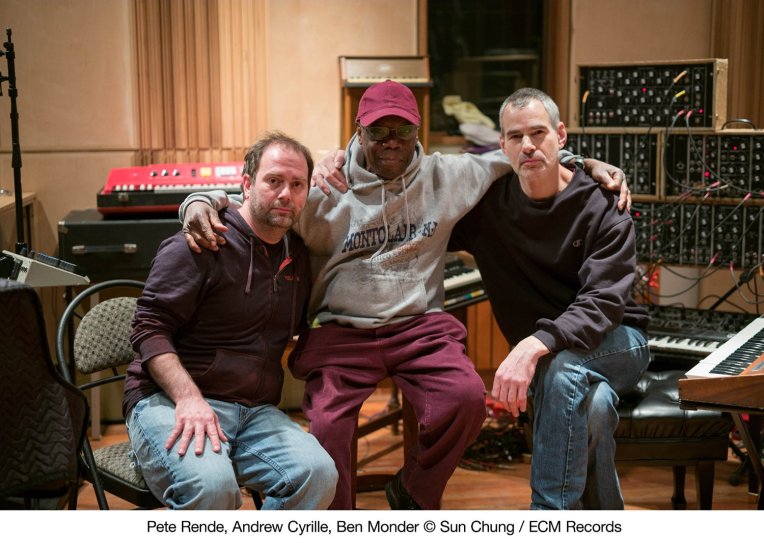
Ben Monder electric guitar, electric baritone guitar, Fender Bass VI
Pete Rende synthesizer
Andrew Cyrille drums
Paul Motian drums
“Oh, What a Beautiful Morning,” “Triffids,” and “Dinosaur Skies” recorded October 2010 at Sear Sound
Engineer: James A. Farber
“Tendrils,” “Tumid Cenobite,” “Gamma Crucis,” “Zythum,” and “Hematophagy” recorded December 2013 at Brooklyn Recording
Engineer: Rick Kwan
Mixing Engineer: Rick Kwan
Produced by Sun Chung
U.S. release date: October 30, 2015

For his ECM leader debut, New York guitarist Ben Monder brings his improvisational destinations to fruition with respect for every musical step in reaching them. The album’s circle is opened and closed by two solo arcs: “Tendrils” and “Dinosaur Skies.” Where the former comes out of the woodwork as if after a long and melodic hibernation, the latter is a dragon’s breath turned into music.

Constellations fill the spectrum between as Monder sings through a variety of guitars and tunings. “Gamma Crucis” and “Zythum” triangulate with Pete Rende on synthesizer and Andrew Cyrille on drums. Both pieces are geological surveys of highest order. Monder and Rende release so much likeminded stardust, it’s all they can do to clarify that they’re two nebulae working independently of time. Cyrille’s tracery is the dark matter between them, a dimension in which concrete rhythms have no gravity.

Guitarist and drummer make art as duo on “Hematophagy” and “Tumid Cenobite.” In the absence of electronics, their language feels closer to home, each his own weather front blending into collaboration. Although the landscape below them is desolate, it wavers with memories of rivers and greenery. Monder’s stirrings are like those of a creature in the leaves of Cyrille’s reforesting. With each sunrise, they dissolve dust into breathable air.

Monder Trio

Poignantly, late drummer Paul Motian joins Monder for two further duets. First is a starlit take on the Rodgers and Hammerstein classic “Oh, What a Beautiful Morning.” It’s beautiful indeed to hear Motian’s brushes, pulled as if from beyond some mortal curtain, springing to vibrant life of their own impulse. There’s something fully alive about this music—not only because of the tune, but also because of the way it rolls off the musicians’ proverbial tongues like a psalm. Recognition is not a precondition for enjoyment, however, as Monder’s ambience forges new relationships using familiar actors. His searing explosions make steam of ocean water, leaving lost cities exposed to sunlight for the first time in eons. Then there is “Triffids,” a spontaneous blush of tenderness that eludes capture by microphone and digitization. It is, rather, a force that knows us before we may consciously seek it out in the listening. Motian’s feel for internal rhythm is profound.

Motian

Monder navigates the paths before him with confidence because he defines them as he goes along. Leaving behind uncertainty, he uses gentility as fuel for a strong spirit. It’s perhaps no coincidence that the track titles recall the histrionic wordplay of the Cocteau Twins, for with likeminded boldness he does away with consensus articulations in favor of the emotional resonances beneath.

Sokratis Sinopoulos Quartet: Eight Winds (ECM 2407)

2407 X

Sokratis Sinopoulos Quartet
Eight Winds

Sokratis Sinopoulos lyra
Yann Keerim piano
Dimitris Tsekouras bass
Dimitris Emmanouil drums
Recorded April 2014 at Sierra Studios, Athens
Engineer: Giorgos Karyotis
Produced by Manfred Eicher
U.S. release date: January 15, 2016

Sokratis Sinopoulos is a master of the lyra, a bowed instrument whose lilt has polished a handful of ECM gems, including soundtracks of Greek composer Eleni Karaindrou (notably, The Weeping Meadow) and the Athens Concert of Charles Lloyd and Maria Farantouri. Despite its small size, the lyra is capable of painting holistic landscapes, and none so sweeping as those at Sinopoulos’s touch. After years of being a vital yet overshadowed sideman, Eight Winds finds the virtuoso making his debut as leader. Although the lyra comes preloaded with centuries of tradition, the music produced by the quartet assembled here— rounded out by pianist Yann Keerim, bassist Dimitris Tsekouras, and drummer Dimitris Emmanuel—is resolutely forward-looking. For this recording, as special in the listening as it was in the making, I sense a unity of purpose beating in the hearts of everyone involved. This is demonstrated by the album’s title alone, which charts not only the cardinal directions, but also the twin cross bisecting them. In each of the album’s 12 original tunes, the navigational freedom of those winds is palpable.

The title track opens with the bandleader’s distinctive sound. His lyra, as obvious to anyone tasked with analogizing it, has a distinctly vocal quality. Even before the jazz trio configuration in which Sinopoulos has situated himself becomes apparent, like a singer he has tasted the theme at hand and savored it to the brink of dissolution. All I can find myself thinking while absorbing the results of this collaboration in kind is that this is a first in jazz, an album that only Manfred Eicher and ECM could produce with such integrity of vision.

Sokratis Portrait

Much of this album moves at a pace of lives no longer lived. One strain of “Yerma” or “Lyric” is enough to reveal the folk roots feeding each improvisational leaf. Whether interacting with Keerim’s piano or Tsekouras’s bass, Sinopoulos puts his trust at the center. The melodies are so developed that they sound like ancient motifs rescued from obscurity, conjuring up images of a past you never knew was in you. In this respect, “Aegean Sea” is the most inviting tune of the set, if also for depicting an important location for its composer. Emmanuel’s hand-drumming brings it to an even earthier level.

Because the lyra is associated with dancing, tunes like “Street Dance” and “In Circles” inspire and energize. These are balanced buy “21st March” and “Forever,” which take stock of brokenness and find harmonies beneath its dissonant rubble. In both, Sinopoulos shows us just how many feathers his instrument has, while touching on the Byzantine musical interests of his formative years.

His delicacy is artfully supported by his bandmates. At no point do they drown out his whispers (a feat for which both musicians and engineer are praiseworthy). As the title track variation that ends the album, everything that precedes it is a gradient of oneness: an asymptote conquered by faith.

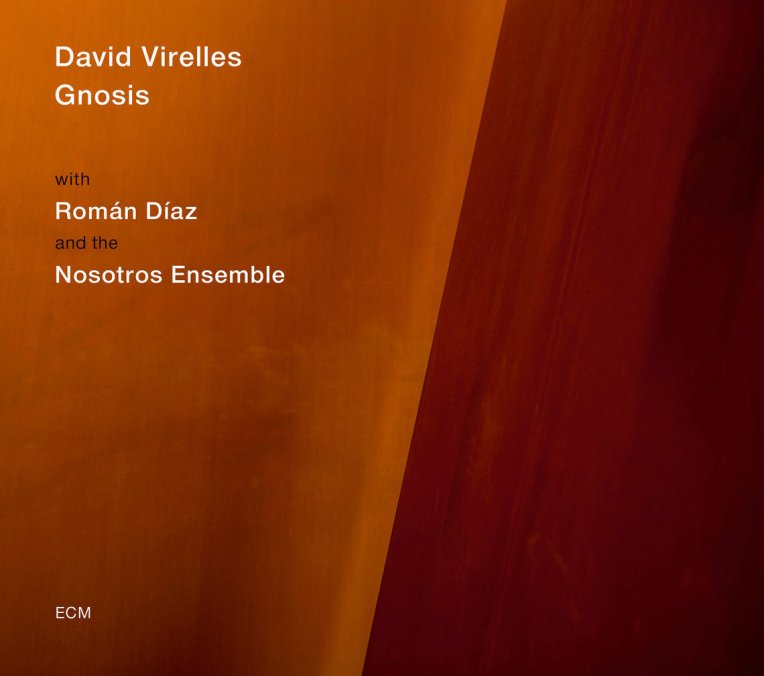
David Virelles: Gnosis (ECM 2526)

Gnosis

David Virelles
Gnosis

David Virelles understands that to make music of the future, one must delve into the past. Somewhere in the middle we find Gnosis. On his third album as leader for ECM, Virelles polishes the mirror of his Cuban roots, also as a prism of the chamber music sensibilities that informed his training under such composition teachers as Henry Threadgill. One couldn’t dream of a better assembly of musicians than the brotherhood of rhythm makers and guiding voice of poet/percussionist Román Díaz to bring these wonders to fruition. Bassist Thomas Morgan, flutist Allison Loggins-Hull and a modest string section complete the puzzle.

Each of the album’s 18 originals could be the start of another album. In this context, they work as one body. Whether in Virelles’ six solo piano pieces—including lyrical “De Ida y Vuelta I” and delicate “Dos” (arranged by Threadgill)—or in ensemble forays such as “Del Tabaco y el Azúcar” and “Tierra,” Virelles renders every dissonance an initiation into life. His pianism, especially in “Fitití Ñongo,” is ecstatic yet ponderous and speaks of an artist who understands the preciousness of time.

Morgan and Loggins-Hull are key players, balancing the pull and push of anchor and sail. Like a ship, Gnosis indeed needs water to give it purpose, even as those same oceans pose the constant threat of drowning. Virelles’ awareness of this tension sets his music apart by way of an organic postcolonial philosophy. Through it all, Díaz is the voice of land when sky is all we’ve ever known. His call and response in the ambient “Erume Kondó” is one of the profoundest things to grace these ears in a long time and speaks to what Díaz himself calls the “reciprocal language” of secrecy. According to Virelles, the album’s title “in this context refers to an ancient collective reservoir of knowledge.” Here, then, is the light of a star that died long ago but whose patterns are still perceptible, rewoven under a new name as an offering to the unborn.

(This review originally appeared in the January 2018 issue of The New York City Jazz Record, a full PDF of which is available here.)

The Rest is Only Sky: Bill Laswell and Laraaji in Concert

Bill Laswell and Laraaji, with Ka Baird
Ambient Church
Bushwick United Methodist
Brooklyn, NY
December 16, 2017

The space is an introduction: the moment you walk into it, you’ve turned the first page. Walls and ceiling comprise the shell of a body memorialized by the reverberations of its weekly visitations: a “church,” you might call it, but whose actual name lies buried in the speech of those who’ve forgotten it. Headlights peer through stained glass and into the hearts of everyone who has come to listen. This place, you realize, has chosen you as its resurrection vessel, a memory stepping out of the haze as an itinerant preacher whose only scripture disintegrated long ago as padding for worn-out shoes.

DSC00554-Edit

Looking above and behind, you notice a beam of light: a “projector,” you might call it, but whose actual name floats preserved in minds of the technically inclined. The light stretches forth its arm, seeking a surface as a mudra would its vibrational link, until the skin of musician Ka Baird opens millions of tiny wings.

DSC00563-Edit-Edit-Edit-Edit

Her activations, privately ordained yet congregationally shared, uncover your ears with all the wakefulness of a sunrise recounted after sunset. By means of an instrumentarium that in any other context would pay secular homage at best to its origins, Baird unpacks her motifs at the molecular level. Threading prismatic arias through a chittering forest, looping her flute in recurring dreams of possession all the while, she refracts the self until it exhales a world apart. With each sustain, a thought reaches its climax, while echoes of a new beginning carve hieroglyphics of courage across your forehead. She fills her mouth with galactic marbles, shooting each into an unwritten future.

DSC00577-Edit-Edit

Between dimensions, chains of conversation re-link themselves. Still, you stand alone, drinking in all those breaths as if they were a sutra exploded. The ceiling opens its eyes as a wall socket cannot close them and holds those depths close, a blanket against the cold.

DSC00565-Edit-Edit

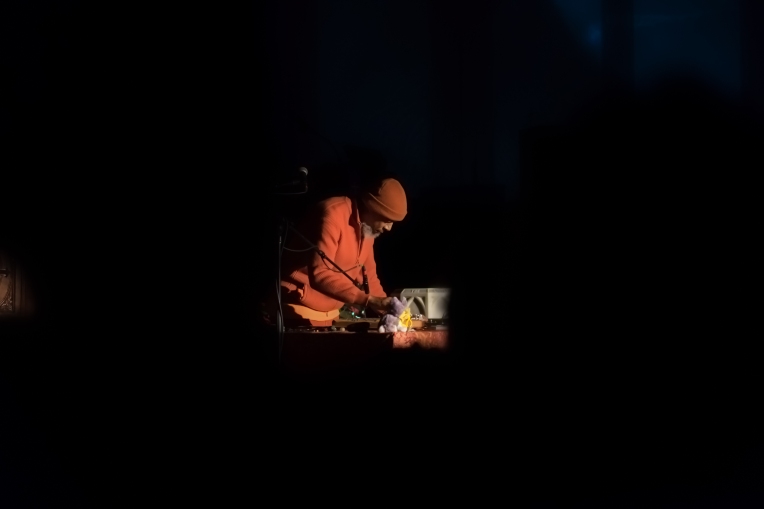
The effect is such that by the time Bill Laswell and Laraaji draw their own curtain through the room, you’ve already turned inside out. What were once your ears are now your optical nerves, and vice versa. Amid a landscape of water and choral winds, Laraaji’s amplified zither is his field. Be it struck, bowed, plucked, hammered, brushed, or strummed, its language compounds the allure of burning magnesium, minus the threat of blindness. Each of its strings feels attached to something unseen. His mbira likewise treads with care, a clock’s dream made real.
DSC00587-Edit-Edit

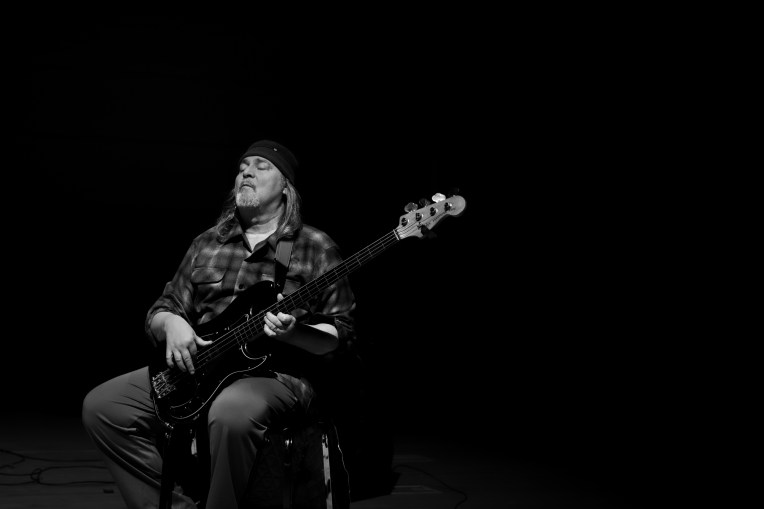
Laswell’s bass is his talisman, a slab of wood and wire plucked from its heavy metal roots and transfused with a tambura’s drone-blood. His lines emerge, organic as they are brief, from the gift of spontaneous generation. Their patterns begin to match your own, following rhythms that tremble far below the floorboards. Without a map to follow, that which is written migrates into territories of the spoken, so that only poetry seems able to convey the prosaic spectrum of experience.

DSC00584-Edit-Edit

Whether singing or laughing, their voices are shimmering shadows. Like the incense wafting about the pews, their dimensions stretch the nostrils of your soul into canvases, across which to plot every fragrant constellation in a blush of indigo promise. All of which points to one truth: the groove is Earth, the rest is only sky.


DSC00564-Edit