My latest review for All About Jazz is of New York guitarist Avi Rothbard’s trio album, City Colors. Click the cover to read on.
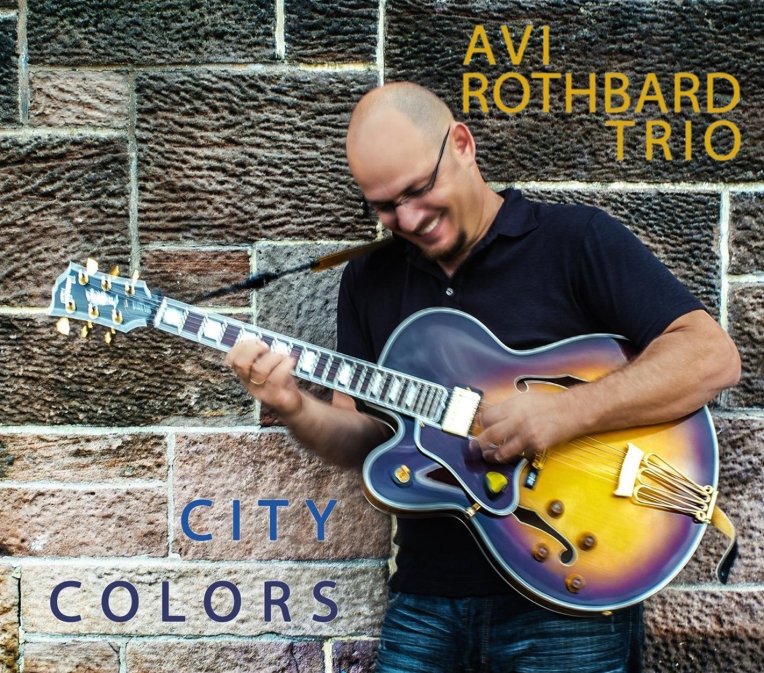


My latest review for All About Jazz is of New York guitarist Avi Rothbard’s trio album, City Colors. Click the cover to read on.

Bernie Worrell may be best known as the backbone of George Clinton’s Parliament-Funkadelic, but on Elevation that spine sprouts veins, flesh, and wings in the keyboardist’s first solo piano transformation on record. While one may find it to be a surprising turn in an already-varied career, here is where the most paramount vessel of his seeking can be found: the heart.
The tune “In A Silent Way” by Joe Zawinul begins the album with a lyricism more expected of Tord Gustavsen, whose patience is echoed here. Worrell brings out a feeling of the American South in this rendition, painting the then and the yet-to-be in single brushstrokes. Hanging somewhere in the middle, he forges music like the glue between polarities of time. A low bass tone rises from a subconscious abyss, and writes its name across the mind’s eye with the control of a master calligrapher.
Whereas many jazz albums might use such tenderness as a warmup for quicker movements, this one keeps its promises. And so, Bootsy Collins’s “I’d Rather Be With You” lengthens the thread being pulled from this garment, removing a band of color from an overall pattern at once fading and forming. The balladic wavelengths allowed through this sonic portal are of the same frequency as those which link separated lovers by thought alone. Such transcendence is so damn immediate that you can’t help but feel like it’s your hands at the keys. And as Worrell draws lines in the water in order to feel its droplets clinging and separating, he evokes every human life caught in the karmic wheel.
It’s one among a handful of popular songs reimagined to be as naked as possible. Between the anthemic goodness of Carlos Santana’s “Samba Pa Ti” and Bob Marley’s “Redemption Song,” one common theme rules: the hidden truth of slowing down. It’s a philosophy epitomized in his take on “Ooh Child” by one-hit wonders The Five Stairsteps and “I Wanna Go Outside In The Rain” by The Dramatics. Both melt down the base metals of improvisation into the key of Worrell’s uniqueness. He makes no efforts to reveal secrets hidden in these melodies, but rather something far more difficult. He reveals their true selves.
John Coltrane’s “Alabama” is another example, which in the present version evokes rolling plains and clouds of smoke curling from pursed lips. A bittersweet nostalgia seeps through its curtain like light onto a kitchen table that was once alive with laughter but at which now sits only one. The pacing makes every snap of this uprooting that much more lucid to bear, while a stormy shadow trembles beneath it all.
Charles Mingus’s “Goodbye Pork Pie Hat” enacts further transformations from solid to liquid, throughout which balances of technical and creative emotions are under constant negotiation. Worrell turns the entire piece into one long inhale, as if to incorporate every particle of breath before expelling the carbon dioxide of his own infinitude.
Even more permeable borders outline such ruminations as “Light On Water” and “Realm Of Sight.” Each is the culmination not only of elements, but also of impulses that can only be sung, not spoken. Together, they form a modal flower, floating through the dust of history in search of that one stem held in the fingertips of an artist who continues to teach us that connecting with listeners requires the lone musician to unravel into their ears.
This is music you don’t interpret, but which interprets you.
My latest review for All About Jazz is of NYC-based singer Kosi’s tribute to the great Abbey Lincoln, Ghosts Appearing through the Sound. Click the cover to read on.

I’ve recently published a review of clarinetist and composer David Rothenberg’s superb book, Bug Music, in the online journal Terrain. Click the cover to read on:

My latest review for RootsWorld online magazine is of Finnish kantele player and singer Vilma Timonen, whose latest quartet album is sure to please fans of Sinikka Langeland. The music is enlivening and evocative, drawing from folk influences in an originally composed storybook of myths, moonlight, and maidens. Click the cover to discover!

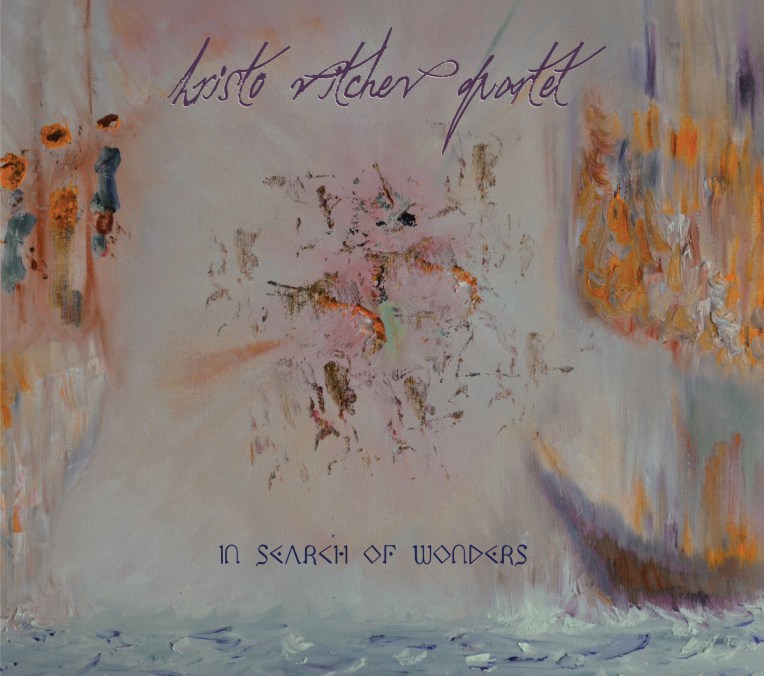
Few guitarists have carried the torch of Pat Metheny so humbly as Hristo Vitchev, and never with such brightness of purpose as on his latest quartet album, In Search Of Wonders. The Bay Area-based musician and producer has since 2009 put out a consistent, top-flight catalog of records, ranging from explorations of his Bulgarian roots to straight-ahead jazz road trips, but always by original design. With Wonders, he has at last tackled that most risky of studio ventures: the double album. The result is not only a magnum opus, but his most emotional work so far, and one that is sure to put smooth jazz naysayers in their place.
I asked Vitchev to elaborate on the significance of this album, which to me feels like his most autobiographical. “It has been an exciting journey since I started recording and publishing my own work. All the music presented in this release describes who I am both as an artist and person.” And if opener “The Transitory Nature” is any indication, Vitchev’s life has been one lived in deepest gratitude. It’s right there in the brotherhood he shares with his dedicated crew of pianist Jasnam Daya Singh (a.k.a. Weber Iago), bassist Dan Robbins, and drummer Mike Shannon. Their connections are key to the integrity of Vitchev’s sound, which by virtue of its infrastructure expands the limitations of any foundation. “All of us are first and foremost best friends,” says the leader of his bandmates. “The camaraderie, trust, respect, and love we all share is very special. That is in reality all you need as an artist to be able to open and present even the most fragile sectors of your soul and heart. I have only them in mind when I write this music.”
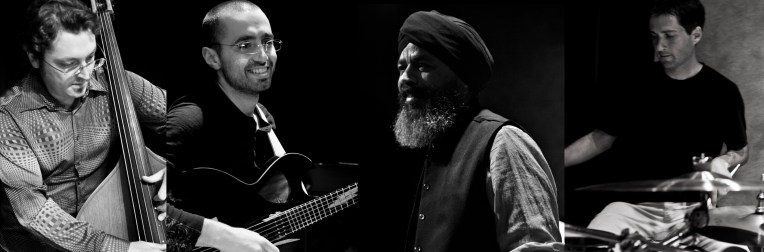
(Photo credit: Don Barnes)
Vitchev further stresses that he has never subbed in other players when performing this music live, and it shows in the leaps of evolution taken by his distinct method of archaeology, which now yields its best preserved artifacts. Among them is “It May Backfire.” Singh’s intro leads the band into a groove of geometric proportions. The unity of vision, held together in no small way by Shannon’s drumming, is well muscled. And while Vitchev may be the light that gives it sanctity, and Robbins a sense of corporeality through his articulate soloing, it’s the density of build through which the collective reality of this music is best spoken.
If I were to draw any internal relationship from the whole, however, it would be that shared between Vitchev and Singh, whose bond in “Post Nubes” and “Fuchsia Brown Eyes” is unbreakable. The latter’s tenderness reveals a hidden, spectral blues in the pianism, which in tandem with Vitchev’s adlibs adds layers of photorealism. The title track, too, with its Brazilian underlay, opens many doors with a single key.
It’s not by chance that tunes like the understated “Falling In Orange,” which opens the second disc, and the greener “It Is Here, Somewhere” should feel so visual. Vitchev has cultivated this quality in his music with great awareness. “My composing process as well as the arrangements are always driven by vivid imagery,” he explains. “When I sit down on the piano to write I will often close my eyes call up a picture. Only when that picture is in sharpest focus do notes, chords, and rhythms take form in ink.” With this in mind, it’s impossible not to read a growing nostalgia into the album’s progression, at its peak in “Old Theme.” The slick, youthful theme yields some of Vitchev’s most inspired soloing on record, rendered all the more exploratory by the rhythm section’s keen regularity.
Memories thrive throughout the album’s remainder. From the rhythmically savvy “Almost Home” to the dreamlike twists of “The Invisible Stairway,” moving pictures abound, at once frozen in, and animated by, time. In this respect, the album is a living portrait of Vitchev as composer, “a little corner of this musical landscape,” as he puts it, “I can call my own.” In other words, Wonders feels more at home than ever because it reaches farther than ever. This feeling of comfort is perhaps what distinguishes it from its predecessors and underscores the message epitomized in the piano-guitar epilogue, “We Search For Wonders.” Vitchev is quick to underline this point by way of conclusion. “Life is full of amazing things, but it takes desire and energy to lift your head, look around, and notice them. We are so grateful to have found each other and do the things we love as a group. These are our wonders, and this is our musical tribute to all that is around us.”

David Rothenberg, familiar to ECM listeners through his fascinating duo album with Marilyn Crispell, has constructed one of the most idiosyncratic vessels in which to sail the waters of improvised music. He excels at expanding his own terms to suit an ever-changing roster of natural musicians. The German field recording label Gruenrekorder is the host for this rather different collaboration, which combines Rothenberg’s clarinets with Turkish sound artist Korhan Erel on computer and iPad, along with nightingales fed live from the parks of Berlin. Anyone who has followed Rothenberg’s career will know of his mythical explorations of bird song in the book Why Birds Sing and its accompanying CD. More recently he has done the same with whales and insects, but the birds have been a regular point of return.
The liner notes of Berlin Bülbül (the second word being Turkish for “nightingale”) riff off these birds’ distinct ways of singing, which mirror jazz tactics in their abilities to lead, respond, and interpolate. The album is peppered with four live tracks, which through varied levels of construction proceed to tie as much as they unravel. This sense of push and pull, most vivid in such illustratively titled pieces as “Dark with Birds and Frogs,” leads to a fleshy palette of interspecies interaction and epitomizes the porosity of music as a communicative act. Rothenberg’s ability to manifest the intangible is perhaps uncanny at first, yet more organic the more one hears it, while the details of Erel’s live samplings, the rustle of human conversation, distant sirens and other errata of the city’s soundscape cinch a cord of continuity around them. As for the birds, chirpy and reaching down to microscopic levels of resonance, they are the champions of cohabitation, each more sagacious—yet whimsical!—than the last.
The magic circle of birds and breaths, looped back in on themselves in digital ellipses, is what this album is all about. And even in the studio, their spells bear fruit. Whether lurking in the John Surman-esque bass clarinet of “A Long Note’s Invisible Beam” and “Nachtigall Imbiss” or the clicks and wing-flutters of “Unearthly Untaught Strain” and “Her Pipe in Growth of Riper Days,” the overall texture is of swamp grass and urban concrete, of trees and asphalt rolled into one gorgeous mess of songs. Erel’s manipulations only enhance this effect by revealing the inner life of Rothenberg’s extroversions, and vice versa. And while these pieces may feel like vignettes, they are lives in miniature—full troves of existence with beginnings, middles, and ends. The granulations of “Omnibus” are just as insightful as the larger brushstrokes of “From That Moonlit Cedar What a Burst,” in which even deeper rhythms externalize. But, like the bluesy reverie of “Interfused Upon the Silentness,” it always ends in the sky, riding a purple cloud of thought into another dawn.
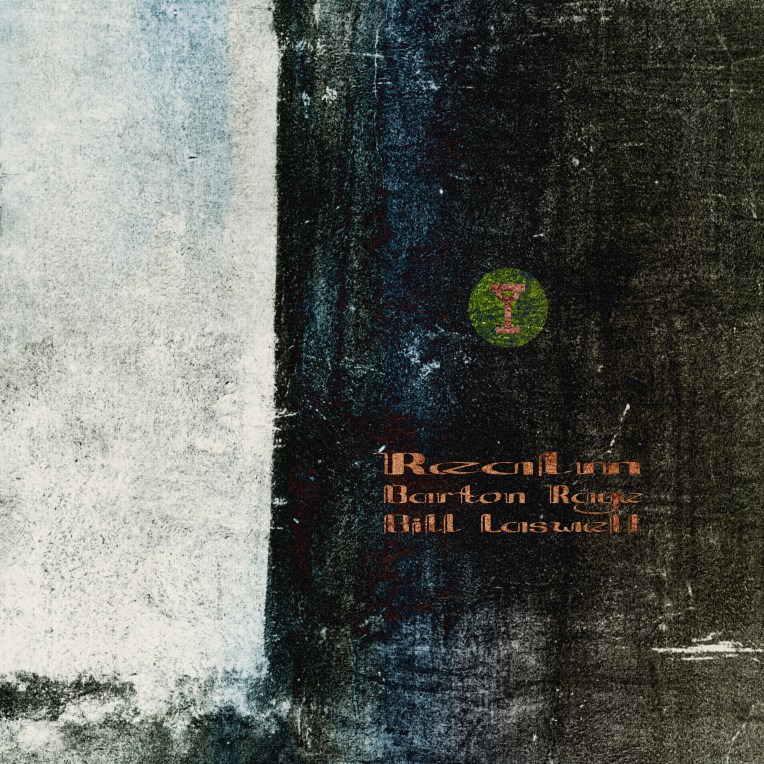
For this first installment of the “Realm” series of concept albums on the M.O.D. Technologies label, wherein artists are free walk their own paths even when those paths crumble from beneath their feet, Bill Laswell and Barton Rage combine heat sources to forge an ambient talisman that is sure to haunt you with its protections.
Hints of orchestras and long-playing melodies, each the ancestor of a solitary listener, learns the art of flotation right before us. Gloomy, perhaps, but only because darkness is sensed by the ears as light by the eyes. For in the darkness there is a sound which wilts at misinterpretation and blossoms when taken on its own terms. Barest hints of drumming flicker in and out of frame, while lower lines take shape as pure sonic reckoning, their compasses burrowing into skin unaware of their own mapping. A meditation made reality. This is “Mater.”
Clicking of cymbal and drum, an echo chamber that knows not the wrath of an open gate. Rather, it peers into the heart of things. The duo’s to-the-marrow methodology braids time signatures so tightly that the sun no longer reflects off them. A flash of song. An electronic insect attracted to pheromones emitted by throat and wrists. Laswell’s bass cannot help but lumber through the landscapes of its upbringing with sketchbook in hand. The confluence of machinery and sinews is the decoration, not the anchor, of this evolving tree, around which leaves dance in the wind like a child waiting for an embrace. This is “Waters of Mirage.”
Globular, uncertain arcs bow before a sacred dub altar, on which has been left offerings of star-bound digitalia. The signal is incomplete, its transmitter having broken eons ago in a moment of distress during some mission no one remembers. Synthesized trumpet breaths channel a chasm of death into automatic life, drinking in the scent of fortune to get away from the smoke. A pause before drum ‘n’ bass snakes shed their skins. A groovier test of faith through dance music for isolationists. This is “Triad Seer.”
A watery expanse larger than any ocean on Earth. A smooth undertow, amphibian and pliant. Funkier textures unfold wings of air, ephemeral yet alive. This is “Seraphim.”
A freer space ensues, prowling caves for want of ore. Weightless spaces intertwine with heavier drops of thought. This is “Beyond the Abyss.”
A melodic fractal, in the mode of guitarist Jeff Pearce, though with a murkier pulse. The finality here is heavy with cinema. This is “Nama.”
I haven’t been moved in this particular way since Mick Harris’s Somnific Flux, a 1995 collaboration with Laswell on Subharmonic. Such nostalgic threads also pull me back to Cypher 7’s Decoder (released the year before on Strata), bringing together past and future in a single, protracted blink. Let’s have more of this.
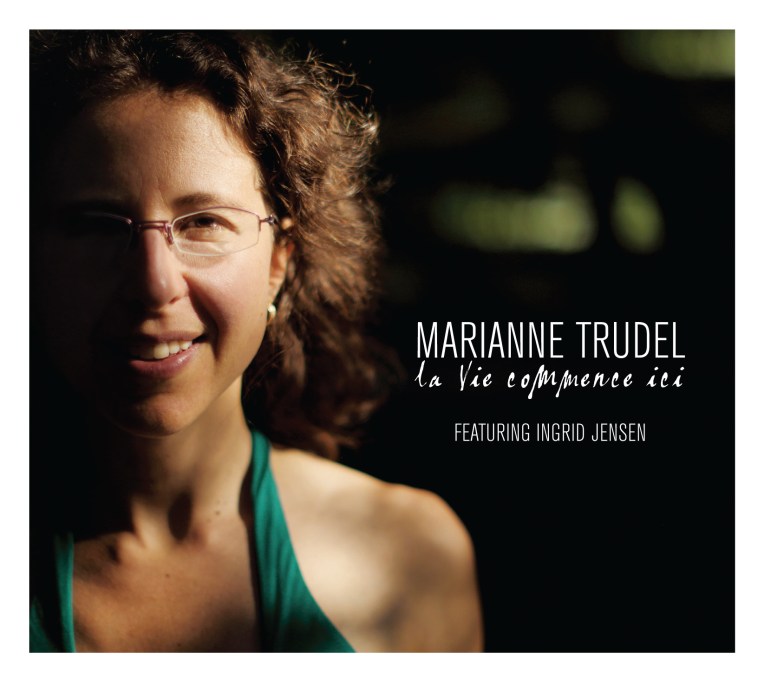
I have two new reviews up on All About Jazz: one of a recently issued live album of an older Sheila Jordan concert with Harvie S and Alan Broadbent, another of of Canadian pianist Marianne Trudel’s La vie commence ici, which should appeal to fans of ECM’s Nordic sounds. Click the covers to read on.

 Between Sound and Space: ECM Records and Beyond