
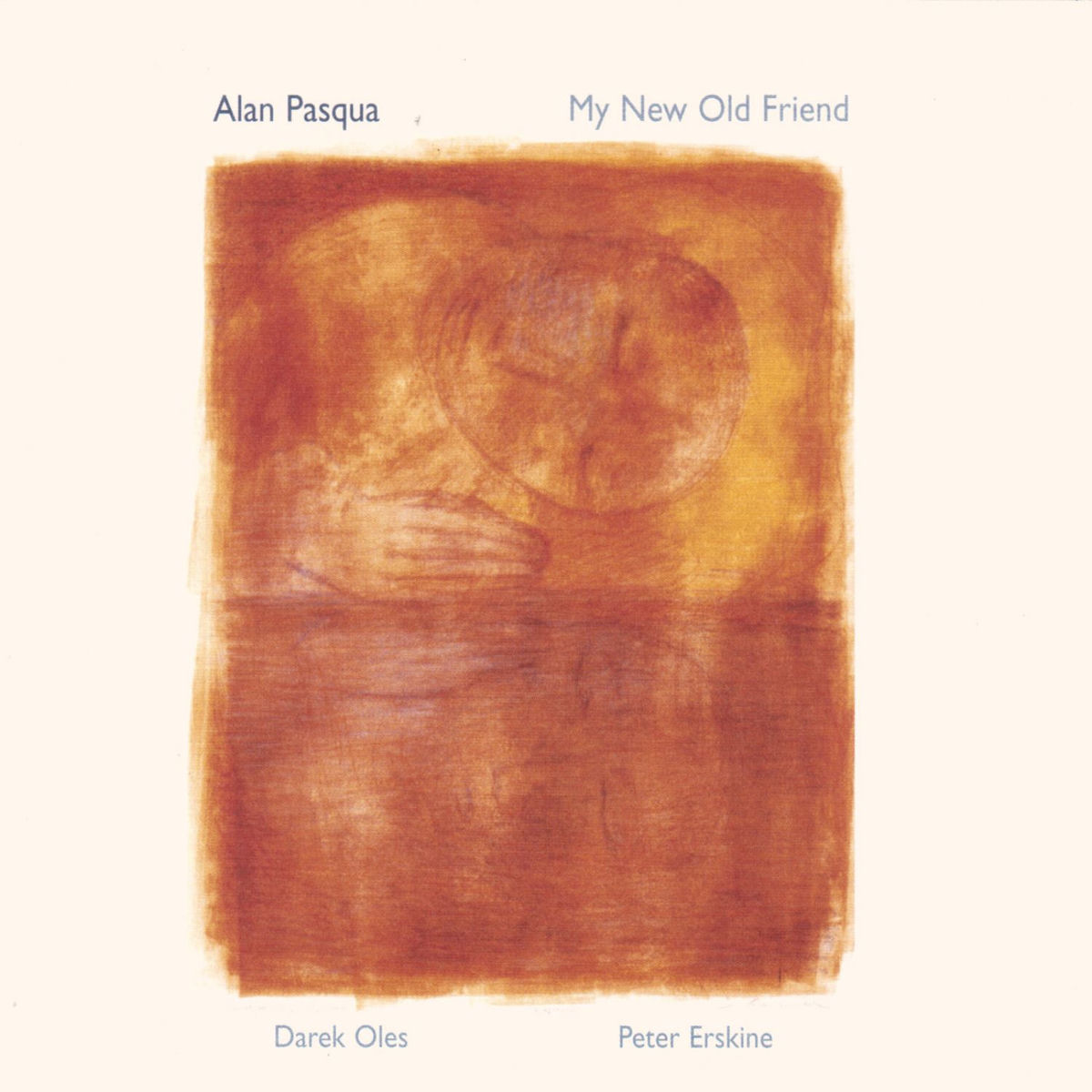
Time has a peculiar way of inhabiting music, gathering in the hollows between notes and returning through melodies whose origins have long since dissolved into memory. For pianist Alan Pasqua, whose career has traversed the incandescent frontiers of jazz fusion and the intimate architectures of acoustic improvisation, such temporal hauntings find exquisite expression in My New Old Friend. Having studied with Jaki Byard and joined Tony Williams’ New Lifetime following a fateful Carnegie Hall encounter in 1975, Pasqua later lent his harmonic imagination to Bob Dylan and Santana. His celebrated “Proto-Cosmos” remains an emblem of that earlier volcanic vocabulary. Yet beneath the electricity, another language had been quietly ripening, one whose silences carry the sediment of entire lifetimes. Released by Cryptogramophone in 2005, My New Old Friend gathers six originals and five lovingly reconsidered standards into a meditation on remembrance’s peculiar elasticity.
The title acquires particular poignancy through the intertwined histories of its musicians. Pasqua and drummer Peter Erskine first crossed paths at Indiana University, sharing a Bloomington farmhouse in 1971 before their careers carried them across the expanding cartographies of jazz. Bassist Darek Oles, a more recent collaborator, completes this convergence of histories. Recorded at Conway Studios in Hollywood during sessions spanning 2003 and 2004, the album was conceived with almost devotional attention to detail. Pasqua even brought his handcrafted Yamaha S6 into the studio to ensure a particular sound. Oles supplies a supple gravitational center while Erskine’s exquisitely calibrated touch allows rhythm to breathe beyond its own circumference. Companionship becomes a form of listening whose deepest syntax is the freedom to discover something previously unimagined in someone already known.
“You Must Believe in Spring” opens with a lushly articulated piano introduction, an act of emotional architecture whose foundations materialize beneath our feet as we enter. Pasqua’s touch is sensitive yet texturally bold, every harmonic choice carrying a quiet inevitability. Erskine skips with the grace of a waterskater while Oles swings through the gaps in the trees on a vine of utterly melodic fortitude. “All the Things You Are” brings a more spirited gait, Erskine’s cymbals scintillating at the edges of Pasqua’s effortless invention. The trio plays as though it had written the tune, its changes passing through their hands as naturally as breath. “Body and Soul,” meanwhile, locates nostalgia at the microscopic level. You cannot see it with the naked eye, yet you feel it unmistakably in the clothed heart. Pasqua’s solo dips a tentative toe into a river down which the trio’s vessel has been gliding all along. Such hesitation, held within an otherwise unbroken trust, becomes its own measure of beauty. Jimmy Webb’s “Wichita Lineman” spreads its soft, creamy abundance into every nook and cranny of the imagination until it ceases to be visible. Even “Smile,” the balladic offramp, offers something considerably grander than a fond farewell, its tenderness ambulating with an unsettling lucidity.
Pasqua’s originals sit comfortably alongside these tried-and-true companions. From the opening gestures of “Barcelona,” we are in masterful hands, guided through fluid changes of light and scenery. Its urban touch is wonderfully unobtrusive, and Oles’s bubbling solo wells up from someplace deeper than the street beneath it. “Vienna” opens with another masterful introduction, verdant with the tenderness of an embrace postponed for years. As it slides into a mid-tempo anthem, the city of the title seems to surrender its physical coordinates and become an address within.
“Highway 14” extends into motion, with Lina Brunkell’s wordless vocals lending the open road a reflective sheen that doubles the sky along with the possibilities of arrival. Pasqua floats with the ease of a leaf surrendered to its own trajectory. Underneath, Oles shoulders much of the melodic weight while Erskine quietly clears the path, each rhythmic gesture offering reassurance without dictating a destination. The road becomes an unwritten sentence belonging equally to departure and anticipation. Through Brunkell’s voice, language itself momentarily forgets its vocation to explain and evokes the peculiar eloquence of having nothing to prove.
The title track is a timeless ballad seemingly created in the moment of its telling. Pasqua’s organic soloing traces the fine line between what has been remembered and what is being invented, until the two become inseparable. “One More Once” occupies a more askew rhythmic terrain, every slide and sudden turn handled with such mastery that even its darker shades feel necessary. Pasqua’s gorgeous runs find every necessary current in the rhythm section. “Stick Slap,” meanwhile, is a romping good time that speaks in smiles, displaying the trio’s coherence at its most exuberant. Even here, virtuosity never becomes a contest for the foreground.
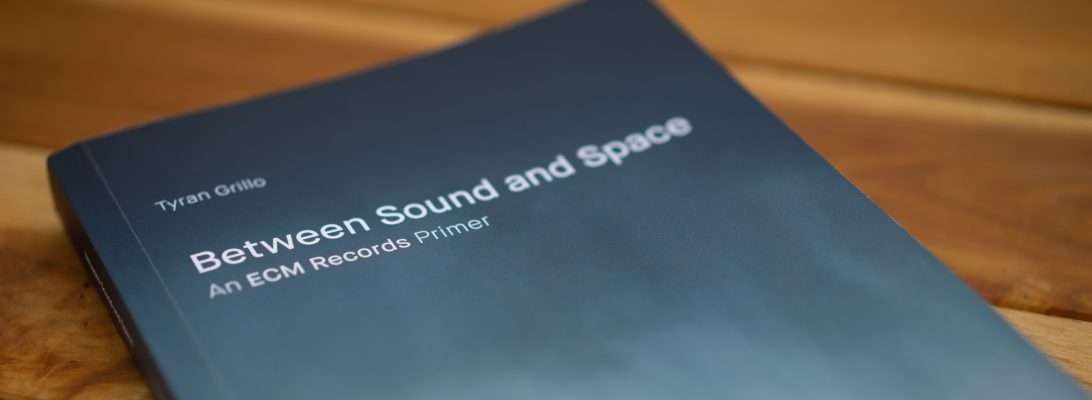
I am admittedly late to the party in placing this recording on my virtual turntable, but perhaps lateness is precisely the point. Those who come to Between Sound and Space for more than ECM should by all means seek this one out. Few recordings make generosity sound quite so rigorously intelligent. What stays with me most is the quiet ethical possibility concealed in the album’s title. To call someone an old friend is to acknowledge a history; to call that same person new is to admit that history can never exhaust a human being. Knowledge of another person can become a beautiful form of captivity. Pasqua and his companions open the door of that captivity from within, allowing recognition to remain open to surprise. Perhaps this is the most difficult kind of fidelity: granting those we love the right to exceed the person we have made of them. The music poses a question whose consequences reach into every human encounter. What if we listened to strangers with the patience we reserve for old friends, and to old friends with the astonishment owed to strangers?

