
Sound Virus combines selections from the second (Sacrifist) and third (Metatron) studio albums of Praxis, featuring bassist Bill Laswell, guitarist Buckethead, and drummer Brain, along with inimitable contributions by John Zorn on alto saxophone and vocals by Yamatsuka Eye and Mick Harris. Both albums were released in 1994, during a particularly fruitful era for everyone involved, on the seminal yet ephemeral Subharmonic label. While such a description might lead one to treat the present compilation is merely that, it is in fact a reconstructed vehicle running on fresh cylinders. Not that fans won’t recognize enduring riffs from this eruptive supergroup; only that new fault lines will appear by the tectonic re-reckonings of producers and listeners alike. Tracks once separated by others find themselves melded in new biomechanical assemblages, while standalones emerge, nostalgia intact, in remastered clothing.
Three selections from Sacrifist indicate their mother context as arguably the edgier of the two albums, not least of all through the influences of Zorn, Harris, and Eye. Their juxtapositions not only of genres, such as they are, but also of atmospheres might seem audacious were it not for the inner logic of their grafting. Their placement is paramount. “Suspension” opens the skin, proceeds through several subcutaneous layers before nicking “Stronghold,” then lodges itself at last in the muscle of “Nine.” The latter track, originally billed as “Nine Secrets,” no longer has anything to hide, for it has stood the test of time. A masterpiece of the Praxis canon, it ends Sound Virus on a high note, flipping itself like a coin between industrial hell-scape (replete with Zorn’s spastic reed and Harris’s screaming) and tropical heaven (in which a squealing Eye swings whimsically from vine to vine). Here, as throughout, one encounters proof of the Praxis formula, solvable less through calculations of virtuosity than an unalterable dedication to every climate change. In the first Sacrifist throwback, for instance, initiatory transmissions of some other universe send out barest pulses via wormhole, indicating nothing of the onslaught about to ensue. The effect is not one of contrast or startlement, but rather of productive rupture that flags these audio signals as more than postmodern—they are posthuman.

At its most aggressive, Praxis plies a melodic arc, finding truth in the pain of things through self-awareness. And because Metatron deals with the Laswell/Buckethead/Brain nexus alone, its commitment to a center line is even clearer. Noticeable is the foregrounding of Buckethead’s guitar, an instrument of such versatility that it’s like listening to history in the making. Those familiar with his prolific solo work will recognize seeds of later albums such as Colma (“Low Time Machine”) and are sure to appreciate the anthemism of “Inferno.” There’s even a guitar-only collage, “Triad,” of which chameleonic shifts through metal, backwoods blues, and psychedelic freak-out distill themselves from the harder liquor of “Warcraft.” Again, what seems to be a thrash-oriented aesthetic cages a heart sustained by absolute kinship. One can hear the trio working toward something so unpretentious, it can’t help but blast satellites away with its catharses.
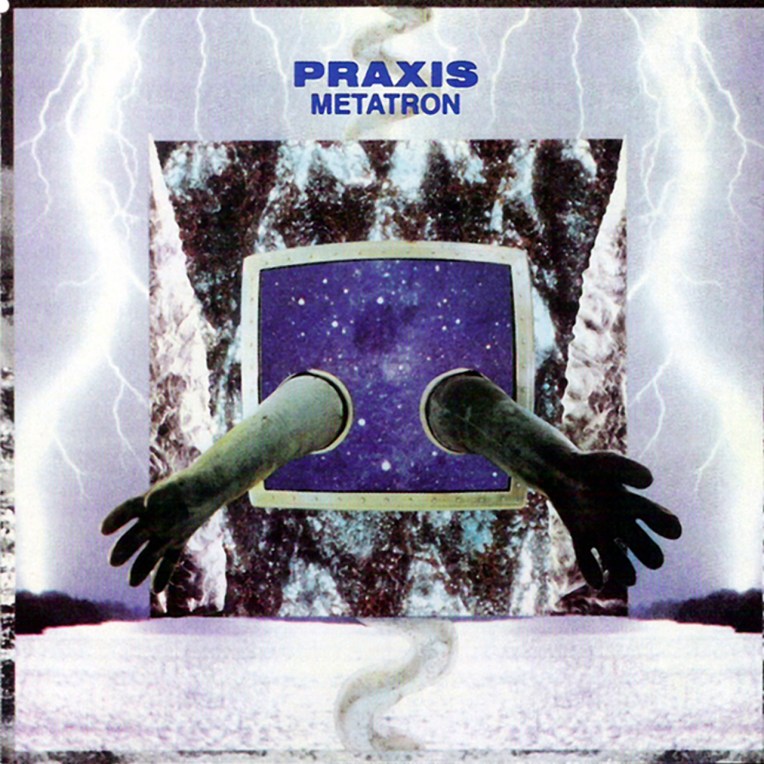
Laswell, for his part, pushes the cerebral groove quotient into the stratosphere, bringing in that exacting way he does a level of control to every head-nod drift. The elasticity of his playing in “Skull Crack/Cathedral” recalls the muddy jams of Primus, of which Brain was of course a key member in the latter half of the 1990s. The relationship between bassist and drummer is a tactile one throughout most of these tunes, and triangulates most memorably with Buckethead in “Turbine.” Cohesion abounds in all inward directions and renders this album’s title a most appropriate one. Like that strangely pleasant ache after a blood draw, you emerge knowing that, although something has been taken from you, a surge of survival has rushed in to take its place.




 Between Sound and Space: ECM Records and Beyond