Italian photographer Roberto Masotti (1947-2022) was among the most perceptive visual chroniclers of modern music, a figure whose work shaped the sensibility of ECM Records. His photographs graced nearly two hundred covers and booklets for the label, forming a parallel archive to the music itself. From the austere radiance of Officium to the quietly arresting portrait of John Cage that frames Herbert Henck’s recording of the composer’s early piano works, Masotti played a role in defining how this music would be seen, approached, and remembered. He was not merely a documentarian of studio sessions but a devoted listener whose camera functioned as a secondary instrument, tuned to the inner heartbeat of performance. Nowhere is this fusion of attention more evident than in Keith Jarrett: A Portrait, a volume that reads less as a record of appearances than as an extended act of listening rendered visible.
Masotti’s own words illuminate his method with uncommon clarity. “In this series of photographs that I observe with a retrospective gaze,” he writes, “I play with the concept of presence, that one of the body and the one of the instrument, which appear and disappear in the image.” He speaks not of capture but of exchange, of an intimacy grounded in restraint. These photographs arise from what he calls an “objective attention” shaped by long admiration, yet they are equally the result of Jarrett’s conscious acceptance and active participation. The images are thus collaborative in spirit, not imposed from without but allowed to unfold through mutual recognition. What remains is an archive that resonates with sound even in silence.
To move through the sequence so carefully composed in this book is to encounter a photographer who understands that an artist such as Jarrett cannot be approached through biography or chronology alone. Masotti storytells through a mode of looking that resembles ritual, one without a prescribed outcome, sustained only by attention. For him, photography does not consist of isolated instants but of moments, a distinction that carries ethical weight. Within a moment, an entire accumulation of experience can register itself through posture, gesture, or stillness. This understanding leads naturally to a deeper inquiry: what, after all, constitutes a portrait?
In Masotti’s hands, the portrait ceases to be an act of description. It becomes a site of encounter where identity is neither fixed nor fully disclosed. A portrait does not declare who its subject is; it asks how presence manifests, and under what conditions it withdraws. In this sense, the portrait is not a mirror but a threshold. It holds open the possibility that what is most essential about a person may resist total visibility. Masotti seems keenly aware of this tension. He recognizes the value of distance, of knowing when not to press closer, of allowing the subject’s aura to assemble itself without the insistence of the lens. This discipline is inseparable from his deep admiration for Jarrett, an admiration rooted not in fandom but in experiential listening. He does not set out to check off the pianist’s achievements so much as to dwell within their unfolding.
It was through Jarrett, in fact, that Masotti first came into ECM Records’ orbit. At the pianist’s recommendation, he traveled to Munich in 1973 to present a photo shoot to producer Manfred Eicher. The encounter proved decisive. The images were received enthusiastically and would soon be incorporated into the Bremen/Lausanne release of that same year, marking the beginning of a collaboration that would shape the label’s visual identity for decades to come.
Jarrett’s well-known sensitivity to distraction during performance posed a particular challenge. To photograph him in action required not only technical skill but a form of empathy calibrated to the moment. Masotti met this challenge with a chameleonic tact, adapting himself to the environment rather than imposing upon it. The resulting images often unfold in a montage that feels almost cinematic, though they never lapse into spectacle. Their power lies in continuity, in the quiet accumulation of gestures and expressions that suggest movement beyond the frame.
1971, Miles Davis Group, Philarmonie di Berlino
1973, Monaco di Baviera, America Haus, soundcheck
1974, Pescara, Jazz Festival
1999, Verona, Arena, Jazz Festival, with Manfred Eicher
2002, Lucca, Summer Festival
Taken together, the images chart Jarrett’s evolution from a fiercely expressive sideman in the orbit of Miles Davis to an increasingly enigmatic figure, and finally to a singular presence in solo improvisation. Yet the photographs resist narrative closure. They do not resolve into a story so much as a constellation of states. Among them, one image stands apart. It is the second one above, where Jarrett’s face appears refracted in soft color, suspended between clarity and dissolution. Masotti, a photographer of formidable technical command, rarely indulged in overt manipulation. Here, however, he allows the image to drift toward the spectral. The effect is restrained yet profound. It touches something central to Jarrett’s music, its simultaneous rootedness in the physical act of playing and its persistent reaching beyond the self. The photograph carries within it a residue of sound, an afterimage of music that seems to hover just beyond reach.
Keith Jarrett: A Portrait proposes a way of seeing that honors absence as much as presence. Masotti reminds us that the deepest forms of attention do not seek to possess their subject. They remain open, patient, and receptive. The book closes with a quiet suspension between composition and improvisation, as though the music has not ended but simply moved elsewhere. In that lingering space, photographer and musician meet on equal terms, each attentive to the other, and to the fragile, enduring moment they share.
“I can imagine the New Series in the form of a journey: there is a route mapped out, but it is open to contingency; it does not insist on the shortest or most direct road. It allows for detours that might lead into totally different areas from the original plan.” –Manfred Eicher
There exists a particular sensibility in recorded music that refuses spectacle, distrusts haste, and listens for what emerges only when attention is sustained. It is an ethos built on patience, on the belief that sound is not merely an event but an environment and that listening is as much a moral as an aesthetic act. Within this sensibility, music is not asked to announce itself loudly or justify its presence through novelty or authority. Instead, it is allowed to exist in a state of becoming. The Compendium at hand arises from this worldview. It does not rush to explain or persuade. It invites the reader into a space where time slows, where artistic intent is inseparable from restraint, and where the deepest meanings are often carried by what is nearly imperceptible.
Producer Manfred Eicher understands classical music not as a fixed inheritance but as a living terrain shaped by memory, silence, and risk. It softens the rigid hierarchies that separate genres, eras, and disciplines, favoring instead a continuity that flows between medieval chant and contemporary composition, between written score and spontaneous intuition, between the concert hall and the solitary act of listening. The guiding conviction is that music’s truth lies not in classification but in presence. How a note is played, how a phrase is allowed to decay, how a recording captures air, distance, and stillness matters more than the lineage of the material itself. The book emerges as an artifact of this conviction, shaped by the same attention to space, texture, and inwardness that has long defined the sound world it chronicles. It stands not as a monument but as a threshold, inviting readers into a cinematic way of hearing.
To situate this volume properly requires a widening of perspective, an understanding of how recorded classical music has historically been framed and mediated. For much of the 20th century, the dominant classical record labels functioned as custodians of authority. Houses such as Deutsche Grammophon, Decca, and Philips constructed a sonic canon through monumental interpretations, star conductors, and a reverence for definitive statements. Their achievements were immense and lasting, yet their aesthetic tended toward the architectural. Performances were designed to stand as reference points, recordings as polished monuments to permanence, history rendered stable and self-assured.
Against this backdrop, the New Series emerged not in opposition but in quiet divergence. Under the wider umbrella of ECM Records, it proposed a fundamentally different relationship between music, performer, and listener. Classical music was no longer approached as a preserved inheritance to be polished and displayed but as a living continuum, shaped by fragility, curiosity, and permeability. The New Series allowed sound to be influenced by poetry, film, sacred ritual, folk memory, and contemporary abstraction without anxiety over category or lineage. It invited unfamiliar accents into familiar forms and treated unfamiliar forms with the same care traditionally reserved for the canon.
The Compendium mirrors this orientation with remarkable fidelity. Its structure resists hierarchy, favoring proximity over ranking, conversation over proclamation. Rather than reinforcing the idea of repertoire as a fixed body of works to be mastered, it presents classical music as an ongoing exchange among composers, performers, and listeners across time and geography. Each page represents a frame in a larger, evolving montage. In doing so, the book articulates a philosophy that classical music remains most vital when it is allowed to remain unfinished, receptive, and alive.
At the center of this vision stands Eicher, not as a figure of authority in the conventional sense but as a listener whose curatorial instinct has quietly reshaped the conditions under which music comes into being. His words from a 1986 interview provide more than an epigraph for this review. They function as its axis. When he describes the New Series as a journey with a mapped route that remains open to contingency, he gestures toward an understanding of artistic practice that values deviation as deeply as intention. Progress is not measured by efficiency or arrival but by attentiveness to what reveals itself along the way, detours the very means through which meaning is discovered.
This conception of music as an exploratory act underlies every page of this volume. One senses its affinities with interior monologues, the long take in cinema, the negative space of modern painting, and the instinctive pacing of the stage. Music, in this framework, does not exist in isolation. It absorbs light, text, gesture, and silence, allowing each to subtly alter its contour. The Compendium reflects this sensibility without didacticism. It does not attempt to persuade through argument or analysis. Its structure mirrors the listening experience the New Series has long cultivated, where coherence arises gradually, and conviction emerges not from assertion but from accumulated attention.
The journey begins, with a sense of inevitability rather than chronology, in Arvo Pärt. His music, austere yet luminous, does more than inaugurate the New Series. It establishes a gravity field around which much of what follows seems to orbit. Pärt’s work reintroduced stillness as a radical force in modern music, restoring silence as something charged with ethical and spiritual weight. Thus, the label’s deeper preoccupations with time, devotion, and resonance come into focus.
From there, the book proceeds composer by composer, each chapter opening onto a distinct interior landscape while remaining visibly connected to a larger constellation. Figures such as György Kurtág, Giya Kancheli, Tigran Mansurian, Valentin Silvestrov, Alexander Knaifel, and Veljo Tormis are presented not as representatives of national schools or stylistic movements but as participants in a shared inquiry into memory, loss, and the fragility of form. Many of these composers write music that feels as though it is listening backward, attentive to echoes of vanishing traditions, while remaining unmistakably contemporary. Their work often proceeds by subtraction rather than accumulation, trusting sparse gestures, broken phrases, and restrained dynamics to carry emotional and historical weight.
Taken together, these composers suggest an alternative modernism, one less concerned with rupture or provocation than with remembrance and inwardness. Their music asks how history survives in sound, how trauma, exile, and cultural erosion might be transmuted into quiet persistence. The Compendium allows these affinities to emerge organically, without forcing comparison, inviting the reader to sense the shared temperature of their work over technical minutiae.
The scope widens further with composers whose practices actively dissolve the boundaries between genres and disciplines. Heinz Holliger and Heiner Goebbels bring to the New Series a heightened theatrical and literary awareness, where music becomes inseparable from text, gesture, and spatial experience. Their contributions underscore the label’s openness to works that exist as events rather than objects. In a different but equally expansive way, Meredith Monk articulates an aesthetic grounded in directness, purity, asymmetry, and transparency. Her music, born of the physicality of the voice and the ceremony of performance, seems to distill the label’s approach into human breath and movement, reminding us that experimentation need not sacrifice intimacy.
Alongside these figures stand composers such as Gavin Bryars, Erkki-Sven Tüür, Thomas Larcher, Dobrinka Tabakova, and Eleni Karaindrou, whose work stands slightly askew from prevailing trends. Their music is neither doctrinaire nor opportunistic. It operates according to an inner necessity, attentive to lyricism, atmosphere, and emotional clarity without yielding to sentimentality. The New Series has provided a home for such voices precisely because it values conviction over conformity, allowing composers to develop long arcs of work free from the pressures of fashion or institutional expectations.
The presence of each is deepened by carefully chosen quotations reflecting on the act of composition itself, paired with portrait photographs and images from recording sessions. These reveal the human conditions under which their creations come into being, the solitude, concentration, doubt, and patience required to bring sound into focus. One senses the rehearsal room, the studio, the long hours of listening and adjustment. In this way, the book affirms one of its central truths: that modern music, at its most vital, is not an abstract system but a lived practice, shaped by time, attention, and the enduring vulnerability of those who make it.
Equally vital to this story are the performers, whose interpretations run through the New Series in quiet refrain. They are not presented as virtuoso personalities imposing themselves upon the music but as mediators who allow its inner logic to speak with clarity and force. Their artistry lies in restraint as much as command.
Artists such as Gidon Kremer, András Schiff, and Kim Kashkashian exemplify this ethic through an almost ascetic devotion to sound itself. Their performances are marked by transparency of texture and a shedding of rhetorical excess, allowing even the most fragile or fragmentary music to retain its integrity. In the case of Keith Jarrett, whose presence bridges the worlds of improvisation and composed music, the New Series reveals how attentiveness can dissolve distinctions between genres, bringing the same intensity of listening to both the written score and being in the moment. Conductors such as Dennis Russell Davies further extend this approach, shaping large forms with a sensitivity to balance and pacing that privileges inner coherence over outward drama.
The ensemble performances documented in the Compendium deepen this perspective. Groups like The Hilliard Ensemble and Trio Mediaeval bring centuries-old repertoire into dialogue with contemporary composition, revealing unexpected continuities across time through their vocal blend and disciplined stillness. The Danish String Quartet exemplifies how chamber music, when approached with collective intelligence and trust, can achieve a rare balance of precision and vulnerability. In these performances, risk is not theatrical but structural, emerging from the willingness to expose the music’s quietest tensions.
Together, these musicians embody the New Series ideal, where lucidity replaces polish and attentiveness supplants display. Their work suggests that, at its highest level, performance is morally shaped. The Compendium honors them not as interpreters of a fixed tradition but as active participants in a living one, reminding us that the future of classical music depends as much on how it is experienced in the moment as on the notes preserved on the page.
As a physical object, the Compendium embodies the visual and tactile intelligence that has long distinguished ECM’s aesthetic. Its design speaks in a measured voice, austere yet quietly radiant, disciplined without austerity for its own sake. White space is not an absence but a field of attention. Typography, sequencing, and image placement appear calibrated to slow the reader’s pace, encouraging a form of engagement that mirrors the label’s decades-long listening habits. One does not skim this book. One dwells within it, returning to pages as one might return to a recording, attentive to shifts of mood and emphasis that only reveal themselves over time.
In this way, the book becomes an extension of the recordings themselves, another site where listening is shaped by care. It aligns with an idea of art that does not rush to occupy the foreground but waits for the reader or listener to meet it halfway. The reward for this patience is depth, not as density of information but as depth of presence.
In the end, ECM New Series: A Compendium stands as far more than an anniversary publication or institutional summation. It is a sustained meditation on how classical music might remain fully alive in the present without forfeiting its inwardness or historical gravity. By expanding the very conditions under which music is performed, recorded, and heard, the New Series has quietly altered the expectations surrounding classical sound. It has shown that innovation need not announce itself loudly, that progress can unfold through refinement, patience, and a deepening of attention.
This book captures that achievement with a humility that feels inseparable from its subject. It neither proclaims a legacy nor attempts to fix it in place. Instead, it reflects a way of thinking about music as a continuing conversation with time, one that values listening as an act of openness rather than mastery. Like enduring works of literature and art, the New Series does not seek to dominate history or escape it. It listens to it, answers it, and leaves space for what has yet to arrive.
“The pond is the teacher, underwater lies the source.” –David Rothenberg
Near the apartment complex I once called home, before I migrated to my present dwelling, a pond would awaken each night in amphibious utterances. Frogs, crickets, and invisible choir members released a polyphony of chirrups and croaks that spilled into the humid dark. It was alluring enough that I found myself inventing post-meridian errands just to step outside and listen. I remember how the air trembled with that sound, neither wild nor domestic, a liminal language that both invited and eluded comprehension. I never tried to categorize it then; it was enough to be absorbed. What struck me most was its irregularity, a music without time signatures, and yet, the longer I listened, the more I could discern the soloists from within, the deliberate from the accidental. What I did not realize, however, was that this was only the surface of a deeper, secret orchestra playing just beneath my feet.
It was during the stillness of the pandemic that musician, philosopher, educator, and animal collaborator David Rothenberg turned his own attention downward. He found that ponds, those apparently placid mirrors of sky and branch, are paradoxical entities: tranquil to the eye, yet pulsing with invisible sound. Above the water, a hush. Below, a thicket of sonic life. But how does one hear through liquid? Rothenberg, already attuned to the songs of whales, found his usual instruments inadequate. He commissioned a hydrophone capable not merely of recording but of touching sound, translating the tactile shimmer of aquatic vibration into something audible. In doing so, he discovered not merely a pond but a pulse, a murmuring node within the living organism of the planet. In this submerged language, he recognized that the world itself is always breathing, whispering, and improvising at the edge of consciousness. The recordings discussed and contextualized in Secret Sounds of Ponds feel like a revelation, a form of listening that brushes the hair of the mind, a continuous and organic ASMR channel that one can tune into and out of at will.
Yet the music is not only animal. The flora, too, contribute their delicate speech: plants releasing oxygen bubbles as miniature offerings, each a syllable in an ancient conversation. “The plants keep time,” Rothenberg notes, “and the beasts carry a tune.” One hears this and realizes how naïve our auditory hierarchies have been. We’ve long believed that sound belongs to the realm of motion, of bodies and breath. Yet here are rooted beings, singing through photosynthesis, metronomes of life itself.
Rothenberg reminds us that “even in this century where everything seems possible, morphable, changeable, hearable, findable at a moment’s thought, there are still sounds around us… immediate sounds that we still don’t know.” If we are ignorant of our surroundings, perhaps we are equally ignorant of our origins. We imagine that knowing where we are going requires understanding where we’ve come from, yet Rothenberg suggests the opposite: that both the departure and destination are wrapped in the same sonic fog. Thus, we meet the limits of our perception and the possibility that such limits are spiritual. The indistinguishable becomes indistinguishably beautiful. Insect, fish, turtle, plant: all’s fair in love and pond life.
This mode of listening is not a science but a humility. It compels us to ask impossible questions. If technology must translate these frequencies for us, were we ever meant to hear them? When we call this music, do we consecrate or colonize it? Is it communion or interference? Somewhere, I imagine, John Cage laughs from the beyond, his silence perforated by the croak of a frog.
“For all the millions of hours we have spent together with animals,” Rothenberg observes, “we still cannot speak with them.” The task, then, is not to translate but to collaborate, to become co-musicians in a score that predates our language. Sound may have no intention, no recipient, and yet we crave both. We are instruments yearning for meaning, resonating for a moment before fading into the dissonance of time. Listening, as Rothenberg reminds us, “reveals things alive before we can claim them.” This is the ethical heart of the project: listening not to possess but to participate. Without that transformation, we remain voyeurs; with it, we become apprentices in the grammar of existence, learning not to compose but to decompose, to take apart what our words have wrongly fused.
I think here of Bashō’s immortal haiku, in D.T. Suzuki’s translation:
Into the ancient pond A frog jumps Water’s sound!
It is easy to romanticize this image, to see it as a vignette of simplicity. Yet the poem’s true profundity lies in its inversion: the pond, not the frog, is the voice; the frog merely the activator, the finger on the cosmic key. That the frog is jumping into a pond is never in doubt, yet translators have long struggled to articulate that final sound—“splash,” “plop,” “water-note,” “kerplunk”—but perhaps that indeterminacy is the point. The sound eludes capture because it was never meant to be caught. Like Rothenberg’s recordings, made accessible via QR codes throughout the book or online in album form as Secret Songs of Ponds, it dwells in the space between articulation and silence, between perception and being.
Hence the human impulse to name: to label every ripple and rustle—scratching, blipping, bubbling, warbling—as if taxonomy were intimacy. Rothenberg resists that impulse by layering his own clarinet into the watery mix, joining a chorus rather than leading it. His collaborations with Ilgın Deniz Akseloğlu, whose deconstructive poetry conjures an invented language of resonance rather than reference, push this further. Her contributions hover like dreams, vocal fragments rising from the mire of the unconscious. Listening to “I Still Don’t Get How Distance Works,” one feels time dissolving; her voice becomes an echo of the pond itself, diffused and omnipresent.
In other tracks, Rothenberg’s clarinet drifts like an inquisitive creature among the bubbles and squeaks—curious, reverent, never dominant. I am reminded of Ornette Coleman’s philosophy of sound as motion through possibility: music as exploration, not arrival. Elsewhere, the pond alone is permitted to speak, recalling early electronic composers like Ilhan Mimaroglu, who inverted futurism into introspection, aiming their microphones inward to locate the primordial hum within us all.
Most of all, I think of Akifumi Nakajima, a.k.a. Aube, whose sonic investigations of fire, air, blood, and brain waves sought the inner pulse of matter itself. To engage with Secret Sounds of Ponds is to place a stethoscope against the earth’s waterlogged chest and hear it crackle. Rothenberg confesses, “I don’t play with the pond, but the pond plays with me.” That inversion, again, is key. The artist becomes the instrument, the listener the medium. This is not music about nature; it is nature using us to make itself known.
There is a sacred vertigo in such encounters. What begins as fascination turns toward reverence, even dread, as one senses the immensity of what vibrates beneath the apparent stillness of the world. Ponds, like temples, are mirrors of our incomprehension. They draw us inward until we see that to listen is to surrender.
And so, whenever I pass a pond now, I find myself wondering not merely what lives there, but where it came from. Science offers its explanations of erosion, accumulation, and equilibrium, but the heart refuses to hear them. The mind insists on something older, more mysterious: that the earth itself opened a small mouth to breathe, and we, by accident or grace, happened to hear it.
To think of vision as truth is to confuse perception with revelation. Every image born of pigment, photon, and pixel is already a technological interpretation (the #unfiltered hashtag is a lie). Artificial intelligence magnifies the primordial compulsion to externalize thought into form, mirroring our metaphysical anxieties in the intricacies of ocular logic. Yet when AI begins to dream, no longer are we the authors of representation but the represented. Instead of marveling at the shadows in Plato’s proverbial cave, we become the shadows themselves. Artist Trevor Paglen has turned this reversal into both method and critique, exposing a precarious ontology of vision.
In practical terms, AI is fundamentally trained to recognize faces, objects, and places with mundane equivalents. Paglen, however, decided to do something different by feeding AI “irrational” subjects like philosophy, history, and literature. Using a generative adversarial network (GAN), an AI model that creates images based on what it has analyzed and absorbed from existing datasets or “corpuses,” he wondered what might happen when AI hallucinates an image. As Paglen explains, the process involves two networks engaged in a kind of aesthetic duel: a “Generator,” which draws pictures, and a “Discriminator,” which evaluates them. The two AIs play a game of deception and refinement, cycling through thousands or even millions of iterations until the Generator produces images capable of fooling the Discriminator. The results of this strange symbiosis are entirely synthetic images with no real-world referent, yet both AIs believe them to be genuine.
Here, Paglen discusses the project in more detail:
The fruit of these efforts is Adversarially Evolved Hallucinations, an ongoing series begun in 2017 and documented in this book of the same name. Published by Sternberg Press as Volume 4 of the Research/Practice series, it features a conversation between Paglen and editor Anthony Downey, preceded by Downey’s essay, “The Return of the Uncanny: Artificial Intelligence and Estranged Futures.” Downey reminds us that because AI lacks embodied experience, it produces only “disquieting allegories of our world” at best. Its outputs expose the opaque workings of machine cognition, parallel to the brain’s own trial-and-error rehearsals toward getting something “right.” Here, the fourth wall is not merely broken but rebuilt in its own image. Downey asks whether AI is training us to see the world machinically, and whether we already do. Thus, Paglen’s series explores how machine learning “functions as a computational means to produce knowledge” and, in doing so, outs AI as a heuristic device, “capable, that is, of making sense of, if not predefining, how we perceive the world.”
Paglen draws on taxonomies of knowing akin to metaphorical or substitutive instruments of perception. His parameters constitute a cyclical echo chamber that nonetheless manages to step outside the bounds of acceptability while keeping one foot within them. He calls this “machine realism” because the images are recursive of the engine’s own hallucinations. As Downey observes, “the process is never totally predictable, nor is it reliable.” Then again, is reality itself reliable? Do we not also seek to document, catalog, and amplify that which defies predictability?
Because a GAN’s goal is to generate images that appear categorically relevant while simultaneously deceiving the system, its hallucinations blur distinctions between data and invention. Downey warns that such images, if treated as predictive, can easily become more real than real. For even though they do not exist, these errors and phantasms are not anomalies of image-processing models; they are their very foundation.
So, what does an AI hallucination look like? Take A Man (Corpus: The Humans):
At first, we recognize a human figure, yet the longer we gaze, the more the image unravels, raising a disquieting question: Is distorting coherence into chaos any different from coaxing coherence out of chaos? Is there a point at which the two converge?
This tension recalls the left panel of Francis Bacon’s Three Studies for Figures at the Base of a Crucifixion, where “inaccurate” men accompany flayed carcases:
Despite our aversion to inner flesh, it is the men, those still tenuously tethered to outward form, who disturb us most. When reduced to raw meat, we are more easily abstracted and dismissed; when nearing coherence, we ache for completion.
It is perhaps inevitable, then, that Paglen would venture into the supernatural. Angel (Corpus: Spheres of Heaven) borrows from Renaissance art but reassembles its tropes in a landscape unmoored from conventional metrics:
The context is blatantly parasitic, tugging at the figure with distillational aggression. Here, the “angel” is no divine messenger but an ambassador of categorial confusion.
The closer we get to the intimate, the darker the images become. In Vampire (Corpus: Monsters of Capitalism), the most legible face in the book is also the most “demonic”:
The vampire, parasite of parasites, stands as an agent of eternal torment. A Pale and Puffy Face (Corpus: The Interpretation of Dreams) elicits a similar flicker between attraction and horror that is just human enough to seem alive yet warped enough to feel forged:
Why, one wonders, do these visions feel not only unsettling but somehow sinister?
In anticipation of one possible answer, allow me to return momentarily to Bacon, whose Three Studies of George Dyer are a hallucinatory corpus in their own right:
These falsifications unsettle precisely because they start with a uniquely verifiable identity before marring it beyond recognition. Like a coroner’s report, they document the mutilation of everything we hold stable about the self.
Paglen’s systemic hallucinations similarly engage with another psychological touchpoint in the trauma of seeing and of being seen. Through trauma’s hallucinatory unfolding, bodies and landscapes become intertwined in a web of atrocity, where loss and recovery mirror one another. His images dwell in the rupture between memory and forgetting.
A red thread through all this is the illusion of human control. Something nefarious always seems to pull the strings, an invisible force with its own agenda. Escape is made possible only through an existence maintained at great sacrifice. In this metaphysical tug-of-war, the line between the animating and the animated blurs; embodiment and disembodiment become indistinguishable.
Trauma, in this sense, fantasizes an impossible realization of recall, a form of omniscience forever out of reach. It is “locked away,” awaiting the right (read: wrong) invocation to bring it out in the open. But locked away where? In our will toward self-destruction? And what manifests that will more pervasively (if not perversely) than technology? David Lynch’s Twin Peaks: The Return, particularly Part 8, is a cinematic case in point. It reimagines the nuclear detonation of the Trinity Test as the birth of evil, a revisionist study in how atomic tampering channels the uncanny.
Lynch’s Inland Empire breeds like-minded logic when, in a moment of horrifying self-contamination, Laura Dern is assaulted by the overlay of her nemesis, the so-called Phantom:
The film’s tagline, “A Woman in Trouble,” underscores her dissolution: corporeal integrity undone in a space of profound unrest. Similarly, Philippe Grandrieux’s La Vie nouvelle drags its characters through a ravaged Sarajevo, where language disintegrates and bodies seek reconciliation in ruin. The result is rebirth and a scream in which one finds only more broken sutures, anticipated by a terrifying night-vision interlude in which the human visage is excoriated of its sanctity.
Walter Benjamin’s dictum that “film is the first art form capable of demonstrating how matter plays tricks on man” has never been more apt. AI-generated imagery likewise gnaws at the barrier between the natural and the supernatural. Its manifestations of trauma without selfhood render the body a vessel of moral and perceptual violation. Displaced from domesticity, it reflects irresolvable turmoil, and the more autonomy it achieves, the more humanity we scramble to recover. This explains why AI’s creations feel so spectral: we have seen their kind before. The only difference is that, whereas once we regarded them only in the mind’s eye, now they are actualized with excruciating pervasiveness.
The premise that benign technologies might beget horror reveals our lack of control more than it restores harmony. These hybridizations of natural and unnatural law force us to question identity itself, ejecting us from human-centered hierarchies into a dialectic with entropic nature. Even something as simple as Paglen’s Comet (Corpus: Omens and Portents) conjures narratives of missiles and imminent annihilation.
We fear not that “evil was born,” as Grace Zabriskie so artfully intones in Inland Empire, but that it never needed to be born. It simply is. It predates us and will outlive us, feeding on forces that nevertheless make us who we are. And so, AI embodies its own eerie vitality, a dead signifier born from the narcissistic desire to reproduce life and deny death’s power. Its synthetic offspring thrive on replication, nursing at the breast of finitude.
Diving once again into Twin Peaks: The Return, we find faces opening into voids inhabited by unclean spirits, golden orbs, and infinite darkness, each a portal instead of a mirror:
In his dialogue with Downey, Paglen explains that the Adverserially Evolved Hallucinations project lets us see inside the “black box” of image-processing models and think from within them rather than be guided by them. This, he suggests, might help us move beyond the temptations of perception. “AI models,” he notes, “actively perform processes of manipulation; they want you to see something.” That desire is itself hallucinatory, as well as dangerous. Just as ChatGPT can invent a nonexistent citation, generative image models can fabricate surveillance realities indistinguishable from fact. The imposition of the fake upon the real becomes so seamless that we cease to question it.
Once something takes the form of an image, it acquires an aura of inevitability. Like a lyric we can’t imagine written differently, the hallucination becomes fixed. These interdimensional images seduce with the promise of infinite variation yet horrify with their fixation on wrongness. In leaning toward the actual through rudimentary shapes and gestures (what Paglen calls “primitives”), we find that the only truth worth protecting is that which resists us. Such is the paradox at the heart of all AI-generated imagery: the more real it appears, the more counterfeit it becomes.
While many of you will know Nik Bärtsch as a pianist, composer, and leader of the band Ronin, he is also an author. His first book, Listening: Music, Movement, Mind, is a profound meditation on the art of performance and life. Click the cover below to read my review at All About Jazz.
The highway of the upright is to depart from evil: he that keepeth his way preserveth his soul. –Proverbs 16:17
Most novels proceed as a river does—flowing from source to mouth, obedient to the order of time, accumulating its inevitable dams, docks, and diversions along the way. The Idiot, however, is no such river. Dostoevsky drops his protagonist into the current not to drift but to disturb, thus revealing the eddies and whirlpools that form around innocence when it trespasses into the murky waters of high society. That first drop lands Prince Lev Nikolaevich Myshkin—and by extension, the reader—on a train bound for Petersburg. He is fresh from a Swiss sanatorium, where for four years he has been treated for epilepsy. His fellow travelers—Parfyon Semyonovich Rogozhin, newly enriched and drunk on inheritance, and the gossiping Lukyan Timofeevich Lebedev—are the first to be caught in his wake. Rogozhin, with the tactless curiosity of a man ruled by appetite, asks whether the prince is a “fancier of the female sex.” When Myshkin denies it, Rogozhin replies, “[Y]ou come out as a holy fool, Prince, and God loves your kind!” Thus is the first stone cast into the still pond of Myshkin’s effect, its ripples reaching outward in mockery and awe alike.
Soon, the prince finds himself in the home of Ivan Fyodorovich Epanchin, though it is toward Epanchin’s wife, Elizaveta Prokofyevna, that his lineage tenuously connects him. Within moments, he becomes an object of curiosity, as if his very simplicity were some divine riddle. The Epanchins and their daughters draw near him not from affection but fascination; his every word seems to hang in the air long after it has been spoken. So begins the novel’s great fractal of human encounters, each scene branching into another with the stubborn logic of fate.
Translator Richard Pevear observes that, though The Idiot is unanchored to place, it is never abstract. Every room, every parlor and garden, serves as a shell into which the living organism of the narrative crawls. The spaces are cramped, yet within them Dostoevsky builds an architecture of the soul. Each wall is a moral boundary, each window a glimpse into depravity.
The most cavernous of these shells is Lizaveta Prokofyevna herself—“a hotheaded and passionate lady,” who, “without thinking long, would sometimes raise all anchors and set out for the open sea without checking the weather.” In her temperament, we glimpse the embryonic forms of her three daughters: the sensible Alexandra, the artistic Adelaida, and the beautiful, capricious Aglaya. Orbiting them are other satellites of this anxious universe: Rogozhin, the merchant whose newfound wealth becomes license for cruelty; Lebedev, the self-proclaimed “professor of the Antichrist,” who reads the signs of apocalypse in the iron veins of Europe’s railroads; and, most haunting of all, Nastasya Filippovna Barashkov, the fallen specter, whose trauma becomes the crucible of the entire tale. She is distance made flesh: adored by men, despised by women, yet pitied by both.
At the trembling center of this constellation burns Myshkin himself—a sun both fragile and inexhaustible. His presence exposes others as a mirror does, revealing the distortions they cannot bear to face. “I really came only so as to get to know people,” he says to the Epanchins, a confession so plain it becomes profound. In that aim to understand the human heart lies the novel’s central pulse.
From his first conversation, Myshkin unveils the spiritual burden of consciousness. He speaks of men awaiting execution, drawing on Dostoevsky’s own brush with the firing squad: “Take a soldier, put him right in front of a cannon during a battle, and shoot at him, and he’ll still keep hoping; but read that same soldier a sentence for certain, and he’ll lose his mind or start weeping.” The words tremble with prophetic weight, foreshadowing the undoing of characters condemned not by law but by their own desires.
Lizaveta and her daughters listen as if to a visitation. Myshkin, recalling his lonely youth, declares, “Nothing should be concealed from children on the pretext that they’re little and it’s too early for them to know. What a sad and unfortunate idea!” Yet the world he enters treats him precisely as such a child: harmless, ignorant, to be humored and dismissed. “The risen sun,” the narrator tells us, “softened and brightened everything for a moment,” and so it is with Myshkin: his light briefly transforms, though it cannot redeem.
When he first beholds Nastasya’s portrait, he perceives in her a soul both contemptuous and simple-hearted, “filled with suffering.” Her name, from anastasis (resurrection), bespeaks her torment: the lamb whose innocence was traded for the amusement of nonbelievers. Like him, she is called “crazy,” though her madness is but the logical end of a world that mistakes cruelty for sophistication.
Even Myshkin’s name bears contradiction: from mysh, meaning “mouse,” and Lev, or lion. In Dostoevsky’s notebooks, beside sketches of the novel, appear two words umbilically connected: “Prince-Christ.” And yet, Myshkin does not forgive sin; he merely reveals it by existing. To Nastasya, he says, “I am nothing, but you have suffered and have emerged pure from such a hell, and that is a lot.” Thus, he grants her what theology cannot: recognition.
His influence spreads like contagion. “I believe God brought you to Petersburg from Switzerland precisely for me,” exclaims Lizaveta, and though she speaks in self-interest, she unknowingly sheds veracity. Myshkin is brought not for one but for all. When he visits Rogozhin’s home, he beholds a copy of Hans Holbein the Younger’s Christ in the Tomb, that merciless painting of the dead Savior, devoid of light or transcendence. “A man could even lose his faith from that painting!” says the prince. Rogozhin, missing the irony, takes him at his word. Myshkin explains: “[H]owever many books I’ve read on the subject, it has always seemed to me that they were talking or writing books that were not at all about that.” He concludes that “the essence of religious feeling doesn’t fit in with any reasoning… there’s something else here… that atheisms will eternally glance off.” Dostoevsky thus holds up the Russian heart, trembling with contradictions, as both the disease and the cure: a heart that forgets the Father even as it cries out for Him.
If The Idiot has often been called satire, it is only because its realism is too acute to endure. It captures the narcissism of the upper classes with the precision of a surgeon and the patience of a saint. Myshkin’s self-awareness is his shield: “What sort of idiot am I now, when I myself understand that I’m considered an idiot?” he asks, deflating mockery by acknowledging it. Like Eminem’s self-flagellation in 8 Mile—if one may indulge a modern echo—he disarms his accusers through confession, transforming insult into revelation. What they cannot abide is not his foolishness but his love.
This love, however, is tested to absurdity. When an impostor by the name of Antip Burdovsky demands a share of the prince’s inheritance under false pretenses, Myshkin offers it anyway. Though exposed as a fraud, Burdovsky still receives the prince’s charity, for in Myshkin’s eyes, deceit and misfortune are twins. Such naivety is his virtue, his madness, and his crown of thorns.
In a later gathering, one Evgeny Pavlych recounts a murder trial in which the lawyer excuses the killer’s actions as “natural” under poverty. This comment provokes nods and murmurs of agreement among those assembled, to which Lizaveta responds by accusing them of being vainglorious madmen who have turned their back on God and Christ. She lambastes them for harping on the “woman question,” which haunts the novel with its articulation of women’s desires vis-à-vis the men in their lives: “You acknowledge that society is savage and inhuman because it disgraces a seduced girl… But if she’s been hurt, why, then, do you yourselves bring her out in front of that same society and demand that it not hurt her!” It is a sermon worthy of record, and yet it vanishes in the noise of polite indifference.
Among the assembled is Ippolit Terentyev, a dying youth whose intellect burns as his body fails. His “Necessary Explanation,” a swan song in letter form that he insists on reading aloud, is both confession and defiance. “People are created to torment each other,” he proclaims. Confronting the same Holbein painting, he asks, “[H]ow could they believe, looking at such a corpse, that this sufferer would resurrect?” and later, “Can something that has no image come as an image?” For Ippolit, faith is cruelty postponed. “Let consciousness be lit up by the will of a higher power,” he muses, “and let that power suddenly decree its annihilation… let it be so.” His despair is a dark parody of Myshkin’s compassion: both see too clearly to live comfortably among men.
Myshkin, whose “head worked quite distinctly, though his soul was sick,” stands apart. Love is denied him not by fate but by incompatibility with a world that feeds on contradiction. His tenderness for Aglaya withers into disillusion; his pity for Nastasya curdles into dread. Like a puzzle piece that almost fits, he must be left aside until the picture itself changes.
And what of the others? They collapse one by one under the weight of their vanity, leaving the prince almost alone, a gold-foiled icon among ruins.
In one of the novel’s most terrifying moments, Dostoevsky describes Myshkin’s seizure: “A dreadful, unimaginable scream, unlike anything, bursts from the breast… it may even seem as if someone else were screaming from inside the man.” The cry is metaphysical; it is the scream of all creation recognizing itself. To read The Idiot is to experience that seizure, to awaken, trembling, in the aftermath of one’s own delusions. Its absurdity, like its truth, is more real than reality itself. Dostoevsky does not offer resolution; he offers revelation. And when we close the book, the echo of that scream remains: terrible, holy, and alive.
But thou, when thou prayest, enter into thy closet, and when thou hast shut thy door, pray to thy Father which is in secret, and thy Father which seeth in secret shall reward thee openly. –Matthew 6:6
Rodion Romanovich Raskalnikov is a murderer. To say as much is to betray everything and nothing about Crime and Punishment, the plot of which he is the central protagonist. But what has he—and will he—become? Such is the bigger question Fyodor Dostoevsky examines throughout his 1866 masterpiece.
In its opening act, we see enough of Raskalnikov’s contemplations to know that he is an unsettled individual, one who lives in the shadows because there is so little light to be had. Stepping out from his rented closet one hot July evening, “as if indecisively,” he is already waist-deep in melancholia. His modest lodgings do not constitute a place of rest or meditation. If anything, he has turned the Bible verse quoted above on its head. Rather than pray to the Father, he throws the doors of his heart wide open to the Devil, whose ever-encroaching impulses are given the freedom to sow themselves in his soil and absorb the tainted nutrients of his self-aggrandizement.
It is no surprise that the first words he utters are not to a friend, a person on the street, or to us. Rather, they are to himself. Internal dialogue is his magnetic north, and in following it, he leads us by proxy into a web of characters so electric and alive (even, if not especially, those hurtling toward death) that his fate can only be an object of our curiosity. Before we get to know him, he is already wondering: “Am I really capable of that?” thus alluding, of course, to the murder he has already contemplated and played out in his head and which, almost in the same breath, he dismisses as fantasy. And yet, fantasy is more than the realization of a desire. It is the very force by which he learns to desire. So strong is this drive that he begins to question whether it comes from within or from without. “If not reason, then the devil!” he spits forth, pitting the impulse to kill in a false dichotomy. So, too, does the Devil cloak himself in reason.
Or, more accurately, if not pure reason, then its tainted cousin of casuistry, the process by which the baseless effort to justify immorality becomes a self-fulfilling Ouroboros. This is why we so often find Raskalnikov talking to himself and why passersby take him to be a careless drunk. In his mind, the answers to all moral questions have been primed and ready but must be taken by force to ring true. Ironically, this may just be the most genuine thing about him.
Of the catalytic murder, the victim of which, Alyona Ivanovna, is universally hated for her shady pawnbrokering and abusive nature, we are given a relatively brief and merciless account, so that by the time the deed is done, we are invited to regard it with visceral dismissal. In the subsequent adrenaline rush, he becomes enchanted by its unfolding, as well as by the fact that an unsuspecting second victim had to be involved after walking in on the scene in progress. The translator’s introduction rightly puts it this way: “Crime and Punishment is a highly unusual mystery novel: the most mystified character in it is the murderer himself.”
That said, one would be mistaken in thinking that Raskalnikov’s torment is a result of his heinous crime. He has been in its clutches long before we first encounter him. It did not come pouring in from a tear in the fabric of time the moment he wielded that fatal axe. It is the result of the exhausting back and forth between his heart and soul that has besought him since childhood. Hence, the dream he has early on in the novel, in which he takes the form of a boy regarding a crowd of drunken rabble-rousers in the rural town where he grew up. Fearful of their coarseness, he clings to his father, a figure now absent in his life and perhaps already a model of indifference then. One of the men launches into a verbal tirade that culminates in him beating a horse to death in full view of the assembled onlookers. Young Raskalnikov cannot bear the sight, and neither can his adult self. After the dream, “the mere thought of it made me vomit in realityand plunged me into horror,” even while knowing that the manner in which the horse was dispatched reflects his desire to carry out the same. Furthermore, on the night of the murder, we are told, “never for a single moment during the whole time could he believe in the feasibility of his designs,” as if this were an excuse for their imminent manifestation.
It is significant, too, that the killer in his dream should be named Mikolka, a diminutive of Nikolas that means “victory of the people.” It conveys, in no uncertain terms, that if the destitute are to find a way out of their predicament, it must be done through violence. All of which points to a sociopolitical subtext that becomes more familiar as the narrative progresses. It is the very idealism that has buried its talons in Raskalnikov’s mind to the point of needing to overthrow the established mechanisms of power under which he knows order and, to risk belaboring the word, reason. He wants so much to rank among the “geniuses” who inhabit his waking thoughts, when he is still nothing more than the dreamed-of boy seeking refuge in his father in the face of senseless killing.
Various names, it turns out, are equally emblematic of inner tensions. Raskolnikov, for one, comes from the word raskolnik, meaning “schismatic,” referring to religious separatism while also implying a splitting of self. And then there is the friend from his university days, Dmitri Prokofich Razumikhin, whose surname means “to bring to reason.” Indeed, it is Razumikhin who cuts to the quick of our antihero with almost indulgent aplomb as he strives to “make a human being out of you, after all.” It is also he who helps us throw the parameters of his decrepit reunitee’s worldview into relief. According to said worldview, he observes, “crime is a protest against the abnormality of the social order—that alone and nothing more.” So it is that Raskalnikov’s justificational acrobatics trace a roadmap of interpretation for our benefit. As his enthusiastic acquaintance goes on to say, “Nature isn’t taken into account, nature is driven out, nature is not supposed to be.” Which is entirely accurate because Socialism, in its quest to vanquish hierarchy and oppression, fails to recognize that we are always at war with ourselves. In rejecting the notion of a living soul, it reduces the human condition to unalloyed materialism.
Others are quick to interject their own opinions on these nascent ideals. Among them is Porfiry Petrovich, lead investigator of Alyona’s murder, who is duly fascinated by an article that his main suspect once published titled “On Crime.” Porfiry summarizes its thesis as follows:
“The ordinary must live in obedience and have no right to transgress the law, because they are, after all, ordinary. While the extraordinary have the right to commit all sorts of crimes and in various ways to transgress the law, because in point of fact they are extraordinary.”
To which its author replies:
“I merely suggested that an ‘extraordinary’ man has the right…that is, not an official right, but his own right, to allow his conscience to…step over certain obstacles, and then only in the event that the fulfillment of his idea—sometimes perhaps salutary for the whole of mankind—calls for it.”
Here, we are given insight into his intellectual straw grasping. For even as Raskalnikov expresses this sentiment, he must already know that the philosophy of fulfillment is, at best, a phonetically borrowed loan word in the translation of his life. Still, he is insistent on one thing:
“I only believe in my main idea. It consists precisely in people being divided generally, according to the law of nature, into two categories: a lower one, ordinary people, who are, so to speak, material serving solely for the reproduction of their own kind; and people proper—that is, those who have the gift or talent of speaking a new word in their environment.”
Phrased differently, instead of simply reproducing through what is natural, the extraordinary creates something out of nothing through what is supernatural. Raskalnikov fancies himself, or at least would like to be, one of those “extraordinary” people who reject God yet wish to hold His power.
And so, his search for redemption ends up being a recapitulation of what makes him so flawed in the first place: namely, his humanity. Unable to take Nihilism to its most logical conclusion yet incapable of playing the role of the young radical, either, he is forced to choose between himself and…himself. With nowhere left to run but inward, he cracks his conscience open like an egg, scrambles the contents, and throws them into the gaping mouths of his listeners. Among those caught in his defenestrations is Sonya Semyonova Marmeladov, the daughter of a former official-turned-alcoholic.
During a climactic meeting with Sonya, Raskalnikov asks her to read to him the account of Jesus raising Lazarus from the dead, as recorded in chapter 11 of the Gospel of John. In listening to it, he is met by his greatest adversary: God himself. He may not believe in the Bible, but the weight of it is too much for his feeble shoulders. Even in a mind pierced by existential ennui, he has to admit that some things are best left untouched. Either way, the “second chance” offered in Lazarus’s resurrection is undeniably alluring to the bedraggled idealist, who leverages this intimate connection with Sonya as an opportunity to impatiently unlock too many doors in the advent calendar of his heart far ahead of Christmas, so to speak. When he tells her that “it wasn’t a human being I killed, it was a principle!” he is at once revealing his weakness and the fact that his remorse has nothing to do with the crime itself but with its aftermath. But no such act can occur in a vacuum, and this realization pains him to no end. In his attempts to blame the demonic for choices that were ultimately his own, he is no different than the “ordinary” people of his disdain.
At the same time, he is assaulted by an all-consuming apathy, which is, beyond the carnival laughter that is the novel’s leitmotif, the key signature of his life. As our narrator would have it: “Evil is the final ambiguity. Reason cannot accept it; rationalizing ideologies denies its existence.” In light of this, we can see that indifference is the greatest horror, as typified by the following narratorial observation: “His heart was empty and blank. He did not want to reflect. Even his anguish had gone; and not a trace remained of his former energy, when he had left the house determined to ‘end it all!’ Total apathy had taken its place.”
In reading this, I was reminded of what English preacher Charles Spurgeon, who was sermonizing at the same time Dostoevsky was penning his novel, and for whom indifference or lethargy was one of the most wicked influences on the convicted soul and something to be struggled against:
“I would far rather have a man an earnest, intense opposer of the gospel than have him careless and indifferent. You cannot do much with a man if he will not speak about religion, or will not come to hear what you have to say concerning the things of God. You might as well have him a downright infidel, like a very leviathan covered with scales of blasphemy, as have him a mere earth-worm wriggling away out of reach.”
We might easily lay this polemical transparency over Raskalnikov’s life, which marks time by the rhythms of a dank and battered city, itself a force of influence on almost every page.Appropriately enough, it takes the utterly deplorable Arkady Ivanovich Svidrigailov, former employer of Raskalnikov’s sister and an unrepentant sensualist, to give us an accurate characterization of the same when he soliloquizes: “One seldom finds a place where there are so many gloomy, sharp, and strange influences on the soul of man as in Petersburg.”
Not one to be proselytized to, Raskalnikov is quick to call out Svidrigailov for enigmatizing an environment that feeds so readily into his lecherous lifestyle. To this, Svidrigailov replies:
“In this debauchery there’s at least something permanent, even based on nature, and not subject to fantasy, something that abides in the blood like a perpetually burning coal, eternally inflaming, which for a long time, even with age, one may not be able to extinguish so easily. Wouldn’t you agree that it’s an occupation of sorts?”
From the perspective of one who has no real occupation (when asked at one point what he does for work, he responds, “I think”), Raskalnikov knows there is nothing to be had in this dialogue. Svidrigailov’s solution to their intellectual quagmire is to proclaim that “what every man of us needs is air, air, air, sir.” However, this is a false proposition, for where can one find air in a place that suffocates by default?
As the most obvious foil for Raskalnikov, Svidrigailov exaggerates some of his traits while subverting others in aggregate. He makes no excuses for himself and, if anything, seems to rather enjoy his position of authority insofar as he, too, is able to deprive others of breath without apparent consequence. At one point in their exchange, he also offers the clearest characterization of Raskalnikov himself:
“You walk out of the house with your head still high. After twenty steps you lower it and put your hands behind your back. You look but apparently no longer see anything either in front of you or to the sides. Finally you begin moving your lips and talking to yourself, sometimes freeing one hand and declaiming, and finally you stop in the middle of the street for a long time.”
In addition to painting him in stark likeness, and because he renders what was once a private detail into a barbed fact, he exposes the hypocrisy of Nihilism, which is supposed to be a net positive by treating everything (and everyone) as expendable, liberating the self from the shackles of accountability. And yet, Raskalnikov is constantly seeking judgment, inviting it from near and far, all the while shocked at his own insolence for letting certain incriminating details slip. The effect is such that he constantly attributes meetings to chance and miracle (“it was as if someone had come to his service”) when it’s clear he had a conscious hand in their denouement. Even when he tries to rationalize his violence through some sort of Robin Hood complex (“For one life, thousands of lives saved from decay and corruption”), he goes against the grain of his faith by upholding a moral good.
What distinguishes Nihilism from the Postmodernism of today is that, where the former avows that everything is equally meaningless, the latter claims that everything is equally meaningful. Common to both extremes, however, is the broken promise that either can be a viable escape from the suffering of living in a world bound by sin. What he fears the most is being thought of as innocent, which is why he is so perplexed by how he attracts sympathy and affection without even trying. “But why do they love me so, when I’m unworthy of it!” he cries toward the novel’s conclusion. “Oh, how I hate them all!” If anything, however, his hatred is not of people but of the mercy they carry like a cross, for it is the middle ground he cannot bear to inhabit. By the same token, mercy is the only possibility for redemption and shows that he was never cut out to be a dutiful anarchist. As Dostoevsky so eloquently phrases it: “He would have given anything in the world to be left alone, yet he felt himself that he could not have remained alone for a minute.”
As Raskalnikov gets closer to the possibility of a turnaround, he cannot entertain his lack of resolve as anything other than a failure of principle. Unlike the men of influence he admires from afar, whose exploits were never punished and who “endured their steps” with profound and domineering indifference, he grants himself no right to take that step, and this he regards as his greatest crime: not that he took a human life but that he failed to endure his own steps, deferring instead to confession.
If the only chance at escape is to hit rock bottom, if appreciating life is built on denying its inherent value, then he must be willing to undergo the ideological detox that primes him for love’s fresh coat of paint. Because no matter how much he may deny it, we were never designed to live alone.
*The images in this review were created using artificial intelligence (specifically, ChatGPT). The words they accompany were created using actual intelligence (specifically, my own).
It would be easy to say that guitarist, composer, and producer Charlie Rauh charts a territory all his own. But to fall into that cliché would risk eliding the tender graces that have fueled his endeavors from the beginning. He averts his eyes from the road less traveled, setting his heart instead on that still bearing the footprints of ancestors related either by blood or artistic heritage. Whether tuning his guitar like a microscope to the poetry of Phillis Wheatley or Anne and Emily Brontë or flipping it around like a telescope in the warmth of such albums as Viriditas and Hiraeth, he never lets go of the human condition as a central concern.
This debut musical treatise bears the subtitle “An Approach to Creating Intentional Music.” And yet, what is so refreshing about the narrative offered in these pages is that you need not be a musician, intentional or otherwise, to benefit from its insights. Central among them is that we tend to back down from the passion projects we hold dear in our youth. As time tempers these into rote platitudes (“hobbies at best, hidden out of embarrassment at worst,” he notes in the Foreword), we treat their recession as inevitable. This is, perhaps, one reason why literary works and all the paratextual experiences they entail have been integral to his oeuvre for so long. In that sense, he is as much a translator as a composer.
In the first section, “Simply,” he reflects on his time studying improvisation with jazz pianist Connie Crothers. Instead of bowing to the (relatively recent) convention that tells us simplicity is a bad thing, he embraces it as “a pure distillation of identifiable quality” that allows complexity to breathe. I cannot help but liken it to a line drawing of a wing versus a massive Baroque painting filled with saints and cherubim. The burden of proof on the creator of the former is deeper in the sense that every line speaks nakedly on the page, whereas in the latter, the margin for self-indulgence is greater yet more easily concealed. What Rauh realized at a key turning point in his growth as a musician was that complicating matters with business wasn’t the end goal. It was tapping into the childlike curiosity that such veneers, fragile as they are, do a surprisingly good job of hiding. This does not mean that one must “devolve” but that one must be willing to be vulnerable. And when we are vulnerable, we confront the question of who we are in spite of ourselves.
“Patiently” brings us into the spiritual weeds, through which every glimpse of sunshine becomes a tether to hope. More than that, it is the ultimate expression of love (think, for example, of the long-suffering God who stays his hand so that we might learn from our mistakes). And so, patience is not about proving your limits of tolerance but about faith as the evidence of things unseen. As Rauh humbly admits, “This is easier said than done, and despite my best wishes, I cannot claim that I am fully in tune with the concept as it applies to my life.” Amen, and amen.
Patience, too, is a mode of healing. It is the promise of strength fulfilled and renewed through the perseverance of the human (and animal) spirit. By tempering our fears, it gives room to stretch out our egos and cut them into millions of pieces. On the practical side, patience makes it “not only acceptable but optimal to leave spaces in your workflow.” Without those spaces, we lose sight of ourselves and what we are capable of. The moment we say we have arrived is probably when we need to check our assurance at the door and start singing again for its own sake.
The book’s third act, “Quietly,” is where the soul comes most readily into play. That said, quietude isn’t some mystical state of being in which one achieves unity with the universe but rather a recognition that the melodies of our lives need volition to seek one another out. And that is where the youthful essence from which we have distanced ourselves must be fished from within. Children are nothing if not intentional, and such clarity of expression is where we get our profoundest ideas. To be silent is to see ourselves no longer through the filters of camera lenses and computer screens but rather in the naked truth of the proverbial mirror. In so doing, we realize just how noisy we are inside.
I am reminded of an anecdote involving John Cage, who stepped into an anechoic chamber with the intention of experiencing true silence, only to discover that the faint sounds of his circulating blood and nervous system rendered that concept moot. This experience happened to be the inspiration behind his infamous composition 4’33”, for which the performer sits quietly in front of a piano for the titular duration without playing a single note. In hindsight, what was so disturbing about the piece’s premiere wasn’t necessarily that Cage was poking fun at the academy or even philosophically questioning the very definition of music; it was the fact that the performer ceased to matter. Thus, to experience 4’33” live is to be flooded with all sorts of internal voices. In wrestling with this same tension, Rauh concludes that the result of quiet music isn’t boredom or relaxation but power. It also tests our mettle as listeners and clues us in on the creed of patience. “When the rest falls away,” he observes, “all that is left is all we can give.”
No review of this superbly rendered meta-statement would be complete without mentioning the contributions of his sister, Christina Rauh Fishburne, whose illustrations are the glue that binds. By turns whimsical and contemplative, they work in counterpoint to the text without ever intruding. One in particular, which appears on page 24, speaks to the nostalgia of this reader/viewer. Its depiction of curiosity, stripped of all the baggage that adults bring to this impulse, teeters on the edge of interpretation. It is also the first of a sequence of images that home in on key aspects of the words preceding them.
Whether in the domestic comforts of a life without clear and present dangers or in the wider view of time and its inevitable entropy, Fishburne’s ability to pull out memories we never knew we had is a blessing and a comfort. As a segue into the scores included herein, they are denizens of a time capsule that is itself the curio of another time capsule. Of said scores, the musically inclined among us get access to a swath of moods. From lullabies to choral settings, they offer plenty of soil in which to plant and water seeds of communion, assuring us that we can rest our heads on pillows of wonder every night, knowing there is only more to come when day breaks.
In his 1969 novella, Il castello dei destini incrociati (The Castle of Crossed Destinies), Italo Calvino presents a series of vignettes introduced by a nameless narrator who finds himself, after trials and tribulations, at the titular castle, which upon entering he realizes is a meeting place for wayward souls. Inside, a congregation sits around a table. Bound by a mysterious silence and with only a tarot deck at their disposal, these disembodied travelers proceed to lay down series of cards by means of which the protagonist interprets the life story of each. When at last comes time for Calvino’s alter-ego to tell his own story, he does so in a testimony concerned with space and time. He waxes expertly about mid-Renaissance hagiography, particularly St. Augustine in His Study. Painted in 1502 by Vittore Carpaccio, it depicts Augustine’s vision of St. Jerome:
“Also in the study where there reigns meditative serenity, concentration, ease,” our guide continues, “a high-tension current passes: the scattered books left open turn their pages on their own, the hanging sphere sways, the light falls obliquely through the window, the dog raises his nose. Within the interior space there hovers the announcement of an earthquake: the harmonious intellectual geometry grazes the borderline of paranoid obsession. Or is it the explosions outside that shake the windows? As only the city gives a meaning to the bleak landscape of the hermit, so the study, with its silence and its order, is simply the place where the oscillations of the seismographs are recorded.”
Calvino sets up a symbiotic relationship between what is visible and invisible in the painting through the final sentence quoted above. To make sense of it, one must be in two places at once. Both city and study are inhabitable manifestations of knowledge. The study is a storehouse of thought, a worldly archive in which the prominent thinker is but one of many animate tools. Whether the earthquake is imagined or actual, it is a failure of structural integrity, collapsing time into a measurable event.
Vittore Carpaccio, St. Augustine in His Study (1502)
The painting’s special affordance points to what Giorgio Agamben, lifting from Martin Heidegger, calls being “open to a closedness”—which is to say, knowing one’s finitude. Agamben frames this attainment of self-awareness not as something to which our species accedes but from which we distance ourselves. Where does that leave the artist? As Calvino avers, “the job of writing makes individual lives uniform”—another piece of bark to chew on.
I stay with Calvino a bit longer, if only because in the same chunk of text he establishes the intellectual wager echoed throughout Bar Italia, the first monograph from Argentine-born photographer Juan Hitters. Calvino’s interest in the earthquake, an upsetting of the scene’s “harmonious intellectual geometry,” informs my approach as a viewer. When he wonders, for instance, “Or is it the explosions outside that shake the windows?” Calvino is questioning the very apparatuses of interpretation by bringing out the pulse of a nominally static scene. And just as his narrator can only infer the full story from selected images, we are left with a photographic trail of breadcrumbs that quietly acknowledges its own closedness. Any subsequent embellishment is our own.
Is the camera that much different from the animal sitting stage right in Carpaccio’s painting, taking it all in emotionlessly yet with such grace as to render any reaction other than faith incomplete? Resting on an ever-present tripod to capture as much resolution as possible, and like the mind activating the shutter behind it in moments of captivation, Hitters’ instrument exists not to praise the wonders of the self but to show us the world by way of it. As for what that world contains, one need only flip to any page as one might spin a globe to land their finger on a land mass of interest. In the case of Bar Italia, that land mass is Emilia-Romagna, specifically the lesser-explored areas around its capital city of Bologna, which he has called home for the past four years.
“What I’m trying to convey are experiences,” he tells me over Zoom. “Finding myself as I do in a new place, I have to inhabit it. Inhabiting is a very active process of understanding the logic behind a place, making yourself known to a small group of people so that you can smile at them every morning and vice versa. Adaptation is crucial. It is how you accept your surroundings and affect them. This book shows an active way of inhabiting this new land, where I felt completely at home from the very beginning.”
Taking the train almost daily to explore nearby towns, Hitters expanded his cartographic reach, the lens always in tow. Along the way, home became about more than finding himself enamored with quotidian comforts. It was something ineffable in the air, a spirit that welcomed rather than rejected this new pair of lungs sharing its breathing space. Having tapped the heart within, he wanted to know more about the veins and arteries feeding it from without. Settling in also gave him a sense of safety:
“Italy reminded me so much of my childhood. I felt myself going back in time, visiting the old Argentina. Living in a huge city like Buenos Aires, one learns to be alert. But in Bologna, a much smaller city, it’s easy to walk around, which helps me enjoy this process.”
It may be no coincidence that one can always feel Hitters standing somehow in every scene he photographs, not only because his fingertip activates the shutter but also because his mere presence gives the light undeniable quality. On that note, he was struck by the region’s many porticoes, where the sun produced a “magical chiaroscuro” amid variations of reds and yellows. Even then, the immediately discernible magic of this interplay was only the beginning of his testimony, every bit as hidden as Carpaccio’s:
“Photography is all about light. I use reality as an excuse to photograph light. Light doesn’t exist in itself; it has to be enveloping a three-dimensional piece of matter to be noticed.”
This insight echoes the introductory essay by Alessandro Curti, who speaks of the “intricate anthropological interconnection” found in this work that “allows us to get in touch with his soul and experience an unusual Italy.” The operative word here is “unusual.” In fact, the Old French root word usuel means “current.” Thus, unusual denotes “not current”—which is to say, out of time.
And while we may muse poetically about the origins of light, it touches things with an undeniable materiality. In the context of Bar Italia, said materiality splashes itself across dilapidating walls, obscured windows, cobblestone alleyways, and the soft song of afternoon transitions. Did I say song? Indeed, because the book is as much about sound as light. This is to be expected, given that Hitters has contributed to album covers for ECM Records and Deutsche Grammophon, among other legendary music labels: “The way light works on these surfaces is poetry, just as sheer sound is poetry for John Cage. If sound is light, then shadow is silence. Bar Italia is my first album, in the musical sense.”
Like any great piece of music, there are shifts in mood and focus. And just as the same musical score will sound different at the hands of every individual musician, so do these places echo with the gaze put upon them. Their symphony of cloth, textures, doorways, walls, and covered vehicles is the product of meticulously curated sequencing, arrangement, printing, paper selection, and file optimization. Even its color scheme—which opens with warm overtures, followed by a slow movement of cooler spectrums, and ends in near-black and white—suggests a concerto. Calvino’s earthquake has now become a quickening heartbeat born of discovery.
One cannot help but notice, too, the orientation of it all:
“I have discovered that vertical is an extremely arbitrary format that helps me make very tight compositions. We are getting rid of this big problem of the horizon. I always compose during the photo shoot, without cropping. I think this way of seeing is what impressed the editor Stefano Vigni from Seipersei Edizioni, who liked the severe presentation of elements.”
In her foreword for the book, Luz Hitters talks about her father’s work in likeminded terms: “Harsh frames, somehow unforgiving, yet holding within them a compassionate gaze that unveils an improbable beauty.” This embrace of starkness lends the work a sense of integrity into which we are never intruders but rather co-observers. Just as Hitters lends himself to every scene, so are we invited to do the same…
In accepting that invitation, three moments stand out for their stoicism.
First is this image of an unoccupied seat:
Something about the sheer vacancy of its framing fills me with a sense of longing, motivated by no other desire than to be there if only to exist somewhere far removed. The composition speaks of a fascination with monochromatic color palettes, demonstrating how forthright Hitters is in showing things as they are: “It has to do with degradation, the discourse of what nature does to things over time. The more abstract it is, the more real it is. I am happy to tell small stories.” While these stories may be small, their impacts may live grandly in our minds.
Second is the recurring theme of drapes, of which the following instance is a quintessential one for me:
For while we cannot see what is behind the curtain, we see everything we need to see. It is explicit in its obscurity, a portal only the imagination can open. I ask Hitters what attracts him to this motif. His response:
“I like the suggestive nature of never telling something directly. I am always looking for mystery. These drapes provide that idea. It’s the same with the doors that take you to strange settings you don’t know. I have no ethical problems with those who manufacture a certain reality (Gregory Crewdson, David LaChapelle, Marcos López), but being a photographer, it’s difficult for me not to see all the setup. I prefer to make the photos as direct as possible. Oscar Pintor, Humberto Rivas, William Eggleston, Luigi Ghirri, and Stephen Shore are more my cup of tea.”
Third is the book’s final photo, which lends a hopeful air:
Here, the shadows aren’t so much silent as accompaniment to the light’s slow cadenza, working its way along every curve of metal fashioned in the image of security. So is it that he has come to see his own life.
And what of the book’s title?
“Every city in Italy has a Bar Italia. It’s something of a national cliché. The name has a strong relationship with pleasure and ordinary things that I find attractive. These are simple things—not beautiful, per se—but the way the sun hits them is special. Stefano and I didn’t want to make it romantic because many photographers have fallen into the Italy of the 50s and 60s, whereas we wanted to distance ourselves from that banality—which isn’t easy since Italy is so beautiful.”
Even so, Hitters has shown us there is beauty in the banal. Or maybe it’s because he has lost none of his passion for photography over a decades-long career. “I always pick up my camera with a smile,” he admits, also with a smile. In these photos, however, that smile often feels bittersweet, mourning a world ignoring the beauty of decay in favor of a streamlined here and now. In gifting us these slices of color, he opens a path forward because, ultimately, light is about time. It clutches our paltry chronologies like a handkerchief, wiping away tears over transient things, forever moving until it finds another place to land that we might never see with the naked eye.
Bar Italia is available in a beautifully printed edition from Seipersei Edizioni here. You may also purchase copies directly from Hitters by contacting him via his website or Instagram. The level of detail in this production, from the 150-gram GardaPat KLASSICA pages to the Fedrigoni Materica Clay cardstock binding that surrounds them, makes it worthy of the most discerning art enthusiasts. Stefano Vigni and the Seipersei team have handcrafted a unique work of art unto itself that belongs in your collection.
Juan Hitters signing copies of Bar Italia at the Fotografia Europea Festival, Reggio Emilia, April 28, 2024. (Photo credit: Luz Hitters)



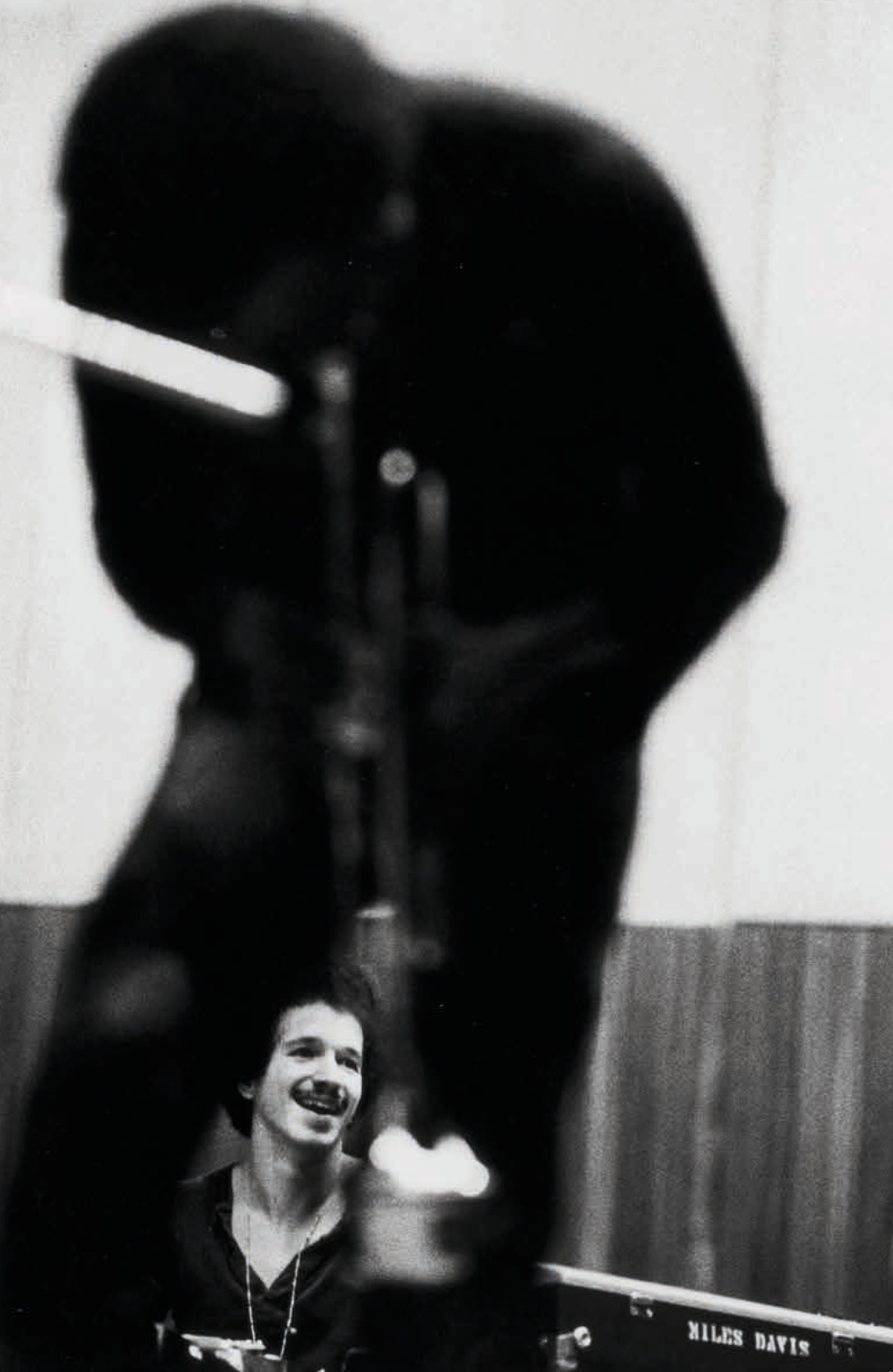
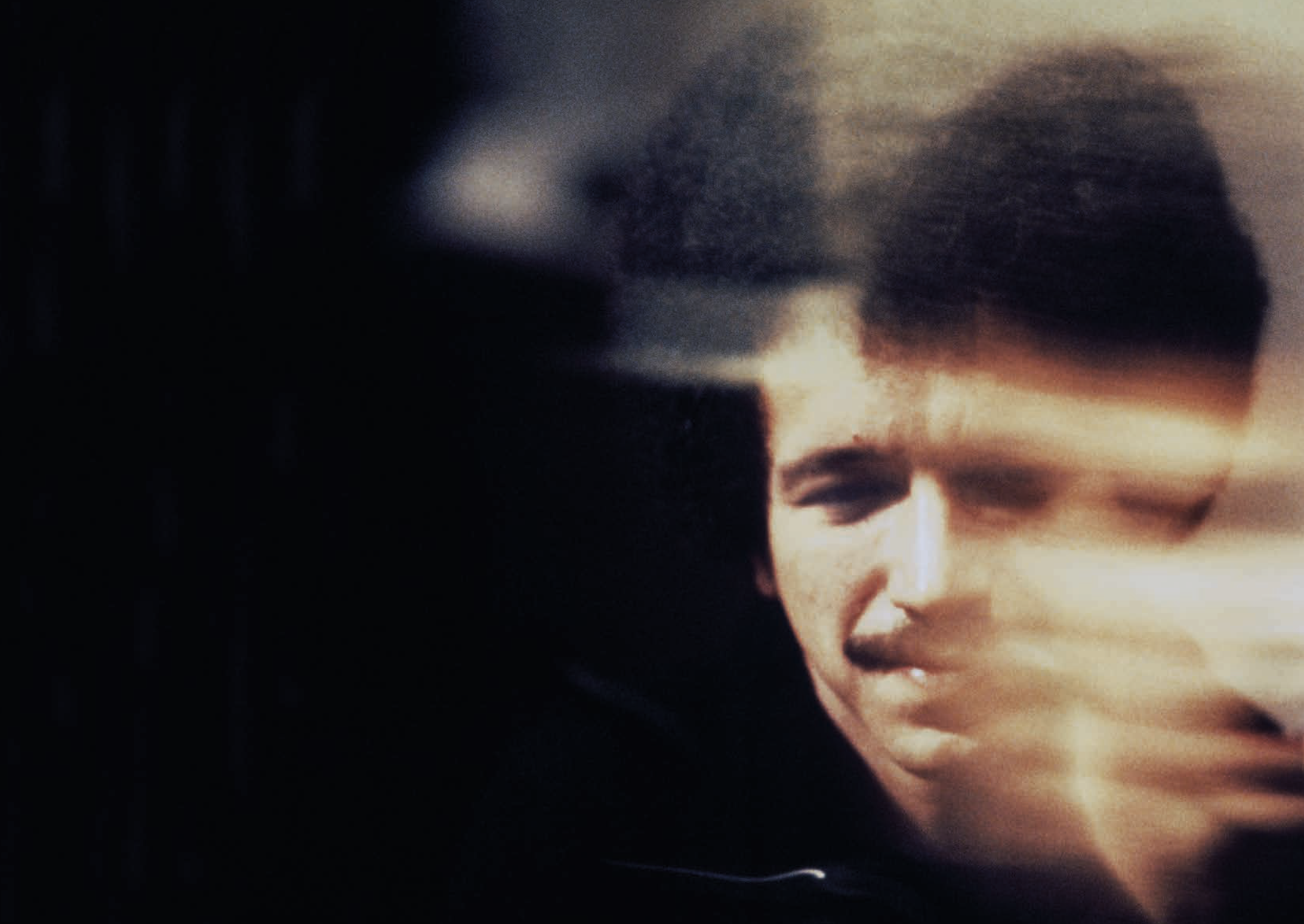

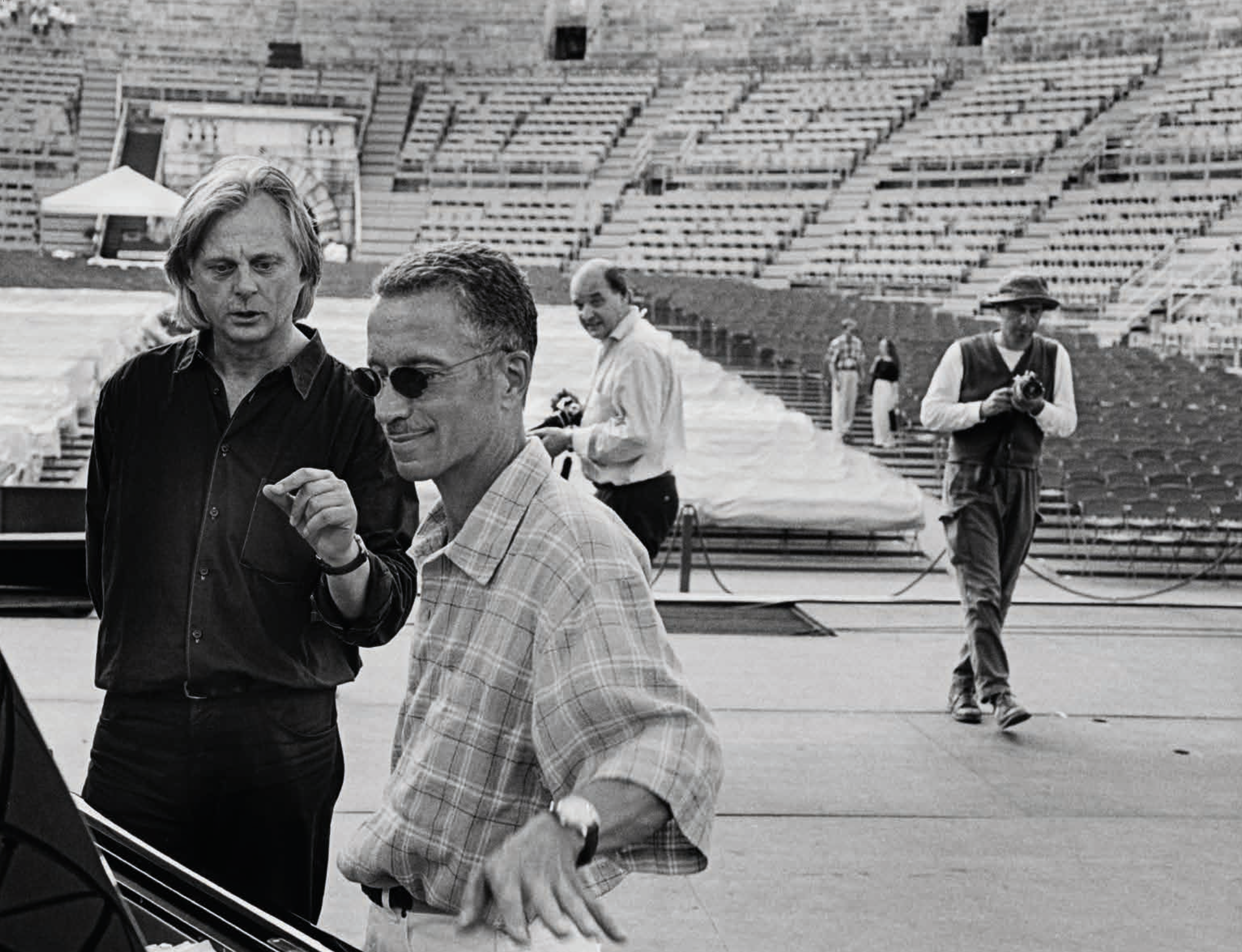

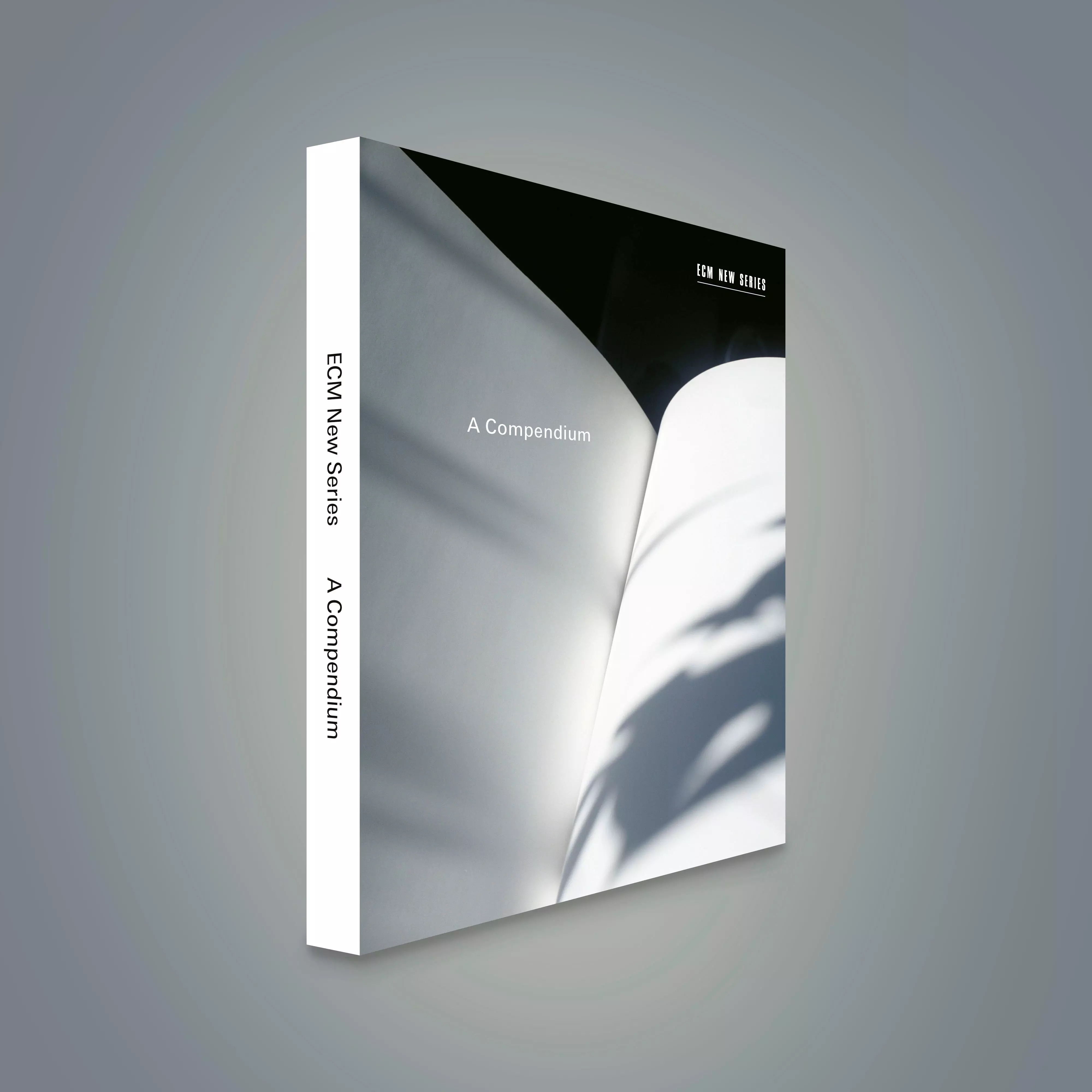

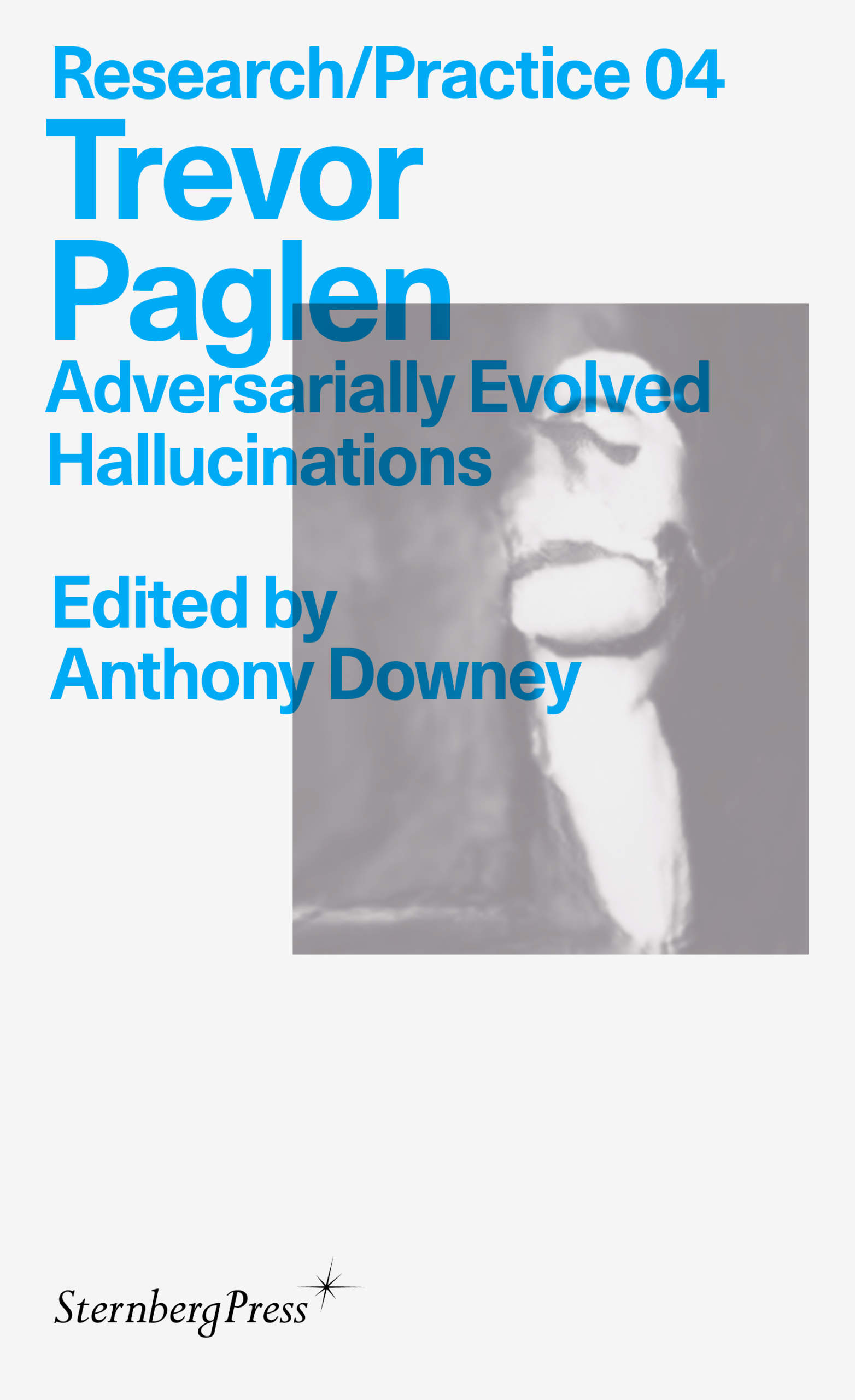
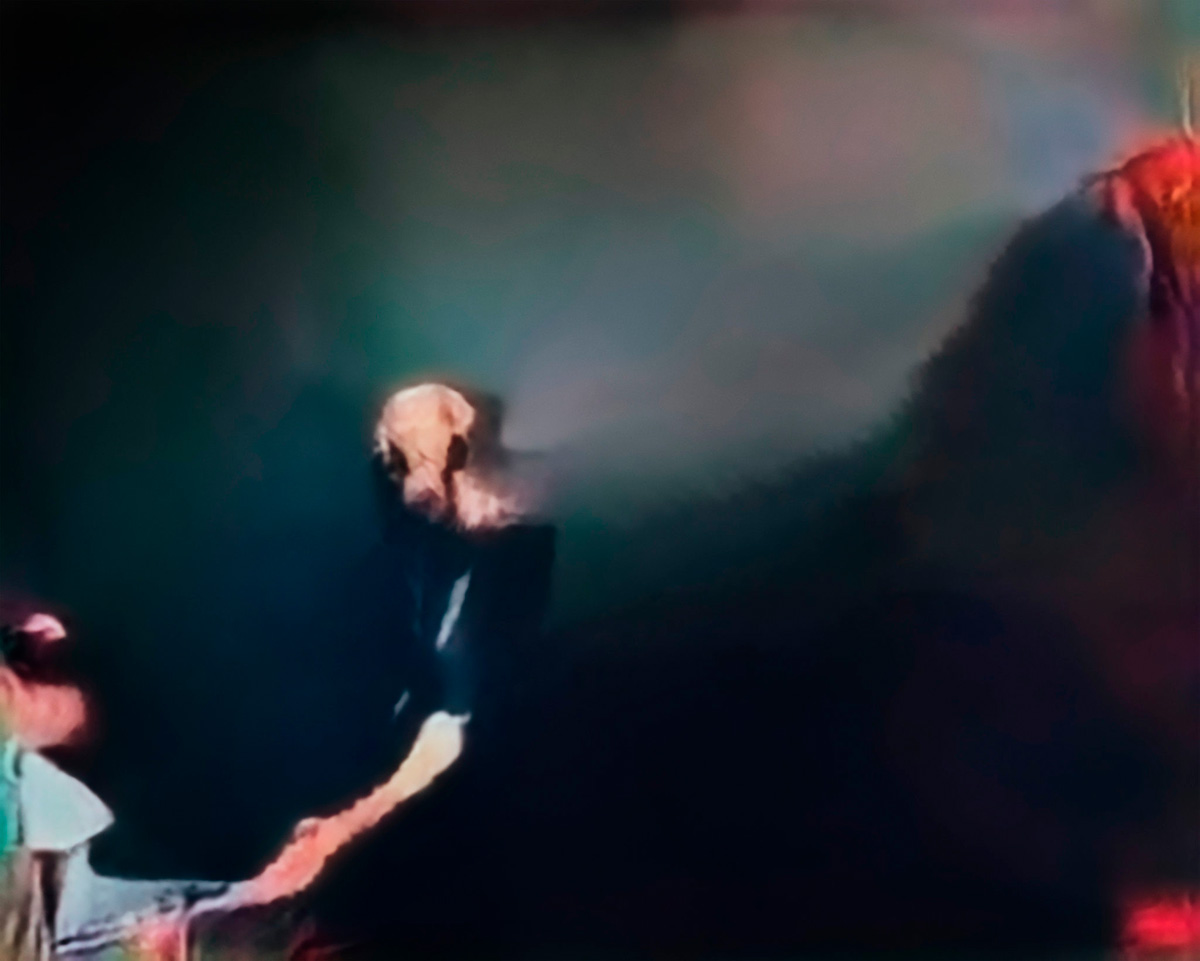
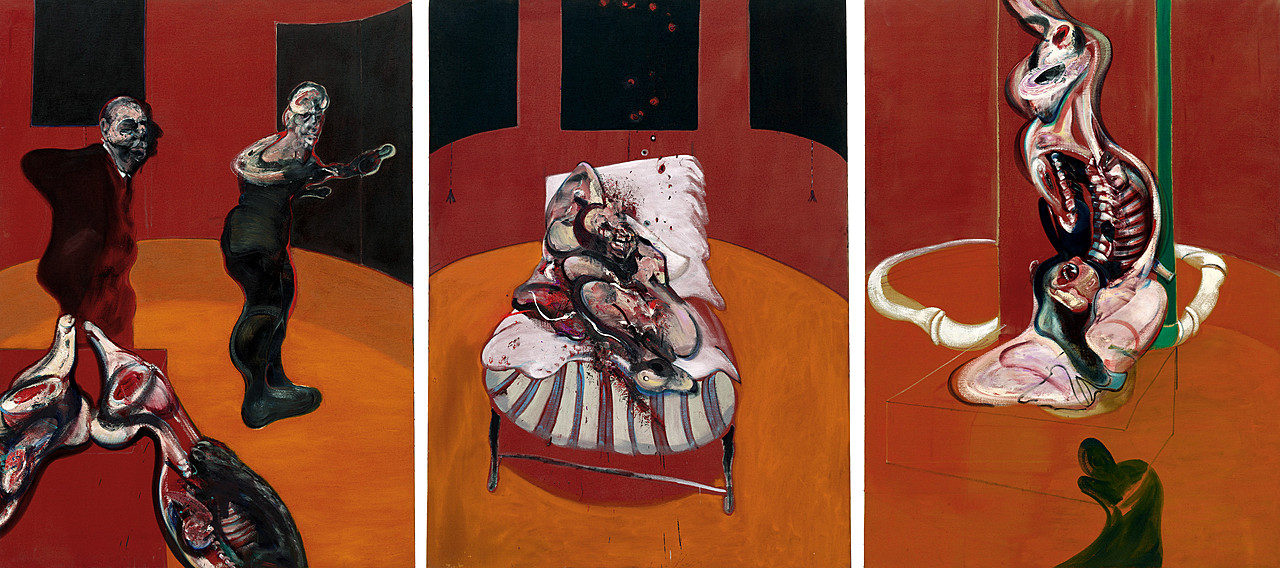

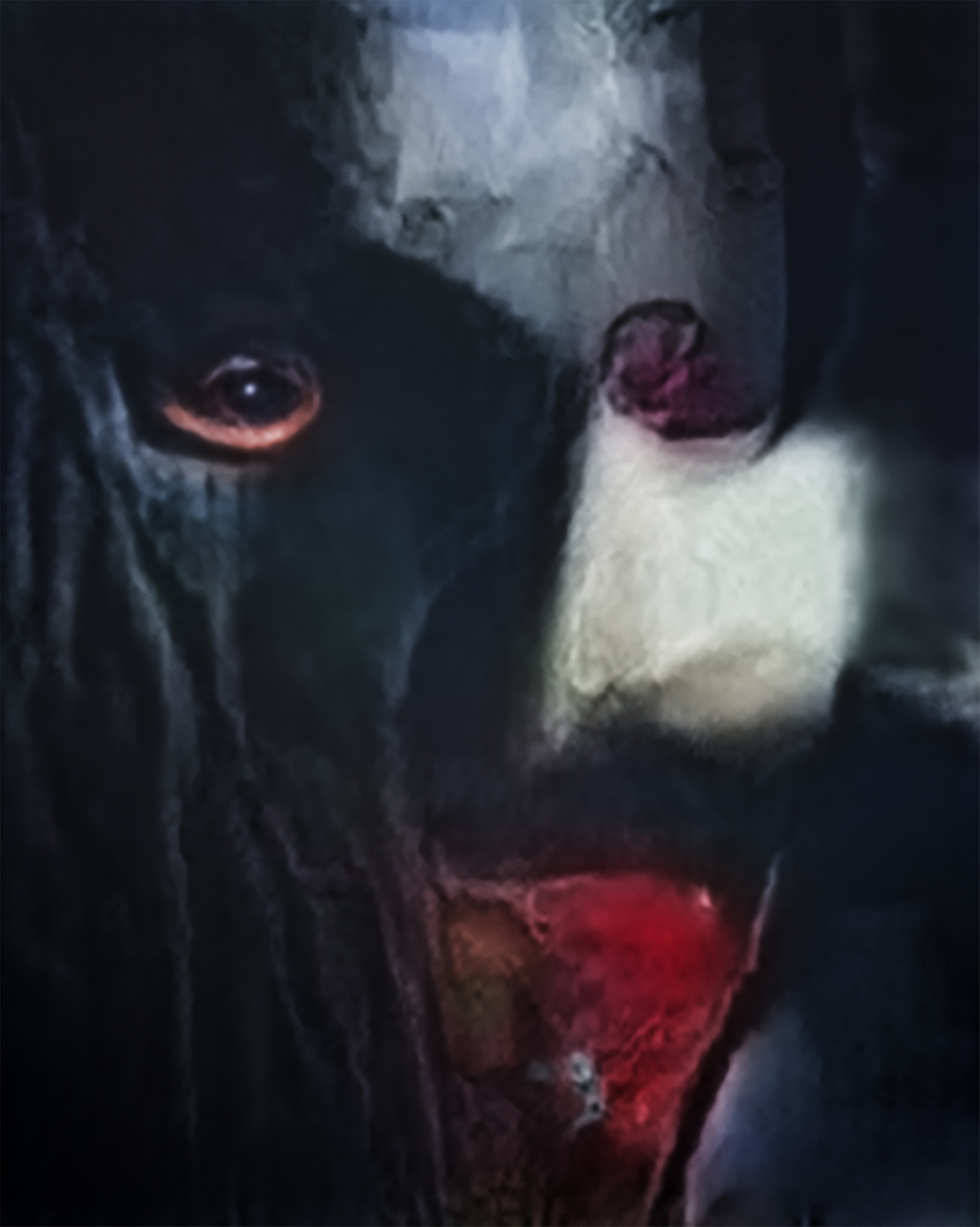
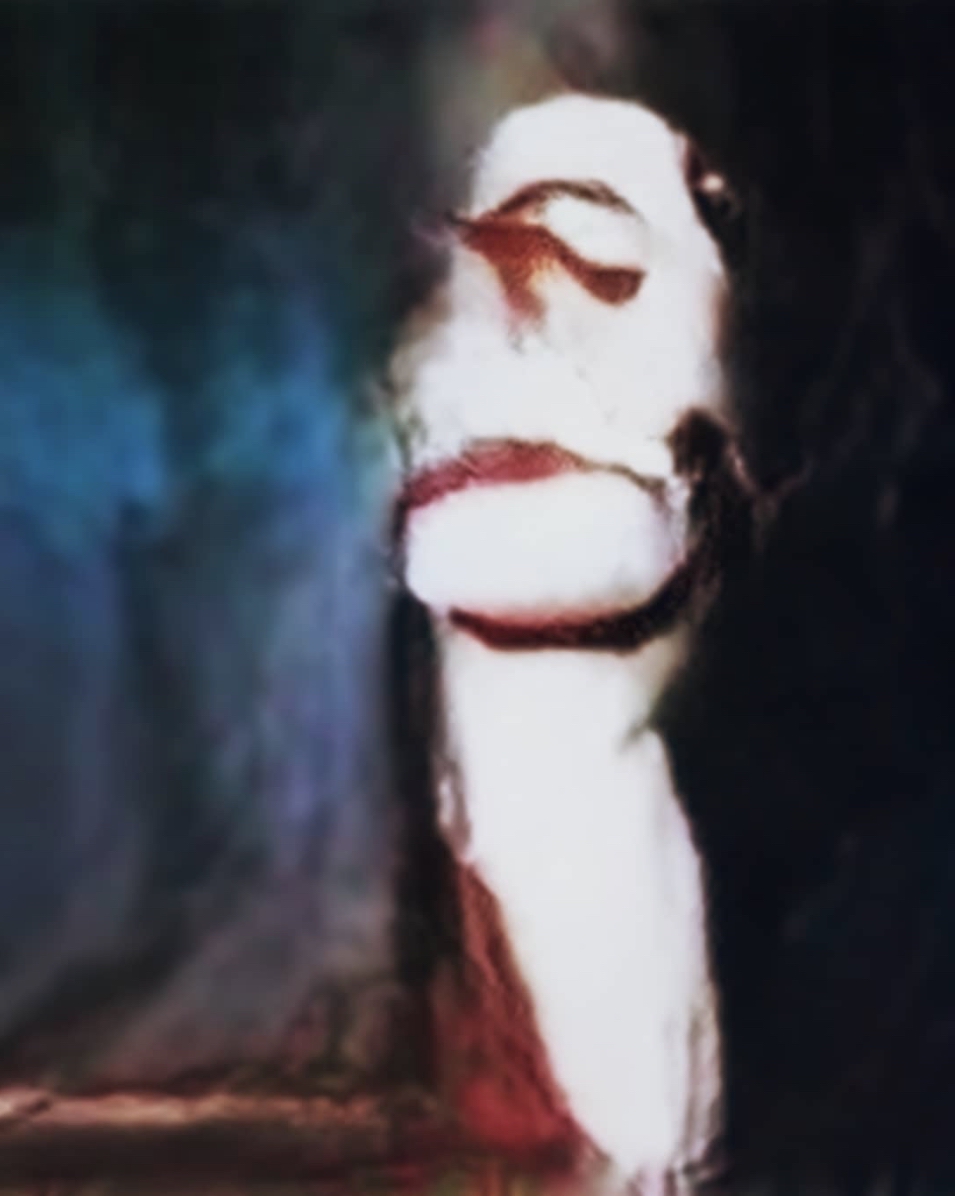
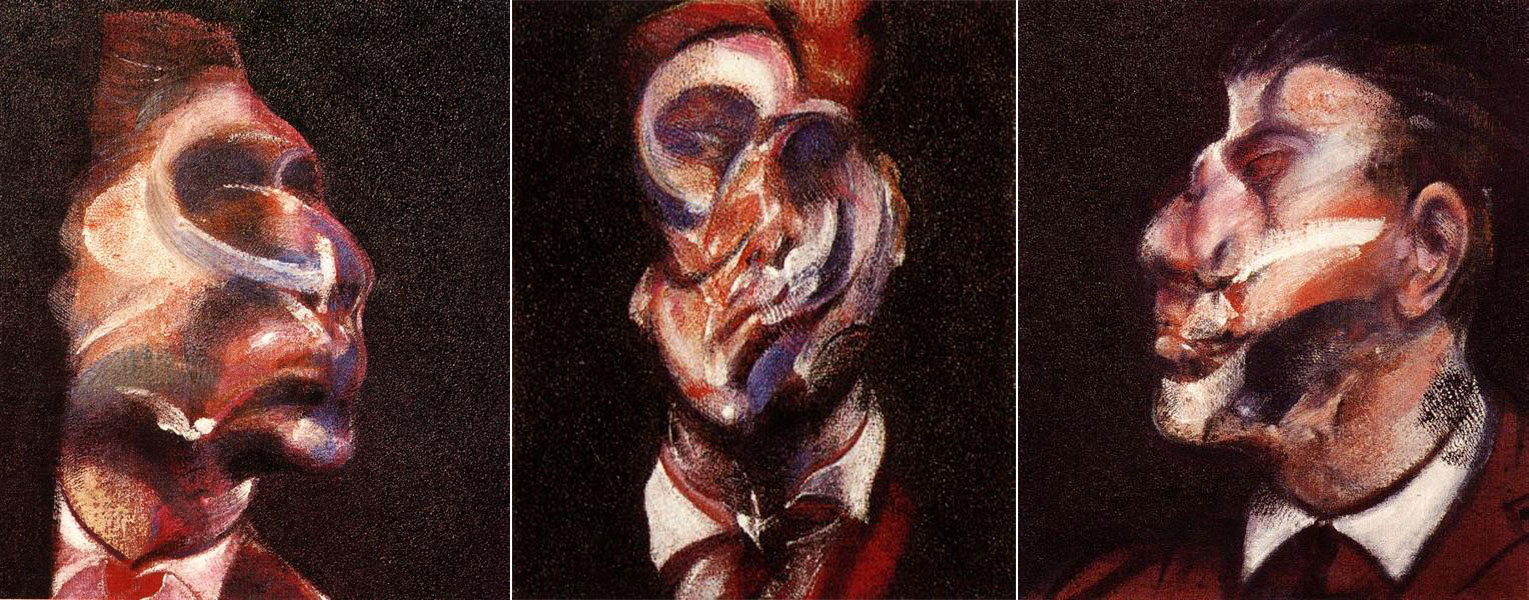
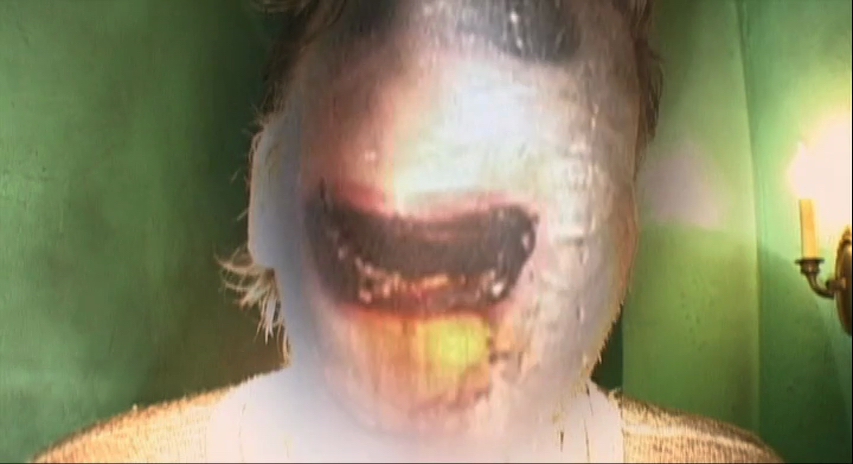
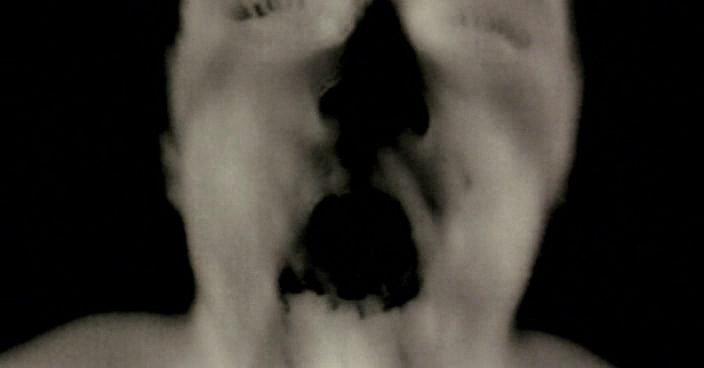

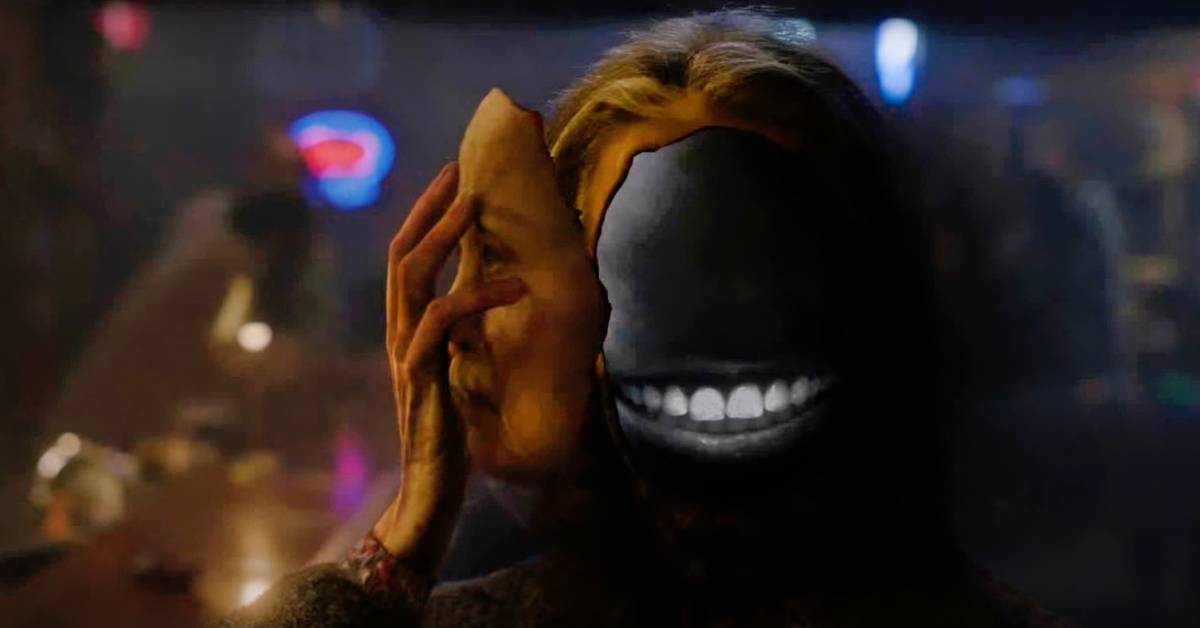
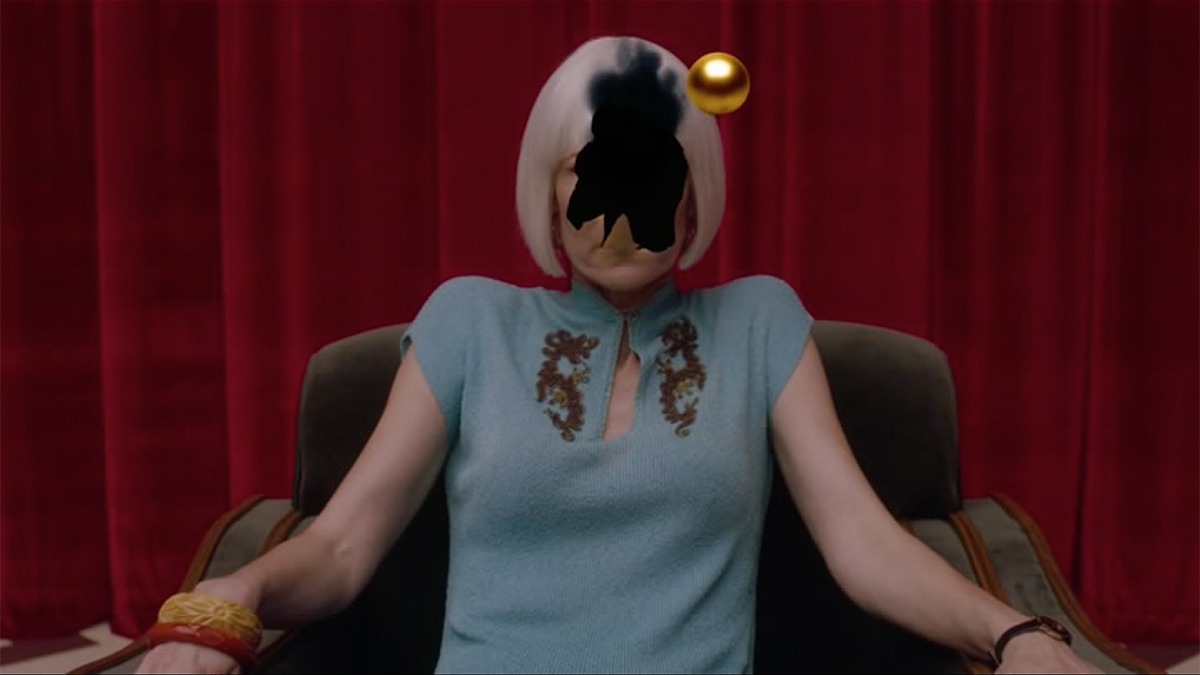
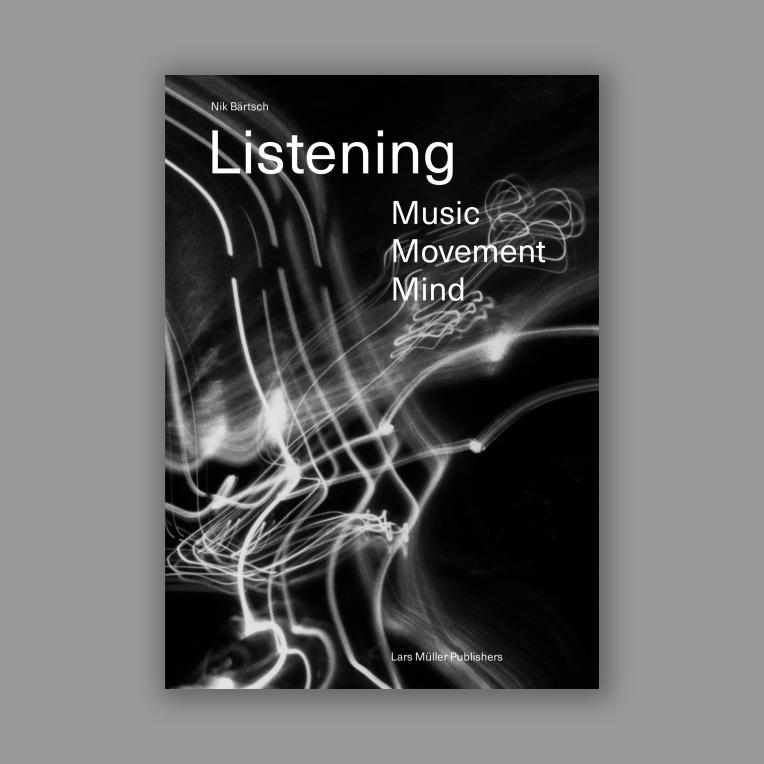


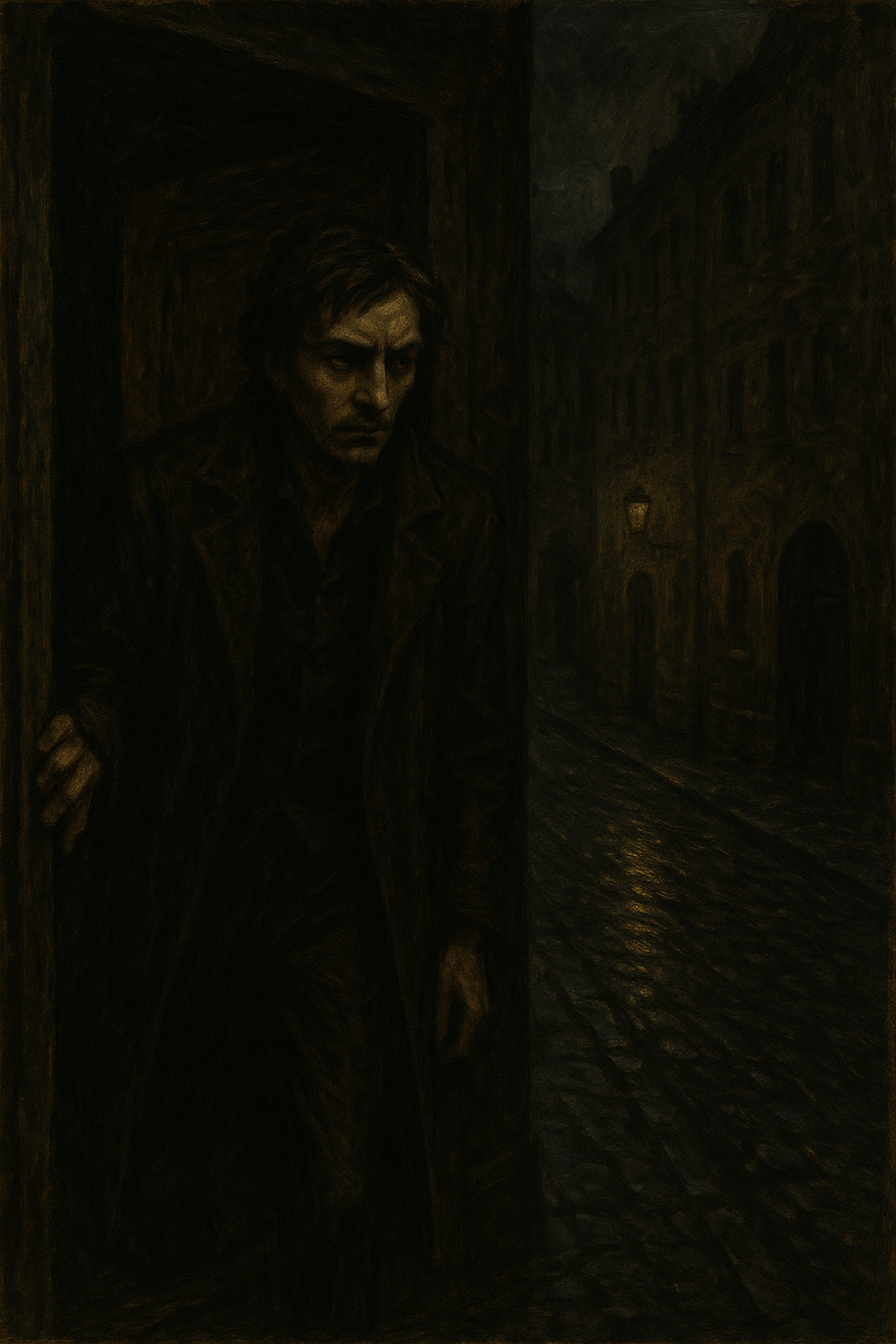

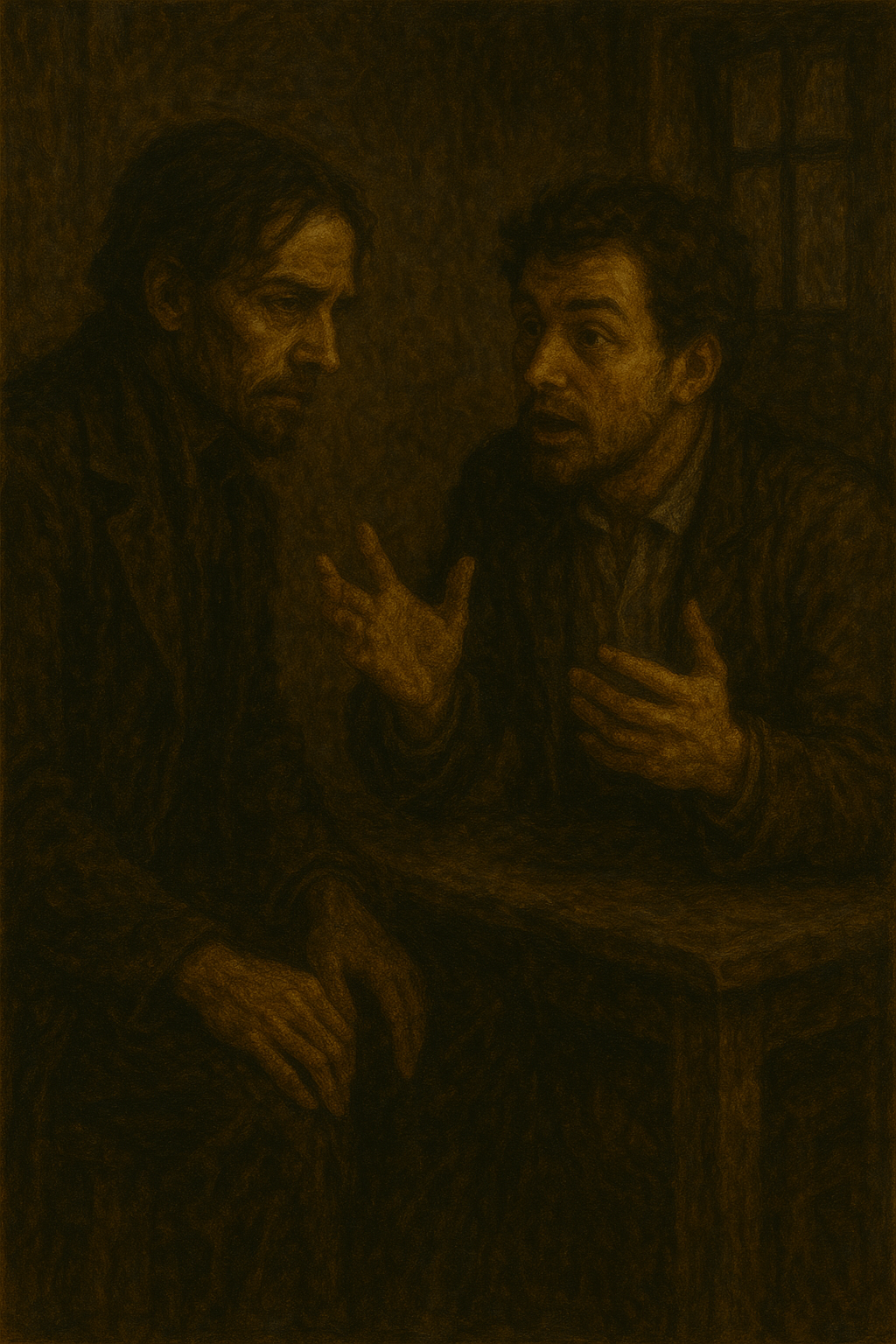


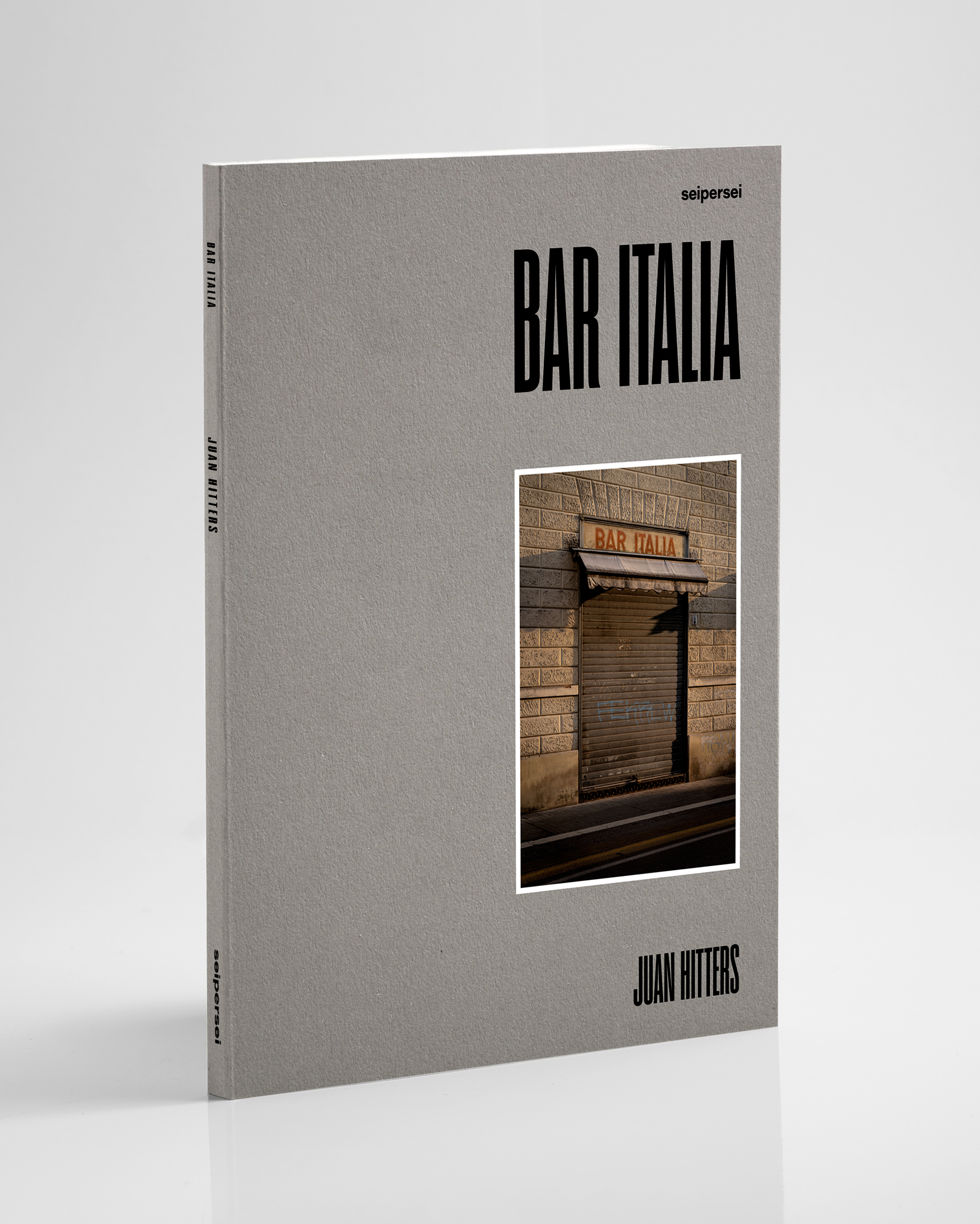


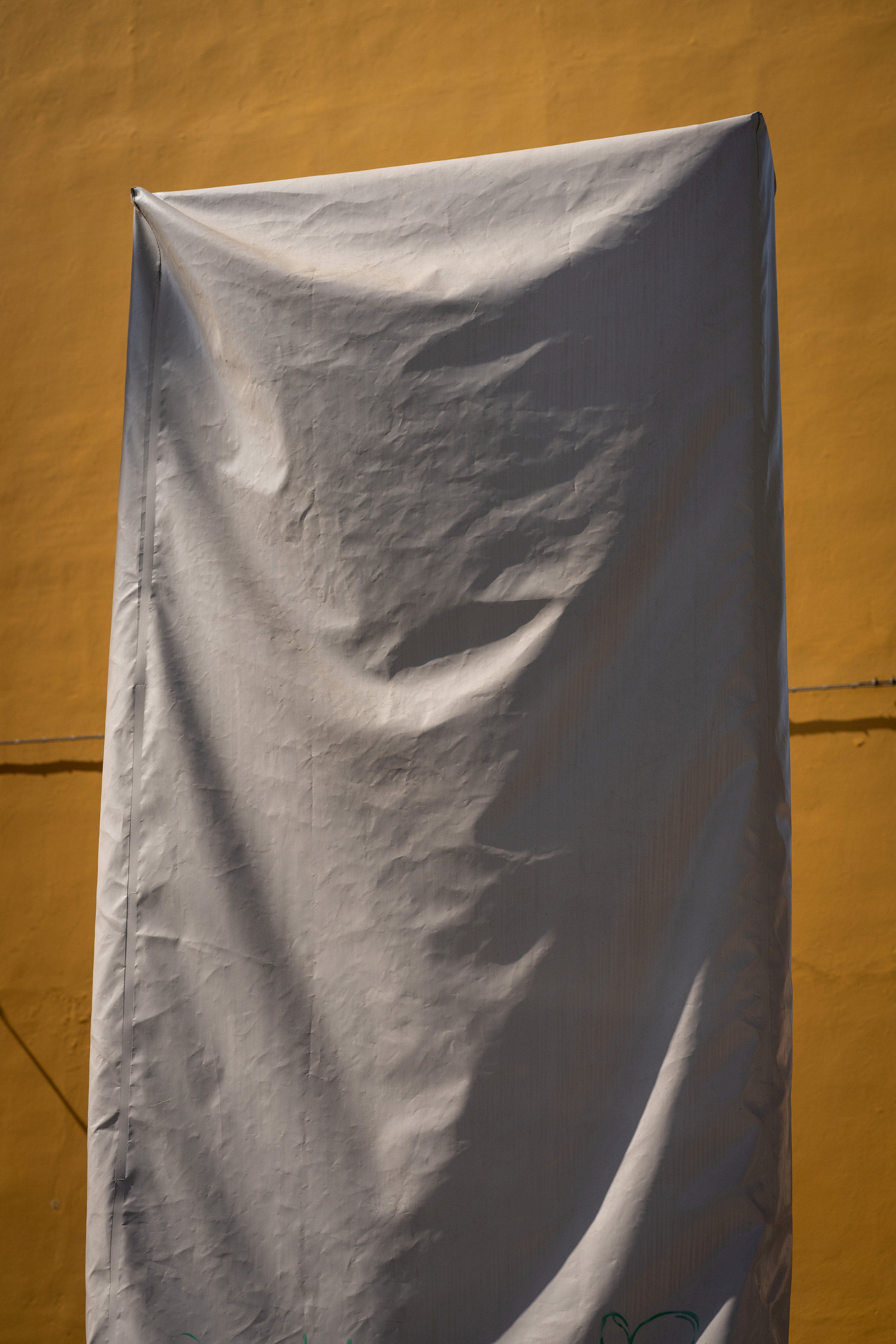
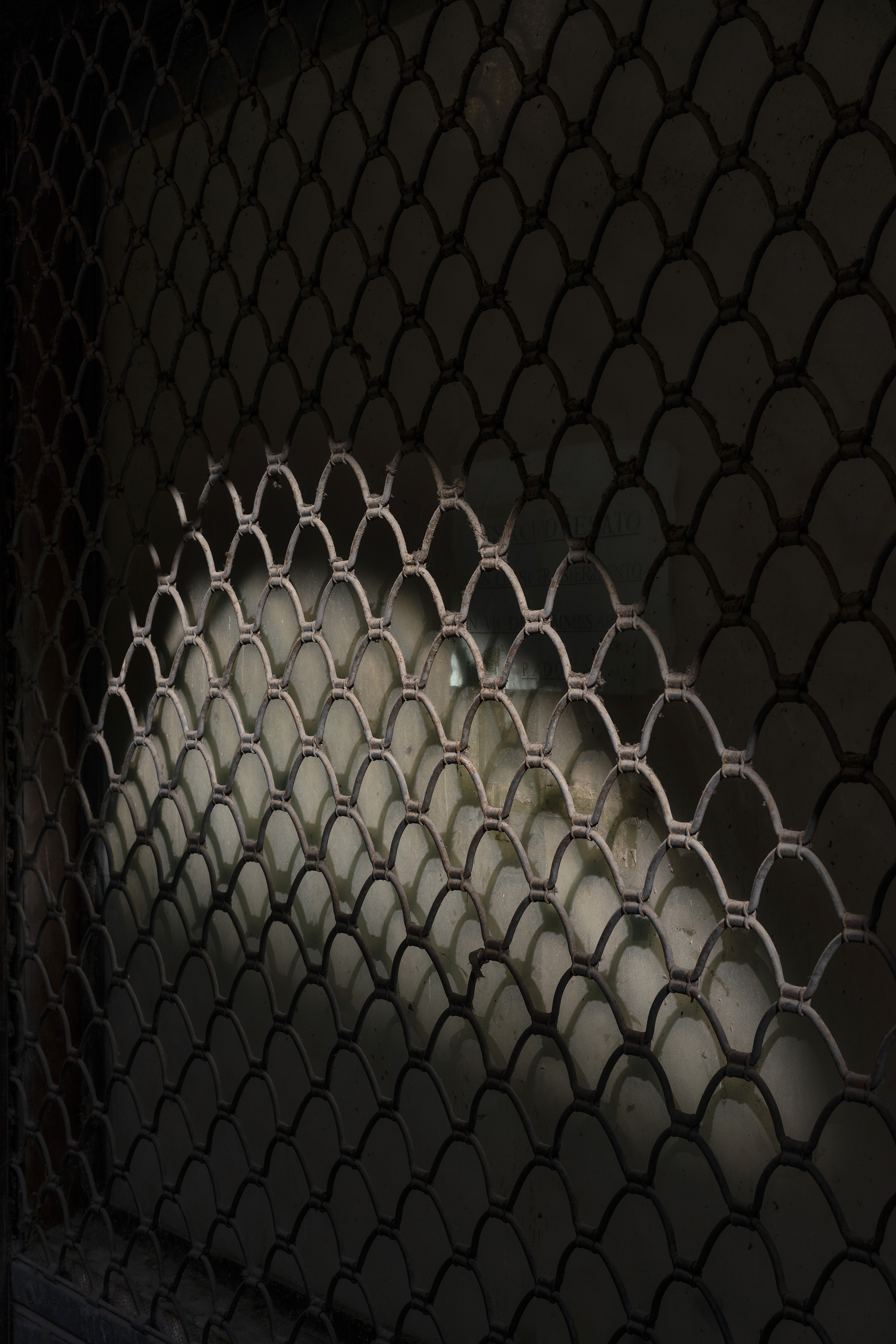

 Between Sound and Space: ECM Records and Beyond