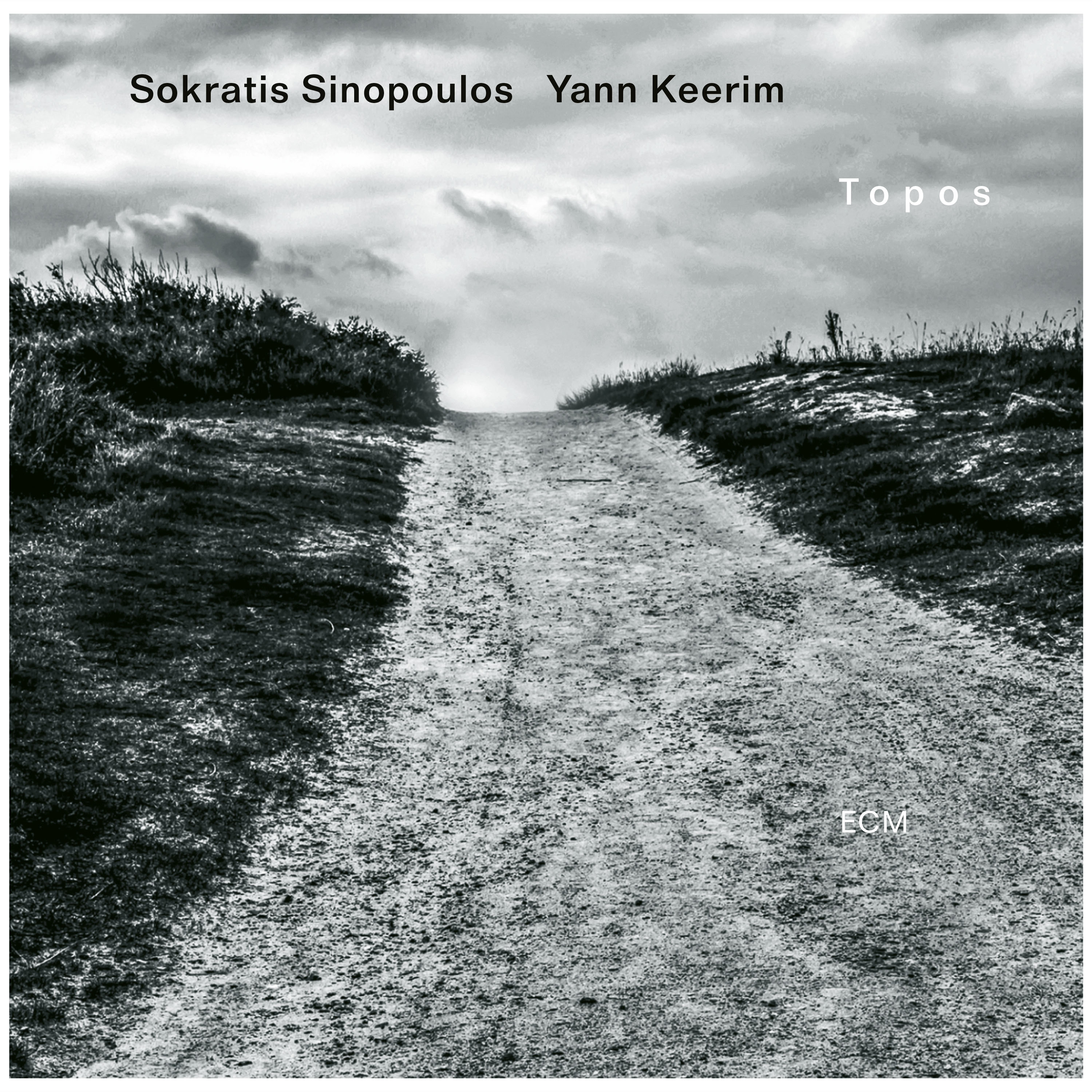
Sokratis Sinopoulos/Yann Keerim: Topos (ECM 2847)

Sokratis Sinopoulos
Yann Keerim
Topos

Sokratis Sinopoulos lyra
Yann Keerim piano
Recorded February 2024
Sierra Studios, Athens
Engineer: Giorgos Kariotis
Cover photo: Jean-Marc Dellac
Produced by Manfred Eicher
Release date: October 17, 2025

There is nothing quite like the sound of the lyra when Sokratis Sinopoulos takes it in hand. The instrument exhales an ancient soul into the modern air, and few musicians draw from its strings such a fusion of myth and immediacy. From his quartet recordings, Eight Winds and Metamodal, this more intimate duo with pianist Yann Keerim distills their chemistry into an even deeper alchemy of tone and silence. Their collaboration of nearly twenty years has ripened into an art of pure intuition, where melody and freedom speak the same language.

At the album’s heart lies Béla Bartók, whose Romanian Folk Dances serve as both axis and atmosphere. Yet it is in “Vlachia,” one of four original pieces inspired by the Hungarian composer, where their vision truly unfolds, as melancholy and art relate like light through water. The piano’s chords rock gently, a cradle of memory, while the lyra hovers between waking and dreaming, resisting the lull of its own tenderness. “Valley,” by contrast, opens like a watercolor, the soul of the landscape awakening at dawn, when even the smallest stones remember their own luminosity. Between the modally inflected interlude “Mountain Path,” with its blues-tinted horizons, and the quietly breathing “Forest Glade,” the musicians walk among elderly oak, beech, and elm, each exhaling the voices of forgotten peoples, their songs hanging in the air.

The Romanian Folk Dances themselves are reimagined here as meditations on time’s elasticity. “In One Spot,” normally brief and fleeting, becomes a slow unfurling, each phrase examined as though through a magnifying glass instead of a telescope. What was once a dance is now an act of remembrance, a transmission through hands, hearts, and breath. Keerim’s improvisations shimmer with restraint, unveiling the dance as a living organism rather than a set of steps. “Sash Dance” begins like a gift being unwrapped, its introduction a flowering reverie, before the familiar theme emerges, tender as an heirloom passed from parent to child. Sinopoulos’s harmonic touch is radiant, his bow tracing lines that dissolve as soon as they are drawn, while Keerim decorates with the grace of rain gathering on the edge of a leaf.

A solo lyra ushers us into “Dance from Bucsum,” its lament carrying the weight of centuries. Gradually, it finds vitality again, as if memory itself were relearning its steps. The piano’s entrance is light breaking through foliage. “Romanian Polka” delights in this interplay, its bowings and pluckings coaxing the piano into a rhythmic embrace. The music feels rooted in the soil, yet perpetually on the verge of flight. “Fast Dance” is not so much quickened as transfigured. What was once earthy now becomes spectral, its pulse sifted through the mesh between moments.

“Stick Dance” closes the circle, beginning in abstraction before broadening into a spacious terrain of inspiration. There is such reverence here that one hesitates to call it an ending at all. In returning to the first of Bartók’s dances, the album folds time in upon itself, reviving what it has just allowed to rest. It becomes not a conclusion, but a threshold, suggesting that each listening might return us to the beginning with altered ears.

As Sinopoulos and Keerim write in the album’s booklet:

“Our Topos is where tradition meets the present, the Balkan Mountains meet urban space, the music of the countryside meets contemporary creation. Our Topos is where we meet and interact, shaping our individual and common identities.”

Indeed, Topos is less a location than a living field, a place where listening itself becomes part of the composition. Between the lines of melody and silence, we, too, are invited to breathe, to dwell, to remember. And as the final tone recedes, one wonders whether the music has ended at all or merely crossed into another realm, where echoes continue to shape the clouds, unseen but never lost.

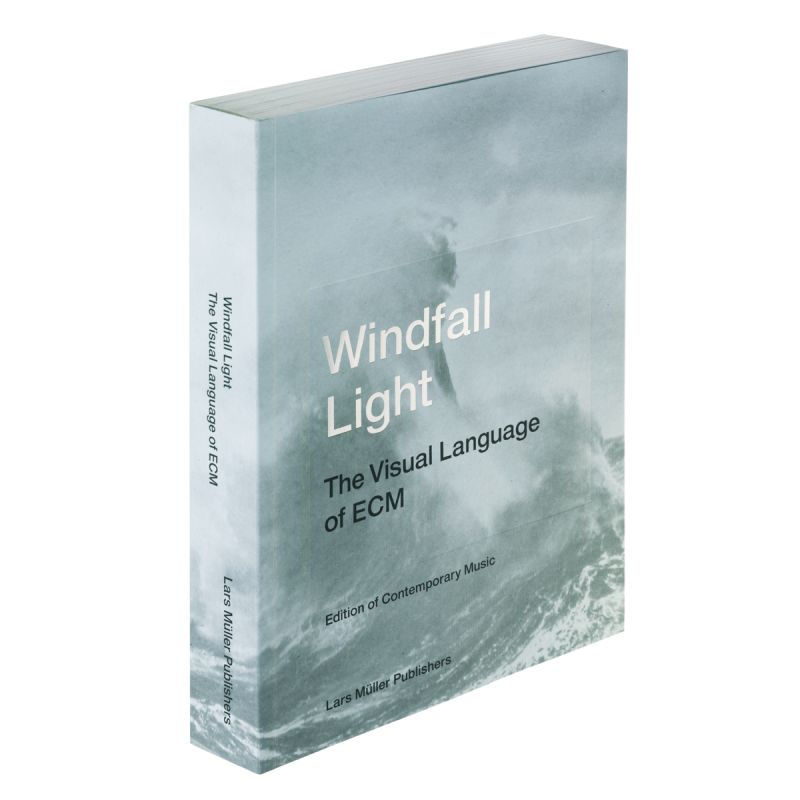
Windfall Light: The Visual Language of ECM

Windfall Light

“You wish to see, listen; hearing is a step towards vision.”
–Saint Bernard of Clairvaux (ca. 1090-1153)

The act of looking has long been likened to that of listening. Visual art, by no mere coincidence, is often spoken of in compositional terms, as great paintings and sculptures may be likened to symphonies in complexity and coordination. In music itself, sight reading is the quintessential form of looking as listening: The studied mind can track attention across a score and hear the music without a single musician present. But what of listening as an act of looking? Such has been the ethos of ECM Records since its inception.

Although the label has come to have a certain “look” to its admirers, it achieves in its aesthetic presentation not a look but a sound. One listens to an ECM album cover—be it a somber black-and-white photograph, an abstract painting, or a typographic assembly—by hearing it through the eyes. Although the images themselves are not necessarily reflective of the music, and only occasionally of those performing it, they do provide a framework for the disc sheathed within. As was already demonstrated in this book’s predecessor, Sleeves of Desire: A Cover Story, an ECM album is a liminal reality in which the self before and the self after find cohesion at the intersection of life and art.

In the case of ECM, it’s not the cover that necessarily provides insight into the music but, if anything, the music that provides insight into the cover. One example that comes immediately to mind is the montage that graces Pat Metheny’s New Chautauqua:

What could Dieter Rehm’s photo of the Autobahn between Zurich and Munich have to do with such a distinctly American sound? Perhaps nothing when viewed from that POV. But flip the telescope around, turning it into a microscope, and the open road now becomes a universal call to nomadism and to the magnitude of the unknown, of which Metheny’s music is a maverick flagbearer. And herein lies the attraction of the ECM-album-as-object: It invites us to step outside our skins as a way of more fully inhabiting them.

“In terms of the gaze,” writes Jean-Luc Nancy, “the subject is referred back to itself as object. In terms of listening, it is to itself that the subject refers or refers back.” It may feel natural to separate these two acts. Still, the full package of an ECM album turns closed circuits into open ones, reconnecting us with something childlike, primal if you will, by allowing us to feel that tingle of excitement every time we press PLAY and, after five seconds of anticipation, are thrown into some of the most beautiful dislocations imaginable in recorded music. As La Monte Young once put it to Tony Conrad: “Isn’t it wonderful if someone listens to something he is ordinarily supposed to look at?” Indeed, we can be sure of reuniting with that same wonder when experiencing the unusual harmony that can only be found between such a counterpoint of sound and image. For how can one behold Jim Bengston’s stark monochromatic landforms on Lachrymae and not want to traverse them with Paul Hindemith’s Trauermusik as guide?

Not only is there a relationship to be found between covers and the albums they grace, but there is also much to discover in new juxtapositions. Because the images in Windfall Light are presented somewhat thematically, whether by photographer or visual motif, we are invited to explore associations we might not otherwise have made. One noteworthy spread, for example, pairs Robert Schumann: In Concert with Angel Song, thereby stimulating our curiosity for the unseen electricity between them.

Furthermore, the book contains five richly varied essays to immerse ourselves in.

In “When Twilight Comes,” German journalist Thomas Steinfeld dutifully expresses the viability of ECM’s visual identity as necessarily open-ended: “None of these pictures is an illustration in the narrow sense of the word. None of them refers to either the music or the musicians as a decoration. None of them pretends to give an interpretation or even to be interpreted on its own.” They are, rather, accompaniments. “Each is a hieroglyph,” he goes on to say, “free from much of its potential meaning, a work of dreamlike qualities, taken from nothing, a sudden objection against the profane and its often inescapable presence.” Steinfeld also notes the prevalence of water in ECM album covers—not as a reflective but a dynamic force—in addition to abstracts, street scenes, and less definable paeans to silence. Regarding the rare portraits of the actual featured musicians (Paul Motian, Meredith Monk, Keith Jarrett, the Art Ensemble of Chicago, Charles Lloyd, etc.), he wonders: “Is this an accident, an honor, a matter of circumstance, or devotion?”

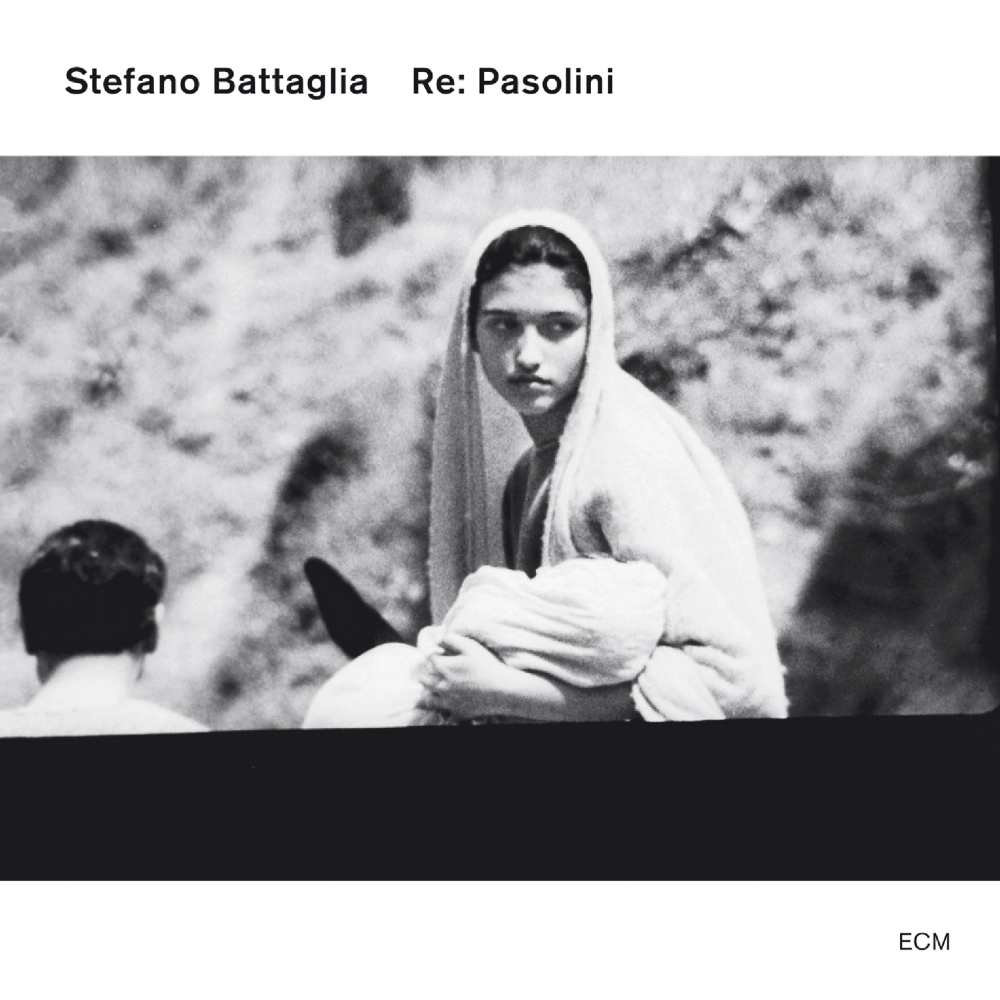
Author and museum curator Katharina Epprecht goes a step further in evoking the term “Transmedia Images.” By the title of her contribution, she means to suggest that ECM’s covers possess an interdisciplinary adjacency. Rather than being tautological loops, they are part of a “vast puzzle,” each a doorway into other senses and materialities. Thus, it is not the image’s ability to illustrate the music but rather “the immensely refined way that it handles unexpected shifts of meaning” that any listener will inevitably encounter. And while the images may be “based on correspondence to the character and quality of the music,” they are not beholden to it. Hence their potential as catalysts for personal transformation. “[T]he carefully packaged silver discs,” she waxes most literally, “are light and portable companions through life, motivating us to engage in contemplation, to pause for a moment.” In that respect, they allow us to understand more about our place in the world by questioning the many borders we draw around, through, over, and under it. Epprecht even provides a quintessential example of her own in Re: Pasolini:

Of this cover, she observes the following: “All of the gracious Virgin Mary’s senses are concentrated on her child, while the ears of the donkey unconsciously and reflexively register every sound. The instinctive perception of animals is unbiased and undeviating. I can think of no other picture that more touchingly elevates maternal attentiveness and unadulterated hearing to a metaphor.” Therefore, it’s as much the choice of image as its content that inspires us to regard the old as new, and vice versa.

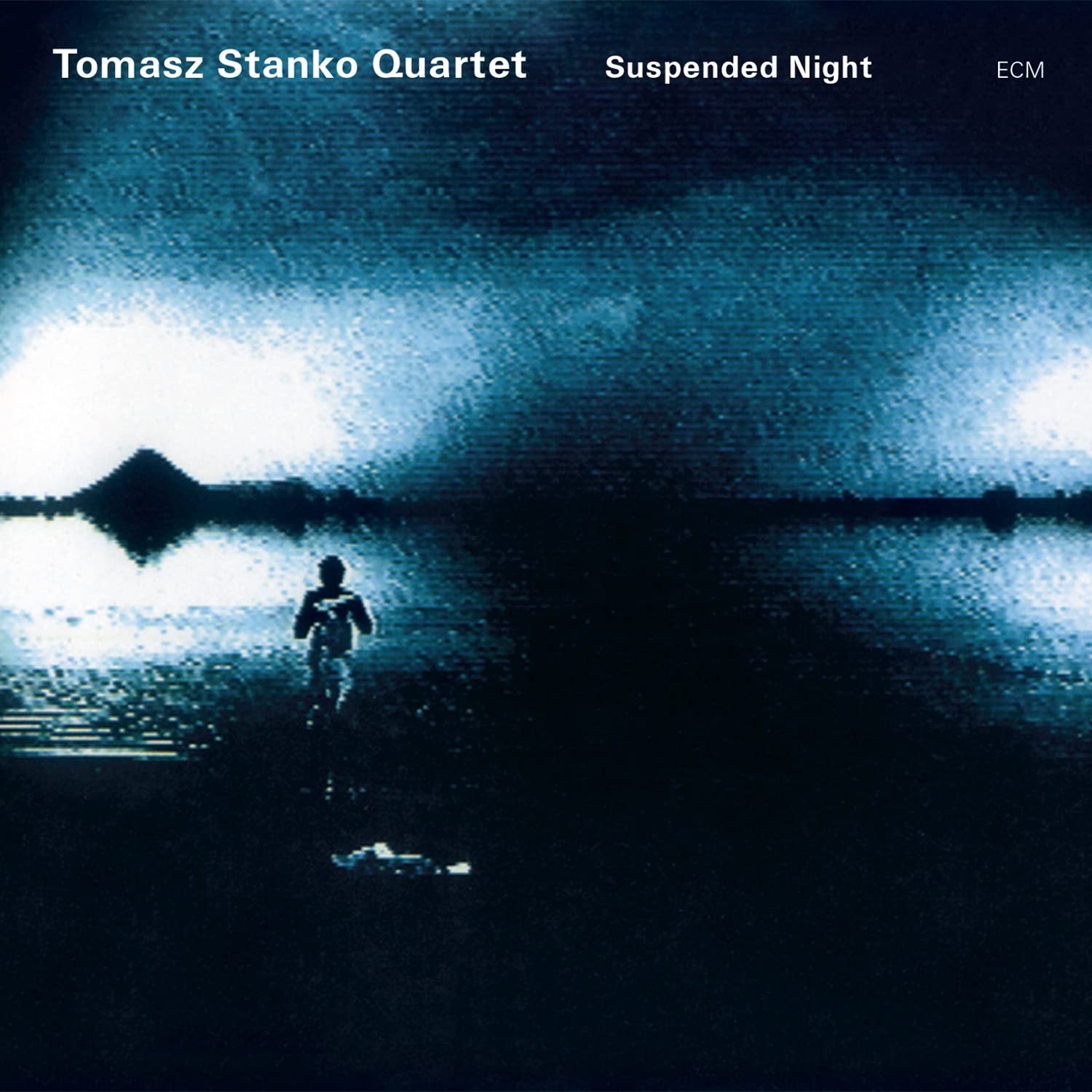
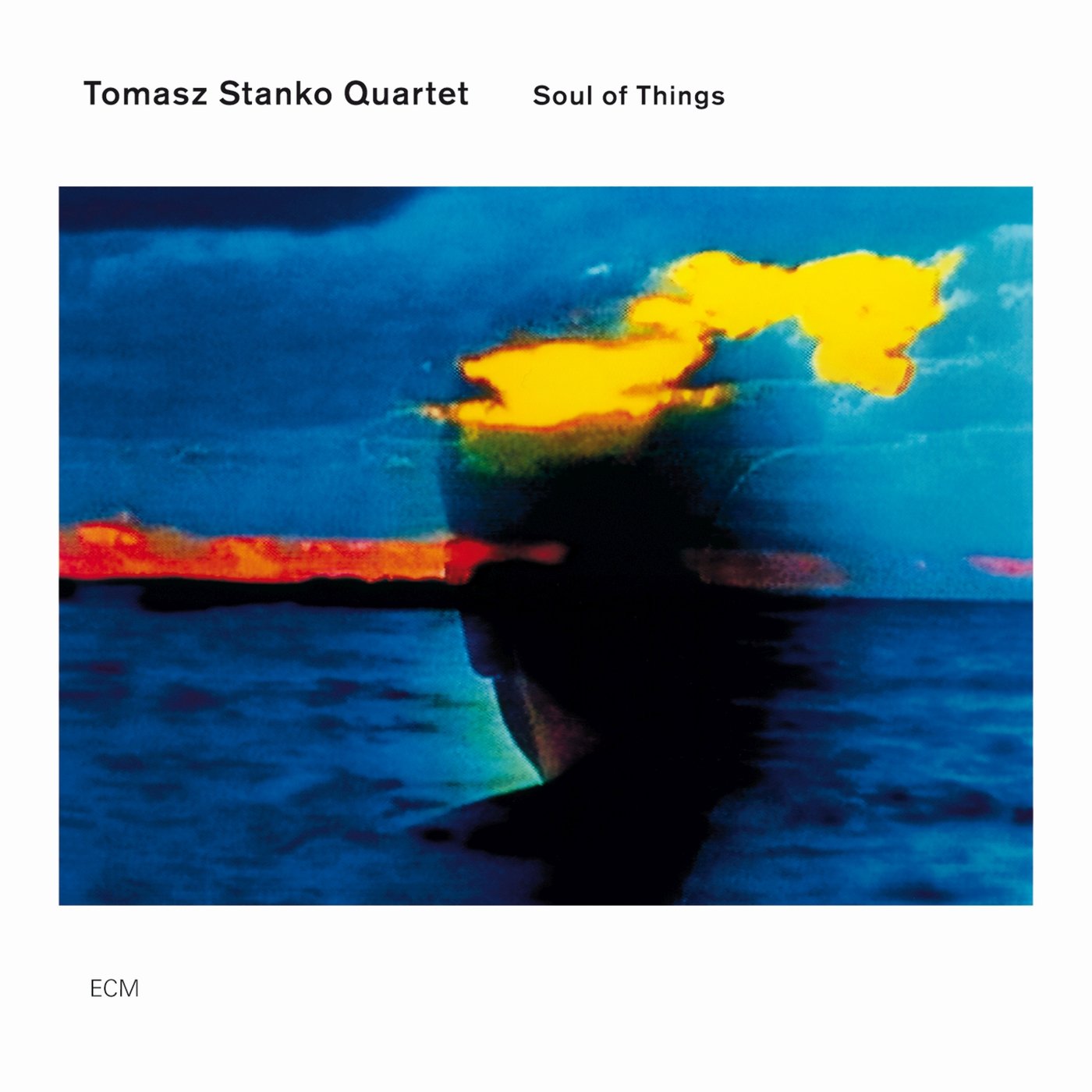
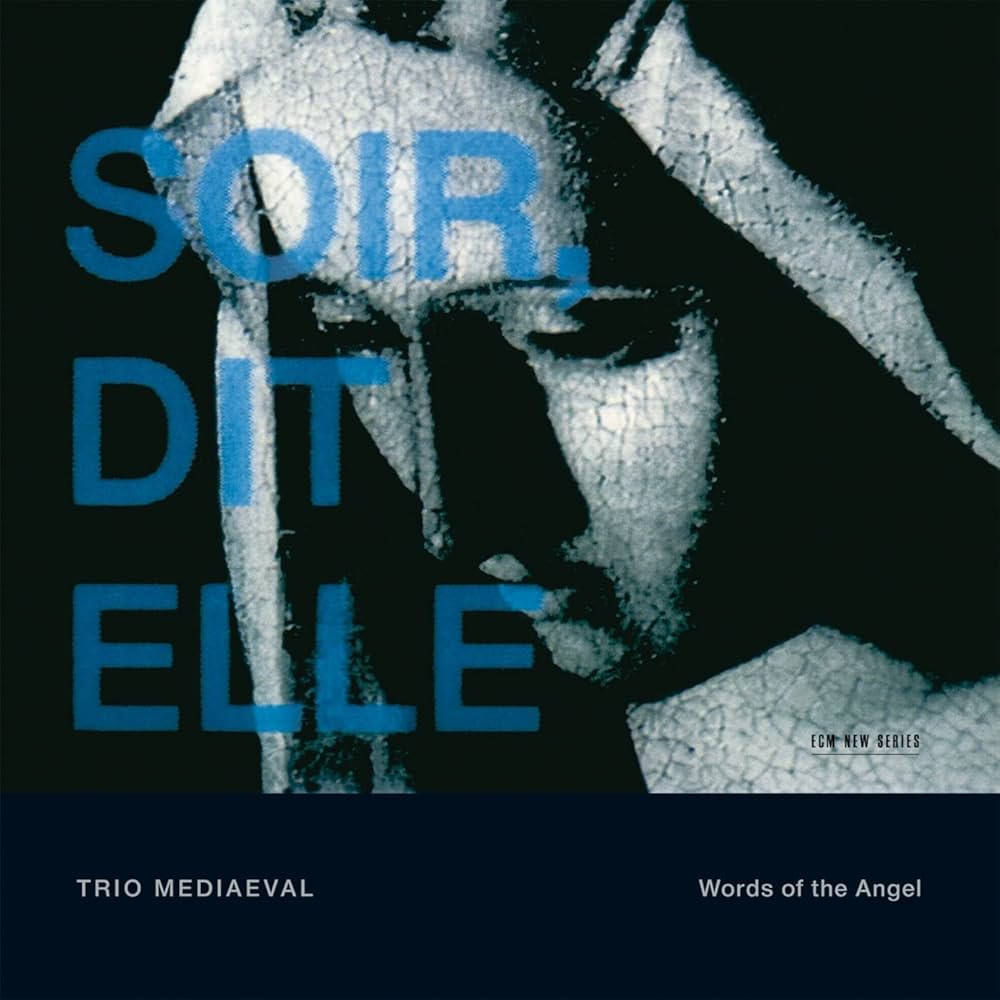
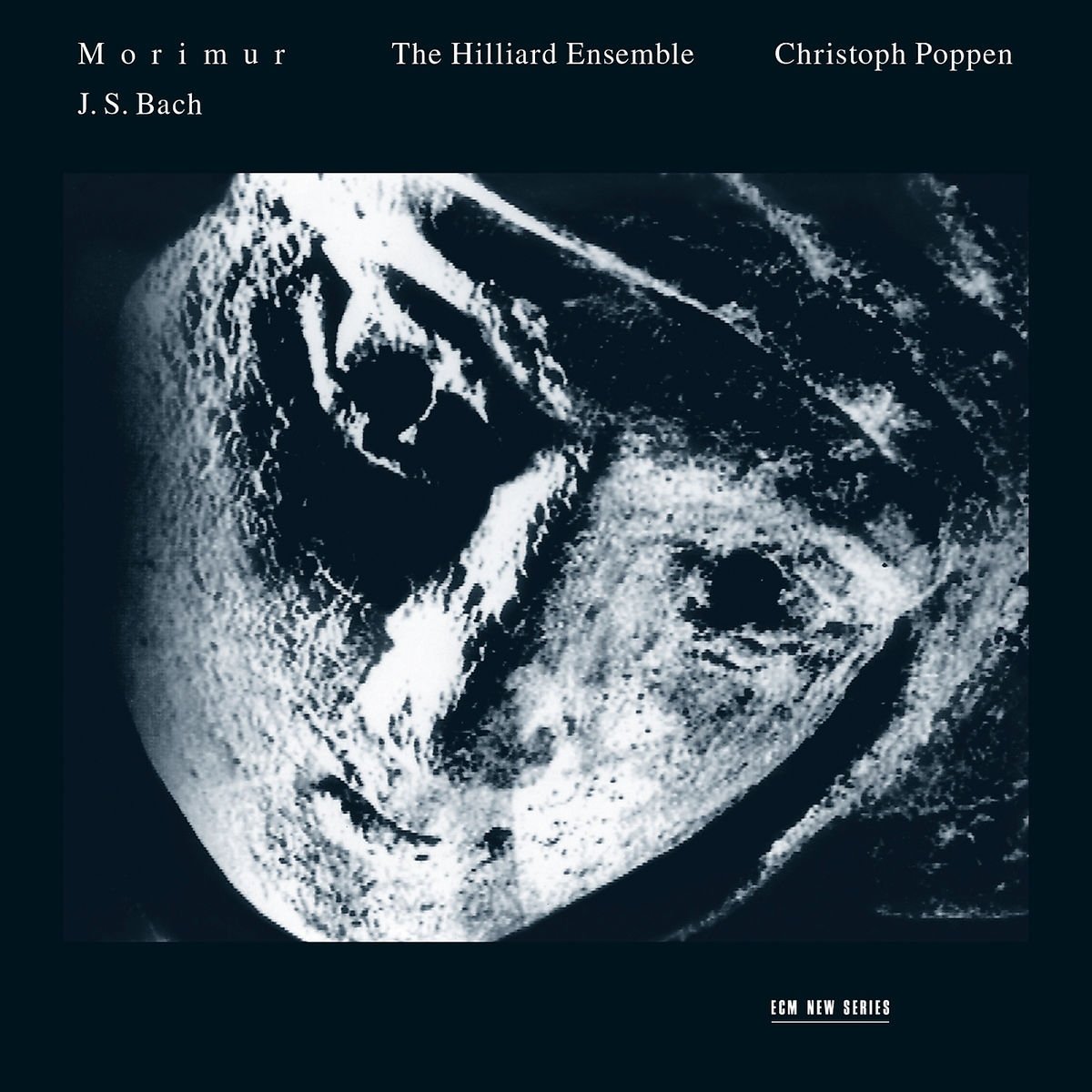
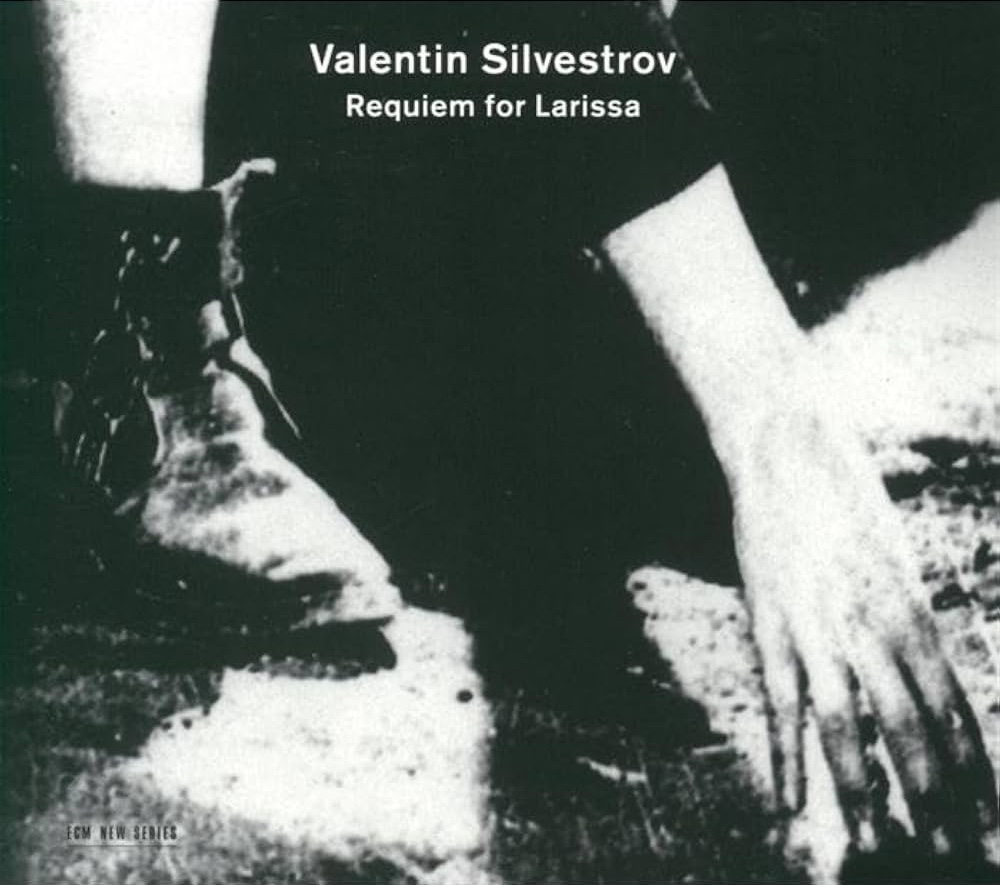
British writer Geoff Andrew takes us yet another step deeper into intersectionality in “Leur musique: Eicher/Godard – Sound/Image.” Here, the concern is with the cinematic awareness that has long been at the heart of producer Manfred Eicher’s approach to mise-en-scène. Because both he and filmmaker Jean-Luc Godard are fond of “juxtaposing, combining and mixing up elements which most people in their respective fields would never dream of bringing together,” it was only natural that Godard’s work would come to be associated with such seminal recordings as Suspended Night, which features a still from his mangum opus, Histoire(s) du Cinema, and Soul of Things, which references Éloge de l’amour:

Where the latter film also gives us Norma Winstone’s Distances, we have the former to thank also for Words of the AngelMorimurRequiem for LarissaSongs of Debussy and Mozart, and Voci.

Perhaps not surprisingly, these are already borrowings from other sources—quotations of quotations (and is not classical music the same?). Other Godard touchpoints include Notre musique for Asturiana and Passion for Cello and Trivium.

And let us not forget the soundtracks of Godard’s own Nouvelle Vague and the above-mentioned Histoire(s) du Cinema.

One could hardly imagine such a book as Windfall Light without including the perspective of at least one ECM musician, and in pianist and composer Ketil Bjørnstad, we are given a most suitable ambassador. In “Landscapes and Soundscapes,” he looks not at the spatial but at the temporal. In speaking of the timeless quality of the covers, he notes a preference for monochrome and Nordic landscapes and atmospheres. “Being produced by Manfred Eicher is a purification process for a musician,” he reveals. In so doing, he leaves an implied question hanging in the air: Does a cover photograph or painting also undergo a sort of purification process? When disassociated from its original context, does not the image open itself to infinite possibilities? Bjørnstad again: “Just as great composers and painters are recognizable down to the smallest phrase or brushstroke, ECM’s music and visual world are recognizable without the slightest danger of anyone calling this stagnation.” Thus, the more this recognition settles in our gray matter, the more we come to equate the landscape with the soundscape.

Last but certainly not least is “Polyphonic Pictures” by Lars Müller, whose publishing imprint has given us this fine volume. His offering is a relatively zoomed-out perspective on the questions at hand. Going so far as to describe the covers and music of ECM as “libertarian”—at least in the sense that they elide the intervention of power structures that all too often infect recorded media—he characterizes them as “afterimages of memorized circumstances far more than they are depictions of things that have been seen.” In that sense, they grow with listeners in connection to lived experience. This take resonates with me at the deepest personal level, as even one glimpse of a beloved album cover invokes a reel of memories, associations, and impressions. Rather than their technical aspects, it is their eventfulness, their movement in stillness, and their visceral foundations that make them come alive. And so, in his ordering and layout of the images, he has created for us a self-avowed “visual score.” Ultimately, they are only as delible as the paper they’re printed on, and so they can only live on in the mind’s eye, which, if it’s not obvious by now, is more accurately depicted as an ear.

Yuuko Shiokawa/András Schiff: Brahms/Schumann (ECM New Series 2815)

Yuuko Shiokawa
András Schiff
Brahms/Schumann

Yuuko Shiokawa violin
András Schiff piano
Recorded December 2015 (Brahms)
and January 2019 (Schumann)
Auditorio Stelio Molo RSI, Lugano
Engineer: Stephan Schellmann
Cover photo: Nadia F. Romanini
Produced by Manfred Eicher
Release date: October 11, 2024

In their second full disc for ECM New Series, violinist Yuuko Shiokawa and pianist András Schiff present two 19th-century sonatas of the highest caliber by Johannes Brahms (1833-1897) and Robert Schumann (1810-1856). The first half of the program is taken by Brahms’s Violin Sonata No. 1 in G major, op. 78. Composed in 1878, immediately after his violin concerto, it is affectionately known as the “Regenliedsonate” (Rain Sonata) for references to his two songs, “Regenlied” (Rain Song) and “Nachklang” (Lingering Sound), both gifted to Clara Schumann for her 54th birthday. We can easily share in her gratitude for finding those melodies she so cherished incorporated into a sonata of abundant riches, especially when considering that Brahms burned his early attempts at the genre. “Regenlied” opens the first and third movements, growing from the earth not as a sprout but as a fully formed tree. Like time-lapse photography, it allows us to see an entire life cycle in hindsight before we can fully grasp what is being reflected upon. Between the seamless notecraft in the violin and the piano’s dynamic underpinning, there is an orchestral sensibility at play. Despite the lively development, the outer husk is rooted in melancholy and emotional density. It whispers when it dances, shouts when it prays. The central Adagio is more funereal by contrast. As the violin works its lines from inner to outer sanctum, it never lets the wind get in the way of its grief. Meanwhile, the piano is more insistent and rouses its companion from slumber into the sharper edges of reality, leading it through every turn thereof without so much as a nick. The final stretch works through shaded pathways and hard-to-reach areas with sublime attention to detail, ending on a transcendent double stop.

Although Brahms’ great admirer Robert Schumann had never written a violin sonata, at the urging of Ferdinand David (concertmaster from the Leipzig Gewandhaus and the dedicatee of Mendelssohn’s violin concerto), he eventually relented. However, being displeased with his first attempt, he dedicated the Violin Sonata No. 2 in d minor, op. 121, to David instead. Clara and violinist Joseph Joachim gave its premiere in 1853. A massive piece in four parts, it turns the concept of “chamber music” on its head. Unlike this program’s accompanying sonata, it takes its time to mature (at 13 minutes, the opening movement alone is exactly half the length of Brahms’ entire sonata). It is also a profound litmus test of any duo’s attempts at the form, and in that respect, Schiff and Shiokawa defer to the score instead of their egos. The second movement is a soft burst of energy, giving shape to each motivic cell as if it were a brief dance to be savored before its steps are forgotten. From flowing to syncopated, we are carried through the third movement on the back of a groundswell that always keeps its shape, only enlarging and reducing before morphing into a tender staccato. The final movement is a masterclass in controlled drama that feels made for these four hands.

The sensitive playing, which gives its fullest, most heartfelt attention to every detail, is only matched by the recording. Engineer Stephan Schellmann brings a somewhat distant quality to the proceedings so as not to cloud the listener’s judgment with virtuosity. Instead, we are invited to sit in the back of the room, letting the music find us of its own volition, ready and waiting.

Ludwig van Beethoven: The Piano Concertos (ECM New Series 2753-55)

Alexander Lonquich
Münchener Kammerorchester
Ludwig van Beethoven: The Piano Conceros

Alexander Lonquich piano, direction
Münchener Kammerorchester
Daniel Giglberger
 concertmaster
Recorded January 2022
Rathausprunksaal, Landshut
Engineer: Markus Heiland
Cover: Fidel Sclavo
An ECM Production
Release date: November 8, 2024

After a years-long relationship with the Munich Chamber Orchestra, pianist Alexander Lonquich had an opportunity to perform Beethoven’s entire cycle of piano concertos over the course of an autumn evening in 2019. The present recording draws upon that collaboration as a gesture of preservation. Composed between 1790 and 1809, the five completed concertos are what the pianist calls “outward-looking creations” and give us insight into the composer’s depth and breadth of mind. 

Lonquich begins, naturally, with the Piano Concerto No. 2 in B-flat major, op. 19, given that it was written first but published second due to Beethoven’s initial displeasure with it. Although its opening movement immediately calls Mozart to mind, there are plenty of distinctive colorations to enjoy in its ferocious ebullience, and its central departure into more delicate textures is a marvel. The Adagio is haunting for its sustain-pedaled penultima, setting up the final Rondo, which introduces a veritable horse race of energy to reckon with.

The Mozartian flavors continue in both the Piano Concerto No. 1 in C major, op. 15, and Piano Concerto No. 3 in c minor, op. 37. Whereas the former’s martial beginnings (bordering on overbearing with the occasional blast of timpani and brass) and symphonic conclusion speak with the inflection of a true Classicalist, the second movement adopts a romantic sway. Its soliloquy drips from Lonquich’s fingers like moonlit water, while the surrounding brushwork lends dimension to the scene. The wind writing is especially poignant, blending with the soloist as organically as a forest envelops every tree. The op. 37 mirrors this format almost to a T, beginning with another garagantuan Allegro con brio. At 17 minutes, it’s nothing to take lightly and flows more comfortably to my ears than its op. 15 counterpart. Perhaps it’s the minor key, the more mature writing, or a combination of the two, but whatever the formula, it is bursting at the seams with inspiration and invention, not least of all in the cadenza. (It also seems to foreshadow the Fifth Symphony in the same key, to be written five years later.) Between it and the foot-tappingly engaging third act is cradled another beautiful Largo. As an inward turn, it looks to itself as if through a glass darkly. Yearning for the future, it glows like an ember of possibility.

The Piano Concerto No. 4 in G major, op. 58, opens with even more resolutely symphonic textures, as winds and brass weave a tapestry of pastoral imagery. At 20 minutes, it is half the length of the average symphony and deserves regard as a universe unto itself. The piano’s entrance is timid, almost mocking, before it exuberantly courts the orchestra in a dance of ambitious proportions. Like the Rondo at the other end of the tunnel, it emerges confident, almost brash, in its virtuosity. The Andante con moto operates at a whole other level at their center. Originally conceived with the Orpheus myth in mind, it is by turns agitated and contemplative. This push and pull continues until the piano unfurls its grief alone in a tangled catharsis.

In his liner notes for the album, Lonquich conceives a title for the Piano Concerto No. 5 in E-flat major, op. 73: “Battle, Prayer and Folk Festival.” For while the opening joys seem set in stone, they quickly crumble as more desperate convolutions come to the fore before the piano moves to its highest registers in a rousing meta statement. The Adagio un poco moto, perhaps the most recognizable movement of the collection, is easily heard anew in the present rendering, so crisp are its articulations that the smoothness of their skin feels real to the touch. Beethoven himself in the score marks the piano’s entrance “like the break of dawn,” but as Lonquich notes, what follows “feels to me like the attraction of a nocturnal source of light, which seems to be robbed of its radiance just five bars before the end.” And in that regression, we feel all sorts of trepidations shuffling through the mind until we land on the rousing third movement, where the sun indeed has the last word. Despite its many asides, tempering the sense of victory with that of retrospection, the music moves forward with confidence. Beethoven holds the flowing arpeggios and boisterous dances in constant check so as not to let time rule over space. With a brief yet inspiring finale, it sweeps us away in its arms and runs as far as its legs will carry us.

Keith Jarrett: Carl Philipp Emanuel Bach (ECM New Series 2790/91)

Keith Jarrett
Carl Philipp Emanuel Bach

Keith Jarrett piano
Recorded May 1994 at Cavelight Studio, New Jersey
Engineer: Peter Laenger
Cover photo: Mayo Bucher
Executive producer: Manfred Eicher
Release date: June 30, 2023

In his 2014 monograph, The Music of Carl Philipp Emanuel Bach, music historian David Schulenberg paints a compositionally focused portrait of Johann Sebastian’s second son. Despite living in his father’s shadow, his influence managed to shine a light through the veil of history by way of his seminal Essay on the True Manner of Playing Keyboard Instruments and the conduit he was purported to have furled between the Baroque and Viennese Classical schools. As a composer of nearly 1,000 works, his oeuvre is nothing to sneeze at, nor his style, as much an example of evolution in and of itself as of eras retrospectively defined. 

As Paul Griffiths notes in the liner text for the present album, which documents Keith Jarrett’s traversal of CPE’s Württemberg Sonatas, the ocean between father and son may seem vast, even as it churns with currents of familiarity in concert with calls from more distant shores. Dedicated to Carl Eugen, Duke of Württemberg, this collection “makes the point about inheritance avoided, or qualificated, or contradicted, or accepted, whether with gratitude or resignation.” Although nominally composed in 1742/43 for the student who would soon ascend to his dukedom, Griffiths observes, “More likely it was for his own fingers he was writing, and for his own ears.” Jarrett, having only heard these pieces on harpsichord, felt compelled to make a piano version, resulting in this home studio recording from 1994, likewise also for his own fingers and his own ears. All the more honored we should feel to have it available three decades later.

Sonata I in a minor is glorious from the start. There are moments of intense poignancy, as in the Moderato, while the faster outer layers elicit feelings of joy that are always undercut by what Griffiths calls a “sad grace” throughout (I might also call it a glorious melancholy). The final movement, marked Allegro assai, carries astonishing depth in tow. What seems a lightly articulated dance has room for so much more than the listener can calculate. Jarrett brims with vitality and precision without ever letting go of the improvisational spirit for which he is known on the jazzier side of things.

The sheer clarity of Jarrett’s voicings, a profound match for the younger Bach’s own, is fully displayed in Sonata II in A-flat major, of which the concluding Allegro is especially vibrant for its multifaceted joys. Like a brick wall, each layer staggers, parallel to every other layer below and above it, adding strength to the overall design and function.

The opening of Sonata III in e minor is perhaps the most glorious of them all, revealing its heart from the first sweep of the second hand. The Adagio is nostalgia incarnate, while the Vivace—the briefest movement of the collection—peels itself away with unfiltered love. The pauses in Sonata IV in B-flat major make for passionate contrast, yielding an Andante of great beauty. Working in stepwise formation, it is a DNA helix surrendering to melodic sequencing.

The more these sonatas develop, the more they veer toward Father Bach, especially in the Adagio fugue of Sonata V in E-flat major. With sweeping intimacy, it pieces together its puzzle between gusts of wind and spirit. The final Sonata VI in b minor is another inwardly focused distillation that defends variegations of light and shadow. The clocklike Adagio is a gem, while the final Allegro glistens in the setting sun. Each is a different keyboard, two eddies in a bay coming together harmoniously, speaking the same truth but with different tongues.

Duo Gazzana: Tõnu Kõrvits/Robert Schumann/Edvard Grieg (ECM New Series 2706)

Duo Gazzana
Tõnu Kõrvits/Robert Schumann/Edvard Grieg

Natascia Gazzana violin
Raffaella Gazzana piano
Recorded November 2021, Reitstadel Neumarkt
Engineer: Markus Heiland
Cover photo: Luciano Rossetti
Produced by Manfred Eicher
Release date: November 18, 2022

A new recording from the Gazzana sisters—Natascia on violin and Raffaella on piano—is always something to celebrate. But what they now present may be their finest in terms of programming, thoughtfulness, passion, and self-control. Making a special case for this assertion are the subtle shades of Tõnu Kõrvits’s Stalker Suite (2017), one of two pieces written for the duo by the Estonian composer. Despite being an homage to Andrei Tarkovsky’s eponymous masterpiece, the music occupies a world unto itself, not least because of its performers’ unobfuscated humanity. From the soft metallic pianism that introduces “Into The Zone,” we relive at least some of that journey, which seems to go deeper vertically the more it proceeds horizontally into abandoned areas of non-existence and timeless looping.

Kõrvits doesn’t so much describe the imagination of cinema but rather the imagination incinema. When the film’s characters, for instance, enter “The Room,” their musical equivalent doesn’t seek to recreate those dilapidated walls, the waterlogged detritus of lives unlived, or the ringing phone. Instead, it lives in the quiet unrest of a mind led by the hand to a mirror in which images disappear as quickly as they manifest.

As the Stalker notes in his “Monologue,” what we call passion is the friction between souls and the lives of the bodies they inhabit. Weakness, he goes on to say, is the companion of birth, whereas strength is the accompaniment of death. Thus, every note wavers in the delicate metaphysical tension between the two. Rich and pliant yet fiercely resolute against the blinding light, it touches the periphery that is no periphery. If anything is programmatic here, it is “Waterfall,” but even this comes with an implied proviso: You must not treat the image as an idol, for faith comes by hearing, not seeing. The Zone has been internal all along.

Notturni (2014), also in four parts, delineates another porous architectural enclosure. Kõrvits’s penchant for brevity is philosophically and hermeneutically suited to these pieces, which take ideas not as excuses for grand expounding or soliloquizing but as poems in miniature. And if a nocturne is supposed to be about the night, then these modern examples of the form show us that a darkened sky reveals what the daylight obscures with its glare. The relationship between piano and violin is especially profound in the third piece, where fluttering high notes in the keys mesh genuinely with lower voicings in the bow.

Between these modern ores lies the polished gemstone that is Robert Schumann’s Sonata No. 1 in A minor, op. 105, of 1851. In its flowering opening movement, the violin’s G string resounds like an alto in the forest. In the Gazzanas’ hands, it feels as natural as sunrise. Although formally divided into three movements, the central one being the most searching in its cautious approach, it finds resolution in the recession of its character. The folk-like qualities of its final act are a testament to the inner struggle of a composer wanting to look to the soil without having to trip over those buried therein.

Finishing out the program is the Sonata No. 3 in C minor, op. 45 (1887) by Edvard Grieg. For this rendering, they default to the composer’s own copy, which differs from the first published edition. The differences accentuate the Norwegian character, drawn by flowing brushwork and sometimes-gnarled textures. If the first movement is a robust ode to origins, then the second, marked “Allegretto espressivo alla Romanza,” is a contemplative gush of loving kindness. Moving in slow motion, it calms us before the storm of the final dance revels in a palette’s worth of colors. The Gazzanas masterfully navigate every twist and turn in this lush and yielding landscape. At once songlike and exuberant, they allow every glint of meaning to shine through to the rousing end.

András Schiff: J. S. Bach – Clavichord (ECM New Series 2635/36)

András Schiff
J. S. Bach: Clavichord

András Schiff clavichord
Recorded July 2018
Kammermusikssaal H. J. Abs,
Beethoven-Haus, Bonn
Engineer: Stephan Schellmann
Cover photo: Jan Jedlička
Produced by Manfred Eicher
Release date: January 27, 2023

“When I’m at home, my day always begins with Bach. It used to be on the piano, now it’s on the clavichord, even before breakfast. After a few of the Inventions I feel reborn. My ears, my mind, soul and spirit are cleansed.”

Few keyboardic constructions feel as tangible as the clavichord. If only for that reason, it takes getting used to. Yet if you are willing to meet it on its own terms, its internal resonances and breadth of character soon become apparent. As the go-to of Johann Sebastian Bach, it deserves a spotlight in this music—not only for its sound but also for its spirit. For while its intimacy is a given (allowing as it did the luxury of private interpretation for both composers and enthusiasts), and its history and Bach’s relationship to it are well documented, there’s something about letting it sing for itself, and I can think of few hands more capable of doing just that than those of pianist András Schiff, whose humble admission crowns this review.
 
The six-part Capriccio sopra la lontananza del fratello dilettissimo (Capriccio on the departure of a beloved brother) is a delightful inauguration to the instrument’s flavor. Though lesser known than the Inventions and Sinfonias (a.k.a., the Two- and Three-Part Inventions, split between this album’s two discs), they speak nakedly and with the programmatic lucidity required of them. The bigger, canonical collection after them dons new garments (if not sheds old ones) in the present recording. Knowing that Bach likely intended them for the clavichord gives us a renewed understanding of their provenance. The faster movements (cf. Invention No. 4 in d minor, Sinfonia No. 15 in b minor) sparkle, while the slower ones (cf. Invention No. 2 in c minor, Sinfonia No. 4 in d minor) feel more robust than ever. The middle realm (cf. Invention No. 15 in b minor, Sinfonia No. 11 in g minor) gives us the best of both worlds. Such is the magic of the clavichord: Despite its slimmer character and build, it holds its own and then some in a basket woven of lower pitch (a’ = 404 Hz). One highlight in this regard is the lutelike Sinfonia No. 9 in f minor, which walks up a flight of stairs, making the pull of gravity palpable.
 
Between these are the Four Duets (of which No. 3 in G major is especially wholesome) and the Ricercar à 3 from Das Musikalische Opfere, which, along with the concluding Chromatic Fantasia and Fugue, is the biggest revelation herein. Whereas the orchestral sensibilities in one are still very much alive, albeit refracted and distilled, the other shows the subtlety of the “Bebung” technique, whereby the performer adds vibrato with vertical pressure of the fingertip. Thus, these pieces’ complexities become more apparent because they cannot hide within the piano’s cavernous architecture. The fugue is a wonder. Feet to ground, it knows where it stands and how to take joy in the life it has been freely given.

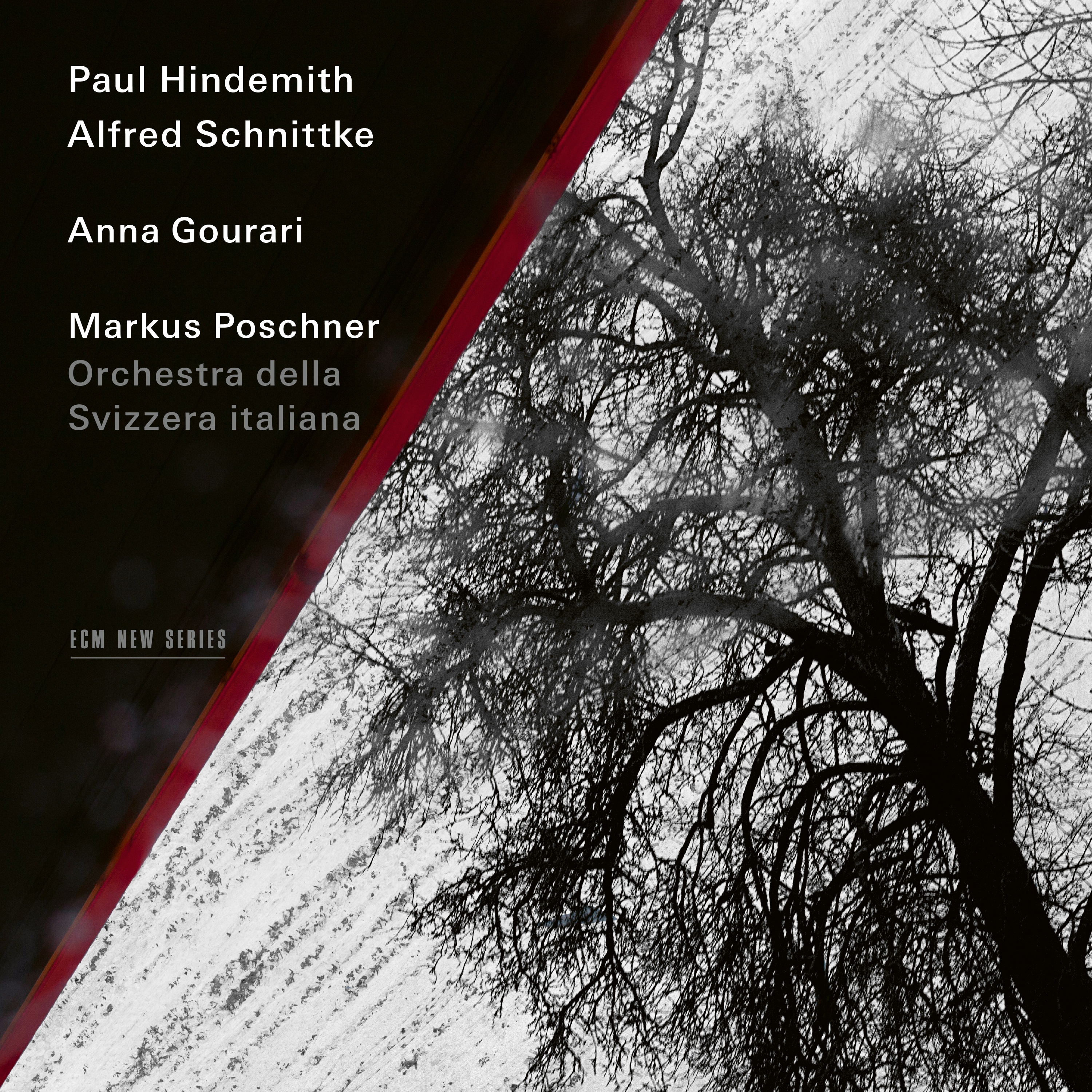
Anna Gourari: Paul Hindemith/Alfred Schnittke (ECM 2752 NS)

Anna Gourari
Paul Hindemith/Alfred Schnittke

Anna Gourari piano
Orchestra della Svizzera italiana
Markus Poschner
 conductor
Recorded December 2021, Auditorio Stelio Molo RSI, Lugano
Engineer: Wolfgang Müller (RSI)
Mixed January 2023 by Wolfgang Müller and Manfred Eicher
Cover photo: Fotini Potamia
Produced by Manfred Eicher
Release date: June 14, 2024

Since making her ECM debut with Canto Oscuro in 2012, Tatarstan-born pianist Anna Gourari has tread a distinct path. On that and two subsequent solo recitals, the breadth of her vision as a musician is matched only by her choice of repertoire, spanning the gamut from Bach and Chopin to Medtner and Kancheli. For the present program, she gives deference to two beacons whose light has often shined at her fingertips.

The Composers

In this program notes, Roman Brotbeck describes Alfred Schnittke (1934-1998) as a listener above all. As “one of the most idiosyncratic and enigmatic composers of the 20th century,” he was a resolute soul who didn’t so much search for sounds that were new but rather expressive of a higher power. In addition to his symphonies, choral works, and various configurations for orchestras and soloists, he wrote prolifically for film, seesawing throughout his life between his German roots and Russian upbringing, all the while examining a deepening Orthodox faith. As well versed in idioms as he was in subverting them, he operated like a linguist parsing morphemes to explore how they might be connected across seemingly insurmountable barriers of genre, style, and historicity. From his early days at the Moscow Conservatory to his later years in Hamburg, Germany, he was as much a polyglot as a polystylist who organically defied categorization.

“The reactions music evokes are not feelings, but they are the images, memories of feelings.” So wrote Paul Hindemith (1895-1963) in his 1952 collection of lectures, A Composer’s World. Like Schnittke, music was a field where he planted two sacred ideas for every secular. He was also a concert violinist/violist, an author, and a committed teacher. His composing was as much a reflection of extroversion as his daily life was of privacy. After studying at the Hoch Conservatory in Frankfurt, he served in the Imperial German Army, diving headlong into composing upon his return to civilian life. Fleeing the scourge of Nazism, he founded the Ankara State Conservatory at the behest of the Turkish government, thereafter arriving in America in 1940, where he taught at Yale and Cornell, among other institutions of higher learning, before living out the rest of his life in Switzerland and his native Germany. Throughout his steadfast career, he explored the tonal landscape with fortitude and creative boldness. He also greatly influenced the young Schnittke, whose side of the Venn diagram overlaps Hindemith’s by 29 years.

The Music

Schnittke’s Concerto for Piano and Strings (1979) has a special place in my heart. As a teenager, I discovered his music through the BIS recording label. This piece was featured on my favorite of the series (CD-377), where it was paired with the Concerto Grosso I of 1977 and the Concerto for Oboe, Harp, and String Orchestra of 1971. It wasn’t long before I learned of his death via my local classical radio station.

The opening piano of this gargantuan piece is an exercise not in contrasts but in constructs; the gentle stirrings morphing into giant broken triads and the ethereal entrance of strings are as cohesive as they are episodic. Over 23 minutes, this mashup of, in the composer’s words, “surrealistic shreds of sunrise from orthodox church music” and “a false burst of Prokofievian energy and a blues nightmare” succeeds with an uncanny beauty. As the orchestra attempts to engulf the piano in an almost Purcell-like wave of drama, the struggle feels as real as rain. In the end, the B-A-C-H motif emerges like a blush of red across bare skin, a comet frozen in time, a scar where the light of God shows through.

During the second half of his composing career, Hindemith became firmly entrenched in robust harmonic structures that overshadowed the expressionism of his youth even as they drew from it. In response to Hitler’s growing shadow, he wrote his opera, Mathis der Maler, in which the titular protagonist, Renaissance painter Matthias Grünewald, sought refuge in his art from the German Peasants’ War of 1524-25. During that period, Grünewald painted the Isenheim Altarpiece in Colmar, and it was this Hindemith expressed in musical form in this symphonic distillation from 1934. First is the “Angel Concert,” which takes the medieval song “Es sungen drei Engel” (Three angels were singing”) as its central motif. Its tripartite structure is just one echo of the Trinity. Like Schnittke’s own angelic concert, the music is richly varied yet utterly cohesive, if more accessible to lay ears. Next is the “Grablegung” (Entombment), which depicts the mother Mary, Mary Magdalene, and the apostle John mourning the death of their Savior. But that darkness is short-lived as the glory of Christ’s resurrection crashes into the foreground. Lastly, the “Versuchung des heiligen Antonius” (Temptation of Saint Anthony) nestles the patron saint from Padua (and contemporary of St. Francis) in a gaggle of monstrous creatures. Dissonance makes itself known, rendering the marching valiance of its unfolding all the more powerful. Brotbeck notes the significance of this movement’s subtitle (“Where were you, good Jesus, where were you? Why were you not there to heal my wounds?”) as painted into Grünewald’s portrait of Antonius: “Hindemith’s reference to this exclamation shows the autobiographical aspect of the symphony, as Antonius, who withdraws from society and is exposed to satanic temptations as a desert hermit, also reflects Hindemith’s personal situation in Nazi Germany.” Said temptations play out with churning drama.

After fleeing to the US, Hindemith came to write his ballet score, The Four Temperaments, in 1940 for George Balanchine. However, this theme and variations for piano and string orchestra never received its intended premiere, as the sinking of the Hood of Britain by the Bismarck of Germany cast a pall over composers of the latter persuasion. Nevertheless, we find another space in which politics seems even farther away. Here, we encounter a more metaphysical realm. Whereas the first variation flirts with melancholy and the fourth with jagged relief, the constellations between them blend concerto-like impulses with sonata-esque spirit. Duos, trios, and other combinations abound, each reaching for something familiar.

The Performers

Gourari approaches Schnittke with incredible drive and reflection. In a particularly dramatic middle section, she digs into the piano’s most nutrient-rich dirt, finding equilibrium even amid the drunken sway of violins struggling to maintain their own. She treats the instrument as an extension of herself, ever searching for a means to speak through its many intermediary mechanisms. From jazzy slurs to neoclassical aphorisms, medieval chants to postmodern geographies, she navigates it all with a compass that adapts to every shift of current.

The Orchestra della Svizzera italiana and conductor Markus Poschner work through the fleshly struggles of Hindemith’s Mathis der Maler with appropriate tension. They take stock of flesh and spirit equally, treating them as substances to render the compositional impulse as clay in the potter’s hands. There is a sense of having been somewhere tragic, carrying fragments of some tattered book or relic on the way to a church down to its last candle.

The Four Temperaments combines all of the above. In the second movement (first variation), Robert Kowalski’s solo violin lends a sense of mournful whimsy. Gourari is deeply in character throughout. The orchestra doesn’t act as a massive unit for which the piano is a mere decoration or accompaniment. Rather, it serves as a wellspring of material inspirations from which every key may be gathered.

Delian Quartett/Claudia Barainsky: In wachen Traume (ECM New Series 2743)

Delian Quartett
Claudia Barainsky
In wachen Traume

Claudia Barainsky soprano
Adrian Pinzaru violin
Andreas Moscho violin
Lara Albesano viola
Hendrik Blumenroth violoncello
Mikhail Timoshenko baritone
Matthias Lingenfelder second viola
Andreas Arndt second violoncello
Recorded October 2021, Abtei Marienmünster, Konzertsaal
Engineer: Friedrich Wilhelm Rödding
Cover photo: Woong Chul An
Album produced by Guido Gorna
Release date: June 21, 2024

Im wachen Traume tells an old story in new terms. The title (“In a waking dream”) references Frauenliebe und Leben, op. 42, by Robert Schumann (1810-1856), whose eight-part song cycle serves as the program’s centerpiece. This setting of eight poems by Adelbert von Chamisso (1781-1838) about a woman’s tragic fate is arranged for soprano and string quartet by late composer Aribert Reimann (1936-2024) for those performing it here—another clue to the album’s name. In 2018, while drifting off to sleep, Reimann heard the song cycle in his head with a string quartet instead of a piano. Unable to relinquish the idea, he completed the present version in under two months.

In his liner notes, violinist Andreas Moscho describes a dual theme of love and death. “None of the works selected here,” he observes, “were originally conceived for string quartet. In all of them, however, the string quartet seems to return home.” Reimann enhances the score with careful yet natural adornments, rendered telepathically by the Delian Quartett and soprano Claudia Barainsky. “Helft mir, ihr Schwestern” (Help me, my sisters) and “Süßer Freund, du blickest” (Sweet friend, you look) lend themselves so organically to the format that one can hardly imagine them any other way. Highlights include the chordal exchanges and trembling cello of “Er, der Herrlichste von allen” (He, the most wonderful of all), the pizzicato accents of “Ich kann’s nicht fassen, nicht glauben” (I cannot grasp it, believe it), and the glassy harmonics of “An meinem Herzen, an meiner Brust” (On my heart, at my breast). Barainsky emotes with a seasoned charm that feels utterly genuine. She is an embodied vocalist who understands that texts must be first spoken to be sung.

The one poem not included by Schumann is Chamisso’s ninth, “Traum der eignen Tage” (Dream of my own days), in which the wisdom of old age is offered as a gift to one whose life still lies ahead. Perhaps no more fitting connection could be made to the works by William Byrd (c. 1543-1623) and Henry Purcell (1659-1695) pillowing this Schumannic gem. While these luminaries of Renaissance and Baroque eras might seem unlikely companions, one can hardly deny that the Venn diagram of their shared interest in worldly things makes their spiritual complements stand out all the more.

As the music of Byrd, in arrangements by Stefano Pierini, demonstrates, this dichotomy is crucial. Diametric vignettes like “Sing joyfully” and “Ave verum corpus” are proof positive of the Delians’ uncanny sympathy, while “Jhon come kisse me now” (a bawdy lyric reconstructed from Byrd’s own harpsichord variations) drips with honey from Barainsky’s lips. Meanwhile, the latter’s rendering of “Out of the orient, crystal skies” shines in its telling of the nativity, while the strings evoke the humility of the manger. In the tender “Lullaby, my sweet little baby,” Barainsky is joined by baritone Mikhail Timoshenko to rebuke King Herod’s tragic decree (represented in vocalise) from the point of view of the Virgin Mary.

The two singers join forces further back in time for Purcell’s “Hear my prayer, O Lord.” With Matthias Lingenfelder and Andreas Arndt seconding on viola and cello, respectively, they create a wordless but no less ecclesiastical sense of grandeur. Preceding them are the Pavane and Chaconne, both in G minor, each an interlocking canvas of pastel and charcoal, and between them, “When I am laid in earth” from the opera Dido and Aeneas (also arranged by Pierini). Barainsky lays bare her respect for the tragedy, nevertheless finding beauty in it. And is that not how we survive?