Keith Jarrett Trio: Standards In Norway (ECM 1542)

Keith Jarrett Trio
Standards In Norway

Keith Jarrett piano
Gary Peacock bass
Jack DeJohnette drums
Recorded October 7, 1989, Konserthus, Oslo
Engineer: Jan Erik Kongshaug
Produced by Manfred Eicher

One is hard-pressed to find fault in any Keith Jarrett Trio live album, and Standards In Norway is no exception. “All Of You” starts this exquisite set on a delightful note, filling the space with the palpitations of a joyful heart. Peacock jumps right in with the first solo of the night, as nimble as always, as he is also in “Little Girl Blue.” Tender and dulcet, this softly brushed ballad reaches an organic level of storytelling that finds each musician totally committed. That being said, one can single out certain displays over others. We are astonished by DeJohnette in “Just In Time” and in “Love Is A Many-Splendored Thing” (or is it a many-splendored swing, the trio seems to ask). Again by Peacock, who gleams both sides of the cube, now fragile in “Dedicated To You,” now livening up the joint in “I Hear A Rhapsody.” And of course by Jarrett, who draws the timelessness of “Old Folks” in his subtlest rendition yet, wrapping our awe in sonic pastry and baking it to the consistency of perfect filo. “How About You?” ends the set with inescapable optimism and tumultuous applause.

Mesmerizing, the only word.

<< Edward Vesala/Sound & Fury: Nordic Gallery (ECM 1541)
>> Italian Instabile Orchestra: Skies Of Europe (ECM 1543)

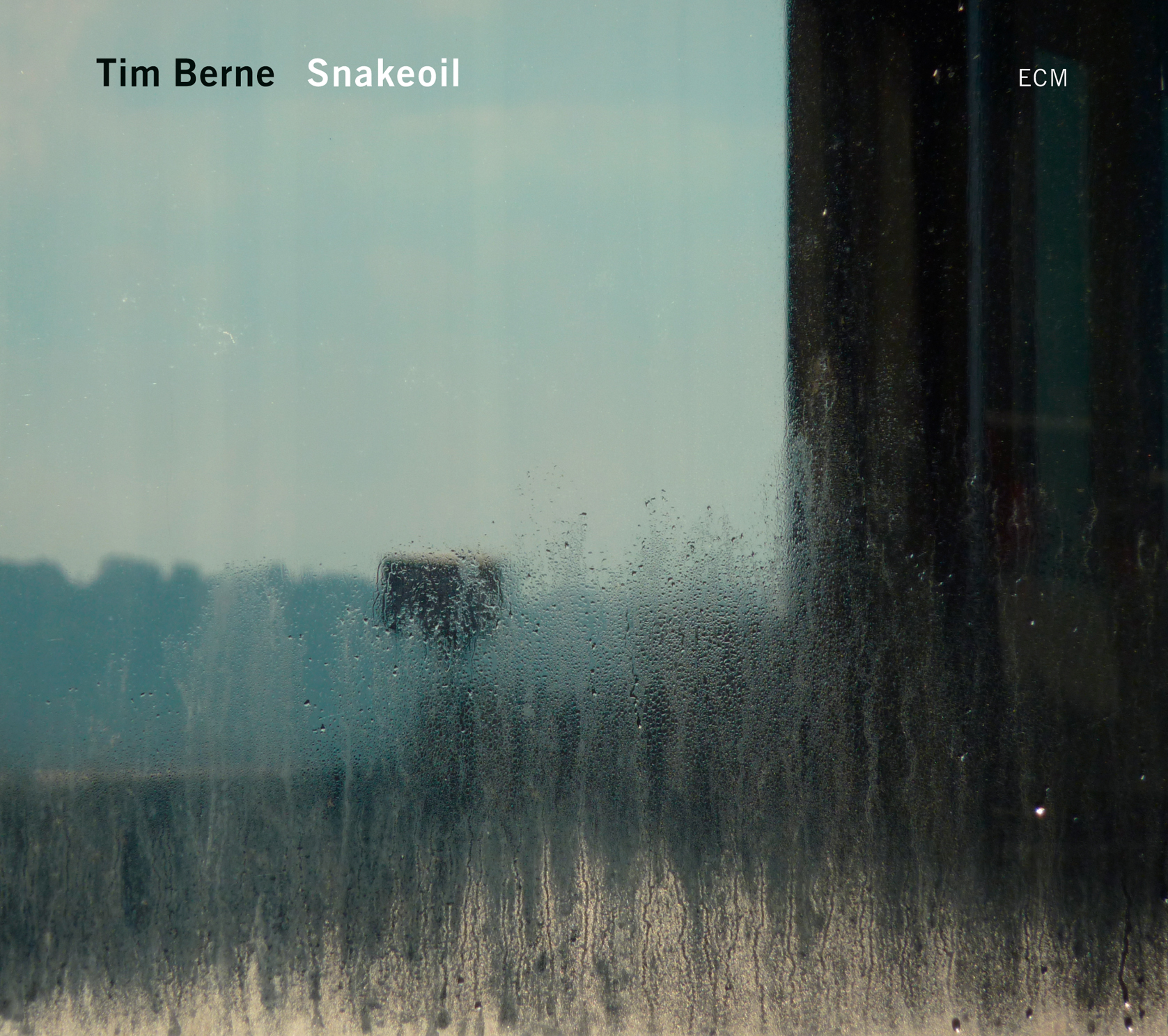
Tim Berne: Snakeoil (ECM 2234)

Tim Berne
Snakeoil

Tim Berne alto saxophone
Oscar Noriega B♭ and bass clarinets
Matt Mitchell piano
Ches Smith drums; percussion
Recorded January 10/11 at Avatar Studios, New York
Engineer: James A. Farber
Produced by Manfred Eicher

New York altoist Tim Berne makes his ECM debut as leader with an unorthodox quartet featuring clarinetist Oscar Noriega, pianist Matt Mitchell, and drummer/percussionist Ches Smith. Although he has been recording for almost as long as I’ve been alive, I’m fortunate to discover his craft in the ECM realm, where his distinctive balance of scripted and unscripted bodywork spreads far in producer Manfred Eicher’s intuitive acoustics. To be sure, the background is fascinating in and of itself, yet how much less so when pitted against the music that comes out of it.

The absence of bass in this latest group allows the development to breathe, and indeed the piano intro of “Simple City” takes in the session’s deepest breath and exhales throughout its remainder. In this music box of fitful dreams, Berne’s popping horn flows onto the scene like a gymnast’s ribbon. A shared essence of fear and ecstasy caresses every spring and key as if it were the last drop of rain to fall from a storm. We follow this drop in heavy pathos, hear it as it hits an upturned bell in a song all its own. Noriega reveals new images, interlocking with his partners in crime to form a graphic novelist’s portrait of life. Thunderous drums bubble up in lava, shooting out a pianistic steam of resolution. And all of this in the first cut? You bet.

Berne & Co. explore a range of emotional states from here on out. Starting with the vividly contemporary energy of “Scanners,” they evoke shopping malls and checkout lines, funneling into a fantastic solo from our district manager, as it were, and stowing away the bane of quotidian decisions in a dark, hidden storeroom. Each of the “Spare Parts” that follow is a potion never swallowed, touched only on the lips like wings to water. Some gorgeous crosstalk between the two reeds sets off a checkered unity with Mitchell and chain of gongs from Smith, calling like a trolley bell in the streets. There we are asked to “Yield,” spinning secrets from truths (and vice versa) and sidewinding into “Not Sure.” Despite the tactics that bring us here, the music keeps its feet above ground and head below cloud, so that by the time we get to the “Spectacle” we can bask in Mitchell’s sparkle as the group unrolls ecstatic cause like a carpet on which to shun and shiver in a final kowtow.

This is fresh, think-out-loud jazz that is understood to be itself and nothing more. It raises its tongue to the roof of its mouth, avoiding the cheek at all costs. You’ll find no title track on Snakeoil, and with good reason. It’s sincere to the core.

Samples can be found here, but approach them with caution. This is a record to be savored in its entirety.

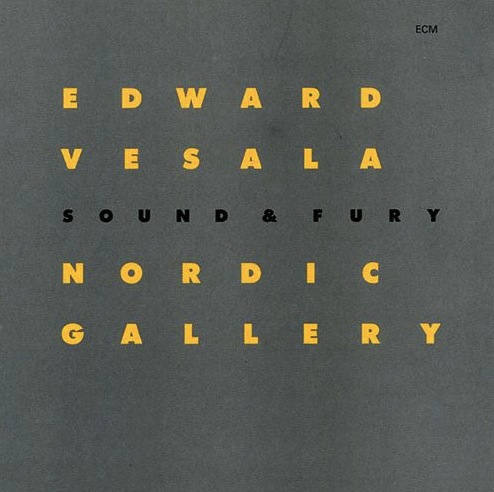
Edward Vesala/Sound & Fury: Nordic Gallery (ECM 1541)

Edward Vesala
Sound & Fury
Nordic Gallery

Jorma Tapio alto saxophone, bass and alto clarinets, bass flute
Jouni Kannisto tenor saxophone, flute
Pepa Päivinen tenor, soprano, baritone and bass saxophones, flute, alto flute, piccolo
Matti Riikonen trumpet
Iro Haarla harp, piano, keyboard
Jimi Sumen guitar
Edward Vesala drums, percussion, bass, tamboura, angklung
Petri Ikkela accordion
Pekka Sarmanto bass
Kari Linsted cello
Tapani Rinne clarinet
Recorded 1993/94 at Sound & Fury Studio, Korkeakoski, Finland
Engineer: Jimi Sumen
Mixed at Rainbow Studio, Oslo
Engineer: Jan Erik Kongshaug
Produced by Manfred Eicher and Edward Vesala

Piggybacking on 1992’s Invisible Storm, ECM maverick Edward Vesala returned with his organic collective, Sound & Fury, as our guide for Nordic Gallery. Vesala draws a thinner circle around his ensemble this time around, weaving inside it a dreamcatcher for communal freedom, as exemplified in the 11-minute “Bird In The High Room,” a menagerie of cymbals, muted horns, drums, and birdsong. The latter signals a luxuriant indulgence in the Vesala soundscape as winds and wings fall in line like a panel out of Where the Wild Things Are. Even the electric guitar whistles in its sibilant cage, avian heart unfolded. Field recordings continue to leave breadcrumb trail of “Fulflandia” on its way toward “The Quay of Meditative Future.” Harpist Iro Haarla’s veiled and omnipresent insistence turns arrival into departure as the music’s long-shadowed caravan cuts a line in the sand. The mélange of flavors in “Hadendas”—ranging from roller rink organ and winds to Vesala’s own thumping accompaniment—lifts the tent flap of this night circus to usher in the “Unexpected Guest.” Is it the listener? The critic? The dog who’s been running circles outside this entire time? No, no, and yes. Such is the nature of this narrative turn, which cracks like the vocal egg that opened Storm. Accordion and gravelly tenor trade hands in “Bluego,” a tango deconstructed and put back together in reverse before an arrangement of “Lavander Lass Blossom” wilts, upended and suspended. A series of tunes at once glittering from Haarla’s careful appliqué of intimate crafts (“Streaming Below The Times”) and darkening in twisted whimsy (“One-Two-Three Or Four-Five-Six”) presses on through shimmer and corrosion into “Flavor Lust,” thus closing shop and hanging the day’s labor out to dry.

<< Heinz Holliger: Beiseit/Alb-Chehr (ECM 1540 NS)
>> Keith Jarrett Trio: Standards In Norway (ECM 1542)

Azimuth: “How it was then…never again” (ECM 1538)

Azimuth
“How it was then…never again”

Norma Winstone vocals
John Taylor piano
Kenny Wheeler trumpet
Recorded April 1994 at Rainbow Studio, Oslo
Engineer: Jan Erik Kongshaug
Produced by Manfred Eicher

Even at rare lackluster moments, the sporadic ruminations of vocalist Norma Winstone, pianist John Taylor, and trumpeter Kenny Wheeler never fail to grow in a depth of sound and color few trios can match. Yet Azimuth, as the group came to be known, was more than a triangular configuration, but a multifaceted statement on music as shapeable material. This exhumation of twilit pasts begins in “How It Was Then,” a survey of long-forgotten cotton fields bowing to the winds of passage. Stars open and close—each an eye on the verge of tears—to the rhythm of Taylor’s string patter. Such evocative touches abound throughout the session, paving stretches of empty road in “Looking On” and stirring up dizzying articulations in “Whirlpool.” As on previous Azimuth outings, Wheeler remains the voice of reason, foiling Winstone’s apparitional poetics with solid chromatics. He is the keystone of “Stango” (Stanko + tango?) and glows in his multitracked rendering of “How Deep Is The Ocean.” For her part, Winstone goes wordless in foggy scenes like “Full Circle,” but always with the tender signatures of Taylor’s plush commentary close at hand. Bobo Stenson’s “Mindiatyr” drops another nod to the ECM matrix, building careful reminiscence and holding us as the mind would cradle a memory. Because it feels so much like an ending, the fibers of “Wintersweet” that follow weave a cloak of epilogue and reprise Winstone’s gorgeous lyrics at the fore.

How it was then… is a genealogy of emotions and places, a tale of winter blooms that hook their stamen onto errant sunrays and uproot themselves into weightless life. Though not as essential as earlier work, it waits all the same with bated breath and open arms.

<< Bley/Parker/Phillips: Time Will Tell (ECM 1537)
>> Prague Chamber Choir: Dvořák/Janáček/Eben (ECM 1539 NS)

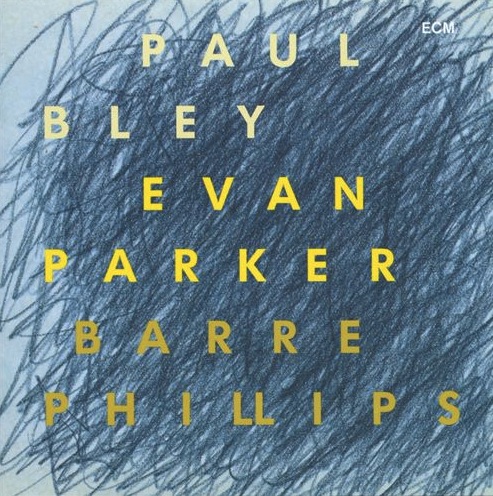
Bley/Parker/Phillips: Time Will Tell (ECM 1537)

Time Will Tell

Paul Bley piano
Evan Parker tenor and soprano saxophones
Barre Phillips double-bass
Recorded January 1994 at Rainbow Studio, Oslo
Engineer: Jan Erik Kongshaug
Produced by Steve Lake

That pianist Paul Bley, reedman Evan Parker, and bassist Barre Phillips had never played as a group before flipping the coin of Time Will Tell matters little. Whether you call heads or tails, you win. The fact that Phillips had played with the two who hadn’t emerges through the sensitive approach he elicits from each. By the same token, one cannot simply say that he tempers what we might be expecting from two powerhouses of the free improv universe. Rather, he spotlights the tenderness already flowing within. The 17.5-minute “Poetic Justice” is proof positive: a meander through darkening trees that breeds not solemnity but a fitful stirring of forest creatures. Parker plays the role of itinerant blues musician mumbling in his sleep. Beyond his chosen paths, the directions are unlimited, their inks varicolored, their maps heavily creased. The trio’s aesthetic borders on beat poetry, pops and whispers taking the place of requisite snaps. With a twang and bend, even a Ravelian shade in the piano, the music soars “Above The Tree Line.” Parker’s soprano, lilting through starlight with immaculate care, forms the top of a pyramid grounded in Phillips’s sands. In this chamber within a chamber, the footsteps of the spontaneous way echo in complex reinforcement. “You Will, Oscar, You Will” is another origami pact of inspiration in which one can almost hear the memory of Paul Motian wanting to join. “Sprung” guides soprano down an ant line of activity, circularly breathing while festooned from galaxies pregnant with impending doom—all making for a sort of agitation that is strangely moving. “No Questions” brings more loveliness into the equation, blowing like a soft curtain through the sunlit room of Andrew Wyeth’s Chambered Nautilus, where only yearning may catch itself from time to time in the reflection of a burnished bedpost. “Vine Laces” and “Clawback” are both wondrous bursts from Parker, who finds respective company with Phillips in one and Bley in the other. “Marsh Tides” promises a smooth jazz number, but instead breaks its fall with measured insight, as honest as it is unplanned, and brings us into “Instance,” another excursion of extended technique between Parker and Phillips, the latter drawing strings of rusted light through “Burlesque.” Shades of late-night happenings end in an abrupt inhalation without repose.

Something grandly intimate is taking place here, for while there may not be much to hold on to in this sound-world of fleeting statements, we are left with an overwhelming amount to mull over. The title of this album is therefore an appropriate one, for only time will tell whether or not its sounds will find a secure place in your listening.

<< Lena Willemark/Ale Möller: Nordan (ECM 1536)
>> Azimuth: “How it was then…never again” (ECM 1538)

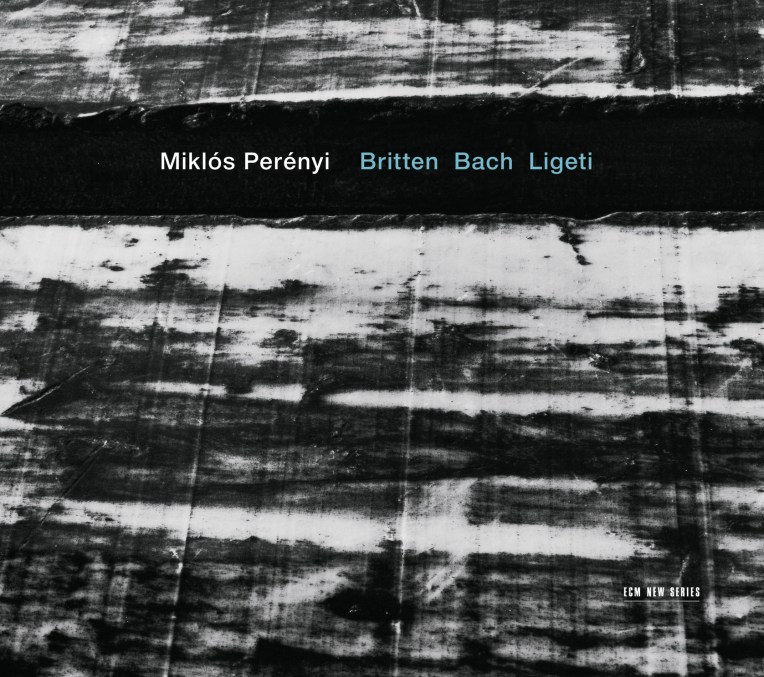
Miklós Perényi: Britten/Bach/Ligeti (ECM New Series 2152)

Miklós Perényi
Britten/Bach/Ligeti

Miklós Perényi violoncello
Recorded November 2009, Auditorio Radiotelevisione svizzera, Lugano
Engineer: Stephan Schellmann
Executive producer: Manfred Eicher

I first encountered Benjamin Britten’s opus 87, the 1971 Third Suite for solo cello, as played by Steven Isserlis, and in the towering company, no less, of John Tavener’s The Protecting Veil. Whereas there it came across as an unexpected, if enchanting, epilogue to the Virgin Classics release in question, here it opens an unquestionably cohesive program at the horsehairs of Hungarian cellist Miklós Perényi. Heard previously on ECM for a survey with András Schiff of Beethoven’s music for cello and piano, here he offers a distillation, a community of symbols rich in affect and unity. As Paul Griffiths notes, Perényi “is playing the cello to present music by Britten, Bach and Ligeti, and at the same time playing music by Britten, Back and Ligeti to present the cello.” Such is the circle of life—a circle that smiles and winks as much as it keens and weeps—that guides his craft and abets full disclosure of Britten’s abounding curiosity in the first of many shorter movements, its pizzicato mantra whispering beneath gravid suspensions from the bow. But there the solemnity ends, as the cello leaps from its pitted stasis and drapes itself like a ribbon from a branch swaying in the wind of the third movement. The fourth gives the most obvious shades of Bach, dancing through a jagged fifth and eighth, and swirling into the distended groans of the ninth.

In light—or is it dark?—of this flowing palindrome, the D-major Sixth Suite of J. S. Bach unfolds in an architecture as naked as Perenyi’s instrument. If its Prélude were any more immaculate in its affirmations, then its balance would crumble. The final note, here drawn without vibrato in pure and throated song, leaves us poised heavenward for the Allemande’s seesawing descent. A will to live pervades, seeming to clutch at earthly things as might a pauper’s hands to trinkets and baubles. The Sarabande is a thing of beauty (one that puts me in mind of Ingmar Bergman’s film of the same name) and passes us through the mimetic Gavottes before double stops galore surround us in the final Gigue.

György Ligeti’s Sonata (1948/53) expresses, like much of his chamber music, a world of ideas in relatively microscopic terms. Although a touch of humor nuances the title (this “Sonata” only has two movements), the goings on feel like darkness upon darkness. Alternating between lute-like strums and mournful bowings, the first half lends brightness to the second, which at its fulcrum returns to the fingers, spinning lyric from prisms and breath.

Perényi is that rare cellist who plays Bach as if for the first time while approaching less performed works like Britten’s as if they’ve always been here. It is the solitary pursuit of melody and time through an instrument corporeal, of which the cello is infant, elder, and every age between.


Lena Willemark & Ale Möller: Nordan (ECM 1536)

Lena Willemark
Ale Möller
Nordan

Ale Möller mandola, natural flutes, folk-harp, shawm, cows-horn, hammered dulcimer, accordion
Lena Willemark vocal, fiddle
Palle Danielsson double-bass
Mats Edén drone-fiddle, kantele
Per Gudmundson fiddle, Swedish bagpipes
Tina Johansson percussion
Jonas Knutsson saxophone, percussion
Björn Tollin percussion
Recorded December 1993 at Rainbow Studio, Oslo
Engineer: Jan Erik Kongshaug
Produced by Manfred Eicher

Medieval Swedish folklore and balladry rise again in Nordan, the first ECM collaboration between songstress Lena Willemark and multitalented instrumentalist Ale Möller. While the latter brings out gorgeous sounds from mandola (i.e., alto mandolin), kantele (plucked zither), hammered dulcimer, and folk-harp, among others, the former lends the session’s most powerful instrument—her earthly voice—to an ensemble of bass (courtesy of regular sessioner Palle Danielsson), drone-fiddle, Swedish bagpipes, saxophones, and percussion. That voice is the central figure of nearly every painting in this gallery, tending to crisp plains in search of traditions and lives buried. It spurs the calls of “Trilo,” an incantation unto the wispy barbs of sentiment that abound therefrom, and calls from more distant pastures in “Gullharpan” and through the watery harp strains of “Mannelig”—these but a few of the many songs one might single out here for their remarkable sense of space and atmosphere. Willemark also proves her prowess on the fiddle for two Polskas, the rustic metalwork of “Hornlåt,” and the jig-like “Jemsken.” Möller has the last word with “Drömspår,” an epilogue for accordion that leads us into less turbulent waters than those depicted on the album’s cover.

The music may sound exotic on paper, but when we hear it we already seem to know Willemark’s stories in intimate detail. We have felt these places before, even if the dirt has long since washed from our feet and been replaced by an alternate future. Like anything in nature, the art of these musicians is never still, a string that vibrates and never dies. In the absence of detailed translations, we can still taste the minerals of which every song is composed and come to know their shapes by heart. This is also made possible by the album’s acoustics and engineering, both stunning. An ECM benchmark and easily within the label’s Top 5 on the folk side of things. This is music measured in hand spans, not footprints.

<< Giya Kancheli: Exil (ECM 1535 NS)
>> Bley/Parker/Phillips: Time Will Tell (ECM 1537)

John Surman Quartet: Stranger Than Fiction (ECM 1534)

John Surman Quartet
Stranger Than Fiction

John Surman soprano and baritone saxophones, alto and bass clarinets
John Taylor piano
Chris Laurence double-bass
John Marshall drums
Recorded December 1993 at Rainbow Studio, Oslo
Engineer: Jan Erik Kongshaug
Produced by Manfred Eicher

Reedist John Surman has laid much of his ECM path with the polished stones of his solo work. Whatever the setting, he is one who listens to his surroundings, be they atmospheric or human. In the latter vein comes “Canticle With Response,” which opens this wintry quartet date with pianist John Taylor, bassist Chris Laurence, and drummer John Marshall. Its sparse, porous mood is a leitmotif on Stranger Than Fiction. Yet rather than something to which the musicians return, it is something that returns to them, a ghost that finds movement where there is stillness. Like a sage’s hair in twilight, the group’s sound is gray yet aglow, worn to the bone by reflection in “A Distant Spring.” Surman sets his soprano to flight in the watercolors of “Tess,” for which Taylor splashes stories, each a step in river water. Those gray strands continue to bend and stretch, winding around the memorable theme of “Promising Horizons.” This haunting afterimage of Beethoven’s Ode to Joy bows to distillations of baritone and bass.

In this forest, dark with age, one can only travel “Across The Bridge,” guided by Surman’s prowess on the bass clarinet. His improvisations on said unwieldy instrument glisten despite the shadows of which they are composed. “Moonshine Dancer” welcomes us to a nocturnal circus, where performer and spectator number two in the night, their hands and laughter for each other alone, while “Running Sands” flows, like its namesake, at the touch of wind and water. A pliant solo from Laurence lifts us into the clouds, each topped like a sundae with delicious baritone caramel. Everything above funnels into the final “Triptych.” Like a fiber optic cable, it flows through the earth, hidden and dormant until the flick of a creative switch sets its veins thrumming with information—only here, you need nothing more than your ears to cup the light into oblivion.

<< Gavin Bryars: Vita Nova (ECM 1533 NS)
>> Giya Kancheli: Exil (ECM 1535 NS)

Jarrett/Peacock/Motian: At The Deer Head Inn (ECM 1531)

Keith Jarrett
Gary Peacock
Paul Motian
At The Deer Head Inn

Keith Jarrett piano
Gary Peacock bass
Paul Motian drums
Recorded September 16, 1992 at the Deer Head Inn
Engineer: Kent Heckman
Produced by Bill Goodwin

By the fall of 1992, Keith Jarrett had already spent 30 years as a notable jazz performer. What better way to celebrate than to return to this record’s eponymous venue in his birthplace of Allentown, Pennsylvania for a once-in-a-lifetime gig? Switching out his usual go-to, Jack DeJohnette, for Paul Motian (no stranger to Jarrett, with whom he’d worked in the 70s), the trio works wonders with the new colors the latter provides. Peacock and Jarrett are both verbose players who manage never to step on each other’s toes. With Motian backing them, they take longer pauses for reflection, listening to the wind as it blows through their leaves. His presence and panache are as palpable as the prevalence of alliterations in this sentence, bringing an irresistible brushed beat to the squint-eyed groove of Jaki Byard’s “Chandra.” That hook keeps us sharp to improvisatory angle and inspires some youthful banter from Peacock, who feeds off those drums like Christmas. Motian excels further in the balance of fire and ice that bubble throughout “You And The Night And The Music.” The band also dips into Miles Davis-era waters with glowing renditions of “Solar” and “Bye Bye Blackbird.” Atop quilted commentaries from the man at the kit, Jarrett’s unpacking of these timeless melodies is the cherry on the sundae. Sweet toppings also abound in the laid-back “Basin Street Blues,” in which, with closed eyes and an open heart, Peacock finds the perfect resolution for Jarrett’s uncontainable fire. All three musicians up the ante in “You Don’t Know What Love Is.” Jarrett negotiates its changes like breathing while Peacock and Motian speak in vocabularies just beyond the radar of feasibility. Before we know it, we’re caught up in a joyous surge and relaxation. By ending with “It’s Easy To Remember,” the trio saves its finest translucent china for last.

The value of ECM as a live archive is proven beyond the shadow of a doubt in this recording. This is where it’s at.

<< Händel: Suites for Keyboard (ECM 1530 NS)
>> Peter Erskine Trio: Time Being (ECM 1532)