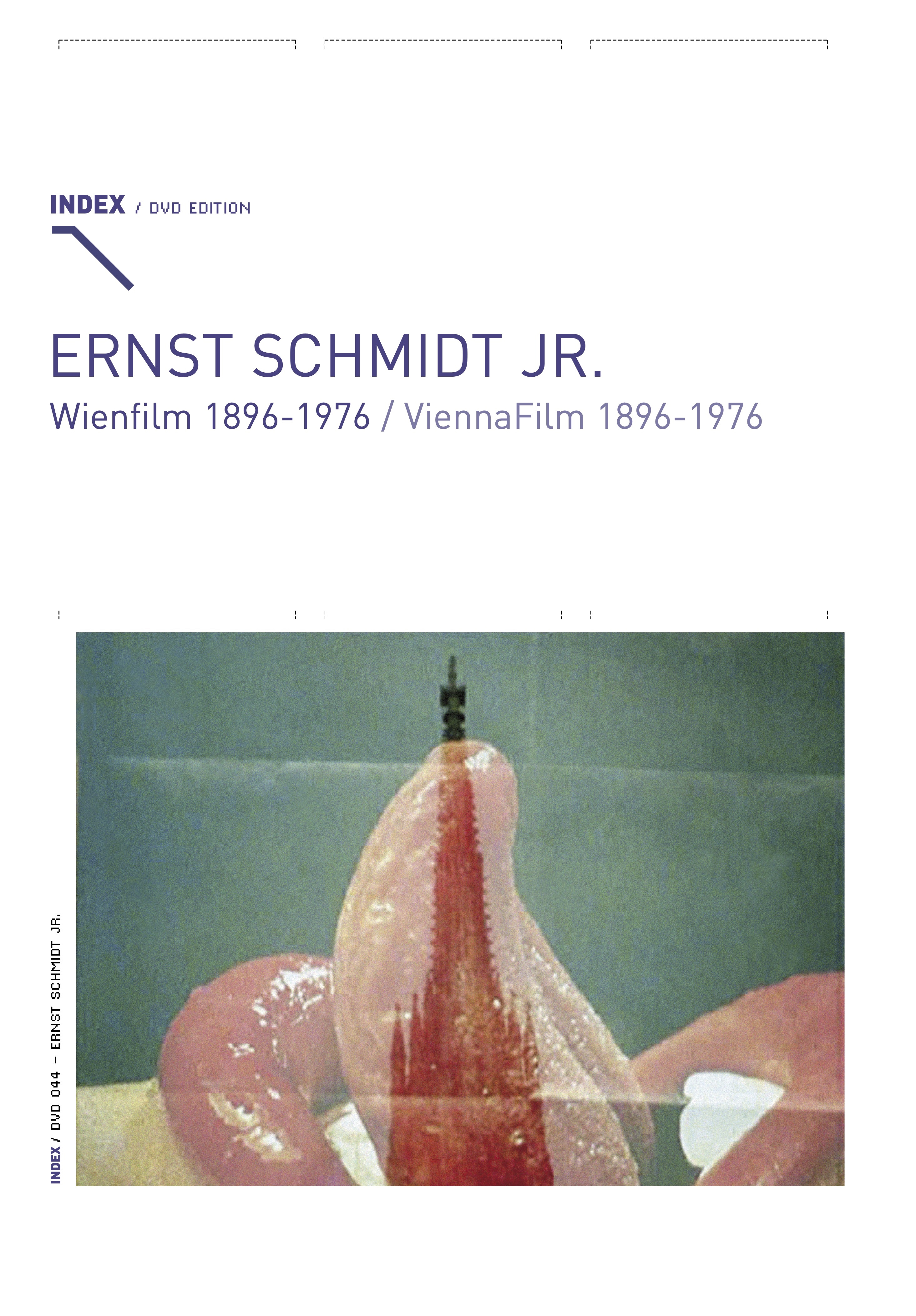
Ernst Schmidt Jr.: Wienfilm 1896-1976 (ViennaFilm 1896-1976) (INDEX 044)

Ernst Schmidt Jr.’s Wienfilm 1896-1976 opens its subject the way a cadaver is splayed on a coroner’s table. It does not search for a beating heart but for the conditions that make Vienna both itself and something estranged from itself. Montage is now a diagnostic tool, less a method of assembling meaning than of measuring how it buckles under the weight of mortality. The filmmaker himself calls it “a collage of diverse materials aimed at conveying a distanced image of Vienna,” and this distance is the guiding principle: no seduction, no civic hagiography, only a long, unsettling look at a city that contradicts its own self-image at every turn. The result is almost two hours of historical consciousness unfurling at the pace of a slow-motion sea change.
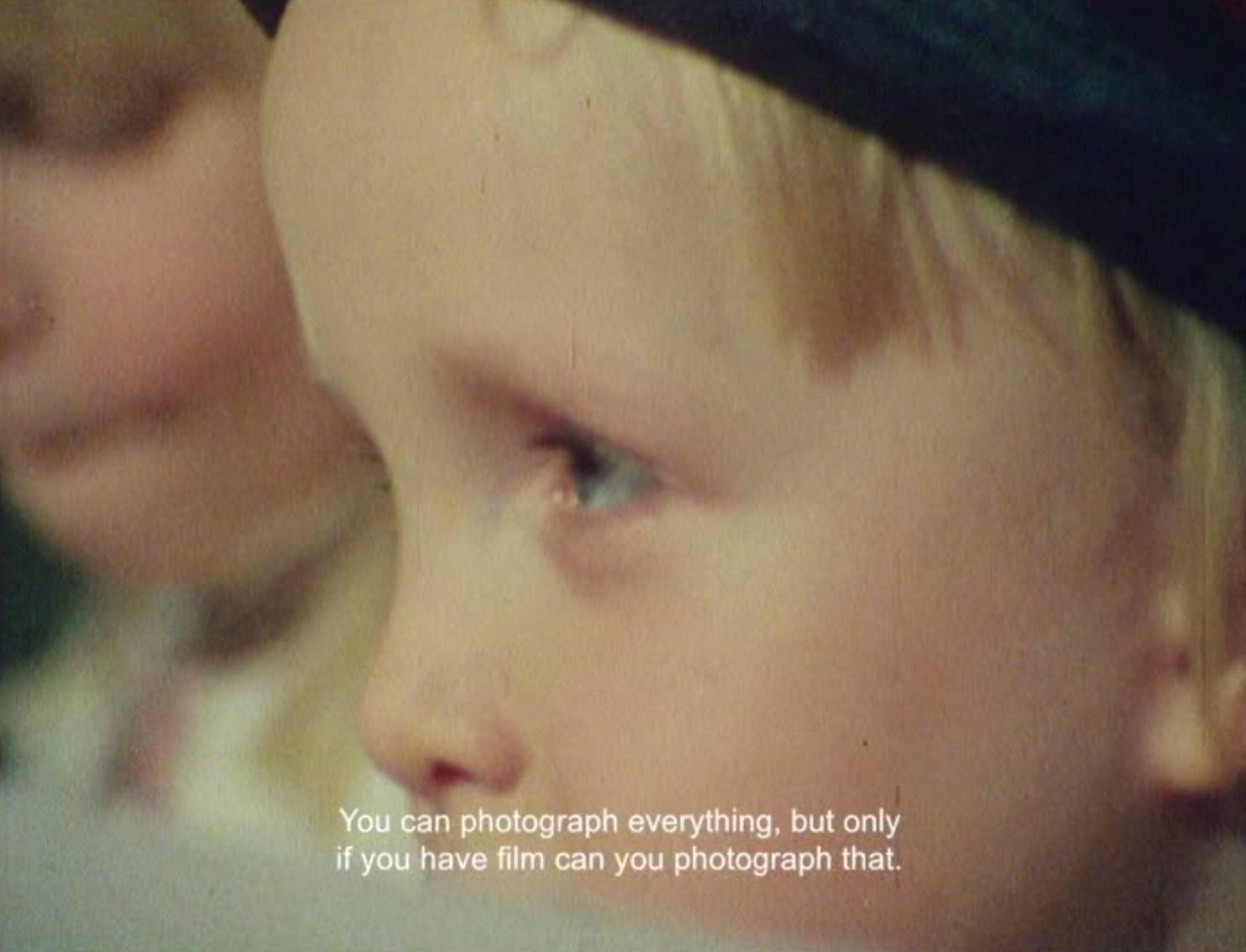
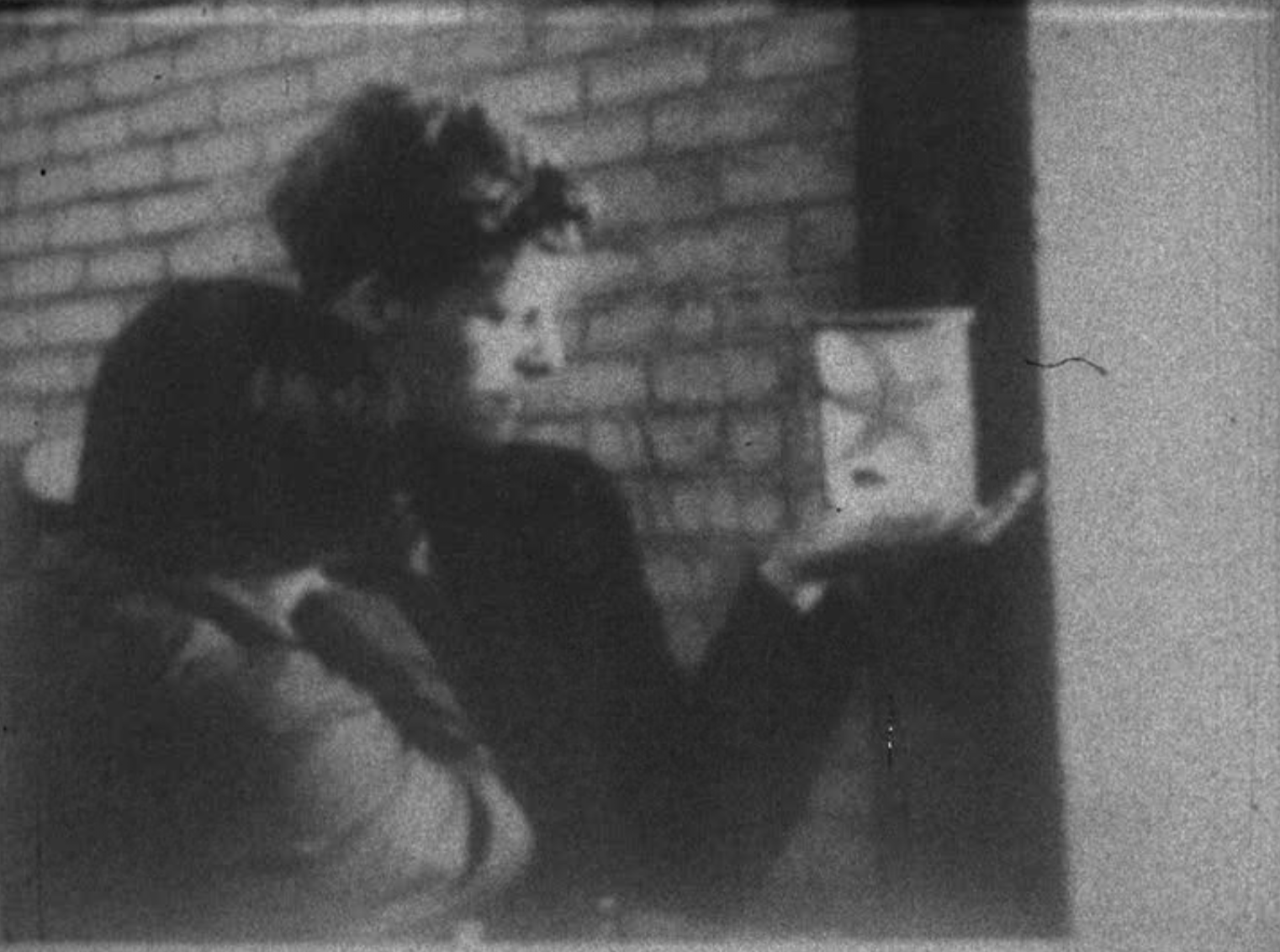
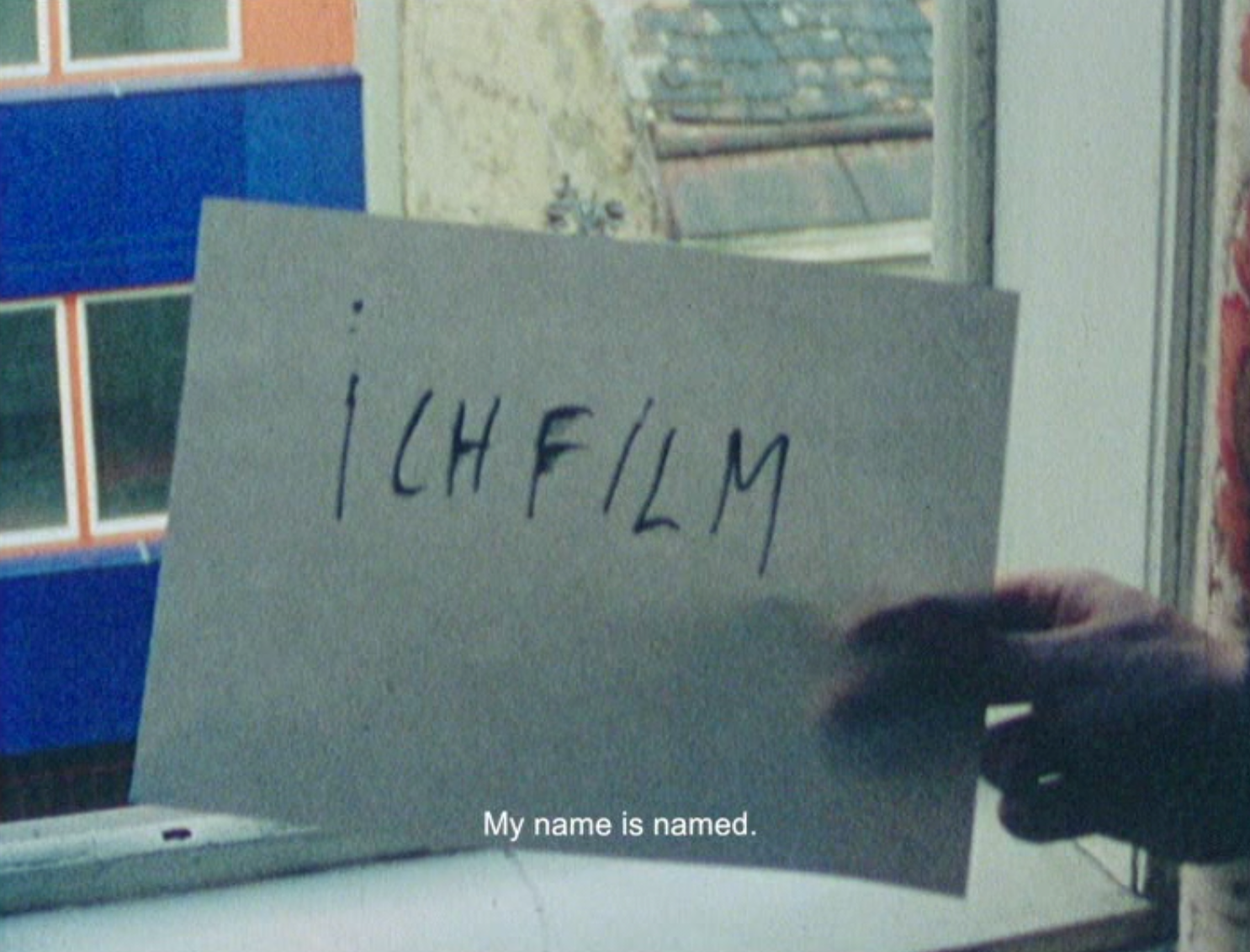
The project begins innocently enough. Two little girls draw and talk about photography, as if the film were briefly pausing to consider the act of looking before descending into its century-long excavation. Soon, Schmidt Jr. sends his camera wandering into the streets to locate the letters of his name. Thus, identity is something to be scavenged rather than inherited, pulled from signage, storefronts, and neglected typography. The artist reconstructs himself through urban residue, establishing an implicit kinship between detritus and personal (re)formation. Lumière footage from 1896 reminds us that Vienna’s filmed life began in the same mood of wonder that swept Europe. Yet here the vintage images register as a faint alarm, the first entries in an archive that will come to record both innocence and catastrophe, albeit in disproportionate amounts.
A montage of women walking follows, accompanied by a syrupy song about femininity. The sequence drifts uneasily between admiration and objectification, as if the soundtrack were trying to smooth over the very wounds it denies. And that’s when a Nazi parade cuts into frame, 1938 charging forth without commentary or warning. The simple adjacency of images does the work of showing how the bootmarks of the past can never be lifted from the present’s pavement. Peter Weibel appears interviewing passersby about who “owns” Vienna, a question that exposes civic pride as well as civic vacancy. Abandoned buildings and shuttered shops stand as ruins. Joe Berger’s remark, “You can be Viennese all over the world…just not in Vienna,” functions as a darkly comic proposition about belonging, exile, and the contradictory nature of borders.
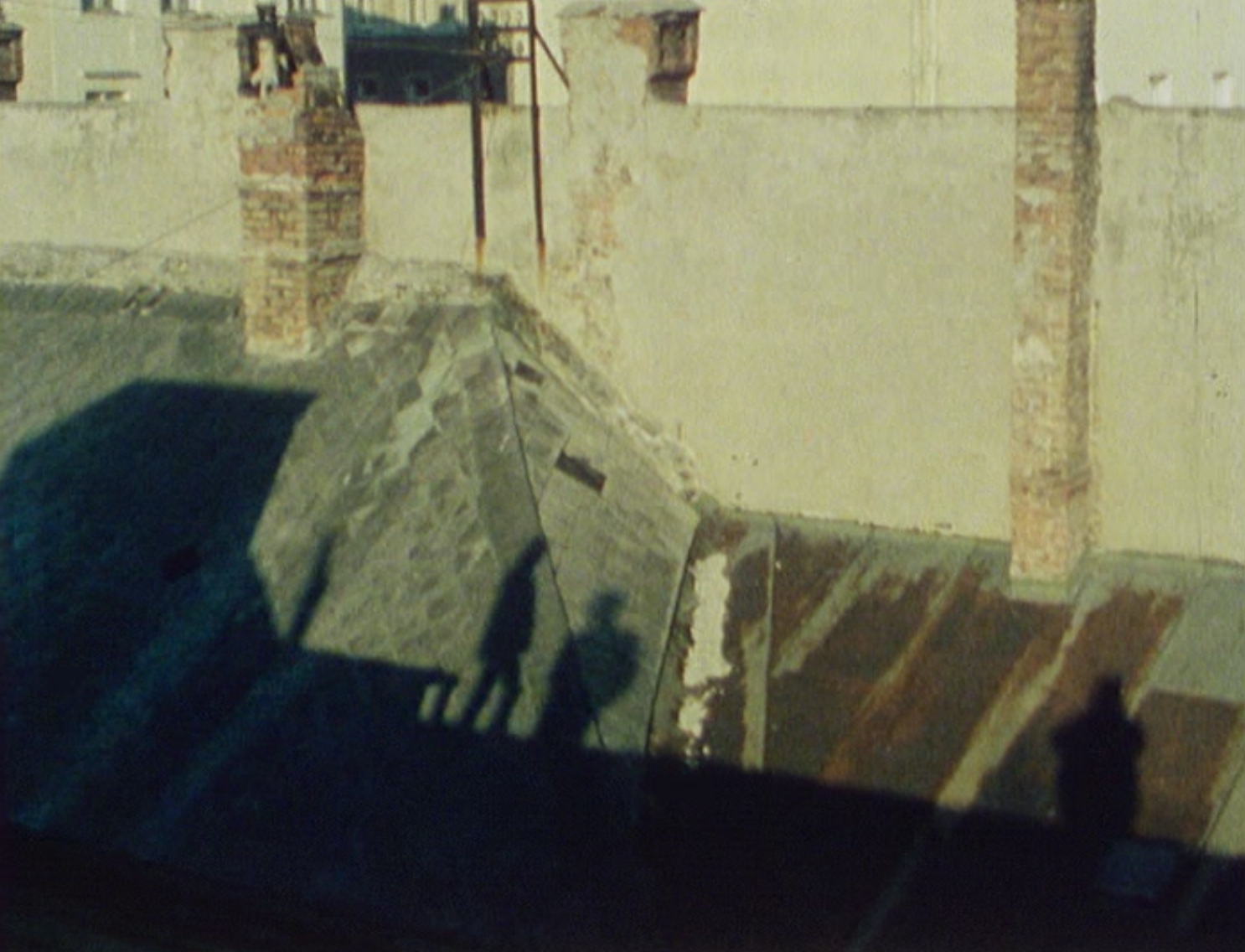
When Chaplin arrives, mass adoration floods the screen. The crowds reveal a collective fervor that cinema alone seems able to provoke. Ecstatic public unity collides with the kitschy cheer of Wienerlieder, whose supposed affection grows sinister when paired with footage of marching columns, rubble, or muted political assemblies. Such sentimentality takes on a narcotic charge, a way of drowning out the psychic noise of its unresolved history. Freud drifts through as a spectral reference, less a person than a reminder that Vienna’s self-knowledge has always been bound to its neuroses. Dogmatic speeches rise and fall, promising clarity yet delivering only the musical rest of rhetoric. Actionists erupt briefly, warping from within. Ordinary people cross streets, ride trams, and enter buildings, each carrying a share of a saga that exceeds them.
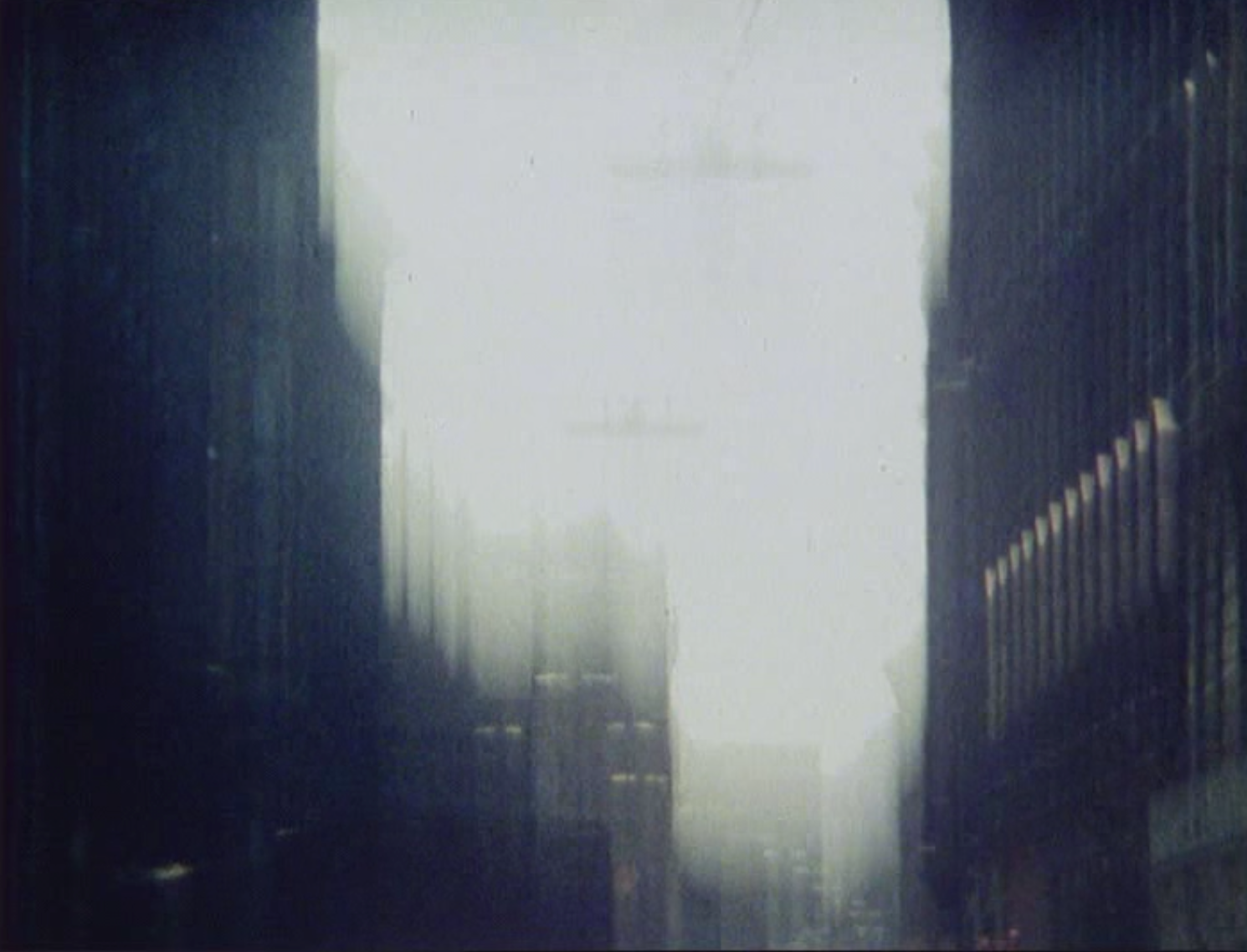
As Wienfilm 1896-1976 nears its end, it no longer behaves like a documentary. It becomes a séance of stone. Schmidt Jr. summons imperial afterimages, post-war silences, and self-mythologizing refrains, letting their intercourse give way to an apparition built from incompatible truths. What remains is a portrait assembled from fragments that resist composition, vibrating with the discomfort of witnessing too much yet understanding too little. A city is not something to be summarized but confronted, piece by tactile piece, in all of its charm and violence, until a composite sketch is revealed that no one can fully bear to recognize as their own.
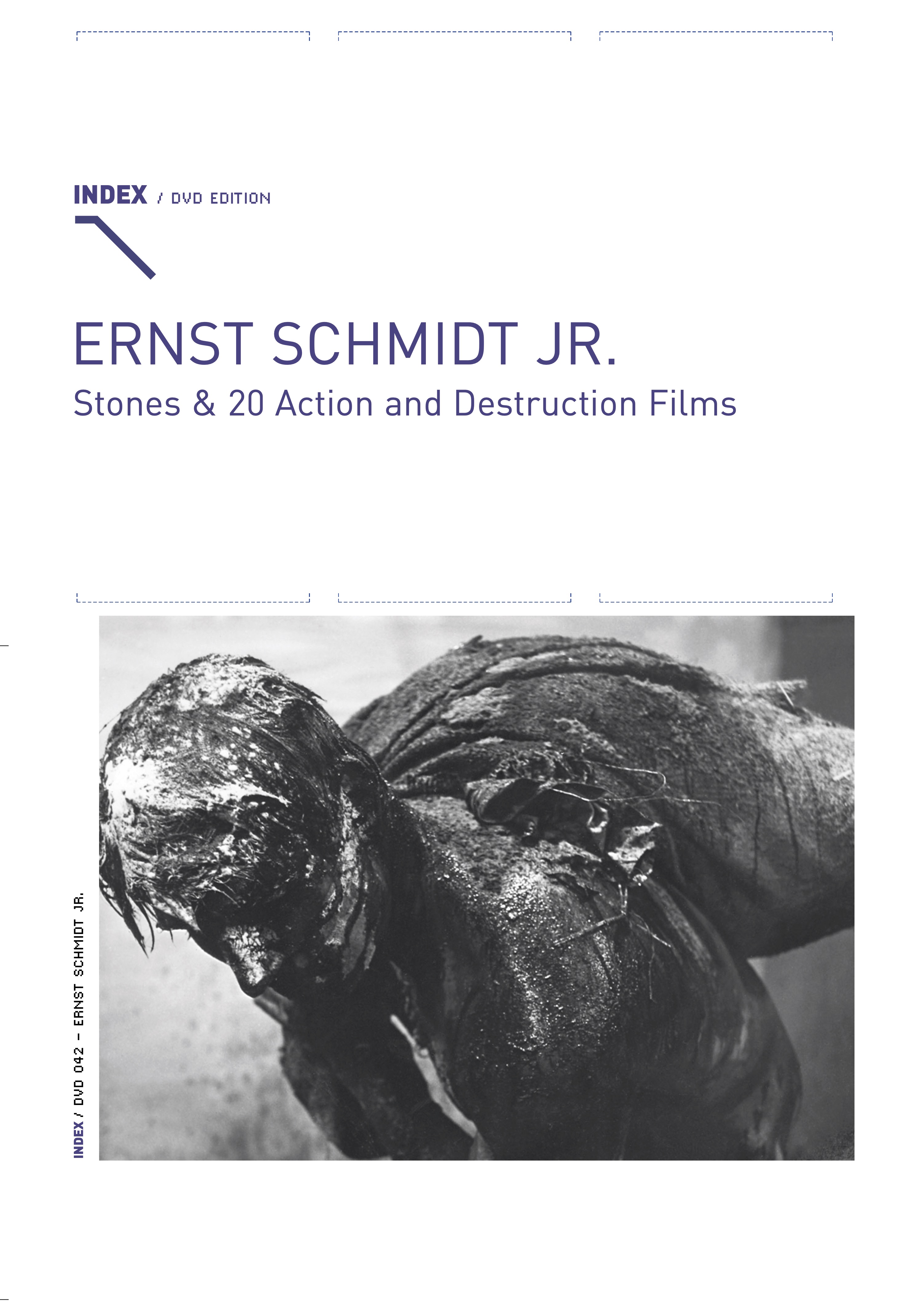
Ernst Schmidt Jr.: Stones & 20 Action and Destruction Films (INDEX 042)

Ernst Schmidt Jr. belongs to the incendiary second wave of the Austrian avant-garde that Peter Tscherkassky, in his liner notes, associates with transgression. By the same token, the force of Schmidt Jr.’s creations does not stem from crossing limits so much as eroding that very stubborn notion. His images resist symbolism at every turn. Rocks, scraps of emulsion, a curtain’s twitch, faces caught between expressions, even the jitter of spliced frames: all insist on their own existence before they signify anything at all. They become the raw elements of a practice that stitches itself together and tears itself apart in the same motion, revealing a paradox that has been the lifeblood of cinema since its inception. We try to liken filmmaking to cutting or pasting, to analogize its ruptures and assemblages to familiar actions, yet nothing quite matches the peculiar self-becoming of the strip itself. Celluloid behaves as if it possesses impulses of its own, and Schmidt Jr. is one of the few who ever allowed it to behave accordingly.

Steine

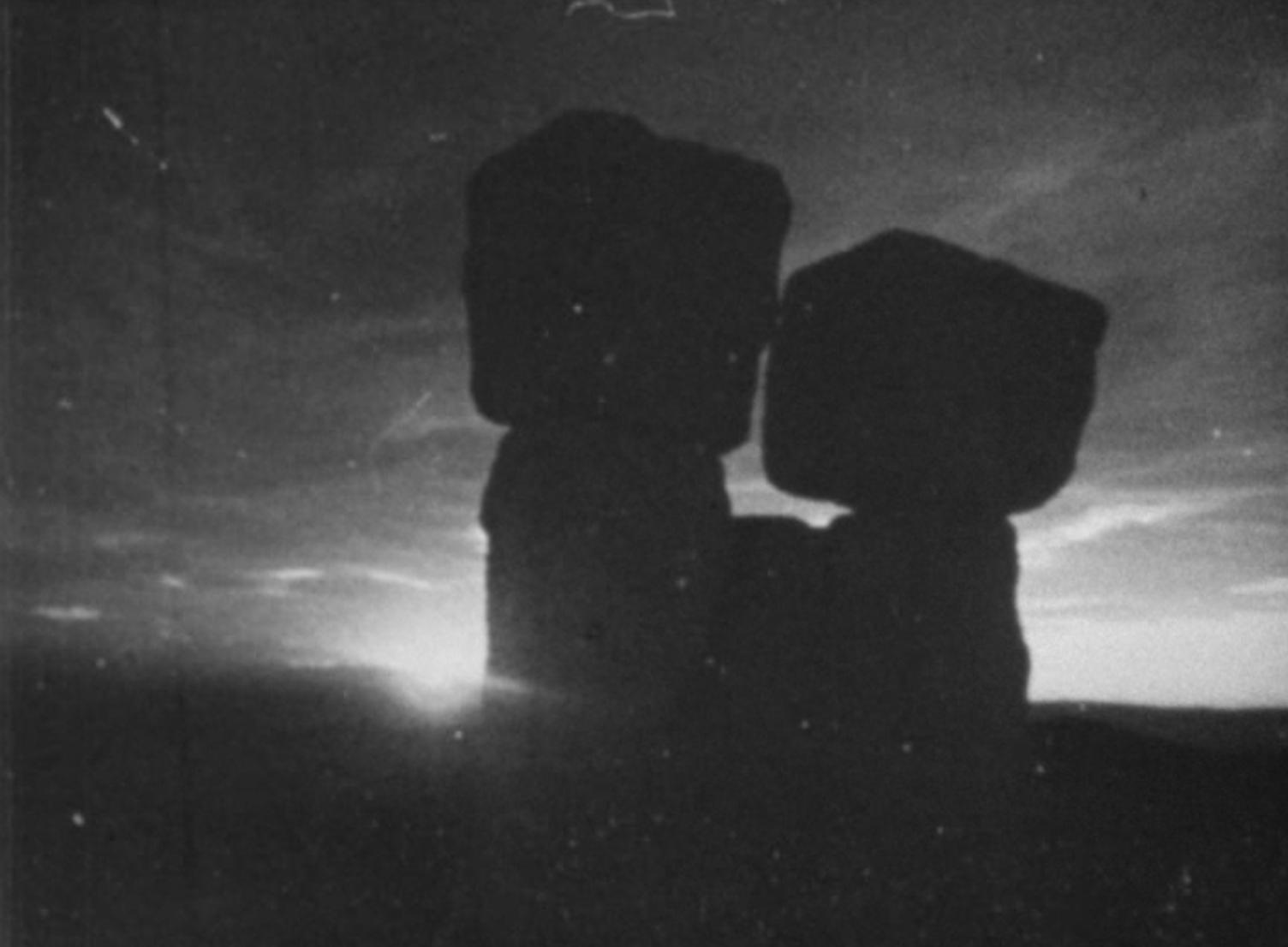
This sensibility is clear in Steine (Stones, 1964/65), ostensibly a documentary on sculptors in St. Margarethen but more accurately a study of the negotiation between labor and matter. The jazz score by Dieter Glawischnig and Ewald Oberleitner syncs with the staccato rhythms of chisels, while texts by Gunter Falk and Harald Seuter counterbalance the bemused commentary of passersby. A visitor admits that anyone capable of making something from stone “can’t be normal,” seemingly unaware that shaping stone is not domination over but a surrender to a material whose history predates the sculptor. Schmidt Jr.’s camera lunges, drifts, and waits until the quarry becomes a primordial studio where sculpture resembles an act of listening. Superimpositions remind us that stone contains layers and sediments, ghosts of earlier states in a syncopated duet between imagination and the ancestral depth of matter.

Schnippschnapp

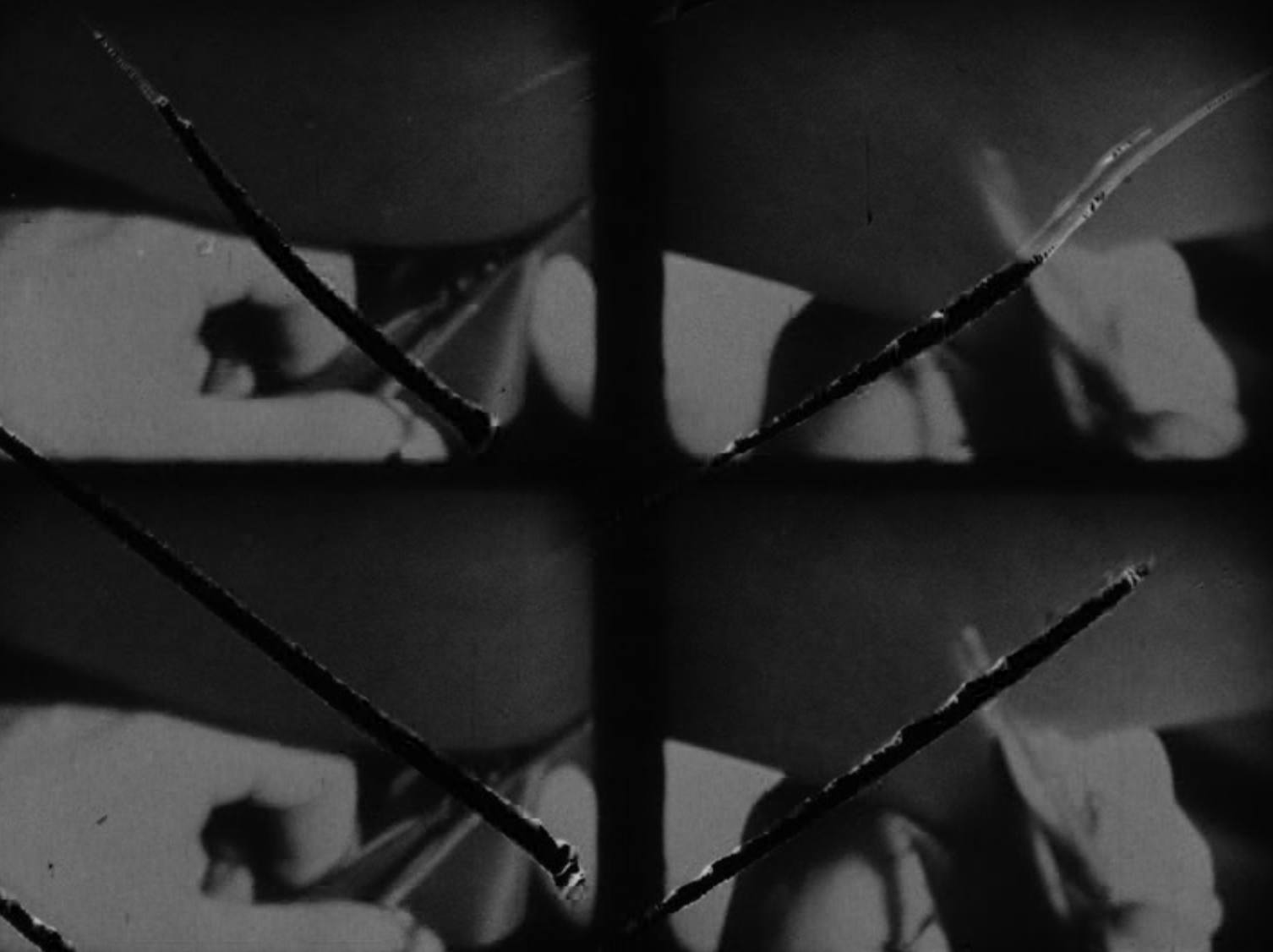
This principle expands in the 20 Aktions- und Destruktionsfilme 1965-1979 (20 Action and Destruction Films, 1965–1979), which treat attention, dismantling, and impulse as structural devices. Ja/Nein (Yes/No, 1968) positions a theater curtain as protagonist, converting a transitional object into an enigmatic presence that behaves independently of spectatorship. Weiß (White, 1968) reduces cinema to flickering circles that hang in midair as portals leading nowhere. Prost (Cheers, 1968) invites participation by challenging viewers to shout “Cheers!” when a line touches the frame, only to reveal how futile synchronized response becomes when the apparatus refuses cooperation. In Rotweißrot (Red-white-red, 1967), the Austrian flag is rendered as pure abstraction, perhaps the most honest way to depict an emblem too often leveraged for false unity. Schnippschnapp (Snip, 1968), made with Peter Weibel, uses scissors to slice the reel until the strip begins consuming itself, culminating in the absurd reduction of paper to its smallest fragment.

Eine Subgeschichte des Films

Reduction continues in Filmisches Alphabet (Film Alphabet, 1971), which compresses the entire medium into twenty-six frames, each a letter that becomes a cipher of visual genesis. Burgtheater (Imperial Theatre, 1970) drains sketches from a commemorative book of their theatrical grandeur, leaving them to hover between documentation and exorcism. Gesammelt von Wendy (Collected by Wendy, 1978/79) quietly records the debris of a party—photographs, stray video fragments, traces of interaction—until social life appears as an archaeology of residual presence. Yet Eine Subgeschichte des Films (A Subhistory of Film, 1974) may be Schmidt Jr.’s most spectral construction. Drawing images from the 1300-page encyclopedia of the same name by Schmidt Jr. and Hans Scheugl, it arranges them as an apparition. Moving through its catalogue feels like wandering a museum where history refuses to settle.

Gertrude Stein…

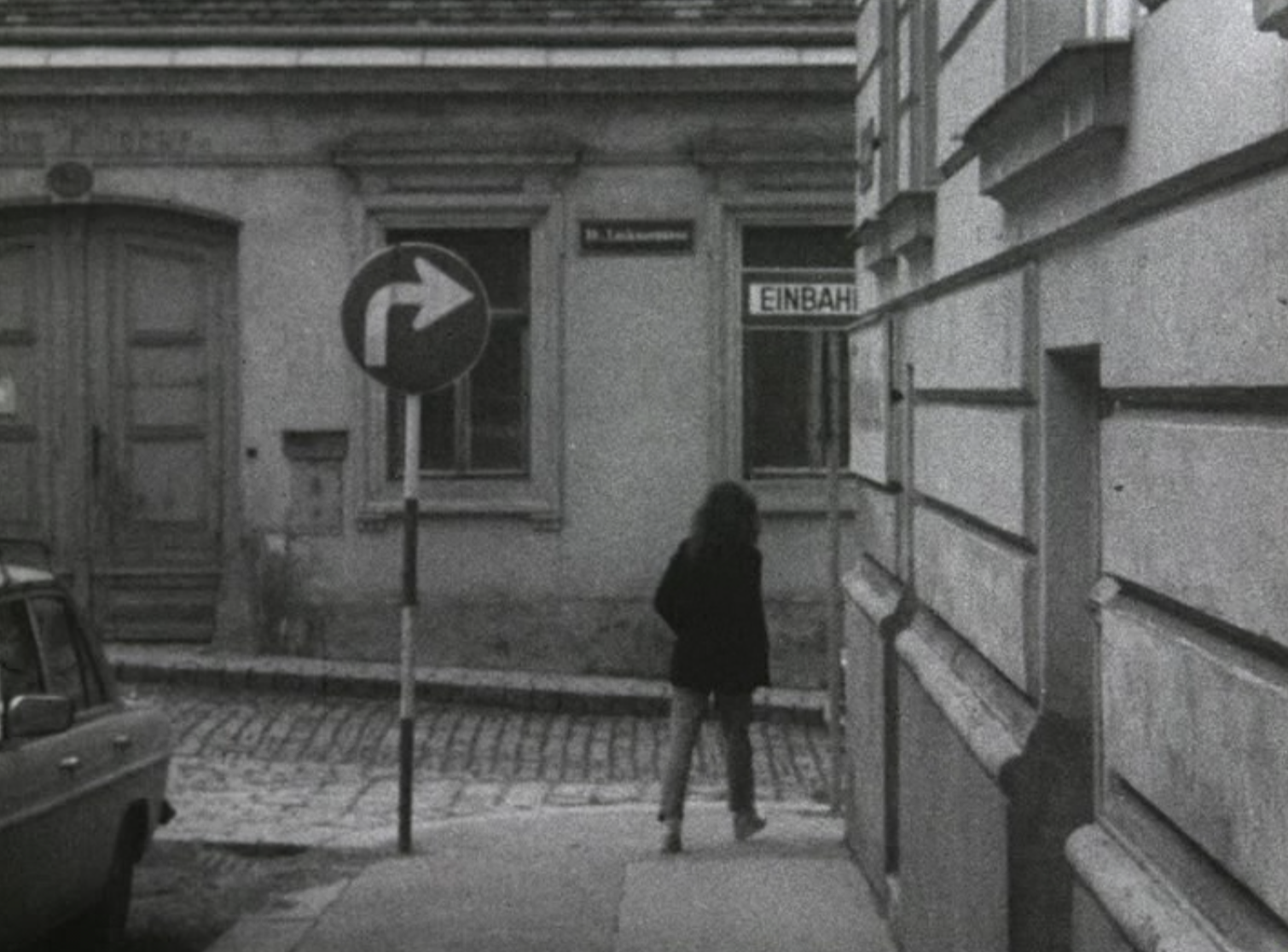
His portrait works sustain this sense of volatility. Denkakt (The Act of Thinking, 1968) captures Peter Weibel thinking aloud, treating thought itself as an unstable field. Mein Bergräbnis ein Erlebnis (My Funeral an Experience, 1977) and 12 Uhr Mittags (High Noon, 1977) modulate tempo and expression until faces mutate into shifting topographies. The Merry Widow (1977) converts expression into something uncanny and grotesque. Sara Suranyi’s features flutter into new registers, showing how emotion never coalesces into a fixed state. Gertrude Stein hätte Chaplin gerne in einem Film gesehn, in dem dieser nichts anderes zu tun hätte, als eine Straße entlang und dann um eine Ecke zu gehen, darauf die nächste Ecke zu umwandern und so weiter von Ecke zu Ecke (Gertrude Stein would have liked to have seen Chaplin in a film where he would have nothing other to do than walk on the street and then go around a corner, and then around the next corner, etc. from corner to corner, 1979) literalizes Stein’s fascination with repetitive motion as a woman walks corner to corner until a staircase interrupts her circuit.

Einszweidrei

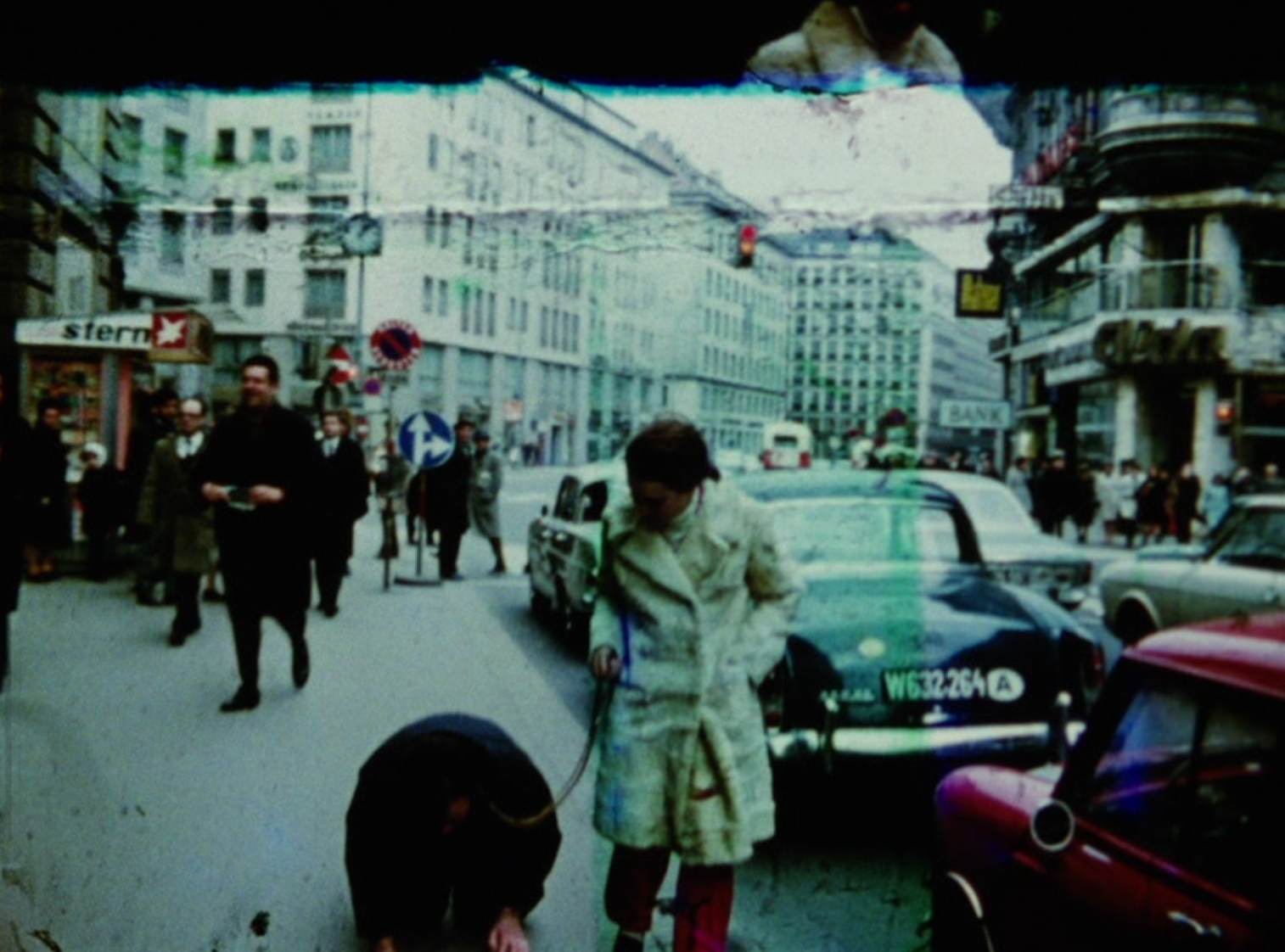
Schmidt Jr.’s more extreme explorations, including N (1978), which documents Hermann Nitsch’s actions, and Kunst & Revolution (Art & Revolution, 1968), plunge into spaces where ritual, violence, and provocation collide. The latter film features a group Action by Otto Mühl, Günter Brus, Peter Weibel, and Oswald Wiener, plus a disguised stranger for good measure. Their taboo interactions, performed on an Austrian national flag on June 7, 1968, at the University of Vienna, would lead to three arrests and the ousting of the Viennese Actions from the city. Bodybuilding (1965/66) and Einszweidrei (Onetwothree, 1965-68) inhabit the Actionist milieu with both fascination and critique, letting the body become instrument and message while Dixieland music and dissonant voices form a carnival of collapse. (VALIE EXPORT walking Weibel like a dog is an especially memorable highlight.) These are not documents but exposures, the camera registering cultural nerve endings without mediation.

Filmreste

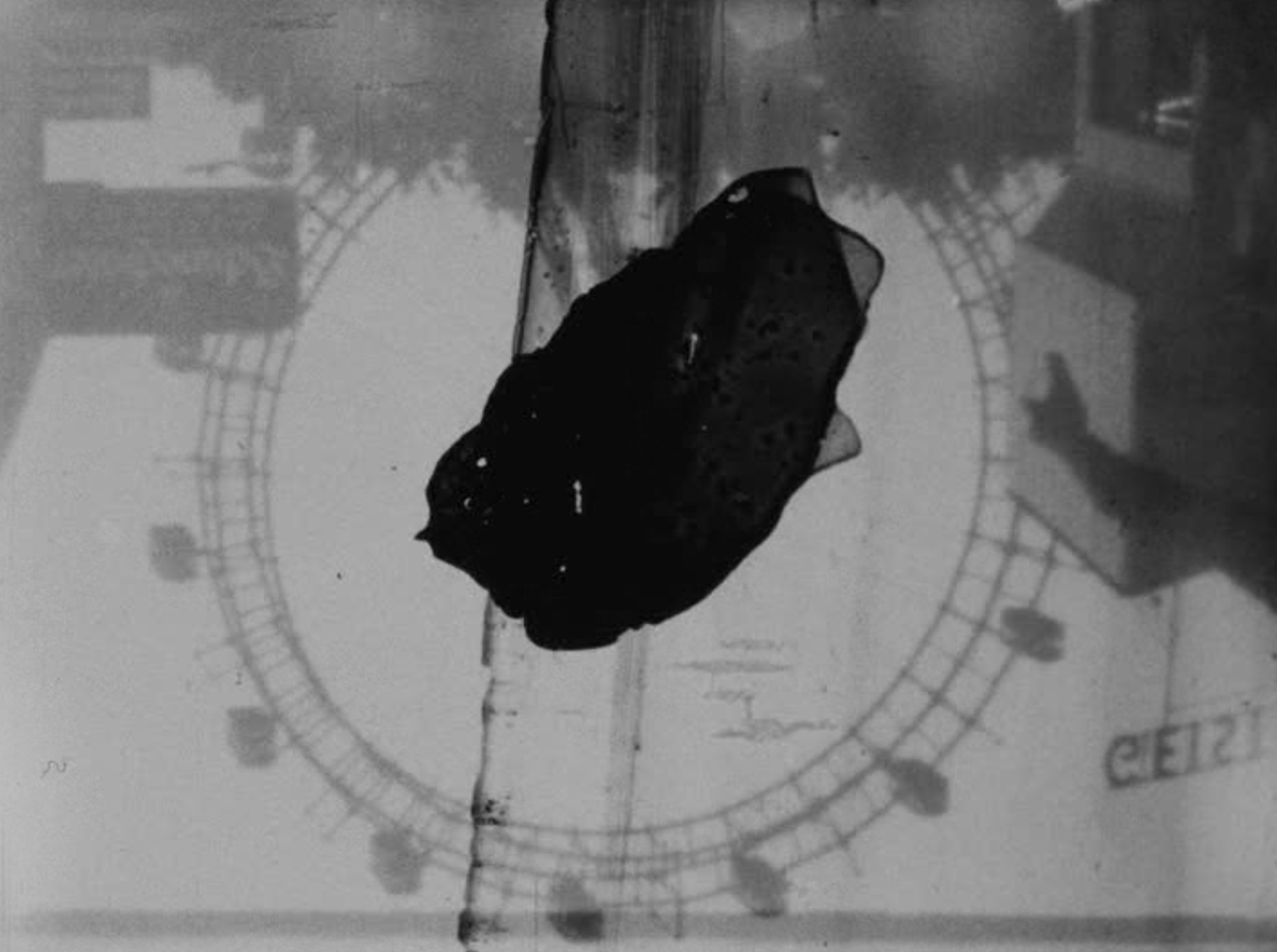
In Filmreste (Film Scraps, 1966), his philosophy condenses into a single gesture: scraps arranged into a mosaic where smears, gospel phrases, bumper cars, lovers, city fragments, and bursts of color create a vitality that feels mischievous and irreducible. With this film, says Tscherkassky, “Schmidt Jr. reduces the base and emulsion of film to its status as material, film as a physical object.” Farbfilm (Color Film, 1967) names colors over blinking fields of hue yet never finds “blue,” as if the spectrum itself were resisting resolution.

Across these works, Schmidt Jr. remains focused on matter, vibration, interruption, and impulse. Representation defers to sheer presence. Accidents, ruptures, and material insistence generate the energy that drives the images. In treating the medium at its most elemental, he confirms a deep avant-garde intuition: that cinema is not a window onto the world but a substance within it and that its vitality is inseparable from the matter of which it is composed.