Manfred Neuwirth arrived at filmmaking through the pathways of journalism and history, both of which left traces in his later work. The instinct to observe, to contextualize, to listen for what a moment is trying to say—all of this shaped his approach long before he cofounded Medienwerkstatt Wien and began building distinct(ive) cinematic worlds. His films feel archival without becoming documents, poetic without drifting into abstraction, grounded in reality yet loosened from the demands of storytelling. If many filmmakers construct coherent worlds through narrative, Neuwirth positions himself in spaces of duration, fragments, and the patient choreography of looking.
This sensibility took on a crystalline form in three works he made from the late 1980s to the end of the 1990s. Together, they form a loose trilogy of observational meditations. Each is composed of equal-length shots that sink into darkness before another image emerges. Such pacing slows the world until time feels elastic, asking the viewer to find the thread that binds one image to the next, to become witness, traveler, and editor all at once.
In Tibetische Erinnerungen (Tibetan Recollections), made between 1988 and 1995, thirty-five shots create a rhythm that resembles respiration. One scene exhales into blackness, then inhales into a new image. What holds the work together is not continuity but gravity, a quiet pull generated by the tension between the political and the everyday. A jolting prologue shows Chinese soldiers arresting Tibetan monks. This violence reverberates throughout the rest of the film in subtle yet persistent ways. Later, a singer appears on television wearing clothing reminiscent of the soldiers’ uniforms. Thus, Neuwirth’s aesthetic gathers force by refusing to forget what the prologue makes visible.
Much of the film settles into a sensory archive of Tibetan daily life. A man on a motorcycle. Butter tea boiling in a kettle on the street. A beer bottle left on a restaurant table. A water pump at work. A taxi weaving through a city that never quite reveals its full shape. These visuals lapse into a state of drift while the soundtrack remains in real time, a disjuncture that heightens awareness and holds the viewer in a kind of suspended attention. Moments turn to recollections, recollections to emotional geography.
Regarding Japan through the lens of manga train, completed in 1998, the method remains consistent, even if the atmosphere transforms. Thirty equal-length shots fade into one another, slowed to a similar tempo, yet the world here feels unsettled, shimmering with impressions that never quite anchor themselves. Rain gathers on concrete steps. Gambling halls erupt in cacophony. Street festivals pulse with color. Vending machines glow under the rain. Temples, train stations, sumo bouts, conveyor-belt sushi, late-night television: each vignette arrives as though remembered by someone unsure where the memory belongs.
In this gentle ache of dislocation, the soundscape becomes essential: footsteps, scattered conversations, the hum of machines, and rainfall that seems to stitch the transitions together. Recurring shots from train windows form a metaphor for both travel and estrangement. At night, the viewer shares the sensation of being suspended between places. The experience feels less like tourism and more like listening to a world that keeps its secrets close to its beating heart.
Turning to Lower Austria in magic hour in 1999, Neuwirth brings this method to the terrain of his own past. The equal-length shots and slow fades remain, but the tone softens into one of homecoming. He lingers on windows, doorways, and narrow rooms, creating thresholds between interior and exterior spaces that echo his own movement between belonging and observation. Lightning flickers across the countryside. A child dips a foot into a wading pool. Towns glow with sparse night lights. Soccer games unfold on fields marked by long familiarity. Forest paths, local celebrations, snowfall, music, farming, industry: everything is filtered through an intimacy that feels newly discovered.
Darkness becomes its own character. Some scenes lie on the edge of visibility, as the viewer first hears what will later be revealed to the eye. Rain appears again and again, threading like a million needles with its patient fall. If the earlier films bear the solitude of a traveler confronting the unknown, this one offers the stillness of someone returning to a once-familiar landscape with the eyes of another.
A DVD bonus track, Barkhor Round, recorded in Lhasa in 1994, amplifies a core element that runs through the trilogy: Neuwirth’s deep attunement to sound. Created as an audioplay rather than a film, it crystallizes his belief that listening is a way of entering space without possessing it. The footsteps, chants, wind, and commerce of the Barkhor pilgrimage circuit spiral around the listener with such precision that the path becomes tactile. It is a heartfelt attempt to hold the world without claiming it, to dwell within sound and image long enough to feel their inherent dignity.
Across these works, Neuwirth builds not stories but temporal architectures. The equal-length shots grant each moment the same duration and, by extension, the same value. What unites Tibet, Japan, and Lower Austria is not comparison or exoticism but a shared vulnerability. All three reveal themselves as unfinished compositions. Neuwirth avoids explanation, instead inviting the viewer to witness the difficulty of encountering a culture without consuming it.
At a time when social media compresses the human experience with bite-sized certainty, this trilogy allows us to remain in the tension of what is not fully known, without the fear of missing out. To let unfamiliarity teach attention. To look without grasping. To listen without insisting on philosophy.
One leaves these films with no answers, only a heightened attunement. Every culture, every landscape, every fleeting moment carries a luminosity that appears only when the eye is willing to slow down. Neuwirth’s cinema creates the conditions for that retrograde, revealing thresholds that might otherwise be missed. Fragile, shifting, and often radiant, they live on in the spaces left behind, happy enough to avoid our gaze altogether.
Brigitte Huck describes Lisl Ponger as “an artist for whom discourse is not just another fashionable word but a necessity,” and the claim feels almost modest. For Ponger, discourse is not a frame placed around the work. It is the current running beneath it, the carbon dioxide emerging from its lungs. Her practice understands politics not as subject matter but as a condition of vision itself. She examines the edges of perception, the fugitive traces that cling to bodies and landscapes, and the borders where identity dissolves and reassembles. These liminal spaces form the terrain on which her films ambulate.
Ponger began as a photographer, trained in art school and working in proximity to the Vienna Actionists. She documented the performances of Otto Mühl and Günter Brus when, as Huck observes, “women were the girlfriends, models, and in the worst cases, cool action material.” Yet even here, her camera questioned the dynamic unfolding before it. She was never a passive witness to male extremity but an early investigator of spectatorship, already alert to the power games embedded in the act of looking. Her lens asked: Who sees, and who is seen? Who has the authority to cut an image, and what kinds of harm can that maiming conceal?
That line of inquiry gained new momentum when she picked up a Super 8 camera on a 1974 trip through South America. The shift to film felt less like a change of medium and more like an opening into another temporal dimension. Travel became both a physical journey and a metaphor for crossing narrative thresholds. Movement turned into a form of knowledge. By the 1990s, she had begun to braid documentary practice with found footage, reworking her own archive and that of strangers until new patterns of politics and memory emerged. Through this process, a principle took root: these images resist the softness of nostalgia. They are not claimed as memory. They are constructed from real lives but never mistaken for personal recollection. They insist on remaining critical fictions.
This ethic shapes the drifting, tidal structure of Passagen, her 1996 film on the tourist gaze and the vast migrations of the 20th century. Rather than treating these subjects separately, Ponger reveals how tourism and emigration mirror one another, each defined by a transactional relationship to movement. The film follows journeys traced in circular arcs, almost like the lines of skin folded and refolded across generations. New York rises again and again on the horizon, imagined long before its skyline is ever seen. Those who crossed the ocean remember the hunger of arrival and the wages that barely justified the risk. Ponger avoids the lure of spectacle and instead allows calm narration to float over distant footage. The effect is meditative, yet within this quietude, something electric happens. Children return the gaze of the camera without hesitation. Their unguarded looking complicates the adults’ stories and suggests that migration is not simply a matter of the past. It passes forward, carried in the physiognomy of those who inherit it.
A similar tension shapes déjà vu, completed in 1999, where Ponger shifts toward the archaeological mode that would define so much of her later practice. She finds two abandoned canisters of home movies at a flea market, the filmed life of a married couple whose travels glow with the bright, unconscious arrogance of Western tourism. From these fragments, she builds a sharp and layered critique of exoticization. The film begins in darkness with the sound of a crowd and voices speaking in overlapping languages. Their recollections of travel circle around wonder, sentimentality, and the slippery paternalism that so often surfaces in encounters with cultural difference. These voices settle over images of rituals and landscapes that once thrilled the original filmmakers. Yet again, children appear, looking into the lens with a directness that cuts through the haze of jaded projection. Within this confrontation, Ponger locates the harline cracks of desire, authenticity, and the wish to touch a world without being changed by it.
The gaze shifts once more in Phantom Fremdes Wien, her 2004 ethnographic exploration of Vienna’s hidden pluralities. Filmed between 1991 and 1992, it records gatherings across the city: a Philippine church service, a Swedish festival of light, celebrations that arise wherever diasporic communities stitch a sense of home into unfamiliar streets. Ponger narrates with a measured, observational tone that carries the neutrality of an archive yet feels edged with the intimacy of a journal. Her approach lends the work a dual register. It is less an account of events and more a record of her encounter with them, an unfolding dialogue between seeing and understanding. Here, Vienna reveals itself not as a unified city but as an intricate constellation of worlds, each with its own history of labor, spirituality, and migration. Ponger quietly asks what renders someone “foreign” and who gets to decide.
Across these works, her images demonstrate that no picture is inert. Every frame is charged with the systems that shaped it: economies, colonial histories, gendered roles, the machinery of tourism, the patterns of migration that define our global present. Ponger does not merely portray these structures. She reconfigures them, attentive to the way vision itself is conditioned by power. Even her use of found footage carries an ethical undertow. She does not fold these images into her own life story. She keeps them open to critique, refusing to smooth them into sentiment or personal memory.
What her films reveal is a central paradox of modernity. We are always in motion, traveling across borders, screens, and narratives, yet we rarely understand the histories that make such movement possible. Ponger’s cinema encourages us to feel that complexity and to sense how each act of looking enters into a contract with the visible and the invisible. Looking can be acknowledgment one moment, erasure the next. To travel is to step into layered histories that cannot be consumed without consequence.
Her most radical gesture may be the quietest one. The children who return the gaze do not perform. They do not offer their images for use. They encounter the camera without the filters of ideology or expectation. In those brief exchanges, she suggests a way of seeing that refuses dominance, capable of unlearning what it has been taught and allowing the world to remain foreign without turning it into an object.
In such non-invasive hands, the camera acts as a vessel of ethical attention, moving through passages that have never been static. It listens to the stories carried in those movements and offers them not as trophies but as invitations to witness how the world is continually remade in the friction between looking and being seen.
Constanze Ruhm occupies a singular position at the intersection of moving images and digital architecture. Although often described as an installation artist, her video works from 1999 to 2004 reveal an aesthetic shaped less by physical materials and more by the elastic, spectral environments of cinematic memory. She creates new “scripts” for technological gestures, treating pre-existing films not as monuments to be preserved but as material to be metabolized, stripped back, and redirected. These works refuse nostalgia. They distill filmic lucidity into something generative, as if inviting old projections to imagine futures they never had the chance to enter.
Her inquiry begins with travelling – Plan 234 / extérieur nuit (1999), which excises a tracking shot from Jean-Luc Godard’s Nouvelle Vague. In the original, the camera glides past a villa at night, catching brief glimpses of the characters behind its glowing windows. Ruhm isolates that movement and removes its narrative anchor, leaving an “emptied virtual space” where motion persists despite the lack of bodies: a slow-motion slap in the face of voyeurism. The villa becomes a husk. Windows remain open but behold no one, and furniture waits for occupants who never come. Lights extinguish themselves as though performing the rituals of domesticity in memory of those who once operated them. A fragile monument, indeed.
In collaboration with Elisabeth Fiege, Ruhm extends this exploration in ID Remix (1999), which reconstructs virtual spaces inspired by Godard’s La Mépris and Nouvelle Vague and by Brian De Palma’s Dressed to Kill. Three figures are trapped in a sequence without identity or purpose. They stand in postures that imply intent but yield nothing. Ruhm writes that “a still frame is set into motion,” yet the motion does not release them. The camera circles, but the characters remain mute and isolated, while the purified environments around them seem to reject their very presence. They are ghosts in their own mise-en-scène, expelled until only outlines remain.
Evidence (2000) abandons citations entirely and constructs what the filmmaker calls a “movie without movie,” a plotless topography in which “location as character” serves as the guiding compass. Architectural forms rise from collective memory, fragmented and reassembled into something estranged yet strangely familiar. A deserted snack shack waits for customers. A digital night collapses the idea of depth. Clues appear without crime. The apocalypse here is a vacancy, a terror rooted not in spectacle but in the absence of anyone left to register it. The camera drifts through structures, across hills, and into a barren expanse before ascending into a starless sky. This world has not been destroyed but has simply been abandoned.
A Memory of the Players in a Mirror at Midnight (2001), named after a Joyce poem and informed by Freud’s idea of the “screen memory,” is a masterpiece. Spatial echoes from Irving Kershner’s The Eyes of Laura Mars shape the atmosphere, yet nothing feels like reconstruction. Instead, Ruhm builds mnemonic architectures composed of dream residue, cinematic recollection, and digital invention. Melinda May’s voiceover supplies an analytical scaffold as dreamlike colors seep into virtual rooms. The spaces seem haunted not by spirits but by stories still struggling to form. A desert appears as a site of unrendered emotions waiting for memory to give them shape. Time loosens, falling into the rhythms of expectation. Jump cuts beat with the power of a heartbeat. Pans drift with dream logic. Objects exchange places. The piece culminates in a whiteout, a suspended field without boundary. These digital houses hold what has been pushed aside, their corridors echoing with what has been dreamt.
Ruhm’s fascination with afterlives reaches full clarity in X NaNa / Subroutine (2004), in which characters from European and Hollywood films move on after their canonical endings. Nana from Godard’s Vivre sa vie confronts the burden of her filmic past. Offered a job as a hacker, she hesitates, unwilling to reenact the fatal arc she once lived. The video follows several figures: a man watching a film on his computer, a woman beside him eating a sandwich, and another woman working in a record shop wearing a shirt that reads “Mnemosyne” (memory made flesh?). The young man seeks her help in retrieving data tied to Godard’s film. She agrees, reluctantly. Two women meet outdoors, smoke, and exchange something that may be information or simply atmosphere. Nana imagines an alternate ending for Vivre sa vie in which the protagonist survives, but the revision proves unstable. She meets an older man who promises clarity. She encounters the young man again, yet their languages diverge, dissolving any hope of understanding. Communication becomes a shimmering fiction. In the end, she restores her own death to the film, as if accepting the weight of its entropy, and walks away from the computer while a saccharine pop song about “Nana” plays in the background.
Across these works, Ruhm does not dismantle the medium so much as extend its gaze into parallel temporalities. Her videos are not remakes and not critiques. They are liminal spaces where characters, gestures, and plot-like fragments continue to drift long after their source texts have ended. Cinema, in her view, never truly concludes. It decays, recomposes itself, and wanders toward futures it never foresaw. Ruhm asks what becomes of these bodies once their stories fall silent. Do they dissolve into the archive or wander on, displaced and hoping? She suggests that every flicker contains a dormant blueprint for worlds that were never built. She activates these latent structures and places her characters in loops, deserts, empty buildings, voids, and washed-out virtual terrains.
Ruhm’s practice is one of memory as construction rather than recollection, of generation rather than preservation. Once created, cinema never stops creating itself. If we listen carefully, we might hear the faint footsteps of characters exploring the corridors of films that were never shot, searching for a story that can finally accommodate them. Ruhm grants them that possibility, offering spaces where they may linger, falter, return, and attempt once more to live.
“The question of belly or brain is one which Tscherkassky stopped asking long ago—for ultimately sobriety is the route to ecstasy.” –Gabriele Jutz
Few filmmakers embody the fusion of monastic rigor and hallucinatory sensation more organically than Peter Tscherkassky. Working without a camera, he retreats into the darkroom as if into Plato’s proverbial cave, coaxing each shadow into independence through exposure, burning, scratching, and irradiation. His practice is not only artisanal; it is archaeological. He excavates the unconscious strata of film history and reanimates them, summoning cinema from darkness as though the medium were still being invented frame by trembling frame. “I wanted to unravel and dissolve the medium,” he has said, yet in his hands, dissolution merely gets the distracting skin out of the way. Stripped of illusion, cinema appears as its own flickering skeleton of light.
This revealing impulse emerges vividly in L’Arrivée (1997/98), Tscherkassky’s second homage to the Lumière Brothers. Echoing L’Arrivée d’un train en gare de La Ciotat, he compresses the shock of cinema’s founding moment—the train rushing toward the audience, the birth of spectatorship as astonishment—into a capsule of layered arrivals. Rather than pitting past and present against each other, he folds them together so that the medium seems continually on the verge of onset, as if each exposure were a renewed genesis.
Collisions of narrative and its ruptures intensify in Outer Space (1999). Drawing on fragments from a Barbara Hershey horror film (1981’s The Entity), Tscherkassky constructs one of the avant-garde’s most unnerving works, where “the actress reacts to the material, the material doesn’t react to her.” Blackness engulfs the frame, broken only by flares and spots that reveal slivers of a house, a corridor, a woman wandering as though trapped inside the filmstrip itself. Her identity splits and multiplies; she receives premonitions from her own fractured image. The film becomes her tormentor—scratching, overexposing, ripping at her body—until even the soundtrack slips violently off its optical track. When she lashes out toward the screen, it feels like an assault on the viewer, as though she were trying to shatter the membrane between image and spectator. She fades into shadows of shadows, a ghost of the medium that birthed her.
If such is cinema possessed, Dream Work (2001) is its exorcism. Dedicated to Freud and Man Ray, it imposes the twin principles of dream logic—displacement and condensation—until meaning liquefies into pure psychic flux. It begins with a window, the primordial movie screen, glowing through a filter of thought. A sleeping face becomes the projection surface for its own desires, where erotic provocation circulates through clocks ticking with Bergmanesque solemnity. Pleasure and violence blur, images melt and spasm, fantasies collapse under their own convulsive rhythms. Dreams here are not escapes but traps woven from longing.
Tscherkassky’s fascination with cinema’s physical limits is already present in Manufraktur (1985), where found footage becomes the raw material for probing what he calls “a grammar of narrative space.” Scenes of cars racing, pedestrians drifting, and hands blurring in motion conjure the promise of speed and pastoral escape, reinforced by a calm voiceover. Grain overtakes imagery as movement surrenders to the obstinate mechanics of acetate, dissolving back into its fundament.
The impulse to return cinema to its origins is also central to Motion Picture (La Sortie des Ouvriers de l’Usine Lumière à Lyon) (1984), Tscherkassky’s first homage to the Lumières. By reprojecting Workers Leaving the Factory onto fifty strips of unexposed film and assembling them anew, he creates an artifact of light patches, as if memory itself were being visualized in its imperfect state, light beating against matter.
Even in miniature, Tscherkassky cultivates the tension between serenity and rupture. Get Ready, the official trailer for the International Film Festival “Viennale” in 1999, begins with a peaceful seaside moment before being hijacked by traffic, car chases, and melodramatic collisions compressed into a single minute. Stefan Grissemann calls it “a life against the mainstream,” a tiny world where tranquility and chaos coexist in impossible proximity.
The earliest piece in this collection, the bonus track Miniaturen – Viele Berliner Künstler in Hoisdorf (1983), offers a semi-documentary glimpse of Berlin artists introducing avant-garde practices to a small Schleswig-Holstein village. Thomas Kapielski’s manipulated soundtrack anticipates the future logic of DVD commentary before the technology existed. Time folds and voices pass through each other, creating a layered meditation on memory, perception, and the instability of documentary truth.
Across these works, Tscherkassky does not merely experiment with celluloid but excavates its ontology. His films insist that cinema is not a transparent window but a permeable membrane trembling between exposure and erasure. To “unravel and dissolve the medium” is not to kill cinema but to return it to its primal conditions: darkness, light, contact, shock. This is cinema as nerve ending.
Such engagements constitute not the absence of ecstasy but its prerequisite. Only by approaching film with absolute clarity can images vibrate with such metaphysical intensity. In Tscherkassky’s darkroom, we confront the unsettling possibility that in tearing itself apart, cinema leaves us torn in kind. We do not simply watch his films. Through their flicker, we encounter that which can only be understood when it is broken and put back together again.
Volks stöhnende Knochenschau. A mass spectacle of groaning bones. The title itself is a provocation: the name of a collaborative video project emerging from the inner and outer circles of the Medienwerkstatt Wien (then known as the Verein Medienzentren). These artists understood that media is never a neutral vessel but a contested territory, governed by those who decide what may be seen, said, and remembered. In 1980, Austria had only two publicly operated television stations, ORF 1 and ORF 2. Together they acted as custodians of the public’s permissible concerns, determining not only what would be broadcast but what would be thinkable. Volks stöhnende Knochenschau arose as a revolt against this constricted horizon of visibility and its persistent fiction of objectivity.
The project was conceived not simply as an alternative information outlet but as a practice of “counter-publicity.” Its practitioners sought to expand the very notion of communality by showing what official media suppressed or blurred: stories spoken from below, from the margins, and from bodies left out of state narratives. Their work was broadcast not over television airwaves but through a “video bus” that traveled the countryside during the 1980 Vienna Festival, screening grassroots “newsreels.” Such mobility was symbolic. So long as state media remained anchored in the capital—its authority buttressed by bureaucracy—these videos would have wheels, crossing borders of geography and class to reach viewers rarely permitted to see themselves.
Core contributors Gustav Deutsch, Gerda Lampalzer, Manfred Neuwirth, and Viktor Riemer cultivated a participatory ethos, inviting the public not only to watch but to speak. These works do not merely document; they listen. They reconfigure who is allowed to narrate history. This selection from 1980 offers a panorama of concerns and reveals a landscape in which truth was never static but continually negotiated.
Ungustl Atom (Unsavory Atom, 1980) is an unambiguously charged opinion piece on nuclear power, aligning itself with the November 5th Movement that sought to prevent the activation of Austria’s Zwentendorf nuclear plant on the same date the country famously voted against its operation. The video opens with dramatic, almost Górecki-like music underscoring footage of the plant, lending the structure an eerie grandeur. Street interviews follow, capturing a spectrum of attitudes. Some frame nuclear power as a necessary step toward progress, a technological inevitability. Others shrug: accidents happen everywhere. Still others invoke the Three Mile Island incident in Pennsylvania, comparing it to The China Syndrome (eerily released just 12 days prior) and questioning whether the media downplayed its consequences. One man touts nuclear energy as a strategy to reduce dependence on foreign oil, while another warns that “technical solutions very often have non-technical consequences.” A final observation laments the erasure of the human factor from media discourse, reflecting growing suspicion that knowledge has become opaque, controlled, and curated. The segment ends with a jarring image of a man dragging what appears to be a woman’s corpse and tossing her onto a heap of radioactive debris. In retrospect, it feels eerily prophetic in a world shaped by Chernobyl, Fukushima, and the slow violence of ecological decay.
Schwul sein kann schön sein! (Being Gay Can Be Beautiful!, 1980) confronts another taboo of its era. Members of the Homosexuellen-Initiative Wien (HOSI) ask passersby a simple question: Would you vote for a homosexual presidential candidate? Answers run the gamut from condemnation to apathy to cautious acceptance. For three weeks, the Vienna Festival hosts an information stand at Reumann Square, becoming a small but vital node of queer visibility. One woman interviewed calmly dismantles essentialist beliefs about gender, beauty, and relationship norms, insisting that all roles are socially constructed. Interviews with gay men foreground fear as a condition forced upon them: “It’s always the secrecy and anxiety that makes people distrustful.” The video reveals not only prejudice but also the psychological defenses it necessitates.
Part street theater, part ritual denunciation, Theatergruppe Collage – Autoanbetung (Car-Worship, 1980) critiques luxury automobiles as objects of modern idolatry. Performers in Satanic robes drag a car down the street, chanting hymns in which “God” becomes “Auto.” The satire is sharp yet sociologically acute: the automobile is not merely a vehicle but a sanctuary for the young, a mobile zone of privacy in an increasingly surveilled society, a new chapel of imagined autonomy.
Burggarten (1980) chronicles the conflict around Vienna’s famous public park, where youth sought free access to its grassy areas for conversation, music, study, relaxation, and open love, only to face resistance from law enforcement. Images of police brutality are intercut with sunlit greenery, starkly contrasting natural desire with the manufactured choreography of authority. Protest grows as violence intensifies, yet few Viennese seem aware of the escalating tension. The video ends without resolution, acknowledging the struggle beyond the frame.
The most intimate piece, Christa erzählt (Christa Recounts, 1980), presents a single shot of Christa, a Vienna prostitute, speaking plainly to the camera. As a child, she was shuttled between homes, her fantasies of stability crushed, before she entered sex work to support her own children. In unabashed testimony, she speaks of her ability to “switch herself off,” to reclaim her identity after work. Moreover, she argues (controversially yet grounded in lived experience) that it is better for men to visit prostitutes than pursue emotional affairs that tear families apart. Filmed without embellishment, her story becomes a mirror held up to a society that depends on the world’s oldest profession even while diavowing its existence in the same idiomatic breath.
Taken together, these works mark a moment in Austrian cultural history when alternative media became urgent, not merely for artistic expression but for the survival of civic consciousness. Volks stöhnende Knochenschau constituted a fragile but vital ecosystem of souls ignored yet essential to democratic life. Its power lies in refusing to polish the world into digestible narratives, instead presenting truth with the grain of experience left intact.
What the collective understood, and what remains true today, is that public reality is constructed through the circulation of images and words. When a state apparatus controls visibility, it tightens its grip not only on information but on the scope of thought. A counter-public, by contrast, expands the realm of the thinkable. It restores opacity to individuals rendered see-through. And so, the most radical gesture of Volks stöhnende Knochenschau is not its critique but its method: the relocation of agency from state institutions to ordinary bodies. The project insists that democracy must be lived from below and through bodies marked by desire, fatigue, refusal, and resilience.
In a media landscape still shaped by consolidation and algorithmic sorting, this archive echoes like a message smuggled from the past. Taken as a whole, it insists that history is not something broadcast from above but something we record, contest, and imagine together, one voice at a time.
Mara Mattuschka’s entrance into the world of cinema feels less like a debut and more like a detonation of everything the frame assumes about humanity, language, and the permeable membrane that binds them. Born in 1959 in Sofia, Bulgaria, she uprooted herself at 17 and resettled in Vienna, a city of German syllables at first beyond her command. While acclimating to her new environment, she felt her native words eroding, slipping into an interior exile. What disappeared in speech resurfaced in image, as visual media became the refuge through which she could still articulate her thoughts. She began with short films (“epigrams,” “aphorisms,” and “two-liners”), each a tight blast of vision that compressed poetry into movement. And from the outset, she conjured an alter ego for the screen: Mimi Minus, a persona equal parts mask and reveal.
Gifted mathematically, Mattuschka also studied painting and animation under Maria Lassnig at the University for Applied Arts, where she learned that the flesh could be a medium as honest as pigment. “I use my body as an instrument,” she says. “It is brush, pencil, and thought.” Yet she resists classification as a breaker of taboos, which remain surface-level distractions from the deeper strata where psychological necessity meets material expression. Sex, in her universe, is rarely sex but an assimilation, something closer to action painting than transgression. Her films teem with this notion of “non-verbal understanding,” a physical comprehension of the world that predates and outlives the almighty utterance.
This early philosophy materializes vividly in Nabelfabel (NavelFable, 1984), in which Mattuschka stages a second birth through pairs of tights in what amounts to a ritual and a comedy rolled together into one. Magazine mouths, newspaper masks, notebook-paper credits: all media collapse as she plunges her head into the nylon cocoon and wrestles her way out by means of lips, tongue, and face. Negative images flare; lines are drawn and abandoned. The sound skitters as a distressed record, a creation myth in the form of a self-portrait.
Meanwhile, mischief abounds in Cerolax II (1985), a commercial break from the world’s unconscious, with Mimi Minus hawking a brain-cleaning agent. Writing in black ink on a mirror, she makes herself surface and solvent. Skin becomes animation cel; sprays and marks imply a purging from within, a shedding of psychological residue—“lax” as laxative, but for thought.
In Der Untergang der Titania (The Sinking of Titania, 1985), Mattuschka turns the titular goddess into an outcast, imagining her not as a symbol of fulfilled love but as a woman whose power stems from unrealized desire. A bathtub that should drain becomes fertile instead, filling with ink that shrouds sexuality in shadow. Titania bites an apple, muses on the absence of love, and paints a pear instead. “No one,” she insists, “can understand love better than a woman who may be enjoying it for the first time.” Longing, here, is its own gravitational field.
Likeminded interplay of embodiment and machinery pulses in Kugelkopf (Ball-Head, 1985), Mattuschka’s “Ode to IBM,” where she becomes a typewriter made of flesh. With Carmen blaring, her shaved and bandaged head becomes a stamping device, printing letters and bull’s horns in a swirl of bravado, a typewriter ribbon serving as the matador’s scarf. And outside the window, life ambles on, unaware of the performance above, an oblivious world moving in quiet amnesia.
Mattuschka’s fascination with systems culminates in Pascal-Gödel (1986), a meditation on the union of numerators and denominators. Mimi plays chess on graph paper against her own negative double. Wine pours and reverses with melodramatic impossibility. Ink seeps across the board, thought overrunning form. Silence becomes the only language capable of holding such an equation.
That tension between interior and exterior bodies shifts into nervous-system poetics in Parasympathica (1986), where sweat, tears, ejaculate, and vaginal fluid become a painterly palette. As a male voice muses about butterflies, Mattuschka appears in stark black and white, hovering somewhere between nature documentary and dreamscape. Protection and compromise blur, holding the question open.
Childhood curiosity takes on unsettling pliability in Les Miserables (1987), animated with water-soluble pigments and the artist’s own saliva. A boy and a girl wander in search of another girl, whose genitalia prompts the question, “Is that real?” Her violation reduces her to vowels, a prelinguistic utterance that is less than language. Set in the impossible year 1001, the film warns that “hearing and sight are easy to blight.” Innocence and injury fold into each other, Mattuschka’s sealing the sequence.
That same year yields Danke, es hat mich sehr gefreut (I Have Been Very Pleased), a hyper-bright faux fashion advertisement shot on a radioactive beach, where she pleasures herself as the camera steadily withdraws. Her climax dissolves into electronic distortion—witchlike, feral, uncontainable.
The dissolution of language becomes literal in Kaiser Schnitt (Caesarean Section, 1987), where alphabet soup becomes an anatomical cipher. While she cooks, an EKG line animates across paper. Utensils transform into surgical instruments; the body becomes a site where text is extracted. Mattuschka slices open an ink-filled slit, removes letters with tweezers, and arranges them through a visceral surgery.
In its aftermath, motherhood becomes both a burden and a creative engine in Der Schöne, die Biest (Beauty and the Beast, 1993). A figure climbs a hill, possibly carrying a newborn. Scenes of feeding, climbing, dressing up, reciting poems, and playing a stringless violin evoke a life pulled between creation and constraint. She emerges through a tunnel of cars, as if re-entering the world after an inner voyage.
Her 1993 S.O.S. Extraterrestria turns this negotiation outward, connecting modesty and destructiveness through unseen pipes that thread humanity’s waste beneath the surface. Covered in tights, she regards herself in the mirror, tuned to radio transmissions. Trying on clothing becomes existential calibration. She plays Godzilla, lays waste to a city through superimposition, mates with the Eiffel Tower, and is electrocuted; her voice remains half-formed, exploratory, testing the edges of articulation as everything burns around her.
A decade later, ID (2003) plunges into the horror of doppelgängers, mating, and cannibalism. Her voice drones in wordless surges as her face morphs into its own Other, the self dividing and devouring self on a never-ending escalator.
And somewhere at the center of it all sits the modest bonus piece “Ahm…”, a brief self-presentation in which Mattuschka faces the camera and utters only that single suspended syllable. Forever on the verge of speech but withholding the utterance, she captures a moment both uncomfortable and profound, a miniature manifesto of hesitation, possibility, and the unsaid.
Across these works, a single principle emerges: Mattuschka inhabits the body not as a subject but as an instrument that produces meaning through gesture, residue, and metamorphosis. Her films do not break conventions so much as dissolve the structures that make them legible in the first place. What remains is a site of simultaneous vulnerability and invention.
Mattuschka’s cinema suggests that identity is always in revision, never a noun but a verb that bargains with the world’s materials. Her forms multiply, distort, leak, and reform, questioning whether language belongs to the self or vice versa. Meaning begins long before we learn to speak and continues long after words fail. She is an archive, a painter’s brush, a battlefield, an oracle, the first medium and the last. She reminds us that being human means being perpetually unfinished, always pushing against the skin of our own becoming, always trying to articulate something just beyond what we can say. Which is why we are only left with her looking into the camera and saying, “Ahm…” It is the sound of art beginning again.
“Not two, not four, but three. A triangle: a full, beautiful form. There was something to be said for the square, too, but the triangle was the basis of all form. The dominant. The chord, do, mi, so. This perfect chord had grown too familiar to move her every time she heard it, yet its fullness had a tough resilience, more so than any other sound.” –Yūko Tsushima, Child of Fortune (trans. Geraldine Harcourt, Tokyo: Kodansha International, 1983)
VALIE EXPORT emerged from the kinetic crucible of Viennese Actionism, an artistic milieu defined by the rupturing of boundaries, bodily extremity, and an anti-ritualistic desire to shatter the illusions of polite culture. Yet even in those early years, she seemed oriented toward a fire of her own. From the start, she saw both technology and performance as weapons against the stillness of the unmoving picture, as tools capable of detonating the complacency embedded in images that merely represent rather than confront. Born Waltraud Lehner in 1940 in Linz, Austria, she earned a degree in textile design in Vienna in 1964, learning, through threads and weaves, the discipline of material, the meaning of tension, and the politics of surfaces. Her early work as a script girl, cutter, and film extra taught her something equally lasting but far more corrosive: that “at best women were tolerated in art as extras.”
Refusing this fate, she cast off her surname—its lineage, its patriarchal tether—and took on a new one, VALIE EXPORT, borrowed from a cigarette brand and transformed into a “logo and artistic concept,” as she called it, but also a rebirth: a declaration that identity, too, could be self-authored. EXPORT quickly recognized the potency of the filmic medium, a terrain far more permeable and insurgent than painting, which she saw as calcified beneath male dominance. Yet finding her footing in Vienna proved difficult. The Actionists still loomed large, remapping themselves in effluvia and spectacle. EXPORT sought something different: not merely to shock, but to reorganize perception itself.
It was in this environment that, in 1968, she detonated her breakthrough: Tapp und Tastkino—“Touch Cinema.” Strapped to her chest was a small box, a miniature theatre into which passersby were invited to insert their hands. Created with Peter Weibel, her frequent collaborator and fellow Cooperative member, the piece became what she called “the first real woman’s film,” and with good reason. Instead of projecting images of the female body for public consumption, she transformed her own into a site where cinematic illusion was not only confronted but dismantled. As EXPORT explained, tactile reception subverts the fraud of voyeurism; the public, conditioned to watch from the safety of darkness, is suddenly thrust into the vulnerable intimacy of physical contact. Since anyone could be the viewer-participant, taboos become implicated by default, the mythologies of state, family, and property exploding under the pressure of an unmediated encounter. As Robert von Dassanowsky observes in his book Austrian Cinema: A History, EXPORT made clear that a society content with a reproduced copy of sexual freedom would never know a revolution of the body.
The following year, in 1969, she stoked her politics into an even more searing gesture. In her guerrilla performance Action Pants: Genital Panic, she stormed a Munich porn cinema with wild hair, a machine gun, and crotchless trousers. Moving up and down the aisles, she confronted the male spectators directly, daring them to look away from the passive women on the screen and toward a “real” woman—one who stared back, unfiltered, unidealized, unwilling to be framed. Her approach was not merely provocation; it was a socio-critical intervention shaped by the late 1960s, by the student revolts, and by the rising insistence that the state’s machinery of repression needed to be broken from within. Thus, EXPORT sought to expose the structures and conditions of visual and emotional communication, to awaken a dormant sensitivity numbed by convention. Her body became the surface on which these ideas were inscribed, the material through which she delivered her creativity with raw immediacy.
In the early 1970s, EXPORT continued to push boundaries with Mann & Frau & Animal (Man & Woman & Animal), a film whose iconoclastic frankness provoked both scandal and revelation. What unfolds on screen—EXPORT pleasuring herself with a shower nozzle, followed by the sight of her menstruation juxtaposed against a man’s retching—is not meant to shock for its own sake but to articulate a distinctly female sexuality at a time when the male gaze had only just begun to be theorized and critiqued. EXPORT, ever unwilling to retreat from what is culturally forbidden, asserted that the sexual curiosity cultivated in men and suppressed in women needed to be dragged into the light. The film was a slap in the face of pornographic desire, which invests the erotic with power only through unilateral domination. EXPORT instead rooted her images in an authentic refusal to sanitize the female body.
Her work coalesced around the idea of an “Expanded Cinema,” a concept she defined as a stretching of the medium until its foundational assumptions crack. Expanded cinema dissolves the border between product and producer, making the audience a necessary component of the work. Film is liberated from its linguistic character, a site of formal reconfiguration. Celluloid need not remain the substrate. Its projection can be abandoned, manipulated, cut, or reimagined. The film strip itself becomes a location for expansion; the screen, once a receiver devoid of agency, becomes an active surface that can be torn open.
By 1973, EXPORT had entered a more introspective yet no less unsettling phase. Her short piece …Remote…Remote… stands as one of her most emblematic works. It is quietly devastating, almost unbearable to witness. As she sits before the camera, she peels away her cuticles with a boxcutter, allowing the blood to rise before submerging her fingers in a bowl of milk. The juxtaposition of pain and nurture, violence and purification, creates a ritual of self-inspection. Behind her hangs a family photograph, beckoning the viewer to consider wounds inherited across generations. When she finally leaves the frame, hands appear—linked, ghostlike—connecting past and present in an uneasy continuum. Here, norms themselves become the sites of self-harm, a theme she explores with feverish complexity in Invisible Adversaries (1976).
Renate Lippert notes how EXPORT’s unconventional self-grooming provokes defensive reactions, particularly among women who instinctively reject what cuts too deeply into the private realm of bodily experience. Such reactions, she argues, reflect the discomfort provoked when the damage hidden in the recesses of everyday existence is exposed for what it truly is. And as Valerie Manenti writes, EXPORT’s articulation of the body as a finite entity extends beyond standard feminist discourse. Her work demonstrates how “body language” can be pushed to extremes, conveying messages in ways words cannot. In Syntagma (1984), hands spell out the title in sign language before the film’s edges reveal themselves, exposing the strip’s materiality as those hands physically divide the cinematic space. The superimposition of flesh and image, layered with footage of transportation, illuminates the ill-fitting nature of human bodies within systems designed to contain and transport them. Narratives appear in fragments, flaring and dissolving until the act of self-advocacy becomes the only throughline.
EXPORT herself articulates the essential metaphor underlying her work: “From the outside the body is a projection surface, the skin encompasses its interior architecture; on the other hand, the cuts are openings to the inside, they open the picture, they are the tears in the projection surface.” This statement encapsulates her lifelong interrogation of embodiment as both medium and message. For her, the body is not simply represented; it is performed, ruptured, and rewritten. Her manipulations make the viewer acutely aware of the self as a contested space where meaning is constructed and dismantled. The “cuts” she references function not only as literal incisions or disruptions but also as conceptual apertures, revealing the internal structures (psychic, social, and political) that typically remain concealed beneath the veneer of human skin.
To witness her oeuvre with this insight is to understand that it does not merely push boundaries but allows them to bleed into one another. Such radical interventions insist on an expanded field of perception in which the viewer becomes implicated. The dissolution of boundaries in her work is not an abstract ideal but a visceral encounter, demanding that audiences confront the unstable terrain of identity, autonomy, and representation. In this way, her practice is an ongoing act of unmaking and remaking, a cinematic and corporeal poetics of rupture that continues to resonate across contemporary feminist and experimental art.
You walk into a large room. Dark, save for four glowing screens. The face on each is the same: singing, whispering, screaming in concert like some demonic slot machine. Moments are looped, locked in ephemeral chains by which inward structures blur into outward fruition. Bones and tendons cry for recognition, even as their pathos erodes with every false start. This process becomes more organic the more contrived it tries to be. At once algorithmic and unpredictable, it unfolds through the flesh of which it is made, shaping light into something audibly destructive. The light, in turn, molds images that are both alien and familiar. Sound unleashes shards of time in a torrent of disillusionment. The curtain falls, revealing a cavernous interior where resides the actor behind all our voices, that invisible artist of the soul whose only language is rupture.
This is what it feels like to experience Motion Control Modell 5 (1994-96), a digital video installation by Vienna-based artist duo Granular Synthesis. The face and voice in question belong to Japanese performance artist Akemi Takeya, whose passion for the project was integral to its becoming. By taking her otherwise continuous performance and splicing it into a rhythmic onslaught, melding the natural and the mechanical, Granular Synthesis—in both name and process—fragments the norms of synchronicity between sound and image. How does the body fit into, if not constitute, such an audiovisual world? What is its reality? Can sound and image exist in the absence of time, without bodies? In my attempts to address these questions, I take Modell 5 as a viewfinder to the complexities of flesh on screen, of one’s experience of that flesh, and of how both meet in the specific location of the gallery.
The museum installation blurs a contested boundary between image and sound. On the one hand, sound has, since the latter half of the twentieth century, become an increasingly prominent aspect of installations, imbuing them with an attraction to interactivity and multisensory engagement. One may also read indifference into the art form: the artist can set the space and run, leaving audiences to grapple with the results on their own terms. Whether or not such a situation can be considered musical would seem to hinge on its viability as a performance, on whether the piece conforms to basic expectations of gesture, sound production, and effect. Since the 1960s, artists have consistently emphasized, through the medium of video, our inability to determine where we begin or end. Their images configure the human body as a user of technology, as an extension of the technology being used, and even as a technology in and of itself—as in a musical performance, for which the body is figured not only “in” a sonic act but also “as” a sonic act. Its expressivity is self-transcendent.
The televisual body may be reconfigured in more ways than are possible by its inherent means. Technology enables artists to deconstruct the modal and figural language of moving images, thereby creating shadow plays of indeterminate originals and mimics of the quotidian from fresh and exciting perspectives. According to video artist Joan Truckenbrod (1992, 95), however, digital and computer technologies simply “offer artists the potential to convey the complexities of environmental, cultural and political issues by layering and choreographing images, text, voice and sound in a manner that parallels the fabric of contemporary life.” Taking this parallel to be true, what can we surmise about the continuity of contemporary life when its most topical representations are also the most fragmented? Does this mean that we, as children of deconstruction, are destined to eat off the cutting room floor? We seek confirmation of, if not refutation to, these concerns in arts of many stripes, only to discover that those same arts embrace both destruction and illusion of seamless existence. This is not a contradiction. Rather, it is the keystone in the arch of the creative spirit.
Mutability more than compatibility is of special significance in videographic life. It is what can be hidden or rejected in video rather than what can be visually mapped across reality proper that determines its effectiveness as an emotive art form. The screen overlooks more than it reveals, blurring the distinctions between inner and outer spaces through the interstitial bodies of its making. In light of this, Johannes Birringer (1999, 57) regards postmodern electronic media as “leaving no traces behind since they continuously simulate and reduplicate citations as such.” Yet, why should any medium, postmodern or not, leave no traces? Traces are, in fact, an inevitable result of bodily involvement. For whether or not artistic experience is hands- or eyes-on, one always finds within it the potential to speak and to be heard, to listen and to be felt. The body functions with a unified purpose as a means to achieve a desired result. In the context of performance, it is rudimentarily a productive, if not reproductive, entity insofar as it nourishes its audience, which may also consist of decidedly mechanical receptors (e.g., microphones).
We can, then, revise an assertion I have just made: The boundaries between inner and outer are not so much blurred in video as they are rendered coincidental. Any discomfort in that fact is due to an unwillingness to acknowledge the fundamental sonicity of our anatomies. Said boundaries are, as art historian Amelia Jones (2006, 136) might define them, “functions of videographic representation, as bodies produced through (apparently coextensive with) a screen, which thus takes on three-dimensionality as a kind of body.” And might not the body also become the screen? We are, after all, skin and veins, nerves and bone, brains and blood, all working to breathe rhythm into an audiovisually marked life. We fashion our instruments from the same molecular stuff—plucking, bowing, and striking them on the asymptotic path toward mastery of expression.
Following Jones, I should also like to ask: How do we experience our own flesh in relation to the flesh of sonic production? My answer: Musical flesh is self-sufficient and, when bound to videographic reality, its relationship to sound is already secured. As a representation of the real, it is its own reality, divorced from a corporeal original. Deleuze saw this already in his approach to the “virtual,” which for him always defined a reality at odds with its empirical counterpart (Hansen 2004, 43n), yet which, in so being reconfigured, empirical reality as an equally arbitrary state of defined existence. The very fact of a virtual reality’s existence configures it as a reality in and of itself, beyond the reductive grasp of teleological assumption. The excitement of video art stems from its propensity to combine “competing elements” in ways that draw attention to their discordance (Wood 2007, 142). And so, even as we take apart these images—these composites of illusion, loop, and glitch—piece by piece, they continue to cry, All at once!
Here I move away from the fatalistic assumption of video artist Vito Acconci, who describes his medium as “a rehearsal for the time when human beings no longer need to have bodies” (cited in Birringer 1999, 69). Can the scenario Acconci describes not also be an affirmation of the body? Can it not, by its very nature, celebrate the body in ways not sexually, racially, or classically demeaning? This is the promise offered in the soundness of video, which seeks the “radical transformation of art and society” (62), yet continues to operate within and of society. To be sure, the work of artists such as Bill Viola and Mara Matuschka has challenged bodily norms through the use of technological innovation. In this sense, “installation art can be seen as an evolving process, no longer a static object, but as a work that unfolds in relation to both the viewer and its location” (Wood 2007, 134). The process itself is clearly physiological—hence “body” of work—insofar as it evolves. By the same token, we might, then, wonder how this is any different from the reality of a “static” museum piece. Video art bears differentiating not through its separation from art but through a shared connection to art through sound. A sculpture may hum, but a video sings.
To see the image as material is not to objectify it, but rather to acknowledge its place in the world. Video is performance-oriented at heart, embodying musicality even in the seeming absence thereof. The influence of performance practices on the development of the televisual arts is incalculable. In acknowledging this influence, we come to see video as a means of intimacy, as it inherits an ongoing interest in its own materiality and real-time manipulation of images from key figures such as Nam June Paik and Steina Vasulka, both of whom come from musical backgrounds (Salter 2010, 116). Paik’s training in music composition and performance was especially vital to his development of video as a medium. Consequently, his brilliance came less from what he did to change the medium and more from what he did to foreground its vibrational constitution. Lest we incorrectly file Paik away in a drawer labeled “Essentialism,” let us look at an example.
In the 1963 installation piece Symphony for 20 Rooms, Paik filled his eponymous rooms with all manner of noisemaking objects, including prepared pianos and treated violins, as well as “a scattering of thirteen television sets that, as Paik later described, ‘suffered 13 sorts of technical variation’” (ibid., 117). Paik’s choice of the word “symphony” was far from arbitrary. While it did retain the metaphorical sense of comingling, it also implied a visually commanding performance space and musical event. In the latter vein, Paik’s room of distorted television sets was not unlike a prepared piano in exploded form. As “musical instruments subjected to the nondeterministic force of electronic signals,” the sets fit snugly in line with the John Cagean idea of preparation (ibid.). Paik was trying to show that video was itself an instrument to be played.
In the work of Austrian artist Kurt Hentschläger and German-born Ulf Langheinrich, who formed the collaborative project Granular Synthesis in 1991, I observe a homologous process at work. Their collaborations simultaneously exemplify and transcend postmodern currency, opting instead for something far more regressive and introspective. The Granular Synthesis moniker is purely descriptive, referencing the process by which large acoustic events are generated from myriad “sonic grains” (Roads 1988, 11), a process that unifies sound and image. It looks at itself in the mirror and revels in the possibilities. In this respect, Granular Synthesis makes no mistakes about its indebtedness to Paik.
The unity exemplified by Granular Synthesis sees more than what bodies appear to be. As vessels for prayers for the unbroken, televisual bodies take on what Maria Chatzichristodoulou (a.k.a. Maria X) and Rachel Zerihan call a “myriad aesthetic” (Chatzichristodoulou and Zerihan 2009, 1). This aesthetic presupposes an acceptance of creation under a matter cannot be destroyed principle. It also embraces a key binary. On the one hand, we are all composed of the same sounds, while on the other, we are so clearly different from one another, if not also from ourselves, that to subscribe to the romantic notion of a Universal Lyre is to tie a noose around philosophical resolve. Granular Synthesis portrays this most clearly in Modell 5. Using 4-channel video as its medium, the duo concretizes its synthetic approach to the human form on a fresh plane of vividness. For purposes of this discussion, I focus on two key aspects of Modell 5: first, its playful troubling of interactivity; second, its musicality.
Modell 5 renders us lulled, if sometimes confronted, over the course of its 45-minute becoming. Using video recordings of the head, face, and voice of Akemi Takeya, the duo designed a system whereby her expressive vocal improvisations were “severely stylized” by looping and rearranging snippets of time (i.e., “grains”) into mathematically determined sequences that defy the trappings of temporality. The result sounds like a skipping CD, synced with its visual equivalent. Any performance forges its own pathos, refracting temporal concerns along caesuras of self-discovery. In such “mediatized” performance, says Philip Auslander (2006, 9), “the crucial relationship is not the one between the document and the performance but the one between the document and its audience.” As such, “the authenticity of the performance document resides in its relationship to its beholder rather than an ostensibly originary event.” In short, “its authority is phenomenological rather than ontological.” Seeing the document itself as a performance, therefore, allows us to experience the synthesis of Modell 5 for (and within) ourselves. This distinction further pushes the line between liveness and the medium of musical transmission, whereby the very notions of integration and interaction are rendered synonymous (Jeffereis 2009, 199). I question, however, the special interactivity of the form, for according to Lev Manovich (2001, 56), new media art forms are no more interactive than classical forms. Both are live, if not living, by virtue of their phenomenological display. They are presences to be experienced.
Philosopher Laird Addis (2004, 175-176) posits five types of knowledge in relation to music: knowledge “for,” knowledge “from,” knowledge “that,” knowledge “how,” and knowledge “of.” Modell 5 activates all of these, and more: the “for” through Takeya’s interest in the project concept and its manifestations; the “from” through her collaboration with Granular Synthesis to make those manifestations a reality; the “that” through the installation space itself; the “how”through her improvisational prowess and Granular Synthesis’s technical acuity; and the “of”through the experience of live audiences. Although not quite on the level of a Gesamtkunstwerk, it nevertheless evokes the distributive power of an opera, with scenography and soloist locked beyond space. We may read into it recitatives, arias, mad scenes, and other catharses against a blank scrim, its stage never seen and its story undeniably aleatory: “In a double transformation, both in replacing the human form of the actor that occupied the space in front of the screen onto the screen itself and the human performing in front of the camera, the reassembled, projected body that reemerges in the performance reaches its machine-age apotheosis” (Salter 2010, 164). Yet again, the projected body always seems secondary, derivative, and interred in a sea of pixilated information where every continuity break laps a new wave along a resonant shore.
Through a deft phase drifting technique, the image converses with itself in a wash. At once prayerful and violent, it careens through the ether with the stealth of a radio wave, visualizing the body’s multiplicity in screen-centric performance. To achieve this effect, Granular Synthesis employed an Avid online system, by which Takeya underwent what Chris Salter calls “a real-time Francis Bacon” (ibid., 175), only where Bacon captures moments of rupture in the stasis of the painted image, here the rupture is multiple, flailing, and rhythmic. The facial close-up is not a “liberation of affect from the body” but an “interface between the domain of information (the digital) and embodied human experience” (Hansen 2004, 134). Not a severance but a humble, if not humbling, regard. As we find ourselves lost in Takeya’s singing visage, we are also lost in her agency, capable as it is of what we are not.
It is in this sense that Salter (2010, 175) further characterizes Modell 5 as “a step toward electronic possession, where image and sound, screen and flesh, matter and pixels were pushed to degree zero.” Just what is this “degree zero”? Is it death? Does life end where the image stops? Surely not. Video is a medium with an afterlife, for not only is the body possessed, but so too is sound, specifically in the form of the voice. In his essay, “The Grain of the Voice,” Barthes unravels this theoretical thread, asserting that language fails when it comes to interpreting music precisely because language is, in itself, a form of music. Yet, somehow music, as an act in and of itself, fails far less often when it comes to interpreting language. “Music, by natural bent,” he writes, “is that which at once receives an adjective” (Barthes 1977, 179). As such, it is a sign without an identity, a self-protecting subject whose very description acts as armor. For Barthes, in the context of vocal music—and here he is speaking of German and French art songs—the “grain” of the voice, the “materiality of the body speaking its mother tongue” (182), has a “dual posture, a dual production…of language and music” (181). By thus breaking the voice down to both its literal and theoretical grain, Granular Synthesis puts the music of Modell 5 through the wringer of communication.
Modell 5 is a pragmatic work, if only because its methods are far from hidden. Still, there is something beyond text and music, something undeniably somatic, in the singing. Just as deaths sung on the operatic stage are so often excessive, so too is the song of Modell 5 recessive. The excess is that which is lacking: namely, the ability to refract and displace the body on its own terms. I should therefore like to remove the quotation marks with which Barthes couches the word “grain” in favor of its literal significance as the materiality of the music. The grain is no mere metaphor, but a correct acknowledgment of the voice as a vibrational matrix of the tangible and the abstract.
Much in the same way that Timothy Murray (2000) argues for the materiality of interactive performance, even in the most digital of realms, so too does the voice of Modell 5 take shape in the molecules of the space it inhabits. Thus, it is a plastic, moldable form that allows the potential player to transcend those very concerns. The ontology of the voice is disparate from its source. It is a resurrected source in the light of its confirmation through repetition. In the words of Tom Sherman (1998), Modell 5 is a “perpetual moment machine.” By looking past the causal relationship, this characterization gets to the heart of the piece: perception as recapitulation. The screen, then, “is not simply a way into a story-world, document, game, or artwork, but an interface which…intercedes with the way in which a viewer gains access to the story-world, document, and so forth. The interface can be seen as being created by elements that work to organize a viewer’s attention” (Wood 2007, 5).
The screen is nothing more than itself, and when multiplied, becomes neither a window nor a mirror, but rather a node in a network (cf. Jones 2006, 134, citing Jean Baudrillard). In Modell 5, the interface is one step removed. More precisely, it complicates the dynamics of the interface by drawing attention to itself through the very act of being noticed. We experience in its grotesqueness something profoundly shared. Through the work’s relentless visual and sonic staccato, we see and hear the body for the first time. Where only linear articulation was possible before, now it is shattered in favor of overwhelming disclosure.
But how do we reckon the above impulses when devoid of human anchorage? Such is the question addressed by Reset, another video installation from Granular Synthesis that brings us into an even deeper communion with our relationship to the almighty screen. To enter it is to step sideways—out of linear time, out of the comfortable frameworks by which we ordinarily tame the visual, and into a pulsing interval where images behave less like representations and more like events. The work loops from two synchronized DVD players, each feeding its own projection onto opposite walls, creating a chamber of reciprocating light. Originally conceived for the Austrian Pavilion at the 2001 Venice Biennale, this installation becomes less a room and more a breathing organism, one whose inhalations and exhalations are made visible through shifting textures, oscillations, and the shimmer of self-authored algorithms.
Granular Synthesis built the piece using software of their own making—a decision that registers not merely as technical innovation but as a philosophical gesture. The artists refuse to let commercial tools mediate the birth of their imagery. Instead, they craft a digital womb, an autonomous system from which the piece can emerge with its own logic, its own metabolism. In doing so, they confront the viewer with a question: What happens when images are not captured, but generated? What becomes of vision when its source is no longer the camera’s lens, but a computational pulse?
Langheinrich describes the result as “an increasingly oscillating space of light, not abstract in the actual sense of the word but gradually emptying.” And indeed, as one watches, the space seems to hollow itself out. The projections thicken and thin like fog, sometimes palpable, sometimes fugitive, always sliding between presence and disappearance. The haptic effect—the sense that the image presses itself against the surface of your skin—is unmistakable. It is vision turned tactile, light turning into a kind of climate.
Standing in the installation, you are surrounded by a visual language that seems to have escaped the confines of its alphabet. The imagery resembles a minimalized sound visualizer, a cousin of those trembling frequency spectrums that have danced in the peripheries of clubs and laptop screens. Yet here the language is slowed, purified, withdrawn from spectacle. What remains is the rhythm of perception itself—a meditation on how the mind processes flicker, repetition, and the tiny fractures between frames.
Gaspar Noé would later appropriate a similar technique for his title sequences, draping his films in strobing introductions that hint at the chaos to come. But where Noé uses the method as a violent overture, Granular Synthesis brings it into a different register: quieter, more intimate, more attuned to the devastating beauty that arises when the retina is allowed to dream. The sensations here are haunting not because they threaten, but because they insist on a way of seeing that bypasses narrative entirely.
In many ways, Reset takes the conceptual DNA of Modell 5 and folds it inward. The latter, with its amplified gestures and explosive multiplicities, feels like an externalization of the digital psyche. Reset, by contrast, turns that psyche into a sanctuary. It is as if the raw materials of perception have retreated into themselves, seeking not to overwhelm. The result is a form of intimacy born from the proximity of light to surface, of sound to vibration, of the viewer’s presence to the room’s shifting architecture.
By the time the loop restarts—and it will restart, always—you realize the title is not merely descriptive. Reset becomes an instruction, a mantra, an invitation to clear the perceptual field and begin again. Each repetition is both return and renewal, an oscillation mirroring the work’s own play of fullness and emptiness. In this sense, the installation does not conclude; it continues. It continues long after you’ve stepped back into the known world, its flicker lingering like an afterimage on the inner eyelid, reminding you that seeing is never merely optical but is, in its most profound moments, an act of surrender.
With the advent of DVDJs, granulation has fully entered the concert space as an acceptable mode of performance. Through the styling of young practitioners like Mike Relm, who has gained a reputation for his live scratches of viral hits and remixes of popular film, the manipulation of synchronous image and sound has breathed old life into the new. Exciting about Relm’s work in particular is the audacity of its sampling, for in his work we have not only the familiar in sound spliced and reworked before our ears, but also the familiar in images redeployed before our eyes.
Common to the work of both Relm and Granular Synthesis is the edit, which, rather than manipulating audiovisual information, treats its elements as pure cells of connective mastery. But is there mastery in the Granular Synthesis approach? Perhaps the question is moot, for if “even the most ordinary images find their value, their substance, their impetus, in the agency and investments of our flesh” (cited in Jones 2006, xiii), then we cannot possibly shackle Takeya’s sheer vocal presence as anything less than a concerted act. What separates Modell 5 from the spectacle of its installation is precisely its camouflage of mastery. Somewhere in its denouement hangs the uncanny, trembling skeleton on which every act of reception is fleshed.
If such interventions appear violent, it is only because we recognize the possibility of violence in them. Although blatantly expressed via Takeya’s bleating cineseizures, division forces its way into even the most ponderous moments of the Modell 5 experience. In this vein, Addis (2004, 189) notes an ontological affinity between sound and consciousness whereby the question of time is freed from the obligation of change, and is instead tied biologically to affect (Varela 1999, 295-298). We cannot, then, collapse the Granular Synthesis gesture into a chronological narrative, nor can we promise the comfort of innovation despite the complexities described above. It is the programmability of media that makes it new (Manovich 2001, 27), not necessarily what is being programmed. The videographic experience cleanses residue left by the messiness of thought and action, leaving us to face the “transparent eternity of the unreal” (Blanchot 1989, 255). Imag(in)ing such anatomies gives credence to coincidence as a way of life. The anatomies of Modell 5 are not new. They are resoundingly infinite.
References
Addis, Laird. 2004. “Music and Knowledge.” In Truth, Rationality, Cognition, and Music: Proceedings of the Seventh International Colloquium on Cognitive Science, eds. K. Korta and J.M. Larrazabal, 175-190. Dordrecht, The Netherlands: Kluwer Academic Publishers.
Auslander, Philip. 2006. “The Performativity of Performance Documentation.” Performing Arts Journal 28 (3), 1-10.
Barthes, Roland. 1977. “The Grain of the Voice.” In Image-Music-Text, trans. Stephen Heath, 179-189. New York: Hill and Wang.
Birringer, J. 1991. “Video Art/Performance: A Border Theory.” Performing Arts Journal 13 (3), 54-84.
Blanchot, Maurice. 1989. The Space of Literature. Translated by Ann Smock. Lincoln, NE: University of Nebraska Press.
Chatzichristodoulou, Maria, and Rachel Zerihan. 2009. Introduction. In Interfaces of Performance, eds. M. Chatzichristodoulou, et al., 1-5. Farnham, UK and Burlington, VT: Ashgate.
Hansen, Mark B. N. 2004. New Philosophy for New Media. Cambridge, MA: The MIT Press.
Hentschläger, Kurt, and Ulf Langheinrich. 2010. Granular Synthesis: Remixes for Single Screen. DVD. Vienna: Arge Index.
Jefferies, Janis. 2009. “Conclusion.” In Interfaces of Performance, eds. M. Chatzichristodoulou, et al., 199-202. Farnham, UK and Burlington, VT: Ashgate.
Jones, Amelia. 2006. Self/Image: Technology, Representation, and the Contemporary Subject. London and New York: Routledge.
Manovich, Lev. 2001. The Language of New Media. Cambridge, MA: The MIT Press.
Murray, Timothy. 2000. “Digital Incompossibility: Cruising the Aesthetic Haze of the New Media.” Ctheory, http://www.ctheory.net/articles.aspx?id=121 (accessed 13 April 2012).
Roads, Curtis. 1988. “Introduction to Granular Synthesis.” Computer Music Journal 12 (2): 11-13.
Salter, Chris. 2010. Entangled: Technology and the Transformation of Performance. Cambridge, MA: The MIT Press.
Truckenbrod, Joan. 1992. “Integrated Creativity: Transcending the Boundaries of Visual Art, Music and Literature.” Leonardo Music Journal 2 (1): 89-95.
Varela, Francisco. 1999. “The Specious Present: A Neurophenomenology of Time Consciousness.” In Naturalizing Phenomenology: Issues in Contemporary Phenomenology and Cognitive Science, eds. J. Peitot, et al., 266-312. Stanford, CA: Stanford University Press.
Wood, Aylish. 2007. Digital Encounters. London and New York: Routledge.
In this collection of 16mm structural films, we find ourselves ushered into a markedly different chamber of Kurt Kren’s creative house, one that feels dimmer, more ascetic, and more inwardly resonant than the rooms we inhabited in the previous DVD of his action films. If the earlier works thrummed with kinetic urgency, these unfold like meditations carved into celluloid. Filmmaker Peter Tscherkassky, ever attuned to the language of photochemical mysticism, praises these films as among the most important in the history of cinema. A bold claim, to be sure, but boldness feels appropriate here, considering the archival tenderness and curatorial reverence with which these inimitable pieces have been unearthed, handled, and presented, as if some delicate species of moth were being returned to its nocturnal habitat.
Fascinating about the chronology of Kren’s expressivity is the way it relinquishes the primacy of the image even before the image learns to walk. Rather than building from sight outward, he begins in the auditory shadows, as though cinema were a pulse, a vibration, a coded murmur etched below the threshold of visibility. His inaugural film, 1/57 Versuch mit synthetischem Ton (Test) [Experiment with Synthetic Sound (Test)], bears this ethos plainly: its “soundtrack” is scratched directly into the filmstrip, a raw trembling of impulses that barely gestures toward any physical context. It exists as a proto-world, a seed in place of trunk and branches.
Versuch mit synthetischem Ton (Test)
His next four films trace their trajectories in a procession of experiments, each one a footstep into deeper formal terrain. The most unforgettable among them, the groundbreaking 3/60 Bäume im Herbst (Trees in Autumn), moves with the grace and turbulence of a thought in the act of transforming. Here, Kren paints the soundtrack with ink, unspooling a choreography of leaves that distorts the mind’s eye. Everything is montage, but all of it is performed in-camera, as if the editing table were too coarse an instrument to contain such delicacy.
Bäume im Herbst
As Kren crosses the threshold into the sixties, his gaze pivots toward the everyday, lowering itself from abstraction into the realm of human gestures and urban happenstance. In 5/62 Fenstergucker, Abfall etc. (People Looking Out of the Window, Trash, etc.), quotidian fragments become luminous by the very fact of being noticed. In 15/67 TV, a Venetian harbor café becomes a stage for repetition and reassembly: five takes copied 21 times, shuffled like a deck of overheard moments. The era also coaxes out his political conscience, most starkly in 20/68 Schatzi, where a photograph of an SS officer at a concentration camp is revealed piece by piece. The image flickers in and out, a memory trying to recall itself, or perhaps a society trying to forget—and failing to do so.
TV
In her booklet essay, Gabriele Jutz describes Kren’s work of the 1970s as “a media-immanent ideology critique,” and indeed the films of this period seem to interrogate their own scaffolding. Kren travels from the take to the frame, peeling back the skin of the medium to expose its smallest nerves. Through this distillation, film becomes a tactile surface on which time leaves fingerprints. Out of this emerges what may be his most quietly beautiful creation: 31/75 Asyl (Asylum). Shot in Saarland near the French border, the film uses a mask with five holes—changed daily, for 21 days—as a kind of ritual viewing apparatus. Through those apertures, we witness the changing of seasons, but also time grieving its own passing. It is a soft and private composition, a chamber sonata of the natural world.
Asyl
Then comes 36/78 Rischart, Kren’s oblique self-portrait. But if the genre is traditionally an attempt to assert the self, this one dissipates it. He speaks, but we do not hear him. He appears, but we are denied his solidity, painted in fog.
Rischart
The collection also offers two films shot in the United States, including the hypermodern 37/78 Tree Again. In it, a Vermont tree—stoic, spectral, filmed on expired infrared stock over 50 days—seems to stand against nothing less than a nuclear reckoning. The specimen is both witness and survivor, a lone guardian in a field of unseen catastrophe.
Tree Again
All of this culminates in 49/95 tausendjahrekino (thousandyearsofcinema), which feels like Kren’s Möbius strip farewell to the medium he spent a lifetime interrogating. Filmed over 30 days at Stockim-Eisen square in Vienna, it captures tourists taking photos and videos, no doubt believing themselves to be chroniclers of their own experience. Yet Kren folds their documentation back onto itself, creating a looped meditation on how we look and record ourselves looking. The sound, collaged from Peter Lorre’s film The Lost One, drifts through the piece as a ghost trying to remember the words to its haunting.
tausendjahrekino
Structural Films does not merely preserve a body of work; it preserves a way of seeing, a way of listening, a way of thinking with and through the spliced architecture of film itself. Watching these works, one senses that Kren was always less interested in representing the world than in revealing the mechanisms through which its physiognomy becomes visible. And so the collection closes not like a door but like a breath, leaving us to wonder what images and sounds might yet emerge from the language he left behind.


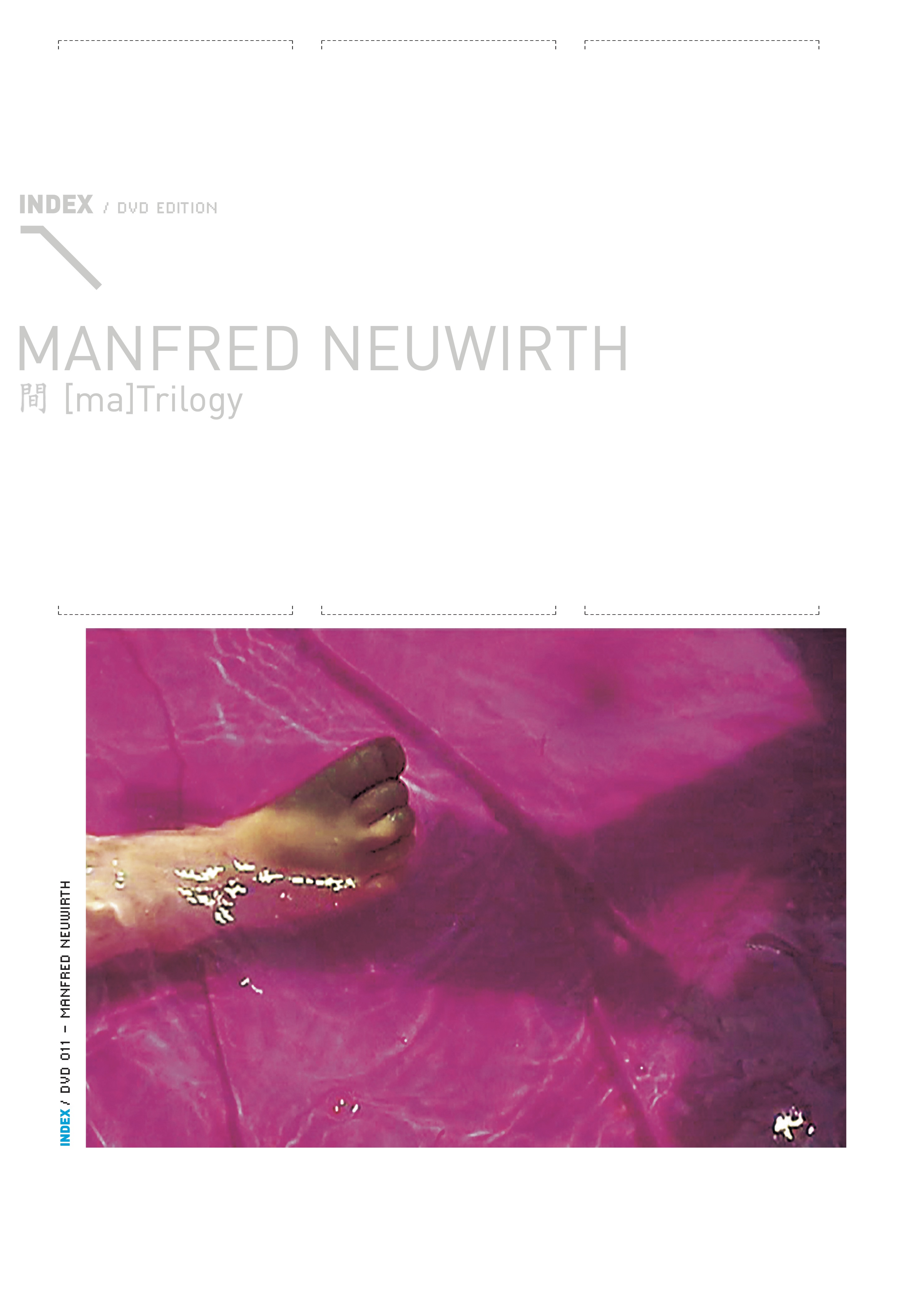
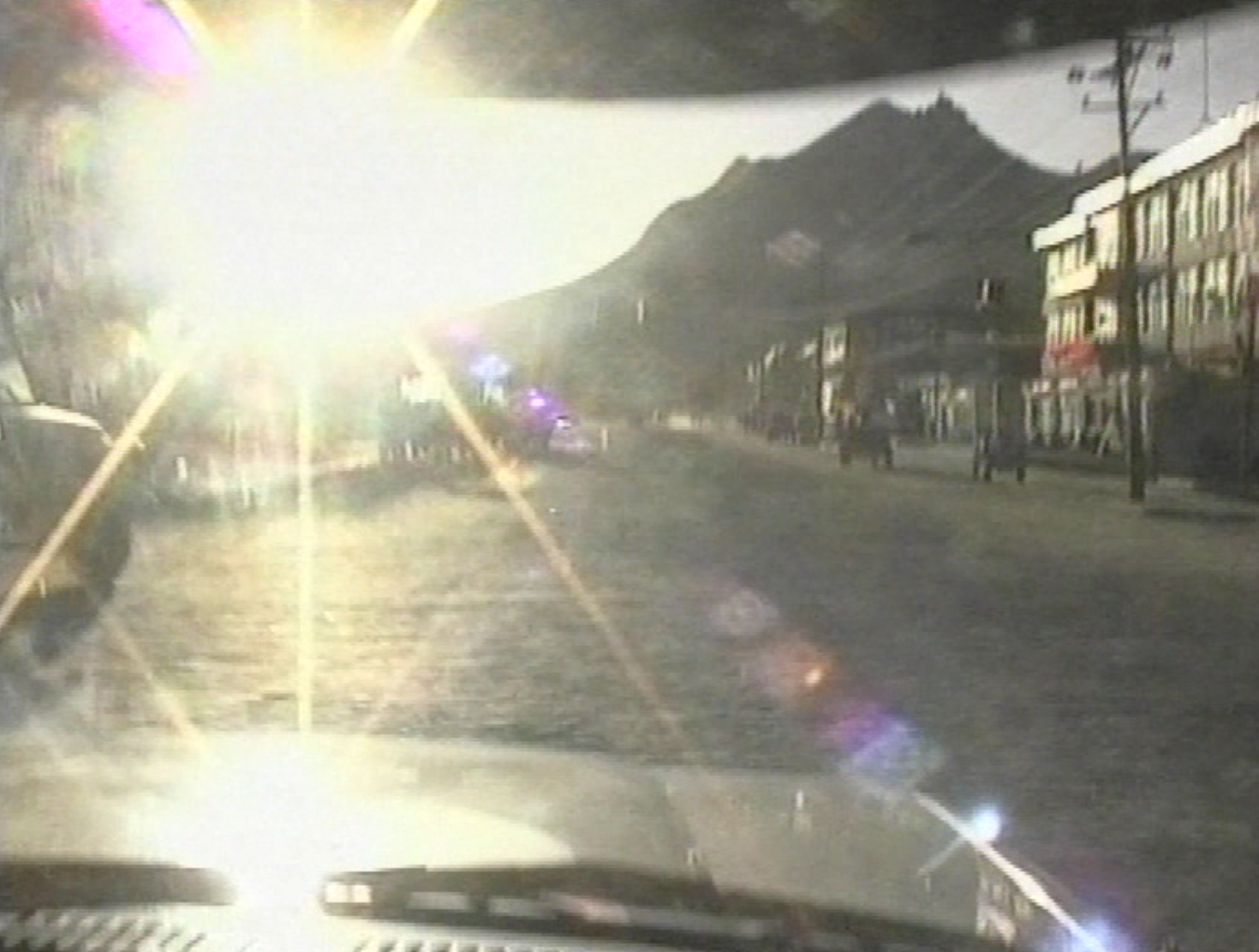


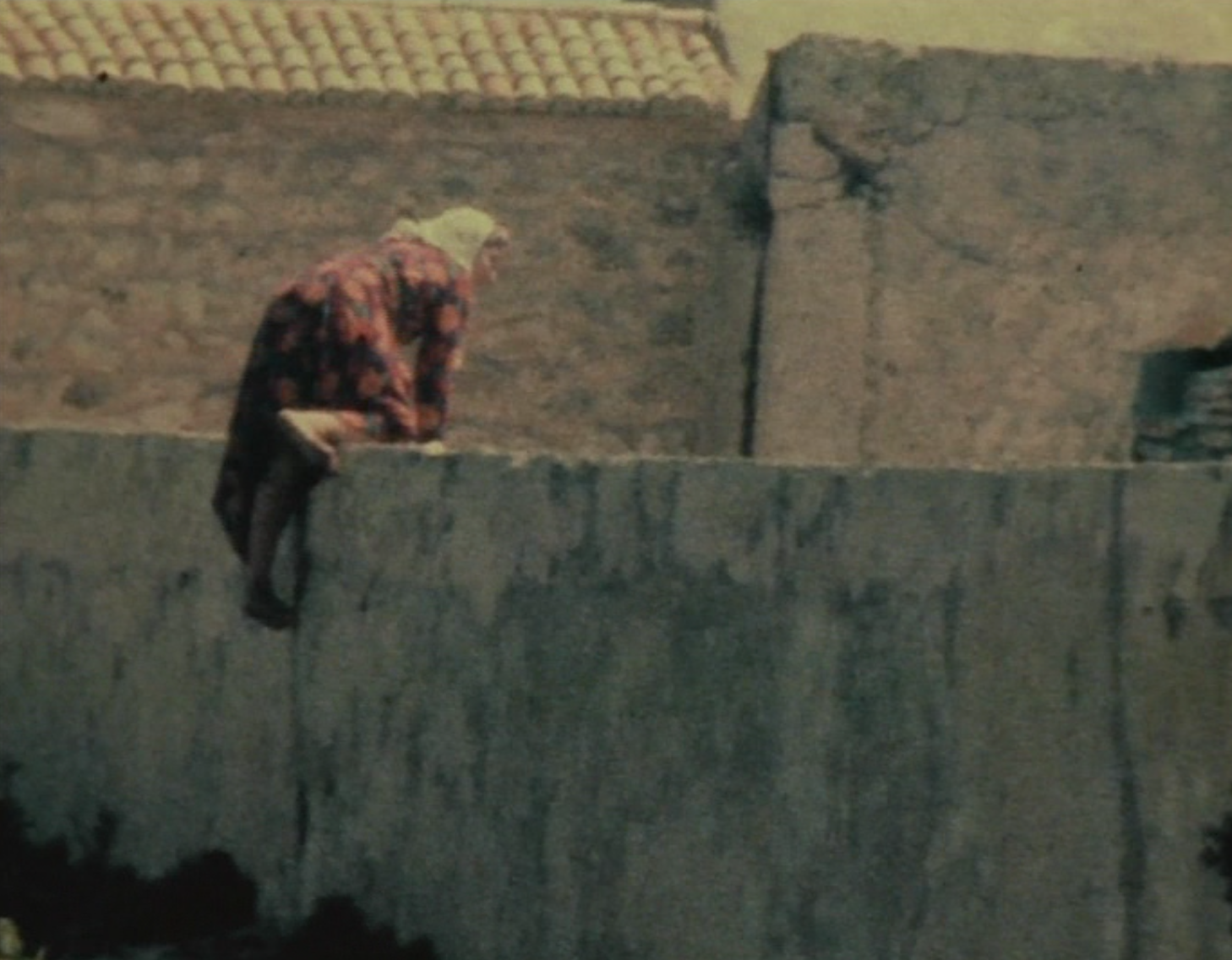

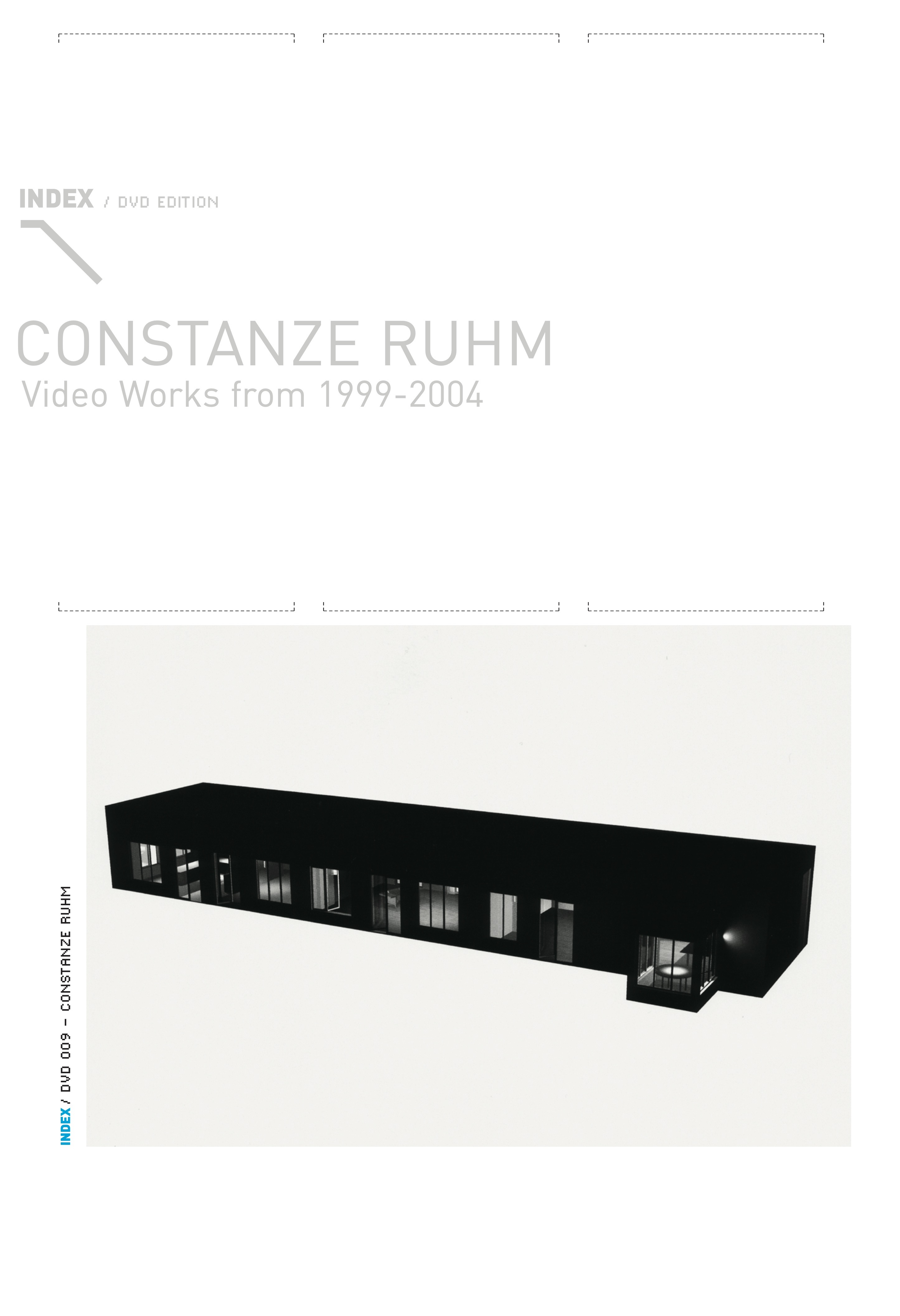
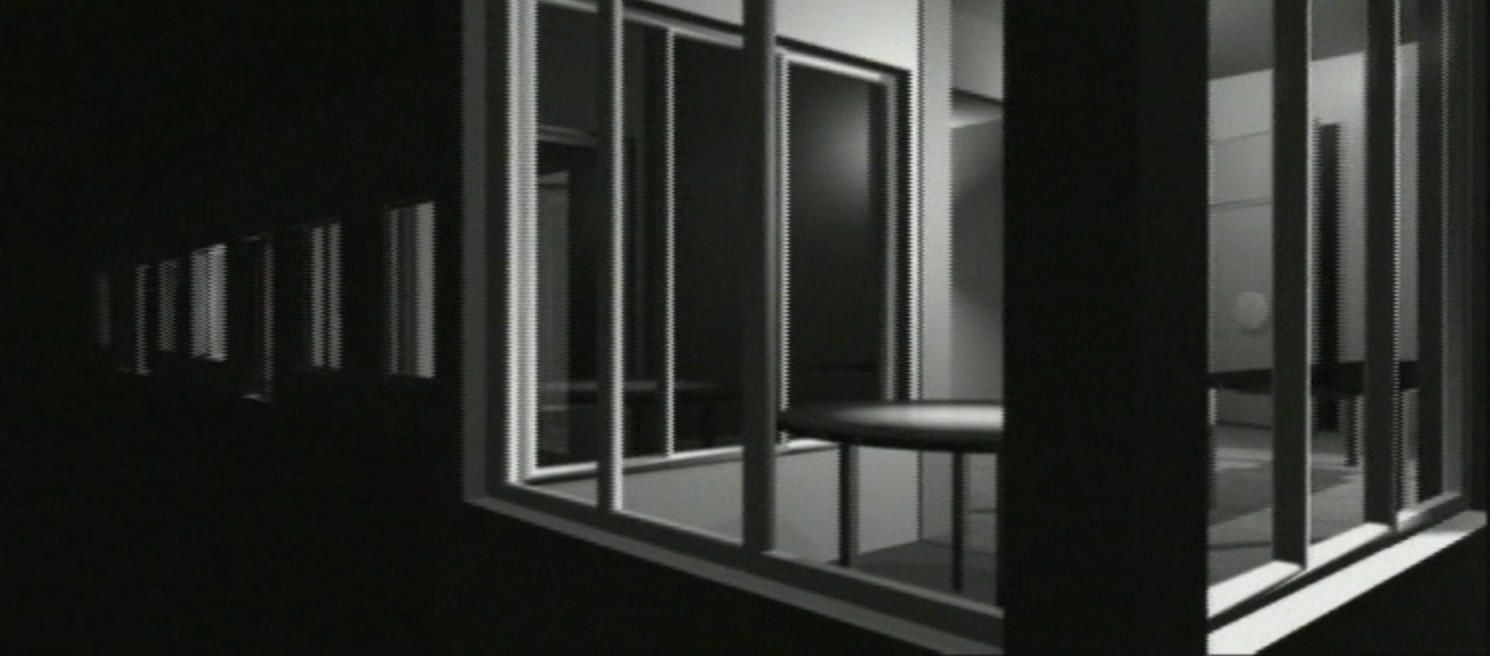
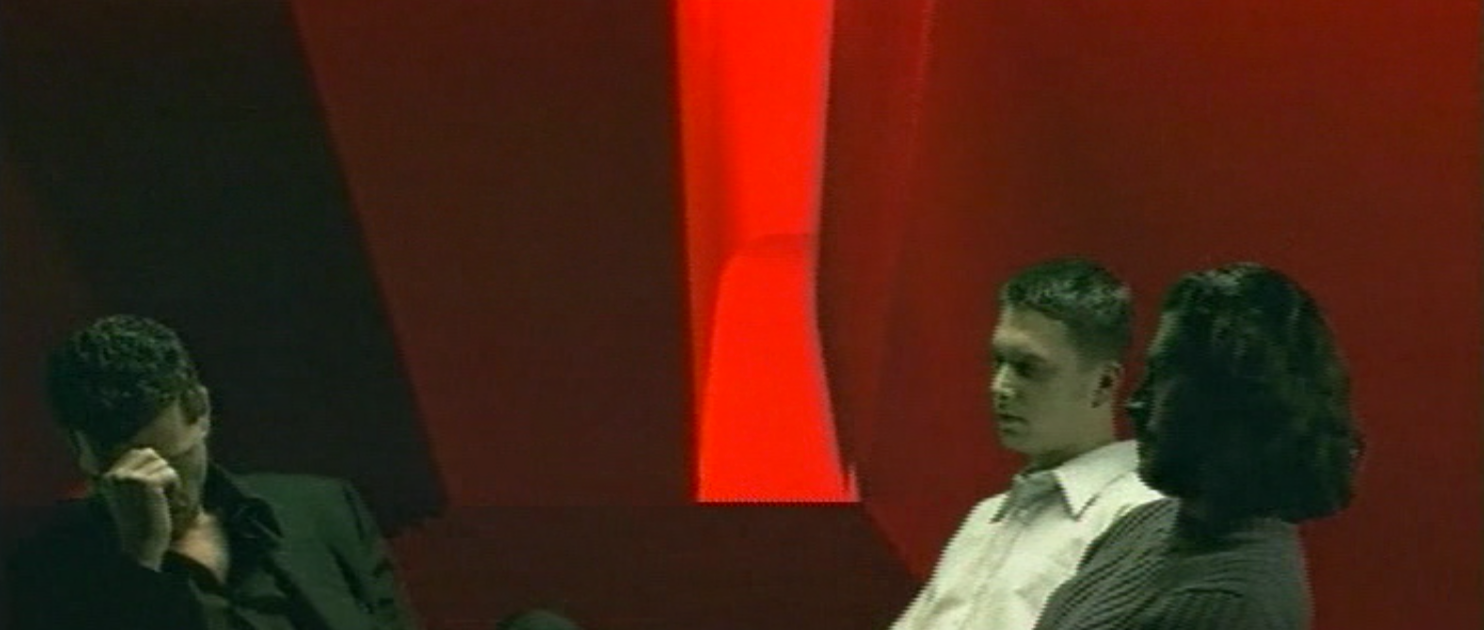
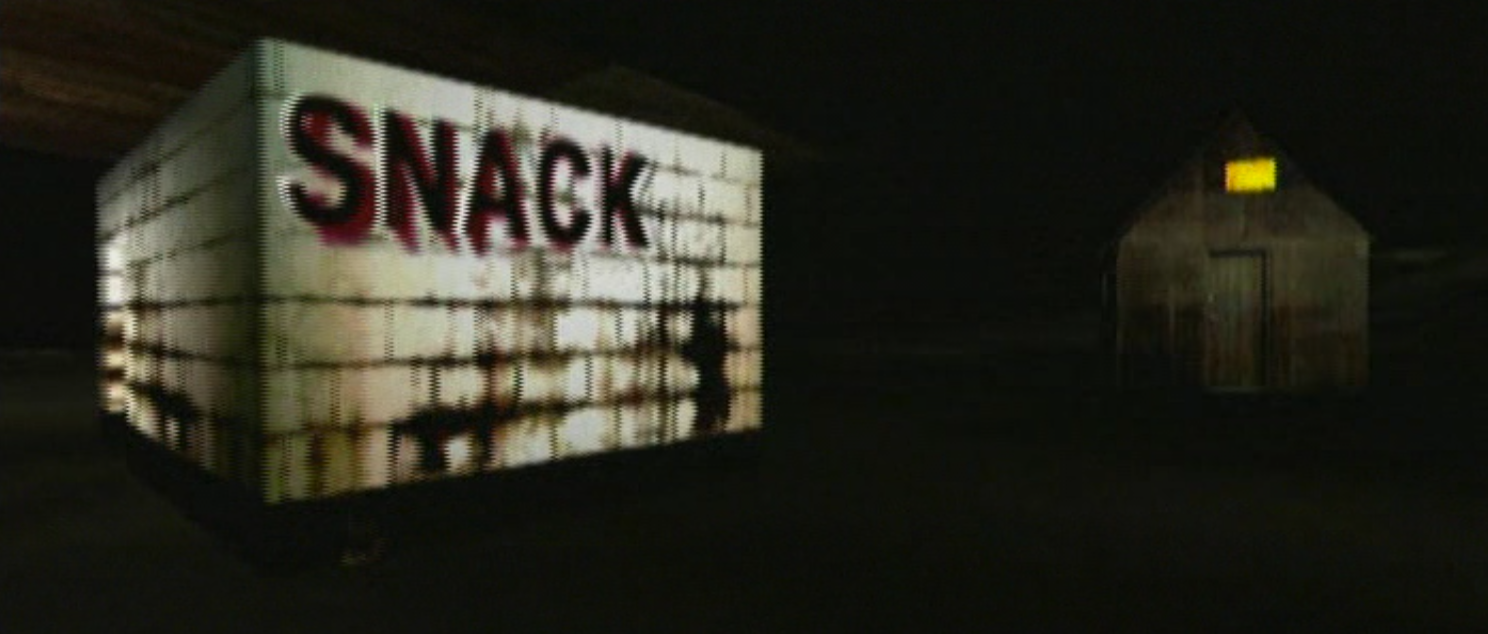

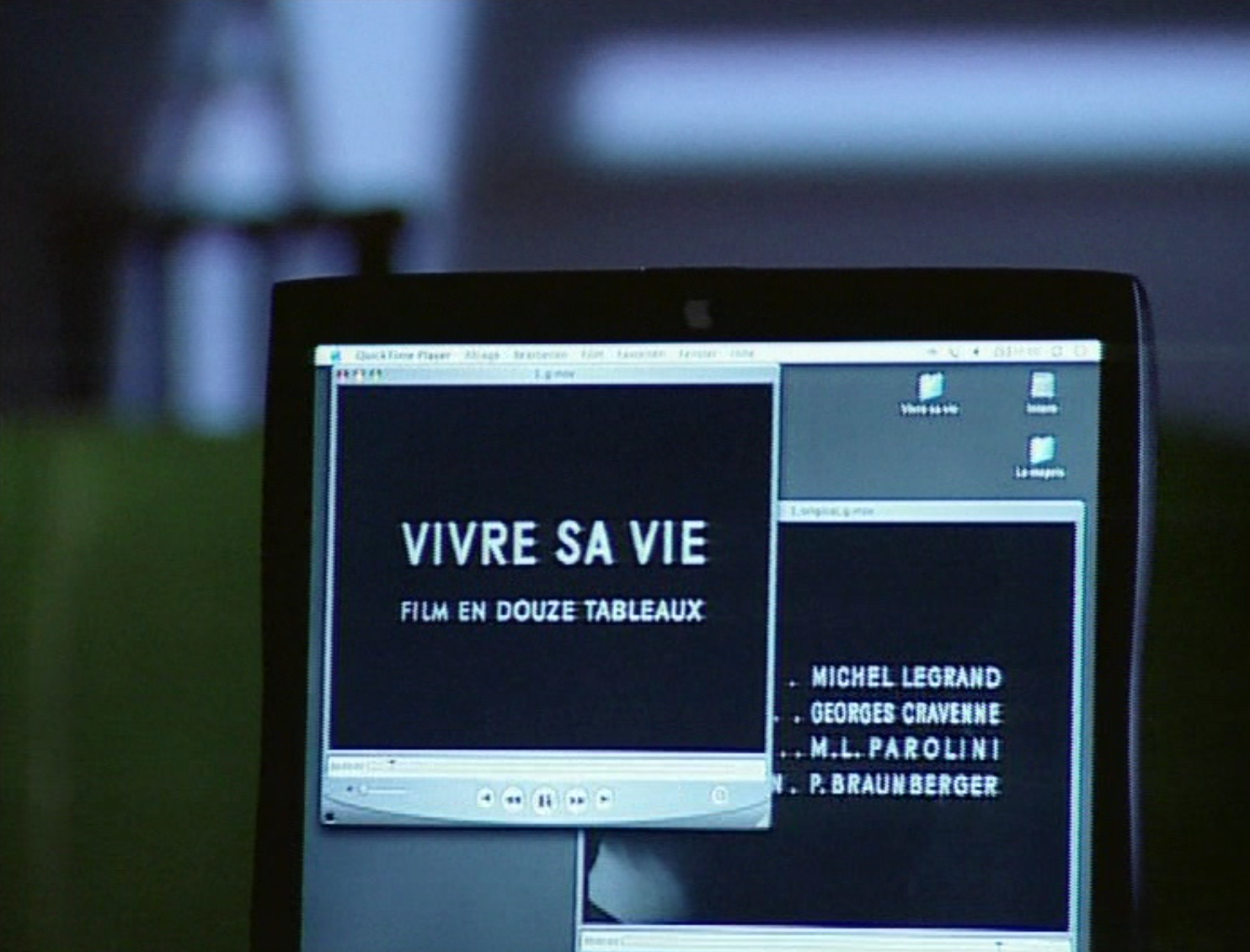


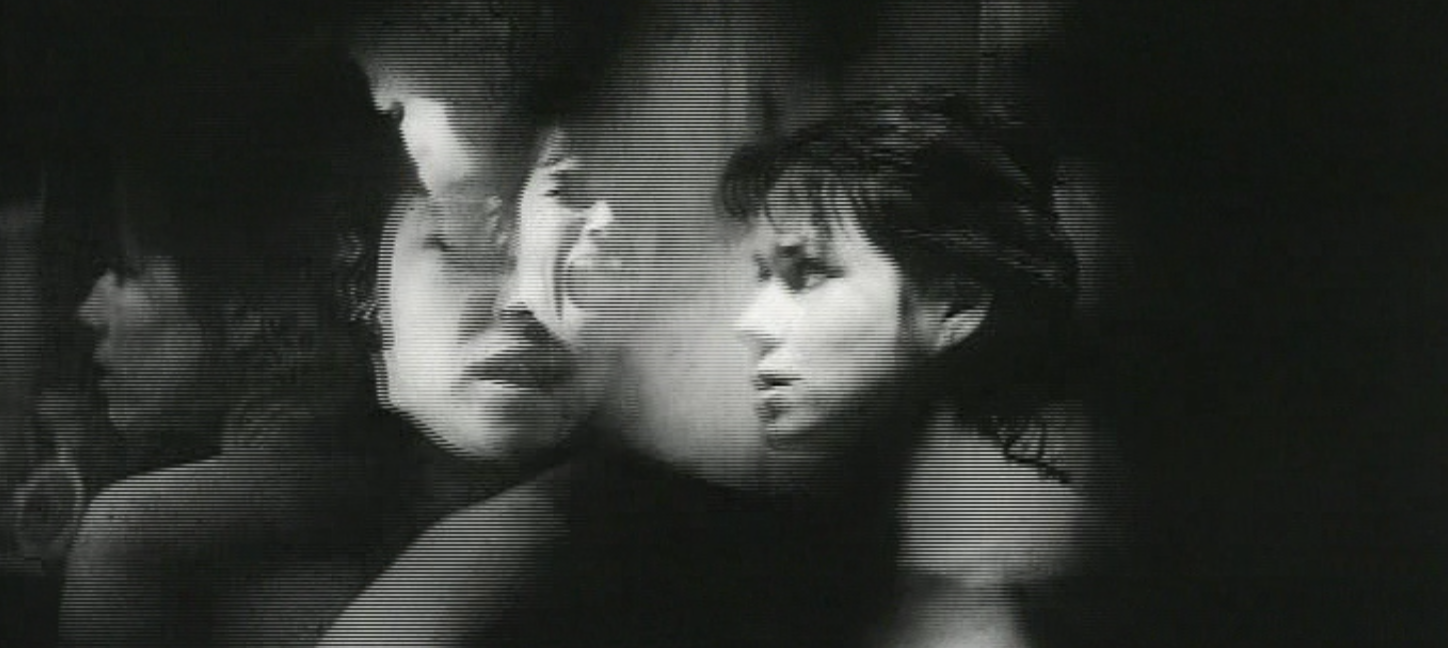
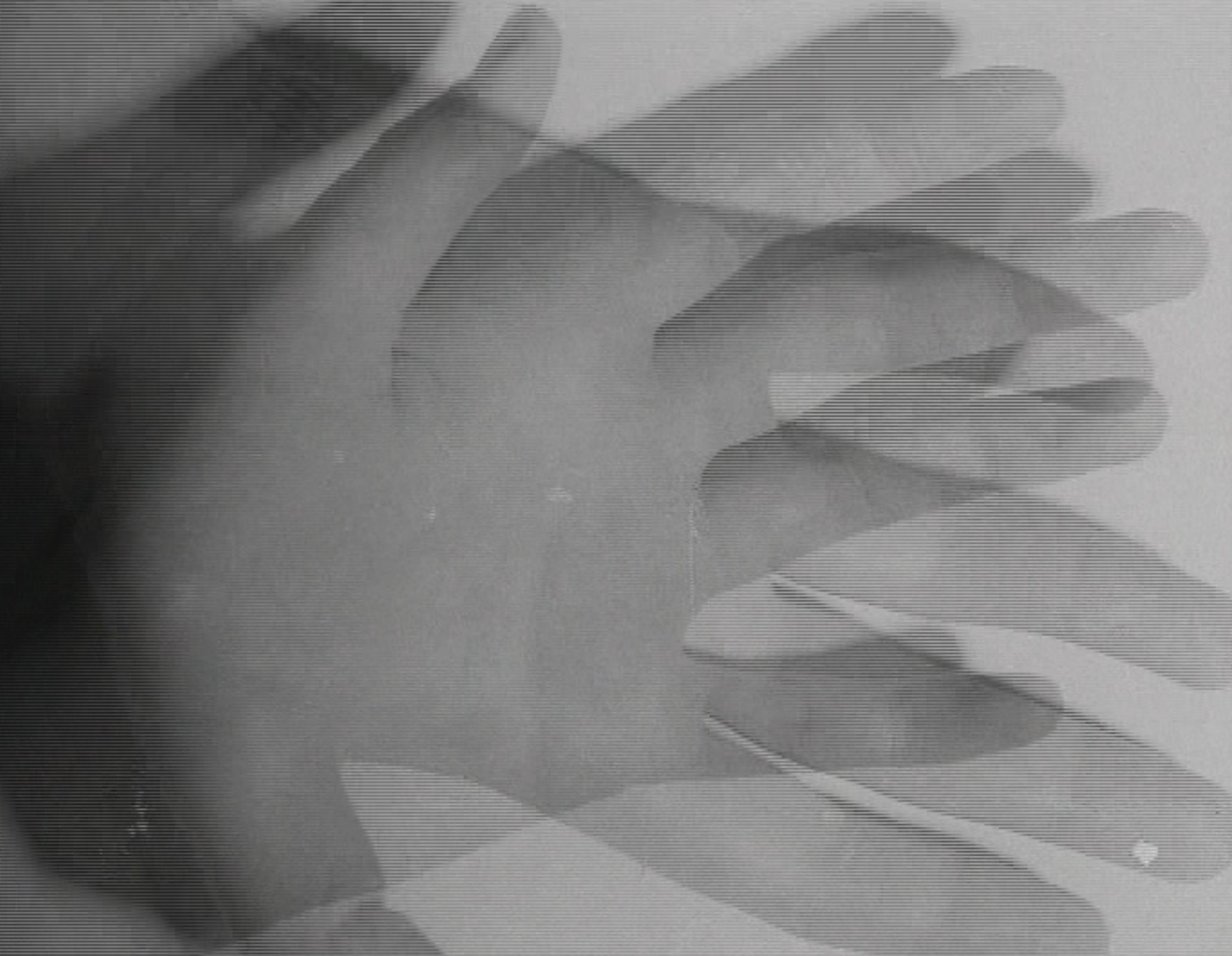



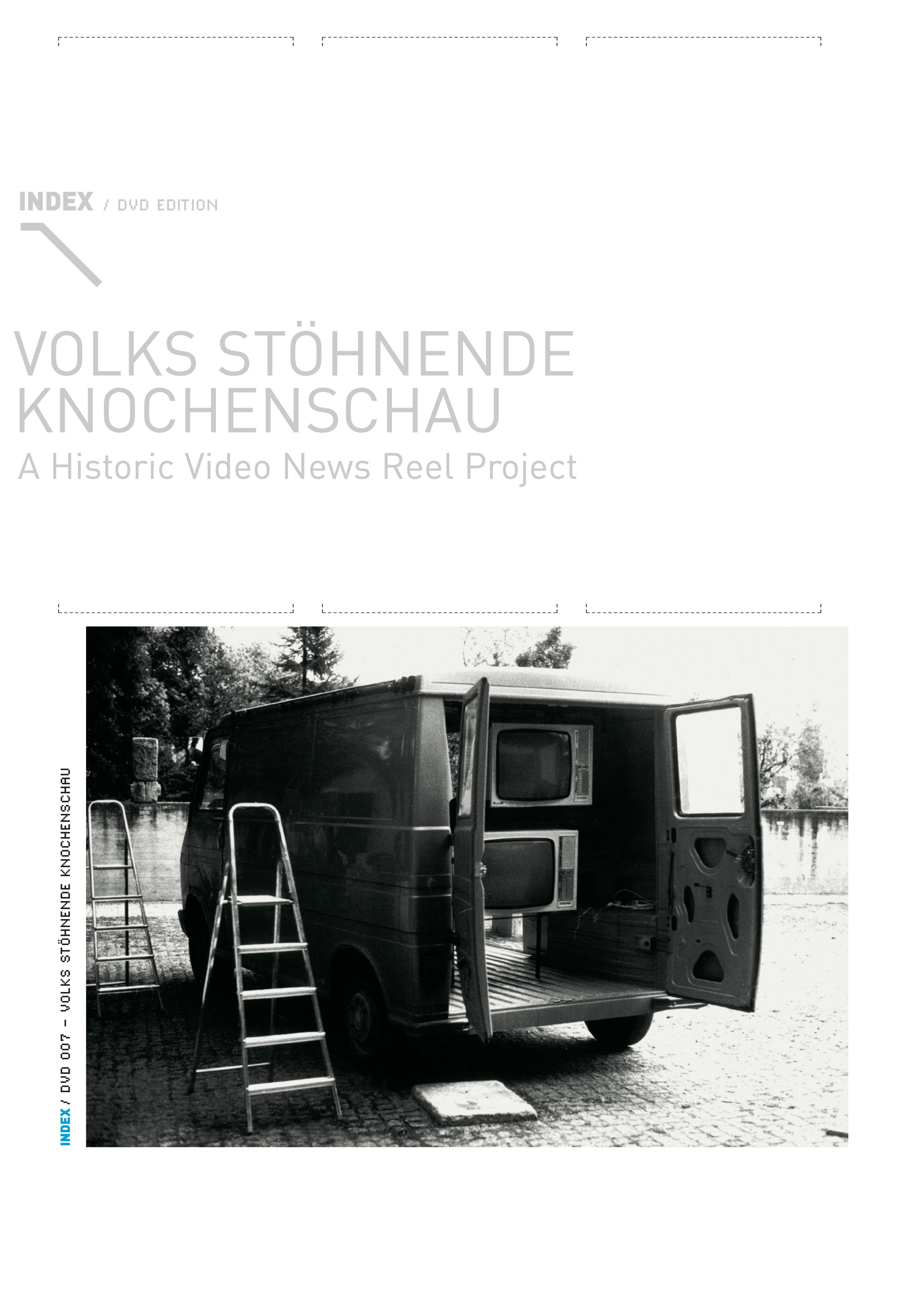


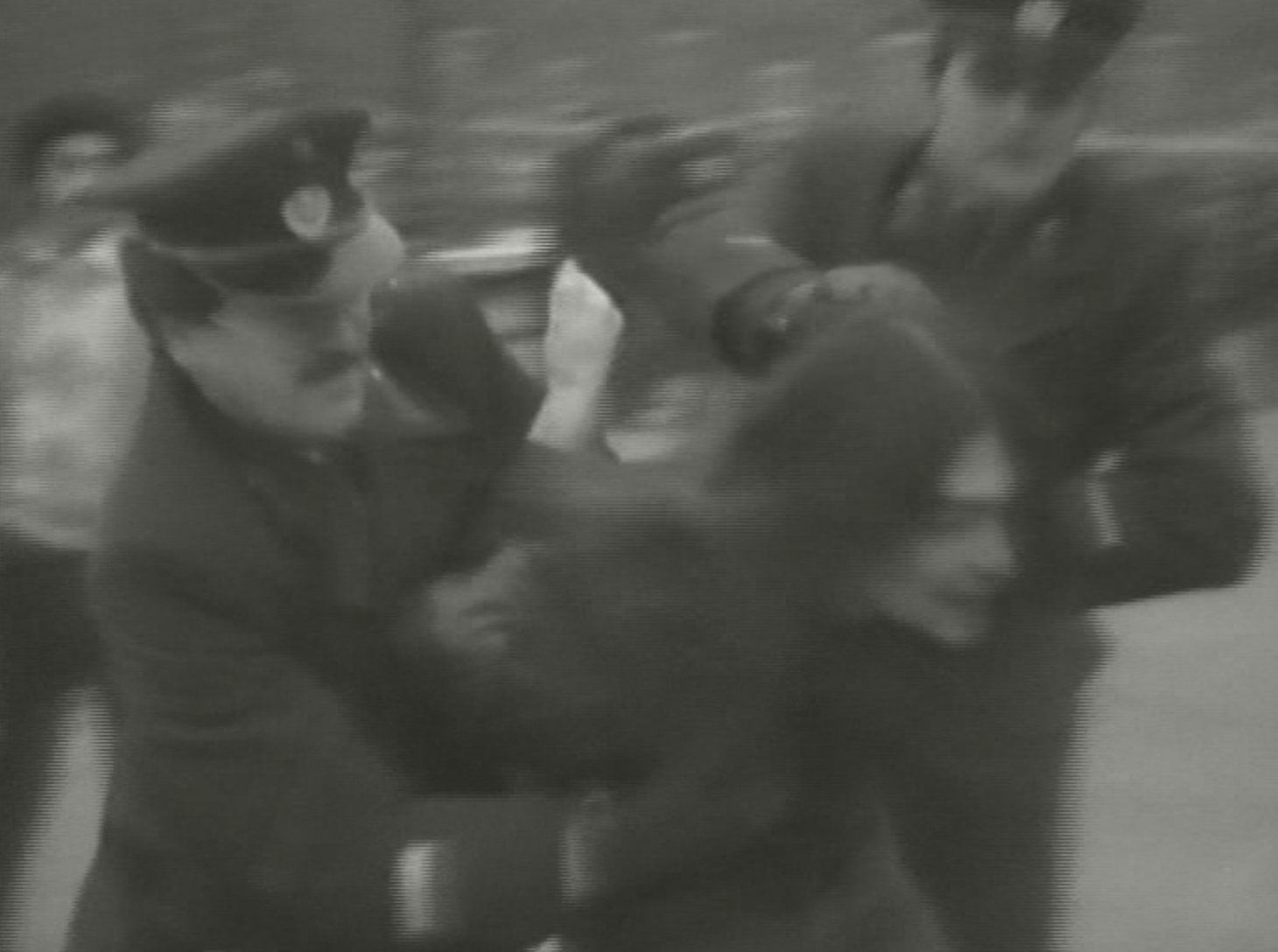
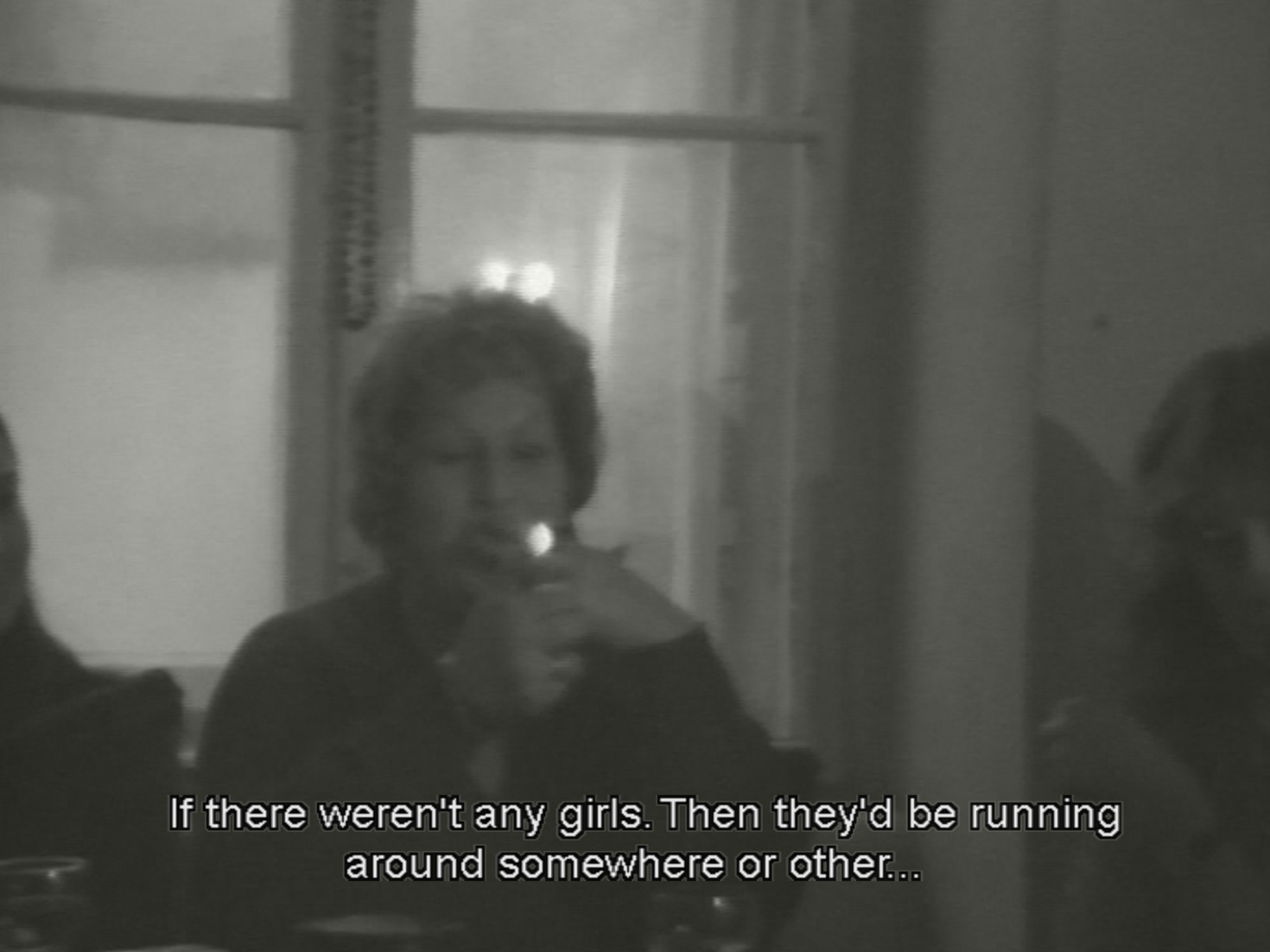
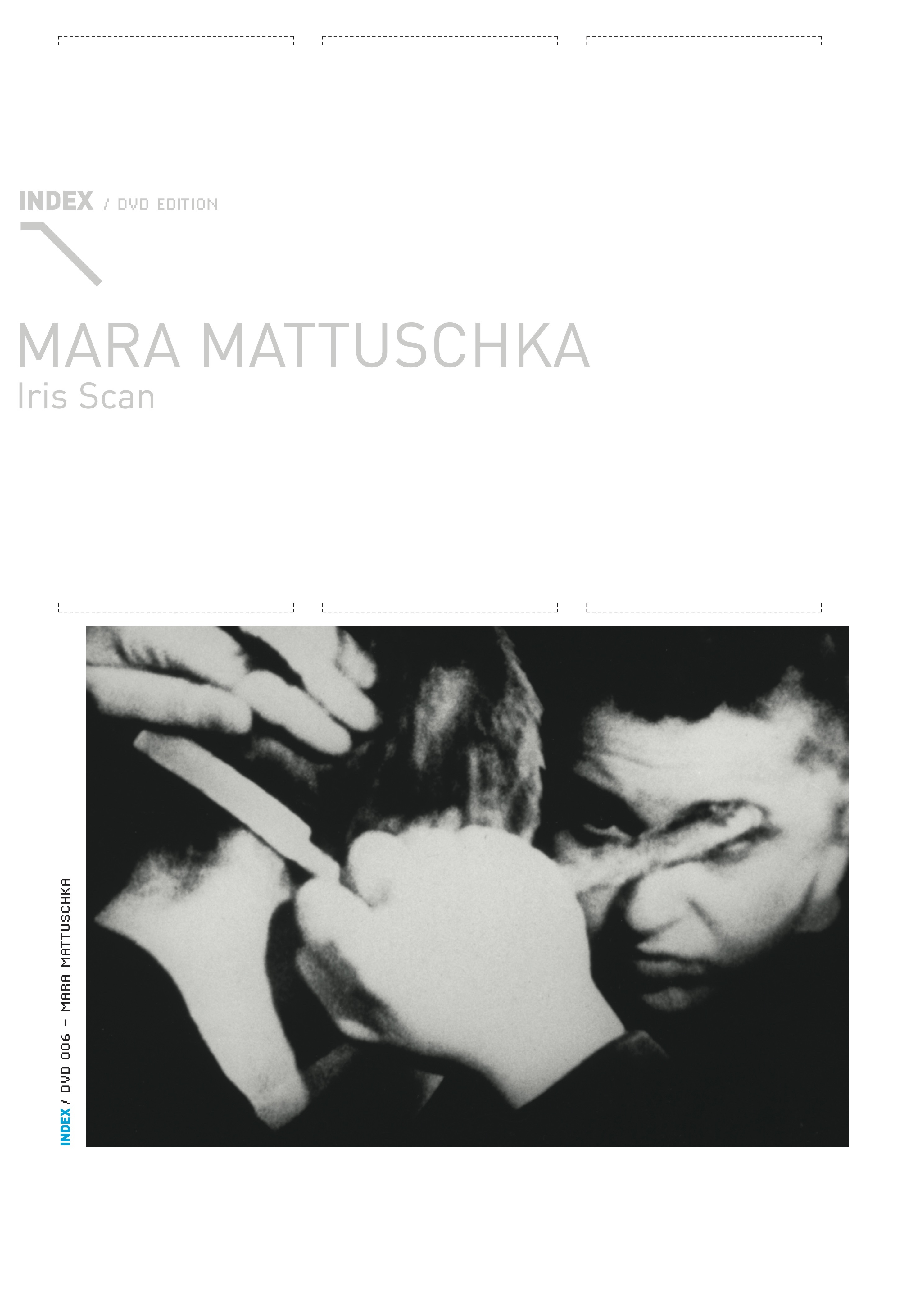

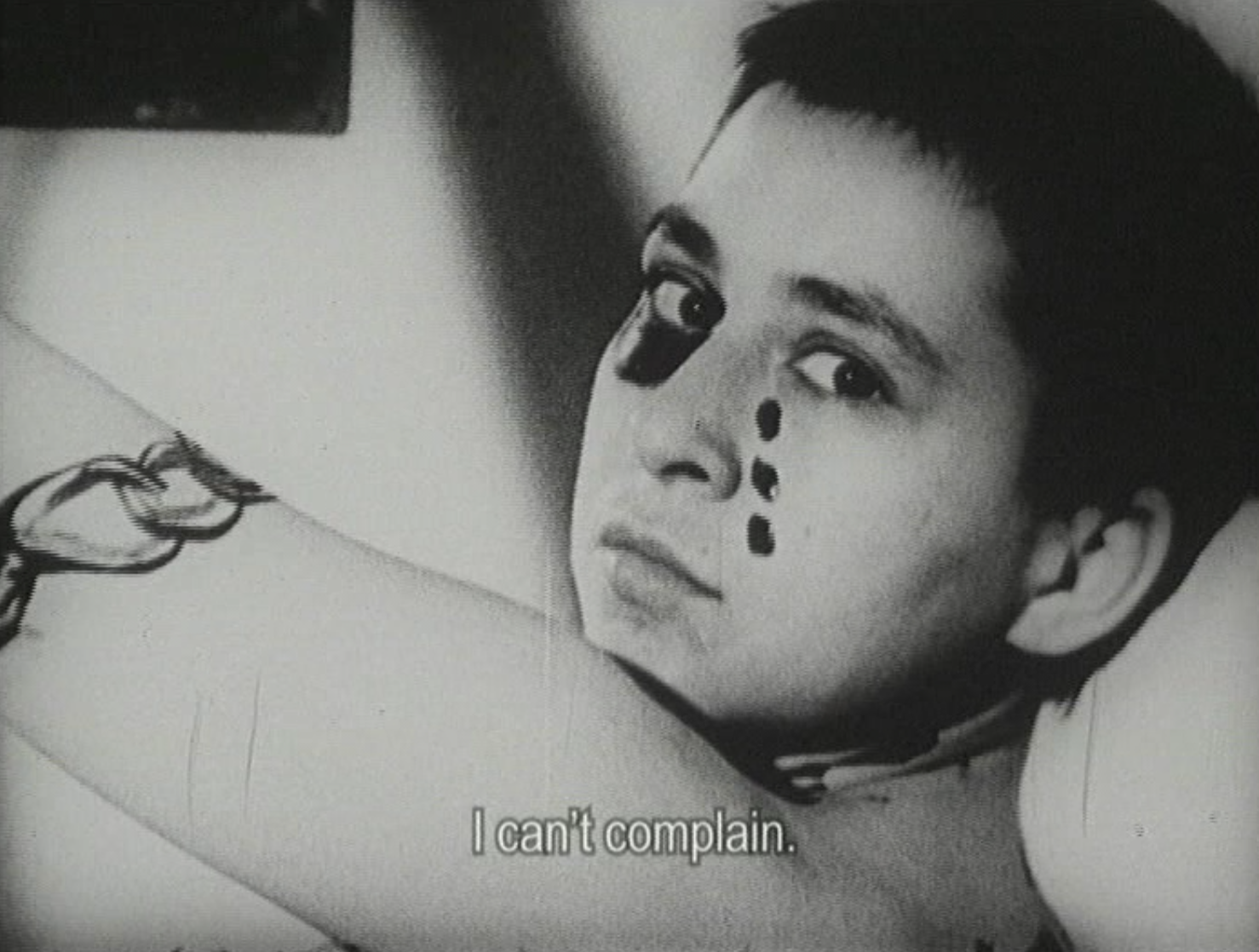

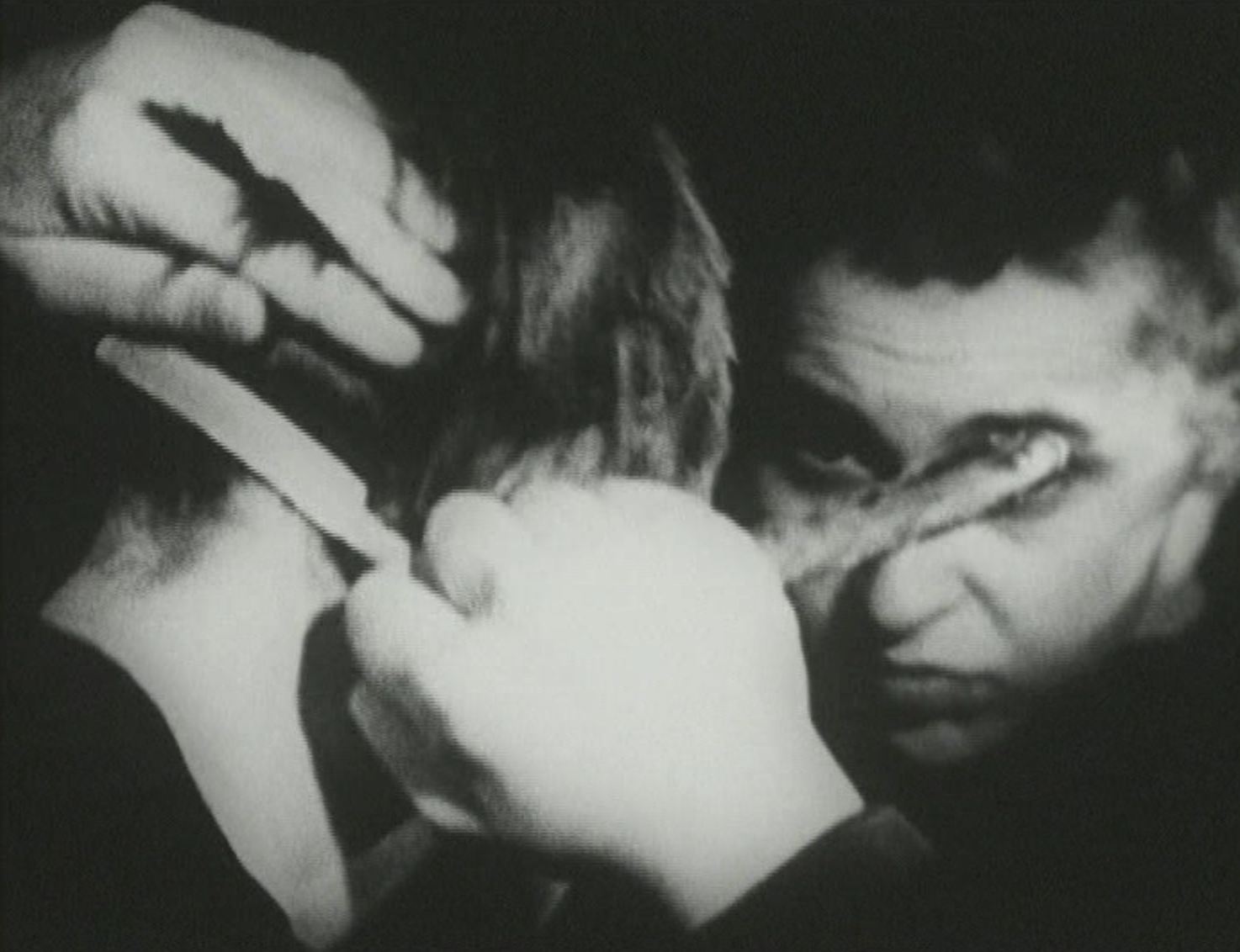


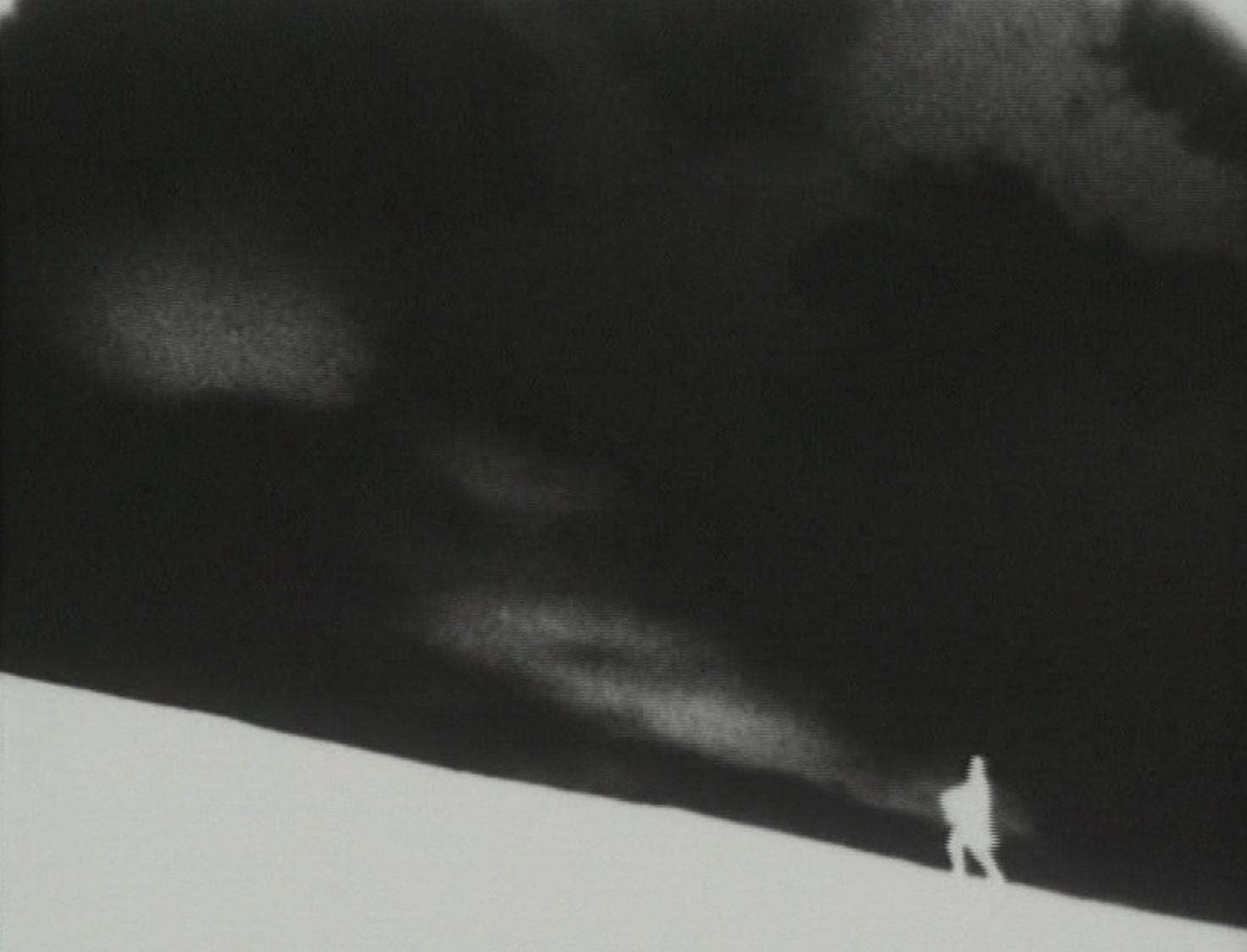
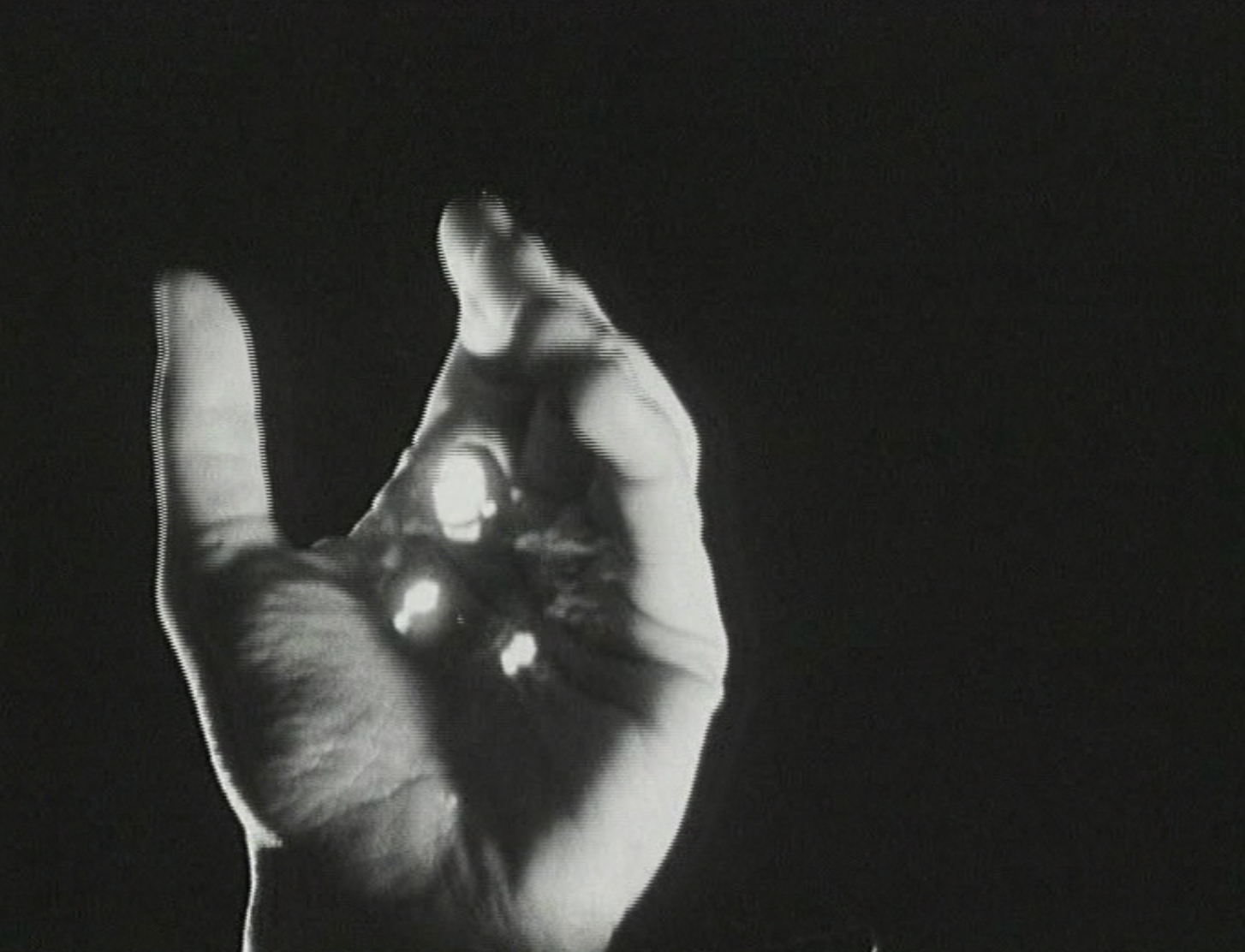


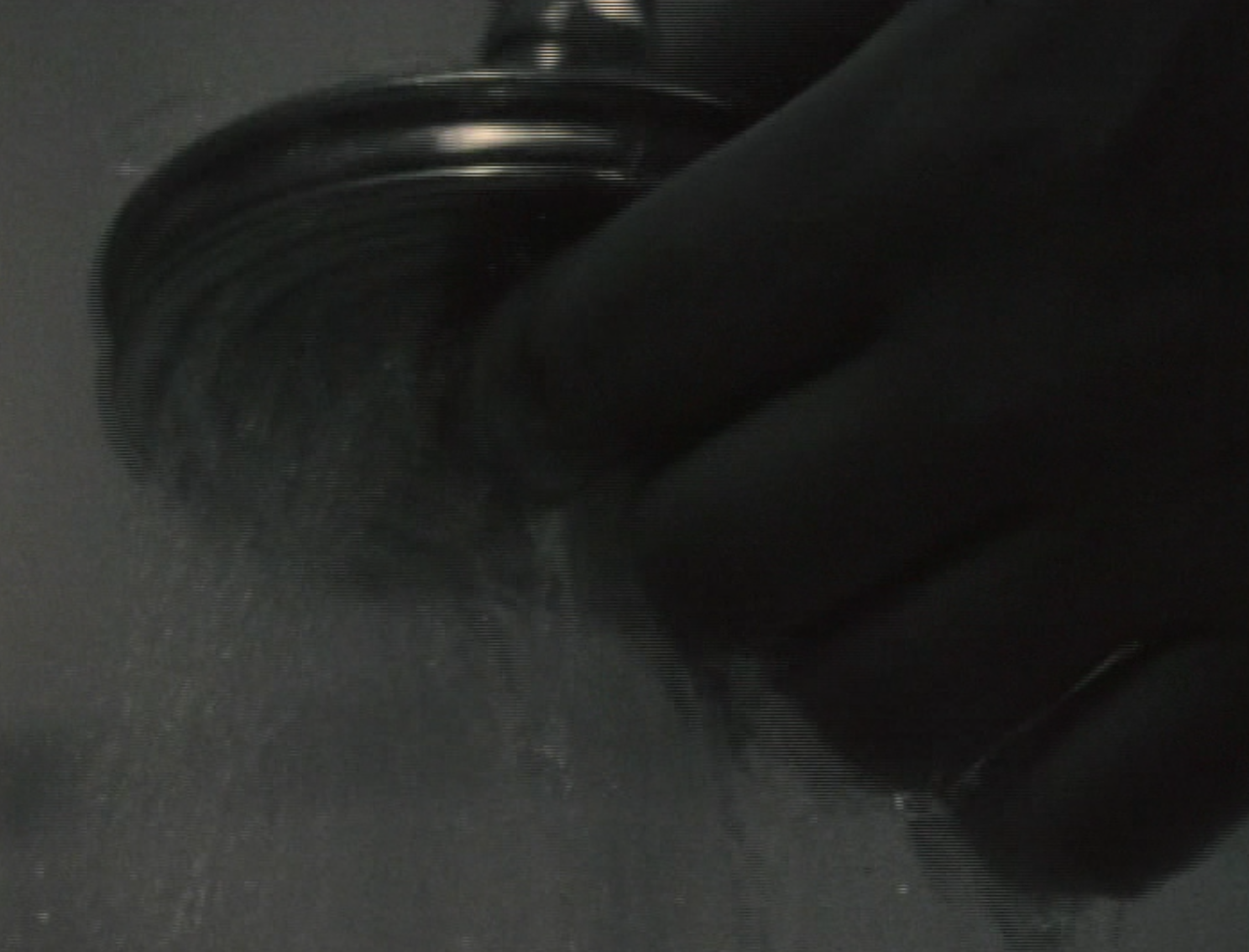
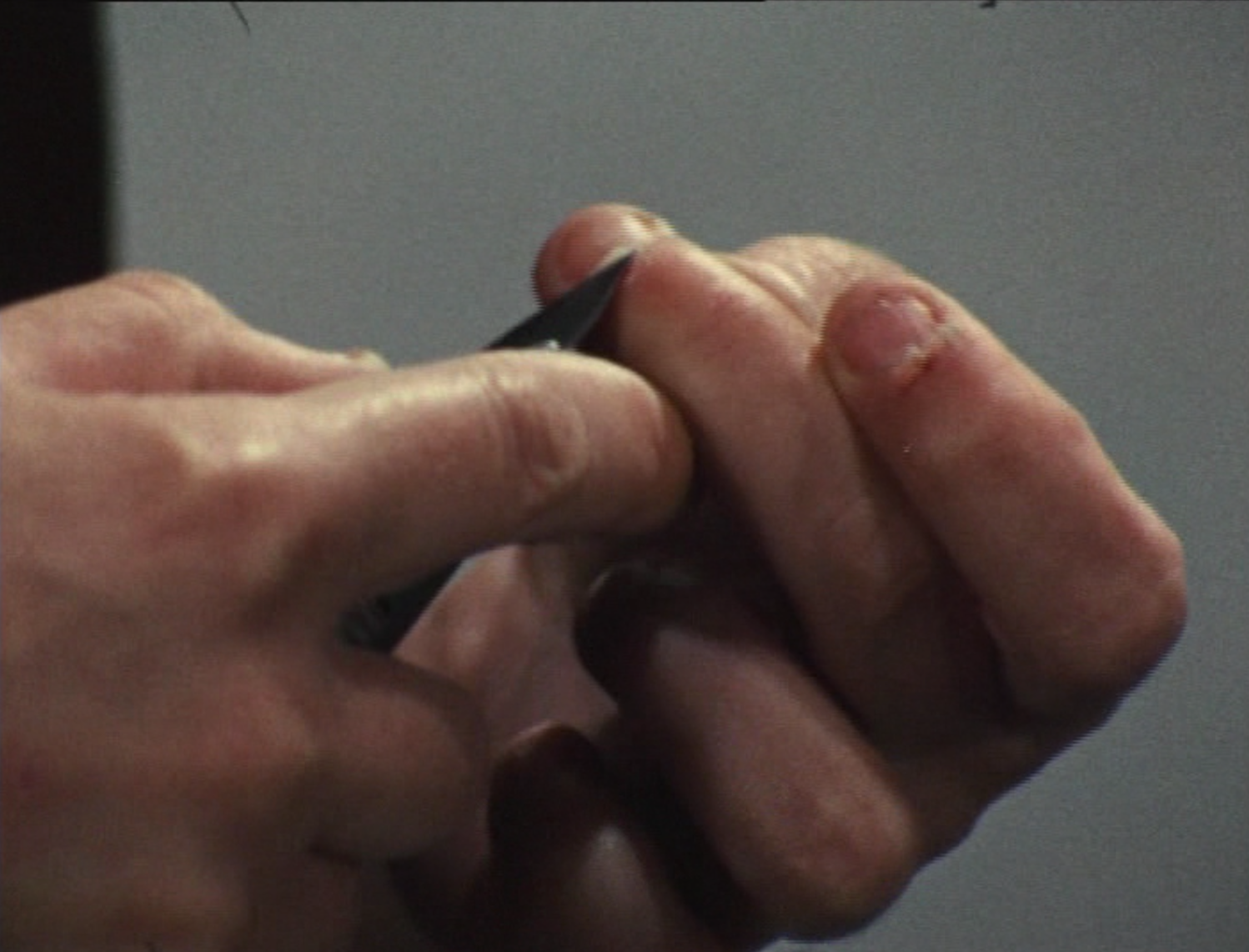


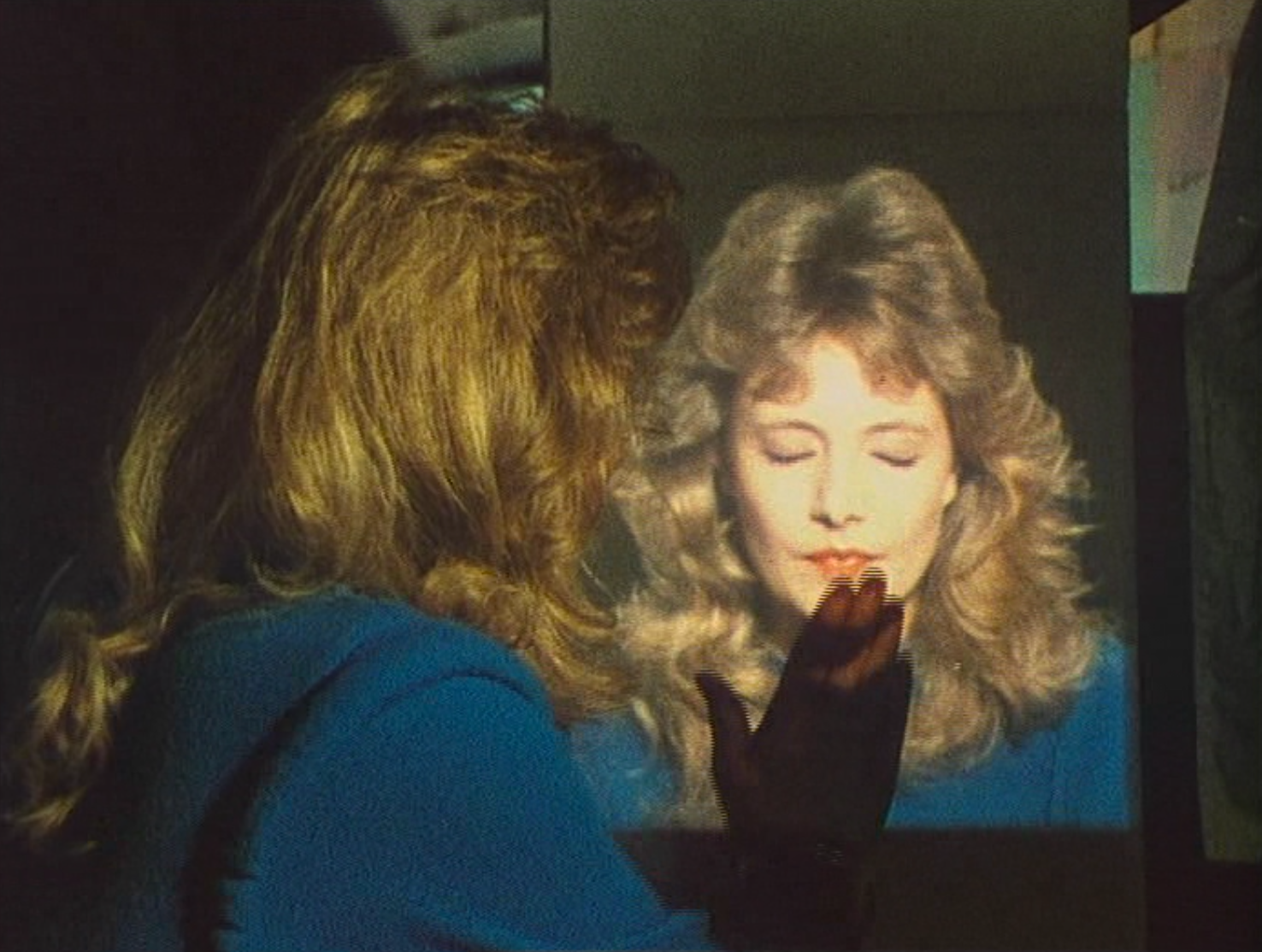



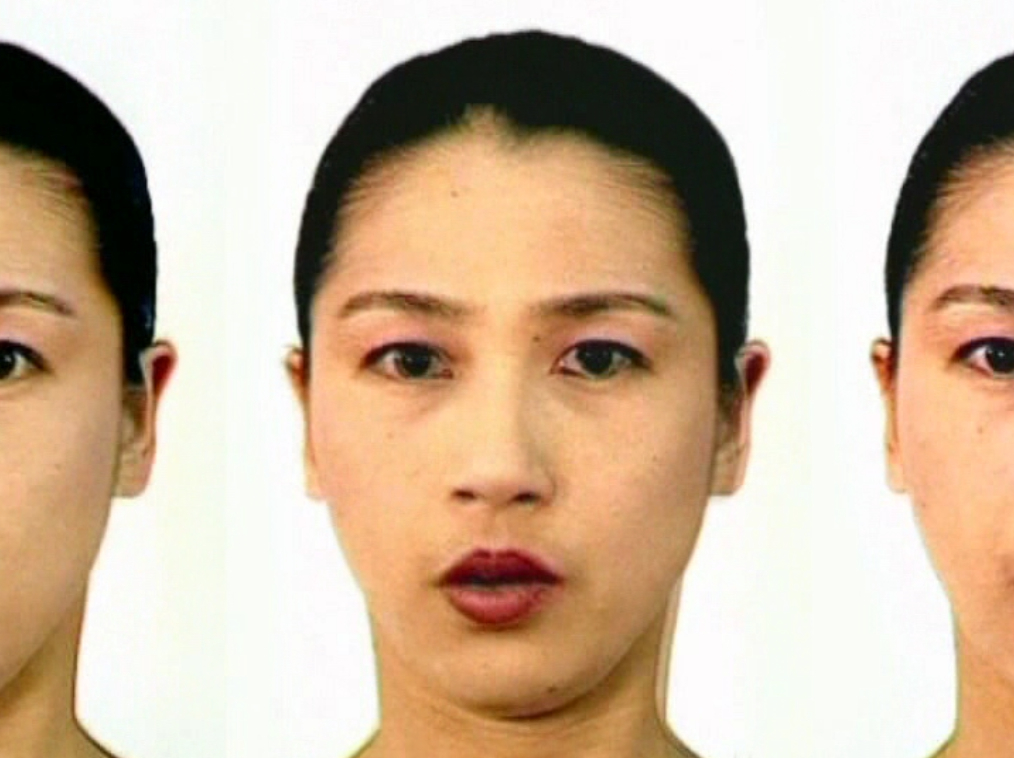

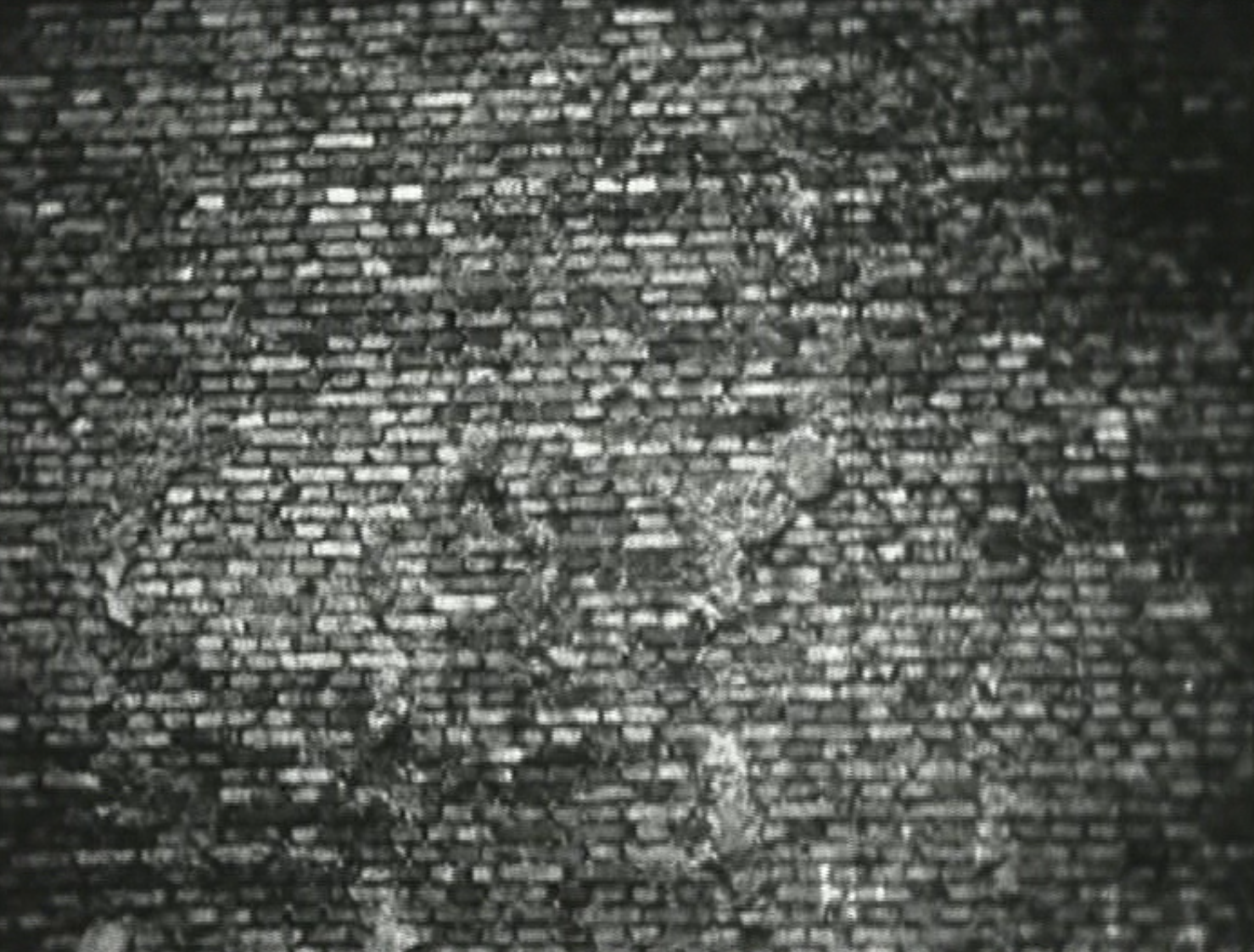



 Between Sound and Space: ECM Records and Beyond