


Paul Bley
Ballads
Paul Bley piano
Gary Peacock bass
Mark Levinson bass
Barry Altschul drums
Recording engineered by Tommy Nola, Nola Studios, NYC
Recorded 28 July 1967 (Side 1) and 31 March 1967 (Side 2)
Mixing engineer: David Baker
Produced by Paul Bley
Executive production by Manfred Eicher/ECM
Release date: 1971
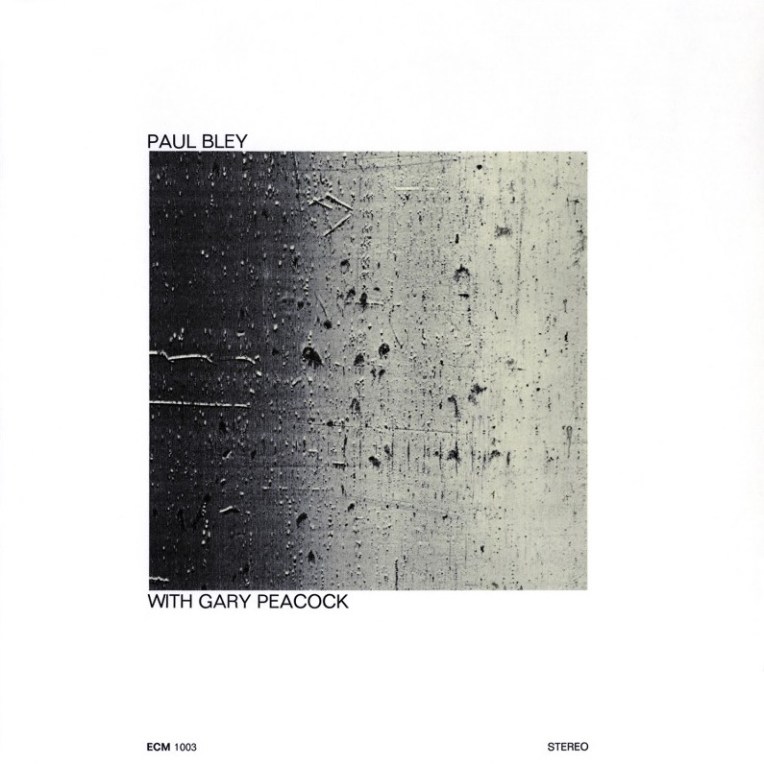
As an early ECM release, this all-Annette Peacock set already demonstrated the crystal clear recording and wide open spaces for which the label would come to be so well known. Throughout the long opener, ironically titled “Ending,” pianist Paul Bley handles most of the thematic legwork, while bassist Gary Peacock and drummer Barry Altschul skitter across his ivory surface like ice skaters so skilled they can stumble on cue. The title is multifarious. It’s the ending of a turn; the ending not of a life, but of the fallacy of its fulfillment; an ending of circumstance; an ending of watersheds; an ending of all the things in this world that buy us freedom, only to spit it back in our face. Altschul steals the show, soloing in slow-moving surroundings. The lagging pace lends further prominence to his playing, underscoring far more than mere virtuosity. As the piece goes on, it trickles like water, perhaps cluing us in on the title’s central meaning: that is, the music’s own loss of energy and creative source, a broken dam letting out its final drops. This is restrained music-making by a trio we know can swing with the best of them. Next is “Circles,” which seems to sweep up the mess of a long-waged battle, all the while showing an immense amount of fortitude in dealing with the prospect of an unclear future. Lastly, “So Hard It Hurts” gives a vivid sense of Annette Peacock’s compositional audacity and her unique way of turning gentility into pain, and vice versa. This time, Altschul is less cymbal-oriented and more focused on hitting the skins, providing ample room for bassist Mark Levinson’s own inspired finger work.
A delicate ridge rises between the musicians like a pyramid in every song, casting a moving triangular shadow as the sun marks its passage through time. The adlibbing is insightful and melodically well-aged. There is a crunchiness to this music, like biting into a confection filled with ever-changing flavors.
In 2019, this album was at last given the new life it needed through an ECM Touchstones reissue.
<< Corea/Holland/Altschul: A.R.C. (ECM 1009)
>> Dave Holland/Barre Phillips: Music From Two Basses (ECM 1011)
 Between Sound and Space: ECM Records and Beyond