Gustav Deutsch: NOT HOME. Picturing the Foreign Films 1990-2015 (INDEX 045)

Behind the films collected on NOT HOME lies an inquiry into the act of seeing, shaped by the unsettling realization that vision is never objective or neutral. To witness the world through images one did not make is to inherit the desires, omissions, and vulnerabilities of subjective strangers. Having long worked as a cartographer of found memory, Gustav Deutsch finds himself in the more elusive position of a traveler who never arrives, someone perpetually foreign even in the intimacy of his own gaze. What does it mean to be the custodian of other people’s looking, and what is revealed when the world is glimpsed through perspectives that cannot be fully assimilated?
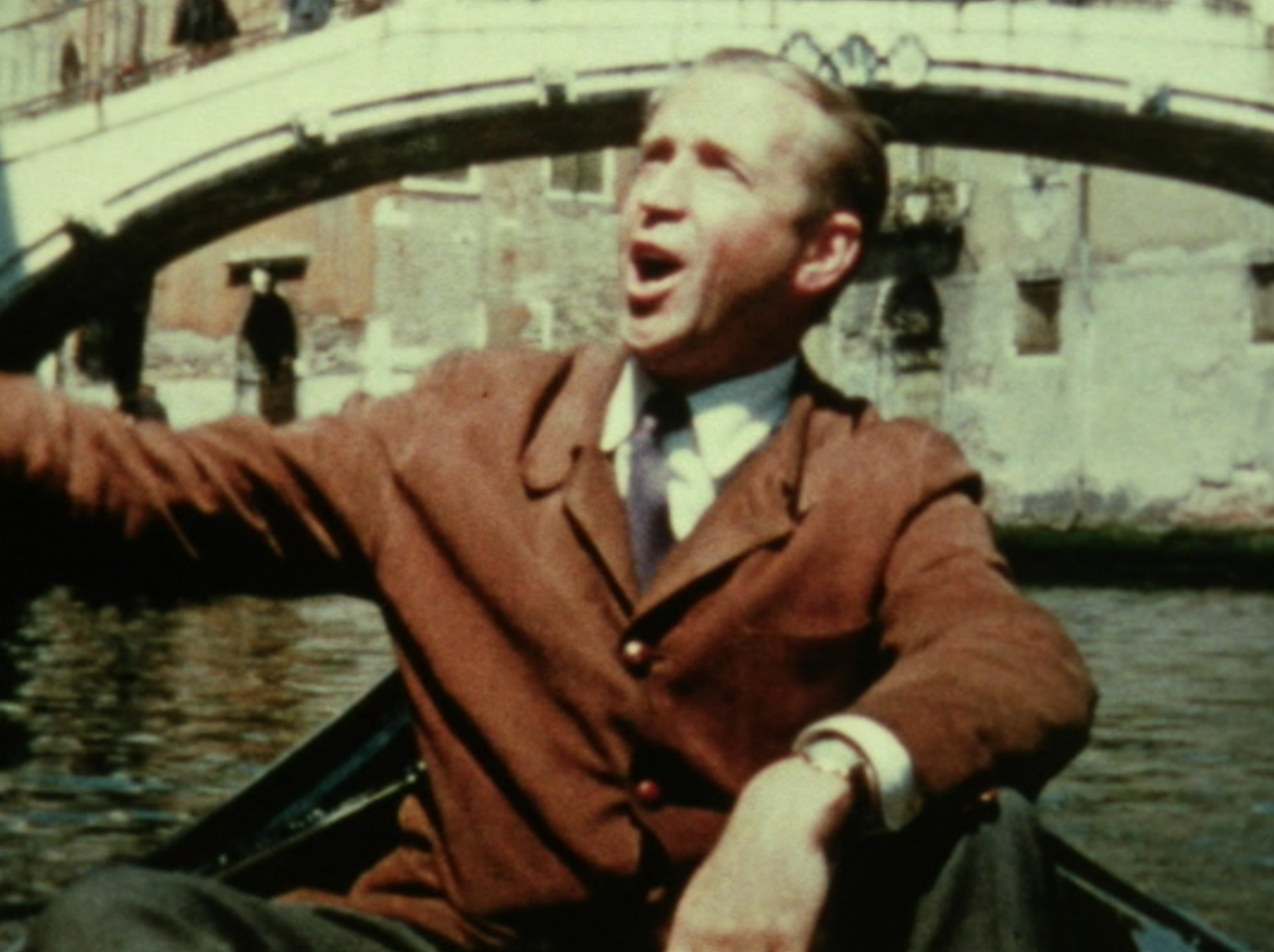
Adria – Holiday Films 1954-68 (School of Seeing I) lays track by presenting postwar tourist films as if they were relics of some vanished civilization. Its structure moves from still shots to views from vehicles to montages in motion, a transition from the fixed monumentality of place to the restlessness of those attempting to inhabit it. Signs, oceans, bridges, cars, beaches, and faces gather into a quiet taxonomy of yearning. These fragments carry an ache, as if time had already begun erasing them during the very moment of their recording. The Venice passage becomes a kind of primal scene: a man serenades us on the rising waters, yet we hear nothing. Expression survives only as the ghost of a gesture. Those cradled in frame are almost certainly gone, their vitality preserved in an archive that cares nothing for mortality. Deutsch teases out this paradox—that these films were meant to enshrine happiness yet now mirror the fragility of all that once felt permanent—with painful clarity.
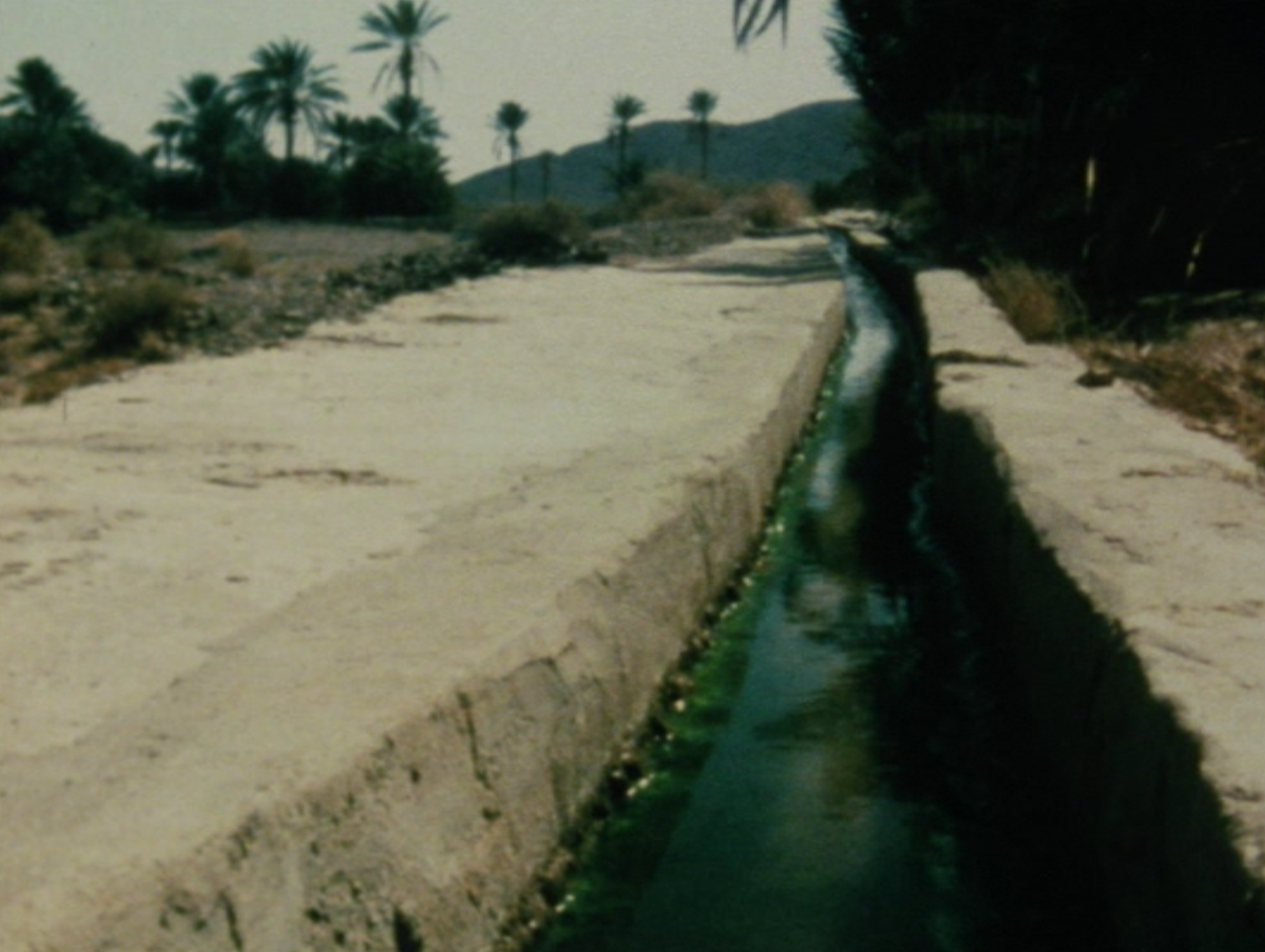
Eyewitnesses in Foreign Countries (1993), made with Moroccan filmmaker Mostafa Tabbou, turns Deutsch into a documented outsider. Six hundred shots, each lasting three seconds, alternate between Figuig and Vienna in a steady, metronomic rhythm. Deutsch’s astonishment at the desert’s elemental force contrasts with Tabbou’s measured attention to the textures of European daily life. The exchange is not symmetrical, the time limit suggesting a fragile equality at best. Deutsch cannot entirely escape the exoticizing pull of unfamiliar territory, while Tabbou renders Vienna without spectacle, letting human detail eclipse architectural bravado.
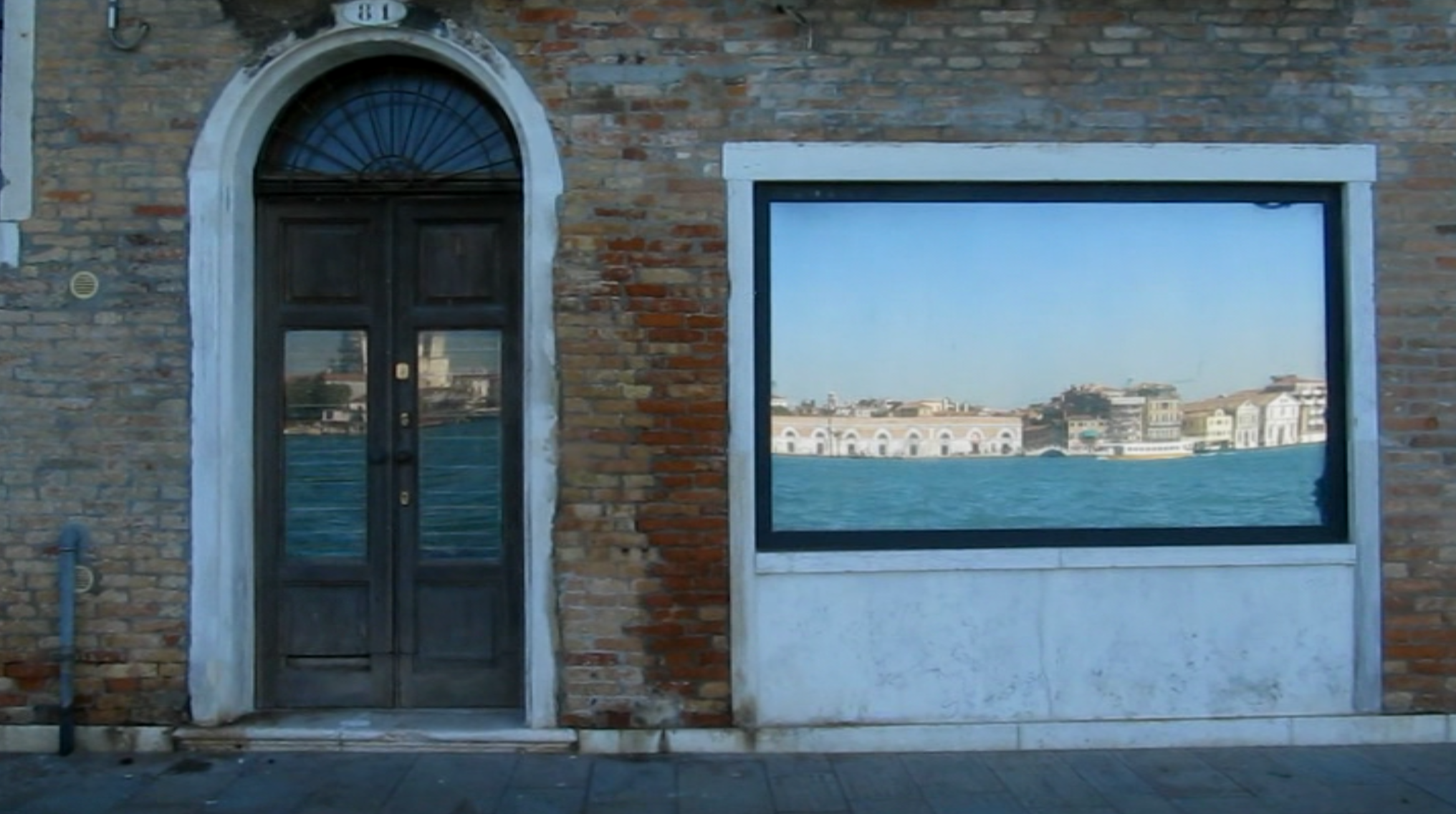
Notes and Sketches I (2005-15) extends this sensitivity across a decade of small observations. Thirty-one pocket films made with digital cameras and mobile phones emerge as devotional gestures spared from the erosion of ordinary time. The lazy Susan sequence in a restaurant becomes a center of gravity around which an entire perceptual world turns. Plates glide, voices hum, the table rotates, and from this dance an unexpected sanity arises. Sound plays an equal role in these pieces. Spaces speak their own grammar, and Deutsch listens carefully, letting ambient noise shape the contours of each entry. Geography dissolves; what remains is an atlas of attentiveness. These sketches reveal how the unguarded instant often contains more truth than the composed event. They show how perception, when freed from the demand to explain, allows the world to declare its own quiet coherences.
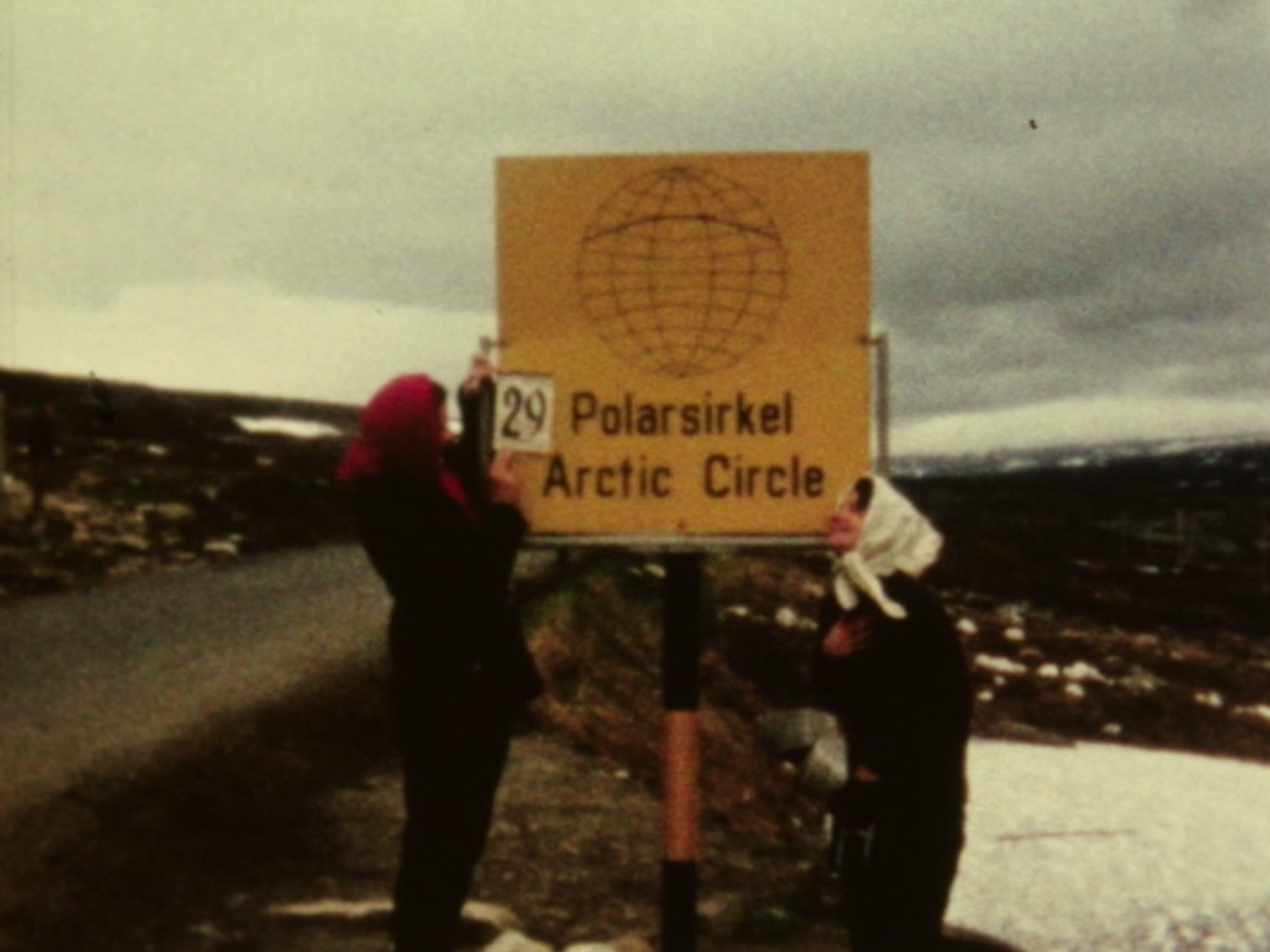
The bonus film, Sat., 29th of June / Arctic Circle (1990), operates as an early crystallization of the larger project. Four travelers pause at the titular location, pose with numbers, and mark their presence as if the boundary they have crossed holds metaphysical weight. Their actions, unconsciously choreographed, are as sincere as they are awkward, unaware that decades later they will be observed as part of an experiment in temporal distance. What they enact is the desire to extract meaning from place, to position one’s own frailty against the indifference of all terrain.

Across these works, Deutsch drifts between ethnographer and wanderer, historian and poet. He gathers glimpses rather than conclusions, tracing the shape of experience without feigning to contain it. And so, the foreign is never simply elsewhere. It appears whenever an image survives the life that produced it. It appears whenever we see ourselves reflected in the gaze of someone we have never met. And it appears whenever the world, in its fleeting instants, reveals that regard is always cyclical.
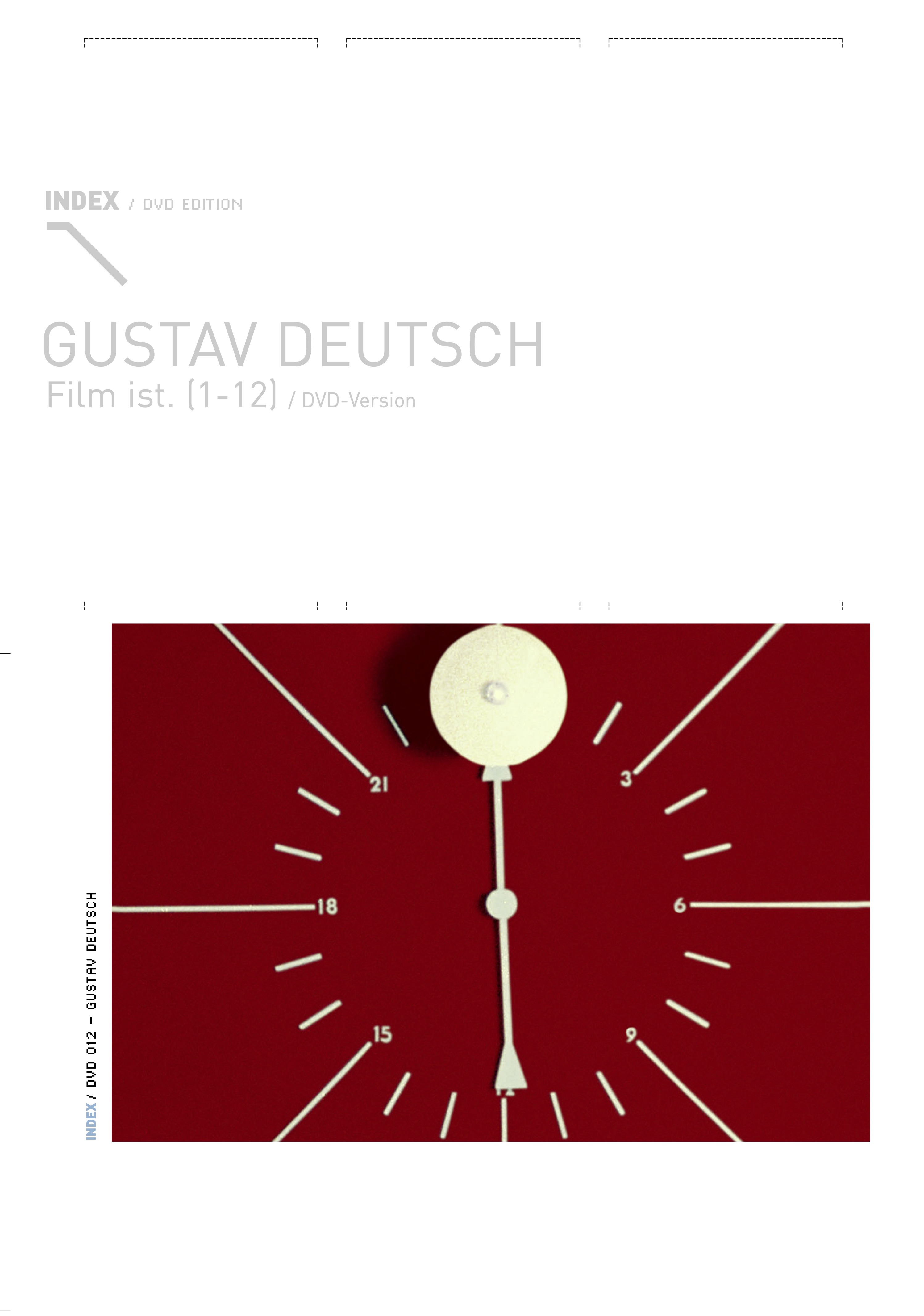
Gustav Deutsch: Film ist. (1-12) (INDEX 012)

A Cosmology of Light, Motion, and the Memory of the Medium

Where Jean-Luc Godard assembled an archive of quotations and theories in Histoire(s) du cinéma, Gustav Deutsch moves in another direction entirely. He steps back and allows the films to speak in their own native frequencies. In doing so, he returns cinema to an antediluvian state, before the narrative flood. He approaches film not simply as a human invention but as an extension of light itself, something that predates our desire to shape images out of the visible.

Film ist., a lifelong project begun in 1996 and elaborated into the 2004 release, is an ongoing cosmology. Deutsch works as an archaeologist of the medium, excavating scientific reels, laboratory experiments, variety acts, and early spectacles. These fragments form strata through which he reconstructs the primal gestures of motion pictures. Each titled section of Film ist. does not categorize so much as orbit, proposing a constellation of definitions that never settle into consensus.

The film is organized around two birthplaces of cinema. In the first six sections, Deutsch draws on scientific films, in which the medium originally served as a research instrument, breaking the world down into analyzable components. Before the camera told stories, it slowed phenomena, magnified details, and captured movements too fleeting for the naked eye. The second six sections turn toward fairgrounds and variety theaters, the carnival of images that gave film its first audiences.

These two lineages intersect throughout Film ist., not as opposites but as twin strands of the same evolutionary pulse. Inquiry and fantasy are revealed as inseparable aspects of the medium’s DNA. Light observes the world, which performs under its scrutiny. Cinema moves, and so, it moves us. Deutsch constructs not an argument but an ecosystem, an image-world where the medium remembers itself.

The 12 Sections

The journey begins with movement and time, where a sequence of X-ray images reveals the body as an instrument of motion that must be dismantled before it can be understood. Voices of science discuss the nature of film while the camera studies animals and humans alike. Muscle, bone, and gesture become data, delicate and ghostly under the looming field of observation. Movement emerges not as entertainment but as a key to life itself. Watching these fragments, one senses film undoing us by scrutinizing everything to which we are tethered.

light and darkness follow as twin forces shaping the earliest cinema. Lightning tears open the sky, raw electricity dances across a Tesla coil, a mannequin is sacrificed to demonstrate the impact of force. Here, light behaves without human intention, asserting itself with primordial authority. Insects burn in flames; stars flicker at impossible distances; a lunar eclipse swallows the moon. The images feel cosmic, as if film were watching light watch itself, recognizing its kinship with the vibrating atoms that animate it.

With an instrument, Deutsch turns to the ways sound and science intertwine. Cochlear implants, violinists’ muscle memory, vocal cords vibrating through slow-motion magnification: the body becomes both target and generator of wavelengths. Cymatics reveals patterns etched into matter by sound. Crash tests register the brutal choreography of impact. Vibration emerges as the secret sibling of light, another form of inscription. Film listens, and in so doing, it discovers that every image has an echo.

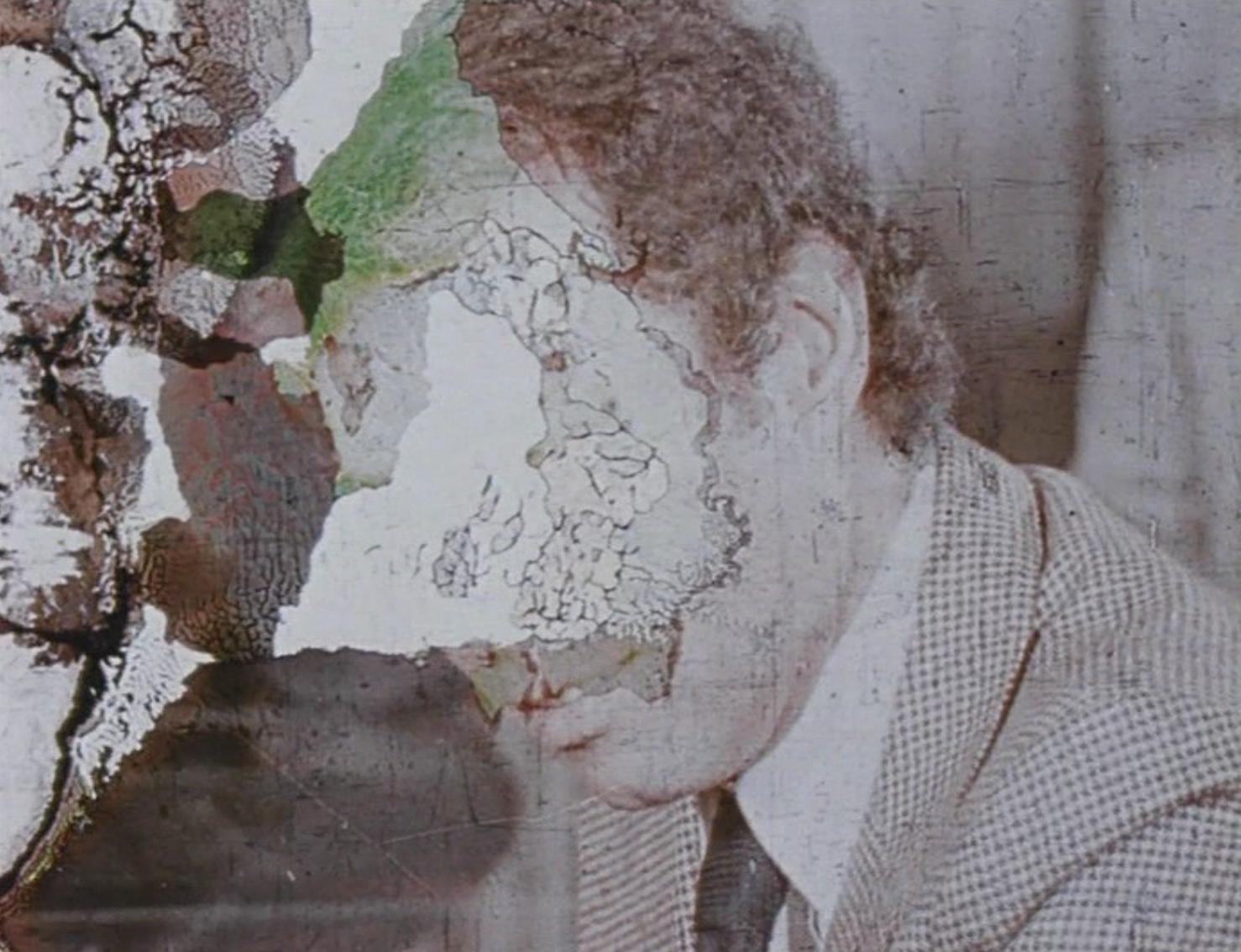
material draws us into the vulnerability of the medium. Film stock decays, bubbling and cracking before our eyes, returning to its chemical origins. Gelatin, silver, dust: the physicality of celluloid asserts itself, surviving only through a fragile contract with time. The scraps are examined like fossils waiting to be reanimated. In this decay, Deutsch locates a memory stored in deterioration itself.

a blink of an eye returns us to the organ that makes cinema possible. Spirals pulse on its surface while the distant rumble of a train approaches. Soon, we see through the train window, the movement doubled by the blink of the eyelid. REM sleep transforms into internal cinema, reminding us that dreaming preceded filmmaking by millennia. The eye becomes both subject and apparatus, examined by the very technology that expanded its reach.

This leads to a mirror, where self-regard becomes both horror and fascination. Ocular surgery unfolds with clinical detachment, unsettling in its lucidity. An eye is removed and replaced with an artificial one capable of recording. Mirrors proliferate, reflecting back at the camera and at each other, multiplying perspectives beyond human comprehension. A monkey examines its reflection, an evolutionary echo of spectatorship itself. Cinema becomes self-conscious, looking at the act of looking.

comic unsettles the mood with voyeurism laced in discomfort. A man peers through a keyhole at an exoticized world he does not understand. The soundtrack wavers, unable to support the ethical tension of the image. Humor arises, but so does unease. Deutsch exposes the mechanics of amusement while confirming how comedy is uniquely suited to carrying the weight of its cultural assumptions.

Then, in magic, cinema reveals its oldest trick: illusion. Special effects blossom from archival footage; bodies disappear and reappear; objects move of their own accord. In these moments, film seems to remember not only its scientific origins but its mythic ones. The medium has always been a playground for the impossible.

conquest interrupts this enchantment with the starkness of colonial imagery. White explorers stride across foreign landscapes with cameras and rifles alike. Their gaze treats the world as territory to be claimed. The framing itself becomes complicit in the violence, revealing how cinema absorbed imperial fantasies into its earliest modes of representation. Deutsch does not editorialize; he simply arranges the evidence and lets the images accuse themselves.

writing and language turns attention to the skeleton of cinema: intertitles, production slates, scene numbers, and other coded marks that scaffold every film. Logos become a hidden architecture beneath the visible. These fragments reveal the labor of classification and control, the systems that shape meaning before an audience ever encounters it.

emotions and passion brings us into the realm of performance. Faces contort; tears fall; desire and fear register across bodies that the camera never treats neutrally. Women, in particular, bear the burden of cinematic affect, their expressions harnessed to dramatize emotion. Deutsch’s arrangement highlights the gendered patterns in the history of performance and the ways cinema teaches us what feelings should look like.

memory and document closes the cycle. Fire devours reels of film; voyages unfold across seas; home movies flicker with the fragile glow of lives once lived. Such footage carries the warmth of personal history and the coldness of its disappearance. Cinema becomes an archive haunted by its own mortality. Everything recorded asserts preservation in the face of mortality.

Bonus Tracks

In Über. Gustav Deutsch, a portrait of the filmmaker presented without translation, the subject remains partly inscrutable, demonstrating that language is only one lens through which a life may be perceived. Lastly, an installation version of Film ist. [1–12] is shown to surround viewers with a ring of projections, allowing them to stand inside a zoetrope of continuous light. To inhabit this circle is to feel momentarily inside the medium’s inner workings, as if observing cinema dreaming.

When Light Remembers Itself

Across Film ist., Deutsch enacts a simple yet radical intervention: he allows cinema to remember itself not as entertainment or technology but as an elemental phenomenon that unveils the smallest gestures and the largest violences. It perceives what the naked eye cannot register, visualizes what consciousness struggles to accept.

In Deutsch’s cosmology, film is all things at once. It is not bound to the history of its machinery. It reaches further back, toward the first human who watched firelight travel across a cave wall and sensed meaning in the flicker. The fire fades, yet its glow remains.

Perhaps the unspoken thesis of Film ist. is that cinema is not ours to define. It is something we inherit from beyond, a continuum of presence and erasure. Deutsch listens because the films have always been speaking. Only now are we learning to hear them.