

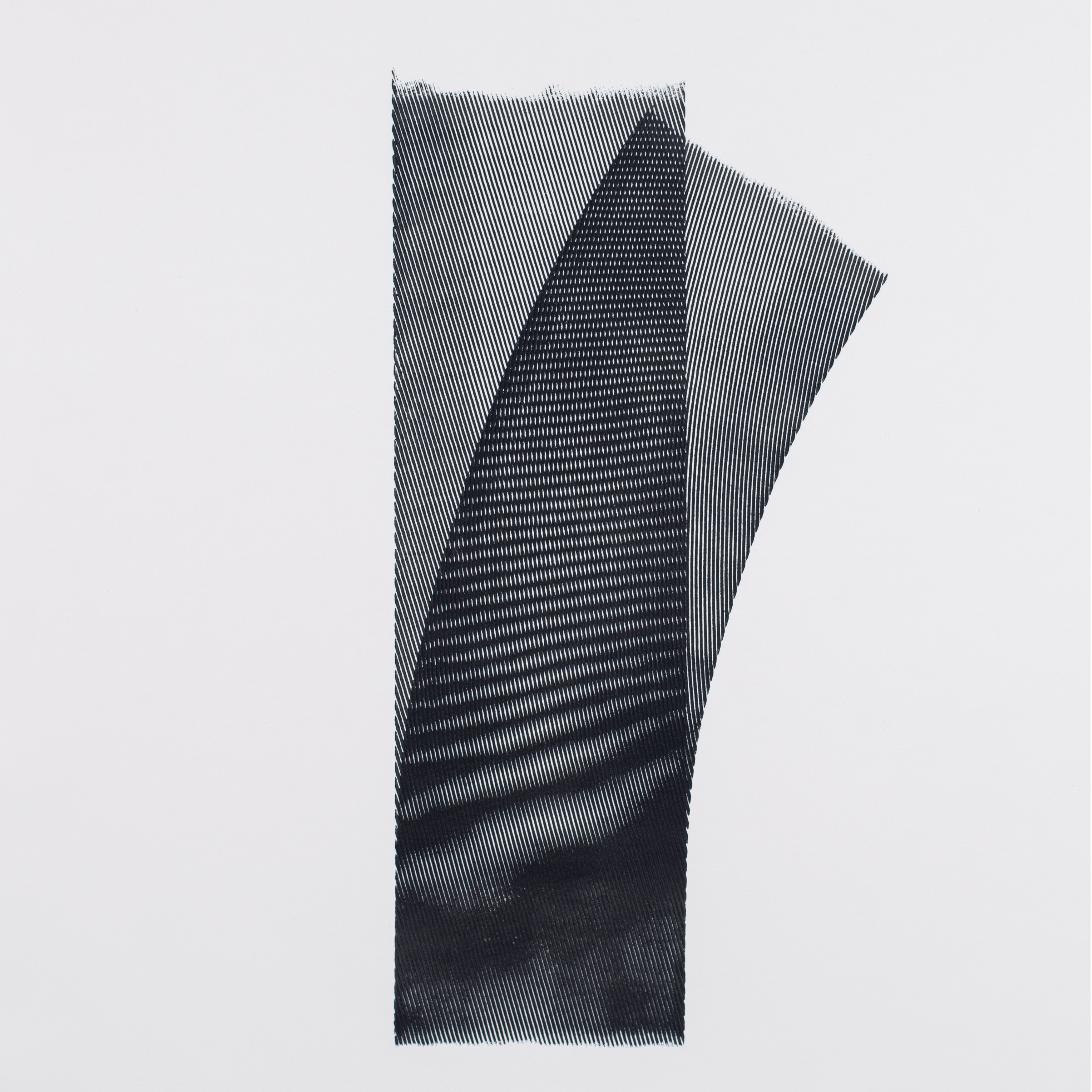
Zosha Warpeha’s I grow accustomed to the dark is an inquiry into what it means for a body to become an instrument and for an instrument to remember the body. The Hardanger d’amore does not sit across from her as an object. It leans inward, absorbs breath, and answers pulse with vibration. A background in Norwegian folk traditions and avant-garde improvisation finds a meeting point here, though neither discipline remains intact in any familiar sense. Folk memory dissolves into texture, improvisation into ritual. Two long-form compositions unfold as if time itself were refusing linearity. Recorded at ISSUE Project Room, the space enters the music as an active presence. Reverberation blooms into another voice, sympathetic strings responding not just to the bow but to the architecture surrounding them. What emerges is a shifting threshold where presence flickers into absence, where sound takes on the density of touch.
“filament” begins with an instinct older than language. Tenderness arises from a delicate pressure that suggests both care and necessity, as though survival itself depends on sustaining contact. Each stroke carries the weight of a soul learning how to remain intact—lingering, circling, studying its own fade. Repetition takes on the character of incantation, not for trance alone but for the deepening of relation. Hair against string begins to resemble skin against skin, or nerve against thought. Drones hover as suspended light, while dissonances pulse with organic inevitability, neither resolved nor resisted.
Warpeha’s voice enters from another layer of perception. It threads through the field, a flicker at the edge of visibility. Her timbre carries the ghost of song without settling into melody. One hears the trace of a tradition remembered imperfectly, or remembered so deeply that it has been released from the prison of notation. The voice lifts and dissolves, leaving behind a residue that clings to the ear, closer to scent than sound. Stone becomes sediment, sediment becomes something combustible, something capable of holding light. Beneath everything, a pulse persists. It waits, patient and uninsistent, suggesting that continuity is not the absence of rupture but its quiet companion.
“visual purple” shifts the terrain. The opening pizzicato arrives as distant movement, each pluck a footstep landing with deliberate hesitation. The instrument searches its own interiors as sympathetic strings awaken in response, their afterimages suggesting hidden circulatory systems, an anatomy in fragments. Warpeha’s voice here is less tethered to breath as we know it. It gestures rather than declares, marking space with shapes that resist translation. Each utterance resembles a glyph drawn in darkness, meaningful without the need for deciphering. Language becomes a field of suggestions rather than a system of signs.
The music inhabits a space of memory that erodes as it reveals. There are dust particles in the air, remnants of objects that disintegrate upon recognition. The listener is not asked to reconstruct what has been lost. Presence with disappearance becomes the central task. In this sense, the instrument functions as both archive and agent of forgetting, holding traces even as it transforms them beyond recovery. When the bow returns, its entrance whispers a quiet finitude. The contact feels irreversible, as though a threshold has been crossed. Tension between pitches opens a space where ambiguity turns luminous. Interpretation rises, then falls away. What remains is immediacy, a clarity that stands apart from explanation.
Across the album, the instrument becomes a site where the performer encounters herself anew. Playing turns into a negotiation between intention and response. The body initiates, the molecules answer, and somewhere between them a third presence gathers. It belongs neither to performer nor listener but exists in perpetual relation.
The deepest truth reached for here is that identity is shaped through sounding, continuously altered by what passes through it. All of which leaves us with a choice: to close our eyes against the light or remain within the field and allow what arises to alter the contours of our being, one shadow at a time.
I grow accustomed to the dark is available on Bandcamp here.

 Between Sound and Space: ECM Records and Beyond