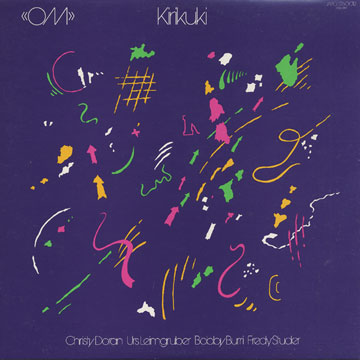
OM: Kirikuki (JAPO 60012)

OM
Kirikuki

Urs Leimgruber soprano and tenor saxophones, percussion
Christy Doran guitar
Bobby Buri bass
Fredy Studer drums, percussion
Recorded October 1 and 2, 1975, at Tonstudio Bauer, Ludwigsburg
Engineer: Martin Wieland
Produced by OM

Like its contemporary, the Everyman Band, the Lucerne-based quartet known as OM succeeded in blending rock and free improv idioms to gnarled perfection. Composed of guitarist Christy Doran (Dublin-born but Swiss-raised) and fellow countrymen Urs Leimgruber (reeds), Bobby Burri (bass), and Fredy Studer (drums), the group was an espresso shot in all four careers. ECM has, of course, given just dues with a 2006 retrospective. Still, there’s no better place to get acquainted with OM than through the four complete albums for sister label JAPO, of which this is the first (the fourth, Cerberus, survives fully intact on said retrospective).

Doran is the compositional heart and soul of the set. The only track not penned by him is “Lips” (Leimgruber/Burri), which stands out for its inspired flute playing. Leimgruber sings into the instrument for a bit of polyphonic panache against a gorgeously primal backing, Doran providing industrial touches throughout. Yet it is “Holly” which introduces the album’s distinctly nocturnal sound. Leimgruber’s talents abound here, casting him in the melodic lead from the start. Smoky atmospheres are blown into rings at his lips through a pure, oboe-like soprano. His gorgeous, full highs, complemented by Doran’s crunch, make for an energizing sound and bring their smoothness to the burnished field that is “Sykia.” The buoyant drumming makes this an enchanting epilogue. The color wheel of “Karpfenteich” begins with reedless trio action before launching us horizonward in a lob of flame. More propulsive action from the rhythm section here backs some artful crosstalk between reed and guitar. Yet it is the “Hommage à Mme. Stirnmaa” that takes this cake and bakes another one in its place. From the lovely solo by Duran that starts, it builds to a slightly burnt frenzy, out of which arises a bass of flesh and wires. The tenor solo is like a coda, rough and unleashed, and opens into a percussion solo from Studer, this but the carpet for a grand underwater raga. A masterstroke, and proof enough to seek out OM’s dates in full.

There is something strangely melancholic about the river of Kirikuki. The sunshine is in its sediments.
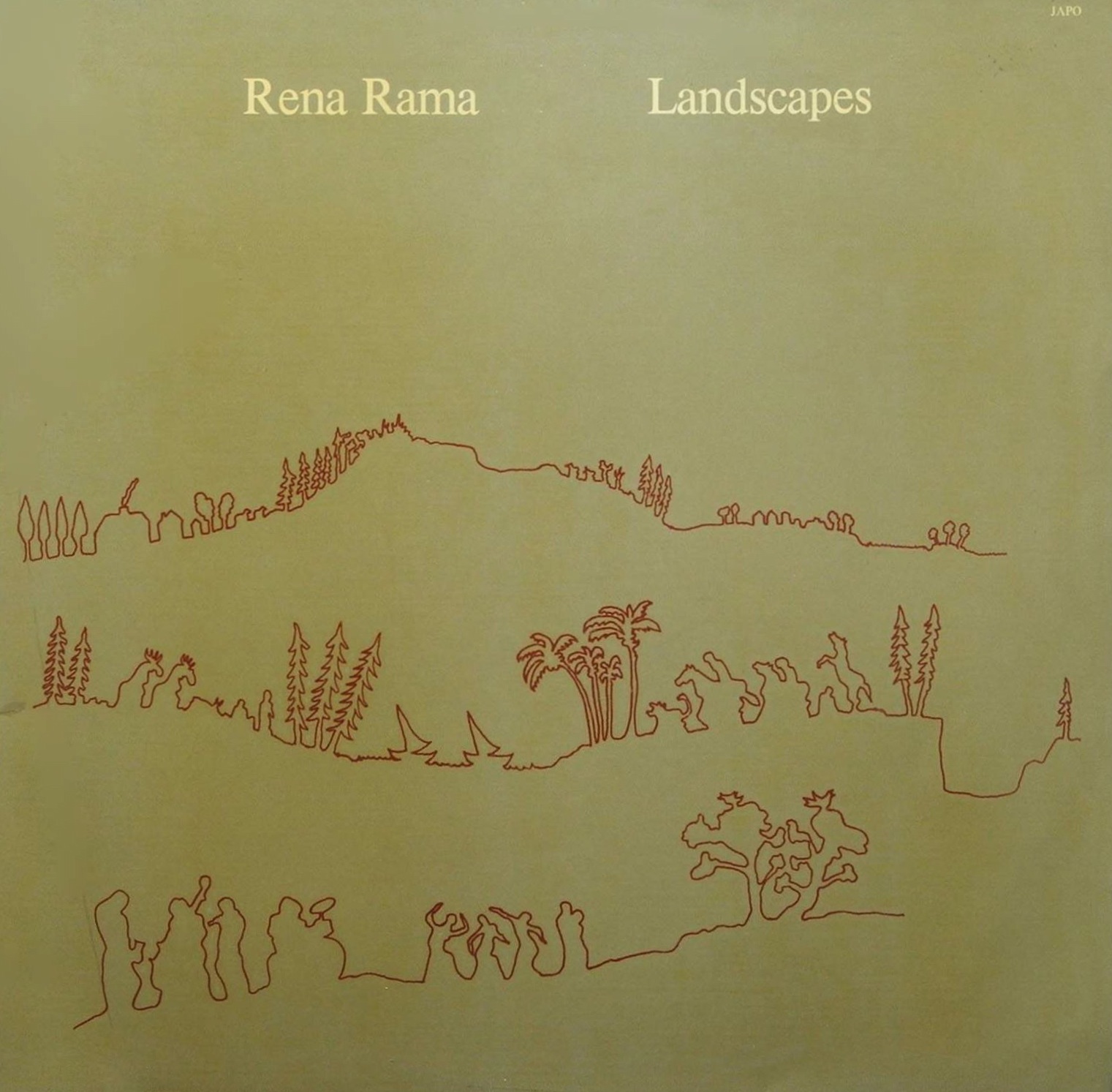
Rena Rama: Landscapes (JAPO 60020)

Rena Rama
Landscapes

Lennart Åberg tenor and soprano saxophones, percussion
Bobo Stenson piano, percussion
Palle Danielsson bass
Leroy Lowe drums, percussion
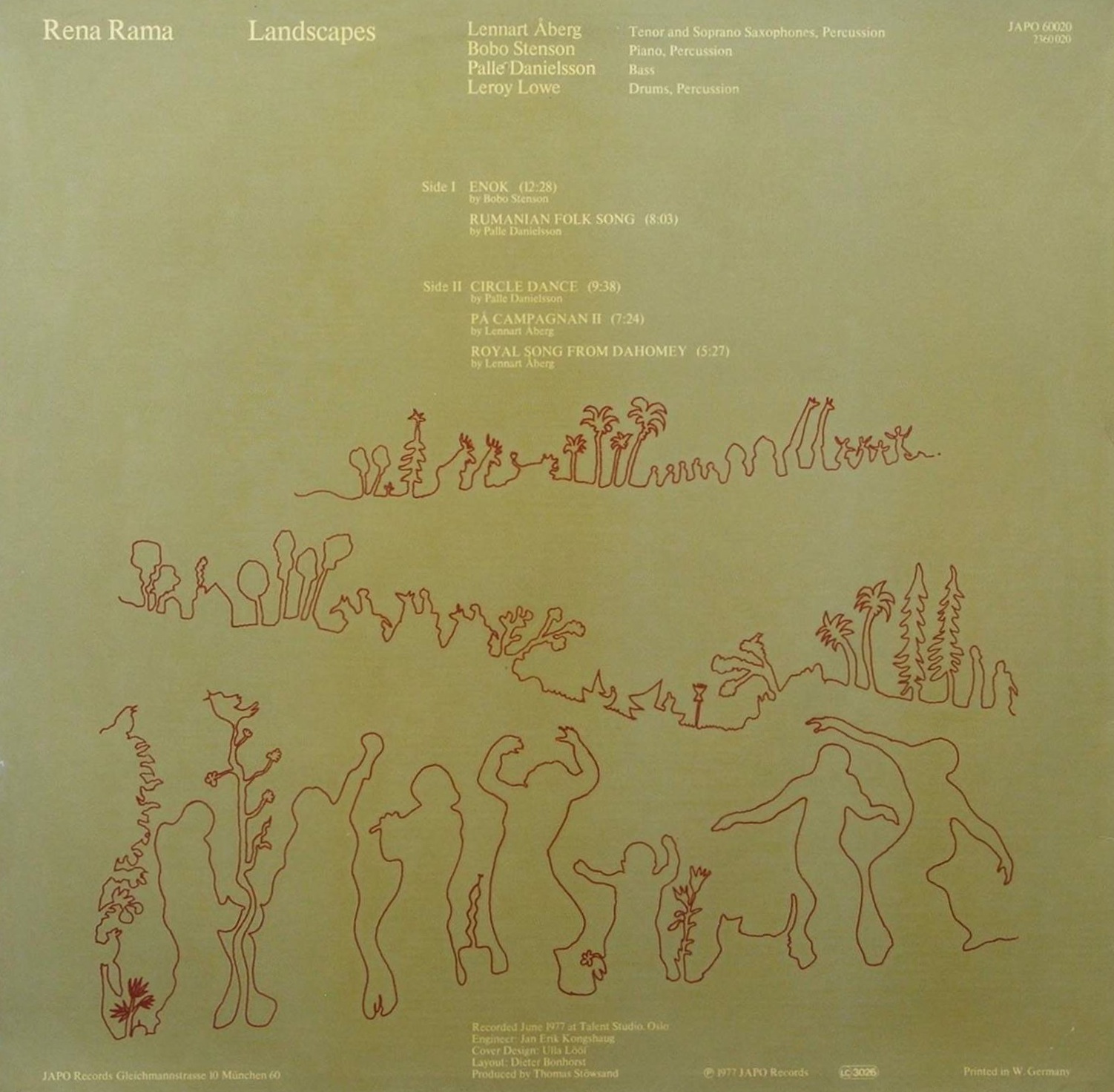
Recorded June 1977 at Talent Studio, Oslo
Engineer Jan Erik Kongshaug
Produced by Thomas Stöwsand

Saxophonist, flutist, and composer Lennart Åberg is among ECM’s sleeper talents. Having graced the label only as sideman to 1994’s Dona Nostra, his brilliance was saved instead for the limited JAPO imprint. On this record he is joined by fellow Swedes Bobo Stenson (piano) and Palle Danielsson (bass), both familiar to ECM listeners. Perhaps not is American drummer Leroy Lowe, who rounds out this incarnation of the quartet known as Rena Rama and played with the group from 1975 to 1983. Born 1944 on a Pittsburg farm, Lowe began playing drums in his high school marching band and later befriended such greats as Billy Hart in his quest for a personal voice. After a two-year period of study at the Berklee School of Music, he joined Otis Redding’s Big Band on tour. The rigorousness of this experience led him to renounce the lifestyle that came with it. In need of recovery, he randomly picked Oslo as a holiday destination and, after some shuffling around, ended up in Sweden, where he sadly died of cancer in 1999…but not before leaving behind a legacy spanning 30+ years. I note Lowe’s background not only because it’s worth telling, but also because it seems indicative of Rena Rama’s aesthetic: it spins a globe and plays whatever its finger lands on.

From the drum solo that opens the Stenson-penned “Enok,” it’s clear that Lowe was a moving force in this outfit. Colorful as an ice cream shop’s selection of toppings, he opens a spacious sound together with Stenson’s entrance, to say nothing of Thomas Stöwsand’s engineering, while Danielsson adds good vibes to the growing message. With this skyward energy behind him, Åberg need only open his wings and let the wind do the talking. That powerful tenor sheds its earthly weight in favor of a boisterous key that with its dancing unlocks gurgling leaps of intuition from Stenson. Danielsson offers two tunes. The composer’s darkly melodic intro in “Rumanian Folk Song” kicks into a light groove with Lowe along for the ride—the bed of the quartet’s energy. Stenson again scales the z-axis, landing only to relay his altitude to Åberg’s soprano. The latter, soft and sure, casts a gray spell. Throughout, the contours of the rhythm section are much like patterned cloth, wispy yet boldly imprinted. Stenson gives us the alphabet of “Circle Dance” before Åberg’s tenor puzzles it out into words and sentences. He is happy to wander far afield, knowing the band’s footprints will always catch up. A veritable tributary of invention. The reedman closes out with two compositions of his own. First is the soprano-infused “På Campagnan II,” which threads galleries of needles in single strokes of intuition. The pianism’s frenzied beauty and hip contributions from the rhythm section are surpassed only by Åberg himself. Those same infections spread in “Royal Song From Dahomey.” This caravan of purposeful melodizing is at once cold and warm and rains percussion on us as if in a desert without oasis.

Like most JAPO releases, this is another elusive jewel, but well worth the digging.


Sleeve back

OM: Rautionaha (JAPO 60016)

OM
Rautionaha

Urs Leimgruber soprano and tenor saxophones, bass clarinet, percussion
Christy Doran guitar
Bobby Burri bass
Fredy Studer drums, percussion
Recorded December 1976 at Tonstudio Bauer, Ludwigsburg
Engineer Martin Wieland
Produced by Thomas Stöwsand

The Swiss quartet of OM, which found just the freedom it needed in ECM’s studios for a good decade, flung open the doors with colorful aplomb on Rautionaha, a rare JAPO release. To this early date the group brings a kaleidoscope of shared experience. The sound is appropriately splintered. Guitarist Christy Doran pens the kick-in-the-gut opener, “For Ursi.” Unable to resist the attraction from the get-go, saxophonist Urs Leimgruber colors the twilight with his heady tenor, chaining ladders of virtuosity with attentive form. His gurgling expositions of momentary abandon give Doran just the break he needs to cast a reverberant magic with tails flying. The superb rhythm work from percussionist Fredy Studer and bassist Bobby Burri completes this wall of light. The latter gives us “Stephanie,” his first of two cuts. This meditation of gongs and electronics coalesces into some fine soliloquies from the composer, while the full drumming and six-string picking shimmer like morning sun on the horizon’s lip. The prickly tenor is a bonus. Speaking of which, Leimgruber puts his writing to the test in “Song For My Lady.” Something of a ballad, in it he becomes a crying wayfarer who walks the same circle of self-reflection until there is only music left of the one that produced it. Lifting this ponderous weight off our shoulders is Burri’s title offering, which grows like weed in a groovy embrace. His bass work glows here. Leimgruber opts for soprano, reaching heights of multi-phonic brilliance that no footstool can reach. The effect is nothing short of extraordinary. The quartet ends on a whimsical punctuation mark: a flag without a country, a star without a sky. In the absence of definite shape, we are free to induce our own.

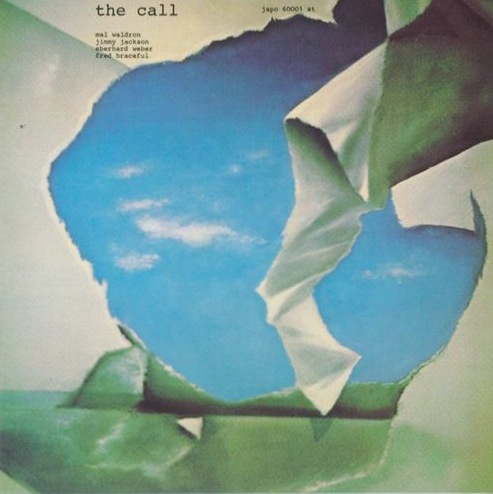
Mal Waldron: The Call (JAPO 60001)

Mal Waldron
The Call

Mal Waldron electric piano
Jimmy Jackson organ
Eberhard Weber electric bass
Fred Braceful drums
Recorded February 1, 1971 at Tonstudio Bauer, Ludwigsburg

Seeing as Mal Waldron inspired Manfred Eicher to put out his first release, Free at Last, on what was to become the legendary ECM label, it is only fitting that his name should also grace the first release of its relatively short-lived companion imprint, JAPO. Through the magic of digital reissue, many of these once elusive albums can now be experienced for the first time, if not anew. Dipping into the waters of The Call (not to be confused with the Charles Lloyd record of the same name) is like tripping on the past as if it were the Here and Now. Over two long takes, averaging 20 minutes each, he and an all-star team transport us to a warm and inviting sound that is equal parts hard bop jam, psychedelic dream, and free jazz meditation.

The title track brings an energizing sound, slick and classic as can be. Bassist and future ECM mainstay Eberhard Weber, along with drummer Fred Braceful, spurs us through some thickly settled spaces, courtesy of Jimmy Jackson on the organ, all led by Waldron’s interplanetary surf. This joyful epic peaks in a glorious bouquet of heat distortion, smooth as it is sere. Lively solo action from Weber and Braceful pushes the band’s sound into delicate relief, throwing us into a dark groove before restoring us to light.

“Thoughts” is an altogether different spoonful. A diary of aural scribblings, it unfolds private wishes with meticulous patience. After a watery intro, Waldron lays down a chalky little vamp. Subtler denouements and a twist of introspection complete the cocktail. You’ll find no miniature umbrella peeking out above this rim…only the curve of a listening ear. Waldron skips us like a stone into heavier grooves, which in return spiral into whispers. Drums curl inward, and in these quiet crawlspaces between the floorboards of the mind, we take our rest, lost among the dust bunnies whose filaments are string and wire and electric current.

This is music that tastes exactly like what it’s made of.


Alternate cover