

Vincent Courtois cello
Sophie Bernado bassoon
Robin Fincker clarinet, tenor saxophone
Janick Martin accordion
François Merville drums
Recorded, mixed, and mastered at La Buissonne Studios, Pernes-les-Fontaines, France
Recorded and mixed December 20-21, 2021 by Gérard de Haro, assisted by Matteo Fontaine
Mastered by Nicolas Baillard
Produced by Gérard de Haro & RJAL for La Buissonne and La Compagnie de l’imprévu
Release date: April 14, 2023
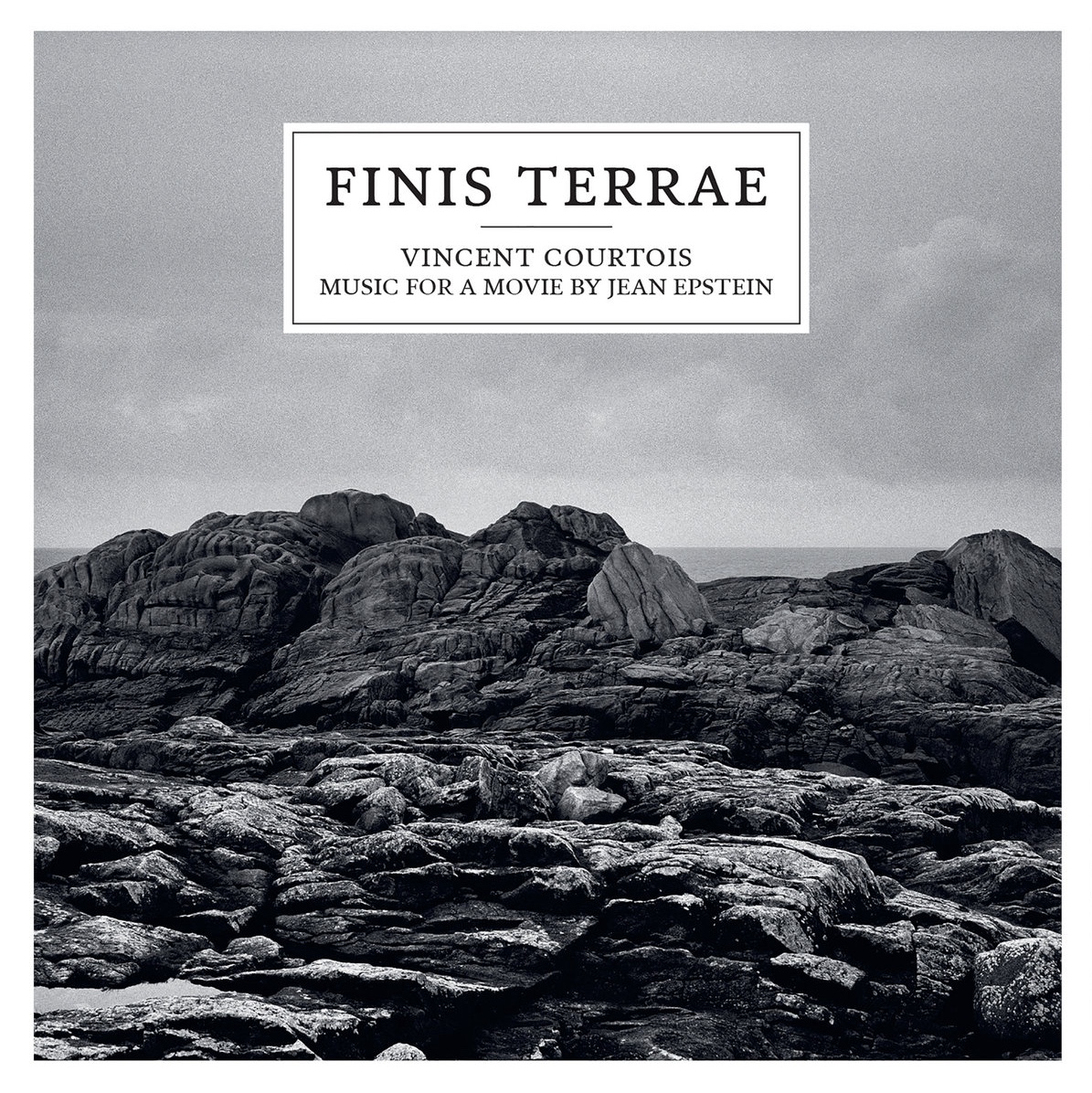
There are films that tell stories, and there are films that breathe. Finis Terrae belongs to the latter category. In 1929, Jean Epstein carried his camera to Ouessant, a wind-bitten island at the edge of Brittany, and pared narrative to its essentials. Fishermen gather seaweed on a barren rock. One suffers a minor injury. Pride intervenes. Infection spreads. Distance becomes danger. From this slender thread, Epstein draws something tidal and immense. The sea is not a backdrop but a manifestation of temperament. It glitters without warmth and devours without malice. Wind scours faces into maps of endurance, and hands move with tidal patience, thickened by salt and rope.
His lens grazes wool, stone, water, cloud until texture itself becomes drama. Close-ups turn faces into weather systems, while wide shots reduce men to brief notations against immensity. Each frame vibrates with the tension between fragility and expanse. Artifice scarcely intrudes. The men embody versions of themselves, their movements marked by an untrained gravity no actor could counterfeit. What emerges is neither fiction nor reportage but ritual. Time dilates. Waves repeat their ancient syllables against rock. Silence gathers like weather, pressing inward, creating not emptiness but expectancy, as though the image were listening for its own echo.
The wound at the center is modest in scale yet vast in implication. Stubbornness curdles into isolation, and fraternity strains under the weight of pride. When rescue arrives, it feels provisional rather than triumphant, a reminder that survival rests on cooperation as delicate as a boat’s balance in crosscurrent. The title, “End of the Earth,” names a boundary without spectacle, the horizon as threshold. At the brink, stripped of ornament, the human face remains, turned outward, raw as a tide pool exposed at low water. To watch Finis Terrae is to submit to abrasion. Salt seems to gather on the tongue. The wind seeps into the theater. Something erodes and clarifies at once.
Into this charged silence steps Vincent Courtois with a new soundtrack, an act both humble and daring. Writing for a silent film is a conversation across time, a practice of listening not only to what is visible but to what trembles beneath it. Courtois has long possessed a cinematic sensibility, evident in 2017’s Bandes originales, where he composed scores for imagined films and conjured phantom images through sound alone. There, he invented the screen. Here, he answers one already illuminated. The task shifts from discovery to correspondence. What sound belongs to stone, and what rhythm suits a horizon?
Joined by Sophie Bernado on bassoon, Robin Fincker on clarinet and tenor saxophone, Janick Martin on accordion, and François Merville on drums, Courtois approaches the film as interlocutor. The ensemble does not illustrate the images; it converses with them, sometimes in sympathy, sometimes in friction. The “Ouverture” grounds us immediately. Accordion and cello carry a grain that feels quarried from the same rock as the island, earthy yet lucid. Soft drumming enters like distant surf, reeds tracing the contours of labor and air. Sound and image begin to braid, the scrape of bow answering that of seaweed against stone.
In the title track, pizzicato cello pulses with restrained urgency while accordion phrases swell and recede like wind threading through narrow streets. The bassoon casts a dusky sheen across the fishermen’s silhouettes. Music shapes silence rather than filling it, revealing the architecture of quiet already present in the film. “Les Goémons” unfolds in textures that crumble and reform, evoking the uneven shoreline, as clarinet lines rise clear and saline above a gravelly bassoon foundation. The specificity of Ouessant remains palpable, yet the music gestures outward toward any place where humans confront the indifferent sublime.
“L’Impossible Départ” becomes a study in hesitation, sustained tones hovering like mist above water. Even when energy quickens in “Les Volontaires” and “Ouessant,” edging toward dance, a trace of melancholy persists. Celebration carries the memory of peril. Joy stands close to fear. In “L’Attente des Mères,” multiphonic bassoon murmurs and patient drumming create a taut acoustic space in which waiting feels almost visible. “Le Sauvetage” releases unbound tenor lines that surge with collective effort, less victory than will made audible.
The closing “Docteur Lessen” gathers the emotional residue of the journey. A forlorn melody drifts outward, neither resolving nor collapsing, moving toward the horizon without promise of arrival. Notes thin into distance, as though sound itself were subject to erosion, leaving the listener suspended between relief and continuation. Although the film deepens the experience, the soundtrack stands firmly on its own. Freed from the screen, it summons an inner cinema, much as Bandes originales once did, though now the phantoms have faces and weathered hands.
To add a soundtrack to a silent film is to recognize that images are never mute. They hum at frequencies we often overlook, and music can amplify that hum or reveal the solace within it. In the meeting of Epstein’s light and Courtois’s sound, time seems to fold, like two shores sensing one another across water. Perhaps every act of listening is an attempt to stand at such a shore. We face horizons we cannot cross, yet sound travels where the body cannot, binding us to strangers and to landscapes we may never inhabit. At the end of the earth, whether of rock or memory, we remain creatures who lean into the wind, attentive to whatever answers back.
 Between Sound and Space: ECM Records and Beyond