Jean-Marie Machado: Como as Flores (RJAL 397052)

Jean-Marie Machado piano
Claude Tchamitchian double bass
Zé Luis Nascimento drums, percussion
Recording, mixing, mastering at Studios la Buissonne, Pernes-les-Fontaines, France
Recorded April 2024 and mixed May 2024 by Gérard de Haro, assisted by Matteo Fontaine
Mastered by Nicolas Baillard at La Buissonne Mastering Studio
Steinway grand piano prepared and tuned by Sylvain Charles
Produced by Cantabile and Gérard de Haro with RJAL for La Buissonne 
Release date: January 23, 2026

After a series of ambitious, large-scale projects that stretched outward in many directions, pianist and composer Jean-Marie Machado turns inward and returns to the elemental with this luminous trio recording. The gesture feels less like a reduction than a distillation, as if years of orchestral color and structural ambition have been pressed slowly into a sweet-smelling essence. The album’s title, Como as Flores, translated from Portuguese as “Like Flowers,” names the guiding metaphor with quiet elegance. A flower does not argue for its beauty. It opens. Fragrance spreads through the air without instruction, invisible yet unmistakable. In much the same way, Machado’s music unfolds here with an unforced grace, each note blooming from the last, each phrase releasing a delicate aroma of feeling. With Brazilian percussionist Zé Luis Nascimento and bassist Claude Tchamitchian beside him, Machado enters a kind of musical relativity where gravity and flight continually exchange roles.

“Romantic Spell” begins like the moment one falls into a lover’s arms and forgets where the body ends. The opening breath carries warmth and ease, a gentle suspension that seems to hover between waking and dream. Piano chords drift like petals across still water. Tchamitchian’s bass speaks in soft murmurs, grounding the trio in a tender gravity. Nascimento introduces colors that shimmer at the edges of perception. Curtains sway in moonlight somewhere within the music. A slow tide of emotion gathers its strength. Everything feels receptive, open, full of promise.

From this intimate beginning, “Valsa Ouriço” arrives with a sudden brightness that resembles the first flash of morning light through an open window. Energy crackles through the trio’s playing. Machado’s piano lines spiral and leap with the exhilaration of new affection. The piece carries the buoyancy of ocean waves, rising and falling with a natural elasticity. Nascimento’s percussion reveals astonishing sensitivity here. Each gesture lands with the precision of a brushstroke in a finely detailed painting. The rhythmic patterns do more than support the melody. They sing alongside it, adding hues that feel melodic in their own right. His hands seem to conjure entire landscapes with the lightest touch.

In “De Memorias e de Saudade,” time slows until each note lingers in warm air. Nostalgia inhabits the space without turning heavy. The music resembles the quiet contemplation of an old garden where memory and present sensation mingle freely. Machado allows silence to bloom between phrases. The ascent begins with “Le Voleur de Fleurs,” a piece that climbs with patient determination before releasing itself into radiant flight. One hears echoes of wandering through fields thick with color, the senses saturated by scent and sunlight. Nascimento becomes particularly vivid here, his playing lush and expansive. A few strokes across skin or wood seem capable of summoning vast distances. The percussion glows with a deep golden warmth. One could almost imagine pollen drifting through the air.

Shadows appear briefly in “Our Tears Never Cried,” where slight dissonances introduce a delicate ache. Even flowers contain a kind of fragility. Their beauty persists beside the knowledge of how easily they can wilt and detach from their stems. Machado leans into that ambiguity, shaping phrases that hover between sweetness and sorrow. The trio then turns toward Miles Davis with a supple and groove-laden interpretation of “Nardis.” Familiar territory becomes fertile soil for improvisation. Machado’s touch balances clarity and mystery, while Tchamitchian and Nascimento weave a rhythmic fabric that moves with graceful inevitability.

“Piuma,” performed as a piano solo, offers one of the album’s coziest moments. The title suggests a feather, something light enough to drift through the air. Machado plays with remarkable restraint, allowing tenderness to accumulate slowly. Beneath the softness lies a quiet melancholy, the subtle awareness that love carries its own permeability. Feelings pass through us like wind through branches, leaving movement long after the breeze itself has gone.

Tchamitchian then steps forward with his arco introduction to “Perdido em Clareza.” The bowed bass opens a clearing within the album’s poignant terrain. When the trio joins together, they settle into a mid-tempo dance marked by playful curiosity. There is a childlike wonder in the way the themes unfold, as though the musicians are discovering their shapes in real time.

“Transvida” turns the spotlight toward Nascimento in a percussion showcase that reveals the full breadth of his expressive vocabulary. His playing suggests rain striking leaves, wind traveling across dry earth, and footsteps crossing hidden paths through a forest.

The closing piece, “L’Endormi,” inhabits a more dreamlike register. Frame drum pulses softly beneath harmonic bowing from Tchamitchian. Machado’s piano carries a darker hue, as if twilight has settled over the garden that opened at the beginning of the album. The music drifts through strange and beautiful terrain where shadows possess their own quiet luminosity.

Yet the deeper resonance of Como as Flores extends beyond individual tracks. Flowers appear here not simply as decoration but as a philosophy of form. Each composition grows organically, rooted in attentive listening and mutual responsiveness. Nothing is forced open. Each musical gesture unfolds in its proper season. One hears the trio tending their sound the way a gardener tends living soil, trusting the invisible processes that allow life to emerge.

Perhaps that is the quiet wisdom contained in Machado’s return to the trio format. Creation often resembles cultivation rather than construction. One prepares the ground, listens carefully to the conditions of light and rain, then waits with patience for something unexpected to appear. A garden cannot be commanded into bloom. It answers only to care, curiosity, and time. In that sense, music and flowers share a secret. Both reveal how beauty enters the world without force, rising gently from hidden roots that continue their work long beneath the surface.
Jean-Marie Machado & Danzas Orchestra: Sinfonia (RJAL 397050)

Jean-Marie Machado piano
Jean-Charles Richard chief conductor
Cécile Grassi viola
Cécile Grenier viola
Gwenola Morin viola
Guillaume Martigné cello
Clara Zaoui cello
Marc Buronfosse double bass
Élodie Pasquier clarinets
Stéphane Guillaume flutes, tenor saxophone
Renan Richard soprano and baritone saxophones
Tom Caudelle saxhorn
François Thuillier tuba
Didier Ithursarry accordion
Joachim Machado guitar
Marion Frétigny percussion, marimba, glockenspiel
Aubérie Dimpre percussion, vibraphone, glockenspiel
Recording, mixing, mastering at Studios la Buissonne, Pernes-les-Fontaines, France
Recorded November and December 2023 and mixed April and June 2024 by Gérard de Haro, assisted by Matteo Fontaine
Mastered by Nicolas Baillard at La Buissonne Mastering Studio
Steinway grand piano prepared and tuned by Sylvain Charles
Produced by Cantabile and Gérard de Haro & RJAL for La Buissonne
All tracks composed and arranged by Jean-Marie Machado
Release date: January 24, 2025

Jean-Marie Machado has long composed as if mapping a living geography, each work another inlet along a coastline he continues to discover. Sinfonia, written for his Danzas Orchestra, arrives like a new tide upon that shore. Across more than three decades and thirty albums, from solitary piano meditations to the breadth of large ensembles, Machado has cultivated a language where jazz breathes with classical lungs. The celebrated Cantos Brujos revealed the power of this synthesis. Sinfonia deepens that current.

“Ria Largo” opens with gentle inevitability. Stepwise motifs shimmer like sunlight across tidal water while the glockenspiel scatters small sparks of brightness through the orchestral surface. The music glances backward through salt air toward older voyages and half-remembered ages, a harbor scene where departure feels imminent but the ropes have not yet been cast free.

From this threshold emerge three diptychs that move like successive swells. “Tanghoule” enters beneath a dimmer sky, its atmosphere shaped by the shadowed viola of Cécile Grenier. Didier Ithursarry’s accordion spreads a soft harmonic glow while Marc Buronfosse’s bass walks with deliberate tenderness. Renan Richard’s soprano saxophone floats through with poised lyricism, suspended between inward reflection and outward motion.

“Barcaronde” turns the vessel toward open water. Guitarist Joachim Machado begins amid flowing piano figures whose ripples widen across the ensemble. The cello of Guillaume Martigné gradually assumes the foreground, unfolding a patient monologue that draws surrounding voices into a finely woven tapestry. What begins as solitary expression becomes shared narrative. In “L’écume des rires,” vitality breaks through as accordion, clarinet, and tuba form a lively trio. Their quicksilver dialogue opens a chamber of inspired improvisation. The second half reveals a different character altogether, one that is brittle in appearance yet strangely resilient, like shells shaped by relentless tides.

“Barque magnétique” introduces a deeper nocturne through the baritone saxophone of Richard, whose dark buoyancy drifts across the ensemble like a lantern gliding over black water. Magic lingers here in quiet form, a subtle phosphorescence. “Dérive des cinq pas” centers on violist Cécile Grassi, whose line wanders through the ensemble with contemplative patience. Fragments of melody appear like objects discovered in tidal pools after the sea withdraws. The mood remains intimate, inviting the listener to lean closer.

Energy brightens with “Volte Flamme.” Stéphane Guillaume’s flute darts through the ensemble with birdlike agility while percussionists Marion Frétigny and Aubérie Dimpre construct an intricate terrain of rhythm. The electric guitar flashes through the texture with bright sparks, its voice cutting momentarily through the orchestral weave. Afterward, “Tréhourhant” offers a pause of quiet reflection. The piano speaks alone in restrained, mournful phrases that seem to measure the distance traveled.

The closing “Jig Raz” gathers the ensemble into a surge of unity. A geometric groove forms beneath wordless vocals that rise from the orchestral body like wind filling a sail. The music spirals upward with exuberant force, lifting itself like a waterspout climbing toward the clouds and carrying the listener into open air.

Yet the lasting resonance of Sinfonia lies deeper than imagery. Machado understands that the sea offers a way of thinking about sound itself. Music resembles water in its refusal of permanence. A phrase appears, glimmers briefly, then dissolves into the larger motion surrounding it. Improvisation becomes an act of listening to the present moment rather than attempting to capture it.

Standing before the ocean, one senses how small gestures participate in immense processes that began long before us and will continue long after. Machado and his orchestra seem content with that truth. They do not attempt to master the tide. They simply enter its rhythm and allow the music to move as it must. Perhaps that is the quiet lesson of Sinfonia. Meaning does not always arrive as a destination. Sometimes it reveals itself only while we drift.

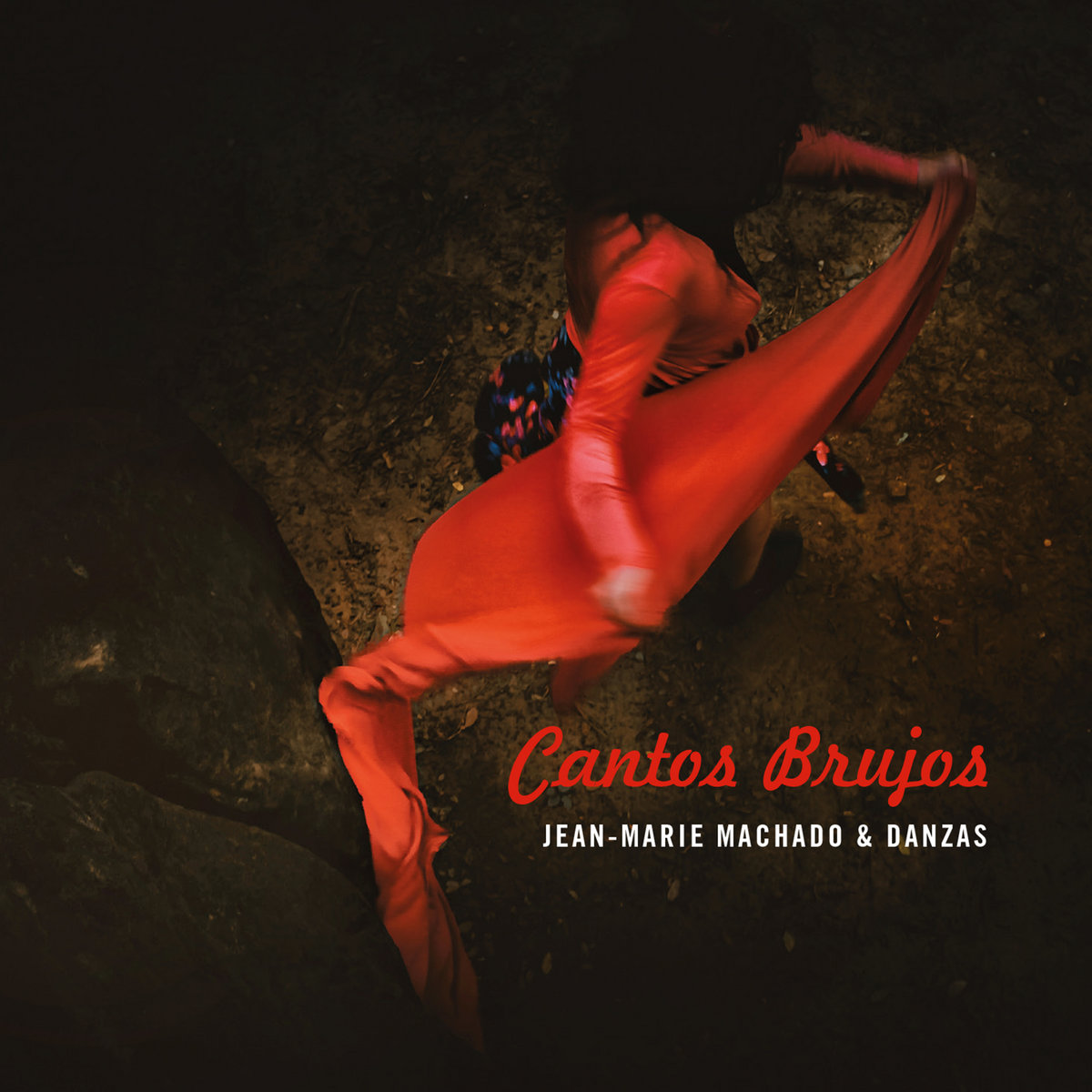
Jean-Marie Machado & Danzas: Cantos Brujos (RJAL 397045)

Jean-Marie Machado piano
Karine Sérafin voice
Cécile Grenier viola
Cécile Grassi viola
Guillaume Martigné cello
Élodie Pasquier clarinets
Jean-Charles Richard soprano and baritone saxophones
François Thuillier tuba
Didier Ithursarry accordion
Zé Luis Nascimento percussion
Recording, mixing, mastering at Studios La Buissonne, Pernes-les-Fontaines, France
Recorded September 7-9 and mixed September 21-23, 2022 by Gérard de Haro, assisted by Matteo Fontaine
Mastered by Nicolas Baillard at La Buissonne Mastering Studio
Steinway grand piano prepared and tuned by Sylvain Charles
Produced by Cantabile and Gérard de Haro & RJAL for La Buissonne
Release date: February 24, 2023

Pianist Jean-Marie Machado has long dwelled in the fertile borderlands where jazz breathes against classical form and contemporary color stains the page with new light. With his Danzas ensemble, he ventures further into that liminal space on Cantos Brujos, shaping a five-part suite that circles the incandescent heart of Manuel de Falla’s El Amor Brujo. The ballet’s haunted libretto by Gregorio Martínez Sierra, recast here in its French incarnation as L’amour sorcier, becomes less a relic than a living ember. Machado cups it in his hands and blows softly until it flares.

In this reimagining, the Arab-Andalusian and African currents swell like subterranean rivers rising to the surface. Flamenco’s sharper heelwork recedes, not erased but absorbed into a broader choreography of pulse and breath. What once occupied 25 minutes now unfolds across an hour of transformation. The suite becomes a ceremony, an incantation, a circle traced and retraced in ash and salt. Ritual, impressionist haze, and improvisational daring mingle until genre dissolves into atmosphere, a meditation on how memory mutates when sung by new mouths.

The opening gestures are hushed, almost reverent. Piano tones fall like droplets into still water while cello and viola unwind a thread of longing. From this tender aperture emerges “Canción del amor dolido,” a surge of collective breath. Percussion flickers, horns flare, and a soprano saxophone rises in a line so supple it seems to write its own script in the air. The music blooms forth, petal by petal, into “La luna y el misterio” and “En la cueva – La noche,” where shadows acquire texture. Élodie Pasquier’s clarinet in the latter moves with liquid intelligence, slipping between registers as if navigating a dream’s shifting corridors.

Then comes “Danza del terror,” where François Thuillier’s tuba prowls, its voice rich and resonant, joined by a song that feels at once ancient and immediate. Throughout, the ensemble achieves a rare equilibrium. Strength never bruises delicacy. Fragility never forfeits resolve. In “El círculo mágico,” accordion and clarinet entwine like twin serpents guarding an unseen threshold. “Magic love” glints with percussive sparkle and tensile strings, suggesting that enchantment often resides in the smallest vibration.

An atmosphere of mystery pervades the suite, yet it never drifts into abstraction for abstraction’s sake. Even at its most mystical, the music keeps one foot on soil. Many of the pieces are compact, built from cellular motifs that pulse and recombine. The clay drum and flute of “Como llamas” exchange identities with the cajón-driven “Danza ritual del fuego,” carrying us from one temporal plane to another without warning. Just as we settle into the present groove, the ground tilts and we find ourselves elsewhere, suspended between eras. It is here that passion reveals itself most vividly.

Midway through, a solo viola passage opens like a private confession whispered into a cavern. Its timbre holds both bruise and balm. “Canción del fuego fatuo” ignites with sudden joy, a firecracker sparked by a glance that lingers too long. In “Chispas brujas,” Machado converses with cellist Guillaume Martigné in phrases that seem to circle an abyss, daring gravity to claim them. The tension hums. Each note feels like a match struck in darkness.

There is also play. “Danza y canción del juego de amor” struts with buoyant assurance, the full ensemble reveling in its own amplitude. Moods link together like charms on a bracelet, each one catching light from a different angle. Voices rise and recede, tones interlock, and influences weave a tapestry that refuses hierarchy.

All paths lead to “Final – Las campanas del amanecer,” whose orchestral breadth opens the horizon as a diary left unlatched. Dawn arrives with a sound that feels almost architectural, building a world as it erases the last traces of night. The suite closes without sealing itself shut. Instead, it gestures outward, toward a space where the old story has shed its skin and the new one waits, luminous and unclaimed.

When a work rooted in one soil is transplanted and tended by different hands, what grows is neither a replica nor rebellion. It is something in between, something that speaks to the blurriness of identity and the strange fidelity of transformation. Perhaps art’s deepest magic lies there, in its refusal to remain fixed. We listen, thinking we are tracing a lineage, only to realize that lineage is tracing us, inscribing its fire in our own unguarded chambers.

Jean-Marie Machado: Majakka (RJAL 397039)

Jean-Marie Machado piano
Keyvan Chemirani zarb, percussion
Jean-Charles Richard saxophones, flutes
Vincent Segal cello
Recording, mixing, mastering Studios La Buissonne, Pernes-les-Fontaines, France
Recorded September 23-25, 2020, and mixed by Gérard de Haro, assisted by Matteo Fontaine
Mastered by Nicolas Baillard at La Buissonne Mastering Studios
Piano preparation and tuning by Sylvain Charles
Produced by Cantabile, Gérard de Haro with RJAL for La Buissonne
Release date: February 5, 2021

On Majakka, a word that in Finnish means lighthouse yet also suggests an inner watchtower, pianist and composer Jean-Marie Machado establishes a roaming state of mind. The album feels like a journey that refuses checkpoints, a music that travels because it knows nothing else. It charts the migration of memory, the drift of identity, and the strange geography of listening itself.

Throughout, Machado speaks of looking back at his own past recordings and discovering a color that had been waiting for him all along, a private illumination that insisted on being seen. That realization becomes the emotional compass of the album. Majakka is less a retrospective than a return that keeps going forward, a circular voyage where the act of remembering becomes another form of departure.

Surrounded by a remarkable ensemble, he shapes this odyssey with great subtlety. Keyvan Chemirani’s zarb (or tombak), a heartbeat of wood and skin, brings a tactile, breathing pulse. Jean-Charles Richard’s saxophones and flutes cut lines through the air like invisible routes, while Vincent Segal’s cello adds gravity, warmth, and a kind of traveling shadow beneath the light. Together they constitute a terrain that is constantly shifting, constantly unfolding.

Born into Italian, Spanish, and Portuguese lineages and raised in Morocco, Machado carries a passport made of histories rather than nations. His affinity for Brazilian music and for the impressionistic expanses of Manuel de Falla and others is his natural climate.

“Bolinha” opens with a sound that feels newly discovered even as it seems traditional. The zarb skims the surface of the music, giving gentle traction to the piano, bass, and saxophone as though the rhythm were lightly tugging the travelers onward. Beneath the beauty lies a quiet insistence, a pulse that suggests inward as much as outward motion. One senses that this journey begins by turning inside before it ever reaches the horizon.

In “Um vento leve,” the wind grows brighter, but longing deepens. Piano and soprano sax converse with tenderness while the rhythm section moves with guarded wisdom, keeping secrets until the landscape demands them. The music carries an ache for destinations that may not exist except in the act of seeking.

Both pieces belong to La main des saisons, a project inspired by Fernando Pessoa, whose poetry itself is a labyrinth of wandering selves. Later, “Emoção de alegria” returns to this spirit, dancing sideways rather than straight ahead. It refuses linear passage, opting instead for meandering revelation. The joy here is full of shadows.

“La lune dans la lumière” pauses the expedition. Cello and low flute circle the piano in a nocturnal embrace, creating a sound at once intimate and distant. The moonlight seems to hover rather than shine, illuminating sorrow without dissolving it. For a moment, travel becomes stillness, and stillness becomes its own destination.

“Gallop impulse,” first heard on Machado’s 2018 Gallop Songs, arrives like a sudden clearing after nightfall. Born from his connection with Chemirani, and colored by Machado’s earlier collaboration with Naná Vasconcelos, the piece blooms into immediate life. Percussion slips in and out of view, shaping the space around it.

The trio of pieces written for the quartet in the studio, “Les pierres noires,” “Outra Terra,” and “La mer des pluies,” carries the tremor of a pandemic-afflicted world. They feel carved from isolation, shaped by a time when itineracy felt forbidden. Yet within that restriction, Machado finds expansive imagination. The latter piece, a solo piano ballad, stands apart like a private confession. Its beauty is spare, unadorned, and devastating. It tells a wordless story of hunger for air, light, and meaning beyond the body’s limits.

“Les yeux de Tangati,” originally conceived for a duet with Dave Liebman, brings the journey back to earth and breath. Wooden flute (perhaps a nay?) and soprano saxophone weave across an imagined desert, while piano and pizzicato cello plant delicate footprints in the sand. A conversation with landscape itself, as though the dunes were speaking back. Finally, “Slow bird” lifts the listener into quiet enchantment, moving with restrained grace before opening into a surging release.

By the end, travel no longer feels like crossing from here to there. It becomes a way of being. Machado’s lighthouse does not guide ships to land but teaches them how to drift with purpose. The album suggests that borders are simply habits of hearing, lines we draw because we are afraid of the open.

And so, Majakka proposes a gentler philosophy. To journey is not to arrive, to belong is not to stay, and to remember is not to return but to keep moving with deeper awareness. The true horizon is not a place but a practice, the quiet art of listening while in motion, forever and without frontiers.

Jean-Marie Machado/Orchestre Danzas: Pictures for Orchestra (RJAL 397033)

Cover

Jean-Marie Machado
Orchestre Danzas
Pictures for Orchestra

Jean-Marie Machado piano
Didier Ithursarry accordion
François Thuillier tuba
Stéphane Guillaume flutes
Jean-Charles Richard saxophones
Cecile Grenier viola
Severine Morfin viola
Guillaume Martigne cello
Elodie Pasquier clarinets
Artistic direction by Jean-Marie Machado and Gérard de Haro
Recording, mixing, mastering, Studios La Buissonne, Pernes-les-Fontaines, France
Recorded October 2-5 and mixed November 12/13, 2018 by Gérard de Haro
Mastered by Nicolas Baillard at La Buissonne Mastering Studios
Piano preparation and tuning by Alain Massonneau
Release date: March 8, 2019

After making his La Buissonne label debut with saxophonist Dave Liebman, pianist and composer Jean-Marie Machado returns with his most personal project to date. Though leading a nine-member ensemble of two violas, cello, winds, accordion, and tuba, he leaves off the roster an important tenth member: improvisation itself.

The set is held intimately aloft by three piano solos, each sweeping and painterly in its own way. The opening “Minhas três almas” is the most nostalgic among them. Like a child taking its first steps, it sparkles with unadulterated delight even as it foreshadows the hardships life is sure to put in one’s path. While some of what comes after is in an exuberant mode—including the Egberto Gismonti-esque greenery of “A água do céu,” the tuba-centric dance of “Trompeta Grande,” and the invigorating encore, “Oriental jig”—the heartbeat of this musical body runs on the electrical impulses of something far more introverted. The space within, it turns out, is grander than any without, for only the mind and soul are equipped to imagine infinity.

Dust and ashes float in the air of “Nebbia,” throughout which a viola sings in its highest registers as a mercy of chronological salvation. Kindred voices extend their loving arms across other terrains. Like the cello drawing moonlight between the quivering branches of “As ondas da vida” or the soprano saxophone grazing cloud in “Circles around,” every gesture has an echo, and every echo is the start of another.

The cumulative effect is an emotionally resilient biography of a life known by no other name than our collective own. Even (if not especially) when Machado arranges the work of Astor Piazzolla (“Vuelvo al sur”) and Robert Schumann (“FW.1855”), we hear our own experiences reflected in every dialogue. All of which accounts for another gem in the La Buissonne catalog.