Kurt Kren: Which way to CA? (INDEX 020)

When Michael Palm asks, “What does it mean to recognize a documentary gesture in Kren’s films?” he touches the central paradox of Kurt Kren’s twilight period. Long associated with the Vienna Actionists and known for some of the most uncompromising structural films ever made, Kren did not turn to the documentary mode as a fallback. It emerged as a quiet intensification of his lifelong fascination with fragments, the energies of the everyday, and the body’s unstable position within political and aesthetic systems. During his years in America, he jokingly called these late works “bad home movies.” Palm insists they do not refer to a distant elsewhere but to the vivid here and now. They relinquish the mythic aura of the avant-garde in favor of lived contingencies, grounding Kren in a world that rarely notices him.

Whereas home movies locate the filmmaker in a selective, recognizable way, Kren is an émigré in constant dislocation. The power of this art lies in this refusal to monumentalize either the American landscape or his own presence within it. Up close but rarely personal, these films are flashes of collisions between the remembered intensity of radical youth and the inevitable disjunction of aging.
Happy-end

This shift in practice begins with the prophetic ruin of 18/68 Venecia kaputt, where a battleship looms in the haze as blue spots burst across the frame. It is as if Venice and the film stock corrode together. The camera attempts to bear witness even as its own material disappears. That sense of vanishing matter, of form dissolving as soon as it appears, sets the tone for what follows. In 22/69 Happy-end, the viewer sits in a theater, watching Kren watch films, only to have the experience interrupted by stray bursts of pornography. Kren is no longer detailing the images on the screen but exposing the structures of looking that keep them arbitrarily intact.
Western

This concern with spectatorship continues with 23/69 Underground Explosion, where a touring underground festival is captured with a camera held at the hip. The tremor is not an aesthetic choice but the imprint of presence. The image vibrates not to signify energy but to enact it. In 24/70 Western, a poster of My Lai trembles under Kren’s insistence. The film ends in Vienna, collapsing distance, reminding the viewer that atrocity is never elsewhere but leaks into every geography.

Auf der Pfaueninsel

Even the more eccentric detours of the early seventies enter this widening arc of regard. 26/71 Zeichenfilm – Balzac und das Auge Gottes, Kren’s laconic allegory involving an “eye of God,” a near-hanging, and a sacrilegious eruption, folds Actionist grotesquerie into the logic of animation, as if to test the boundaries of what constitutes a record. 27/71 Auf der Pfaueninsel shifts the playing field again, turning a simple walk with the Brus family into a meditation on proportion. The credits, twice as long as the film itself, suggest that certainty can reside in the absence of emphasis. And in 29/73 Ready-made, Kren reads Groucho Marx’s exasperated letters to Warner Bros., turning authorship into a relay of citations.

Keine Donau

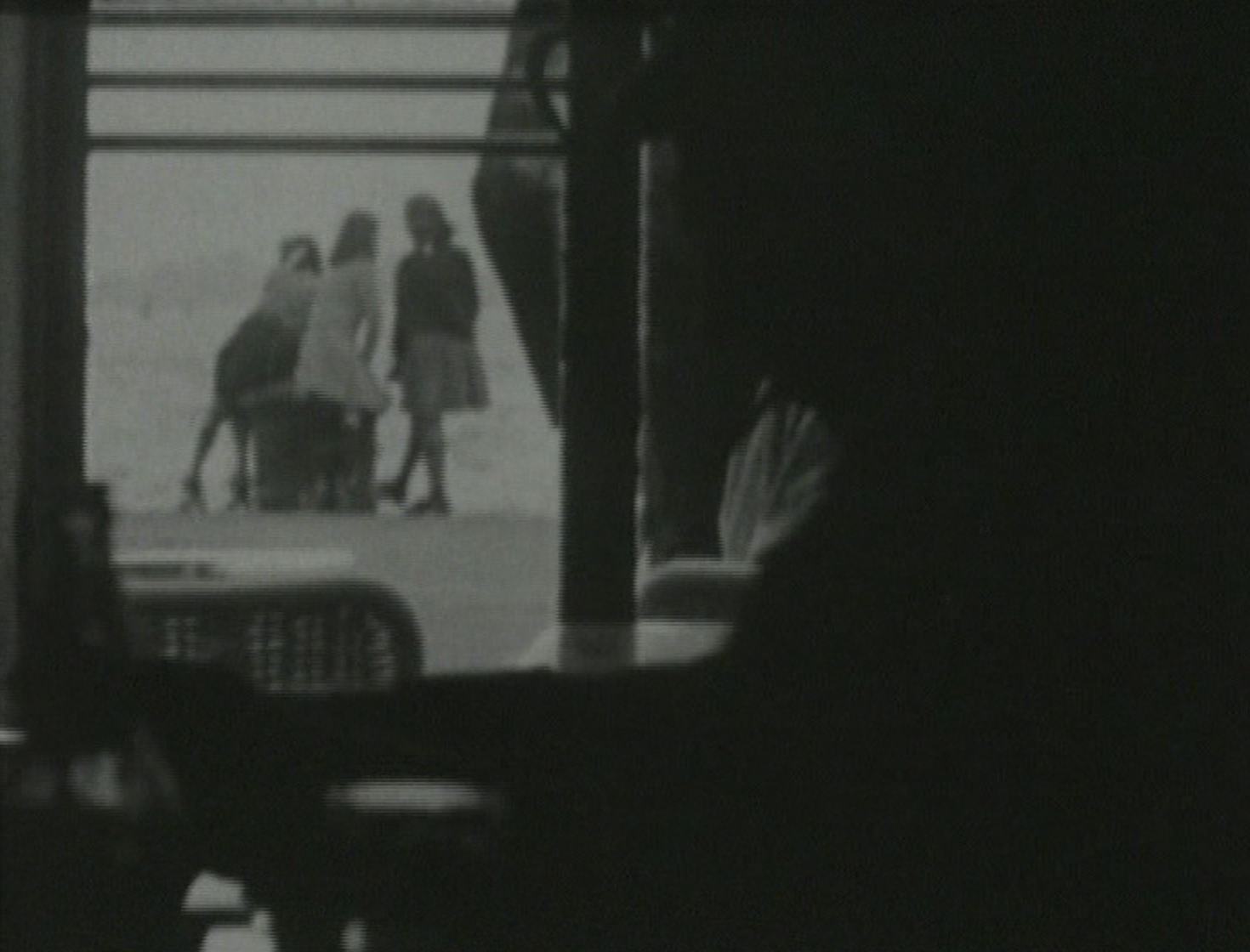
These works culminate in the existential drift of his American films. In 30/73 Coop Cinema Amsterdam, filmed just prior to his emigration, he observes an art cinema’s daily rhythms, paying attention not to the people who inhabit it but to the micro-gestures of the space itself: doors breathing open, light carving the dark. When he returns to Vienna for 33/77 Keine Donau, his camera broken and his routine disrupted, the window becomes a fractured prism. The Danube is absent, displacement all that remains.

Getting warm

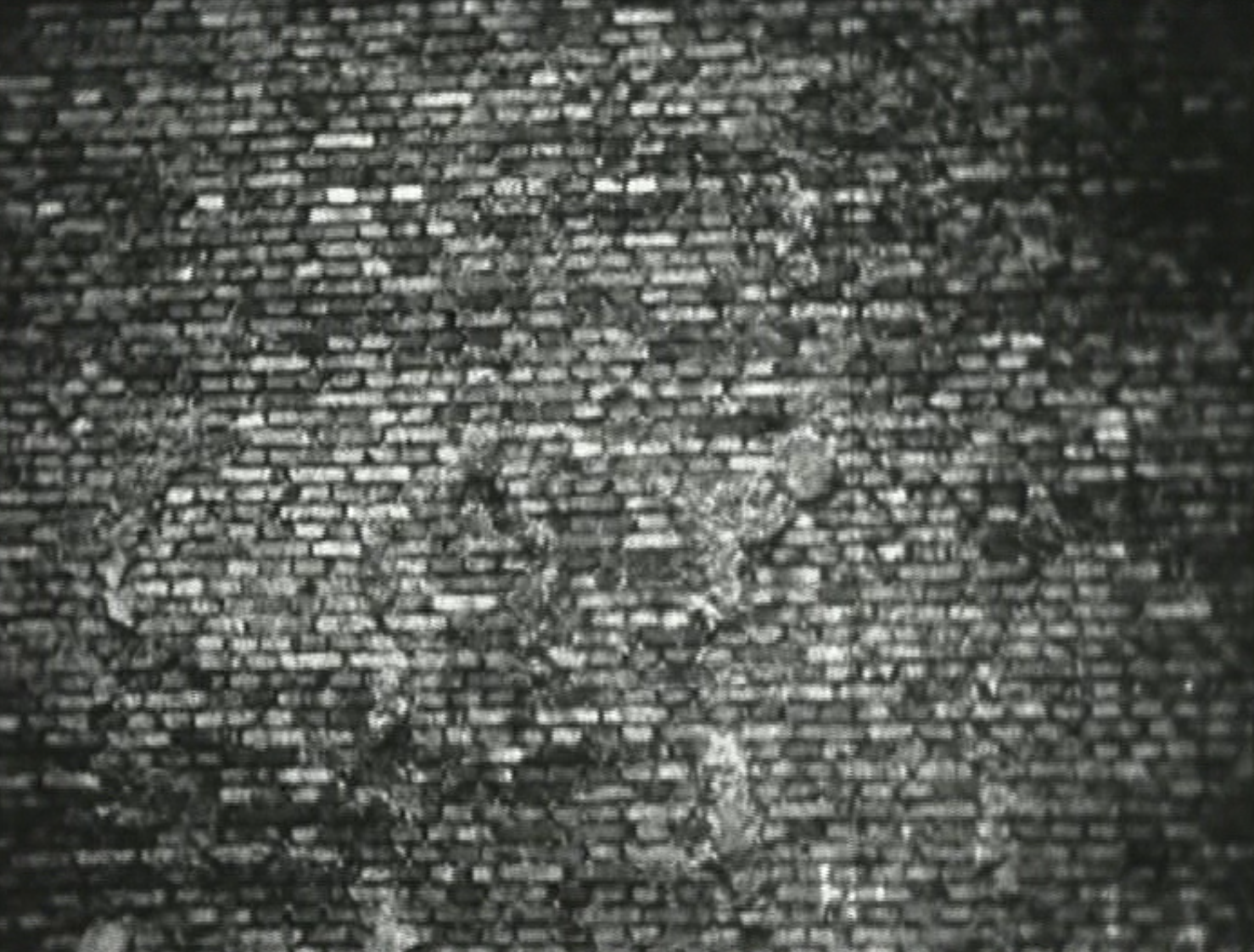
The collection’s 1981 title film transforms a road trip from Vermont to California into a consideration of anonymity. Black and white reduces the vast landscapes to a kind of near-nowhere, stripping specificity from cars, mountains, and the ocean. The camcorder aesthetic confers a strange doubleness: Kren is both present and passing, lost in a journey that offers no arrival. 40/81 Breakfast im Grauen watches workers dismantle old houses in New Hampshire, noting the fragility of rest amid destruction, while in 42/83 Getting warm, a move to Texas becomes a chain of waking moments, tire changes, night-day shifts, and survival rituals.

Snapshots

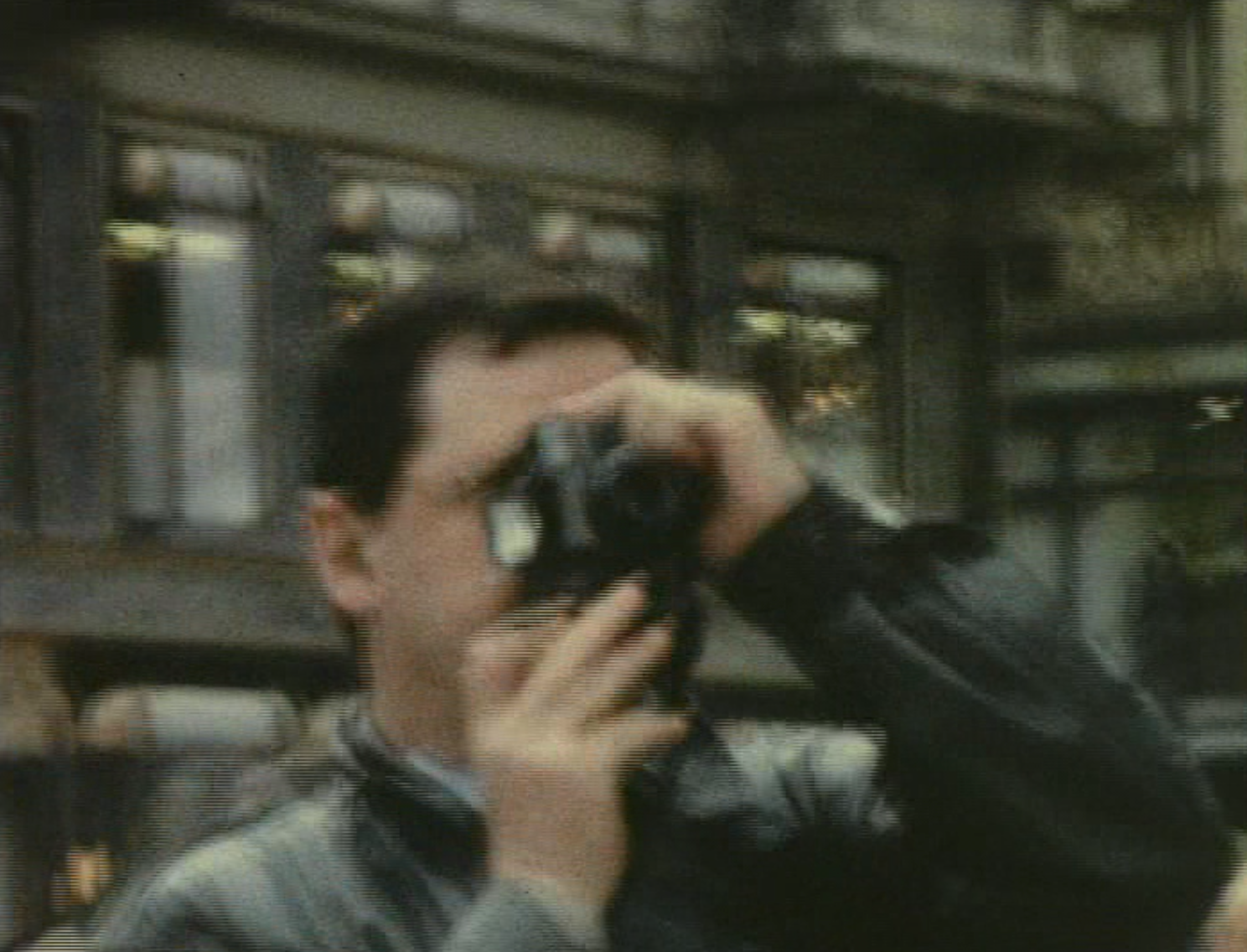
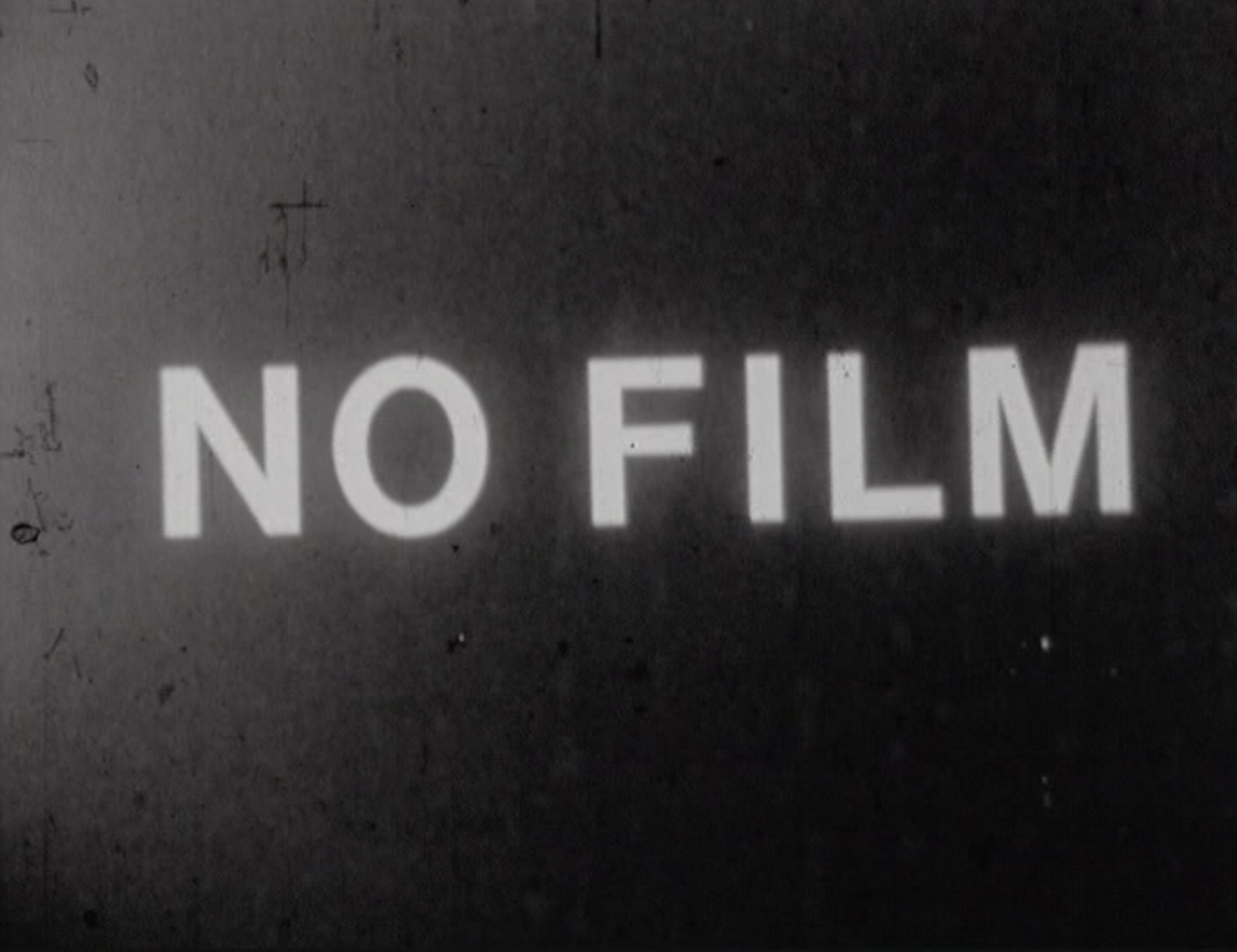
Kren condenses the autobiographical reaction to its barest possible form in 42/83 No Film, which records a few seconds of motionless writing. Other works lean toward spectral reproduction, as in 43/84 1984, where the Reagan–Mondale debate appears ghostly and doubled. 44/85 Foot’ -age shoot’ -out blends Houston’s skyline with Morricone’s Once Upon a Time in the West, the camera’s obsessive returns to a hotel door evoking the ache of interior escape, before collapsing into a vision of suburban grass that feels meticulously maintained yet devoid of meaning. Even his Viennese advertisement, 46/90 Falter 2, finds brilliance in the velocity of subway commuters. Finally, 50/96 Snapspots (for Bruce), filmed at Vienna’s Strauss monument, exposes tourism as a ritual of self-making, photographs flickering into motion as if caught between stillness and performance.

Hans Scheugl’s 55-minute portrait, Keine Donau: Kurt Kren und seine Filme (No Danube: Kurt Kren and His Films), gathers these fragments, offering Kren’s voice as connective tissue while preserving his elusiveness. Kren speaks while driving, offering glimpses of his past, his wry humor, his fluctuating sense of belonging. The interviews provide anecdotal grounding without resolving the disjunctions at the heart of the films.

Taken together, Kren’s late works make no claims to authority, revelation, or coherent story. Neither naïve nor nostalgic, they mark a sea change from happening to being. They do not gesture toward a lost European past or a promised American future. They remain suspended in the moment, each a tiny conceptual flare. In their trembling, he discovers a new kind of cinema, one that documents nothing but the fact of living and, in doing so, documents everything.
Kurt Kren: Structural Films (INDEX 002)

In this collection of 16mm structural films, we find ourselves ushered into a markedly different chamber of Kurt Kren’s creative house, one that feels dimmer, more ascetic, and more inwardly resonant than the rooms we inhabited in the previous DVD of his action films. If the earlier works thrummed with kinetic urgency, these unfold like meditations carved into celluloid. Filmmaker Peter Tscherkassky, ever attuned to the language of photochemical mysticism, praises these films as among the most important in the history of cinema. A bold claim, to be sure, but boldness feels appropriate here, considering the archival tenderness and curatorial reverence with which these inimitable pieces have been unearthed, handled, and presented, as if some delicate species of moth were being returned to its nocturnal habitat.

Fascinating about the chronology of Kren’s expressivity is the way it relinquishes the primacy of the image even before the image learns to walk. Rather than building from sight outward, he begins in the auditory shadows, as though cinema were a pulse, a vibration, a coded murmur etched below the threshold of visibility. His inaugural film, 1/57 Versuch mit synthetischem Ton (Test) [Experiment with Synthetic Sound (Test)], bears this ethos plainly: its “soundtrack” is scratched directly into the filmstrip, a raw trembling of impulses that barely gestures toward any physical context. It exists as a proto-world, a seed in place of trunk and branches.

Versuch mit synthetischem Ton (Test)

His next four films trace their trajectories in a procession of experiments, each one a footstep into deeper formal terrain. The most unforgettable among them, the groundbreaking 3/60 Bäume im Herbst (Trees in Autumn), moves with the grace and turbulence of a thought in the act of transforming. Here, Kren paints the soundtrack with ink, unspooling a choreography of leaves that distorts the mind’s eye. Everything is montage, but all of it is performed in-camera, as if the editing table were too coarse an instrument to contain such delicacy.

Bäume im Herbst

As Kren crosses the threshold into the sixties, his gaze pivots toward the everyday, lowering itself from abstraction into the realm of human gestures and urban happenstance. In 5/62 Fenstergucker, Abfall etc. (People Looking Out of the Window, Trash, etc.), quotidian fragments become luminous by the very fact of being noticed. In 15/67 TV, a Venetian harbor café becomes a stage for repetition and reassembly: five takes copied 21 times, shuffled like a deck of overheard moments. The era also coaxes out his political conscience, most starkly in 20/68 Schatzi, where a photograph of an SS officer at a concentration camp is revealed piece by piece. The image flickers in and out, a memory trying to recall itself, or perhaps a society trying to forget—and failing to do so.

TV

In her booklet essay, Gabriele Jutz describes Kren’s work of the 1970s as “a media-immanent ideology critique,” and indeed the films of this period seem to interrogate their own scaffolding. Kren travels from the take to the frame, peeling back the skin of the medium to expose its smallest nerves. Through this distillation, film becomes a tactile surface on which time leaves fingerprints. Out of this emerges what may be his most quietly beautiful creation: 31/75 Asyl (Asylum). Shot in Saarland near the French border, the film uses a mask with five holes—changed daily, for 21 days—as a kind of ritual viewing apparatus. Through those apertures, we witness the changing of seasons, but also time grieving its own passing. It is a soft and private composition, a chamber sonata of the natural world.

Asyl

Then comes 36/78 Rischart, Kren’s oblique self-portrait. But if the genre is traditionally an attempt to assert the self, this one dissipates it. He speaks, but we do not hear him. He appears, but we are denied his solidity, painted in fog.

Rischart

The collection also offers two films shot in the United States, including the hypermodern 37/78 Tree Again. In it, a Vermont tree—stoic, spectral, filmed on expired infrared stock over 50 days—seems to stand against nothing less than a nuclear reckoning. The specimen is both witness and survivor, a lone guardian in a field of unseen catastrophe.

Tree Again

All of this culminates in 49/95 tausendjahrekino (thousandyearsofcinema), which feels like Kren’s Möbius strip farewell to the medium he spent a lifetime interrogating. Filmed over 30 days at Stockim-Eisen square in Vienna, it captures tourists taking photos and videos, no doubt believing themselves to be chroniclers of their own experience. Yet Kren folds their documentation back onto itself, creating a looped meditation on how we look and record ourselves looking. The sound, collaged from Peter Lorre’s film The Lost One, drifts through the piece as a ghost trying to remember the words to its haunting.

tausendjahrekino

Structural Films does not merely preserve a body of work; it preserves a way of seeing, a way of listening, a way of thinking with and through the spliced architecture of film itself. Watching these works, one senses that Kren was always less interested in representing the world than in revealing the mechanisms through which its physiognomy becomes visible. And so the collection closes not like a door but like a breath, leaving us to wonder what images and sounds might yet emerge from the language he left behind.

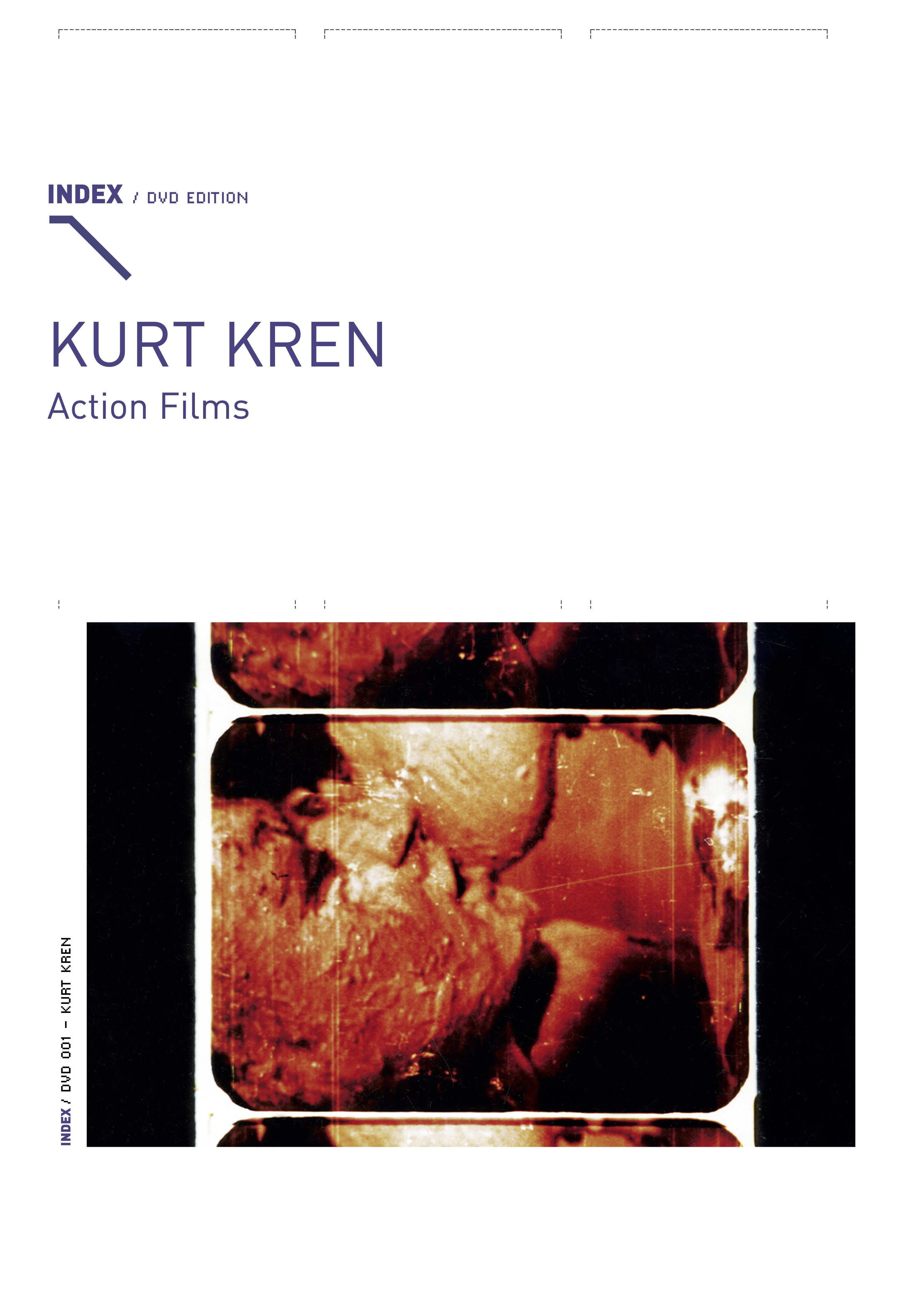
Kurt Kren: Action Films (INDEX 001)

In May of 1955, Austria emerged from the purgatory of occupation and stepped tentatively back onto the world stage. With the Austrian State Treaty came the promise of political independence and the fragile sheen of sovereignty, a neutrality it hoped would steady it in the receding shadow of the Second World War. The so-called economic miracle that followed gave the young nation a chance to rebuild its identity, yet the 1960s brought with them an ideological tremor. Liberal politics rose like a heatwave from beneath the cultural pavement, ushering in a new radicalism that refused polite distance. And in this environment—half rebuilding, half rebellious—the Actionist movement materialized, confronting not only the remains of fascism but the very notion of aesthetics itself. While France and its neighbors cultivated New Waves gleaming with cinephilic verve, the Viennese Actionists were all but erased from Austria’s collective memory, swallowed by mass television, expanding leisure culture, and a lack of state support that rendered the nation’s cinema nearly comatose. Even what little commercial film did surface received scarcely more than a raised governmental eyebrow.

Yet the 1950s had already planted a seed. In Vienna’s “Art Club,” more than a hundred films were produced in its first decade, flickering beacons in an otherwise dim landscape. Though Europe witnessed various politico-artistic manifestos, including the pivotal Oberhausen Manifesto of West German filmmakers in 1962, Vienna’s underground artists found no single ideology sturdy enough to carry the weight of their visions. With no public venues willing to host their experiments, they forged their own path, cultivating Wiener Aktionismus, or Viennese Actionism, as a radical gesture of self-unmaking. These Actionists confronted audiences with the unvarnished human body—its fluids, its failings, its feral possibilities—not as spectacle, but as a state of being. Their performances were neither narratives nor manifestos. They were eruptions of immediacy, born of trauma and jouissance intertwined.

Censorship’s thumb bore down heavily, and some artists fled to West Germany in search of oxygen. Those who remained—including Kurt Kren, Peter Weibel, Hans Scheugl, and VALIE EXPORT—organized. Their efforts culminated in the founding of the Austrian Filmmakers Cooperative in 1968. From there, they cracked open the country’s cultural shell, finally allowing their films not only to circulate at home but to seep into the international bloodstream. At last, an audience began to coalesce.

Among these artists, none left a deeper mark on Actionist cinema than Kren (1929–1998). If Actionism was a flame, Kren was the accelerant. His death prompted renewed interest in his work, but his influence had been quietly fermenting since the late 1950s, when he first began experimenting with 16mm. A pioneer of what would later be called “structural film,” Kren approached the body—his own and that of his collaborators—as a pliable medium. Working alongside Otto Mühl, Günter Brus, and “Op” artist Helga Philipp, he filmed “happenings” neither as documents nor as artistic trophies but as participatory comings-together. Denying Brus and Mühl the control they so often demanded, he stripped the Actionist gesture of its authorship and returned it to the site where it originated. For Kren, the body was the raw material of cinema, a plane of performativity before the concept had academic caché. His films remain testimonies to the intensity of sensation before symbol.

This DVD, the first of a series published by INDEX, collects these early action films and situates them in their rightful historical and visceral context. In the accompanying booklet, Michael Palm observes that Kren’s cinema privileges moment over narrative, rupture over resolution. “In Kurt Kren’s body-cinema,” he writes, “the human is no longer the measure of all things.” One feels this as a kind of internal compass unmoored from its magnetic north.

6/64 Mama und Papa serves as our entry point into Kren’s world: brief, confrontational, and unforgettable. Here, quasi-Freudian studies of masculine and feminine imagery flicker across the screen in 82 rapid, deliberately fragmented shots. Their brevity sears them into memory, as though the mind must tattoo them instantly or risk losing their significance. Its companion piece, 7/64 Leda mit dem Schwan, reimagines myth through the recycled image of Mühl; its parabola of pouring, feathering, and smearing moves with an almost biological rhythm, as if bred rather than composed.

Leda mit dem Schwan

With 8/64 Ana, Kren’s first work with Günter Brus, the scarcity of film forced him into live montage. Bodies become objects, objects become bodies, and pain becomes calligraphy. The lineage this establishes runs straight to the later works of Peter Tscherkassky.

Ana

Kren expands this single-frame improvisation in 9/64 O Tannenbaum, where body parts, bursting balloons, and a flaming tree consume the holiday spirit in a frenzy of destruction. After such feverish play, 10/65 Selbstverstümmelung stuns by slowing down. Brus’s simulated self-harm becomes a ritual of preparation, much like Olivier de Sagazan’s Transfiguration, where the performance masquerades as violence but reveals only the harm of a cigarette.

Selbstverstümmelung

In 10B/65 Silber – Aktion Brus, Brus edits out his own visage in erasure, yielding a collage of gestures where only women’s faces emerge intact. This destabilization continues in 10C/65 Brus wünscht euch Seine Weihnachten, a home-movie-styled rupture of domestic space, filmed again in single frames and culminating in a frenzy of limbs without a trace of festivity beyond escape itself.

Silber

The erratic nature of Kren’s cinema becomes almost orderly once one accepts its internal logic; conversely, its familiar elements turn alien when stripped of context. Sexuality dissolves into abstraction in 12/66 Cosinus Alpha, while the face (the most primal signifier of identity) flickers in and out of recognition in 13/67 Sinus Beta, a film Kren himself struggled to define. Finally, 16/67 20. September redefines narrative altogether. By entwining images of urination, defecation, eating, and drinking, it reveals a stark truth: far less emerges from us than what we take in. The body becomes a ledger of exchanges, an organism of relentless consumption and automatic release.

20. September

Ultimately, Kren’s films resist closure. They are less documents than detonations. They remind us that the body—imperfect, ungovernable, infinitely expressive—remains cinema’s most volatile instrument. Through Kren’s eye, it confronts us not with what it means, but simply with the unavoidable fact that it is.