

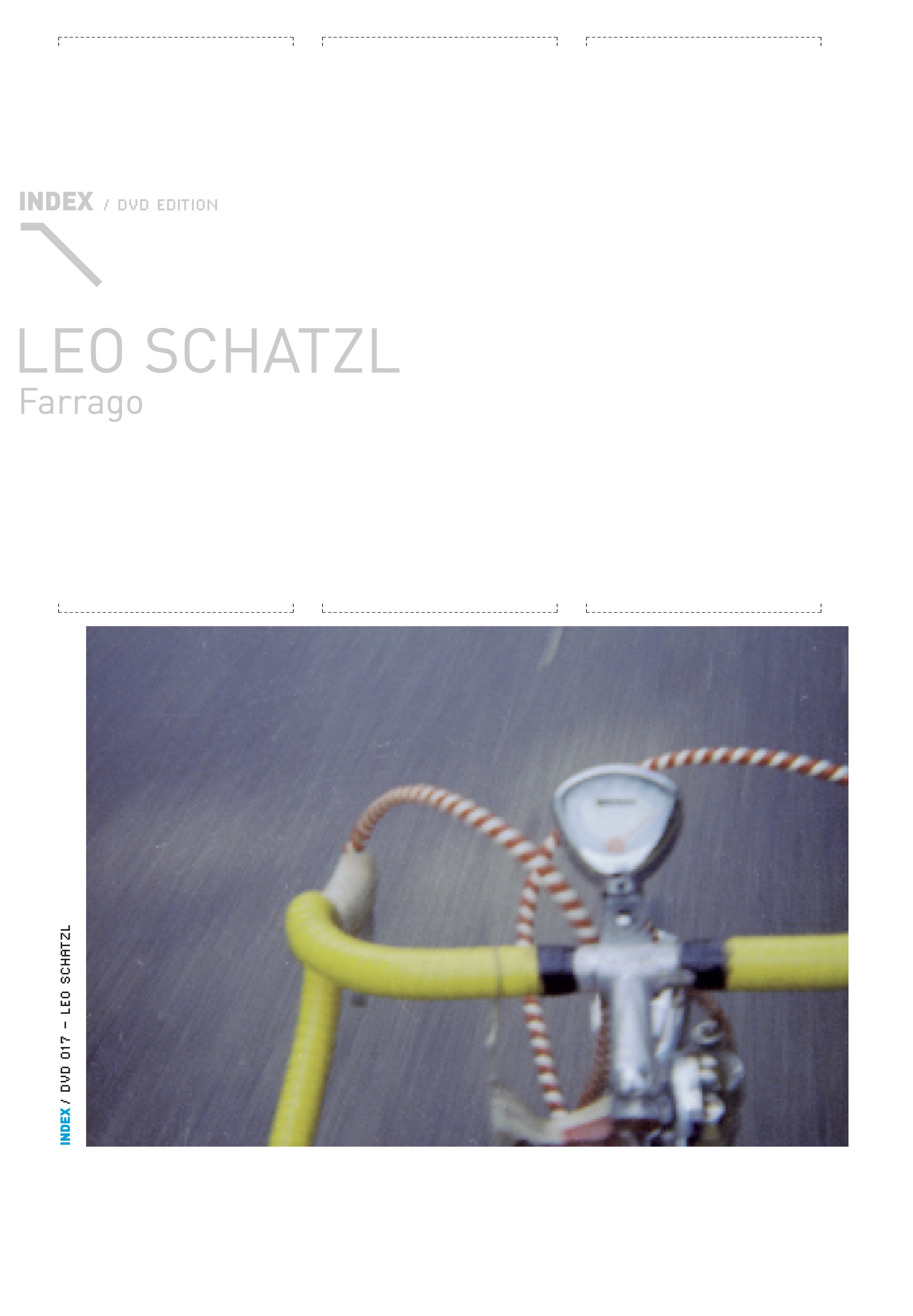
INDEX’s 17th release in its traversal of the Austrian avant-garde surveys the wide sweep of Leo Schatzl, whose terrain is shaped by formal wit, idiosyncratic experiment, and a sustained interest in the marginal and the taboo. Despite being more widely associated with kinetic sculptures and public installations, Schatzl reveals in these videographic pieces an equally rigorous fascination with the mechanics of perception and the social imaginary embedded in ordinary life. Beginning in the 1980s, he developed a near-compulsive interest in mechanizing the familiar by animating everyday objects, setting them spinning or stumbling through systems of automation, and treating them as performers that catalyze dormant energies.
As diverse as the works curated on Farrago are, they share a foundational question: What happens to perception when the quotidian begins to behave in unexpected ways? Schatzl pursues this question through performances, accidental encounters, ritualized acts of destruction, and chronological experiments. Rather than asserting a single theory of daily life, the collection offers a dispersed phenomenology, a meditation on how the ordinary reveals itself once its habits have been disrupted.

The earliest pieces draw on a sense of anxious play. Krieg etc. (War etc., 1983) uses war toys and children’s drawings to stage a miniature theater of militarized fantasy. What might initially evoke childhood imagination becomes haunted by an adult’s awareness of violence, as video game noises puncture the scene and dissolve any cozy boundary between innocence and ideology. The aesthetics of play become the staging ground for questions about how war seeps into fantasy long before it appears on any battlefield.
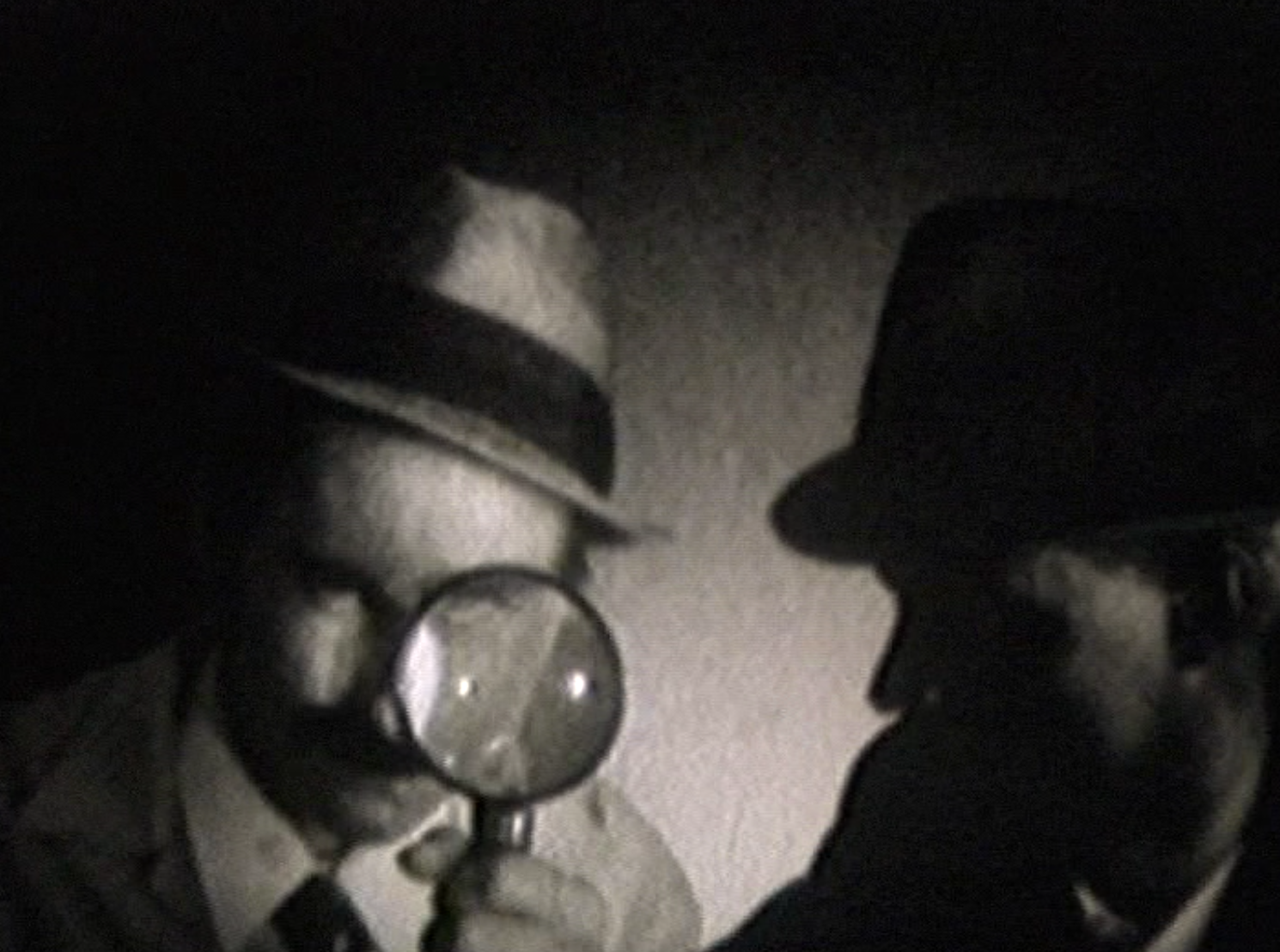
As his practice evolves, Schatzl turns increasingly toward the elasticity of time and gesture. Max./Extramax. (1986) treats actors as instruments in a responsive game, where delayed glances and slow-motion cigarette puffs strain against the expected pacing of social interaction. The viewer waits for cues that never arrive. Time stretches, and perception becomes a charged medium, as if the work were testing how far the ordinary can bend before it becomes unrecognizable.

This interest in reanimated objects reaches a poignant absurdity with Mobile Matratze (Mobile Mattress, 1988), filmed on the grounds of the Urfahr market in Linz. A mattress, suddenly mobile, careens across the landscape in a spontaneous performance that transforms a piece of inert furniture into a strange companion, a creature caught between intimacy and machine logic. Such theater reveals the emotional residue that can gather around objects under a different affordance.

Schatzl’s inquiry into the self takes a fragmented turn in SW-EGO (1990), where single-frame self-portraits split and fracture across the screen, accompanied by heavy, rhythmic drumming. The face breaks apart, recombines, and dissolves again. The work stages a modern paradox: the desire to unify the self alongside the recognition that it is already scattered across multiple experiential slices.

Throughout the early 1990s, Schatzl begins pushing mechanization into public space. Akzidenz (1991) orchestrates radio-controlled cars that veer into wet concrete. The hardened slabs later appear around the city as sculptural evidence of impact. The gesture functions as both a destructive impulse and an archival trace, a physical index of collision that turns urban space into a memory field. Structured like a television program, it blurs the lines between documentation and spectacle, reflecting on the choreography of industry and risk.
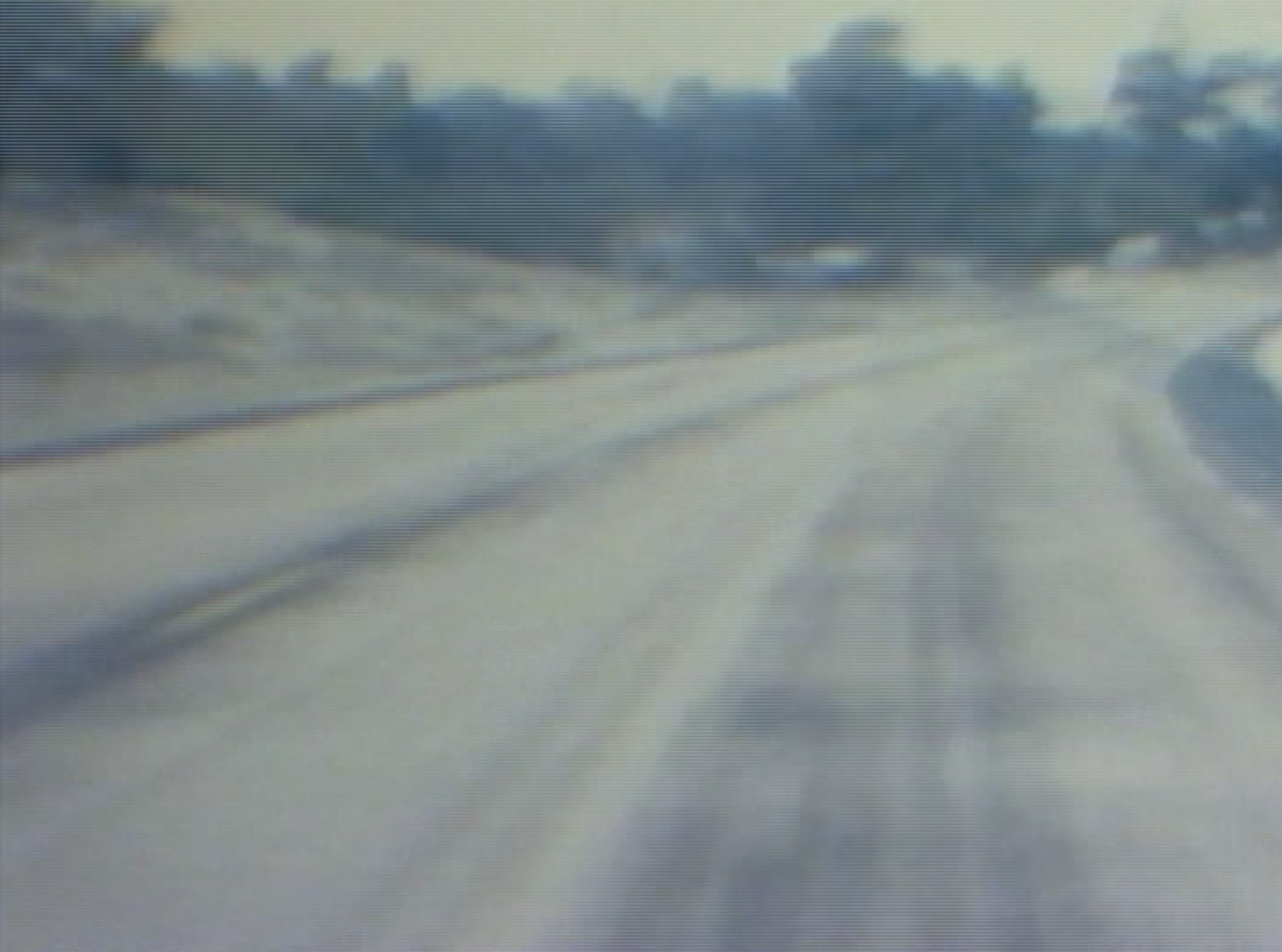
Travel becomes another form of techno perception in T.Z. USA 1991 – going fast slow (1991). Over 10,000 miles are compressed into 10 minutes as a car-mounted Super 8 camera races through restricted zones in the American Southwest. The landscape streams past in a delirious blur, transforming geography into velocity while reproducing the sensation of collecting impressions too quickly to grasp until after the journey ends. Movement becomes a kind of forgetting, and forgetting becomes another way of seeing.

Schatzl’s fascination with process continues in Wall (1992), a fast-motion chronicle of a museum installation that reveals the frantic ergonomics behind an exhibition’s calm facade. The piece begins and ends with an empty room. Between these two quiet moments, creation and destruction accelerate until a final jackhammer strike turns the space into its own epitaph. Schatzl shows how easily institutional order gives way to chaos and how both states occupy the same temporal frame.

Even his more theatrical experiments retain a strange melancholy. Maschinenkampf FX/LS (Machine flight FX/LS, 1992) stages a parody of combat between two custom-built machines in a scrapyard, with viewers watching through mediated streams in Linz, Vienna, and Kassel. The machines clash, but the real drama lies in the blurry images and the debris they leave behind. The scrapyard becomes a graveyard of industrial bodies, relics of innovations that once promised mastery and now echo with obsolescence.

In the mid-1990s, Schatzl turns toward minimal actions that reveal the emotional resonance of the mundane. Oxo Wonder Vision (1996) focuses on two hot plates and soup pots. Condensation gathers, evaporates, and begins again. The sound shifts between clarity and echo. Cooking, usually unnoticed labor, becomes an intimate study of presence and absence, nourishment anticipated but deferred.

The question of mediated identity returns in FAX ME / homerun 1996, in which Schatzl circles the globe while repeatedly faxing images of himself back home to see which will arrive first, only to find that he beats them all, since the transmission is compromised somewhere along the way. The project reflects the tension between global mobility and the tenuousness of individuality.

Toward the end, Schatzl returns to the heightened sensitivity of his material practice. Tabu Zone #2 (1998), filmed in a restricted Austrian village, collects seasonal fragments that slip in and out of legibility. The forbidden space becomes a flicker of sunlight, a passing shadow, a gesture half-seen. Visibility depends entirely on what the camera is allowed to retain. Vanishing Points (2005), drawn from an exhibition of kinetic installations, reveals machines drawing circles and arcs in the air, their motions precise yet mysterious.

In the world according to Schatzl, the mundane is nothing if not uncanny. His videos constitute a tessellation of latent intensities in which gestures accumulate meaning, objects acquire agency, and perception becomes a site of ongoing transformation. In this sense, Farrago reads less as a retrospective than as a philosophy. Through humor, abrasion, speed, and tenderness, the artist shows that the smallest habits and simplest machines carry within them the seeds of wonder and disruption.
 Between Sound and Space: ECM Records and Beyond