

Maciej Obara Quartet: Frozen Silence (ECM 2778)

Maciej Obara Quartet
Frozen Silence

Maciej Obara alto saxophone
Dominik Wania piano
Ole Marten Vågan double bass
Gard Nilssen drums
Recorded June 2022 at Rainbow Studio, Oslo
Engineer: Martin Abrahamsen
Mixing: Michael Hinreiner (engineer), Manfred Eicher, Maciej Obara, and Dominik Wania
Cover photo: Thomas Wunsch
Produced by Manfred Eicher
Release date: September 8, 2023

For his third quartet outing for ECM, alto saxophonist Maciej Obara brings an ever-searching sound to bear on the foreground of a continuously shifting diorama. With him again are pianist Dominik Wania, bassist Ole Marten Vågan, and drummer Gard Nilssen. The tunes were inspired by Obara’s solitary travels in the natural scenery of southwest Poland, where he found himself wandering during the pandemic lockdowns. Such details work their way into many of the track names, starting with “Dry Mountain,” which lobs skyward before dipping down to touch the snowy surface of things. The ice is always moving, tectonic and ancient, even as the overall shape remains. (As in the later “High Stone,” the musicians are acutely aware of one another’s presence. With a grand sense of space, they reach far across tundra and time.) In the subsequent “Black Cauldron,” we encounter a brew of memories and impressions, a recipe as old as time yet with ingredients as fresh as the air we breathe.

The title cut has a delicate underlying groove, sewn into place by the precise needlework of Nilssen’s cymbals, while the glint of sunlight on a landscape brought to stillness by a world screeching to a halt speaks of brighter days ahead. The atmosphere is exciting in its possibilities, as if being alone were the only way to appreciate having others around. Vågan is gorgeously fluid here, lending so much humanity to the sound, the unerringly forward motion of nature continuing around him. Wania’s solo brings the touch of longed-for interaction, even as Obara’s flights keep their shadows in check.

Other notable turns of phrase include “Twilight,” a lullaby that unfolds with understated virtuosity and spotlights Obara’s talents as an improviser like few tracks before it, and “Waves of Glyma.” The latter recalls time spent on south Crete, populating the memory with joyful revelry, fearless camaraderie, and a feeling that life might never end. Amid the phenomenally upbeat rhythm section, Wania holds tight to the ethos of the hour.

One surprise inclusion in the set is “Rainbow Leaves,” a leftover from the bandleader’s Concerto for saxophone, piano and chamber orchestra, co-composed with Nikola Kołodziejczyk but now refashioned as an improvisatory seed. Obara is fiercely (yet never aggressively) beholden to wherever the melody wants to go, letting us tag along six feet behind.
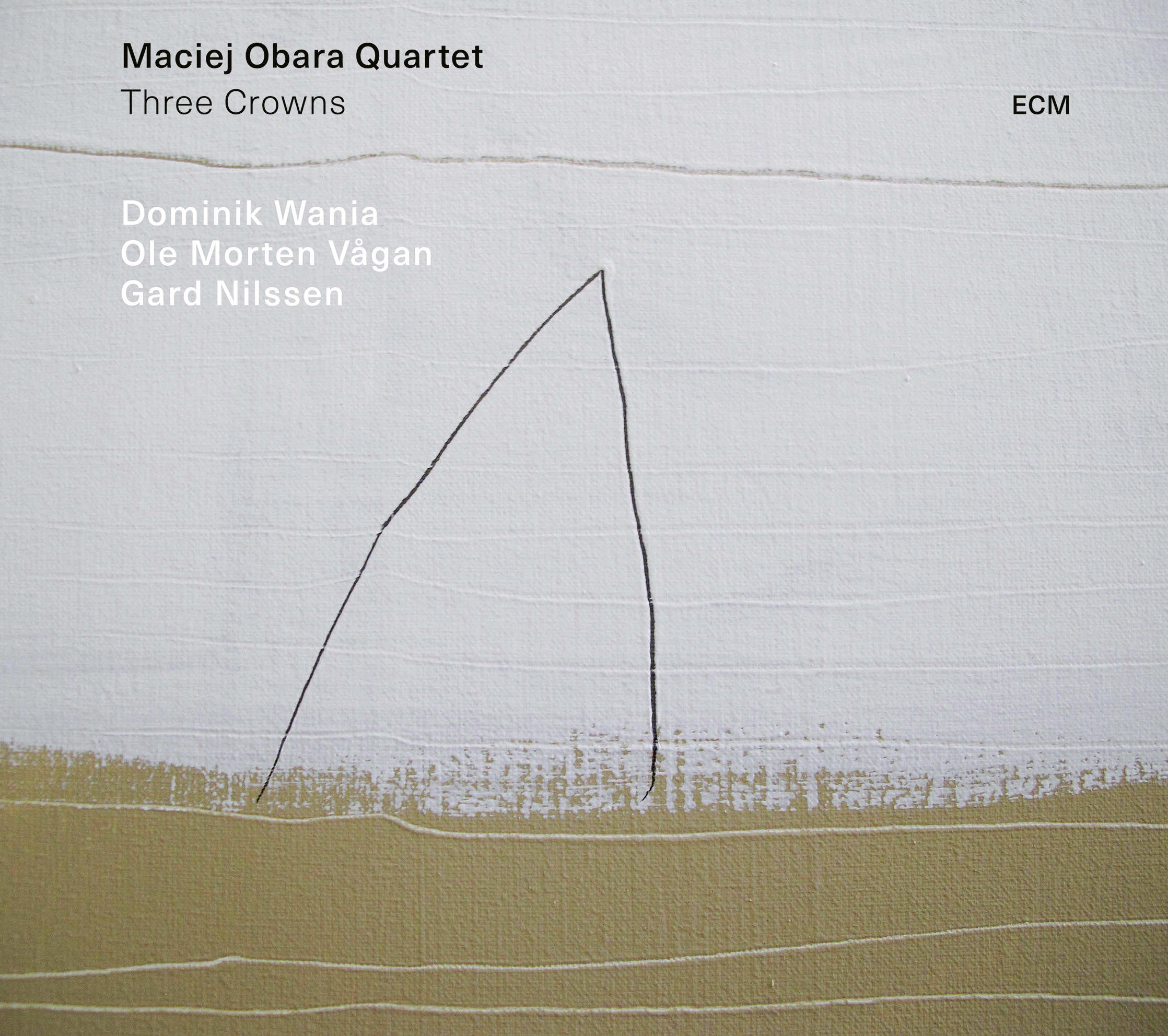
Maciej Obara Quartet: Three Crowns (ECM 2662)

Three Crowns.jpg

Maciej Obara Quartet
Three Crowns

Maciej Obara alto saxophone
Dominik Wania piano
Ole Morten Vågan double bass
Gard Nilssen drums
Recorded March 2019, Studios La Buissonne, Pernes-les-Fontaines
Engineer: Gérard de Haro
Mastering: Nicolas Baillard
Produced by Steve Lake
Release date: October 25, 2019

After their 2017 ECM debut, Unloved, Polish saxophonist Maciej Obara and his quartet make their return with Three Crowns. In addition to six new tunes from the bandleader, the album features improvisational renderings of music by one of the most significant composers of the 20th century: Henryk Mikołaj Górecki (1933–2010). Though Górecki’s work has been subjected to improvisational treatments before, these renditions bear special distinction for being sanctioned by his family, whom Obara came to know while living in Katowice, where the composer once was based. The first Górecki interpretation, “Three Pieces In Old Style,” is so beautifully reimagined that it sounds as if it’s emanating from another world. Pianist Dominik Wania opens in a deeply respectful mood, allowing Obara’s incisive tone to keen overhead, while bassist Ole Morten Vågan and drummer Gard Nilssen roam a rain-kissed landscape below.

“Blue Skies For Andy” is among the stronger Obara originals—not only for its melodic strength but also its patience. It has a classic sound that feels warm to the ears, as precise as it is free. Other highlights range from the savvy urbanism of “Smoggy People,” notable for Wania’s postmodern swing, to the more geometric “Glow,” which recalls the tightly knotted compositions of fellow altoist Tim Berne. Obara’s bandmates grow in real time, though nowhere so maturely as on “Mr. S,” an homage to trumpeter Tomasz Stańko that rolls in on a wave of melancholy and sunshine in equal measure. Like the title track, it’s flexible and always attached to something pure and knowable. There is no mystery here. Only life.

(This article originally appeared in the January 2020 issue of DownBeat magazine.)

Maciej Obara Quartet: Unloved (ECM 2573)

Unloved

Maciej Obara Quartet
Unloved

Maciej Obara alto saxophone
Dominik Wania piano
Ole Morten Vågan double bass
Gard Nilssen drums
Recorded January 2017 at Rainbow Studio, Oslo
Engineer: Jan Erik Kongshaug
Produced by Manfred Eicher
U.S. release date: November 10, 2017

In keeping with its commitment to fresh artistry, ECM presents the studio debut of Polish alto saxophonist Maciej Obara and his young quartet. As an improviser, Obara understands the fleeting nature of spontaneous creation, accordingly emoting with the soul of a poet—which is to say, wasting neither sentiments nor space to contain them. Case in point is the album’s opener, “Ula.” It introduces a tangible sound ideally suited to ECM’s visually-minded ethos. Remarkable about Obara is the gesso-like way in which he listens before applying his own strokes to any given canvas. Like any skilled oil painter, he knows that certain layers must dry before others can be added with clarity. In that vein, pianist Dominik Wania provides the broadest textural palette, giving just the right amount of uplift for the bandleader’s reed. Wania’s intros are especially well blended and draw from a variety of reference points. He brings shades of John Cage’s In a landscape to the album’s title track by Krzysztof Komeda (the only one here not penned by Obara) and in his extended setup of “Echoes” polishes a mirror without an inkling of vanity to show for it.

Bassist Ole Morten Vågan and drummer Gard Nilssen are purveyors of a mature subtlety by which give and take are rendered synonymous. In “One For,” they understand the lyrical potential of negative space. Interlocking in the freely-flowing “Joli Bord” and the concluding “Storyteller,” they sharpen serious arrows in preparation for whimsical targets. In terms of airtime, the piano trio is this record’s core, but Obara, in being so often backgrounded, unfolds his solos with an intensity made even more remarkable for selectiveness. His sound is unpretentious yet stands tall, fulfilling melodic promises with feeling rather than technique. It’s a surreal yet somehow organic form of communication that sticks as many feathers to each thematic bone until flight becomes achievable. The result is humility made musically incarnate and ready to fly.

(This review originally appeared in the June 2018 issue of The New York City Jazz Record, a full PDF of which is available here.)