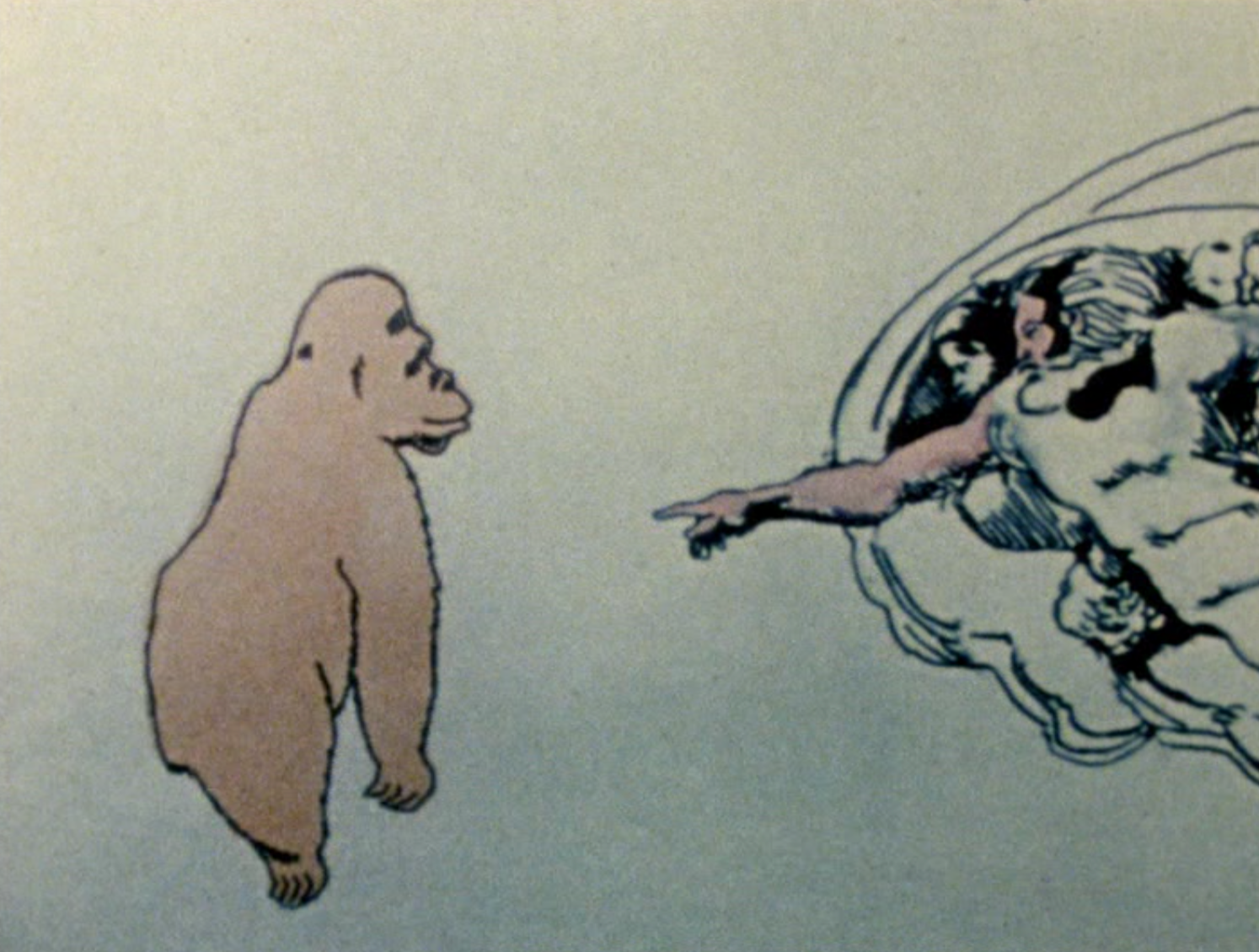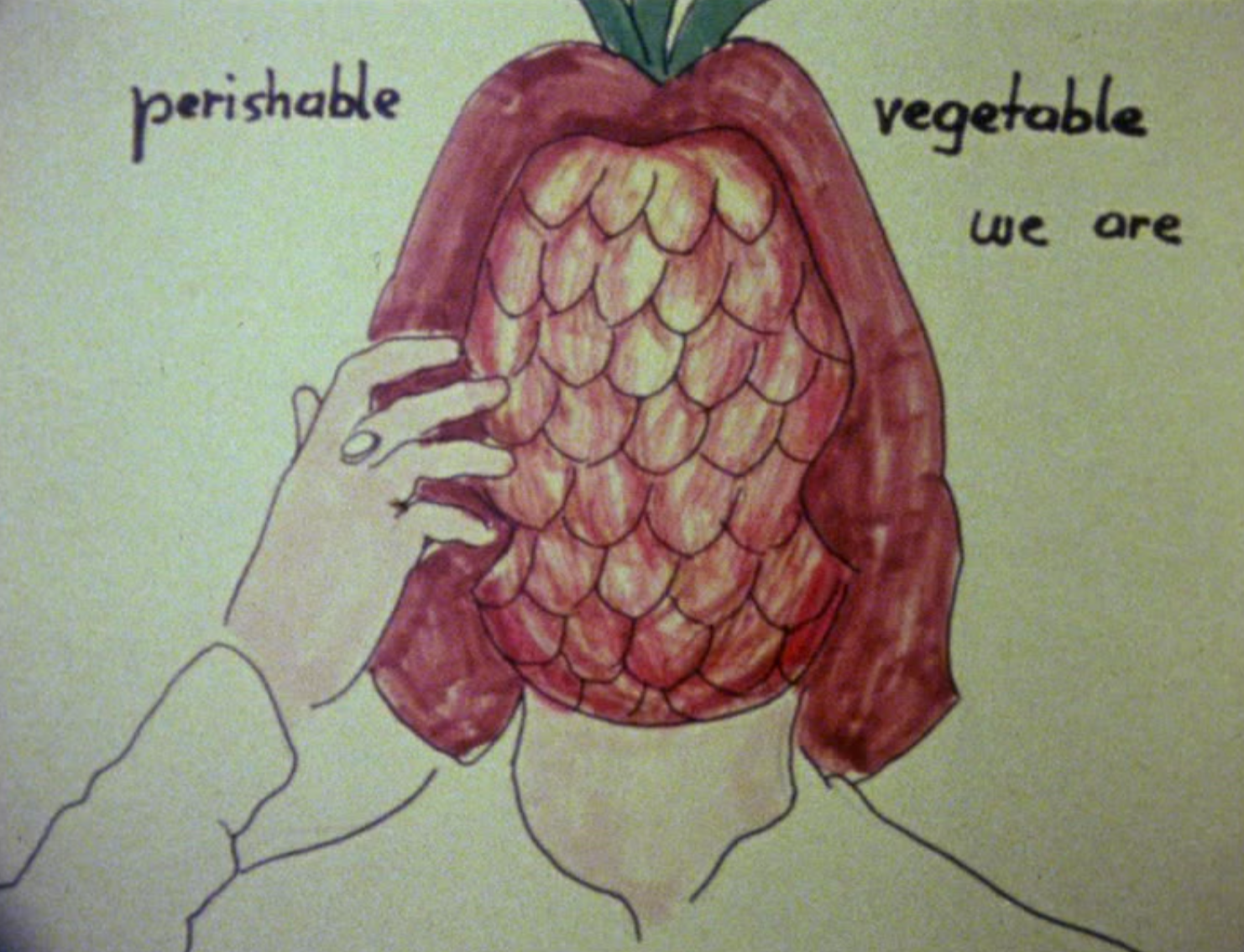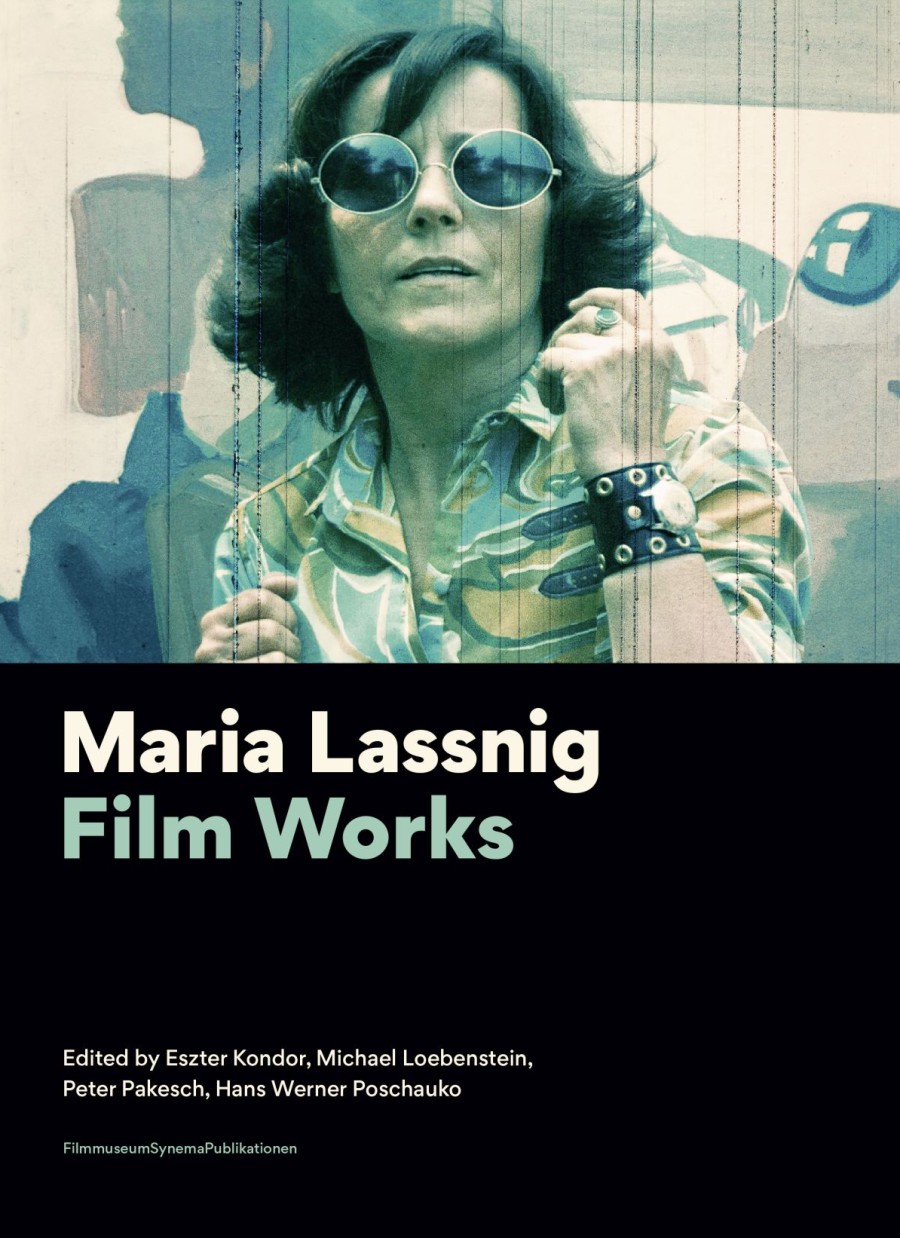
The films of Maria Lassnig are worth their weight in the sediment of their unearthing. Even in moments of deliberate construction, they carry the scars of something recovered beyond psychic awareness, arising from the muscular ache preceding perception. Throughout this timely volume, one senses an artist trying to place consciousness under physical pressure until it reveals its own anatomy. The result is not simply a supplementary chapter to her endeavors as a painter but an adjacent nervous system running alongside it, flickering with all the involuntary impulses that painting alone could not contain—or, more accurately, contained all along.
Lassnig (1919–2014) is now firmly established among the essential painters of the 20th and 21st centuries, particularly through her concept of Körpergefühl, or “body-awareness,” whereby sensation itself becomes the origin of image-making. Yet a good portion of the animate pieces she produced during her years in New York throughout the late 1960s and 1970s were half-finished gestures that seemed destined to remain suspended in private time. Even as some titles, including Selfportrait, Iris, and Couples, slowly entered the institutional bloodstream of museums and repertory programs, much of the work stayed dormant until Mara Mattuschka and Hans Werner Poschauko restored and completed the unfinished pieces in 2018, meticulously following Lassnig’s notes and instructions. The achievement documented in this remarkable release from INDEX lies not merely in preservation but in resurrection. One feels the incomparable intimacy of standing beside an artist who departed the world while leaving certain doors ajar.
The publication itself resembles an anatomical atlas. Essays, reflections, and conversations by James Boaden, Beatrice von Bormann, Jocelyn Miller, Stefanie Proksch-Weilguni, and Isabella Reicher intermingle with notebooks, sketches, diagrams, annotations, and unfinished ideas that expose the texture of Lassnig’s thinking with startling immediacy. The accompanying DVD containing selections from her “film in progress” extends this sensation further, allowing the reader to encounter new states of becoming through weathered lenses. Lassnig’s unfinishedness possesses a density uniquely her own. Her practice continues to move with the conviction that uncertainty is not without form.
What emerges most forcefully is Lassnig’s refusal to conceal the mechanisms of a multifaceted inquiry. Her metaphors announce themselves without embarrassment. Her allegories remain jagged and naked. Emotional states are never dissolved into palatable ambiguity. Yet beneath the bluntness of her symbols, there persists an immense stillness, a meditative calm that transforms exposure into something almost devotional. Trauma becomes a cloud’s shadow moving across meadows of consciousness, visible in every frame yet never granted total dominion.
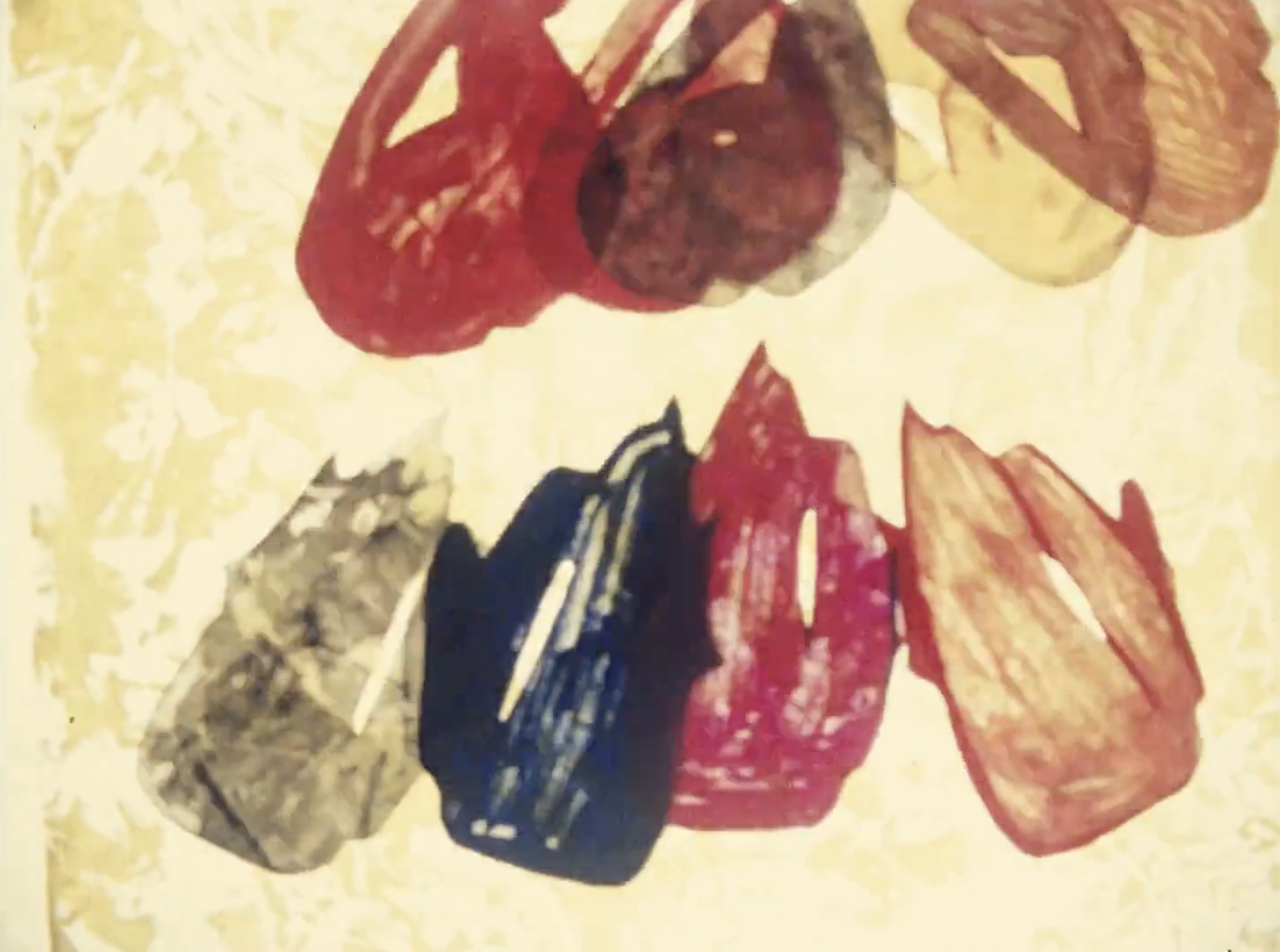
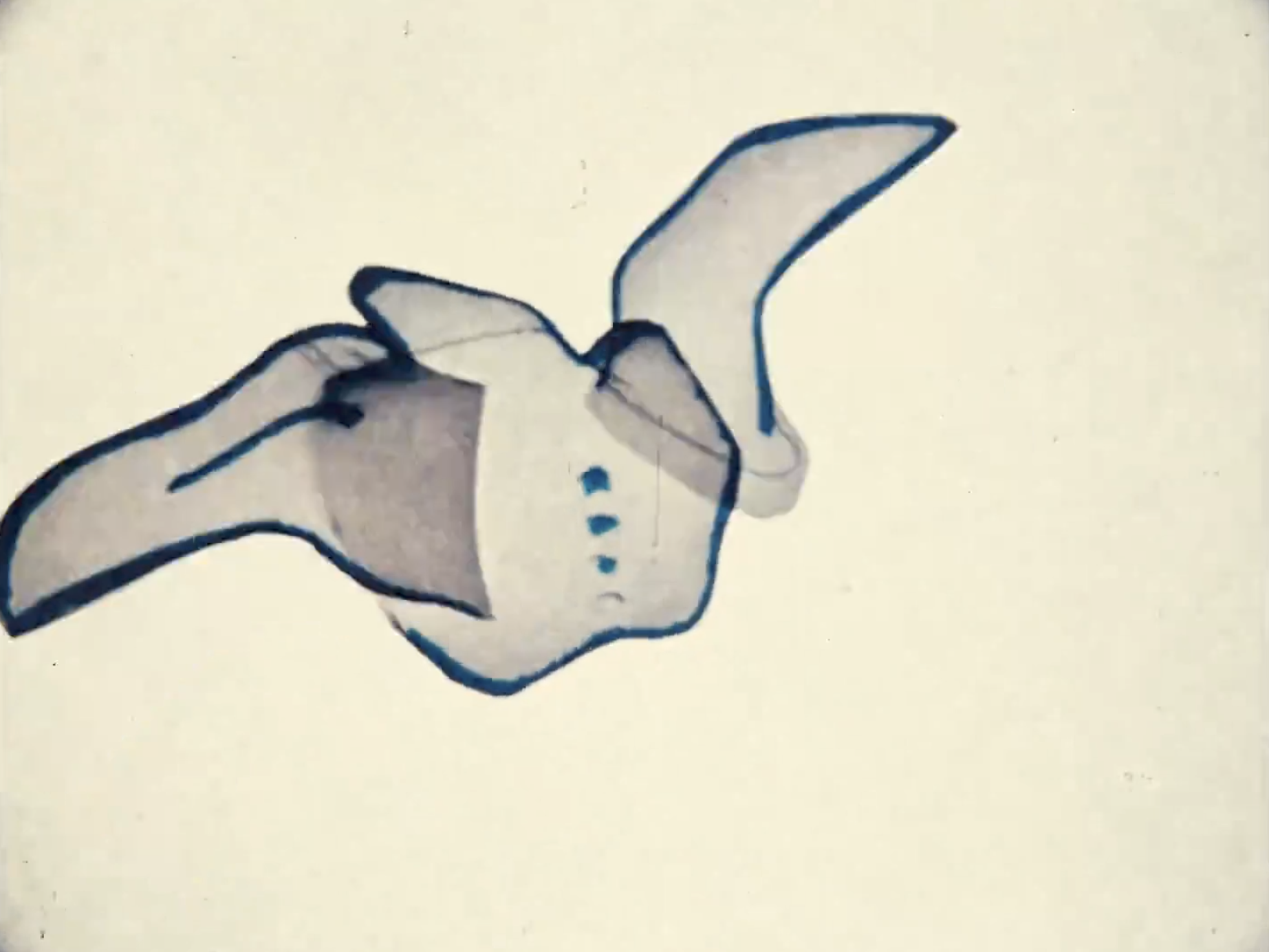
This quality appears immediately in Seasons (1970), her first cinematic foray, in which cutout animation tracks cyclical transformations through ecstatic bursts of movement accompanied by Jelly Roll Morton’s New Orleans Jazzmen. Here, the body already exists as mutation and instability. Her recurring spinal bird figure jerks across the frame with the vulnerability of a creature halfway between instruction and hallucination. The handmade tactility of the animation is crucial. Lassnig never treats movement as a seamless illusion. Motion arrives in increments, each shift retaining the memory of the hand that repositioned it. One feels the dexterity of fingers behind the image.
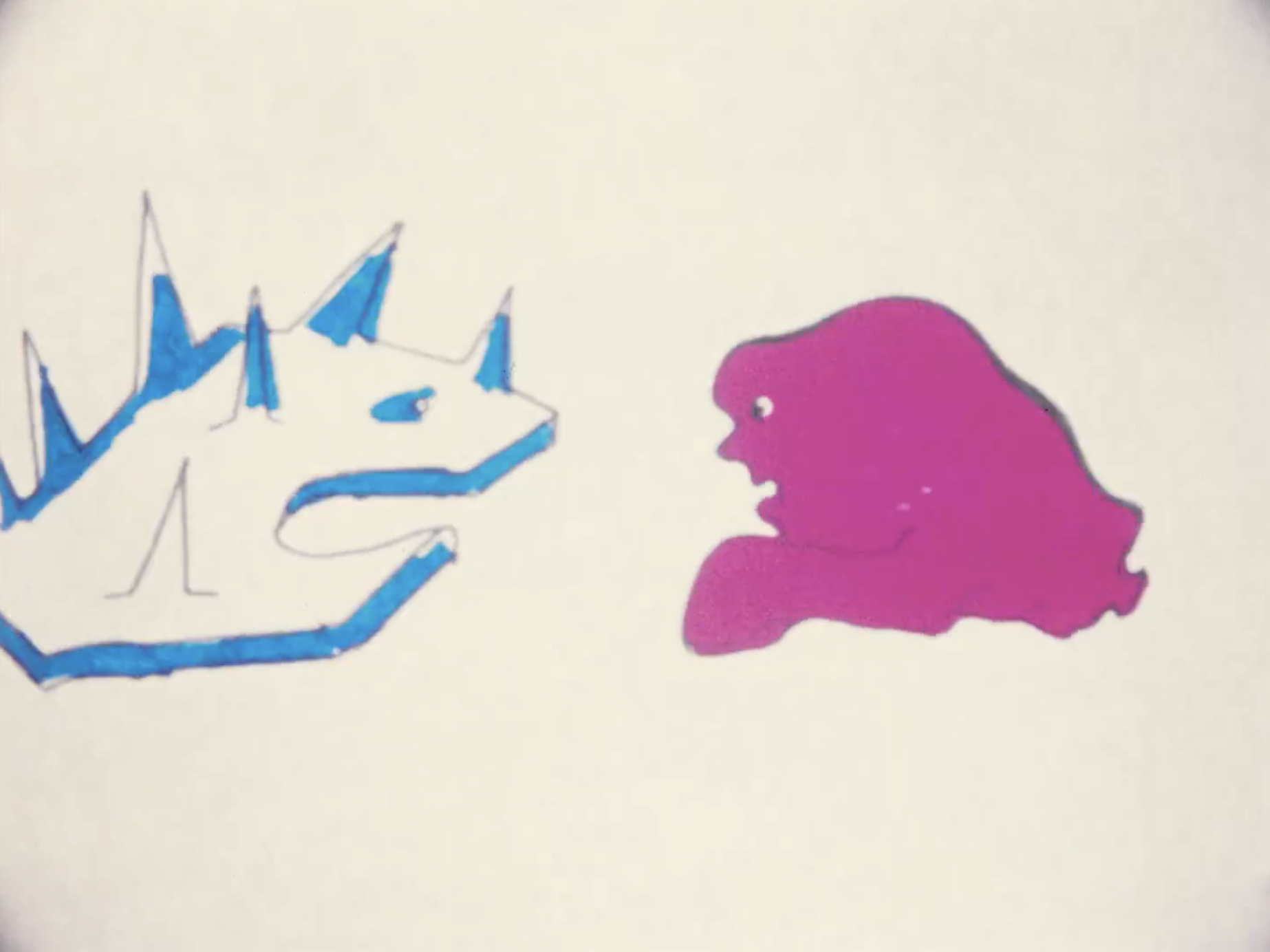
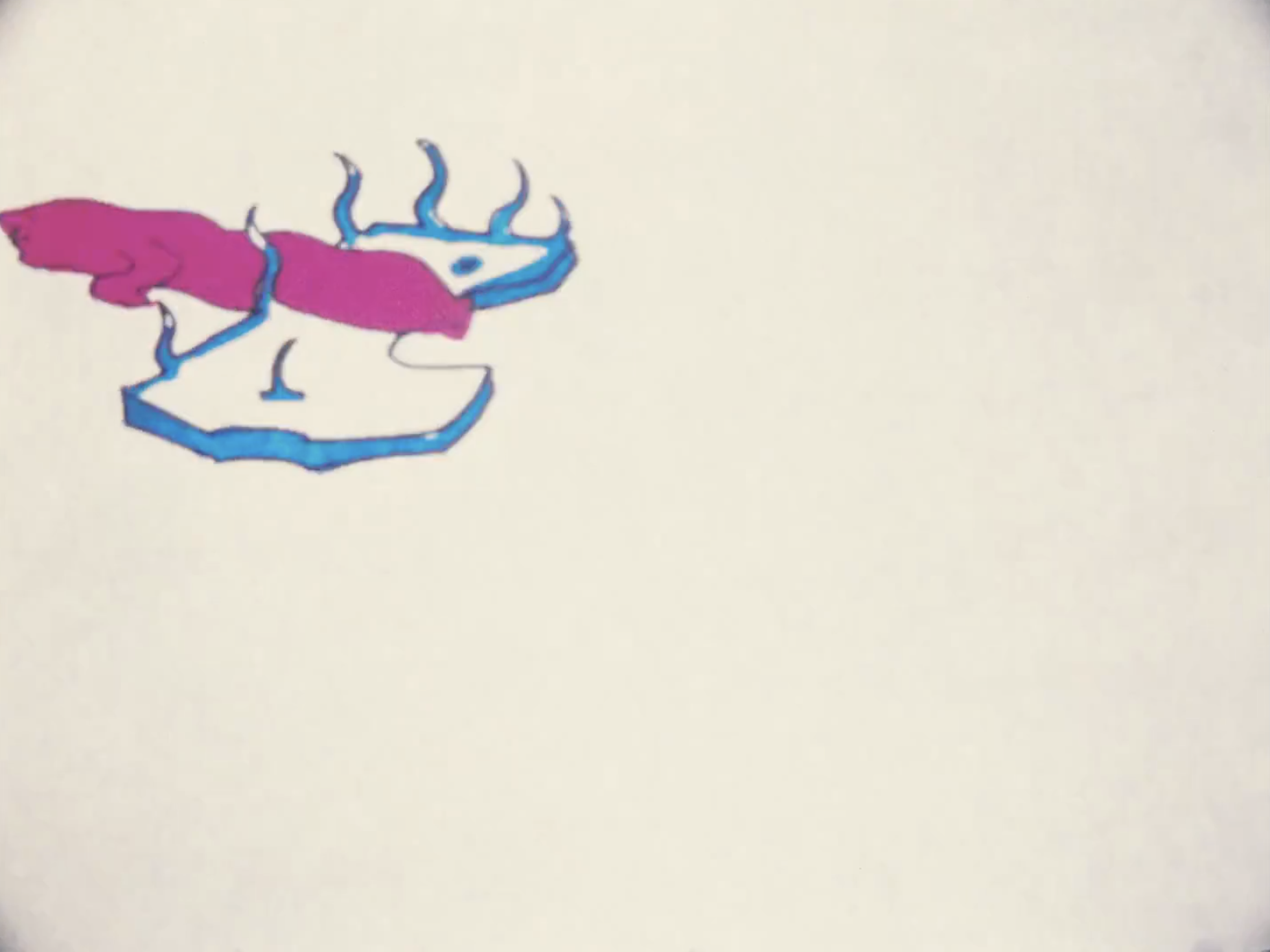
Tactile thinking deepens in Encounter (1970), her first traditional hand-drawn animation. Two abstract forms drift toward one another through a field of trembling pinks, one curious, the other defensive, their interaction oscillating between seduction and annihilation. Set to Morton Subotnick’s Touch (1969), the piece unfolds as an anatomy of intimacy stripped of social performance. Desire becomes texture rather than narrative. Affection emerges through abrasion. The figures merge and recoil with an almost cellular uncertainty, suggesting organisms learning the terror of coexistence in real time. Lassnig renders emotional encounter as a process of bodily negotiation in which tenderness and violence intertwine.
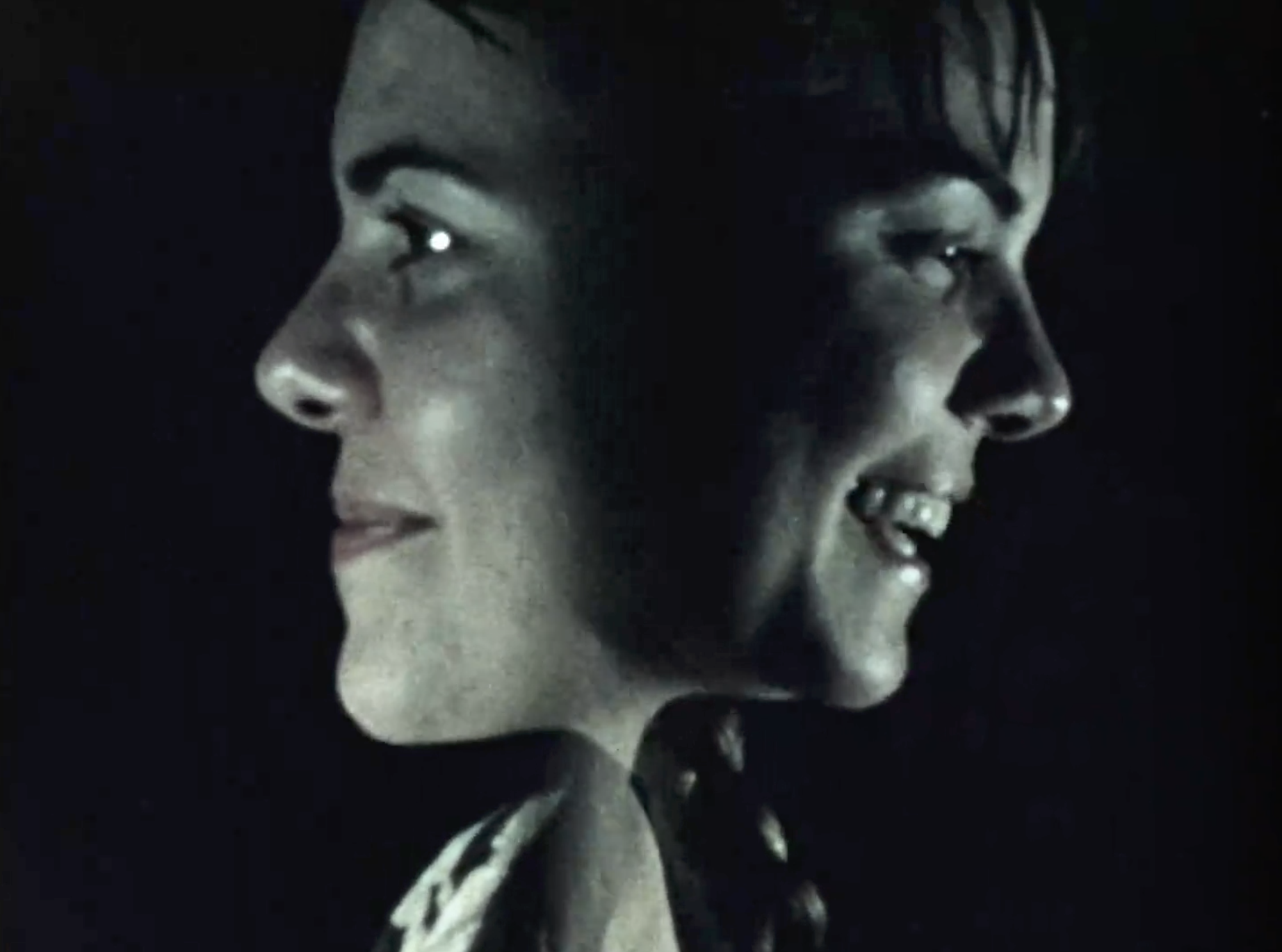
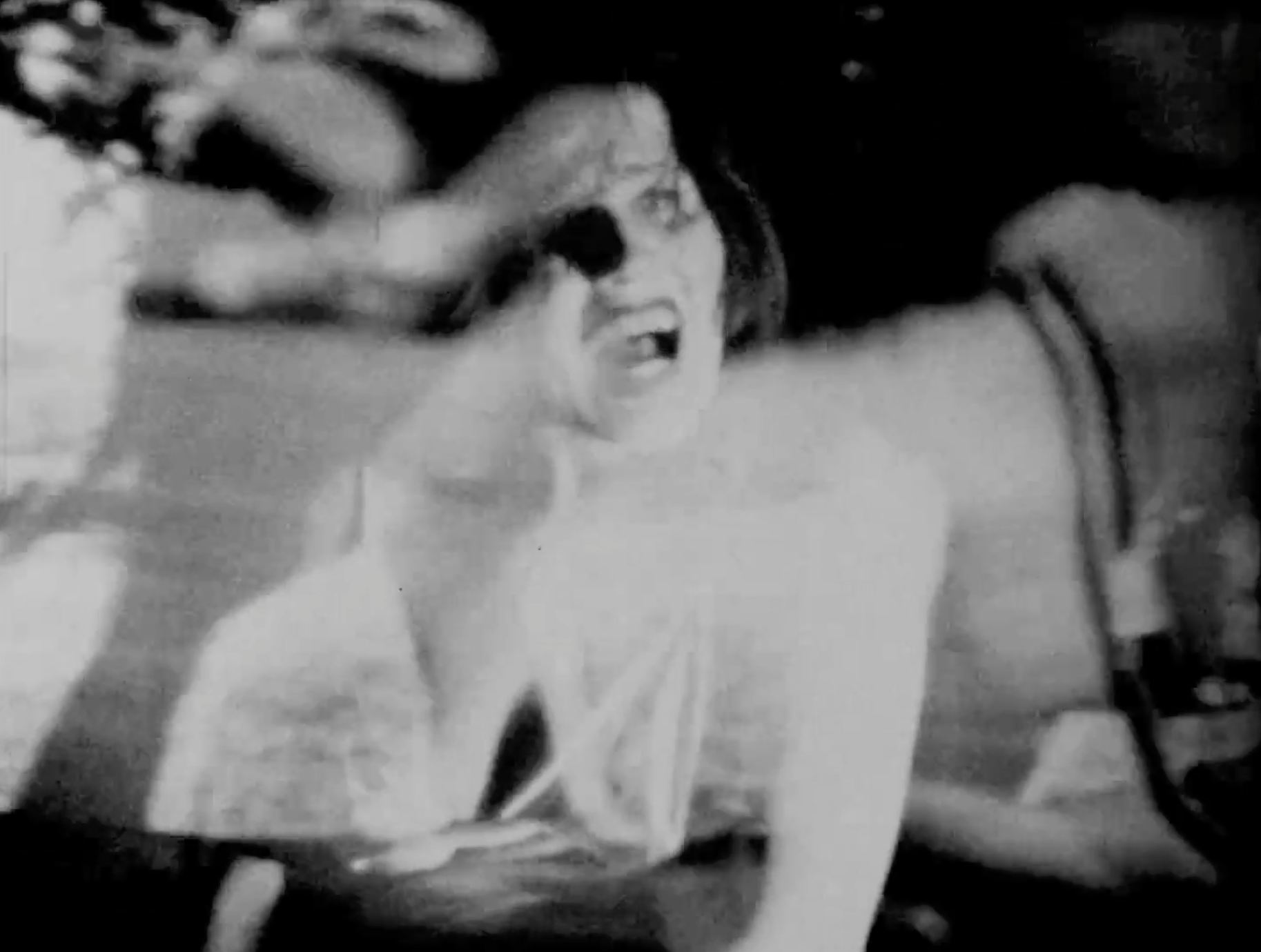
New York itself enters the proverbial frame as interference incarnate. In Moonlanding/Janus Head (1970), the city appears through fractured overlays of moon-landing footage, skaters, skyscrapers, film clips from Gone With the Wind(1939) and Spartacus (1960), and Janus-faced superimpositions that evoke thresholds of transition. Lassnig once described emigrating to New York in 1968 as feeling akin to landing on the moon, and the piece captures precisely that sensation of estrangement. The city becomes an extraterrestrial theater of surfaces. Familiar cultural symbols flicker with increasing unreality until the moving image itself appears as a species of collective hallucination.
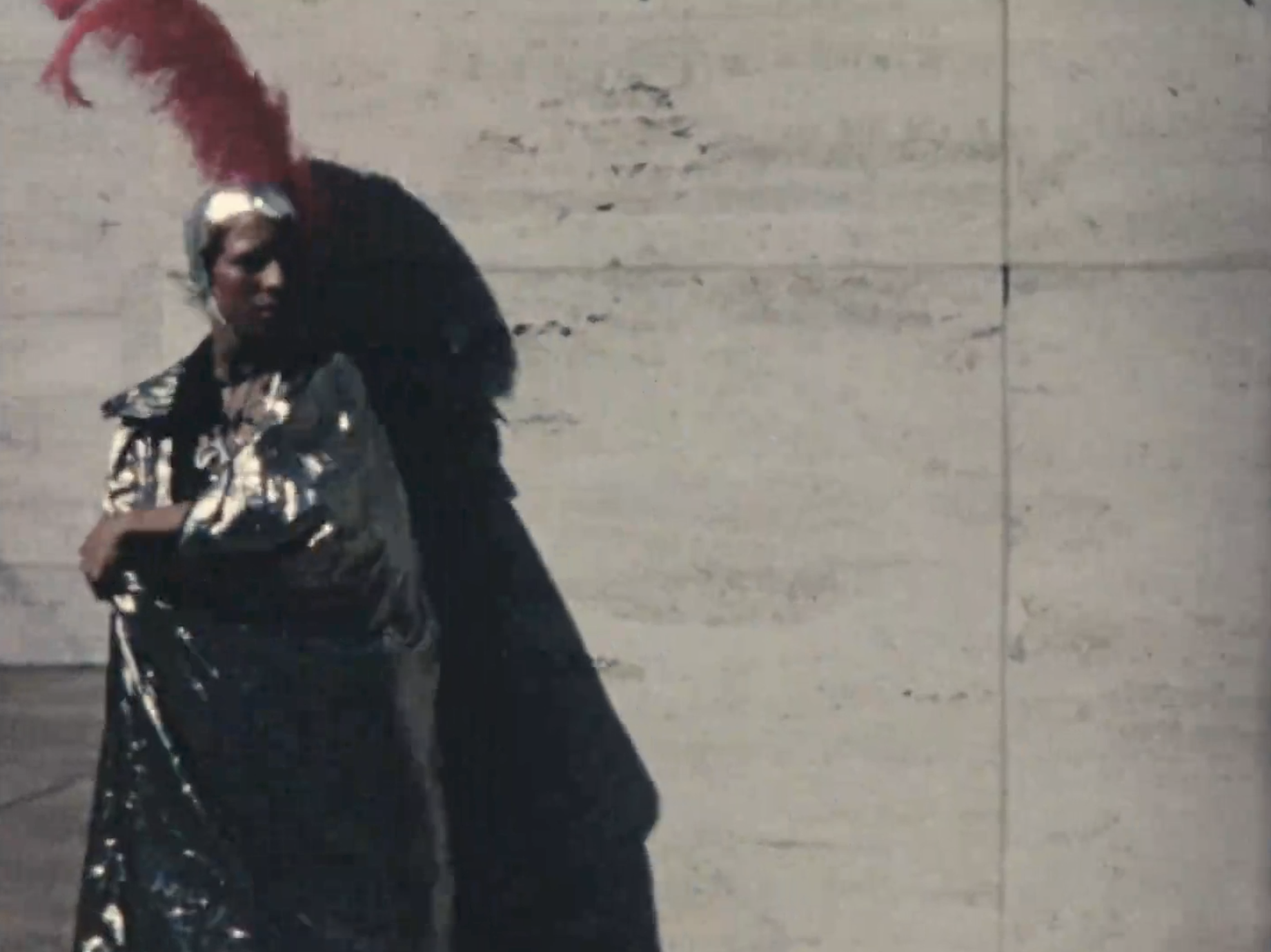
That sense of urban dislocation reaches another form in Broadway I (1970), where drag performers and street theater troupes inhabit a Manhattan overflowing with improvisatory self-invention. Lassnig’s camera never settles into anthropological distance. Sunlight through trees interrupts the parade. Bodies drift in and out of double exposure. Public spectacle melts into private reverie. One senses an artist discovering that identity in New York is permanently provisional, assembled from fragments of costume, posture, and exhaustion.
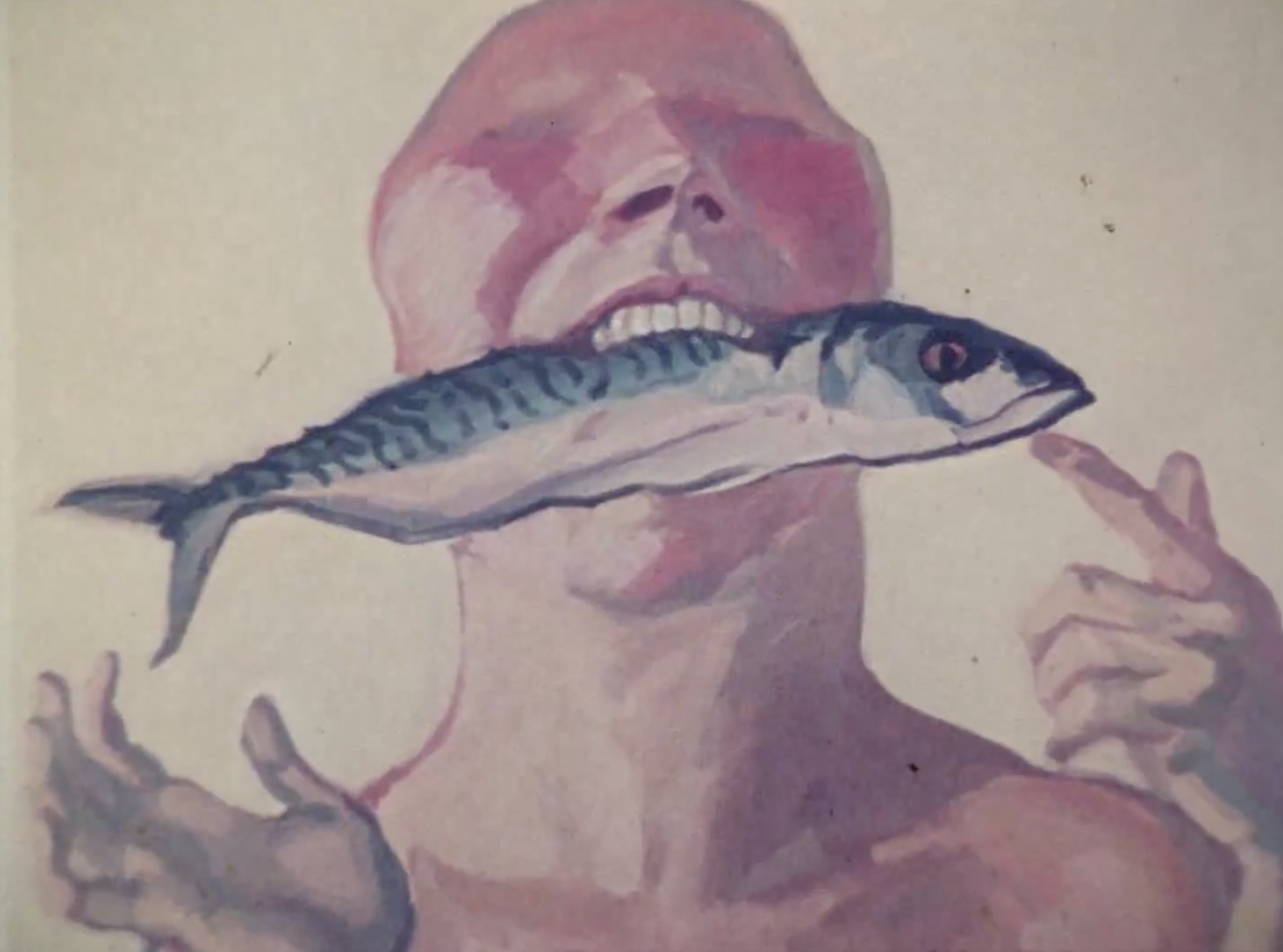
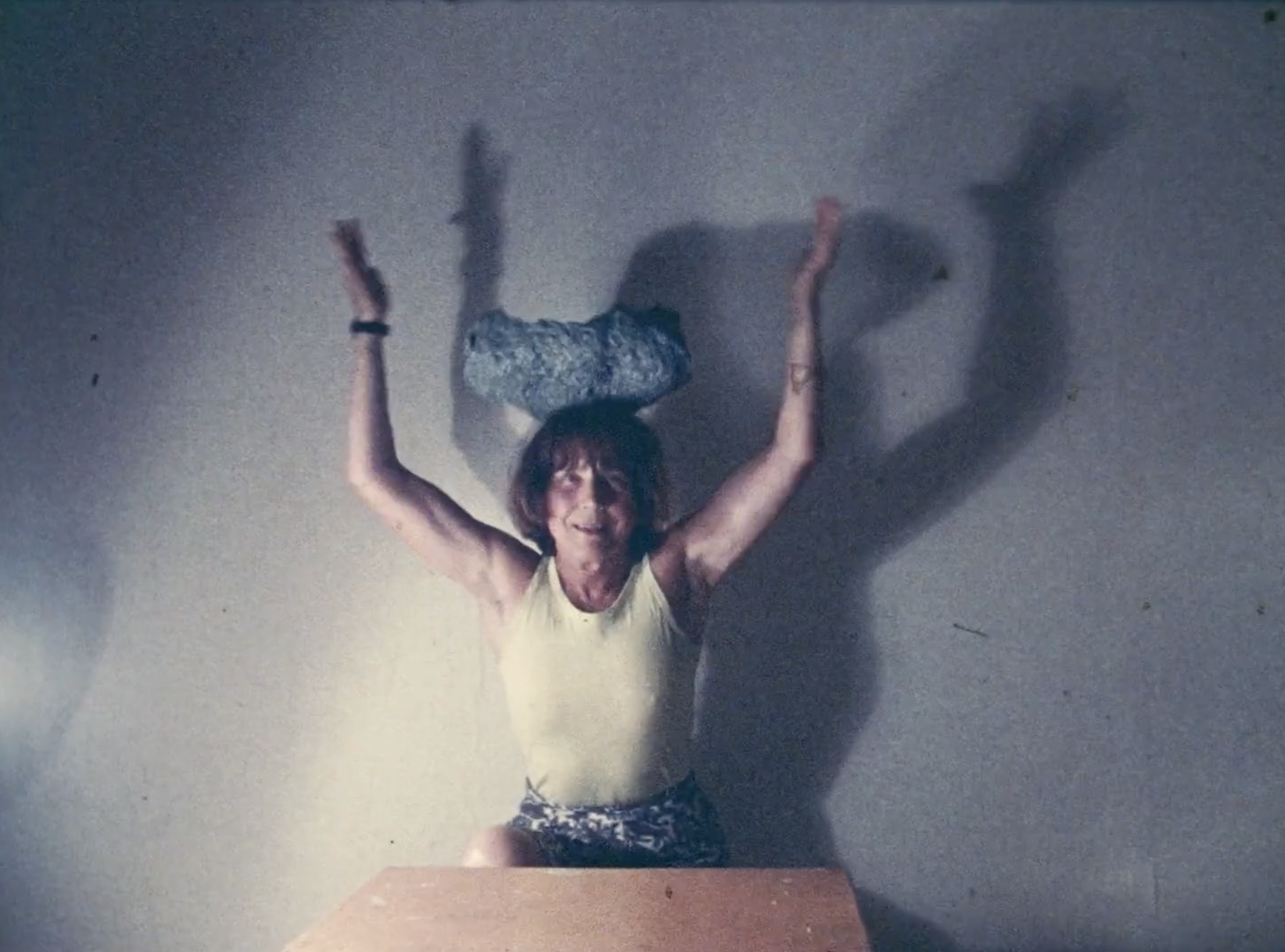
Her extraordinary Stone Lifting. A Self Portrait in Progress (1971–74) extends this inquiry inward with almost frightening candor. Paintings appear in various states of completion, bodies distort against glass and canvas, and gallery visitors circulate among images whose origins they cannot possibly perceive. Meanwhile, back in the studio, Lassnig drops a stone onto parts of her own body. However, the impact itself remains partially withheld from the viewer, creating an unbearable tension between anticipated pain and cinematic restraint. The self here exists as a site of perpetual excavation. Every image carries traces of prior selves buried beneath it.
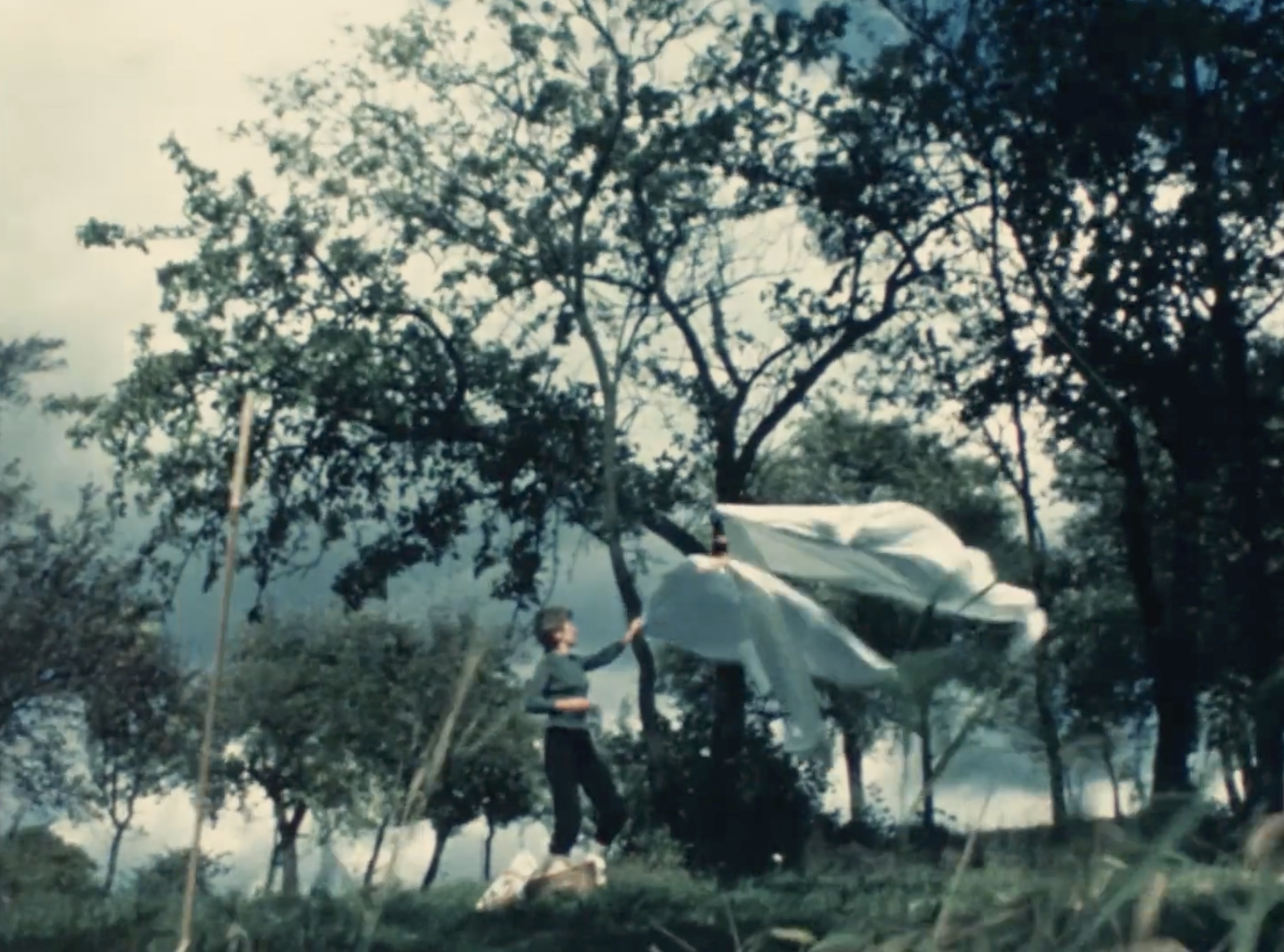
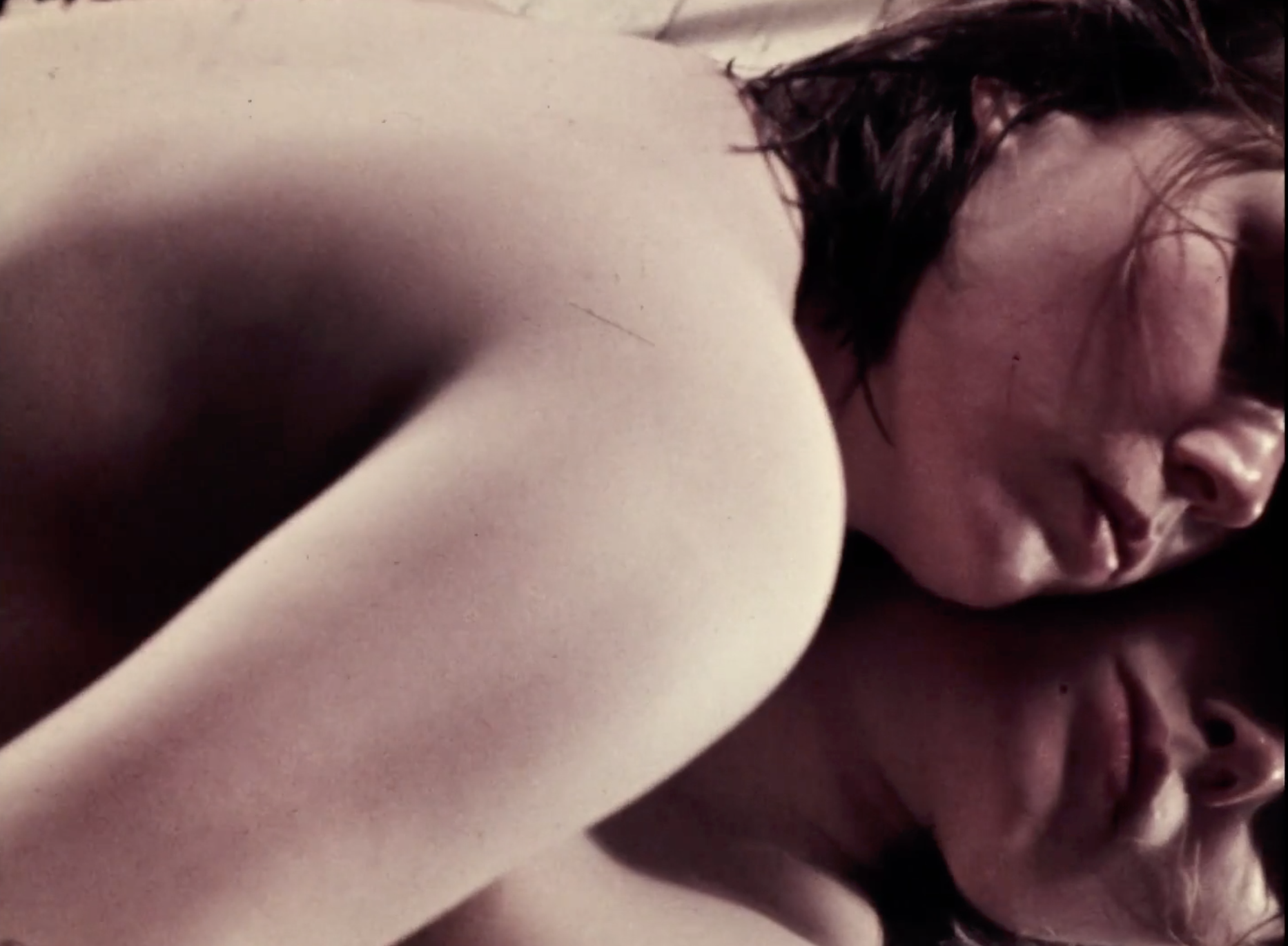
The attention devoted to friends and collaborators reveals another dimension of Lassnig’s gaze. In Soul Sisters Hilde (1972), the eponymous subject moves between weaving, sculpture, forests, and domestic quiet while Webern’s string quartet music hovers with spectral delicacy. Creativity here appears inseparable from solitude. Hilde’s loom becomes an extension of consciousness itself, a structure through which memory can be threaded into visible form. Meanwhile, Soul Sisters Alice (1974) transforms friendship into ritual theater. Blindfolded recollections of former lovers, wine sprayed onto flesh, Handel’s Music for the Royal Fireworks, and arcs of electricity crossing naked skin: such are the artifacts of its ceremonial intensity. “An absurd game,” Lassnig remarks, “just as life is!” Yet the absurdity never diminishes the vulnerability involved. The body remains both participant and witness to its own emotional exposure.
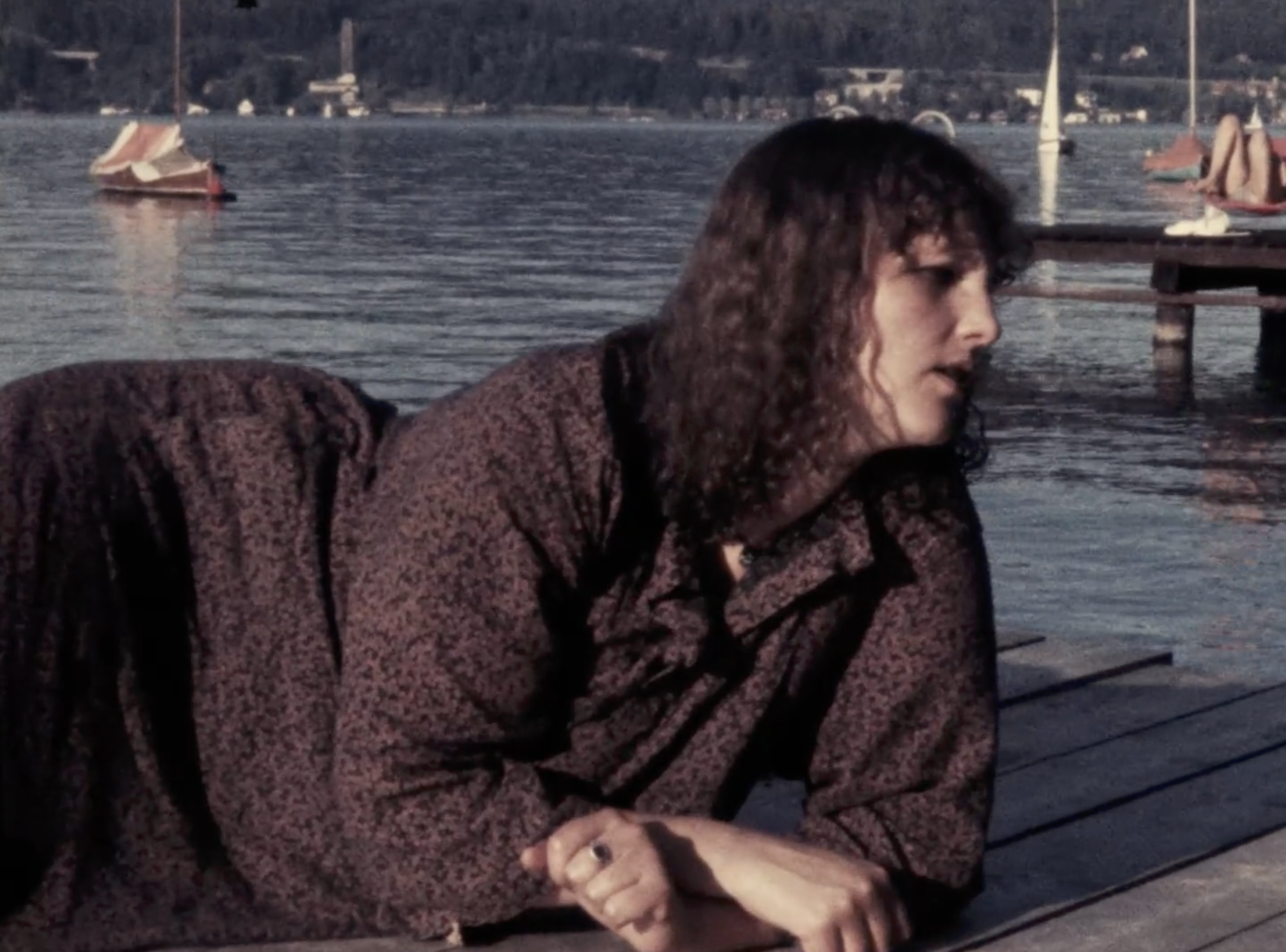
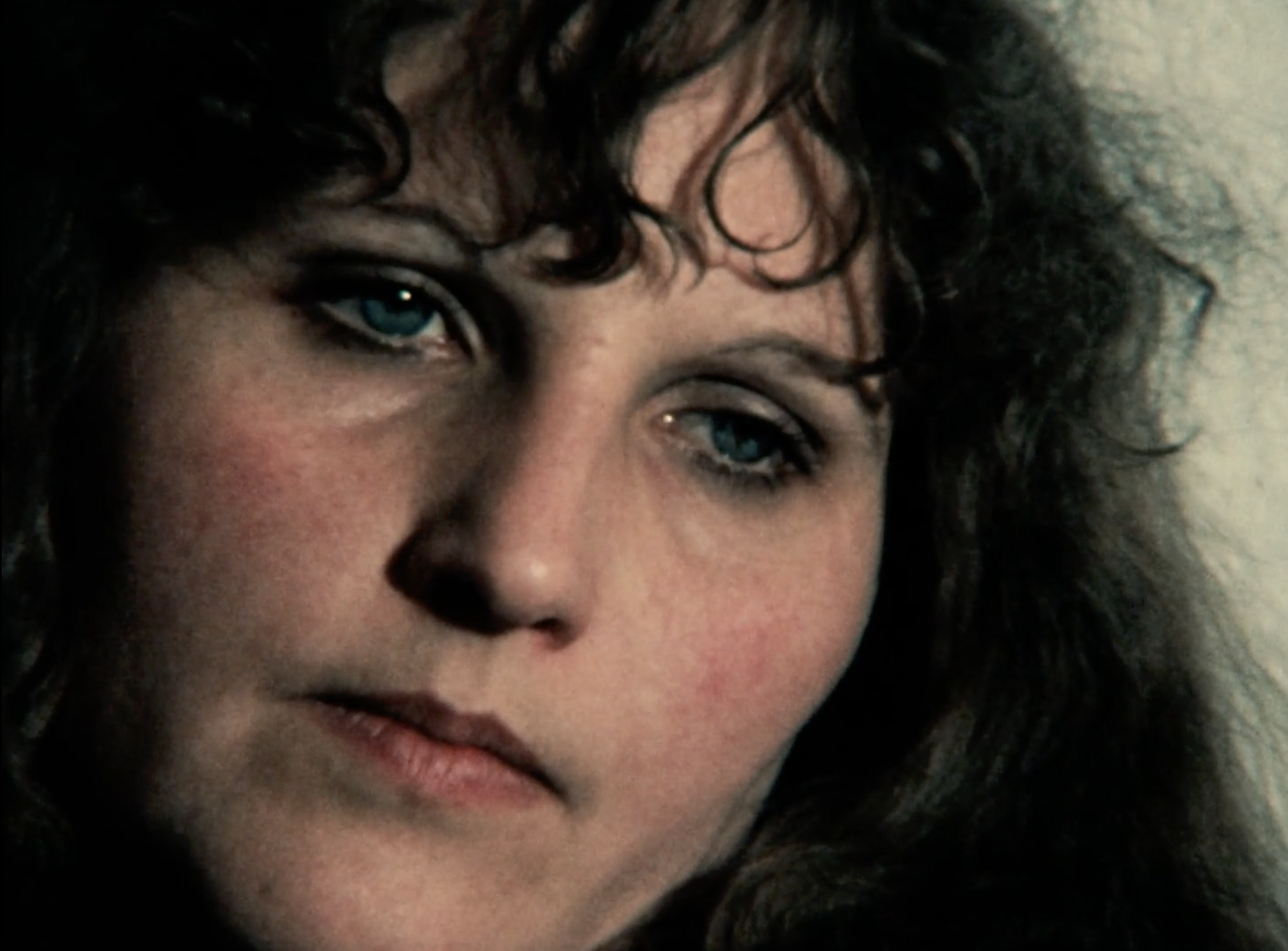
Soul Sisters Bärbl (1974) may be the most devastating of these portraits. Bärbl irons clothing, washes dishes, and drifts through depressive episodes while Lassnig speaks with startling lucidity about disappointment and endurance. The camera presses with painful intimacy, trembling slightly, refusing aesthetic comfort. Domestic life appears as a mechanism that slowly metabolizes ambition into fatigue. Yet Lassnig does not reduce Bärbl to victimhood. Her exhaustion contains philosophical force. “The world is good, even when it is bad,” she says, arriving at truth through attrition rather than transcendence.
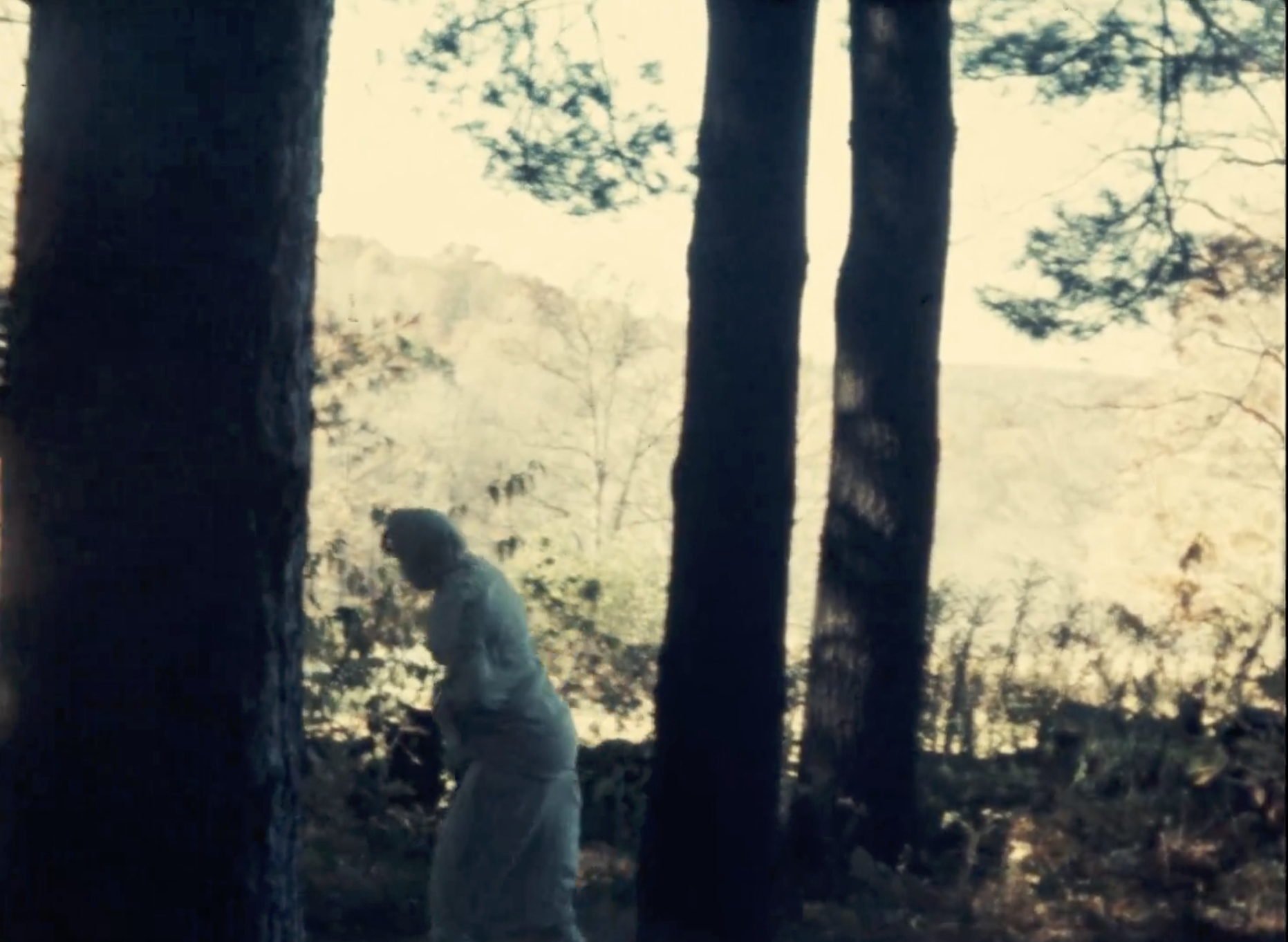
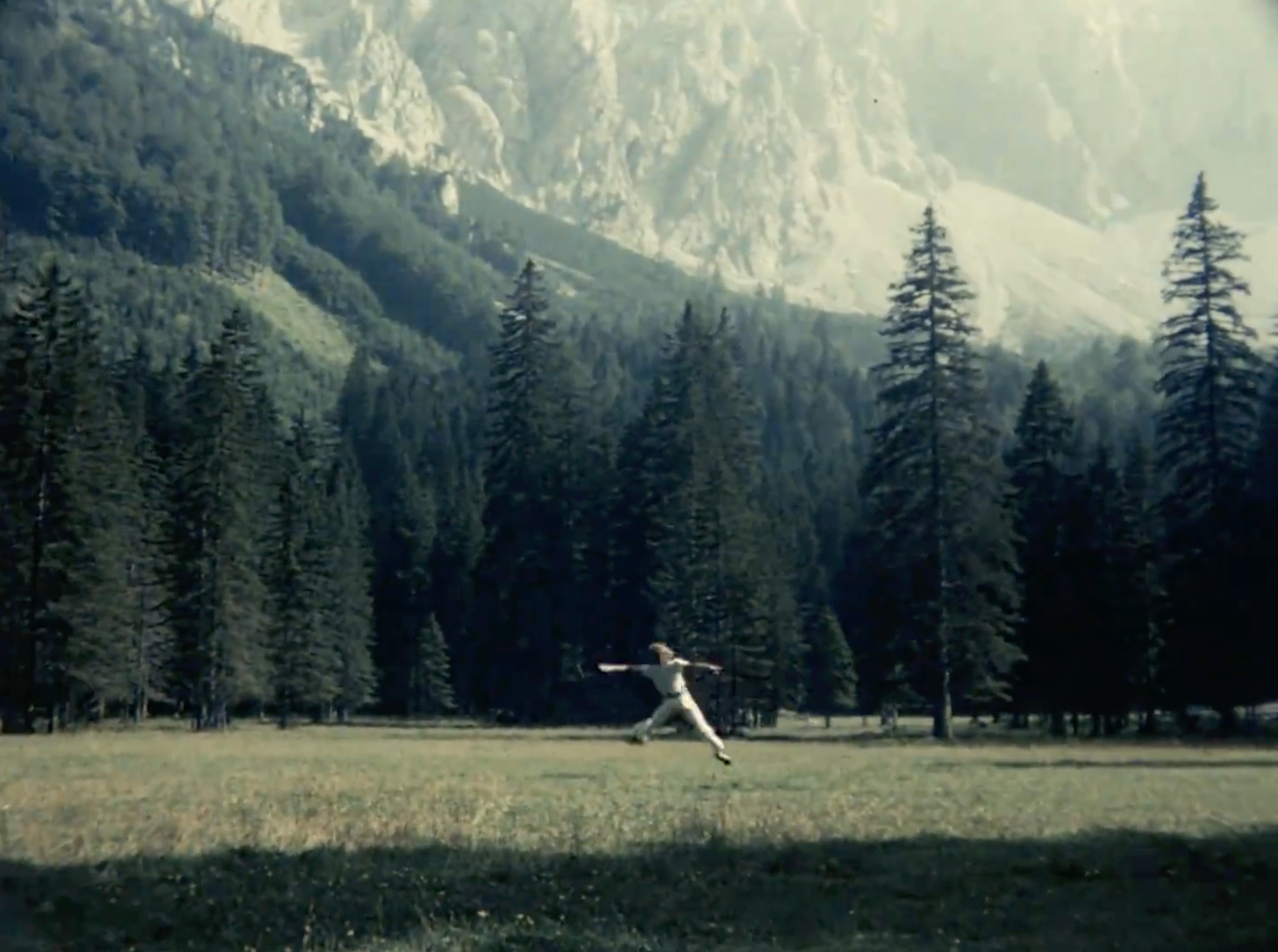
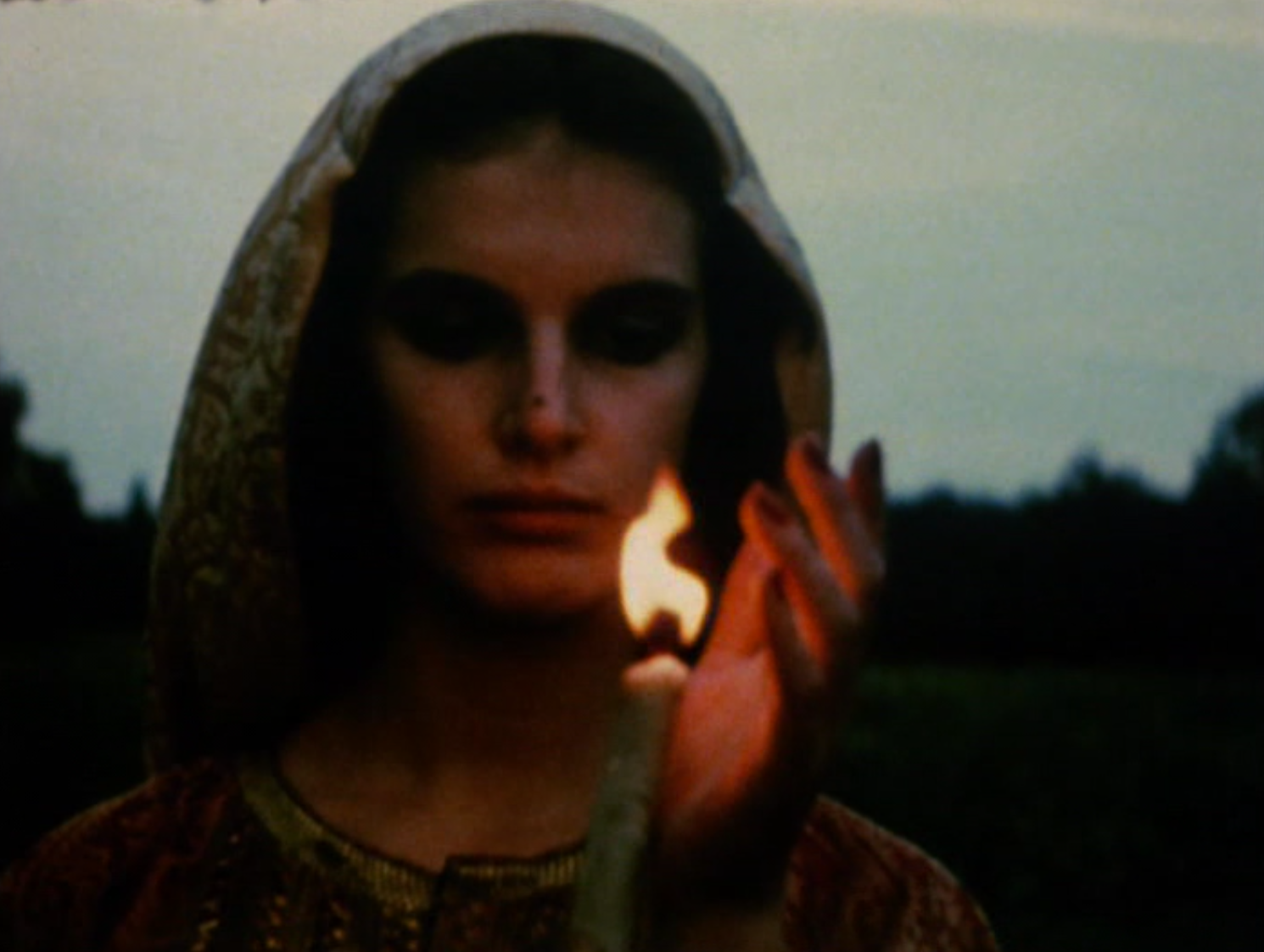
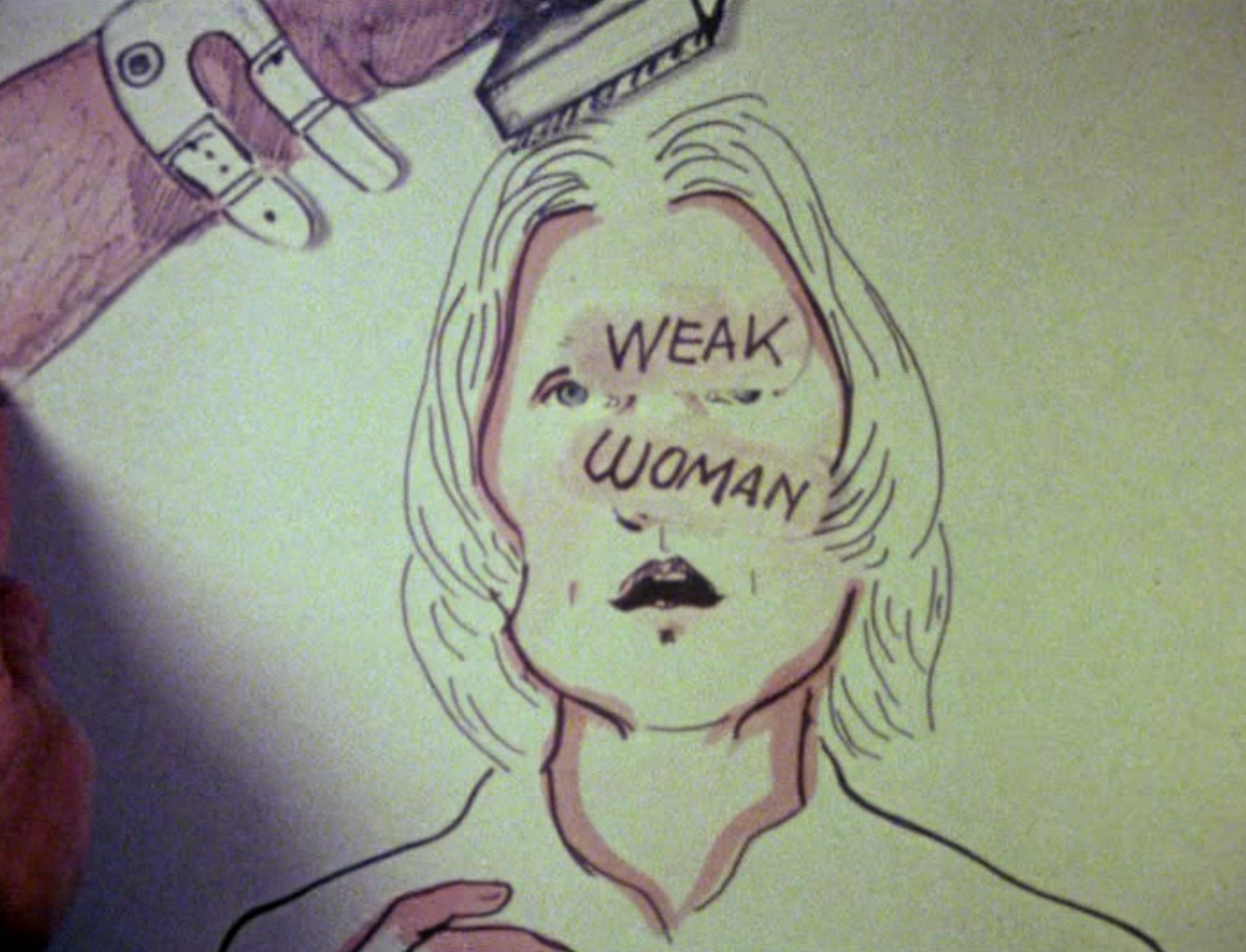
This attention to the contradictory realities of embodiment runs throughout Lassnig’s engagement with feminism. She joined the Women/Artist/Filmmakers, Inc. collective in New York in 1974, though she always maintained a certain distance from organized ideological frameworks. Her vocabulary is unquestionably shaped by feminist consciousness, particularly in their refusal to eroticize the female body according to patriarchal conventions. Yet Lassnig resisted being enclosed within any singular category of “female artist.” She sought confrontation with the male-dominated European art world on equal terms, believing competition itself could generate artistic vitality. This give and take imbues Autumn Thoughts (1975), where a straitjacketed older woman wanders through forests and water while a young ballet dancer moves with liberated athleticism nearby, with historical burdens.
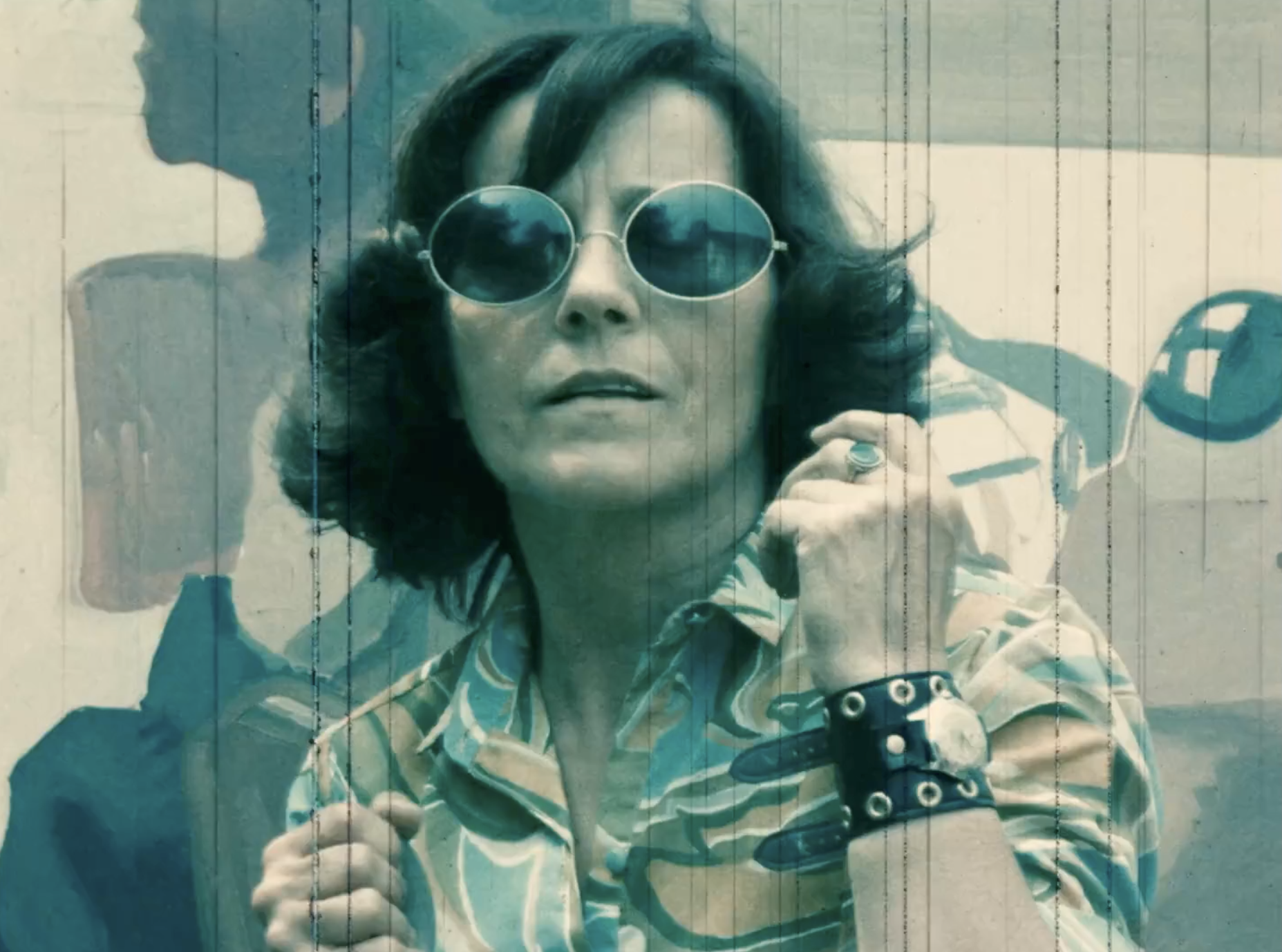
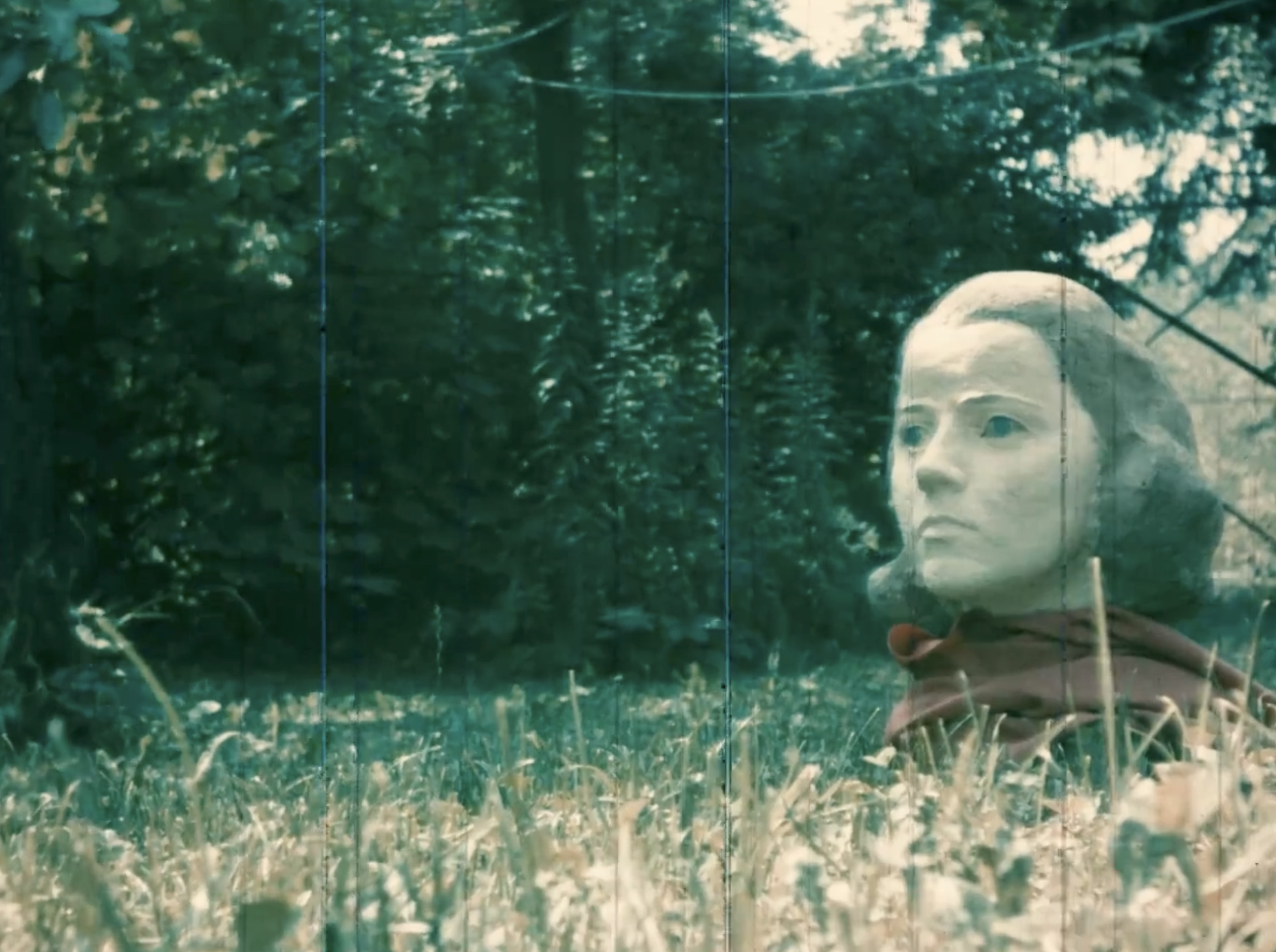
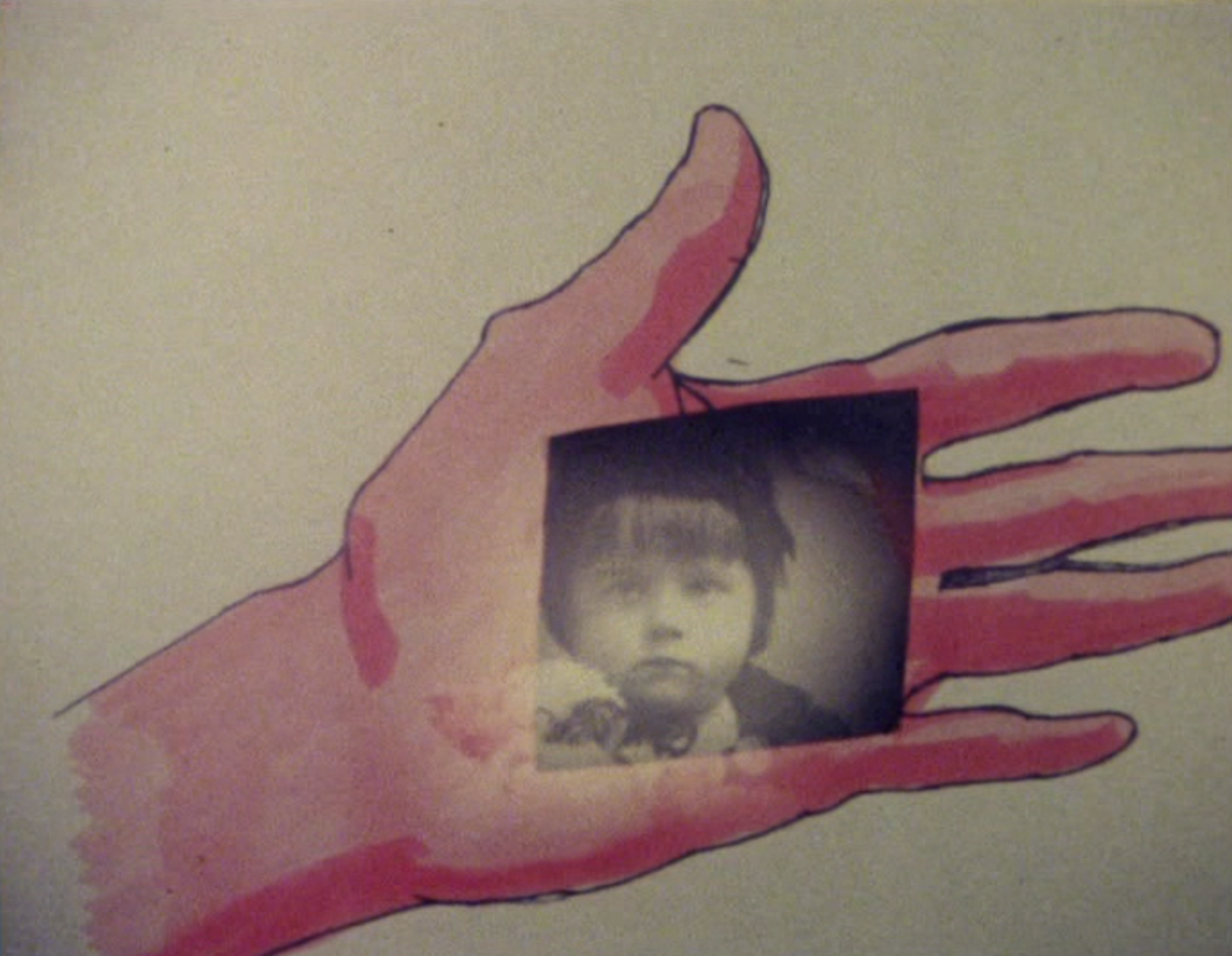
Other engagements with nature burrow into the subconscious. Kopf (Head, 1975) offers a fractured glimpse into inheritance and apparition. Lassnig places herself among paintings of her parents and earlier self-portraits, surrounding the present body with ancestral echoes that never fully release their hold. Faces drift between generations with uneasy permeability. A sculpted bust of the artist appears outdoors in stop-motion animation, rotating stiffly in the garden. Near the water’s edge, Lassnig wanders with the uncertainty of someone inhabiting several temporalities at once. The film’s stillness carries a peculiar dread, as if selfhood were always on the verge of dissolving back into the dust from which it emerged.
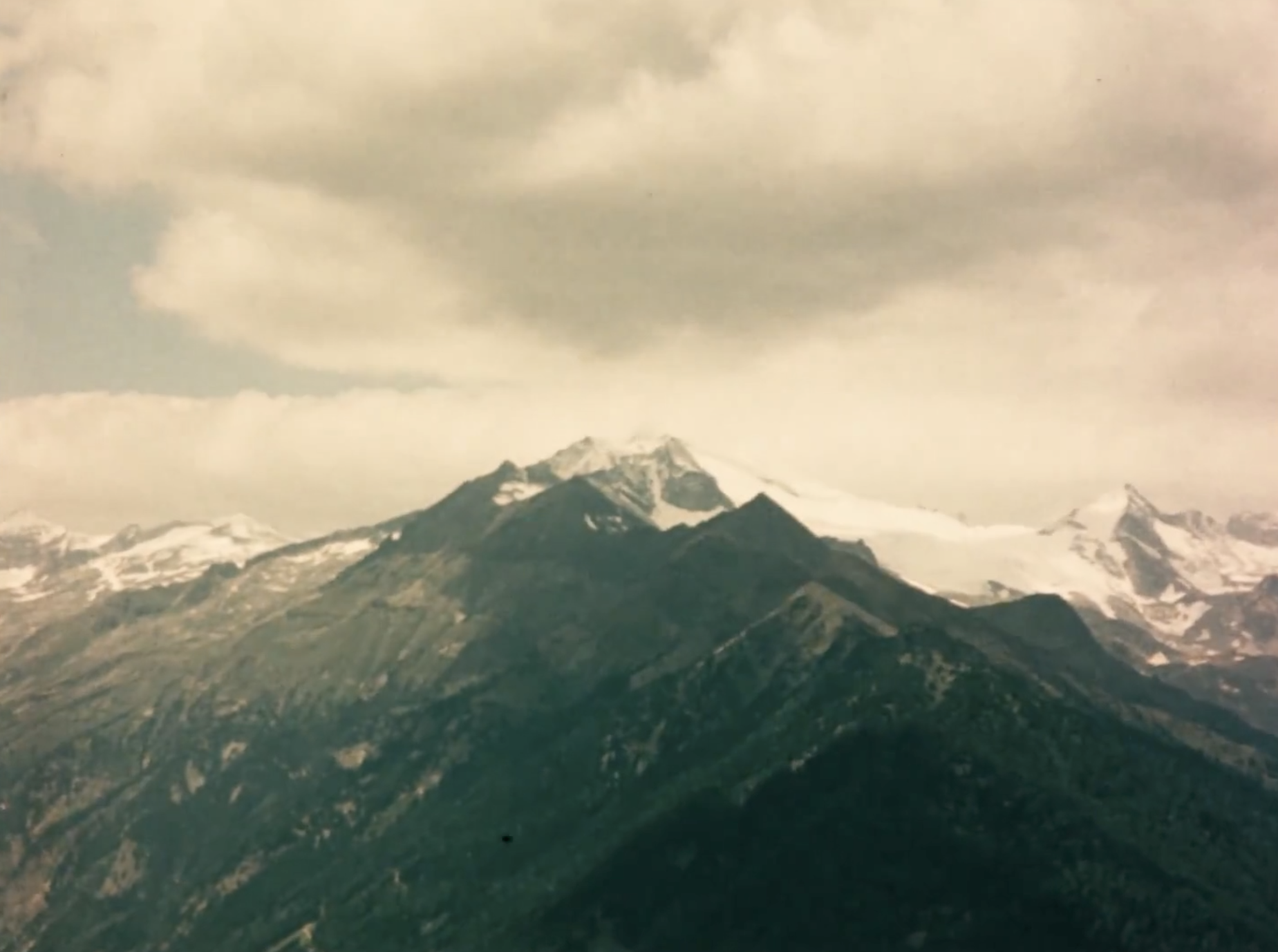
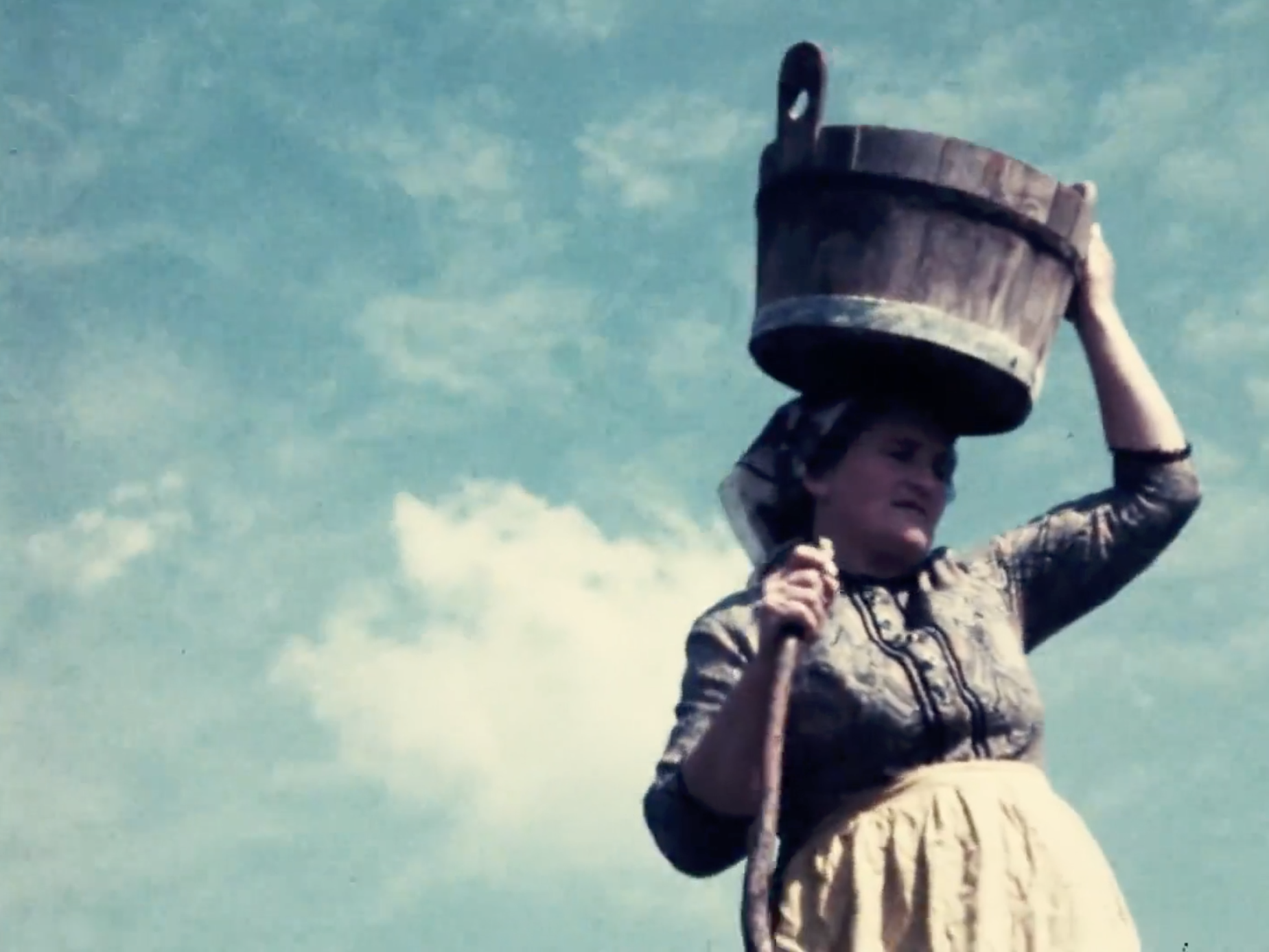
Mountain Woman is another outward examination. Filmed in Lassnig’s home province of Carinthia, in the mountainous village of Maltaberg, it observes the daily existence of a farmer moving through cycles of labor that appear both eternal and exhausting. Animals are fed, children are tended to, and tools are carried across unforgiving terrain. Yet the surrounding alpine beauty never softens the severity of survival, the mountains looming as ancient witnesses to repetition. As domestic life merges with geological time, the cyclical structure produces an uncanny distance, encouraging viewers to confront the comfort of spectatorship itself. Hardship persists whether or not it is being observed, drawing a line to other forgotten voices across space and time.
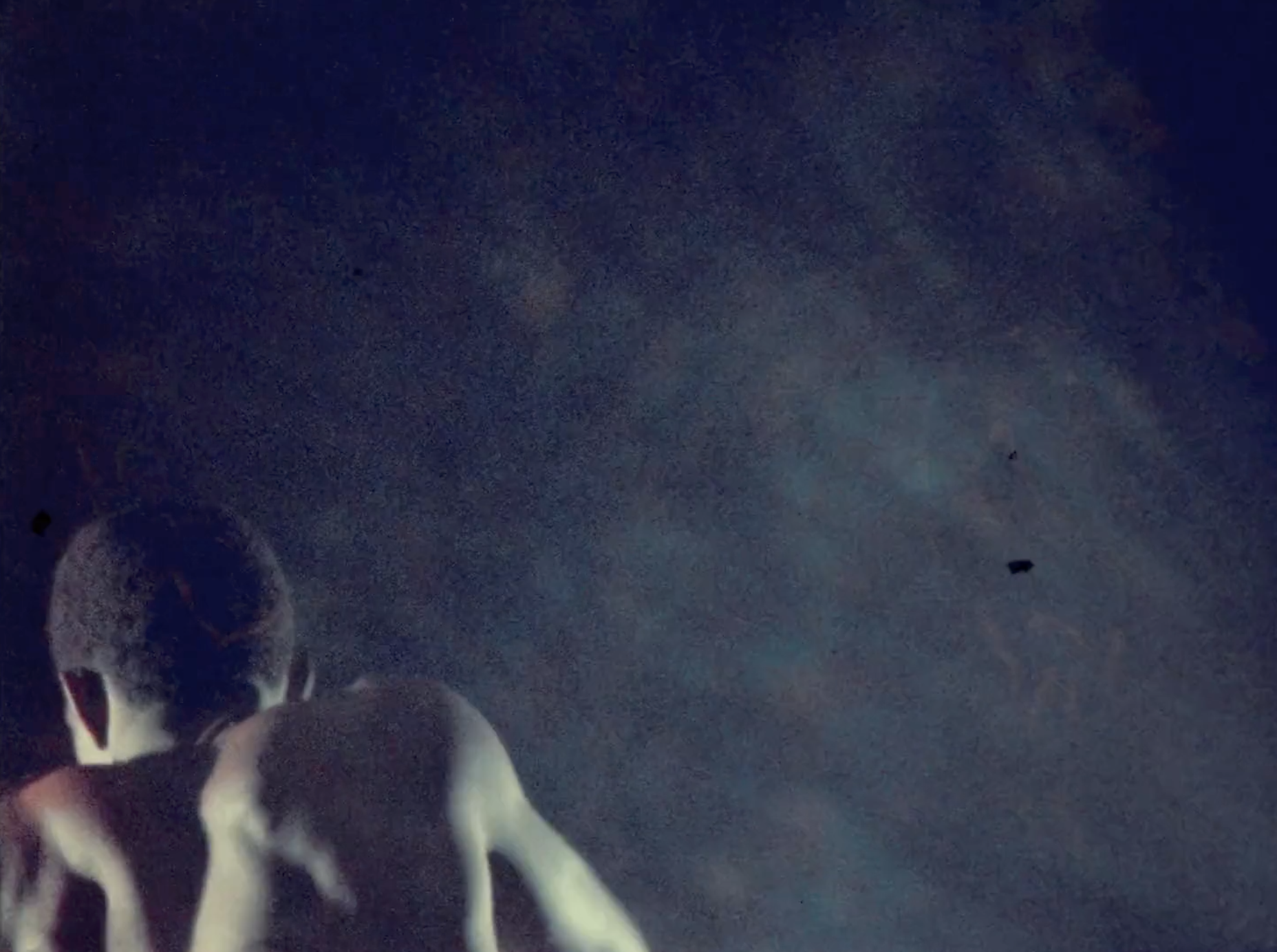
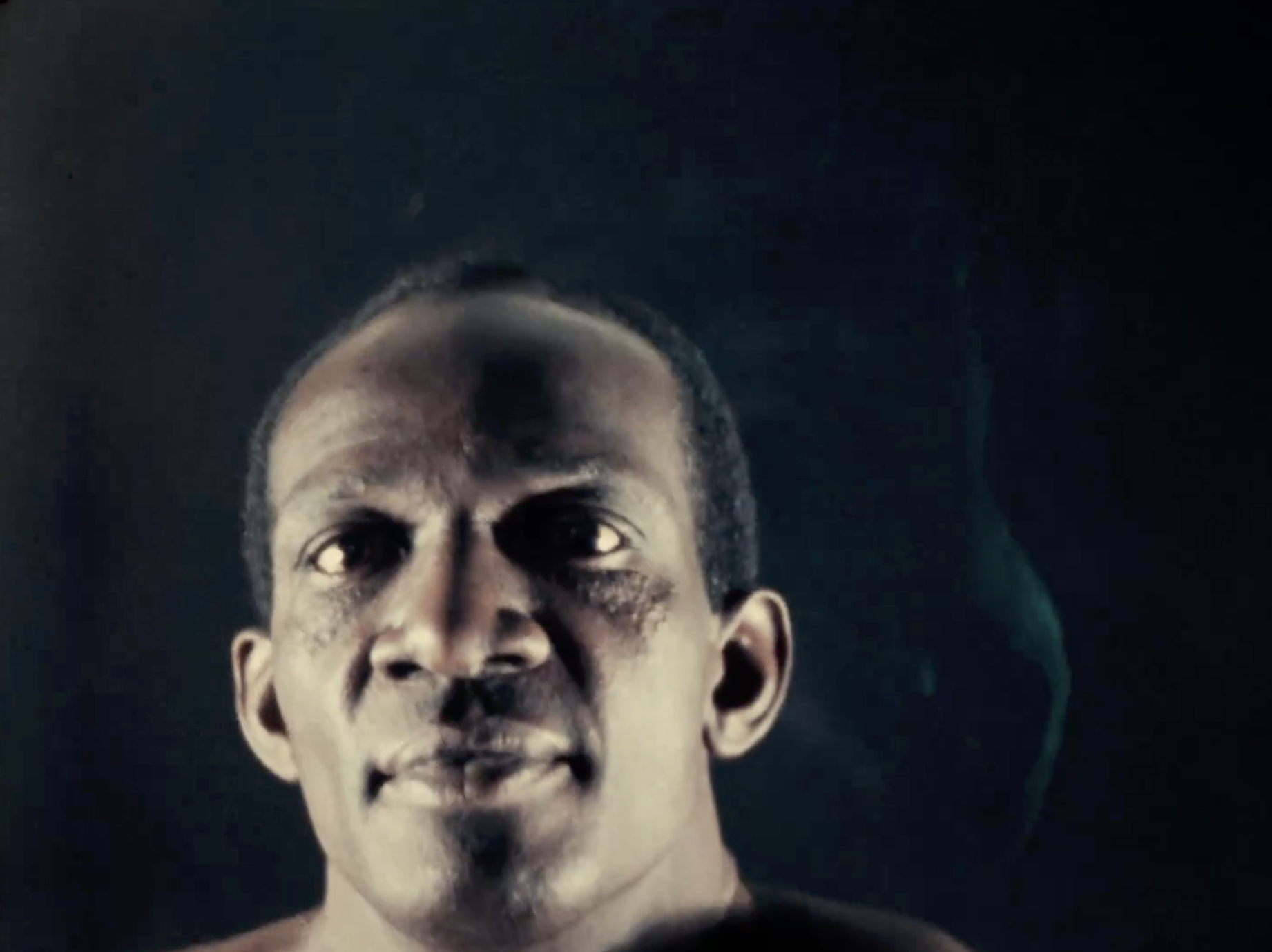
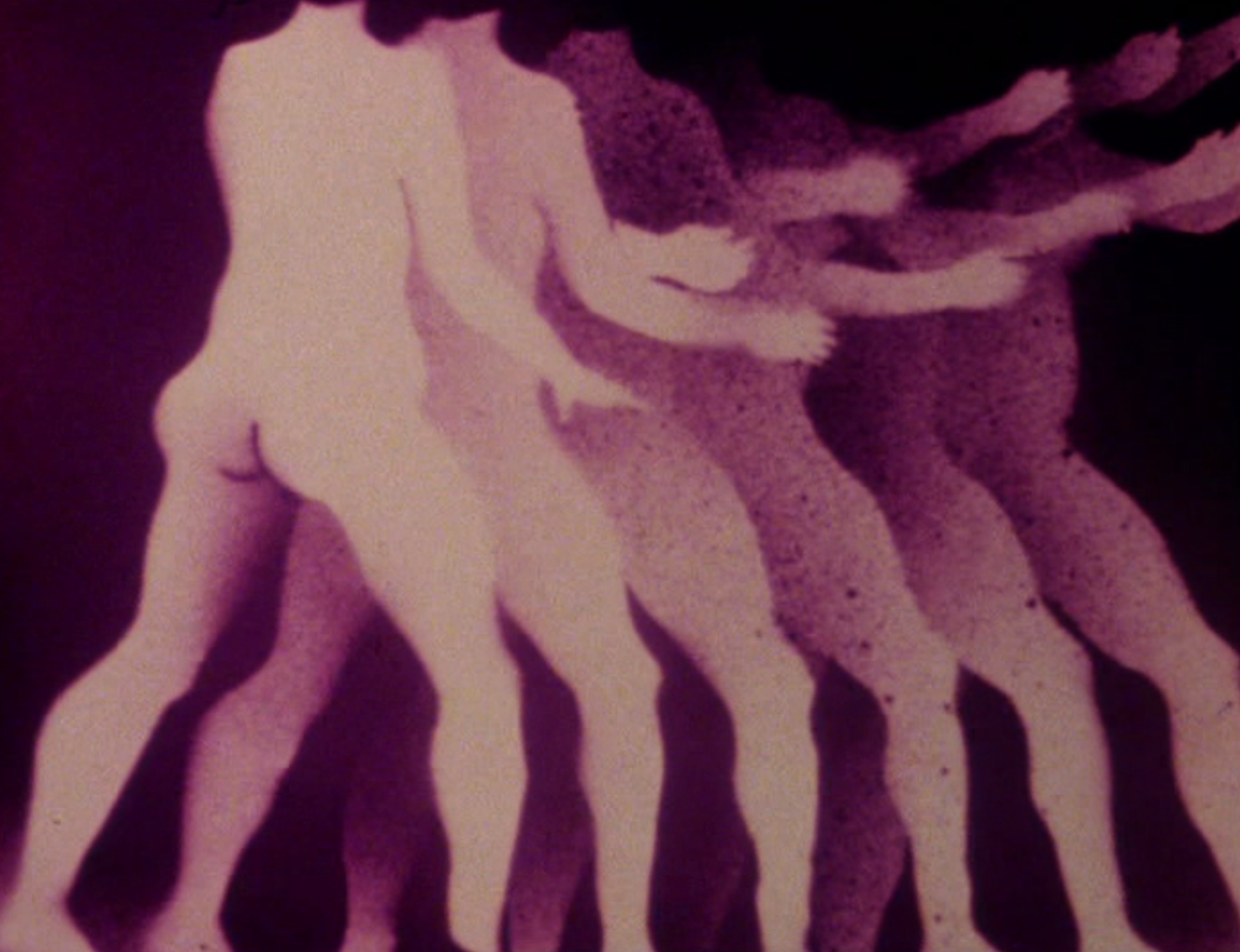
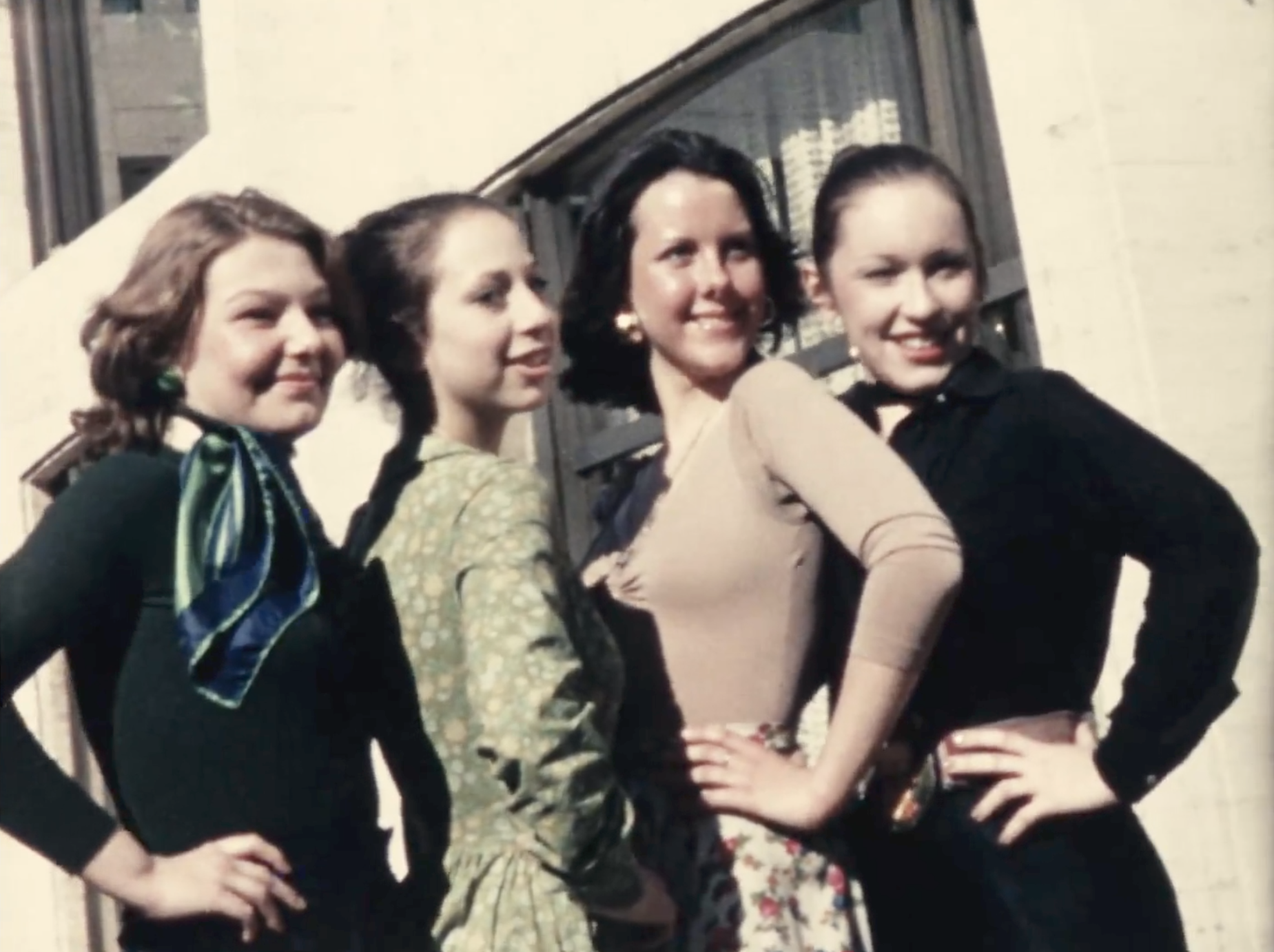
And yet, the issue was never whether Lassnig was a political artist. Rather, she operated by a relentless scrutiny of the unstable territory where sensation becomes character. Her practice understands that the body absorbs ideology before language ever articulates it. One sees this clearly in Black Dancer (1974), where Harry, a friend of Lassnig’s, moves with studied self-consciousness beneath (and outnumbered by) the hovering specters of a group of female ballet dancers layered through double exposure. The male body here becomes uneasy under scrutiny, transformed into an object whose visibility carries discomfort rather than mastery.
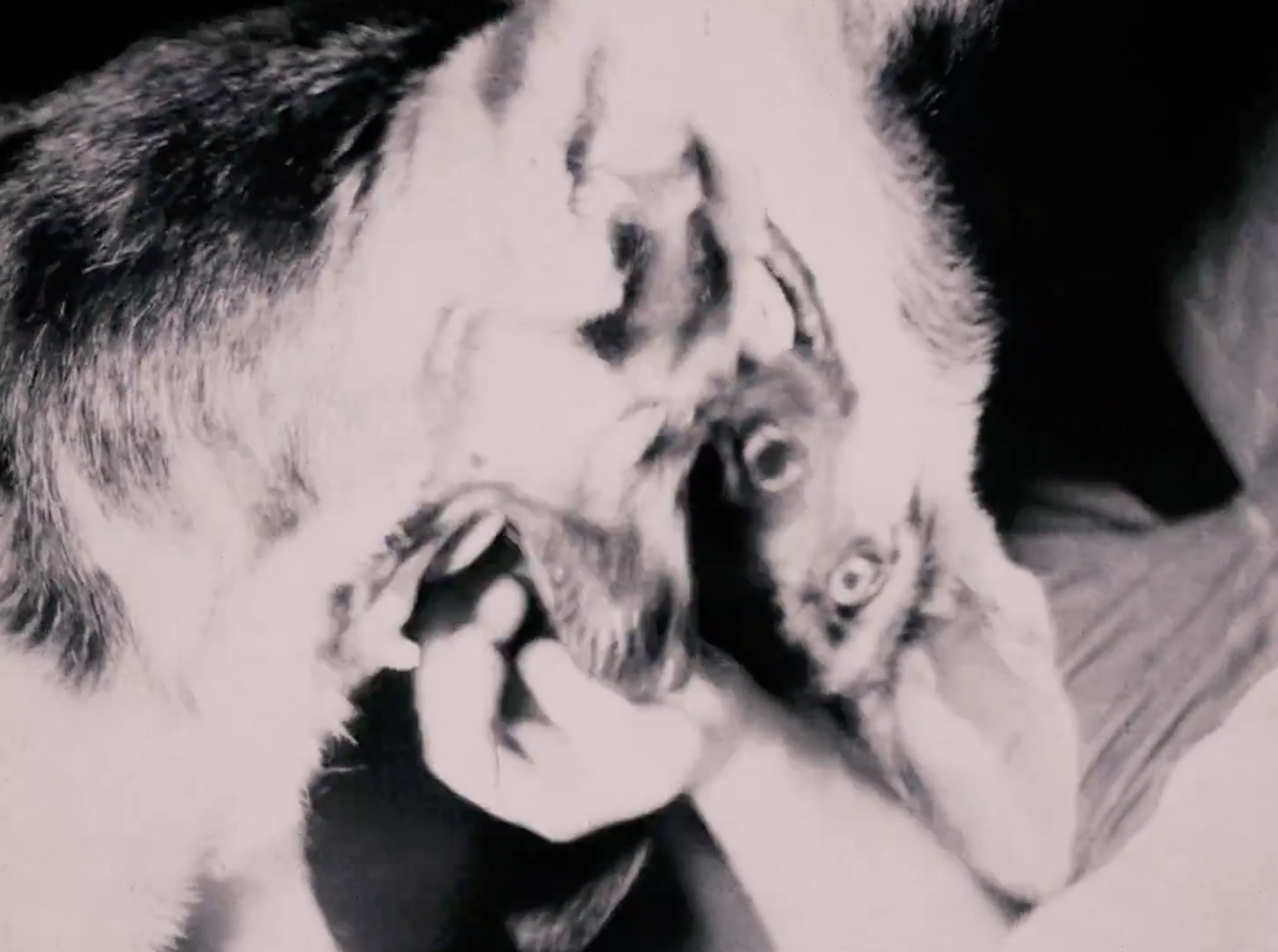
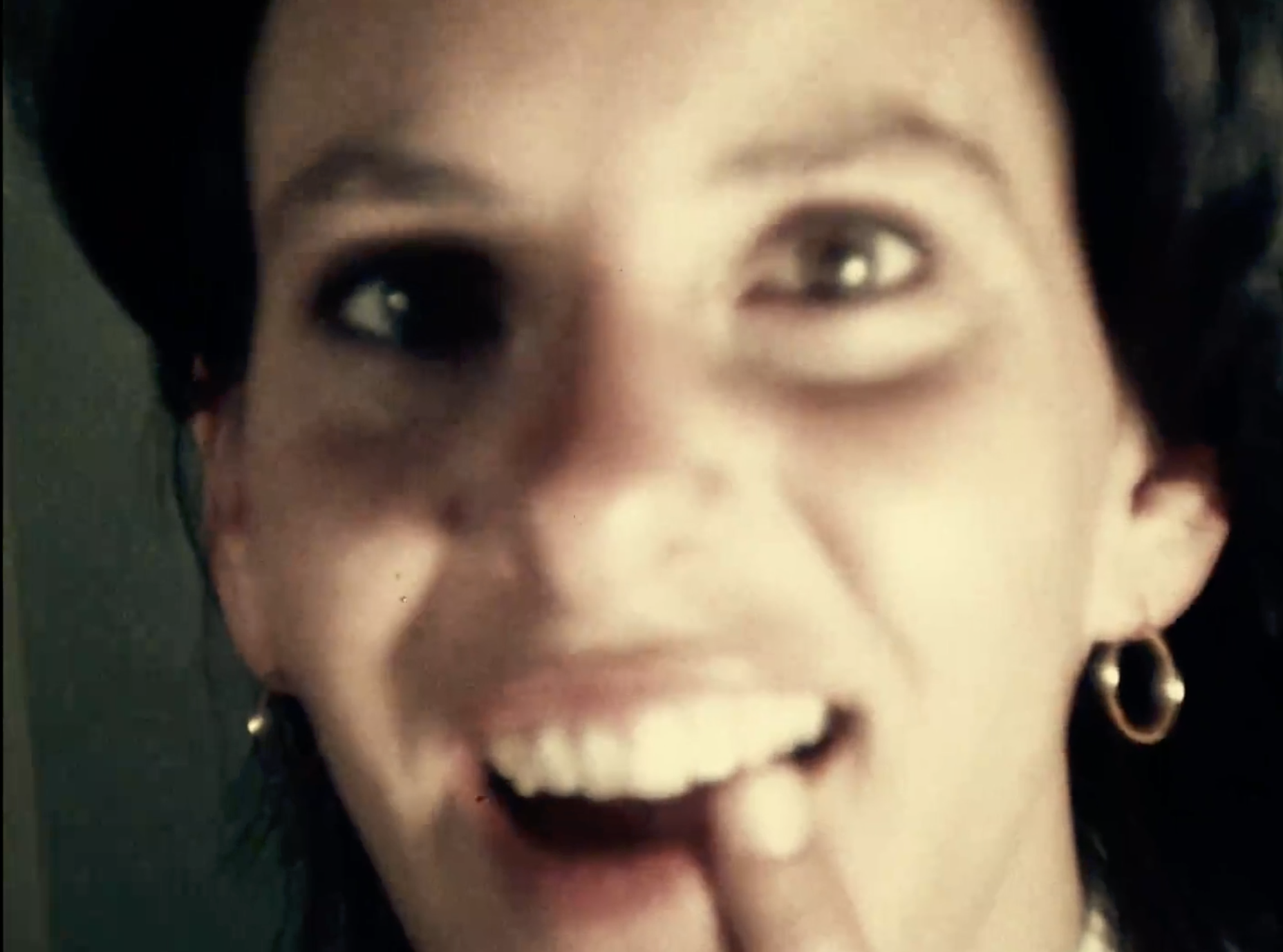
The same dissolution of fixed boundaries appears in Dog Film, one of her most unexpectedly tender creations. Dogs race through agility courses, lounge beside humans, lick faces, and intermingle through multiple exposures that gradually destabilize distinctions between species. At one point, a woman points to her own canine teeth while gazing into the camera, quietly acknowledging the animal architecture hidden within the human face itself. Lassnig treats instinct not as something primitive to overcome, but as a submerged continuity that binds living creatures together beneath civilization’s cosmetic surfaces.
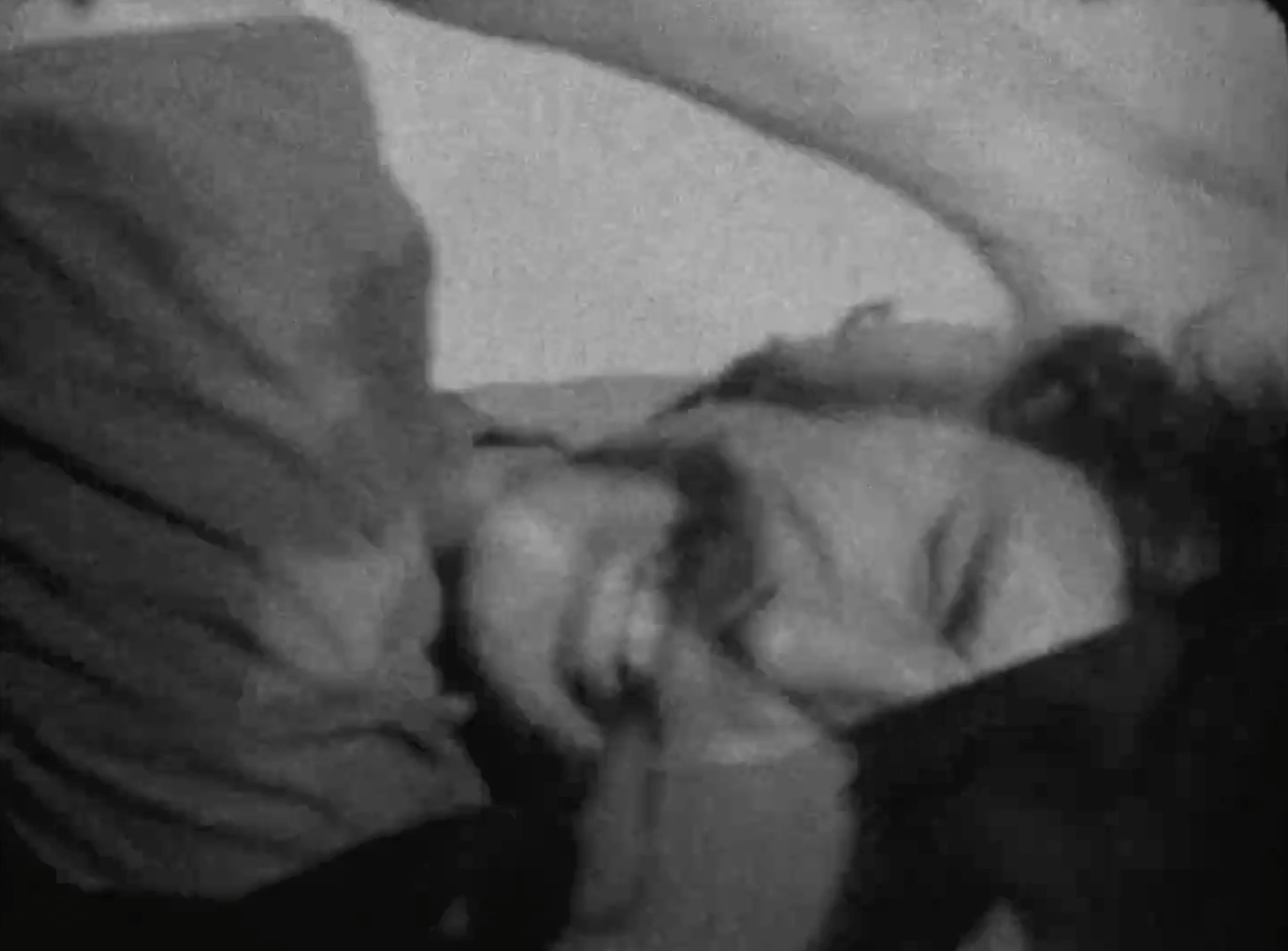
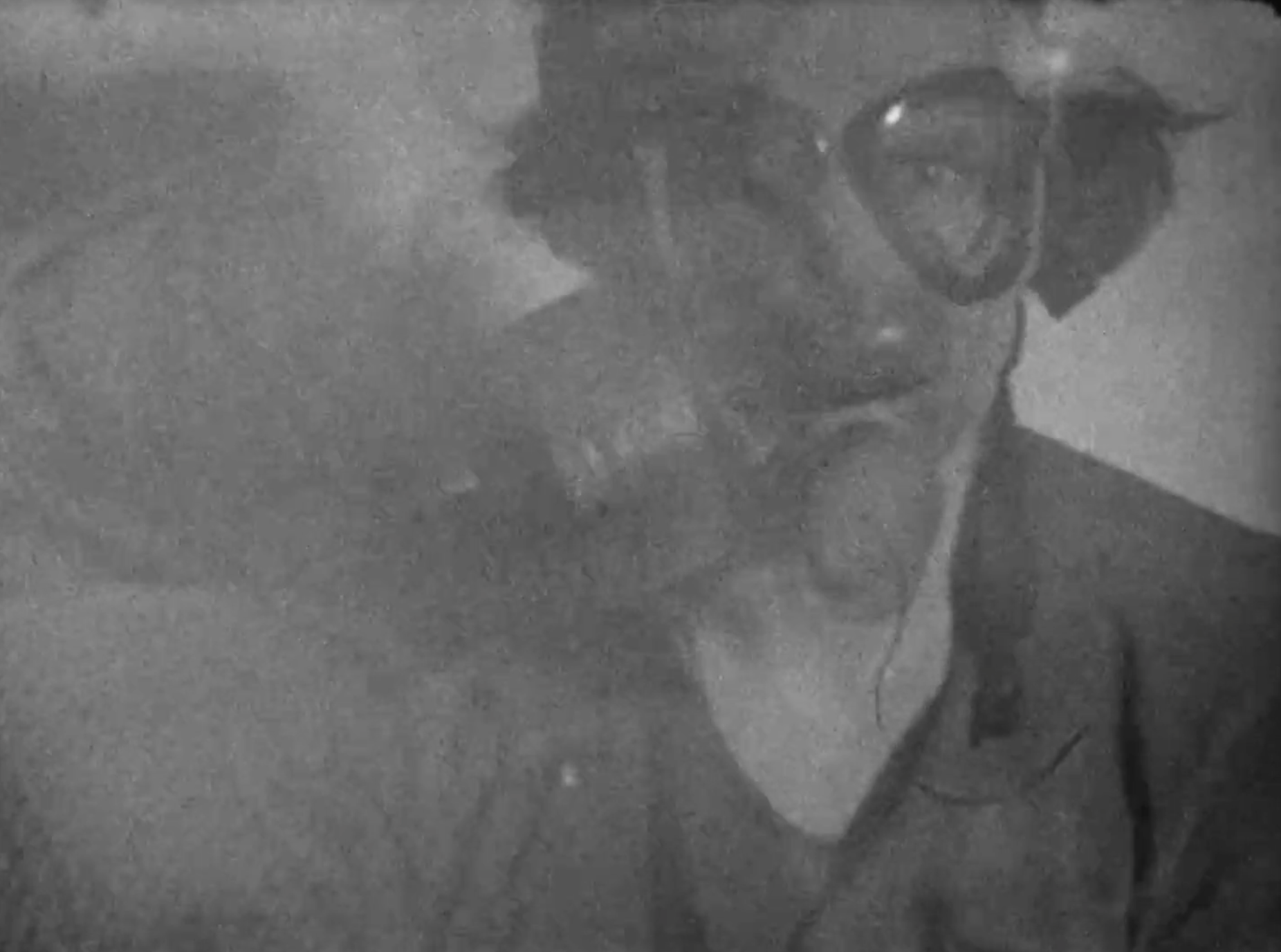
Even when documenting external events, Lassnig transforms them into reflections on corporeal vulnerability. Nitsch (1972), filmed during a performance by Viennese Actionist Hermann Nitsch at New York’s Mercer Arts Center, combines grotesque ritual imagery with footage of the Vietnam War and convulsions from her neighbor Roger wearing a gas mask. Flesh dominates every frame. Bodies rupture, twitch, perform, and decay. Yet the work avoids sensationalism through its deeply personal framing. Lassnig inserts herself into the montage, implicating her own body within the violence being observed. Catastrophe is never far away.
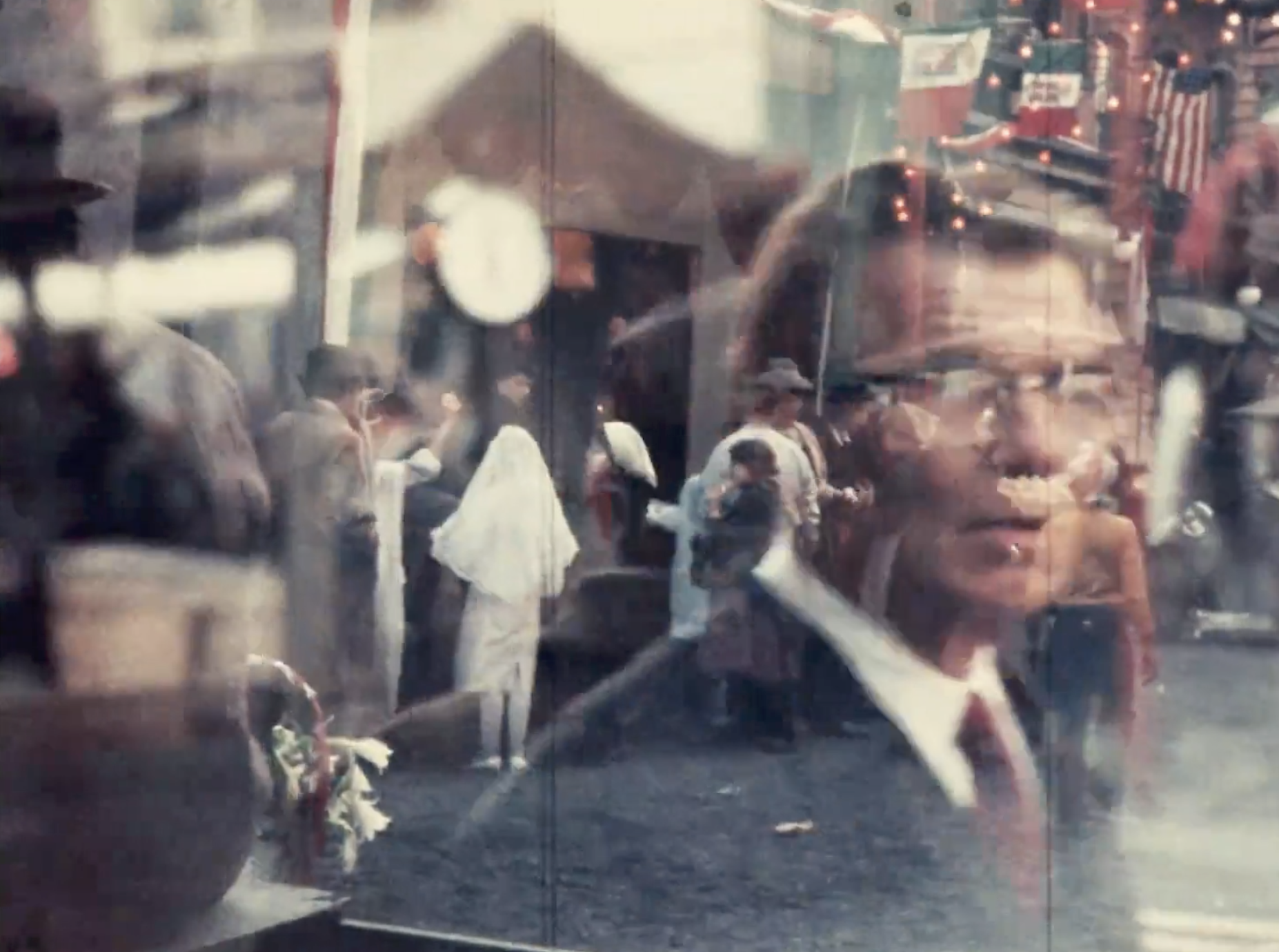
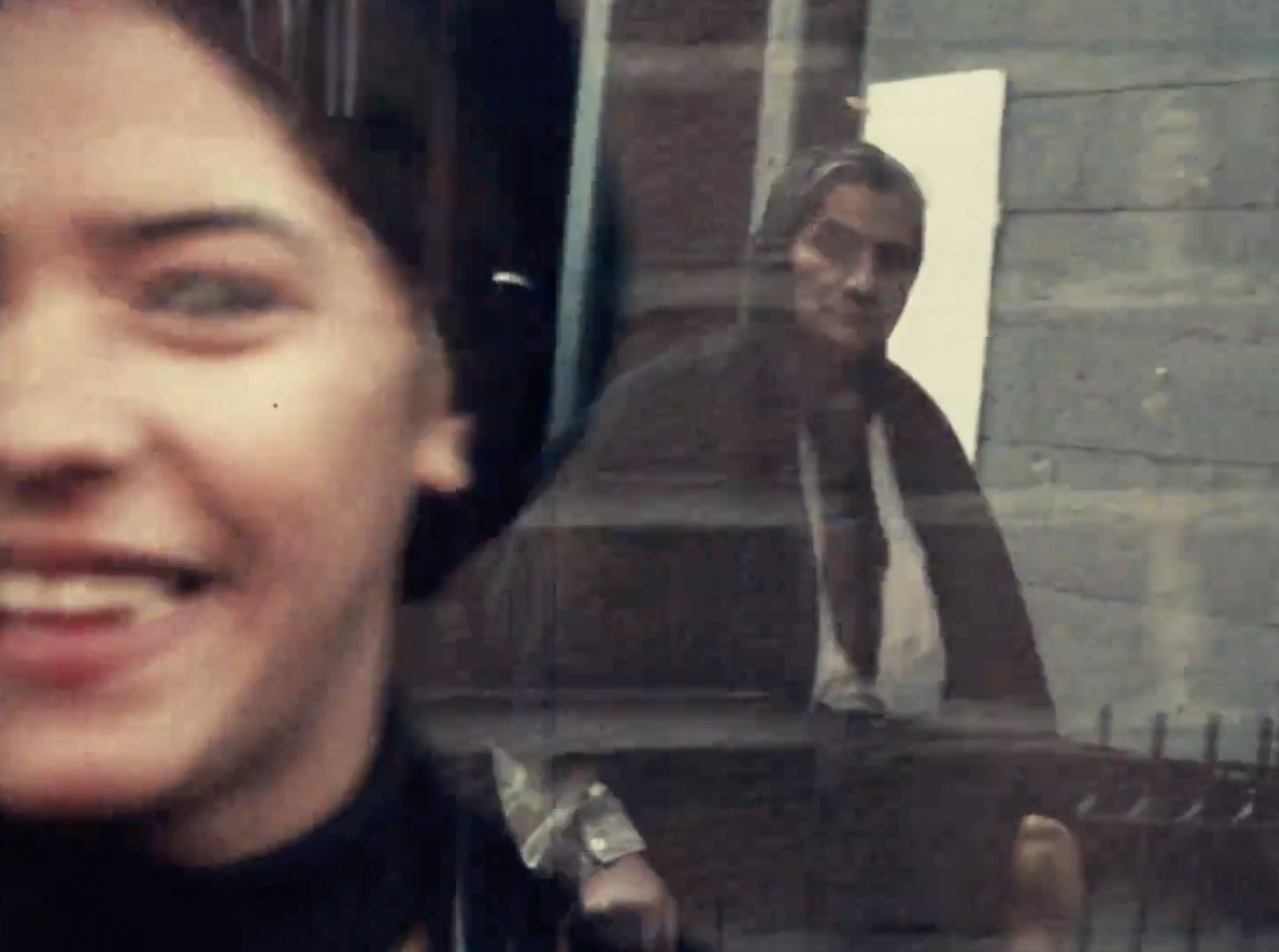
In Godfather I (1974), shot around Francis Ford Coppola’s The Godfather (1972), Lassnig wanders through transformed New York streets where period cars and storefronts create a sense of temporal disorientation. The mythology of masculine cinematic power surrounding Coppola’s production, which happened to take place right outside her apartment, dissolves beneath her gaze into something stranger and more unstable. Extras and bystanders become more fascinating than stars. Historical recreation folds into contemporary reality until the city itself feels uncertain of its own chronology.
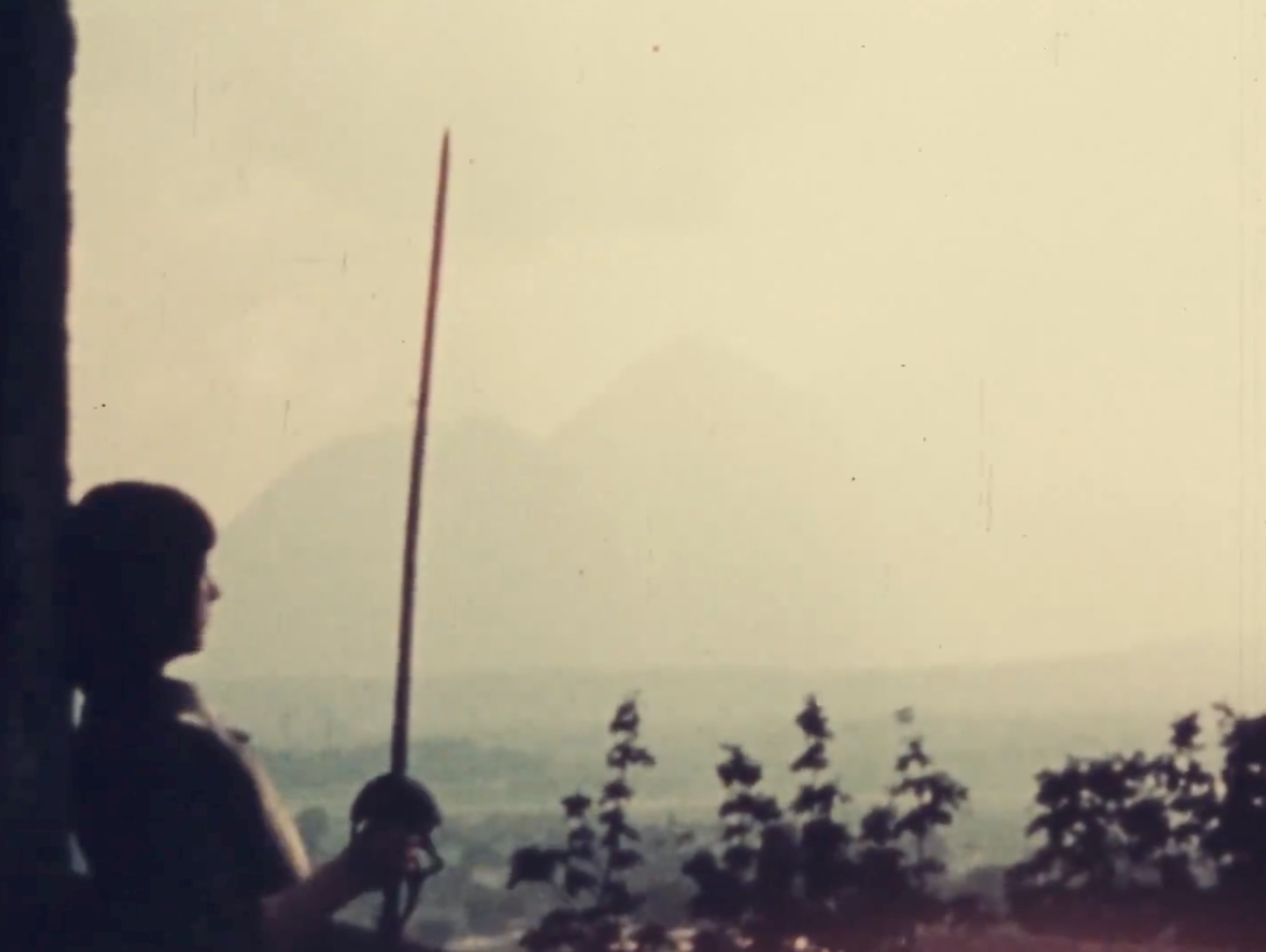
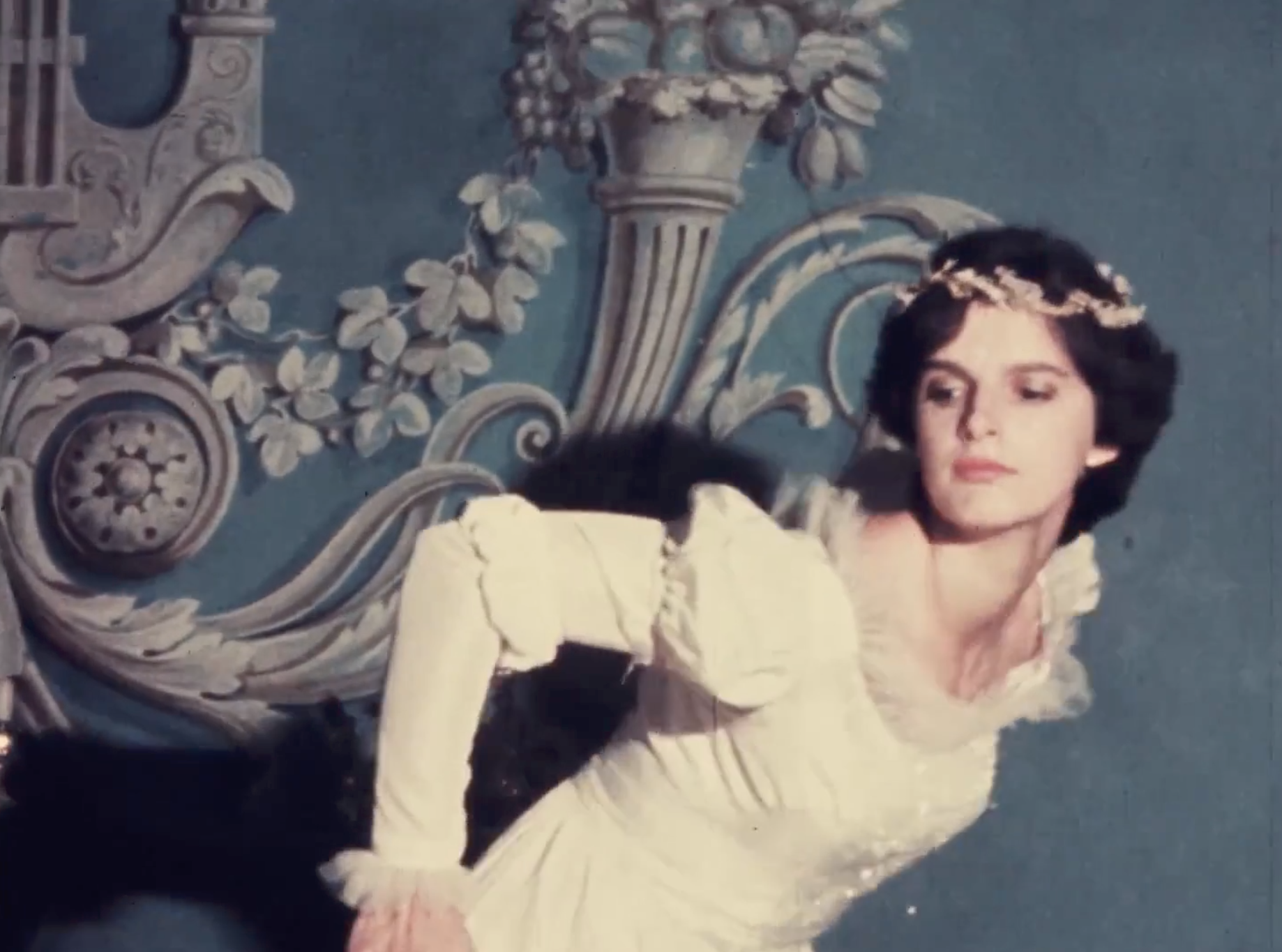
There are moments when Lassnig reaches toward something resembling narrative, though even these gestures remain haunted by skepticism. The Princess and the Shepherd. A Fairytale (1976) presents a lonely princess whose tears are collected in jars while suitors fail repeatedly to stir her from emotional paralysis. Eventually, she follows the sound of a shepherd’s flute into pastoral simplicity. Yet the piece radiates unease beneath its mythic structure. Lassnig pauses scenes at unexpected moments, introducing ruptures that prevent surrender. Happiness itself begins to feel theatrical, a script inherited rather than believed. The film watches romance with exhausted suspicion.
Perhaps this is why Jocelyn Miller’s observation in her essay “Optical Printer” feels so central to understanding Lassnig’s achievement: “Whether making images from paint or celluloid, her art came from thinking with the body, enhancing and radically trusting her own vision so it entered not just through her eyes, but through a multiplicity of organs, even prosthetic machine parts like her camera.” Lassnig understood the moving image not as escape from corporeality, but as an extension of it. The camera became another organ through which sensation could pass. Her notebooks reveal this repeatedly. To render was to touch. To animate was to restore pulse to matter. The mechanical apparatus of recording never diminished her tactile relationship to artmaking. It intensified it.
This becomes especially moving when considered alongside her eventual estrangement from New York. Upon returning to Austria, Lassnig severed ties with much of her American life, including the unfinished films documented in this collection. Their rediscovery carries emotional complexity because they preserve states of becoming that Lassnig herself chose not to revisit publicly for decades. And yet, fulfillment in Lassnig’s universe never whispers finality. Nearness itself becomes the condition. Art preserves thirst even as it promises relief.
Such tensions become profoundly illuminating when placed beside the words of Deborah King, who writes: “The phrase, ‘the personal is political’ not only reflects a phenomenological approach to women’s liberation—that is, of women defining and constructing their own reality—but it has come to describe the politics of imposing and privileging a few women’s personal lives over all women’s lives by assuming that these few could be prototypical.” This sentiment reverberates through Lassnig’s output with unusual precision. Lassnig persistently resisted becoming symbolic. She distrusted the flattening effect of ideological legibility. Her body in never claims universality. It mutates with radical specificity.
This may ultimately be the charge of her uncompromising spirit. Lassnig understood that authenticity can itself become tyrannical when it is transformed into a representative expectation. The danger within identity discourse lies partly in the seduction of exemplary narratives, in the desire to convert singular experience into a collective template. Lassnig refuses this conversion at every turn. Her body-awareness is too unstable, too contradictory, too private to function comfortably as emblematic. She documents female experience without pretending to encompass womanhood itself.
That refusal grants her work extraordinary ethical openness. She does not instruct viewers how to interpret embodiment. She exposes embodiment as fundamentally unresolvable. Pain coexists with absurdity. Solitude drifts beside erotic uncertainty. Aging appears grotesque and luminous simultaneously. Domestic life suffocates while generating unexpected wisdom. Lassnig leaves all these tensions alive within the frame, resisting the cultural impulse to organize experience into moral clarity.
In this sense, she arrives at something stranger than autobiography. One watches her and begins to suspect that consciousness itself may simply be the scar tissue left by experience. Her images linger because they never stabilize into any definitive message. They remain vulnerable to reinterpretation, vulnerable even to themselves.
Perhaps that is why these works feel so startlingly contemporary. They understand, long before the language became fashionable, that visibility can become another form of confinement. To be seen too clearly is to risk becoming reducible. Lassnig protects herself from reduction through fragmentation, humor, grotesquerie, abstraction, and interruption.
And so, the lasting miracle of her oeuvre is not that it survived but that it survived without surrendering its instability. Her films still pulse with incompletion. They still behave as living organisms rather than inanimate artifacts. Watching them, one has the uncanny sensation that they are studying us in return, measuring our own thresholds, asking whether we, too, possess bodies we have never fully entered. Somewhere beneath all the overlays, all the fractured anatomies and unfinished gestures, Lassnig seems to suggest that a human being is not a fixed entity moving through time but a temporary congregation of sensations waiting briefly inside flesh before dispersing again into the dark.