

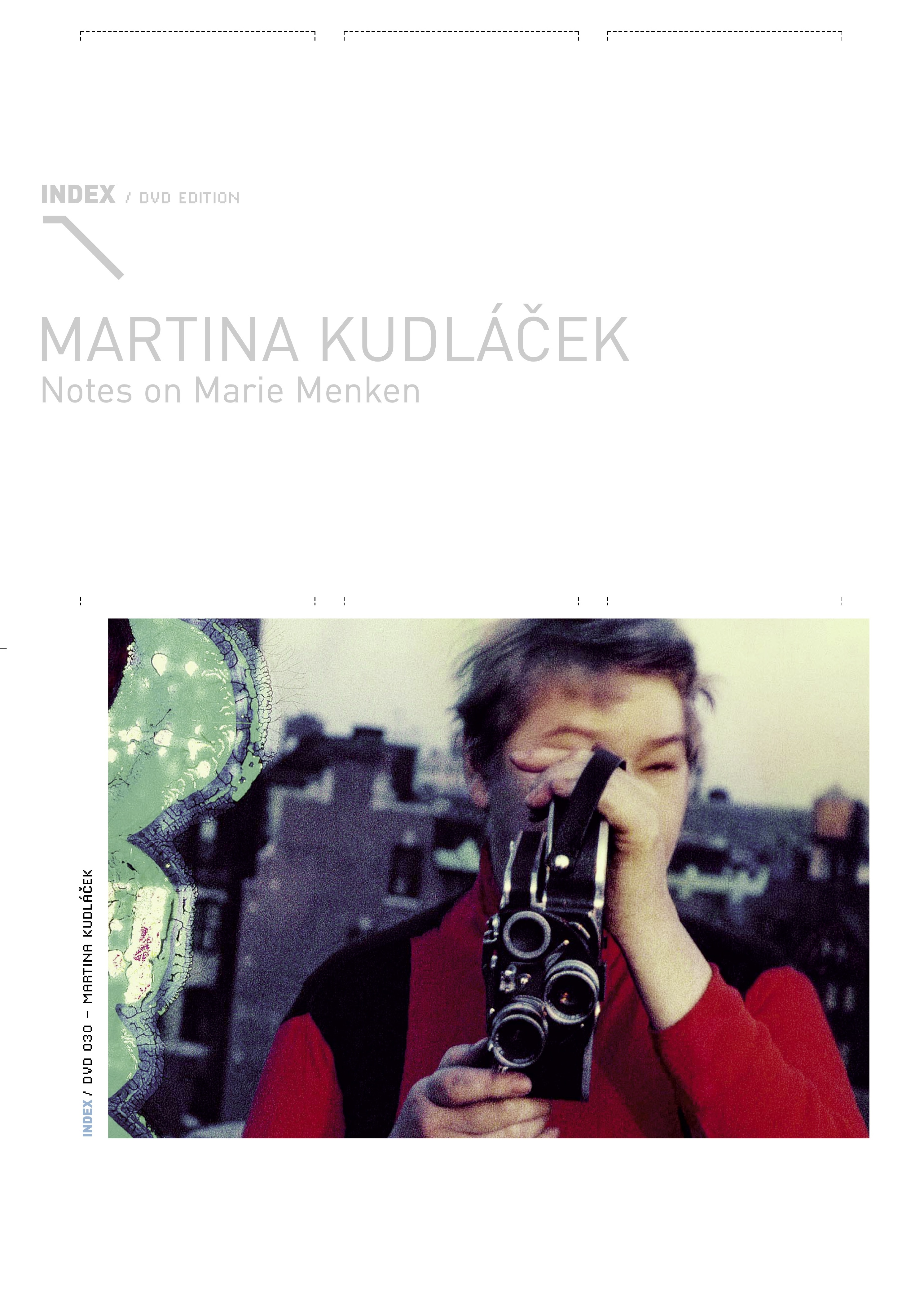
Martina Kudláček’s Notes on Marie Menken (2006) is equal parts revival and homage, an attempt to restore visibility to a figure whose brilliance shaped the American avant-garde even as her name slipped, mysteriously and unjustly, into obscurity. The director approaches Menken not as a lost saint of the underground but as a complex modernist force whose work wove spontaneity with discipline and lyricism with documentation. “Menken’s films,” writes Christian Höller in his booklet essay, “are not presented as an auratic holy grail but a mix of contemporary document and lyricism.”

Kudláček’s shimmering black and white contrasts with the bursts of color in Menken’s own films, allowing the latter’s sensibility, fluttering and incandescent, to punctuate the cooler investigation surrounding it. John Zorn’s score adds a pulsing undercurrent that avoids nostalgia and amplifies the restless intelligence of its subject.
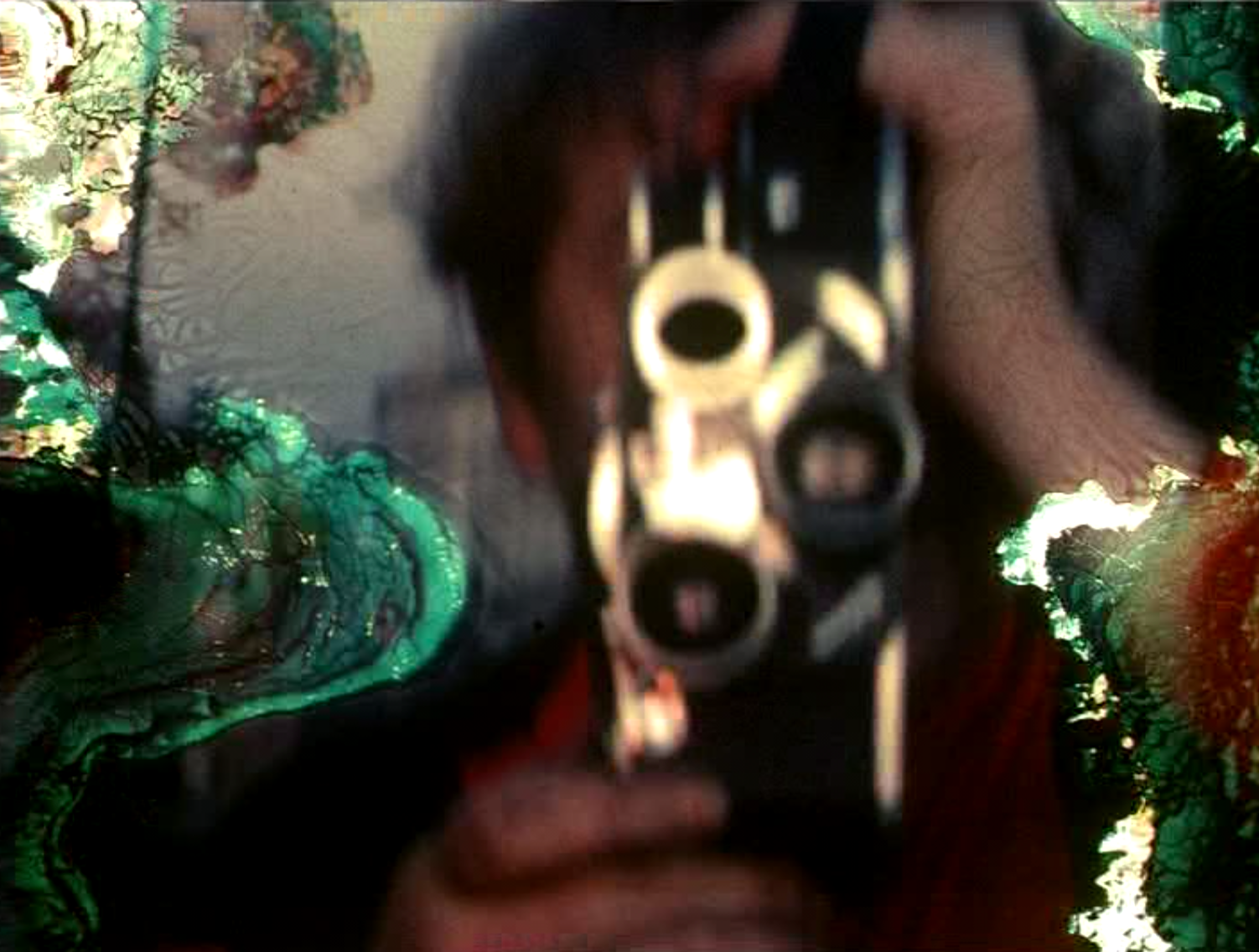
Menken emerges as a figure of vivid contradictions: a commanding presence who made films of extraordinary delicacy, a private artist whose work entered public circulation only after encouragement from her family, a pioneer whose influence shaped Stan Brakhage, Kenneth Anger, and Andy Warhol. Brakhage appears in the documentary and acknowledges that Menken provided the deepest inspiration for his own handheld aesthetics. Her volatile marriage to filmmaker-poet Willard Maas, which partly inspired Edward Albee’s Who’s Afraid of Virginia Woolf?, is recounted with a balance of humor and pathos. Their creative ambitions, infidelities, and drunken fights become an off-screen theater that fed directly into Menken’s art. She accepted Maas’s homosexuality, lived amid bohemian tumult, and converted chaos into cue, color, and cadence. Archival material of Menken and Warhol filming each other reveals more than a historical rapport. It shows a shared excitement in experimentation and the way Menken taught him to wield the camera as a kinetic partner rather than a simple recording device.

Throughout, the documentary mirrors Menken’s own style, hovering over surfaces with a sensitivity that echoes her tactile curiosity. Her films were part of what she considered an “extended notebook,” entries in a life lived at the nerve endings of perception. They were unpretentious yet revelatory, the direct expression of a sensibility attuned to visual poetry in the smallest gestures, whether a branch lifting in the wind or a holiday light glinting for a moment.

Four of Menken’s essential films appear here as a miniature retrospective. Visual Variations on Noguchi (1945), shot handheld to Lucille Dlugozewski’s surreal score, turns Isamu Noguchi’s sculptures into kinetic events. The camera animates form, tracing contours while inventing counter-contours.

Glimpse of the Garden (1957) offers an intimate wander through the garden and greenhouse of Menken’s friends. Here, the camera breathes, moving between micro-details and broader gestures with a dancer’s intuition.

Arabesque for Kenneth Anger (1958-61), filmed during a trip to Spain, offers a camera that speaks its own language, responsive to light as if to music. The Spanish guitar and castanets accompany images that oscillate between architecture and gesture, producing a visual prosody that approaches the condition of speech.

Finally, Lights (1964-66), assembled from three consecutive years of filming New York’s Christmas displays between midnight and one in the morning, may be her signature work. It is whimsical, electric, and full of delight yet grounded in an adult awareness of the city’s mingled magic and melancholy. Its frenetic sparkle becomes a translation of Menken’s spirit, playful and restless yet deeply alert.
Notes on Marie Menken performs a double rescue. It retrieves Marie Menken from the margins of film history while returning her oeuvre to the living environment that gave it life. The result is an aesthetic rooted not in simplicity or naïveté but in a cultivated mode of attention that stood apart from the grand, self-serious ambitions of much mid-century cinema. Her world is one in which the camera is a nervous system, a shimmering extension of the body. Thus, Menken appears not as a historical artifact but as an artist whose immediacy still strikes the eye with the force of a fresh brushstroke, whose motion remains contagious, and whose energy continues to ripple outward through the underground she helped invent.
 Between Sound and Space: ECM Records and Beyond