Dominic Pettman: Ghosting (Book Review)

Ghosting: On Disappearance is a treatise of nonbeing—or, perhaps more precisely, of unbeing. It is not merely about disappearance but about the existential tremors that ripple outward when presence collapses into absence. Placing his authorial thumb and forefinger on the touchscreen of this modern inevitability, Dominic Pettman enlarges its finer gradations across emotional, social, and technological contexts. He pinches and stretches the phenomenon until its translucent membrane reveals something more fundamental: that to vanish is to be human and that to experience the vanishing of another is to feel the sting of impermanence.

While the titular concept has haunted language for centuries through folklore, spirit mediums, and psychological estrangement, it has, in our present age, acquired a peculiarly digital valence. Now, “ghosting” refers most commonly to the quiet, sudden severance of connection between friends, lovers, or kin. The gesture is at once devastatingly simple and infinitely complex: a single tap on a block button, a name fading from a chat log, a conversation frozen by the unrequited ellipses on the book’s cover. Technology makes the act almost frictionless. We already interact daily with people who are physically absent, replaced instead by avatars, text bubbles, and disembodied voices. To ghost someone is merely to withdraw the illusion that they were ever really there to begin with.

Pettman calls ghosting “a form of symbolic suicide,” if not also of violence, a dual wound inflicted upon self and other. It kills the relationship from both sides, leaving the ghosted “gasping at the silent vehemence of the act.” In centuries past, a ghost was thought to be an uncomfortable presence: the whisper in the night, the chill in a boudoir. Today’s specters, however, are defined by the unread message, the unanswered call, the untraceable unfriend. The modern ghost mocks us not with its return but with its refusal to reappear. What once demanded ritual now requires only signal and silence.

Ghosting has become, Pettman suggests, a modern luxury of the unencumbered self, one that allows us to discard what feels burdensome with the efficiency of deleting a file. Yet, what artifacts remain in the wake of such apparently clean erasures? The book’s modest yet densely packed 110 pages attempt to reckon with these residues, drawing out the historical and technical filaments that bind our vanishing acts to canonical anxieties.

Pettman walks us associatively through a gallery of geist-types, beginning with romantic ghosting. Once upon a time, the rules of engagement in love were dictated by proximity and propriety; now, they are replaced by rules of disengagement. The refusal to reply, the closing of a digital door, has become the reigning leitmotif of romantic punctuation. Where a lover might once have ignored a letter and let absence ferment over time into torment, today’s nonresponse hits instantaneous and permanent. Yet, as Pettman notes, the old dynamic persists despite our devices.

Romance has always been a theatre of projection, a negotiation between the seen and the unseen, the flesh and its fantasy. For all our bodies’ sweat and trembling, it is the embellishment that endures. Even in love’s most carnal moment, that fleeting dissolution of self into the other, there is already the seed of absence: the tiny death, the out-of-body vanishing we call climax. How curious, then, that the purest expression of intimacy is also an act of ghosting, the self evaporating in the ecstasy of its own undoing.

Ghosting also bears the battle scars of gendered terrain. Though often cast as an act of cruelty, Pettman reminds us that ghosting can just as easily be a form of survival, a necessary defense against the predations of aggression, stalking, or abuse. It can be liberation or surrender, sanctuary or exile. Either possibility, he writes, makes us acutely aware of our dependence on the other, the fragile scaffolding of recognition upon which our identities are built. In an age when partners must fulfill multiple roles once distributed across an entire community, the dissolution of a relationship casts us into a kind of social purgatory, suspended between connection and isolation.

Pettman insists, too, that ghosting is not an anomaly but a revelation of what we have always been: phantoms speaking to one another through the veil of mortality. Every “forever” whispered in the heat of the proverbial moment carries the irony of death; every “I love you” is also an elegy. Love itself unfolds under the shadow of the crypt. Perhaps this is why its rituals resemble religion, as both court devotion and doubt in equal measure, laying faith on the altar of inevitable loss.

I would add, by way of illustration, Robert Zemeckis’s Cast Away, a love story indelibly marked by absence. Chuck Noland (Tom Hanks), presumed dead after a plane crash, clings to a pocket watch containing his lover’s photograph, a relic of connection that fuels his will to live. When he returns after surviving for four years alone on a deserted island, he finds life has moved on without him; his beloved has remarried, rendering him the rarest kind of ghost, one who walks among the living, uninvited. His resurrection is itself a disappearance, a return that negates the meaning of home.

When lovers become projection screens for our own incomplete scripts, separation becomes not only likely but inevitable. The one left behind suffers not merely the withdrawal of a person but of the narrative that sustained them. In our culture of curated selves, ghosting has even acquired a perverse glamour as a badge of autonomy. One might recall Elaine Benes’s “spongeworthy” calculus from Seinfeld: who is worth the risk, the effort, the finite resource of bodily attention? Ghosting may be seen as a reversal of this privilege, a self-anointed freedom to choose extracourse over intercourse.

How, then, does one navigate the 50 shades of this phenomenon in an ecosystem already saturated with specters? As Pettman observes, “The paradox of the streaming age applies also to love: there are a million shows waiting to be watched, and yet none of them seem worth committing to.” In such a world, ghosting is less an exception than a rite of passage, a sacrament of connection where fulfillment is as fleeting as a notification bubble.

From romance, Pettman moves to the familial and the platonic. Here, the stakes deepen. To be ghosted by a coworker is unfortunate; to be ghosted by a child is practically biblical. In the age of ideological polarization, even the Thanksgiving table becomes a séance for the missing. The empty chair may symbolize courage to one and betrayal to another. Ghosting thus becomes political, echoing across generations and belief systems.

Professional and social ghosting occupy the book’s latter thrust, and here Pettman’s insights cut to the bone. Having once taught as a professor, I recognize the spectral economy of intellectual labor, the endless treadmill of unacknowledged effort and unreciprocated outreach. In graduate school, “imposter syndrome” was our ironic communion, a collective haunting where each scholar feared being the least real presence in the room. Every unanswered email, every “no reply” rejection, each job committee that never called back—all were tiny funerals for the self. Eventually, I chose to ghost the profession before it could continue to ghost me, if only to preserve a flicker of something to call my own.

Of course, ghosting is by no means confined to ivory towers. It infiltrates every professional exchange: clients disappearing mid-project, employers denying promotion for no apparent reason, friendships fading in inbox drafts. Even places ghost us: favorite restaurants that shutter without warning, neighborhoods transformed overnight, ecosystems collapsing out of sight. The world itself feels like it is ghosting us, withdrawing one news cycle at a time into abstraction. The more we exist, the more unreal reality seems.

I would add two more iterations to Pettman’s catalogue. First is the phenomenological ghosting of presence without feeling. We find this in M. Night Shyamalan’s After Earth, in which ghosting refers to the process of shutting down one’s emotions. This quality is a precious commodity in the film’s military-industrial complex, weaponized to render one invisible to alien predators who target their prey by detecting fear pheromones. To ghost, here, is to master disappearance from within. Second is Deanimated, an experimental film by avant-gardist Martin Arnold, who digitally erases actors one by one from the 1941 Bela Lugosi picture Invisible Ghost, until all that remains are empty rooms, doors that open by themselves, and dramatic music without diegesis. The world goes on performing, emptied of its inhabitants. The viewer, too, becomes ghosted, watching absence itself take center stage.

The loss of the one who ghosts us, Pettman ultimately suggests, is not merely a social wound but an ontological one. We lose not only another person but the mirror in which our own being once took shape. The terror of ghosting lies not in being forgotten but in discovering how easily we can forget ourselves when deprived of the other’s gaze. Technology did not create this fragility but has only revealed that relationships have always been provisional, sustained by faith, fantasy, and the flickering persistence of attention.

To be ghosted, then, is to confront the truth that love, friendship, and community are nothing more than brief illuminations against the endless dark of unbeing.
Rebuilding the Fourth Wall: Toward an Ontology of Vision in Trevor Paglen’s Adversarially Evolved Hallucinations

To think of vision as truth is to confuse perception with revelation. Every image born of pigment, photon, and pixel is already a technological interpretation (the #unfiltered hashtag is a lie). Artificial intelligence magnifies the primordial compulsion to externalize thought into form, mirroring our metaphysical anxieties in the intricacies of ocular logic. Yet when AI begins to dream, no longer are we the authors of representation but the represented. Instead of marveling at the shadows in Plato’s proverbial cave, we become the shadows themselves. Artist Trevor Paglen has turned this reversal into both method and critique, exposing a precarious ontology of vision.

In practical terms, AI is fundamentally trained to recognize faces, objects, and places with mundane equivalents. Paglen, however, decided to do something different by feeding AI “irrational” subjects like philosophy, history, and literature. Using a generative adversarial network (GAN), an AI model that creates images based on what it has analyzed and absorbed from existing datasets or “corpuses,” he wondered what might happen when AI hallucinates an image. As Paglen explains, the process involves two networks engaged in a kind of aesthetic duel: a “Generator,” which draws pictures, and a “Discriminator,” which evaluates them. The two AIs play a game of deception and refinement, cycling through thousands or even millions of iterations until the Generator produces images capable of fooling the Discriminator. The results of this strange symbiosis are entirely synthetic images with no real-world referent, yet both AIs believe them to be genuine.

Here, Paglen discusses the project in more detail:

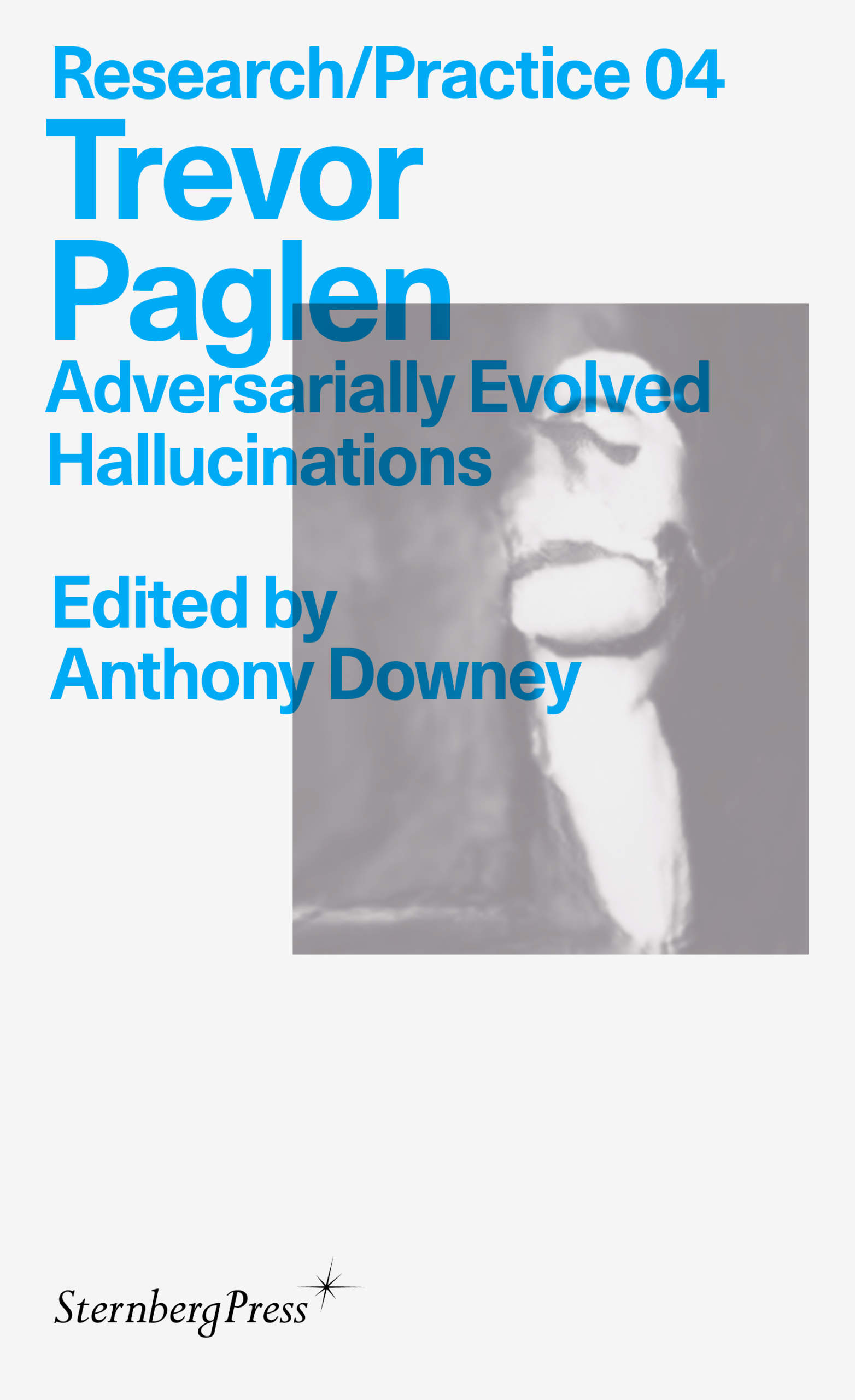
The fruit of these efforts is Adversarially Evolved Hallucinations, an ongoing series begun in 2017 and documented in this book of the same name. Published by Sternberg Press as Volume 4 of the Research/Practice series, it features a conversation between Paglen and editor Anthony Downey, preceded by Downey’s essay, “The Return of the Uncanny: Artificial Intelligence and Estranged Futures.” Downey reminds us that because AI lacks embodied experience, it produces only “disquieting allegories of our world” at best. Its outputs expose the opaque workings of machine cognition, parallel to the brain’s own trial-and-error rehearsals toward getting something “right.” Here, the fourth wall is not merely broken but rebuilt in its own image. Downey asks whether AI is training us to see the world machinically, and whether we already do. Thus, Paglen’s series explores how machine learning “functions as a computational means to produce knowledge” and, in doing so, outs AI as a heuristic device, “capable, that is, of making sense of, if not predefining, how we perceive the world.”

Paglen draws on taxonomies of knowing akin to metaphorical or substitutive instruments of perception. His parameters constitute a cyclical echo chamber that nonetheless manages to step outside the bounds of acceptability while keeping one foot within them. He calls this “machine realism” because the images are recursive of the engine’s own hallucinations. As Downey observes, “the process is never totally predictable, nor is it reliable.” Then again, is reality itself reliable? Do we not also seek to document, catalog, and amplify that which defies predictability?

Because a GAN’s goal is to generate images that appear categorically relevant while simultaneously deceiving the system, its hallucinations blur distinctions between data and invention. Downey warns that such images, if treated as predictive, can easily become more real than real. For even though they do not exist, these errors and phantasms are not anomalies of image-processing models; they are their very foundation.

So, what does an AI hallucination look like? Take A Man (Corpus: The Humans):

At first, we recognize a human figure, yet the longer we gaze, the more the image unravels, raising a disquieting question: Is distorting coherence into chaos any different from coaxing coherence out of chaos? Is there a point at which the two converge?

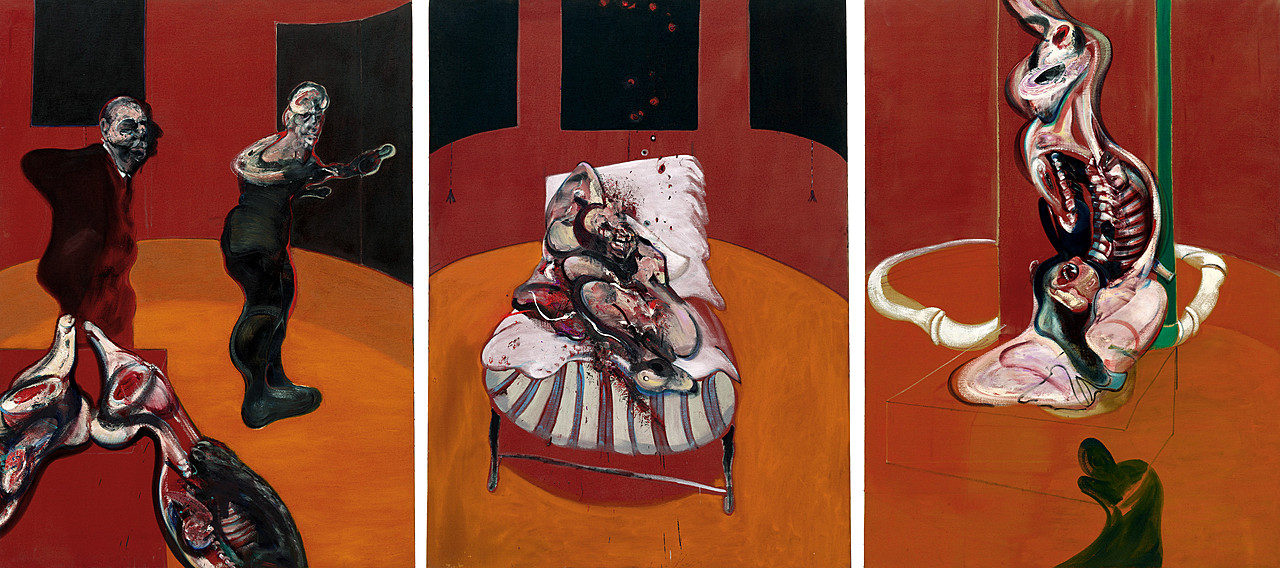
This tension recalls the left panel of Francis Bacon’s Three Studies for Figures at the Base of a Crucifixion, where “inaccurate” men accompany flayed carcases:

Despite our aversion to inner flesh, it is the men, those still tenuously tethered to outward form, who disturb us most. When reduced to raw meat, we are more easily abstracted and dismissed; when nearing coherence, we ache for completion.

It is perhaps inevitable, then, that Paglen would venture into the supernatural. Angel (Corpus: Spheres of Heaven) borrows from Renaissance art but reassembles its tropes in a landscape unmoored from conventional metrics:

The context is blatantly parasitic, tugging at the figure with distillational aggression. Here, the “angel” is no divine messenger but an ambassador of categorial confusion.

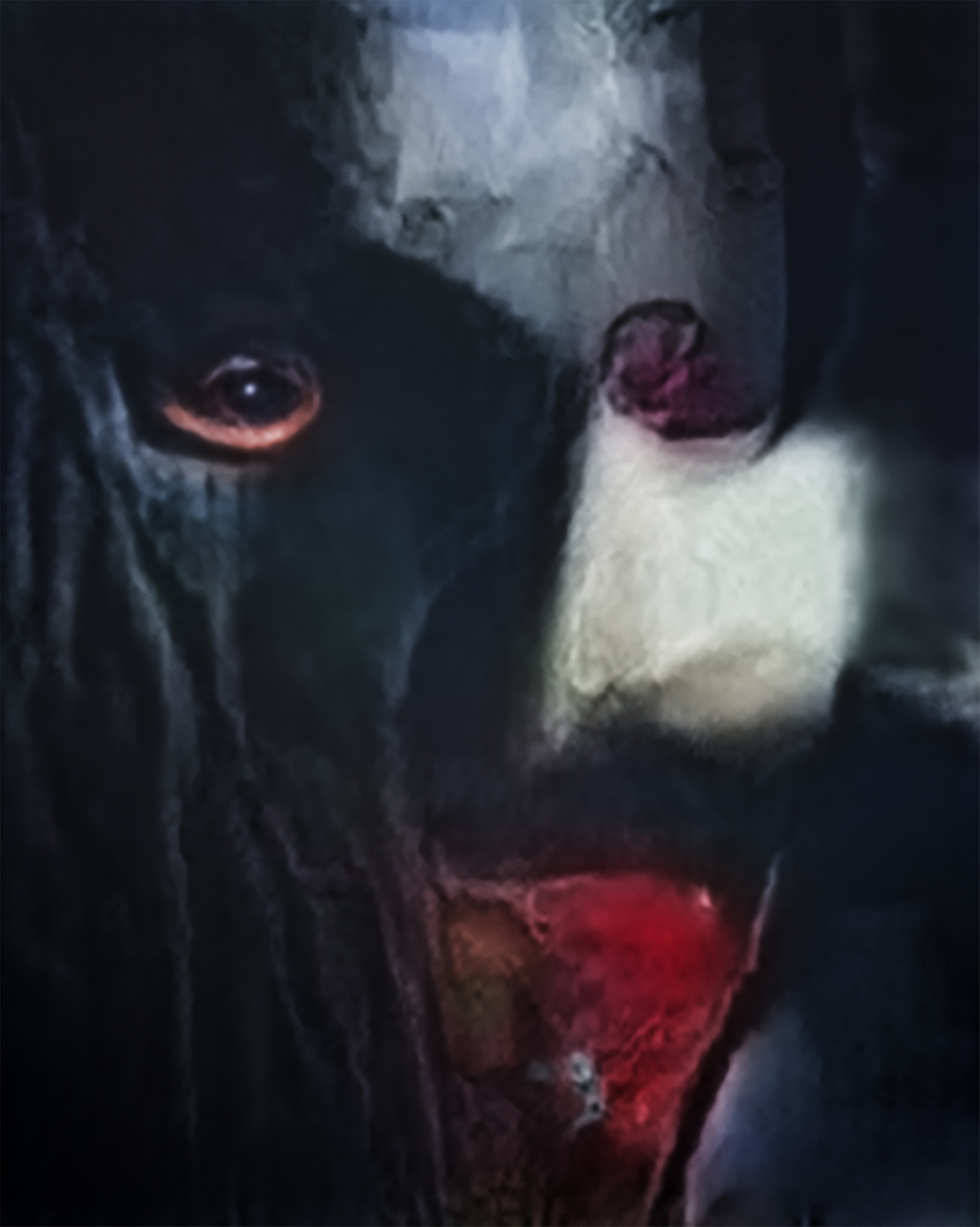
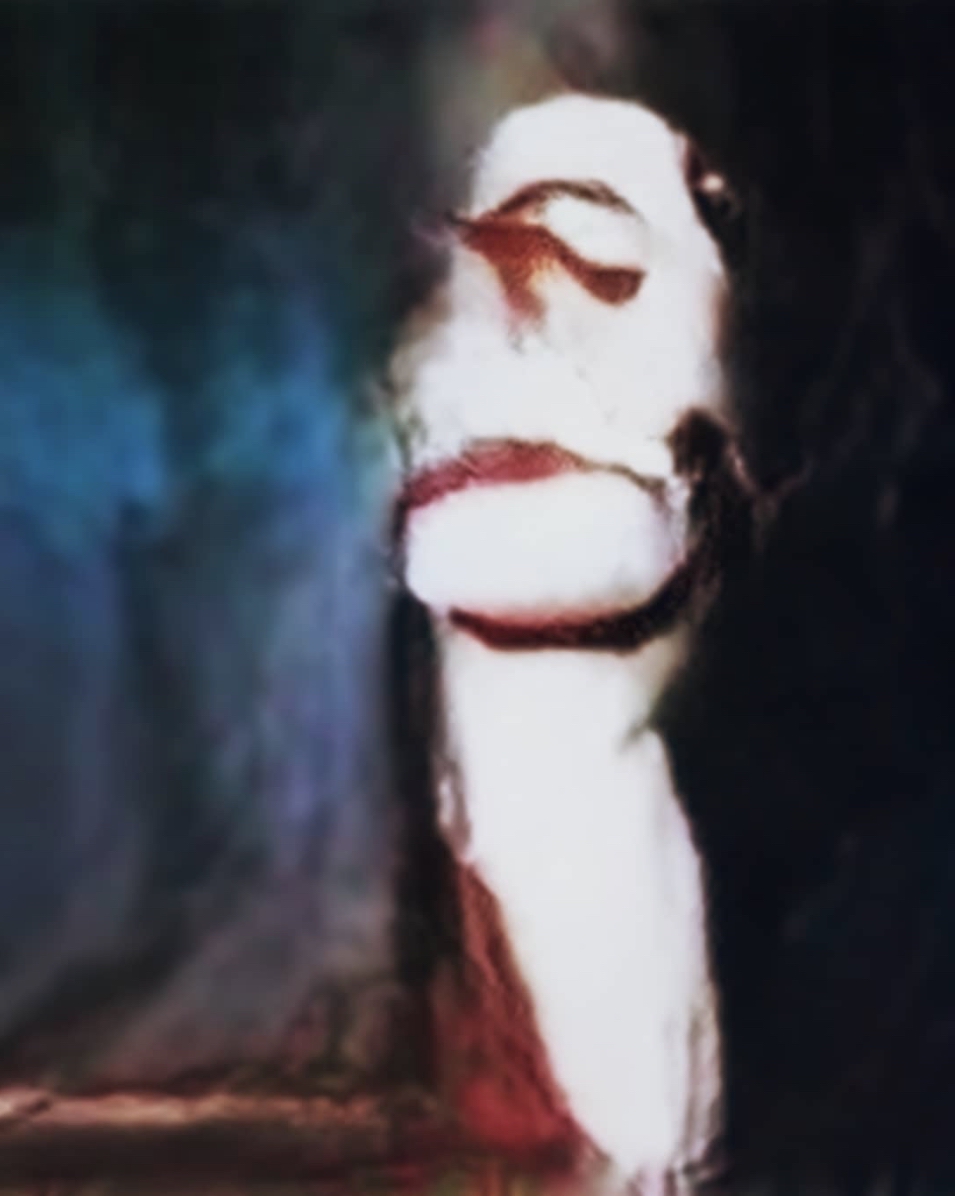
The closer we get to the intimate, the darker the images become. In Vampire (Corpus: Monsters of Capitalism), the most legible face in the book is also the most “demonic”:

The vampire, parasite of parasites, stands as an agent of eternal torment. A Pale and Puffy Face (Corpus: The Interpretation of Dreams) elicits a similar flicker between attraction and horror that is just human enough to seem alive yet warped enough to feel forged:

Why, one wonders, do these visions feel not only unsettling but somehow sinister?

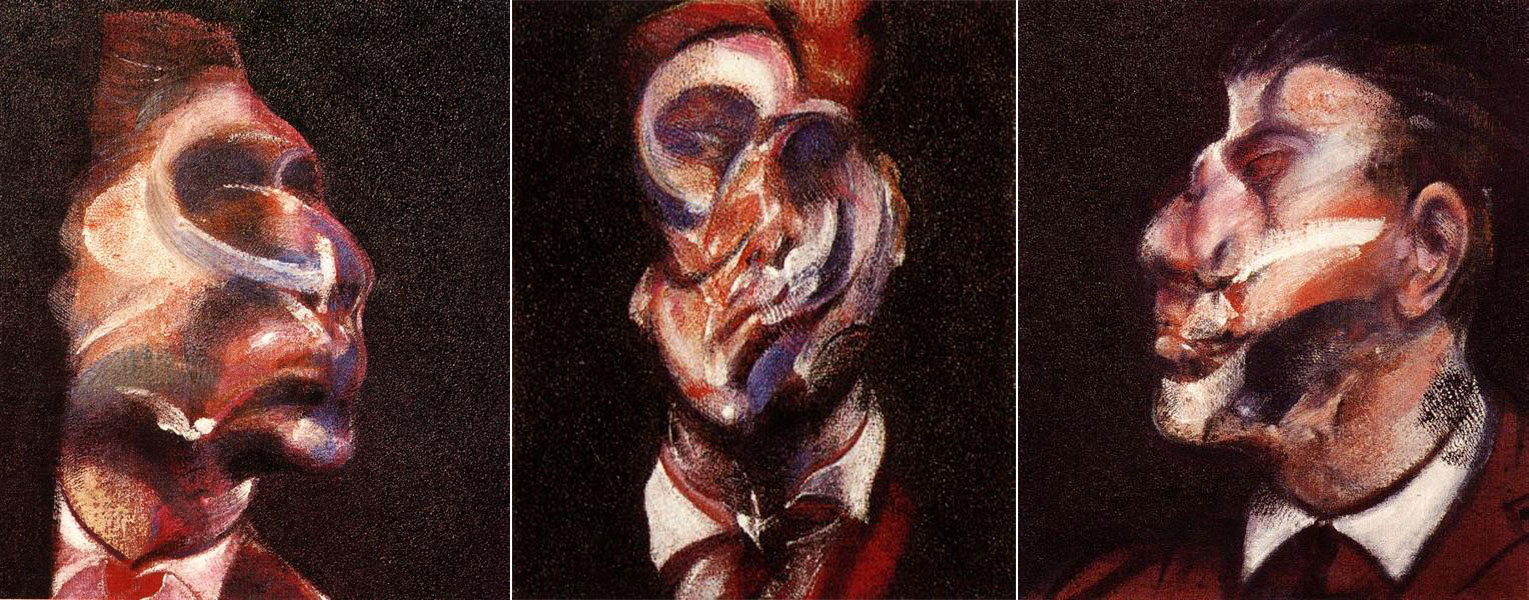
In anticipation of one possible answer, allow me to return momentarily to Bacon, whose Three Studies of George Dyer are a hallucinatory corpus in their own right:

These falsifications unsettle precisely because they start with a uniquely verifiable identity before marring it beyond recognition. Like a coroner’s report, they document the mutilation of everything we hold stable about the self.

Paglen’s systemic hallucinations similarly engage with another psychological touchpoint in the trauma of seeing and of being seen. Through trauma’s hallucinatory unfolding, bodies and landscapes become intertwined in a web of atrocity, where loss and recovery mirror one another. His images dwell in the rupture between memory and forgetting. 

A red thread through all this is the illusion of human control. Something nefarious always seems to pull the strings, an invisible force with its own agenda. Escape is made possible only through an existence maintained at great sacrifice. In this metaphysical tug-of-war, the line between the animating and the animated blurs; embodiment and disembodiment become indistinguishable.

Trauma, in this sense, fantasizes an impossible realization of recall, a form of omniscience forever out of reach. It is “locked away,” awaiting the right (read: wrong) invocation to bring it out in the open. But locked away where? In our will toward self-destruction? And what manifests that will more pervasively (if not perversely) than technology? David Lynch’s Twin Peaks: The Return, particularly Part 8, is a cinematic case in point. It reimagines the nuclear detonation of the Trinity Test as the birth of evil, a revisionist study in how atomic tampering channels the uncanny.

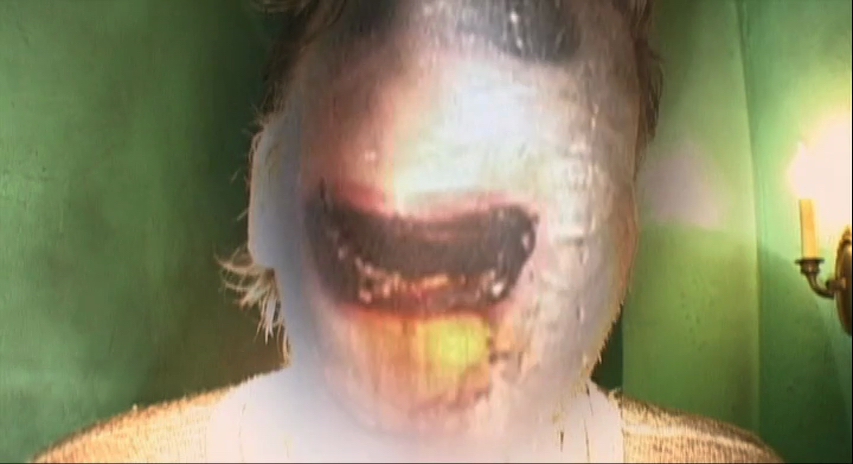
Lynch’s Inland Empire breeds like-minded logic when, in a moment of horrifying self-contamination, Laura Dern’s face is assaulted by the overlay of her nemesis, the so-called Phantom:

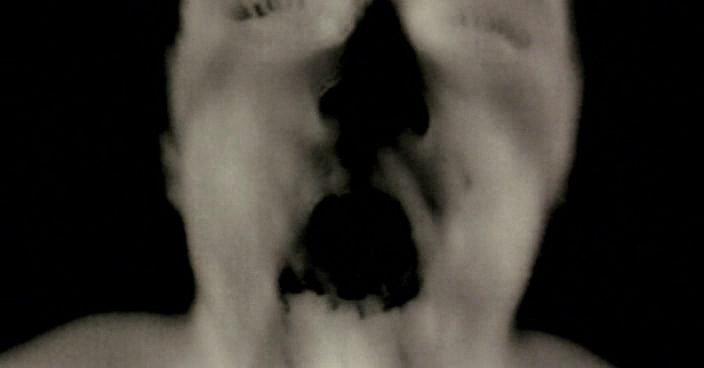
The film’s tagline, “A Woman in Trouble,” underscores her dissolution: corporeal integrity undone in a space of profound unrest. Similarly, Philippe Grandrieux’s La Vie nouvelle drags its characters through a ravaged Sarajevo, where language disintegrates and bodies seek reconciliation in ruin. The result is rebirth and a scream in which one finds only more broken sutures, anticipated by a terrifying night-vision interlude in which the human visage is excoriated of its sanctity.

Walter Benjamin’s dictum that “film is the first art form capable of demonstrating how matter plays tricks on man” has never been more apt. AI-generated imagery likewise gnaws at the barrier between the natural and the supernatural. Its manifestations of trauma without selfhood render the body a vessel of moral and perceptual violation. Displaced from domesticity, it reflects irresolvable turmoil, and the more autonomy it achieves, the more humanity we scramble to recover. This explains why AI’s creations feel so spectral: we have seen their kind before. The only difference is that, whereas once we regarded them only in the mind’s eye, now they are actualized with excruciating pervasiveness.

The premise that benign technologies might beget horror reveals our lack of control more than it restores harmony. These hybridizations of natural and unnatural law force us to question identity itself, ejecting us from human-centered hierarchies into a dialectic with entropic nature. Even something as simple as Paglen’s Comet (Corpus: Omens and Portents) conjures narratives of missiles and imminent annihilation.

We fear not that “evil was born,” as Grace Zabriskie so artfully intones in Inland Empire, but that it never needed to be born. It simply is. It predates us and will outlive us, feeding on forces that nevertheless make us who we are. And so, AI embodies its own eerie vitality, a dead signifier born from the narcissistic desire to reproduce life and deny death’s power. Its synthetic offspring thrive on replication, nursing at the breast of finitude.

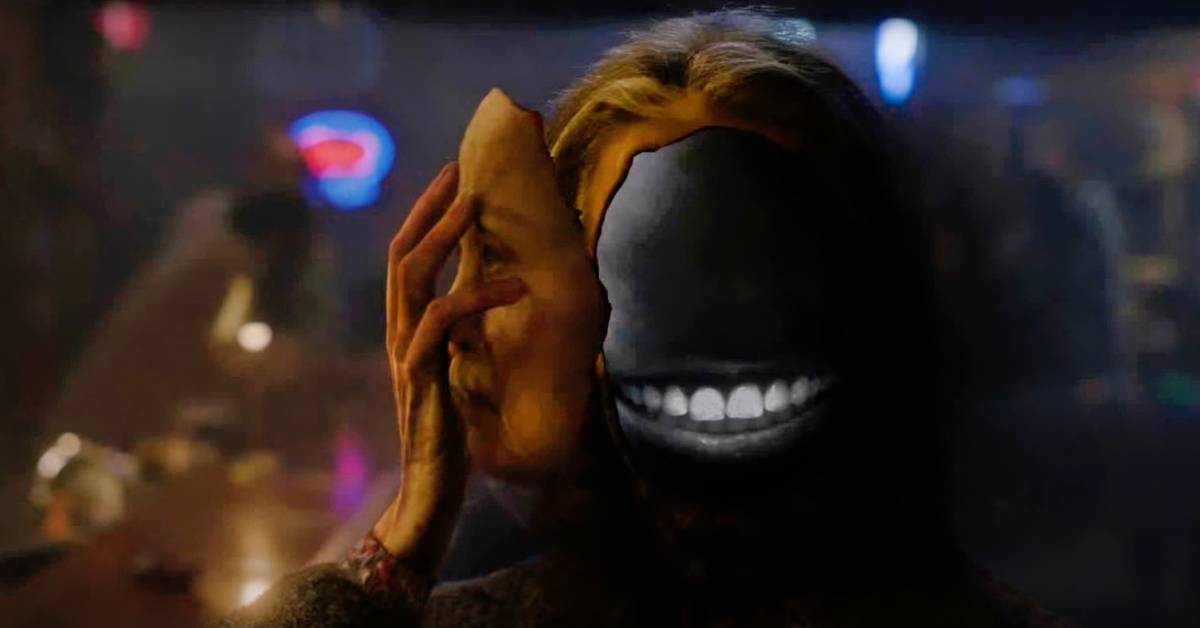
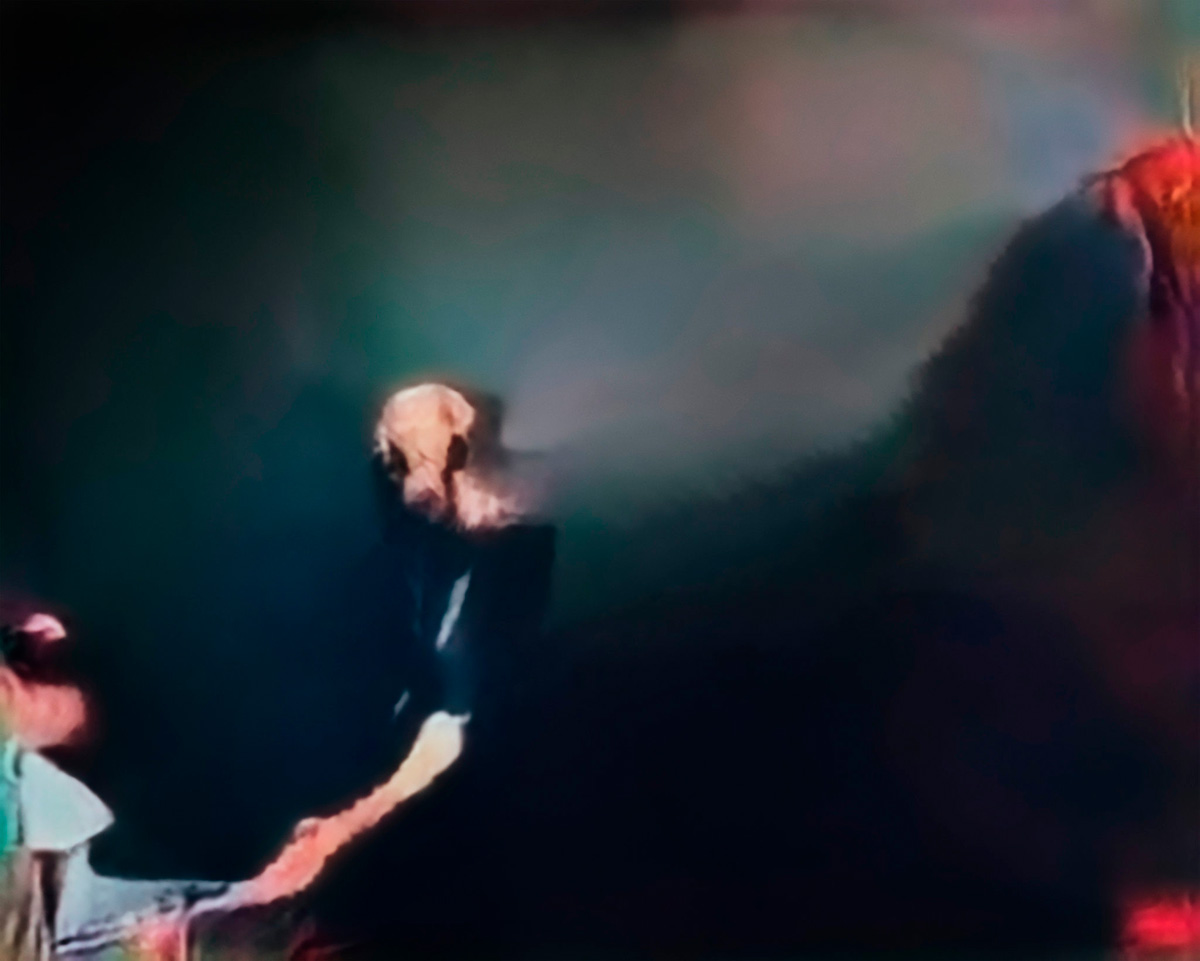
Diving once again into Twin Peaks: The Return, we find faces opening into voids inhabited by unclean spirits, golden orbs, and infinite darkness, each a portal instead of a mirror:

In his dialogue with Downey, Paglen explains that the Adverserially Evolved Hallucinations project lets us see inside the “black box” of image-processing models and think from within them rather than be guided by them. This, he suggests, might help us move beyond the temptations of perception. “AI models,” he notes, “actively perform processes of manipulation; they want you to see something.” That desire is itself hallucinatory, as well as dangerous. Just as ChatGPT can invent a nonexistent citation, generative image models can fabricate surveillance realities indistinguishable from fact. The imposition of the fake upon the real becomes so seamless that we cease to question it.

Once something takes the form of an image, it acquires an aura of inevitability. Like a lyric we can’t imagine written differently, the hallucination becomes fixed. These interdimensional images seduce with the promise of infinite variation yet horrify with their fixation on wrongness. In leaning toward the actual through rudimentary shapes and gestures (what Paglen calls “primitives”), we find that the only truth worth protecting is that which resists us. Such is the paradox at the heart of all AI-generated imagery: the more real it appears, the more counterfeit it becomes.